EP0300168A2 - Procédé de synthèse de glutation dans la levure - Google Patents
Procédé de synthèse de glutation dans la levure Download PDFInfo
- Publication number
- EP0300168A2 EP0300168A2 EP88108567A EP88108567A EP0300168A2 EP 0300168 A2 EP0300168 A2 EP 0300168A2 EP 88108567 A EP88108567 A EP 88108567A EP 88108567 A EP88108567 A EP 88108567A EP 0300168 A2 EP0300168 A2 EP 0300168A2
- Authority
- EP
- European Patent Office
- Prior art keywords
- glutathione
- yeast
- enzyme
- plasmid
- gene
- Prior art date
- Legal status (The legal status is an assumption and is not a legal conclusion. Google has not performed a legal analysis and makes no representation as to the accuracy of the status listed.)
- Granted
Links
- RWSXRVCMGQZWBV-WDSKDSINSA-N glutathione Chemical compound OC(=O)[C@@H](N)CCC(=O)N[C@@H](CS)C(=O)NCC(O)=O RWSXRVCMGQZWBV-WDSKDSINSA-N 0.000 title claims abstract description 71
- 240000004808 Saccharomyces cerevisiae Species 0.000 title claims abstract description 44
- 229960003180 glutathione Drugs 0.000 title claims abstract description 36
- 108010024636 Glutathione Proteins 0.000 title claims abstract description 30
- 230000015572 biosynthetic process Effects 0.000 title claims abstract description 17
- 238000003786 synthesis reaction Methods 0.000 title claims abstract description 17
- 238000000034 method Methods 0.000 title claims description 16
- 230000008569 process Effects 0.000 title claims description 4
- 108090000623 proteins and genes Proteins 0.000 claims abstract description 41
- 102000004190 Enzymes Human genes 0.000 claims abstract description 12
- 108090000790 Enzymes Proteins 0.000 claims abstract description 12
- 108010036164 Glutathione synthase Proteins 0.000 claims abstract description 7
- 108010081687 Glutamate-cysteine ligase Proteins 0.000 claims abstract description 5
- 102100034294 Glutathione synthetase Human genes 0.000 claims abstract description 4
- 235000014680 Saccharomyces cerevisiae Nutrition 0.000 claims description 40
- 239000013612 plasmid Substances 0.000 claims description 32
- 238000004519 manufacturing process Methods 0.000 abstract description 6
- 238000012364 cultivation method Methods 0.000 abstract description 2
- 235000015097 nutrients Nutrition 0.000 abstract description 2
- 235000003969 glutathione Nutrition 0.000 description 26
- 241000588724 Escherichia coli Species 0.000 description 12
- 108091008146 restriction endonucleases Proteins 0.000 description 10
- XTWYTFMLZFPYCI-KQYNXXCUSA-N 5'-adenylphosphoric acid Chemical compound C1=NC=2C(N)=NC=NC=2N1[C@@H]1O[C@H](COP(O)(=O)OP(O)(O)=O)[C@@H](O)[C@H]1O XTWYTFMLZFPYCI-KQYNXXCUSA-N 0.000 description 7
- XTWYTFMLZFPYCI-UHFFFAOYSA-N Adenosine diphosphate Natural products C1=NC=2C(N)=NC=NC=2N1C1OC(COP(O)(=O)OP(O)(O)=O)C(O)C1O XTWYTFMLZFPYCI-UHFFFAOYSA-N 0.000 description 7
- DHMQDGOQFOQNFH-UHFFFAOYSA-N Glycine Chemical compound NCC(O)=O DHMQDGOQFOQNFH-UHFFFAOYSA-N 0.000 description 6
- XUJNEKJLAYXESH-REOHCLBHSA-N L-Cysteine Chemical compound SC[C@H](N)C(O)=O XUJNEKJLAYXESH-REOHCLBHSA-N 0.000 description 6
- ZKHQWZAMYRWXGA-UHFFFAOYSA-N Adenosine triphosphate Natural products C1=NC=2C(N)=NC=NC=2N1C1OC(COP(O)(=O)OP(O)(=O)OP(O)(O)=O)C(O)C1O ZKHQWZAMYRWXGA-UHFFFAOYSA-N 0.000 description 5
- WHUUTDBJXJRKMK-VKHMYHEASA-N L-glutamic acid Chemical compound OC(=O)[C@@H](N)CCC(O)=O WHUUTDBJXJRKMK-VKHMYHEASA-N 0.000 description 5
- 229960000723 ampicillin Drugs 0.000 description 5
- AVKUERGKIZMTKX-NJBDSQKTSA-N ampicillin Chemical compound C1([C@@H](N)C(=O)N[C@H]2[C@H]3SC([C@@H](N3C2=O)C(O)=O)(C)C)=CC=CC=C1 AVKUERGKIZMTKX-NJBDSQKTSA-N 0.000 description 5
- 230000000694 effects Effects 0.000 description 5
- 102000004169 proteins and genes Human genes 0.000 description 5
- 230000010076 replication Effects 0.000 description 5
- 238000000246 agarose gel electrophoresis Methods 0.000 description 4
- 238000004458 analytical method Methods 0.000 description 4
- 102000012410 DNA Ligases Human genes 0.000 description 3
- 108010061982 DNA Ligases Proteins 0.000 description 3
- 102000016928 DNA-directed DNA polymerase Human genes 0.000 description 3
- 108010014303 DNA-directed DNA polymerase Proteins 0.000 description 3
- ROHFNLRQFUQHCH-YFKPBYRVSA-N L-leucine Chemical compound CC(C)C[C@H](N)C(O)=O ROHFNLRQFUQHCH-YFKPBYRVSA-N 0.000 description 3
- 230000002759 chromosomal effect Effects 0.000 description 3
- 239000012634 fragment Substances 0.000 description 3
- 108020004707 nucleic acids Proteins 0.000 description 3
- 102000039446 nucleic acids Human genes 0.000 description 3
- 150000007523 nucleic acids Chemical class 0.000 description 3
- 239000000126 substance Substances 0.000 description 3
- 230000009466 transformation Effects 0.000 description 3
- 241000894006 Bacteria Species 0.000 description 2
- 108010054576 Deoxyribonuclease EcoRI Proteins 0.000 description 2
- 239000004471 Glycine Substances 0.000 description 2
- 229930189936 Glyoxalase Natural products 0.000 description 2
- 239000004201 L-cysteine Substances 0.000 description 2
- 235000013878 L-cysteine Nutrition 0.000 description 2
- ROHFNLRQFUQHCH-UHFFFAOYSA-N Leucine Natural products CC(C)CC(N)C(O)=O ROHFNLRQFUQHCH-UHFFFAOYSA-N 0.000 description 2
- 230000001580 bacterial effect Effects 0.000 description 2
- 210000004027 cell Anatomy 0.000 description 2
- 230000002255 enzymatic effect Effects 0.000 description 2
- 229960002989 glutamic acid Drugs 0.000 description 2
- 239000000203 mixture Substances 0.000 description 2
- 238000005457 optimization Methods 0.000 description 2
- 238000011160 research Methods 0.000 description 2
- 210000005253 yeast cell Anatomy 0.000 description 2
- 101150028074 2 gene Proteins 0.000 description 1
- ZKHQWZAMYRWXGA-KQYNXXCUSA-J ATP(4-) Chemical compound C1=NC=2C(N)=NC=NC=2N1[C@@H]1O[C@H](COP([O-])(=O)OP([O-])(=O)OP([O-])([O-])=O)[C@@H](O)[C@H]1O ZKHQWZAMYRWXGA-KQYNXXCUSA-J 0.000 description 1
- 238000007399 DNA isolation Methods 0.000 description 1
- 108060002716 Exonuclease Proteins 0.000 description 1
- 101150062179 II gene Proteins 0.000 description 1
- NBIIXXVUZAFLBC-UHFFFAOYSA-N Phosphoric acid Chemical compound OP(O)(O)=O NBIIXXVUZAFLBC-UHFFFAOYSA-N 0.000 description 1
- 239000004098 Tetracycline Substances 0.000 description 1
- 230000009471 action Effects 0.000 description 1
- 230000003213 activating effect Effects 0.000 description 1
- 239000011543 agarose gel Substances 0.000 description 1
- 229940024606 amino acid Drugs 0.000 description 1
- 150000001413 amino acids Chemical class 0.000 description 1
- 230000008901 benefit Effects 0.000 description 1
- 230000001413 cellular effect Effects 0.000 description 1
- 230000008859 change Effects 0.000 description 1
- 238000006243 chemical reaction Methods 0.000 description 1
- 210000000349 chromosome Anatomy 0.000 description 1
- 230000008878 coupling Effects 0.000 description 1
- 238000010168 coupling process Methods 0.000 description 1
- 238000005859 coupling reaction Methods 0.000 description 1
- 239000003814 drug Substances 0.000 description 1
- 102000013165 exonuclease Human genes 0.000 description 1
- 238000010353 genetic engineering Methods 0.000 description 1
- 238000000338 in vitro Methods 0.000 description 1
- 230000002779 inactivation Effects 0.000 description 1
- 229910052816 inorganic phosphate Inorganic materials 0.000 description 1
- 239000000543 intermediate Substances 0.000 description 1
- 238000011835 investigation Methods 0.000 description 1
- 238000002955 isolation Methods 0.000 description 1
- XIXADJRWDQXREU-UHFFFAOYSA-M lithium acetate Chemical compound [Li+].CC([O-])=O XIXADJRWDQXREU-UHFFFAOYSA-M 0.000 description 1
- 208000019423 liver disease Diseases 0.000 description 1
- 239000003550 marker Substances 0.000 description 1
- 108020004999 messenger RNA Proteins 0.000 description 1
- 230000035772 mutation Effects 0.000 description 1
- 239000002773 nucleotide Substances 0.000 description 1
- 125000003729 nucleotide group Chemical group 0.000 description 1
- 230000004792 oxidative damage Effects 0.000 description 1
- 150000002926 oxygen Chemical class 0.000 description 1
- 238000002360 preparation method Methods 0.000 description 1
- 230000003449 preventive effect Effects 0.000 description 1
- 108090000765 processed proteins & peptides Proteins 0.000 description 1
- 210000001938 protoplast Anatomy 0.000 description 1
- 230000005855 radiation Effects 0.000 description 1
- 230000001105 regulatory effect Effects 0.000 description 1
- 238000000926 separation method Methods 0.000 description 1
- 238000012360 testing method Methods 0.000 description 1
- 229960002180 tetracycline Drugs 0.000 description 1
- 229930101283 tetracycline Natural products 0.000 description 1
- 235000019364 tetracycline Nutrition 0.000 description 1
- 150000003522 tetracyclines Chemical class 0.000 description 1
- 229940124597 therapeutic agent Drugs 0.000 description 1
- 231100000331 toxic Toxicity 0.000 description 1
- 231100000167 toxic agent Toxicity 0.000 description 1
- 230000002588 toxic effect Effects 0.000 description 1
- 238000013518 transcription Methods 0.000 description 1
- 230000035897 transcription Effects 0.000 description 1
- 238000013519 translation Methods 0.000 description 1
Images



Classifications
-
- C—CHEMISTRY; METALLURGY
- C12—BIOCHEMISTRY; BEER; SPIRITS; WINE; VINEGAR; MICROBIOLOGY; ENZYMOLOGY; MUTATION OR GENETIC ENGINEERING
- C12N—MICROORGANISMS OR ENZYMES; COMPOSITIONS THEREOF; PROPAGATING, PRESERVING, OR MAINTAINING MICROORGANISMS; MUTATION OR GENETIC ENGINEERING; CULTURE MEDIA
- C12N9/00—Enzymes; Proenzymes; Compositions thereof; Processes for preparing, activating, inhibiting, separating or purifying enzymes
- C12N9/93—Ligases (6)
-
- C—CHEMISTRY; METALLURGY
- C12—BIOCHEMISTRY; BEER; SPIRITS; WINE; VINEGAR; MICROBIOLOGY; ENZYMOLOGY; MUTATION OR GENETIC ENGINEERING
- C12N—MICROORGANISMS OR ENZYMES; COMPOSITIONS THEREOF; PROPAGATING, PRESERVING, OR MAINTAINING MICROORGANISMS; MUTATION OR GENETIC ENGINEERING; CULTURE MEDIA
- C12N15/00—Mutation or genetic engineering; DNA or RNA concerning genetic engineering, vectors, e.g. plasmids, or their isolation, preparation or purification; Use of hosts therefor
- C12N15/09—Recombinant DNA-technology
- C12N15/63—Introduction of foreign genetic material using vectors; Vectors; Use of hosts therefor; Regulation of expression
- C12N15/79—Vectors or expression systems specially adapted for eukaryotic hosts
- C12N15/80—Vectors or expression systems specially adapted for eukaryotic hosts for fungi
- C12N15/81—Vectors or expression systems specially adapted for eukaryotic hosts for fungi for yeasts
Definitions
- the invention relates to a genetic engineering process for the synthesis of glutathione in yeast.
- the synthesis is carried out using multiple glutathione synthesis genes.
- Glutathione is a tripeptide of the structure gamma-glutamyl-L-cysteinyl-glycine, which plays an important role as a cofactor of various enzymes and as protection of the cells against oxidative damage by toxic compounds, reactive oxygen derivatives and radiation and generally in the inactivation of cell-harmful substances owns.
- This substance as a therapeutic agent, e.g. B. for the preventive treatment of liver diseases, makes a biotechnological synthesis desirable.
- Glutathione is formed intracellularly by the successive action of the enzymes gamma-glutamylcysteine synthetase and glutathione synthetase from the amino acids L-glutamic acid, L-cysteine and glycine.
- Enzyme-coding genes are responsible for the synthesis of the enzymes.
- the enzyme gamma-glutamylcysteine synthetase it is the GSH-I gene
- glutathione synthetase it is the GSH-II gene.
- Glutathione is usually isolated from cells of bacteria or yeast, in which a special cultivation method is used or a special composition of the nutrient medium or an enrichment of the peptide is achieved by mutative change in the strains used. Such methods are mentioned, for example, in US Pat. Nos. 4,582,801 and 4,596,775.
- nucleotide sequence of the two Escherichia coli genes which code for the enzymes involved in glutathione synthesis, was described by Watanabe, Nucleic Acids Research 14, 4393-4400 (1986), or by Gushima, Nucleic Acids Research 12, 9299-9307 (1984).
- the known methods do not yet provide any targeted intervention in the known synthetic routes of glutathione for yeast and thus do not yet provide any controlled glutathione synthesis in yeast.
- the use of the GSH II gene and a combined use of the two genes GSH I and GSH II are not known.
- the object of the present invention is to provide an improved process for the synthesis of glutathione in yeasts.
- the object is achieved in that the GSH-II gene or a combination of GSH-II gene and GSH-I gene is introduced into the yeast.
- the enzyme-coding genes GSH I and GSH II which are known in detail for the bacterium Escherichia coli and are found in a large number of other organisms, are isolated from any organism using the usual methods of molecular biology and cloned on a plasmid.
- This either consists only of yeast DNA (deoxy nucleic acid) or from additional parts of DNA, it carries a selective marker (a bacterial or eukaryotic gene) and a DNA region, which manages the autonomous replication of the plasmid in yeast, or a part homologous to the yeast genome, which integrates of the plasmid into the chromosomal genome of the yeast.
- the isolated GSH-I and GSH-II genes are inserted into the plasmids created either directly after isolation from the genome of the respective organism or after coupling with recognition signals suitable for yeast for transcription or translation (promoters, terminators, ribosome binding sites) .
- the plasmids constructed in this way are distinguished by the fact that they carry either the GSH-I gene or the GSH-II gene or both genes.
- the plasmids are introduced into a desired yeast host strain using known methods. Examples of such methods are protoplast transformation and lithium acetate transformation.
- the yeast host strains can be both laboratory and industrial strains. Yeasts such as baker's, beer or wine yeasts can be used. However, baker's yeasts, in particular Saccharomyces cerevisiae, are preferably used.
- these genetically modified strains are able to transcribe the glutathione-synthesizing genes to an increased extent, to produce the glutathione-synthesizing proteins from these transcripts, to synthesize an increased amount of glutathione and to enrich them.
- the glutathione synthesis properties of the yeast host strains are not accidental results of untargeted mutations. They are precisely defined properties.
- the investigation of the mRNA intermediates and the enzyme activities allows a targeted optimization These properties by exchanging regulatory sequences, by varying the number of copies of the genes, by activating the genes by means of external factors (adjustable promoters).
- the optimization can be systematically adapted to the needs of the host strain and / or the production conditions.
- yeasts Compared to Escherichia coli, yeasts have the advantage that no toxic proteins have to be separated when isolating glutathione.
- plasmid pPT2a which consists of a bacterial portion (pBR322) and a yeast portion (2 ⁇ m origin of replication and 2 ⁇ m Able promoter (see Sutton and Broach, Molecular and Cellular Biology 5 (1985), 2770-2780) and Trpl- Terminator) exists, is opened using the restriction enzyme Eco RI on the 2 ⁇ m Able promoter. The resulting single strand ends are now filled in using Klenow DNA polymerase.
- the Escherichia coli GSH-I gene is cut out of the plasmid pGSI15 using the restriction enzymes Eco RI and Nde I, separated by means of agarose gel electrophoresis and isolated by means of electroelution.
- the protruding single strand ends are filled in with Klenow DNA polymerase and the GSH-I gene is linked to the plasmid pPT2a by means of T4 DNA ligase.
- the ligated DNA is transformed into the Escherichia coli strain SF8.
- the plasmids from ampicillin-resistant single colonies are isolated.
- the plasmid pPTIN6 is identified by agarose gel electrophoresis and restriction analysis.
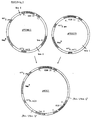
- the plasmid pPTIN6 is restricted with the enzyme Nru I and ligated with a part of the chromosomal yeast DNA which carries the leucine-2 gene and which has been cut with the enzyme Hpa I to give the plasmid pPTIN6L1 (see Figure 1).
- a DNA fragment carrying the Escherichia coli GSH-II gene is separated from the plasmid pGS201 by means of Bam HI and incomplete Eco R V restriction.
- the corresponding DNA fragment is isolated by electroelution after separation on an agarose gel, whereupon the single-strand ends are filled in using Klenow DNA polymerase.
- the DNA fragment treated in this way is linked using the T4 DNA ligase to the plasmid pPT2a, which was treated as in Example 1.
- the ligated DNA is transformed into the Escherichia coli strain SF8. DNA is isolated from ampicillin-resistant single colonies.
- the plasmid pPTEII75 is identified using agarose gel electrophoresis and restriction analysis.
- This plasmid is linearized with the enzyme Nru I and ligated with a part of the chromosomal yeast DNA which carries the leucine 2 gene and has been cut with the enzyme Hpa I, whereby the plasmid pPTEII75L1 is obtained (see Figure 2). .
- the plasmid constructed in this way is introduced into the yeast strain Saccharomyces cerevisiae AH 22 (cf. Hinnen et al., Proceeding of the National Acadamy of Science, USA 75 (1978), 1929-1933), which carries a leu-2 auxotrophy.
- the leucine-prototrophic transformed strain is then selected.
- the transformant's glutathione synthesis activity is determined by means of an enzymatic test (in vitro glutathione synthesis with subsequent glyoxalase determination), and the glutathione content is determined by means of glyoxalase determination.
- the transformed strain shows a glutathione synthesis activity of 0.5 ⁇ mol / h ⁇ mg protein.
- the parent strain AH 22 has an activity of 0.1 ⁇ mol / h ⁇ mg protein.
- the glutathione content of the transformed strain is 1.1% of the dry matter, that of the starting strain is 0.5% of the dry matter.
- the plasmid pPTIN6L1 (see Example 1) is cut with the enzyme Sca I and ligated with the plasmid pPTEII75 cut with the enzyme Nru I (see Example 2).
- the ligation mixture is transformed into the Escherichia coli strain SF8.
- the DNA from leucine auxotrophic and ampicillin resistant colonies is isolated.
- the plasmid pNEIII is identified by restriction analysis and agarose gel electrophoresis (see Figure 3).
- This plasmid is transformed into Saccharomyces cerevisiae AH22.
- the transformed strain has a glutathione synthesis activity of 0.7 ⁇ mol / h ⁇ mg protein.
- the glutathione content of the transformed strain is 1.6% of the dry substance.
- the plasmid pNEIII (see Example 3) is linearized with the restriction enzyme Xba I and incubated with the exonuclease Ba131 until 200 to 300 base pairs of the sequence on both sides of the Xba I site are removed. The plasmid is then treated with the enzyme T4 DNA ligase and transformed into the Escherichia coli strain SF8. DNA isolation from ampicillin-resistant colonies and restriction analysis identify the plasmid pINEIII in which the origin of replication of the 2 ⁇ m DNA has been deleted (cf. Figure 4). When a yeast cell is transformed, this plasmid can now be incorporated into its chromosome by integrative transformation.
Landscapes
- Life Sciences & Earth Sciences (AREA)
- Health & Medical Sciences (AREA)
- Genetics & Genomics (AREA)
- Engineering & Computer Science (AREA)
- Chemical & Material Sciences (AREA)
- Zoology (AREA)
- Bioinformatics & Cheminformatics (AREA)
- Organic Chemistry (AREA)
- Wood Science & Technology (AREA)
- Biotechnology (AREA)
- General Engineering & Computer Science (AREA)
- Biomedical Technology (AREA)
- Molecular Biology (AREA)
- Microbiology (AREA)
- Mycology (AREA)
- Biochemistry (AREA)
- General Health & Medical Sciences (AREA)
- Plant Pathology (AREA)
- Physics & Mathematics (AREA)
- Biophysics (AREA)
- Medicinal Chemistry (AREA)
- Preparation Of Compounds By Using Micro-Organisms (AREA)
- Micro-Organisms Or Cultivation Processes Thereof (AREA)
Applications Claiming Priority (2)
| Application Number | Priority Date | Filing Date | Title |
|---|---|---|---|
| DE19873724345 DE3724345A1 (de) | 1987-07-23 | 1987-07-23 | Verfahren zur synthese von glutathion in hefen |
| DE3724345 | 1987-07-23 |
Publications (3)
| Publication Number | Publication Date |
|---|---|
| EP0300168A2 true EP0300168A2 (fr) | 1989-01-25 |
| EP0300168A3 EP0300168A3 (en) | 1989-10-25 |
| EP0300168B1 EP0300168B1 (fr) | 1993-01-13 |
Family
ID=6332166
Family Applications (1)
| Application Number | Title | Priority Date | Filing Date |
|---|---|---|---|
| EP88108567A Expired - Lifetime EP0300168B1 (fr) | 1987-07-23 | 1988-05-28 | Procédé de synthèse de glutation dans la levure |
Country Status (3)
| Country | Link |
|---|---|
| EP (1) | EP0300168B1 (fr) |
| JP (1) | JPS6451098A (fr) |
| DE (2) | DE3724345A1 (fr) |
Cited By (3)
| Publication number | Priority date | Publication date | Assignee | Title |
|---|---|---|---|---|
| EP1512747A1 (fr) * | 2003-09-02 | 2005-03-09 | Ajinomoto Co., Inc. | Gène codant pour la glutathione synthétase de candida utilis. |
| CN101225402B (zh) * | 2007-01-16 | 2011-04-27 | 上海医药工业研究院 | 生产谷胱甘肽的毕赤酵母基因工程菌及用于构建其的重组质粒 |
| FR2980483A1 (fr) * | 2011-09-23 | 2013-03-29 | Lesaffre & Cie | Souches de levure pour la production de glutathion |
Families Citing this family (4)
| Publication number | Priority date | Publication date | Assignee | Title |
|---|---|---|---|---|
| AUPS334602A0 (en) * | 2002-06-28 | 2002-07-25 | Unisearch Limited | Glutathione production |
| EP2108702A1 (fr) | 2008-04-07 | 2009-10-14 | Organo Balance GmbH | Synthèse d'acides gras polyinsaturés dans la levure |
| CN103068966B (zh) | 2010-08-31 | 2015-10-14 | 国立研究开发法人科学技术振兴机构 | 光合作用产物的生产性得以提高的藻类、及其利用 |
| JP5874286B2 (ja) * | 2011-03-31 | 2016-03-02 | 味の素株式会社 | γ−グルタミル化合物を含有する酵母エキスの製造方法及び当該方法に用いられる酵母 |
Family Cites Families (1)
| Publication number | Priority date | Publication date | Assignee | Title |
|---|---|---|---|---|
| JPS59192088A (ja) * | 1982-09-29 | 1984-10-31 | Hikari Kimura | 遺伝子組換えで造成されるプラスミド |
-
1987
- 1987-07-23 DE DE19873724345 patent/DE3724345A1/de not_active Withdrawn
-
1988
- 1988-05-28 EP EP88108567A patent/EP0300168B1/fr not_active Expired - Lifetime
- 1988-05-28 DE DE8888108567T patent/DE3877446D1/de not_active Expired - Fee Related
- 1988-07-22 JP JP63181981A patent/JPS6451098A/ja active Pending
Cited By (4)
| Publication number | Priority date | Publication date | Assignee | Title |
|---|---|---|---|---|
| EP1512747A1 (fr) * | 2003-09-02 | 2005-03-09 | Ajinomoto Co., Inc. | Gène codant pour la glutathione synthétase de candida utilis. |
| US7297513B2 (en) | 2003-09-02 | 2007-11-20 | Ajinomoto Co., Inc. | Gene encoding glutathione synthetase from Candida utilis |
| CN101225402B (zh) * | 2007-01-16 | 2011-04-27 | 上海医药工业研究院 | 生产谷胱甘肽的毕赤酵母基因工程菌及用于构建其的重组质粒 |
| FR2980483A1 (fr) * | 2011-09-23 | 2013-03-29 | Lesaffre & Cie | Souches de levure pour la production de glutathion |
Also Published As
| Publication number | Publication date |
|---|---|
| EP0300168B1 (fr) | 1993-01-13 |
| DE3724345A1 (de) | 1989-02-02 |
| JPS6451098A (en) | 1989-02-27 |
| EP0300168A3 (en) | 1989-10-25 |
| DE3877446D1 (de) | 1993-02-25 |
Similar Documents
| Publication | Publication Date | Title |
|---|---|---|
| DE3687734T2 (de) | Stellenspezifische rekombination von dns in hefe. | |
| EP0171024B1 (fr) | Procédé à génie génétique pour la production de hirudines et moyens pour la mise en oeuvre de ce procédé | |
| DE3486491T2 (de) | Hybrid-DNS-Synthesis von reifen insulinähnlichen Wachstumsfaktoren | |
| EP0334841B1 (fr) | Micro-organismes et plasmides pour la formation de mono-oxygenase d'acide acetique de 2,4-dichlorophenoxy (2,4-d), et procede pour la fabrication de ces plasmides et souches | |
| DE3854870T2 (de) | Verwendung eines pflanzlichen anaerobischen Regulationselements | |
| DE69325794T2 (de) | Humanes serum albumin, herstellung und verwendung | |
| EP0099084A2 (fr) | Procédé de préparation d'interféron et des vecteurs d'expression pour celui-ci | |
| DE69415085T2 (de) | Promotor DNA Fragment von coryneformen Bakterien | |
| DD267739A5 (de) | Verfahren zur Herstellung eines zu Hefe heterologen Poly-Peptids | |
| DE69013811T2 (de) | Verfahren zur Herstellung von antiviralem Protein unter Benützung von E.coli-Transformant, das Gen, das für dieses Protein kodiert und E.coli-Vektor benützt in diesem Verfahren. | |
| Wahli et al. | Vitellogenin genes A1 and B1 are linked in the Xenopus laevis genome. | |
| EP0300168B1 (fr) | Procédé de synthèse de glutation dans la levure | |
| DE69224902T2 (de) | Hefepromoter und seine verwendung | |
| DE3751100T2 (de) | Erhöhte Produktion von Proteinen in Bakterien durch Verwendung einer neuen Ribosombindungsstelle. | |
| EP0163249A2 (fr) | Procédé de technologie génétique pour la production d'interleukine-2 humaine et moyen pour mettre en oeuvre ce procédé | |
| DE69034051T2 (de) | Stabil transformierte Hefezellen und ihre Verwendung zur Herstellung von Albumin | |
| CH640268A5 (en) | Process for the preparation of filamentous hybrid phages, novel hybrid phages and their use | |
| EP0285152B1 (fr) | ADN recombinant pour l'expression répressible et inductible de gènes hétérogènes | |
| EP2439276A1 (fr) | Procédé de fabrication semi-synthétique de vecteurs d'ADN minicercle à pureté élevée à partir de plasmide | |
| DE69331434T2 (de) | Mutanter AOX2 Promotor, diesen enthaltender Vektor, transformierte Zellen und Herstellung von heterologen Proteinen | |
| DE3686909T2 (de) | Lymphotoxin-dns, lymphotoxin-expressionsvektor, lymphotoxin-expressionsvektor enthaltender transformant und verfahren zur herstellung von lymphotoxin. | |
| DE69033772T2 (de) | Verbesserte plasmidvektoren für zelluläre schleimpilze der gattung dictyostelium | |
| EP0244627A2 (fr) | Vecteurs d'expression pour la production de polypeptides | |
| JP2001509395A (ja) | 細胞又は組織特異的な人工転写調節領域の同定方法 | |
| DE3587730T2 (de) | Kontrollsysteme für rekombinant-manipulationen. |
Legal Events
| Date | Code | Title | Description |
|---|---|---|---|
| PUAI | Public reference made under article 153(3) epc to a published international application that has entered the european phase |
Free format text: ORIGINAL CODE: 0009012 |
|
| AK | Designated contracting states |
Kind code of ref document: A2 Designated state(s): BE CH DE FR GB IT LI NL |
|
| PUAL | Search report despatched |
Free format text: ORIGINAL CODE: 0009013 |
|
| AK | Designated contracting states |
Kind code of ref document: A3 Designated state(s): BE CH DE FR GB IT LI NL |
|
| 17P | Request for examination filed |
Effective date: 19891020 |
|
| 17Q | First examination report despatched |
Effective date: 19920406 |
|
| GRAA | (expected) grant |
Free format text: ORIGINAL CODE: 0009210 |
|
| AK | Designated contracting states |
Kind code of ref document: B1 Designated state(s): BE CH DE FR GB IT LI NL |
|
| REF | Corresponds to: |
Ref document number: 3877446 Country of ref document: DE Date of ref document: 19930225 |
|
| ET | Fr: translation filed | ||
| GBT | Gb: translation of ep patent filed (gb section 77(6)(a)/1977) |
Effective date: 19930128 |
|
| ITF | It: translation for a ep patent filed | ||
| PGFP | Annual fee paid to national office [announced via postgrant information from national office to epo] |
Ref country code: GB Payment date: 19930421 Year of fee payment: 6 |
|
| PGFP | Annual fee paid to national office [announced via postgrant information from national office to epo] |
Ref country code: BE Payment date: 19930428 Year of fee payment: 6 |
|
| PGFP | Annual fee paid to national office [announced via postgrant information from national office to epo] |
Ref country code: DE Payment date: 19930513 Year of fee payment: 6 |
|
| PGFP | Annual fee paid to national office [announced via postgrant information from national office to epo] |
Ref country code: FR Payment date: 19930525 Year of fee payment: 6 |
|
| PGFP | Annual fee paid to national office [announced via postgrant information from national office to epo] |
Ref country code: CH Payment date: 19930527 Year of fee payment: 6 |
|
| PGFP | Annual fee paid to national office [announced via postgrant information from national office to epo] |
Ref country code: NL Payment date: 19930531 Year of fee payment: 6 |
|
| PLBE | No opposition filed within time limit |
Free format text: ORIGINAL CODE: 0009261 |
|
| STAA | Information on the status of an ep patent application or granted ep patent |
Free format text: STATUS: NO OPPOSITION FILED WITHIN TIME LIMIT |
|
| 26N | No opposition filed | ||
| PG25 | Lapsed in a contracting state [announced via postgrant information from national office to epo] |
Ref country code: GB Effective date: 19940528 |
|
| PG25 | Lapsed in a contracting state [announced via postgrant information from national office to epo] |
Ref country code: LI Effective date: 19940531 Ref country code: CH Effective date: 19940531 Ref country code: BE Effective date: 19940531 |
|
| BERE | Be: lapsed |
Owner name: HULS A.G. Effective date: 19940531 |
|
| PG25 | Lapsed in a contracting state [announced via postgrant information from national office to epo] |
Ref country code: NL Effective date: 19941201 |
|
| NLV4 | Nl: lapsed or anulled due to non-payment of the annual fee | ||
| GBPC | Gb: european patent ceased through non-payment of renewal fee |
Effective date: 19940528 |
|
| PG25 | Lapsed in a contracting state [announced via postgrant information from national office to epo] |
Ref country code: FR Effective date: 19950131 |
|
| REG | Reference to a national code |
Ref country code: CH Ref legal event code: PL |
|
| PG25 | Lapsed in a contracting state [announced via postgrant information from national office to epo] |
Ref country code: DE Effective date: 19950201 |
|
| REG | Reference to a national code |
Ref country code: FR Ref legal event code: ST |
|
| PG25 | Lapsed in a contracting state [announced via postgrant information from national office to epo] |
Ref country code: IT Free format text: LAPSE BECAUSE OF NON-PAYMENT OF DUE FEES;WARNING: LAPSES OF ITALIAN PATENTS WITH EFFECTIVE DATE BEFORE 2007 MAY HAVE OCCURRED AT ANY TIME BEFORE 2007. THE CORRECT EFFECTIVE DATE MAY BE DIFFERENT FROM THE ONE RECORDED. Effective date: 20050528 |