EP0300234A2 - Nagellack auf der Basis von O-Benzyl-N-hydroxyalkylchitosanen sowie neue O-Benzyl-N-hydroxyalkylderivate des Chitosans - Google Patents
Nagellack auf der Basis von O-Benzyl-N-hydroxyalkylchitosanen sowie neue O-Benzyl-N-hydroxyalkylderivate des Chitosans Download PDFInfo
- Publication number
- EP0300234A2 EP0300234A2 EP88110263A EP88110263A EP0300234A2 EP 0300234 A2 EP0300234 A2 EP 0300234A2 EP 88110263 A EP88110263 A EP 88110263A EP 88110263 A EP88110263 A EP 88110263A EP 0300234 A2 EP0300234 A2 EP 0300234A2
- Authority
- EP
- European Patent Office
- Prior art keywords
- benzyl
- nail polish
- nail
- numerical value
- chitosan
- Prior art date
- Legal status (The legal status is an assumption and is not a legal conclusion. Google has not performed a legal analysis and makes no representation as to the accuracy of the status listed.)
- Granted
Links
- 229920001661 Chitosan Polymers 0.000 title claims description 26
- 239000011248 coating agent Substances 0.000 title 1
- 238000000576 coating method Methods 0.000 title 1
- 229920005989 resin Polymers 0.000 claims abstract description 17
- 239000011347 resin Substances 0.000 claims abstract description 17
- 239000002904 solvent Substances 0.000 claims abstract description 14
- 239000002966 varnish Substances 0.000 claims description 16
- 238000006467 substitution reaction Methods 0.000 claims description 10
- WYURNTSHIVDZCO-UHFFFAOYSA-N Tetrahydrofuran Chemical compound C1CCOC1 WYURNTSHIVDZCO-UHFFFAOYSA-N 0.000 claims description 9
- 238000009835 boiling Methods 0.000 claims description 9
- 239000000203 mixture Substances 0.000 claims description 9
- 239000003960 organic solvent Substances 0.000 claims description 5
- YLQBMQCUIZJEEH-UHFFFAOYSA-N tetrahydrofuran Natural products C=1C=COC=1 YLQBMQCUIZJEEH-UHFFFAOYSA-N 0.000 claims description 4
- 239000003795 chemical substances by application Substances 0.000 claims description 3
- 239000001023 inorganic pigment Substances 0.000 claims description 3
- 239000012860 organic pigment Substances 0.000 claims description 2
- 229920001220 nitrocellulos Polymers 0.000 abstract description 24
- 239000000020 Nitrocellulose Substances 0.000 abstract description 23
- -1 2-hydroxypropyl Chemical group 0.000 abstract description 14
- 239000004922 lacquer Substances 0.000 abstract description 14
- 125000001797 benzyl group Chemical group [H]C1=C([H])C([H])=C(C([H])=C1[H])C([H])([H])* 0.000 abstract description 7
- GAWIXWVDTYZWAW-UHFFFAOYSA-N C[CH]O Chemical group C[CH]O GAWIXWVDTYZWAW-UHFFFAOYSA-N 0.000 abstract 1
- 125000002777 acetyl group Chemical group [H]C([H])([H])C(*)=O 0.000 abstract 1
- 210000000282 nail Anatomy 0.000 description 51
- CSCPPACGZOOCGX-UHFFFAOYSA-N Acetone Chemical compound CC(C)=O CSCPPACGZOOCGX-UHFFFAOYSA-N 0.000 description 33
- XLYOFNOQVPJJNP-UHFFFAOYSA-N water Substances O XLYOFNOQVPJJNP-UHFFFAOYSA-N 0.000 description 17
- LFQSCWFLJHTTHZ-UHFFFAOYSA-N Ethanol Chemical compound CCO LFQSCWFLJHTTHZ-UHFFFAOYSA-N 0.000 description 12
- WSFSSNUMVMOOMR-UHFFFAOYSA-N Formaldehyde Chemical compound O=C WSFSSNUMVMOOMR-UHFFFAOYSA-N 0.000 description 12
- YXFVVABEGXRONW-UHFFFAOYSA-N Toluene Chemical compound CC1=CC=CC=C1 YXFVVABEGXRONW-UHFFFAOYSA-N 0.000 description 12
- 229940054190 hydroxypropyl chitosan Drugs 0.000 description 12
- 238000006243 chemical reaction Methods 0.000 description 11
- KFZMGEQAYNKOFK-UHFFFAOYSA-N Isopropanol Chemical compound CC(C)O KFZMGEQAYNKOFK-UHFFFAOYSA-N 0.000 description 10
- HEMHJVSKTPXQMS-UHFFFAOYSA-M Sodium hydroxide Chemical compound [OH-].[Na+] HEMHJVSKTPXQMS-UHFFFAOYSA-M 0.000 description 9
- 239000011541 reaction mixture Substances 0.000 description 8
- 239000000243 solution Substances 0.000 description 8
- QTBSBXVTEAMEQO-UHFFFAOYSA-N Acetic acid Chemical compound CC(O)=O QTBSBXVTEAMEQO-UHFFFAOYSA-N 0.000 description 6
- WVDDGKGOMKODPV-UHFFFAOYSA-N Benzyl alcohol Chemical compound OCC1=CC=CC=C1 WVDDGKGOMKODPV-UHFFFAOYSA-N 0.000 description 6
- RTZKZFJDLAIYFH-UHFFFAOYSA-N Diethyl ether Chemical compound CCOCC RTZKZFJDLAIYFH-UHFFFAOYSA-N 0.000 description 6
- 238000010521 absorption reaction Methods 0.000 description 6
- KCXMKQUNVWSEMD-UHFFFAOYSA-N benzyl chloride Chemical compound ClCC1=CC=CC=C1 KCXMKQUNVWSEMD-UHFFFAOYSA-N 0.000 description 6
- 229940073608 benzyl chloride Drugs 0.000 description 6
- 238000001035 drying Methods 0.000 description 6
- 229910052782 aluminium Inorganic materials 0.000 description 5
- XAGFODPZIPBFFR-UHFFFAOYSA-N aluminium Chemical compound [Al] XAGFODPZIPBFFR-UHFFFAOYSA-N 0.000 description 5
- 238000000034 method Methods 0.000 description 5
- 239000004014 plasticizer Substances 0.000 description 5
- XTHFKEDIFFGKHM-UHFFFAOYSA-N Dimethoxyethane Chemical compound COCCOC XTHFKEDIFFGKHM-UHFFFAOYSA-N 0.000 description 4
- LYCAIKOWRPUZTN-UHFFFAOYSA-N Ethylene glycol Chemical compound OCCO LYCAIKOWRPUZTN-UHFFFAOYSA-N 0.000 description 4
- LRHPLDYGYMQRHN-UHFFFAOYSA-N N-Butanol Chemical compound CCCCO LRHPLDYGYMQRHN-UHFFFAOYSA-N 0.000 description 4
- 239000000853 adhesive Substances 0.000 description 4
- 230000001070 adhesive effect Effects 0.000 description 4
- 239000002168 alkylating agent Substances 0.000 description 4
- 229940100198 alkylating agent Drugs 0.000 description 4
- 150000001875 compounds Chemical class 0.000 description 4
- 150000002924 oxiranes Chemical class 0.000 description 4
- 238000002360 preparation method Methods 0.000 description 4
- OYPRJOBELJOOCE-UHFFFAOYSA-N Calcium Chemical compound [Ca] OYPRJOBELJOOCE-UHFFFAOYSA-N 0.000 description 3
- 229920002101 Chitin Polymers 0.000 description 3
- YMWUJEATGCHHMB-UHFFFAOYSA-N Dichloromethane Chemical compound ClCCl YMWUJEATGCHHMB-UHFFFAOYSA-N 0.000 description 3
- XEKOWRVHYACXOJ-UHFFFAOYSA-N Ethyl acetate Chemical compound CCOC(C)=O XEKOWRVHYACXOJ-UHFFFAOYSA-N 0.000 description 3
- IAYPIBMASNFSPL-UHFFFAOYSA-N Ethylene oxide Chemical compound C1CO1 IAYPIBMASNFSPL-UHFFFAOYSA-N 0.000 description 3
- PEDCQBHIVMGVHV-UHFFFAOYSA-N Glycerine Chemical compound OCC(O)CO PEDCQBHIVMGVHV-UHFFFAOYSA-N 0.000 description 3
- GOOHAUXETOMSMM-UHFFFAOYSA-N Propylene oxide Chemical compound CC1CO1 GOOHAUXETOMSMM-UHFFFAOYSA-N 0.000 description 3
- VYPSYNLAJGMNEJ-UHFFFAOYSA-N Silicium dioxide Chemical compound O=[Si]=O VYPSYNLAJGMNEJ-UHFFFAOYSA-N 0.000 description 3
- 125000005907 alkyl ester group Chemical group 0.000 description 3
- 238000005574 benzylation reaction Methods 0.000 description 3
- 229910052791 calcium Inorganic materials 0.000 description 3
- 239000011575 calcium Substances 0.000 description 3
- 150000002148 esters Chemical class 0.000 description 3
- 239000011521 glass Substances 0.000 description 3
- 238000004519 manufacturing process Methods 0.000 description 3
- 239000003973 paint Substances 0.000 description 3
- 239000003208 petroleum Substances 0.000 description 3
- 229920000642 polymer Polymers 0.000 description 3
- 150000003839 salts Chemical class 0.000 description 3
- LCGLNKUTAGEVQW-UHFFFAOYSA-N Dimethyl ether Chemical compound COC LCGLNKUTAGEVQW-UHFFFAOYSA-N 0.000 description 2
- DNIAPMSPPWPWGF-UHFFFAOYSA-N Propylene glycol Chemical class CC(O)CO DNIAPMSPPWPWGF-UHFFFAOYSA-N 0.000 description 2
- FAPWRFPIFSIZLT-UHFFFAOYSA-M Sodium chloride Chemical compound [Na+].[Cl-] FAPWRFPIFSIZLT-UHFFFAOYSA-M 0.000 description 2
- GWEVSGVZZGPLCZ-UHFFFAOYSA-N Titan oxide Chemical compound O=[Ti]=O GWEVSGVZZGPLCZ-UHFFFAOYSA-N 0.000 description 2
- ZFOZVQLOBQUTQQ-UHFFFAOYSA-N Tributyl citrate Chemical compound CCCCOC(=O)CC(O)(C(=O)OCCCC)CC(=O)OCCCC ZFOZVQLOBQUTQQ-UHFFFAOYSA-N 0.000 description 2
- 239000002253 acid Substances 0.000 description 2
- 239000000654 additive Substances 0.000 description 2
- 239000007864 aqueous solution Substances 0.000 description 2
- 125000004421 aryl sulphonamide group Chemical group 0.000 description 2
- 235000019445 benzyl alcohol Nutrition 0.000 description 2
- 239000004359 castor oil Substances 0.000 description 2
- 235000019438 castor oil Nutrition 0.000 description 2
- 239000007795 chemical reaction product Substances 0.000 description 2
- 229920001577 copolymer Polymers 0.000 description 2
- 239000002537 cosmetic Substances 0.000 description 2
- 230000006378 damage Effects 0.000 description 2
- 230000006196 deacetylation Effects 0.000 description 2
- 238000003381 deacetylation reaction Methods 0.000 description 2
- DOIRQSBPFJWKBE-UHFFFAOYSA-N dibutyl phthalate Chemical compound CCCCOC(=O)C1=CC=CC=C1C(=O)OCCCC DOIRQSBPFJWKBE-UHFFFAOYSA-N 0.000 description 2
- MGWAVDBGNNKXQV-UHFFFAOYSA-N diisobutyl phthalate Chemical compound CC(C)COC(=O)C1=CC=CC=C1C(=O)OCC(C)C MGWAVDBGNNKXQV-UHFFFAOYSA-N 0.000 description 2
- IPKKHRVROFYTEK-UHFFFAOYSA-N dipentyl phthalate Chemical compound CCCCCOC(=O)C1=CC=CC=C1C(=O)OCCCCC IPKKHRVROFYTEK-UHFFFAOYSA-N 0.000 description 2
- 239000002270 dispersing agent Substances 0.000 description 2
- 239000000706 filtrate Substances 0.000 description 2
- ZEMPKEQAKRGZGQ-XOQCFJPHSA-N glycerol triricinoleate Natural products CCCCCC[C@@H](O)CC=CCCCCCCCC(=O)OC[C@@H](COC(=O)CCCCCCCC=CC[C@@H](O)CCCCCC)OC(=O)CCCCCCCC=CC[C@H](O)CCCCCC ZEMPKEQAKRGZGQ-XOQCFJPHSA-N 0.000 description 2
- UYTPUPDQBNUYGX-UHFFFAOYSA-N guanine Chemical compound O=C1NC(N)=NC2=C1N=CN2 UYTPUPDQBNUYGX-UHFFFAOYSA-N 0.000 description 2
- 239000007788 liquid Substances 0.000 description 2
- 239000000178 monomer Substances 0.000 description 2
- 239000003921 oil Substances 0.000 description 2
- 239000002244 precipitate Substances 0.000 description 2
- 239000000047 product Substances 0.000 description 2
- 235000013772 propylene glycol Nutrition 0.000 description 2
- 238000004062 sedimentation Methods 0.000 description 2
- 210000002268 wool Anatomy 0.000 description 2
- QMMJWQMCMRUYTG-UHFFFAOYSA-N 1,2,4,5-tetrachloro-3-(trifluoromethyl)benzene Chemical compound FC(F)(F)C1=C(Cl)C(Cl)=CC(Cl)=C1Cl QMMJWQMCMRUYTG-UHFFFAOYSA-N 0.000 description 1
- RYHBNJHYFVUHQT-UHFFFAOYSA-N 1,4-Dioxane Chemical compound C1COCCO1 RYHBNJHYFVUHQT-UHFFFAOYSA-N 0.000 description 1
- 238000005160 1H NMR spectroscopy Methods 0.000 description 1
- GEXDKIVVFJCQCK-JCGZMFBFSA-N 2,3-dihydroxypropyl (z,12r)-2-acetyl-12-hydroxyoctadec-9-enoate Chemical compound CCCCCC[C@@H](O)C\C=C/CCCCCCC(C(C)=O)C(=O)OCC(O)CO GEXDKIVVFJCQCK-JCGZMFBFSA-N 0.000 description 1
- SBASXUCJHJRPEV-UHFFFAOYSA-N 2-(2-methoxyethoxy)ethanol Chemical compound COCCOCCO SBASXUCJHJRPEV-UHFFFAOYSA-N 0.000 description 1
- XNWFRZJHXBZDAG-UHFFFAOYSA-N 2-METHOXYETHANOL Chemical compound COCCO XNWFRZJHXBZDAG-UHFFFAOYSA-N 0.000 description 1
- SLRMQYXOBQWXCR-UHFFFAOYSA-N 2154-56-5 Chemical compound [CH2]C1=CC=CC=C1 SLRMQYXOBQWXCR-UHFFFAOYSA-N 0.000 description 1
- RSWGJHLUYNHPMX-UHFFFAOYSA-N Abietic-Saeure Natural products C12CCC(C(C)C)=CC2=CCC2C1(C)CCCC2(C)C(O)=O RSWGJHLUYNHPMX-UHFFFAOYSA-N 0.000 description 1
- ZNSMNVMLTJELDZ-UHFFFAOYSA-N Bis(2-chloroethyl)ether Chemical compound ClCCOCCCl ZNSMNVMLTJELDZ-UHFFFAOYSA-N 0.000 description 1
- DKPFZGUDAPQIHT-UHFFFAOYSA-N Butyl acetate Natural products CCCCOC(C)=O DKPFZGUDAPQIHT-UHFFFAOYSA-N 0.000 description 1
- 240000005209 Canarium indicum Species 0.000 description 1
- KRKNYBCHXYNGOX-UHFFFAOYSA-K Citrate Chemical compound [O-]C(=O)CC(O)(CC([O-])=O)C([O-])=O KRKNYBCHXYNGOX-UHFFFAOYSA-K 0.000 description 1
- MQIUGAXCHLFZKX-UHFFFAOYSA-N Di-n-octyl phthalate Natural products CCCCCCCCOC(=O)C1=CC=CC=C1C(=O)OCCCCCCCC MQIUGAXCHLFZKX-UHFFFAOYSA-N 0.000 description 1
- 239000004593 Epoxy Substances 0.000 description 1
- 206010020751 Hypersensitivity Diseases 0.000 description 1
- 102000011782 Keratins Human genes 0.000 description 1
- 108010076876 Keratins Proteins 0.000 description 1
- CERQOIWHTDAKMF-UHFFFAOYSA-M Methacrylate Chemical compound CC(=C)C([O-])=O CERQOIWHTDAKMF-UHFFFAOYSA-M 0.000 description 1
- AMQJEAYHLZJPGS-UHFFFAOYSA-N N-Pentanol Chemical compound CCCCCO AMQJEAYHLZJPGS-UHFFFAOYSA-N 0.000 description 1
- 238000010934 O-alkylation reaction Methods 0.000 description 1
- LGRFSURHDFAFJT-UHFFFAOYSA-N Phthalic anhydride Natural products C1=CC=C2C(=O)OC(=O)C2=C1 LGRFSURHDFAFJT-UHFFFAOYSA-N 0.000 description 1
- 229920002845 Poly(methacrylic acid) Polymers 0.000 description 1
- 239000004793 Polystyrene Substances 0.000 description 1
- 239000004111 Potassium silicate Substances 0.000 description 1
- XBDQKXXYIPTUBI-UHFFFAOYSA-M Propionate Chemical compound CCC([O-])=O XBDQKXXYIPTUBI-UHFFFAOYSA-M 0.000 description 1
- 235000003846 Ricinus Nutrition 0.000 description 1
- 241000322381 Ricinus <louse> Species 0.000 description 1
- KHPCPRHQVVSZAH-HUOMCSJISA-N Rosin Natural products O(C/C=C/c1ccccc1)[C@H]1[C@H](O)[C@@H](O)[C@@H](O)[C@@H](CO)O1 KHPCPRHQVVSZAH-HUOMCSJISA-N 0.000 description 1
- 229920001800 Shellac Polymers 0.000 description 1
- 206010040880 Skin irritation Diseases 0.000 description 1
- VMHLLURERBWHNL-UHFFFAOYSA-M Sodium acetate Chemical compound [Na+].CC([O-])=O VMHLLURERBWHNL-UHFFFAOYSA-M 0.000 description 1
- YSMRWXYRXBRSND-UHFFFAOYSA-N TOTP Chemical compound CC1=CC=CC=C1OP(=O)(OC=1C(=CC=CC=1)C)OC1=CC=CC=C1C YSMRWXYRXBRSND-UHFFFAOYSA-N 0.000 description 1
- DOOTYTYQINUNNV-UHFFFAOYSA-N Triethyl citrate Chemical compound CCOC(=O)CC(O)(C(=O)OCC)CC(=O)OCC DOOTYTYQINUNNV-UHFFFAOYSA-N 0.000 description 1
- 229920001807 Urea-formaldehyde Polymers 0.000 description 1
- KXKVLQRXCPHEJC-UHFFFAOYSA-N acetic acid trimethyl ester Natural products COC(C)=O KXKVLQRXCPHEJC-UHFFFAOYSA-N 0.000 description 1
- 229920000180 alkyd Polymers 0.000 description 1
- 125000000217 alkyl group Chemical group 0.000 description 1
- 229940063655 aluminum stearate Drugs 0.000 description 1
- 229940072049 amyl acetate Drugs 0.000 description 1
- PGMYKACGEOXYJE-UHFFFAOYSA-N anhydrous amyl acetate Natural products CCCCCOC(C)=O PGMYKACGEOXYJE-UHFFFAOYSA-N 0.000 description 1
- SVPXDRXYRYOSEX-UHFFFAOYSA-N bentoquatam Chemical compound O.O=[Si]=O.O=[Al]O[Al]=O SVPXDRXYRYOSEX-UHFFFAOYSA-N 0.000 description 1
- 230000015572 biosynthetic process Effects 0.000 description 1
- BJQHLKABXJIVAM-UHFFFAOYSA-N bis(2-ethylhexyl) phthalate Chemical compound CCCCC(CC)COC(=O)C1=CC=CC=C1C(=O)OCC(CC)CCCC BJQHLKABXJIVAM-UHFFFAOYSA-N 0.000 description 1
- HSUIVCLOAAJSRE-UHFFFAOYSA-N bis(2-methoxyethyl) benzene-1,2-dicarboxylate Chemical compound COCCOC(=O)C1=CC=CC=C1C(=O)OCCOC HSUIVCLOAAJSRE-UHFFFAOYSA-N 0.000 description 1
- 229940073609 bismuth oxychloride Drugs 0.000 description 1
- JHIWVOJDXOSYLW-UHFFFAOYSA-N butyl 2,2-difluorocyclopropane-1-carboxylate Chemical compound CCCCOC(=O)C1CC1(F)F JHIWVOJDXOSYLW-UHFFFAOYSA-N 0.000 description 1
- OIQPTROHQCGFEF-UHFFFAOYSA-L chembl1371409 Chemical compound [Na+].[Na+].OC1=CC=C2C=C(S([O-])(=O)=O)C=CC2=C1N=NC1=CC=C(S([O-])(=O)=O)C=C1 OIQPTROHQCGFEF-UHFFFAOYSA-L 0.000 description 1
- 230000001427 coherent effect Effects 0.000 description 1
- 239000008119 colloidal silica Substances 0.000 description 1
- 239000012141 concentrate Substances 0.000 description 1
- 239000000470 constituent Substances 0.000 description 1
- 239000008406 cosmetic ingredient Substances 0.000 description 1
- GUJOJGAPFQRJSV-UHFFFAOYSA-N dialuminum;dioxosilane;oxygen(2-);hydrate Chemical compound O.[O-2].[O-2].[O-2].[Al+3].[Al+3].O=[Si]=O.O=[Si]=O.O=[Si]=O.O=[Si]=O GUJOJGAPFQRJSV-UHFFFAOYSA-N 0.000 description 1
- PCYQQSKDZQTOQG-NXEZZACHSA-N dibutyl (2r,3r)-2,3-dihydroxybutanedioate Chemical compound CCCCOC(=O)[C@H](O)[C@@H](O)C(=O)OCCCC PCYQQSKDZQTOQG-NXEZZACHSA-N 0.000 description 1
- MTHSVFCYNBDYFN-UHFFFAOYSA-N diethylene glycol Chemical compound OCCOCCO MTHSVFCYNBDYFN-UHFFFAOYSA-N 0.000 description 1
- XXJWXESWEXIICW-UHFFFAOYSA-N diethylene glycol monoethyl ether Chemical compound CCOCCOCCO XXJWXESWEXIICW-UHFFFAOYSA-N 0.000 description 1
- 229940075557 diethylene glycol monoethyl ether Drugs 0.000 description 1
- VPWFPZBFBFHIIL-UHFFFAOYSA-L disodium 4-[(4-methyl-2-sulfophenyl)diazenyl]-3-oxidonaphthalene-2-carboxylate Chemical compound [Na+].[Na+].[O-]S(=O)(=O)C1=CC(C)=CC=C1N=NC1=C(O)C(C([O-])=O)=CC2=CC=CC=C12 VPWFPZBFBFHIIL-UHFFFAOYSA-L 0.000 description 1
- 239000012153 distilled water Substances 0.000 description 1
- 239000003814 drug Substances 0.000 description 1
- 239000000975 dye Substances 0.000 description 1
- 239000004862 elemi Substances 0.000 description 1
- 239000003480 eluent Substances 0.000 description 1
- IDGUHHHQCWSQLU-UHFFFAOYSA-N ethanol;hydrate Chemical compound O.CCO IDGUHHHQCWSQLU-UHFFFAOYSA-N 0.000 description 1
- 125000001495 ethyl group Chemical group [H]C([H])([H])C([H])([H])* 0.000 description 1
- 238000002270 exclusion chromatography Methods 0.000 description 1
- 238000004880 explosion Methods 0.000 description 1
- 229940051147 fd&c yellow no. 6 Drugs 0.000 description 1
- 238000001914 filtration Methods 0.000 description 1
- 210000004905 finger nail Anatomy 0.000 description 1
- 238000009472 formulation Methods 0.000 description 1
- 239000003205 fragrance Substances 0.000 description 1
- 150000002334 glycols Chemical class 0.000 description 1
- 238000007542 hardness measurement Methods 0.000 description 1
- MNWFXJYAOYHMED-UHFFFAOYSA-M heptanoate Chemical compound CCCCCCC([O-])=O MNWFXJYAOYHMED-UHFFFAOYSA-M 0.000 description 1
- FUZZWVXGSFPDMH-UHFFFAOYSA-N hexanoic acid Chemical compound CCCCCC(O)=O FUZZWVXGSFPDMH-UHFFFAOYSA-N 0.000 description 1
- 230000002209 hydrophobic effect Effects 0.000 description 1
- WGCNASOHLSPBMP-UHFFFAOYSA-N hydroxyacetaldehyde Natural products OCC=O WGCNASOHLSPBMP-UHFFFAOYSA-N 0.000 description 1
- 239000011261 inert gas Substances 0.000 description 1
- UGKDIUIOSMUOAW-UHFFFAOYSA-N iron nickel Chemical compound [Fe].[Ni] UGKDIUIOSMUOAW-UHFFFAOYSA-N 0.000 description 1
- JEIPFZHSYJVQDO-UHFFFAOYSA-N iron(III) oxide Inorganic materials O=[Fe]O[Fe]=O JEIPFZHSYJVQDO-UHFFFAOYSA-N 0.000 description 1
- NLYAJNPCOHFWQQ-UHFFFAOYSA-N kaolin Chemical compound O.O.O=[Al]O[Si](=O)O[Si](=O)O[Al]=O NLYAJNPCOHFWQQ-UHFFFAOYSA-N 0.000 description 1
- 239000000463 material Substances 0.000 description 1
- 229910052751 metal Inorganic materials 0.000 description 1
- 239000002184 metal Substances 0.000 description 1
- VNWKTOKETHGBQD-UHFFFAOYSA-N methane Natural products C VNWKTOKETHGBQD-UHFFFAOYSA-N 0.000 description 1
- 229910052901 montmorillonite Inorganic materials 0.000 description 1
- 229920005615 natural polymer Polymers 0.000 description 1
- 230000007935 neutral effect Effects 0.000 description 1
- 231100000252 nontoxic Toxicity 0.000 description 1
- 230000003000 nontoxic effect Effects 0.000 description 1
- 230000009965 odorless effect Effects 0.000 description 1
- 238000005580 one pot reaction Methods 0.000 description 1
- BWOROQSFKKODDR-UHFFFAOYSA-N oxobismuth;hydrochloride Chemical compound Cl.[Bi]=O BWOROQSFKKODDR-UHFFFAOYSA-N 0.000 description 1
- 239000002304 perfume Substances 0.000 description 1
- 230000001766 physiological effect Effects 0.000 description 1
- 239000000049 pigment Substances 0.000 description 1
- 229920003229 poly(methyl methacrylate) Polymers 0.000 description 1
- 238000006116 polymerization reaction Methods 0.000 description 1
- 239000004926 polymethyl methacrylate Substances 0.000 description 1
- ODGAOXROABLFNM-UHFFFAOYSA-N polynoxylin Chemical compound O=C.NC(N)=O ODGAOXROABLFNM-UHFFFAOYSA-N 0.000 description 1
- 150000007519 polyprotic acids Polymers 0.000 description 1
- 229920002223 polystyrene Polymers 0.000 description 1
- 229920002689 polyvinyl acetate Polymers 0.000 description 1
- 239000011118 polyvinyl acetate Substances 0.000 description 1
- XTUSEBKMEQERQV-UHFFFAOYSA-N propan-2-ol;hydrate Chemical compound O.CC(C)O XTUSEBKMEQERQV-UHFFFAOYSA-N 0.000 description 1
- 238000000425 proton nuclear magnetic resonance spectrum Methods 0.000 description 1
- 229920006395 saturated elastomer Polymers 0.000 description 1
- 235000003441 saturated fatty acids Nutrition 0.000 description 1
- 150000004671 saturated fatty acids Chemical class 0.000 description 1
- 239000004208 shellac Substances 0.000 description 1
- ZLGIYFNHBLSMPS-ATJNOEHPSA-N shellac Chemical compound OCCCCCC(O)C(O)CCCCCCCC(O)=O.C1C23[C@H](C(O)=O)CCC2[C@](C)(CO)[C@@H]1C(C(O)=O)=C[C@@H]3O ZLGIYFNHBLSMPS-ATJNOEHPSA-N 0.000 description 1
- 229940113147 shellac Drugs 0.000 description 1
- 235000013874 shellac Nutrition 0.000 description 1
- 239000000377 silicon dioxide Substances 0.000 description 1
- 235000012239 silicon dioxide Nutrition 0.000 description 1
- 230000036556 skin irritation Effects 0.000 description 1
- 231100000475 skin irritation Toxicity 0.000 description 1
- 239000000344 soap Substances 0.000 description 1
- 239000001632 sodium acetate Substances 0.000 description 1
- 235000017281 sodium acetate Nutrition 0.000 description 1
- 239000011780 sodium chloride Substances 0.000 description 1
- 238000004611 spectroscopical analysis Methods 0.000 description 1
- 238000003756 stirring Methods 0.000 description 1
- 238000003860 storage Methods 0.000 description 1
- 238000003786 synthesis reaction Methods 0.000 description 1
- 229920001059 synthetic polymer Polymers 0.000 description 1
- 229920003002 synthetic resin Polymers 0.000 description 1
- 239000000057 synthetic resin Substances 0.000 description 1
- 239000004408 titanium dioxide Substances 0.000 description 1
- LMYRWZFENFIFIT-UHFFFAOYSA-N toluene-4-sulfonamide Chemical compound CC1=CC=C(S(N)(=O)=O)C=C1 LMYRWZFENFIFIT-UHFFFAOYSA-N 0.000 description 1
- 231100000331 toxic Toxicity 0.000 description 1
- 230000002588 toxic effect Effects 0.000 description 1
- KHPCPRHQVVSZAH-UHFFFAOYSA-N trans-cinnamyl beta-D-glucopyranoside Natural products OC1C(O)C(O)C(CO)OC1OCC=CC1=CC=CC=C1 KHPCPRHQVVSZAH-UHFFFAOYSA-N 0.000 description 1
- STCOOQWBFONSKY-UHFFFAOYSA-N tributyl phosphate Chemical compound CCCCOP(=O)(OCCCC)OCCCC STCOOQWBFONSKY-UHFFFAOYSA-N 0.000 description 1
- 239000001069 triethyl citrate Substances 0.000 description 1
- VMYFZRTXGLUXMZ-UHFFFAOYSA-N triethyl citrate Natural products CCOC(=O)C(O)(C(=O)OCC)C(=O)OCC VMYFZRTXGLUXMZ-UHFFFAOYSA-N 0.000 description 1
- 235000013769 triethyl citrate Nutrition 0.000 description 1
- XZZNDPSIHUTMOC-UHFFFAOYSA-N triphenyl phosphate Chemical compound C=1C=CC=CC=1OP(OC=1C=CC=CC=1)(=O)OC1=CC=CC=C1 XZZNDPSIHUTMOC-UHFFFAOYSA-N 0.000 description 1
- WTLBZVNBAKMVDP-UHFFFAOYSA-N tris(2-butoxyethyl) phosphate Chemical compound CCCCOCCOP(=O)(OCCOCCCC)OCCOCCCC WTLBZVNBAKMVDP-UHFFFAOYSA-N 0.000 description 1
- UJMBCXLDXJUMFB-UHFFFAOYSA-K trisodium;5-oxo-1-(4-sulfonatophenyl)-4-[(4-sulfonatophenyl)diazenyl]-4h-pyrazole-3-carboxylate Chemical compound [Na+].[Na+].[Na+].[O-]C(=O)C1=NN(C=2C=CC(=CC=2)S([O-])(=O)=O)C(=O)C1N=NC1=CC=C(S([O-])(=O)=O)C=C1 UJMBCXLDXJUMFB-UHFFFAOYSA-K 0.000 description 1
- 235000021122 unsaturated fatty acids Nutrition 0.000 description 1
- 150000004670 unsaturated fatty acids Chemical class 0.000 description 1
- 238000001291 vacuum drying Methods 0.000 description 1
- 239000003643 water by type Substances 0.000 description 1
- XOOUIPVCVHRTMJ-UHFFFAOYSA-L zinc stearate Chemical compound [Zn+2].CCCCCCCCCCCCCCCCCC([O-])=O.CCCCCCCCCCCCCCCCCC([O-])=O XOOUIPVCVHRTMJ-UHFFFAOYSA-L 0.000 description 1
Classifications
-
- C—CHEMISTRY; METALLURGY
- C08—ORGANIC MACROMOLECULAR COMPOUNDS; THEIR PREPARATION OR CHEMICAL WORKING-UP; COMPOSITIONS BASED THEREON
- C08B—POLYSACCHARIDES; DERIVATIVES THEREOF
- C08B37/00—Preparation of polysaccharides not provided for in groups C08B1/00 - C08B35/00; Derivatives thereof
- C08B37/0006—Homoglycans, i.e. polysaccharides having a main chain consisting of one single sugar, e.g. colominic acid
- C08B37/0024—Homoglycans, i.e. polysaccharides having a main chain consisting of one single sugar, e.g. colominic acid beta-D-Glucans; (beta-1,3)-D-Glucans, e.g. paramylon, coriolan, sclerotan, pachyman, callose, scleroglucan, schizophyllan, laminaran, lentinan or curdlan; (beta-1,6)-D-Glucans, e.g. pustulan; (beta-1,4)-D-Glucans; (beta-1,3)(beta-1,4)-D-Glucans, e.g. lichenan; Derivatives thereof
- C08B37/0027—2-Acetamido-2-deoxy-beta-glucans; Derivatives thereof
- C08B37/003—Chitin, i.e. 2-acetamido-2-deoxy-(beta-1,4)-D-glucan or N-acetyl-beta-1,4-D-glucosamine; Chitosan, i.e. deacetylated product of chitin or (beta-1,4)-D-glucosamine; Derivatives thereof
-
- A—HUMAN NECESSITIES
- A61—MEDICAL OR VETERINARY SCIENCE; HYGIENE
- A61K—PREPARATIONS FOR MEDICAL, DENTAL OR TOILETRY PURPOSES
- A61K8/00—Cosmetics or similar toiletry preparations
- A61K8/18—Cosmetics or similar toiletry preparations characterised by the composition
- A61K8/72—Cosmetics or similar toiletry preparations characterised by the composition containing organic macromolecular compounds
- A61K8/73—Polysaccharides
- A61K8/736—Chitin; Chitosan; Derivatives thereof
-
- A—HUMAN NECESSITIES
- A61—MEDICAL OR VETERINARY SCIENCE; HYGIENE
- A61Q—SPECIFIC USE OF COSMETICS OR SIMILAR TOILETRY PREPARATIONS
- A61Q3/00—Manicure or pedicure preparations
- A61Q3/02—Nail coatings
Definitions
- Essential properties that should distinguish good nail polish are sufficient hardness. good spreadability, short drying time, high storage stability (this means that the nail polish maintains its homogeneity and good stability over a longer period of time), resistance to light. Water, washing-up liquid and washing-up liquid and above all harmlessness to skin and nails. Finally, the nail polish should result in a lacquer film with satisfactory properties.
- the properties expected from such a nail polish film are a uniform thickness. a high gloss. Nas requires a smooth surface, excellent adhesion to the keratin nageis and good elasticity. The latter prevents the paint from breaking or peeling off.
- Nail polishes generally contain a film former, a resin component and a solvent system, and, if appropriate, plasticizers, pigments and customary additives.
- nitrocellulose as film formers. Ester-soluble nitrocelluloses (so-called E-collodion wool or “RS” nitrocellulose) with a medium to low viscosity are particularly preferred.
- RS E-collodion wool
- nail polishes based on nitrocellulose have a number of disadvantages: For example, when using nitrocellulose, discolouration of the nail polish can occur over time. Nitrocellulose is also prone to sudden changes in viscosity, making it difficult to apply the nail polish evenly. In addition, care must be taken to ensure that the nitrocellulose used in nail polishes is neutral, i.e. free of acid components. A free acid content can lead to damage to the fingernails and skin as well as to the destruction of the dyes contained in the nail polishes.
- nitrocellulose must be prepared and handled with great care because of its great fire and explosion hazard.
- alkyd resins such as polymers of phthalic anhydride and glycerol, and formaldehyde urea resins and preferably arylsulfonamide / formaldehyde resins, such as, for example, a polymer produced from equimolar amounts of formaldehyde and p-toluenesulfonamide, which is known under the name Santolite @ used.
- nitrocellulose-free nail polishes To produce and although a nail polish film based exclusively on nitrocellulose does not meet the requirements mentioned, and it only becomes harder, more adhesive, elastic and resistant through the addition of additional resin components, this film former is still an indispensable component of many nail polishes to develop nitrocellulose-free nail varnishes that achieve the same or even better results than nail varnishes based on nitrocellulose in all properties essential for nail polishes.
- problems may arise with the above-mentioned nail polishes based on synthetic polymers, because of the physiological effect of any monomer traces that may be difficult to remove from the polymer.
- chitin alkyl esters proposed for use as film formers in nail varnishes in DE-OS 35 37 333 are physiologically harmless.
- these chitin alkyl esters can only be obtained by a complicated and expensive process.
- the production of high molecular, sufficiently substituted chitinal alkyl esters, which can form closed film surfaces even without the addition of plasticizers, is only possible with considerable technical effort and exact reaction at 0 degrees Celsius.
- the 0-benzyl-N-hydroxyalkylchitosans contained in the nail varnish according to the invention preferably have an average molecular weight of approximately 5,000 to 1,800,000.
- the intrinsic viscosity (Eta) of the O-benzyl-N-hydroxyalkylchitosans of the formula (I), determined with a DIN Ubbelohde viscometer at 25 degrees Celsius in tetrahydrofuran, is in a range from about 5 to 200 ml / g, preferably 10 to 120 ml / g.
- the degree of substitution of the O-benzyl-N-hydroxyalkylchitosans determined from 1 H-NMR spectra is preferably 0.8 to 3.8.
- the 0-benzyl-N-hydroxyalkylchitosans of the formula (I) used as film formers and / or resin components in the nail polish according to the invention neither lead to skin irritation nor are they toxic, they are physiologically harmless and biodegradable.
- the 0-benzyl-N-hydroxyalkylchitosans of the formula (I) can be used alone or together with other resins, such as, for example, nitrocellulose, depending on the use as a film former or resin component in the nail polish.
- the concentration of the 0-benzyl-N-hydroxyalkylchitosans of the formula (I) when used as a film former is about 3 to 30 percent by weight. It is not necessary to add further resin components, as is necessary when using nitrocellulose as a film former.
- the 0-benzyl-N-hydroxyalkylchitosans of the formula (I) are used as resin components, they are in a concentration of about 10 to 70 percent by weight. based on the amount of film former contained, or in a concentration of about 1 to 21 percent by weight, based on the total weight of the nail polish, contained in the nail polish according to the invention.
- the nail polish according to the invention results in a high-gloss, smooth, transparent, even without the addition of plasticizers. coherent film.
- plasticizers coherent film.
- the plasticizers used are said to be high-boiling. that means not volatile, miscible with the film former and the other components of the nail polish. colorless. be odorless and non-toxic.
- Esters of polybasic acids such as, for example, dibutyl phthalate, diisobutyl phthalate, diamyl phthalate, dioctyl phthalate, dimethoxyethyl phthalate are used.
- Tributyl phosphate Tributyl phosphate.
- Triphenyl phosphate Triphenyl phosphate, tricresyl phosphate, tributoxyethyl phosphate, triethyl citrate, tributyl citrate, tributyiacetyl citrate and dibutyl tartrate, esters of saturated and unsaturated fatty acids, such as, for example, butyl stearate, butylacetyiricinoleate and glyceryl acetylricinoleate, and mixtures of these, ricinus oil compounds, and castor oil mixtures, castor oil.
- esters of saturated and unsaturated fatty acids such as, for example, butyl stearate, butylacetyiricinoleate and glyceryl acetylricinoleate, and mixtures of these, ricinus oil compounds, and castor oil mixtures, castor oil.
- the nail polish according to the invention contains a solvent system in a concentration of approximately 60 to 80 percent by weight.
- solvent system stands for a mixture of low, medium and high-boiling organic solvents, which enables good spreadability and a relatively short drying time for the paint film.
- Solvents with a boiling point of about 30 to 100 degrees Celsius such as ethanol, isopropanol, acetone, methylene chloride, ethyl acetate and methyl acetate, can be used as the low-boiling solvent.
- medium-boiling solvents are solvents with a boiling point of about 100 to 150 degrees Celsius, such as butanol, amyl alcohol, toluene. Ethylene glycol monomethyl ether, butyl acetate and amyl acetate.
- Suitable high-boiling solvents are solvents with a boiling point of about 150 to 200 degrees Celsius, for example dichloroethyl ether, diethylene glycol monoethyl ether, diethylene glycol monomethyl ether and ethylene glycol.
- the nail polish according to the invention can also be colored. It then contains at least one organic or inorganic pigment, preferably in an amount of about 0.1 to 6 percent by weight.
- organic or inorganic pigment preferably in an amount of about 0.1 to 6 percent by weight.
- calcium, aluminum and lithol colored lacquers such as, for example, the aluminum lacquer from FD & C yellow no. 5 (C.I. 19 140: 1), the aluminum paint from FD & C Yellow No. 6 (C.I. 15 885: 1), Lithol Rubin B (C.I. 15 850) and the Litholacke D & C Rot No. 10, 11, 12 and 13 (C.I. 15 630), as well as guanine (C.I. 75 170).
- brown and red iron oxide, titanium dioxide and bismuth oxychloride can be used as inorganic pigments.
- the nail polish according to the invention can furthermore contain all the constituents customary for a nail polish, such as, for example, perfume oils or additives which delay sedimentation.
- Compounds containing silicon dioxide, such as colloidal silica or clays of the montmorillonite type (for example Bentone 27 and Bentone 38 from National Lead Co.), and metal soaps, such as aluminum and zinc stearate, are used in particular as sedimentation retarders.
- the new 0-benzyl-N-hydroxyalkylchitosans of the formula (1) contained in the nail polish according to the invention are physiologically harmless and biodegradable.
- the new O-benzyl-N-hydroxyalkylchitosans are also suitable for use in adhesives and varnishes, in pharmaceuticals and cosmetics, and in film and film production.
- the new 0-benzyl-N-hydroxyalkylchitosans of the formula (I) are obtained by either reacting chitosan in a two-stage reaction first with an epoxide and then with benzyl chloride or by allowing both alkylating agents to act on the chitosan simultaneously, but at two different reaction temperatures.
- chitosan consisting of 40 to 96 percent deacetylated chitin, is preferably used in a 1st reaction stage in the presence of a suitable dispersant at a temperature of 20 to 120 degrees Celsius 80 to 100 degrees Celsius, for 6 to 60 hours with a C 2 to C d , epoxide (ethylene oxide, propylene oxide, butylene oxide) and then brings the N-hydroxyalkylchitosan obtained in a second reaction stage with benzyl chloride in an alkaline medium at 40 to 120 degrees Celsius, preferably at 60 to 90 degrees Celsius, for 6 to 60 hours for implementation.
- a suitable dispersant at a temperature of 20 to 120 degrees Celsius 80 to 100 degrees Celsius, for 6 to 60 hours with a C 2 to C d
- epoxide ethylene oxide, propylene oxide, butylene oxide
- the reaction mixture is first stirred in an autoclave for 6 to 60 hours at 20 to 120 degrees Celsius, preferably at 20 to 40 degrees Celsius.
- An N-hydroxyalkylation of the chitosan predominantly takes place under these reaction conditions.
- the reaction mixture is then adjusted to an alkaline pH and stirring is continued at 40 to 120 degrees Celsius, preferably at 60 to 90 degrees Celsius, for 6 to 60 hours.
- the O-alkylation of the N-hydroxyalkylchitosan takes place.
- the molar ratio of chitosan and alkylating agent is chosen between 1: 3 and 1: 5.
- the compounds used as alkylating agents are used as dispersants at low reaction temperatures. At higher temperatures, organic solvents, such as isopropanol, are tert. Butanol, ethylene glycol dimethyl ether, dioxane and toluene are used.
- reaction mixtures obtained are worked up in such a way that, after the excess epoxide has been eliminated, the hydroxyalkylated intermediate is isolated by concentration from the organic solvent or, after the O-benzylation in the alkyl medium, the reaction mixture is first neutralized, then concentrated and the inorganic salts are decanted, Centrifuging or filtering separates.
- the chitosan derivative is then precipitated in acetone or petroleum ether to remove glycols or glycol ethers and finely dispersed.
- the chitosan derivative is then filtered off and dried.
- reaction mixture is rinsed with about 1 ethanol water (1: 1) or isopropanol water (1: 1) from the pressure reactor into a flask and concentrated in vacuo to a volume of about 150 to 200 ml.
- the N-hydroxypropylchitosan is then precipitated in 8 to 10 times the amount of acetone.
- the precipitated derivative is then finely dispersed using a high speed stirrer.
- the fine-flocculent precipitate is then separated off using a G3 glass suction filter and washed with acetone until the filtrate is colorless.
- the reaction product is dissolved in acetone. It is then decanted from the settled salt and the acetone solution obtained is clarified by centrifuging and decanting. The solution is then concentrated in vacuo to a volume of about 100 ml and the chitosan derivative is precipitated by adding water. The chitosan derivative is dried at 50 degrees Celsius in a vacuum. The product thus obtained is extracted into petroleum ether to remove the remaining benzyl alcohol.
- reaction mixture is then stirred at 40 degrees Celsius for 6 hours and then the excess epoxide is removed from the solution using an inert gas.
- the organosoluble chitosan derivative is worked up in the manner described in Example 1.
- the yield of 0-benzyl-N-hydroxyethylchitosan is 84 g.
- reaction mixture is rinsed with about 1 l of ethanol / water (1: 1) or isopropanol / water (1: 1) and transferred from the pressure reactor to a flask and concentrated in vacuo to a volume of about 150 to 200 ml.
- the N-hydroxypropylchitosan is then precipitated in 8 to 10 times the amount of acetone.
- the precipitated derivative is then finely dispersed using a high speed stirrer.
- the fine-flocculent precipitate is then filtered off and washed with acetone until the filtrate is colorless.
- the reaction product is dissolved in acetone. It is then decanted from the settled salt and the acetone solution obtained is clarified by centrifuging and decanting. The solution is then concentrated in vacuo to a volume of about 100 ml and the chitosan derivative is precipitated by adding water. The chitosan derivative is dried at 50 degrees Celsius in a vacuum. The product so obtained is extracted with petroleum ether to remove the remaining benzyl alcohol.
- a ground chitosan with an intrinsic viscosity (Eta) of 160 ml / g and a degree of deacetylation of 90 percent was used as the low molecular weight chitosan.
- the high molecular weight chitosan used has an intrinsic viscosity (Eta) of 1600 ml / g and a degree of deacetylation of 76 percent.
- the degree of substitution for the hydroxypropyl radical or the benzyl radical was determined with the aid of 'H-NMR spectroscopy.
- the intrinsic viscosity (Eta) was measured in an aqueous solution of 0.2 molil acetic acid and 0.1 mol / l sodium acetate (chitosan) or in an aqueous solution of 0.2 mol / l acetic acid and 0.1 mol / l sodium chloride (N-hydroxyalkylchitosan) or in tetrahydrofuran (benzylhydroxyalkylchitosan) at 25 degrees Celsius using a DIN Ubbelohde capillary viscometer.
- the pendulum hardness was determined according to König (W.König, "Hardness measurements with the pendulum hardness tester", color and varnish 65. page 435 to 443 (1959); DIN 53 157).
- the water vapor absorption was determined at 70 percent relative air humidity compared to 30 percent relative air humidity.
- Examples of such a nitrocellulose are "Walsroder Collodium wool E 560" from Wolff Walsrode AG, Walsrode and "Nitrocellulose RS 1/2 seconds" from Hercules Inc. Wilmington / USA.
Landscapes
- Life Sciences & Earth Sciences (AREA)
- Health & Medical Sciences (AREA)
- General Health & Medical Sciences (AREA)
- Chemical & Material Sciences (AREA)
- Animal Behavior & Ethology (AREA)
- Veterinary Medicine (AREA)
- Public Health (AREA)
- Engineering & Computer Science (AREA)
- Chemical Kinetics & Catalysis (AREA)
- Medicinal Chemistry (AREA)
- Polymers & Plastics (AREA)
- Organic Chemistry (AREA)
- Birds (AREA)
- Epidemiology (AREA)
- Materials Engineering (AREA)
- Biochemistry (AREA)
- Molecular Biology (AREA)
- Cosmetics (AREA)
- Polysaccharides And Polysaccharide Derivatives (AREA)
- Pharmaceuticals Containing Other Organic And Inorganic Compounds (AREA)
Abstract

Description
- Wesentliche Eigenschaften, die einen guten Nagellack auszeichnen sollten, sind ausreichende Härte. gute Streichfähigkeit, kurze Trockenzeit, hohe Lagerstabilität (das bedeutet, daß der Nagellack seine Homogenität und eine gute Stabilität über einen längeren Zeitraum beibehält), Beständigkeit gegen Licht. Wasser, Wasch- und Spülmittel sowie vor allem Unschädlichkeit gegenüber Haut und Nägeln. Schließlich sollte der Nagellack einen Lackfilm mit zufriedenstellenden Eigenschaften ergeben. Die von einem solchen Nagellackfilm erwarteten Eigenschaften sind eine gleichmäßige Dicke. ein hoher Glanz. Nas eine glatte Oberfläche voraussetzt, ein hervorragendes Haftvermögen auf dem Keratin das Nageis und eine gute Elastizität. Letztere verhindert, daß der Lack bricht oder abblättert.
- Nagellacke enthalten im allgemeinen einen Filmbildner, eine Harzkomponente und ein Ljsungsmittelsystem sowie gegebenenfalls Weichmacher, Pigmente und übliche Zusätze.
- Übliche Nagellacke enthalten als Filmbildner Nitrocellulose. Besonders bevorzugt werden hierbei esterlösliche Nitrocellulosen (sogenannte E-Collodiumwolle oder "RS"-Nitrocellulose) mit einer mittleren bis niedrigen Viskosität. Nagellacke auf Nitrocellulosebasis besitzen jedoch eine Vielzahl von Nachteilen: So können zum Beispiel bei Verwendung von Nitrocellulose mit der Zeit Verfärbungen des Nagellacks auftreten. Weiterhin neigt Nitrocellulose zu plötzlichen Viskositätsänderungen, wodurch ein gleichmäßiges Auftragen des Nagellackes erschwert wird. Außerdem muß darauf geachtet werden, daß die in Nagellacken verwendete Nitrocellulose neutral, das heißt frei von Säurebestandteilen, ist. Ein Gehalt an freier Säure kann nämlich sowohl zu einer Schädigung der Fingernägel und der Haut als auch zur Zerstörung der in den Nagellacken enthaltenen Farbstoffe führen.
- Ferner ist bekannt, daß Nitrocellulose wegen ihrer großen Feuer- und Explosionsgefährlichkeit mit größter Vorsicht hergestellt und gehandhabt werden muß.
- Um zufriedenstellende Ergebnisse bezüglich Haftfestigkeit. Glanz und Härte des Nagellacks zu erhalten, müssen modernen Kombinationslacken auf Nitrocellulosebasis noch verschiedene andere Harzkomponenten zugesetzt werden. Hierbei kommen neben natürlichen Polymeren, wie zum Beispiel Schellack, Elemi und insbesondere Kolophonium, Kunstharze, wie beispielsweise Polystyrol, Polyvinylacetat und Polymethacrylsäureester, zum Beispiel Polypropylmethacrylat und Polymethylmethacrylat, zum Einsatz. Ferner werden Alkydharze, wie zum Beispiel Polymerisate aus Phtalsäureanhydrid und Glycerin, sowie FormaldehydrHarnstoff-Harze und bevorzugt Arylsulfonamid/Formaldehyd-Harze, wie zum Beispiel ein aus äquimolaren Mengen von Formaldehyd und p-Toluolsulfonamid hergestelltes Polymer, welches unter der Bezeichnung Santolite@ bekannt ist, eingesetzt.
- Es wurde bereits mehrfach versucht, die oben genannten Nachteile durch Verwendung von synthetischen Copolymeren, wie zum Beispiel Copolymerisaten aus hydrophoben und hydrophilen Monomereinheiten (siehe EP-OS 00 85 370), anstelle von Nitrocellulose als Filmbildner in Nagellacken zu vermeiden. Weiterhin sei auf die deutschen Offen legungsschriften DE-OS 31 12 888 und DE-OS 32 05 545 verwiesen.
- Trotz aller bisherigen Bemühungen, nitrocellulosefreie Nagellacke. herzustellen und obwohl ein ausschließlich auf Nitrocellulose basierender Nagellackfilm den erwähnten Anforderungen nicht genügt, und er erst durch Zusatz weiterer Harzkomponenten härter, haftfester, elastischer und widerstandsfähiger wird, stellt dieser Filmbildner einen nach wie vor unverzichtbaren Bestandteil vieler Nagellacke dar. Es ist nämlich bisher nicht gelungen, nitrocellulosefreie Nagellacke zu entwickeln, die in allen für Nagellacke wesentlichen Eigenschaften gleichgute oder sogar bessere Ergebnisse als Nagellacke auf Nitrocellulosebasis erzielen. So können sich beispielsweise bei den oben erwähnten, auf synthetischen Polymeren basierenden Nagellacken, wegen der physiologischen Wirkung von eventuell vorhandenen, nur schwer aus dem Polymerisat entfernbaren, Monomerspuren Probleme ergeben.
- Im Gegensatz hierzu sind die in der eigenen DE-OS 35 37 333 für die Verwendung als Filmbildner in Nagellacken vorgeschlagenen Chitinalkylester physiologisch unbedenklich. Jedoch sind diese Chitinalkylester nur durch ein kompliziertes und teures Verfahren erhältlich. Insbesondere die Herstellung von hochmolekularen, hinreichend substituierten Chitinalkylestern, die auch ohne Zusatz von Weichmachern geschlossene Filmoberflächen bilden können, ist nur unter erheblichem technischen Aufwand und exakter Reaktionsführung bei 0 Grad Celsius möglich.
- Aufgabe der vorliegenden Erfindung ist es, physiologisch gut verträgliche, nitrocellulosefreie Nagellacke zur Verfügung zu stellen, die gleichgute oder bessere Lackfilme als Nagellacke auf Nitrocellulosebasis ergeben und deren filmbildende Komponente durch eine technisch einfache und preiswerte Synthese erhältlich ist.
- Überraschenderweise wurde nun gefunden, daß bei Verwendung von bestimmten, in organischen Lösungsmitteln löslichen, 0-Benzyl-N-hydroxyalkylderivaten des Chitosans als Filmbildner anstelle von Nitrocellulose gleichgute oder bessere Lackfilme erhalten werden. Die mit auf diesen O-Benzyl-N-hydroxyalkylchitosanen basierenden Nagellacken erzielten Lackfilme zeichnen sich durch einen hohen Glanz, ein hervorragendes Haftvermögen und eine gegenüber Nagellacken auf Nitrocellulosebasis erhöhte Härte bei hinreichender Elastizität aus.
- Weiterhin wurde gefunden, daß es möglich ist, die in Nagellacken auf Nitrocellulosebasis zusätzlich enthaltenen Harzkomponenten vorteilhaft durch die erfindungsgemäßen O-Benzyl-N-hydroxyalkylchitosane zu ersetzen. Hierdurch werden Nachteile, wie sie beispielsweise bei Verwendung von Arylsulfonamid/Formaldehyd-Harzen auftreten können (zum Beispiel eine mäßige Lichtbeständigkeit der Nagellacke, Freisetzen von Formaldehyd oder ein erhöhtes Risiko allergischer Reaktionen), vermieden.
- Die Erfindung betrifft demzufolge einen Nagellack auf der Basis eines Filmbildners, einer Harzkomponente und eines Lösungsmittelsystems, welcher dadurch gekennzeichnet ist, daß er als Filmbildner und/oder Harzkomponente ein O-Benzyl-N-hydroxyalkylchitosan der allgemeinen Formel (I)

- n jeden beliebigen Zahlenwert von 0,1 vis 10
- und q jeden beliebigen Zahlenwert von 0,1 bis 4
- annehmen kann,
- der Polymerisationsgrad p für eine ganze Zahl von 50 bis 5.000 steht,
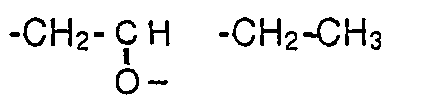
- R' den Rest

- bedeutet,
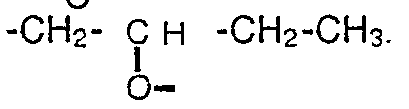
- R2 den Rest


- oder

- darstellt
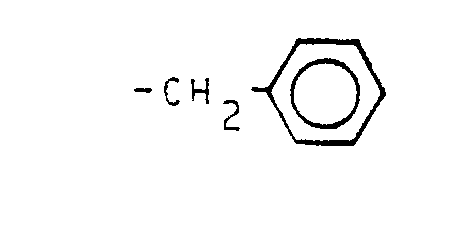
- und R3 den Rest

- bedeutet; enthält.
- Die in dem ergindungsgemäßen Nagellack enthaltenen 0-Benzyl-N-hydroxyalkylchitosane haben vorzugsweise ein durchschnittliches Molekulargewicht von etwa 5.000 bis 1.800.000. Besonders bevorzugt ist hierbei ein durchschnittliches Molekulargewicht von etwa 10.000 bis 500.000, welches durch Molekularausschluß-Chromatographie an Ultrastyragelsäulen der Firma WATERS unter Verwendung von Tetrahydrofuran als Eluenten ermittelt wurde.
- Die Grenzviskositätszahlen (Eta) der O-Benzyl-N-hydroxyalkylchitosane der Formel (I), ermittelt mit einem DIN-Ubbelohde-Viskosimeter bei 25 Grad Celsius in Tetrahydrofuran, liegen in einem Bereich von etwa 5 bis 200 ml/g, vorzugsweise 10 bis 120 ml/g.
- Der aus 1H-NMR-Spektren ermittelte Benzyl-Substitutionsgrad der O-Benzyl-N-hydroxyalkylchitosane beträgt vorzugsweise 0,8 bis 3,8.
- Die in dem erfindungsgemäßen Nagellack als Filmbildner und/oder Harzkomponente verwendeten 0-Benzyl-N-hydroxyalkylchitosane der Formel (I) führen weder zu Hautreizungen, noch sind sie toxisch, sie sind physiologisch unbedenklich und biologisch abbaubar.
- Erfindungsgemäß können die 0-Benzyl-N-hydroxyalkylchitosane der Formel (I) je nach Einsatz als Filmbildner oder Harzkomponente in dem Nagellack alleine oder zusammen mit anderen Harzen, wie zum Beispiel Nitrocellulose, verwendet werden.
- Die Konzentration der 0-Benzyl-N-hydroxyalkylchitosane der Formel (I) beträgt bei Verwendung als Filmbildner etwa 3 bis 30 Gewichtsprozent. Ein Zusatz weiterer Harzkomponenten, wie dies bei Verwendung von Nitrocellulose als Filmbildner notwendig ist, ist hierbei nicht erforderlich.
- Werden die 0-Benzyl-N-hydroxyalkylchitosane der Formel (I) als Harzkompontente eingesetzt, so sind sie in einer Konzentration von etwa 10 bis 70 Gewichtsprozent. bezogen auf die Menge des enthaltenen Filmbildners, beziehungsweise in einer Konzentration von etwa 1 bis 21 Gewichtsprozent, bezogen auf das Gesamtgewicht des Nagellackes, in dem erfindungsgemäßen Nagellack enthalten.
- Der erfindungsgemäße Nagellack ergibt bei geeigneter Formulierung auch ohne Zusatz von Weichmachern einen hochglänzenden, glatten, transparenten. zusammenhängenden Film. Jedoch kann es in bestimmten Fällen vorteilhaft sein, dem Nagellack einen oder mehrere Weichmacher in einer Gesamtmenge von etwa 0,2 bis 12 Gewichtsprozent zuzusetzen, um dem Lackfilm eine erhöhte Geschmeidigkeit und Elastizität zu verleihen, seine Neigung zum Schrumpfen herabzusetzen sowie die Haftfestigkeit auf der Nagelplatte und den Glanz zu verbessern. Die verwendeten Weichmacher sollen hochsiedend. das heißt nicht flüchtig, mit dem Filmbildner und den übrigen Bestandteilen des Nagellackes mischbar. farblos. geruchlos sowie ungiftig sein. Verwendung finden Ester mehrbasiger Säuren, wie zum Beispiel Dibutyiphthalat, Diisobutylphthalat, Diamylphthalat, Dioctylphthalat, Dimethoxyethylphthalat. Tributyiphosphat. Triphenylphosphat, Trikresylphosphat, Tributoxyethylphosphat, Triethylcitrat, Tributylcitrat, Tributyiacetylcitrat und Dibutyltartrat, Ester gesättigter und ungesättigter Fettsäuren, wie beispielsweise Butylstearat, Butylacetyiricinoleat und Glycerylacetylricinoleat, Ricinusöl, Campher sowie Mischungen aus diesen Verbindungen.
- Weiterhin enthält der erfindungsgemäße Nagellack ein Lösungsmittelsystem in einer Konzentration-von etwa 60 bis 80 Gewichtsprozent.
- Die Bezeichnung "Lösungsmittelsystem" steht für eine Mischung aus niedrig-, mittel- und hochsiedenden organischen Lösungsmitteln, die eine gute Verstreichbarkeit und relativ kurze Trocknungszeit des Lackfilms ermöglicht.
- Als niedrigsiedende Lösungsmittel können Lösungsmittel mit einem Siedepunkt von etwa 30 bis 100 Grad Celsius, wie zum Beispiel Ethanol, Isopropanol, Aceton, Methylenchlorid, Ethylacetat und Methylacetat, verwendet werden. Als mittelsiedende Lösungsmittel werden Lösungsmittel mit einem Siedepunkt von etwa 100 bis 150 Grad Celsius, wie zum Beispiel Butanol, Amylalkohol, Toluol. Ethylenglykolmonomethylether, Butylacetat und Amylacetat, eingesetzt. Als hochsiedende Lösungsmittel kommen Lösungsmittel mit einem Siedepunkt von etwa 150 bis 200 Grad Celsius, beispielsweise Dichlorethylether, Diethylenglykolmonoethylether, Diethylenglykolmonomethylether und Ethylenglykol, in Betracht.
- Der erfindungsgemäße Nagellack kann auch gefärbt vorliegen. Er enthält dann mindestens ein organisches oder anorganisches Pigment, vorzugsweise in einer Menge von etwa 0,1 bis 6 Gewichtsprozent. Als organische Pigmente können insbesondere Calcium-, Aluminium- und Lithol-Farblacke, wie zum Beispiel der Aluminiumlack von FD & C Gelb No. 5 (C.I. 19 140:1), der Aluminiumlack von FD & C Gelb No. 6 (C.I. 15 885:1), Lithol Rubin B (C.I. 15 850) und die Lithollacke D & C Rot No. 10, 11, 12 und 13 (C.I. 15 630), sowie Guanin (C.I. 75 170) genannt werden. Weitere in den erfindungsgemäßen Nagellacken verwendbare Farblacke, wie zum Beispiel der Aluminiumlack von D & C Rot No. 7, der Calciumlack von D & C Rot No. 7 und der Calciumlack von D & C Rot No. 34, werden im CTFA Cosmetic Ingredient Dictionary (1982), The Cosmetic. Toiletry und Fragrance Associoation. Inc., Washington DC,USA, beschrieben.
- Als anorganische Pigmente können beispielsweise braunes und rotes Eisenoxid, Titandioxid und Wismutoxidchlorid eingesetzt werden.
- Der erfindungsgemäße Nagellack kann wieterhin alle für einen Nagellack üblichen Bestandteile enthalten, wie beispielsweise Parfümöle oder Zusätze, die eine Sedimentation verzögern. Als Sedimentationsverzögerer werden insbesondere siliciumdioxidhaltige Verbindungen, wie zum Beispiel kolloidale Kieselsäure oder Tone des Montmorillonit-Typs (zum Beispiel Bentone 27 und Bentone 38 der National Lead Co.), sowie Metallseifen, wie beispielsweise Aluminium- und Zinkstearat, eingesetzt.
- Die in dem erfindungsgemäßen Nagellack enthaltenen neuen 0-Benzyl-N-hydroxyalkylchitosane der Formel (1) sind physiologisch unbedenklich und biologisch abbaubar. Neben der Verwendung in Nagellacken sind die neuen O-Benzyl-N-hydroxyalkylchitosane auch für die Verwendung in Klebstoffen und Lacken, in Pharmazeutika und Kosmetika sowie bei der Folien- und Filmherstellung geeignet.
- Gegenstand der vorliegenden Erfindung sind daher weiterhin neue makromolekulare, vom Chitosan abgeleitete 0-Benzyl-N-hydroxyalkylverbindungen der allgemeinen Formel (1)

- n jeden beliebigen Zahlenwert von 0,1 bis 10
- und q jeden beliebigen Zahlenwert von 0,1 bis 4
- annehmen kann,
- p für eine ganze Zahl von 50 bis 5.000 steht,
- R1 den Rest

- R2 den Rest

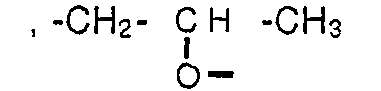

- darstellt und R3 den Rest

- bedeutet.
- Die neuen 0-Benzyl-N-hydroxyalkylchitosane der Formel (I) werden erhalten, indem man Chitosan entweder in einer Zweistufenreaktion zunächst mit einem Epoxid und dann mit Benzylchlorid umsetzt oder beide Alkylierungsmittel gleichzeitig, jedoch bei zwei verschiedenen Reaktionstemperaturen, auf das Chitosan einwirken läßt.
- Bei dem zweistufigen Verfahren zur Herstellung der Verbindungen der allgemeinen Formel (I) setzt man Chitosan, bestehend aus zu 40 bis 96 Prozent deacetyliertem Chitin, in einer 1. Reaktionsstufe in Gegenwart eines'geeigneten Dispergiermittels bei einer Temperatur von 20 bis 120 Grad Celsius, vorzugsweise 80 bis 100 Grad Celsius, 6 bis 60 Stunden lang mit einem C2 bis Cd, - Epoxid (Ethylenoxid, Propylenoxid, Butylenoxid) um und bringt anschließend das erhaltene N-Hydroxyalkylchitosan in einer 2. Reaktionsstufe mit Benzylchlorid im alkalischen Medium bei 40 bis 120 Grad Celsius, vorzugsweise bei 60 bis 90 Grad Celsius, 6 bis 60 Stunden lang zur Umsetzung.
- Bei der gleichzeitigen Umsetzung des Chitosans mit beiden Alkylierungsmitteln (Epoxid und Benzylchlorid) wird das Reaktionsgemisch zunächst 6 bis 60 Stunden lang bei 20 bis 120 Grad Celsius, vorzugsweise bei 20 bis 40 Grad Celsius, im Autoklaven gerührt. Unter diesen Reaktionsbedingungen erfolgt überwiegend eine N-Hydroxyalkylierung des Chitosans. Anschließend wird das Reaktionsgemisch auf einen alkalischen pH-Wert eingestellt und bei 40 bis 120 Grad Celsius, vorzugsweise bei 60 bis 90 Grad Celsius, 6 bis 60 Stunden lang weitergerührt. Hierbei erfolgt die O-Alkylierung des N-Hydroxyalkylchitosans.
- Das molare Verhältnis von Chitosan und Alkylierungsmittel wählt man jeweils zwischen 1:3 und 1:5.
- Als Dispergiermittel werden bei niedrigen Reaktionstemperaturen die als Alkylierungsmittel eingesetzten Verbindungen verwendet. Bei höheren Temperaturen werden als Dispergiermittel organische Lösungsmittel, wie zum Beispiel Isopropanol, tert. Butanol, Ethylenglykoldimethylether, Dioxan und Toluol, verwendet.
- Die Aufarbeitung der erhaltenen Reaktionsgemische erfolgt in der Weise, daß man nach Beseitigung des überschüssigen Epoxids das hydroxyalkylierte Zwischenprodukt durch Einengen aus dem organischen Lösungsmittel isoliert beziehungsweise nach der O-Benzylierung im alkylischen Medium das Reaktionsgemisch zunächst neutralisiert, sodann einengt und die anorganischen Salze durch Dekantieren, Zentrifugieren oder Filtrieren abtrennt. Anschließend wird das Chitosanderivat zur Entfernung von Glykolen oder Glykolethern in Aceton oder Petrolether ausgefällt und fein dispergiert. Sodann wird das Chitosanderivat abfiltriert und getrocknet.
- Die nachfolgenden Beispiele sollen den Gegenstand der Erfindung näher erläutern, ohne diesen hierauf zu beschränken.
- 50 g (0,31 mol) niedermolekulares Chitosan werden in einem Gemisch von 100 ml Ethanol oder Isopropanol und 100 ml Wasser dispergiert und im Autoklaven bei 100 Grad Celsius mit 104,5 g (1.8 mol) Propylenoxid 6 Stunden lang umgesetzt.
- Nach beendeter Reaktion wird die Reaktionsmischung unter Nachspülen mit etwa 1 Ethanol Wasser (1 : 1) beziehungsweise IsopropanolfWasser (1 : 1) aus dem Druckreaktor in einen Kolben überführt und im Vakuum auf ein Volumen von etwa 150 bis 200 ml eingeengt. Anschließend fällt man das N-Hydroxypropylchitosan in der 8 bis 10-fachen Menge Aceton aus.
- Um eingeschlossene Propylenglykole zu entfernen, wird das gefällte Derivat sodann mittels eines Hochgeschwindigkeitsrührers fein dispergiert. Der feinflockige Niederschlag wird anschiieβend über eine G3-Glassinternutsche abgetrennt und so lange mit Aceton gewaschen bis das Filtrat farblos ist.
- Nach dem Trocknen im Vakuumtrockenschrank bei 50 Grad Celsius erhält man 68 g wasserlösliches N-Hydroxypropylchitosan.
- Kenndaten:
- Grenzviskositätszahl (Eta): 80 ml/g
- Substitutionsgrad Hydroxypropyl: 1,4 bis 1,6
- Pendelhärte: 204 sec
- Wasserdampfaufnahme: 8 Prozent
- 50 g (0,21 mol) N-Hydroxypropylchitosan aus Beispiel 1 A. 20,2 ml (0.32 mol) 43-prozentige Natronlauge sowie 235 ml Toluol werden im Autoklaven mit 53,16 g (0.48 mol) Benzylchlorid versetzt und 24 Stunden lang bei 90 Grad Celsius zur Reaktion gebracht.
- Nach beendeter Reaktion verdünnt man mit Wasser. stellt den pH-Wert auf 7 ein und engt im Vakuum zur Trockene ein.
- Das Umsetzungsprodukt wird in Aceton gelöst. Anschließend wird vom abgesetzten Salz abdekantiert und die erhaltene acetonische Lösung durch Zentrifugieren und Dekantieren geklärt. Sodann engt man die Lösung im Vakuum auf ein Volumen von etwa 100 ml ein und fällt das Chitosanderivat durch Zugabe von Wasser aus. Das Chitosanderivat wird bei 50 Grad Celsius im Vakuum getrocknet. Das so erhaltene Produkt wird in Petrolether zur Beseitigung des restlichen Benzylalkohols extrahiert.
- Nach dem Absaugen über eine Glassinternutsche und dem erneuten Trocknen bei 50 Grad Celsius im Vakuum werden 67 g in organischen Lösungsmitteln lösliches 0-Benzyl-N-hydroxypropylchitosan erhalten.
- Kenndaten:
- Grenzviskositätszahl (Eta): 27 ml/g
- Substitutionsgrad Benzyl: 2,2
- Substitutionsgrad Hydroxypropyl: 1,7
- Pendelhärte: 173 sec
- Wasserdampfaufnahme: 1,6 Prozent
- 50 g (0,31 mol) niedermolekulares Chitosan werden in einem Gemisch bestehend aus 180 ml Ethyleriglykoldimethylether und 20 ml destiliertem Wasser dispergiert und im Autoklaven mit insgesamt 79.3 g = 90 ml (1,8 mol) Ethylenoxid bei 40 Grad Celsius zur Reaktion gebracht. Die Zugabe des Ethylenoxids erfolgt hierbei portionsweise (jeweils 30 ml nach erfolgtem Druckabfall) über einen Zeitraum von etwa 2 Stunden.
- Anschließend wird die Reaktionsmischung bei 40 Grad Celsius 6 Stunden lang gerührt und sodann das überschüssige Epoxid mittels Inertgas aus der Lösung entfernt. Die Reaktionsmischung wird mit 118,0 g (1,27 mol) 43-prozentige Natronlauge, 235,4 g = 214 ml (1,86 mol) Benzylchlorid sowie 200 ml Ethylenglykoldimethylether versetzt und bei 90 Grad Celsius 12 Stunden lang gerührt.
- Die Aufarbeitung des organolöslichen Chitosanderivates erfolgt in der in Beispiel 1 beschriebenen Weise. Die Ausbeute an 0-Benzyl-N-hydroxyethylchitosan beträgt 84 g.
- Kenndaten:
- Grenzviskositätszahl (Eta): 22 ml/g
- Substitutionsgrad Benzyl: 3,5
- Pendelhärte: 180 sec
- Wasserdampfaufnahme: 1,2 Prozent
- 50 g (0,31 mol) hochmolekulares Chitosan werden in einem Gemisch von 100 ml Ethanol beziehungsweise Isopropanol und 100 ml Wasser dispergiert und im Autoklaven bei 100 Grad Celsius mit 104,5 g (1,8 mol) Propylenoxid 6 Stunden lang umgesetzt.
- Nach beendeter Reaktion wird die Reaktionsmischung unter Nachspülen mit etwa 1 I Ethanol/Wasser (1 : 1) beziehungsweise Isopropanol/Wasser (1 : 1) aus dem Druckreaktor in einen Kolben überführt und im Vakuum auf ein Volumen von etwa 150 bis 200 ml eingeengt. Anschließend fällt man das N-Hydroxypropylchitosan in der 8 bis 10-fachen Menge Aceton aus.
- Um eingeschlossene Propylenglykole zu entfernen, wird das gefällte Derivat sodann mittels eines Hochgeschwindigkeitsrührers fein dispergiert. Der feinflockige Niederschlag wird anschließend abfiltriert und so lange mit Aceton gewaschen bis das Filtrat farblos ist.
- Nach dem Trocknen im Vackuum bei 50 Grad Celsius erhält man 71 g wasserlösliches N-Hydroxypropylchitosan.
- Kenndaten:
- Grenzviskositätszahl: 990 ml/g
- Substitutionsgrad Hydroxypropyl: 2,0
- Pendelhärte: 180 sec
- Wasserdampfaufnahme: 5,4 Prozent
- 50 g (0,21 mol) N-Hydroxypropylchitosan aus Beispiel 3 A, 20,2 ml (0,32 mol) 43-prozentige Natronlauge sowie 235 ml Toluol werden im Autoklaven mit 53,16 g (0,16 mol) Benzylchlorid versetzt und 24 Stunden lang bei 90 Grad Celsius zur Reaktion gebracht.
- Nach beendeter Reaktion verdünnt man mit Wasser, stellt den pH-Wert auf 7 ein und engt zur Trockne ein.
- Das Umsetzungsprodukt wird in Aceton gelöst. Anschließend wird vom abgesetzten Salz abdekantiert und die erhaltene acetonische Lösung durch Zentrifugieren und Dekantieren geklärt. Sodann engt man die Lösung im Vakuum auf ein Volumen von etwa 100 ml ein und fällt das Chitosanderivat durch Zugabe von Wasser aus. Das Chitosanderivat wird bei 50 Grad Celsius im Vakuum getrocknet. Das so erhaltene Produkt wird zur Beseitigung des restlichen Benzylalkohols mit Petrolether extrahiert.
- Nach dem Absaugen über eine Glassinternutsche und dem erneuten Trocknen bei 50 Grad Celsius im Vakuum werden 73 g 0-Benzyl-N-hydroxypropylchitosan erhalten.
- Kenndaten:
- Grenzviskositätszahl: 600 bis 650 ml/g
- Substitutionsgrad Benzyl: 1,8 bis 2,0
- Substitutionsgrad Hydroxypropyl: 1.0 bis 1,2
- Pendelhärte: 162 bis 170 sec
- Wasserdampfaufnahme: 1,2 bis 1,4 Prozent
- Als niedermolekulares Chitosan wurde ein gemahlenes Chitosan mit einer GrenzviskosItätszahl (Eta) von 160 ml/g und einem Deacetylierungsgrad von 90 Prozent eingesetzt. Das verwendete hochmolekulare Chitosan hat eine Grenzviskositätszahl (Eta) von 1600 ml/g und einen Deacetylierungsgrad von 76 Prozent.
- Der Substitutionsgrad für den Hydroxypropylrest beziehungsweise den Benzylrest wurde mit Hilfe der 'H-NMR-Spektroskopie ermittelt.
- Die Messung der Grenzviskositätszahl (Eta) erfolgte in einer wäßrigen Lösung von 0,2 molil Essigsäure und 0,1 mol/l Natriumacetat (Chitosan) beziehungsweise in einer wäßrigen Lösung von 0,2 mol/l Essigsäure und 0,1 mol/l Natriumchlorid (N-Hydroxyalkylchitosan) beziehungsweise in Tetrahydrofuran (Benzylhydroxyalkylchitosan) bei 25 Grad Celsius unter Verwendung eines DIN-Ubbelohde-Kapillarviskosimeters.
- Die Pendelhärte wurde nach König (W.König, "Härtemessungen mit dem Pendelhärteprüfer", Farbe und Lack 65. Seite 435 bis 443 (1959); DIN 53 157) bestimmt.
- Die Wasserdampfaufnahme wurde bei 70 Prozent relativer Luftfeuchte gegenüber 30 Prozent relativer Luftfeuchte ermittelt.
-
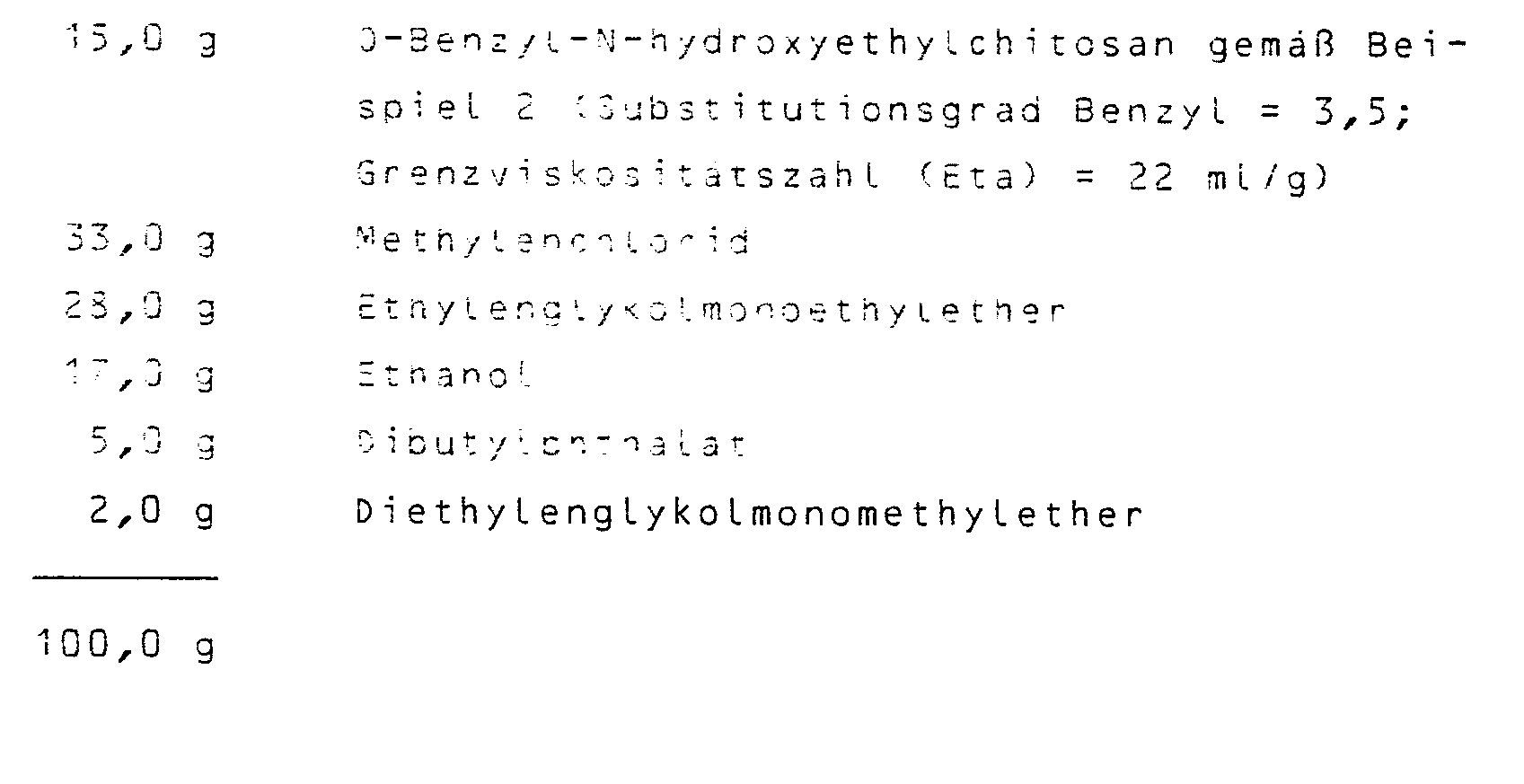
-

-

-

-

- Alle in der vorliegenden Anmeldung genannten Prozentzahlen stellen Gewichtsprozente dar.
Claims (10)






Applications Claiming Priority (2)
| Application Number | Priority Date | Filing Date | Title |
|---|---|---|---|
| DE3723811 | 1987-07-18 | ||
| DE19873723811 DE3723811A1 (de) | 1987-07-18 | 1987-07-18 | Nagellack auf der basis von o-benzyl-n-hydroxyalkylchitosanen sowie neue o-benzyl-n-hydroxyalkylderivate des chitosans |
Publications (3)
| Publication Number | Publication Date |
|---|---|
| EP0300234A2 true EP0300234A2 (de) | 1989-01-25 |
| EP0300234A3 EP0300234A3 (en) | 1989-08-02 |
| EP0300234B1 EP0300234B1 (de) | 1992-05-06 |
Family
ID=6331862
Family Applications (1)
| Application Number | Title | Priority Date | Filing Date |
|---|---|---|---|
| EP88110263A Expired - Lifetime EP0300234B1 (de) | 1987-07-18 | 1988-06-28 | Nagellack auf der Basis von O-Benzyl-N-hydroxyalkylchitosanen sowie neue O-Benzyl-N-hydroxyalkylderivate des Chitosans |
Country Status (5)
| Country | Link |
|---|---|
| US (1) | US4954619A (de) |
| EP (1) | EP0300234B1 (de) |
| JP (1) | JP2593691B2 (de) |
| DE (2) | DE3723811A1 (de) |
| ES (1) | ES2041741T3 (de) |
Cited By (2)
| Publication number | Priority date | Publication date | Assignee | Title |
|---|---|---|---|---|
| EP0714653A1 (de) * | 1994-12-02 | 1996-06-05 | L'oreal | Durchscheinende Zusammensetzung zur Nagelpflege |
| US6352687B1 (en) | 1999-07-26 | 2002-03-05 | Kirker Enterprises, Inc. | Nail enamel composition containing light reflecting material |
Families Citing this family (16)
| Publication number | Priority date | Publication date | Assignee | Title |
|---|---|---|---|---|
| JP2793650B2 (ja) * | 1989-08-30 | 1998-09-03 | 鐘紡株式会社 | メイクアップ化粧料 |
| US5202114A (en) * | 1990-02-22 | 1993-04-13 | Shiseido Company, Ltd. | Gel composition and nail polish |
| US5151302A (en) * | 1991-06-18 | 1992-09-29 | Carole L. Kent | Method for maintaining the integrity of hosiery |
| US5254161A (en) * | 1991-10-24 | 1993-10-19 | Aqualon Company | Thermally stable nitrocellulose emulsions, solutions and coatings |
| DE4310088A1 (de) * | 1993-03-27 | 1994-09-29 | Hoechst Ag | Verfahren zur Herstellung und Aufarbeitung von in wäßrigem Medium löslichen N-Hydroxyalkylchitosanen |
| US5621088A (en) * | 1995-04-10 | 1997-04-15 | Amerchol Corporation | Process for derivatizing polyglucosamines |
| US6156325A (en) * | 1998-09-16 | 2000-12-05 | L'oreal | Nail enamel composition containing a urea-modified thixotropic agent |
| DE10035991A1 (de) * | 2000-07-24 | 2002-02-14 | Polichem Sa | Nagellackzusammensetzung |
| US6555096B2 (en) | 2000-12-04 | 2003-04-29 | L'oreal S.A. | Nail enamel composition containing a urea-modified thixotropic agent in a solvent system |
| US20030064086A1 (en) * | 2001-08-31 | 2003-04-03 | Danuvio Carrion | Cosmetic compositions comprising nanoparticles and processes for using the same |
| DE102004017431A1 (de) * | 2004-04-08 | 2005-10-27 | Wella Ag | Verwendung von N-Hydroxyalkyl-O-benzylchitosanen zur Haarbehandlung |
| US20050283004A1 (en) * | 2004-06-18 | 2005-12-22 | Hopax Chemicals Manufacturing Co., Ltd. | Alkylsulfonated polyaminosaccharides |
| EP1958638A1 (de) | 2007-02-14 | 2008-08-20 | Polichem S.A. | Verwendung von Chitosanen zum Erhöhen der Nagelwachstumsrate |
| EP2116237A1 (de) * | 2008-08-05 | 2009-11-11 | Polichem SA | Zusammensetzungen enthaltend Chitosan und Dicarboxysäure zur Behandlung von Rosacea |
| JP5033742B2 (ja) * | 2008-09-16 | 2012-09-26 | 株式会社クボタ | エンジンの動弁装置 |
| US8697753B1 (en) | 2013-02-07 | 2014-04-15 | Polichem Sa | Method of treating onychomycosis |
Family Cites Families (11)
| Publication number | Priority date | Publication date | Assignee | Title |
|---|---|---|---|---|
| US3953608A (en) * | 1971-05-10 | 1976-04-27 | L'oreal | Cosmetic compositions for the skin containing a chitosan derivative |
| US4195175A (en) * | 1978-01-03 | 1980-03-25 | Johnson Edwin L | Process for the manufacture of chitosan |
| FR2478998A1 (fr) * | 1980-04-01 | 1981-10-02 | Oreal | Vernis a ongles anhydres |
| GB2094328B (en) * | 1981-02-18 | 1985-06-12 | Oreal | Anhydrous nail varnish based on a copolymer containing a vinyl or styrene sulphonamide or an unsaturated amide and an alkyl a |
| US4424346A (en) * | 1981-06-04 | 1984-01-03 | Canadian Patents And Development Ltd. | Derivatives of chitins, chitosans and other polysaccharides |
| CA1230560A (en) * | 1982-01-25 | 1987-12-22 | Eric S. Abrutyn | Nitrocellulose free nail lacquer compositions |
| DE3223423A1 (de) * | 1982-06-23 | 1983-12-29 | Wella Ag, 6100 Darmstadt | Kosmetische mittel auf der basis von chitosanderivaten, neue chitosanderivate sowie verfahren zur herstellung dieser derivate |
| DE3501891A1 (de) * | 1985-01-22 | 1986-07-24 | Wella Ag, 6100 Darmstadt | Kosmetische mittel auf der basis von quaternaeren chitosanderivaten, neue quaternaere hydroxypropyl-substituierte chitosanderivate sowie verfahren zu ihrer herstellung |
| DE3502833A1 (de) * | 1985-01-29 | 1986-07-31 | Wella Ag, 6100 Darmstadt | Kosmetische mittel auf der basis von quaternaeren chitosanderivaten, neue quaternaere hydroxyethyl-substituierte chitosanderivate sowie verfahren zu ihrer herstellung |
| US4845204A (en) * | 1985-02-07 | 1989-07-04 | Wella Aktiengesellschaft | Cosmetic compositions on the basis of alkyl-hydroxypropyl-substituted chitosan derivatives, new chitosan derivatives and processes for the production thereof |
| DE3537333C2 (de) * | 1985-10-19 | 1994-11-03 | Wella Ag | Nagellacke auf Chitinalkylester-Basis |
-
1987
- 1987-07-18 DE DE19873723811 patent/DE3723811A1/de not_active Withdrawn
-
1988
- 1988-06-24 JP JP63157895A patent/JP2593691B2/ja not_active Expired - Fee Related
- 1988-06-28 ES ES198888110263T patent/ES2041741T3/es not_active Expired - Lifetime
- 1988-06-28 EP EP88110263A patent/EP0300234B1/de not_active Expired - Lifetime
- 1988-06-28 DE DE8888110263T patent/DE3870741D1/de not_active Expired - Fee Related
- 1988-07-11 US US07/217,763 patent/US4954619A/en not_active Expired - Lifetime
Cited By (4)
| Publication number | Priority date | Publication date | Assignee | Title |
|---|---|---|---|---|
| EP0714653A1 (de) * | 1994-12-02 | 1996-06-05 | L'oreal | Durchscheinende Zusammensetzung zur Nagelpflege |
| FR2727625A1 (fr) * | 1994-12-02 | 1996-06-07 | Oreal | Composition translucide applicable sur l'ongle |
| US5725866A (en) * | 1994-12-02 | 1998-03-10 | L'oreal | Translucent composition that can be applied to the nail |
| US6352687B1 (en) | 1999-07-26 | 2002-03-05 | Kirker Enterprises, Inc. | Nail enamel composition containing light reflecting material |
Also Published As
| Publication number | Publication date |
|---|---|
| US4954619A (en) | 1990-09-04 |
| EP0300234A3 (en) | 1989-08-02 |
| JP2593691B2 (ja) | 1997-03-26 |
| DE3723811A1 (de) | 1989-01-26 |
| DE3870741D1 (de) | 1992-06-11 |
| ES2041741T3 (es) | 1993-12-01 |
| EP0300234B1 (de) | 1992-05-06 |
| JPS6436602A (en) | 1989-02-07 |
Similar Documents
| Publication | Publication Date | Title |
|---|---|---|
| EP0300234B1 (de) | Nagellack auf der Basis von O-Benzyl-N-hydroxyalkylchitosanen sowie neue O-Benzyl-N-hydroxyalkylderivate des Chitosans | |
| DE1745208C3 (de) | Haarfestiger | |
| DE2817325C3 (de) | Kosmetische Makeup-Zubereitung | |
| DE69105608T2 (de) | Nagellack enthaltend Glycerintriester. | |
| DE2721456C2 (de) | Nagellack | |
| DE3123914C2 (de) | Kationisierte Dextranderivate | |
| DE69413773T2 (de) | Kosmetisches Mittel enthaltend ein epoxydiertes Öl als Weichmacher | |
| EP0610471B1 (de) | Mittel zur festigung der haare auf der basis von lignin oder ligninderivaten sowie dihydroxypropyllignin | |
| DE2345560B2 (de) | Thixotropes ueberzugsmittel | |
| DE69600084T2 (de) | Verwendung von hydroxylierte Carbonsäure zur Behandlung von Nägeln | |
| DD284598A5 (de) | Verfahren zur herstellung eines nagellacks mit einem gehalt an einem wasserunloeslichen filmbildner und einem antimykotisch wirksamen stoff | |
| DE69312659T2 (de) | Nagellackentferner mit Gelatine | |
| EP0193736A2 (de) | Kosmetische Mittel auf der Basis von alkyl-hydroxypropyl-substituierten Chitosanderivaten, neue Chitosanderivate sowie Verfahren zu ihrer Herstellung | |
| DE69612870T2 (de) | Verfahren und zusammensetzung von schnelltrocknendem nagellack | |
| DE2854109A1 (de) | Nagellack sowie gel zur herstellung desselben | |
| DE1046879B (de) | Verfahren zur Herstellung eines waermehaertbaren Kunstharzes, insbesondere fuer Lackzwecke | |
| DE2446262A1 (de) | Verwendung von pullulan in anstrichstoffen | |
| EP0365957B1 (de) | Celluloseester/Polymerkombinationen, deren Herstellung und Verwendung | |
| DE19847936A1 (de) | Parfümkomposition mit Bräunungseffekt oder Lichtschutz- und Bräunungseffekt | |
| DE60215091T2 (de) | Haarfrisieraerosol auf Basis von Carboxyalkylalkylcellulose | |
| DE1770518C3 (de) | Verfahren zur Herstellung von Polykondensaten auf der Grundlage von 5,5-Oialkylhydantoinen und deren Verwendung | |
| DE3537333C2 (de) | Nagellacke auf Chitinalkylester-Basis | |
| DE69303664T2 (de) | Anwendung eines Arylsulfonylurethans als verstärkendes Harz in cellulosem Nagellackmittel-Arylsulfonylurethane und cellulose Nagellackmittel | |
| AT144030B (de) | Plastifizierungs- und Weichhaltungsmittel. | |
| DE1492117B2 (de) | Verfahren zur herstellung von modifizierten polyvinylalkoholen und deren verwendung als ueberzuege auf pharmazeutischen praeparaten |
Legal Events
| Date | Code | Title | Description |
|---|---|---|---|
| PUAI | Public reference made under article 153(3) epc to a published international application that has entered the european phase |
Free format text: ORIGINAL CODE: 0009012 |
|
| AK | Designated contracting states |
Kind code of ref document: A2 Designated state(s): DE ES FR GB IT |
|
| ITCL | It: translation for ep claims filed |
Representative=s name: BARZANO' E ZANARDO ROMA S.P.A. |
|
| EL | Fr: translation of claims filed | ||
| GBC | Gb: translation of claims filed (gb section 78(7)/1977) | ||
| EM | Fr: revised translation of claims filed | ||
| PUAL | Search report despatched |
Free format text: ORIGINAL CODE: 0009013 |
|
| AK | Designated contracting states |
Kind code of ref document: A3 Designated state(s): DE ES FR GB IT |
|
| 17P | Request for examination filed |
Effective date: 19900104 |
|
| 17Q | First examination report despatched |
Effective date: 19911018 |
|
| GRAA | (expected) grant |
Free format text: ORIGINAL CODE: 0009210 |
|
| AK | Designated contracting states |
Kind code of ref document: B1 Designated state(s): DE ES FR GB IT |
|
| REF | Corresponds to: |
Ref document number: 3870741 Country of ref document: DE Date of ref document: 19920611 |
|
| ITF | It: translation for a ep patent filed | ||
| GBT | Gb: translation of ep patent filed (gb section 77(6)(a)/1977) | ||
| EN | Fr: translation not filed | ||
| REG | Reference to a national code |
Ref country code: FR Ref legal event code: AR |
|
| ET | Fr: translation filed | ||
| REG | Reference to a national code |
Ref country code: FR Ref legal event code: BR |
|
| ET1 | Fr: translation filed ** revision of the translation of the patent or the claims | ||
| PLBE | No opposition filed within time limit |
Free format text: ORIGINAL CODE: 0009261 |
|
| STAA | Information on the status of an ep patent application or granted ep patent |
Free format text: STATUS: NO OPPOSITION FILED WITHIN TIME LIMIT |
|
| 26N | No opposition filed | ||
| REG | Reference to a national code |
Ref country code: ES Ref legal event code: FG2A Ref document number: 2041741 Country of ref document: ES Kind code of ref document: T3 |
|
| REG | Reference to a national code |
Ref country code: GB Ref legal event code: IF02 |
|
| PGFP | Annual fee paid to national office [announced via postgrant information from national office to epo] |
Ref country code: GB Payment date: 20030530 Year of fee payment: 16 |
|
| PGFP | Annual fee paid to national office [announced via postgrant information from national office to epo] |
Ref country code: DE Payment date: 20030603 Year of fee payment: 16 |
|
| PGFP | Annual fee paid to national office [announced via postgrant information from national office to epo] |
Ref country code: FR Payment date: 20030611 Year of fee payment: 16 |
|
| PGFP | Annual fee paid to national office [announced via postgrant information from national office to epo] |
Ref country code: ES Payment date: 20030616 Year of fee payment: 16 |
|
| PG25 | Lapsed in a contracting state [announced via postgrant information from national office to epo] |
Ref country code: GB Free format text: LAPSE BECAUSE OF NON-PAYMENT OF DUE FEES Effective date: 20040628 |
|
| PG25 | Lapsed in a contracting state [announced via postgrant information from national office to epo] |
Ref country code: ES Free format text: LAPSE BECAUSE OF NON-PAYMENT OF DUE FEES Effective date: 20040629 |
|
| PG25 | Lapsed in a contracting state [announced via postgrant information from national office to epo] |
Ref country code: DE Free format text: LAPSE BECAUSE OF NON-PAYMENT OF DUE FEES Effective date: 20050101 |
|
| GBPC | Gb: european patent ceased through non-payment of renewal fee |
Effective date: 20040628 |
|
| PG25 | Lapsed in a contracting state [announced via postgrant information from national office to epo] |
Ref country code: FR Free format text: LAPSE BECAUSE OF NON-PAYMENT OF DUE FEES Effective date: 20050228 |
|
| REG | Reference to a national code |
Ref country code: FR Ref legal event code: ST |
|
| PG25 | Lapsed in a contracting state [announced via postgrant information from national office to epo] |
Ref country code: IT Free format text: LAPSE BECAUSE OF NON-PAYMENT OF DUE FEES;WARNING: LAPSES OF ITALIAN PATENTS WITH EFFECTIVE DATE BEFORE 2007 MAY HAVE OCCURRED AT ANY TIME BEFORE 2007. THE CORRECT EFFECTIVE DATE MAY BE DIFFERENT FROM THE ONE RECORDED. Effective date: 20050628 |
|
| REG | Reference to a national code |
Ref country code: ES Ref legal event code: FD2A Effective date: 20040629 |