EP0300665A2 - Cephalosporinverbindungen, Verfahren zu ihrer Herstellung und diese enthaltende pharmazeutische Präparate - Google Patents
Cephalosporinverbindungen, Verfahren zu ihrer Herstellung und diese enthaltende pharmazeutische Präparate Download PDFInfo
- Publication number
- EP0300665A2 EP0300665A2 EP88306354A EP88306354A EP0300665A2 EP 0300665 A2 EP0300665 A2 EP 0300665A2 EP 88306354 A EP88306354 A EP 88306354A EP 88306354 A EP88306354 A EP 88306354A EP 0300665 A2 EP0300665 A2 EP 0300665A2
- Authority
- EP
- European Patent Office
- Prior art keywords
- alkyl
- formula
- compound
- group
- amino
- Prior art date
- Legal status (The legal status is an assumption and is not a legal conclusion. Google has not performed a legal analysis and makes no representation as to the accuracy of the status listed.)
- Granted
Links
- -1 Cephalosporin compounds Chemical class 0.000 title claims abstract description 215
- 229930186147 Cephalosporin Natural products 0.000 title claims abstract description 35
- 229940124587 cephalosporin Drugs 0.000 title claims abstract description 35
- 239000008194 pharmaceutical composition Substances 0.000 title claims description 7
- 238000000034 method Methods 0.000 title abstract description 13
- 238000002360 preparation method Methods 0.000 title abstract description 6
- 230000008569 process Effects 0.000 title abstract description 4
- 229910052739 hydrogen Inorganic materials 0.000 claims abstract description 40
- 239000001257 hydrogen Substances 0.000 claims abstract description 40
- 125000001997 phenyl group Chemical group [H]C1=C([H])C([H])=C(*)C([H])=C1[H] 0.000 claims abstract description 28
- 125000002887 hydroxy group Chemical group [H]O* 0.000 claims abstract description 27
- UFHFLCQGNIYNRP-UHFFFAOYSA-N Hydrogen Chemical compound [H][H] UFHFLCQGNIYNRP-UHFFFAOYSA-N 0.000 claims abstract description 17
- 238000001727 in vivo Methods 0.000 claims abstract description 15
- 150000002148 esters Chemical class 0.000 claims abstract description 13
- 125000002947 alkylene group Chemical group 0.000 claims abstract description 3
- 125000002950 monocyclic group Chemical group 0.000 claims abstract description 3
- 150000001875 compounds Chemical class 0.000 claims description 91
- 125000000217 alkyl group Chemical group 0.000 claims description 90
- 150000001780 cephalosporins Chemical class 0.000 claims description 30
- 125000003545 alkoxy group Chemical group 0.000 claims description 27
- 125000003282 alkyl amino group Chemical group 0.000 claims description 21
- 125000005115 alkyl carbamoyl group Chemical group 0.000 claims description 18
- 125000003178 carboxy group Chemical group [H]OC(*)=O 0.000 claims description 18
- 125000000753 cycloalkyl group Chemical group 0.000 claims description 17
- 229910052736 halogen Inorganic materials 0.000 claims description 17
- 150000002367 halogens Chemical group 0.000 claims description 17
- 229910052757 nitrogen Inorganic materials 0.000 claims description 17
- 125000002924 primary amino group Chemical group [H]N([H])* 0.000 claims description 17
- 125000004453 alkoxycarbonyl group Chemical group 0.000 claims description 16
- RAXXELZNTBOGNW-UHFFFAOYSA-N imidazole Natural products C1=CNC=N1 RAXXELZNTBOGNW-UHFFFAOYSA-N 0.000 claims description 16
- 125000006239 protecting group Chemical group 0.000 claims description 15
- 125000004122 cyclic group Chemical group 0.000 claims description 14
- 125000000325 methylidene group Chemical group [H]C([H])=* 0.000 claims description 13
- SIKJAQJRHWYJAI-UHFFFAOYSA-N Indole Chemical compound C1=CC=C2NC=CC2=C1 SIKJAQJRHWYJAI-UHFFFAOYSA-N 0.000 claims description 12
- JUJWROOIHBZHMG-UHFFFAOYSA-N Pyridine Chemical group C1=CC=NC=C1 JUJWROOIHBZHMG-UHFFFAOYSA-N 0.000 claims description 12
- KAESVJOAVNADME-UHFFFAOYSA-N Pyrrole Chemical compound C=1C=CNC=1 KAESVJOAVNADME-UHFFFAOYSA-N 0.000 claims description 12
- NINIDFKCEFEMDL-UHFFFAOYSA-N Sulfur Chemical group [S] NINIDFKCEFEMDL-UHFFFAOYSA-N 0.000 claims description 12
- QVGXLLKOCUKJST-UHFFFAOYSA-N atomic oxygen Chemical group [O] QVGXLLKOCUKJST-UHFFFAOYSA-N 0.000 claims description 12
- 125000003917 carbamoyl group Chemical group [H]N([H])C(*)=O 0.000 claims description 12
- 125000004093 cyano group Chemical group *C#N 0.000 claims description 12
- 150000002431 hydrogen Chemical class 0.000 claims description 12
- 229910052760 oxygen Inorganic materials 0.000 claims description 12
- 239000001301 oxygen Chemical group 0.000 claims description 12
- 239000005864 Sulphur Chemical group 0.000 claims description 11
- 229910052799 carbon Inorganic materials 0.000 claims description 11
- 238000006243 chemical reaction Methods 0.000 claims description 11
- 125000004435 hydrogen atom Chemical group [H]* 0.000 claims description 11
- IJGRMHOSHXDMSA-UHFFFAOYSA-N nitrogen Substances N#N IJGRMHOSHXDMSA-UHFFFAOYSA-N 0.000 claims description 11
- 239000002253 acid Substances 0.000 claims description 10
- 125000003342 alkenyl group Chemical group 0.000 claims description 9
- 125000001797 benzyl group Chemical group [H]C1=C([H])C([H])=C(C([H])=C1[H])C([H])([H])* 0.000 claims description 9
- 125000004433 nitrogen atom Chemical group N* 0.000 claims description 9
- QJGQUHMNIGDVPM-UHFFFAOYSA-N nitrogen group Chemical group [N] QJGQUHMNIGDVPM-UHFFFAOYSA-N 0.000 claims description 9
- ZAMOUSCENKQFHK-UHFFFAOYSA-N Chlorine atom Chemical compound [Cl] ZAMOUSCENKQFHK-UHFFFAOYSA-N 0.000 claims description 8
- YLQBMQCUIZJEEH-UHFFFAOYSA-N Furan Chemical compound C=1C=COC=1 YLQBMQCUIZJEEH-UHFFFAOYSA-N 0.000 claims description 8
- KYQCOXFCLRTKLS-UHFFFAOYSA-N Pyrazine Chemical group C1=CN=CC=N1 KYQCOXFCLRTKLS-UHFFFAOYSA-N 0.000 claims description 8
- YTPLMLYBLZKORZ-UHFFFAOYSA-N Thiophene Chemical compound C=1C=CSC=1 YTPLMLYBLZKORZ-UHFFFAOYSA-N 0.000 claims description 8
- 239000000460 chlorine Substances 0.000 claims description 8
- 229910052801 chlorine Inorganic materials 0.000 claims description 8
- 125000000392 cycloalkenyl group Chemical group 0.000 claims description 8
- 125000002023 trifluoromethyl group Chemical group FC(F)(F)* 0.000 claims description 8
- OKTJSMMVPCPJKN-UHFFFAOYSA-N Carbon Chemical compound [C] OKTJSMMVPCPJKN-UHFFFAOYSA-N 0.000 claims description 7
- WTKZEGDFNFYCGP-UHFFFAOYSA-N Pyrazole Chemical compound C=1C=NNC=1 WTKZEGDFNFYCGP-UHFFFAOYSA-N 0.000 claims description 7
- 125000004414 alkyl thio group Chemical group 0.000 claims description 7
- 125000001072 heteroaryl group Chemical group 0.000 claims description 7
- 125000005842 heteroatom Chemical group 0.000 claims description 7
- 125000000449 nitro group Chemical group [O-][N+](*)=O 0.000 claims description 7
- 150000003839 salts Chemical class 0.000 claims description 7
- HYZJCKYKOHLVJF-UHFFFAOYSA-N 1H-benzimidazole Chemical compound C1=CC=C2NC=NC2=C1 HYZJCKYKOHLVJF-UHFFFAOYSA-N 0.000 claims description 6
- WKBOTKDWSSQWDR-UHFFFAOYSA-N Bromine atom Chemical compound [Br] WKBOTKDWSSQWDR-UHFFFAOYSA-N 0.000 claims description 6
- IANQTJSKSUMEQM-UHFFFAOYSA-N benzofuran Natural products C1=CC=C2OC=CC2=C1 IANQTJSKSUMEQM-UHFFFAOYSA-N 0.000 claims description 6
- IOJUPLGTWVMSFF-UHFFFAOYSA-N benzothiazole Chemical compound C1=CC=C2SC=NC2=C1 IOJUPLGTWVMSFF-UHFFFAOYSA-N 0.000 claims description 6
- GDTBXPJZTBHREO-UHFFFAOYSA-N bromine Substances BrBr GDTBXPJZTBHREO-UHFFFAOYSA-N 0.000 claims description 6
- 229910052794 bromium Inorganic materials 0.000 claims description 6
- 125000001589 carboacyl group Chemical group 0.000 claims description 6
- 229910052731 fluorine Inorganic materials 0.000 claims description 6
- 239000011737 fluorine Substances 0.000 claims description 6
- 125000005843 halogen group Chemical group 0.000 claims description 6
- PZOUSPYUWWUPPK-UHFFFAOYSA-N indole Natural products CC1=CC=CC2=C1C=CN2 PZOUSPYUWWUPPK-UHFFFAOYSA-N 0.000 claims description 6
- RKJUIXBNRJVNHR-UHFFFAOYSA-N indolenine Natural products C1=CC=C2CC=NC2=C1 RKJUIXBNRJVNHR-UHFFFAOYSA-N 0.000 claims description 6
- UMJSCPRVCHMLSP-UHFFFAOYSA-N pyridine Natural products COC1=CC=CN=C1 UMJSCPRVCHMLSP-UHFFFAOYSA-N 0.000 claims description 6
- CZPWVGJYEJSRLH-UHFFFAOYSA-N Pyrimidine Chemical group C1=CN=CN=C1 CZPWVGJYEJSRLH-UHFFFAOYSA-N 0.000 claims description 5
- 125000004202 aminomethyl group Chemical group [H]N([H])C([H])([H])* 0.000 claims description 5
- CREXVNNSNOKDHW-UHFFFAOYSA-N azaniumylideneazanide Chemical group N[N] CREXVNNSNOKDHW-UHFFFAOYSA-N 0.000 claims description 5
- 150000002460 imidazoles Chemical class 0.000 claims description 5
- PXGOKWXKJXAPGV-UHFFFAOYSA-N Fluorine Chemical compound FF PXGOKWXKJXAPGV-UHFFFAOYSA-N 0.000 claims description 4
- PCNDJXKNXGMECE-UHFFFAOYSA-N Phenazine Chemical group C1=CC=CC2=NC3=CC=CC=C3N=C21 PCNDJXKNXGMECE-UHFFFAOYSA-N 0.000 claims description 4
- FZWLAAWBMGSTSO-UHFFFAOYSA-N Thiazole Chemical compound C1=CSC=N1 FZWLAAWBMGSTSO-UHFFFAOYSA-N 0.000 claims description 4
- 125000003277 amino group Chemical group 0.000 claims description 4
- 150000001450 anions Chemical class 0.000 claims description 4
- 150000001721 carbon Chemical group 0.000 claims description 4
- 150000001768 cations Chemical class 0.000 claims description 4
- 125000004966 cyanoalkyl group Chemical group 0.000 claims description 4
- 125000004663 dialkyl amino group Chemical group 0.000 claims description 4
- 125000001188 haloalkyl group Chemical group 0.000 claims description 4
- 125000002816 methylsulfanyl group Chemical group [H]C([H])([H])S[*] 0.000 claims description 4
- PBMFSQRYOILNGV-UHFFFAOYSA-N pyridazine Chemical group C1=CC=NN=C1 PBMFSQRYOILNGV-UHFFFAOYSA-N 0.000 claims description 4
- 238000006467 substitution reaction Methods 0.000 claims description 4
- 229930192474 thiophene Natural products 0.000 claims description 4
- UGUHFDPGDQDVGX-UHFFFAOYSA-N 1,2,3-thiadiazole Chemical compound C1=CSN=N1 UGUHFDPGDQDVGX-UHFFFAOYSA-N 0.000 claims description 3
- BCMCBBGGLRIHSE-UHFFFAOYSA-N 1,3-benzoxazole Chemical compound C1=CC=C2OC=NC2=C1 BCMCBBGGLRIHSE-UHFFFAOYSA-N 0.000 claims description 3
- FCEHBMOGCRZNNI-UHFFFAOYSA-N 1-benzothiophene Chemical compound C1=CC=C2SC=CC2=C1 FCEHBMOGCRZNNI-UHFFFAOYSA-N 0.000 claims description 3
- PYPGAMUVJIIXGC-UHFFFAOYSA-N 2,3-dihydro-1,2-benzoxazin-4-one Chemical compound C1=CC=C2C(=O)CNOC2=C1 PYPGAMUVJIIXGC-UHFFFAOYSA-N 0.000 claims description 3
- 101150020251 NR13 gene Proteins 0.000 claims description 3
- PCKPVGOLPKLUHR-UHFFFAOYSA-N OH-Indolxyl Natural products C1=CC=C2C(O)=CNC2=C1 PCKPVGOLPKLUHR-UHFFFAOYSA-N 0.000 claims description 3
- ZCQWOFVYLHDMMC-UHFFFAOYSA-N Oxazole Chemical compound C1=COC=N1 ZCQWOFVYLHDMMC-UHFFFAOYSA-N 0.000 claims description 3
- 230000002378 acidificating effect Effects 0.000 claims description 3
- 125000004423 acyloxy group Chemical group 0.000 claims description 3
- 125000000490 cinnamyl group Chemical group C(C=CC1=CC=CC=C1)* 0.000 claims description 3
- 125000004185 ester group Chemical group 0.000 claims description 3
- 125000002485 formyl group Chemical group [H]C(*)=O 0.000 claims description 3
- 125000005368 heteroarylthio group Chemical group 0.000 claims description 3
- JYGFTBXVXVMTGB-UHFFFAOYSA-N indolin-2-one Chemical compound C1=CC=C2NC(=O)CC2=C1 JYGFTBXVXVMTGB-UHFFFAOYSA-N 0.000 claims description 3
- 125000000956 methoxy group Chemical group [H]C([H])([H])O* 0.000 claims description 3
- 125000004170 methylsulfonyl group Chemical group [H]C([H])([H])S(*)(=O)=O 0.000 claims description 3
- 230000000269 nucleophilic effect Effects 0.000 claims description 3
- 125000005476 oxopyrrolidinyl group Chemical group 0.000 claims description 3
- 125000003356 phenylsulfanyl group Chemical group [*]SC1=C([H])C([H])=C([H])C([H])=C1[H] 0.000 claims description 3
- 125000001424 substituent group Chemical group 0.000 claims description 3
- 125000004187 tetrahydropyran-2-yl group Chemical group [H]C1([H])OC([H])(*)C([H])([H])C([H])([H])C1([H])[H] 0.000 claims description 3
- 150000003536 tetrazoles Chemical class 0.000 claims description 3
- 125000006300 thietan-3-yl group Chemical group [H]C1([H])SC([H])([H])C1([H])* 0.000 claims description 3
- 125000000391 vinyl group Chemical group [H]C([*])=C([H])[H] 0.000 claims description 3
- 229920002554 vinyl polymer Polymers 0.000 claims description 3
- RBIIKVXVYVANCQ-CUWPLCDZSA-N (2s,4s,5s)-5-amino-n-(3-amino-2,2-dimethyl-3-oxopropyl)-6-[4-(2-chlorophenyl)-2,2-dimethyl-5-oxopiperazin-1-yl]-4-hydroxy-2-propan-2-ylhexanamide Chemical compound C1C(C)(C)N(C[C@H](N)[C@@H](O)C[C@@H](C(C)C)C(=O)NCC(C)(C)C(N)=O)CC(=O)N1C1=CC=CC=C1Cl RBIIKVXVYVANCQ-CUWPLCDZSA-N 0.000 claims description 2
- 125000002373 5 membered heterocyclic group Chemical group 0.000 claims description 2
- 125000004070 6 membered heterocyclic group Chemical group 0.000 claims description 2
- 150000001204 N-oxides Chemical class 0.000 claims description 2
- 150000007513 acids Chemical class 0.000 claims description 2
- 125000005236 alkanoylamino group Chemical group 0.000 claims description 2
- 125000006323 alkenyl amino group Chemical group 0.000 claims description 2
- 125000000676 alkoxyimino group Chemical group 0.000 claims description 2
- 125000000304 alkynyl group Chemical group 0.000 claims description 2
- 125000004429 atom Chemical group 0.000 claims description 2
- 125000000852 azido group Chemical group *N=[N+]=[N-] 0.000 claims description 2
- 125000003236 benzoyl group Chemical group [H]C1=C([H])C([H])=C(C([H])=C1[H])C(*)=O 0.000 claims description 2
- 125000002618 bicyclic heterocycle group Chemical group 0.000 claims description 2
- 125000001951 carbamoylamino group Chemical group C(N)(=O)N* 0.000 claims description 2
- 125000002837 carbocyclic group Chemical group 0.000 claims description 2
- 125000004181 carboxyalkyl group Chemical group 0.000 claims description 2
- 125000005117 dialkylcarbamoyl group Chemical group 0.000 claims description 2
- 125000002768 hydroxyalkyl group Chemical group 0.000 claims description 2
- ZLTPDFXIESTBQG-UHFFFAOYSA-N isothiazole Chemical compound C=1C=NSC=1 ZLTPDFXIESTBQG-UHFFFAOYSA-N 0.000 claims description 2
- CTAPFRYPJLPFDF-UHFFFAOYSA-N isoxazole Chemical compound C=1C=NOC=1 CTAPFRYPJLPFDF-UHFFFAOYSA-N 0.000 claims description 2
- 238000004519 manufacturing process Methods 0.000 claims description 2
- 125000006518 morpholino carbonyl group Chemical group [H]C1([H])OC([H])([H])C([H])([H])N(C(*)=O)C1([H])[H] 0.000 claims description 2
- 125000001624 naphthyl group Chemical group 0.000 claims description 2
- 125000006501 nitrophenyl group Chemical group 0.000 claims description 2
- 229910052698 phosphorus Inorganic materials 0.000 claims description 2
- 239000002243 precursor Substances 0.000 claims description 2
- 125000001436 propyl group Chemical group [H]C([*])([H])C([H])([H])C([H])([H])[H] 0.000 claims description 2
- 125000001544 thienyl group Chemical group 0.000 claims description 2
- UHOVQNZJYSORNB-UHFFFAOYSA-N Benzene Chemical group C1=CC=CC=C1 UHOVQNZJYSORNB-UHFFFAOYSA-N 0.000 claims 3
- 125000004169 (C1-C6) alkyl group Chemical group 0.000 claims 1
- 239000003937 drug carrier Substances 0.000 claims 1
- 125000000714 pyrimidinyl group Chemical group 0.000 claims 1
- 239000003242 anti bacterial agent Substances 0.000 abstract description 3
- OKKJLVBELUTLKV-UHFFFAOYSA-N Methanol Chemical compound OC OKKJLVBELUTLKV-UHFFFAOYSA-N 0.000 description 28
- 125000001495 ethyl group Chemical group [H]C([H])([H])C([H])([H])* 0.000 description 18
- 125000002496 methyl group Chemical group [H]C([H])([H])* 0.000 description 16
- ZMANZCXQSJIPKH-UHFFFAOYSA-N Triethylamine Chemical compound CCN(CC)CC ZMANZCXQSJIPKH-UHFFFAOYSA-N 0.000 description 13
- 239000007858 starting material Substances 0.000 description 11
- QTBSBXVTEAMEQO-UHFFFAOYSA-N Acetic acid Chemical compound CC(O)=O QTBSBXVTEAMEQO-UHFFFAOYSA-N 0.000 description 10
- 239000000203 mixture Substances 0.000 description 10
- 125000001449 isopropyl group Chemical group [H]C([H])([H])C([H])(*)C([H])([H])[H] 0.000 description 7
- 238000005481 NMR spectroscopy Methods 0.000 description 6
- 230000000844 anti-bacterial effect Effects 0.000 description 6
- ZMXDDKWLCZADIW-UHFFFAOYSA-N N,N-Dimethylformamide Chemical compound CN(C)C=O ZMXDDKWLCZADIW-UHFFFAOYSA-N 0.000 description 5
- 230000000694 effects Effects 0.000 description 5
- 239000000243 solution Substances 0.000 description 5
- 238000012360 testing method Methods 0.000 description 5
- IAZDPXIOMUYVGZ-UHFFFAOYSA-N Dimethylsulphoxide Chemical compound CS(C)=O IAZDPXIOMUYVGZ-UHFFFAOYSA-N 0.000 description 4
- LFQSCWFLJHTTHZ-UHFFFAOYSA-N Ethanol Chemical compound CCO LFQSCWFLJHTTHZ-UHFFFAOYSA-N 0.000 description 4
- 241001465754 Metazoa Species 0.000 description 4
- 239000002585 base Substances 0.000 description 4
- 238000010511 deprotection reaction Methods 0.000 description 4
- 125000003754 ethoxycarbonyl group Chemical group C(=O)(OCC)* 0.000 description 4
- 125000004123 n-propyl group Chemical group [H]C([H])([H])C([H])([H])C([H])([H])* 0.000 description 4
- 239000000047 product Substances 0.000 description 4
- DTQVDTLACAAQTR-UHFFFAOYSA-N trifluoroacetic acid Substances OC(=O)C(F)(F)F DTQVDTLACAAQTR-UHFFFAOYSA-N 0.000 description 4
- 125000001731 2-cyanoethyl group Chemical group [H]C([H])(*)C([H])([H])C#N 0.000 description 3
- 125000003903 2-propenyl group Chemical group [H]C([*])([H])C([H])=C([H])[H] 0.000 description 3
- 125000003668 acetyloxy group Chemical group [H]C([H])([H])C(=O)O[*] 0.000 description 3
- 125000003118 aryl group Chemical group 0.000 description 3
- 125000001995 cyclobutyl group Chemical group [H]C1([H])C([H])([H])C([H])(*)C1([H])[H] 0.000 description 3
- 125000001511 cyclopentyl group Chemical group [H]C1([H])C([H])([H])C([H])([H])C([H])(*)C1([H])[H] 0.000 description 3
- 239000003112 inhibitor Substances 0.000 description 3
- 238000001990 intravenous administration Methods 0.000 description 3
- 239000011347 resin Substances 0.000 description 3
- 229920005989 resin Polymers 0.000 description 3
- 125000000999 tert-butyl group Chemical group [H]C([H])([H])C(*)(C([H])([H])[H])C([H])([H])[H] 0.000 description 3
- ILMRJRBKQSSXGY-UHFFFAOYSA-N tert-butyl(dimethyl)silicon Chemical group C[Si](C)C(C)(C)C ILMRJRBKQSSXGY-UHFFFAOYSA-N 0.000 description 3
- 125000000026 trimethylsilyl group Chemical group [H]C([H])([H])[Si]([*])(C([H])([H])[H])C([H])([H])[H] 0.000 description 3
- XLYOFNOQVPJJNP-UHFFFAOYSA-N water Substances O XLYOFNOQVPJJNP-UHFFFAOYSA-N 0.000 description 3
- WYHMNJKAVNPOOR-UHFFFAOYSA-N (2-acetyloxy-4-formylphenyl) acetate Chemical compound CC(=O)OC1=CC=C(C=O)C=C1OC(C)=O WYHMNJKAVNPOOR-UHFFFAOYSA-N 0.000 description 2
- PAMIQIKDUOTOBW-UHFFFAOYSA-N 1-methylpiperidine Chemical compound CN1CCCCC1 PAMIQIKDUOTOBW-UHFFFAOYSA-N 0.000 description 2
- 125000000022 2-aminoethyl group Chemical group [H]C([*])([H])C([H])([H])N([H])[H] 0.000 description 2
- 125000000143 2-carboxyethyl group Chemical group [H]OC(=O)C([H])([H])C([H])([H])* 0.000 description 2
- 125000003006 2-dimethylaminoethyl group Chemical group [H]C([H])([H])N(C([H])([H])[H])C([H])([H])C([H])([H])* 0.000 description 2
- 125000000954 2-hydroxyethyl group Chemical group [H]C([*])([H])C([H])([H])O[H] 0.000 description 2
- 125000004200 2-methoxyethyl group Chemical group [H]C([H])([H])OC([H])([H])C([H])([H])* 0.000 description 2
- RGSFGYAAUTVSQA-UHFFFAOYSA-N Cyclopentane Chemical compound C1CCCC1 RGSFGYAAUTVSQA-UHFFFAOYSA-N 0.000 description 2
- XEKOWRVHYACXOJ-UHFFFAOYSA-N Ethyl acetate Chemical compound CCOC(C)=O XEKOWRVHYACXOJ-UHFFFAOYSA-N 0.000 description 2
- VEXZGXHMUGYJMC-UHFFFAOYSA-N Hydrochloric acid Chemical compound Cl VEXZGXHMUGYJMC-UHFFFAOYSA-N 0.000 description 2
- YNAVUWVOSKDBBP-UHFFFAOYSA-N Morpholine Chemical compound C1COCCN1 YNAVUWVOSKDBBP-UHFFFAOYSA-N 0.000 description 2
- NBIIXXVUZAFLBC-UHFFFAOYSA-N Phosphoric acid Chemical compound OP(O)(O)=O NBIIXXVUZAFLBC-UHFFFAOYSA-N 0.000 description 2
- 125000000738 acetamido group Chemical group [H]C([H])([H])C(=O)N([H])[*] 0.000 description 2
- 125000002252 acyl group Chemical group 0.000 description 2
- 150000001412 amines Chemical class 0.000 description 2
- 125000000649 benzylidene group Chemical group [H]C(=[*])C1=C([H])C([H])=C([H])C([H])=C1[H] 0.000 description 2
- 239000002775 capsule Substances 0.000 description 2
- 125000004432 carbon atom Chemical group C* 0.000 description 2
- KRKNYBCHXYNGOX-UHFFFAOYSA-N citric acid Natural products OC(=O)CC(O)(C(O)=O)CC(O)=O KRKNYBCHXYNGOX-UHFFFAOYSA-N 0.000 description 2
- 125000000113 cyclohexyl group Chemical group [H]C1([H])C([H])([H])C([H])([H])C([H])(*)C([H])([H])C1([H])[H] 0.000 description 2
- 125000002433 cyclopentenyl group Chemical group C1(=CCCC1)* 0.000 description 2
- 125000001559 cyclopropyl group Chemical group [H]C1([H])C([H])([H])C1([H])* 0.000 description 2
- 125000004186 cyclopropylmethyl group Chemical group [H]C([H])(*)C1([H])C([H])([H])C1([H])[H] 0.000 description 2
- 238000001704 evaporation Methods 0.000 description 2
- 230000008020 evaporation Effects 0.000 description 2
- 125000001153 fluoro group Chemical group F* 0.000 description 2
- 238000004108 freeze drying Methods 0.000 description 2
- 230000008570 general process Effects 0.000 description 2
- 238000004128 high performance liquid chromatography Methods 0.000 description 2
- 150000002440 hydroxy compounds Chemical class 0.000 description 2
- 238000000338 in vitro Methods 0.000 description 2
- 238000007918 intramuscular administration Methods 0.000 description 2
- 125000004184 methoxymethyl group Chemical group [H]C([H])([H])OC([H])([H])* 0.000 description 2
- 238000012986 modification Methods 0.000 description 2
- 230000004048 modification Effects 0.000 description 2
- 239000002904 solvent Substances 0.000 description 2
- 238000007920 subcutaneous administration Methods 0.000 description 2
- 239000000725 suspension Substances 0.000 description 2
- UNCACEGCFURZQB-UHFFFAOYSA-N (2-acetyloxy-4-carbonochloridoylphenyl) acetate Chemical compound CC(=O)OC1=CC=C(C(Cl)=O)C=C1OC(C)=O UNCACEGCFURZQB-UHFFFAOYSA-N 0.000 description 1
- XFKKCNWNXYWYCD-WPWOLETBSA-N (6r)-3-(aminomethyl)-7-[[(2z)-2-(2-amino-1,3-thiazol-4-yl)-2-ethoxyiminoacetyl]amino]-8-oxo-5-thia-1-azabicyclo[4.2.0]oct-2-ene-2-carboxylic acid Chemical compound S([C@@H]12)CC(CN)=C(C(O)=O)N1C(=O)C2NC(=O)\C(=N/OCC)C1=CSC(N)=N1 XFKKCNWNXYWYCD-WPWOLETBSA-N 0.000 description 1
- FZEVMBJWXHDLDB-ZCFIWIBFSA-N (6r)-5-thia-1-azabicyclo[4.2.0]oct-2-en-8-one Chemical class S1CC=CN2C(=O)C[C@H]21 FZEVMBJWXHDLDB-ZCFIWIBFSA-N 0.000 description 1
- IKWLIQXIPRUIDU-ZCFIWIBFSA-N (6r)-8-oxo-5-thia-1-azabicyclo[4.2.0]oct-2-ene-2-carboxylic acid Chemical compound OC(=O)C1=CCS[C@@H]2CC(=O)N12 IKWLIQXIPRUIDU-ZCFIWIBFSA-N 0.000 description 1
- 125000003161 (C1-C6) alkylene group Chemical group 0.000 description 1
- OLROCKKMZHTZFM-UHFFFAOYSA-N 1,2-oxazole;1,2-thiazole Chemical compound C=1C=NOC=1.C=1C=NSC=1 OLROCKKMZHTZFM-UHFFFAOYSA-N 0.000 description 1
- 125000000453 2,2,2-trichloroethyl group Chemical group [H]C([H])(*)C(Cl)(Cl)Cl 0.000 description 1
- NGNBDVOYPDDBFK-UHFFFAOYSA-N 2-[2,4-di(pentan-2-yl)phenoxy]acetyl chloride Chemical compound CCCC(C)C1=CC=C(OCC(Cl)=O)C(C(C)CCC)=C1 NGNBDVOYPDDBFK-UHFFFAOYSA-N 0.000 description 1
- 125000005999 2-bromoethyl group Chemical group 0.000 description 1
- 125000001340 2-chloroethyl group Chemical group [H]C([H])(Cl)C([H])([H])* 0.000 description 1
- 125000004777 2-fluoroethyl group Chemical group [H]C([H])(F)C([H])([H])* 0.000 description 1
- 125000006325 2-propenyl amino group Chemical group [H]C([H])=C([H])C([H])([H])N([H])* 0.000 description 1
- 125000001494 2-propynyl group Chemical group [H]C#CC([H])([H])* 0.000 description 1
- BMYNFMYTOJXKLE-UHFFFAOYSA-N 3-azaniumyl-2-hydroxypropanoate Chemical compound NCC(O)C(O)=O BMYNFMYTOJXKLE-UHFFFAOYSA-N 0.000 description 1
- QOXOZONBQWIKDA-UHFFFAOYSA-N 3-hydroxypropyl Chemical group [CH2]CCO QOXOZONBQWIKDA-UHFFFAOYSA-N 0.000 description 1
- XCHSSZMKKXPBAI-UHFFFAOYSA-N 4-methylsulfanylpyridine Chemical compound CSC1=CC=NC=C1 XCHSSZMKKXPBAI-UHFFFAOYSA-N 0.000 description 1
- JPFCCCDVVRPQQF-UHFFFAOYSA-N 4-methylsulfanylpyrimidine Chemical compound CSC1=CC=NC=N1 JPFCCCDVVRPQQF-UHFFFAOYSA-N 0.000 description 1
- SCEVBRBKKQZTKM-UHFFFAOYSA-N 5-[[6-chloro-5-(1-methylindol-5-yl)-1H-benzimidazol-2-yl]oxy]-N-hydroxy-2-methylbenzamide Chemical compound ClC=1C(=CC2=C(NC(=N2)OC=2C=CC(=C(C(=O)NO)C=2)C)C=1)C=1C=C2C=CN(C2=CC=1)C SCEVBRBKKQZTKM-UHFFFAOYSA-N 0.000 description 1
- PXRKCOCTEMYUEG-UHFFFAOYSA-N 5-aminoisoindole-1,3-dione Chemical compound NC1=CC=C2C(=O)NC(=O)C2=C1 PXRKCOCTEMYUEG-UHFFFAOYSA-N 0.000 description 1
- 241000894006 Bacteria Species 0.000 description 1
- 208000035143 Bacterial infection Diseases 0.000 description 1
- OYPRJOBELJOOCE-UHFFFAOYSA-N Calcium Chemical compound [Ca] OYPRJOBELJOOCE-UHFFFAOYSA-N 0.000 description 1
- GNWUOVJNSFPWDD-XMZRARIVSA-M Cefoxitin sodium Chemical compound [Na+].N([C@]1(OC)C(N2C(=C(COC(N)=O)CS[C@@H]21)C([O-])=O)=O)C(=O)CC1=CC=CS1 GNWUOVJNSFPWDD-XMZRARIVSA-M 0.000 description 1
- HZZVJAQRINQKSD-UHFFFAOYSA-N Clavulanic acid Natural products OC(=O)C1C(=CCO)OC2CC(=O)N21 HZZVJAQRINQKSD-UHFFFAOYSA-N 0.000 description 1
- PMPVIKIVABFJJI-UHFFFAOYSA-N Cyclobutane Chemical compound C1CCC1 PMPVIKIVABFJJI-UHFFFAOYSA-N 0.000 description 1
- XDTMQSROBMDMFD-UHFFFAOYSA-N Cyclohexane Chemical compound C1CCCCC1 XDTMQSROBMDMFD-UHFFFAOYSA-N 0.000 description 1
- LVZWSLJZHVFIQJ-UHFFFAOYSA-N Cyclopropane Chemical compound C1CC1 LVZWSLJZHVFIQJ-UHFFFAOYSA-N 0.000 description 1
- BWLUMTFWVZZZND-UHFFFAOYSA-N Dibenzylamine Chemical compound C=1C=CC=CC=1CNCC1=CC=CC=C1 BWLUMTFWVZZZND-UHFFFAOYSA-N 0.000 description 1
- 108090000204 Dipeptidase 1 Proteins 0.000 description 1
- 102000004190 Enzymes Human genes 0.000 description 1
- 108090000790 Enzymes Proteins 0.000 description 1
- VGGSQFUCUMXWEO-UHFFFAOYSA-N Ethene Chemical compound C=C VGGSQFUCUMXWEO-UHFFFAOYSA-N 0.000 description 1
- 239000005977 Ethylene Substances 0.000 description 1
- DGAQECJNVWCQMB-PUAWFVPOSA-M Ilexoside XXIX Chemical compound C[C@@H]1CC[C@@]2(CC[C@@]3(C(=CC[C@H]4[C@]3(CC[C@@H]5[C@@]4(CC[C@@H](C5(C)C)OS(=O)(=O)[O-])C)C)[C@@H]2[C@]1(C)O)C)C(=O)O[C@H]6[C@@H]([C@H]([C@@H]([C@H](O6)CO)O)O)O.[Na+] DGAQECJNVWCQMB-PUAWFVPOSA-M 0.000 description 1
- FYYHWMGAXLPEAU-UHFFFAOYSA-N Magnesium Chemical compound [Mg] FYYHWMGAXLPEAU-UHFFFAOYSA-N 0.000 description 1
- 241000699666 Mus <mouse, genus> Species 0.000 description 1
- 241000699670 Mus sp. Species 0.000 description 1
- HTLZVHNRZJPSMI-UHFFFAOYSA-N N-ethylpiperidine Chemical compound CCN1CCCCC1 HTLZVHNRZJPSMI-UHFFFAOYSA-N 0.000 description 1
- QOGXBAAFGYMJJK-LXSLTUTBSA-N NC=1SC=C(N=1)/C(/C(=O)NC1[C@@H]2N(C(=C(C(S2)CN)CC2=CC(=C(C=C2)OC(C)=O)OC(C)=O)C(=O)O)C1=O)=N/OCC Chemical compound NC=1SC=C(N=1)/C(/C(=O)NC1[C@@H]2N(C(=C(C(S2)CN)CC2=CC(=C(C=C2)OC(C)=O)OC(C)=O)C(=O)O)C1=O)=N/OCC QOGXBAAFGYMJJK-LXSLTUTBSA-N 0.000 description 1
- 102000035195 Peptidases Human genes 0.000 description 1
- 108091005804 Peptidases Proteins 0.000 description 1
- ISWSIDIOOBJBQZ-UHFFFAOYSA-N Phenol Chemical compound OC1=CC=CC=C1 ISWSIDIOOBJBQZ-UHFFFAOYSA-N 0.000 description 1
- ZLMJMSJWJFRBEC-UHFFFAOYSA-N Potassium Chemical compound [K] ZLMJMSJWJFRBEC-UHFFFAOYSA-N 0.000 description 1
- OFOBLEOULBTSOW-UHFFFAOYSA-N Propanedioic acid Natural products OC(=O)CC(O)=O OFOBLEOULBTSOW-UHFFFAOYSA-N 0.000 description 1
- 241000589517 Pseudomonas aeruginosa Species 0.000 description 1
- QAOWNCQODCNURD-UHFFFAOYSA-N Sulfuric acid Chemical compound OS(O)(=O)=O QAOWNCQODCNURD-UHFFFAOYSA-N 0.000 description 1
- 206010070863 Toxicity to various agents Diseases 0.000 description 1
- BWSRMKHAXCQBOK-UHFFFAOYSA-N [SiH3]O.OC1=CC=CC=C1 Chemical compound [SiH3]O.OC1=CC=CC=C1 BWSRMKHAXCQBOK-UHFFFAOYSA-N 0.000 description 1
- XVUDRSZQKGTCPH-UHFFFAOYSA-N acetic acid;n,n-dimethylformamide Chemical compound CC(O)=O.CN(C)C=O XVUDRSZQKGTCPH-UHFFFAOYSA-N 0.000 description 1
- 125000002777 acetyl group Chemical group [H]C([H])([H])C(*)=O 0.000 description 1
- 150000001252 acrylic acid derivatives Chemical class 0.000 description 1
- 125000001931 aliphatic group Chemical group 0.000 description 1
- 229910052783 alkali metal Inorganic materials 0.000 description 1
- 150000001340 alkali metals Chemical class 0.000 description 1
- 229910052784 alkaline earth metal Inorganic materials 0.000 description 1
- 150000001342 alkaline earth metals Chemical class 0.000 description 1
- 125000005194 alkoxycarbonyloxy group Chemical group 0.000 description 1
- 125000005103 alkyl silyl group Chemical group 0.000 description 1
- 125000001118 alkylidene group Chemical group 0.000 description 1
- IYABWNGZIDDRAK-UHFFFAOYSA-N allene Chemical group C=C=C IYABWNGZIDDRAK-UHFFFAOYSA-N 0.000 description 1
- 229940126575 aminoglycoside Drugs 0.000 description 1
- 125000003710 aryl alkyl group Chemical group 0.000 description 1
- 208000022362 bacterial infectious disease Diseases 0.000 description 1
- 244000052616 bacterial pathogen Species 0.000 description 1
- JUHORIMYRDESRB-UHFFFAOYSA-N benzathine Chemical compound C=1C=CC=CC=1CNCCNCC1=CC=CC=C1 JUHORIMYRDESRB-UHFFFAOYSA-N 0.000 description 1
- 125000001584 benzyloxycarbonyl group Chemical group C(=O)(OCC1=CC=CC=C1)* 0.000 description 1
- 102000006635 beta-lactamase Human genes 0.000 description 1
- 230000003115 biocidal effect Effects 0.000 description 1
- 230000015572 biosynthetic process Effects 0.000 description 1
- 239000002981 blocking agent Substances 0.000 description 1
- 210000001124 body fluid Anatomy 0.000 description 1
- 239000010839 body fluid Substances 0.000 description 1
- 125000001246 bromo group Chemical group Br* 0.000 description 1
- 229910052791 calcium Inorganic materials 0.000 description 1
- 239000011575 calcium Substances 0.000 description 1
- CREMABGTGYGIQB-UHFFFAOYSA-N carbon carbon Chemical compound C.C CREMABGTGYGIQB-UHFFFAOYSA-N 0.000 description 1
- 239000011203 carbon fibre reinforced carbon Substances 0.000 description 1
- 125000002057 carboxymethyl group Chemical group [H]OC(=O)C([H])([H])[*] 0.000 description 1
- 229960000603 cefalotin Drugs 0.000 description 1
- 229960002682 cefoxitin Drugs 0.000 description 1
- 229960002588 cefradine Drugs 0.000 description 1
- VUFGUVLLDPOSBC-XRZFDKQNSA-M cephalothin sodium Chemical compound [Na+].N([C@H]1[C@@H]2N(C1=O)C(=C(CS2)COC(=O)C)C([O-])=O)C(=O)CC1=CC=CS1 VUFGUVLLDPOSBC-XRZFDKQNSA-M 0.000 description 1
- 150000001782 cephems Chemical class 0.000 description 1
- RDLPVSKMFDYCOR-UEKVPHQBSA-N cephradine Chemical compound C1([C@@H](N)C(=O)N[C@H]2[C@@H]3N(C2=O)C(=C(CS3)C)C(O)=O)=CCC=CC1 RDLPVSKMFDYCOR-UEKVPHQBSA-N 0.000 description 1
- 125000001309 chloro group Chemical group Cl* 0.000 description 1
- HZZVJAQRINQKSD-PBFISZAISA-N clavulanic acid Chemical compound OC(=O)[C@H]1C(=C/CO)/O[C@@H]2CC(=O)N21 HZZVJAQRINQKSD-PBFISZAISA-N 0.000 description 1
- 229960003324 clavulanic acid Drugs 0.000 description 1
- 238000007796 conventional method Methods 0.000 description 1
- 230000008878 coupling Effects 0.000 description 1
- 238000010168 coupling process Methods 0.000 description 1
- 238000005859 coupling reaction Methods 0.000 description 1
- 239000012043 crude product Substances 0.000 description 1
- 125000004850 cyclobutylmethyl group Chemical group C1(CCC1)C* 0.000 description 1
- 125000000582 cycloheptyl group Chemical group [H]C1([H])C([H])([H])C([H])([H])C([H])([H])C([H])(*)C([H])([H])C1([H])[H] 0.000 description 1
- 125000000596 cyclohexenyl group Chemical group C1(=CCCCC1)* 0.000 description 1
- 125000004851 cyclopentylmethyl group Chemical group C1(CCCC1)C* 0.000 description 1
- 238000009795 derivation Methods 0.000 description 1
- 239000003085 diluting agent Substances 0.000 description 1
- 229960001760 dimethyl sulfoxide Drugs 0.000 description 1
- ZZVUWRFHKOJYTH-UHFFFAOYSA-N diphenhydramine Chemical group C=1C=CC=CC=1C(OCCN(C)C)C1=CC=CC=C1 ZZVUWRFHKOJYTH-UHFFFAOYSA-N 0.000 description 1
- 239000002552 dosage form Substances 0.000 description 1
- 229940079593 drug Drugs 0.000 description 1
- 239000003814 drug Substances 0.000 description 1
- 239000000839 emulsion Substances 0.000 description 1
- LJQKCYFTNDAAPC-UHFFFAOYSA-N ethanol;ethyl acetate Chemical compound CCO.CCOC(C)=O LJQKCYFTNDAAPC-UHFFFAOYSA-N 0.000 description 1
- 125000001301 ethoxy group Chemical group [H]C([H])([H])C([H])([H])O* 0.000 description 1
- 125000005745 ethoxymethyl group Chemical group [H]C([H])([H])C([H])([H])OC([H])([H])* 0.000 description 1
- 235000019439 ethyl acetate Nutrition 0.000 description 1
- 125000006534 ethyl amino methyl group Chemical group [H]N(C([H])([H])*)C([H])([H])C([H])([H])[H] 0.000 description 1
- DMEGYFMYUHOHGS-UHFFFAOYSA-N heptamethylene Natural products C1CCCCCC1 DMEGYFMYUHOHGS-UHFFFAOYSA-N 0.000 description 1
- 125000000623 heterocyclic group Chemical group 0.000 description 1
- 230000007062 hydrolysis Effects 0.000 description 1
- 238000006460 hydrolysis reaction Methods 0.000 description 1
- 125000004029 hydroxymethyl group Chemical group [H]OC([H])([H])* 0.000 description 1
- 208000015181 infectious disease Diseases 0.000 description 1
- 238000001802 infusion Methods 0.000 description 1
- 238000002347 injection Methods 0.000 description 1
- 239000007924 injection Substances 0.000 description 1
- 238000010255 intramuscular injection Methods 0.000 description 1
- 239000007927 intramuscular injection Substances 0.000 description 1
- 238000010253 intravenous injection Methods 0.000 description 1
- 125000002346 iodo group Chemical group I* 0.000 description 1
- 229910052749 magnesium Inorganic materials 0.000 description 1
- 239000011777 magnesium Substances 0.000 description 1
- VZCYOOQTPOCHFL-UPHRSURJSA-N maleic acid Chemical compound OC(=O)\C=C/C(O)=O VZCYOOQTPOCHFL-UPHRSURJSA-N 0.000 description 1
- 239000011976 maleic acid Substances 0.000 description 1
- 125000006431 methyl cyclopropyl group Chemical group 0.000 description 1
- 125000001570 methylene group Chemical group [H]C([H])([*:1])[*:2] 0.000 description 1
- 244000005700 microbiome Species 0.000 description 1
- 125000006502 nitrobenzyl group Chemical group 0.000 description 1
- 231100000252 nontoxic Toxicity 0.000 description 1
- 230000003000 nontoxic effect Effects 0.000 description 1
- 238000000655 nuclear magnetic resonance spectrum Methods 0.000 description 1
- 125000001181 organosilyl group Chemical group [SiH3]* 0.000 description 1
- 230000003647 oxidation Effects 0.000 description 1
- 238000007254 oxidation reaction Methods 0.000 description 1
- 125000004430 oxygen atom Chemical group O* 0.000 description 1
- 125000006503 p-nitrobenzyl group Chemical group [H]C1=C([H])C(=C([H])C([H])=C1[N+]([O-])=O)C([H])([H])* 0.000 description 1
- 238000007911 parenteral administration Methods 0.000 description 1
- UYWQUFXKFGHYNT-UHFFFAOYSA-N phenylmethyl ester of formic acid Natural products O=COCC1=CC=CC=C1 UYWQUFXKFGHYNT-UHFFFAOYSA-N 0.000 description 1
- 125000005633 phthalidyl group Chemical group 0.000 description 1
- 125000005544 phthalimido group Chemical group 0.000 description 1
- 239000002798 polar solvent Substances 0.000 description 1
- 229910052700 potassium Inorganic materials 0.000 description 1
- 239000011591 potassium Substances 0.000 description 1
- 239000000843 powder Substances 0.000 description 1
- 238000002953 preparative HPLC Methods 0.000 description 1
- DBABZHXKTCFAPX-UHFFFAOYSA-N probenecid Chemical compound CCCN(CCC)S(=O)(=O)C1=CC=C(C(O)=O)C=C1 DBABZHXKTCFAPX-UHFFFAOYSA-N 0.000 description 1
- MFDFERRIHVXMIY-UHFFFAOYSA-N procaine Chemical compound CCN(CC)CCOC(=O)C1=CC=C(N)C=C1 MFDFERRIHVXMIY-UHFFFAOYSA-N 0.000 description 1
- 229960004919 procaine Drugs 0.000 description 1
- WGYKZJWCGVVSQN-UHFFFAOYSA-N propylamine Chemical group CCCN WGYKZJWCGVVSQN-UHFFFAOYSA-N 0.000 description 1
- QQONPFPTGQHPMA-UHFFFAOYSA-N propylene Natural products CC=C QQONPFPTGQHPMA-UHFFFAOYSA-N 0.000 description 1
- 125000004805 propylene group Chemical group [H]C([H])([H])C([H])([*:1])C([H])([H])[*:2] 0.000 description 1
- 235000019833 protease Nutrition 0.000 description 1
- SCPYDCQAZCOKTP-UHFFFAOYSA-N silanol Chemical compound [SiH3]O SCPYDCQAZCOKTP-UHFFFAOYSA-N 0.000 description 1
- 125000003808 silyl group Chemical group [H][Si]([H])([H])[*] 0.000 description 1
- 229910052708 sodium Inorganic materials 0.000 description 1
- 239000011734 sodium Substances 0.000 description 1
- BEOOHQFXGBMRKU-UHFFFAOYSA-N sodium cyanoborohydride Chemical compound [Na+].[B-]C#N BEOOHQFXGBMRKU-UHFFFAOYSA-N 0.000 description 1
- 238000001228 spectrum Methods 0.000 description 1
- 238000003756 stirring Methods 0.000 description 1
- 238000010254 subcutaneous injection Methods 0.000 description 1
- 239000007929 subcutaneous injection Substances 0.000 description 1
- 239000000126 substance Substances 0.000 description 1
- 239000001117 sulphuric acid Substances 0.000 description 1
- 239000000829 suppository Substances 0.000 description 1
- CZDYPVPMEAXLPK-UHFFFAOYSA-N tetramethylsilane Chemical compound C[Si](C)(C)C CZDYPVPMEAXLPK-UHFFFAOYSA-N 0.000 description 1
- VLLMWSRANPNYQX-UHFFFAOYSA-N thiadiazole Chemical compound C1=CSN=N1.C1=CSN=N1 VLLMWSRANPNYQX-UHFFFAOYSA-N 0.000 description 1
- VZCYOOQTPOCHFL-UHFFFAOYSA-N trans-butenedioic acid Natural products OC(=O)C=CC(O)=O VZCYOOQTPOCHFL-UHFFFAOYSA-N 0.000 description 1
- 125000004665 trialkylsilyl group Chemical group 0.000 description 1
- 125000002221 trityl group Chemical group [H]C1=C([H])C([H])=C([H])C([H])=C1C([*])(C1=C(C(=C(C(=C1[H])[H])[H])[H])[H])C1=C([H])C([H])=C([H])C([H])=C1[H] 0.000 description 1
- 150000003952 β-lactams Chemical class 0.000 description 1
Images

Classifications
-
- C—CHEMISTRY; METALLURGY
- C07—ORGANIC CHEMISTRY
- C07D—HETEROCYCLIC COMPOUNDS
- C07D501/00—Heterocyclic compounds containing 5-thia-1-azabicyclo [4.2.0] octane ring systems, i.e. compounds containing a ring system of the formula:, e.g. cephalosporins; Such ring systems being further condensed, e.g. 2,3-condensed with an oxygen-, nitrogen- or sulfur-containing hetero ring
- C07D501/14—Compounds having a nitrogen atom directly attached in position 7
- C07D501/16—Compounds having a nitrogen atom directly attached in position 7 with a double bond between positions 2 and 3
- C07D501/20—7-Acylaminocephalosporanic or substituted 7-acylaminocephalosporanic acids in which the acyl radicals are derived from carboxylic acids
- C07D501/24—7-Acylaminocephalosporanic or substituted 7-acylaminocephalosporanic acids in which the acyl radicals are derived from carboxylic acids with hydrocarbon radicals, substituted by hetero atoms or hetero rings, attached in position 3
- C07D501/38—Methylene radicals, substituted by nitrogen atoms; Lactams thereof with the 2-carboxyl group; Methylene radicals substituted by nitrogen-containing hetero rings attached by the ring nitrogen atom; Quaternary compounds thereof
- C07D501/46—Methylene radicals, substituted by nitrogen atoms; Lactams thereof with the 2-carboxyl group; Methylene radicals substituted by nitrogen-containing hetero rings attached by the ring nitrogen atom; Quaternary compounds thereof with the 7-amino radical acylated by carboxylic acids containing hetero rings
-
- A—HUMAN NECESSITIES
- A61—MEDICAL OR VETERINARY SCIENCE; HYGIENE
- A61P—SPECIFIC THERAPEUTIC ACTIVITY OF CHEMICAL COMPOUNDS OR MEDICINAL PREPARATIONS
- A61P31/00—Antiinfectives, i.e. antibiotics, antiseptics, chemotherapeutics
- A61P31/04—Antibacterial agents
Definitions
- This invention relates to cephalosporin derivatives which have antibacterial activity.
- cephalosporin derivative irrespective of the actual derivation of any individual such compound, includes the cephalosporins and the 7 ⁇ -methoxy, 7 ⁇ -formamido and 1-oxide derivatives thereof (wherein the 1-oxides may have the R or S configuration) and analogues of the above compounds wherein the sulphur atom or sulphinyl group at the 1-position is replaced by an oxygen atom or a methylene group.
- cephalosporin derivatives referred to herein are generally named in accordance with the "cephem” nomenclature and numbering system proposed in J. Amer. Chem. Soc. 1962, 84,3400.
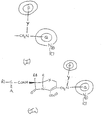
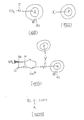
- cephalosporin derivative having antibacterial activity characterised in that the substituent at the 3-position has the formula I in which:
- Q represents a 5 to 10 membered mono- or bicyclic heterocyclic ring system bonded to the amino nitrogen atom via a carbon atom and containing, in addition to the positively charged nitrogen atom, 0 to 5 further heteroatoms selected from nitrogen, oxygen and sulphur and being optionally substituted:
- R5 wherein R5 is halogen, (1-6C)alkyl, carboxy, (2-6C)alkoxycarbonyl, (2-6C)alkoxycarbonyl(1-4C)alkyl, (1-6C)-alkoxy, (1-6C)alkylthio, cyano, (1-4C)cyanoalkyl, amino, (1-6C)alkylamino, (2-8C)dialkylamino, phenyl (1-4C)alkylamino, nitrophenyl(1-4C)alkylamino, heteroaryl(1-4C)alkylamino (wherein heteroaryl is a 5- or 6-membered ring containing 1, 2 or 3 heteroatoms selected from nitrogen, oxygen and sulphur), (3-6C)alkenylamino, amino(1-6C)alkylamino, (1-6C)alkoxy(1-6C)alkylamino, hydroxy(1-6C
- R6 is (1-6C)alkyl, phenyl or benzyl
- R7 is hydrogen, (1-6C)alkyl (optionally substituted by carboxy, (1-6C)alkoxycarbonyl, carbamoyl, mono- or di-(1-4C)alkylcarbamoyl, hydroxy, (1-4C)alkoxy, amino, mono- or di-(1-4C)alkylamino, (1-4C)alkanoyl, benzoyl, cyano, carboxyaminocarbonyl, (1-6C)alkoxycarbonylaminocarbonyl, (1-4C)alkoxy(2-4C)alkoxy or phenyl), (1-6C)alkoxy, phenyl(1-6C)alkoxy, amino, (1-6C)alkylamino, (3-6C)cycloalkyl, (3-6C)cycloalkenyl, cyano(3-6C)cycloalkenyl, (2-6C)alkenyl (optionally substituted by (1-6C)alkyl, halogen, cyano,
- R7 is of the formula -(CH2)2- 8R9R10 in which R8, R9 and R10 are (1-4C)alkyl,
- R7 is of the formula -(CH2) s -R11 in which s is 0-2 and R11 is pyridine, pyridazine, pyrimidine, pyrazine, 1,2,5,6-dihydro-5,6-dioxo-1,2,4-triazine, 2-[(1-4C)alkyl]-1,2,5,6-dihydro-5,6-dioxo-1,2,4-triazine, 1-[(1-4C)alkyl]tetrazole, furan, thiophene, pyrrole, 1-[(1-4C)alkyl]pyrrole, oxazole, thiazole, imidazole, 1-[1-4C)alkyl]imidazole, isoxazole isothiazole, pyrazole, 1,2,3-thiadiazole, 1-[(1-4C)alkyl]pyrazole, benzfuran, benzthiophene, indole
- R7 is 2-guanidino-thiazol-4-ylmethyl, hydroxybenzoylmethyl, 2-thenyl, 2-imidazolylmethyl or cinnamyl (each optionally substituted by halogen, (1-6C)alkyl, hydroxy, (1-4C)alkoxy, carboxy, (2-6C)-alkoxycarbonyl, nitro or carbamoyl),
- R7 is -(CH2) t NHCOR12 or -(CH2) t S(O) u -R12 in which t is 1-6, u is 0, 1 or 2 and R12 is (1-6C)alkyl or (1-6C)alkoxy,
- R7 when R7 is or contains a phenyl group, the phenyl group is optionally substituted by 1 or 2 groups selected from halogen, (1-6C)alkyl, (1-6C)alkoxy, amino, carboxy, nitro, carbamoyl, cyano, trifluoromethyl, aminomethyl, (1-4C)alkanoyl, (1-4C)-alkanoylamino, halo(1-4C)alkyl, (2-6C)alkoxycarbonyl, mono- or di-(1-4C)alkylcarbamoyl, mesyl, vinyl, sulpho, sulphamoyl or mono- or di(1-4C)alkylsulphamoyl)
- Y is straight or branched (1-6C)alkylene optionally substituted by cyano, carboxy, (1-4C)alkoxycarbonyl, nitro, halogen, carbamoyl, mono- or di-(1-4C)alkylcarbamoyl or trifluoromethyl; or Y is -CH2CH2NHCO- or a bond;
- ring system P optionally being further substituted by (1-4C)alkyl, halogen, hydroxy, cyano, trifluoromethyl, nitro, amino, mono- or di-(1-4C)alkylamino, formyl, (1-4C)alkanoyl, (1-4C)alkoxy, (1-4C)alkylthio, (1-4C)alkanoyloxy, carbamoyl or mono-or di(1-4C)alkylcarbamoyl;
- a particular group of compounds according to the invention are those of formula Ia and salts thereof wherein Q, Y, and P are as hereinbefore defined and in which X is sulphur, oxygen, methylene or sulphinyl (R or S configuration) and R1, R4 and A are groups known in the art of antibacterial cephalosporins.
- R1 is for example 2-aminothiazol-4-yl or 2-aminooxazol-4-yl each optionally substituted in the 5-position by fluorine, chlorine or bromine, or R1 is 5-amino-isothiazol-3-yl, 5-amino-1,2,4-thiadiazol-3-yl, 3-aminopyrazol-5-yl, 3-aminopyrazol-4-yl, 2-aminopyrimidin-5-yl, 2-aminopyrid-6-yl, 4-aminopyrimidin-2-yl, 2-amino-1,3,4-thiadiazol-5-yl or 5-amino-1-methyl-1,2,4-triazol-3-yl.
- or -R2 may be of the formula IV in which q is 1 or 2 and R24 and R25 are hydrogen or (1-4C)alkyl,
- R32 or -R2 may be of the formula V in which r is 0-3, R32 is hydrogen, (1-3C)alkyl or methylthio, R33 is hydrogen, (1-3C)alkyl, (3-7C)cycloalkyl, cyano, carboxy, (2-5C)carboxyalkyl or methanesulphonylamino, or R32 and R33 are joined to form, together with the carbon to which they are attached, a (3-7C)carbocyclic ring, and R34 is hydroxy, amino, (1-4C)alkoxy, (1-4C) alkylamino or of the formula NHOR35 in which R35 is hydrogen or (1-4C)alkyl;
- R13 is hydrogen, halogen, (1-6C)alkyl, (3-7C)cycloalkyl, (2-6C)alkenyl, (3-7C)cycloalkenyl, phenyl or benzyl.
- R4 is suitably hydrogen, methoxy or formamido
- R2 is hydrogen, methyl, ethyl, isopropyl, t-butyl, cyclopropyl, cyclobutyl, cyclopentyl, cyclohexyl, methylcyclopropyl, methylcyclobutyl, methylcyclopentyl, methylcyclohexyl, cyclopropylmethyl, cyclobutylmethyl, cyclopentylmethyl, allyl, cyclopentenyl, cyclohexenyl, propargyl, methylcarbamoyl, ethylcarbamoyl, phenylcarbamoyl, benzylcarbamoyl, 2-chloroethyl, 2-fluoroethyl, 2-bromoethyl, 2-hydroxyethyl, 3-hydroxypropyl, 2-methoxyethyl, 2-ethoxyethyl, 2-methylthio-ethyl, 2-
- R2 is of the formula IV in which q is 1 or 2, a particular meaning for R2 is when R24 and R25 are hydrogen or methyl,
- R2 is (1-6C)alkyl for example methyl or ethyl, 1-carboxycyclobutyl, 1-carboxycyclopentyl or 2-carboxyprop-2-yl.
- R3 is hydrogen, methyl or chlorine.
- R4 is hydrogen
- a particular ring system represented by ring Q is a 5 or 6 membered ring containing NR7 and 0 to 3 heteroatoms selected from nitrogen, oxygen and sulphur and optionally fused on an available carbon-carbon or carbon-nitrogen bond to a benzene ring or a ring of formula (VI) wherein T, U, and V are selected from oxygen, sulphur, nitrogen, carbon, -NH- and -CH-optionally substituted where possible, by groups R5 and R6 as defined above.
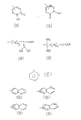
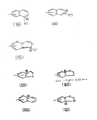
- ring systems represented by ring Q are those of formulae VII-XIV wherein one of D, D′, E and E′ represents NR7 and the remainder represent uncharged nitrogen atoms.
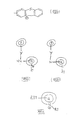
- ring systems represented by ring Q are those of formula XV and XVI wherein R37 represents hydrogen or a group R6 hereinbefore defined, and XVII-XXI.
- ring systems represented by ring Q are those of formulae XXII (wherein T is as hereinbefore defined) and XXIII-XXVI.
- rings VII-XXVI may optionally be substituted, where possible, by one or more groups R5 and R6 as hereinbefore defined.
- ring Q represents a 5- or 6-membered ring as defined above particular meaning therefor is pyridine or pyrimidine, optionally fused to a benzene ring or a ring of formula VI which is a thienyl group.
- Particular meanings for the group R5 are fluorine, chlorine, bromine, methyl, ethyl, n-propyl, isopropyl, carboxy, methoxycarbonyl, ethoxycarbonyl, methoxycarbonylmethyl, ethoxycarbonylmethyl, methoxy, ethoxy, methylthio, ethylthio, cyano, cyanomethyl, 2-cyanoethyl, amino, methylamino, ethylamino, isopropylamino, dimethylamino, benzylamino, nitrobenzylamino, allylamino, 2-aminoethylamino, 2-methoxyethylamino, 2-hydroxy-ethylamino, hydroxy, mercapto, carbamoyl, methyl-carbamoyl, ethylcarbamoyl, dimethylcarbamoyl, phenylthio and heteroarylthi
- Particular meanings for the group R6 are methyl, ethyl, n-propyl, isopropyl, phenyl or benzyl.
- R37 is hydrogen and the particular meanings given above for R6.
- Particular meanings for the group R7 are hydrogen, methyl, ethyl, n-propyl, isopropyl, t-butyl, carboxymethyl, 2-carboxyethyl, methoxycarbonylmethyl,, 2-methoxycarbonylethyl, carbamoylmethyl, 2-carbamoylethyl, mono- and dimethylcarbamoylmethyl, hydroxymethyl, 2-hydroxyethyl, methoxymethyl, 2-methoxyethyl, aminomethyl, 2-aminoethyl, 2-methylaminoethyl, 2-dimethylaminoethyl, acetylmethyl, propionylmethyl, benzoylmethyl, cyanomethyl, 2-cyanoethyl, 3-cyanopropyl, carboxyaminocarbonylmethyl, 2-(carboxyaminocarbonyl)ethyl, methoxycarbonyl-aminocarbonylmethyl, 2-(meth
- R7 is of the formula -(CH2)2- 8R9R10 in which R8, R9 and R10 are methyl or ethyl,
- R7 is of the formula -(CH2)s-R11 in which s is 0-2 and R11 is pyridine, pyridazine, pyrimidine, pyrazine, 1,2,5,6-dihydro-5,6-dioxo-1,2,4-triazine, 2-(methyl or ethyl)-1,2,5,6-dihydro-5,6-dioxo-1,2,4-triazine, 1-(methyl or ethyl)tetrazole, furan, thiophene, pyrrole, 1-(methyl or ethyl)pyrrole, oxazole, thiazole, imidazole, 1-(methyl or ethyl)imidazole, isoxazole, isothiazole, pyrazole, 1-(methyl or ethyl) pyrazole, 1,2,3-thiadiazole, benzfuran, benzthiophene, indole, 1-
- R7 is 2-guanidinothiazol-4-ylmethyl, 3-hydroxybenzoylmethyl, 2-thenyl, 2-imidazolylmethyl or cinnamyl each optionally substituted by fluorine, chlorine, bromine, methyl, ethyl, n-propyl, isopropyl, hydroxy, methoxy, ethoxy, carboxy, methoxycarbonyl, ethoxycarbonyl, or carbamoyl,
- R7 is of the formula -(CH2) t -NH-CO-R12 or (CH2) t -S(O) s -R12 in which t is 1-6, s is 0, 1 or 2 and R12 is methyl, ethyl, methoxy or ethoxy,
- R7 when R7 is or contains a phenyl group the phenyl group is optionally substituted by 1 or 2 groups selected from fluorine, chlorine, bromine, amino, carboxy, nitro, carbamoyl, cyano, trifluoromethyl, aminomethyl, methyl, ethyl, methoxy, ethoxy, acetyl, acetamido, methoxycarbonyl, ethoxycarbonyl, methylcarbamoyl, dimethylcarbamoyl, diethylcarbamoyl, mesyl and sulpho).
- 1 or 2 groups selected from fluorine, chlorine, bromine, amino, carboxy, nitro, carbamoyl, cyano, trifluoromethyl, aminomethyl, methyl, ethyl, methoxy, ethoxy, acetyl, acetamido, methoxycarbonyl, ethoxycarbonyl, methylcarbamoyl, di
- Y include C1 ⁇ 6alkylene for example methylene(-CH2), ethylene(-CH2CH2-) and propylene (-CH2CH2CH2-).
- Y represents methylene, ethylene, CH2CH2NHCO- or a bond so that ring P is directly linked to the 3′-amino group.
- P is a benzene ring substituted by groups W and Z and optionally further substituted by halo for example bromo.
- W is hydroxy or an in-vivo hydrolysable ester thereof.
- In-vivo hydrolysable esters are those pharmaceutically acceptable esters that hydrolyse in the human or animal body to produce the parent hydroxy compound. Such esters can be identified by administering e.g. intravenously to a test animal the compound under test and subsequently examining the test animal's body fluids.
- Suitable in-vivo hydrolysable esters include C1 ⁇ 6alkanoyloxy for example acetoxy, propionyloxy, pivaloyloxy, C1 ⁇ 4alkoxycarbonyloxy for example ethoxycarbonyloxy, and phthalidyloxy.
- Z is hydroxy or an in-vivo hydrolysable ester thereof.
- W and Z have the same value and are both hydroxy or both in-vivo hydrolysable esters, for example they are both acetoxy or pivaloyloxy.
- a particular acid which affords a pharmaceutically-acceptable anion is, for example, hydrochloric, hydrobromic, phosphoric, sulphuric, citric or maleic acid.
- a particular base which affords a pharmaceutically acceptable cation is, for example, a base containing an alkali metal, (e.g.sodium or potassium) or an alkaline earth metal (e.g. calcium or magnesium), or a primary, secondary or tertiary organic amine (e.g. triethylamine, morpholine, N-methylpiperidine, N-ethylpiperidine, procaine, dibenzylamine or N,N′-dibenzylethylenediamine), or other amine which has been used to form salts with cephalosporins.
- an alkali metal e.g.sodium or potassium
- an alkaline earth metal e.g. calcium or magnesium
- a primary, secondary or tertiary organic amine e.g. triethylamine, morpholine, N-methylpiperidine, N-ethylpiperidine, procaine, dibenzylamine or N,N′-d
- the compounds of formula I may be prepared by the following processes, which form further aspects of the invention, and in which the groups R1, A, R2, R3, R4, R5, Q, P, X and Y have the meanings already assigned to them.
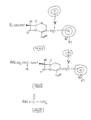
- a 2-aminothiazol-4-yl group may be formed by reacting a compound of formula XXXV (wherein R42 is a leaving group) with a compound of formula XXXVI (wherein R43 is amino or protected amino) followed by removal of the amino protecting group if present.
- XXXV wherein R42 is a leaving group
- XXXVI wherein R43 is amino or protected amino
- protecting groups When reference is made to protecting groups being present at any position in the compounds described herein such protecting groups may in general be chosen from any of the groups described in the literature or known to the skilled chemist as appropriate for the protection of the group in question, and may be introduced by conventional methods.
- Protecting groups may be removed by any convenient method as described in the literature or known to the skilled chemist as appropriate for the removal of the protecting group in question, such methods being chosen so as to effect removal of the protecting group with minimum disturbance of groups elsewhere in the molecule.
- protecting groups are given below for the sake of convenience, in which "lower” signifies that the group to which it is applied preferably has 1-4 carbon atoms. It will be understood that these examples are not exhaustive. Where specific examples of methods for the removal of protecting groups are given below these are similarly not exhaustive. The use of protecting groups and methods of deprotection not specifically mentioned is of course within the scope of the invention.
- a carboxyl protecting group may be the residue of an ester-forming aliphatic or araliphatic alcohol or of an ester-forming phenol silanol or stannanol (the said alcohol, phenol, silanol or stannanol preferably containing 1-20 carbon atoms).
- carboxyl protecting groups include straight or branched chain (1-12C)alkyl groups (eg isopropyl, t -butyl); halo lower alkyl groups (eg 2-iodoethyl, 2,2,2-trichloroethyl); lower alkoxy lower alkyl groups (eg methoxymethyl, ethoxymethyl, isobutoxymethyl); lower aliphatic acyloxy lower alkyl groups, (eg acetoxymethyl, propionyloxymethyl, butyryloxymethyl, pivaloyloxymethyl); lower alkoxycarbonyloxy lower alkyl groups (eg 1-methoxy-carbonyloxyethyl, 1-ethoxycarbonyloxyethyl); aryl lower alkyl groups (eg p-methoxybenzyl, o -nitrobenzyl, p -nitrobenzyl, benzhydryl and phthalidyl); tri(lower alkyl)silyl groups (
- Methods particularly appropriate for the removal of carboxyl protecting groups include for example acid-, base-, metal- or enzymically-catalysed hydrolysis.
- hydroxyl protecting groups include lower alkoxycarbonyl groups (eg t -butoxycarbonyl); halo lower alkoxycarbonyl groups (eg 2-iodoethoxy-carbonyl, 2,2,2-trichloroethoxycarbonyl); aryl lower alkoxycarbonyl groups (eg benzoyloxycarbonyl, p -methoxybenzyloxycarbonyl, o -nitrobenzyloxycarbonyl, p -nitrobenzyloxycarbonyl); tri lower alkylsilyl (eg trimethylsilyl, t -butyldimethylsilyl) and aryl lower alkyl (eg benzyl) groups.
- lower alkoxycarbonyl groups eg t -butoxycarbonyl
- halo lower alkoxycarbonyl groups eg 2-iodoethoxy-carbonyl, 2,2,2-trichloroethoxycarbonyl
- a (1-4C)alkanoyl group (eg acetyl) may also be regarded as a hydroxyl protecting group in the context of the compounds of the invention in that compounds of formula I in which W and or Z represent (1-4C)-alkanoyloxy (eg acetoxy) groups (which are in themselves compounds of the invention) may readily be converted by conventional means into the corresponding hydroxy compounds.
- amino protecting groups include formyl, aralkyl, groups (eg benzyl and substituted benzyl, eg p -methoxybenzyl, nitrobenzyl, and 2,4-dimethoxybenzyl, and triphenylmethyl); di- p -anisylmethyl and furylmethyl groups; acyl (eg alkoxycarbonyl and aralkoxycarbonyl eg t -butoxycarbonyl and benzyloxycarbonyl); trialkylsilyl (eg trimethylsilyl and t -butyldimethylsilyl); alkylidene (eg methylidene); benzylidene and substituted benzylidene groups; and the phthalimido group.
- groups eg benzyl and substituted benzyl, eg p -methoxybenzyl, nitrobenzyl, and 2,4-dimethoxybenzyl, and triphenyl
- cephalosporin derivatives of the invention have antibacterial properties.
- they may be useful antibacterial agents, having a broad spectrum of activity in vitro against standard laboratory microorganisms, both Gram-negative and Gram-positive, which are used to screen for activity against pathogenic bacteria.
- the antibacterial spectrum and potency of a particular compound may be determined in a standard test system.
- the compounds have particularly high activity in vitro against strains of Pseudomonas aeruginosa .
- the antibacterial properties of the compounds of the invention may also be demonstrated in vivo in conventional mouse protection tests.
- Cephalosporin derivatives have generally been found to be relatively non-toxic to warm-blooded animals, and this generalisation holds true for the compounds of the present invention. A number of compounds were administered to mice at doses in excess of those required to afford protection against bacterial infections, and no overt toxic symptoms or side effects attributable to the administered compounds were noted.
- a pharmaceutical composition which comprises a cephalosporin derivative of the invention in association with a pharmaceutically-acceptable diluent or carrier.
- the pharmaceutical composition of the invention may, for example, be in a form suitable for oral, rectal or parenteral administration, for which purposes it may be formulated by means known to the art into the form of, for example, tablets, capsules, aqueous or oily solutions or suspensions, emulsions, dispersible powders, suppositories and sterile injectable aqueous or oily solutions or suspensions.
- the pharmaceutical composition of the invention may also contain, or be co-administered with, one or more known drugs selected from other clinically useful antibacterial agents (for example other beta-lactams or aminoglycosides), inhibitors of beta-lactamase (for example clavulanic acid), renal tubular blocking agents (e.g. probenicid) and inhibitors of metabolising enzymes (for example inhibitors of peptidases, for example Z-2-acylamino-3-substituted propenoates).
- drugs selected from other clinically useful antibacterial agents (for example other beta-lactams or aminoglycosides), inhibitors of beta-lactamase (for example clavulanic acid), renal tubular blocking agents (e.g. probenicid) and inhibitors of metabolising enzymes (for example inhibitors of peptidases, for example Z-2-acylamino-3-substituted propenoates).
- a preferred pharmaceutical composition of the invention is one suitable for intravenous, subcutaneous or intramuscular injection, for example a sterile injectable containing between 1 and 10% w/w of the cephalosporin derivative, or one suitable for oral administration in unit dosage form, for example a tablet or capsule which contains between 100 mg. and 1 g. of the cephalosporin derivative.
- the pharmaceutical composition of the invention will normally be administered to man in order to combat infections caused by bacteria, in the same general manner as that employed for cephalothin, cefoxitin, cephradine and other known clinically used cephalosporin derivatives, due allowance being made in terms of dose levels for the potency of the cephalosporin derivative of the present invention relative to the known clinically used cephalosporins.
- each patient will receive a daily intravenous, subcutaneous or intramuscular dose of 0.1 to 50 g., and preferably 0.5 to 10 g., of the cephalosporin derivative, the composition being administered 1 to 4 times per day.
- the intravenous, subcutaneous and intramuscular dose may be given by means of a bolus injection.
- the intravenous dose may be given by continuous infusion over a period of time.
- each patient will receive a daily oral dose which is approximately equivalent to the daily parenteral dose.
- a preferred daily oral dose is 0.5 to 10 g. of the cephalosporin derivative, the composition being administered 1 to 4 times per day.
- ppm parts per million
- delta tetramethylsilane
- Example 1 The general process of Example 1 was used to prepare the compounds of Examples 2-21 as detailed in Tables I and II.
- 3,4-diacetoxybenzoylchloride (37mg, 0.145mmol) was added in small portions to a solution of 7-[2-(2-aminothiazol-4-yl)-2-((Z)-1-carboxy-1-methylethoxy-imino)acetamido]-3-[N-(1-methyl-4-pyridinio)-N-(2-amino)ethylaminomethyl]ceph-3-em-4-carboxylate (140mg, 0.145mmol) and TEA (0.081ml, 0.55mmol) in10ml MeOH at room temperature with stirring. After 30 minutes at room temperature the mixture was neutralised by addition of AcOH and evaporated.
- cephalosporin starting materials detailed in Table III used in Examples 1-21 are novel compounds.
- NMR data for the above starting materials is given in Table IV. TABLE IV NMR data for starting materials of Table III in DMSOd6 + CD3CO2D + TFAd.
- Starting material for Examples 1-5 1.3(t,3H); 2.25(s,6H); 3.5-3.9(m,2H); 18-21 3.9-5.1(m,2H); 4.2(s,2H); 4.25(q,2H); 5.2(d,1H); 5.9(d,1H); 7.0(s,1H); 7.1-7.6(m,3H).
- heterocyclic starting materials are known from, or prepared by methods similar to those of, the literature. In particular reference is made to EP-A 127992 and EP-A 164944.
Landscapes
- Chemical & Material Sciences (AREA)
- Organic Chemistry (AREA)
- Health & Medical Sciences (AREA)
- Nuclear Medicine, Radiotherapy & Molecular Imaging (AREA)
- Life Sciences & Earth Sciences (AREA)
- Chemical Kinetics & Catalysis (AREA)
- General Chemical & Material Sciences (AREA)
- Medicinal Chemistry (AREA)
- Communicable Diseases (AREA)
- Pharmacology & Pharmacy (AREA)
- Oncology (AREA)
- Animal Behavior & Ethology (AREA)
- General Health & Medical Sciences (AREA)
- Public Health (AREA)
- Veterinary Medicine (AREA)
- Cephalosporin Compounds (AREA)
- Pharmaceuticals Containing Other Organic And Inorganic Compounds (AREA)
Applications Claiming Priority (2)
| Application Number | Priority Date | Filing Date | Title |
|---|---|---|---|
| EP87401721 | 1987-07-23 | ||
| EP87401721 | 1987-07-23 |
Publications (3)
| Publication Number | Publication Date |
|---|---|
| EP0300665A2 true EP0300665A2 (de) | 1989-01-25 |
| EP0300665A3 EP0300665A3 (en) | 1990-11-28 |
| EP0300665B1 EP0300665B1 (de) | 1995-12-20 |
Family
ID=8198240
Family Applications (1)
| Application Number | Title | Priority Date | Filing Date |
|---|---|---|---|
| EP88306354A Expired - Lifetime EP0300665B1 (de) | 1987-07-23 | 1988-07-12 | Cephalosporinverbindungen, Verfahren zu ihrer Herstellung und diese enthaltende pharmazeutische Präparate |
Country Status (5)
| Country | Link |
|---|---|
| US (1) | US5008258A (de) |
| EP (1) | EP0300665B1 (de) |
| JP (1) | JPH0193594A (de) |
| AT (1) | ATE131824T1 (de) |
| DE (1) | DE3854804T2 (de) |
Family Cites Families (9)
| Publication number | Priority date | Publication date | Assignee | Title |
|---|---|---|---|---|
| GB1399086A (en) * | 1971-05-14 | 1975-06-25 | Glaxo Lab Ltd | Cephalosporin compounds |
| DE2714880A1 (de) * | 1977-04-02 | 1978-10-26 | Hoechst Ag | Cephemderivate und verfahren zu ihrer herstellung |
| GB8413152D0 (en) * | 1983-06-03 | 1984-06-27 | Ici Pharma | Cephalosporin derivatives |
| DE3581891D1 (de) * | 1984-11-12 | 1991-04-04 | Banyu Pharma Co Ltd | Cephalosporinderivate. |
| US4868173A (en) * | 1984-11-20 | 1989-09-19 | Ici Pharma | Cephalosporin derivatives |
| DE3587997D1 (de) * | 1984-12-27 | 1995-04-06 | Banyu Pharma Co Ltd | Isoindolinderivate. |
| DE3775798D1 (de) * | 1986-03-19 | 1992-02-20 | Banyu Pharma Co Ltd | Cephalosporinverbindungen, verfahren zu ihrer herstellung und antibakterielle mittel. |
| ATE110386T1 (de) * | 1986-04-14 | 1994-09-15 | Banyu Pharma Co Ltd | Cephalosporinderivate, verfahren zu ihrer herstellung und antibakterielle präparate. |
| EP0269298B1 (de) * | 1986-11-21 | 1994-10-19 | Ici Pharma | Cephalosporine, Verfahren zu ihrer Herstellung und pharmazeutische Präparate |
-
1988
- 1988-07-12 EP EP88306354A patent/EP0300665B1/de not_active Expired - Lifetime
- 1988-07-12 DE DE3854804T patent/DE3854804T2/de not_active Expired - Fee Related
- 1988-07-12 AT AT88306354T patent/ATE131824T1/de not_active IP Right Cessation
- 1988-07-18 US US07/221,945 patent/US5008258A/en not_active Expired - Fee Related
- 1988-07-22 JP JP63181957A patent/JPH0193594A/ja active Pending
Also Published As
| Publication number | Publication date |
|---|---|
| ATE131824T1 (de) | 1996-01-15 |
| EP0300665A3 (en) | 1990-11-28 |
| JPH0193594A (ja) | 1989-04-12 |
| EP0300665B1 (de) | 1995-12-20 |
| DE3854804T2 (de) | 1996-06-13 |
| DE3854804D1 (de) | 1996-02-01 |
| US5008258A (en) | 1991-04-16 |
Similar Documents
| Publication | Publication Date | Title |
|---|---|---|
| EP0304158B1 (de) | Cephalosporine, Verfahren zu ihrer Herstellung und diese enthaltende pharmazeutische Präparate | |
| US5008259A (en) | Cephalosporin compounds | |
| CA1225390A (en) | 3-bicyclicpyridinium-methyl cephalosporins | |
| EP0304155B1 (de) | Cephalosporinverbindungen, Verfahren zu ihrer Herstellung und diese enthaltende pharmazeutische Präparate | |
| EP0447118A2 (de) | 3-Tetrazolylthiomethyl-Cephalosporin-Antibiotika | |
| GB2105334A (en) | Cephalosporin isoquinolinium betaines | |
| AU612990B2 (en) | Antibiotic compounds | |
| EP0293771A2 (de) | Cephalosporinverbindungen und sie enthaltende pharmazeutische Präparate | |
| US4894371A (en) | 3-substituted-aminomethyl cephalosporin derivatives | |
| EP0341948B1 (de) | Cephalosporine, Verfahren zu ihrer Herstellung und pharmazeutische Präparate | |
| US5057511A (en) | 3-heterocyclic thiomethyl cephalosporins | |
| US5013731A (en) | Cephalosporin compounds | |
| GB2127812A (en) | 7-substituted-3-vinyl-3-cephem compounda and processes for production of the same | |
| US4767754A (en) | Cephalosporins | |
| EP0300665B1 (de) | Cephalosporinverbindungen, Verfahren zu ihrer Herstellung und diese enthaltende pharmazeutische Präparate | |
| US4868173A (en) | Cephalosporin derivatives | |
| US5149803A (en) | Intermediates for cephalosporin compounds | |
| US5114933A (en) | Cephalosporin compounds | |
| US5412093A (en) | 3-heterocyclic thiomethyl cephalosporins | |
| EP0269298B1 (de) | Cephalosporine, Verfahren zu ihrer Herstellung und pharmazeutische Präparate | |
| EP0300664A2 (de) | Cephalosporinverbindungen | |
| EP0341910A2 (de) | Cephalosporine, Verfahren zu ihrer Herstellung, Zwischenverbindungen und pharmazeutische Präparate | |
| GB2131800A (en) | Cephalosporins | |
| JPH06145176A (ja) | セファロスポリン化合物、その製造法および中間体化合物 | |
| JPS62195385A (ja) | セフアロスポリン化合物およびその製造法 |
Legal Events
| Date | Code | Title | Description |
|---|---|---|---|
| PUAI | Public reference made under article 153(3) epc to a published international application that has entered the european phase |
Free format text: ORIGINAL CODE: 0009012 |
|
| AK | Designated contracting states |
Kind code of ref document: A2 Designated state(s): AT BE CH DE ES FR GB GR IT LI LU NL SE |
|
| PUAL | Search report despatched |
Free format text: ORIGINAL CODE: 0009013 |
|
| AK | Designated contracting states |
Kind code of ref document: A3 Designated state(s): AT BE CH DE ES FR GB GR IT LI LU NL SE |
|
| 17P | Request for examination filed |
Effective date: 19910415 |
|
| 17Q | First examination report despatched |
Effective date: 19930304 |
|
| RAP1 | Party data changed (applicant data changed or rights of an application transferred) |
Owner name: ZENECA PHARMA S.A. |
|
| GRAA | (expected) grant |
Free format text: ORIGINAL CODE: 0009210 |
|
| AK | Designated contracting states |
Kind code of ref document: B1 Designated state(s): AT BE CH DE FR GB IT LI LU NL SE |
|
| ITF | It: translation for a ep patent filed | ||
| PG25 | Lapsed in a contracting state [announced via postgrant information from national office to epo] |
Ref country code: NL Free format text: LAPSE BECAUSE OF FAILURE TO SUBMIT A TRANSLATION OF THE DESCRIPTION OR TO PAY THE FEE WITHIN THE PRESCRIBED TIME-LIMIT Effective date: 19951220 Ref country code: BE Effective date: 19951220 Ref country code: AT Effective date: 19951220 |
|
| REF | Corresponds to: |
Ref document number: 131824 Country of ref document: AT Date of ref document: 19960115 Kind code of ref document: T |
|
| REF | Corresponds to: |
Ref document number: 3854804 Country of ref document: DE Date of ref document: 19960201 |
|
| PG25 | Lapsed in a contracting state [announced via postgrant information from national office to epo] |
Ref country code: SE Effective date: 19960320 |
|
| ET | Fr: translation filed | ||
| NLV1 | Nl: lapsed or annulled due to failure to fulfill the requirements of art. 29p and 29m of the patents act | ||
| PGFP | Annual fee paid to national office [announced via postgrant information from national office to epo] |
Ref country code: GB Payment date: 19960703 Year of fee payment: 9 |
|
| PGFP | Annual fee paid to national office [announced via postgrant information from national office to epo] |
Ref country code: FR Payment date: 19960709 Year of fee payment: 9 |
|
| PGFP | Annual fee paid to national office [announced via postgrant information from national office to epo] |
Ref country code: DE Payment date: 19960722 Year of fee payment: 9 Ref country code: CH Payment date: 19960722 Year of fee payment: 9 |
|
| PG25 | Lapsed in a contracting state [announced via postgrant information from national office to epo] |
Ref country code: LU Free format text: LAPSE BECAUSE OF NON-PAYMENT OF DUE FEES Effective date: 19960731 |
|
| PLBE | No opposition filed within time limit |
Free format text: ORIGINAL CODE: 0009261 |
|
| STAA | Information on the status of an ep patent application or granted ep patent |
Free format text: STATUS: NO OPPOSITION FILED WITHIN TIME LIMIT |
|
| 26N | No opposition filed | ||
| PG25 | Lapsed in a contracting state [announced via postgrant information from national office to epo] |
Ref country code: GB Free format text: LAPSE BECAUSE OF NON-PAYMENT OF DUE FEES Effective date: 19970712 |
|
| PG25 | Lapsed in a contracting state [announced via postgrant information from national office to epo] |
Ref country code: LI Free format text: LAPSE BECAUSE OF NON-PAYMENT OF DUE FEES Effective date: 19970731 Ref country code: CH Free format text: LAPSE BECAUSE OF NON-PAYMENT OF DUE FEES Effective date: 19970731 |
|
| GBPC | Gb: european patent ceased through non-payment of renewal fee |
Effective date: 19970712 |
|
| PG25 | Lapsed in a contracting state [announced via postgrant information from national office to epo] |
Ref country code: FR Free format text: LAPSE BECAUSE OF NON-PAYMENT OF DUE FEES Effective date: 19980331 |
|
| PG25 | Lapsed in a contracting state [announced via postgrant information from national office to epo] |
Ref country code: DE Free format text: LAPSE BECAUSE OF NON-PAYMENT OF DUE FEES Effective date: 19980401 |
|
| REG | Reference to a national code |
Ref country code: FR Ref legal event code: ST |
|
| PG25 | Lapsed in a contracting state [announced via postgrant information from national office to epo] |
Ref country code: IT Free format text: LAPSE BECAUSE OF NON-PAYMENT OF DUE FEES;WARNING: LAPSES OF ITALIAN PATENTS WITH EFFECTIVE DATE BEFORE 2007 MAY HAVE OCCURRED AT ANY TIME BEFORE 2007. THE CORRECT EFFECTIVE DATE MAY BE DIFFERENT FROM THE ONE RECORDED. Effective date: 20050712 |
|
| REG | Reference to a national code |
Ref country code: CH Ref legal event code: NV Representative=s name: A. BRAUN, BRAUN, HERITIER, ESCHMANN AG PATENTANWAE |