EP0301699A2 - Procédé et appareil pour déterminer la bioactivité d'echantillons biologiques - Google Patents
Procédé et appareil pour déterminer la bioactivité d'echantillons biologiques Download PDFInfo
- Publication number
- EP0301699A2 EP0301699A2 EP88305732A EP88305732A EP0301699A2 EP 0301699 A2 EP0301699 A2 EP 0301699A2 EP 88305732 A EP88305732 A EP 88305732A EP 88305732 A EP88305732 A EP 88305732A EP 0301699 A2 EP0301699 A2 EP 0301699A2
- Authority
- EP
- European Patent Office
- Prior art keywords
- sample
- light
- bioactivity
- reflected
- present
- Prior art date
- Legal status (The legal status is an assumption and is not a legal conclusion. Google has not performed a legal analysis and makes no representation as to the accuracy of the status listed.)
- Withdrawn
Links
- 238000000034 method Methods 0.000 title claims abstract description 110
- 239000012472 biological sample Substances 0.000 title claims description 11
- 230000000007 visual effect Effects 0.000 claims abstract description 22
- 239000000203 mixture Substances 0.000 claims abstract description 19
- 238000001228 spectrum Methods 0.000 claims abstract description 15
- 239000000523 sample Substances 0.000 claims description 67
- 235000013336 milk Nutrition 0.000 claims description 50
- 239000008267 milk Substances 0.000 claims description 50
- 210000004080 milk Anatomy 0.000 claims description 50
- 241000894006 Bacteria Species 0.000 claims description 22
- 238000001514 detection method Methods 0.000 claims description 13
- 230000008859 change Effects 0.000 claims description 11
- 230000036512 infertility Effects 0.000 claims description 3
- 230000003647 oxidation Effects 0.000 claims description 3
- 238000007254 oxidation reaction Methods 0.000 claims description 3
- 230000009467 reduction Effects 0.000 claims description 3
- 238000012360 testing method Methods 0.000 abstract description 46
- 239000000975 dye Substances 0.000 abstract description 32
- 238000005259 measurement Methods 0.000 abstract description 27
- PLXBWHJQWKZRKG-UHFFFAOYSA-N Resazurin Chemical compound C1=CC(=O)C=C2OC3=CC(O)=CC=C3[N+]([O-])=C21 PLXBWHJQWKZRKG-UHFFFAOYSA-N 0.000 abstract description 9
- 239000007788 liquid Substances 0.000 abstract description 9
- 238000003860 storage Methods 0.000 abstract description 4
- 229960000907 methylthioninium chloride Drugs 0.000 abstract description 3
- 238000013048 microbiological method Methods 0.000 abstract description 3
- 238000011160 research Methods 0.000 abstract description 3
- 230000002906 microbiologic effect Effects 0.000 abstract description 2
- 238000004064 recycling Methods 0.000 abstract description 2
- RBTBFTRPCNLSDE-UHFFFAOYSA-N 3,7-bis(dimethylamino)phenothiazin-5-ium Chemical compound C1=CC(N(C)C)=CC2=[S+]C3=CC(N(C)C)=CC=C3N=C21 RBTBFTRPCNLSDE-UHFFFAOYSA-N 0.000 abstract 1
- 230000002159 abnormal effect Effects 0.000 description 18
- 235000013365 dairy product Nutrition 0.000 description 18
- 235000013305 food Nutrition 0.000 description 15
- ABIUHPWEYMSGSR-UHFFFAOYSA-N bromocresol purple Chemical compound BrC1=C(O)C(C)=CC(C2(C3=CC=CC=C3S(=O)(=O)O2)C=2C=C(Br)C(O)=C(C)C=2)=C1 ABIUHPWEYMSGSR-UHFFFAOYSA-N 0.000 description 13
- 230000000694 effects Effects 0.000 description 13
- 239000000243 solution Substances 0.000 description 11
- 239000003242 anti bacterial agent Substances 0.000 description 10
- 229940088710 antibiotic agent Drugs 0.000 description 10
- 210000001082 somatic cell Anatomy 0.000 description 9
- PKDBCJSWQUOKDO-UHFFFAOYSA-M 2,3,5-triphenyltetrazolium chloride Chemical compound [Cl-].C1=CC=CC=C1C(N=[N+]1C=2C=CC=CC=2)=NN1C1=CC=CC=C1 PKDBCJSWQUOKDO-UHFFFAOYSA-M 0.000 description 8
- FAPWRFPIFSIZLT-UHFFFAOYSA-M Sodium chloride Chemical compound [Na+].[Cl-] FAPWRFPIFSIZLT-UHFFFAOYSA-M 0.000 description 8
- 238000012258 culturing Methods 0.000 description 8
- GUBGYTABKSRVRQ-QKKXKWKRSA-N Lactose Natural products OC[C@H]1O[C@@H](O[C@H]2[C@H](O)[C@@H](O)C(O)O[C@@H]2CO)[C@H](O)[C@@H](O)[C@H]1O GUBGYTABKSRVRQ-QKKXKWKRSA-N 0.000 description 7
- 230000001580 bacterial effect Effects 0.000 description 7
- 230000004071 biological effect Effects 0.000 description 7
- 239000008101 lactose Substances 0.000 description 7
- 238000003908 quality control method Methods 0.000 description 7
- 230000006641 stabilisation Effects 0.000 description 7
- 238000011105 stabilization Methods 0.000 description 7
- 229920001817 Agar Polymers 0.000 description 6
- HEMHJVSKTPXQMS-UHFFFAOYSA-M Sodium hydroxide Chemical compound [OH-].[Na+] HEMHJVSKTPXQMS-UHFFFAOYSA-M 0.000 description 6
- 239000008272 agar Substances 0.000 description 6
- 238000011109 contamination Methods 0.000 description 6
- 239000003814 drug Substances 0.000 description 6
- 238000011534 incubation Methods 0.000 description 6
- 244000005700 microbiome Species 0.000 description 6
- 238000011533 pre-incubation Methods 0.000 description 6
- 210000004027 cell Anatomy 0.000 description 5
- 244000005706 microflora Species 0.000 description 5
- 230000008569 process Effects 0.000 description 5
- 240000004808 Saccharomyces cerevisiae Species 0.000 description 4
- 238000004458 analytical method Methods 0.000 description 4
- 230000003115 biocidal effect Effects 0.000 description 4
- 230000007613 environmental effect Effects 0.000 description 4
- 239000011780 sodium chloride Substances 0.000 description 4
- UCSJYZPVAKXKNQ-HZYVHMACSA-N streptomycin Chemical compound CN[C@H]1[C@H](O)[C@@H](O)[C@H](CO)O[C@H]1O[C@@H]1[C@](C=O)(O)[C@H](C)O[C@H]1O[C@@H]1[C@@H](NC(N)=N)[C@H](O)[C@@H](NC(N)=N)[C@H](O)[C@H]1O UCSJYZPVAKXKNQ-HZYVHMACSA-N 0.000 description 4
- 239000000126 substance Substances 0.000 description 4
- XLYOFNOQVPJJNP-UHFFFAOYSA-N water Substances O XLYOFNOQVPJJNP-UHFFFAOYSA-N 0.000 description 4
- VEXZGXHMUGYJMC-UHFFFAOYSA-M Chloride anion Chemical compound [Cl-] VEXZGXHMUGYJMC-UHFFFAOYSA-M 0.000 description 3
- 229930182555 Penicillin Natural products 0.000 description 3
- JGSARLDLIJGVTE-MBNYWOFBSA-N Penicillin G Chemical compound N([C@H]1[C@H]2SC([C@@H](N2C1=O)C(O)=O)(C)C)C(=O)CC1=CC=CC=C1 JGSARLDLIJGVTE-MBNYWOFBSA-N 0.000 description 3
- 238000006243 chemical reaction Methods 0.000 description 3
- 229940079593 drug Drugs 0.000 description 3
- 239000000839 emulsion Substances 0.000 description 3
- 239000003925 fat Substances 0.000 description 3
- 239000000835 fiber Substances 0.000 description 3
- 239000004615 ingredient Substances 0.000 description 3
- 208000004396 mastitis Diseases 0.000 description 3
- 229940049954 penicillin Drugs 0.000 description 3
- KMUONIBRACKNSN-UHFFFAOYSA-N potassium dichromate Chemical compound [K+].[K+].[O-][Cr](=O)(=O)O[Cr]([O-])(=O)=O KMUONIBRACKNSN-UHFFFAOYSA-N 0.000 description 3
- 238000012545 processing Methods 0.000 description 3
- 150000003839 salts Chemical class 0.000 description 3
- 238000005070 sampling Methods 0.000 description 3
- SQGYOTSLMSWVJD-UHFFFAOYSA-N silver(1+) nitrate Chemical compound [Ag+].[O-]N(=O)=O SQGYOTSLMSWVJD-UHFFFAOYSA-N 0.000 description 3
- 238000010561 standard procedure Methods 0.000 description 3
- 239000000725 suspension Substances 0.000 description 3
- 241000283690 Bos taurus Species 0.000 description 2
- 238000002965 ELISA Methods 0.000 description 2
- 241000588724 Escherichia coli Species 0.000 description 2
- 241001465754 Metazoa Species 0.000 description 2
- LCTONWCANYUPML-UHFFFAOYSA-N Pyruvic acid Chemical compound CC(=O)C(O)=O LCTONWCANYUPML-UHFFFAOYSA-N 0.000 description 2
- 241000295644 Staphylococcaceae Species 0.000 description 2
- 239000002253 acid Substances 0.000 description 2
- 230000015572 biosynthetic process Effects 0.000 description 2
- 235000013351 cheese Nutrition 0.000 description 2
- 239000003153 chemical reaction reagent Substances 0.000 description 2
- 230000001332 colony forming effect Effects 0.000 description 2
- 239000000356 contaminant Substances 0.000 description 2
- 230000002596 correlated effect Effects 0.000 description 2
- 239000003599 detergent Substances 0.000 description 2
- 238000011161 development Methods 0.000 description 2
- 239000012895 dilution Substances 0.000 description 2
- 238000010790 dilution Methods 0.000 description 2
- 238000002474 experimental method Methods 0.000 description 2
- 238000000855 fermentation Methods 0.000 description 2
- 230000004151 fermentation Effects 0.000 description 2
- 238000009653 impedance microbiology technique Methods 0.000 description 2
- 229930027917 kanamycin Natural products 0.000 description 2
- 229960000318 kanamycin Drugs 0.000 description 2
- SBUJHOSQTJFQJX-NOAMYHISSA-N kanamycin Chemical compound O[C@@H]1[C@@H](O)[C@H](O)[C@@H](CN)O[C@@H]1O[C@H]1[C@H](O)[C@@H](O[C@@H]2[C@@H]([C@@H](N)[C@H](O)[C@@H](CO)O2)O)[C@H](N)C[C@@H]1N SBUJHOSQTJFQJX-NOAMYHISSA-N 0.000 description 2
- 229930182823 kanamycin A Natural products 0.000 description 2
- JVTAAEKCZFNVCJ-UHFFFAOYSA-N lactic acid Chemical compound CC(O)C(O)=O JVTAAEKCZFNVCJ-UHFFFAOYSA-N 0.000 description 2
- 230000004130 lipolysis Effects 0.000 description 2
- 238000004519 manufacturing process Methods 0.000 description 2
- 239000000463 material Substances 0.000 description 2
- CXKWCBBOMKCUKX-UHFFFAOYSA-M methylene blue Chemical compound [Cl-].C1=CC(N(C)C)=CC2=[S+]C3=CC(N(C)C)=CC=C3N=C21 CXKWCBBOMKCUKX-UHFFFAOYSA-M 0.000 description 2
- 230000000813 microbial effect Effects 0.000 description 2
- 230000003287 optical effect Effects 0.000 description 2
- 238000001139 pH measurement Methods 0.000 description 2
- 244000052769 pathogen Species 0.000 description 2
- 239000007793 ph indicator Substances 0.000 description 2
- 238000002360 preparation method Methods 0.000 description 2
- 230000017854 proteolysis Effects 0.000 description 2
- 230000002797 proteolythic effect Effects 0.000 description 2
- 238000007430 reference method Methods 0.000 description 2
- 239000007787 solid Substances 0.000 description 2
- 210000004215 spore Anatomy 0.000 description 2
- 238000013112 stability test Methods 0.000 description 2
- 229960005322 streptomycin Drugs 0.000 description 2
- 241001515965 unidentified phage Species 0.000 description 2
- 235000013618 yogurt Nutrition 0.000 description 2
- 241001550224 Apha Species 0.000 description 1
- 241000193830 Bacillus <bacterium> Species 0.000 description 1
- 241000588914 Enterobacter Species 0.000 description 1
- 241000588722 Escherichia Species 0.000 description 1
- 238000004566 IR spectroscopy Methods 0.000 description 1
- 241000588748 Klebsiella Species 0.000 description 1
- 244000178870 Lavandula angustifolia Species 0.000 description 1
- 235000010663 Lavandula angustifolia Nutrition 0.000 description 1
- 102000004882 Lipase Human genes 0.000 description 1
- 108090001060 Lipase Proteins 0.000 description 1
- 239000004367 Lipase Substances 0.000 description 1
- 206010037660 Pyrexia Diseases 0.000 description 1
- 229910021607 Silver chloride Inorganic materials 0.000 description 1
- 238000011481 absorbance measurement Methods 0.000 description 1
- 239000011149 active material Substances 0.000 description 1
- 238000007792 addition Methods 0.000 description 1
- 150000001413 amino acids Chemical class 0.000 description 1
- 238000013459 approach Methods 0.000 description 1
- 238000003556 assay Methods 0.000 description 1
- QVGXLLKOCUKJST-UHFFFAOYSA-N atomic oxygen Chemical compound [O] QVGXLLKOCUKJST-UHFFFAOYSA-N 0.000 description 1
- 210000004666 bacterial spore Anatomy 0.000 description 1
- 230000000721 bacterilogical effect Effects 0.000 description 1
- 210000000941 bile Anatomy 0.000 description 1
- 239000013060 biological fluid Substances 0.000 description 1
- 210000004369 blood Anatomy 0.000 description 1
- 239000008280 blood Substances 0.000 description 1
- 238000009835 boiling Methods 0.000 description 1
- 229960001506 brilliant green Drugs 0.000 description 1
- HXCILVUBKWANLN-UHFFFAOYSA-N brilliant green cation Chemical compound C1=CC(N(CC)CC)=CC=C1C(C=1C=CC=CC=1)=C1C=CC(=[N+](CC)CC)C=C1 HXCILVUBKWANLN-UHFFFAOYSA-N 0.000 description 1
- NUHCTOLBWMJMLX-UHFFFAOYSA-N bromothymol blue Chemical compound BrC1=C(O)C(C(C)C)=CC(C2(C3=CC=CC=C3S(=O)(=O)O2)C=2C(=C(Br)C(O)=C(C(C)C)C=2)C)=C1C NUHCTOLBWMJMLX-UHFFFAOYSA-N 0.000 description 1
- 239000005018 casein Substances 0.000 description 1
- BECPQYXYKAMYBN-UHFFFAOYSA-N casein, tech. Chemical compound NCCCCC(C(O)=O)N=C(O)C(CC(O)=O)N=C(O)C(CCC(O)=N)N=C(O)C(CC(C)C)N=C(O)C(CCC(O)=O)N=C(O)C(CC(O)=O)N=C(O)C(CCC(O)=O)N=C(O)C(C(C)O)N=C(O)C(CCC(O)=N)N=C(O)C(CCC(O)=N)N=C(O)C(CCC(O)=N)N=C(O)C(CCC(O)=O)N=C(O)C(CCC(O)=O)N=C(O)C(COP(O)(O)=O)N=C(O)C(CCC(O)=N)N=C(O)C(N)CC1=CC=CC=C1 BECPQYXYKAMYBN-UHFFFAOYSA-N 0.000 description 1
- 235000021240 caseins Nutrition 0.000 description 1
- 230000003915 cell function Effects 0.000 description 1
- 235000019219 chocolate Nutrition 0.000 description 1
- 239000003086 colorant Substances 0.000 description 1
- 238000004737 colorimetric analysis Methods 0.000 description 1
- 239000002537 cosmetic Substances 0.000 description 1
- 230000007547 defect Effects 0.000 description 1
- 239000012470 diluted sample Substances 0.000 description 1
- 239000012153 distilled water Substances 0.000 description 1
- 238000009472 formulation Methods 0.000 description 1
- 235000021588 free fatty acids Nutrition 0.000 description 1
- 230000006870 function Effects 0.000 description 1
- 239000007789 gas Substances 0.000 description 1
- 210000001035 gastrointestinal tract Anatomy 0.000 description 1
- 235000015243 ice cream Nutrition 0.000 description 1
- 230000001900 immune effect Effects 0.000 description 1
- 230000006872 improvement Effects 0.000 description 1
- 208000015181 infectious disease Diseases 0.000 description 1
- 239000002054 inoculum Substances 0.000 description 1
- 150000008040 ionic compounds Chemical class 0.000 description 1
- 239000004310 lactic acid Substances 0.000 description 1
- 235000014655 lactic acid Nutrition 0.000 description 1
- 239000001102 lavandula vera Substances 0.000 description 1
- 235000018219 lavender Nutrition 0.000 description 1
- 235000019421 lipase Nutrition 0.000 description 1
- 229940127554 medical product Drugs 0.000 description 1
- 230000002503 metabolic effect Effects 0.000 description 1
- 239000002480 mineral oil Substances 0.000 description 1
- 235000010446 mineral oil Nutrition 0.000 description 1
- 238000012544 monitoring process Methods 0.000 description 1
- 239000001301 oxygen Substances 0.000 description 1
- 229910052760 oxygen Inorganic materials 0.000 description 1
- 238000004806 packaging method and process Methods 0.000 description 1
- 238000009928 pasteurization Methods 0.000 description 1
- 239000008194 pharmaceutical composition Substances 0.000 description 1
- 239000000825 pharmaceutical preparation Substances 0.000 description 1
- 229940127557 pharmaceutical product Drugs 0.000 description 1
- 235000018102 proteins Nutrition 0.000 description 1
- 102000004169 proteins and genes Human genes 0.000 description 1
- 108090000623 proteins and genes Proteins 0.000 description 1
- 230000005180 public health Effects 0.000 description 1
- 229940107700 pyruvic acid Drugs 0.000 description 1
- 238000000275 quality assurance Methods 0.000 description 1
- 235000020185 raw untreated milk Nutrition 0.000 description 1
- 230000001105 regulatory effect Effects 0.000 description 1
- 230000000630 rising effect Effects 0.000 description 1
- 238000005096 rolling process Methods 0.000 description 1
- 230000035945 sensitivity Effects 0.000 description 1
- 210000002966 serum Anatomy 0.000 description 1
- HKZLPVFGJNLROG-UHFFFAOYSA-M silver monochloride Chemical compound [Cl-].[Ag+] HKZLPVFGJNLROG-UHFFFAOYSA-M 0.000 description 1
- 241000894007 species Species 0.000 description 1
- 238000002798 spectrophotometry method Methods 0.000 description 1
- 238000003786 synthesis reaction Methods 0.000 description 1
- 238000002834 transmittance Methods 0.000 description 1
Images



Classifications
-
- G—PHYSICS
- G01—MEASURING; TESTING
- G01N—INVESTIGATING OR ANALYSING MATERIALS BY DETERMINING THEIR CHEMICAL OR PHYSICAL PROPERTIES
- G01N21/00—Investigating or analysing materials by the use of optical means, i.e. using sub-millimetre waves, infrared, visible or ultraviolet light
- G01N21/17—Systems in which incident light is modified in accordance with the properties of the material investigated
- G01N21/47—Scattering, i.e. diffuse reflection
- G01N21/4738—Diffuse reflection, e.g. also for testing fluids, fibrous materials
-
- C—CHEMISTRY; METALLURGY
- C12—BIOCHEMISTRY; BEER; SPIRITS; WINE; VINEGAR; MICROBIOLOGY; ENZYMOLOGY; MUTATION OR GENETIC ENGINEERING
- C12M—APPARATUS FOR ENZYMOLOGY OR MICROBIOLOGY; APPARATUS FOR CULTURING MICROORGANISMS FOR PRODUCING BIOMASS, FOR GROWING CELLS OR FOR OBTAINING FERMENTATION OR METABOLIC PRODUCTS, i.e. BIOREACTORS OR FERMENTERS
- C12M41/00—Means for regulation, monitoring, measurement or control, e.g. flow regulation
- C12M41/30—Means for regulation, monitoring, measurement or control, e.g. flow regulation of concentration
- C12M41/36—Means for regulation, monitoring, measurement or control, e.g. flow regulation of concentration of biomass, e.g. colony counters or by turbidity measurements
-
- G—PHYSICS
- G01—MEASURING; TESTING
- G01N—INVESTIGATING OR ANALYSING MATERIALS BY DETERMINING THEIR CHEMICAL OR PHYSICAL PROPERTIES
- G01N33/00—Investigating or analysing materials by specific methods not covered by groups G01N1/00 - G01N31/00
- G01N33/02—Food
- G01N33/04—Dairy products
-
- G—PHYSICS
- G01—MEASURING; TESTING
- G01N—INVESTIGATING OR ANALYSING MATERIALS BY DETERMINING THEIR CHEMICAL OR PHYSICAL PROPERTIES
- G01N21/00—Investigating or analysing materials by the use of optical means, i.e. using sub-millimetre waves, infrared, visible or ultraviolet light
- G01N21/17—Systems in which incident light is modified in accordance with the properties of the material investigated
- G01N21/25—Colour; Spectral properties, i.e. comparison of effect of material on the light at two or more different wavelengths or wavelength bands
-
- G—PHYSICS
- G01—MEASURING; TESTING
- G01N—INVESTIGATING OR ANALYSING MATERIALS BY DETERMINING THEIR CHEMICAL OR PHYSICAL PROPERTIES
- G01N2201/00—Features of devices classified in G01N21/00
- G01N2201/04—Batch operation; multisample devices
- G01N2201/0446—Multicell plate, sequential
-
- G—PHYSICS
- G01—MEASURING; TESTING
- G01N—INVESTIGATING OR ANALYSING MATERIALS BY DETERMINING THEIR CHEMICAL OR PHYSICAL PROPERTIES
- G01N2201/00—Features of devices classified in G01N21/00
- G01N2201/12—Circuits of general importance; Signal processing
- G01N2201/122—Kinetic analysis; determining reaction rate
Definitions
- the present invention relates to improved methods for quickly and efficiently determining characteristics of a specimen, including bioactivity using reflected visual spectrum light as a detection means. More specifically, the present invention relates to methods and apparatus for determining the bioactivity of dairy products, pharmaceutical formulations, environmental samples and related substances.
- Standardized methods for measuring the bacteriological content of milk have been in existence since about 1905 when the American Public Health Association (“APHA”) established a committee to standardize such methods. SMEDP are used to assure that the consumer receives only high quality dairy food products.
- APHA American Public Health Association
- SPC Standard Plate Count
- An additional method of determining the bacterial concentration of milk or other biologically active materials is by the "electrical impedance method.”
- the bacteria, yeast, or mold concentration in a liquid sample is determined by measuring impedance changes associated with the metabolic activity of the reproducing microflora present in each sample when the sample is inoculated onto an agar surface.
- the microbial activity results in the conversion of nonelectrolytes (such as lactose) to ionic compounds (such as pyruvic acid and lactic acid).
- ionic compounds such as pyruvic acid and lactic acid.
- Less conductive proteins can be hydrolyzed to more conductive amino acids and fats can be converted to free fatty acids, also more conductive.
- Impedance is defined as a resistance to the flow of an alternating electrical current through a medium. Impedance of a sample remains relatively constant until the number of microorganisms present in the incubated sample reaches a threshold of from approximately 106 to 107 organisms per ml. When this threshold is achieved, the rate of impedance change due to changes in the ionic constituency of the medium is measurably increased. Thus, by measuring impedance and the period of time until impedance rapidly changes, an estimate is provided concerning bioactivity.
- a limitation on the impedance method is that a single signal is achieved using this method and it is subject to stray electrical interferences.
- the test is very sensitive to slight temperature variations. There is no visual backup method for assuring that the data has] is accurate and, as a result, false end points may often be encountered.
- Electrical conductivity of a sample may also be important in determining other characteristics of the sample.
- a sample such as a milk sample
- the general determination on mastitic of "abnormal milk” can be made through conductivity measurements.
- Abnormal milk often occurs when mammary tissues cannot maintain lactose synthesis, resulting in a lack of lactose in the milk.
- the nonconductive lactose is replaced in the milk by conductive salts. These salts diffuse through the tissue membranes from the blood serum of the producing animal in order to maintain normal osmolality. This effects a major change in electrical conductivity of the milk that correlates to changes in lactose. These changes can be measured quite readily and give an indication of the existence of abnormal milk.
- abnormal milk and other similar types or tests discussed herein will be considered to be tests of bioactivity.
- Impedance methods allow only about 250 samples per day to be evaluated on a single module instrument.
- Present techniques require solid media for performance impedance testing. This technique is, therefore, very labor intensive and does not lend itself to automation.
- This group of bacteria comprises all aerobic and anaerobic gram negative, nonspore-forming bacteria which are able to ferment lactose with production of acid and gas at 32°C within 24 hours.
- One of the major sources of these organisms is the intestinal tract of warm-blooded animals, such as dairy cows. These organisms fall generally within the following three genera: escherichia, enterobacter, and klebsiella. A few other types of bacteria may also fall within the general classification of coliform bacteria.
- coliform bacteria The presence of coliform bacteria is measured in food and dairy product quality control tests because their presence is suggestive of unsanitary conditions or practices during the production, process, or storage of the products. Specifically, post pasteurization contamination may be indicated by this group of organisms.
- the test for coliforms is not intended specifically to identify any particular bacteria but rather to measure the quality of the general practices used to minimize contamination.
- Coliform bacteria are usually detected using plate counting or fermentation techniques. These techniques are similar to the SPC technique described above. Samples are placed onto an agar medium or are added to a selective liquid medium (such as brilliant green lactose bile broth). Plate counting is usually found to be effective when there are more than five colonies per milliliter.
- Somatic cell concentration in excess of 500,000 per milliliter (“ml") is generally considered to be an indication of abnormal or mastitic milk. Cows with a latent or low grade infection are likely to produce milk having excessive somatic cell concentrations.
- CMT California Mastitis Test
- testing instruments are not versatile.
- the testing techniques primarily indicate only one characteristic of the product to which they are applied.
- a conductivity test for example, may simply disclose the extent to which conductive salts and other conductive species are contained within a milk sample.
- the culture techniques described above may only give an indication as to the presence or absence of a particular type of bacteria. It has not been possible to use a single testing technique in order to obtain data concerning multiple "bioactivity" characteristics of the food, medical, or environment product.
- the present invention is related to methods and apparatus for determining the bioactivity of biological mixtures or samples, including solutions, emulsions, suspensions, and solids.
- biological mixture will refer primarily to mixtures such as dairy products, and other related types of food products, pharmaceuticals, blood, environmental samples, and cosmetics.
- Bioactivity will refer to the characteristics of the biological mixture including content of various micororganisms, as well as pH, conductivity and other similar characteristics which are influenced by factors such as microorganism content, cell function, and other biological phenomena.
- the method of the present invention involves obtaining a suitable quantity of liquid biological mixture.
- a comparatively small sample can be used, such as samples which may be placed into Microtiter wells. Once the sample is obtained, visual spectrum electromagnetic energy (visual light) is directed into the liquid biological mixture and reflectance of the energy from the mixture is detected and quantified.
- visual spectrum electromagnetic energy visual light
- the apparatus of the present invention incorporates a microcolorimeter with a high energy source as a reflectance detector.
- This microcolorimeter is used in place of transmitance-turbidometric detection systems which are commonly used in microtiter plate well (ELISA) readers, or the impedance detectors which are also sometimes used in measuring biological activity as discussed above.
- the microcolorimeter is able to measure energy in a small area, such as 3 to 8 millimeters in diameter, and provide estimates of bioactivity in 30 minutes to 32 hours, as opposed to the 24 hours to 9 days which is typical of traditional microbiological methods.
- the colorimeter is able to make instantaneous estimates of chemical parameters such as NaCl for abnormal milk for example.
- a strobe-like flash occurs at regular intervals to provide sufficient energy for precise and adequate readings of the reflected color.
- reflective surfaces below the plates such that sufficient energy would return for measurement of clear solutions, in addition to turbid or opaque solutions.
- casein suspensions as they become clear with proteolysis or fat emulsions as they lose turbidity with lipolysis.
- the method of the present invention provides the capability to make continuous measurements by recycling plates past the detector and reading each well at regular intervals until the end point is detected.
- the detector is fitted with an appropriate incubator environment which includes a controlled analyzer robot to rotate plates over the colorimeter.
- a second sampler robot prepares, pasteurizes, mixes, and preincubates samples. It then inoculates plates and places them on shelves for the analyzer robot. Data is collected and compared by computer. The computer calculates the desired information on bioactivity.
- Tristimulus light is generally defined as light having three different numerical codes. These codes are sometimes designated the X, Y, and Z, or Yxy coordinates under international standards. In the alternative, the coordinates are sometimes designated L* (el star), a* (a-star) or b* (b-star).
- L* coordinate light indicates darkness; that is black or white (opaque to clear).
- the a* coordinate light measures changes from red to green.
- the b* coordinate light measures color changes from blue to yellow.
- the apparatus of the present invention would be useful in clinical and biological research laboratories, dairy and food industry laboratories, in the environmental field and in laboratory applications.
- An example of a series of tests of bioactivity that are automated for the dairy industry using the detector/incubator described above include: abnormal milk; antibiotics; total bacterial count; coliforms; laboratory pasteurized samples; bacterial spores; psychrotrophs; product shelf life stability; sterility; staphylococci; other pathogens; lactic culture activity; bacteriophage tests; yeast in yogurt; cheese contaminants; DNASE activity; lipase; and proteolytic activities.
- the device can measure other tests like the Delvotest-Multi used for antibiotics. These and other tests are all run using the methods and apparatus of the present invention.
- the present invention provides methods and apparatus for determining the bioactivity of various biological samples. More particularly, the present invention relates to the determination of bioactivity by measuring the reflectance of visual light (visual electromagnetic energy) from a biological medium.
- visual light visual electromagnetic energy
- the present invention has many advantages over any of the prior art methods. For example, it is possible using the present invention to obtain accurate data while using only a very small area of measurement and a very small sample. At the same time, it is possible to continuously measure a sample at frequent intervals.
- the present invention utilizes reflected visual spectrum light. This is contrary to the teachings of the existing art which have used transmittance or conductance electrodes. Visual light is often broken down into three different dimensions or values. When these three values are used together the measurement is often referred to as "tristimulus.” The three different measurements have different designations in the art. However for the purpose of the present discussion the values in the three different dimensions can be labeled L*, a*, and b*.
- L* is a measurement of how light or dark a sample is (opaque to clear or white to black).
- the a* value similarly, measures changes between red and green and the b* measures changes from blue to yellow.
- a microcolorimeter with a high energy pulse source will be used as a reflectance detector.
- the device is able to measure changes in a small area such as in a 3 to 8 millimeter diameter zone the typical size of a microtiter well.
- some biological activity will be measured in less than 30 minutes, rather than the 24 hour to 9 day period that is traditionally required for present microbial methods.
- a strobe flash occurs at regular intervals to provide sufficient high energy visual light for adequate readings of reflected color.
- a typical sample will be included in a microtiter well contained within a microtiter plate. Reflective surfaces may be installed below the sample (microtiter plate) in order to allow for accurate measurements in clear solutions. For example, measurements would be possible as suspensions become clear with proteolysis or fat emulsions lose turbidity with lipolysis.
- the present invention is used to provide various types of data. This is in direct contrast to existing methods and apparatus which generally provide only one type of reading.
- the present invention for example, is adaptable for providing all of the following types of data:
- the apparatus of the present invention generally relates to a microcolorimeter.
- the microcolorimeter measures changes in the L*, a*, and b* values of visible light reflected off of a sample.
- reflectance is the primary measurement provided by the apparatus of the present invention.
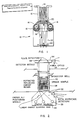
- FIG. 1 One embodiment of the colorimeter of the present invention is illustrated in Figure 1.
- the colorimeter of the present invention is generally designated 10 in Figure 1.
- Figure 1 Also illustrated in Figure 1 is a microtiter well 12.
- the microtiter well contains a biological mixture, the upper surface of which is designated 14.
- the microtiter well may be placed above or below the colorimeter as desired, or, in the alternative, the colorimeter may be placed on any side of a clear sample container. It is only necessary that the device be calibrated so that accurate readings may be obtained when the microtiter well is placed in any particular position with respect to the colorimeter.
- the colorimeter will contain one or more energy sources 16.
- the energy or light sources may operate in a pulse or strobe-like manner. In the event that they do operate in a pulse or strobe like manner it may be desirable to place reflectors 18 beneath the energy source 16 such that the pulsed light will be reflected in the proper direction and be directed into the microtiter well 12. Thus, the light will follow arrows A illustrated in Figure 1.
- a high energy pulse of light therefore, will be directed out of the optical opening 20 and the light will be directed toward the microtiter well 12. Once the light enters the microtiter well 12, a portion of the light will be reflected. That light will leave the microtiter well 12 traveling along reflected light path B as designated in Figure 1.
- Fiber optics 22 may continue through the interior of colorimeter 10 and then travel into filter/detectors 24 located at the base of the microcolorimeter 10.
- the filter/detectors illustrated in Figure 1 include red, blue, and green filtered detectors. A trio of reference detectors would allow traditional double beam operation.
- microcolorimeter 10 will be placed in combination with known electronic equipment so that the intensities of light along any one of the three tristimulus paths may be monitored at any particular point in time.
- Such computer hardware and software as necessary is used in order to analyze the pulses detected by the filter/detectors 24. This analysis will include determinations of the variations in L*, a*, and b* values as appropriate so that extremely fine deferences in color can be detected.
- a typical computer system usable in the present invention is an IBM compatible microcomputer with adequate storage such as the 30 MB hard disc-containing "Telecat" of Televideo Co.
- FIG 2 shows an alternative embodiment of the colorimeter of the present invention.
- an energy source 26 is illustrated at the base of the microtiter plate 28.
- the energy source 26 will be housed within a base housing 30.
- the base housing 30 will comprise all of the basic elements of a microcolorimeter, including red, blue, and green detectors 32.
- the microcolorimeter illustrated in Figure 2 has a second component. That second component comprises detectors on the upper surface of the microtiter well 28.
- the detector is housed within upper housing 34.
- Upper housing 34 includes fiber optics 36, and red, blue, and green detectors 38.
- the embodiment of the device illustrated in Figure 2 includes a detector system to measure the deflected energy bypassing the opaque sample in microtiter well.
- a detector system to measure the deflected energy bypassing the opaque sample in microtiter well.
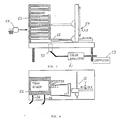
- Figure 3 illustrates one method by which the microcolorimeter of the present invention can be incorporated into an overall laboratory system.
- a microcolorimeter 50 and a color analyzer 51 are illustrated in Figure 3. Illustrated above the microcolorimeter 50 is a plate of microtiter wells 52. Also illustrated in Figure 3 is a computer 53 attached to the color analyzer.
- the plate of microtiter wells 52 may be moved above the microcolorimeter 50 such that all of the samples contained within the microtiter well plate 52 may be read at any particular point in time.
- the present invention may incorporate robotics, generally designated 54 for the purpose of moving plates of microtiter wells into position at a desired moment in time. Once the reading has been made, a new well along the same plate may be read, or in the alternative a new plate of microtiter wells may be moved into position.
- Robotics provides the capability of measuring samples at desired intervals even over extended periods of time. Several samples can be read at different intervals. For example, tests for several different characteristics could occur simultaneously.
- Robotics systems usable in connection with the present invention include an analyzer robot to continuously position wells for readings and a sampler robot 55 to prepare samples and plates for use by the former.
- a Zymark robot is capable of sample preparation.
- FIG. 3 illustrates a stack of plates 52 containing microtiter wells. It will be appreciated that any of these plates 52 may be moved into position under the microcolorimeter 50 at any desired point in time by the robotics 54.
- Each microtiter plate 52 contains numerous microtiter wells, traditionally 24 to 96 depending upon sample size.
- Figure 4 is a top horizontal plan view of the device as illustrated in Figure 3. Plates 52 of microtiter wells are illustrated as are the connections 56 to microcolorimeter 50. It will be appreciated from the arrows in Figure 4 that the plates of microtiter wells 52 may be moved in either the X or Y direction in order to read each of the microtiter wells contained within each plate. This will be done by the analyzer robot 52.
- the present invention provides immense flexibility in reading biological samples. Many samples can be read within a very short period of time. At the same time, the samples can be reread at any desired interval. Thus, accurate data concerning biological changes within the system can be provided even overnight without the need for continuous human monitoring.
- a sample will be prepared as appropriate. Using the present invention this may simply entail placing the sample in a clean container such as a microtiter well. The sample container is then placed adjacent the optical opening of the microcolorimeter apparatus.
- the microcolorimeter is placed into operation.
- An energy source will produce a burst of light which will strike the surface of the sample.
- the light beam reflected by the sample is then directed into a series of L*, a*, and b* detectors. These detectors detect at least one of the tristimulus color values.
- the process of directing light into the sample and detecting the reflected light is repeated as necessary. It will be appreciated that the entire process may take a period of days.
- the data obtained is analyzed by associated computer software and hardware and may be plotted. From the plotting of data over time characteristics such as bacteria count of the sample can easily be determined.
- Figure 5 summarizes typical readings of the L*, a*, b* tristimulus readings associated with a colorimeter. These data were obtained by reading the reflected color on the bottom of microtiter plate wells. The wells were filled with samples comprising water and water with added brom cresol purple (BCP), and adjusted to pH 4. Other wells were filled with the same materials at pH 7 (more blue or a low b* readings).
- BCP brom cresol purple
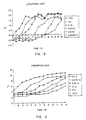
- Figure 6 illustrates the change in b* when lactic culture was inoculated in sterile milk in the microtiter wells. As the log dilutions of culture from 10% down to .01% were measured, there were longer equal times associated with the developing slopes. This is as expected and what one would find in an impedance microbiology system. These data demonstrate the ability of the instrument to quantitate the microflora in a substance and to predict shelf life of a food or similar type of product. The data further clearly indicate that the present invention is capable of duplicating data now obtained by the impedance methods.
- Figure 7 illustrates the changes in b* associated with levels of penicillin in sterile milk dyed with BCP.
- Sterile milk containing different levels of antibiotics were placed in wells.
- a 10% inoculum of lactic culture (UC310) was added to each well and the plates were incubated at 30°C.
- Figure 8 illustrates the changes in b* due to coliform activity. These changes are very subtle compared to those in the other figures. The range is only from -0.5 to 2.2 compared to -5 to 14 in the other figures. As illustrated in Figure 8, there is much noise around the "stable" readings. Nevertheless, it was possible using the present invention to measure the different times associated with the color changes through the slopes of the curves. This test provides the capability of counting coliforms in foods. These subtle changes are typical of those found in highly colored foods. This makes it possible to measure coliforms in chocolate ice cream, for example. The ability to predict shelf life of dark colored foods would also be provided.
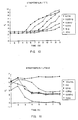
- Figure 9 illustrates changes in a* in an activity test like that described with reference to Figure 7, except Kanamycin antibiotic and resazurin oxidation/reduction (“O/R”) dye was used. These changes can be made to occur much faster if the wells are sealed from the atmosphere using mineral oil or tape to prevent oxygen from dissolving and raising the O/R potential.
- Kanamycin antibiotic and resazurin oxidation/reduction (“O/R”) dye was used.
- Figure 9 shows that O/R dyes can be resurrected for use in determining bioactivity. Because resazurin changes from lavender to pink to colorless, this is another dye that could use L*, a*, b* parameters separately or in combination to provide precise measurement of changes in bioactivity.
- FIG 10 illustrates changes in a* in an activity test like that described with reference to Figure 7, except streptomycin antibiotic was used and triphenyl tetrazolium chloride (TTC) pH dye was used. This dye changes from colorless to red as the pH drops from 6 to 4.
- TTC triphenyl tetrazolium chloride
- the a* or L* could be used separately or in combination to provide a pH endpoint in this set of measurements.
- Figure 11 illustrates changes in b* when litmus dye was used in combination with streptonycin. Data are plotted to demonstrate that a classical O/R-pH indicator dye can be applied again in modern instrumentation. Changes in a* and L* could also be used to provide data in this setting.
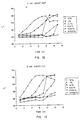
- Figure 13 also shows the changes of L* as litmus changes from darker to lighter shades in a solution containing E Coli . This data also clearly points out that the present invention is effective for detecting bacteria concentration in a biological mixture.
- Figure 14 shows data obtained using resazurin dye in a liquid E. coli . Again, very fine changes were detected. Resazurin dyes classically go from colored to colorless and these experiments show that this is measurable across a range of 10 L* units.
- FIG 15 illustrates plate count data obtaining using TTC dye.
- the TTC dye starts out colorless (i.e. , high L* valve) and develops a red color after acid is produced in the medium.
- the numbers of bacteria can be estimated as the media changes from colorless to pink across a range of about 30 L* units.
- plate count data can be quickly and accurately provided using the present invention.
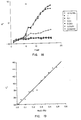
- the lines represent color changes in BCP used in the standard method for antibiotics detection. Spores of Bacillus sterothermophilus are suspended in agar. Milk is added on top of the agar and incubated 2.5 hours at 65°C. If the color turns yellow, no antibiotics are present. If the color remains purple, antibiotics are present above about 0.005 international units ("IU") penicillin equivalent, per milliliter.
- IU international units
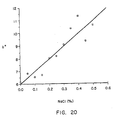
- Figure 18 is a linear plot comparing the somatic cell count (SCC) in milk with a colorimetric test for chloride ion in milk, as plotted with the b* value.
- SCC somatic cell count
- Known samples of abnormal milk were obtained from the Utah State University Dairy Center.
- the Mohr test for chloride ion was used.
- Sodium hydroxide and potassium dichromate were added to microtiter plate wells. Milk was added followed by a solution of silver chloride.
- the present invention accomplishes all of the objects set forth above.
- the present invention provides methods for determining bioactivity in a biological mixture which overcome many of the serious problems encountered in the prior art. For example, it is not necessary using the present invention to engage in extensive preincubation, culturing, and detector stabilization of the mixture to be measured. Likewise, using the present invention numerous samples can be run rapidly and results can be obtained in one hour or less for certain measurements. This period of time for obtaining results is unheard of in the trade for a versatile instrument.
- the present invention also provides the ability to measure various different characteristics using the same apparatus. Indeed, some of the different characteristics may be measured simultaneously by measuring changes in the L*, a*, or b* values or reflected visual spectrum light.
Landscapes
- Chemical & Material Sciences (AREA)
- Health & Medical Sciences (AREA)
- Life Sciences & Earth Sciences (AREA)
- Engineering & Computer Science (AREA)
- Biochemistry (AREA)
- Analytical Chemistry (AREA)
- General Health & Medical Sciences (AREA)
- Bioinformatics & Cheminformatics (AREA)
- Pathology (AREA)
- Immunology (AREA)
- General Physics & Mathematics (AREA)
- Wood Science & Technology (AREA)
- Zoology (AREA)
- Organic Chemistry (AREA)
- Physics & Mathematics (AREA)
- Food Science & Technology (AREA)
- Biomedical Technology (AREA)
- Genetics & Genomics (AREA)
- Medicinal Chemistry (AREA)
- General Engineering & Computer Science (AREA)
- Sustainable Development (AREA)
- Microbiology (AREA)
- Biotechnology (AREA)
- Measuring Or Testing Involving Enzymes Or Micro-Organisms (AREA)
- Investigating Or Analysing Materials By Optical Means (AREA)
- Apparatus Associated With Microorganisms And Enzymes (AREA)
Applications Claiming Priority (2)
| Application Number | Priority Date | Filing Date | Title |
|---|---|---|---|
| US6600087A | 1987-06-23 | 1987-06-23 | |
| US66000 | 1987-06-23 |
Publications (2)
| Publication Number | Publication Date |
|---|---|
| EP0301699A2 true EP0301699A2 (fr) | 1989-02-01 |
| EP0301699A3 EP0301699A3 (fr) | 1990-02-28 |
Family
ID=22066611
Family Applications (1)
| Application Number | Title | Priority Date | Filing Date |
|---|---|---|---|
| EP88305732A Withdrawn EP0301699A3 (fr) | 1987-06-23 | 1988-06-23 | Procédé et appareil pour déterminer la bioactivité d'echantillons biologiques |
Country Status (1)
| Country | Link |
|---|---|
| EP (1) | EP0301699A3 (fr) |
Cited By (19)
| Publication number | Priority date | Publication date | Assignee | Title |
|---|---|---|---|---|
| WO1990014414A1 (fr) * | 1989-05-15 | 1990-11-29 | Akzo N.V. | Appareil de detection de micro-organismes |
| US5094955A (en) * | 1988-03-15 | 1992-03-10 | Akzo N.V. | Device and method for detecting microorganisms |
| US5162229A (en) * | 1988-03-15 | 1992-11-10 | Akzo N.V. | Device and method for enhanced recovery and detection of microbial growth in the presence of antimicrobial substances |
| US5164796A (en) * | 1988-03-15 | 1992-11-17 | Akzo N.V. | Apparatus and method for detection of microorganisms |
| US5217876A (en) * | 1988-03-15 | 1993-06-08 | Akzo N.V. | Method for detecting microorganisms |
| EP0565994A1 (fr) * | 1992-04-16 | 1993-10-20 | Sire Analytical Systems S.R.L. | Méthode et appareil pour l'analyse microbiologique d'échantillons biologiques en suspension liquide par technique de dispersion de lumière |
| US5518895A (en) * | 1990-02-15 | 1996-05-21 | Akzo N.V. | Device for detecting microorganisms using piezoelectric means |
| US5858769A (en) * | 1989-05-15 | 1999-01-12 | Akzo Nobel N.V. | Device for detecting microorganisms |
| US6096272A (en) * | 1997-05-23 | 2000-08-01 | Becton Dickinson & Company | Automated microbiological testing apparatus and methods therefor |
| RU2176390C1 (ru) * | 2000-07-05 | 2001-11-27 | Колмогоров Анатолий Борисович | Способ определения биологической активности вещества |
| US6372185B1 (en) * | 1997-05-16 | 2002-04-16 | Aurora Biosciences Corporation | Liquid chemical distribution method and apparatus |
| ES2171138A1 (es) * | 2000-12-11 | 2002-08-16 | Univ Santiago Compostela | Determinacion de biomasa y actividad biologica de organismos fototroficos en medio liquido y sobre materiales solidos a partir de la medida del color. |
| WO2005068982A1 (fr) * | 2004-01-16 | 2005-07-28 | Chr. Hansen A/S | Procede et systeme de determination colorimetrique d'une propriete chimique ou physique d'un milieu trouble |
| WO2006001716A1 (fr) | 2004-06-23 | 2006-01-05 | Sharpin Rosemary Katherine Cam | Ameliorations apportees a un appareil de detection de micro-organismes et procedes d'utilisation |
| EP2500724A1 (fr) * | 2011-03-17 | 2012-09-19 | Electrolux Home Products Corporation N.V. | Procédé pour obtenir des informations sur des aliments dans ou pour un processus de cuisson |
| CN103076322A (zh) * | 2012-12-26 | 2013-05-01 | 内蒙古伊利实业集团股份有限公司 | 生乳制品细菌检测比色杯及其制备方法和应用 |
| WO2016019447A1 (fr) * | 2014-08-05 | 2016-02-11 | Fundação Universidade De Caxias Do Sul | Procédé et kit pour l'identification du type de lait |
| CN106796209A (zh) * | 2014-05-27 | 2017-05-31 | Bd控股私人有限公司 | 在商业无菌检测中使用血培养基平台的改进 |
| CN114525203A (zh) * | 2022-02-21 | 2022-05-24 | 江苏京牧生物技术有限公司 | 一种饲料添加剂中有益菌的菌落密度测定设备 |
Family Cites Families (2)
| Publication number | Priority date | Publication date | Assignee | Title |
|---|---|---|---|---|
| GB2001434A (en) * | 1977-07-19 | 1979-01-31 | Tarkkanen V | Measurement of somatic cells in milk |
| JPS5733592A (en) * | 1980-08-01 | 1982-02-23 | Fujisawa Pharmaceut Co Ltd | Equipment for identifying bacteria |
-
1988
- 1988-06-23 EP EP88305732A patent/EP0301699A3/fr not_active Withdrawn
Cited By (38)
| Publication number | Priority date | Publication date | Assignee | Title |
|---|---|---|---|---|
| US5856175A (en) * | 1988-03-15 | 1999-01-05 | Akzo Nobel N.V. | Device for detecting microorganisms |
| US5094955A (en) * | 1988-03-15 | 1992-03-10 | Akzo N.V. | Device and method for detecting microorganisms |
| US5162229A (en) * | 1988-03-15 | 1992-11-10 | Akzo N.V. | Device and method for enhanced recovery and detection of microbial growth in the presence of antimicrobial substances |
| US5164796A (en) * | 1988-03-15 | 1992-11-17 | Akzo N.V. | Apparatus and method for detection of microorganisms |
| US5217876A (en) * | 1988-03-15 | 1993-06-08 | Akzo N.V. | Method for detecting microorganisms |
| US5858769A (en) * | 1989-05-15 | 1999-01-12 | Akzo Nobel N.V. | Device for detecting microorganisms |
| WO1990014414A1 (fr) * | 1989-05-15 | 1990-11-29 | Akzo N.V. | Appareil de detection de micro-organismes |
| US5518895A (en) * | 1990-02-15 | 1996-05-21 | Akzo N.V. | Device for detecting microorganisms using piezoelectric means |
| EP0565994A1 (fr) * | 1992-04-16 | 1993-10-20 | Sire Analytical Systems S.R.L. | Méthode et appareil pour l'analyse microbiologique d'échantillons biologiques en suspension liquide par technique de dispersion de lumière |
| US6678577B1 (en) | 1997-05-16 | 2004-01-13 | Vertex Pharmaceuticals Incorporated | Systems and methods for rapidly identifying useful chemicals in liquid samples |
| US7105132B2 (en) | 1997-05-16 | 2006-09-12 | Aurora Discovery, Inc. | Liquid chemical distribution method and apparatus |
| US6890485B1 (en) | 1997-05-16 | 2005-05-10 | Aurora Discovery, Inc. | High throughput chemical handling system |
| US6372185B1 (en) * | 1997-05-16 | 2002-04-16 | Aurora Biosciences Corporation | Liquid chemical distribution method and apparatus |
| US6685884B2 (en) | 1997-05-16 | 2004-02-03 | Vertex Pharmaceuticals, Inc. | Methods for rapidly identifying useful chemicals in liquid sample |
| US6468800B1 (en) | 1997-05-16 | 2002-10-22 | Vertex Pharmaceuticals (San Diego), Llc | Systems and methods for rapidly identifying useful chemicals in liquid samples |
| US6472218B1 (en) | 1997-05-16 | 2002-10-29 | Vertex Pharmaceuticals (San Diego), Llc | Systems and methods for rapidly identifying useful chemicals in liquid samples |
| US6096272A (en) * | 1997-05-23 | 2000-08-01 | Becton Dickinson & Company | Automated microbiological testing apparatus and methods therefor |
| US7115384B2 (en) | 1997-05-23 | 2006-10-03 | Becton Dickinson And Company | Automated microbiological testing apparatus and method therefor |
| US6372485B1 (en) | 1997-05-23 | 2002-04-16 | Becton Dickinson And Company | Automated microbiological testing apparatus and method therefor |
| RU2176390C1 (ru) * | 2000-07-05 | 2001-11-27 | Колмогоров Анатолий Борисович | Способ определения биологической активности вещества |
| ES2171138A1 (es) * | 2000-12-11 | 2002-08-16 | Univ Santiago Compostela | Determinacion de biomasa y actividad biologica de organismos fototroficos en medio liquido y sobre materiales solidos a partir de la medida del color. |
| WO2005068982A1 (fr) * | 2004-01-16 | 2005-07-28 | Chr. Hansen A/S | Procede et systeme de determination colorimetrique d'une propriete chimique ou physique d'un milieu trouble |
| EP2647723A3 (fr) * | 2004-06-23 | 2014-01-15 | Zyzeba Testing Limited | Améliorations se rapportant à un appareil de test de micro-organismes et leurs procédés d'utilisation |
| US9260740B2 (en) | 2004-06-23 | 2016-02-16 | Zyzeba Testing Limited | Micro-organism test apparatus and methods of using the same |
| EP1883706A4 (fr) * | 2004-06-23 | 2009-09-09 | Sharpin Rosemary Katherine Cam | Améliorations apportées à un appareil de détection de micro-organismes et procédés d'utilisation |
| WO2006001716A1 (fr) | 2004-06-23 | 2006-01-05 | Sharpin Rosemary Katherine Cam | Ameliorations apportees a un appareil de detection de micro-organismes et procedes d'utilisation |
| US8642323B2 (en) | 2004-06-23 | 2014-02-04 | Zyzeba Testing Limited | Container for testing for micro-organisms |
| EP2500724A1 (fr) * | 2011-03-17 | 2012-09-19 | Electrolux Home Products Corporation N.V. | Procédé pour obtenir des informations sur des aliments dans ou pour un processus de cuisson |
| CN102680530A (zh) * | 2011-03-17 | 2012-09-19 | 伊莱克斯家用产品股份有限公司 | 获得烹饪过程中的或用于烹饪过程的食物原料的信息的方法 |
| CN102680530B (zh) * | 2011-03-17 | 2015-04-01 | 伊莱克斯家用产品股份有限公司 | 获得烹饪过程中的或用于烹饪过程的食物原料的信息的方法 |
| CN103076322A (zh) * | 2012-12-26 | 2013-05-01 | 内蒙古伊利实业集团股份有限公司 | 生乳制品细菌检测比色杯及其制备方法和应用 |
| CN106796209A (zh) * | 2014-05-27 | 2017-05-31 | Bd控股私人有限公司 | 在商业无菌检测中使用血培养基平台的改进 |
| US10865432B2 (en) | 2014-05-27 | 2020-12-15 | Becton Dickinson Holdings Pte Ltd. | Using blood culture platforms for commercial sterility tests |
| CN106796209B (zh) * | 2014-05-27 | 2021-10-26 | Bd控股私人有限公司 | 在商业无菌检测中使用血培养基平台的改进 |
| US11761024B2 (en) | 2014-05-27 | 2023-09-19 | Becton Dickinson Holdings Pte Ltd. | Using blood culture platforms for commercial sterility tests |
| WO2016019447A1 (fr) * | 2014-08-05 | 2016-02-11 | Fundação Universidade De Caxias Do Sul | Procédé et kit pour l'identification du type de lait |
| CN114525203A (zh) * | 2022-02-21 | 2022-05-24 | 江苏京牧生物技术有限公司 | 一种饲料添加剂中有益菌的菌落密度测定设备 |
| CN114525203B (zh) * | 2022-02-21 | 2024-07-05 | 江苏京牧生物技术有限公司 | 一种饲料添加剂中有益菌的菌落密度测定设备 |
Also Published As
| Publication number | Publication date |
|---|---|
| EP0301699A3 (fr) | 1990-02-28 |
Similar Documents
| Publication | Publication Date | Title |
|---|---|---|
| US5366873A (en) | Device and method for use in detecting microorganisms in a sample | |
| EP0592624B1 (fr) | Procede et appareil pour le diagnostic microbiologique | |
| US5856175A (en) | Device for detecting microorganisms | |
| US6271022B1 (en) | Device for incubating and monitoring multiwell assays | |
| CA2105512C (fr) | Detection amelioree de microorganismes dans des echantillons | |
| Vasavada | Rapid methods and automation in dairy microbiology | |
| JPH08205851A (ja) | 生物学的活性検出装置 | |
| US20110307183A1 (en) | Method for the bacteriological investigation of a biological sample and relative device | |
| EP0472622B1 (fr) | Appareil de detection de micro-organismes | |
| Santovito et al. | Rapid detection of bacterial load in food samples using disposable respirometric sensor sachets | |
| US6165740A (en) | Method and device for flow-cytometric microorganism analysis | |
| US20100047848A1 (en) | Colorimetric determination of somatic cell count in milk | |
| Phillips et al. | Bioluminescence and impedimetric methods for assessing shelf-life of pasteurized milk and cream | |
| US4675288A (en) | Method for the performance of a mutagenicity test | |
| Richardson et al. | A reflectance colorimeter instrument for measurement of microbial and enzymatic activities in milk and dairy products | |
| JP3309391B2 (ja) | 感染症検査方法およびその装置 | |
| US11525115B2 (en) | Process for the isolation and analysis of microorganisms contained in a sample | |
| May et al. | Conventional tube and microplate Limulus amoebocyte lysate procedures for determination of gram-negative bacteria in milk | |
| JP2001149091A (ja) | 微生物測定方法及び装置 | |
| Ackland et al. | A rapid chemical spot test for the detection of lactic acid as an indicator of microbial spoilage in preserved foods | |
| Бодюл et al. | Microbial inhibition test as a modern method of identification residual antibiotics | |
| Russell et al. | Microbiological methods for sampling poultry processing plant equipment | |
| US20240209411A1 (en) | Method for sterility testing | |
| WO1996014429A1 (fr) | Recipient et procede d'utilisation pour detecter des micro-organismes dans un echantillon | |
| GRIFFITHS | Rapid methods for assessing microbiological quality of foods |
Legal Events
| Date | Code | Title | Description |
|---|---|---|---|
| PUAI | Public reference made under article 153(3) epc to a published international application that has entered the european phase |
Free format text: ORIGINAL CODE: 0009012 |
|
| AK | Designated contracting states |
Kind code of ref document: A2 Designated state(s): AT BE CH DE ES FR GB GR IT LI LU NL SE |
|
| PUAL | Search report despatched |
Free format text: ORIGINAL CODE: 0009013 |
|
| AK | Designated contracting states |
Kind code of ref document: A3 Designated state(s): AT BE CH DE ES FR GB GR IT LI LU NL SE |
|
| 17P | Request for examination filed |
Effective date: 19900823 |
|
| 17Q | First examination report despatched |
Effective date: 19920227 |
|
| STAA | Information on the status of an ep patent application or granted ep patent |
Free format text: STATUS: THE APPLICATION HAS BEEN WITHDRAWN |
|
| 18W | Application withdrawn |
Withdrawal date: 19920728 |