EP0301837B1 - Procédé pour la preparation d une composition d huile combustible à écoulement amélioré - Google Patents
Procédé pour la preparation d une composition d huile combustible à écoulement amélioré Download PDFInfo
- Publication number
- EP0301837B1 EP0301837B1 EP19880306929 EP88306929A EP0301837B1 EP 0301837 B1 EP0301837 B1 EP 0301837B1 EP 19880306929 EP19880306929 EP 19880306929 EP 88306929 A EP88306929 A EP 88306929A EP 0301837 B1 EP0301837 B1 EP 0301837B1
- Authority
- EP
- European Patent Office
- Prior art keywords
- amount
- paraffin
- oil
- smaller
- weight
- Prior art date
- Legal status (The legal status is an assumption and is not a legal conclusion. Google has not performed a legal analysis and makes no representation as to the accuracy of the status listed.)
- Expired
Links
Images


Classifications
-
- C—CHEMISTRY; METALLURGY
- C10—PETROLEUM, GAS OR COKE INDUSTRIES; TECHNICAL GASES CONTAINING CARBON MONOXIDE; FUELS; LUBRICANTS; PEAT
- C10L—FUELS NOT OTHERWISE PROVIDED FOR; NATURAL GAS; SYNTHETIC NATURAL GAS OBTAINED BY PROCESSES NOT COVERED BY SUBCLASSES C10G OR C10K; LIQUIFIED PETROLEUM GAS; USE OF ADDITIVES TO FUELS OR FIRES; FIRE-LIGHTERS
- C10L1/00—Liquid carbonaceous fuels
- C10L1/10—Liquid carbonaceous fuels containing additives
- C10L1/14—Organic compounds
- C10L1/143—Organic compounds mixtures of organic macromolecular compounds with organic non-macromolecular compounds
-
- C—CHEMISTRY; METALLURGY
- C10—PETROLEUM, GAS OR COKE INDUSTRIES; TECHNICAL GASES CONTAINING CARBON MONOXIDE; FUELS; LUBRICANTS; PEAT
- C10L—FUELS NOT OTHERWISE PROVIDED FOR; NATURAL GAS; SYNTHETIC NATURAL GAS OBTAINED BY PROCESSES NOT COVERED BY SUBCLASSES C10G OR C10K; LIQUIFIED PETROLEUM GAS; USE OF ADDITIVES TO FUELS OR FIRES; FIRE-LIGHTERS
- C10L1/00—Liquid carbonaceous fuels
- C10L1/10—Liquid carbonaceous fuels containing additives
- C10L1/14—Organic compounds
- C10L1/16—Hydrocarbons
- C10L1/1691—Hydrocarbons petroleum waxes, mineral waxes; paraffines; alkylation products; Friedel-Crafts condensation products; petroleum resins; modified waxes (oxidised)
-
- C—CHEMISTRY; METALLURGY
- C10—PETROLEUM, GAS OR COKE INDUSTRIES; TECHNICAL GASES CONTAINING CARBON MONOXIDE; FUELS; LUBRICANTS; PEAT
- C10L—FUELS NOT OTHERWISE PROVIDED FOR; NATURAL GAS; SYNTHETIC NATURAL GAS OBTAINED BY PROCESSES NOT COVERED BY SUBCLASSES C10G OR C10K; LIQUIFIED PETROLEUM GAS; USE OF ADDITIVES TO FUELS OR FIRES; FIRE-LIGHTERS
- C10L1/00—Liquid carbonaceous fuels
- C10L1/10—Liquid carbonaceous fuels containing additives
- C10L1/14—Organic compounds
- C10L1/18—Organic compounds containing oxygen
- C10L1/192—Macromolecular compounds
- C10L1/195—Macromolecular compounds obtained by reactions involving only carbon-to-carbon unsaturated bonds
- C10L1/197—Macromolecular compounds obtained by reactions involving only carbon-to-carbon unsaturated bonds derived from monomers containing a carbon-to-carbon unsaturated bond and an acyloxy group of a saturated carboxylic or carbonic acid
- C10L1/1973—Macromolecular compounds obtained by reactions involving only carbon-to-carbon unsaturated bonds derived from monomers containing a carbon-to-carbon unsaturated bond and an acyloxy group of a saturated carboxylic or carbonic acid mono-carboxylic
Definitions
- This invention relates to a method for improving the cold flow properties of a fuel oil composition having a low flowability at low temperature, the composition being prepared from a heavy distillate fuel of petroleum and a low temperature flow improver.
- kerosene and heavy oil A suffer remarkable decrease in flowability at low temperatures (or cold flowability) in winter season and the like due to separation of wax component contained in the oil, which tends to cause severe problems.
- the wax component contained in kerosene separates out and causes clogging or plugging of minute screen which is incorporated in a filter for preventing impurities provided in midway in a pipeline from a kerosene tank to an engine in a diesel automobile, so that supply of kerosene becomes impossible and as a result the engine stops.
- Another conventional method for improving the cold flowability of fuel oils is to add a cold flow improver to the fuel oils.
- the action of the cold flow improver is to give influence upon separation-out of wax from fuel oils to prevent the growth of wax into large-size crystals but retain the wax in the form of minute crystals, thus stabilizing the cold flowability.
- This method not only requires addition of both the ethylene copolymer and n-paraffin, which causes complication of installments and operation, but also involves increase in the amont of wax separated out at low temperatures because of paraffin, which is a principal causal substance for aggravation of cold flowability due to separating-out of wax, is positively added. As the result, it is often the case that the cold flow improver does not act effectively.
- GB 1,264,684 describes the addition to a middle distillate fuel oil, which contains an indeterminate amount of normal paraffins within the range of about 10 to 26 carbon atoms, of a paraffinic distillate fraction containing C24 to C40 n-paraffins in order to improve the response of the fuel oil to ethylene copolymer flow improvers.
- the amount of C24+ n-paraffin added to the fuel is from 0.1 to 2wt%.
- US 4,210,424 describes the preparation and use of a three component additive system for improving cold flow properties of distillate fuel oils.
- the three component additive system comprises ethylene polymer or copolymer, normal paraffinic wax containing n-paraffins ranging from C23 to C37, and nitrogen compounds such as amides, amine salts and ammonium salts of carboxylic acids or anhydrides.
- an object of this invention is to obviate the above-described defects of the prior arts and provide a fuel oil mainly composed of medium and/or heavy distillates of crude oil and having an improved cold flowability.
- Another object of this invention is to optimize the amount of n-paraffin contained in the middle and/or heavy distillates of crude oil in order to have sufficiently exhibited the effect of a cold flow improver.
- this invention provides a method for improving the cold flow properties, measured as decreased cold flow pour point, of base fuel oil composed mainly of middle or heavy distillates of crude oil, the method comprising the following steps:
- Fig. 1 is a graph representing gas chromatogram of test oil No.5 obtained by the technique of gas chromatographic n-paraffin analysis according to example, with the portions calculated as n-paraffin being shadowed with oblique lines.
- Fig. 2 is a graph showing relationship between the content of n-paraffin having at least 25 carbon atoms contained in various test oils and decrease in the cold filter plugging point ( ⁇ CFPP) upon the addition of 500 ppm of Additive A, i.e., a 60 wt.% xylene solution of an ethylene-vinyl acetate copolymer having a vinyl acetate content of 36.5 wt.% and a number average molecular weight of 1,690.
- Additive A i.e., a 60 wt.% xylene solution of an ethylene-vinyl acetate copolymer having a vinyl acetate content of 36.5 wt.% and a number average molecular weight of 1,690.
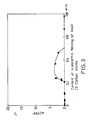
- Fig. 3 is a graph showing relationship between the content of n-paraffin having at least 25 carbon atoms contained in various test oils and decrease in the cold filter plugging point ( ⁇ CFPP) upon the addition of 500 ppm of Additive B, i.e., a 60 wt.% xylene solution of an ethylene-vinyl acetate copolymer having a vinyl acetate content of 16.5 wt.% and a number average molecular weight of 2,200.
- Additive B i.e., a 60 wt.% xylene solution of an ethylene-vinyl acetate copolymer having a vinyl acetate content of 16.5 wt.% and a number average molecular weight of 2,200.
- Fig. 4 is a graph showing relationship between the content of n-paraffin having at least 25 carbon atoms contained in various test oils and decrease in the cold filter plugging point ( ⁇ CFPP) upon the addition of 500 ppm of Additive C, i.e., a 60 wt.% xylene solution of an ethylene-vinyl acetate copolymer having a vinyl acetate content of 44.6 wt.% and a number average molecular weight of 1,820.
- Additive C i.e., a 60 wt.% xylene solution of an ethylene-vinyl acetate copolymer having a vinyl acetate content of 44.6 wt.% and a number average molecular weight of 1,820.
- base fuel oil composed mainly of middle and/or heavy distillates of crude oil refers to distillate oils obtained by distilling crude oil which is a mixture of a great number of components composed mainly of hydrocarbons having a boiling point of from about 150°C. to about 450 °C.
- distillate fractions obtained from general petroleum distilling installments include light gas oil, heavy gas oil, or heavy gas oil hydrogenated using a purifier such as a unifiner, or vacuum gas oil which is obtained by vacuum distilling the distillation residue from normal pressure distillator in a vacuum distillator and its hydrogenated product. They can be used as a blend depending on their application.
- the base fuel oil can be mixed with a small amount of middle or heavy distillate oil generated in petroleum purifiers, e.g., oils treated in catalytic cracking apparatus, hydrogenolysis apparatus, etc. or residual oils after dewaxing during manufacture of lubricants. Further, it can be mixed with a small amount of normal pressure residual oil or vacuum residual oil or extracted oil generated during the step of purification of lubricants, as is generally adopted as a method for adjusting heavy oil A.
- middle or heavy distillate oil generated in petroleum purifiers, e.g., oils treated in catalytic cracking apparatus, hydrogenolysis apparatus, etc. or residual oils after dewaxing during manufacture of lubricants.
- it can be mixed with a small amount of normal pressure residual oil or vacuum residual oil or extracted oil generated during the step of purification of lubricants, as is generally adopted as a method for adjusting heavy oil A.
- the amount of n-paraffin having at least 25 carbon atoms contained in the middle and/or heavy distillate oils of petroleum as base fuel oil can be analyzed in a usual manner using a programmed-temperature gas chromatography apparatus.
- a trace amount sample is analyzed using a hydrogen flame ionizing detector with a column packed with a filler composed of a partition agent having a weak polarity and a porous carrier, and the content of n-paraffin is obtained from the respective chromatograms of the separated components.
- a sample oil is injected into a column of a stain-less steel tube having a diameter of 3 mm and a length of 4,000 mm packed with a column filler (Silicon GE SE-30, 2%, 60/80 mesh, Uniport HP carrier) commercially available from Wako Pure Chemicals Industries, Ltd. and the temperature of the column is elevated starting from 70°C to 270 °C at a rate of 5 °C/min., and detection is performed by hydrogen flame ionizing method.
- the electric signals detected are processed with a recorder or data processor as output to outside.
- the content of n-paraffin can be obtained by calculating n-paraffin peak.
- the content of n-paraffin having at least 25 carbon atoms contained in the middle and/or heavy distillate oils of petroleum as base fuel oil is not smaller than 0.1 wt.% and smaller than 0.6 wt%.
- n-paraffin having at least 25 carbon atoms When the content of n-paraffin having at least 25 carbon atoms is smaller than 0.1 wt%, the effect of improvement in cold filter plugging point with a cold flow improver becomes poor. On the other hand, when it is larger than 0.6 wt%, although sometimes addition of a very large amount, e.g., 2,000 ppm or more, of a cold flow improver permits improvement in cold filter plugging point, total amount of wax which separates out increases, resulting in that the fuel oil obtained tends to be one which cannot be used practically.
- Preferred amount of n-paraffin having at least 25 carbon atoms with which the effect of cold flow improver added can be exhibited more efficiently is not smaller than 0.2 wt.% and smaller than 0.5 wt.%. In this range, addition of a relatively low amount of cold flow improver enables sufficient decrease in the cold filter plugging point.
- cold flow improver used in this invention examples include those described in "Shinpan Sekiyu Seihin Tenkazai” ed. by Toshio Sakurai, Saiwai Shobo, July 1986, pp.192-195. More particularly, ethylene copolymers disclosed in Japanese Patent Publication Nos. Sho-48-23165, Sho-55-33480, and Sho-60-17399, Published Unexamined Japanese Patent Application No. Sho-59-136391.
- ethylene copolymer examples include those copolymers which contain one or more vinyl esters of saturated fatty acids such as vinyl acetate, vinyl propionate, vinyl butyrate, etc. as a comonomer. They may be a low molecular weight product obtained by decomposing a high molecular weight ethylene copolymer with oxygen, peroxides, heat, etc.
- the ethylene copolymer includes those copolymers which have an ethylene content of 60 to 80 wt.%, and a number average molecular weight in the range of from 1,000 to 5,000 measured by vapor pressure equilibrium method.
- the ethylene content is below 60 wt.% or not lower than 80 wt.%, or the number average molecular weight is below 1,000 or not lower than 5,000, the effect of improvement in cold filter plugging point is rather poor and a large amount of the improver must be added, which is not advantageous from economical viewpoint.
- the ethylene copolymer may be used singly or as a mixture of two or more of it. Although the ethylene copolymer can be mixed with and dissolved in fuel oils as it is, it is industrially preferred to dissolve it in a hydrocarbon based solvent and use it as a 10 to 90 wt.% solution.
- ethylene-vinyl acetate copolymers are particularly preferred because they are not only readily available on industrial scale but also are excellent in the effect of improving cold flowability.
- More preferred ethylene-vinyl acetate copolymers are those copolymers having an ethylene content of 60 to 75 wt.%, and a number average molecular weight of 1,000 to 4,000, with molecular weight distribution being not lower than 4.0, and containing not more than 6 methyl terminated side chains per 100 main-chain methylene groups as well as methyl groups contained in the acetyl group.
- the copolymers exhibit further decrease in cold filter plugging point.
- the molecular weight distribution is obtained from the ratio of weight average molecular weight (Mw)/number average molecular weight (Mn) calculated as standard polystyrene according to gel permeation chromatography (GPC) (cf. "Kobunshi Sokuteihou, Kouzou to Bussei” vol. 1, ed. by Kobunshi Gakkai, Baihukan, 1973, pp.76-89).
- GPC gel permeation chromatography
- the degree of branching as used herein is expressed as the number of methyl terminated side chains per 100 main-chain methylene groups besides methyl groups in the acetoxy groups, and calculated from the results obtained by nuclear magnetic resonance (1H NMR) method (cf. the method described in "Nippon Kagaku Kai Shi", No. 1, 1980, pp.74-78).
- peak ratio based on methyl group and methylene group in proton nuclear magnetic resonance spectrum is obtained.
- the vinyl acetate content is obtained by saponification method and the number average molecular weight is obtained by vapor pressure osmotic pressure method.
- the degree of branching is calculated from the peak ratio, the vinyl acetate content and the number average molecular weight. It is to be noted that assumption is made that both the ends of the main-chain methylene groups are methyl groups and that all the side chains are ethyl groups, and therefore, 2 terminal methyl groups are deduced upon calculation.
- the amount of the cold flowability improver used in this invention is in the range of preferably 30 to 1,500 ppm, more preferably 50 to 1,000 ppm based on the weight of the base fuel oil composed of the middle and/or heavy distillates of petroleum.
- the fuel oil composition of this invention may contain one or more of rust preventives, antioxidants, antistatics, cetane value improvers and anticorrosives.
- test oils were analyzed by the following methods.
- Diesel gas oil samples Nos. 5 and 9 shown in Tables 4 and 5 were mixed with each other at a mixing ratio of 75/25 (Sample No. 6), 50/50 (Sample No. 7), or 25/75 (Sample No. 8), each by volume.
- the characteristics of mixed test oils are also shown in Tables 4 and 5.
- Additive A composed of a 60 wt.% xylene solution of an ethylene-vinyl acetate copolymer having a vinyl acetate content of 36.5 wt.%, a number average molecular weight of 1,690, and a number of methyl terminated side chains of 3.8 groups/100 methylene groups, and CFPP of each mixture was measure.
- Additive B is a 60 wt.% xylene solution of an ethylene-vinyl acetate copolymer having a vinyl acetate content of 16.5 wt.%, a number average molecular weight of 2,200.
- Additive C is a 60 wt.% xylene solution of an ethylene-vinyl acetate copolymer having a vinyl acetate content of 44.6 wt.% and a number average molecular weight of 1,820.
- sample oils which contained n-paraffin having at least 25 carbon atoms in an amount of below 0.1 wt.% or not smaller than 0.6 wt.% and wax component which separated out at a temperature 10°C below the cloud point in an amount of not smaller than 4 wt.% did not exhibit effect of decreasing CFPP by the addtition of a cold flowability improver.
- those oils which contained n-paraffin in an amount of not smaller than 0.1 wt.% and below 0.6 wt.% and wax component which separated out at a temperature 10 °C below the cloud point in an amount of below 4 wt. % showed decrease in CFPP with the cold flowability improver. This effect was much more excellent with sample oils of which the C25 ⁇ n-paraffin content was not smaller than 0.2 wt.% and below 0.5 wt.%.
- CFPP of fuel oils decreased widely particularly when an ethylene-vinyl acetate copolymer having an ethylene content of 60 to 80 wt.% and a number average molecular weight of 1,000 to 4,000 was used as a cold flowability improver. Among them, remarkable effect was observed with those copolymers which had a molecular weight distribution of not greater than 4.0 and contained not more than 6 methyl terminated side chains per 100 methylene units.
Landscapes
- Chemical & Material Sciences (AREA)
- Oil, Petroleum & Natural Gas (AREA)
- Engineering & Computer Science (AREA)
- Chemical Kinetics & Catalysis (AREA)
- General Chemical & Material Sciences (AREA)
- Organic Chemistry (AREA)
- Liquid Carbonaceous Fuels (AREA)
Claims (6)
- Procédé d'amelioration des propriétés d'ecoulement au froid, mesurée par la baisse du point d'écoulement à froid, d'huile combustible de base composée principalement de distillats moyens ou lourds de pétrole brut, le procédé comprenant les étapes suivantes:(a) déterminer la quantité de n-paraffine comportant au moins 25 atomes de carbone et la quantité de cire qui se sépare par précipitation à une température inférieure de 10°C au point de trouble,(b) si nécessaire, régler la quantité de n-paraffine comportant au moins 25 atomes de carbone dans ladite huile combustible de base à une quantité non inférieure a 0,1% en poids et inférieure a 0,6% en poids, et régler la quantité de cire à moins de 4% en poids, et(c) ajouter, dans une proportion de 30 à 1500 ppm, un additif pour l'amélioration de l'écoulement au froid, composé d'un copolymère d'éthylène et d'un ester vinylique d'acide carboxylique insature, le copolymère ayant une teneur en éthylène de 60 à 80% en poids et un poids moléculaire moyen de 1000 à 5000.
- Procédé selon la revendication 1, dans lequel la détermination de la quantité de n-paraffine dans l'étape (a) est effectuée au moyen d'un appareil de chromatographie en phase gazeuse a température programmée.
- Procédé selon la revendication 2, dans lequel le réglage dans l'étape (b) est effectué par mélange de l'huile avec une autre huile qui contient, suivant le cas, plus ou moins de n-paraffine, pour amener la quantité de n-paraffine dans l'intervalle entre 0,1 et 0,6% en poids
- Procédé selon la revendication 1, dans lequel la quantité de n-paraffine n'est pas inférieure à 0,2% en poids et est inférieure à 0,5% en poids.
- Procédé selon la revendication 1, dans lequel l'ester vinylique de l'acide carboxylique insaturé est l'acétate de vinyle.
- Procédé selon la revendication 5, dans lequel le copolymère d'éthylène et d'acétate de vinyle a une teneur en éthylène de 60 à 75% en poids, un poids moléculaire en moyenne numérique de 1000 à 4000 et une distribution du poids moléculaire ne dépassant pas 4,0, et il ne contient pas plus de 6 chaînes latérales terminées par un groupement méthyle pour 100 motifs méthylène de la chaîne principale, en plus des groupements méthyle contenus dans les groupements acétyle de cette dernière.
Applications Claiming Priority (2)
| Application Number | Priority Date | Filing Date | Title |
|---|---|---|---|
| JP186651/87 | 1987-07-28 | ||
| JP18665187 | 1987-07-28 |
Publications (2)
| Publication Number | Publication Date |
|---|---|
| EP0301837A1 EP0301837A1 (fr) | 1989-02-01 |
| EP0301837B1 true EP0301837B1 (fr) | 1992-11-25 |
Family
ID=16192304
Family Applications (1)
| Application Number | Title | Priority Date | Filing Date |
|---|---|---|---|
| EP19880306929 Expired EP0301837B1 (fr) | 1987-07-28 | 1988-07-27 | Procédé pour la preparation d une composition d huile combustible à écoulement amélioré |
Country Status (4)
| Country | Link |
|---|---|
| EP (1) | EP0301837B1 (fr) |
| JP (1) | JP2714748B2 (fr) |
| CA (1) | CA1339640C (fr) |
| DE (2) | DE3876165D1 (fr) |
Families Citing this family (12)
| Publication number | Priority date | Publication date | Assignee | Title |
|---|---|---|---|---|
| DE4311660C1 (de) * | 1993-04-08 | 1994-01-13 | Leuna Werke Ag | Kraftstoffzusammensetzung mit verbessertem Fließverhalten bei tiefen Temperaturen |
| GB9508644D0 (en) * | 1995-04-28 | 1995-06-14 | Exxon Chemical Patents Inc | Fuel compositions |
| DE19729055C2 (de) * | 1997-07-08 | 2000-07-27 | Clariant Gmbh | Brennstofföle auf Basis von Mitteldestillaten und Copolymeren aus Ethylen und ungesättigten Carbonsäureestern |
| US6846338B2 (en) | 1997-07-08 | 2005-01-25 | Clariant Gmbh | Fuel oils based on middle distillates and copolymers of ethylene and unsaturated carboxylic esters |
| US6136049A (en) * | 1998-05-15 | 2000-10-24 | Tonen Corporation | Diesel fuel oil composition |
| US6136050A (en) * | 1998-06-22 | 2000-10-24 | Tonen Corporation | Diesel fuel oil composition |
| AU2002309037A1 (en) * | 2001-05-08 | 2002-11-18 | Sanyo Chemical Industries, Ltd. | Fluidity improver and fuel oil composition |
| EP1690919B1 (fr) * | 2005-02-11 | 2016-03-02 | Infineum International Limited | Compositions d'huile combustible |
| JP4715287B2 (ja) * | 2005-04-28 | 2011-07-06 | 日油株式会社 | 燃料油用流動性向上剤 |
| FR2903418B1 (fr) * | 2006-07-10 | 2012-09-28 | Total France | Utilisation de composes revelateurs d'efficacite des additifs de filtrabilite dans des distillats hydrocarbones, et composition synergique les contenant. |
| US8597502B2 (en) | 2007-09-28 | 2013-12-03 | Japan Oil, Gas And Metals National Corporation | Method of manufacturing diesel fuel base stock and diesel fuel base stock thereof |
| CN104531240B (zh) * | 2014-11-27 | 2016-01-06 | 陕西省石油化工研究设计院 | 柴油低温流动改进剂 |
Family Cites Families (8)
| Publication number | Priority date | Publication date | Assignee | Title |
|---|---|---|---|---|
| GB1264638A (fr) * | 1968-09-17 | 1972-02-23 | ||
| US3640691A (en) * | 1968-09-17 | 1972-02-08 | Exxon Research Engineering Co | Enhancing low-temperature flow properties of fuel oil |
| US4153422A (en) * | 1975-04-07 | 1979-05-08 | Exxon Research & Engineering Co. | Polymer combinations useful in distillate hydrocarbon oils to improve cold flow properties |
| US4354011A (en) * | 1978-10-02 | 1982-10-12 | Exxon Research & Engineering Co. | Copolymers of ethylene and ethylenically unsaturated monomers, process for their preparation and distillate oil containing said copolymers |
| US4210424A (en) * | 1978-11-03 | 1980-07-01 | Exxon Research & Engineering Co. | Combination of ethylene polymer, normal paraffinic wax and nitrogen containing compound (stabilized, if desired, with one or more compatibility additives) to improve cold flow properties of distillate fuel oils |
| US4464182A (en) * | 1981-03-31 | 1984-08-07 | Exxon Research & Engineering Co. | Glycol ester flow improver additive for distillate fuels |
| CA1263663A (fr) * | 1984-12-06 | 1989-12-05 | Joseph Fischer | Terpolymeres d'ethylene, d'acetate de vinyle et d'isobutylene, additifs abaissant le point d'ecoulement dans les hydrocarbures distilles |
| US4755189A (en) * | 1984-12-12 | 1988-07-05 | Exxon Research And Engineering Company | Middle distillate fuel having improved low temperature flow properties |
-
1988
- 1988-07-26 CA CA 573068 patent/CA1339640C/fr not_active Expired - Fee Related
- 1988-07-27 DE DE19883876165 patent/DE3876165D1/de not_active Expired - Lifetime
- 1988-07-27 EP EP19880306929 patent/EP0301837B1/fr not_active Expired
- 1988-07-27 DE DE19883876165 patent/DE3876165T4/de not_active Expired - Lifetime
-
1993
- 1993-10-12 JP JP5279060A patent/JP2714748B2/ja not_active Expired - Lifetime
Also Published As
| Publication number | Publication date |
|---|---|
| JPH06192666A (ja) | 1994-07-12 |
| DE3876165D1 (de) | 1993-01-07 |
| DE3876165T2 (de) | 1993-05-19 |
| DE3876165T4 (de) | 1994-02-10 |
| EP0301837A1 (fr) | 1989-02-01 |
| JP2714748B2 (ja) | 1998-02-16 |
| CA1339640C (fr) | 1998-01-27 |
Similar Documents
| Publication | Publication Date | Title |
|---|---|---|
| EP0301837B1 (fr) | Procédé pour la preparation d une composition d huile combustible à écoulement amélioré | |
| US5186720A (en) | Use of products of the reaction of alkenyl-spiro-bislactones with amines as paraffin-dispersants | |
| KR20100135221A (ko) | 액체 탄화수소의 저온 저항성을 향상시키는 첨가제로서의 에틸렌/비닐 아세테이트/불포화 에스테르 삼원공중합체 | |
| CN1656199B (zh) | 柴油燃料组合物 | |
| EP1013744B1 (fr) | Huile de base pour combustible de Diesel et composition la contenant | |
| EP3649217B1 (fr) | Utilisation d'un gasoil paraffinique | |
| JP4577925B2 (ja) | A重油組成物 | |
| JP3999912B2 (ja) | A重油組成物 | |
| EP2514803B1 (fr) | Améliorations pour huiles de carburant | |
| JP2714747B2 (ja) | 燃料油の低温流動性を改善する方法 | |
| US3309181A (en) | Transesterification product | |
| JPH0459356B2 (fr) | ||
| US5032145A (en) | Low temperature fluidity improver and compositions thereof | |
| JP2001019978A (ja) | A重油組成物 | |
| AU2021367047B2 (en) | Use of a diesel fuel composition | |
| JPH0459357B2 (fr) | ||
| JP3911061B2 (ja) | 燃料油組成物 | |
| JP3482284B2 (ja) | 低温流動性評価方法 | |
| JP2640311B2 (ja) | 低温流動性燃料油組成物 | |
| JPS6141956B2 (fr) | ||
| JPH0210197B2 (fr) | ||
| JP3482283B2 (ja) | 低温流動性評価法 | |
| KR950014390B1 (ko) | 개선된 유동점 강하제 및 이를 포함하는 연료유 | |
| JP3384423B2 (ja) | 低温流動性が改善された中間留分組成物 | |
| RU2205201C1 (ru) | Дизельное топливо |
Legal Events
| Date | Code | Title | Description |
|---|---|---|---|
| PUAI | Public reference made under article 153(3) epc to a published international application that has entered the european phase |
Free format text: ORIGINAL CODE: 0009012 |
|
| AK | Designated contracting states |
Kind code of ref document: A1 Designated state(s): DE FR GB NL |
|
| 17P | Request for examination filed |
Effective date: 19890227 |
|
| RAP3 | Party data changed (applicant data changed or rights of an application transferred) |
Owner name: SUMITOMO CHEMICAL COMPANY, LIMITED |
|
| 17Q | First examination report despatched |
Effective date: 19891215 |
|
| GRAA | (expected) grant |
Free format text: ORIGINAL CODE: 0009210 |
|
| AK | Designated contracting states |
Kind code of ref document: B1 Designated state(s): DE FR GB NL |
|
| REF | Corresponds to: |
Ref document number: 3876165 Country of ref document: DE Date of ref document: 19930107 |
|
| ET | Fr: translation filed | ||
| ET1 | Fr: translation filed ** revision of the translation of the patent or the claims | ||
| K2C3 | Correction of patent specification (complete document) published |
Effective date: 19921125 |
|
| PLBI | Opposition filed |
Free format text: ORIGINAL CODE: 0009260 |
|
| 26 | Opposition filed |
Opponent name: EXXON CHEMICAL COMPANY Effective date: 19930823 |
|
| NLR4 | Nl: receipt of corrected translation in the netherlands language at the initiative of the proprietor of the patent | ||
| NLR1 | Nl: opposition has been filed with the epo |
Opponent name: EXXON CHEMICAL COMPANY |
|
| PLAB | Opposition data, opponent's data or that of the opponent's representative modified |
Free format text: ORIGINAL CODE: 0009299OPPO |
|
| R26 | Opposition filed (corrected) |
Opponent name: EXXON CHEMICAL COMPANY Effective date: 19930823 |
|
| NLR1 | Nl: opposition has been filed with the epo |
Opponent name: EXXON CHEMICAL COMPANY |
|
| APAC | Appeal dossier modified |
Free format text: ORIGINAL CODE: EPIDOS NOAPO |
|
| PLBN | Opposition rejected |
Free format text: ORIGINAL CODE: 0009273 |
|
| STAA | Information on the status of an ep patent application or granted ep patent |
Free format text: STATUS: OPPOSITION REJECTED |
|
| 27O | Opposition rejected |
Effective date: 19980826 |
|
| NLR2 | Nl: decision of opposition | ||
| REG | Reference to a national code |
Ref country code: GB Ref legal event code: IF02 |
|
| APAH | Appeal reference modified |
Free format text: ORIGINAL CODE: EPIDOSCREFNO |
|
| PGFP | Annual fee paid to national office [announced via postgrant information from national office to epo] |
Ref country code: DE Payment date: 20070719 Year of fee payment: 20 |
|
| PGFP | Annual fee paid to national office [announced via postgrant information from national office to epo] |
Ref country code: GB Payment date: 20070725 Year of fee payment: 20 |
|
| PGFP | Annual fee paid to national office [announced via postgrant information from national office to epo] |
Ref country code: NL Payment date: 20070624 Year of fee payment: 20 |
|
| PGFP | Annual fee paid to national office [announced via postgrant information from national office to epo] |
Ref country code: FR Payment date: 20070710 Year of fee payment: 20 |
|
| REG | Reference to a national code |
Ref country code: GB Ref legal event code: PE20 Expiry date: 20080726 |
|
| NLV7 | Nl: ceased due to reaching the maximum lifetime of a patent |
Effective date: 20080727 |
|
| PG25 | Lapsed in a contracting state [announced via postgrant information from national office to epo] |
Ref country code: NL Free format text: LAPSE BECAUSE OF EXPIRATION OF PROTECTION Effective date: 20080727 |
|
| PG25 | Lapsed in a contracting state [announced via postgrant information from national office to epo] |
Ref country code: GB Free format text: LAPSE BECAUSE OF EXPIRATION OF PROTECTION Effective date: 20080726 |