EP0302623B1 - Darstellung von Legierungen zum Strangpressen - Google Patents
Darstellung von Legierungen zum Strangpressen Download PDFInfo
- Publication number
- EP0302623B1 EP0302623B1 EP88306629A EP88306629A EP0302623B1 EP 0302623 B1 EP0302623 B1 EP 0302623B1 EP 88306629 A EP88306629 A EP 88306629A EP 88306629 A EP88306629 A EP 88306629A EP 0302623 B1 EP0302623 B1 EP 0302623B1
- Authority
- EP
- European Patent Office
- Prior art keywords
- extrusion
- alloy
- ingot
- temperature
- billet
- Prior art date
- Legal status (The legal status is an assumption and is not a legal conclusion. Google has not performed a legal analysis and makes no representation as to the accuracy of the status listed.)
- Expired - Lifetime
Links
- 238000001125 extrusion Methods 0.000 title claims abstract description 82
- 229910045601 alloy Inorganic materials 0.000 title claims abstract description 37
- 239000000956 alloy Substances 0.000 title claims abstract description 37
- 230000006872 improvement Effects 0.000 title description 3
- 238000002360 preparation method Methods 0.000 title description 3
- 238000000034 method Methods 0.000 claims abstract description 16
- 238000001816 cooling Methods 0.000 claims abstract description 12
- 238000005266 casting Methods 0.000 claims abstract description 8
- 238000001556 precipitation Methods 0.000 claims abstract description 5
- 239000011159 matrix material Substances 0.000 claims abstract description 4
- 238000003303 reheating Methods 0.000 claims abstract description 3
- 229910052749 magnesium Inorganic materials 0.000 claims description 6
- 229910052710 silicon Inorganic materials 0.000 claims description 5
- 229910000838 Al alloy Inorganic materials 0.000 claims description 4
- 229910000676 Si alloy Inorganic materials 0.000 claims description 4
- 239000012535 impurity Substances 0.000 claims description 4
- 230000008569 process Effects 0.000 claims description 3
- 229910000881 Cu alloy Inorganic materials 0.000 claims description 2
- 229910019064 Mg-Si Inorganic materials 0.000 claims description 2
- 229910019406 Mg—Si Inorganic materials 0.000 claims description 2
- 238000002844 melting Methods 0.000 description 13
- 230000008018 melting Effects 0.000 description 13
- 238000010586 diagram Methods 0.000 description 8
- 238000012360 testing method Methods 0.000 description 7
- 229910019752 Mg2Si Inorganic materials 0.000 description 6
- 229910052751 metal Inorganic materials 0.000 description 6
- 239000002184 metal Substances 0.000 description 6
- 239000004411 aluminium Substances 0.000 description 5
- 229910052782 aluminium Inorganic materials 0.000 description 5
- XAGFODPZIPBFFR-UHFFFAOYSA-N aluminium Chemical compound [Al] XAGFODPZIPBFFR-UHFFFAOYSA-N 0.000 description 5
- 239000011777 magnesium Substances 0.000 description 5
- 239000000463 material Substances 0.000 description 4
- 238000007796 conventional method Methods 0.000 description 3
- 230000007547 defect Effects 0.000 description 3
- 238000009778 extrusion testing Methods 0.000 description 3
- 238000000265 homogenisation Methods 0.000 description 3
- 239000000203 mixture Substances 0.000 description 3
- FYYHWMGAXLPEAU-UHFFFAOYSA-N Magnesium Chemical compound [Mg] FYYHWMGAXLPEAU-UHFFFAOYSA-N 0.000 description 2
- 239000007788 liquid Substances 0.000 description 2
- 238000004519 manufacturing process Methods 0.000 description 2
- 239000006104 solid solution Substances 0.000 description 2
- 239000000243 solution Substances 0.000 description 2
- 229910021365 Al-Mg-Si alloy Inorganic materials 0.000 description 1
- 230000032683 aging Effects 0.000 description 1
- 238000000137 annealing Methods 0.000 description 1
- 238000005265 energy consumption Methods 0.000 description 1
- 238000010438 heat treatment Methods 0.000 description 1
- 230000007246 mechanism Effects 0.000 description 1
- 239000002245 particle Substances 0.000 description 1
- 238000010587 phase diagram Methods 0.000 description 1
- 239000002244 precipitate Substances 0.000 description 1
- 230000009467 reduction Effects 0.000 description 1
- 239000010703 silicon Substances 0.000 description 1
- 230000035882 stress Effects 0.000 description 1
- 238000011179 visual inspection Methods 0.000 description 1
Images
Classifications
-
- C—CHEMISTRY; METALLURGY
- C22—METALLURGY; FERROUS OR NON-FERROUS ALLOYS; TREATMENT OF ALLOYS OR NON-FERROUS METALS
- C22F—CHANGING THE PHYSICAL STRUCTURE OF NON-FERROUS METALS AND NON-FERROUS ALLOYS
- C22F1/00—Changing the physical structure of non-ferrous metals or alloys by heat treatment or by hot or cold working
- C22F1/08—Changing the physical structure of non-ferrous metals or alloys by heat treatment or by hot or cold working of copper or alloys based thereon
-
- C—CHEMISTRY; METALLURGY
- C22—METALLURGY; FERROUS OR NON-FERROUS ALLOYS; TREATMENT OF ALLOYS OR NON-FERROUS METALS
- C22C—ALLOYS
- C22C21/00—Alloys based on aluminium
- C22C21/06—Alloys based on aluminium with magnesium as the next major constituent
- C22C21/08—Alloys based on aluminium with magnesium as the next major constituent with silicon
-
- C—CHEMISTRY; METALLURGY
- C22—METALLURGY; FERROUS OR NON-FERROUS ALLOYS; TREATMENT OF ALLOYS OR NON-FERROUS METALS
- C22F—CHANGING THE PHYSICAL STRUCTURE OF NON-FERROUS METALS AND NON-FERROUS ALLOYS
- C22F1/00—Changing the physical structure of non-ferrous metals or alloys by heat treatment or by hot or cold working
- C22F1/04—Changing the physical structure of non-ferrous metals or alloys by heat treatment or by hot or cold working of aluminium or alloys based thereon
- C22F1/05—Changing the physical structure of non-ferrous metals or alloys by heat treatment or by hot or cold working of aluminium or alloys based thereon of alloys of the Al-Si-Mg type, i.e. containing silicon and magnesium in approximately equal proportions
Definitions
- This invention relates to the preparation of an alloy for use in extrusion and in particular to the preparation of an aluminium alloy for use in extrusions.
- aluminium is supplied to extrusion presses in the form of billets of suitable size which are heated to a suitable temperature.
- the extrusion presses generally consist of a cylinder/piston arrangement with the cylinder being provided at one end with a tool in the form of a die.
- the aluminium is forced through the die by means of the piston, to form an extrusion with the desired cross section or shape.
- AL-Mg-Si-alloys are often employed when extruding aluminium, more particularly alloys of the 6000 series for example, an alloy containing 0.35 1.5 weight % Mg 0.3-1.3 weight % Si. 0-0.24 weight % Fe, 0-0.10 weight % Mn 0.05 weight % Ti, the maximum amount of each of the impurities being 0.05% and the total amount of each of the impurities being 0.15%.
- the billets employed are produced by casting an aluminium alloy of the above-mentioned type. After casting the billets are homogenized by annealing at high temperature and thereafter cooled and reheated to a desired extrusion temperature.
- US Patent No. 3.222.227 describes a method of preparing a billet of an aluminium alloy of the 6063 type.
- the billet is homogenized and thereafter, cooled sufficiently fast to retain a sufficient amount of the magnesium and silicon in solid solution, preferably most of it, so that any precipitates created are present in the form of small or very fine easily resolute Mg 2 Si.
- Extrusions produced from such billets have, after ageing, improved strength and hardness properties. However, because of the rapid cooling, the billet is unnecessarily hard, which causes the extrusion speeds to be lower and the extrusion temperature has to be higher than is desirable. Moreover, preheating of the billet before extrusion has to be carried out most thoroughly and in a controlled way to avoid precipitation of a coarse beta-phase, Mg 2 Si at this point in time.
- No. 863864 discloses a billet made of an AI-Mg-Si-alloy and a method for producing such a billet, the object being to obtain control of the micro structure of the alloy by controlling the alloy composition and by controlling the casting conditions and more specifically the homogenization conditions.
- the billet, during the cooling process is kept at a temperature from 250°C to 425°C for some time to precipitate nearly all the Magnesium as beta-phase Mg 2 Si, and reduce to a minimum beta-phase Mg 2 Si. Improved extrusion properties are said to be achieved.
- the extrusion properties of an alloy are determined by the extrusion speed at which tearing begins on the surface of the extrusions, and the extrusion pressure necessary to begin the extrusion.
- GB-A-1122198 and 1052887 disclose a treatment of an aluminium base alloy wherein the cast ingot is homogenized, cooled, reheated for solution treatment and extruded at the temperature of the solution treatment. This known treatment leads to properties marked by "X" in Figs. 3-5 as discussed below.
- the main object of the present invention is to provide a method for producing an alloy, for instance by casting an ingot or billet for extrusion purposes and which may consist of an AI-Mg-Si-alloy of the above-mentioned type, where the extrusion properties are essentially improved and where the mechanical properties of the extrudates in the terms of strength is substantially increased.
- a method of preparing an alloy for extrusion comprises casting an ingot of the alloy, homogenizing the ingot, cooling the homogenised ingot, reheating the ingot to a temperature above the solubility temperature of the precipitated phases in the matrix, holding the ingot at that temperature until the phases are dissolved and quickly cooling the ingot to the desired extrusion temperature to prevent new precipitation of the phases.
- the alloy is an aluminunium alloy.
- the present invention is based on the theory that incipient melting first occurs in the coarse Mg-Si-phases of the metallic structure which have the lowest melting point, and that the tearing of the extrusion surface occurs at these sites when the temperature in the metal reaches the melting temperature for these phases.
- Mg-Si-phases are avoided, incipient melting is prevented, which again will allow the extrusion speed to be increased.
- the Mg-Si-phases are soluble in all the 6000-alloys and will no longer be present if the metal is held at a temperature above the solubility temperature.
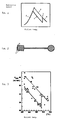
- the above theory means that if the billet is heated to a sufficiently high temperature for long enough to dissolve the Mg-Si-phases before extrusion, there will be a new peak in the diagram, indicated by reference numeral 1 in the diagram.
- the curve on the left hand side, 2 shows the maximum press speed with the available extrusion pressure.
- the curve on the right hand side, 3, shows the maximum values above which tearing occurs in the metal due to incipient melting, while the curve on the far right, 4, shows the maximum values above which tearing occurs in the AI-matrix itself.
- the billets are firstly heated to a temperature above the solubility temperature for Mg and Si for a sufficient time so that the Mg-Si-phases are dissolved and thereafter are cooled to a desired extrusion temperature quickly enough to prevent precipitation of new, coarse Mg-Si-phases, it is possible to achieve a further increase in extrusion speed at the lower billet temperature.
- These billets will have an increased extrusion speed compared to billets which are heated conventionally to the same temperature, compare the dashed line, 6, in Fig. 1.
- Billets in the form of rods of diameter 228 mm were produced by casting an alloy, AA6063, and then cut into sections 711 mm in length.
- the alloy composition is shown in the table below.
- the billets were homogenised according to standard practice, ie 6 hours at 582°C, and thereafter cooled at a minimum cooling rate of 194°C/h between 510°C and 204°C.
- the heating period for the billets was approximately 35 minutes.
- the samples which were cooled prior to extrusion, were cooled to a desired temperature without using any kind of forced cooling.
- the cooling period was up to 20 minutes for the lowest cooling temperature.
- the billets were extruded through a special die shown in Fig. 2.
- the extrusion die is provided with recesses, 5, which in the extrusions result in small ribs.
- the expression "extrudability” as used herein refers to the maximum extrusion speed, V max, which is achieved before tearing occurs in the ribs.
- the solubility temperature was estimated to be about483°C, which corresponds to the changes in maximum extrusion speed, the break-through pressure for the billets and the surface temperature for the directly heated billets.
- the extrusion speed will increase due to the changes in the mechanisms which initiate the tearing of the material.
- the tearing is expected to occur due to incipient melting. This occurs, as previously mentioned, due to the fact that the material contains small agglomerates of phases which have lower melting points than the rest of the material.
- agglomerates may for instance consist of Mg 2 Si + Si + AI (liquid at 555°C), or AIFe (Mn)Si + Mg 2 Si + Si + AI (liquid at 548°C).
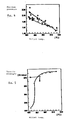
- Fig. 4 the break-through pressure for he extrusion (the maximum pressure before extrusion commences) is plotted against the billet temperature.
- the curve passing through the points "O” defines the maximum, average pressure for billets extruded according to the invention, while the slightly less inclining curve passing through the points "X" defines the average, maximum pressure which was measured for the billets extruded the conventional way, i.e. billets directly heated to the desired extrusion temperature.
- the samples extruded from billets produced according to the present invention have essentially better quality (less "pick-ups”) than the samples extruded from billets produced according to the conventional method.
- the extrusions were water- quenched at the press (standing wave) and samples were aged at 185°C for five hours.
- Fig. 5 the values of tensile strength set out in the table are plotted against the billet temperature.
- the strength of the material increases as the billet temperature immediately before extrusion is increased. Further it can be seen that the extrusions which were extruded from billets produced according to the present invention have improved strength compared to the extrusions produced according to the conventional method, especially when the billet temperature is low.
- the method may be employed with all AI-alloys where incipient melting occurs due to precipitated phases which are soluble at higher temperatures. Further, it is expected that the method may also be used with equal success with other alloys for example the copper alloys.
Landscapes
- Chemical & Material Sciences (AREA)
- Mechanical Engineering (AREA)
- Organic Chemistry (AREA)
- Metallurgy (AREA)
- Engineering & Computer Science (AREA)
- Materials Engineering (AREA)
- Crystallography & Structural Chemistry (AREA)
- Physics & Mathematics (AREA)
- Thermal Sciences (AREA)
- Extrusion Of Metal (AREA)
- Extrusion Moulding Of Plastics Or The Like (AREA)
- Materials For Medical Uses (AREA)
- Metal Extraction Processes (AREA)
Claims (5)
Priority Applications (1)
| Application Number | Priority Date | Filing Date | Title |
|---|---|---|---|
| AT88306629T ATE71986T1 (de) | 1987-07-20 | 1988-07-20 | Darstellung von legierungen zum strangpressen. |
Applications Claiming Priority (2)
| Application Number | Priority Date | Filing Date | Title |
|---|---|---|---|
| NO873010 | 1987-07-20 | ||
| NO873010A NO166879C (no) | 1987-07-20 | 1987-07-20 | Fremgangsmaate for fremstilling av en aluminiumslegering. |
Publications (3)
| Publication Number | Publication Date |
|---|---|
| EP0302623A1 EP0302623A1 (de) | 1989-02-08 |
| EP0302623B1 true EP0302623B1 (de) | 1992-01-22 |
| EP0302623B2 EP0302623B2 (de) | 1996-05-29 |
Family
ID=19890105
Family Applications (1)
| Application Number | Title | Priority Date | Filing Date |
|---|---|---|---|
| EP88306629A Expired - Lifetime EP0302623B2 (de) | 1987-07-20 | 1988-07-20 | Darstellung von Legierungen zum Strangpressen |
Country Status (6)
| Country | Link |
|---|---|
| US (1) | US4909858A (de) |
| EP (1) | EP0302623B2 (de) |
| AT (1) | ATE71986T1 (de) |
| CA (1) | CA1306928C (de) |
| DE (1) | DE3867958D1 (de) |
| NO (1) | NO166879C (de) |
Cited By (4)
| Publication number | Priority date | Publication date | Assignee | Title |
|---|---|---|---|---|
| EP2993244A1 (de) | 2014-09-05 | 2016-03-09 | Constellium Valais SA (AG, Ltd) | Strangpressprofil aus 6xxx Aluminiumlegierung mit ausgezeichneter Crashverhalten |
| WO2016202810A1 (en) | 2015-06-15 | 2016-12-22 | Constellium Singen Gmbh | Manufacturing process for obtaining high strength solid extruded products made from 6xxx aluminium alloys for towing eye |
| EP2883973B1 (de) | 2013-12-11 | 2019-06-05 | Constellium Valais SA (AG, Ltd) | Herstellungsverfahren zum Erhalten hochfester extrudierter Produkte aus 6xxx-Aluminiumlegierungen |
| EP3529393B1 (de) | 2016-10-20 | 2020-08-19 | Constellium Singen GmbH | Thermomechanische auslagerung für 6xxx extrusionen |
Families Citing this family (17)
| Publication number | Priority date | Publication date | Assignee | Title |
|---|---|---|---|---|
| US5027634A (en) * | 1990-02-28 | 1991-07-02 | Granco-Clark, Inc. | Solutionizing taper quench |
| US5730198A (en) * | 1995-06-06 | 1998-03-24 | Reynolds Metals Company | Method of forming product having globular microstructure |
| NO304436B1 (no) * | 1996-05-10 | 1998-12-14 | Norsk Hydro As | FremgangsmÕte for fremstilling av legeringer fra eutektiske legeringssystemer |
| US5785776A (en) * | 1996-06-06 | 1998-07-28 | Reynolds Metals Company | Method of improving the corrosion resistance of aluminum alloys and products therefrom |
| AUPO084796A0 (en) * | 1996-07-04 | 1996-07-25 | Comalco Aluminium Limited | 6xxx series aluminium alloy |
| US6602364B1 (en) * | 1999-02-12 | 2003-08-05 | Norsk Hydro A.S. | Aluminium alloy containing magnesium and silicon |
| DE50013171D1 (de) * | 1999-09-10 | 2006-08-24 | Kramer Carl | Verfahren zur Wärmebehandlung von metallischen Pressbolzen |
| US6630039B2 (en) | 2000-02-22 | 2003-10-07 | Alcoa Inc. | Extrusion method utilizing maximum exit temperature from the die |
| JP4563204B2 (ja) * | 2004-02-13 | 2010-10-13 | 株式会社デンソー | 熱交換器用アルミニウム合金押出材およびその製造方法 |
| JP4824358B2 (ja) * | 2005-07-22 | 2011-11-30 | 株式会社デンソー | 表面性状に優れたアルミニウム合金押出材とその製造方法、および熱交換器用多孔管ならびに該多孔管を組み込んだ熱交換器の製造方法 |
| US7422645B2 (en) * | 2005-09-02 | 2008-09-09 | Alcoa, Inc. | Method of press quenching aluminum alloy 6020 |
| JP5160930B2 (ja) * | 2008-03-25 | 2013-03-13 | 株式会社神戸製鋼所 | 曲げ圧壊性と耐食性に優れたアルミニウム合金押出材およびその製造方法 |
| CA2921895C (en) * | 2013-08-30 | 2022-07-19 | Norsk Hydro Asa | Method for the manufacturing of al-mg-si and al-mg-si-cu extrusion alloys |
| JP2017078211A (ja) * | 2015-10-21 | 2017-04-27 | 株式会社神戸製鋼所 | 高成形性アルミニウム合金板 |
| CN116391054A (zh) * | 2020-10-30 | 2023-07-04 | 奥科宁克技术有限责任公司 | 改进的6xxx铝合金 |
| CN115094278A (zh) * | 2022-05-11 | 2022-09-23 | 宁波信泰机械有限公司 | 一种具有良好热稳定性的6系铝合金材料及其制备方法 |
| NO20240398A1 (en) | 2024-04-26 | 2025-10-27 | Norsk Hydro As | HIGH STRENGTH Al-Mg-Si ALLOY, EXTRUDED PROFILE OF THE ALLOY, AND A METHOD FOR PRODUCING EXTRUDED PROFILE |
Family Cites Families (5)
| Publication number | Priority date | Publication date | Assignee | Title |
|---|---|---|---|---|
| GB1052887A (de) * | 1900-01-01 | |||
| GB917385A (en) * | 1960-05-13 | 1963-02-06 | Kaiser Aluminium Chem Corp | Heat treatment and extrusion of aluminium alloy |
| US3222227A (en) * | 1964-03-13 | 1965-12-07 | Kaiser Aluminium Chem Corp | Heat treatment and extrusion of aluminum alloy |
| GB1122198A (en) * | 1965-12-02 | 1968-07-31 | Olin Mathieson | Process for preparing aluminium base alloy |
| GB8524077D0 (en) * | 1985-09-30 | 1985-11-06 | Alcan Int Ltd | Al-mg-si extrusion alloy |
-
1987
- 1987-07-20 NO NO873010A patent/NO166879C/no not_active IP Right Cessation
-
1988
- 1988-07-19 US US07/221,417 patent/US4909858A/en not_active Ceased
- 1988-07-19 CA CA000572392A patent/CA1306928C/en not_active Expired - Lifetime
- 1988-07-20 DE DE8888306629T patent/DE3867958D1/de not_active Expired - Lifetime
- 1988-07-20 EP EP88306629A patent/EP0302623B2/de not_active Expired - Lifetime
- 1988-07-20 AT AT88306629T patent/ATE71986T1/de not_active IP Right Cessation
Cited By (9)
| Publication number | Priority date | Publication date | Assignee | Title |
|---|---|---|---|---|
| EP2883973B1 (de) | 2013-12-11 | 2019-06-05 | Constellium Valais SA (AG, Ltd) | Herstellungsverfahren zum Erhalten hochfester extrudierter Produkte aus 6xxx-Aluminiumlegierungen |
| EP2993244A1 (de) | 2014-09-05 | 2016-03-09 | Constellium Valais SA (AG, Ltd) | Strangpressprofil aus 6xxx Aluminiumlegierung mit ausgezeichneter Crashverhalten |
| EP2993244B1 (de) | 2014-09-05 | 2020-05-27 | Constellium Valais SA (AG, Ltd) | Herstellungsverfahren eines Strangpressprofils aus 6xxx Aluminiumlegierung mit ausgezeichneter Crashverhalten |
| US11186903B2 (en) | 2014-09-05 | 2021-11-30 | Constellium Valais Sa | High strength products extruded from 6xxx aluminum alloys having excellent crash performance |
| WO2016202810A1 (en) | 2015-06-15 | 2016-12-22 | Constellium Singen Gmbh | Manufacturing process for obtaining high strength solid extruded products made from 6xxx aluminium alloys for towing eye |
| EP3307919B1 (de) | 2015-06-15 | 2020-08-05 | Constellium Singen GmbH | Herstellungsverfahren zum erhalten hochfester extrudierter produkte aus 6xxx-aluminiumlegierungen für zugösen |
| US11479838B2 (en) | 2015-06-15 | 2022-10-25 | Constellium Singen Gmbh | Manufacturing process for obtaining high strength solid extruded products made from 6XXX aluminium alloys for towing eye |
| EP3307919B2 (de) † | 2015-06-15 | 2025-12-24 | Constellium Singen GmbH | Herstellungsverfahren zum erhalten hochfester extrudierter produkte aus 6xxx-aluminiumlegierungen für zugösen |
| EP3529393B1 (de) | 2016-10-20 | 2020-08-19 | Constellium Singen GmbH | Thermomechanische auslagerung für 6xxx extrusionen |
Also Published As
| Publication number | Publication date |
|---|---|
| EP0302623A1 (de) | 1989-02-08 |
| US4909858A (en) | 1990-03-20 |
| DE3867958D1 (de) | 1992-03-05 |
| NO873010L (no) | 1989-01-23 |
| ATE71986T1 (de) | 1992-02-15 |
| EP0302623B2 (de) | 1996-05-29 |
| NO873010D0 (no) | 1987-07-20 |
| NO166879B (no) | 1991-06-03 |
| CA1306928C (en) | 1992-09-01 |
| NO166879C (no) | 1991-09-11 |
Similar Documents
| Publication | Publication Date | Title |
|---|---|---|
| EP0302623B1 (de) | Darstellung von Legierungen zum Strangpressen | |
| EP0247181B1 (de) | Aluminium-lithium-legierungen und herstellungsverfahren | |
| US5108519A (en) | Aluminum-lithium alloys suitable for forgings | |
| EP0157600B1 (de) | Aluminium-Lithium-Legierungen | |
| US10435774B2 (en) | 2XXX series aluminum lithium alloys having low strength differential | |
| JP3194742B2 (ja) | 改良リチウムアルミニウム合金系 | |
| US4869870A (en) | Aluminum-lithium alloys with hafnium | |
| US3791876A (en) | Method of making high strength aluminum alloy forgings and product produced thereby | |
| EP0981653B1 (de) | Verfahren zur erhöhung der bruchzähigkeit in aluminium-lithium-legierungen | |
| EP2274454B1 (de) | Legierungszusammensetzung und herstellungsverfahren dafür | |
| US3990922A (en) | Processing aluminum alloys | |
| CN87103970A (zh) | 镍基超耐热合金的制品及制造方法 | |
| JP7639270B2 (ja) | アルミニウム合金鍛造品およびアルミニウム合金鍛造品の製造方法 | |
| JPH0559477A (ja) | 鍛造用アルミニウム合金 | |
| US4795502A (en) | Aluminum-lithium alloy products and method of making the same | |
| CZ299841B6 (cs) | Zpusob tvárení a tepelného zpracování slitiny | |
| CN112626401A (zh) | 一种2xxx系铝合金及其制备方法 | |
| JP2004084058A (ja) | 輸送機構造材用アルミニウム合金鍛造材の製造方法およびアルミニウム合金鍛造材 | |
| JP3726087B2 (ja) | 輸送機構造材用アルミニウム合金鍛造材およびその製造方法 | |
| JPH0713281B2 (ja) | アルミニウムベース合金加工製品の製造方法 | |
| JP2004292937A (ja) | 輸送機構造材用アルミニウム合金鍛造材およびその製造方法 | |
| CN116829757A (zh) | 高强度且耐scc性及淬火性优异的铝合金挤压材料的制造方法 | |
| US4921548A (en) | Aluminum-lithium alloys and method of making same | |
| JP3540316B2 (ja) | アルミニウム−リチウム合金の機械的特性の改良 | |
| US6113711A (en) | Extrusion of aluminum-lithium alloys |
Legal Events
| Date | Code | Title | Description |
|---|---|---|---|
| PUAI | Public reference made under article 153(3) epc to a published international application that has entered the european phase |
Free format text: ORIGINAL CODE: 0009012 |
|
| AK | Designated contracting states |
Kind code of ref document: A1 Designated state(s): AT BE DE FR GB IT NL SE |
|
| 17P | Request for examination filed |
Effective date: 19890320 |
|
| 17Q | First examination report despatched |
Effective date: 19900726 |
|
| GRAA | (expected) grant |
Free format text: ORIGINAL CODE: 0009210 |
|
| AK | Designated contracting states |
Kind code of ref document: B1 Designated state(s): AT BE DE FR GB IT NL SE |
|
| REF | Corresponds to: |
Ref document number: 71986 Country of ref document: AT Date of ref document: 19920215 Kind code of ref document: T |
|
| REF | Corresponds to: |
Ref document number: 3867958 Country of ref document: DE Date of ref document: 19920305 |
|
| ITF | It: translation for a ep patent filed | ||
| ET | Fr: translation filed | ||
| PLBI | Opposition filed |
Free format text: ORIGINAL CODE: 0009260 |
|
| PLBI | Opposition filed |
Free format text: ORIGINAL CODE: 0009260 |
|
| 26 | Opposition filed |
Opponent name: JULIUS & AUGUST ERBSLOEH GMBH & CO Effective date: 19921020 Opponent name: ALCAN INTERNATIONAL LIMITED Effective date: 19921020 |
|
| 26 | Opposition filed |
Opponent name: ALCAN INTERNATIONAL LIMITED Effective date: 19921020 Opponent name: JULIUS & AUGUST ERBSLOEH GMBH & CO Effective date: 19921020 Opponent name: HOOGOVENS ALUMINIUM PROFILTECHNIK GMBH Effective date: 19921022 |
|
| NLR1 | Nl: opposition has been filed with the epo |
Opponent name: HOOGOVENS ALUMINIUM PROFILTECHNIK GMBH Opponent name: ALCAN INTERNATIONAL LIMITED. Opponent name: JULIUS & AUGUST ERBSLOEH GMBH & CO |
|
| PLAB | Opposition data, opponent's data or that of the opponent's representative modified |
Free format text: ORIGINAL CODE: 0009299OPPO |
|
| R26 | Opposition filed (corrected) |
Opponent name: JULIUS & AUGUST ERBSLOEH GMBH & CO * 921020 ALCAN Effective date: 19921020 |
|
| NLXE | Nl: other communications concerning ep-patents (part 3 heading xe) |
Free format text: PAT.BUL.04/92 CORR.:HOOGOVENS GROEP B.V. |
|
| EAL | Se: european patent in force in sweden |
Ref document number: 88306629.2 |
|
| PLAW | Interlocutory decision in opposition |
Free format text: ORIGINAL CODE: EPIDOS IDOP |
|
| PUAH | Patent maintained in amended form |
Free format text: ORIGINAL CODE: 0009272 |
|
| STAA | Information on the status of an ep patent application or granted ep patent |
Free format text: STATUS: PATENT MAINTAINED AS AMENDED |
|
| ITF | It: translation for a ep patent filed | ||
| 27A | Patent maintained in amended form |
Effective date: 19960529 |
|
| AK | Designated contracting states |
Kind code of ref document: B2 Designated state(s): AT BE DE FR GB IT NL SE |
|
| ET3 | Fr: translation filed ** decision concerning opposition | ||
| NLR2 | Nl: decision of opposition | ||
| NLR3 | Nl: receipt of modified translations in the netherlands language after an opposition procedure | ||
| APAC | Appeal dossier modified |
Free format text: ORIGINAL CODE: EPIDOS NOAPO |
|
| APAC | Appeal dossier modified |
Free format text: ORIGINAL CODE: EPIDOS NOAPO |
|
| REG | Reference to a national code |
Ref country code: GB Ref legal event code: IF02 |
|
| APAH | Appeal reference modified |
Free format text: ORIGINAL CODE: EPIDOSCREFNO |
|
| PGFP | Annual fee paid to national office [announced via postgrant information from national office to epo] |
Ref country code: DE Payment date: 20070712 Year of fee payment: 20 |
|
| PGFP | Annual fee paid to national office [announced via postgrant information from national office to epo] |
Ref country code: AT Payment date: 20070711 Year of fee payment: 20 |
|
| PGFP | Annual fee paid to national office [announced via postgrant information from national office to epo] |
Ref country code: GB Payment date: 20070718 Year of fee payment: 20 |
|
| PGFP | Annual fee paid to national office [announced via postgrant information from national office to epo] |
Ref country code: NL Payment date: 20070624 Year of fee payment: 20 Ref country code: IT Payment date: 20070727 Year of fee payment: 20 Ref country code: SE Payment date: 20070704 Year of fee payment: 20 |
|
| PGFP | Annual fee paid to national office [announced via postgrant information from national office to epo] |
Ref country code: BE Payment date: 20071004 Year of fee payment: 20 |
|
| PGFP | Annual fee paid to national office [announced via postgrant information from national office to epo] |
Ref country code: FR Payment date: 20070710 Year of fee payment: 20 |
|
| BE20 | Be: patent expired |
Owner name: *NORSK HYDRO A/S Effective date: 20080720 |
|
| REG | Reference to a national code |
Ref country code: GB Ref legal event code: PE20 Expiry date: 20080719 |
|
| NLV7 | Nl: ceased due to reaching the maximum lifetime of a patent |
Effective date: 20080720 |
|
| EUG | Se: european patent has lapsed | ||
| PG25 | Lapsed in a contracting state [announced via postgrant information from national office to epo] |
Ref country code: NL Free format text: LAPSE BECAUSE OF EXPIRATION OF PROTECTION Effective date: 20080720 |
|
| PG25 | Lapsed in a contracting state [announced via postgrant information from national office to epo] |
Ref country code: GB Free format text: LAPSE BECAUSE OF EXPIRATION OF PROTECTION Effective date: 20080719 |