EP0302999A2 - Abholung von Operanden in Unordnung - Google Patents
Abholung von Operanden in Unordnung Download PDFInfo
- Publication number
- EP0302999A2 EP0302999A2 EP88106390A EP88106390A EP0302999A2 EP 0302999 A2 EP0302999 A2 EP 0302999A2 EP 88106390 A EP88106390 A EP 88106390A EP 88106390 A EP88106390 A EP 88106390A EP 0302999 A2 EP0302999 A2 EP 0302999A2
- Authority
- EP
- European Patent Office
- Prior art keywords
- stack
- addresses
- sequence
- address
- instruction
- Prior art date
- Legal status (The legal status is an assumption and is not a legal conclusion. Google has not performed a legal analysis and makes no representation as to the accuracy of the status listed.)
- Granted
Links
Images


Classifications
-
- G—PHYSICS
- G06—COMPUTING OR CALCULATING; COUNTING
- G06F—ELECTRIC DIGITAL DATA PROCESSING
- G06F9/00—Arrangements for program control, e.g. control units
- G06F9/06—Arrangements for program control, e.g. control units using stored programs, i.e. using an internal store of processing equipment to receive or retain programs
- G06F9/30—Arrangements for executing machine instructions, e.g. instruction decode
- G06F9/38—Concurrent instruction execution, e.g. pipeline or look ahead
- G06F9/3802—Instruction prefetching
- G06F9/3814—Implementation provisions of instruction buffers, e.g. prefetch buffer; banks
-
- G—PHYSICS
- G06—COMPUTING OR CALCULATING; COUNTING
- G06F—ELECTRIC DIGITAL DATA PROCESSING
- G06F9/00—Arrangements for program control, e.g. control units
- G06F9/06—Arrangements for program control, e.g. control units using stored programs, i.e. using an internal store of processing equipment to receive or retain programs
- G06F9/30—Arrangements for executing machine instructions, e.g. instruction decode
- G06F9/38—Concurrent instruction execution, e.g. pipeline or look ahead
- G06F9/3802—Instruction prefetching
-
- G—PHYSICS
- G06—COMPUTING OR CALCULATING; COUNTING
- G06F—ELECTRIC DIGITAL DATA PROCESSING
- G06F9/00—Arrangements for program control, e.g. control units
- G06F9/06—Arrangements for program control, e.g. control units using stored programs, i.e. using an internal store of processing equipment to receive or retain programs
- G06F9/30—Arrangements for executing machine instructions, e.g. instruction decode
- G06F9/38—Concurrent instruction execution, e.g. pipeline or look ahead
- G06F9/3824—Operand accessing
- G06F9/3834—Maintaining memory consistency
Definitions
- the present invention generally relates to stored program digital computers and, more particularly, to apparatus for allowing out-of-sequence fetching of operands while preserving the appearance of in-sequence fetching to the processor in a computer architecture requiring in-sequence fetching.
- the invention is particularly useful in a pipelined multiprocessor system and allows the achievement of higher processor performance for a given processor hardware design.
- a performance advantage can be derived from performing certain operations out-of-sequence. Often the programmer can not take advantage of such rearrangements of operations due to limitations that exist in the semantics of the instruction set and observable order restrictions that prevent unmonitored rearrangement of operations from yielding correct results.
- OPERAND STORE COMPARE applies over a limited time interval, determined by the length of the pipeline. When a store reaches the point in the pipeline where it is completed, the address of that store is removed from the OPERAND STORE COMPARE.
- U.S. Patent No. 4,484,267 to Fletcher describes a hybrid cache where some cache lines are handled as store-in, i.e., main memory update deferred, and the other lines are handled as store-thru, i.e., main memory immediately updated. Hitherto, caches have been either all store-in or all store-thru. How each line is handled is determined dynamically and marked by a flag bit in the cache directory. The bit is reset, for example, by a cross-interrogation hit.
- U.S. Patent No. 4,189,770 to Gannon et al. describes a bypass arrangement whereby, on a cache miss for a variable field length operand, the operand is sent directly to the Instruction Unit without waiting for the entire line to be transferred from the main memory to the cache.
- Gannon et al. are not concerned with the operation of the cache and teach nothing about out-of-sequence fetches.
- U.S. Patent No. 4,435,759 to Baum et al. describes a monitoring system for capturing and recording events in the operation of a processor. Among the events captured are the addresses of instructions and cache misses.
- U.S. Patent No. 4,400,770 to Chan et al. is concerned with means for detecting and handling cache synonyms.
- Cache synonyms arise because caches are, for speed and convenience, typically addressed in a way that is partly direct and partly associative.
- Caches are divided into sets of lines, e.g., four lines per set, and the sets are directly addressed, as is a conventional memory. Selection of the appropriate line within the set is done associatevely, that is, by matching the given address with the line addresses stored in the cache directory.
- the untranslated low order bits (12 bits) of the given address are used to directly select the set, while some portion of the translated high order bits is used to associatively select the line within the set.
- the subject invention applies over an arbitrary time interval determined by the size of the fetch stack provided by the designer. It applies to truly out-of-sequence fetches and handles not only the effect of stores but all other events that could cause an out-of-sequence fetch to be observable.
- a fetch can be out-of-sequence in two ways. It can be made earlier than its proper place in the program or later. It is earlier fetching that can provide a performance gain and with which this invention deals.
- the central element of the invention is a stack containing the addresses of fetches that have been done out-of-sequence. These addresses remain in the stack until the instruction that caused the fetch is handled in its proper sequence.
- Another element is a comparison means by which all valid addresses in the stack are compared to a test address and a signal issued indicating compare or no compare. The addresses of all store-type instructions as well as all cross-interrogate addresses from other processors (in a multi-processor system) are used as test addresses. If any of these addresses signal "compare", then the corresponding fetch address is marked as invalid.
- the action taken by the processor for invalidated addresses will depend on the particular way that the processor is making use of out-of-sequence fetching.
- the purpose of the invention is to provide an alert signal to the processor when corrective action may be needed. When there is no alert signal, e.g., no address marked invalid, the processor is assured that the associated fetches could not have been observed as out-of-sequence and that the results obtained will be as correct as if the fetches were in sequence.
- the comparison means will be present in any cache; however, in a conventional cache, the comparison is expected to find a "compare" for most test addresses, i.e., cache references, while for the subject invention the comparison will infrequently find a "compare". Again, the uses are different.
- Key element (5) means for invalidating the entire stack on the occurrence of a cache miss or serializing instruction is not in any known prior art cache, Fletcher and Chan et al. in particular, since a cache that did this would seldom have very many valid entries and would therefore be of no use.
- each entry is posted to the stack 119.
- Each entry 101 consists of the address from which the fetch was made, an identifying tag for the instruction associated with the fetch, a full/empty bit (to denote the presence of an entry), and a valid bit.
- the full/empty bit will be set to Full and the valid bit will be set to Valid.
- the stack consists of a certain number of hardware registers. At a given moment, some registers may not have entries. These will have their full/empty bit set to Empty.
- overflow line 121 is activated, signaling that information has been lost.
- the overflow signal on line 121 is supplied as one input to OR gate 109.
- the first kind of event is a store that is logically earlier than the corresponding fetch. If such a store is made to an address from which an out-of-sequence fetch was made, then clearly the fetch did not get the correct new value; i.e., the fetch was made before the store was done although, logically, the fetch should be after the store.
- the addresses of such stores are supplied to the OR gate 107 and then to the distributor 105 to be compared by comparator 103 with all addresses in the stack 119. If an address in the stack compares with a store address and the associated full/empty bit is Full, then the associated valid bit is set to Invalid. As will be seen later, an entry that is both Full and Invalid may require subsequent corrective action.
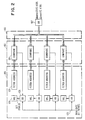
- FIG. 2 shows in more detail the structure that checks for a store that is logically earlier than the corresponding fetch.
- Fetch addresses are stored in a plurality of registers 122 which comprise the stack 119.
- the address for each register is supplied a corresponding comparator circuit 124 of the comparator 103.
- Each comparator 124 receives the store address via distributor 105 and OR gate 107. If there is a compare output from one of the comparator circuits 124, i.e., the fetch address in one of the registers 122 is equal to the store address, then an invalidate output is supplied via an OR gate 126 to set invalid the valid bit 128 for that register.
- the second kind of event is a cross- interrogate action from another processor. These addresses are also supplied to the OR gate 107 and then to the distributor 105. The actions taken are the same as for store addresses.
- the third kind of event is serializing instructions, for which the architecture requires that all previous instructions be entirely completed before the serializing instruction is completed. For this event, all entries in the stack 119 must be invalidated.
- the occurrence of a serializing instruction is supplied to OR gate 109, shown in Figure 1, and the output, on line 123, is supplied to the OR gates 126 to cause all valid bits 128 to be set to invalid, as shown in Figure 2.
- the fourth kind of event is a cache miss.
- We choose to invalidate all entries on a cache miss by supplying the cache miss indication to OR gate 109.
- a cache miss may or may not cause difficulty with out-of-sequence fetches and it should be possible to decide whether a given miss will require corrective action. However, we try, for performance reasons, to make cache misses infrequent so we do not lose much by invalidating on all misses.
- the stack 119 has an overflow, we choose to invalidate all entries.
- Entries are made to the stack at the time that out-of-sequence fetches are made. Entries are removed from the stack when the associated instruction becomes "in-sequence"; i.e., when it becomes the instruction currently being decoded. Note that the definition of when an instruction becomes in-sequence depends on the organization of the processor. Since the processor is not part of this invention, we simply refer to the "current" instruction.
- the tag of the current instruction 111 is applied to the Select and Check Entry function 113. The entry with the corresponding tag is selected and its full/empty bit and valid bit are read. If the entry is both Full and Valid, then there is no problem with the out-of-sequence fetch and no correction will be needed.
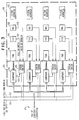
- Figure 3 shows in more detail how the signals on lines 115 and 117 are generated.
- the stack 119 comprises a plurality of registers 122 containing fetch addresses. Associated with each fetch address is a valid bit 128, a full/empty (F/E) bit 120, and a tag 118. It will of course be understood that the fetch address, valid bit, full/empty bit and tag may all be in one register.
- the division shown in Figure 3 is merely an aid in conceptualizing the nature of the data stored in each of the registers.
- the full/empty bit 120 supplies a signal indicating whether its corresponding register is full or empty and the valid bit 128 supplies a signal indicating whether the fetch address in the register is valid or invalid. These signals are supplied to check entry logic 125.
- the tag 118 for each address is supplied to a corresponding comparator circuit 130. All of the comparator circuits 130 receive the tag 111 of the current instruction, and depending on which comparator circuit proivdes an output, i.e., the tag of the current instruction is equal to the tag of one of the fetch addresses stored in a register 122 of the stack 119, the corresponding check entry logic 125 will be enabled to provide an output either on line 115 or 117.
- Figure 4 shows the check entry logic 125 as comprising AND gates 132, 134 and 136 and an OR gate 138.
- AND gate 132 recieves a signal on line 129 from the valid bit 128 indicating that the address is invalid, a signal on line 127 from the full/empty bit 120 that the fetch address register is full and an enabling signal on line 131 from comparator circuit 130 to produce an output on line 117 indicating that the fetch address register is full and invalid.
- AND gate 134 is also enabled by a signal on line 131 and recieves the same full signal on line 127 but receives a valid signal on line 129 to produce an output indicating that the the fetch address register is full and valid.
- AND gate 136 is also enabled by a signal on line 131 but recieves an empty signal on line 127 from the full/empty bit 120 to produce a signal indicating that the fetch address register is empty.
- the outputs from AND gates 134 and 136 are combined in OR gate 138 to produce on line 115 a signal indicating that the fetch address register is either empty or full and valid.
- processor 1 stores a new value into location A
- processor 2 upon fetching from location A, will see either an old or a new value depending on whether the fetch was before the store or after.
- processor 2 can store into location B, and processor 1 can fetch from location B. If fetches and stores are not kept in sequence, it can happen that either processor could observe a logically impossible situation, namely that A occurred before B and also that B occurred before A. This hazard is avoided by monitoring the conditions that could let it arise, specifically, cross interrogatories and cache misses.
- the invention provides a performance advantage in certain processors by allowing out-of-sequence fetches. By monitoring the relevant processor activity that occurs between the actual fetching of the operand and the point when the operand would normally be fetched, the hazards of out-of-sequence fetching can be exposed and corrective action taken.
- the central element of the invention is the stack containing the addresses of fetches that have been done out-of-sequence.
- a comparison means compares all addresses in the stack to a test address and issues a signal indicating compare or no compare. If any of these addresses signal "compare", then the corresponding fetch address is marked as invalid.
- a cache miss or a serializing instruction also present the possibility that many of the out-of-sequence fetches may be invalid, and for these events, the entire stack is marked invalid.
Landscapes
- Engineering & Computer Science (AREA)
- Software Systems (AREA)
- Theoretical Computer Science (AREA)
- Physics & Mathematics (AREA)
- General Engineering & Computer Science (AREA)
- General Physics & Mathematics (AREA)
- Advance Control (AREA)
- Memory System Of A Hierarchy Structure (AREA)
- Multi Processors (AREA)
Applications Claiming Priority (2)
| Application Number | Priority Date | Filing Date | Title |
|---|---|---|---|
| US07/051,792 US4991090A (en) | 1987-05-18 | 1987-05-18 | Posting out-of-sequence fetches |
| US51792 | 1987-05-18 |
Publications (3)
| Publication Number | Publication Date |
|---|---|
| EP0302999A2 true EP0302999A2 (de) | 1989-02-15 |
| EP0302999A3 EP0302999A3 (de) | 1991-11-06 |
| EP0302999B1 EP0302999B1 (de) | 1993-09-15 |
Family
ID=21973404
Family Applications (1)
| Application Number | Title | Priority Date | Filing Date |
|---|---|---|---|
| EP88106390A Expired - Lifetime EP0302999B1 (de) | 1987-05-18 | 1988-04-21 | Abholung von Operanden in Unordnung |
Country Status (4)
| Country | Link |
|---|---|
| US (1) | US4991090A (de) |
| EP (1) | EP0302999B1 (de) |
| JP (1) | JPS63293639A (de) |
| DE (1) | DE3884101T2 (de) |
Cited By (8)
| Publication number | Priority date | Publication date | Assignee | Title |
|---|---|---|---|---|
| EP0402787A3 (de) * | 1989-06-12 | 1991-09-04 | Intel Corporation | Cache-Speicherfehlgriffsvorhersageverfahren und -vorrichtung |
| EP0495165A3 (de) * | 1991-01-16 | 1992-08-12 | International Business Machines Corporation | Überlappende Serienverarbeitung |
| EP0380846A3 (de) * | 1989-02-03 | 1992-09-02 | Digital Equipment Corporation | Verfahren und Vorrichtung zur Auflösung von einer variablen Anzahl von möglichen Speicherzugriffskonflikten in einem Pipeline-Rechnersystem |
| EP0436092A3 (en) * | 1989-12-26 | 1993-11-10 | Ibm | Out-of-sequence fetch controls for a data processing system |
| EP0568842A3 (de) * | 1992-05-06 | 1994-01-05 | Ibm | |
| WO1994008287A1 (en) * | 1992-09-29 | 1994-04-14 | Seiko Epson Corporation | System and method for handling load and/or store operations in a superscalar microprocessor |
| EP0605869A1 (de) * | 1993-01-08 | 1994-07-13 | International Business Machines Corporation | Nicht sequentielle Befehlsausfürung mit Last- und Speicherungsvergleich |
| US6957320B2 (en) | 1992-09-29 | 2005-10-18 | Seiko Epson Corporation | System and method for handling load and/or store operations in a superscalar microprocessor |
Families Citing this family (40)
| Publication number | Priority date | Publication date | Assignee | Title |
|---|---|---|---|---|
| US5193205A (en) * | 1988-03-01 | 1993-03-09 | Mitsubishi Denki Kabushiki Kaisha | Pipeline processor, with return address stack storing only pre-return processed address for judging validity and correction of unprocessed address |
| JPH0774994B2 (ja) * | 1988-09-21 | 1995-08-09 | 株式会社日立製作所 | バッファ記憶制御装置のosc検出方式 |
| JPH02103656A (ja) * | 1988-10-12 | 1990-04-16 | Fujitsu Ltd | 主記憶参照の遂次化制御方式 |
| US5768575A (en) * | 1989-02-24 | 1998-06-16 | Advanced Micro Devices, Inc. | Semi-Autonomous RISC pipelines for overlapped execution of RISC-like instructions within the multiple superscalar execution units of a processor having distributed pipeline control for sepculative and out-of-order execution of complex instructions |
| US5781753A (en) | 1989-02-24 | 1998-07-14 | Advanced Micro Devices, Inc. | Semi-autonomous RISC pipelines for overlapped execution of RISC-like instructions within the multiple superscalar execution units of a processor having distributed pipeline control for speculative and out-of-order execution of complex instructions |
| US5226126A (en) * | 1989-02-24 | 1993-07-06 | Nexgen Microsystems | Processor having plurality of functional units for orderly retiring outstanding operations based upon its associated tags |
| CA2016068C (en) * | 1989-05-24 | 2000-04-04 | Robert W. Horst | Multiple instruction issue computer architecture |
| JPH0348951A (ja) * | 1989-07-18 | 1991-03-01 | Fujitsu Ltd | アドレスモニタ装置 |
| US5197139A (en) * | 1990-04-05 | 1993-03-23 | International Business Machines Corporation | Cache management for multi-processor systems utilizing bulk cross-invalidate |
| US5151981A (en) * | 1990-07-13 | 1992-09-29 | International Business Machines Corporation | Instruction sampling instrumentation |
| US5446850A (en) * | 1991-01-15 | 1995-08-29 | International Business Machines Corporation | Cross-cache-line compounding algorithm for scism processors |
| US5261071A (en) * | 1991-03-21 | 1993-11-09 | Control Data System, Inc. | Dual pipe cache memory with out-of-order issue capability |
| US5630157A (en) * | 1991-06-13 | 1997-05-13 | International Business Machines Corporation | Computer organization for multiple and out-of-order execution of condition code testing and setting instructions |
| US5636363A (en) * | 1991-06-14 | 1997-06-03 | Integrated Device Technology, Inc. | Hardware control structure and method for off-chip monitoring entries of an on-chip cache |
| US5317711A (en) * | 1991-06-14 | 1994-05-31 | Integrated Device Technology, Inc. | Structure and method for monitoring an internal cache |
| US5355471A (en) * | 1992-08-14 | 1994-10-11 | Pyramid Technology Corporation | Multiprocessor cache coherency tester that exercises the coherency logic exhaustively and also detects errors in a processor using an automatic CPU sort |
| US5488706A (en) * | 1992-12-18 | 1996-01-30 | Amdahl Corporation | Retry request system in a pipeline data processing system where each requesting unit preserves the order of requests |
| US5493669A (en) * | 1993-03-03 | 1996-02-20 | Motorola, Inc. | Data processor for simultaneously searching two fields of the rename buffer having first and second most recently allogated bits |
| JP2560988B2 (ja) * | 1993-07-16 | 1996-12-04 | 日本電気株式会社 | 情報処理装置および処理方法 |
| US6138230A (en) * | 1993-10-18 | 2000-10-24 | Via-Cyrix, Inc. | Processor with multiple execution pipelines using pipe stage state information to control independent movement of instructions between pipe stages of an execution pipeline |
| US5463745A (en) * | 1993-12-22 | 1995-10-31 | Intel Corporation | Methods and apparatus for determining the next instruction pointer in an out-of-order execution computer system |
| US5535358A (en) * | 1993-12-27 | 1996-07-09 | Matsushita Electric Industrial Co., Ltd. | Cache memory control circuit and method for controlling reading and writing requests |
| US5588126A (en) * | 1993-12-30 | 1996-12-24 | Intel Corporation | Methods and apparatus for fordwarding buffered store data on an out-of-order execution computer system |
| US5452426A (en) * | 1994-01-04 | 1995-09-19 | Intel Corporation | Coordinating speculative and committed state register source data and immediate source data in a processor |
| US5898854A (en) * | 1994-01-04 | 1999-04-27 | Intel Corporation | Apparatus for indicating an oldest non-retired load operation in an array |
| US5627985A (en) * | 1994-01-04 | 1997-05-06 | Intel Corporation | Speculative and committed resource files in an out-of-order processor |
| US5577200A (en) * | 1994-02-28 | 1996-11-19 | Intel Corporation | Method and apparatus for loading and storing misaligned data on an out-of-order execution computer system |
| US5465336A (en) * | 1994-06-30 | 1995-11-07 | International Business Machines Corporation | Fetch and store buffer that enables out-of-order execution of memory instructions in a data processing system |
| US5699538A (en) * | 1994-12-09 | 1997-12-16 | International Business Machines Corporation | Efficient firm consistency support mechanisms in an out-of-order execution superscaler multiprocessor |
| TW295646B (de) * | 1995-01-25 | 1997-01-11 | Ibm | |
| US5649155A (en) * | 1995-03-31 | 1997-07-15 | International Business Machines Corporation | Cache memory accessed by continuation requests |
| US5751946A (en) * | 1996-01-18 | 1998-05-12 | International Business Machines Corporation | Method and system for detecting bypass error conditions in a load/store unit of a superscalar processor |
| US5737636A (en) * | 1996-01-18 | 1998-04-07 | International Business Machines Corporation | Method and system for detecting bypass errors in a load/store unit of a superscalar processor |
| JP2806359B2 (ja) * | 1996-04-30 | 1998-09-30 | 日本電気株式会社 | 命令処理方法及び命令処理装置 |
| JP2783259B2 (ja) * | 1996-07-18 | 1998-08-06 | 日本電気株式会社 | 半導体パッケージとその製造方法 |
| US6021261A (en) * | 1996-12-05 | 2000-02-01 | International Business Machines Corporation | Method and system for testing a multiprocessor data processing system utilizing a plurality of event tracers |
| US5909698A (en) * | 1997-03-17 | 1999-06-01 | International Business Machines Corporation | Cache block store instruction operations where cache coherency is achieved without writing all the way back to main memory |
| US6289437B1 (en) * | 1997-08-27 | 2001-09-11 | International Business Machines Corporation | Data processing system and method for implementing an efficient out-of-order issue mechanism |
| JP2004094533A (ja) * | 2002-08-30 | 2004-03-25 | Hajime Seki | 計算機システム |
| US9483409B2 (en) | 2015-02-05 | 2016-11-01 | International Business Machines Corporation | Store forwarding cache |
Family Cites Families (22)
| Publication number | Priority date | Publication date | Assignee | Title |
|---|---|---|---|---|
| US3401376A (en) * | 1965-11-26 | 1968-09-10 | Burroughs Corp | Central processor |
| US3553655A (en) * | 1969-03-28 | 1971-01-05 | Ibm | Short forward conditional skip hardware |
| US4092713A (en) * | 1977-06-13 | 1978-05-30 | Sperry Rand Corporation | Post-write address word correction in cache memory system |
| US4354232A (en) * | 1977-12-16 | 1982-10-12 | Honeywell Information Systems Inc. | Cache memory command buffer circuit |
| US4200927A (en) * | 1978-01-03 | 1980-04-29 | International Business Machines Corporation | Multi-instruction stream branch processing mechanism |
| US4189772A (en) * | 1978-03-16 | 1980-02-19 | International Business Machines Corporation | Operand alignment controls for VFL instructions |
| US4197580A (en) * | 1978-06-08 | 1980-04-08 | Bell Telephone Laboratories, Incorporated | Data processing system including a cache memory |
| US4228503A (en) * | 1978-10-02 | 1980-10-14 | Sperry Corporation | Multiplexed directory for dedicated cache memory system |
| US4279016A (en) * | 1979-06-21 | 1981-07-14 | International Business Machines Corporation | Instruction pre-fetch microprocessor interrupt system |
| JPS56149646A (en) * | 1980-04-21 | 1981-11-19 | Toshiba Corp | Operation controller |
| US4438492A (en) * | 1980-08-01 | 1984-03-20 | Advanced Micro Devices, Inc. | Interruptable microprogram controller for microcomputer systems |
| US4399507A (en) * | 1981-06-30 | 1983-08-16 | Ibm Corporation | Instruction address stack in the data memory of an instruction-pipelined processor |
| US4484267A (en) * | 1981-12-30 | 1984-11-20 | International Business Machines Corporation | Cache sharing control in a multiprocessor |
| US4594660A (en) * | 1982-10-13 | 1986-06-10 | Honeywell Information Systems Inc. | Collector |
| US4594659A (en) * | 1982-10-13 | 1986-06-10 | Honeywell Information Systems Inc. | Method and apparatus for prefetching instructions for a central execution pipeline unit |
| JPS59160899A (ja) * | 1982-12-09 | 1984-09-11 | セコイア・システムス・インコ−ポレ−テツド | メモリ−・バツク・アツプ・システム |
| JPS59205605A (ja) * | 1983-05-07 | 1984-11-21 | Hitachi Ltd | シ−ケンス制御装置 |
| US4648030A (en) * | 1983-09-22 | 1987-03-03 | Digital Equipment Corporation | Cache invalidation mechanism for multiprocessor systems |
| JPH0827718B2 (ja) * | 1983-10-05 | 1996-03-21 | 株式会社日立製作所 | 情報処理装置 |
| FI86484C (fi) * | 1984-04-27 | 1992-08-25 | Honeywell Inf Systems | Styrorgan i en digital datamaskin. |
| US4637024A (en) * | 1984-11-02 | 1987-01-13 | International Business Machines Corporation | Redundant page identification for a catalogued memory |
| US4791557A (en) * | 1985-07-31 | 1988-12-13 | Wang Laboratories, Inc. | Apparatus and method for monitoring and controlling the prefetching of instructions by an information processing system |
-
1987
- 1987-05-18 US US07/051,792 patent/US4991090A/en not_active Expired - Fee Related
-
1988
- 1988-04-18 JP JP63093613A patent/JPS63293639A/ja active Granted
- 1988-04-21 EP EP88106390A patent/EP0302999B1/de not_active Expired - Lifetime
- 1988-04-21 DE DE88106390T patent/DE3884101T2/de not_active Expired - Fee Related
Cited By (16)
| Publication number | Priority date | Publication date | Assignee | Title |
|---|---|---|---|---|
| EP0380846A3 (de) * | 1989-02-03 | 1992-09-02 | Digital Equipment Corporation | Verfahren und Vorrichtung zur Auflösung von einer variablen Anzahl von möglichen Speicherzugriffskonflikten in einem Pipeline-Rechnersystem |
| EP0402787A3 (de) * | 1989-06-12 | 1991-09-04 | Intel Corporation | Cache-Speicherfehlgriffsvorhersageverfahren und -vorrichtung |
| EP0436092A3 (en) * | 1989-12-26 | 1993-11-10 | Ibm | Out-of-sequence fetch controls for a data processing system |
| EP0495165A3 (de) * | 1991-01-16 | 1992-08-12 | International Business Machines Corporation | Überlappende Serienverarbeitung |
| EP0568842A3 (de) * | 1992-05-06 | 1994-01-05 | Ibm | |
| US5557763A (en) * | 1992-09-29 | 1996-09-17 | Seiko Epson Corporation | System for handling load and/or store operations in a superscalar microprocessor |
| WO1994008287A1 (en) * | 1992-09-29 | 1994-04-14 | Seiko Epson Corporation | System and method for handling load and/or store operations in a superscalar microprocessor |
| US5659782A (en) * | 1992-09-29 | 1997-08-19 | Seiko Epson Corporation | System and method for handling load and/or store operations in a superscalar microprocessor |
| US5987593A (en) * | 1992-09-29 | 1999-11-16 | Seiko Epson Corporation | System and method for handling load and/or store operations in a superscalar microprocessor |
| US6957320B2 (en) | 1992-09-29 | 2005-10-18 | Seiko Epson Corporation | System and method for handling load and/or store operations in a superscalar microprocessor |
| US7000097B2 (en) | 1992-09-29 | 2006-02-14 | Seiko Epson Corporation | System and method for handling load and/or store operations in a superscalar microprocessor |
| US7447876B2 (en) | 1992-09-29 | 2008-11-04 | Seiko Epson Corporation | System and method for handling load and/or store operations in a superscalar microprocessor |
| US7844797B2 (en) | 1992-09-29 | 2010-11-30 | Seiko Epson Corporation | System and method for handling load and/or store operations in a superscalar microprocessor |
| US7861069B2 (en) | 1992-09-29 | 2010-12-28 | Seiko-Epson Corporation | System and method for handling load and/or store operations in a superscalar microprocessor |
| EP0605869A1 (de) * | 1993-01-08 | 1994-07-13 | International Business Machines Corporation | Nicht sequentielle Befehlsausfürung mit Last- und Speicherungsvergleich |
| US5467473A (en) * | 1993-01-08 | 1995-11-14 | International Business Machines Corporation | Out of order instruction load and store comparison |
Also Published As
| Publication number | Publication date |
|---|---|
| US4991090A (en) | 1991-02-05 |
| JPS63293639A (ja) | 1988-11-30 |
| JPH0552968B2 (de) | 1993-08-06 |
| DE3884101T2 (de) | 1994-04-21 |
| EP0302999B1 (de) | 1993-09-15 |
| DE3884101D1 (de) | 1993-10-21 |
| EP0302999A3 (de) | 1991-11-06 |
Similar Documents
| Publication | Publication Date | Title |
|---|---|---|
| EP0302999B1 (de) | Abholung von Operanden in Unordnung | |
| US4763245A (en) | Branch prediction mechanism in which a branch history table is updated using an operand sensitive branch table | |
| EP0118828B1 (de) | Befehlsabrufanordnung und -verfahren | |
| US5185871A (en) | Coordination of out-of-sequence fetching between multiple processors using re-execution of instructions | |
| US5511175A (en) | Method an apparatus for store-into-instruction-stream detection and maintaining branch prediction cache consistency | |
| US4701844A (en) | Dual cache for independent prefetch and execution units | |
| US7958319B2 (en) | Hardware acceleration for a software transactional memory system | |
| US6067616A (en) | Branch prediction device with two levels of branch prediction cache | |
| US6542984B1 (en) | Scheduler capable of issuing and reissuing dependency chains | |
| KR100308682B1 (ko) | 다중방향연관외부마이크로프로세서캐쉬 | |
| US6148394A (en) | Apparatus and method for tracking out of order load instructions to avoid data coherency violations in a processor | |
| US6360314B1 (en) | Data cache having store queue bypass for out-of-order instruction execution and method for same | |
| US6564315B1 (en) | Scheduler which discovers non-speculative nature of an instruction after issuing and reissues the instruction | |
| US6877085B2 (en) | Mechanism for processing speclative LL and SC instructions in a pipelined processor | |
| US6622235B1 (en) | Scheduler which retries load/store hit situations | |
| EP0495165A2 (de) | Überlappende Serienverarbeitung | |
| KR20020097149A (ko) | 종속성 체인을 발행 또는 재발행할 수 있는 스케줄러 | |
| US5649137A (en) | Method and apparatus for store-into-instruction-stream detection and maintaining branch prediction cache consistency | |
| US4970643A (en) | Mechanism for lock-up free cache operation with a remote address translation unit | |
| KR100308674B1 (ko) | 멀티사이클데이터캐쉬판독을위한데이터레지스터 | |
| EP0459233A2 (de) | Selektives Verriegeln von Speicherplätzen des Caches auf einem Mikroprozessorchip | |
| US11294828B2 (en) | Apparatus and method for controlling allocation of information into a cache storage | |
| US5787479A (en) | Method and system for preventing information corruption in a cache memory caused by an occurrence of a bus error during a linefill operation | |
| US5687350A (en) | Protocol and system for performing line-fill address during copy-back operation | |
| EP0156307A2 (de) | Pipeline-Prozessor mit Doppelcachespeichern |
Legal Events
| Date | Code | Title | Description |
|---|---|---|---|
| PUAI | Public reference made under article 153(3) epc to a published international application that has entered the european phase |
Free format text: ORIGINAL CODE: 0009012 |
|
| AK | Designated contracting states |
Kind code of ref document: A2 Designated state(s): DE FR GB |
|
| 17P | Request for examination filed |
Effective date: 19890321 |
|
| PUAL | Search report despatched |
Free format text: ORIGINAL CODE: 0009013 |
|
| AK | Designated contracting states |
Kind code of ref document: A3 Designated state(s): DE FR GB |
|
| 17Q | First examination report despatched |
Effective date: 19921218 |
|
| GRAA | (expected) grant |
Free format text: ORIGINAL CODE: 0009210 |
|
| AK | Designated contracting states |
Kind code of ref document: B1 Designated state(s): DE FR GB |
|
| REF | Corresponds to: |
Ref document number: 3884101 Country of ref document: DE Date of ref document: 19931021 |
|
| ET | Fr: translation filed | ||
| PLBE | No opposition filed within time limit |
Free format text: ORIGINAL CODE: 0009261 |
|
| STAA | Information on the status of an ep patent application or granted ep patent |
Free format text: STATUS: NO OPPOSITION FILED WITHIN TIME LIMIT |
|
| 26N | No opposition filed | ||
| PGFP | Annual fee paid to national office [announced via postgrant information from national office to epo] |
Ref country code: GB Payment date: 19970325 Year of fee payment: 10 |
|
| PGFP | Annual fee paid to national office [announced via postgrant information from national office to epo] |
Ref country code: FR Payment date: 19970401 Year of fee payment: 10 |
|
| PGFP | Annual fee paid to national office [announced via postgrant information from national office to epo] |
Ref country code: DE Payment date: 19970422 Year of fee payment: 10 |
|
| PG25 | Lapsed in a contracting state [announced via postgrant information from national office to epo] |
Ref country code: GB Free format text: LAPSE BECAUSE OF NON-PAYMENT OF DUE FEES Effective date: 19980421 |
|
| PG25 | Lapsed in a contracting state [announced via postgrant information from national office to epo] |
Ref country code: FR Free format text: THE PATENT HAS BEEN ANNULLED BY A DECISION OF A NATIONAL AUTHORITY Effective date: 19980430 |
|
| GBPC | Gb: european patent ceased through non-payment of renewal fee |
Effective date: 19980421 |
|
| PG25 | Lapsed in a contracting state [announced via postgrant information from national office to epo] |
Ref country code: DE Free format text: LAPSE BECAUSE OF NON-PAYMENT OF DUE FEES Effective date: 19990202 |
|
| REG | Reference to a national code |
Ref country code: FR Ref legal event code: ST |