EP0303338A1 - Procédé de traitement non polluant de composés organiques halogénés - Google Patents
Procédé de traitement non polluant de composés organiques halogénés Download PDFInfo
- Publication number
- EP0303338A1 EP0303338A1 EP88305141A EP88305141A EP0303338A1 EP 0303338 A1 EP0303338 A1 EP 0303338A1 EP 88305141 A EP88305141 A EP 88305141A EP 88305141 A EP88305141 A EP 88305141A EP 0303338 A1 EP0303338 A1 EP 0303338A1
- Authority
- EP
- European Patent Office
- Prior art keywords
- charcoal
- halogenated organic
- combustion
- organic compound
- oil
- Prior art date
- Legal status (The legal status is an assumption and is not a legal conclusion. Google has not performed a legal analysis and makes no representation as to the accuracy of the status listed.)
- Withdrawn
Links
Images



Classifications
-
- A—HUMAN NECESSITIES
- A62—LIFE-SAVING; FIRE-FIGHTING
- A62D—CHEMICAL MEANS FOR EXTINGUISHING FIRES OR FOR COMBATING OR PROTECTING AGAINST HARMFUL CHEMICAL AGENTS; CHEMICAL MATERIALS FOR USE IN BREATHING APPARATUS
- A62D3/00—Processes for making harmful chemical substances harmless or less harmful, by effecting a chemical change in the substances
- A62D3/30—Processes for making harmful chemical substances harmless or less harmful, by effecting a chemical change in the substances by reacting with chemical agents
- A62D3/38—Processes for making harmful chemical substances harmless or less harmful, by effecting a chemical change in the substances by reacting with chemical agents by oxidation; by combustion
-
- F—MECHANICAL ENGINEERING; LIGHTING; HEATING; WEAPONS; BLASTING
- F23—COMBUSTION APPARATUS; COMBUSTION PROCESSES
- F23G—CREMATION FURNACES; CONSUMING WASTE PRODUCTS BY COMBUSTION
- F23G7/00—Incinerators or other apparatus for consuming industrial waste, e.g. chemicals
- F23G7/008—Incinerators or other apparatus for consuming industrial waste, e.g. chemicals for liquid waste
-
- A—HUMAN NECESSITIES
- A62—LIFE-SAVING; FIRE-FIGHTING
- A62D—CHEMICAL MEANS FOR EXTINGUISHING FIRES OR FOR COMBATING OR PROTECTING AGAINST HARMFUL CHEMICAL AGENTS; CHEMICAL MATERIALS FOR USE IN BREATHING APPARATUS
- A62D2101/00—Harmful chemical substances made harmless, or less harmful, by effecting chemical change
- A62D2101/04—Pesticides, e.g. insecticides, herbicides, fungicides or nematocides
-
- A—HUMAN NECESSITIES
- A62—LIFE-SAVING; FIRE-FIGHTING
- A62D—CHEMICAL MEANS FOR EXTINGUISHING FIRES OR FOR COMBATING OR PROTECTING AGAINST HARMFUL CHEMICAL AGENTS; CHEMICAL MATERIALS FOR USE IN BREATHING APPARATUS
- A62D2101/00—Harmful chemical substances made harmless, or less harmful, by effecting chemical change
- A62D2101/20—Organic substances
- A62D2101/22—Organic substances containing halogen
-
- A—HUMAN NECESSITIES
- A62—LIFE-SAVING; FIRE-FIGHTING
- A62D—CHEMICAL MEANS FOR EXTINGUISHING FIRES OR FOR COMBATING OR PROTECTING AGAINST HARMFUL CHEMICAL AGENTS; CHEMICAL MATERIALS FOR USE IN BREATHING APPARATUS
- A62D2101/00—Harmful chemical substances made harmless, or less harmful, by effecting chemical change
- A62D2101/20—Organic substances
- A62D2101/28—Organic substances containing oxygen, sulfur, selenium or tellurium, i.e. chalcogen
-
- Y—GENERAL TAGGING OF NEW TECHNOLOGICAL DEVELOPMENTS; GENERAL TAGGING OF CROSS-SECTIONAL TECHNOLOGIES SPANNING OVER SEVERAL SECTIONS OF THE IPC; TECHNICAL SUBJECTS COVERED BY FORMER USPC CROSS-REFERENCE ART COLLECTIONS [XRACs] AND DIGESTS
- Y02—TECHNOLOGIES OR APPLICATIONS FOR MITIGATION OR ADAPTATION AGAINST CLIMATE CHANGE
- Y02A—TECHNOLOGIES FOR ADAPTATION TO CLIMATE CHANGE
- Y02A50/00—TECHNOLOGIES FOR ADAPTATION TO CLIMATE CHANGE in human health protection, e.g. against extreme weather
- Y02A50/20—Air quality improvement or preservation, e.g. vehicle emission control or emission reduction by using catalytic converters
-
- Y—GENERAL TAGGING OF NEW TECHNOLOGICAL DEVELOPMENTS; GENERAL TAGGING OF CROSS-SECTIONAL TECHNOLOGIES SPANNING OVER SEVERAL SECTIONS OF THE IPC; TECHNICAL SUBJECTS COVERED BY FORMER USPC CROSS-REFERENCE ART COLLECTIONS [XRACs] AND DIGESTS
- Y10—TECHNICAL SUBJECTS COVERED BY FORMER USPC
- Y10S—TECHNICAL SUBJECTS COVERED BY FORMER USPC CROSS-REFERENCE ART COLLECTIONS [XRACs] AND DIGESTS
- Y10S210/00—Liquid purification or separation
- Y10S210/902—Materials removed
- Y10S210/908—Organic
- Y10S210/909—Aromatic compound, e.g. pcb, phenol
Definitions
- the present invention relates to a method for non-polluting processing of halogenated organic compounds. More particularly, it relates to a method for processing of halogenated organic compounds, in particular chlorinated organic compounds, by combusting them, thereby preventing discharge of such compounds or of harmful compounds derived therefrom to the environment.
- halogenated compounds particularly chlorinated compounds and in particular polychlorinated aromatic or alicyclic compounds
- PCP pentachlorophenol
- BHC hexachloro-cyclohexane
- PCB polychlorinated biphenyl
- PCB used in transformers
- it may be simply buried in soil. This, however, can cause pollution as it may contaminate underground water systems.
- Another known method is to degrade the halogenated organic compounds by combusting them.
- halogenated organic compounds are generally resistant to thermal degradation, and hence, very high temperatures such as 1,300°C or higher are required for complete degradation of these compounds; this makes the method inefficient.
- heating of halogenated organic compounds can cause conversion of such compounds to highly toxic substances, such as polychloropolybenzodioxin (PCDD) or polychlorodibenzofuran (PCDF), which may be discharged to the environment.
- PCDD polychloropolybenzodioxin
- PCDF polychlorodibenzofuran
- Such highly toxic substances are not only generated as a result of thermal conversion but are often present as impurities in halogenated organic compounds in bulk form such as PCP or 2,4,5- trichlorophenoxyacetic acid (2,4,5-T).
- the present invention provides a method for non-polluting processing of one or more halogenated organic compounds which comprises combusting the halogenated organic compounds together with charcoal and an oil.
- the invention provides a method for non-polluting processing of one or more halogenated organic compounds which comprises combusting the halogenated organic compounds together with charcoal, an oil and a metallic catalyst.
- halogenated organic compounds includes, for example, compounds which are useful of themselves such as PCB, BHC or PCP and which are treated after their use or for other reasons, and others which are useless of themselves such as PCDD or PCDF and which are required to be treated without causing pollution to the environment.
- the proportion of halogenated organic compound to charcoal is not critical.
- charcoal is used in a major amount, for example, from 1 to 20 parts, preferably about 10 parts per part of halogenated organic compound.
- Charcoal exhibits amphoteric properties, i.e. either basic or acidic properties, at temperatures of about 500-800°C. However, it acts as a Lewis acid in the presence of water at a temperature of 900°C or higher and, under these conditions, it promotes cleavage of the linkage between a carbon atom of a carbocyclic group such as a benzene ring and a halogen atom, particularly a chlorine atom, whereby the degradation of the halogenated organic compound is promoted.
- a carbocyclic group such as a benzene ring
- a halogen atom particularly a chlorine atom
- the oil generally serves as a combustion aid in order to enable efficient combustion of large amounts of the halogenated organic compounds, although charcoal is combustible itself.
- charcoal is combustible itself.
- a typical heavy oil which may, for example, be used in the method, has the following characteristics: pour point of 30°C or less, kinematic viscosity of about 20 cps (50°C), flash point of about 65°C, and heat of combustion of 9,700 Kcal/kg.
- the proportion of halogenated organic compound and charcoal to the oil varies depending on factors such as the proportion of the halogenated organic compound to charcoal and the water content of the charcoal. It may be determined by the combustion calculation, taking into account of air volume, gas volume evolved, calories of charcoal and oil, and so on.
- the amount of oil is at least equivalent to the combined amounts of halogenated organic compound and charcoal.
- the maximum proportion is conveniently around 3:7.
- the mixture of halogenated organic compound, charcoal and oil admixed in the proportion described above should preferably be in a fluid or fluid-like state, such as in the form of a slurry.
- the mixture in such a fluid state is a solid-liquid heterogeneous system, in which all the components should preferably be dispersed uniformly.
- the mixture may be made into a fluid state in the form of an emulsion, suspension or dispersion by the addition of a small amount of suitable surfactant.
- a metallic catalyst is used together with the halogenated organic compound, charcoal and oil.
- a metallic catalyst may be used in order to promote the cleavage by charcoal of the carbon-halogen, e.g. carbon-chlorine, linkage, to improve the efficacy of degradation.
- metallic catalysts include metal salts such as sulfates and chlorides of copper, nickel, manganese and iron.
- the amount of metallic catalyst may be optimized having regard to the efficacy of combustion. Normally, it may be used in a so-called catalytic amount. For example, if may be used in about equal amounts to that of charcoal in the form of 1% aqueous solution or, stated otherwise, about 1/100 of charcoal.
- the mixture comprising the halogenated organic compound, charcoal, oil and metallic catalyst is preferably in a fluid state, as is also the case in a mixture system containing no metallic catalyst.
- the fluid state allows for continuous feeding of the mixture to a combustion furnace or, stated otherwise, a continuous combustion process.
- the combustion of the mixture with or without the metallic catalyst may be effected by feeding air into the combustion system. If desired, oxygen may be added to the air in the combustion chamber.
- gases evolved during combustion such as carbon dioxide and hydrogen halides may be absorbed in a suitable trap or traps containing suitable trapping agents such as an aqueous solution of sodium hydroxide, whereby preventing discharge to the atmosphere of the gases evolved.
- combustion may be conveniently carried out at a relatively low temperature of about 900-1,200°C, normally at about 1,100°C at the outlet of the combustion furnace.
- the present method may advantageously be applied to post-treatment of charcoal containing toxic halogenated compounds such as PCDD, PCDF or hexachlorobenzene (HCB) separated during the purification of PCP bulk.
- a method of purifying PCP bulk to remove almost completely impurities contained therein Japanese Patent Application No. 60-87982.
- the method comprises dissolving PCP in an aqueous solution of an alkali, contacting it with charcoal to have impurities such as PCDD, PCDF or HCB present in small amounts in the solution adsorbed onto the charcoal, and separating the charcoal from the aqueous solution by filtration.
- This method gives superior results in terms of separation of toxic impurities.
- disposal of the charcoal with adsorbed impurities should be avoided in view of environmental pollution, and hence, a post-treatment of the charcoal having adsorbed impurities is necessitated.
- This method comprises the steps of maintaining the harmful charcoal at about 120°C under reduced pressure, at which toxic impurities do not evaporate, but so that water and gases on the charcoal evaporate, subsequently maintaining the charcoal at above 600°C under reduced pressure in a closed system so that the impurities sublime or evaporate by carbonization or thermal decomposition, and separating the decomposed matter, after cooling, from the charcoal.
- This method has advantages in view of a low degree of environmental pollution.
- the method requires procedures such as the removal of water by preheating and separation of decomposed matter from charcoal, and therefore, a much quicker and practical method of treatment is desired.
- the application of the method of the present invention may be performed, for example, with treatment of charcoal containing impurities that is recovered by a method disclosed in Japanese Patent Application No. 60-87982.
- impure PCP is dissolved in an aqueous solution of an alkaline substance such as sodium carbonate, potassium carbonate, sodium sulfite or potassium sulfite (normally dissolved in a heated aqueous alkaline solution) and insoluble matter filtered off.
- an alkaline substance such as sodium carbonate, potassium carbonate, sodium sulfite or potassium sulfite (normally dissolved in a heated aqueous alkaline solution) and insoluble matter filtered off.
- the sodium salt of PCP may be dissolved in water and, if necessary, insoluble matters are filtered off.
- Charcoal is then added to the aqueous solution to adsorb toxic impurities on it.
- charcoal is used in an amount of 0.1-5 parts by weight, preferably 0.2-1 part by weight, most preferably about 0.5 parts by weight of 100 parts of PCP. After addition of charcoal, the solution is stirred gently for a while and the mixture is then filtered. Almost no chlorinated compounds are present in the filtrate except for PCP. Impurities such as PCDD, PCDF and HCB may be adsorbed on charcoal nearly quantitatively. About 2% of PCP are also adsorbed onto charcoal. The charcoal is then filtered to remove excess water.
- the charcoal still contains, beside impurities and PCP, a large amount of water in an amount of about 70-80%. Normally, however, further removal of water is unnecessary.
- the charcoal containing toxic chlorinated organic compounds and water is then mixed, if necessary, with an additional amount of charcoal, with an oil, surfactant, and further with a metallic catalyst as the case may be. The mixture is then subjected to combustion as described above.
- PCP technical grade PCP
- 20 g of sodium carbonate and 800 g of water were mixed and the mixture was heated at 80-90°C to dissolve the PCP.
- the solution, containing a small amount of insoluble matter, was mixed with 0.5 g of charcoal powder and stirred for 30 minutes.
- the mixture was filtered and the filtrate was acidified to precipitate purified PCP containing almost no toxic substances such as PCDD, PCDF or HCB.
- a filter cake (comprising charcoal, insoluble matter, adsorbed impurities and PCP) obtained by a scale-up of the procedure described in (1) above were mixed with 7 kg of heavy oil A and 0.5 kg of an emulsifier (Sorpol No. 150B, Toho Kagaku). The mixture was preheated and then introduced into a combustion furnace. Combustion was continued to maintain the temperature of the outlet of the furnace at 1,100°C, while blowing in air at a rate of 145 Nm3/h. The concentrations of HCl and SO2 at the outlet of the furnace were 36 ppm and 160 ppm, respectively.
- the exhaust gas was passed through an ejector, while blowing in air at a rate of 400 Nm3/h to cool and dilute the gas.
- the temperature of the gas at the outlet was 350°C and the concentrations of HCl and SO2 at the outlet of the chimney were 10 ppm and 44 ppm, respectively.
- the exhaust gas and the combustion residue in the furnace were sampled and the residue amounts of PCDD, PCDF and HCB were analyzed by the following procedures.
- the exhaust gas was dissolved in methanol and in an aqueous alkaline solution and extracted with hexane.
- the solid combustion residue was subjected to Soxhlet extraction with toluene.
- Each extract was treated with sulfuric acid and subjected to chromatography through alumina to remove interfering substances and then subjected to quantitative analysis by way of mass fragmentography with a combined gas chromatograph/mass spectrograph.
- the exhaust gas was dissolved in an aqueous solution of sodium hydroxide and extracted with hexane.
- the solid combustion residue was extracted with acetone and then it was dissolved in hexane.
- the extract was subjected to quantitative analysis by way of mass fragmentography with a combined gas chromatograph/mass spectrograph.
- Example 2 A mixture of Example 2, however in the case containing no charcoal, was subjected to combustion under the same conditions as those in Example 2. The result is of gas chromatography as shown in Figure 6 of the accompanying drawings.
- Example 2 A combustion treatment similar to that of Example 2 was performed using 0.2 g of a commercially available technical grade PCP in place of PCB.
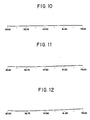
- the chromatogram is shown in Figure 8 of the accompanying drawings.
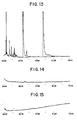
- Example 7 A mixture of Example 7, however containing no charcoal, was subjected to combustion under the same conditions as those in Example 7. The result is shown in Figure 13 of the accompanying drawings.
- PCDD or the like are present only in a trace amount in the systems of Examples 8 to 11 containing the metallic catalysts and these show clearly the remarkable effect by the catalysts.
- Example 2 A combustion treatment similar to that of Example 2 was performed using 0.2 g of a commercially available BHC of the technical grade in place of PCB.
- the chromatogram is shown in Figure 14 of the accompanying drawings.
- Example 12 2 g or a 1% aqueous solution of copper sulfate (pentahydrate) were added to the mixture of Example 12 and the combustion treatment was performed under the same conditions with those in Example 12. The result is shown in Figure 16 of the accompanying drawings.
- Example 12 A mixture of Example 12 but containing no charcoal was subjected to combustion treatment under the same conditions as those in Example 12. The result is shown in Figure 17 of the accompanying drawings.
Landscapes
- Engineering & Computer Science (AREA)
- Environmental & Geological Engineering (AREA)
- Mechanical Engineering (AREA)
- General Engineering & Computer Science (AREA)
- Health & Medical Sciences (AREA)
- General Health & Medical Sciences (AREA)
- Toxicology (AREA)
- Chemical & Material Sciences (AREA)
- Chemical Kinetics & Catalysis (AREA)
- General Chemical & Material Sciences (AREA)
- Business, Economics & Management (AREA)
- Emergency Management (AREA)
- Fire-Extinguishing Compositions (AREA)
- Processing Of Solid Wastes (AREA)
- Catalysts (AREA)
Applications Claiming Priority (4)
| Application Number | Priority Date | Filing Date | Title |
|---|---|---|---|
| JP199223/87 | 1987-08-11 | ||
| JP19922387 | 1987-08-11 | ||
| JP63051737A JPH0685806B2 (ja) | 1987-08-11 | 1988-03-07 | 有機ハロゲン化合物の無害化処理方法 |
| JP51737/88 | 1988-03-07 |
Publications (1)
| Publication Number | Publication Date |
|---|---|
| EP0303338A1 true EP0303338A1 (fr) | 1989-02-15 |
Family
ID=26392300
Family Applications (1)
| Application Number | Title | Priority Date | Filing Date |
|---|---|---|---|
| EP88305141A Withdrawn EP0303338A1 (fr) | 1987-08-11 | 1988-06-06 | Procédé de traitement non polluant de composés organiques halogénés |
Country Status (4)
| Country | Link |
|---|---|
| US (1) | US4925999A (fr) |
| EP (1) | EP0303338A1 (fr) |
| JP (1) | JPH0685806B2 (fr) |
| CN (1) | CN1031188A (fr) |
Families Citing this family (5)
| Publication number | Priority date | Publication date | Assignee | Title |
|---|---|---|---|---|
| RU2114356C1 (ru) * | 1991-12-06 | 1998-06-27 | Текнолоджикал Рисорсиз ПТИ Лимитед | Способ уничтожения органических отходов |
| JP3622132B2 (ja) * | 1997-10-28 | 2005-02-23 | 力也 半田 | Pcb混入オイルの処理方法 |
| US6284940B1 (en) * | 1999-06-07 | 2001-09-04 | Kurita Water Industries Ltd. | Method for decomposing halogenated organic compound |
| CN101491726B (zh) * | 2008-01-25 | 2013-02-20 | 荣益环保科技股份有限公司 | 戴奥辛抑制剂及其制造方法 |
| CN102211109A (zh) * | 2010-04-02 | 2011-10-12 | 北京化工大学 | 一种零价金属铁、镁混合粉末对土壤中多氯联苯的降解方法 |
Citations (3)
| Publication number | Priority date | Publication date | Assignee | Title |
|---|---|---|---|---|
| US4400936A (en) * | 1980-12-24 | 1983-08-30 | Chemical Waste Management Ltd. | Method of PCB disposal and apparatus therefor |
| US4526677A (en) * | 1984-06-04 | 1985-07-02 | Rockwell International Corporation | Removal of polyhalogenated biphenyls from organic liquids |
| US4560391A (en) * | 1984-05-31 | 1985-12-24 | Florida Progress Corporation | Alternative fuel comprised of sewage sludge and a liquid hydrocarbon fuel oil |
Family Cites Families (5)
| Publication number | Priority date | Publication date | Assignee | Title |
|---|---|---|---|---|
| JPS54151953A (en) * | 1978-05-17 | 1979-11-29 | Zenjirou Hokao | Method and apparatus for decomposing polybiphenylchloride |
| JPS6051873B2 (ja) * | 1979-12-19 | 1985-11-15 | 富士電機株式会社 | ポリ塩化ジフエニル含浸電気機器の無害化処理方法 |
| JPS58216075A (ja) * | 1982-06-09 | 1983-12-15 | 立川 涼 | ポリ塩化ビフエニルの脱塩素化法 |
| JPS6152878A (ja) * | 1984-08-20 | 1986-03-15 | クリフオ−ド・ジ−・シユルツ | ポリ塩化ビフエニ−ルその他の危険なハロゲン化炭化水素の破壊方法 |
| JPS6262119A (ja) * | 1985-09-12 | 1987-03-18 | Agency Of Ind Science & Technol | 液状有機ハロゲン化物の燃焼処理方法 |
-
1988
- 1988-03-07 JP JP63051737A patent/JPH0685806B2/ja not_active Expired - Lifetime
- 1988-04-20 CN CN88102372A patent/CN1031188A/zh active Pending
- 1988-04-29 US US07/188,565 patent/US4925999A/en not_active Expired - Fee Related
- 1988-06-06 EP EP88305141A patent/EP0303338A1/fr not_active Withdrawn
Patent Citations (3)
| Publication number | Priority date | Publication date | Assignee | Title |
|---|---|---|---|---|
| US4400936A (en) * | 1980-12-24 | 1983-08-30 | Chemical Waste Management Ltd. | Method of PCB disposal and apparatus therefor |
| US4560391A (en) * | 1984-05-31 | 1985-12-24 | Florida Progress Corporation | Alternative fuel comprised of sewage sludge and a liquid hydrocarbon fuel oil |
| US4526677A (en) * | 1984-06-04 | 1985-07-02 | Rockwell International Corporation | Removal of polyhalogenated biphenyls from organic liquids |
Non-Patent Citations (1)
| Title |
|---|
| DESTRUCTION TECHNOLOGIES FOR POLYCHLORINATED BIPHENYLS (PCBs), Economic and Technical Review, Report EPS 3-EC-83-1, February 1983, pages 10-47, chapters 4.2,4.3, Toronto, CA * |
Also Published As
| Publication number | Publication date |
|---|---|
| JPH01131676A (ja) | 1989-05-24 |
| US4925999A (en) | 1990-05-15 |
| JPH0685806B2 (ja) | 1994-11-02 |
| CN1031188A (zh) | 1989-02-22 |
Similar Documents
| Publication | Publication Date | Title |
|---|---|---|
| CA1236488A (fr) | Procede pour la destruction de produits organiques toxiques | |
| JP2544391B2 (ja) | クロルビフエニル等で汚染された鉱油の水素化処理法 | |
| US4526677A (en) | Removal of polyhalogenated biphenyls from organic liquids | |
| Stach et al. | Dechlorination of polychlorinated biphenyls, dibenzo-p-dioxins and dibenzofurans on fly ash | |
| US5045179A (en) | Process for the hydrogenation reprocessing of used oils | |
| Stach et al. | Dechlorination of hexachlorobenzene on MWI fly ash | |
| JPS62261373A (ja) | ハロゲン化有機化合物の分解方法 | |
| EP0303338A1 (fr) | Procédé de traitement non polluant de composés organiques halogénés | |
| JPH0661373B2 (ja) | ハロゲン化炭化水素の脱ハロゲン化方法 | |
| JPS59131373A (ja) | 有機液からのpcb及び他のハロゲン化有機化合物の除去 | |
| US4326090A (en) | Destruction of PCB's | |
| Sakai et al. | Formation and emission of non-ortho CBs and mono-ortho CBs in municipal waste incineration | |
| EP0603400A1 (fr) | Procede d'extraction d'un compose aromatique halogene d'une huile hydrocarbure | |
| EP0456457A1 (fr) | Procédé de déshalogénation | |
| JP4036733B2 (ja) | 多塩素化芳香族化合物汚染物から多塩素化芳香族化合物を除去する方法 | |
| EP0467053B1 (fr) | Procédé de déshalogénation de composés organiques par des métaux alcalins sur des supports solides | |
| US5304702A (en) | Process of decomposing chlorofluorohydrocarbons | |
| JP2918542B1 (ja) | 有機ハロゲン化合物の処理方法 | |
| JP2001259607A (ja) | 重金属又は有機塩素化合物の処理方法及び装置 | |
| JP3771120B2 (ja) | 有機ハロゲン化合物汚染油の処理方法及びその処理装置 | |
| US5645806A (en) | Decomposition of organohalogen compounds in dust-laden-waste gases | |
| JPH1192771A (ja) | 廃油の再生方法 | |
| EP0442088B1 (fr) | Procédé de l'oxidation de composés organiques/insolubles dans l'eau | |
| Laue et al. | Analysis of slags and filter dusts from aluminum recycling processes | |
| JP3084731B2 (ja) | 焼却灰中のハロゲン化ダイオキシン類の分解方法 |
Legal Events
| Date | Code | Title | Description |
|---|---|---|---|
| PUAI | Public reference made under article 153(3) epc to a published international application that has entered the european phase |
Free format text: ORIGINAL CODE: 0009012 |
|
| AK | Designated contracting states |
Kind code of ref document: A1 Designated state(s): BE DE FR GB IT |
|
| 17P | Request for examination filed |
Effective date: 19890808 |
|
| 17Q | First examination report despatched |
Effective date: 19901228 |
|
| STAA | Information on the status of an ep patent application or granted ep patent |
Free format text: STATUS: THE APPLICATION IS DEEMED TO BE WITHDRAWN |
|
| 18D | Application deemed to be withdrawn |
Effective date: 19920103 |