EP0304155A2 - Cephalosporinverbindungen, Verfahren zu ihrer Herstellung und diese enthaltende pharmazeutische Präparate - Google Patents
Cephalosporinverbindungen, Verfahren zu ihrer Herstellung und diese enthaltende pharmazeutische Präparate Download PDFInfo
- Publication number
- EP0304155A2 EP0304155A2 EP88306355A EP88306355A EP0304155A2 EP 0304155 A2 EP0304155 A2 EP 0304155A2 EP 88306355 A EP88306355 A EP 88306355A EP 88306355 A EP88306355 A EP 88306355A EP 0304155 A2 EP0304155 A2 EP 0304155A2
- Authority
- EP
- European Patent Office
- Prior art keywords
- alkyl
- formula
- group
- compound
- amino
- Prior art date
- Legal status (The legal status is an assumption and is not a legal conclusion. Google has not performed a legal analysis and makes no representation as to the accuracy of the status listed.)
- Granted
Links
Images




Classifications
-
- C—CHEMISTRY; METALLURGY
- C07—ORGANIC CHEMISTRY
- C07D—HETEROCYCLIC COMPOUNDS
- C07D501/00—Heterocyclic compounds containing 5-thia-1-azabicyclo [4.2.0] octane ring systems, i.e. compounds containing a ring system of the formula:, e.g. cephalosporins; Such ring systems being further condensed, e.g. 2,3-condensed with an oxygen-, nitrogen- or sulfur-containing hetero ring
- C07D501/14—Compounds having a nitrogen atom directly attached in position 7
- C07D501/16—Compounds having a nitrogen atom directly attached in position 7 with a double bond between positions 2 and 3
- C07D501/20—7-Acylaminocephalosporanic or substituted 7-acylaminocephalosporanic acids in which the acyl radicals are derived from carboxylic acids
- C07D501/24—7-Acylaminocephalosporanic or substituted 7-acylaminocephalosporanic acids in which the acyl radicals are derived from carboxylic acids with hydrocarbon radicals, substituted by hetero atoms or hetero rings, attached in position 3
- C07D501/38—Methylene radicals, substituted by nitrogen atoms; Lactams thereof with the 2-carboxyl group; Methylene radicals substituted by nitrogen-containing hetero rings attached by the ring nitrogen atom; Quaternary compounds thereof
- C07D501/46—Methylene radicals, substituted by nitrogen atoms; Lactams thereof with the 2-carboxyl group; Methylene radicals substituted by nitrogen-containing hetero rings attached by the ring nitrogen atom; Quaternary compounds thereof with the 7-amino radical acylated by carboxylic acids containing hetero rings
-
- A—HUMAN NECESSITIES
- A61—MEDICAL OR VETERINARY SCIENCE; HYGIENE
- A61P—SPECIFIC THERAPEUTIC ACTIVITY OF CHEMICAL COMPOUNDS OR MEDICINAL PREPARATIONS
- A61P31/00—Antiinfectives, i.e. antibiotics, antiseptics, chemotherapeutics
- A61P31/04—Antibacterial agents
Definitions
- This invention relates to cephalosporin derivatives which have antibacterial activity.
- cephalosporin derivative irrespective of the actual derivation of any individual such compound, includes the cephalosporins and the 7 ⁇ -methoxy, 7 ⁇ -formamido and 1-oxide derivatives thereof (wherein the 1-oxides may have the R or S configuration) and analogues of the above compounds wherein the sulphur atom or sulphinyl group at the 1-position is replaced by an oxygen atom or a methylene group.
- cephalosporin derivatives referred herein are generally named in accordance with the "cephem” nomenclature and numbering system proposed in J. Amer. Chem. Soc. 1962,84, 3400.
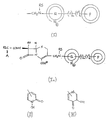
- a cephalosporin derivative having antibacterial activity characterised in that the substituent at the 3-position has the formula I in which: R5 is hydrogen, (1-4C)alkyl, halo(1-4C)alkyl, hydroxy(1-4C)alkyl, (1-4C)alkoxy(1-4C)alkyl, carboxy (1-4C)alkyl, amino(1-4C)alkyl, cyano(1-4C)alkyl, (1-4C) alkanoylamino(1-4C)alkyl, (3-6C)alkenyl, phenyl(1-4C)alkyl or heteroaryl (1-4C) alkyl wherein heteroaryl is a 5- or 6-membered ring containing 1,2 or 3 heteroatoms selected from nitrogen, oxygen and sulphur; Q represents a 5 to 10 membered mono- or bicyclic heterocyclic ring system bonded to NR5 via a carbon atom and containing, in addition to the positively charged nitrogen
- a particular group of compounds according to the invention are those of formula Ia and salts thereof wherein R5, Q, Y, Y′, m, n and P are as hereinbefore defined and in which X is sulphur, oxygen, methylene or sulphinyl (R or S configuration) and R1, R4 and A are groups known in the art of antibacterial cephalosporins.
- R1 is for example 2-aminothiazol-4-yl or 2-aminooxazol-4-yl each optionally substituted in the 5-position by fluorine, chlorine or bromine, or R1 is 5-aminoisothiazol-3-yl, 5-amino-1,2,4-thiadiazol-3-yl, 3-aminopyrazol-5-yl, 3-aminopyrazol-4-yl, 2-aminopyrimidin-5-yl, 2-aminopyrid-6-yl, 4-aminopyrimidin-2-yl, 2-amino-1,3,4-thiadiazol-5-yl or 5-amino-1-methyl-1,2,4-triazol-3-yl.
- R4 is suitably hydrogen, methoxy or formamido.
- R2 is hydrogen, methyl, ethyl, isopropyl, t-butyl, cyclopropyl, cyclobutyl, cyclopentyl, cyclohexyl, methylcyclopropyl, methylcyclobutyl, methylcyclopentyl, methylcyclohexyl, cyclopropylmethyl, cyclobutylmethyl, cyclopentylmethyl, allyl, cyclopentenyl, cyclohexenyl, propargyl, methylcarbamoyl, ethylcarbamoyl, phenylcarbamoyl, benzylcarbamoyl, 2-chloroethyl, 2-fluoroethyl, 2-bromoethyl, 2-hydroxyethyl, 3-hydroxypropyl, 2-methoxyethyl, 2-ethoxyethyl, 2-methylthio-ethyl,
- R2 is C1 ⁇ 6alkyl for example methyl or ethyl, 1- carboxycyclobutyl, 1-carboxycyclopentyl, or 2-carboxyprop-2-yl.
- R3 is hydrogen, methyl or chlorine.
- R4 is hydrogen
- R5 are hydrogen, methyl, ethyl, n-propyl, isopropyl, 2-fluoroethyl, 2-chloroethyl, 2-hydroxymethyl, 2-methoxyethyl, carboxymethyl, ( R ) and ( S )-1-carboxyethyl, 2-aminoethyl, 2-cyanoethyl, 2-formamidoethyl, allyl, furfuryl, benzyl or 4-pyridylmethyl.
- a particular ring system represented by ring Q is a 5 or 6 membered ring containing the positively charged nitrogen atom and 0 to 3 further heteroatoms selected from nitrogen, oxygen and sulphur optionally fused on an available carbon-carbon or carbon-nitrogen bond to a benzene ring or a ring of formula (VI) wherein T, U and V are selected from oxygen, sulphur, nitrogen, carbon, -NH- and -CH-, and optionally substituted, where possible, by one or more groups R26, R27 and R30 as hereinbefore defined.
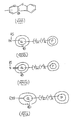
- ring systems represented by ring Q are those of formulae VII-XIV wherein D,D′,E and E′ represent nitrogen atoms, one of which bears the positive charge.
- ring systems represented by ring Q are those of formula XV and XVI wherein R29 represents hydrogen or a group R27 as hereinbefore defined, and XVII-XX1.
- ring systems represented by ring Q are those of formulae XXII (wherein T is as hereinbefore defined) and XXIII-XXVI
- rings VII-XXVI may optionally be substituted where possible, by one or more groups R26, R27 and R30 as hereinbefore defined.
- ring Q represents a 5- or 6-membered ring as defined above a particular meaning therefor is pyridine or pyrimidine optionally fused to a benzene ring or a ring of formula VI which is a thienyl group.
- Particular meanings for the group R26 are fluorine, chlorine, bromine, methyl, ethyl, n-propyl, isopropyl, carboxy, methoxycarbonyl, ethoxycarbonyl, methoxycarbonylmethyl, ethoxycarbonylmethyl, methoxy, ethoxy, methylthio, ethylthio, cyano, cyanomethyl, 2-cyanoethyl, amino, methylamino, ethylamino, isopropylamino, dimethylamino, benzylamino, nitrobenzylamino, allylamino, 2-aminoethylamino, 2-methoxyethylamino, 2-hydroxyethylamino, hydroxy, mercapto, carbamoyl, methylcarbamoyl, ethylcarbamoyl, dimethylcarbamoyl, phenylthio and heteroarylthio in
- Particular meanings for the group R27 are methyl, ethyl, n-propyl, isopropyl, phenyl or benzyl.
- R29 are hydrogen and the particular meanings given above for R27.
- Particular meanings for the group R30 are hydrogen, methyl, ethyl, n-propyl, isopropyl, t-butyl, carboxymethyl, 2-carboxyethyl, methoxycarbonylmethyl, 2-methoxycarbonylethyl, carbamoylmethyl, 2-carbamoylethyl, mono-and dimethylcarbamoylmethyl, hydroxymethyl, 2-hydroxyethyl, methoxymethyl, 2-methoxyethyl, aminomethyl, 2-aminoethyl, 2-methylaminoethyl, 2-dimethylaminoethyl, acetylmethyl, propionylmethyl, benzoylmethyl, cyanomethyl, 2-cyanoethyl, 3-cyanopropyl, carboxyaminocarbonylmethyl, 2-(carboxyaminocarbonyl)ethyl, methoxycarbonylaminocarbonylmethyl, 2-(methoxycarbony
- Y include C1 ⁇ 6 alkylene for example methylene (-CH2-), ethylene (-CH2CH2-) and propylene (-CH2CH2CH2-).
- a particular meaning of Y′ is -NHCO-.
- -(Y) m -(Y′) n - represents methylene, ethylene, -CH2CH2NHCO- or both m and n are zero so that rings Q and P are linked directly by a covalent bond.
- n and n are both zero and the rings Q and P are fused on available carbon-carbon or carbon-nitrogen bonds
- ring Q is a pyrimidine or pyridine ring having fused thereto a benzene ring, said benzene bearing groups W and Z as hereinbefore defined.
- the ring system formed by the fused rings Q and P is quinoline or quinazoline.
- P is a benzene ring substituted by groups W and Z and optionally further substituted by halo for example bromo.
- W is hydroxy and an in-vivo hydrolysable ester thereof.
- In-vivo hydrolysable esters are those pharmaceutically acceptable esters that hydrolyse in the human or animal body to produce the parent hydroxy compound. Such esters can be identified by administering e.g. intravenously to a test animal the compound under test and subsequently examining the test animal's body fluids.
- Suitable in-vivo hydrolysable esters include C1 ⁇ 6 alkanoyloxy for example acetoxy, propionyloxy, pivaloyloxy, C1 ⁇ 4alkoxycarbonyloxy for example ethoxycarbonyloxy, and phthalidyloxy.
- Z is hydroxy or an in-vivo hydrolysable ester thereof.
- W and Z have the same value and are both hydroxy or both in-vivo hydrolysable esters, for example they are both acetoxy or pivaloyoxy.
- a particular acid which affords a pharmaceutically-acceptable anion is, for example, hydrochloric, hydrobromic, phosphoric, sulphuric, citric or maleic acid.
- a particular base which affords a pharmaceutically acceptable cation is, for example, a base containing an alkali metal, (e.g.sodium or potassium) or an alkaline earth metal (e.g. calcium or magnesium), or a primary, secondary or tertiary organic amine (e.g. triethylamine, morpholine, N-methylpiperidine, N-ethylpiperidine, procaine, dibenzylamine or N,N′-dibenzylethylenediamine), or other amine which has been used to form salts with cephalosporins.
- an alkali metal e.g.sodium or potassium
- an alkaline earth metal e.g. calcium or magnesium
- a primary, secondary or tertiary organic amine e.g. triethylamine, morpholine, N-methylpiperidine, N-ethylpiperidine, procaine, dibenzylamine or N,N′-d
- the compounds of formula I may be prepared by the following processes, which form further aspects of the invention, and in which R1, A, R2 R3, R4, R5, Q, P, m, n, X, Y and Y′ have the meanings already assigned to them.
- a 2-aminothiazol-4-yl group may be formed by reacting a compound of formula XXXV (wherein R42 is a leaving group) with a compound of formula XXXVI (wherein R43 is amino or protected amino) followed by removal of the amino protecting group if present.
- cephalosporin compounds used as starting materials in the preparation of the compounds of the present invention are described in our published European Patent Applications Nos. 127992 and 164944, or may be prepared by methods analogous to those described in the said applications.
- the invention provides, as starting materials for the manufacture of antibacterial compounds of formula I, the following novel compounds as defined above:
- protecting groups When reference is made to protecting groups being present at any position in the compounds described herein such protecting groups may in general be chosen from any of the groups described in the literature or known to the skilled chemist as appropriate for the protection of the group in question, and may be introduced by conventional methods.
- Protecting groups may be removed by any convenient method as described in the literature or known to the skilled chemist as appropriate for the removal of the protecting group in question, such methods being chosen so as to effect removal of the protecting group with minimum disturbance of groups elsewhere in the molecule.
- protecting groups are given below for the sake of convenience, in which "lower” signifies that the group to which it is applied preferably has 1-4 carbon atoms. It will be understood that these examples are not exhaustive. Where specific examples of methods for the removal of protecting groups are given below these are similarly not exhaustive. The use of protecting groups and methods of deprotection not specifically mentioned is of course within the scope of the invention.
- a carboxyl protecting group may be the residue of an ester-forming aliphatic or araliphatic alcohol or of an ester-forming phenol silanol or stannanol (the said alcohol, phenol, silanol or stannanol preferably containing 1-20 carbon atoms).
- carboxyl protecting groups include straight or branched chain (1-12C)alkyl groups (eg isopropyl, t -butyl); halo lower alkyl groups (eg 2-iodoethyl, 2,2,2-trichloroethyl); lower alkoxy lower alkyl groups (eg methoxymethyl, ethoxymethyl, isobutoxymethyl); lower aliphatic acyloxy lower alkyl groups, (eg acetoxymethyl, propionyloxymethyl, butyryloxymethyl, pivaloyloxymethyl); lower alkoxycarbonyloxy lower alkyl groups (eg 1-methoxy-carbonyloxyethyl, 1-ethoxycarbonyloxyethyl); aryl lower alkyl groups (eg p-methoxybenzyl, o -nitrobenzyl, p -nitrobenzyl, benzhydryl and phthalidyl); tri(lower alkyl)silyl groups (
- Methods particularly appropriate for the removal of carboxyl protecting groups include for example acid-, base-, metal- or enzymically-catalysed hydrolysis.
- hydroxyl protecting groups include lower alkoxycarbonyl groups (eg t -butoxycarbonyl); halo lower alkoxycarbonyl groups (eg 2-iodoethoxycarbonyl, 2,2,2-trichloroethoxycarbonyl); aryl lower alkoxycarbonyl groups (eg benzoyloxycarbonyl, p -methoxybenzyloxycarbonyl, o -nitrobenzyloxycarbonyl, p -nitrobenzyloxycarbonyl); tri lower alkylsilyl (eg trimethylsilyl, t -butyldimethylsilyl) and aryl lower alkyl (eg benzyl) groups.
- lower alkoxycarbonyl groups eg t -butoxycarbonyl
- halo lower alkoxycarbonyl groups eg 2-iodoethoxycarbonyl, 2,2,2-trichloroethoxycarbonyl
- a (1-4C)alkanoyl group (eg acetyl) may also be regarded as a hydroxyl protecting group in the context of the compounds of the invention in that compounds of formula I in which W and/or Z represent (1-4C)alkanoyloxy (eg acetoxy) groups (which are in themselves compounds of the invention) may readily be converted by conventional means into the corresponding hydroxy compounds.
- amino protecting groups include formyl, aralkyl groups (eg benzyl and substituted benzyl eg p -methoxybenzyl, nitrobenyl and 2,4-dimethoxybenzyl, and triphenylmethyl); di- p -anisylmethyl and furylmethyl groups; acyl (eg alkoxycarbonyl and aralkoxycarbonyl eg t -butoxycarbonyl and benzyloxycarbonyl); trialkylsilyl (eg trimethylsilyl and t -butyldimethylsilyl); alkylidene (eg methylidene); benzylidene and substituted benzylidene groups; and the phthalimido group.
- aralkyl groups eg benzyl and substituted benzyl eg p -methoxybenzyl, nitrobenyl and 2,4-dimethoxybenzyl, and triphen
- cephalosporin derivatives of the invention have antibacterial properties.
- they may be useful antibacterial agents, having a broad spectrum of activity in vitro against standard laboratory microorganisms, both Gram-negative and Gram-positive, which are used to screen for activity against pathogenic bacteria.
- the antibacterial spectrum and potency of a particular compound may be determined in a standard test system.
- the compounds have particularly high activity in vitro against strains of Pseudomonas aeruginosa .
- the antibacterial properties of the compounds of the invention may also be demonstrated in vivo in conventional mouse protection tests.
- Cephalosporin derivatives have generally been found to be relatively non-toxic to warm-blooded animals, and this generalisation holds true for the compounds of the present invention. A number of compounds were administered to mice at doses in excess of those required to afford protection against bacterial infections, and no overt toxic symptoms or side effects attributable to the administered compounds were noted.
- a pharmaceutical composition which comprises a cephalosporin derivative of the invention in association with a pharmaceutically-acceptable diluent or carrier.
- the pharmaceutical composition of the invention may, for example, be in a form suitable for oral, rectal or parenteral administration, for which purposes it may be formulated by means known to the art into the form of, for example, tablets, capsules, aqueous or oily solutions or suspensions, emulsions, dispersible powders, suppositories and sterile injectable aqueous or oily solutions or suspensions.
- the pharmaceutical composition of the invention may also contain, or be co-administered with, one or more known drugs selected from other clinically useful antibacterial agents (for example other beta-lactams or aminoglycosides), inhibitors of beta-lactamase (for example clavulanic acid), renal tubular blocking agents (e.g. probenicid) and inhibitors of metabolising enzymes (for example inhibitors of peptidases, for example Z-2-acylamino-3-substituted propenoates).
- drugs selected from other clinically useful antibacterial agents (for example other beta-lactams or aminoglycosides), inhibitors of beta-lactamase (for example clavulanic acid), renal tubular blocking agents (e.g. probenicid) and inhibitors of metabolising enzymes (for example inhibitors of peptidases, for example Z-2-acylamino-3-substituted propenoates).
- a preferred pharmaceutical composition of the invention is one suitable for intravenous, subcutaneous or intramuscular injection, for example a sterile injectable containing between 1 and 10% w/w of the cephalosporin derivative, or one suitable for oral administration in unit dosage form, for example a tablet or capsule which contains between 100 mg. and 1 g. of the cephalosporin derivative.
- compositions of the invention will normally be administered to man in order to combat infections caused by bacteria, in the same general manner as that employed for cephalothin, cefoxitin, cephradine, ceftazidime and other known clinically used cephalosporin derivatives, due allowance being made in terms of dose levels for the potency of the cephalosporin derivative of the present invention relative to the known clinically used cephalosporins.
- each patient will receive a daily intravenous, subcutaneous or intramuscular dose of 0.1 to 50 g., and preferably 0.5 to 10 g., of the cephalosporin derivative, the composition being administered 1 to 4 times per day.
- the intravenous, subcutaneous and intramuscular dose may be given by means of a bolus injection.
- the intravenous dose may be given by continuous infusion over a period of time.
- each patient will receive a daily oral dose which is approximately equivalent to the daily parenteral dose.
- a preferred daily oral dose is 0.5 to 10 g. of the cephalosporin derivative, the composition being administered 1 to 4 times per day.
- Example 10 The reaction of Example 10 was repeated using the 3′-N-ethyl analogue having a 2-chloroethoxyimino grouping to give 7-[2-(2-aminothiazol-4-yl)-2((Z)-2-chloroethoxyimino)acetamido]-3-[N-ethyl-N-(1-(3,4-diacetoxybenzylmethyl)-4-pyrimidinio)aminomethyl]ceph-3-em-4-carboxylic acid (5%); 1.2(s,3H) 2.2(s,6H); 3.4-4(m,4H); 4-5.6(m,9H); 5.8(d,1H); 6.8-7.6(m,5H); 8.3(d,1H); 9.1(s,1H).
- Example 11 The product of Example 11 (0.23g, 0.32mmol) in water (1ml) and methanol (1ml) was adjusted to pH8.5 with aqueous sodium bicarbonate. Aftr two hours the mixture was acidified to pH2, purified on a HP20SS resin column, evaporated and freeze-dried to give 7-[2-(2-aminothiazol-4-yl)-2-((Z)-ethoxyimino)acetamido]-3-[N-(1-(3,4-dihydroxybenzylmethyl)-4-pyridinio)aminomethyl]ceph-3-em-4-carboxylic acid (65%); 1.2(s,3H); 3.3-3.6(AB,2H); 3.9-4.6(m,4H); 5.1(m,3H); 5.7(d,1H); 6.4-7.4(m,6H); 7.9-8.6(m,2H).
- Example 15 The process of Example 15 was repeated, using the appropriate cephalosporin starting material to yield 19% of the title compound , NMR 1.3(t,3H); 1.5(s,6H); 3.3-4.0(m,6H); 4.4-4.7(m,2H); 4.8(m,2H); 5.2(d,1H); 5.9(d,1H); 6.7(d,1H); 7.0(s,1H); 6.9-7.3(m,3H); ; 7.6-7.9(m,2H); 8.1-8.5(m,1H).
- Example 17 These were hydrolysed and purified, as in Example 17, to give respectively: 7-[2-(2-aminothiazol-4-yl)-2-((Z)-1-carboxy-1-methylethoxyimino)acetamido]-3-[N-ethyl-N-(1-(3,4-dihydroxyphenyl)-4-pyridinio)aminomethyl]ceph-3-em-4-carboxylic acid (11%); 1.7(s,3H); 1.55(s,6H); 3-4(m,4H); 4.7(br,2H); 5.2(d,1H); 5.9(d,1H); 6.8-7.5(m,6H); 8.4(d,2H), 7-[2-(2-aminothiazol-4-yl)-2-((Z)-ethoxyimino)acetamido]3-[N-(1-(3,4-dihydroxyphenyl)-4-pyridinio)
- Example 16 the same cephalosporin starting-material (as in Example 16) was reacted with 3-bromo-4,5-di-acetoxybenzoyl chloride to give the di-acetoxy compound which was subsequently purified on Diaion HP20SS resin prior to deprotecting at pH8.5 to give 7-[2-(2-aminothiazol-4-yl)-2-((Z)-1-carboxy-1-methylethoxyimino)acetamido]-3-[N-ethyl-N-[1-(2-(3-bromo-4,5-dihydroxybenzoylamino)-ethyl)thieno[2,3-d]-4-pyridinio]aminomethyl]ceph-3-em-4-carboxylic acid; 1.3(t,3H); 1.5(s,6H), 3.2-4.0(m,6H); 4.3-5.0(m,4H); 5.15(d,1H); 5.9(
- the above diacetoxy derivative (150mg) was stirred, at room temperature for 2hrs, with a solution of ammonium carbonate (150mg) in water (6ml).
- the reaction mixture was acidified with 2NCHl and DMSO (3ml) added to maintain a clear solution.
- the solution was applied to a DYNAMAX column (21.5mm x 250mm) and the desired product eluted with 20% CH3CN, 80% H2O, 0.1% TFA.
- Example 23 the pyridinium compound and 3-aminomethyl-7-[2-aminothiazol-4-yl)-2-((Z)-ethoxyimino)acetamido]ceph-3-em-4-carboxylic acid were reacted to give 7-[2-(2-aminothiazol-4-yl)2-((Z)ethoxyimino)acetamido]-3-N-[2-(3′,4′-dihydroxyphenyl)-1-methyl)pyridinio]aminomethyl]-3-cephem-4-carboxylic acid NMR (d6DMSO, d4HOAc): 1.22(t,3H); 3.40(d,1H); 3.60(d,1H); 3.65(s,3H); 4.08(q,2H); 4.25(d,1H); 4.40(d,1H); 5.15(d,1H); 5.78(d,1H); 6.75(s,1H);
- Example 30 The procedure used for Example 30 was repeated using 1-methyl-6-(3,4-isobutyroxybenzoyl-4-methylthiothieno[2,3-d]-pyrimidinium tetrafluoroborate.
- the heterocyclic starting material for Examples 1 and 8 (1-(3,4-diacetoxybenzoylmethyl)-4-methylthiopyrimidinium chloride) was prepared by heating 4-methylthiopyrimidine (252mg, 2mmoles) and 2-chloro-3′-4′-diacetoxyacetophenone (541mg, 2 mmoles) at 80°C for 1 hour in the presence of DMF (0.25ml). After cooling the mixture was triturated with ethyl acetate and the resulting solid was filtered off.
- Example 7 The starting material for Example 7 was prepared using the corresponding chloro derivative in place of the methylthio compound.
- the starting material for Examples 3, 11 and 14 was prepared as follows.
- 4-methylthio-1-(3,4-diacetoxybenzyl)pyridinium chlorid was e prepared by the method given above and then 1.5g (3.6mmoles) was further oxidised using methachloroperoxybenzoic acid (1.5g, 7.2 mmole) in dichloromethane/TFA. After 2 hours the solvents were evaporated and the residue triturated with ether. The resulting solid was filtered off and used without further purification.
- the heterocyclic starting materials for Examples 17-21 were prepared by heating the corresponding diphenylmethyl protected dihydroxy phenyl-4-(1H)pyridone or phenylethyl-4(1H)pyridone at 80°C for 15 minutes in POCl3. The reaction mixture was evaporated to dryness, the residue was triturated under ether and the resultant solid collected by filtration and used without further purification.
- 4-Chloropyridine hydrochloride (12.0g; 80mmole) was dissolved in water, treated with NaHCO3 and the aqueous mixture extracted with ether. The ether extracts were dried with MgSO4, filtered and evaporated to give a residue of 4-chloropyridine. This was dissolved in dry THF (200ml) and the solution dried over activated molecular sieves (4A).
- the THF solution was decanted from the sieve, cooled to -60°C and then treated, under argon, dropwise (keeping the temperature ⁇ 50°C) with a THF solution of, 3,4-dimethylmethylenedioxyphenyl magnesium bromide which had been prepared from 3,4-dimethylmethylene dioxybromobenzene (20.2g, 88mmole) and magnesium turnings (4g) in THF (200ml).
- phenylchloroformate (10.06ml, 12.52g, 80 mmole). After stirring at -50°C for 15 min. the mixture was allowed to warm up to R.T.
- the dihydro pyridine (31.5g) was dissolved in toluene (440ml) and treated, under argon, with a solution of o-chloranil (19.0g, 88 mmole) in glacial acetic acid (154ml). The orange-coloured solution was left at room temperature overnight. The following morning the mixture was concentrated under pressure, the residue dissolved in toluene (300ml) and extracted with saturated, cold (5°C), aqueous NaHCO3 (2 x 300ml). The organic phase was then washed with H2O and brine before being evaporated to give a dark coloured oil (47g).
- 5-Methoxychlorokojic acid (5mmol) and 4-methylthiopyridine (5.5mmol) were heated, as an intimate mixture, at 100°C for 10 minutes.
- a brown glass formed which crystallised on trituration with dichloromethane to give 1-(5-methoxypyran-4-on-2-yl)-4-methylthiopyridinium chloride (67%, after recrystallisation from isopropanol); (DMSO-d6) 2.72(s,3H); 3.63(s,3H); 5.80(s,2H); 6.65(s,1H); 8.00(s,1H); 8.12(d,2H); 8.95(d,2H).
Landscapes
- Chemical & Material Sciences (AREA)
- Organic Chemistry (AREA)
- Health & Medical Sciences (AREA)
- Nuclear Medicine, Radiotherapy & Molecular Imaging (AREA)
- Life Sciences & Earth Sciences (AREA)
- Chemical Kinetics & Catalysis (AREA)
- General Chemical & Material Sciences (AREA)
- Medicinal Chemistry (AREA)
- Communicable Diseases (AREA)
- Pharmacology & Pharmacy (AREA)
- Oncology (AREA)
- Animal Behavior & Ethology (AREA)
- General Health & Medical Sciences (AREA)
- Public Health (AREA)
- Veterinary Medicine (AREA)
- Cephalosporin Compounds (AREA)
- Pharmaceuticals Containing Other Organic And Inorganic Compounds (AREA)
Applications Claiming Priority (2)
| Application Number | Priority Date | Filing Date | Title |
|---|---|---|---|
| EP87401720 | 1987-07-23 | ||
| EP87401720 | 1987-07-23 |
Publications (3)
| Publication Number | Publication Date |
|---|---|
| EP0304155A2 true EP0304155A2 (de) | 1989-02-22 |
| EP0304155A3 EP0304155A3 (en) | 1990-10-31 |
| EP0304155B1 EP0304155B1 (de) | 1995-11-15 |
Family
ID=8198239
Family Applications (1)
| Application Number | Title | Priority Date | Filing Date |
|---|---|---|---|
| EP88306355A Expired - Lifetime EP0304155B1 (de) | 1987-07-23 | 1988-07-12 | Cephalosporinverbindungen, Verfahren zu ihrer Herstellung und diese enthaltende pharmazeutische Präparate |
Country Status (5)
| Country | Link |
|---|---|
| US (1) | US5013730A (de) |
| EP (1) | EP0304155B1 (de) |
| JP (1) | JPS6440488A (de) |
| AT (1) | ATE130299T1 (de) |
| DE (1) | DE3854684T2 (de) |
Cited By (2)
| Publication number | Priority date | Publication date | Assignee | Title |
|---|---|---|---|---|
| US5438052A (en) * | 1991-11-26 | 1995-08-01 | Hoffmann-La Roche Inc. | Cephalosporin derivatives |
| US12503439B2 (en) | 2022-04-22 | 2025-12-23 | Vertex Pharmaceuticals Incorporated | Heteroaryl compounds for the treatment of pain |
Families Citing this family (11)
| Publication number | Priority date | Publication date | Assignee | Title |
|---|---|---|---|---|
| GB8811056D0 (en) * | 1988-05-10 | 1988-06-15 | Ici Plc | Antibiotic compounds |
| US5149803A (en) * | 1988-05-10 | 1992-09-22 | Imperial Chemical Industries Plc | Intermediates for cephalosporin compounds |
| US5491139A (en) * | 1988-10-24 | 1996-02-13 | The Procter & Gamble Company | Antimicrobial quinolonyl lactams |
| US5328908A (en) * | 1988-10-24 | 1994-07-12 | Procter & Gamble Pharmaceuticals, Inc. | Antimicrobial quinolone thioureas |
| EP0366189A3 (de) * | 1988-10-24 | 1992-01-02 | Norwich Eaton Pharmaceuticals, Inc. | Antimikrobielle Lactam-Quinolone |
| US5180719A (en) * | 1988-10-24 | 1993-01-19 | Norwich Eaton Pharmaceuticals, Inc. | Antimicrobial quinolonyl lactam esters |
| US5273973A (en) * | 1988-10-24 | 1993-12-28 | Norwich Eaton Pharmaceuticals, Inc. | Antimicrobial quinolonyl esters |
| CA2001203C (en) * | 1988-10-24 | 2001-02-13 | Thomas P. Demuth, Jr. | Novel antimicrobial dithiocarbamoyl quinolones |
| WO1991016327A1 (en) * | 1990-04-18 | 1991-10-31 | Norwich Eaton Pharmaceuticals, Inc. | Antimicrobial quinolonyl lactams |
| EP1359918A1 (de) * | 2000-12-29 | 2003-11-12 | Alteon, Inc. | Methode zur behandlung von glaukom iiib |
| US9056877B2 (en) | 2011-07-19 | 2015-06-16 | Infinity Pharmaceuticals, Inc. | Heterocyclic compounds and uses thereof |
Family Cites Families (9)
| Publication number | Priority date | Publication date | Assignee | Title |
|---|---|---|---|---|
| GB1399086A (en) * | 1971-05-14 | 1975-06-25 | Glaxo Lab Ltd | Cephalosporin compounds |
| DE2714880A1 (de) * | 1977-04-02 | 1978-10-26 | Hoechst Ag | Cephemderivate und verfahren zu ihrer herstellung |
| GB8413152D0 (en) * | 1983-06-03 | 1984-06-27 | Ici Pharma | Cephalosporin derivatives |
| DE3581891D1 (de) * | 1984-11-12 | 1991-04-04 | Banyu Pharma Co Ltd | Cephalosporinderivate. |
| US4868173A (en) * | 1984-11-20 | 1989-09-19 | Ici Pharma | Cephalosporin derivatives |
| DE3587997D1 (de) * | 1984-12-27 | 1995-04-06 | Banyu Pharma Co Ltd | Isoindolinderivate. |
| DE3775798D1 (de) * | 1986-03-19 | 1992-02-20 | Banyu Pharma Co Ltd | Cephalosporinverbindungen, verfahren zu ihrer herstellung und antibakterielle mittel. |
| ATE110386T1 (de) * | 1986-04-14 | 1994-09-15 | Banyu Pharma Co Ltd | Cephalosporinderivate, verfahren zu ihrer herstellung und antibakterielle präparate. |
| EP0272827A3 (de) * | 1986-12-23 | 1990-02-07 | ZENECA Pharma S.A. | 3-Heterocyclethiomethyl-cephalosporine |
-
1988
- 1988-07-12 AT AT88306355T patent/ATE130299T1/de active
- 1988-07-12 DE DE3854684T patent/DE3854684T2/de not_active Expired - Fee Related
- 1988-07-12 EP EP88306355A patent/EP0304155B1/de not_active Expired - Lifetime
- 1988-07-18 US US07/219,779 patent/US5013730A/en not_active Expired - Fee Related
- 1988-07-22 JP JP63181958A patent/JPS6440488A/ja active Pending
Cited By (2)
| Publication number | Priority date | Publication date | Assignee | Title |
|---|---|---|---|---|
| US5438052A (en) * | 1991-11-26 | 1995-08-01 | Hoffmann-La Roche Inc. | Cephalosporin derivatives |
| US12503439B2 (en) | 2022-04-22 | 2025-12-23 | Vertex Pharmaceuticals Incorporated | Heteroaryl compounds for the treatment of pain |
Also Published As
| Publication number | Publication date |
|---|---|
| EP0304155A3 (en) | 1990-10-31 |
| DE3854684D1 (de) | 1995-12-21 |
| JPS6440488A (en) | 1989-02-10 |
| US5013730A (en) | 1991-05-07 |
| DE3854684T2 (de) | 1996-03-28 |
| EP0304155B1 (de) | 1995-11-15 |
| ATE130299T1 (de) | 1995-12-15 |
Similar Documents
| Publication | Publication Date | Title |
|---|---|---|
| EP0341990B1 (de) | Cephalosporine, Verfahren zu ihrer Herstellung und pharmazeutische Präparate | |
| EP0304155B1 (de) | Cephalosporinverbindungen, Verfahren zu ihrer Herstellung und diese enthaltende pharmazeutische Präparate | |
| NL8203482A (nl) | Cefalosporine-chinolinium-betainen. | |
| US4396619A (en) | Cephalosporin betaines | |
| JPH05502884A (ja) | 新規3―置換セフェム化合物及びその製造方法 | |
| CA1225390A (en) | 3-bicyclicpyridinium-methyl cephalosporins | |
| EP0074268A2 (de) | Thieno- und furopyridiniumsubstituierte Cephalosporinderivate | |
| EP0164944B1 (de) | Cephalosporinderivate | |
| EP0153709A2 (de) | Cephalosporinverbindungen | |
| JPS63211288A (ja) | セフアロスポリン化合物、その製造法および該化合物を含有する殺菌剤 | |
| EP0341948B1 (de) | Cephalosporine, Verfahren zu ihrer Herstellung und pharmazeutische Präparate | |
| EP0187456A1 (de) | Cephalosporinverbindungen | |
| US5057511A (en) | 3-heterocyclic thiomethyl cephalosporins | |
| US4767754A (en) | Cephalosporins | |
| US5013731A (en) | Cephalosporin compounds | |
| CA1339417C (en) | Cephalosporin compounds and antibacterial agents | |
| US5149803A (en) | Intermediates for cephalosporin compounds | |
| US4868173A (en) | Cephalosporin derivatives | |
| US5262410A (en) | 3-heterocyclic thiomethyl cephalosporins | |
| KR870000611B1 (ko) | 세팔로스포린의 제조방법 | |
| EP0300665B1 (de) | Cephalosporinverbindungen, Verfahren zu ihrer Herstellung und diese enthaltende pharmazeutische Präparate | |
| EP0300664A2 (de) | Cephalosporinverbindungen | |
| EP0224385A2 (de) | Zwischenprodukte für die Herstellung von beta-Lactam-Antibiotika | |
| JPH11279180A (ja) | 新規なセファロスポリン誘導体またはその塩並びにそれらを含有する抗菌剤 | |
| JPS6053028B2 (ja) | テトラゾ−ル誘導体 |
Legal Events
| Date | Code | Title | Description |
|---|---|---|---|
| PUAI | Public reference made under article 153(3) epc to a published international application that has entered the european phase |
Free format text: ORIGINAL CODE: 0009012 |
|
| AK | Designated contracting states |
Kind code of ref document: A2 Designated state(s): AT BE CH DE ES FR GB GR IT LI LU NL SE |
|
| PUAL | Search report despatched |
Free format text: ORIGINAL CODE: 0009013 |
|
| AK | Designated contracting states |
Kind code of ref document: A3 Designated state(s): AT BE CH DE ES FR GB GR IT LI LU NL SE |
|
| 17P | Request for examination filed |
Effective date: 19910326 |
|
| 17Q | First examination report despatched |
Effective date: 19930216 |
|
| RAP1 | Party data changed (applicant data changed or rights of an application transferred) |
Owner name: ZENECA PHARMA S.A. |
|
| GRAA | (expected) grant |
Free format text: ORIGINAL CODE: 0009210 |
|
| AK | Designated contracting states |
Kind code of ref document: B1 Designated state(s): AT BE CH DE FR GB IT LI LU NL SE |
|
| PG25 | Lapsed in a contracting state [announced via postgrant information from national office to epo] |
Ref country code: NL Free format text: LAPSE BECAUSE OF FAILURE TO SUBMIT A TRANSLATION OF THE DESCRIPTION OR TO PAY THE FEE WITHIN THE PRESCRIBED TIME-LIMIT Effective date: 19951115 Ref country code: LI Effective date: 19951115 Ref country code: CH Effective date: 19951115 Ref country code: BE Effective date: 19951115 Ref country code: AT Effective date: 19951115 |
|
| REF | Corresponds to: |
Ref document number: 130299 Country of ref document: AT Date of ref document: 19951215 Kind code of ref document: T |
|
| ITF | It: translation for a ep patent filed | ||
| REF | Corresponds to: |
Ref document number: 3854684 Country of ref document: DE Date of ref document: 19951221 |
|
| PG25 | Lapsed in a contracting state [announced via postgrant information from national office to epo] |
Ref country code: SE Effective date: 19960215 |
|
| ET | Fr: translation filed | ||
| NLV1 | Nl: lapsed or annulled due to failure to fulfill the requirements of art. 29p and 29m of the patents act | ||
| REG | Reference to a national code |
Ref country code: CH Ref legal event code: PL |
|
| PGFP | Annual fee paid to national office [announced via postgrant information from national office to epo] |
Ref country code: GB Payment date: 19960703 Year of fee payment: 9 |
|
| PGFP | Annual fee paid to national office [announced via postgrant information from national office to epo] |
Ref country code: FR Payment date: 19960709 Year of fee payment: 9 |
|
| PGFP | Annual fee paid to national office [announced via postgrant information from national office to epo] |
Ref country code: DE Payment date: 19960722 Year of fee payment: 9 |
|
| PG25 | Lapsed in a contracting state [announced via postgrant information from national office to epo] |
Ref country code: LU Free format text: LAPSE BECAUSE OF NON-PAYMENT OF DUE FEES Effective date: 19960731 |
|
| PLBE | No opposition filed within time limit |
Free format text: ORIGINAL CODE: 0009261 |
|
| STAA | Information on the status of an ep patent application or granted ep patent |
Free format text: STATUS: NO OPPOSITION FILED WITHIN TIME LIMIT |
|
| 26N | No opposition filed | ||
| PG25 | Lapsed in a contracting state [announced via postgrant information from national office to epo] |
Ref country code: GB Free format text: LAPSE BECAUSE OF NON-PAYMENT OF DUE FEES Effective date: 19970712 |
|
| GBPC | Gb: european patent ceased through non-payment of renewal fee |
Effective date: 19970712 |
|
| PG25 | Lapsed in a contracting state [announced via postgrant information from national office to epo] |
Ref country code: FR Free format text: LAPSE BECAUSE OF NON-PAYMENT OF DUE FEES Effective date: 19980331 |
|
| PG25 | Lapsed in a contracting state [announced via postgrant information from national office to epo] |
Ref country code: DE Free format text: LAPSE BECAUSE OF NON-PAYMENT OF DUE FEES Effective date: 19980401 |
|
| REG | Reference to a national code |
Ref country code: FR Ref legal event code: ST |
|
| PG25 | Lapsed in a contracting state [announced via postgrant information from national office to epo] |
Ref country code: IT Free format text: LAPSE BECAUSE OF NON-PAYMENT OF DUE FEES Effective date: 20050712 |