EP0304663A1 - Verfahren zum Nachweis anormal reagierender Lymphozythen sowie Reagens und Zusammensetzung dafür - Google Patents
Verfahren zum Nachweis anormal reagierender Lymphozythen sowie Reagens und Zusammensetzung dafür Download PDFInfo
- Publication number
- EP0304663A1 EP0304663A1 EP88112242A EP88112242A EP0304663A1 EP 0304663 A1 EP0304663 A1 EP 0304663A1 EP 88112242 A EP88112242 A EP 88112242A EP 88112242 A EP88112242 A EP 88112242A EP 0304663 A1 EP0304663 A1 EP 0304663A1
- Authority
- EP
- European Patent Office
- Prior art keywords
- antibody
- cells
- lymphocytes
- detection
- hiv
- Prior art date
- Legal status (The legal status is an assumption and is not a legal conclusion. Google has not performed a legal analysis and makes no representation as to the accuracy of the status listed.)
- Granted
Links
Images



Classifications
-
- G—PHYSICS
- G01—MEASURING; TESTING
- G01N—INVESTIGATING OR ANALYSING MATERIALS BY DETERMINING THEIR CHEMICAL OR PHYSICAL PROPERTIES
- G01N33/00—Investigating or analysing materials by specific methods not covered by groups G01N1/00 - G01N31/00
- G01N33/48—Biological material, e.g. blood, urine; Haemocytometers
- G01N33/50—Chemical analysis of biological material, e.g. blood, urine; Testing involving biospecific ligand binding methods; Immunological testing
- G01N33/53—Immunoassay; Biospecific binding assay; Materials therefor
- G01N33/569—Immunoassay; Biospecific binding assay; Materials therefor for microorganisms, e.g. protozoa, bacteria, viruses
- G01N33/56983—Viruses
- G01N33/56988—HIV or HTLV
-
- G—PHYSICS
- G01—MEASURING; TESTING
- G01N—INVESTIGATING OR ANALYSING MATERIALS BY DETERMINING THEIR CHEMICAL OR PHYSICAL PROPERTIES
- G01N33/00—Investigating or analysing materials by specific methods not covered by groups G01N1/00 - G01N31/00
- G01N33/48—Biological material, e.g. blood, urine; Haemocytometers
- G01N33/50—Chemical analysis of biological material, e.g. blood, urine; Testing involving biospecific ligand binding methods; Immunological testing
- G01N33/53—Immunoassay; Biospecific binding assay; Materials therefor
- G01N33/569—Immunoassay; Biospecific binding assay; Materials therefor for microorganisms, e.g. protozoa, bacteria, viruses
- G01N33/56966—Animal cells
- G01N33/56972—White blood cells
-
- G—PHYSICS
- G01—MEASURING; TESTING
- G01N—INVESTIGATING OR ANALYSING MATERIALS BY DETERMINING THEIR CHEMICAL OR PHYSICAL PROPERTIES
- G01N33/00—Investigating or analysing materials by specific methods not covered by groups G01N1/00 - G01N31/00
- G01N33/48—Biological material, e.g. blood, urine; Haemocytometers
- G01N33/50—Chemical analysis of biological material, e.g. blood, urine; Testing involving biospecific ligand binding methods; Immunological testing
- G01N33/53—Immunoassay; Biospecific binding assay; Materials therefor
- G01N33/575—Immunoassay; Biospecific binding assay; Materials therefor for cancer
- G01N33/57575—Immunoassay; Biospecific binding assay; Materials therefor for cancer involving oncogenic proteins
Definitions
- This invention relates to a method for the detection of lymphocytes which have responded abnormally to to transformed cells contained in an organism, infusion or the like as well as detection reagent and detection kit useful for the method.
- the present inventors have carried out an extensive investigation with a view toward developing a method for detecting and diagnosing, in an early stage, cancers and various diseases caused due to infection with viruses. It has now been found that there are certain specific common characteristics on lymphocytes which have responded abnormally in the presence of transformed cells.
- the investigation of the present inventors has revealed that one of saccharide chains expressed in cancer cells is expressed on T cells infected with HIV and the saccharide chain is also expressed on lymphocytes responded abnormally to these transformed cells. It has also been found that the expression of the saccharide chain on the abnormally-responding lymphocytes is stronger than that on the transformed cells and detection of the saccharide chain on the lymphocytes permits easy judgement of the development of the abnormal response by the lymphocytes to the transformed cells.
- this invention provides a method for the detection of abnormally-responding lymphocytes, e.g., HIV-infected T cells by transformed cells, which comprises causing an antibody, which can specifically recognize a saccharide chain represented by the following formula (I): to act on a sample containing lymphocytes and then detecting lymphocytes conjugated with the antibody, and also a reagent and a kit useful for the practice of the above method.
- abnormally-responding lymphocytes e.g., HIV-infected T cells by transformed cells
- an antibody which can specifically recognize a saccharide chain represented by the following formula (I): to act on a sample containing lymphocytes and then detecting lymphocytes conjugated with the antibody, and also a reagent and a kit useful for the practice of the above method.
- this invention can conduct not only the diagnoses of various diseases but also the direct determination of the degrees of progress of such diseases.
- the present invention does not detect transformed cells themselves but does detect lymphocytes responded abnormally to them. Accordingly, body fluids such as blood can be used and the testing has been facilitated.
- the saccharide chain (I), which the antibody useful in the practice of this invention can recognize, has already been known as "Le y antigen” (Hakomori, S., Nudelman, E., Levery, S.B., and Kannagi, R.: J. Biol. Chem., 259 , 4672-4680, 1984). It is hence possible to use, as an antibody useful in the practice of this invention, a monoclonal antibody produced, for example, by immunizing an animal with Le y antigen in a manner known per se in the art, obtaining hybridomas from antibody-producing cells of the animal by a cell fusion technique and then culturing the hybridomas.
- the antibody useful in the practice of this invention may be used as a crude antibody solution, namely, in the form of a culture supernatant of the anti-Le y producing hybridomas or a mouse ascitic fluid without any further treatment or processing. It may also be used after purification by ammonium sulfate fractionation, ion-exchange chromatography, or affinity chromatography on a protein A or antigen column.
- BM-1 Antibody-binding protein-1
- Abse, K., McKibbin, J.M., and Hakomori, S.: J. Biol. Chem., 258 , 11793-11797, 1983 may be mentioned the antibody already known as "BM-1" (Abe, K., McKibbin, J.M., and Hakomori, S.: J. Biol. Chem., 258 , 11793-11797, 1983).
- samples containing lymphocytes blood, lymph, ascitic fluid, amniotic fluid, cerebrospinal fluid and the like may be used by way of example.
- blood it is preferable to collect 0.1-10 ml of blood and generally, to use it as serum, plasma or lymph.
- the above-mentioned antibody-conjugated lymphocytes can be detected by a known method.
- This detection may be performed preferably by radioimmunoassay (RIA), enzyme immunoassay (EIA) or fluoroscent antibody technique (FAT), which is a usual imunological assay and makes use of the competitive method.
- RIA radioimmunoassay
- EIA enzyme immunoassay
- FAT fluoroscent antibody technique
- Operational procedures of these techniques may be carried out in a usual manner. More specifically, T cells are isolated from a sample by a method known per se in the art. A slide glass is coated with the T cells and the antibody useful in the practice of this invention is added dropwise onto the thus-coated T cells. After washing the T-cells, they are stained with a secondary antibody by fluoroscent antibody technique or enzyme immunoassay.
- cultured cell line T cells H-9, TALL-I
- H-9, TALL-I cultured cell line T cells
- Labelling of the antibody, which is useful in the practice of this invention, with an enzyme as a marker may be carried out by the method described in Tanpakushitsu ⁇ Kakusan ⁇ Koso (Proteins ⁇ Nucleric Acids ⁇ Enzymes) 20 (11), 1007-1013 (1975). Labelling of the antibody with a fluorescent marker may be conducted following the method described in Kiso Seikagaku Jikkenho (Basic Biochemical Experimental Procedures) Vol. 6 (Biochemical Assays), page 167. Any antibody may be used here so long as it has binding ability for the aforementioned antibody.
- the secondary antibody may be obtained by immunizing an animal other than human being, such as a rabbit, goat, mouse or the like, with an antibody employed as a primary antibody in a kit and then collecting same from serum or ascitic fluid or by purchasing an antibody, which can specifically bind the aforementioned antibody, for each isotype.
- the enzyme-labelled or fluorescence-labelled secondary antibody may be prepared in the above-described manner or a commercial product may be purchased.
- a suitable enzyme substrate solution may be chosen in accordance with the kind of the enzyme carried on the antibody.
- a 3′,3′-diaminobenzidine solution, 9-amino-g-ethylcarbamizole solution or the like may be used where the enzyme is horse raddish peroxidase, whereas a p-toluidine 5-bromo-4-chloro-3-indolylphosphate solution or the like may be employed where the enzyme is an alkali phosphatase.
- a suitable staining agent may be chosen depend strictlying on the enzyme. 5-aminosalicylic acid, o-phenylenediamine or the like may be used where the enzyme is horse raddish peroxidase, while p-nitrophenyl phosphate or the like may be employed where the enzyme is an alkali phosphatase.
- an antibody itself is fluoroscence- or enzyme-labelled and the thus-labelled antibody is used.
- the direct method therefore requires fewer staining steps compared with an indirect method making use of a secondary antibody, it is accompanied by a drawback that the background is high.
- the fluorescent antibody technique making use of a fluoroscent marker requires fewer steps and is thus simple and convenient.
- the method of this invention can be easily and conveniently practised by using a reagent which contains an antibody capable of specifically recogniz ing the saccharide chain of the formula (I). It may be practised more easily and conveniently by additionally using (1) a kit for the direct fluorescent antibody technique, said kit containing a fluorescence-labelled antibody useful in the practice of this invention, (2) a kit for the indirect fluorescent antibody technique, said kit containing the antibody useful in the practice of this invention and a secondary antibody carrying thereon a fluorescent marker capable of binding the antibody, (3) a kit for the direct enzyme antibody technique, said kit containing an enzyme-labelled antibody useful in the practice of this invention, (4) a kit for the indirect enzyme antibody technique, said kit containing an antibody useful in the practice of this invention and a secondary antibody carrying thereon an enzymatic marker capable of binding the antibody, or the like.
- the kit is supposed to contain an antibody useful in the practice of this invention and a secondary antibody.
- the kit may also contain, for example, a stabilizer such as glycerol or bovine serum protein and/or a preservative.
- the antibody reagent may be lyophilized and the kit may contain a water-soluble or water-miscible solvent.
- the antibody reagent may also be added with a buffer for maintaining the thus-reconstituted reagent at a constant pH and/or a preservative and/or a stabilizer for preventing deterioration of a sample.
- the buffer is not an essential component of the kit reagent, it is preferable to use a buffer capable of controlling the pH of the kit reagent within a range of from about 5.0 to about 9.0 upon practise of the assay of this invention.
- the reconstituting agent may preferably be that containing water, a portion or the whole portion of the water may be replaced by a solvent miscible with water.
- the water-miscible solvent may be mentioned glycerin, alcohols, glycol ethers, etc., all of which are well known in the art.
- Lymphocytes which have abnormally responded and are detectable by the method of the present invention reflect the existence of transformed cells.
- transformed cells as used herein means those occurred due to infection of cells with a virus, canceration of cells and the like and causing, for example, various cancers, AIDS, hepatitis, certain mental diseases, autoimmune diseases, etc.
- lymphocytes detectable in accordance with this invention are not transformed cells themselves. Namely, It han been demonstrated that lymphocytes, which may be infected with HIV, are not T8 cells but T4 cells but those reactive most strongly to Le y antigen are T8 cells which are not infected with HIV.
- Peripheral blood samples drawn respectively from healthy subjects and patients of various diseases caused by the existence of transformed cells or probably attributed to their existence were subjected to two-color flow cytometry to check for the existence of Le y antigens expressed on T-cells.
- the tested subjects consisted of 27 healthy subjects, 10 cancer patients, 80 HIV patients, 31 schizopherenia patients, 13 hepatitis patients, 1 Guillain-Barre syndrome patient, and 1 Sezary syndrome patient. Results are summarized in Table 1.
- heparinized blood 10 ml was drawn from each subject's vein, added to 1 ml of "KAC-2" (trade name; 5% silica suspension; product of Japan Immunoresearch Laboratories), and, to eliminate phagocytotic cells, incubated for one hour at 37°C, after which the blood was subjected to FICOLL-HYPAQUE gradient centrifugation to yield a mononuclear fraction.
- the lymphocytes (5-10 x 105 cells/100 ⁇ l) were mixed with 100 ⁇ l of BM-1 antibody at a concentration of 5 ⁇ g/ml, incubated for one hour, and washed once in a phosphate buffer saline solution (PBS).
- PBS phosphate buffer saline solution
- the mixture was then added with 100 ⁇ l of FITC conjugated anti-mouse IgM (product of Tago Inc.) at a concentration of 15 ⁇ g/ml, incubated for 30 minutes, and again washed once with PBS.
- T-cell markers directly marked with phycoerythin were, however, conducted by measuring the fluorescence strength at an excitation wavelength of 488 nm and a fluorescence wavelength of 580 nm.
- the lymphocytes of the single Guillain-Barre syndrome patient showed an usual staining pattern, and a high level of Le y expression was observed on T-cells.
- the Sezary syndrome patient who was probably infected with an unknown virus and whose helper T-cells were reported hyperactive, had been classified as carrying a type of leukemia. That patient showed an unusual Le y staining pattern in marker CD4-positive cells of helper T-cells.
- Le y antibody is expressed by lymphocytes which respond abnormally due to the presence of virus-infected or cancerous cells (transformed cells), and that the detection of the antibody makes it possible both to predict the onset of symptoms and to diagnose already apparent symptoms for patients with a variety of illness.
- TALL-1 cells were cultured in RPMI-1640 supplemented with 10% heat-inactivated fetal calf serum containing 50 ⁇ g/l of gentamycin. HIV having reverse transcriptase activity of 58000 cpm/ml containing 1 ⁇ g/ml of "Polybrene" (trade mark; product of Sigma Chemical Company, St. Louis, Mo) was added to a 3 x 10⁵/ml suspension of the TALL-1 cells on the 1st, 3rd, and 6th days as shown by arrows in FIG. 1, and HIV antigens expressed on the cell surfaces were analyzed.
- HIV having reverse transcriptase activity 58000 cpm/ml containing 1 ⁇ g/ml of "Polybrene” (trade mark; product of Sigma Chemical Company, St. Louis, Mo) was added to a 3 x 10⁵/ml suspension of the TALL-1 cells on the 1st, 3rd, and 6th days as shown by arrows in FIG. 1, and HIV antigens expressed on
- the analysis was carried out by cytofluorometry, using anti-p24 monoclonal antibodies, blood serum from AIDS patients, and BM-1 antibodies, whereby the ratio of positive cells was determined.
- ⁇ stands for the reactivity with BM-1 antibody
- ⁇ ---- ⁇ for the reactivity with the patient's blood serum
- ⁇ .... ⁇ for the reactivity with anti-p24.
- TALL-1 cells begin to change to positive cells which react strongly with BM-1 antibody.
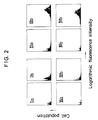
- Groups IIb and IVb both expressed strong fluorescence. Namely, both the HIV-infected H-9 and TALL-1 cells, after treatment with BM-1, showed an increase in fluorescence intensity.
- the antibodies used in this experiment were prepared by the procedures described respectively in the following articles: FH-2: Fukushi, Y., et al., J. Biol. Chem., 259 , 4681-4685, 1984. ACFH-18: Fukushi, Y., et al., J. Biol. Chem., 259 , 4681-4685, 1984. FH-6: Fukushi, Y., et al., J. Biol. Chem., 259 , 10501-10517, 1984. KH-1: Kaizu, T., et al., J. Biol. Chem., 261 , 11254-11258, 1986.
- Heparinized blood samples (10 ml) drawn respectively from AIDS and ARC patients' veins were each mixed with 2 ml of "KAC-2" (trade name; 5% silica suspension; product of Japan Immunoresearch Laboratories) and after elimination of phagocytotic cells, maintained at 37°C for one hour.
- KAC-2 trade name; 5% silica suspension; product of Japan Immunoresearch Laboratories
- the KAC-2 treated blood samples were then subjected separately to FICOLL-HYPAQUE gradient centrifugation to obtain mononuclear cell fractions. Alliquots of the lymphocytes were stained by imunofluorescence with various antibodies. Results are depicted in FIGS. 4(A) through 4(D).
- FIG. 4(A) is an optical micrograph of T-cells of an AIDS patient, and FIG. 4(B) a fluorescent micrograph of same. Further, FIG. (4C) is an optical micrograph of T-cells of an ARC patient, and FIG. 4(D) a fluorescent micrograph of same.
- the lymphocytes of the AIDS patient reacted strongly with BM-1 antibody.
- the ARC patient's lymphocytes showed much weaker fluorescence staining than those of the AIDS patient as shown in FIG. 4(D).
Landscapes
- Health & Medical Sciences (AREA)
- Life Sciences & Earth Sciences (AREA)
- Immunology (AREA)
- Engineering & Computer Science (AREA)
- Hematology (AREA)
- Urology & Nephrology (AREA)
- Biomedical Technology (AREA)
- Chemical & Material Sciences (AREA)
- Molecular Biology (AREA)
- Cell Biology (AREA)
- Physics & Mathematics (AREA)
- Pathology (AREA)
- Food Science & Technology (AREA)
- Medicinal Chemistry (AREA)
- Biotechnology (AREA)
- Analytical Chemistry (AREA)
- Biochemistry (AREA)
- General Health & Medical Sciences (AREA)
- General Physics & Mathematics (AREA)
- Microbiology (AREA)
- Virology (AREA)
- Tropical Medicine & Parasitology (AREA)
- AIDS & HIV (AREA)
- Zoology (AREA)
- Investigating Or Analysing Biological Materials (AREA)
- Micro-Organisms Or Cultivation Processes Thereof (AREA)
- Medicines Containing Antibodies Or Antigens For Use As Internal Diagnostic Agents (AREA)
- Peptides Or Proteins (AREA)
Applications Claiming Priority (4)
| Application Number | Priority Date | Filing Date | Title |
|---|---|---|---|
| JP19233887 | 1987-07-31 | ||
| JP192338/87 | 1987-07-31 | ||
| JP182632/88 | 1988-07-21 | ||
| JP63182632A JPH083487B2 (ja) | 1987-07-31 | 1988-07-21 | 異常応答リンパ球の検出方法並びにこれに用いる検出用試薬及びキット |
Publications (2)
| Publication Number | Publication Date |
|---|---|
| EP0304663A1 true EP0304663A1 (de) | 1989-03-01 |
| EP0304663B1 EP0304663B1 (de) | 1992-04-22 |
Family
ID=26501362
Family Applications (1)
| Application Number | Title | Priority Date | Filing Date |
|---|---|---|---|
| EP88112242A Expired - Lifetime EP0304663B1 (de) | 1987-07-31 | 1988-07-28 | Verfahren zum Nachweis anormal reagierender Lymphozythen sowie Reagens und Zusammensetzung dafür |
Country Status (5)
| Country | Link |
|---|---|
| US (1) | US5236823A (de) |
| EP (1) | EP0304663B1 (de) |
| JP (1) | JPH083487B2 (de) |
| CA (1) | CA1307461C (de) |
| DE (1) | DE3870359D1 (de) |
Cited By (4)
| Publication number | Priority date | Publication date | Assignee | Title |
|---|---|---|---|---|
| WO1992003165A1 (en) * | 1990-08-11 | 1992-03-05 | Sandoz Ltd. | New use of a monoclonal antibody |
| EP0512023A4 (en) * | 1990-01-26 | 1993-06-30 | The Biomembrane Institute | Medicaments and methods for treating aids and arc employing anti-carbohydrate antibodies and carbohydrate antigens |
| CN1322129C (zh) * | 2002-03-19 | 2007-06-20 | 三菱化学株式会社 | 新型羰基还原酶及其编码基因、以及利用它们制备光学活性醇的方法 |
| US11796534B2 (en) | 2017-04-14 | 2023-10-24 | Juno Therapeutics, Inc. | Methods for assessing cell surface glycosylation |
Families Citing this family (4)
| Publication number | Priority date | Publication date | Assignee | Title |
|---|---|---|---|---|
| US5648222A (en) * | 1994-07-27 | 1997-07-15 | The Trustees Of Columbia University In The City Of New York | Method for preserving cells, and uses of said method |
| RU2117946C1 (ru) * | 1997-05-26 | 1998-08-20 | Владимир Михайлович Евстропов | Способ определения трансформированных клеток |
| EP1664784A1 (de) * | 2003-09-17 | 2006-06-07 | Guava Technologies, Inc. | Zusammensetzungen und verfahren zur analyse von zielsubstanzen |
| US20100279279A1 (en) * | 2003-09-17 | 2010-11-04 | Robert Danielzadeh | Compositions and methods for analysis of target analytes |
Citations (4)
| Publication number | Priority date | Publication date | Assignee | Title |
|---|---|---|---|---|
| US3988115A (en) * | 1975-09-18 | 1976-10-26 | Modabber Farrokh Z | Diagnostic method for determining pathological condition by antigen-combining capacity of lymphocytes |
| WO1986006413A1 (en) * | 1985-04-24 | 1986-11-06 | California Institute Of Technology | Diagnostic reagents based on unique sequences within the variable region of the t cell receptor and uses thereof |
| EP0203552A2 (de) * | 1985-05-28 | 1986-12-03 | Oncogen | Monoklonale Antikörper für humane Lungenkarzinome des "Nicht-kleine-Zellen"-Typs |
| EP0248534A2 (de) * | 1986-05-06 | 1987-12-09 | Epitope, Inc. | Verfahren zum Nachweis einer AIDS-Virus-Infektion |
Family Cites Families (2)
| Publication number | Priority date | Publication date | Assignee | Title |
|---|---|---|---|---|
| JPS60214737A (ja) * | 1984-04-06 | 1985-10-28 | Nippon Koutai Kenkyusho:Kk | 糖鎖関連抗原の製造法 |
| US4917998A (en) * | 1986-05-06 | 1990-04-17 | Epitope, Inc. | Method of detecting AIDS virus infection |
-
1988
- 1988-07-21 JP JP63182632A patent/JPH083487B2/ja not_active Expired - Lifetime
- 1988-07-27 US US07/224,712 patent/US5236823A/en not_active Expired - Fee Related
- 1988-07-27 CA CA000573148A patent/CA1307461C/en not_active Expired - Lifetime
- 1988-07-28 EP EP88112242A patent/EP0304663B1/de not_active Expired - Lifetime
- 1988-07-28 DE DE8888112242T patent/DE3870359D1/de not_active Expired - Fee Related
Patent Citations (4)
| Publication number | Priority date | Publication date | Assignee | Title |
|---|---|---|---|---|
| US3988115A (en) * | 1975-09-18 | 1976-10-26 | Modabber Farrokh Z | Diagnostic method for determining pathological condition by antigen-combining capacity of lymphocytes |
| WO1986006413A1 (en) * | 1985-04-24 | 1986-11-06 | California Institute Of Technology | Diagnostic reagents based on unique sequences within the variable region of the t cell receptor and uses thereof |
| EP0203552A2 (de) * | 1985-05-28 | 1986-12-03 | Oncogen | Monoklonale Antikörper für humane Lungenkarzinome des "Nicht-kleine-Zellen"-Typs |
| EP0248534A2 (de) * | 1986-05-06 | 1987-12-09 | Epitope, Inc. | Verfahren zum Nachweis einer AIDS-Virus-Infektion |
Non-Patent Citations (4)
| Title |
|---|
| CHEMICAL ABSTRACTS volume 108, no. 17, 25th April 1988, page 585, colmn 1, abstract no. 148675t, Columbus, Ohio, US; M. ADACHI et al.: "Expression of Ley antigen in human immunodeficiency virus-infected human T cell lines and in peripheral lymphocytes of patients with acugired immune deficiency syndrome (ARC)", & J. EXP. MED. 1988, 167(2), pages 323-331 * |
| IMMUNOGENETICS volume 17, 1983, pages 537-541, New York, NY, US; K.O. LLOYD et al.: Mouse Monoclonal Antibody F-3 Recognizes the Difucosyl Type-2 Blood Group Structure" * |
| SCIENTIFIC AMERICAN volume 254, no. 5, May 1986, pages 32-42, Washington DC, US; S. HAKOMORI: "Glycosphingolipids" * |
| THE JOURNAL OF BIOLOGICAL CHEMISTRY volume 258, no. 19, 10th October 1983, pages 11793-11797, Baltiomore, MD, US; K. ABE et al.: "The monoclonal antibody directed to difusylated type 2 chain (Fuc alpha 1-2 Gal beta 1-4 (Fuc alpha 1-3 G1cNAc; Y determinant" * |
Cited By (6)
| Publication number | Priority date | Publication date | Assignee | Title |
|---|---|---|---|---|
| EP0512023A4 (en) * | 1990-01-26 | 1993-06-30 | The Biomembrane Institute | Medicaments and methods for treating aids and arc employing anti-carbohydrate antibodies and carbohydrate antigens |
| WO1992003165A1 (en) * | 1990-08-11 | 1992-03-05 | Sandoz Ltd. | New use of a monoclonal antibody |
| AU657489B2 (en) * | 1990-08-11 | 1995-03-16 | Novartis Ag | Monoclonal antibody treats HIV-AIDS |
| CN1322129C (zh) * | 2002-03-19 | 2007-06-20 | 三菱化学株式会社 | 新型羰基还原酶及其编码基因、以及利用它们制备光学活性醇的方法 |
| US11796534B2 (en) | 2017-04-14 | 2023-10-24 | Juno Therapeutics, Inc. | Methods for assessing cell surface glycosylation |
| US12379375B2 (en) | 2017-04-14 | 2025-08-05 | Juno Therapeutics, Inc. | Methods for assessing cell surface glycosylation |
Also Published As
| Publication number | Publication date |
|---|---|
| US5236823A (en) | 1993-08-17 |
| JPH083487B2 (ja) | 1996-01-17 |
| CA1307461C (en) | 1992-09-15 |
| DE3870359D1 (de) | 1992-05-27 |
| JPH01105160A (ja) | 1989-04-21 |
| EP0304663B1 (de) | 1992-04-22 |
Similar Documents
| Publication | Publication Date | Title |
|---|---|---|
| EP0216191B1 (de) | Immunologisches Testverfahren für HTLV-III-Antigene | |
| FI89175B (fi) | Foerfarande och produkter foer paovisande av humant t-celleukemivirus | |
| Goldstein et al. | Direct membrane immunofluorescence reaction of Burkitt's lymphoma cells in culture | |
| Chisari et al. | Mechanisms responsible for defective human T-lymphocyte sheep erythrocyte rosette function associated with hepatitis B virus infections. | |
| DK174032B1 (da) | Sæt samt fremgangsmåde til immunometrisk dosering, der kan anvendes på hele celler | |
| JPH11511851A (ja) | 細胞計数イムノアッセイ | |
| Parker et al. | Phagocytosis of particulate complexes of γ-globulin and rheumatoid factor | |
| HK1001570B (en) | Kit and immunoassay method applicable to whole cells | |
| EP0304663B1 (de) | Verfahren zum Nachweis anormal reagierender Lymphozythen sowie Reagens und Zusammensetzung dafür | |
| EP0248534A2 (de) | Verfahren zum Nachweis einer AIDS-Virus-Infektion | |
| O'neill et al. | Treponema pallidum haemagglutination assay in the routine serodiagnosis of treponemal disease | |
| US6461825B1 (en) | Immunometric assay kit and method applicable to whole cells | |
| EP0170345B1 (de) | Durchflusszytometrie | |
| JPS6327658B2 (de) | ||
| EP0196873B1 (de) | Diagnose für Mikroorganismen | |
| JPS62278459A (ja) | エイズウイルス感染の検出方法 | |
| Kurata et al. | Acid treatment of platelets as a simple procedure for distinguishing platelet-specific antibodies from anti-HLA antibodies: comparison with chloroquine treatment | |
| AU616897B2 (en) | Detection method of abnormally-responding lymphocytes as well as detection reagent and kit therefor | |
| Pepys et al. | Enumeration of T and B lymphocytes in whole peripheral blood: absence of a null cell population | |
| Subašić et al. | Correlation of autoantibodies presence detected by IFA-anti-dsDNA, IFA-AMA and immunoblotting with corresponding data in clinical management of autoimmune diseases | |
| King et al. | Monitoring circulating B cells in patients with multiple myeloma at diagnosis or in plateau phase: how prevalent is light chain isotype suppression? | |
| Sato et al. | Treponema pallidum specific IgM haemagglutination test for serodiagnosis of syphilis. | |
| US20050019756A1 (en) | Methods and compositions for use in diagnosing and characterizing diseases involving abnormal apoptosis | |
| O'neill et al. | Evaluation of a modified FTA-ABS test multispot FTA-ABS | |
| Hornick et al. | Limiting dilution analysis; Increasing the sensitivity and specificity of the alloreactive T helper cell assay by abrogating “Unwanted” IL-2 production |
Legal Events
| Date | Code | Title | Description |
|---|---|---|---|
| PUAI | Public reference made under article 153(3) epc to a published international application that has entered the european phase |
Free format text: ORIGINAL CODE: 0009012 |
|
| AK | Designated contracting states |
Kind code of ref document: A1 Designated state(s): DE FR GB IT SE |
|
| 17P | Request for examination filed |
Effective date: 19890901 |
|
| 17Q | First examination report despatched |
Effective date: 19901024 |
|
| GRAA | (expected) grant |
Free format text: ORIGINAL CODE: 0009210 |
|
| AK | Designated contracting states |
Kind code of ref document: B1 Designated state(s): DE FR GB IT SE |
|
| ITF | It: translation for a ep patent filed | ||
| REF | Corresponds to: |
Ref document number: 3870359 Country of ref document: DE Date of ref document: 19920527 |
|
| ET | Fr: translation filed | ||
| PLBE | No opposition filed within time limit |
Free format text: ORIGINAL CODE: 0009261 |
|
| STAA | Information on the status of an ep patent application or granted ep patent |
Free format text: STATUS: NO OPPOSITION FILED WITHIN TIME LIMIT |
|
| 26N | No opposition filed | ||
| EAL | Se: european patent in force in sweden |
Ref document number: 88112242.8 |
|
| PGFP | Annual fee paid to national office [announced via postgrant information from national office to epo] |
Ref country code: DE Payment date: 19960628 Year of fee payment: 9 |
|
| PGFP | Annual fee paid to national office [announced via postgrant information from national office to epo] |
Ref country code: GB Payment date: 19960715 Year of fee payment: 9 |
|
| PGFP | Annual fee paid to national office [announced via postgrant information from national office to epo] |
Ref country code: SE Payment date: 19960716 Year of fee payment: 9 |
|
| PGFP | Annual fee paid to national office [announced via postgrant information from national office to epo] |
Ref country code: FR Payment date: 19960722 Year of fee payment: 9 |
|
| PG25 | Lapsed in a contracting state [announced via postgrant information from national office to epo] |
Ref country code: GB Free format text: LAPSE BECAUSE OF NON-PAYMENT OF DUE FEES Effective date: 19970728 |
|
| PG25 | Lapsed in a contracting state [announced via postgrant information from national office to epo] |
Ref country code: SE Effective date: 19970729 |
|
| GBPC | Gb: european patent ceased through non-payment of renewal fee |
Effective date: 19970728 |
|
| PG25 | Lapsed in a contracting state [announced via postgrant information from national office to epo] |
Ref country code: FR Free format text: LAPSE BECAUSE OF NON-PAYMENT OF DUE FEES Effective date: 19980331 |
|
| PG25 | Lapsed in a contracting state [announced via postgrant information from national office to epo] |
Ref country code: DE Free format text: LAPSE BECAUSE OF NON-PAYMENT OF DUE FEES Effective date: 19980401 |
|
| EUG | Se: european patent has lapsed |
Ref document number: 88112242.8 |
|
| REG | Reference to a national code |
Ref country code: FR Ref legal event code: ST |
|
| PG25 | Lapsed in a contracting state [announced via postgrant information from national office to epo] |
Ref country code: IT Free format text: LAPSE BECAUSE OF NON-PAYMENT OF DUE FEES;WARNING: LAPSES OF ITALIAN PATENTS WITH EFFECTIVE DATE BEFORE 2007 MAY HAVE OCCURRED AT ANY TIME BEFORE 2007. THE CORRECT EFFECTIVE DATE MAY BE DIFFERENT FROM THE ONE RECORDED. Effective date: 20050728 |