EP0304667A2 - Procédé de récupération des composants PET de produits usés contenant du PET, ainsi que dispositif pour la mise en oeuvre du procédé - Google Patents
Procédé de récupération des composants PET de produits usés contenant du PET, ainsi que dispositif pour la mise en oeuvre du procédé Download PDFInfo
- Publication number
- EP0304667A2 EP0304667A2 EP88112333A EP88112333A EP0304667A2 EP 0304667 A2 EP0304667 A2 EP 0304667A2 EP 88112333 A EP88112333 A EP 88112333A EP 88112333 A EP88112333 A EP 88112333A EP 0304667 A2 EP0304667 A2 EP 0304667A2
- Authority
- EP
- European Patent Office
- Prior art keywords
- pet
- arrangement
- particles
- hydrocyclone
- heavy
- Prior art date
- Legal status (The legal status is an assumption and is not a legal conclusion. Google has not performed a legal analysis and makes no representation as to the accuracy of the status listed.)
- Granted
Links
Images
Classifications
-
- B—PERFORMING OPERATIONS; TRANSPORTING
- B03—SEPARATION OF SOLID MATERIALS USING LIQUIDS OR USING PNEUMATIC TABLES OR JIGS; MAGNETIC OR ELECTROSTATIC SEPARATION OF SOLID MATERIALS FROM SOLID MATERIALS OR FLUIDS; SEPARATION BY HIGH-VOLTAGE ELECTRIC FIELDS
- B03B—SEPARATING SOLID MATERIALS USING LIQUIDS OR USING PNEUMATIC TABLES OR JIGS
- B03B9/00—General arrangement of separating plant, e.g. flow sheets
- B03B9/06—General arrangement of separating plant, e.g. flow sheets specially adapted for refuse
- B03B9/061—General arrangement of separating plant, e.g. flow sheets specially adapted for refuse the refuse being industrial
-
- B—PERFORMING OPERATIONS; TRANSPORTING
- B29—WORKING OF PLASTICS; WORKING OF SUBSTANCES IN A PLASTIC STATE IN GENERAL
- B29B—PREPARATION OR PRETREATMENT OF THE MATERIAL TO BE SHAPED; MAKING GRANULES OR PREFORMS; RECOVERY OF PLASTICS OR OTHER CONSTITUENTS OF WASTE MATERIAL CONTAINING PLASTICS
- B29B17/00—Recovery of plastics or other constituents of waste material containing plastics
- B29B17/02—Separating plastics from other materials
-
- B—PERFORMING OPERATIONS; TRANSPORTING
- B29—WORKING OF PLASTICS; WORKING OF SUBSTANCES IN A PLASTIC STATE IN GENERAL
- B29B—PREPARATION OR PRETREATMENT OF THE MATERIAL TO BE SHAPED; MAKING GRANULES OR PREFORMS; RECOVERY OF PLASTICS OR OTHER CONSTITUENTS OF WASTE MATERIAL CONTAINING PLASTICS
- B29B17/00—Recovery of plastics or other constituents of waste material containing plastics
- B29B17/02—Separating plastics from other materials
- B29B2017/0203—Separating plastics from plastics
-
- B—PERFORMING OPERATIONS; TRANSPORTING
- B29—WORKING OF PLASTICS; WORKING OF SUBSTANCES IN A PLASTIC STATE IN GENERAL
- B29B—PREPARATION OR PRETREATMENT OF THE MATERIAL TO BE SHAPED; MAKING GRANULES OR PREFORMS; RECOVERY OF PLASTICS OR OTHER CONSTITUENTS OF WASTE MATERIAL CONTAINING PLASTICS
- B29B17/00—Recovery of plastics or other constituents of waste material containing plastics
- B29B17/02—Separating plastics from other materials
- B29B2017/0213—Specific separating techniques
- B29B2017/0217—Mechanical separating techniques; devices therefor
- B29B2017/0237—Mechanical separating techniques; devices therefor using density difference
- B29B2017/0244—Mechanical separating techniques; devices therefor using density difference in liquids
-
- B—PERFORMING OPERATIONS; TRANSPORTING
- B29—WORKING OF PLASTICS; WORKING OF SUBSTANCES IN A PLASTIC STATE IN GENERAL
- B29B—PREPARATION OR PRETREATMENT OF THE MATERIAL TO BE SHAPED; MAKING GRANULES OR PREFORMS; RECOVERY OF PLASTICS OR OTHER CONSTITUENTS OF WASTE MATERIAL CONTAINING PLASTICS
- B29B17/00—Recovery of plastics or other constituents of waste material containing plastics
- B29B17/02—Separating plastics from other materials
- B29B2017/0213—Specific separating techniques
- B29B2017/0262—Specific separating techniques using electrical caracteristics
- B29B2017/0265—Electrostatic separation
-
- B—PERFORMING OPERATIONS; TRANSPORTING
- B29—WORKING OF PLASTICS; WORKING OF SUBSTANCES IN A PLASTIC STATE IN GENERAL
- B29B—PREPARATION OR PRETREATMENT OF THE MATERIAL TO BE SHAPED; MAKING GRANULES OR PREFORMS; RECOVERY OF PLASTICS OR OTHER CONSTITUENTS OF WASTE MATERIAL CONTAINING PLASTICS
- B29B17/00—Recovery of plastics or other constituents of waste material containing plastics
- B29B17/02—Separating plastics from other materials
- B29B2017/0213—Specific separating techniques
- B29B2017/0279—Optical identification, e.g. cameras or spectroscopy
-
- B—PERFORMING OPERATIONS; TRANSPORTING
- B29—WORKING OF PLASTICS; WORKING OF SUBSTANCES IN A PLASTIC STATE IN GENERAL
- B29B—PREPARATION OR PRETREATMENT OF THE MATERIAL TO BE SHAPED; MAKING GRANULES OR PREFORMS; RECOVERY OF PLASTICS OR OTHER CONSTITUENTS OF WASTE MATERIAL CONTAINING PLASTICS
- B29B17/00—Recovery of plastics or other constituents of waste material containing plastics
- B29B17/02—Separating plastics from other materials
- B29B2017/0213—Specific separating techniques
- B29B2017/0286—Cleaning means used for separation
- B29B2017/0289—Washing the materials in liquids
-
- B—PERFORMING OPERATIONS; TRANSPORTING
- B29—WORKING OF PLASTICS; WORKING OF SUBSTANCES IN A PLASTIC STATE IN GENERAL
- B29K—INDEXING SCHEME ASSOCIATED WITH SUBCLASSES B29B, B29C OR B29D, RELATING TO MOULDING MATERIALS OR TO MATERIALS FOR MOULDS, REINFORCEMENTS, FILLERS OR PREFORMED PARTS, e.g. INSERTS
- B29K2023/00—Use of polyalkenes or derivatives thereof as moulding material
- B29K2023/04—Polymers of ethylene
- B29K2023/06—PE, i.e. polyethylene
-
- B—PERFORMING OPERATIONS; TRANSPORTING
- B29—WORKING OF PLASTICS; WORKING OF SUBSTANCES IN A PLASTIC STATE IN GENERAL
- B29K—INDEXING SCHEME ASSOCIATED WITH SUBCLASSES B29B, B29C OR B29D, RELATING TO MOULDING MATERIALS OR TO MATERIALS FOR MOULDS, REINFORCEMENTS, FILLERS OR PREFORMED PARTS, e.g. INSERTS
- B29K2023/00—Use of polyalkenes or derivatives thereof as moulding material
- B29K2023/10—Polymers of propylene
- B29K2023/12—PP, i.e. polypropylene
-
- B—PERFORMING OPERATIONS; TRANSPORTING
- B29—WORKING OF PLASTICS; WORKING OF SUBSTANCES IN A PLASTIC STATE IN GENERAL
- B29K—INDEXING SCHEME ASSOCIATED WITH SUBCLASSES B29B, B29C OR B29D, RELATING TO MOULDING MATERIALS OR TO MATERIALS FOR MOULDS, REINFORCEMENTS, FILLERS OR PREFORMED PARTS, e.g. INSERTS
- B29K2031/00—Use of polyvinylesters or derivatives thereof as moulding material
- B29K2031/04—Polymers of vinyl acetate, e.g. PVAc, i.e. polyvinyl acetate
-
- B—PERFORMING OPERATIONS; TRANSPORTING
- B29—WORKING OF PLASTICS; WORKING OF SUBSTANCES IN A PLASTIC STATE IN GENERAL
- B29K—INDEXING SCHEME ASSOCIATED WITH SUBCLASSES B29B, B29C OR B29D, RELATING TO MOULDING MATERIALS OR TO MATERIALS FOR MOULDS, REINFORCEMENTS, FILLERS OR PREFORMED PARTS, e.g. INSERTS
- B29K2067/00—Use of polyesters or derivatives thereof, as moulding material
-
- B—PERFORMING OPERATIONS; TRANSPORTING
- B29—WORKING OF PLASTICS; WORKING OF SUBSTANCES IN A PLASTIC STATE IN GENERAL
- B29K—INDEXING SCHEME ASSOCIATED WITH SUBCLASSES B29B, B29C OR B29D, RELATING TO MOULDING MATERIALS OR TO MATERIALS FOR MOULDS, REINFORCEMENTS, FILLERS OR PREFORMED PARTS, e.g. INSERTS
- B29K2105/00—Condition, form or state of moulded material or of the material to be shaped
- B29K2105/06—Condition, form or state of moulded material or of the material to be shaped containing reinforcements, fillers or inserts
- B29K2105/065—Condition, form or state of moulded material or of the material to be shaped containing reinforcements, fillers or inserts containing impurities
-
- B—PERFORMING OPERATIONS; TRANSPORTING
- B29—WORKING OF PLASTICS; WORKING OF SUBSTANCES IN A PLASTIC STATE IN GENERAL
- B29K—INDEXING SCHEME ASSOCIATED WITH SUBCLASSES B29B, B29C OR B29D, RELATING TO MOULDING MATERIALS OR TO MATERIALS FOR MOULDS, REINFORCEMENTS, FILLERS OR PREFORMED PARTS, e.g. INSERTS
- B29K2705/00—Use of metals, their alloys or their compounds, for preformed parts, e.g. for inserts
- B29K2705/02—Aluminium
-
- B—PERFORMING OPERATIONS; TRANSPORTING
- B29—WORKING OF PLASTICS; WORKING OF SUBSTANCES IN A PLASTIC STATE IN GENERAL
- B29L—INDEXING SCHEME ASSOCIATED WITH SUBCLASS B29C, RELATING TO PARTICULAR ARTICLES
- B29L2031/00—Other particular articles
- B29L2031/712—Containers; Packaging elements or accessories, Packages
- B29L2031/7158—Bottles
-
- B—PERFORMING OPERATIONS; TRANSPORTING
- B29—WORKING OF PLASTICS; WORKING OF SUBSTANCES IN A PLASTIC STATE IN GENERAL
- B29L—INDEXING SCHEME ASSOCIATED WITH SUBCLASS B29C, RELATING TO PARTICULAR ARTICLES
- B29L2031/00—Other particular articles
- B29L2031/744—Labels, badges, e.g. marker sleeves
-
- Y—GENERAL TAGGING OF NEW TECHNOLOGICAL DEVELOPMENTS; GENERAL TAGGING OF CROSS-SECTIONAL TECHNOLOGIES SPANNING OVER SEVERAL SECTIONS OF THE IPC; TECHNICAL SUBJECTS COVERED BY FORMER USPC CROSS-REFERENCE ART COLLECTIONS [XRACs] AND DIGESTS
- Y02—TECHNOLOGIES OR APPLICATIONS FOR MITIGATION OR ADAPTATION AGAINST CLIMATE CHANGE
- Y02W—CLIMATE CHANGE MITIGATION TECHNOLOGIES RELATED TO WASTEWATER TREATMENT OR WASTE MANAGEMENT
- Y02W30/00—Technologies for solid waste management
- Y02W30/50—Reuse, recycling or recovery technologies
- Y02W30/52—Mechanical processing of waste for the recovery of materials, e.g. crushing, shredding, separation or disassembly
-
- Y—GENERAL TAGGING OF NEW TECHNOLOGICAL DEVELOPMENTS; GENERAL TAGGING OF CROSS-SECTIONAL TECHNOLOGIES SPANNING OVER SEVERAL SECTIONS OF THE IPC; TECHNICAL SUBJECTS COVERED BY FORMER USPC CROSS-REFERENCE ART COLLECTIONS [XRACs] AND DIGESTS
- Y02—TECHNOLOGIES OR APPLICATIONS FOR MITIGATION OR ADAPTATION AGAINST CLIMATE CHANGE
- Y02W—CLIMATE CHANGE MITIGATION TECHNOLOGIES RELATED TO WASTEWATER TREATMENT OR WASTE MANAGEMENT
- Y02W30/00—Technologies for solid waste management
- Y02W30/50—Reuse, recycling or recovery technologies
- Y02W30/62—Plastics recycling; Rubber recycling
Definitions
- the invention initially relates to a method according to the preamble of claim 1.
- beverage bottles for example 2-liter lemonade bottles
- PET polyethylene glycol
- This material is very stable and boil-proof, as well as transparent like glass. It is therefore used in the beverage industry despite its relatively high manufacturing price, as explained above.
- waste disposal Both for reasons of environmental protection (waste disposal) and because of the preferred properties and the high production costs of PET, used PET-containing bottles and the like should not simply be thrown away, but should be recycled into reusable plastic granulate in so-called recycling.
- This final product is available in so-called pellets. It is possible to produce PET parts from such pellets or granules obtained by recycling.
- the granules that can thus be obtained so far are not crystal clear, however, but only milky or whitish, or mixed colors according to the starting products. This means that no crystal-clear or color-appealing new items can be produced. These previously produced granules can therefore only be used for the production of new parts that do not depend on glass clarity or good coloring (eg production of polyester fibers, packaging tapes, semi-finished products, etc.).
- the reusable, used items are first and foremost, in many cases, even the explained beverage bottles. But it also comes e.g. X-ray film or tape carrier material in question.
- a method according to the preamble of claim 1 is described on pages 12 and 13 of the magazine PLASTICS & RUBBER WEEKLY, dated March 28, 1987.
- the heavy particles made of PET and aluminum (if available) are separated from the lighter parts made of PP, PE, EVA and other components (unless these have been removed beforehand by air sifting) using a swim-sink process.
- This swim-sink process has the disadvantage that the yield of PET is relatively low, in that a significant proportion of PET particles cannot be obtained due to their weight and the resulting sinking, but instead floats away with the light components. This can happen, for example, if gas or air bubbles are attached to these PET particles. Classification, color sorting and crystallization of the separated PET particles are not provided.
- DE-OS 29 26 233 discloses a process for the recovery of polyethylene terephthalate from mixtures containing polyethylene terephthalate using at least one hydrocyclone, ethylene glycol being used as the separating liquid.
- This prior publication does not initially meet the preamble of claim 1, since it does not affect the problem of the deposition of metal parts.
- the separation of metal parts is essential, however, especially when recovering the polyethylene terephthalate parts from beverage bottles with metal capsules.
- this is an essential area of the present invention.
- ethylene glycol is relatively expensive, ie the operating costs of a plant operating with it increase despite the partial recovery of this separation liquid, since a certain loss of separation liquid is always expected in the course of the process got to.
- the object of the invention is to achieve the highest possible efficiency of yield, i.e. to get as few losses of PET particles as possible, to obtain an end product of recovered PET particles of great purity and in the desired coloring, as well as clarity
- the solution to this problem is first seen, starting from the preamble of claim 1, in the features of the characterizing part of claim 1.
- the separation by means of a hydrocyclone arrangement ensures that the vast majority of the PET particles contained in the batch (suspension) are separated from the other fractions.
- the underflow of the hydrocyclone arrangement only contains the PET particles and (if present) the relatively heavy metal particles present in the suspension, but not other, on the other hand lighter components such as PE, PP etc.
- the invention now combines the advantage achieved by the hydrocyclone arrangement in a very high efficiency or separation efficiency of the separation with the advantage of classification and color sorting to achieve a very pure end product.
- the features of claim 1 thus work together in the sense of the above task.
- the end product obtained is sorted according to the respective colors (e.g. brown, green and transparent). Depending on its color, it can then be used again to produce new products. This was not possible with the known method explained at the outset, since the end products obtained had a color which could not previously be determined, so that the new products produced with such pellets or granules were not clear, or clear color, but rather milky or a corresponding one Had color mixing.
- the disadvantages of using ethylene glycol as a release agent are avoided.
- the invention allows the use of any washing liquid, in particular water.
- the polycondensation plant in the form of a reactor provided in the subject of DE-OS 29 26 233 is not required.
- the invention also includes the task of creating an arrangement which enables the method according to claim 1 or claim 2 to be carried out, in such a way that the task set for the method hereby resolved objectively and such an arrangement can also be realized in practice in an economical manner.
- the heavy resulting underflow of the hydrocyclone arrangement is a mixture of the heavy PET particles with the heavy metal particles (if present).
- claim 5 Another variant of the arrangement according to claim 3 is contained in claim 5, which can preferably be designed according to claim 6.
- the separation of the metal particles preferably aluminum particles
- the separation stage PET / AL according to claim 6 relieves the downstream hydrocyclone arrangement by separating it from the aluminum particles and enables the above-mentioned cleaning of the PET particles from any remaining heavy residues.
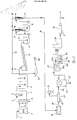
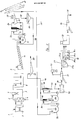
- Both exemplary embodiments are intended for the recovery (recycling) of the PET portion of PET bottles and analog parts, which are fed to a shredder 2 at 1.
- the comminuted material reaches a wind sifter 4 via line 3.
- fine material and paper are fed to gas cyclone 6 via line 5 and separated.
- the heavier underflow of the air classifier is fed via line 7 to a multi-stage fraction washer 8, which cleans these parts of dust, dirt, etc.
- adhesive label residues still have to be removed from the PET particles.
- the washed particles are fed via a line 9 to a washing tank 10 and from there to a suspension tank 11.
- the suspension then passes from the container 11 via the line 12 into the first hydrocyclone 13 of a two-stage hydrocyclone arrangement.
- the underflow 14 of the first hydrocyclone 13 (first hydrocyclone stage) is fed via a suspension tank 15 to the inlet of the second hydrocyclone 16 (second hydrocyclone stage) of this hydrocyclone arrangement, the underflow 17 of which is connected to a mechanical drainage 19 via a line 18.
- This underflow contains only PET and aluminum particles.
- the overflows 13 ', 16' of the hydrocyclones 13, 16 contain light particles, such as PE, PP and EVA, which are fed via line 22 to a dewatering and drying unit 23. From this they are then discharged according to arrow 23 '.
- each grain class of a certain color, but possibly also different grain classes of the same color are then fed to an extruder 29, the extruded threads being cut to the same particle size.
- This is followed by crystallization at 30 and removal of the finished PET granules (pellets) at 31, which are then used again to produce new parts consisting of PET.
- the above-mentioned crystallization takes place by heating and has the effect that the material can be stored well without absorbing water.
- the outlet of the suspension container 11 goes via the line 12 to a heavy turbidity cyclone 32, the underflow 33 of which separates the aluminum particles, while the overflow 34 has the PET and PE, PP, EVA particles which have a drainage sieve 35 can be supplied with showers 36.
- the heavy turbidity of the cyclone diluted by the spray is fed back to a thickener 50 via a line 37 and from there via line 49 back into the container 11.
- the lighter components of this heavy turbidity separation namely in the present example in addition to the PET particles also PE, PP and EVA (residues) reach via line 37 'to a hydrocyclone arrangement consisting of a suspension container 38, a first hydrocyclone 39 (first hydrocyclone stage) and a second hydrocyclone 40 (second hydrocyclone stage).
- a hydrocyclone arrangement consisting of a suspension container 38, a first hydrocyclone 39 (first hydrocyclone stage) and a second hydrocyclone 40 (second hydrocyclone stage).
- the underflow 41 of the first hydrocyclone is via an intermediate container and a line 42 fed to the second hydrocyclone 40, the underflow 43 of which only receives the PET particles which reach the dewatering 45 via a line 44.
- Both overflows 46, 47 of the two hydrocyclones 39, 40 contain the lighter particles PE-PP and EVA and reach the drainage with drying 23 via a line 48 and are derived from this in accordance with para. 24 dissipated.
Landscapes
- Engineering & Computer Science (AREA)
- Environmental & Geological Engineering (AREA)
- Mechanical Engineering (AREA)
- Separation, Recovery Or Treatment Of Waste Materials Containing Plastics (AREA)
- Processing And Handling Of Plastics And Other Materials For Molding In General (AREA)
- Processing Of Solid Wastes (AREA)
- Separation Of Solids By Using Liquids Or Pneumatic Power (AREA)
- Treatment Of Sludge (AREA)
Priority Applications (1)
| Application Number | Priority Date | Filing Date | Title |
|---|---|---|---|
| AT88112333T ATE88376T1 (de) | 1987-08-27 | 1988-07-29 | Verfahren zur wiederaufbereitung der petbestandteile von gebrauchten, pet-haltigen produkten, sowie anordnung zur durchfuehrung des verfahrens. |
Applications Claiming Priority (2)
| Application Number | Priority Date | Filing Date | Title |
|---|---|---|---|
| DE3728558 | 1987-08-27 | ||
| DE19873728558 DE3728558A1 (de) | 1987-08-27 | 1987-08-27 | Verfahren zur wiederaufbereitung des pet von gebrauchten, pet-haltigen produkten, sowie anordnung zur durchfuehrung des verfahrens |
Publications (3)
| Publication Number | Publication Date |
|---|---|
| EP0304667A2 true EP0304667A2 (fr) | 1989-03-01 |
| EP0304667A3 EP0304667A3 (en) | 1990-04-11 |
| EP0304667B1 EP0304667B1 (fr) | 1993-04-21 |
Family
ID=6334578
Family Applications (1)
| Application Number | Title | Priority Date | Filing Date |
|---|---|---|---|
| EP19880112333 Expired - Lifetime EP0304667B1 (fr) | 1987-08-27 | 1988-07-29 | Procédé de récupération des composants PET de produits usés contenant du PET, ainsi que dispositif pour la mise en oeuvre du procédé |
Country Status (3)
| Country | Link |
|---|---|
| EP (1) | EP0304667B1 (fr) |
| AT (1) | ATE88376T1 (fr) |
| DE (2) | DE3728558A1 (fr) |
Cited By (11)
| Publication number | Priority date | Publication date | Assignee | Title |
|---|---|---|---|---|
| US5143308A (en) * | 1991-03-26 | 1992-09-01 | Plastic Recycling Alliance, Lp | Recycling system |
| WO1992022380A1 (fr) * | 1991-06-18 | 1992-12-23 | Sampson Donald L | Procede et appareil pour le recyclage des plastiques |
| EP0493720A3 (en) * | 1990-12-29 | 1993-01-13 | Pwa Industriepapier Gmbh | Method for reprocessing thermoplastic coated packing materials and thermoplastic material for further manufacture |
| US5333797A (en) * | 1992-04-03 | 1994-08-02 | Becker John C | Commingled recyclables recovery and recycling process and related apparatuses |
| EP0650814A1 (fr) * | 1993-10-30 | 1995-05-03 | R+T UMWELT GmbH | Dispositif pour fractions prétraitées en matière plastique, spécialement de déchets coupés installé en un appareil pour la séparation et le lavage des déchets |
| WO1996034729A1 (fr) * | 1993-10-30 | 1996-11-07 | R + T Umwelt Gmbh | Procede et dispositif de nettoyage de rognures de plastique salies par des matieres etrangeres |
| EP0779136A3 (fr) * | 1995-12-13 | 1998-07-01 | Ein Engineering Co., Ltd. | Procédé de recyclage et granulation de déchets en résines polymériques |
| EP0893220A3 (fr) * | 1997-07-14 | 2000-10-04 | Plastipol s.r.l. | Dispositif pour le recyclage de polyéthylène notamment de feuilles de polyéthylène |
| WO2000067977A1 (fr) * | 1999-05-06 | 2000-11-16 | Graf Von Deym Carl Ludwig | Procede de tri et de separation et installation de recyclage de plastiques |
| US6770680B2 (en) | 2000-01-24 | 2004-08-03 | Krones Ag | Method for recycling pet components and device for carrying out said method |
| WO2005077630A1 (fr) * | 2004-02-06 | 2005-08-25 | Plastics Reclaiming Technologies, Inc. | Systeme et procede fonctionnant par hydrogravite et destines a recuperer et a purifier un flux de matieres premieres solides a domaines multiples |
Families Citing this family (6)
| Publication number | Priority date | Publication date | Assignee | Title |
|---|---|---|---|---|
| DE4024130A1 (de) * | 1990-07-30 | 1992-02-06 | Folkerts Karl Heinz Prof Dr Re | Verfahren zum abscheiden und/oder trennen von gemengen verschiedener kunststoffe |
| DE4137895C2 (de) * | 1991-11-18 | 2000-02-10 | Johannes Kersting | Verfahren zum Abtrennen von Aluminiumfolien von Kunststoffolien, insbesondere PE-Folien |
| DE10032900C2 (de) * | 2000-07-06 | 2002-11-21 | B & B Anlagenbau Gmbh | Verfahren zum Aufbereiten von PET-Behältnissen mit einer alkalischen Hydrolyse |
| DE10032899C2 (de) * | 2000-07-06 | 2003-09-18 | B & B Anlagenbau Gmbh | Verfahren zum Aufbereiten von PET-Behältnissen mittels einer Wärmebehandlung |
| DE10348144A1 (de) * | 2003-10-13 | 2005-05-19 | Krones Ag | PET-Flaschen-Recycling |
| CH719619A1 (de) * | 2022-04-22 | 2023-10-31 | Alpla Werke Alwin Lehner Gmbh & Co Kg | Verfahren zum Recycling von Polyester-Behältern. |
Family Cites Families (4)
| Publication number | Priority date | Publication date | Assignee | Title |
|---|---|---|---|---|
| DE2900666C2 (de) * | 1979-01-10 | 1992-04-02 | Bahr, Albert, Prof. Dr.-Ing., 3392 Clausthal-Zellerfeld | Verfahren und Vorrichtung zur Trennung von Kunststoffabfällen unterschiedlicher Dichte und Form |
| DE2926233A1 (de) * | 1979-06-29 | 1981-01-08 | Hoechst Ag | Verfahren zur wiedergewinnung von polyethylenterephthalat |
| CA1207729A (fr) * | 1981-06-30 | 1986-07-15 | Bruce A. Luff | Methode et dispositif de recuperation de l'enduit thermoplastique des rebuts de tissus |
| DE3512965A1 (de) * | 1985-04-11 | 1986-10-16 | ALUPLAST Aluminium - Plastik Recycling GmbH, 5440 Mayen | Verfahren und vorrichtung zur aufbereitung von schwerbestandteile enthaltendem, zerkleinerten abfallgut |
-
1987
- 1987-08-27 DE DE19873728558 patent/DE3728558A1/de not_active Withdrawn
-
1988
- 1988-07-29 DE DE8888112333T patent/DE3880399D1/de not_active Expired - Fee Related
- 1988-07-29 EP EP19880112333 patent/EP0304667B1/fr not_active Expired - Lifetime
- 1988-07-29 AT AT88112333T patent/ATE88376T1/de active
Cited By (13)
| Publication number | Priority date | Publication date | Assignee | Title |
|---|---|---|---|---|
| EP0493720A3 (en) * | 1990-12-29 | 1993-01-13 | Pwa Industriepapier Gmbh | Method for reprocessing thermoplastic coated packing materials and thermoplastic material for further manufacture |
| US5143308A (en) * | 1991-03-26 | 1992-09-01 | Plastic Recycling Alliance, Lp | Recycling system |
| WO1992022380A1 (fr) * | 1991-06-18 | 1992-12-23 | Sampson Donald L | Procede et appareil pour le recyclage des plastiques |
| US5236603A (en) * | 1991-06-18 | 1993-08-17 | Sampson Donald L | Method for plastics recycling |
| US5333797A (en) * | 1992-04-03 | 1994-08-02 | Becker John C | Commingled recyclables recovery and recycling process and related apparatuses |
| WO1996034729A1 (fr) * | 1993-10-30 | 1996-11-07 | R + T Umwelt Gmbh | Procede et dispositif de nettoyage de rognures de plastique salies par des matieres etrangeres |
| EP0650814A1 (fr) * | 1993-10-30 | 1995-05-03 | R+T UMWELT GmbH | Dispositif pour fractions prétraitées en matière plastique, spécialement de déchets coupés installé en un appareil pour la séparation et le lavage des déchets |
| EP0779136A3 (fr) * | 1995-12-13 | 1998-07-01 | Ein Engineering Co., Ltd. | Procédé de recyclage et granulation de déchets en résines polymériques |
| US5961054A (en) * | 1995-12-13 | 1999-10-05 | Ein Engineering Co., Ltd. | Method of recycling and granulating waste container made of resin materials |
| EP0893220A3 (fr) * | 1997-07-14 | 2000-10-04 | Plastipol s.r.l. | Dispositif pour le recyclage de polyéthylène notamment de feuilles de polyéthylène |
| WO2000067977A1 (fr) * | 1999-05-06 | 2000-11-16 | Graf Von Deym Carl Ludwig | Procede de tri et de separation et installation de recyclage de plastiques |
| US6770680B2 (en) | 2000-01-24 | 2004-08-03 | Krones Ag | Method for recycling pet components and device for carrying out said method |
| WO2005077630A1 (fr) * | 2004-02-06 | 2005-08-25 | Plastics Reclaiming Technologies, Inc. | Systeme et procede fonctionnant par hydrogravite et destines a recuperer et a purifier un flux de matieres premieres solides a domaines multiples |
Also Published As
| Publication number | Publication date |
|---|---|
| EP0304667A3 (en) | 1990-04-11 |
| DE3880399D1 (de) | 1993-05-27 |
| ATE88376T1 (de) | 1993-05-15 |
| EP0304667B1 (fr) | 1993-04-21 |
| DE3728558A1 (de) | 1989-03-09 |
Similar Documents
| Publication | Publication Date | Title |
|---|---|---|
| EP0304667B1 (fr) | Procédé de récupération des composants PET de produits usés contenant du PET, ainsi que dispositif pour la mise en oeuvre du procédé | |
| DE102014220330B4 (de) | Verfahren zur Aufbereitung von Kunststoffen und Vorrichtung | |
| EP2823945B1 (fr) | Procédé et dispositif destinés à la récupération de déchets en plastique | |
| DE10024309A1 (de) | Verfahren und Vorrichtung zur trockenen Auftrennung von Sammelmüll mit Verpackungsabfällen | |
| DE3520486C2 (fr) | ||
| EP0936962A1 (fr) | Procede de desagregation de dechets qui contiennent des elements au moins en partie reutilisables | |
| EP2705939B1 (fr) | Procédé et dispositif de recyclage d'articles en matière plastique étiquetés | |
| DE2162953A1 (de) | Verfahren zur Rückgewinnung von wiederaufarbeitbaren Bestandteilen aus Abfallmaterial | |
| DE4306781A1 (de) | Verfahren und Anlage zur Aufbereitung von kunststoffreichen Müllgemischen | |
| DE2730671A1 (de) | Verfahren und anlage zur muellaufbereitung sowie dafuer geeignetes maschinengestell | |
| DE102019104050A1 (de) | Verfahren und Anlage zur Gewinnung eines Wertstoffs aus Siedlungsabfall | |
| DE4205767A1 (de) | Verfahren zur trennung zerkleinerter kunststoffe verschiedener chemischer zusammensetzung und unterschiedlicher spezifischer dichte | |
| DE4205309A1 (de) | Verfahren zur aufbereitung von reststoffen aus altautomobilen | |
| DE2842259A1 (de) | Verfahren und vorrichtung zur trockenen sortierung von dispersen zwei- oder mehrkomponentenprodukten | |
| DE10149515A1 (de) | Verfahren und Vorrichtung zur Herstellung eines Kunststoffproduktes aus recycelten, mit Zellulosebestandteilen behafteten Kunststoffabfällen | |
| DE4426503C2 (de) | Verfahren zur Aufbereitung von Shredderleichtmüll | |
| DE4310862C2 (de) | Verfahren zur Batteriesortierung | |
| EP1188491A1 (fr) | Procédé pour séparer un mélange de plastiques d'un mélange de déchets et dispositif de tri de déchets | |
| EP0418194B1 (fr) | Procédé de séparation de matériaux à partie d'objets mixtes non-métalliques et métalliques amagnétiques | |
| WO2023203146A1 (fr) | Procédé de recyclage de récipients en polyoléfine | |
| EP0330046A2 (fr) | Procédé de récupération de matières plastiques à partir de déchets métaux/plastiques | |
| DE2449689B2 (de) | Verfahren zum Sortieren von Kommunal- und Gewerbemüll | |
| DE4106812A1 (de) | Verfahren zur wiedergewinnung von unterschiedlichen, jedoch bei gebrauch zusammen anfallenden kunststoffen und gegebenfalls weiteren materialien, sowie anordnungen zur durchfuehrung des verfahrens | |
| DD249370A3 (de) | Verfahren zum trennen metallbeschichteter kunststoffe oder papiere | |
| DE9116529U1 (de) | Recycling-Anlage für im Hausmüll und/oder Krankenhausmüll enthaltene Kunststoffabfälle |
Legal Events
| Date | Code | Title | Description |
|---|---|---|---|
| PUAI | Public reference made under article 153(3) epc to a published international application that has entered the european phase |
Free format text: ORIGINAL CODE: 0009012 |
|
| AK | Designated contracting states |
Kind code of ref document: A2 Designated state(s): AT BE CH DE FR GB IT LI NL SE |
|
| PUAL | Search report despatched |
Free format text: ORIGINAL CODE: 0009013 |
|
| AK | Designated contracting states |
Kind code of ref document: A3 Designated state(s): AT BE CH DE FR GB IT LI NL SE |
|
| 17P | Request for examination filed |
Effective date: 19900908 |
|
| 17Q | First examination report despatched |
Effective date: 19910925 |
|
| GRAA | (expected) grant |
Free format text: ORIGINAL CODE: 0009210 |
|
| AK | Designated contracting states |
Kind code of ref document: B1 Designated state(s): AT BE CH DE FR GB IT LI NL SE |
|
| PG25 | Lapsed in a contracting state [announced via postgrant information from national office to epo] |
Ref country code: IT Free format text: LAPSE BECAUSE OF FAILURE TO SUBMIT A TRANSLATION OF THE DESCRIPTION OR TO PAY THE FEE WITHIN THE PRE;WARNING: LAPSES OF ITALIAN PATENTS WITH EFFECTIVE DATE BEFORE 2007 MAY HAVE OCCURRED AT ANY TIME BEFORE 2007. THE CORRECT EFFECTIVE DATE MAY BE DIFFERENT FROM THE ONE RECORDED.SCRIBED TIME-LIMIT Effective date: 19930421 Ref country code: GB Effective date: 19930421 Ref country code: FR Effective date: 19930421 Ref country code: BE Effective date: 19930421 Ref country code: SE Effective date: 19930421 Ref country code: NL Effective date: 19930421 |
|
| REF | Corresponds to: |
Ref document number: 88376 Country of ref document: AT Date of ref document: 19930515 Kind code of ref document: T |
|
| REF | Corresponds to: |
Ref document number: 3880399 Country of ref document: DE Date of ref document: 19930527 |
|
| PGFP | Annual fee paid to national office [announced via postgrant information from national office to epo] |
Ref country code: AT Payment date: 19930727 Year of fee payment: 6 |
|
| PG25 | Lapsed in a contracting state [announced via postgrant information from national office to epo] |
Ref country code: LI Effective date: 19930731 Ref country code: CH Effective date: 19930731 |
|
| EN | Fr: translation not filed | ||
| NLV1 | Nl: lapsed or annulled due to failure to fulfill the requirements of art. 29p and 29m of the patents act | ||
| GBV | Gb: ep patent (uk) treated as always having been void in accordance with gb section 77(7)/1977 [no translation filed] |
Effective date: 19930421 |
|
| PLBE | No opposition filed within time limit |
Free format text: ORIGINAL CODE: 0009261 |
|
| STAA | Information on the status of an ep patent application or granted ep patent |
Free format text: STATUS: NO OPPOSITION FILED WITHIN TIME LIMIT |
|
| REG | Reference to a national code |
Ref country code: CH Ref legal event code: PL |
|
| 26N | No opposition filed | ||
| PG25 | Lapsed in a contracting state [announced via postgrant information from national office to epo] |
Ref country code: AT Effective date: 19940729 |
|
| PGFP | Annual fee paid to national office [announced via postgrant information from national office to epo] |
Ref country code: DE Payment date: 19940729 Year of fee payment: 7 |
|
| PG25 | Lapsed in a contracting state [announced via postgrant information from national office to epo] |
Ref country code: DE Effective date: 19960402 |