EP0304802A2 - Pharmaceutical composition and the use thereof - Google Patents
Pharmaceutical composition and the use thereof Download PDFInfo
- Publication number
- EP0304802A2 EP0304802A2 EP19880113428 EP88113428A EP0304802A2 EP 0304802 A2 EP0304802 A2 EP 0304802A2 EP 19880113428 EP19880113428 EP 19880113428 EP 88113428 A EP88113428 A EP 88113428A EP 0304802 A2 EP0304802 A2 EP 0304802A2
- Authority
- EP
- European Patent Office
- Prior art keywords
- zinc
- atoms
- hydrogen atom
- group
- composition
- Prior art date
- Legal status (The legal status is an assumption and is not a legal conclusion. Google has not performed a legal analysis and makes no representation as to the accuracy of the status listed.)
- Granted
Links
Classifications
-
- A—HUMAN NECESSITIES
- A61—MEDICAL OR VETERINARY SCIENCE; HYGIENE
- A61Q—SPECIFIC USE OF COSMETICS OR SIMILAR TOILETRY PREPARATIONS
- A61Q19/00—Preparations for care of the skin
-
- A—HUMAN NECESSITIES
- A61—MEDICAL OR VETERINARY SCIENCE; HYGIENE
- A61K—PREPARATIONS FOR MEDICAL, DENTAL OR TOILETRY PURPOSES
- A61K31/00—Medicinal preparations containing organic active ingredients
- A61K31/33—Heterocyclic compounds
- A61K31/335—Heterocyclic compounds having oxygen as the only ring hetero atom, e.g. fungichromin
- A61K31/35—Heterocyclic compounds having oxygen as the only ring hetero atom, e.g. fungichromin having six-membered rings with one oxygen as the only ring hetero atom
-
- A—HUMAN NECESSITIES
- A61—MEDICAL OR VETERINARY SCIENCE; HYGIENE
- A61K—PREPARATIONS FOR MEDICAL, DENTAL OR TOILETRY PURPOSES
- A61K33/00—Medicinal preparations containing inorganic active ingredients
- A61K33/24—Heavy metals; Compounds thereof
- A61K33/30—Zinc; Compounds thereof
-
- A—HUMAN NECESSITIES
- A61—MEDICAL OR VETERINARY SCIENCE; HYGIENE
- A61K—PREPARATIONS FOR MEDICAL, DENTAL OR TOILETRY PURPOSES
- A61K8/00—Cosmetics or similar toiletry preparations
- A61K8/18—Cosmetics or similar toiletry preparations characterised by the composition
- A61K8/19—Cosmetics or similar toiletry preparations characterised by the composition containing inorganic ingredients
- A61K8/27—Zinc; Compounds thereof
-
- A—HUMAN NECESSITIES
- A61—MEDICAL OR VETERINARY SCIENCE; HYGIENE
- A61K—PREPARATIONS FOR MEDICAL, DENTAL OR TOILETRY PURPOSES
- A61K8/00—Cosmetics or similar toiletry preparations
- A61K8/18—Cosmetics or similar toiletry preparations characterised by the composition
- A61K8/30—Cosmetics or similar toiletry preparations characterised by the composition containing organic compounds
- A61K8/49—Cosmetics or similar toiletry preparations characterised by the composition containing organic compounds containing heterocyclic compounds
- A61K8/4973—Cosmetics or similar toiletry preparations characterised by the composition containing organic compounds containing heterocyclic compounds with oxygen as the only hetero atom
- A61K8/498—Cosmetics or similar toiletry preparations characterised by the composition containing organic compounds containing heterocyclic compounds with oxygen as the only hetero atom having 6-membered rings or their condensed derivatives, e.g. coumarin
-
- A—HUMAN NECESSITIES
- A61—MEDICAL OR VETERINARY SCIENCE; HYGIENE
- A61P—SPECIFIC THERAPEUTIC ACTIVITY OF CHEMICAL COMPOUNDS OR MEDICINAL PREPARATIONS
- A61P17/00—Drugs for dermatological disorders
-
- A—HUMAN NECESSITIES
- A61—MEDICAL OR VETERINARY SCIENCE; HYGIENE
- A61Q—SPECIFIC USE OF COSMETICS OR SIMILAR TOILETRY PREPARATIONS
- A61Q19/00—Preparations for care of the skin
- A61Q19/004—Aftersun preparations
-
- A—HUMAN NECESSITIES
- A61—MEDICAL OR VETERINARY SCIENCE; HYGIENE
- A61Q—SPECIFIC USE OF COSMETICS OR SIMILAR TOILETRY PREPARATIONS
- A61Q19/00—Preparations for care of the skin
- A61Q19/08—Anti-ageing preparations
Definitions
- the present invention relates to a pharmaceutical composition
- a pharmaceutical composition comprising a chromene derivative and bivalent zinc as well as the use of the said active ingredients for the making of medicaments effective against dermatoses and for cosmetic purposes.
- chromene derivatives have been employed in the oral treatment of allergic asthma and rhinitis.
- the probably best known compound in this field is cromoglycinic acid.
- structurally related chromene compounds have been synthesized and partly introduced in therapy of allergic disorders, such chromenes are e.g. minocromil, nedocromil, terbucromil, proxicromil, ambicromil, isocromil and others.
- compositions for topical treatment of atopic eczema are not very effective for all degrees of atopic eczema, including severe atopic eczema and they are effective only after a prolonged period of treatment.
- Zinc acetate has been found useful to influence favourably the effects of the macrolide antibiotic erythromycine in topical compositions for the treatment of acne (Zineryt - trademark of Roehm Pharma GmbH, Darmstadt). The application of such antibiotic substance is not always desirable subject to allergic reactions against the same, in cases of pregnancy etc..
- an object of the present invention is to provide an effective composition which is useful for the treatment of all degrees of dermatoses, including severe atopic eczema, and also for cosmetic purposes and which is effective after a short period of treatment.
- the composition shall be free of antibiotics or hormone substances.
- compositions comprising a pharmaceutically effective amount of bivalent zinc in combination with at least one chromene derivative of the general formula where m, n, o, X, R1 to R10 have the following meanings: m an integer from 0 to 2 n an integer from 1 to 2 o an integer from 0 to 1 X is a carboxyl group or a phenyl radical which is optionally substituted by an alkyl group, having from 1 to 4 C atoms R1 is hydrogen, a hydroxyl group or an optionally substituted radical having the general formula where m and n have the meaning above and R9 is a hydrogen atom, a hydroxyl group or an alkyl radical having from 1 to 4 C atoms, R10 is a hydrogen atom, an alkyl radical with 1 to 4 C atoms or a phenyl radical which is optionally substituted 1 to 3 times by an alkyl radical, a hydroxyl group or an aliphatic
- the chromene derivative which is especially preferred in this invention is cromoglycinic acid and the pharmaceutically active salts, lower alkyl esters (C1-C10, particularly C1-C4) or amides which may be alkylated by C1-C4-alkyl thereof.
- the pharmaceutically preferred salts the alkali metal and alkaline earth metal salts can be mentioned.
- the zinc salts of cromoglycinic acid and, in a broader aspect, of the respective chromene derivative may be mentioned.
- the alkali metal when employed in the present invention is not critical thereto and can be any pharmaceutically acceptable alkali metal such as sodium, potassium, lithium, rubidium or combinations thereof.
- Sodium is the preferred alkali metal.
- the alkaline earth metal when employed in the present invention is not critical thereto and can be any pharmaceutically acceptable alkaline earth metal such as calcium or magnesium. Magnesium is the preferred alkaline earth metal.
- the amount of the chromene derivative is in a pharmaceutically or cosmetically effective amount which in general is from about 1% to about 25%, preferably from about 2% to about 10% by weight based on the total weight of the composition.
- bivalent zinc employed in the present invention is not critical thereto and can be in the form of bivalent zinc compounds such as zinc oxide, zinc lactate, zinc chloride, zinc carbonate, zinc sulfate, zinc acetate or combinations thereof.
- Zinc oxide is the preferred form of bivalent zinc employed in the present invention because it has a white colour and easily masks the skin well.
- pharmaceutically acceptable buffering agents can also be employed to adjust the pH to about physiological levels, i.e. about pH 5.0 to 7.7.
- the bivalent zinc is also employed in an effective amount ranging from about 1% to 25%, preferably from about 4% to about 10% by weight of bivalent zinc compound based on the total weight of the composition.
- the composition of this invention is highly effective in the treatment of skin disorders at mammals (cats, horses, dogs) and particularly man at any degree. Normally the composition will be applied as a pharmaceutical but also cosmetic applications may be possible.
- the skin disorders which can be successfully treated are dermatoses and these comprise particularly eczema including atopic eczema, psoriasis, dermatitic disorders due to allergic reaction (e.g. antibiotic, metals like Ni, organic chemicals), ulcers including colitis ulcerosa, urticaria, inflammatory skin conditions, e.g. due to Crohn's disease and others.
- the cosmetic applications may have to do with treatment of acne, of wrinkles and of sun burns etc..
- compositions of this invention are normally applied in topic administration. Such topical applications can be in form of solution, emulsion, suspension, ointment, cream, gel, lotion or spray. The use of emulsions, gels and ointments is generally preferred.
- topical compositions can be made using known techniques in the art for the making of such compositions. While topical composition of varying nature as above can be utilized, often the use of an oil-in-water or water-in-oil emulsion are preferred.
- the oil of the oil phase can be any pharmaceutically acceptable oil such as a vegetable oil, e.g. olive oil, soybean oil, jojoba oil, coconut oil, avocado oil, etc., an animal oil such as whale oil and mink oil, etc., or combinations thereof.
- Olive oil is the preferred oil because it is non-allergenic.
- the water of the water phase may be any pharmaceutically acceptable water such as sterile water, deionized water, double distilled water or tap water. Double distilled water is the preferred water because of the high degree of purity thereof.
- additives such as preservatives, emulsifiers, emollients, biologically active substances such as naturally occurring flavonoides, sun screens, colorants, fragrances or other additives typically employed in topical compositions can be added to the composition of the present invention.
- preservatives examples include para-benzoic acid, sorbic acid and tocopherols.
- Para-benzoic acid can be added in an amount of from about 0.5 to 3%, preferably from about 1% to about 1.5% by weight based on the total weight of the composition.
- Sorbic acid can be added in an amount of from about 0.05 to 0.1% by weight based on the total weight of the composition.
- Tocopherols can be added in an amount of from about 0.1 to 0.2% by weight based on the total weight of the composition.
- the preservatives are added to the water phase. For solutions, sprays and lotions the use of pharmaceutically acceptable chelates and particularly EDTA has been found useful for additional stabilization.
- emulsifiers which can be employed in the present invention include cetylstearyl alcohol, cetylstearyl sulfonate, eucerin, Eucerit, Emulgol (L. Givaudan & Co.), Emulgators 8077 and 8092 (Dragoco GmbH) and Emulgator oil/water (Ciba Geigy) or combinations thereof. Additional examples of emulsifiers which can be employed in the present invention are described in Kirk-Othmer Encyclopaedia of Chemical Technology 3rd Ed. (John Wiley & Sons,1979, Vol. 7, pages 146-148), which is incorporated by reference herein.
- the emulsifiers can be added in an amount of from about 10% to 20%, preferably from about 12% to 15% by weight based on the total weight of the composition. Generally, the emulsifiers are added to the oil phase.
- emollients which can be employed in the present invention include wool wax, lecithin, cholesterin, eucerin, Eucerit and neatsfoot oil or combinations thereof.
- the emollients can be added in an amount of from about 1.0% to 10%, preferably from about 3.0% to 5.0% by weight based on the total weight of the composition. Generally, the emollients are added to the oil phase.
- the sun screens can be added in an amount of from about 0.5% to about 6.0%, preferably from about 1.0% to 5.0% by weight based on the total weight of the composition. Generally, the sun screens are added to the oil phase.
- Colorants and fragrances as well as other additives can easily be added to the composition of the present invention in amounts conventionally employed as described in e.g. Kirk-Othmer Encyclopaedia of Chemical Technology 3rd Ed. (John Wiley & Sons,1979, Vol. 7, pages 143-176), which is incorporated by reference herein.
- Emulsions of the present invention can be produced by first preparing an oil phase containing a water-insoluble bivalent zinc compound, such as zinc oxide, and then preparing an aqueous phase containing the chromene derivative, e.g. an alkali metal or alkaline earth metal cromoglycate.
- Bivalent zinc oxide can also be added to the water phase instead of the oil phase if desired.
- the form of bivalent zinc is a water-soluble bivalent zinc compound, such as zinc chloride, it is added generally to the water phase.
- the oil phase is then mixed with the water phase to achieve an oil-in-water emulsion or the water phase is added to the oil phase to achieve a water-in-oil emulsion.
- the oil-in-water and water-in-oil emulsions can be prepared using conventional emulsification techniques such as a homogenizer, an emulsion mill and rollers.
- the particular size of the emulsion formed is not critical as long as the particle size is sufficient for the emulsion to be stable over a period of time.
- the temperature for preparing the oil phase will be above the melting point of the oil but not above the temperature at which the chromene compound and additives are degraded. Generally, the temperature is about 40°C to about 75°C.
- composition of this invention is generally applied to the skin in an amount of about 0.005 g to about 0.03 g per square centimeter of skin, preferably about 0.01 g to about 0.02 g per square centimeter of skin, although more or less can be employed as required by the patient's condition and the therapy desired.
- An oil phase containing the following components was prepared by admixing these components and melting such at 75°C. Thereafter, the water phase containing the following components was prepared by admixing these components at 40°C. Next, the oil phase was mixed with the water phase to prepare an oil-in-water emulsion.
- the resulting emulsion was employed to treat 14 adults ranging from 20-60 years of age (12 females and 5 males) and 3 children ranging from the age of 9-12 years (2 females and 1 male).
- composition of the present invention was topically administered twice a day (in the morning and in the evening) in an amount of about 0.015 g per square centimeter.
- one patient was excluded because the patient began taking corticoids (a member of group II) and another patient withdrew from the study because of dryness of the skin caused by application of the composition of the present invention (a member of group II).
- the patients recorded the day when they were free of itching, vesiculation and pruritus and were evaluated every two days for the degree of severity of eczema. From the 15 patients which finished the study, 7 were in group I and 8 were in group II at the time of first clinical assessment. Two of the 7 of group I were free of symptoms at the third day of administering the composition of the present invention. Of the other 13 patients, they were free of symptoms at the seventh day (8 patients) or the tenth day (5 patients). Of the 15 successfully treated patients, 4 needed no additional medication for weeks, 6 others administered the composition of the present invention occasionally to avoid excessive exacerbation and 5 administered the composition of the present invention routinely every day.
- the composition of the present invention is advantageous in that, due to the interaction of the alkali metal or alkaline earth metal cromoglycate and the bivalent zinc, it is effective in a shorter period of time than previous compositions employed for the treatment of atopic eczema and containing alkali metal or alkaline earth metal cromoglycate alone.
Landscapes
- Health & Medical Sciences (AREA)
- Life Sciences & Earth Sciences (AREA)
- Animal Behavior & Ethology (AREA)
- General Health & Medical Sciences (AREA)
- Public Health (AREA)
- Veterinary Medicine (AREA)
- Chemical & Material Sciences (AREA)
- Dermatology (AREA)
- Epidemiology (AREA)
- Pharmacology & Pharmacy (AREA)
- Medicinal Chemistry (AREA)
- Inorganic Chemistry (AREA)
- Birds (AREA)
- Nuclear Medicine, Radiotherapy & Molecular Imaging (AREA)
- Organic Chemistry (AREA)
- Bioinformatics & Cheminformatics (AREA)
- Chemical Kinetics & Catalysis (AREA)
- General Chemical & Material Sciences (AREA)
- Engineering & Computer Science (AREA)
- Gerontology & Geriatric Medicine (AREA)
- Pharmaceuticals Containing Other Organic And Inorganic Compounds (AREA)
- Cosmetics (AREA)
- Acyclic And Carbocyclic Compounds In Medicinal Compositions (AREA)
Abstract
Description
- The present invention relates to a pharmaceutical composition comprising a chromene derivative and bivalent zinc as well as the use of the said active ingredients for the making of medicaments effective against dermatoses and for cosmetic purposes.
- Since about 1965, chromene derivatives have been employed in the oral treatment of allergic asthma and rhinitis. The probably best known compound in this field is cromoglycinic acid. Since then structurally related chromene compounds have been synthesized and partly introduced in therapy of allergic disorders, such chromenes are e.g. minocromil, nedocromil, terbucromil, proxicromil, ambicromil, isocromil and others.
- More recently, such chromenes have been used also in topical applications. So, sodium cromoglycate has been employed for the topical treatment of atopic eczema in children (Haider, S.A., British Medical Journal, i:1570 (1977)). However, sodium cromoglycate has also been found to be ineffective for topical treatment of atopic eczema in children (Thirumoorthy, T. et al, British Medical Journal, ii:500 (1978)). Topical treatment of atopic eczema with sodium cromoglycate has at best yielded only a statistically significant improvement of mild or moderately severe atopic eczema after nine weeks in actively treated patients (Ariyanayagam, M. et al, British Journal of Dermatology,112:343 (1985)). Thus, previously known anti-eczema compositions for topical treatment of atopic eczema are not very effective for all degrees of atopic eczema, including severe atopic eczema and they are effective only after a prolonged period of treatment.
- Although zinc oxide has been known to be an ingredient in ointments, pastes and powders, such has essentially been known for its effects as an astringent (The Merck Index, 8th Edition 1968). Zinc acetate has been found useful to influence favourably the effects of the macrolide antibiotic erythromycine in topical compositions for the treatment of acne (Zineryt - trademark of Roehm Pharma GmbH, Darmstadt). The application of such antibiotic substance is not always desirable subject to allergic reactions against the same, in cases of pregnancy etc..
- Accordingly, an object of the present invention is to provide an effective composition which is useful for the treatment of all degrees of dermatoses, including severe atopic eczema, and also for cosmetic purposes and which is effective after a short period of treatment. According to a further object of the invention the composition shall be free of antibiotics or hormone substances.
- Other objects of the present invention will be apparent from the detailed description of the invention provided hereinafter.
- The above-described objects of the present invention have been met by a composition comprising a pharmaceutically effective amount of bivalent zinc in combination with at least one chromene derivative of the general formula

m an integer from 0 to 2
n an integer from 1 to 2
o an integer from 0 to 1
X is a carboxyl group or a phenyl radical which is optionally substituted by an alkyl group, having from 1 to 4 C atoms
R¹ is hydrogen, a hydroxyl group or an optionally substituted radical having the general formula
R¹⁰ is a hydrogen atom, an alkyl radical with 1 to 4 C atoms or a phenyl radical which is optionally substituted 1 to 3 times by an alkyl radical, a hydroxyl group or an aliphatic radical or has the meaning of the general formula I, where R¹ to R⁴, m and X have the above named meaning,
R² is a hydrogen atom, a straight-chained or a branched alkyl radical with 1 to 4 C atoms or is a carboxyl group,
R³ is a hydrogen atom or an alkyl group having from 1 to 3 C atoms or it has the meaning of R¹,
or
R² and R³ together form a carbocyclic or heterocyclic ring of the general formulae Z, Z₁, Z₂ or Z₃, where
R⁵ has the meaning of a carboxyl group,
R⁶ is a hydrogen atom and
R⁷ is a hydrogen atom or an amino group which is optionally substituted by an alkyl radical having from 1 to 3 C atoms and
R⁸ is an alkyl group having from 1 to 3 C atoms:

- The preferred compounds useful in the composition of this invention are shown in the table as below:

- Compounds being especially preferred in the present compositions are those of the general formula

- The chromene derivative which is especially preferred in this invention is cromoglycinic acid and the pharmaceutically active salts, lower alkyl esters (C₁-C₁₀, particularly C₁-C₄) or amides which may be alkylated by C₁-C₄-alkyl thereof. Among the pharmaceutically preferred salts the alkali metal and alkaline earth metal salts can be mentioned. For some applications it may be possible to also use the zinc salts of cromoglycinic acid and, in a broader aspect, of the respective chromene derivative.
- The above chromene compounds are known as is the synthesis thereof so that no further discussion thereof is necessary.
- The alkali metal when employed in the present invention is not critical thereto and can be any pharmaceutically acceptable alkali metal such as sodium, potassium, lithium, rubidium or combinations thereof. Sodium is the preferred alkali metal.
- The alkaline earth metal when employed in the present invention is not critical thereto and can be any pharmaceutically acceptable alkaline earth metal such as calcium or magnesium. Magnesium is the preferred alkaline earth metal.
- The amount of the chromene derivative is in a pharmaceutically or cosmetically effective amount which in general is from about 1% to about 25%, preferably from about 2% to about 10% by weight based on the total weight of the composition.
- The specific bivalent zinc employed in the present invention is not critical thereto and can be in the form of bivalent zinc compounds such as zinc oxide, zinc lactate, zinc chloride, zinc carbonate, zinc sulfate, zinc acetate or combinations thereof. Zinc oxide is the preferred form of bivalent zinc employed in the present invention because it has a white colour and easily masks the skin well. If the particular form of bivalent zinc employed is highly acidic, pharmaceutically acceptable buffering agents can also be employed to adjust the pH to about physiological levels, i.e. about pH 5.0 to 7.7.
- The bivalent zinc is also employed in an effective amount ranging from about 1% to 25%, preferably from about 4% to about 10% by weight of bivalent zinc compound based on the total weight of the composition.
- The composition of this invention is highly effective in the treatment of skin disorders at mammals (cats, horses, dogs) and particularly man at any degree. Normally the composition will be applied as a pharmaceutical but also cosmetic applications may be possible. The skin disorders which can be successfully treated are dermatoses and these comprise particularly eczema including atopic eczema, psoriasis, dermatitic disorders due to allergic reaction (e.g. antibiotic, metals like Ni, organic chemicals), ulcers including colitis ulcerosa, urticaria, inflammatory skin conditions, e.g. due to Crohn's disease and others. The cosmetic applications may have to do with treatment of acne, of wrinkles and of sun burns etc..
- The compositions of this invention are normally applied in topic administration. Such topical applications can be in form of solution, emulsion, suspension, ointment, cream, gel, lotion or spray. The use of emulsions, gels and ointments is generally preferred.
- The making of such topical compositions is known to the skilled in the art. Some typical examples are given though hereinafter:
- 10 g cetylstearyl alcohol
10 g cetylstearyl sulfonate
10 g olive oil
5 g wool wax
10 g zinc oxide - 100 ml double distilled water
4 g chromene compound - 5 g zinc acetate-dihydrate
5 g chromene compound
25 g paraffine oil
60 g paraffine wax
5 g wool fat - 6 g chromene compound
3 g zinc diacetate dihydrate
60 g ethanol (95%)
20 g di-isopropyl sebacate
10.5 g distilled water
0.5 g EDTA - 8 g chromene compound
5 g wool alcohol
25 g solid paraffine mixture
35 g liquid paraffine
7 g zinc lactate
20 g purified water - The topical compositions can be made using known techniques in the art for the making of such compositions. While topical composition of varying nature as above can be utilized, often the use of an oil-in-water or water-in-oil emulsion are preferred.
- For the making of oil based emulsions the oil of the oil phase can be any pharmaceutically acceptable oil such as a vegetable oil, e.g. olive oil, soybean oil, jojoba oil, coconut oil, avocado oil, etc., an animal oil such as whale oil and mink oil, etc., or combinations thereof. Olive oil is the preferred oil because it is non-allergenic.
- The water of the water phase may be any pharmaceutically acceptable water such as sterile water, deionized water, double distilled water or tap water. Double distilled water is the preferred water because of the high degree of purity thereof.
- If desired, additives such as preservatives, emulsifiers, emollients, biologically active substances such as naturally occurring flavonoides, sun screens, colorants, fragrances or other additives typically employed in topical compositions can be added to the composition of the present invention.
- Examples of preservatives which can be employed include para-benzoic acid, sorbic acid and tocopherols. Para-benzoic acid can be added in an amount of from about 0.5 to 3%, preferably from about 1% to about 1.5% by weight based on the total weight of the composition. Sorbic acid can be added in an amount of from about 0.05 to 0.1% by weight based on the total weight of the composition. Tocopherols can be added in an amount of from about 0.1 to 0.2% by weight based on the total weight of the composition. Generally, the preservatives are added to the water phase. For solutions, sprays and lotions the use of pharmaceutically acceptable chelates and particularly EDTA has been found useful for additional stabilization.
- Examples of emulsifiers which can be employed in the present invention include cetylstearyl alcohol, cetylstearyl sulfonate, eucerin, Eucerit, Emulgol (L. Givaudan & Co.), Emulgators 8077 and 8092 (Dragoco GmbH) and Emulgator oil/water (Ciba Geigy) or combinations thereof. Additional examples of emulsifiers which can be employed in the present invention are described in Kirk-Othmer Encyclopaedia of Chemical Technology 3rd Ed. (John Wiley & Sons,1979, Vol. 7, pages 146-148), which is incorporated by reference herein. The emulsifiers can be added in an amount of from about 10% to 20%, preferably from about 12% to 15% by weight based on the total weight of the composition. Generally, the emulsifiers are added to the oil phase.
- Examples of the emollients which can be employed in the present invention include wool wax, lecithin, cholesterin, eucerin, Eucerit and neatsfoot oil or combinations thereof. The emollients can be added in an amount of from about 1.0% to 10%, preferably from about 3.0% to 5.0% by weight based on the total weight of the composition. Generally, the emollients are added to the oil phase.
- Examples of sun screens which can be employed in the present invention include triethanolamin, benzylanthranilate and 2-hydroxy-4′-methoxybenzophenone or combinations thereof. Additional examples of sun screens which can be employed in the present invention are described in Kirk-Othmer Encyclopaedia of Chemical Technology 3rd Ed. (John Wiley & Sons,1979, Vol. 7. pages 152-154), which is incorporated by reference herein. The sun screens can be added in an amount of from about 0.5% to about 6.0%, preferably from about 1.0% to 5.0% by weight based on the total weight of the composition. Generally, the sun screens are added to the oil phase.
- Colorants and fragrances as well as other additives can easily be added to the composition of the present invention in amounts conventionally employed as described in e.g. Kirk-Othmer Encyclopaedia of Chemical Technology 3rd Ed. (John Wiley & Sons,1979, Vol. 7, pages 143-176), which is incorporated by reference herein.
- Emulsions of the present invention can be produced by first preparing an oil phase containing a water-insoluble bivalent zinc compound, such as zinc oxide, and then preparing an aqueous phase containing the chromene derivative, e.g. an alkali metal or alkaline earth metal cromoglycate. Bivalent zinc oxide can also be added to the water phase instead of the oil phase if desired. When the form of bivalent zinc is a water-soluble bivalent zinc compound, such as zinc chloride, it is added generally to the water phase. The oil phase is then mixed with the water phase to achieve an oil-in-water emulsion or the water phase is added to the oil phase to achieve a water-in-oil emulsion.
- The oil-in-water and water-in-oil emulsions can be prepared using conventional emulsification techniques such as a homogenizer, an emulsion mill and rollers. The particular size of the emulsion formed is not critical as long as the particle size is sufficient for the emulsion to be stable over a period of time.
- The temperature for preparing the oil phase will be above the melting point of the oil but not above the temperature at which the chromene compound and additives are degraded. Generally, the temperature is about 40°C to about 75°C.
- The composition of this invention is generally applied to the skin in an amount of about 0.005 g to about 0.03 g per square centimeter of skin, preferably about 0.01 g to about 0.02 g per square centimeter of skin, although more or less can be employed as required by the patient's condition and the therapy desired.
- The following example is provided for illustrative purposes only and is in no way intended to limit to scope of the present invention. Unless otherwise indicated herein, all parts, percents, ratios and the like are by weight.
- An oil phase containing the following components was prepared by admixing these components and melting such at 75°C. Thereafter, the water phase containing the following components was prepared by admixing these components at 40°C. Next, the oil phase was mixed with the water phase to prepare an oil-in-water emulsion.
- 10 g cetylstearyl alcohol
10 g cetylstearyl sulfonate
10 g olive oil
5g wool wax
10g zinc oxide - 100 ml double distilled water
4 g sodium cromoglycate - The resulting emulsion was employed to treat 14 adults ranging from 20-60 years of age (12 females and 5 males) and 3 children ranging from the age of 9-12 years (2 females and 1 male).
- At the start of the trial, the atopic eczema of each patient was assessed clinically into three groups (mild = I, moderately severe = II, severe = III) by recording the symptoms of itching, erythema, macules, lichenification, vesiculation, dryness and excoriation. The total severity was calculated by the addition of the score of each measurement over four main areas of eczema on the patients. During this trial, the patients did not receive any external medication, corticoids or antihistamines other than the use of the composition of the present invention.
- The composition of the present invention was topically administered twice a day (in the morning and in the evening) in an amount of about 0.015 g per square centimeter. During the trial, one patient was excluded because the patient began taking corticoids (a member of group II) and another patient withdrew from the study because of dryness of the skin caused by application of the composition of the present invention (a member of group II).
- During the study, the patients recorded the day when they were free of itching, vesiculation and pruritus and were evaluated every two days for the degree of severity of eczema. From the 15 patients which finished the study, 7 were in group I and 8 were in group II at the time of first clinical assessment. Two of the 7 of group I were free of symptoms at the third day of administering the composition of the present invention. Of the other 13 patients, they were free of symptoms at the seventh day (8 patients) or the tenth day (5 patients). Of the 15 successfully treated patients, 4 needed no additional medication for weeks, 6 others administered the composition of the present invention occasionally to avoid excessive exacerbation and 5 administered the composition of the present invention routinely every day.
- In previous trials of topical application of sodium cromoglycate alone employing proportionately the same amount of cromoglycate, a statistically significant improvement was not reached until 9 weeks after administration whereas using the composition of the present invention, improvement was observed after an average of only 7-10 days. Thus, the composition of the present invention is advantageous in that, due to the interaction of the alkali metal or alkaline earth metal cromoglycate and the bivalent zinc, it is effective in a shorter period of time than previous compositions employed for the treatment of atopic eczema and containing alkali metal or alkaline earth metal cromoglycate alone.
- similar results are obtainable when replacing the cromoglycate by the chromene compounds as disclosed hereinbefore.
- The invention has been described with reference to specific embodiments thereof. However, it will be apparent to one skilled in the art that various changes and modifications can be made therein without departing from the spirit and scope thereof.
Claims (10)

m an integer from 0 to 2
n an integer from 1 to 2
o an integer from 0 to 1
X is a carboxyl group or a phenyl radical which is optionally substituted by an alkyl group, having from 1 to 4 C atoms
R¹ is hydrogen, a hydroxyl group or an optionally substituted radical having the general formula
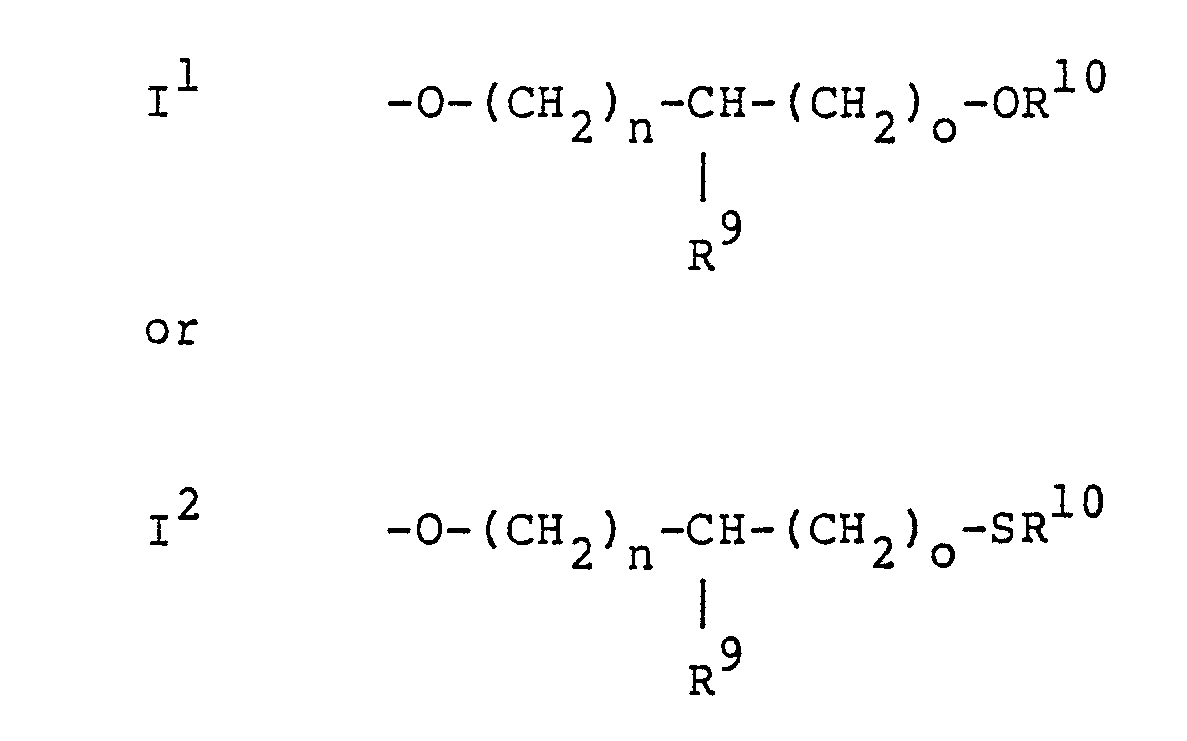
where m and n have the meaning above and R⁹ is a hydrogen atom, a hydroxyl group or an alkyl radical having from 1 to 4 C atoms,
R¹⁰ is a hydrogen atom, an alkyl radical with 1 to 4 C atoms or a phenyl radical which is optionally substituted 1 to 3 times by an alkyl radical, a hydroxyl group or an aliphatic radical or has the meaning of the general formula I, where R¹ to R⁴, m and X have the above named meaning,
R² is a hydrogen atom, a straight-chained or a branched alkyl radical with 1 to 4 C atoms or is a carboxyl group,
R³ is a hydrogen atom or an alkyl group having from 1 to 3 C atoms or it has the meaning of R¹,
or
R² and R³ together form a carbocyclic or heterocyclic ring of the general formulae Z, Z₁, Z₂ or Z₃, where
R⁵ has the meaning of a carboxyl group,
R⁶ is a hydrogen atom and
R⁷ is a hydrogen atom or an amino group which is optionally substituted by an alkyl radical having from 1 to 3 C atoms and
R⁸ is an alkyl group having from 1 to 3 C atoms:

Applications Claiming Priority (2)
| Application Number | Priority Date | Filing Date | Title |
|---|---|---|---|
| US8927187A | 1987-08-25 | 1987-08-25 | |
| US89271 | 1987-08-25 |
Publications (3)
| Publication Number | Publication Date |
|---|---|
| EP0304802A2 true EP0304802A2 (en) | 1989-03-01 |
| EP0304802A3 EP0304802A3 (en) | 1990-03-28 |
| EP0304802B1 EP0304802B1 (en) | 1993-03-31 |
Family
ID=22216682
Family Applications (1)
| Application Number | Title | Priority Date | Filing Date |
|---|---|---|---|
| EP88113428A Expired - Lifetime EP0304802B1 (en) | 1987-08-25 | 1988-08-18 | Pharmaceutical composition and the use thereof |
Country Status (3)
| Country | Link |
|---|---|
| EP (1) | EP0304802B1 (en) |
| JP (1) | JP2519988B2 (en) |
| DE (1) | DE3879811T2 (en) |
Cited By (15)
| Publication number | Priority date | Publication date | Assignee | Title |
|---|---|---|---|---|
| WO1990000388A1 (en) * | 1988-07-13 | 1990-01-25 | Transphyto S.A. | Cosmetic compositions based on chromone-carboxylate |
| WO2002000214A1 (en) * | 2000-06-28 | 2002-01-03 | Jean Krutmann | Flavone/flavanone derivatives for the systemic treatment and prophylaxis of uv-induced dermatoses |
| EP1508327A1 (en) | 2003-08-18 | 2005-02-23 | MERCK PATENT GmbH | Use of chromen-4-one derivatives for the care of skin and hair |
| DE102004016250A1 (en) * | 2004-04-02 | 2005-10-20 | Merck Patent Gmbh | Chromone complexes |
| DE102007013366A1 (en) | 2007-03-16 | 2008-09-18 | Merck Patent Gmbh | Use of chroman-4-one derivatives |
| US7871649B2 (en) * | 2003-07-17 | 2011-01-18 | The Trustees Of Columbia University In The City Of New York | Antimicrobial compositions containing synergistic combinations of quaternary ammonium compounds and essential oils and/or constituents thereof |
| US7879365B2 (en) | 2002-02-07 | 2011-02-01 | The Trustees Of Columbia University In The City Of New York | Zinc salt compositions for the prevention of dermal and mucosal irritation |
| FR2949196A1 (en) * | 2009-08-21 | 2011-02-25 | Oreal | CAPILLARY COLORING PROCESS USING CHROMENIC OR CHROMANIC COLOR |
| US9265749B2 (en) | 2014-02-10 | 2016-02-23 | Patara Pharma, LLC | Methods for the treatment of systemic disorders treatable with mast cell stabilizers, including mast cell related disorders |
| WO2017027402A1 (en) | 2015-08-07 | 2017-02-16 | Patara Pharma, LLC | Methods for the treatment of systemic disorders treatable with mast cell stabilizers, including mast cell related disorders |
| US10238625B2 (en) | 2015-08-07 | 2019-03-26 | Respivant Sciences Gmbh | Methods for the treatment of mast cell related disorders with mast cell stabilizers |
| US10265267B2 (en) | 2016-08-31 | 2019-04-23 | Respivant Sciences Gmbh | Cromolyn compositions for treatment of chronic cough due to idiopathic pulmonary fibrosis |
| US10561635B2 (en) | 2016-10-07 | 2020-02-18 | Respivant Sciences Gmbh | Cromolyn compositions for treatment of pulmonary fibrosis |
| EP3725311A1 (en) | 2014-02-10 | 2020-10-21 | Respivant Sciences GmbH | Methods for the treatment of lung diseases with mast cell stabilizers |
| WO2021094296A1 (en) | 2019-11-12 | 2021-05-20 | INSERM (Institut National de la Santé et de la Recherche Médicale) | Use of mast cell stabilizer for the treatment of heart failure with preserved ejection fraction |
Families Citing this family (5)
| Publication number | Priority date | Publication date | Assignee | Title |
|---|---|---|---|---|
| TW233264B (en) * | 1992-02-03 | 1994-11-01 | Otsuka Pharma Co Ltd | |
| US6846846B2 (en) | 2001-10-23 | 2005-01-25 | The Trustees Of Columbia University In The City Of New York | Gentle-acting skin disinfectants |
| EP1480517A4 (en) | 2002-02-07 | 2007-08-22 | Univ Columbia | ZINC SALT COMPOSITIONS AGAINST MUCOSAL IRRITATION FROM SPERMICIDES AND MICROBICIDES |
| GB0617191D0 (en) * | 2006-08-31 | 2006-10-11 | York Pharma Plc | Improvements in pharmaceutical compositions |
| GB2587402B (en) | 2019-09-27 | 2023-05-10 | Hewlett Healthcare Ltd | Formulation |
Family Cites Families (1)
| Publication number | Priority date | Publication date | Assignee | Title |
|---|---|---|---|---|
| US4225600A (en) * | 1977-05-04 | 1980-09-30 | Fisons Limited | Compositions and methods for treating certain skin conditions |
-
1988
- 1988-08-18 DE DE88113428T patent/DE3879811T2/en not_active Expired - Fee Related
- 1988-08-18 EP EP88113428A patent/EP0304802B1/en not_active Expired - Lifetime
- 1988-08-25 JP JP63211550A patent/JP2519988B2/en not_active Expired - Fee Related
Cited By (29)
| Publication number | Priority date | Publication date | Assignee | Title |
|---|---|---|---|---|
| WO1990000388A1 (en) * | 1988-07-13 | 1990-01-25 | Transphyto S.A. | Cosmetic compositions based on chromone-carboxylate |
| WO2002000214A1 (en) * | 2000-06-28 | 2002-01-03 | Jean Krutmann | Flavone/flavanone derivatives for the systemic treatment and prophylaxis of uv-induced dermatoses |
| US7879365B2 (en) | 2002-02-07 | 2011-02-01 | The Trustees Of Columbia University In The City Of New York | Zinc salt compositions for the prevention of dermal and mucosal irritation |
| US7871649B2 (en) * | 2003-07-17 | 2011-01-18 | The Trustees Of Columbia University In The City Of New York | Antimicrobial compositions containing synergistic combinations of quaternary ammonium compounds and essential oils and/or constituents thereof |
| EP1508327A1 (en) | 2003-08-18 | 2005-02-23 | MERCK PATENT GmbH | Use of chromen-4-one derivatives for the care of skin and hair |
| DE102004016250A1 (en) * | 2004-04-02 | 2005-10-20 | Merck Patent Gmbh | Chromone complexes |
| DE102007013366A1 (en) | 2007-03-16 | 2008-09-18 | Merck Patent Gmbh | Use of chroman-4-one derivatives |
| FR2949196A1 (en) * | 2009-08-21 | 2011-02-25 | Oreal | CAPILLARY COLORING PROCESS USING CHROMENIC OR CHROMANIC COLOR |
| WO2011020857A3 (en) * | 2009-08-21 | 2011-08-25 | L'oreal | Hair dyeing process using a chromene or chromane dye. |
| US8518126B2 (en) | 2009-08-21 | 2013-08-27 | L'oreal | Hair dyeing process using a chromene or chromane dye |
| US9968586B2 (en) | 2014-02-10 | 2018-05-15 | Patara Pharma, LLC | Mast cell stabilizers treatment for systemic disorders |
| US10398673B2 (en) | 2014-02-10 | 2019-09-03 | Respivant Services GmbH | Mast cell stabilizers treatment for systemic disorders |
| US9707206B2 (en) | 2014-02-10 | 2017-07-18 | Patara Pharma, LLC | Mast cell stabilizers treatment for systemic disorders |
| US9962363B2 (en) | 2014-02-10 | 2018-05-08 | Patara Pharma, LLC | Mast cell stabilizers treatment for systemic disorders |
| US9265749B2 (en) | 2014-02-10 | 2016-02-23 | Patara Pharma, LLC | Methods for the treatment of systemic disorders treatable with mast cell stabilizers, including mast cell related disorders |
| US10835512B2 (en) | 2014-02-10 | 2020-11-17 | Respivant Sciences Gmbh | Methods of treating respiratory syncytial virus infections |
| US10238628B2 (en) | 2014-02-10 | 2019-03-26 | Respivant Sciences Gmbh | Mast cell stabilizers treatment for systemic disorders |
| EP3725311A1 (en) | 2014-02-10 | 2020-10-21 | Respivant Sciences GmbH | Methods for the treatment of lung diseases with mast cell stabilizers |
| EP3653207A1 (en) | 2014-02-10 | 2020-05-20 | Respivant Sciences GmbH | Mast cell stabilizers treatment for systemic disorders |
| US10391078B2 (en) | 2015-08-07 | 2019-08-27 | Respivant Sciences Gmbh | Methods for the treatment of mast cell related disorders with mast cell stabilizers |
| WO2017027402A1 (en) | 2015-08-07 | 2017-02-16 | Patara Pharma, LLC | Methods for the treatment of systemic disorders treatable with mast cell stabilizers, including mast cell related disorders |
| US10596146B2 (en) | 2015-08-07 | 2020-03-24 | Respivant Sciences Gmbh | Methods for the treatment of systemic disorders treatable with mast cell stabilizers, including mast cell related disorders |
| US10265296B2 (en) | 2015-08-07 | 2019-04-23 | Respivant Sciences Gmbh | Methods for the treatment of systemic disorders treatable with mast cell stabilizers, including mast cell related disorders |
| US10238625B2 (en) | 2015-08-07 | 2019-03-26 | Respivant Sciences Gmbh | Methods for the treatment of mast cell related disorders with mast cell stabilizers |
| US10463613B2 (en) | 2016-08-31 | 2019-11-05 | Respivant Sciences Gmbh | Cromolyn compositions for treatment of chronic cough due to idiopathic pulmonary fibrosis |
| US10265267B2 (en) | 2016-08-31 | 2019-04-23 | Respivant Sciences Gmbh | Cromolyn compositions for treatment of chronic cough due to idiopathic pulmonary fibrosis |
| US10561635B2 (en) | 2016-10-07 | 2020-02-18 | Respivant Sciences Gmbh | Cromolyn compositions for treatment of pulmonary fibrosis |
| US10583113B2 (en) | 2016-10-07 | 2020-03-10 | Respivant Sciences Gmbh | Cromolyn compositions for treatment of pulmonary fibrosis |
| WO2021094296A1 (en) | 2019-11-12 | 2021-05-20 | INSERM (Institut National de la Santé et de la Recherche Médicale) | Use of mast cell stabilizer for the treatment of heart failure with preserved ejection fraction |
Also Published As
| Publication number | Publication date |
|---|---|
| DE3879811D1 (en) | 1993-05-06 |
| JP2519988B2 (en) | 1996-07-31 |
| JPH0196134A (en) | 1989-04-14 |
| EP0304802B1 (en) | 1993-03-31 |
| DE3879811T2 (en) | 1993-10-07 |
| EP0304802A3 (en) | 1990-03-28 |
Similar Documents
| Publication | Publication Date | Title |
|---|---|---|
| EP0304802B1 (en) | Pharmaceutical composition and the use thereof | |
| EP0715852B1 (en) | Use of hyaluronic acid or its salt to treat skin disease | |
| KR100603237B1 (en) | Skin disease prevention and treatment | |
| US6001870A (en) | Nasopharynx administration of mupirocin for prophylactic treatment of recurrent otitis media | |
| US4252796A (en) | Stable water-in-oil emulsions | |
| JPH0578243A (en) | Antipruritic agent and antipruritic composition | |
| JPH0643317B2 (en) | Anti-inflammatory cream composition | |
| US5219847A (en) | Antipruritic composition | |
| JP2000247893A (en) | Antimicrobial agent, bathing agent composition and skin cleansing agent composition | |
| CA1238276A (en) | Betamethasone dipropionate cream | |
| US5552436A (en) | Process for treating hemangioma | |
| JPH10139669A (en) | Seborrheic keratosis therapeutic agent | |
| JPH07206658A (en) | Therapeutic agent for acne vulgaris | |
| DE69013477T2 (en) | AGENT AGAINST ITCH IRRITATION. | |
| JP3193028B2 (en) | External preparation for treating atopic dermatitis containing nitroimidazole compound | |
| JPH04159227A (en) | Antiphlogistic analgesic cream agent composition | |
| JP7751966B2 (en) | External composition | |
| KR100578446B1 (en) | Water-free skin protectant comprising micronized urea and method for preparing the same | |
| DE69906091T2 (en) | USE OF LITHIUM GLUCONATE FOR PRODUCING A MEDICINAL PRODUCT FOR TREATING HERPES AND SEBORRHOIC DERMATITIS | |
| JP3568881B2 (en) | External preparation for skin disease treatment | |
| JPH0368009B2 (en) | ||
| WO1993020817A1 (en) | Novel use of nitroimidazoles | |
| JP3538367B2 (en) | External preparation for treatment / prevention / improvement of skin tissue disorders | |
| JP2023090338A (en) | emulsion composition | |
| JPH03287536A (en) | Antipruritic agent and zinc picolinate analogue compound |
Legal Events
| Date | Code | Title | Description |
|---|---|---|---|
| PUAI | Public reference made under article 153(3) epc to a published international application that has entered the european phase |
Free format text: ORIGINAL CODE: 0009012 |
|
| AK | Designated contracting states |
Kind code of ref document: A2 Designated state(s): DE FR GB IT |
|
| PUAL | Search report despatched |
Free format text: ORIGINAL CODE: 0009013 |
|
| AK | Designated contracting states |
Kind code of ref document: A3 Designated state(s): DE FR GB IT |
|
| 17P | Request for examination filed |
Effective date: 19900309 |
|
| RAP1 | Party data changed (applicant data changed or rights of an application transferred) |
Owner name: DR. KUEBLER GMBH |
|
| RIN1 | Information on inventor provided before grant (corrected) |
Inventor name: KUEBLER, ULRICH,DR. |
|
| 17Q | First examination report despatched |
Effective date: 19901204 |
|
| GRAA | (expected) grant |
Free format text: ORIGINAL CODE: 0009210 |
|
| AK | Designated contracting states |
Kind code of ref document: B1 Designated state(s): DE FR GB IT |
|
| RIN1 | Information on inventor provided before grant (corrected) |
Inventor name: KUEBLER, ULRICH,DR. |
|
| ITF | It: translation for a ep patent filed | ||
| REF | Corresponds to: |
Ref document number: 3879811 Country of ref document: DE Date of ref document: 19930506 |
|
| ET | Fr: translation filed | ||
| PLBE | No opposition filed within time limit |
Free format text: ORIGINAL CODE: 0009261 |
|
| STAA | Information on the status of an ep patent application or granted ep patent |
Free format text: STATUS: NO OPPOSITION FILED WITHIN TIME LIMIT |
|
| 26N | No opposition filed | ||
| PGFP | Annual fee paid to national office [announced via postgrant information from national office to epo] |
Ref country code: GB Payment date: 20010807 Year of fee payment: 14 |
|
| PGFP | Annual fee paid to national office [announced via postgrant information from national office to epo] |
Ref country code: DE Payment date: 20010817 Year of fee payment: 14 |
|
| PGFP | Annual fee paid to national office [announced via postgrant information from national office to epo] |
Ref country code: FR Payment date: 20010822 Year of fee payment: 14 |
|
| REG | Reference to a national code |
Ref country code: GB Ref legal event code: IF02 |
|
| PG25 | Lapsed in a contracting state [announced via postgrant information from national office to epo] |
Ref country code: GB Free format text: LAPSE BECAUSE OF NON-PAYMENT OF DUE FEES Effective date: 20020818 |
|
| PG25 | Lapsed in a contracting state [announced via postgrant information from national office to epo] |
Ref country code: DE Free format text: LAPSE BECAUSE OF NON-PAYMENT OF DUE FEES Effective date: 20030301 |
|
| GBPC | Gb: european patent ceased through non-payment of renewal fee |
Effective date: 20020818 |
|
| PG25 | Lapsed in a contracting state [announced via postgrant information from national office to epo] |
Ref country code: FR Free format text: LAPSE BECAUSE OF NON-PAYMENT OF DUE FEES Effective date: 20030430 |
|
| REG | Reference to a national code |
Ref country code: FR Ref legal event code: ST |
|
| PG25 | Lapsed in a contracting state [announced via postgrant information from national office to epo] |
Ref country code: IT Free format text: LAPSE BECAUSE OF NON-PAYMENT OF DUE FEES;WARNING: LAPSES OF ITALIAN PATENTS WITH EFFECTIVE DATE BEFORE 2007 MAY HAVE OCCURRED AT ANY TIME BEFORE 2007. THE CORRECT EFFECTIVE DATE MAY BE DIFFERENT FROM THE ONE RECORDED. Effective date: 20050818 |