EP0304971A2 - Procédé de production d'un polypeptide ayant la même activité d'inhibition des protéases que l'alpha-1-antitrypsine des mammifères - Google Patents
Procédé de production d'un polypeptide ayant la même activité d'inhibition des protéases que l'alpha-1-antitrypsine des mammifères Download PDFInfo
- Publication number
- EP0304971A2 EP0304971A2 EP88201179A EP88201179A EP0304971A2 EP 0304971 A2 EP0304971 A2 EP 0304971A2 EP 88201179 A EP88201179 A EP 88201179A EP 88201179 A EP88201179 A EP 88201179A EP 0304971 A2 EP0304971 A2 EP 0304971A2
- Authority
- EP
- European Patent Office
- Prior art keywords
- antitrypsin
- yeast
- alpha
- polypeptide
- dna
- Prior art date
- Legal status (The legal status is an assumption and is not a legal conclusion. Google has not performed a legal analysis and makes no representation as to the accuracy of the status listed.)
- Granted
Links
Images






Classifications
-
- C—CHEMISTRY; METALLURGY
- C07—ORGANIC CHEMISTRY
- C07K—PEPTIDES
- C07K14/00—Peptides having more than 20 amino acids; Gastrins; Somatostatins; Melanotropins; Derivatives thereof
- C07K14/81—Protease inhibitors
- C07K14/8107—Endopeptidase (E.C. 3.4.21-99) inhibitors
- C07K14/811—Serine protease (E.C. 3.4.21) inhibitors
- C07K14/8121—Serpins
- C07K14/8125—Alpha-1-antitrypsin
-
- C—CHEMISTRY; METALLURGY
- C12—BIOCHEMISTRY; BEER; SPIRITS; WINE; VINEGAR; MICROBIOLOGY; ENZYMOLOGY; MUTATION OR GENETIC ENGINEERING
- C12N—MICROORGANISMS OR ENZYMES; COMPOSITIONS THEREOF; PROPAGATING, PRESERVING, OR MAINTAINING MICROORGANISMS; MUTATION OR GENETIC ENGINEERING; CULTURE MEDIA
- C12N15/00—Mutation or genetic engineering; DNA or RNA concerning genetic engineering, vectors, e.g. plasmids, or their isolation, preparation or purification; Use of hosts therefor
- C12N15/09—Recombinant DNA-technology
- C12N15/63—Introduction of foreign genetic material using vectors; Vectors; Use of hosts therefor; Regulation of expression
- C12N15/79—Vectors or expression systems specially adapted for eukaryotic hosts
- C12N15/80—Vectors or expression systems specially adapted for eukaryotic hosts for fungi
- C12N15/81—Vectors or expression systems specially adapted for eukaryotic hosts for fungi for yeasts
-
- A—HUMAN NECESSITIES
- A61—MEDICAL OR VETERINARY SCIENCE; HYGIENE
- A61K—PREPARATIONS FOR MEDICAL, DENTAL OR TOILETRY PURPOSES
- A61K38/00—Medicinal preparations containing peptides
Definitions
- yeast is a eukaryote and, therefore, has a more sophisticated genetic system. Further technicallymore, less is known about the yeast genome than is known about E. coli . In order to use yeast as a host for the production of proteins foreign to yeast, a number of discoveries are required, and new materials must be made available.
- Novel yeast promoters are provided which control the transcription of genes in the glycolytic pathway and which find use in the regulated production of proteins foreign to the yeast. Promoters of particular interest include the promoters for triose phosphate isomerase, pyruvate kinase, phosphoglucose, isomerase, phosphoglycerate mutase, hexokinase 1, hexokinase 2, glucokinase, phosphofructo kinase, and aldolase, as well as the glycolytic regulatory gene.
- the protease inhibitor mammalian alpha-1-antitrypsin, is expressed using the promoter for triose phosphate isomerase.
- Methods and compositions are provided for regulated efficient expression of alien or foreign DNA in a yeast host.
- Alien or foreign DNA is DNA not naturally occurring in the wild type particularly from a different species and which does not normally exchange genetic information with the host.
- Novel promoters are employed which are involved in the glycolytic pathway and provide for high levels of protein production, so that a substantial proportion of the total protein produced by the yeast cells can be dedicated to the protein of interest.
- regulatory mechanisms associated with regulation of production of the glycolytic enzymes are achieved, so that production of the desired products may be modulated.
- viable cells can be maintained to enhance the efficiency and amount of expression.
- the promoters of interest are particularly those promoters involved with expression of triose phosphate isomerase, pyruvate kinase, phosphoglucose isomerase, phosphoglycerate mutase, hexokinase 1, hexokinase 2, glucokinase, phosphofructo kinase, and aldolase, which are controlled by the glycolytic regulation gene GCR 1.
- the genes of the glycolytic pathway include hexokinase 1 and 2 ( HXK 1,2); phosphoglucose isomerase ( PGI ), triose phosphate isomerase ( TPI ); phosphoglycerate kinase ( PGK ), phosphoglycerate mutase ( GPM ), pyruvate kinase ( PYK ) phsphofructo kinase ( PFK ), enolase ( ENO ); fructose 1,6-diphosphate aldolase ( FDA ); glyceraldehyde 3-phosphate dehydrogenase (PGK); and glycolysis regulation protein ( GCR ).
- HXK 1,2 phosphoglucose isomerase
- TPI triose phosphate isomerase
- PGK phosphoglycerate kinase
- GPM phosphoglycerate mutase
- PYK ph
- the promoters may be obtained by employing a gene bank having large fragments of yeast DNA.
- appropriate vectors particularly shuttle vectors having replicons for prokaryotes and yeast
- yeast fragments can be identified which complement auxotrophic lesions or mutations in a yeast host.
- the host is auxotrophic in both the glycolytic pathway step of interest and a separate biochemical pathway, which is complemented by a marker in the vector.
- the glycolytic gene may be cleaved at that site and the DNA chewed back with Bal31 for varying periods of time, so as to chew into or past the initiator methionine codon or retain the initiator methionine codon.
- splicing techniques such as primer repair may be employed.
- a restriction site adjacent the initiator methionine which encodes for the initial amino acids of the desired protein.
- a linearized DNA segment is obtained having the intact promoter for the glycolytic product and normally includes other DNA sequences, such as an intact replicon, one or more markers, and the like.
- Exemplary of the above procedure is the development of a vector having the promoter for the TPI 1 gene.
- An exemplary vector CV13 having the replicons or replica tion systems from pBR322 and 2 ⁇ -plasmid of yeast, as well as the LEU 2 gene was employed for insertion of a yeast fragment which was shown to have the TPI 1 gene. This was achieved by employing double selection with a mutant yeast which was leu ⁇ , tpi ⁇ .
- the TPI 1 gene was found to have a unique KpnI site.
- the vector was cleaved at the KpnI site and then treated with the double stranded exonuclease Bal31 for varying times to chew back the DNA to about the f-met codon.
- Linkers were then inserted providing desired restriction sites. Alien DNA could then be inserted providing a sequence having a f-met codon in the appropriate position for initiation. Alternatively, the foreign DNA can be expressed using the f-met codon of the TPI 1 gene.
- the PYK sequence has a convenient XbaI site for restriction, where the few additional bases may be removed, if required, using Bal31 for a short period of time to chew to or through the methionine codon.
- the GCR promoter to control the expression of the other genes involved in the glycolytic pathway.
- auxotrophs By employing appropriate auxotrophs, one can further regulate the expression of the polypeptides of interest in choosing the appropriate nutrient medium. Where the chosen promoter is repressed by the particular nutrient because of a metabolic block, a change in the nature of the nutrient can induce expression. Furthermore, the activity of a number of promoters in the glycolytic pathway can be affected by the repression or activation of expression by the GCR gene or other regulatory controls. Also, the GCR regulatory signals can be used to titrate the polypeptide functioning as the regulator for expression of GCR . By having vectors whose copy number can be controlled, one can vary the activity of the wild type GCR gene.
- an extrachromosomal element construct will be prepared having a number of sequences defining different functions.
- One function is the replication system, which forms part of a vector.
- Another function is a promoter by itself or in conjunction with the alien DNA.
- Other functions include initiators and terminators of expression. Also, there will be selectable markers.
- the replication system for yeast may be one which provides for stable maintenance of an extrachromosomal element or one which provides a sufficient lifetime for the DNA in the host, that there is an acceptable probability of integration of the DNA into the host. Integration can be greatly aided by providing for a sequence homologous to the host DNA, so as to provide for recombination. Generally, the homologous sequence will be at least about 800bp usually not more than about 2000bp.
- integration or an autonomous replication system such as the use of the ARS 1 gene, may be employed to provide for the maintenance of the alien DNA in the yeast host.
- the replication system which is chosen should provide for a reasonable copy number usually greater than 1, pref erably greater than 5.
- a wide variety of replication systems are available on a wide variety of prokaryotic vectors, such as pBR322, pACYC184, pSC101, pMB9, etc.
- one or more copies of the DNA construct can be integrated into the host chromosome.
- the replication systems may also be conditionally regulated, usually being temperature sensitive so that replication can be turned on and off by varying the temperature.
- the replication system there will also be one or more selectable markers, there usually being at least one marker in addition to the alien DNA, which may serve as a marker.
- Conventional markers include biocidal markers providing antibiotic resistance and those providing resistance to toxins and heavy metal. Also useful is employing an auxotrophic host and providing prototrophy by complementation.
- the glycolytic genes of the present invention are particularly desirable markers since they can provide for selection, using sugars as selective substrates, in appropriate mutant host strains.
- genes may also be inserted into the extra-chromosomal element for a variety of purposes. Where integration is desirable in the genome of the host, a homologous sequence for a particular region of the host genome may be included in the extrachromosomal element. Where amplification of one or more sequences is desired, genes known to provide such amplification, such as dihydrofolate reductase genes, which respond to methotrexate stress or metallothionein genes, which respond to heavy metal stress, may be included in the extrachromosomal element, flanked by the DNA regions to be reiterated. Other regulatory signals may also be included, such as centromeres, autonomously replicating segments, etc.
- clones can be made of yeast chromosomal DNA by random digestion or mechanical shearing of the yeast genome.
- the presence of the desired gene is then determined by introducing a homogeneous clone of a yeast fragment into an auxotrophic host for complementation.
- the cloning vehicle may have another gene which allows for an additional basis for selection, so that double selection techniques can be used.
- the mutants are substantially incapable or growing on limited nutrient medium, so that one can select for the presence of the desired glycolytic gene by the choice of medium.
- the fragment may be subcloned so as to remove superfluous DNA flanking regions and provide for a fragment which is more easily manipulated.
- the smaller fragment containing the desired gene of a size less than about 500 base pairs may then be further cloned, restriction mapped and sequenced, so as to provide a useful source for the desired promoters and insertion of the alien DNA.
- the promoters in themselves may be useful, in acting as a titrater for repressor or activator, where it is desirable to modulate the production of a particular enzyme in the yeast host.
- the alien DNA may be from any source, either naturally occurring or synthetic, either prokaryotic or eukaryotic. Of particular interest are mammalian genes which express a poly(amino acid), that is, polypeptide or protein which has physiological activity.
- poly(amino acids) prepared in yeast may be modified by glycosylation, where the glycosylation may not occur or may occur at different sites from the naturally occurring mammalian polypeptide and/or in different degrees with different saccharides. It is therefore of great interest to be able to prepare polypeptides which are different from the naturally occurring polypeptide by the degree and manner of glycosylation and in many instances may differ in one or more ways as to the amino acid sequences, where there may be deletions of one or more amino acids or substitutions of one or more amino acids.
- Mammalian genes may come from a wide variety of mammalian sources, such as domestic animals (e.g. bovine, porcine, ovine and equine) and primates e.g. humans and monkeys.
- protease inhibitor As exemplary of the use of the subject promoters in preparing an active polypeptide composition, as well as being of particular interest for a variety of purposes, a protease inhibitor is described and made.
- the protease inhibitor has the same or substantially the same amino acid sequence of human alpha-1-antitrypsin and is capable of inhibiting a number of proteolytic enzymes.
- the human alpha-1-antitrypsin gene appears to reside within a 9.6 kb Eco RI DNA fragment in the human genome. The mature mRNA appears to have about 1400 nucleotides.
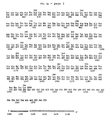
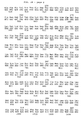
- One human alpha-1-antitrypsin cDNA has the sequence shown in FIG. 1B. The predominant form of human alpha-1-antitrypsin is shown in FIG 1A. Other naturally-occurring forms (polymorphisms) are known.
- a primate gene for alpha-1-antitrypsin may be obtained by DNA cloning methods described by Chandra et al., ibid .
- the gene coding for the predominant form of human alpha-1-antitrypsin, isolated from a human cDNA library by using the baboon sequence as a DNA hybridization probe is shown in FIG. 1A.
- the human alpha-1-antitrypsin has a BamHI restriction site which allows the cutting of the gene with the removal of information for a single glutamic acid from the mature protein.
- Various schemes can be employed for introducing the human alpha-1-antitrypsin gene adjacent the glycolytic promoter to be under the regulation of the promoter. Where the promoter does not have a convenient restriction site near the f-met codon, the glycolytic gene may be cleaved and chewed back to the promoter with Bal31.
- a linker may then be introduced downstream from the promoter to provide a convenient cohesive end or flush end for joining to the human alpha-1-antitrypsin gene.
- the linker can also provide one or more codons for amino acids at the N-terminus of the alpha-1-antitrypsin gene, which may be the same or different from the naturally occurring amino acids.
- the gene for human alpha-1-antitrypsin may then be inserted into the extrachromosomal element downstream from the glycolytic promoter, where an f-met codon is provided for initiation of expression of the human alpha-1-antitrypsin.
- the cDNA coding for alpha-1-antitrypsin may then be inserted into an expression vector, such as CTEA32 (FIG. 2), which contains the yeast promoter for triose phosphate isomerase (TPI) inserted at the Bam HI site of the shuttle plasmid, CV13 [Broach J.R., Strathern J.N., Hicks J.B., Gene , 8 121-133 (1979)].
- TPI triose phosphate isomerase
- a synthetic DNA adaptor was ligated into the TPI promoter after the TPI structural sequences were removed by BAL31 digestion from the Kpn I restriction site within the TPI coding region.
- This adaptor contained an ATG codon for translation initiation, followed by the sequence GAGGATCC.
- the GAG codon specifies a glutamic acid residue, which is the first amino acid of the natural severelyly-occurring human AT.
- the GGATCC portion of the adaptor is a cutting site for Bam HI endonuclease and allows for the splicing of the remainder of human AT DNA sequence into this vector.
- the Bam HI site of CTEA32 was constructed to be "in frame" with the rest of the AT structural gene, thereby allowing for the expression of the polypeptide when a Bam HI fragment from the cloned cDNA is appropriately inserted into CTEA32.
- the plasmid consisting of CTEA32 plus the AT gene is called CAT1 (FIG. 2).
- This DNA construct containing the gene for human AT located downstream to a yeast triose phosphate isomerase (TPI) promoter fragment was transformed into yeast strains, N501-B and GK100. Transformation into yeast is described by Beggs, Nature , 275 , 104-109 (1978). Screening of the transformed yeast strains by immunological assays (competition assays and ELISA assays, using antibodies against alpha-1-antitrypsin) confirmed the presence of large amounts of human AT in yeast made from the plasmid CAT1.
- the "wild-type" yeast strain, N501-1B (described by Kawasaki et al., Biochem. Biophys. Res. Comm.
- N501-1B and GK100 each carry a defective LEU 2 gene which allows for the selective maintenance on minimal and leucine-less media of CV13 and CV13-derived plasmids (such as CAT1) which each contain a functional LEU 2 gene.
- CV13 and CV13-derived plasmids such as CAT1
- AT may be specifically produced by the CAT1 plasmid.
- GK100 produces significantly more AT than N501-1B, it is preferred. However, the present invention is not limited to AT production by GK100. It may be desirable to utilize mutations in GK100 which lead to hyperproduction of AT.
- An immuno-adsorption column made according to the method of Cuatrecasas, P. J. Biol. Chem. , 245 , 3059 (1970), was prepared by covalently attaching affinity-purified goat antibodies to human AT to CNBr-activated Sepharose. Disrupted GK100 yeast cells were extracted with 3 volumes of phosphate buffered saline pH 7.2 containing 0.5M NaCl, and the extracts were applied to the column. Yeast produced human AT (0.5-1.0 mg) was eluted from the column with 3M NaSCN.
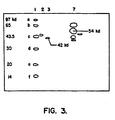
- the material was dialyzed to remove salt it was analyzed by electrophoresis on a polyacrylamide gel in the presence of sodium dodecyl sulfate, the results of which are shown in FIG. 3.
- the approximate molecular weight of the human alpha-1-antitrypsin made in yeast is 42,000-43,000 daltons.
- Naturally occurring human AT has a molecular weight of approximately 54,000 daltons, having a carbohydrate composition of approximately 16% by weight, as shown by Hodges et al, J. Biol. Chem. , 254 , 8208-8212 (1979). It therefore appears that the yeast produced AT may be unglycosylated or substantially unglycosylated and may lack carbohydrate portions present in the naturally occurring protein.
- expression vectors may be constructed which contain a segment coding for alpha-1-antitrypsin.
- Such expression vectors may be constructed by methods known to those of ordinary skill in the art using available DNA constructs.
- a preferred vector is plasmid C1/l, which is more stable than CV13 and CV13 derived vectors, such as CAT1.
- C1/l was constructed from plasmid, pJDB248 (Beggs, J., Nature , 275 , 104-109 (1978)).
- the pMB9 sequences were removed from pJDB248 by partial digestion with Eco RI and were replaced by pBR322 DNA which was cut with Eco RI.
- the restriction map of C1/l is given in FIG. 4.
- the C1/l plasmid contains the entire 2-micron DNA from yeast ( S.cervisiae ), with a pBR322 insertion at an EcoRI site. It also contains the LEU 2 gene.
- the yeast TPI promotor with the adaptor may be inserted into the single Bam HI site in the Tc R gene of C1/l.
- the AT sequence, attached to a transcription terminator fragment from the yeast TPI gene may be inserted into the Bam HI side downstream from the TPI promotor.
- the resulting plasmid, HAT4 may then be transformed into N501-1B and GK100 in a manner as described above.
- the sequence of the first ten amino acids in the yeast-produced AT may be confirmed by amino acid sequence analysis as identical to the first ten amino acids of the naturally occurring human AT:
- the yeast-produced AT does not contain the initiation methionine which is specified by the ATG start codon. Therefore, the yeast cell processes off the methionine to produce the amino acid sequence of natural human AT.
- the polypeptides produced according to the present invention having AT activity may be useful for treatment of a genetic AT deficiency and other diseased states related to inadequate levels of AT.
- conditions such as emphysema and other lung disorders related to progressive digestion of lung sacs may be treated, such as, chronic obstructive pulmonary disease or adult respiratory distress syndrome.
- Non-genetically related emphysema may also be treated, such as, emphysema resulting from heavy smoking.
- Conditions not necessarily confined to the lungs may also be treated, such as, cystic fibrosis and arthritis.
- the alpha-1-antitrypsin can be used as an antigen for production of polyclonal and monoclonal antibodies to human alpha-1-antitrypsin, for introduction into a host having a deficiency of alpha-1-antitrypsin, or for modulating proteolytic activity in a mammalian host.
- the alpha-1-antitrypsin can be administered to humans to replace alpha-1-antitrypsin which has been inactivated (oxidized) by tobacco and other smoke.
- the polypeptides according to the present invention may be admixed with conventional pharmaceutical carriers.
- the polypeptides are to be administered intravenously or by inhalation.
- the effective dosages may vary according to the severity of the condition and weight of the subject, dosages in the range of 0.5-10.0 gm/week of a polypeptide introduced intravenously may, in many cases, be effective. Lower dosages may be effective if the method of administration is by inhalation.
- Oral administration may also be effective provided the AT is protected in capsules or coated carriers from premature degradation in the digestive tract.
- a LEU 2 mutant was also derived from S.cerevisiae X2180-1A by EMS treatment and was crossed to X2180-1B (an isogenic MAT ⁇ strain) to produce N501-1B ( MAT ⁇ leu 2 SUC 2 CUP 1 gal 2). Cycloheximide ( cyh 2) and canavanine ( can 1) resistances were then selected as spontaneous mutations in N501-1B. The glycolysis mutants were crossed to N501-1B to produce a series of isogenic leu 2 strains each defective in a single glycolytic function or in GCR 1.
- a tpi 1 mutant, S . cerevisiae GLU77 was crossed to N551-1A ( MAT a leu 2 SUC 2 CUP 1 gal 2); strains derived from this mating were crossed twice to N501-1B to produce a tpi 1 leu 2 strain, N587-2D, which was similar in genetic background to the other Glycolysis mutants.
- N517-6C ( hxk 1 hxk 2 glk 1 leu 2 can 1-100 cyh 2 ade 2-1) was derived from a hxk 1 hxk 2 glk 1 strains, D308.3, by screening for glucosamine- resistant spore colonies. Defects in glucose kinasing activities were confirmed by assay.
- the homothallic diploid strain, S . c . AB320 was the source of the yeast DNA pool (Nasmyth and Reed, Proc. Nat. Acad. Sci. , 77 :2119-2123 (1980) and was used as a control in some experiments.
- triose phosphate isomerase gene (including the upstream sequence having the regulatory signals) is as follows:
- the pyruvate kinase gene upstream sequence having the regulatory signals is as follows:
- the leu 2 glycolysis mutants were transformed with a yeast DNA pool inserted into pYE13, a high copy plasmid carrying a selectable LEU 2 wild-type gene (Broach et al ., Gene , 8 :121-133 (1979)).
- the glycolytic genes were obtained by complementation, involving the simultaneous selection for growth on glucose and leucine prototrophy.
- a synthetic medium containing yeast nitrogen base, 4% glucose, and the following supplements was used: per liter, 40mg adenine, 20mg arginine, 50mg aspartate, 10mg histidine, 60mg isoleucine, 40mg lysine, 10mg methionine, 60mg phenylalanine, 50mg threonine, 40 mg tryptophan, 50mg tyrosine, 20mg uracil, and 60mg valine.
- the transformants were purified on leucineless media and were then grown on a non-selective medium (YEPGE) to allow mitotic segregation of the plasmids.
- Yeast DNA preps were made, and the E . coli strain, RR1, was transformed, selecting for ampicillin resistance, to verify the presence of plasmid DNAs in these yeast glycolytic transformants.
- the transformed yeast strains were selectively grown on minimal medium with 8% glucose (adenine was added to a final concentration of 50 mg/1).
- the wild-type control, N501-1B was grown on the same medium plus leucine (100mg/1).
- the glycolysis mutant strains were grown on YEP-5% glycerol-1% lactate. Overnight cultures were fed fresh media and were aerobically grown at 30° for four hours before harvesting. The cells were washed two times with water and resuspended in 50mM K2HPO4 2mM EDTA 3mM 2-mercaptoethanol (adjusted to pH7.4 with HCl).
- Extracts were obtained by vortexing the cells with an equal volume of glass beads (.45 mm diam.) at high speed for two minutes. The cell debris was removed by centrifugation in a microfuge for 15 min. at 4°. Enzymes were assayed as described by Clifton and Boothnbach, supra . Protein concentrations were determined by the Biuret-TCA method.
- the various enzymes were assayed and the results for the transformants were compared to mutant and wild-type strains.
- the gcr l mutant had 5-10% of the wild-type levels of most glycolytic activities (exemplified by PGI, aldolase and enolase) and grows very poorly on glucose media.
- the GCR 1 transformants had nearly wild-type levels of enzymes and were virtually identical to wild-type for growth on glucose media.
- the other glycolysis mutants had less than 5% of the normal levels of their respective enzyme activities.
- the specific enzyme activities were substantially elevated above wild-type levels (typically 5-10 fold higher).
- Table 2 indicates the results.
- the GCR-8 transformant gave nearly wild-type levels of all ten enzymes, while PGI-19, TPI-10, PGK-2, GPM-2 and PYK-1 transformants overproduced their respective glycolytic proteins, but not other enzymes.
- TPI 1 and PYK 1 have both been shown to be the structural gene.
- TPI 1 for the production of human alpha-1-antitrypsin was demonstrated as follows.
- the plasmid CV13 was employed.
- CV13 can be maintained by selection of yeast with an average of about ten copies per cell.
- CV13 is comprises of pBR322, the replicon for the 2 ⁇ -plasmid and the yeast LEU 2 gene.
- TPI 1 promoter fragment was obtained by cutting the TPI1 gene at the unique KpnI site (bases 511 and 518); and the resulting linearized DNA was then treated with Bal31 for four to five minutes in order to remove the TPI 1 structural sequences.
- Linkers either EcoRI, Hind III or BamHI, were then inserted.
- the linkers will then cleave with the appropriate Restriction enzyme to provide cohesive ends for insertion of human alpha-1-antitrypsin genes.
- the human alpha-1-antitrypsin gene was digested with BamHI, which cleaves at the 5′-terminus of the coding strand to remove the information for a single glutamic acid codon from the mature protein.
- BamHI BamHI
- Table 4 Four different constructions were prepared, as set forth in the following Table 4. From this table it is noted that the glutamic acid codon is substituted by the codons for alanine and proline in three of the constructions having the initiator methionine.
- the resulting plasmid was transformed into S . c . N501-1B.
- the resulting yeast cells were then grown on a minimal synthetic medium.
- Yeast cells containing the human alpha-1-antitrypsin genes were broken open by vortexing with glass beads (0.45mm) at high speed for 2-3 minutes.
- the extraction buffer contained 50mM K2HPO4, 2mM EDTA, 2mM 2-mercaptoethanol and 1mM PMSF (pH7.4) cell debris was removed by centrifugation and the extracts contain 3-4mg/ml protein as determined by Lowry assays.
- the expression of the alpha-1-antitrypsin gene is regulated by the TP I promoter, for as is seen, where a portion of the TP I promoter is removed, no alpha-1-antitrypsin is produced.
- the production of the mammalian protein human alpha-1-antitrypsin has not been optimized in the above study, so that the results indicate a minimum production of product which can be further enhanced.
- the TP I promoter is found to be an effective promoter for efficiently producing high yields of expression products of alien DNA.
- An immuno adsorption column was prepared by covalently attaching affinity-purified antibodies to human alpha-1-antitrypsin to CNBr-activated Sepharose according to the method of Cuatrecasas, J. Biol. Chem. , 245 , 3059 (1970).
- Disrupted GK100 cells were extracted with three volumes of phosphate buffered saline pH 7.2 containing 0.5M NaCl and applied to the column.
- the column was eluted with 3M NaSCN and the recovered material was analyzed by electrophoresis on polyacrylamide gel in the presence of sodium dodecyl sulfate. The results of the electrophoresis are shown in FIG. 3.
- Track 1 contained a mixture of molecular weight standards: a) phosphorylase B, 97,000 daltons; b) bovine serum albumen (BSA), 65,000 daltons; c) ovalbumin, 43,500 daltons; d) carbonic anhydrase, 30,000 daltons; e) soybean trypsin inhibitor, 20,000 daltons; and f) alpha-lactalbumin, 14,000 daltons.
- Track 3 contains yeast produced AT purified by immunoadsorption, molecular weight about 42,000 daltons.
- Track 7 is a sample of naturally occurring AT purchased from Sigma Chemical Company, heavily contaminated by blood proteins. A major component of Track 7 is human alpha-1-antitrypsin, molecular weight 54,000 daltons.
- the yeast TPI promoter (from CTEA32) with the synthetic DNA adaptor (described above) was inserted as a Bgl II - Bam HI fragment (about 900 base pairs) into the Bam HI site of C1/l. This insertion created a single Bam HI site into which the human AT gene could be spliced for expression in yeast.
- the CAT1 plasmid when the AT gene (FIG. 1A) is inserted, the resultant plasmid would have an ATG initiation codon followed by a GAG (glutamic acid codon) to allow the production of mature human AT protein sequence in yeast.
- the "termination" fragments are sequences from the XbaI to EcoRI sites in the plasmid TPIC10 (T. Alber and G. Kawasaki, J. Molec. Applied Genet. , 1 , 419-434 (1982)).
- the yeast termination sequences were attached to the human AT gene by using the vector, pUC13, which has multiple cloning sites into which the terminator and AT DNA's can be separately inserted.
- the pUC13 plasmid was constructed as described in Vieira, J., and Messing, J., Gene , 19 , 259-268 (1982) for vectors, pUC8 and pUC9.
- the pUC13 plasmid contained the multiple restriction site, depicted in FIG. 5, at the start of the lac Z gene.
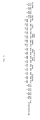
- the AT cDNA clone (FIG. 1) was inserted as a Pst I fragment into pUC13 at the single Pst I site.
- the AT gene was followed by an Xba I site and Eco RI site in the multiple cloning sequence. Between these Xba I and Eco RI sites of pUC13 was inserted the yeast TPI terminator as a 700 base pair Xba I-Eco RI fragment from pTPIC10. The resulting plasmid, pUC ⁇ 1+FG1, contained a human AT gene with a yeast transcription terminator (See FIG. 6). An Eco RI-Bam HI synthetic DNA adaptor was then added to the Eco RI site of the plasmid, in order to create a Bam HI site on the 5′ end of the yeast terminator.
- the human AT-yeast terminator sequence could be removed by cutting with Bam HI to liberate a fragment of approximately 2100 base pairs.
- This Bam HI fragment was inserted into the C1/l plasmid containing the TPI promoter with Bam HI adaptor.
- the resulting plasmid, HAT4 has the TPI promoter, ATGGAGGATCC adapter, human AT gene (from the Bam HI site), and TPI terminator inserted into C1/l.
- the topology of HAT4 is depicted in FIG. 7.
- HAT4 was transformed into N501-1B and GK100.
- minimal media with 6% glucose 2-3% of the yeast soluble protein was alpha-1-antitrypsin at a cell density of nearly 3g per liter (wet weight).
- this plasmid was maintainable in a variety of rich media, including YEPD (1% yeast extract, 2% peptone, and 2% glucose).
- YEPD 1% yeast extract, 2% peptone, and 2% glucose
- the HAT4 plasmid was maintained without selection in N501-1B for over 30 divisions on rich media with greater than 70% of the cells containing the plasmid.
- yeast promoters can be efficiently used for the production of foreign proteins by regulating the expression of alien DNA in yeast.
- the promoters are found to be strong promoters, so as to provide for a high degree of expression.
- the messengers are sufficiently stable as to allow for a significant degree of translation into the desired expression product.
- the glycolytic promoters and appropriate nutrient media the expression of the alien DNA can be modulated. In this way, production of the alien DNA can be turned on and off.
- the subject invention provides a method for using yeast as efficient host in the production of foreign proteins, where the production may be modulated.
- the glycolytic regulation gene one can turn on and off a plurality of glycolytic promoters.
Landscapes
- Life Sciences & Earth Sciences (AREA)
- Health & Medical Sciences (AREA)
- Genetics & Genomics (AREA)
- Chemical & Material Sciences (AREA)
- Organic Chemistry (AREA)
- Engineering & Computer Science (AREA)
- Bioinformatics & Cheminformatics (AREA)
- Mycology (AREA)
- Biotechnology (AREA)
- General Engineering & Computer Science (AREA)
- Molecular Biology (AREA)
- Biophysics (AREA)
- Biomedical Technology (AREA)
- General Health & Medical Sciences (AREA)
- Wood Science & Technology (AREA)
- Zoology (AREA)
- Biochemistry (AREA)
- Physics & Mathematics (AREA)
- Microbiology (AREA)
- Plant Pathology (AREA)
- Gastroenterology & Hepatology (AREA)
- Medicinal Chemistry (AREA)
- Proteomics, Peptides & Aminoacids (AREA)
- Preparation Of Compounds By Using Micro-Organisms (AREA)
- Enzymes And Modification Thereof (AREA)
- Medicines That Contain Protein Lipid Enzymes And Other Medicines (AREA)
Applications Claiming Priority (5)
| Application Number | Priority Date | Filing Date | Title |
|---|---|---|---|
| US06/408,099 US4599311A (en) | 1982-08-13 | 1982-08-13 | Glycolytic promotersfor regulated protein expression: protease inhibitor |
| US48940683A | 1983-04-28 | 1983-04-28 | |
| US408099 | 1983-04-28 | ||
| US489406 | 1983-04-28 | ||
| EP83304668A EP0103409B1 (fr) | 1982-08-13 | 1983-08-12 | Promoteurs glycolytiques pour l'expression régulée de protéines: inhibiteur de protéase |
Related Parent Applications (2)
| Application Number | Title | Priority Date | Filing Date |
|---|---|---|---|
| EP83304668.3 Division | 1983-08-12 | ||
| EP83304668A Division EP0103409B1 (fr) | 1982-08-13 | 1983-08-12 | Promoteurs glycolytiques pour l'expression régulée de protéines: inhibiteur de protéase |
Publications (3)
| Publication Number | Publication Date |
|---|---|
| EP0304971A2 true EP0304971A2 (fr) | 1989-03-01 |
| EP0304971A3 EP0304971A3 (fr) | 1989-04-12 |
| EP0304971B1 EP0304971B1 (fr) | 1998-02-04 |
Family
ID=27226438
Family Applications (1)
| Application Number | Title | Priority Date | Filing Date |
|---|---|---|---|
| EP88201179A Expired - Lifetime EP0304971B1 (fr) | 1982-08-13 | 1983-08-12 | Procédé de production d'un polypeptide ayant la même activité d'inhibition des protéases que l'alpha-1-antitrypsine des mammifères |
Country Status (1)
| Country | Link |
|---|---|
| EP (1) | EP0304971B1 (fr) |
Cited By (6)
| Publication number | Priority date | Publication date | Assignee | Title |
|---|---|---|---|---|
| US5370991A (en) * | 1989-02-23 | 1994-12-06 | The Center For Blood Research, Inc. | Cloned gene encoding human monocyte elastase inhibitor |
| US5663299A (en) * | 1989-02-23 | 1997-09-02 | Center For Blood Research, Inc. | Human monocyte elastase inhibitor |
| US6638909B1 (en) | 1996-11-01 | 2003-10-28 | Ethicon, Inc. | Wound healing compositions containing alpha-1-antitrypsin |
| WO2005049801A3 (fr) * | 2003-11-14 | 2006-02-09 | Arriva Pharmaceuticals Inc | Preparation proteique seche |
| EP0512090B2 (fr) † | 1990-10-16 | 2006-11-22 | Sonoran Desert Chemicals LLC | Traitement d'inflammations |
| WO2020152653A1 (fr) | 2019-01-24 | 2020-07-30 | Excellgene Sa | Procédés de production et d'utilisation d'alpha 1-antitrypsine (aat) de recombinaison et compositions associées |
Family Cites Families (4)
| Publication number | Priority date | Publication date | Assignee | Title |
|---|---|---|---|---|
| US4559311A (en) * | 1981-08-27 | 1985-12-17 | Stenman Ulf Hakan | Diagnostic method using oncofetal peptide as a tumor marker |
| CA1303530C (fr) * | 1983-01-21 | 1992-06-16 | Michael Courtney | VECTEURS D'EXPRESSION ET LEUR UTILISATION POUR LA PREPARATION D'UNE PROTEINE AYANT UNE ACTIVITE .alpha. -ANTITRYPSINE HUMAINE |
| BE895961A (fr) * | 1983-02-21 | 1983-06-16 | Wallone Region | Procede de preparation d'un clone bacterien produisant de 1'alpha 1-antitrypsine humaine |
| JPS60186290A (ja) * | 1983-08-10 | 1985-09-21 | チモ−ジエネテイツクス インコ−ポレ−テツド | アルフア−1−アンチトリプシンを細菌に表現させる方法 |
-
1983
- 1983-08-12 EP EP88201179A patent/EP0304971B1/fr not_active Expired - Lifetime
Cited By (8)
| Publication number | Priority date | Publication date | Assignee | Title |
|---|---|---|---|---|
| US5370991A (en) * | 1989-02-23 | 1994-12-06 | The Center For Blood Research, Inc. | Cloned gene encoding human monocyte elastase inhibitor |
| US5663299A (en) * | 1989-02-23 | 1997-09-02 | Center For Blood Research, Inc. | Human monocyte elastase inhibitor |
| EP0460072B1 (fr) * | 1989-02-23 | 1998-02-04 | Center For Blood Research, Inc. | Inhibiteur de l'elastase humaine |
| US5827672A (en) * | 1989-02-23 | 1998-10-27 | Center For Blood Research, Inc. | Human monocyte elastase inhibitor antibodies |
| EP0512090B2 (fr) † | 1990-10-16 | 2006-11-22 | Sonoran Desert Chemicals LLC | Traitement d'inflammations |
| US6638909B1 (en) | 1996-11-01 | 2003-10-28 | Ethicon, Inc. | Wound healing compositions containing alpha-1-antitrypsin |
| WO2005049801A3 (fr) * | 2003-11-14 | 2006-02-09 | Arriva Pharmaceuticals Inc | Preparation proteique seche |
| WO2020152653A1 (fr) | 2019-01-24 | 2020-07-30 | Excellgene Sa | Procédés de production et d'utilisation d'alpha 1-antitrypsine (aat) de recombinaison et compositions associées |
Also Published As
| Publication number | Publication date |
|---|---|
| EP0304971A3 (fr) | 1989-04-12 |
| EP0304971B1 (fr) | 1998-02-04 |
Similar Documents
| Publication | Publication Date | Title |
|---|---|---|
| EP0103409B1 (fr) | Promoteurs glycolytiques pour l'expression régulée de protéines: inhibiteur de protéase | |
| US4599311A (en) | Glycolytic promotersfor regulated protein expression: protease inhibitor | |
| JP2515468B2 (ja) | ヒト抗トロンビンiii | |
| US5139936A (en) | Use of the GAL1 yeast promoter | |
| US4711848A (en) | Site specific mutagenesis in alpha-1-antitrypsin | |
| CA1304020C (fr) | Haut niveau d'expression dans la levure | |
| US5037743A (en) | BAR1 secretion signal | |
| EP0123811B1 (fr) | Utilisation du promoteur GAL 1 de levure | |
| EP0139383A1 (fr) | Méthode pour l'expression de gènes étrangers en Schizosaccharomyces pombe et l'utilisation de ces produits en compositions thérapeutiques, constructions d'ADN et souches transformantes de Schizosaccharomyces pombe utilisables dans une telle méthode et leur préparation | |
| US4517294A (en) | Human antithrombin III | |
| JPS6156092A (ja) | 安定なdna構成物 | |
| US5378614A (en) | Vector and method for making tissue factor pathway inhibitor (TFPI) analogues in yeast | |
| US4839283A (en) | Method of expressing alpha-1-antitrypsin in yeast | |
| US4632981A (en) | Human antithrombin III | |
| EP0304971B1 (fr) | Procédé de production d'un polypeptide ayant la même activité d'inhibition des protéases que l'alpha-1-antitrypsine des mammifères | |
| US5218091A (en) | Glycolytic promoters for regulated protein expression: protease inhibitor | |
| EP0271003A2 (fr) | Vecteurs d'expression | |
| CA1314830C (fr) | Signal de secretion du bar1 | |
| IL92734A (en) | Methods for the production of alpha-1-antitrypsin protease inhibitors of human mammals and polypeptides produced by them | |
| AU594650B2 (en) | Stable DNA constructs for expression of alpha-1-antitrypsin | |
| EP0222726A2 (fr) | Séquence codante mutée | |
| WO1994020537A1 (fr) | Analogues de tfpi non glycosylates | |
| JPS60180593A (ja) | 酵母におけるヒトα‐1‐抗トリプシンの表現 | |
| CA1273883A (fr) | Dna recombinant comportant une sequence nucleotidique de la somatotrophine bovine |
Legal Events
| Date | Code | Title | Description |
|---|---|---|---|
| PUAI | Public reference made under article 153(3) epc to a published international application that has entered the european phase |
Free format text: ORIGINAL CODE: 0009012 |
|
| PUAL | Search report despatched |
Free format text: ORIGINAL CODE: 0009013 |
|
| AC | Divisional application: reference to earlier application |
Ref document number: 103409 Country of ref document: EP |
|
| AK | Designated contracting states |
Kind code of ref document: A2 Designated state(s): BE CH DE FR GB IT LI NL SE |
|
| AK | Designated contracting states |
Kind code of ref document: A3 Designated state(s): BE CH DE FR GB IT LI NL SE |
|
| RHK1 | Main classification (correction) |
Ipc: C12N 15/00 |
|
| 17P | Request for examination filed |
Effective date: 19890526 |
|
| 17Q | First examination report despatched |
Effective date: 19920724 |
|
| GRAG | Despatch of communication of intention to grant |
Free format text: ORIGINAL CODE: EPIDOS AGRA |
|
| RAP1 | Party data changed (applicant data changed or rights of an application transferred) |
Owner name: ZYMOGENETICS, INC. |
|
| GRAG | Despatch of communication of intention to grant |
Free format text: ORIGINAL CODE: EPIDOS AGRA |
|
| GRAH | Despatch of communication of intention to grant a patent |
Free format text: ORIGINAL CODE: EPIDOS IGRA |
|
| GRAH | Despatch of communication of intention to grant a patent |
Free format text: ORIGINAL CODE: EPIDOS IGRA |
|
| GRAA | (expected) grant |
Free format text: ORIGINAL CODE: 0009210 |
|
| ITF | It: translation for a ep patent filed | ||
| AC | Divisional application: reference to earlier application |
Ref document number: 103409 Country of ref document: EP |
|
| AK | Designated contracting states |
Kind code of ref document: B1 Designated state(s): BE CH DE FR GB IT LI NL SE |
|
| REG | Reference to a national code |
Ref country code: CH Ref legal event code: NV Representative=s name: BOVARD AG PATENTANWAELTE Ref country code: CH Ref legal event code: EP |
|
| ET | Fr: translation filed | ||
| REF | Corresponds to: |
Ref document number: 3382821 Country of ref document: DE Date of ref document: 19980312 |
|
| PLBE | No opposition filed within time limit |
Free format text: ORIGINAL CODE: 0009261 |
|
| STAA | Information on the status of an ep patent application or granted ep patent |
Free format text: STATUS: NO OPPOSITION FILED WITHIN TIME LIMIT |
|
| 26N | No opposition filed | ||
| REG | Reference to a national code |
Ref country code: GB Ref legal event code: IF02 |
|
| PGFP | Annual fee paid to national office [announced via postgrant information from national office to epo] |
Ref country code: FR Payment date: 20020717 Year of fee payment: 20 |
|
| PGFP | Annual fee paid to national office [announced via postgrant information from national office to epo] |
Ref country code: SE Payment date: 20020718 Year of fee payment: 20 |
|
| PGFP | Annual fee paid to national office [announced via postgrant information from national office to epo] |
Ref country code: NL Payment date: 20020722 Year of fee payment: 20 Ref country code: CH Payment date: 20020722 Year of fee payment: 20 |
|
| PGFP | Annual fee paid to national office [announced via postgrant information from national office to epo] |
Ref country code: GB Payment date: 20020807 Year of fee payment: 20 |
|
| PGFP | Annual fee paid to national office [announced via postgrant information from national office to epo] |
Ref country code: BE Payment date: 20020808 Year of fee payment: 20 |
|
| PGFP | Annual fee paid to national office [announced via postgrant information from national office to epo] |
Ref country code: DE Payment date: 20020830 Year of fee payment: 20 |
|
| PG25 | Lapsed in a contracting state [announced via postgrant information from national office to epo] |
Ref country code: LI Free format text: LAPSE BECAUSE OF EXPIRATION OF PROTECTION Effective date: 20030811 Ref country code: GB Free format text: LAPSE BECAUSE OF EXPIRATION OF PROTECTION Effective date: 20030811 Ref country code: CH Free format text: LAPSE BECAUSE OF EXPIRATION OF PROTECTION Effective date: 20030811 |
|
| PG25 | Lapsed in a contracting state [announced via postgrant information from national office to epo] |
Ref country code: NL Free format text: LAPSE BECAUSE OF EXPIRATION OF PROTECTION Effective date: 20030812 |
|
| REG | Reference to a national code |
Ref country code: GB Ref legal event code: PE20 |
|
| REG | Reference to a national code |
Ref country code: CH Ref legal event code: PL |
|
| EUG | Se: european patent has lapsed | ||
| NLV7 | Nl: ceased due to reaching the maximum lifetime of a patent |
Effective date: 20030812 |