EP0306610A1 - Procédé de préparation de polypeptides à l'aide d'un polymère d'acides aminés chargés et d'une exopeptidase - Google Patents
Procédé de préparation de polypeptides à l'aide d'un polymère d'acides aminés chargés et d'une exopeptidase Download PDFInfo
- Publication number
- EP0306610A1 EP0306610A1 EP88106450A EP88106450A EP0306610A1 EP 0306610 A1 EP0306610 A1 EP 0306610A1 EP 88106450 A EP88106450 A EP 88106450A EP 88106450 A EP88106450 A EP 88106450A EP 0306610 A1 EP0306610 A1 EP 0306610A1
- Authority
- EP
- European Patent Office
- Prior art keywords
- urogastrone
- polyarginine
- polypeptide
- amino acid
- protein
- Prior art date
- Legal status (The legal status is an assumption and is not a legal conclusion. Google has not performed a legal analysis and makes no representation as to the accuracy of the status listed.)
- Granted
Links
- 108090000765 processed proteins & peptides Proteins 0.000 title claims abstract description 93
- 102000004196 processed proteins & peptides Human genes 0.000 title claims abstract description 64
- 150000001413 amino acids Chemical class 0.000 title claims abstract description 59
- 238000000034 method Methods 0.000 title claims abstract description 47
- 229920001184 polypeptide Polymers 0.000 title claims abstract description 47
- 229920000642 polymer Polymers 0.000 title claims abstract description 28
- 102000018389 Exopeptidases Human genes 0.000 title claims abstract description 23
- 108010091443 Exopeptidases Proteins 0.000 title claims abstract description 23
- 230000008569 process Effects 0.000 title description 6
- 238000002360 preparation method Methods 0.000 title description 4
- 230000007062 hydrolysis Effects 0.000 claims description 5
- 238000006460 hydrolysis reaction Methods 0.000 claims description 5
- 230000027455 binding Effects 0.000 claims description 3
- 239000003446 ligand Substances 0.000 claims description 3
- 230000003301 hydrolyzing effect Effects 0.000 claims 1
- 101800003838 Epidermal growth factor Proteins 0.000 abstract description 86
- VBEQCZHXXJYVRD-GACYYNSASA-N uroanthelone Chemical compound C([C@@H](C(=O)N[C@H](C(=O)N[C@@H](CS)C(=O)N[C@@H](CC(N)=O)C(=O)N[C@@H](CS)C(=O)N[C@H](C(=O)N[C@@H]([C@@H](C)CC)C(=O)NCC(=O)N[C@@H](CC=1C=CC(O)=CC=1)C(=O)N[C@@H](CO)C(=O)NCC(=O)N[C@@H](CC(O)=O)C(=O)N[C@@H](CCCNC(N)=N)C(=O)N[C@@H](CS)C(=O)N[C@@H](CCC(N)=O)C(=O)N[C@@H]([C@@H](C)O)C(=O)N[C@@H](CCCNC(N)=N)C(=O)N[C@@H](CC(O)=O)C(=O)N[C@@H](CC(C)C)C(=O)N[C@@H](CCCNC(N)=N)C(=O)N[C@@H](CC=1C2=CC=CC=C2NC=1)C(=O)N[C@@H](CC=1C2=CC=CC=C2NC=1)C(=O)N[C@@H](CCC(O)=O)C(=O)N[C@@H](CC(C)C)C(=O)N[C@@H](CCCNC(N)=N)C(O)=O)C(C)C)[C@@H](C)O)NC(=O)[C@H](CO)NC(=O)[C@H](CC(O)=O)NC(=O)[C@H](CC(C)C)NC(=O)[C@H](CO)NC(=O)[C@H](CCC(O)=O)NC(=O)[C@@H](NC(=O)[C@H](CC=1NC=NC=1)NC(=O)[C@H](CCSC)NC(=O)[C@H](CS)NC(=O)[C@@H](NC(=O)CNC(=O)CNC(=O)[C@H](CC(N)=O)NC(=O)[C@H](CC(C)C)NC(=O)[C@H](CS)NC(=O)[C@H](CC=1C=CC(O)=CC=1)NC(=O)CNC(=O)[C@H](CC(O)=O)NC(=O)[C@H](CC=1C=CC(O)=CC=1)NC(=O)[C@H](CO)NC(=O)[C@H](CO)NC(=O)[C@H]1N(CCC1)C(=O)[C@H](CS)NC(=O)CNC(=O)[C@H]1N(CCC1)C(=O)[C@H](CC=1C=CC(O)=CC=1)NC(=O)[C@H](CO)NC(=O)[C@@H](N)CC(N)=O)C(C)C)[C@@H](C)CC)C1=CC=C(O)C=C1 VBEQCZHXXJYVRD-GACYYNSASA-N 0.000 abstract description 77
- 108090000623 proteins and genes Proteins 0.000 abstract description 73
- 102400001368 Epidermal growth factor Human genes 0.000 abstract description 72
- 229920000724 poly(L-arginine) polymer Polymers 0.000 abstract description 45
- 102000003670 Carboxypeptidase B Human genes 0.000 abstract description 39
- 108090000087 Carboxypeptidase B Proteins 0.000 abstract description 39
- 108010011110 polyarginine Proteins 0.000 abstract description 39
- 230000004927 fusion Effects 0.000 abstract description 9
- 108091028043 Nucleic acid sequence Proteins 0.000 abstract description 6
- 238000002955 isolation Methods 0.000 abstract description 5
- 238000004519 manufacturing process Methods 0.000 abstract description 5
- 102000004169 proteins and genes Human genes 0.000 description 58
- 235000018102 proteins Nutrition 0.000 description 55
- 235000001014 amino acid Nutrition 0.000 description 43
- XSQUKJJJFZCRTK-UHFFFAOYSA-N Urea Chemical compound NC(N)=O XSQUKJJJFZCRTK-UHFFFAOYSA-N 0.000 description 36
- 239000000047 product Substances 0.000 description 33
- 238000003556 assay Methods 0.000 description 30
- 238000000746 purification Methods 0.000 description 27
- 235000009697 arginine Nutrition 0.000 description 26
- 239000004475 Arginine Substances 0.000 description 23
- ODKSFYDXXFIFQN-UHFFFAOYSA-N arginine Natural products OC(=O)C(N)CCCNC(N)=N ODKSFYDXXFIFQN-UHFFFAOYSA-N 0.000 description 23
- 230000000694 effects Effects 0.000 description 22
- 239000004202 carbamide Substances 0.000 description 18
- 239000012507 Sephadex™ Substances 0.000 description 17
- 229920005654 Sephadex Polymers 0.000 description 16
- 239000007983 Tris buffer Substances 0.000 description 15
- 241000588724 Escherichia coli Species 0.000 description 14
- FAPWRFPIFSIZLT-UHFFFAOYSA-M Sodium chloride Chemical compound [Na+].[Cl-] FAPWRFPIFSIZLT-UHFFFAOYSA-M 0.000 description 14
- LENZDBCJOHFCAS-UHFFFAOYSA-N tris Chemical compound OCC(N)(CO)CO LENZDBCJOHFCAS-UHFFFAOYSA-N 0.000 description 14
- 210000004899 c-terminal region Anatomy 0.000 description 13
- 102000004190 Enzymes Human genes 0.000 description 12
- 108090000790 Enzymes Proteins 0.000 description 12
- 229940088598 enzyme Drugs 0.000 description 12
- 108020004414 DNA Proteins 0.000 description 11
- 229920002684 Sepharose Polymers 0.000 description 10
- LOKCTEFSRHRXRJ-UHFFFAOYSA-I dipotassium trisodium dihydrogen phosphate hydrogen phosphate dichloride Chemical compound P(=O)(O)(O)[O-].[K+].P(=O)(O)([O-])[O-].[Na+].[Na+].[Cl-].[K+].[Cl-].[Na+] LOKCTEFSRHRXRJ-UHFFFAOYSA-I 0.000 description 10
- 239000002953 phosphate buffered saline Substances 0.000 description 10
- 150000003141 primary amines Chemical class 0.000 description 10
- QTBSBXVTEAMEQO-UHFFFAOYSA-N Acetic acid Chemical compound CC(O)=O QTBSBXVTEAMEQO-UHFFFAOYSA-N 0.000 description 9
- HEMHJVSKTPXQMS-UHFFFAOYSA-M Sodium hydroxide Chemical compound [OH-].[Na+] HEMHJVSKTPXQMS-UHFFFAOYSA-M 0.000 description 9
- 108010059378 Endopeptidases Proteins 0.000 description 8
- 102000005593 Endopeptidases Human genes 0.000 description 8
- 108010005774 beta-Galactosidase Proteins 0.000 description 8
- 238000003776 cleavage reaction Methods 0.000 description 8
- 230000029087 digestion Effects 0.000 description 8
- 230000007017 scission Effects 0.000 description 8
- 102000035195 Peptidases Human genes 0.000 description 7
- 108091005804 Peptidases Proteins 0.000 description 7
- 230000015572 biosynthetic process Effects 0.000 description 7
- 239000011780 sodium chloride Substances 0.000 description 7
- 239000000126 substance Substances 0.000 description 7
- KDXKERNSBIXSRK-UHFFFAOYSA-N Lysine Natural products NCCCCC(N)C(O)=O KDXKERNSBIXSRK-UHFFFAOYSA-N 0.000 description 6
- 239000004472 Lysine Substances 0.000 description 6
- 238000004587 chromatography analysis Methods 0.000 description 6
- 238000010828 elution Methods 0.000 description 6
- 235000018977 lysine Nutrition 0.000 description 6
- 239000013612 plasmid Substances 0.000 description 6
- 125000002924 primary amino group Chemical group [H]N([H])* 0.000 description 6
- 238000003786 synthesis reaction Methods 0.000 description 6
- 108020004705 Codon Proteins 0.000 description 5
- 102000009024 Epidermal Growth Factor Human genes 0.000 description 5
- 108020004511 Recombinant DNA Proteins 0.000 description 5
- 238000007792 addition Methods 0.000 description 5
- WQZGKKKJIJFFOK-FPRJBGLDSA-N beta-D-galactose Chemical compound OC[C@H]1O[C@@H](O)[C@H](O)[C@@H](O)[C@H]1O WQZGKKKJIJFFOK-FPRJBGLDSA-N 0.000 description 5
- 210000004027 cell Anatomy 0.000 description 5
- 239000000499 gel Substances 0.000 description 5
- 239000000463 material Substances 0.000 description 5
- 230000006641 stabilisation Effects 0.000 description 5
- 238000011105 stabilization Methods 0.000 description 5
- 239000004365 Protease Substances 0.000 description 4
- 230000009471 action Effects 0.000 description 4
- 238000013459 approach Methods 0.000 description 4
- 125000000637 arginyl group Chemical group N[C@@H](CCCNC(N)=N)C(=O)* 0.000 description 4
- 230000008901 benefit Effects 0.000 description 4
- 125000003178 carboxy group Chemical group [H]OC(*)=O 0.000 description 4
- 239000000562 conjugate Substances 0.000 description 4
- 239000002158 endotoxin Substances 0.000 description 4
- 239000012634 fragment Substances 0.000 description 4
- 229920001519 homopolymer Polymers 0.000 description 4
- 230000002209 hydrophobic effect Effects 0.000 description 4
- 238000005342 ion exchange Methods 0.000 description 4
- 238000000926 separation method Methods 0.000 description 4
- 238000001179 sorption measurement Methods 0.000 description 4
- 239000006228 supernatant Substances 0.000 description 4
- 108010077805 Bacterial Proteins Proteins 0.000 description 3
- 102000005367 Carboxypeptidases Human genes 0.000 description 3
- 108010006303 Carboxypeptidases Proteins 0.000 description 3
- PEDCQBHIVMGVHV-UHFFFAOYSA-N Glycerine Chemical compound OCC(O)CO PEDCQBHIVMGVHV-UHFFFAOYSA-N 0.000 description 3
- ODKSFYDXXFIFQN-BYPYZUCNSA-N L-arginine Chemical group OC(=O)[C@@H](N)CCCN=C(N)N ODKSFYDXXFIFQN-BYPYZUCNSA-N 0.000 description 3
- QIVBCDIJIAJPQS-VIFPVBQESA-N L-tryptophane Chemical compound C1=CC=C2C(C[C@H](N)C(O)=O)=CNC2=C1 QIVBCDIJIAJPQS-VIFPVBQESA-N 0.000 description 3
- OKKJLVBELUTLKV-UHFFFAOYSA-N Methanol Chemical compound OC OKKJLVBELUTLKV-UHFFFAOYSA-N 0.000 description 3
- QIVBCDIJIAJPQS-UHFFFAOYSA-N Tryptophan Natural products C1=CC=C2C(CC(N)C(O)=O)=CNC2=C1 QIVBCDIJIAJPQS-UHFFFAOYSA-N 0.000 description 3
- 239000000427 antigen Substances 0.000 description 3
- 102000036639 antigens Human genes 0.000 description 3
- 108091007433 antigens Proteins 0.000 description 3
- 150000001484 arginines Chemical class 0.000 description 3
- KBZOIRJILGZLEJ-LGYYRGKSSA-N argipressin Chemical compound C([C@H]1C(=O)N[C@@H](CCC(N)=O)C(=O)N[C@@H](CC(N)=O)C(=O)N[C@@H](CSSC[C@@H](C(N[C@@H](CC=2C=CC(O)=CC=2)C(=O)N1)=O)N)C(=O)N1[C@@H](CCC1)C(=O)N[C@@H](CCCN=C(N)N)C(=O)NCC(N)=O)C1=CC=CC=C1 KBZOIRJILGZLEJ-LGYYRGKSSA-N 0.000 description 3
- 230000008859 change Effects 0.000 description 3
- 238000006243 chemical reaction Methods 0.000 description 3
- 239000003153 chemical reaction reagent Substances 0.000 description 3
- 239000000356 contaminant Substances 0.000 description 3
- 238000001962 electrophoresis Methods 0.000 description 3
- 238000005516 engineering process Methods 0.000 description 3
- -1 enkaphalins Proteins 0.000 description 3
- ZFKJVJIDPQDDFY-UHFFFAOYSA-N fluorescamine Chemical compound C12=CC=CC=C2C(=O)OC1(C1=O)OC=C1C1=CC=CC=C1 ZFKJVJIDPQDDFY-UHFFFAOYSA-N 0.000 description 3
- 229940088597 hormone Drugs 0.000 description 3
- 239000005556 hormone Substances 0.000 description 3
- 238000004255 ion exchange chromatography Methods 0.000 description 3
- 239000000203 mixture Substances 0.000 description 3
- 102000039446 nucleic acids Human genes 0.000 description 3
- 108020004707 nucleic acids Proteins 0.000 description 3
- 150000007523 nucleic acids Chemical class 0.000 description 3
- 239000002510 pyrogen Substances 0.000 description 3
- 230000002829 reductive effect Effects 0.000 description 3
- 230000014616 translation Effects 0.000 description 3
- PIEPQKCYPFFYMG-UHFFFAOYSA-N tris acetate Chemical compound CC(O)=O.OCC(N)(CO)CO PIEPQKCYPFFYMG-UHFFFAOYSA-N 0.000 description 3
- 238000005406 washing Methods 0.000 description 3
- QFVHZQCOUORWEI-UHFFFAOYSA-N 4-[(4-anilino-5-sulfonaphthalen-1-yl)diazenyl]-5-hydroxynaphthalene-2,7-disulfonic acid Chemical compound C=12C(O)=CC(S(O)(=O)=O)=CC2=CC(S(O)(=O)=O)=CC=1N=NC(C1=CC=CC(=C11)S(O)(=O)=O)=CC=C1NC1=CC=CC=C1 QFVHZQCOUORWEI-UHFFFAOYSA-N 0.000 description 2
- 108090000915 Aminopeptidases Proteins 0.000 description 2
- 102000004400 Aminopeptidases Human genes 0.000 description 2
- 241000894006 Bacteria Species 0.000 description 2
- 102000004506 Blood Proteins Human genes 0.000 description 2
- 108010017384 Blood Proteins Proteins 0.000 description 2
- 102100022641 Coagulation factor IX Human genes 0.000 description 2
- 102000053602 DNA Human genes 0.000 description 2
- 108090000204 Dipeptidase 1 Proteins 0.000 description 2
- 108010076282 Factor IX Proteins 0.000 description 2
- 102000012673 Follicle Stimulating Hormone Human genes 0.000 description 2
- 108010079345 Follicle Stimulating Hormone Proteins 0.000 description 2
- WQZGKKKJIJFFOK-GASJEMHNSA-N Glucose Natural products OC[C@H]1OC(O)[C@H](O)[C@@H](O)[C@@H]1O WQZGKKKJIJFFOK-GASJEMHNSA-N 0.000 description 2
- 108010021625 Immunoglobulin Fragments Proteins 0.000 description 2
- 102000008394 Immunoglobulin Fragments Human genes 0.000 description 2
- 229930064664 L-arginine Natural products 0.000 description 2
- 235000014852 L-arginine Nutrition 0.000 description 2
- 108010057464 Prolactin Proteins 0.000 description 2
- 102000003946 Prolactin Human genes 0.000 description 2
- 101710172711 Structural protein Proteins 0.000 description 2
- 229930006000 Sucrose Natural products 0.000 description 2
- 238000001042 affinity chromatography Methods 0.000 description 2
- 230000004075 alteration Effects 0.000 description 2
- 102000005936 beta-Galactosidase Human genes 0.000 description 2
- 102000006635 beta-lactamase Human genes 0.000 description 2
- 230000004071 biological effect Effects 0.000 description 2
- 239000003114 blood coagulation factor Substances 0.000 description 2
- FPPNZSSZRUTDAP-UWFZAAFLSA-N carbenicillin Chemical compound N([C@H]1[C@H]2SC([C@@H](N2C1=O)C(O)=O)(C)C)C(=O)C(C(O)=O)C1=CC=CC=C1 FPPNZSSZRUTDAP-UWFZAAFLSA-N 0.000 description 2
- 229960003669 carbenicillin Drugs 0.000 description 2
- 238000005119 centrifugation Methods 0.000 description 2
- 230000009089 cytolysis Effects 0.000 description 2
- 238000011161 development Methods 0.000 description 2
- 229940066758 endopeptidases Drugs 0.000 description 2
- 230000002255 enzymatic effect Effects 0.000 description 2
- 238000002474 experimental method Methods 0.000 description 2
- 239000013613 expression plasmid Substances 0.000 description 2
- 238000000855 fermentation Methods 0.000 description 2
- 230000004151 fermentation Effects 0.000 description 2
- 229940028334 follicle stimulating hormone Drugs 0.000 description 2
- 238000010353 genetic engineering Methods 0.000 description 2
- 239000008103 glucose Substances 0.000 description 2
- 238000003018 immunoassay Methods 0.000 description 2
- 238000011534 incubation Methods 0.000 description 2
- NOESYZHRGYRDHS-UHFFFAOYSA-N insulin Chemical compound N1C(=O)C(NC(=O)C(CCC(N)=O)NC(=O)C(CCC(O)=O)NC(=O)C(C(C)C)NC(=O)C(NC(=O)CN)C(C)CC)CSSCC(C(NC(CO)C(=O)NC(CC(C)C)C(=O)NC(CC=2C=CC(O)=CC=2)C(=O)NC(CCC(N)=O)C(=O)NC(CC(C)C)C(=O)NC(CCC(O)=O)C(=O)NC(CC(N)=O)C(=O)NC(CC=2C=CC(O)=CC=2)C(=O)NC(CSSCC(NC(=O)C(C(C)C)NC(=O)C(CC(C)C)NC(=O)C(CC=2C=CC(O)=CC=2)NC(=O)C(CC(C)C)NC(=O)C(C)NC(=O)C(CCC(O)=O)NC(=O)C(C(C)C)NC(=O)C(CC(C)C)NC(=O)C(CC=2NC=NC=2)NC(=O)C(CO)NC(=O)CNC2=O)C(=O)NCC(=O)NC(CCC(O)=O)C(=O)NC(CCCNC(N)=N)C(=O)NCC(=O)NC(CC=3C=CC=CC=3)C(=O)NC(CC=3C=CC=CC=3)C(=O)NC(CC=3C=CC(O)=CC=3)C(=O)NC(C(C)O)C(=O)N3C(CCC3)C(=O)NC(CCCCN)C(=O)NC(C)C(O)=O)C(=O)NC(CC(N)=O)C(O)=O)=O)NC(=O)C(C(C)CC)NC(=O)C(CO)NC(=O)C(C(C)O)NC(=O)C1CSSCC2NC(=O)C(CC(C)C)NC(=O)C(NC(=O)C(CCC(N)=O)NC(=O)C(CC(N)=O)NC(=O)C(NC(=O)C(N)CC=1C=CC=CC=1)C(C)C)CC1=CN=CN1 NOESYZHRGYRDHS-UHFFFAOYSA-N 0.000 description 2
- 230000003993 interaction Effects 0.000 description 2
- 239000002773 nucleotide Substances 0.000 description 2
- 125000003729 nucleotide group Chemical group 0.000 description 2
- 239000000813 peptide hormone Substances 0.000 description 2
- 229920003023 plastic Polymers 0.000 description 2
- 229920002401 polyacrylamide Polymers 0.000 description 2
- 238000002264 polyacrylamide gel electrophoresis Methods 0.000 description 2
- 239000002243 precursor Substances 0.000 description 2
- 229940097325 prolactin Drugs 0.000 description 2
- 235000019833 protease Nutrition 0.000 description 2
- 235000019419 proteases Nutrition 0.000 description 2
- 230000001681 protective effect Effects 0.000 description 2
- 238000003127 radioimmunoassay Methods 0.000 description 2
- 230000009257 reactivity Effects 0.000 description 2
- 239000003488 releasing hormone Substances 0.000 description 2
- 239000000523 sample Substances 0.000 description 2
- 230000028327 secretion Effects 0.000 description 2
- 238000002415 sodium dodecyl sulfate polyacrylamide gel electrophoresis Methods 0.000 description 2
- NHXLMOGPVYXJNR-ATOGVRKGSA-N somatostatin Chemical compound C([C@H]1C(=O)N[C@H](C(N[C@@H](CO)C(=O)N[C@@H](CSSC[C@@H](C(=O)N[C@@H](CCCCN)C(=O)N[C@@H](CC(N)=O)C(=O)N[C@@H](CC=2C=CC=CC=2)C(=O)N[C@@H](CC=2C=CC=CC=2)C(=O)N[C@@H](CC=2C3=CC=CC=C3NC=2)C(=O)N[C@@H](CCCCN)C(=O)N[C@H](C(=O)N1)[C@@H](C)O)NC(=O)CNC(=O)[C@H](C)N)C(O)=O)=O)[C@H](O)C)C1=CC=CC=C1 NHXLMOGPVYXJNR-ATOGVRKGSA-N 0.000 description 2
- 229960000553 somatostatin Drugs 0.000 description 2
- 238000001228 spectrum Methods 0.000 description 2
- 239000000758 substrate Substances 0.000 description 2
- 239000005720 sucrose Substances 0.000 description 2
- 238000012360 testing method Methods 0.000 description 2
- KYMBYSLLVAOCFI-UHFFFAOYSA-N thiamine Chemical compound CC1=C(CCO)SCN1CC1=CN=C(C)N=C1N KYMBYSLLVAOCFI-UHFFFAOYSA-N 0.000 description 2
- 229960003495 thiamine Drugs 0.000 description 2
- 238000013519 translation Methods 0.000 description 2
- XLYOFNOQVPJJNP-UHFFFAOYSA-N water Substances O XLYOFNOQVPJJNP-UHFFFAOYSA-N 0.000 description 2
- DQJCDTNMLBYVAY-ZXXIYAEKSA-N (2S,5R,10R,13R)-16-{[(2R,3S,4R,5R)-3-{[(2S,3R,4R,5S,6R)-3-acetamido-4,5-dihydroxy-6-(hydroxymethyl)oxan-2-yl]oxy}-5-(ethylamino)-6-hydroxy-2-(hydroxymethyl)oxan-4-yl]oxy}-5-(4-aminobutyl)-10-carbamoyl-2,13-dimethyl-4,7,12,15-tetraoxo-3,6,11,14-tetraazaheptadecan-1-oic acid Chemical compound NCCCC[C@H](C(=O)N[C@@H](C)C(O)=O)NC(=O)CC[C@H](C(N)=O)NC(=O)[C@@H](C)NC(=O)C(C)O[C@@H]1[C@@H](NCC)C(O)O[C@H](CO)[C@H]1O[C@H]1[C@H](NC(C)=O)[C@@H](O)[C@H](O)[C@@H](CO)O1 DQJCDTNMLBYVAY-ZXXIYAEKSA-N 0.000 description 1
- PLVPPLCLBIEYEA-WAYWQWQTSA-N (z)-3-(1h-indol-3-yl)prop-2-enoic acid Chemical compound C1=CC=C2C(\C=C/C(=O)O)=CNC2=C1 PLVPPLCLBIEYEA-WAYWQWQTSA-N 0.000 description 1
- 108010059616 Activins Proteins 0.000 description 1
- 102000005606 Activins Human genes 0.000 description 1
- 102000003677 Aldehyde-Lyases Human genes 0.000 description 1
- 108090000072 Aldehyde-Lyases Proteins 0.000 description 1
- 108010064733 Angiotensins Proteins 0.000 description 1
- 102000015427 Angiotensins Human genes 0.000 description 1
- 108700016171 Aspartate ammonia-lyases Proteins 0.000 description 1
- 101800000285 Big gastrin Proteins 0.000 description 1
- 108010051479 Bombesin Proteins 0.000 description 1
- 102000013585 Bombesin Human genes 0.000 description 1
- 108060001064 Calcitonin Proteins 0.000 description 1
- 102000055006 Calcitonin Human genes 0.000 description 1
- 102000000496 Carboxypeptidases A Human genes 0.000 description 1
- 108010080937 Carboxypeptidases A Proteins 0.000 description 1
- 108010010737 Ceruletide Proteins 0.000 description 1
- 102100026735 Coagulation factor VIII Human genes 0.000 description 1
- 108091026890 Coding region Proteins 0.000 description 1
- 102000008186 Collagen Human genes 0.000 description 1
- 108010035532 Collagen Proteins 0.000 description 1
- 102400000739 Corticotropin Human genes 0.000 description 1
- 101800000414 Corticotropin Proteins 0.000 description 1
- 108010022152 Corticotropin-Releasing Hormone Proteins 0.000 description 1
- 239000000055 Corticotropin-Releasing Hormone Substances 0.000 description 1
- 102000012289 Corticotropin-Releasing Hormone Human genes 0.000 description 1
- 102000018832 Cytochromes Human genes 0.000 description 1
- 108010052832 Cytochromes Proteins 0.000 description 1
- 230000007023 DNA restriction-modification system Effects 0.000 description 1
- 101000844746 Drosophila melanogaster Drosomycin Proteins 0.000 description 1
- KCXVZYZYPLLWCC-UHFFFAOYSA-N EDTA Chemical compound OC(=O)CN(CC(O)=O)CCN(CC(O)=O)CC(O)=O KCXVZYZYPLLWCC-UHFFFAOYSA-N 0.000 description 1
- 102000001301 EGF receptor Human genes 0.000 description 1
- 108060006698 EGF receptor Proteins 0.000 description 1
- 102000009025 Endorphins Human genes 0.000 description 1
- 108010049140 Endorphins Proteins 0.000 description 1
- 108010062466 Enzyme Precursors Proteins 0.000 description 1
- 102000010911 Enzyme Precursors Human genes 0.000 description 1
- 108090000394 Erythropoietin Proteins 0.000 description 1
- 102000003951 Erythropoietin Human genes 0.000 description 1
- 241001131785 Escherichia coli HB101 Species 0.000 description 1
- 108090000371 Esterases Proteins 0.000 description 1
- 108060002716 Exonuclease Proteins 0.000 description 1
- 108010054218 Factor VIII Proteins 0.000 description 1
- 102000001690 Factor VIII Human genes 0.000 description 1
- 108010014173 Factor X Proteins 0.000 description 1
- 108010080865 Factor XII Proteins 0.000 description 1
- 102000000429 Factor XII Human genes 0.000 description 1
- 108010049003 Fibrinogen Proteins 0.000 description 1
- 102000008946 Fibrinogen Human genes 0.000 description 1
- 108010088842 Fibrinolysin Proteins 0.000 description 1
- 108010036781 Fumarate Hydratase Proteins 0.000 description 1
- 102100036160 Fumarate hydratase, mitochondrial Human genes 0.000 description 1
- 102400000921 Gastrin Human genes 0.000 description 1
- 108010052343 Gastrins Proteins 0.000 description 1
- 102400000321 Glucagon Human genes 0.000 description 1
- 108060003199 Glucagon Proteins 0.000 description 1
- WHUUTDBJXJRKMK-UHFFFAOYSA-N Glutamic acid Natural products OC(=O)C(N)CCC(O)=O WHUUTDBJXJRKMK-UHFFFAOYSA-N 0.000 description 1
- 102000002068 Glycopeptides Human genes 0.000 description 1
- 108010015899 Glycopeptides Proteins 0.000 description 1
- 108010031186 Glycoside Hydrolases Proteins 0.000 description 1
- 102000005744 Glycoside Hydrolases Human genes 0.000 description 1
- 108010051696 Growth Hormone Proteins 0.000 description 1
- 102000018997 Growth Hormone Human genes 0.000 description 1
- 239000000095 Growth Hormone-Releasing Hormone Substances 0.000 description 1
- 101000911390 Homo sapiens Coagulation factor VIII Proteins 0.000 description 1
- 108010079585 Immunoglobulin Subunits Proteins 0.000 description 1
- 102000012745 Immunoglobulin Subunits Human genes 0.000 description 1
- 108090001061 Insulin Proteins 0.000 description 1
- 102000004877 Insulin Human genes 0.000 description 1
- 102000005755 Intercellular Signaling Peptides and Proteins Human genes 0.000 description 1
- 108010070716 Intercellular Signaling Peptides and Proteins Proteins 0.000 description 1
- 102000014150 Interferons Human genes 0.000 description 1
- 108010050904 Interferons Proteins 0.000 description 1
- 102000004195 Isomerases Human genes 0.000 description 1
- 108090000769 Isomerases Proteins 0.000 description 1
- ODKSFYDXXFIFQN-BYPYZUCNSA-P L-argininium(2+) Chemical compound NC(=[NH2+])NCCC[C@H]([NH3+])C(O)=O ODKSFYDXXFIFQN-BYPYZUCNSA-P 0.000 description 1
- HNDVDQJCIGZPNO-YFKPBYRVSA-N L-histidine Chemical compound OC(=O)[C@@H](N)CC1=CN=CN1 HNDVDQJCIGZPNO-YFKPBYRVSA-N 0.000 description 1
- ROHFNLRQFUQHCH-YFKPBYRVSA-N L-leucine Chemical compound CC(C)C[C@H](N)C(O)=O ROHFNLRQFUQHCH-YFKPBYRVSA-N 0.000 description 1
- KDXKERNSBIXSRK-YFKPBYRVSA-N L-lysine Chemical compound NCCCC[C@H](N)C(O)=O KDXKERNSBIXSRK-YFKPBYRVSA-N 0.000 description 1
- ROHFNLRQFUQHCH-UHFFFAOYSA-N Leucine Natural products CC(C)CC(N)C(O)=O ROHFNLRQFUQHCH-UHFFFAOYSA-N 0.000 description 1
- 241000239218 Limulus Species 0.000 description 1
- 241001465754 Metazoa Species 0.000 description 1
- 102000016943 Muramidase Human genes 0.000 description 1
- 108010014251 Muramidase Proteins 0.000 description 1
- 108010062010 N-Acetylmuramoyl-L-alanine Amidase Proteins 0.000 description 1
- 102400001103 Neurotensin Human genes 0.000 description 1
- 101800001814 Neurotensin Proteins 0.000 description 1
- 102400000050 Oxytocin Human genes 0.000 description 1
- 101800000989 Oxytocin Proteins 0.000 description 1
- XNOPRXBHLZRZKH-UHFFFAOYSA-N Oxytocin Natural products N1C(=O)C(N)CSSCC(C(=O)N2C(CCC2)C(=O)NC(CC(C)C)C(=O)NCC(N)=O)NC(=O)C(CC(N)=O)NC(=O)C(CCC(N)=O)NC(=O)C(C(C)CC)NC(=O)C1CC1=CC=C(O)C=C1 XNOPRXBHLZRZKH-UHFFFAOYSA-N 0.000 description 1
- 102000003982 Parathyroid hormone Human genes 0.000 description 1
- 108090000445 Parathyroid hormone Proteins 0.000 description 1
- 108700019535 Phosphoprotein Phosphatases Proteins 0.000 description 1
- 102000045595 Phosphoprotein Phosphatases Human genes 0.000 description 1
- 102000003935 Phosphotransferases (Phosphomutases) Human genes 0.000 description 1
- 108090000337 Phosphotransferases (Phosphomutases) Proteins 0.000 description 1
- 102000013566 Plasminogen Human genes 0.000 description 1
- 108010051456 Plasminogen Proteins 0.000 description 1
- 108010076181 Proinsulin Proteins 0.000 description 1
- 102000007056 Recombinant Fusion Proteins Human genes 0.000 description 1
- 108010008281 Recombinant Fusion Proteins Proteins 0.000 description 1
- 108090000103 Relaxin Proteins 0.000 description 1
- 102000003743 Relaxin Human genes 0.000 description 1
- 240000004808 Saccharomyces cerevisiae Species 0.000 description 1
- 239000012032 Sakaguchi's reagent Substances 0.000 description 1
- 108010086019 Secretin Proteins 0.000 description 1
- 102100037505 Secretin Human genes 0.000 description 1
- 238000010266 Sephadex chromatography Methods 0.000 description 1
- 101710142969 Somatoliberin Proteins 0.000 description 1
- 102100022831 Somatoliberin Human genes 0.000 description 1
- 108010056088 Somatostatin Proteins 0.000 description 1
- 102100029563 Somatostatin Human genes 0.000 description 1
- CZMRCDWAGMRECN-UGDNZRGBSA-N Sucrose Chemical compound O[C@H]1[C@H](O)[C@@H](CO)O[C@@]1(CO)O[C@@H]1[C@H](O)[C@@H](O)[C@H](O)[C@@H](CO)O1 CZMRCDWAGMRECN-UGDNZRGBSA-N 0.000 description 1
- 102000005262 Sulfatase Human genes 0.000 description 1
- 102000004896 Sulfotransferases Human genes 0.000 description 1
- 108090001033 Sulfotransferases Proteins 0.000 description 1
- JZRWCGZRTZMZEH-UHFFFAOYSA-N Thiamine Natural products CC1=C(CCO)SC=[N+]1CC1=CN=C(C)N=C1N JZRWCGZRTZMZEH-UHFFFAOYSA-N 0.000 description 1
- 108090000190 Thrombin Proteins 0.000 description 1
- 102000011923 Thyrotropin Human genes 0.000 description 1
- 108010061174 Thyrotropin Proteins 0.000 description 1
- 239000000627 Thyrotropin-Releasing Hormone Substances 0.000 description 1
- 102400000336 Thyrotropin-releasing hormone Human genes 0.000 description 1
- 101800004623 Thyrotropin-releasing hormone Proteins 0.000 description 1
- 229920004890 Triton X-100 Polymers 0.000 description 1
- 239000013504 Triton X-100 Substances 0.000 description 1
- GXBMIBRIOWHPDT-UHFFFAOYSA-N Vasopressin Natural products N1C(=O)C(CC=2C=C(O)C=CC=2)NC(=O)C(N)CSSCC(C(=O)N2C(CCC2)C(=O)NC(CCCN=C(N)N)C(=O)NCC(N)=O)NC(=O)C(CC(N)=O)NC(=O)C(CCC(N)=O)NC(=O)C1CC1=CC=CC=C1 GXBMIBRIOWHPDT-UHFFFAOYSA-N 0.000 description 1
- 108010004977 Vasopressins Proteins 0.000 description 1
- 102000002852 Vasopressins Human genes 0.000 description 1
- 239000002253 acid Substances 0.000 description 1
- 230000002378 acidificating effect Effects 0.000 description 1
- 150000007513 acids Chemical class 0.000 description 1
- 230000001919 adrenal effect Effects 0.000 description 1
- 230000002411 adverse Effects 0.000 description 1
- 238000005273 aeration Methods 0.000 description 1
- 102000020006 aldose 1-epimerase Human genes 0.000 description 1
- 108091022872 aldose 1-epimerase Proteins 0.000 description 1
- 238000004458 analytical method Methods 0.000 description 1
- 229920006318 anionic polymer Polymers 0.000 description 1
- 239000003242 anti bacterial agent Substances 0.000 description 1
- 229940088710 antibiotic agent Drugs 0.000 description 1
- 230000000890 antigenic effect Effects 0.000 description 1
- 108010062796 arginyllysine Proteins 0.000 description 1
- 238000011948 assay development Methods 0.000 description 1
- 150000001540 azides Chemical class 0.000 description 1
- 230000001580 bacterial effect Effects 0.000 description 1
- 238000004166 bioassay Methods 0.000 description 1
- DNDCVAGJPBKION-DOPDSADYSA-N bombesin Chemical compound C([C@@H](C(=O)N[C@@H](CC(C)C)C(=O)N[C@@H](CCSC)C(N)=O)NC(=O)CNC(=O)[C@@H](NC(=O)[C@H](C)NC(=O)[C@H](CC=1NC2=CC=CC=C2C=1)NC(=O)[C@H](CCC(N)=O)NC(=O)[C@H](CC(N)=O)NC(=O)CNC(=O)[C@H](CC(C)C)NC(=O)[C@H](CCCNC(N)=N)NC(=O)[C@H](CCC(N)=O)NC(=O)[C@H]1NC(=O)CC1)C(C)C)C1=CN=CN1 DNDCVAGJPBKION-DOPDSADYSA-N 0.000 description 1
- 239000000872 buffer Substances 0.000 description 1
- 229930190815 caerulein Natural products 0.000 description 1
- 229960004015 calcitonin Drugs 0.000 description 1
- BBBFJLBPOGFECG-VJVYQDLKSA-N calcitonin Chemical compound N([C@H](C(=O)N[C@@H](CC(C)C)C(=O)NCC(=O)N[C@@H](CCCCN)C(=O)N[C@@H](CC(C)C)C(=O)N[C@@H](CO)C(=O)N[C@@H](CCC(N)=O)C(=O)N[C@@H](CCC(O)=O)C(=O)N[C@@H](CC(C)C)C(=O)N[C@@H](CC=1NC=NC=1)C(=O)N[C@@H](CCCCN)C(=O)N[C@@H](CC(C)C)C(=O)N[C@@H](CCC(N)=O)C(=O)N[C@@H]([C@@H](C)O)C(=O)N[C@@H](CC=1C=CC(O)=CC=1)C(=O)N1[C@@H](CCC1)C(=O)N[C@@H](CCCNC(N)=N)C(=O)N[C@@H]([C@@H](C)O)C(=O)N[C@@H](CC(N)=O)C(=O)N[C@@H]([C@@H](C)O)C(=O)NCC(=O)N[C@@H](CO)C(=O)NCC(=O)N[C@@H]([C@@H](C)O)C(=O)N1[C@@H](CCC1)C(N)=O)C(C)C)C(=O)[C@@H]1CSSC[C@H](N)C(=O)N[C@@H](CO)C(=O)N[C@@H](CC(N)=O)C(=O)N[C@@H](CC(C)C)C(=O)N[C@@H](CO)C(=O)N[C@@H]([C@@H](C)O)C(=O)N1 BBBFJLBPOGFECG-VJVYQDLKSA-N 0.000 description 1
- QHFQAJHNDKBRBO-UHFFFAOYSA-L calcium chloride hexahydrate Chemical compound O.O.O.O.O.O.[Cl-].[Cl-].[Ca+2] QHFQAJHNDKBRBO-UHFFFAOYSA-L 0.000 description 1
- 230000015556 catabolic process Effects 0.000 description 1
- 150000001768 cations Chemical class 0.000 description 1
- 230000006037 cell lysis Effects 0.000 description 1
- 210000000170 cell membrane Anatomy 0.000 description 1
- 230000001413 cellular effect Effects 0.000 description 1
- YRALAIOMGQZKOW-HYAOXDFASA-N ceruletide Chemical compound C([C@@H](C(=O)N[C@H](C(=O)NCC(=O)N[C@@H](CC=1C2=CC=CC=C2NC=1)C(=O)N[C@@H](CCSC)C(=O)N[C@@H](CC(O)=O)C(=O)N[C@@H](CC=1C=CC=CC=1)C(N)=O)[C@@H](C)O)NC(=O)[C@H](CC(O)=O)NC(=O)[C@H](CCC(N)=O)NC(=O)[C@H]1NC(=O)CC1)C1=CC=C(OS(O)(=O)=O)C=C1 YRALAIOMGQZKOW-HYAOXDFASA-N 0.000 description 1
- 229960001706 ceruletide Drugs 0.000 description 1
- AOXOCDRNSPFDPE-UKEONUMOSA-N chembl413654 Chemical compound C([C@H](C(=O)NCC(=O)N[C@H](CC=1C2=CC=CC=C2NC=1)C(=O)N[C@H](CCSC)C(=O)N[C@H](CC(O)=O)C(=O)N[C@H](CC=1C=CC=CC=1)C(N)=O)NC(=O)[C@@H](C)NC(=O)[C@@H](CCC(O)=O)NC(=O)[C@@H](CCC(O)=O)NC(=O)[C@@H](CCC(O)=O)NC(=O)[C@H](CCC(O)=O)NC(=O)[C@H](CCC(O)=O)NC(=O)[C@H](CC(C)C)NC(=O)[C@H](CC=1C2=CC=CC=C2NC=1)NC(=O)[C@H]1N(CCC1)C(=O)CNC(=O)[C@@H](N)CCC(O)=O)C1=CC=C(O)C=C1 AOXOCDRNSPFDPE-UKEONUMOSA-N 0.000 description 1
- 238000011210 chromatographic step Methods 0.000 description 1
- 238000010367 cloning Methods 0.000 description 1
- 229920001436 collagen Polymers 0.000 description 1
- 238000004891 communication Methods 0.000 description 1
- 238000012875 competitive assay Methods 0.000 description 1
- IDLFZVILOHSSID-OVLDLUHVSA-N corticotropin Chemical compound C([C@@H](C(=O)N[C@@H](CO)C(=O)N[C@@H](CCSC)C(=O)N[C@@H](CCC(O)=O)C(=O)N[C@@H](CC=1NC=NC=1)C(=O)N[C@@H](CC=1C=CC=CC=1)C(=O)N[C@@H](CCCNC(N)=N)C(=O)N[C@@H](CC=1C2=CC=CC=C2NC=1)C(=O)NCC(=O)N[C@@H](CCCCN)C(=O)N1[C@@H](CCC1)C(=O)N[C@@H](C(C)C)C(=O)NCC(=O)N[C@@H](CCCCN)C(=O)N[C@@H](CCCCN)C(=O)N[C@@H](CCCNC(N)=N)C(=O)N[C@@H](CCCNC(N)=N)C(=O)N1[C@@H](CCC1)C(=O)N[C@@H](C(C)C)C(=O)N[C@@H](CCCCN)C(=O)N[C@@H](C(C)C)C(=O)N[C@@H](CC=1C=CC(O)=CC=1)C(=O)N1[C@@H](CCC1)C(=O)N[C@@H](CC(N)=O)C(=O)NCC(=O)N[C@@H](C)C(=O)N[C@@H](CCC(O)=O)C(=O)N[C@@H](CC(O)=O)C(=O)N[C@@H](CCC(O)=O)C(=O)N[C@@H](CO)C(=O)N[C@@H](C)C(=O)N[C@@H](CCC(O)=O)C(=O)N[C@@H](C)C(=O)N[C@@H](CC=1C=CC=CC=1)C(=O)N1[C@@H](CCC1)C(=O)N[C@@H](CC(C)C)C(=O)N[C@@H](CCC(O)=O)C(=O)N[C@@H](CC=1C=CC=CC=1)C(O)=O)NC(=O)[C@@H](N)CO)C1=CC=C(O)C=C1 IDLFZVILOHSSID-OVLDLUHVSA-N 0.000 description 1
- 229960000258 corticotropin Drugs 0.000 description 1
- 230000008878 coupling Effects 0.000 description 1
- 238000010168 coupling process Methods 0.000 description 1
- 238000005859 coupling reaction Methods 0.000 description 1
- 238000004132 cross linking Methods 0.000 description 1
- 239000000287 crude extract Substances 0.000 description 1
- 235000018417 cysteine Nutrition 0.000 description 1
- XUJNEKJLAYXESH-UHFFFAOYSA-N cysteine Natural products SCC(N)C(O)=O XUJNEKJLAYXESH-UHFFFAOYSA-N 0.000 description 1
- 230000003436 cytoskeletal effect Effects 0.000 description 1
- 230000003247 decreasing effect Effects 0.000 description 1
- 238000006731 degradation reaction Methods 0.000 description 1
- 230000002939 deleterious effect Effects 0.000 description 1
- 238000004925 denaturation Methods 0.000 description 1
- 230000036425 denaturation Effects 0.000 description 1
- 238000000502 dialysis Methods 0.000 description 1
- 239000012470 diluted sample Substances 0.000 description 1
- BNIILDVGGAEEIG-UHFFFAOYSA-L disodium hydrogen phosphate Chemical compound [Na+].[Na+].OP([O-])([O-])=O BNIILDVGGAEEIG-UHFFFAOYSA-L 0.000 description 1
- 229910000397 disodium phosphate Inorganic materials 0.000 description 1
- 235000019800 disodium phosphate Nutrition 0.000 description 1
- 239000003814 drug Substances 0.000 description 1
- 108010072542 endotoxin binding proteins Proteins 0.000 description 1
- 230000007071 enzymatic hydrolysis Effects 0.000 description 1
- 238000006047 enzymatic hydrolysis reaction Methods 0.000 description 1
- 229940105423 erythropoietin Drugs 0.000 description 1
- 102000013165 exonuclease Human genes 0.000 description 1
- 238000000605 extraction Methods 0.000 description 1
- 229960004222 factor ix Drugs 0.000 description 1
- 229960000301 factor viii Drugs 0.000 description 1
- 229940012952 fibrinogen Drugs 0.000 description 1
- 238000001914 filtration Methods 0.000 description 1
- 239000012847 fine chemical Substances 0.000 description 1
- 238000004108 freeze drying Methods 0.000 description 1
- 108010074605 gamma-Globulins Proteins 0.000 description 1
- 238000001502 gel electrophoresis Methods 0.000 description 1
- 238000002523 gelfiltration Methods 0.000 description 1
- 238000012215 gene cloning Methods 0.000 description 1
- 239000011521 glass Substances 0.000 description 1
- MASNOZXLGMXCHN-ZLPAWPGGSA-N glucagon Chemical compound C([C@@H](C(=O)N[C@H](C(=O)N[C@@H](CCC(N)=O)C(=O)N[C@@H](CC=1C2=CC=CC=C2NC=1)C(=O)N[C@@H](CC(C)C)C(=O)N[C@@H](CCSC)C(=O)N[C@@H](CC(N)=O)C(=O)N[C@@H]([C@@H](C)O)C(O)=O)C(C)C)NC(=O)[C@H](CC(O)=O)NC(=O)[C@H](CCC(N)=O)NC(=O)[C@H](C)NC(=O)[C@H](CCCNC(N)=N)NC(=O)[C@H](CCCNC(N)=N)NC(=O)[C@H](CO)NC(=O)[C@H](CC(O)=O)NC(=O)[C@H](CC(C)C)NC(=O)[C@H](CC=1C=CC(O)=CC=1)NC(=O)[C@H](CCCCN)NC(=O)[C@H](CO)NC(=O)[C@H](CC=1C=CC(O)=CC=1)NC(=O)[C@H](CC(O)=O)NC(=O)[C@H](CO)NC(=O)[C@@H](NC(=O)[C@H](CC=1C=CC=CC=1)NC(=O)[C@@H](NC(=O)CNC(=O)[C@H](CCC(N)=O)NC(=O)[C@H](CO)NC(=O)[C@@H](N)CC=1NC=NC=1)[C@@H](C)O)[C@@H](C)O)C1=CC=CC=C1 MASNOZXLGMXCHN-ZLPAWPGGSA-N 0.000 description 1
- 229960004666 glucagon Drugs 0.000 description 1
- 235000013922 glutamic acid Nutrition 0.000 description 1
- 239000004220 glutamic acid Substances 0.000 description 1
- XLXSAKCOAKORKW-AQJXLSMYSA-N gonadorelin Chemical compound C([C@@H](C(=O)NCC(=O)N[C@@H](CC(C)C)C(=O)N[C@@H](CCCNC(N)=N)C(=O)N1[C@@H](CCC1)C(=O)NCC(N)=O)NC(=O)[C@H](CO)NC(=O)[C@H](CC=1C2=CC=CC=C2NC=1)NC(=O)[C@H](CC=1N=CNC=1)NC(=O)[C@H]1NC(=O)CC1)C1=CC=C(O)C=C1 XLXSAKCOAKORKW-AQJXLSMYSA-N 0.000 description 1
- 239000011544 gradient gel Substances 0.000 description 1
- 239000000122 growth hormone Substances 0.000 description 1
- HNDVDQJCIGZPNO-UHFFFAOYSA-N histidine Natural products OC(=O)C(N)CC1=CN=CN1 HNDVDQJCIGZPNO-UHFFFAOYSA-N 0.000 description 1
- 235000014304 histidine Nutrition 0.000 description 1
- 238000000265 homogenisation Methods 0.000 description 1
- 239000012535 impurity Substances 0.000 description 1
- 238000000338 in vitro Methods 0.000 description 1
- 238000001727 in vivo Methods 0.000 description 1
- PLVPPLCLBIEYEA-UHFFFAOYSA-N indoleacrylic acid Natural products C1=CC=C2C(C=CC(=O)O)=CNC2=C1 PLVPPLCLBIEYEA-UHFFFAOYSA-N 0.000 description 1
- 239000000411 inducer Substances 0.000 description 1
- 230000006698 induction Effects 0.000 description 1
- 230000002401 inhibitory effect Effects 0.000 description 1
- 229940125396 insulin Drugs 0.000 description 1
- 229940047124 interferons Drugs 0.000 description 1
- 238000001155 isoelectric focusing Methods 0.000 description 1
- 238000011068 loading method Methods 0.000 description 1
- 239000006166 lysate Substances 0.000 description 1
- 239000012139 lysis buffer Substances 0.000 description 1
- 229960000274 lysozyme Drugs 0.000 description 1
- 239000004325 lysozyme Substances 0.000 description 1
- 235000010335 lysozyme Nutrition 0.000 description 1
- 239000011159 matrix material Substances 0.000 description 1
- 210000002752 melanocyte Anatomy 0.000 description 1
- 108020004999 messenger RNA Proteins 0.000 description 1
- 125000001360 methionine group Chemical group N[C@@H](CCSC)C(=O)* 0.000 description 1
- 244000005700 microbiome Species 0.000 description 1
- 230000005012 migration Effects 0.000 description 1
- 238000013508 migration Methods 0.000 description 1
- 230000004048 modification Effects 0.000 description 1
- 238000012986 modification Methods 0.000 description 1
- 239000002808 molecular sieve Substances 0.000 description 1
- PCJGZPGTCUMMOT-ISULXFBGSA-N neurotensin Chemical compound C([C@@H](C(=O)N[C@@H]([C@@H](C)CC)C(=O)N[C@@H](CC(C)C)C(O)=O)NC(=O)[C@H]1N(CCC1)C(=O)[C@H](CCCN=C(N)N)NC(=O)[C@H](CCCN=C(N)N)NC(=O)[C@H]1N(CCC1)C(=O)[C@H](CCCCN)NC(=O)[C@H](CC(N)=O)NC(=O)[C@H](CCC(O)=O)NC(=O)[C@H](CC=1C=CC(O)=CC=1)NC(=O)[C@H](CC(C)C)NC(=O)[C@H]1NC(=O)CC1)C1=CC=C(O)C=C1 PCJGZPGTCUMMOT-ISULXFBGSA-N 0.000 description 1
- 230000007935 neutral effect Effects 0.000 description 1
- 235000015097 nutrients Nutrition 0.000 description 1
- 108060005675 oleate hydratase Proteins 0.000 description 1
- XNOPRXBHLZRZKH-DSZYJQQASA-N oxytocin Chemical compound C([C@H]1C(=O)N[C@H](C(N[C@@H](CCC(N)=O)C(=O)N[C@@H](CC(N)=O)C(=O)N[C@@H](CSSC[C@H](N)C(=O)N1)C(=O)N1[C@@H](CCC1)C(=O)N[C@@H](CC(C)C)C(=O)NCC(N)=O)=O)[C@@H](C)CC)C1=CC=C(O)C=C1 XNOPRXBHLZRZKH-DSZYJQQASA-N 0.000 description 1
- 229960001723 oxytocin Drugs 0.000 description 1
- 239000000199 parathyroid hormone Substances 0.000 description 1
- 229960001319 parathyroid hormone Drugs 0.000 description 1
- 239000000863 peptide conjugate Substances 0.000 description 1
- 230000000704 physical effect Effects 0.000 description 1
- 229940012957 plasmin Drugs 0.000 description 1
- OXCMYAYHXIHQOA-UHFFFAOYSA-N potassium;[2-butyl-5-chloro-3-[[4-[2-(1,2,4-triaza-3-azanidacyclopenta-1,4-dien-5-yl)phenyl]phenyl]methyl]imidazol-4-yl]methanol Chemical compound [K+].CCCCC1=NC(Cl)=C(CO)N1CC1=CC=C(C=2C(=CC=CC=2)C2=N[N-]N=N2)C=C1 OXCMYAYHXIHQOA-UHFFFAOYSA-N 0.000 description 1
- RZIMNEGTIDYAGZ-HNSJZBNRSA-N pro-gastrin Chemical compound N([C@@H](CC(C)C)C(=O)NCC(=O)NCC(=O)N[C@@H](CCC(N)=O)C(=O)NCC(=O)N1CCC[C@H]1C(=O)NCC(=O)NCC(=O)NCC(=O)NCC(=O)N[C@@H](C)C(=O)N[C@@H](CC(O)=O)C(=O)NCC(=O)NCC(=O)N[C@@H](CCCCN)C(=O)N[C@@H](CCCCN)C(=O)N[C@@H](CCC(N)=O)C(=O)NCC(=O)N1CCC[C@H]1C(=O)NCC(=O)NCC(=O)N[C@@H](CCC(O)=O)C(=O)N[C@@H](CCC(O)=O)C(=O)N[C@@H](CCC(O)=O)C(=O)N[C@@H](CCC(O)=O)C(=O)NCC(=O)N[C@@H](C)C(=O)NCC(=O)NCC(=O)N[C@@H](CC=1C2=CC=CC=C2NC=1)C(=O)N[C@@H](CCSC)C(=O)N[C@@H](CC(O)=O)C(=O)N[C@@H](CC=1C=CC=CC=1)C(N)=O)C(=O)[C@@H]1CCC(=O)N1 RZIMNEGTIDYAGZ-HNSJZBNRSA-N 0.000 description 1
- 210000001236 prokaryotic cell Anatomy 0.000 description 1
- 238000002731 protein assay Methods 0.000 description 1
- 229940024999 proteolytic enzymes for treatment of wounds and ulcers Drugs 0.000 description 1
- XNSAINXGIQZQOO-SRVKXCTJSA-N protirelin Chemical compound NC(=O)[C@@H]1CCCN1C(=O)[C@@H](NC(=O)[C@H]1NC(=O)CC1)CC1=CN=CN1 XNSAINXGIQZQOO-SRVKXCTJSA-N 0.000 description 1
- 239000013014 purified material Substances 0.000 description 1
- 108010047370 pyrogel Proteins 0.000 description 1
- 102000005962 receptors Human genes 0.000 description 1
- 108020003175 receptors Proteins 0.000 description 1
- 238000011084 recovery Methods 0.000 description 1
- 238000004064 recycling Methods 0.000 description 1
- 230000009467 reduction Effects 0.000 description 1
- 108091008146 restriction endonucleases Proteins 0.000 description 1
- 150000003839 salts Chemical class 0.000 description 1
- 229960002101 secretin Drugs 0.000 description 1
- OWMZNFCDEHGFEP-NFBCVYDUSA-N secretin human Chemical compound C([C@@H](C(=O)N[C@H](C(=O)N[C@@H](CO)C(=O)N[C@@H](CCC(O)=O)C(=O)N[C@@H](CC(C)C)C(=O)N[C@@H](CO)C(=O)N[C@@H](CCCNC(N)=N)C(=O)N[C@@H](CC(C)C)C(=O)N[C@@H](CCCNC(N)=N)C(=O)N[C@@H](CCC(O)=O)C(=O)NCC(=O)N[C@@H](C)C(=O)N[C@@H](CCCNC(N)=N)C(=O)N[C@@H](CC(C)C)C(=O)N[C@@H](CCC(N)=O)C(=O)N[C@@H](CCCNC(N)=N)C(=O)N[C@@H](CC(C)C)C(=O)N[C@@H](CC(C)C)C(=O)N[C@@H](CCC(N)=O)C(=O)NCC(=O)N[C@@H](CC(C)C)C(=O)N[C@@H](C(C)C)C(N)=O)[C@@H](C)O)NC(=O)[C@@H](NC(=O)CNC(=O)[C@H](CC(O)=O)NC(=O)[C@H](CO)NC(=O)[C@@H](N)CC=1NC=NC=1)[C@@H](C)O)C1=CC=CC=C1 OWMZNFCDEHGFEP-NFBCVYDUSA-N 0.000 description 1
- 230000035945 sensitivity Effects 0.000 description 1
- 238000012807 shake-flask culturing Methods 0.000 description 1
- URGAHOPLAPQHLN-UHFFFAOYSA-N sodium aluminosilicate Chemical compound [Na+].[Al+3].[O-][Si]([O-])=O.[O-][Si]([O-])=O URGAHOPLAPQHLN-UHFFFAOYSA-N 0.000 description 1
- RPACBEVZENYWOL-XFULWGLBSA-M sodium;(2r)-2-[6-(4-chlorophenoxy)hexyl]oxirane-2-carboxylate Chemical compound [Na+].C=1C=C(Cl)C=CC=1OCCCCCC[C@]1(C(=O)[O-])CO1 RPACBEVZENYWOL-XFULWGLBSA-M 0.000 description 1
- 239000002904 solvent Substances 0.000 description 1
- 230000000087 stabilizing effect Effects 0.000 description 1
- 239000012086 standard solution Substances 0.000 description 1
- 108060007951 sulfatase Proteins 0.000 description 1
- YRALAIOMGQZKOW-UHFFFAOYSA-N sulfated caerulein Natural products C=1C=CC=CC=1CC(C(N)=O)NC(=O)C(CC(O)=O)NC(=O)C(CCSC)NC(=O)C(CC=1C2=CC=CC=C2NC=1)NC(=O)CNC(=O)C(C(C)O)NC(=O)C(NC(=O)C(CC(O)=O)NC(=O)C(CCC(N)=O)NC(=O)C1NC(=O)CC1)CC1=CC=C(OS(O)(=O)=O)C=C1 YRALAIOMGQZKOW-UHFFFAOYSA-N 0.000 description 1
- 235000019157 thiamine Nutrition 0.000 description 1
- 239000011721 thiamine Substances 0.000 description 1
- 125000003396 thiol group Chemical group [H]S* 0.000 description 1
- 229960004072 thrombin Drugs 0.000 description 1
- 210000001519 tissue Anatomy 0.000 description 1
- 229960003726 vasopressin Drugs 0.000 description 1
- 108700026220 vif Genes Proteins 0.000 description 1
Images
Classifications
-
- C—CHEMISTRY; METALLURGY
- C12—BIOCHEMISTRY; BEER; SPIRITS; WINE; VINEGAR; MICROBIOLOGY; ENZYMOLOGY; MUTATION OR GENETIC ENGINEERING
- C12P—FERMENTATION OR ENZYME-USING PROCESSES TO SYNTHESISE A DESIRED CHEMICAL COMPOUND OR COMPOSITION OR TO SEPARATE OPTICAL ISOMERS FROM A RACEMIC MIXTURE
- C12P21/00—Preparation of peptides or proteins
- C12P21/02—Preparation of peptides or proteins having a known sequence of two or more amino acids, e.g. glutathione
-
- C—CHEMISTRY; METALLURGY
- C07—ORGANIC CHEMISTRY
- C07K—PEPTIDES
- C07K14/00—Peptides having more than 20 amino acids; Gastrins; Somatostatins; Melanotropins; Derivatives thereof
- C07K14/435—Peptides having more than 20 amino acids; Gastrins; Somatostatins; Melanotropins; Derivatives thereof from animals; from humans
- C07K14/475—Growth factors; Growth regulators
- C07K14/485—Epidermal growth factor [EGF], i.e. urogastrone
-
- C—CHEMISTRY; METALLURGY
- C12—BIOCHEMISTRY; BEER; SPIRITS; WINE; VINEGAR; MICROBIOLOGY; ENZYMOLOGY; MUTATION OR GENETIC ENGINEERING
- C12Q—MEASURING OR TESTING PROCESSES INVOLVING ENZYMES, NUCLEIC ACIDS OR MICROORGANISMS; COMPOSITIONS OR TEST PAPERS THEREFOR; PROCESSES OF PREPARING SUCH COMPOSITIONS; CONDITION-RESPONSIVE CONTROL IN MICROBIOLOGICAL OR ENZYMOLOGICAL PROCESSES
- C12Q1/00—Measuring or testing processes involving enzymes, nucleic acids or microorganisms; Compositions therefor; Processes of preparing such compositions
- C12Q1/34—Measuring or testing processes involving enzymes, nucleic acids or microorganisms; Compositions therefor; Processes of preparing such compositions involving hydrolase
- C12Q1/37—Measuring or testing processes involving enzymes, nucleic acids or microorganisms; Compositions therefor; Processes of preparing such compositions involving hydrolase involving peptidase or proteinase
-
- C—CHEMISTRY; METALLURGY
- C07—ORGANIC CHEMISTRY
- C07K—PEPTIDES
- C07K2319/00—Fusion polypeptide
-
- C—CHEMISTRY; METALLURGY
- C07—ORGANIC CHEMISTRY
- C07K—PEPTIDES
- C07K2319/00—Fusion polypeptide
- C07K2319/01—Fusion polypeptide containing a localisation/targetting motif
- C07K2319/02—Fusion polypeptide containing a localisation/targetting motif containing a signal sequence
-
- C—CHEMISTRY; METALLURGY
- C07—ORGANIC CHEMISTRY
- C07K—PEPTIDES
- C07K2319/00—Fusion polypeptide
- C07K2319/50—Fusion polypeptide containing protease site
-
- C—CHEMISTRY; METALLURGY
- C07—ORGANIC CHEMISTRY
- C07K—PEPTIDES
- C07K2319/00—Fusion polypeptide
- C07K2319/70—Fusion polypeptide containing domain for protein-protein interaction
- C07K2319/74—Fusion polypeptide containing domain for protein-protein interaction containing a fusion for binding to a cell surface receptor
- C07K2319/75—Fusion polypeptide containing domain for protein-protein interaction containing a fusion for binding to a cell surface receptor containing a fusion for activation of a cell surface receptor, e.g. thrombopoeitin, NPY and other peptide hormones
-
- Y—GENERAL TAGGING OF NEW TECHNOLOGICAL DEVELOPMENTS; GENERAL TAGGING OF CROSS-SECTIONAL TECHNOLOGIES SPANNING OVER SEVERAL SECTIONS OF THE IPC; TECHNICAL SUBJECTS COVERED BY FORMER USPC CROSS-REFERENCE ART COLLECTIONS [XRACs] AND DIGESTS
- Y10—TECHNICAL SUBJECTS COVERED BY FORMER USPC
- Y10S—TECHNICAL SUBJECTS COVERED BY FORMER USPC CROSS-REFERENCE ART COLLECTIONS [XRACs] AND DIGESTS
- Y10S435/00—Chemistry: molecular biology and microbiology
- Y10S435/803—Physical recovery methods, e.g. chromatography, grinding
-
- Y—GENERAL TAGGING OF NEW TECHNOLOGICAL DEVELOPMENTS; GENERAL TAGGING OF CROSS-SECTIONAL TECHNOLOGIES SPANNING OVER SEVERAL SECTIONS OF THE IPC; TECHNICAL SUBJECTS COVERED BY FORMER USPC CROSS-REFERENCE ART COLLECTIONS [XRACs] AND DIGESTS
- Y10—TECHNICAL SUBJECTS COVERED BY FORMER USPC
- Y10S—TECHNICAL SUBJECTS COVERED BY FORMER USPC CROSS-REFERENCE ART COLLECTIONS [XRACs] AND DIGESTS
- Y10S930/00—Peptide or protein sequence
- Y10S930/01—Peptide or protein sequence
- Y10S930/12—Growth hormone, growth factor other than t-cell or b-cell growth factor, and growth hormone releasing factor; related peptides
Definitions
- This invention relates to an improved process for the production of polypeptides produced by genetic engineering techniques.
- Recombinant DNA technology has now introduced the possibility of producing, for example, pharmacologically-active proteins and peptides in microorganisms. Furthermore, it is possible to introduce changes by means of gene cloning such that the resulting polypeptides or proteins have improved or modified biological activity or stability as compared to the native gene product.
- the peptides or proteins prior to biological testing and clinical use, it is essential that the peptides or proteins should be purified to a very high degree in order to remove contaminating bacterial proteins, nucleic acids and endotoxins which may cause deleterious side effects. Therefore, there is a need for enhanced methods of purifying proteins produced using recombinant DNA techniques.
- a further difficulty in the development of new products by recombinant DNA technology is the assay of the product.
- Many of the proteins and peptides have no enzymatic activity and may only be determined by either the in vitro or in vivo biological activity thereof.
- Such assays tend to be inaccurate and time consuming, while purification strategies require large numbers of highly accurate assay results.
- Immuno-assays based on the highly specific recognition of a protein by an antibody may provide such accurate and rapid assays, (see, for example, Eisen, H.N., Immunology, (1974), Harper and Row, U.S.A., 395-396).
- Hybrids may then acquire all of the properties of native protein, e.g. convenient assay, established purifications and, in the latter case, secretion from the host cell.
- ⁇ -galactosidase ( ⁇ -gal) which is a high molecular weight tetramer
- the correct association of the ⁇ -gal hybrid subunits may be altered or prevented by the tertiary structure of the hybrid. Although this does not occur when low molecular weight peptides are fused to ⁇ -gal, there is no reason to assume that larger and structurally more complex hybrid proteins will still allow the correct association of subunits to form a fully active enzyme. Without subunit association, recombinants contained the fused polypeptide would not be identified by the ⁇ -gal assay. In a similar manner, the alteration in secondary or tertiary structure of a ⁇ -lactamase fused protein may prevent secretion thereof.
- the cloned peptide or protein must be cleaved from the hybrid. Chemical cleavage at methionine residues has been described, but this is of limited use for most peptides and proteins, (see, for example, Goeddel, D.V. et al , Proc. Natl. Acad. Sci. U.S.A., (1979), 76 , No. 1, 106-110). To this end, an endopeptidase might be used to specifically cleave the ⁇ -gal protein from the desired peptide or protein, (see, for example, published European Patent Application No. 35384).
- the present improved approach does not depend in the same way on the structure of the product.
- an exopeptidase By virture of the use of an exopeptidase, the problem of simultaneous cleavage of the product is obviated without the need for complicated recognition sites for unusual enzymes. More importantly, unlike an endopeptidase, an exopeptidase will not hydrolyze the polypeptide product internally.
- the present system enjoys a further advantage in that the possibility of assay of the product is provided, which is not foreshadowed in the prior art. In the present case, attention is particularly directed to the carboxy terminus.
- the present invention discloses a surprisingly useful process requiring a charged amino acid polymer and an exopeptidase that selectively removes the polymer and that does not harm the desired polypeptide product.
- the present invention includes any terminal amino acid polymer and the present invention also incudes the use of any exopeptidase, including both aminopeptidases and carboxypeptidases.
- the polymer may be at either (or both) the amino or carboxy terminals of the desired polypeptide product.
- the present invention allows via genetic engineering the attachment of an easily isolated polypeptide to a protein of interest followed by the selective removal of the attached polypeptide without harm to the protein of interest.
- the attached polypeptide serves as an easily quantitated tag reducing the requirement for expensive and difficult bioassays of the protein or its activity.
- a structural gene is defined as any gene coding for a polypeptide.
- An object of the present invention is to improve the yield and purity of polypeptide products by the synthesis of peptides containing amino acid polymer ends which can be selectively removed by the action of exopeptidases.
- An object of the present invention is to utilize recombinant DNA technology and gene synthesis so as specifically to modify cloned proteins to result in improved purification, stabilization and assay. In terms, this may be achieved by the introduction of tailored peptides of known sequence at either or both end(s) of the cloned protein.
- An object of the present invention is to provide a method of producing a specific polypeptide involving a structural gene contained in a cloning vehicle such as a plasmid expressed in a prokaryotic cell and the isolation of the said structural gene product comprising:
- polyarginine is one charged amino acid polymer or "tag" useful in the present invention.
- Peptide “tags” may be designed to include amino acids which modify, for example, the hydrophobicity of the charge or the chemical properties of the product. This allows the production of a peptide conjugate having unusually high affinity on, respectively, hydrophobic interaction, ion-exchange or covalent chromatography, for example.
- certain characteristics of the peptide tag may be used for affinity chromatography or gel filtration or , for example, dye ligand or antibody columns, (see, for example, Lowe, C.R., and Dean, P.D.G., Affinity Chromatography, (1974), John Wiley and Sons, New York).
- the addition of the peptide tag allows the prediction of specific purification properties of the fused polypeptide and so the rapid purification of the cloned product may be achieved.
- the present invention encompasses the use of further "negative" purification techniques.
- the specific removal of the peptide tag means that the contaminating products that were co-purified with the desired conjugate using, for example, a chromatography step, will still be made to bind to the same chromatography column, while the cloned peptide or protein will not.
- the added peptide sequence may be required to be removed to assist in the purification and to provide material for biological testing and clinical use. This may be achieved by including specific amino acids or amino acid sequences within the tag which are susceptible to the enzymatic cleavage.
- enzymatic hydrolysis may be achieved using either an endopeptidase or an exopeptidase or combinations of these enzymes.
- an exopeptidase either an aminopeptidase or a carboxypeptidase.
- carboxypeptidase B is specific for the basic amino acids acids arginine and lysine will not digest other carboxy-terminal amino acids at a significant rate.
- carboxypeptidase A has a wider substrate specificity but it digests arginine and lysine very poorly.
- carboxypeptidase A has a wider substrate specificity but it digests arginine and lysine very poorly.
- carobxypeptidases can be used either simultaneously or sequentially to digest the carboxy-terminus.
- the negative purification step described above may be used to greater effect.
- the efficiency of the exopeptidase may be increased in large scale processes by recycling using enzyme reactor systems.
- the reaction may be monitored by simple assay techniques, e.g. potentiometrically, (see, for example, Walsh, K.A., and Wilcox, P.E., Methods in Enzymology, (1970), Academic Press, New York 19 , 35-38), and the efficiency checked by identification of released amino acids, or peptides using, for example, an amino acid analyser, (see, for example, Light A., Protein Structure and Function, (1974), Prentice Hall Inc., New Jersey, 107-121).
- the peptide tag should not prevent a recombinant protein from assuming its native conformation.
- the polypeptide folding is less influenced by the additional amino acid sequence, (see for example, Wetlaufer, D.B., Advances in Protein Chemistry, (1981), Academic Press, London and New York, 61-92).
- a carboxy-terminal protein tag also has the advantage that only those proteins or peptides which have the complete peptide sequence will acquire both the predicted purification properties and assay characteristics.
- the peptide tag should be readily accessible to a purification matrix in an aqueous environment, that is, on the surface of the protein. Therefore, a hydrophilic structure would be preferred. It is also preferred that the tag should not undergo chemical reactions with other parts of the molecule, e.g. an excess of thiol groups might affect the cross-linking of a protein or cause polymerisation of the conjugate. Therefore, it is preferred to alter the charge properties by using, for example glutamic acid or lysine, rather than the hydrophobic (e.g. using leucine) or chemical (e.g. using cysteine) properties of the conjugate.
- glutamic acid or lysine rather than the hydrophobic (e.g. using leucine) or chemical (e.g. using cysteine) properties of the conjugate.
- the majority of proteins from bacteria are acidic or negatively charged as are nucleic acids and pyrogens. It is therefore, preferred for the peptide tag to confer a net positive charge on the conjugate so that these contaminants may be rapidly removed by ion-exchange chromatography.
- Histidine, lysine and arginine the last-mentioned is the most hydrophilic and highly charged, (see, for example, Wolfenden, R., et al , Biochemistry, (1981), 20, 849-855). It is, therefore, particularly advantageous for the peptide tag to be rich in arginine residues.
- composition of the tag may be varied as desired to suit particular requirements. However, as regards purification and ease of removal, it is preferable to have a simple polymeric structure, e.g. arginine-lysine, or more preferably, a homopolymer of arginine alone, e.g. poly-arginine.
- the length of the peptide tag should be such that it does not result in an excessive amount of the cultures nutrients and amino acid pools being used for its biosynthesis or in translation problems or in plasmid instability. It must be long enough, however, to confer the desired properties on the protein. In the case of a homopolymer, some restriction on length will be caused by the availibility of tRNA for the homopolymer fragment which may adversely affect protein translation.
- arginine is particularly useful because six possible codons are available. These DNA triplet codons coding for arginine are CGT, CGC, CGA, CGG, AGA and AGG. They can be used to construct a DNA polymer coding for the synthesis of polyarginine.
- This DNA may contain either mixed triplet codons with the advantage of reduced tRNA limitations or one triplet codon repeated, depending upon the optimum requirements for utilizing the cell's translation system most efficiently.
- a peptide tag length of from 2 to 30 amino acids, preferably from 3 to 12 amino acids, may be used.
- Assay of the product may be achieved by specific chemical characteristics of the tag. These include chemical reactivity (e.g. arginine-rich peptides may be assayed using the Sakaguchi reagent (Sakaguchi, S, J. Bio chem 5 , 33 1925), or cysteine-rich peptides by sulphhydrol group reactivity), UV adsorption (e.g. in the case of tryptophan) or specific dye adsorption properties (e.g. for poly-arginine, see, for example, Itzhaki, R.F., Anal, Biochem. (1972), 50 , 569-574.)
- chemical reactivity e.g. arginine-rich peptides may be assayed using the Sakaguchi reagent (Sakaguchi, S, J. Bio chem 5 , 33 1925), or cysteine-rich peptides by sulphhydrol group reactivity
- UV adsorption e.g. in
- antibodies including monoclonal antibodies, may be raised to the peptide tag and used in competitive binding assays.
- a homopolymer is the simplest antigen. These may be raised by coupling the peptide tag to an antigenic protein. Specific antibodies to the peptide tag may then be selected, (see, for example, Geller, S., et al ; Biochemistry, (1980), 19 ,3614-3623).
- the fused protein may then be assayed using immuno-assays, e.g. RIA (radio-immuno-assay) or ELISA (enzyme-linked-immunosorbant-assay). This assay would then be suitable for any other products containing the "tag" which would minimize assay development efforts.
- a polymer containing highly charged amino acids when covalently attached to a polypeptide of interest, serves as very useful "tag” for the stabilization isolation and assay of the polypeptide.
- the polypeptide product is synthesized with the amino acid "tag” attached.
- This "tag” may be either positively or negatively charged at physiological pH.
- This "tag” may be at either the amino or carboxy terminus of the polypeptide of interest.
- the polypeptideamino acid tag fusion product can be easily separated from contaminents. Ion exchange chromotography, electrophoresis and isoelectric focusing are among the methods that can be used to isolate the fusion product.
- Exopeptidases hydrolyze the terminal amino acids of the fusion product sequentially from either the amino or carboxy terminus. Often, the exopeptidases are specific for charged amino acids, resulting in an end to the terminal hydrolysis of the fusion product as soon as the charged amino acid polymer is removed from the fusion product. This results in the release of the polypeptide unharmed and available.
- carboxypeptidase B which catalyzes the hydrolysis of the basic amino acids lysine and arginine from the carboxyl terminal position in polypeptides.
- a DNA segment was synthesized which corresponds to the C-terminal portion of urogastrone with additional arginine residues following the native C-terminus, in this case five arginines, which is equivalent to ⁇ -urogastrone (which was similar properties to ⁇ -urogastrone except the carboxy terminal arginine is mising) with an additional six arginines.
- This DNA segment incorporated two restriction sites, one toward the 5′ and one at the 3′ ends thereof, as well as a stop signal following the fifth arginine.
- This piece of synthetic DNA was cloned into E. coli containing a recombinant urogastrone gene thereby altering the resulting urogastrone C-terminus to contain a polyarginine tag.
- the expressed urogastrone protein with its arginine tag was purified and assayed by selectively utilizing the properties of the polyarginine tag.
- the specificity of the CPB reaction was utilized to assay the expressed protein by determination of arginine released upon hydrolysis with CPB.
- This additional synthetic DNA sequence was inserted into the ⁇ -urogastrone gene which resulted in an additional five arginines at the carboxy-terminus of urogastrone. This was achieved by inserting at the 28 base pair terminal Bgl II-Bam H1 sequence of the synthetic urogastrone gene, a 43 base pair sequence coding for a new carboxy terminus which resulted in a urogastrone protein with the required polyarginine tail.
- the DNA nucleotide sequence inserted and its corresponding amino acid sequence and restriction sites are shown below.
- this gene coding for urogastrone has been constructed and cloned into E. coli using conventional recombinant DNA techniques. Expression of the urogastrone gene was achieved using an expression plasmid utilizing the E. coli tryptophan promotor producing a hybrid polypeptide with an additional 14 amino acids at the amino-terminus.
- the methods used for the expression plasmid were described by Tacon et al. (1980) Molec. Gen. Genet. 177, 427-438 and the methods for the hybrid polypeptide were described by Smith et al. (1982) Nucleic Acids Res. 10, 4467-4482, both articles herein incorporated by reference.
- the polyarginine tail also changes the migration of the urogastrone-polyarginine hybrid during electrophoresis. This property allows selective purification of the urogastrone analogous to that achieved using ion-exchange chromatography.
- polyarginine specific antibody either polyclonal or monoclonal, can be used to specifically bind polyarginine-tailed peptides.
- a pure urogastrone can be achieved. That is, a first step separating polyarginine containing polypeptides of interest followed by a second step where the polyarginine is selectively removed and a third step where the separation process is repeated if necessary.
- the second separation step removes contaminating molecules that do not have an exopeptidase-sensitive polyarginine region, but which do exhibit polyarginine-like properties during the selective procedure.
- the result of the three step procedure, separation, exopeptidase and separation, results in essentially pure polypeptide of interest free of the polyargine tail.
- Proteins other than urogastrone can be prepared using the isolation procedures described. These other proteins incude peptide hormones, enzymes, blood clotting factors, antibodies or antibody fragments, peptide cofactors, cytochromes, plasma proteins, structural proteins, peptide antigens, antibiotics and other polypeptides of interest.
- peptide hormones of interest are the interferons, follicle stimulating hormone (FSH), leukotreins, luteninizing hormone (LH), prolactin, growth hormone, thyroid stimulating hormone, adrenal corticotropin, melanocyte stimulting hormone parathyroid hormone, calcitonin, corticotropin releasing factor, growth hormone releasing factor, thyrotropin releasing factor, LH releasing factor, prolactin releasing factor, FSH releasing factor, growth hormone release inhibiting factor, endorphins, enkaphalins, vasopressin, oxytocin, proinsulin, insulin, glucagon, relaxin, erythropoietin, secretin, gastrin, progastrin, angiotensin, neurotensin, somatostatin, bombesin, caerulein and other growth effecting peptides.
- FSH follicle stimulating hormone
- LH luteninizing hormone
- prolactin growth hormone
- transmethylases glycosidases, esterases, peptidase, phosphatases, phosphokinases, phosphomutases, sulfatases, sulfotransferases, mutarotases, acyl-coahydratases, fumarases, aspartases, oleate hydratases, isomerases ketothiolases, aldolases and carboxylases.
- Factor XII Wageman Factor
- Factor IX Christmas Factor
- Factor VIII Antihemophilic Factor
- Factor X Steam Factor
- the antibodies and the antibody fragments are the gammaglobulin classes IgG, IgA, IgM, IgE, and the F ab and F c fragments and the constant regions of both heavy and light immunoglobulin chains.
- fibrinogen included in plasma proteins.
- plasminogen included in plasma proteins.
- collagen Among the structural proteins are included collagen, cell surface peptides and cyto-skeletal peptides.
- a synthetic or natural genes either constructed or isolated from cellular chromosones which code for polypeptides, are modified by the covalent addition of a DNA fragment containing DNA triplet codons directing the synthesis of a polyarginine fragment.
- This hybrid DNA molecule made according to methods well known in DNA recombinant enzymaology results in the synthesis of a hybrid polypeptide of interest with a polyarginine tail.
- the methods of this invention are then used as a method of isolating the desired polypeptide.
- the methods of this invention can be practiced in all cells, both prokaryotic and eukaryotic, including bacteria, yeast, and eukaryotic tissue culture.
- the stabilization of urogastrone was demonstrated by the growth of E. coli containing the urogastrone-polyarginine gene on plasmids, cell lysis followed by assay for the presence of urogastrone. The following describes the procedures used and the results.
- Carbenicillin® 3 ⁇ -indoleacrylic acid (IAA), tryptophan and thiamine were from Sigma London Ltd., Poole, Dorset, U.K. Case amino acids were from DIFCO Inc., Detroit, Mich. U.S.A., all other chemicals were analytical grade.
- Lysis of E. coli - Sucrose buffer (60 ⁇ 1 of 50mM Tris/HCl, pH 7.4; 25% w/v sucrose) was added to culture samples and incubated on ice for 5 min. Additions of lysozyme (20 ⁇ l of 10mg/ml in PBS), EDTA (20 ⁇ l of 500mM in Tris/HCl, pH 8.0), and Triton X-100 (100 ⁇ l of 0.6%) were made with incubation on ice for five minutes between each. Samples were then shaken vigorously at room temperature and stored at -20°C.
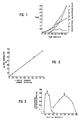
- Figure 1 illustrates the expression of the urogastrone gene in E. coli with and without a polyarginine tail.
- E. coli HB101 containing the plasmids PWT221-Uro and PWT221-Uro-polyarginine were cultured and induced with IAA. Growth and urogastrone activity were measured in lysates as described in Methods. Growth (O) and urogastrone activity ( ⁇ ) of PWT221-Uro; growth ( ⁇ ) and urogastrone activity ( ⁇ ) of PWT221-Uro-polyarginine.
- Carboxypeptidase B (CPB) Type 1 DFP (180 units/mg) was obtained from Sigma; Sp-Sephadex C-25® and CnBr Sepharose were obtained from Pharmacia Fine Chemicals AB, Uppsala 1, Sweden, Spectrapor® dialysis tubing (cut off 3500) was obtained from Spectrum Medical Industries, Los Angeles, U.S.A.
- Commassie Blue R250 was from Serva GMBH & Co, Heidelberg 1, W. Germany.
- Biorad® protein assay reagent was from Bio-Rad Lab., 8000 Kunststoff 66, West Germany.
- Pyrotell limulus amoebocyte lysate assay for endotoxins was from Associates of Cape Cod Ltd., Mass., U.S.A.
- the 7L fermenter was supplied by LH Engineering Ltd, Stoke Poges, U.K.
- the 14L fermenter was supplied by Chemapec Ltd, Abingdon, Oxon, U.K.
- AVP homogeniser was from AVP Co. Ltd, Crawley, Suffex, U.K.).
- the sonicator was from Ultrasonics Ltd, U.K.
- Fermentation Shake flask cultures, grown on Modifed M9 medium as described in Example 1 were used to inoculate (at 4-10% v/v) either 5L of medium in a 7L fermenter, (stirred at 750rpm) or 8L of medium with additional glucose (15g/L) and Case amino acids (15g/L) in 14L fermenters (stirred at 550rpm). All fermentations were at 37°C, pH 7,0, with an aeration rate of one v/v per min.
- Urogastrone extraction Cells were harvested from cultures by centrifugation (4,000g, 20mins, 20°C) and disrupted in lysis buffer (5M urea, 40mM Tris-acetate/NaOH pH 9.5) either by a sonicator (30ml aliquots with a 5mm probe, 50W, on ice for 10min) or by an AVP homogenizer (8,000psi, 2 passes) and centrifuged (16,000g, 30 mins, 20°C). The supernatant was adjusted to pH 5.5 with IN HCl and centrifuged (16,000g for 60 mins, 20°C). This supernatant was loaded onto SP-Sephadex.
- lysis buffer 5M urea, 40mM Tris-acetate/NaOH pH 9.5
- AVP homogenizer 8,000psi, 2 passes
- Sp-Sephadex chromatography SP-Sephadex C-25 was equilibrated in Tris/urea (5M urea, 40mM Tris-acetate pH 5.5). All chromatography was performed at room temperature. The flow rate for loading, washing and elution was constant at one bed volume/10min.
- CPB-Sepharose 20 mgs in 10 mls of 0.1M NaH2CO3, pH 8.3 was added to 10 mls of CnBr Sepharose as described by Pharmacia (Pharmica, in Handbook on Affinity Chromotography, p 14-18, Uppsala, 1, Sweden.) and reacted for 16 hours at 4°C. Essentially all the protein was coupled to the gel with a 50% recovery of CPB activity. CPB-Sepharose was stable at 4°C for at least 3 months if stored in phosphate buffered saline PBS and azide (0.1%).
- CPB digestion The first SP-Sephadex eluate was digested with CPB-Sepharose by gentle end over end rotation. CPB-Sepharose was removed from digested urogastrone by filtration on a sintered glass funnel.
- Bio-Rad dye reagent was used for all protein determination with BSA as standard.
- Carboxypeptidase B was assayed using the method of Corbin et al. (Corbin, N. C., Hugli, T. E. and Muller-Eberhard, H. J. (1976) Anal. Biochem. 73,41-51.).
- Endotoxins were assayed using Pyrogel using the suppliers recommendations. Dry weight was determined after freeze drying.
- the Small Scale Purification of Urogastrone was performed as follows with the results shown in Table 1.
- the crude load was from an 800ml E.coli culture grown in a 7L fermenter to an E600 of 2.2 and lysed by sonicaton.
- the Sp-Sephadex column (10mm x 20mm) was washed with 10mls of Tris/urea and eluted with a linear gradient (0-300mM NaCl in Tris/urea).
- Fractions containing peak Urogastrone activity were pooled, adjusted to pH 8.1 with 1M NaOH and digested with 100 ⁇ L of CPB-Sepharose for 2 hours at 22° C, pH 8.1.
- the CPB treated urogastrone was dialyzed overnight at 4°C against 8L of 40mM Tris/acetate, pH 5.5; then urea was added to 5M and the CPB digested load was pumped onto a SP-Sephadex column (10mm x 10mm) in Tris/urea. After washing with 5mls of Tris/urea, the urogastrone was eluted with a linear gradient (0-125mM NaCl in Tris/urea) and the urogastrone activity pooled.
- the crude load was from a pool of four, 8L cultures grown in 14L fermenters to an E600 of 3.2. and lysed by AVP homogenization.
- the SP-Sephadex column (45mm x 170mm) was washed with Tris/urea (900mls), NaCl (70mM in Tris/urea) and urogastrone eluted stepwise with NaCl (300mM in Tris/urea). Peak urogastrone activity was pooled, adjusted to pH 8.5 with 1M NaOH and digested with 10mls CPB Sepharose for 10 minutes at 22°C.
- the CPB treated urogastrone was then dialyzed against Tris/urea (two changes of 9L.) overnight at 4°C.
- the CPB digested load was pumped onto a Sp-Sephadex column (47mm x 30mm) in Tris/urea. After washing with 150 mls of Tris/urea urogastrone was eluted with NaCl gradient (0-200mM in tris/urea) and peak urogastrene fractions were pooled.
- the polyarginine can be selectively removed from the carboxy-terminus of the urogastrone-polyarginine hybrid by carboxypeptidase B (CPB) without effecting the activity of the urogastrone.
- CPB carboxypeptidase B
- the release of primary amines by the CPB is an indication of arginine released.
- Figure 2 illustrates the linear relationship between the release of primary amines and urogastrone equivalents present. This indicates that release of primary amins can be used to assay for urogastrone.
- Release of the arginine by CPB changes the chromatography elution pattern of the urogastrone on SP-Sephadex facilitating purification of urogastrone ( Figure 3, Tables 1 and 2). The procedures used were as follows.
- Carboxypeptidase B (CPB) Type-1 DFP treated (180U/mg, 5.6mg protein/ml), L-arginine, and fluorescamine were supplied by Sigma, U.K.
- Phosphate buffered saline (PBS) was supplied by Oxoid Limited, Basingstoke, Hants U.K. and made in 1/10 the specified volume of water (10x PBS).
- the flurometer was a Gilson Spectra/Glo Filter Fluorometer.
- urogastrone sample Polyarginine tailed urogastrone (5ml) purified on Sp-Sephadex as described in Example 2 (table 1) was dialyzed against 10mM acetic acid (800ml, two changes over 24 hours, at 4°C).
- Urogastrone in 50 ⁇ l of acetic acid was incubated with CPB (in 12.5 ⁇ l PBS) and 10xPBS (25 ⁇ l) in eppendorfs for 10 minutes at 22°C, pH7.2. TCA (100% v/v, 12.5 ⁇ l) was added, and after standing for 10 minutes, precipitated protein was pelleted by centrifugation (13,000g, 3 minutes). The supernatant (50 ⁇ l) was assayed for primary amines with fluorescamine using a fluorometer by the method of Imai et al. (1974, Arch. Bioch Biophys 161,161-163 ) The amount of arginine released was determined using a standard solution of L-arginine (4-40 ⁇ Molar) in PBS.
- the molecular weight of Tryp-E fused ⁇ -urogastrone with a five arginine tail is 8470 Daltons.
- 1.66 urogastrone equiv./mg protein average for several experiments
- the molarity of urogastrone protein and the expected release of arginine by complete digestion of the tail can be calculated.
- 0.29nmoles of urogastrone were digested with CPB and 1.79 nmoles of arginine should have been released.
- Arginine could then be selectively eluted and measured with fluorescamine, however, the best assay for crude urogastrone would be based on monoclonal antibodies directed against the polyarginine tail. Such an assay would also have an advantage over conventional antibody assays by only detecting fully translated polypeptides.
- Table 3 shows the release of arginine from polyarginine-urogastrone by CPB digestion.
- Polyarginine-tailed urogastrone (4.2ug) was prepared, digested with CBP and assayed for primary amines as discussed in the methods.
- Figure 2 illustrates the linear relationship between urogastrone equivalents and the release of primary amines (arginine) during the assay of polyarginine tailed urogastrone by caroxypeptidase B.
- primary amines arginine
- Figure 3 illustrates the elution patternof Urogastrone with and without a polyarginine tail, at various NaCl concentrations from a Sp-Sephadex column.
- the urogastrone was eluted from Sp-Sephadex as described in Table 2.
- the elution of urogastrone before and after CPB treatment is indicated by profiles B and A respectively.
- ⁇ - ⁇ ) urogastrone after CPB treatment Therefore, the removal of the polyarginine tail resulted in a change in the chromatography elution profile of urogastrone and facilitated purification.
Landscapes
- Chemical & Material Sciences (AREA)
- Life Sciences & Earth Sciences (AREA)
- Health & Medical Sciences (AREA)
- Organic Chemistry (AREA)
- Zoology (AREA)
- Engineering & Computer Science (AREA)
- Wood Science & Technology (AREA)
- Proteomics, Peptides & Aminoacids (AREA)
- Genetics & Genomics (AREA)
- General Health & Medical Sciences (AREA)
- Biochemistry (AREA)
- Molecular Biology (AREA)
- Bioinformatics & Cheminformatics (AREA)
- Biotechnology (AREA)
- Gastroenterology & Hepatology (AREA)
- Microbiology (AREA)
- Biophysics (AREA)
- General Engineering & Computer Science (AREA)
- Physics & Mathematics (AREA)
- Immunology (AREA)
- Analytical Chemistry (AREA)
- Toxicology (AREA)
- Medicinal Chemistry (AREA)
- Chemical Kinetics & Catalysis (AREA)
- General Chemical & Material Sciences (AREA)
- Preparation Of Compounds By Using Micro-Organisms (AREA)
- Peptides Or Proteins (AREA)
- Measuring Or Testing Involving Enzymes Or Micro-Organisms (AREA)
Applications Claiming Priority (2)
| Application Number | Priority Date | Filing Date | Title |
|---|---|---|---|
| GB8208051 | 1982-03-19 | ||
| GB8208051 | 1982-03-19 |
Related Parent Applications (1)
| Application Number | Title | Priority Date | Filing Date |
|---|---|---|---|
| EP83102641.4 Division | 1983-03-17 |
Publications (2)
| Publication Number | Publication Date |
|---|---|
| EP0306610A1 true EP0306610A1 (fr) | 1989-03-15 |
| EP0306610B1 EP0306610B1 (fr) | 1992-04-29 |
Family
ID=10529119
Family Applications (2)
| Application Number | Title | Priority Date | Filing Date |
|---|---|---|---|
| EP88106450A Expired EP0306610B1 (fr) | 1982-03-19 | 1983-03-17 | Procédé de préparation de polypeptides à l'aide d'un polymère d'acides aminés chargés et d'une exopeptidase |
| EP83102641A Expired EP0089626B1 (fr) | 1982-03-19 | 1983-03-17 | Procédé pour la préparation de polypeptides à l'aide d'un polymère d'acides aminés chargés et une exopeptidase |
Family Applications After (1)
| Application Number | Title | Priority Date | Filing Date |
|---|---|---|---|
| EP83102641A Expired EP0089626B1 (fr) | 1982-03-19 | 1983-03-17 | Procédé pour la préparation de polypeptides à l'aide d'un polymère d'acides aminés chargés et une exopeptidase |
Country Status (5)
| Country | Link |
|---|---|
| US (1) | US4532207A (fr) |
| EP (2) | EP0306610B1 (fr) |
| JP (1) | JPS58216697A (fr) |
| CA (1) | CA1195627A (fr) |
| DE (2) | DE3380260D1 (fr) |
Cited By (4)
| Publication number | Priority date | Publication date | Assignee | Title |
|---|---|---|---|---|
| WO1991000296A1 (fr) * | 1989-06-30 | 1991-01-10 | Board Of Regents Of The University Of Nebraska | Matieres bioactives de liaison enzymatique a des proteines |
| WO1992007868A1 (fr) * | 1990-11-06 | 1992-05-14 | Kabi Pharmacia Ab | Procede d'isolation et de purification de peptides et de proteines |
| LT4034B (en) | 1990-02-03 | 1996-09-25 | Max Planck Gesellschaft | Process for enzymatic decomposition of recombinant proteins by means of iga-protease, fused protein, recombinant dna, cell |
| WO1998032876A1 (fr) * | 1997-01-23 | 1998-07-30 | Brax Group Limited | Procede permettant de caracteriser des polypeptides |
Families Citing this family (53)
| Publication number | Priority date | Publication date | Assignee | Title |
|---|---|---|---|---|
| US4532207A (en) * | 1982-03-19 | 1985-07-30 | G. D. Searle & Co. | Process for the preparation of polypeptides utilizing a charged amino acid polymer and exopeptidase |
| DK55685A (da) * | 1985-02-07 | 1986-08-08 | Nordisk Gentofte | Enzym eller enzymkompleks med proteolytisk aktivitet |
| JPS60500043A (ja) * | 1982-12-10 | 1985-01-17 | ノルデイスク・インスリンラボラトリウム | 原核細胞又は真核細胞中で合成される融合蛋白質から成熟蛋白質を作る方法 |
| US5618697A (en) * | 1982-12-10 | 1997-04-08 | Novo Nordisk A/S | Process for preparing a desired protein |
| US4703004A (en) * | 1984-01-24 | 1987-10-27 | Immunex Corporation | Synthesis of protein with an identification peptide |
| GB8412517D0 (en) * | 1984-05-16 | 1984-06-20 | Nagai K | Recombinant fusion proteins |
| DE3572843D1 (en) * | 1984-05-24 | 1989-10-12 | Merck & Co Inc | Site-specific proteolysis by renin |
| US6022950A (en) * | 1984-06-07 | 2000-02-08 | Seragen, Inc. | Hybrid molecules having translocation region and cell-binding region |
| US5668255A (en) * | 1984-06-07 | 1997-09-16 | Seragen, Inc. | Hybrid molecules having translocation region and cell-binding region |
| JP2554459B2 (ja) * | 1984-07-02 | 1996-11-13 | アース製薬 株式会社 | β−ウロガストロン遺伝子、対応プラスミド組換体及び対応形質転換体 |
| US5055399A (en) * | 1985-01-15 | 1991-10-08 | Genentech, Inc. | Enzymatic synthesis of alpha-L-aspartyl-L-phenyalanine lower alkyl esters |
| US6281410B1 (en) | 1986-07-31 | 2001-08-28 | Calgene Llc | Methods and compositions for regulated transcription and expression of heterologous genes |
| US5753475A (en) * | 1985-01-17 | 1998-05-19 | Calgene, Inc. | Methods and compositions for regulated transcription and expression of heterologous genes |
| GB8504522D0 (en) * | 1985-02-21 | 1985-03-27 | Genetics Int Inc | Electrochemistry of mediators |
| EP0195680A3 (fr) * | 1985-03-21 | 1987-06-10 | Immunex Corporation | Synthèse de protéines avec un peptide d'identification |
| GB8507666D0 (en) * | 1985-03-25 | 1985-05-01 | Wellcome Found | Epidermal growth factor production |
| ATE63757T1 (de) * | 1985-03-28 | 1991-06-15 | Chiron Corp | Expression durch verwendung von fusionsgenen fuer proteinproduktion. |
| US4751180A (en) * | 1985-03-28 | 1988-06-14 | Chiron Corporation | Expression using fused genes providing for protein product |
| US5342921A (en) * | 1985-03-28 | 1994-08-30 | Chiron Corporation | Superoxide dismutase fusion polypeptides for expression of mammalian proteins |
| WO1986007380A1 (fr) * | 1985-06-04 | 1986-12-18 | Takeda Chemical Industries, Ltd. | Procede de preparation de polypeptides |
| EP0207044A1 (fr) * | 1985-06-20 | 1986-12-30 | Monsanto Company | Dégagement de peptides de polypeptides |
| US4845196A (en) * | 1985-06-24 | 1989-07-04 | G. D. Searle & Co. | Modified interferon gammas |
| US5081021A (en) * | 1986-02-04 | 1992-01-14 | Mizuno Den Ichi | DNA encoding HTNF variants exhibiting enhanced activity |
| US5010010A (en) * | 1986-10-22 | 1991-04-23 | Selmer-Sande, A.S. | Production of human parathyroid hormone from microorganisms |
| JP2777132B2 (ja) | 1986-10-22 | 1998-07-16 | カーレ・エンム・ガウトビク | 微生物によるヒト副甲状腺ホルモンの生産 |
| US5420242A (en) * | 1986-10-22 | 1995-05-30 | Kaare M. Gautvik | Production of human parathyroid hormone from microorganisms |
| US4851341A (en) * | 1986-12-19 | 1989-07-25 | Immunex Corporation | Immunoaffinity purification system |
| FR2615528B1 (fr) * | 1987-05-18 | 1991-05-24 | Pasteur Institut | Procede de production d'un polypeptide ayant des proprietes choisies determinees, dans un organisme-hote transforme par un adn recombinant contenant des sequences nucleiques codant pour ce polypeptide et pour une proteine affine d'ose |
| EP0312346B1 (fr) * | 1987-10-16 | 1994-08-17 | Genencor International, Inc. | Protéase acide d'E. coli spécifique pour une séquence |
| IT1223577B (it) * | 1987-12-22 | 1990-09-19 | Eniricerche Spa | Procedimento migliorato per la preparazione dell'ormone della crescita umano naturale in forma pura |
| DE68915841T2 (de) * | 1988-03-30 | 1995-02-02 | Hitachi Chemical Co Ltd | Verfahren zur Herstellung von Epidermal-Wachstumsfaktor durch genetische Transformation. |
| US5156968A (en) * | 1988-06-24 | 1992-10-20 | Genentech, Inc. | Purified yeast ubiquitin hydrolase |
| SE8802939D0 (sv) * | 1988-08-19 | 1988-08-19 | Kabigen Ab | A method for the production and isolation of a fusion protein in eukaryotic cells |
| US5158875A (en) * | 1989-08-25 | 1992-10-27 | Amgen Inc. | Production of biologically active insulin-like growth factor i from high expression host cell systems |
| JPH04503610A (ja) * | 1990-01-19 | 1992-07-02 | ベーリンガー マンハイム ゲゼルシャフト ミット ベシュレンクテル ハフツング | 基質を酵素学的に処理する方法 |
| US5202239A (en) * | 1990-08-07 | 1993-04-13 | Scios Nova Inc. | Expression of recombinant polypeptides with improved purification |
| DE4105480A1 (de) * | 1991-02-21 | 1992-08-27 | Boehringer Mannheim Gmbh | Verbesserte aktivierung von rekombinanten proteinen |
| EP0559175B1 (fr) * | 1992-03-03 | 1999-07-14 | Meiji Seika Kaisha Ltd. | Gamma-polyglutamate-hydrolase et procédé de production de celle-ci |
| ES2210761T3 (es) * | 1997-05-21 | 2004-07-01 | The Board Of Trustees Of The Leland Stanford Junior University | Composicion y procedimiento para mejorar el transporte a traves de las membranas biologicas. |
| SE9702401D0 (sv) * | 1997-06-19 | 1997-06-19 | Astra Ab | Pharmaceutical use |
| US6958148B1 (en) | 1998-01-20 | 2005-10-25 | Pericor Science, Inc. | Linkage of agents to body tissue using microparticles and transglutaminase |
| US6919076B1 (en) | 1998-01-20 | 2005-07-19 | Pericor Science, Inc. | Conjugates of agents and transglutaminase substrate linking molecules |
| US6669951B2 (en) * | 1999-08-24 | 2003-12-30 | Cellgate, Inc. | Compositions and methods for enhancing drug delivery across and into epithelial tissues |
| US6730293B1 (en) | 1999-08-24 | 2004-05-04 | Cellgate, Inc. | Compositions and methods for treating inflammatory diseases of the skin |
| WO2001013957A2 (fr) | 1999-08-24 | 2001-03-01 | Cellgate, Inc. | Compositions et procedes ameliorant la diffusion de medicaments a travers et dans des tissus epitheliaux |
| US7229961B2 (en) * | 1999-08-24 | 2007-06-12 | Cellgate, Inc. | Compositions and methods for enhancing drug delivery across and into ocular tissues |
| US6379903B1 (en) | 1999-10-08 | 2002-04-30 | Sigma-Aldrich Co. | Purification of recombinant proteins fused to multiple epitopes |
| KR20020014459A (ko) * | 2000-08-18 | 2002-02-25 | 서진호 | 양이온성 아미노산이 부가된 융합단백질 및 이를 이용한생물공정의 개선방법 |
| CN100427506C (zh) * | 2001-07-26 | 2008-10-22 | 高级蛋白质技术公司 | 从融合多肽制备感兴趣的多肽的方法 |
| US6902914B2 (en) * | 2001-09-28 | 2005-06-07 | Sigma-Aldrich, Co. | Recombinant DNA processes using a dNTP mixture containing modified nucleotides |
| GB0224082D0 (en) * | 2002-10-16 | 2002-11-27 | Celltech R&D Ltd | Biological products |
| TW200821026A (en) * | 2006-09-08 | 2008-05-16 | Wyeth Corp | Arginine wash in protein purification using affinity chromatography |
| CN116333157B (zh) * | 2022-07-20 | 2023-10-03 | 无锡佰翱得生物科学股份有限公司 | 一种改造的d-阿洛酮糖3-差向异构酶及其应用 |
Citations (3)
| Publication number | Priority date | Publication date | Assignee | Title |
|---|---|---|---|---|
| EP0001930A2 (fr) * | 1977-11-08 | 1979-05-16 | Genentech, Inc. | Méthode pour la production de polypeptides impliquant l'expression d'un gène hétérologue; vecteur microbien clônant recombinant contenant ce gène et culture bactérienne transformée par ce vecteur clônant |
| EP0020290A1 (fr) * | 1979-05-31 | 1980-12-10 | Schering Aktiengesellschaft | Procédé pour scinder spécifiquement des séquences peptidiques des protéines |
| EP0035384A2 (fr) * | 1980-02-29 | 1981-09-09 | The Regents Of The University Of California | Segment de désoxyribonucléotides destiné à être rattaché à une séquence codante clonée d'ADN |
Family Cites Families (10)
| Publication number | Priority date | Publication date | Assignee | Title |
|---|---|---|---|---|
| US4237224A (en) * | 1974-11-04 | 1980-12-02 | Board Of Trustees Of The Leland Stanford Jr. University | Process for producing biologically functional molecular chimeras |
| US4366246A (en) * | 1977-11-08 | 1982-12-28 | Genentech, Inc. | Method for microbial polypeptide expression |
| US4411994A (en) * | 1978-06-08 | 1983-10-25 | The President And Fellows Of Harvard College | Protein synthesis |
| US4336336A (en) * | 1979-01-12 | 1982-06-22 | President And Fellows Of Harvard College | Fused gene and method of making and using same |
| DE2931999A1 (de) * | 1979-08-03 | 1981-02-26 | Schering Ag | Herstellung und anwendung von neukombinierten plasmiden mit genen fuer alkalische phosphatasen |
| US4399216A (en) * | 1980-02-25 | 1983-08-16 | The Trustees Of Columbia University | Processes for inserting DNA into eucaryotic cells and for producing proteinaceous materials |
| DE3110031A1 (de) * | 1980-03-17 | 1982-01-07 | President And Fellows Of Harvard College, Cambridge, Mass. | Verschmolzene gene, ihre herstellung und verwendung derselben |
| IE53166B1 (en) * | 1980-08-05 | 1988-08-03 | Searle & Co | Synthetic urogastrone gene,corresponding plasmid recombinants,transformed cells,production thereof and urogastrone expression |
| NZ199391A (en) * | 1981-01-02 | 1985-12-13 | Genentech Inc | Chimeric polypeptides comprising a proinsulin sequence,and preparation by recombinant dna technique;production of human insulin |
| US4532207A (en) * | 1982-03-19 | 1985-07-30 | G. D. Searle & Co. | Process for the preparation of polypeptides utilizing a charged amino acid polymer and exopeptidase |
-
1983
- 1983-03-03 US US06/471,917 patent/US4532207A/en not_active Expired - Lifetime
- 1983-03-17 DE DE8383102641T patent/DE3380260D1/de not_active Expired
- 1983-03-17 EP EP88106450A patent/EP0306610B1/fr not_active Expired
- 1983-03-17 DE DE8888106450T patent/DE3382554D1/de not_active Expired - Fee Related
- 1983-03-17 CA CA000423848A patent/CA1195627A/fr not_active Expired
- 1983-03-17 EP EP83102641A patent/EP0089626B1/fr not_active Expired
- 1983-03-18 JP JP58045844A patent/JPS58216697A/ja active Pending
Patent Citations (3)
| Publication number | Priority date | Publication date | Assignee | Title |
|---|---|---|---|---|
| EP0001930A2 (fr) * | 1977-11-08 | 1979-05-16 | Genentech, Inc. | Méthode pour la production de polypeptides impliquant l'expression d'un gène hétérologue; vecteur microbien clônant recombinant contenant ce gène et culture bactérienne transformée par ce vecteur clônant |
| EP0020290A1 (fr) * | 1979-05-31 | 1980-12-10 | Schering Aktiengesellschaft | Procédé pour scinder spécifiquement des séquences peptidiques des protéines |
| EP0035384A2 (fr) * | 1980-02-29 | 1981-09-09 | The Regents Of The University Of California | Segment de désoxyribonucléotides destiné à être rattaché à une séquence codante clonée d'ADN |
Cited By (7)
| Publication number | Priority date | Publication date | Assignee | Title |
|---|---|---|---|---|
| WO1991000296A1 (fr) * | 1989-06-30 | 1991-01-10 | Board Of Regents Of The University Of Nebraska | Matieres bioactives de liaison enzymatique a des proteines |
| US5279954A (en) * | 1989-06-30 | 1994-01-18 | Board Of Regents Of The University Of Nebraska And Bionebraska | Exopeptidase catalyzed site-specific bonding of supports, labels and bioactive agents to proteins |
| US5741686A (en) * | 1989-06-30 | 1998-04-21 | Board Of Regents Of The University Of Nebraska | Exopeptidase catalyzed site-specific bonding of supports, labels and bioactive agents to proteins |
| LT4034B (en) | 1990-02-03 | 1996-09-25 | Max Planck Gesellschaft | Process for enzymatic decomposition of recombinant proteins by means of iga-protease, fused protein, recombinant dna, cell |
| WO1992007868A1 (fr) * | 1990-11-06 | 1992-05-14 | Kabi Pharmacia Ab | Procede d'isolation et de purification de peptides et de proteines |
| WO1998032876A1 (fr) * | 1997-01-23 | 1998-07-30 | Brax Group Limited | Procede permettant de caracteriser des polypeptides |
| US6156527A (en) * | 1997-01-23 | 2000-12-05 | Brax Group Limited | Characterizing polypeptides |
Also Published As
| Publication number | Publication date |
|---|---|
| JPS58216697A (ja) | 1983-12-16 |
| CA1195627A (fr) | 1985-10-22 |
| EP0089626B1 (fr) | 1989-07-26 |
| EP0089626A3 (en) | 1985-11-21 |
| EP0306610B1 (fr) | 1992-04-29 |
| DE3380260D1 (en) | 1989-08-31 |
| DE3382554D1 (de) | 1992-06-04 |
| EP0089626A2 (fr) | 1983-09-28 |
| US4532207A (en) | 1985-07-30 |
Similar Documents
| Publication | Publication Date | Title |
|---|---|---|
| EP0306610B1 (fr) | Procédé de préparation de polypeptides à l'aide d'un polymère d'acides aminés chargés et d'une exopeptidase | |
| US4880911A (en) | Fused polypeptides and methods for their detection | |
| EP0305500B1 (fr) | Procede de purification de polypeptides recombinants | |
| Sassenfeld et al. | A polypeptide fusion designed for the purification of recombinant proteins | |
| US7105638B1 (en) | Product and process for the production, isolation, and purification of recombinant polypeptide | |
| Fowler et al. | Purification, structure, and properties of hybrid beta-galactosidase proteins. | |
| Hochuli et al. | Genetic approach to facilitate purification of recombinant proteins with a novel metal chelate adsorbent | |
| Sizmann et al. | Primary structure requirements for the maturation in vivo of penicillin acylase from Escherichia coli ATCC 11105 | |
| Chang et al. | High-level secretion of human growth hormone by Escherichia coli | |
| EP0161937B1 (fr) | Protéines de fusion recombinantes | |
| EP0131363B1 (fr) | Produits polypeptidiques et protéiniques et procédés pour leur production et utilisation | |
| Berdichevsky et al. | Matrix-assisted refolding of single-chain Fv–cellulose binding domain fusion proteins | |
| EP0001930A2 (fr) | Méthode pour la production de polypeptides impliquant l'expression d'un gène hétérologue; vecteur microbien clônant recombinant contenant ce gène et culture bactérienne transformée par ce vecteur clônant | |
| EP0001929A2 (fr) | Plasmide pour la transformation d'un hôte bactérien afin de le rendre capable d'expression polypeptidique | |
| EP0001931A2 (fr) | ADN synthétique, procédé de préparation et vecteur microbien clônant recombinant contenant cet ADN | |
| JPH07265078A (ja) | 蛋白質とポリペプチドを製造するための組換えベクター | |
| Bromer et al. | Amino acid sequence of bovine glucagon | |
| Cheynet et al. | Overexpression of HIV-1 Proteins in Escherichia coli by a Modified Expression Vector and Their One Step Purification | |
| EP0199801A1 (fr) | Procedes d'analyses de complementation d'enzymes de liaison de proteines. | |
| Herlihy et al. | Mass spectra of partial protein hydrolysates as a multiple phase check for long polypeptides deduced from DNA sequences: NH2-terminal segment of alanine tRNA synthetase. | |
| Potts Jr et al. | Structural basis of biological and immunological activity of parathyroid hormone. | |
| Liu et al. | Purification of a ubiquitin protein peptidase from yeast with efficient in vitro assays | |
| Fassina | Complementary peptides as antibody mimetics for protein purification and assay | |
| CN109439643A (zh) | 一种新型赖氨酸特异性内切酶及其制备方法 | |
| Ledgerwood et al. | Yeast aspartic protease 3 (Yap3) prefers substrates with basic residues in the P2, P1 and P2′ positions |
Legal Events
| Date | Code | Title | Description |
|---|---|---|---|
| PUAI | Public reference made under article 153(3) epc to a published international application that has entered the european phase |
Free format text: ORIGINAL CODE: 0009012 |
|
| 17P | Request for examination filed |
Effective date: 19880422 |
|
| AC | Divisional application: reference to earlier application |
Ref document number: 89626 Country of ref document: EP |
|
| AK | Designated contracting states |
Kind code of ref document: A1 Designated state(s): DE FR GB |
|
| 17Q | First examination report despatched |
Effective date: 19910205 |
|
| GRAA | (expected) grant |
Free format text: ORIGINAL CODE: 0009210 |
|
| AC | Divisional application: reference to earlier application |
Ref document number: 89626 Country of ref document: EP |
|
| AK | Designated contracting states |
Kind code of ref document: B1 Designated state(s): DE FR GB |
|
| REF | Corresponds to: |
Ref document number: 3382554 Country of ref document: DE Date of ref document: 19920604 |
|
| ET | Fr: translation filed | ||
| PLBE | No opposition filed within time limit |
Free format text: ORIGINAL CODE: 0009261 |
|
| STAA | Information on the status of an ep patent application or granted ep patent |
Free format text: STATUS: NO OPPOSITION FILED WITHIN TIME LIMIT |
|
| PG25 | Lapsed in a contracting state [announced via postgrant information from national office to epo] |
Ref country code: GB Effective date: 19930317 |
|
| 26N | No opposition filed | ||
| GBPC | Gb: european patent ceased through non-payment of renewal fee |
Effective date: 19930317 |
|
| PG25 | Lapsed in a contracting state [announced via postgrant information from national office to epo] |
Ref country code: FR Effective date: 19931130 |
|
| PG25 | Lapsed in a contracting state [announced via postgrant information from national office to epo] |
Ref country code: DE Effective date: 19931201 |
|
| REG | Reference to a national code |
Ref country code: FR Ref legal event code: ST |