EP0307363A2 - Procédé pour la propagation et l'entretien de cellules animales dans une culture à grande échelle - Google Patents
Procédé pour la propagation et l'entretien de cellules animales dans une culture à grande échelle Download PDFInfo
- Publication number
- EP0307363A2 EP0307363A2 EP88810607A EP88810607A EP0307363A2 EP 0307363 A2 EP0307363 A2 EP 0307363A2 EP 88810607 A EP88810607 A EP 88810607A EP 88810607 A EP88810607 A EP 88810607A EP 0307363 A2 EP0307363 A2 EP 0307363A2
- Authority
- EP
- European Patent Office
- Prior art keywords
- cells
- culture
- cell
- hemodialysate
- cultures
- Prior art date
- Legal status (The legal status is an assumption and is not a legal conclusion. Google has not performed a legal analysis and makes no representation as to the accuracy of the status listed.)
- Withdrawn
Links
Images




Classifications
-
- C—CHEMISTRY; METALLURGY
- C12—BIOCHEMISTRY; BEER; SPIRITS; WINE; VINEGAR; MICROBIOLOGY; ENZYMOLOGY; MUTATION OR GENETIC ENGINEERING
- C12N—MICROORGANISMS OR ENZYMES; COMPOSITIONS THEREOF; PROPAGATING, PRESERVING, OR MAINTAINING MICROORGANISMS; MUTATION OR GENETIC ENGINEERING; CULTURE MEDIA
- C12N5/00—Undifferentiated human, animal or plant cells, e.g. cell lines; Tissues; Cultivation or maintenance thereof; Culture media therefor
- C12N5/0018—Culture media for cell or tissue culture
-
- C—CHEMISTRY; METALLURGY
- C12—BIOCHEMISTRY; BEER; SPIRITS; WINE; VINEGAR; MICROBIOLOGY; ENZYMOLOGY; MUTATION OR GENETIC ENGINEERING
- C12N—MICROORGANISMS OR ENZYMES; COMPOSITIONS THEREOF; PROPAGATING, PRESERVING, OR MAINTAINING MICROORGANISMS; MUTATION OR GENETIC ENGINEERING; CULTURE MEDIA
- C12N2500/00—Specific components of cell culture medium
- C12N2500/70—Undefined extracts
- C12N2500/80—Undefined extracts from animals
- C12N2500/84—Undefined extracts from animals from mammals
Definitions
- Animal cells in culture are understood to mean all isolated cells or cells from invertebrates and from vertebrates (including humans) that are still in a limited tissue association and which are cultivated under artificial nutrient medium conditions as primary, secondary, tertiary, etc. cultures or as permanent cell lines / cell strains will.
- animal cells are the fibroblasts and fibrocytes, the osteoblasts and osteocytes, the hepatocytes, the neuronal cells, the epithelial cells, embryonic cells of all kinds, benign and malignant tumor cells.
- Cultures of animal cells are used in particular to obtain the contents of these cells, for example enzymes, hormones, lipids, glycolipids, glycoproteins, nucleic acids, and cell organelles such as ribosomes, mitochondria, membranes, chromosomes etc., - for the production of cell groups, for example artificial tissues on a Dacron ® network, for the breeding of all types of animal viruses, for example AIDS viruses or insect viruses, vertebrate viruses, microorganisms and parasites, - for the production of vaccines, growth factors and other factors with a biological effect, - for the cultivation of cells with introduced foreign genetic material, such as infected and transfected cells for the biotechnological production of foreign substances, - For the cultivation of induced cells and hybridoma cells, which are used for the production of antibodies.
- cell groups for example artificial tissues on a Dacron ® network
- animal viruses for example AIDS viruses or insect viruses, vertebrate viruses, microorganisms and parasites
- vaccines growth factors and other factors
- Mass cultures are created for these purposes, i.e. those in which 106 or more cells per ml of nutrient medium are generally obtained from a sowing of 104 or 105 cells per ml of nutrient medium after a certain culture period, and this is also achieved in larger nutrient medium volumes.
- a lot of work is done in suspension systems (spinners and fermenters with a content of 0.5 liters or more, and up to around 20 to 25 liters in volume are still referred to as "laboratory fermenters”.
- Industrial fermentation technology begins beyond this volume limit and reaches orders of magnitude of up to 10,000 liters But immobilized cells in tube systems, in roller cultures and on solid supports including microcarriers can also be used as mass cultures.
- Examples of the cellular stress situations that occur chemically are the depletion of the nutrient medium by using up the components, the exchange of the nutrient medium for a fresh solution, the exchange or replacement of individual medium components, and the carbonate removal in continuously carried out cultures as a result of a breakdown of the CO2 supply system and / or partial carbonate decomposition in the medium that is not immediately remedied by heat or acid, the often desired reduction in the addition of animal serum.
- a reduction in serum levels or a complete absence of serum in nutrient media for animal cells is desirable and desirable in those cases in which the cell cultures (monolayer or suspension) are used to obtain organic products.
- Such organic products especially if they are used in human medicine - must be free of foreign proteins.
- complex cleaning processes are required to make the product protein-free.
- Examples of the cellular stress situations which are mechanically caused, include the introduction of oxygen by blowing air / oxygen into the nutrient medium, stirring the medium in spinner vessels or fermenters (bioreactors), pumping around the cells or the nutrient medium without cells from one into another container or through capillary systems etc.
- animal cells can be reproduced and maintained as a mass culture while avoiding the damage mentioned above, if a hemodialysate or ultrafiltrate from calf blood, the components of which have molecular weights below 10,000, and free of macromolecular substances are added to the culture.
- animal can be bred - tissue or organ explants, primary, secondary, tertiary or further cell cultures, - diploid or heteroploid or aneuploid cell strains and cell lines and permanent, optionally transformed cell lines which have the characteristics of adherent or non-adherent growth, the culture being carried out in the customary, but also in special nutrient media which are proposed or used for certain cell types or cell lines.
- the hemodialysate used can be prepared by a known method. For example, 10 liters of defibrinated calf blood are mixed with 1 liter of ethanol, which contains 1.5% nipastat (mixture of parabens). The mixture is dialyzed against an aqueous 10% ethanol solution with an exclusion limit of approximately 10,000. After evaporation under reduced pressure to a content of 18% dry matter and adjustment of the pH to 7.0 with two normal hydrochloric acid, the preparation obtained is subjected to filtration. To achieve a sterile preparation, sterile filtration is then carried out. The solution thus obtained can - depending on requirements - be diluted with water to the desired dry content.
- nipastat mixture of parabens
- a corresponding ultrafiltrate from calf blood can also be used.
- Known ultrafiltration systems with an exclusion limit of approximately 10,000 can be used to produce the ultrafiltrate, in particular the corresponding Pelicon, Romicon, Amicon, Ultrasart and SKAN systems (each brand name; manufacturer: Millipore Co., Bedford MA / USA; Romicon Co., Woburn MA / USA; Sartorius GmbH, Göttingen FRG; Gelman Sciences, Ann Harbor MI / USA).
- a hemodialysate or ultrafiltrate is preferably used, for the production of which an approximately 6-fold volume of calf blood is used. At least about 0.5% by volume, based on the volume of the culture liquid, of the hemodialysate or ultrafiltrate should be added; in general the addition will be about 0.5 to about 4% by volume, depending on the particular organ, tissue or cell culture and the culture conditions.
- the tissues mentioned are, for example, brain implants, epithelial cells, blood and the bone marrow, while parts of the liver, the neuronal system, the muscles, the endocrine systems, the vascular system can be mentioned as examples of organ explants.
- Primary cultures are those that consist of cells that are taken directly from the organism and can be cultivated outside the organism for a certain but limited period under artificial nutrient conditions. These include cells from skin and organ biopsies, embryonic cells, cells and cell assemblies from adult individuals, etc.
- tertiary and other cell cultures are those cultures which have been "passaged” once (secondary cultures), twice (tertiary cultures) etc. after the creation of a primary culture. Passenging consists in moving the cells from a culture vessel with the addition of new nutrient medium and reducing the cell concentration per ml of nutrient medium into a new culture vessel. For this, the cells are usually prepared as single cell suspensions.
- Cells are called "diploid" if they have and keep the normal, unchanged, species-specific set of chromosomes in culture. Of course, all normal cells in the organism (with a few exceptions, such as certain cells in the liver) are diploid.
- Deviations from the normal, species-specific set of chromosomes can lead to heteroploid or aneuploid and polyploid cells.
- Aneuploid states in cells exist when, for example, a chromosome is more or less present.
- An example of this is the chromosome set of Mongoloid humans, which comprises 47 chromosomes instead of 46, as is usually the case in humans.
- a permanent cell line is when a primary culture has become “immortal” over several to many passages (usually up to 70). Such cell cultures are referred to as “cell lines”, which means that they can be passaged regularly and can multiply accordingly in the same time units (days to weeks). Such cell lines are widely used in biotechnological research and application technology for the production of organic products. They are partly large volumes of culture medium, i.e. it is used to mass-produce cells.
- Transformed cells or cell lines are understood to mean cells and also cell lines in which the set of chromosomes permanently deviates from the diploid normal state. These are heteroploid or aneuploid and polyploid cells.
- transformed (or mutated) cells also have different morphological manifestations than their starting cells in the organism or in the primary culture. Permanent cell lines can therefore also be regarded as "transformed” compared to their original tissue / organ.
- Adherent cells Many cell types that are kept and propagated outside the organism as primary cultures (or following) and as permanent cell lines must adhere firmly to the surface of the culture vessel or a solid carrier in order to remain viable and capable of reproduction.
- the most common, ie non-cell-specific nutrient media include most of the commercially available nutrient media with names such as - Minimal Essential Medium (H. Eagle - MEM, see Science 130 (1959), 432; - Modified Eagle's Medium (MD Daniel and co-workers), see Proc. Soc. Exper. Biol. Med. 127 (March 1969); - Dulbecco's Modified Eagles's Medium -DMEM, see Virology 8 (1959), 396 and 12 (1960), 185-196, Tissue Culture Standards Committee, In Vitro 6 No. 3, 93; - McCoy's 5a Medium - McCoy 5a, see Proc. Soc. Exper. Biol. Med.
- Cell-specific culture media are culture media that have been produced for certain primary cultures, cell strains or cell lines. In detail, they can only be described in terms of their quality if the associated cell line or the associated cell type is described at the same time. Some of these cell-specific nutrient media also allow other cell lines to be grown with them, but generally with much less efficiency. Cell-specific nutrient media are usually developments of individual laboratories that have both adapted the nutrient medium to the cell properties to be preserved or desired, such as conversely have described cell selection in the cultured cell population under the influence of the specific nutrient medium. Here, those cells are selected which adapt to the nutrient medium composition and the other milieu conditions and survive.
- the cells When carrying out the method, the cells can be grown or kept both in the immobilized state and in free floating.
- Immobilized cells are those that adhere firmly to the wall of a culture vessel. Also included are those that adhere and multiply in tube or capillary systems through which nutrient medium flows, on the inside or outside wall of the tubes or capillaries (glass, carbon fiber, ceramic). The proliferation of such cells largely comes to a standstill when the available space on the wall surface of cells is completely occupied. The so-called “contact inhibition” then occurs. It causes the cells to stop reproducing over longer periods (days to many weeks), but to release their metabolic products or their substance production induced by genetic engineering measures into the nutrient medium, which can also be slowly and continuously passed by a closed pump system.
- Floating cells include all cells that can be kept floating and propagated in the nutrient medium without the need for solid adherence to a solid support such as a culture vessel wall. They are mainly required for so-called fermenter cultures, these are kettle cultures with a content of up to many thousands of liters, in which such cells are propagated freely floating.
- the liquid nutrient medium is constantly circulated, for example mechanically and / or by air bubble convection.
- adherent cells So-called "microcarrier" plastic beads (0.1-1mm diameter) that float freely in the fermenter liquid.
- the animal cells which have been propagated and maintained in mass cultures by the new cultures do not show any of the damage described at the outset, or significantly less damage.
- Metabolic performance is also better, as can be demonstrated by the higher production of monoclonal antibody ( ⁇ g IgG / ml) by 3A1 cells in the presence of hemodialysate in MEM + 2% FCS.
- the hemodialysate thus reduces the harmful effects of the in vitro conditions on the cell quality and vitality.
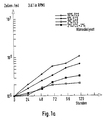
- FIG. 1a and 1b show the effect of the hemodialysate additive in the RPMI nutrient medium. Within 5 days, the cells multiply by a factor of 1.5 better (FIG. 1a) and produce by a factor of 1.6 more (FIG. 1b) monoclonal antibodies compared to the culture with 2% FCS addition.
- FIG. 2 shows in an experiment with the MEM nutrient medium that the production of the monoclonal antibodies is a factor 2.0 higher than in the culture with only 2% FCS.
- Figures 1 and 2 show the values for cells in culture media with 5% and 10% FCS addition.
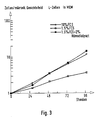
- the seeds were sown from stock cultures in MEM + 10% FCS with a concentration of 5 x 10² cells / ml. This low cell concentration was chosen in order to better assess the reaction of individual cells to the effect of the hemodialysate. As the values show (FIG. 3), the addition of 2% hemondialysate leads to an increase in cell growth by a factor of 4.0 compared to cells in MEM + 1.5% FCS.
- the higher cell proliferation caused by the hemodialysate is correspondingly also achieved in L-929 cultures with seed densities of 105 cells / ml.
- the following cell counts per ml are achieved in 175 cm2 plastic culture bottles on the 4th day after sowing: MEM + 10% FCS 2.16 x 10⁶ MEM + 1.5% FCS 6.48 x 10⁵ MEM + 1.5% FCS + 2% hemodialysate 2.05 x 10⁶
- CO2 and sodium bicarbonate are not only in equilibrium for buffering the medium, but they are also required for cell metabolism.
- Swim and Parker, 1958 The Role of Carbon Dioxide as an essential Nutrient for six permanent Strains of Fibroblasts, J. Biophys. Biochem. Cytol. 4 , 525-528; Geyer and Chang, 1958, Bicarbonate as an Essential for human cells in Vitro, Arch. Biochem. Biophys. 73 , 500-506; Runyan and Geyer, 1967, Partial Replacement of CO2 in strain L and HeLa Cultures, Proc. Soc. Exp. Biol. Med. 125 , 1301-1304).
- cell cultures are usually grown under atmospheric conditions with the addition of 5 bit 10% CO2 in a medium containing 0.25 to 5 g / liter NaHCO3. Falls e.g. the supply of CO2 or if the carbonate decomposes due to heat or acid, the cell cultures are damaged. Examples 3 and 4 demonstrate that the addition of the hemodialysate, which itself contains at most small amounts of carbonate ( ⁇ 100 mg / liter) in mass cultures, can significantly reduce these damaging effects.
- a culture of the hybridoma cell clone D1 is grown in the RPMI medium under the normal conditions of a stock culture.
- a suspension culture is carried out in a spinner of 1 liter content at a speed of 50 to 60 revolutions / minute, without introduction of oxygen; the medium contains only 2% fetal calf serum (FCS).
- FCS fetal calf serum
- the medium also contains only 2% fetal calf serum (FCS), but also 2% hemodialysate.
- FCS fetal calf serum
- the number of measurements in the course is measured the cells formed per ml of culture medium, on the other hand the amount of monoclonal antibodies produced per ml in the course of the culture; the yield of antibodies is expressed in ⁇ g immunoglobulin G (IgG) per ml.
- IgG immunoglobulin G
- FIGS. 4a and 4b The effect of a hemodialysate addition of 2% (based on the volume of the culture medium) on a culture of hybridoma cell clone D1 poor in FCS is clearly evident from FIGS. 4a and 4b.
- the hemodialysate addition causes an increase in antibody production by 48% compared to the FCS-poor culture without addition and an increase in cell production by a factor of 1.3, which means an increase in the cell population by 25% and Productivity of individual cells corresponds to about 14%.
- the effects of the stress situation caused by the inadequate FCS content of the medium are largely avoided by adding hemodialysate of only 2%.
- FCS fetal calf serum
- FIG. 5a and 5b show the course of the two cultures with regard to the production of cells (FIG. 5a) and of antibodies (FIG. 5b).
- the hemodialysate addition Although cultivation with a 5% FCS addition is considered to be completely satisfactory for this system, the hemodialysate addition nevertheless brings about an increase in the yield of antibodies by about 35% and an increase in the productivity of the individual cell by, for example, a cultivation period of 72 hours about 15% compared to the culture without this addition. This increase can be explained by the protective action of the hemodialysate against the effects of the cellular stress caused by stirring the culture.
Landscapes
- Life Sciences & Earth Sciences (AREA)
- Engineering & Computer Science (AREA)
- Health & Medical Sciences (AREA)
- Biomedical Technology (AREA)
- Biotechnology (AREA)
- Chemical & Material Sciences (AREA)
- Organic Chemistry (AREA)
- Bioinformatics & Cheminformatics (AREA)
- Genetics & Genomics (AREA)
- Wood Science & Technology (AREA)
- Zoology (AREA)
- Microbiology (AREA)
- Biochemistry (AREA)
- General Engineering & Computer Science (AREA)
- General Health & Medical Sciences (AREA)
- Cell Biology (AREA)
- Micro-Organisms Or Cultivation Processes Thereof (AREA)
- Preparation Of Compounds By Using Micro-Organisms (AREA)
Applications Claiming Priority (2)
| Application Number | Priority Date | Filing Date | Title |
|---|---|---|---|
| CH3461/87 | 1987-09-08 | ||
| CH346187 | 1987-09-08 |
Publications (2)
| Publication Number | Publication Date |
|---|---|
| EP0307363A2 true EP0307363A2 (fr) | 1989-03-15 |
| EP0307363A3 EP0307363A3 (fr) | 1989-11-29 |
Family
ID=4256440
Family Applications (1)
| Application Number | Title | Priority Date | Filing Date |
|---|---|---|---|
| EP88810607A Withdrawn EP0307363A3 (fr) | 1987-09-08 | 1988-09-07 | Procédé pour la propagation et l'entretien de cellules animales dans une culture à grande échelle |
Country Status (4)
| Country | Link |
|---|---|
| EP (1) | EP0307363A3 (fr) |
| JP (1) | JPS6471485A (fr) |
| DK (1) | DK497388A (fr) |
| FI (1) | FI884108A7 (fr) |
Family Cites Families (3)
| Publication number | Priority date | Publication date | Assignee | Title |
|---|---|---|---|---|
| DE2420415A1 (de) * | 1973-04-27 | 1974-11-14 | Res Foundation Of Children S H | Eine mitogenische blutfraktion und verfahren zur herstellung derselben |
| US4520107A (en) * | 1982-09-28 | 1985-05-28 | Polydex Chemicals Ltd. | Tissue culture and cell growth-promoting material and its method of manufacture |
| CA1279593C (fr) * | 1985-05-10 | 1991-01-29 | Makram Melek Girgis | Fraction riche en cholesterol, procede de preparation et usages dans la culture de cellules |
-
1988
- 1988-09-06 FI FI884108A patent/FI884108A7/fi not_active IP Right Cessation
- 1988-09-07 DK DK497388A patent/DK497388A/da not_active Application Discontinuation
- 1988-09-07 EP EP88810607A patent/EP0307363A3/fr not_active Withdrawn
- 1988-09-07 JP JP63222594A patent/JPS6471485A/ja active Pending
Also Published As
| Publication number | Publication date |
|---|---|
| JPS6471485A (en) | 1989-03-16 |
| EP0307363A3 (fr) | 1989-11-29 |
| FI884108L (fi) | 1989-03-09 |
| DK497388A (da) | 1989-04-28 |
| FI884108A0 (fi) | 1988-09-06 |
| DK497388D0 (da) | 1988-09-07 |
| FI884108A7 (fi) | 1989-03-09 |
Similar Documents
| Publication | Publication Date | Title |
|---|---|---|
| Jedrzejczak-Silicka | History of cell culture | |
| AT407255B (de) | Rekombinanter zellklon mit erhöhter stabilität in serum- und proteinfreiem medium und verfahren zur gewinnung des stabilen zellklons | |
| DE102005046225B4 (de) | Verbessertes Zellkulturmedium | |
| DE60028989T2 (de) | Medium für die proteinfreie und serumfreie züchtung von zellen | |
| DE102004017483B4 (de) | Verfahren zur Isolierung adulter Stammzellen aus differenziertem Gewebe | |
| DE102008059562B4 (de) | Neues Kultivierungsverfahren einer heterotrophen Mikroalge | |
| Lynn et al. | The establishment of cell lines from imaginal wing discs of Spodoptera frugiperda and Plodia interpunctella | |
| DE2749023C2 (de) | Verfahren zur schnellen Vermehrung von SV3T3 Zellen in vitro | |
| Kasten | Mammalian myocardial cells | |
| EP1200561B1 (fr) | Clone cellulaire recombine stable, sa production et son utilisation | |
| DE60037819T2 (de) | Metallbindende verbindungen und deren verwendung in zusammensetzungen für zellkulturmedien | |
| US5391491A (en) | Avian embryo cell aggregate biomass for producing tick-born encephalitis virus/virus antigen | |
| DE69835813T2 (de) | Verfahren zur kultivierung von zellen und zur vermehrung von viren | |
| DE69213714T2 (de) | Herstellung enzymatischer aktiver glukocerebrosidase von rekombinanten zellen | |
| US4169761A (en) | Process for the cultivation of viruses | |
| EP0055835B1 (fr) | Procédé de culture de cellules d'insectes | |
| EP0506714B1 (fr) | Matrice avec des cellules liees par adherence et procede de production de virus/antigenes viraux | |
| Braude-Zolotarjova et al. | Male diploid embryonic cell line of Drosophila virilis | |
| EP1797174B1 (fr) | Procede de production d'une matiere virale | |
| Lynn et al. | Development of a continuous cell line from the insect egg parasitoid, Trichogramma pretiosum (Hymenoptera; Trichogrammatidae) | |
| DE60025036T2 (de) | Verfahren zur züchtung von haftenden tierischen zellen | |
| Bello et al. | Establishment and characterization of a cell line from the mosquito Anopheles albimanus (Diptera: Culicidae) | |
| DE69128538T2 (de) | Kulturmedien für drosophilazellen | |
| Aravind et al. | Role of microalgae, isolation and identification in biofloc culture system | |
| EP0653487A1 (fr) | Cellules qui poussent dans un milieu de culture libre de sérum et protéines |
Legal Events
| Date | Code | Title | Description |
|---|---|---|---|
| PUAI | Public reference made under article 153(3) epc to a published international application that has entered the european phase |
Free format text: ORIGINAL CODE: 0009012 |
|
| AK | Designated contracting states |
Kind code of ref document: A2 Designated state(s): AT BE CH DE ES FR GB GR IT LI LU NL SE |
|
| PUAL | Search report despatched |
Free format text: ORIGINAL CODE: 0009013 |
|
| AK | Designated contracting states |
Kind code of ref document: A3 Designated state(s): AT BE CH DE ES FR GB GR IT LI LU NL SE |
|
| 17P | Request for examination filed |
Effective date: 19900525 |
|
| STAA | Information on the status of an ep patent application or granted ep patent |
Free format text: STATUS: THE APPLICATION IS DEEMED TO BE WITHDRAWN |
|
| 18D | Application deemed to be withdrawn |
Effective date: 19910403 |