EP0307662A2 - Enkephalin analogs - Google Patents

Enkephalin analogs Download PDF

Info

Publication number
EP0307662A2
EP0307662A2 EP88113613A EP88113613A EP0307662A2 EP 0307662 A2 EP0307662 A2 EP 0307662A2 EP 88113613 A EP88113613 A EP 88113613A EP 88113613 A EP88113613 A EP 88113613A EP 0307662 A2 EP0307662 A2 EP 0307662A2
Authority
EP
European Patent Office
Prior art keywords
salts
phe
cis
solvent
enkephalin
Prior art date
Legal status (The legal status is an assumption and is not a legal conclusion. Google has not performed a legal analysis and makes no representation as to the accuracy of the status listed.)
Withdrawn
Application number
EP88113613A
Other languages
German (de)
French (fr)
Other versions
EP0307662A3 (en
Inventor
Kunio Yagi
Yasuyuki Shimohigashi
Hiroaki Kodama
Tomio Ogasawara
Takuya Koshizaka
Masayasu Kurono
Current Assignee (The listed assignees may be inaccurate. Google has not performed a legal analysis and makes no representation or warranty as to the accuracy of the list.)
Vitamin Kenkyusyo KK
Original Assignee
Vitamin Kenkyusyo KK
Priority date (The priority date is an assumption and is not a legal conclusion. Google has not performed a legal analysis and makes no representation as to the accuracy of the date listed.)
Filing date
Publication date
Priority claimed from JP62208219A external-priority patent/JPS6452796A/en
Priority claimed from JP62237278A external-priority patent/JPS6483095A/en
Application filed by Vitamin Kenkyusyo KK filed Critical Vitamin Kenkyusyo KK
Publication of EP0307662A2 publication Critical patent/EP0307662A2/en
Publication of EP0307662A3 publication Critical patent/EP0307662A3/en
Withdrawn legal-status Critical Current

Links

Classifications

    • CCHEMISTRY; METALLURGY
    • C07ORGANIC CHEMISTRY
    • C07KPEPTIDES
    • C07K14/00Peptides having more than 20 amino acids; Gastrins; Somatostatins; Melanotropins; Derivatives thereof
    • C07K14/435Peptides having more than 20 amino acids; Gastrins; Somatostatins; Melanotropins; Derivatives thereof from animals; from humans
    • C07K14/665Peptides having more than 20 amino acids; Gastrins; Somatostatins; Melanotropins; Derivatives thereof from animals; from humans derived from pro-opiomelanocortin, pro-enkephalin or pro-dynorphin
    • C07K14/70Enkephalins
    • C07K14/702Enkephalins with at least 1 amino acid in D-form
    • AHUMAN NECESSITIES
    • A61MEDICAL OR VETERINARY SCIENCE; HYGIENE
    • A61KPREPARATIONS FOR MEDICAL, DENTAL OR TOILETRY PURPOSES
    • A61K38/00Medicinal preparations containing peptides

Definitions

  • the present invention relates to novel enkephalin analogs, salts and hydrates thereof, as well as a therapeutic composition containing at least one of the enkaphalin analogs.
  • Opiate alkaloids such as morphine induce a strong analgesic effect, but they also cause physical and psychological dependence and addiction as side effects.
  • opiate receptors are localized in mammalian brain: since then, numerous studies have been done to discover endogenous morphine-like substances which can not cause physical and psychological dependence and addiction.
  • Hughes et al. have isolated two pentapeptides as endogenous opioid peptides [Hughes et al., "Nature” 258, 577 (1975)].
  • Enkephalins produce a weak and short-lived analgesia following intracerebroventricular (i.c.v.) or intravenous (i.v.) administration to mice and rats.
  • ⁇ -Endorphin which consists of 31 amino acid residues and is a fragment of ⁇ -lipotropin, has marked and long-lived analgesic activity following i.c.v. or i.v. administration.
  • ⁇ -endorphin it is very difficult to mass- produce ⁇ -endorphin, because it is a high molecular weight polypeptide. Therefore, ⁇ -endorphin has not been employed for an analgesic drug.
  • Rodbard et al. reported symmetrical dimers of enkephalin analogs of the following formula as new synthetic enkephalins (U.S. Patent No. 4,468,383). or an alkylene group having from 1 to 22 carbon atoms or a direct bond, and
  • the main object of the invention is to provide novel enkephalin analogs which are easily mass- produced, exhibit opioid activity, and are useful for an analgesic drug.
  • the concomitant object is to provide novel enkephalin analogs that can exhibit an analgesic effect without influence of dosage form.
  • the compound of this invention can be prepared by the method described in EXAMPLES (Examples 1 to 12) given later or by the general method as described by Izumiya et al. translated as "Basis and experiments for peptide synthesis” Maruzen Co., Ltd. Japan (1985)].
  • the compound of this invention can be administered as pharmaceutically acceptable salts such as the hydrochloride. sulfate. sulfonate. phosphate, citrate, benzoate. acetate, propionate. lactate, maleate. malate, succinate. or tartrate.
  • All of the pharmaceutically acceptable dosage forms may be suitable to prepare a drug containing the compound of this invention, its salt, or hydrate as an active ingredient.
  • the compound can be administered in such oral dosage forms as tablets, capsules, powders, granules, suspensions, or solutions. They can be administered in such non oral dosage forms as sterilized solutions or suspensions.
  • To the compound may be added pharmaceutically acceptable bulking agents, smoothing agents, antiseptics, stabilizers or other additives for dosage forms.
  • the dosage regimen of the compound according to the invention is selected by taking various factors including the type and severity of symptoms, age. weight. and other conditions of patients, into consideration.
  • Tyr tyrosine
  • Ala alanine: Gly, glycine
  • Met methionine
  • Ser. serine Thr
  • threonine Phe
  • phenylalanine Pro, proline
  • Leu leucine
  • NMePhe N-methylphenylalanine
  • Gly- ol glycinol: Boc. tert-butoxycarbonyl
  • Bzl benzyl: EDC ⁇ HCl, 1-ethyl-3-(3-dimethylaminopropyl) carbodiimide hydrochloride
  • HOBt benzyl
  • the dried powder was dissolved in DMF (1 ml) and subjected to gel filtration on a column (1.8x100 cm) of Sephadex LH-20 in DMF. The fractions containing the desired compound were pooled and the solvent was evaporated in vacuo. The residue was dissolved in 1 ml of CHCl 3 -MeOH (9:1, vv) and subjected to a silica gel column (2.2x65 cm), followed by elution with the same solvent. The fractions containing the desired compound were pooled and the solvent was evaporated in vacuo. The desired compound was crystallized from DMF-EtOAc-diethyl ether and recrystallized from the same solvent.
  • Boc-DTRE- ⁇ (o-, m-, or p-) (0.2 mmol) was dissolved in TFA at 0°C. After 30 min, the solvent was evaporated in vacuo. The was dissolved in 30% AcOH, and subjected to gel filtration on a Sephadex G-15 column (2.0x140 cm) in the same solvent. The fractions containing the desired compound were pooled and the solvent was evaporated in vacuo. The residue was dissolved in distilled water and the solvent was evaporated in vacuo. This procedure was repeated to remove AcOH from the solution. The residue was dissolved in distilled water. The desired compound was obtained by lyophilization.
  • Boc-DTRE-CH (50 u mol) was dissolved in TFA at 0°C. After 30 min, the solvent was evaporated in vacuo. The residue was dissolved in 1 ml of 30% AcOH. subjected to gel filtration on a Sephadex G-15 column (2.0x100 cm) in the same solvent. The fractions containing the desired compound were pooled and the solvent was evaporated in vacuo. The residue was dissolved in distilled water and the solvent was evaporated in vacuo. This procedure was repeated to remove AcOH from the solution. The residue was dissolved in distilled water. The desired compound was obtained by lyophilization.
  • the dried powder was dissolved in 1 ml of DMF and subjected to gel filtration on a Sephadex LH-20 column (2x140 cm) in DMF.
  • the fractions containing the desired compound were pooled and the solvent was evaporated in vacuo to dryness.
  • the desired compound was crystallized from DMF-EtOAc-diethyl ether and recrystallized from the same solvent.
  • the dried powder was dissolved in 1 ml of DMF and subjected to gel filtration on a Sephadex LH-20 column (2x140 cm) in DMF.
  • the fractions containing the desired compound were pooled and the solvent was evaporated in vacuo to dryness.
  • the desired compound was crystallized from DMF-EtOAc-diethyl ether and recrystallized from the same solvent.
  • the dried powder was dissolved in 1 ml of DMF and subjected to gel filtration on a Sephadex LH-20 column (2x140 cm) in DMF.
  • the fractions containing the desired compound were pooled and the solvent was evaporated in vacuo to dryness.
  • the desired compound was crystallized from DMF-EtOAc-diethyl ether and recrystallized from the same solvent.
  • the fractions containing the desired compound were pooled and the solvent was evaporated in vacuo. The residue was dissolved in distilled water and the solvent was evaporated. This procedure was repeated to remove AcOH. The residue was dissolved in distilled water. The desired compound was obtained by lyophilization.
  • Test Example Biological activities in two isolated smooth muscle preparations: the guinea pig ileum (GPI) and the mouse vas deferens (MVD)]
  • the GPI assay was carried out according to the method reported by Kosterlitz et al. ["Br. J. Pharmacol.” 39, 398 (1970)].
  • a male Hartley guinea pig was sacrified by cutting its jugula vein and subjected to an abdominal operation to remove its ileum as a piece of about 40 cm in length from a region 10 cm apart from ileocecal region. Then it was immediately immersed in low Mg 2+ modified Krebs-bicarbonate solution (118 mM NaCl, 4.75 mM KCI, 2.54 mM CaCI 2 , 1.19 mM KH 2 PO 4 , 0.12 mM MgSO 4 , 25 mM NaHCO 3 . 11 mM glucose).
  • the myenteric plexus- longitudinal muscle strips were prepared according to the method reported by Paton et al.. ["J. Physiol.” (London) 194, 13. (1968)].
  • the stnp was mounted in a 7 ml bath in the above-mentioned solution gassed with 95°o O 2 - 5% CO 2 at 35° C and stimulated coaxially with rectangular pulses of 1-msec duration at a frequency of 0.1 Hz at supramaximal voltage (70 Volts) to record the resulting contraction through a transducer.
  • the concentration required to produce a half-maximal effect (IC 30 ) was calculated for the morphine-like activity of the sample.
  • the MVD assay was carried out according to the method reported by Hughes et al. ["Br. J. Pharmacol.” 53. 371 (1975)].
  • An albino ddY mouse was decapitated and phlebotomized. Then it was immediately subjected to an abdominal operation to remove its vas deferens. The latter was immersed in modified Krebs-bicarbonate solution (118 mM NaCI. 4.75 mM KCI, 2.54 mM CaCI 2 , 1.19 mM KH 2 PO 4 , 25 mM NaHCO 3 , 11 mM glucose), and adhering fat and blood vessels were removed.
  • modified Krebs-bicarbonate solution 118 mM NaCI. 4.75 mM KCI, 2.54 mM CaCI 2 , 1.19 mM KH 2 PO 4 , 25 mM NaHCO 3 , 11 mM glucose
  • the tissue After being washed with the above-mentioned solution, the tissue was mounted in a 7 ml bath in the same solution gassed with 95% O 2 - 5% CO 2 at 35° C and stimulated electrically (70 V. 0.1 Hz, 1 msec) by passage of current between an intramural platinum wire and a ring (10 mm wide) of platinum foil fixed to the top of the organ bath to record the resulting contraction through a transducer.
  • the concentration required to produce a half-maximal effect (IC 50 ) was calculated for the morphine-like activity of the sample.
  • Table 7 shows the biological activities of the compound of the present invention by the GPI and MVD assays.
  • Table 7 suggests that the compound of the present invention can inhibit the contraction of GPI and MVD caused by an electric stimulation.
  • the ratio of IC 50 in MVD assay to that in GPI assay suggests that the compound of the present invention would have a higher affinity for the receptor which is bound preferentially by morphine.
  • the granules (200mg) were filled in capsules (No. 2) made from gelatin (1.0 kg), distilled water (1.5 kg), syrup(0.15 kg) and gum arabic (0.20 kg) to obtain capsuled drug.
  • the components were dissolved in a small amount of distilled water.
  • the solution was aseptically charged in a vail, freeze dried to prepare dry powder sealed in the vail.
  • the dry powder shall be dissolved in distilled water (2 ml) and then injected to a patient.
  • the solution for injection has an osmotic pressure substantially same with that of the physiological saline solution.
  • the components were dissolved in a small amount of distilled water.
  • the solution was aseptically charged in a vial, freeze-dried to prepare dry powder sealed in the vial.
  • the dry powder shall be dissolved in distilled water (2 ml) and then injected to a patient.
  • the solution for injection has an osmotic pressure substantially same with that of the physiological saline solution.

Landscapes

  • Chemical & Material Sciences (AREA)
  • Health & Medical Sciences (AREA)
  • Life Sciences & Earth Sciences (AREA)
  • Organic Chemistry (AREA)
  • Biochemistry (AREA)
  • Gastroenterology & Hepatology (AREA)
  • Zoology (AREA)
  • Biophysics (AREA)
  • General Health & Medical Sciences (AREA)
  • Genetics & Genomics (AREA)
  • Medicinal Chemistry (AREA)
  • Molecular Biology (AREA)
  • Proteomics, Peptides & Aminoacids (AREA)
  • Toxicology (AREA)
  • Medicines That Contain Protein Lipid Enzymes And Other Medicines (AREA)

Abstract

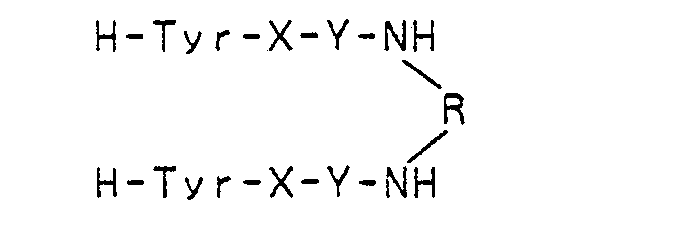
The invention relates to enkephalin analogs of the formula
Figure imga0001
wherein in case of X is
  • D-Val, D-Phe, Pro, D-Met, D-Met(O), D-Leu, D-Glu, D-Glu(OBzl), D-Lys, D-Lys(Z), or D-Arg, Y is
  • Gly or Phe; and
  • R is
    • a) a direct bond,
    • b) an alkylene group having from 1 to 6 carbon atoms.
    • c) o-. m-. or p-phenylene group.
    • d) a cycloalkane; or

    wherein in case of X is D-Ala,
  • Y is Phe: and
  • R is
    • a) a direct bond,
    • b) an alkylene group having from 1 to 6 carbon atoms,
    • c) o-. m-. or p-phenylene group. or
    • d) a cycloalkane,

    its salts and hydrates, as well as a therapeutic composition containing at least one of the enkephalin analogs, as an effective component.

Description

  • The present invention relates to novel enkephalin analogs, salts and hydrates thereof, as well as a therapeutic composition containing at least one of the enkaphalin analogs.
  • Opiate alkaloids such as morphine induce a strong analgesic effect, but they also cause physical and psychological dependence and addiction as side effects.
  • Early in 1970, it was confirmed that opiate receptors are localized in mammalian brain: since then, numerous studies have been done to discover endogenous morphine-like substances which can not cause physical and psychological dependence and addiction. Hughes et al. have isolated two pentapeptides as endogenous opioid peptides [Hughes et al., "Nature" 258, 577 (1975)]. Enkephalins produce a weak and short-lived analgesia following intracerebroventricular (i.c.v.) or intravenous (i.v.) administration to mice and rats. β-Endorphin, which consists of 31 amino acid residues and is a fragment of β-lipotropin, has marked and long-lived analgesic activity following i.c.v. or i.v. administration. However. it is very difficult to mass- produce β-endorphin, because it is a high molecular weight polypeptide. Therefore, β-endorphin has not been employed for an analgesic drug.
  • Shimohigashi et al. have reviewed the studies on synthetic enkephalins [Shimohigashi et al. "Protein, Nucleic acid, Enzyme" 28, 1321 (1983)]. The molecular structure of synthetic enkephalinshas been designed to yield enkephalins with the following characteristics: a) lower molecular weight compounds which can be easily prepared, b) higher affinity for the receptors, c) resistance to degradation by enzymes such as aminopeptidase, carboxypeptidase, enkephalinase, and the like, d) easy absorption and diffusion in vivo, e) ability to pass through the blood-brain barrier, f) administration in oral dosage form, g) minimal side effects, and so on. For the chemical modifications in Met- and Leu-enkephalins each amino acid residue in the sequence has been replaced by others or chemically modified, or the enkephalin has been shortened or cyclized; however, no enkephalin analogs have been applied to patients as the analgesic drugs.
  • In 1980, Rodbard et al. reported symmetrical dimers of enkephalin analogs of the following formula as new synthetic enkephalins (U.S. Patent No. 4,468,383).
    Figure imgb0001
    Figure imgb0002
    or an alkylene group having from 1 to 22 carbon atoms or a direct bond, and
    • R: H-Tyr-D-Ala-Gly-Phe-Leu,
    • H-Tyr-D-Ala-Gly-Phe,
    • H-Tyr-D-Ala-Gly or H-Phe-Leu
  • The compounds in which R is H-Tyr-D-Ala-Gly and X is C1-C22-alkylene show more selectivity for u. than for to 5 -receptors, particularly, DTRE2 in which X is C2-alkylene, shows about 400-fold greater selectivity for µ than for 5 in receptor binding assay [Lutz et al., "Eur. J. Pharmacol." 111, 257 (1985)]. When this compound was assayed using bioassays for opiate activity (GPI and MVD assays), it showed morphine-like activities and greater selectivity for u. than for 6 [Shimohigashi et al., "Peptide Chemistry 1985" p.51 (1986)].
  • The main object of the invention is to provide novel enkephalin analogs which are easily mass- produced, exhibit opioid activity, and are useful for an analgesic drug.
  • The concomitant object is to provide novel enkephalin analogs that can exhibit an analgesic effect without influence of dosage form.
  • According to this invention, the objects can be achieved by providing the enkephalin analogs of the following formula:
    Figure imgb0003
    wherein in case of X is
    • D-Vai. D-Phe. Pro, D-Met. D-Met(O). D-Leu. D-Glu, D-Glu(OBzl). D-Lys, D-Lys(Z). or D-Arg, Y is
    • Gly or Phe; and
    • R is
      • a) a direct bond,
      • b) an alkylene group having from 1 to 6 carbon atoms.
      • c) o-. m-, or p-phenylene group. or
      • d) a cycloalkane. or

      wherein in case of X is D-Ala.
    • Y is Phe: and
    • R is
      • a) a direct bond,
      • b) an alkylene group having from 1 to 6 carbon atoms.
      • c) o-. m-. or p-phenylene group, or
      • d) a cycloalkane.

      its salts and hydrates.
  • The compound of this invention can be prepared by the method described in EXAMPLES (Examples 1 to 12) given later or by the general method as described by Izumiya et al.
    Figure imgb0004

    Figure imgb0005

    translated as "Basis and experiments for peptide synthesis" Maruzen Co., Ltd. Japan (1985)]. The compound of this invention can be administered as pharmaceutically acceptable salts such as the hydrochloride. sulfate. sulfonate. phosphate, citrate, benzoate. acetate, propionate. lactate, maleate. malate, succinate. or tartrate.
  • All of the pharmaceutically acceptable dosage forms may be suitable to prepare a drug containing the compound of this invention, its salt, or hydrate as an active ingredient. The compound can be administered in such oral dosage forms as tablets, capsules, powders, granules, suspensions, or solutions. They can be administered in such non oral dosage forms as sterilized solutions or suspensions. To the compound may be added pharmaceutically acceptable bulking agents, smoothing agents, antiseptics, stabilizers or other additives for dosage forms.
  • The dosage regimen of the compound according to the invention is selected by taking various factors including the type and severity of symptoms, age. weight. and other conditions of patients, into consideration.
  • The following abbreviations are used: Tyr, tyrosine; Ala, alanine: Gly, glycine; Met, methionine; Ser. serine: Thr, threonine: Phe. phenylalanine: Pro, proline; Leu, leucine: NMePhe, N-methylphenylalanine; Gly- ol, glycinol: Boc. tert-butoxycarbonyl; Bzl, benzyl: EDC·HCl, 1-ethyl-3-(3-dimethylaminopropyl) carbodiimide hydrochloride; HOBt. 1-hydroxybenzotriazole; DMF, N,N-dimethylformamide; Z, carbobenzoxy: TFA, trifluoroacetic acid: EtOAc, ethyl acetate; Et3N, triethylamine; HF, hydrogen fluoride.
  • Example 1 [Synthesis of Boc-DTRE-o (o-, m-, or p-)]
  • Figure imgb0006
  • To a solution of Boc-Tyr-D-Ala-Gly-OH (1.1 mmol) and o-, m-, or p-phenylenediamine (0.5 mmol) in DMF were added HOBt (1.3 mmol) and EDC'HCI (1.2 mmol) at -10°C. followed by reaction at room temperature for 2 days. The solvent was evaporated in vacuo. The residual oil was solidified by adding cold water, washed with 4% NaHCO3, 5% KHSO4., and water, and dried over P205 in a desiccator. The dried powder was dissolved in DMF (1 ml) and subjected to gel filtration on a column (1.8x100 cm) of Sephadex LH-20 in DMF. The fractions containing the desired compound were pooled and the solvent was evaporated in vacuo. The residue was dissolved in 1 ml of CHCl3-MeOH (9:1, vv) and subjected to a silica gel column (2.2x65 cm), followed by elution with the same solvent. The fractions containing the desired compound were pooled and the solvent was evaporated in vacuo. The desired compound was crystallized from DMF-EtOAc-diethyl ether and recrystallized from the same solvent.
  • Example 2 [Synthesis of DTRE-φ (o-, m-, or p-)]
  • Figure imgb0007
  • Boc-DTRE-φ (o-, m-, or p-) (0.2 mmol) was dissolved in TFA at 0°C. After 30 min, the solvent was evaporated in vacuo. The was dissolved in 30% AcOH, and subjected to gel filtration on a Sephadex G-15 column (2.0x140 cm) in the same solvent. The fractions containing the desired compound were pooled and the solvent was evaporated in vacuo. The residue was dissolved in distilled water and the solvent was evaporated in vacuo. This procedure was repeated to remove AcOH from the solution. The residue was dissolved in distilled water. The desired compound was obtained by lyophilization.
  • Example 3 [Synthesis of Boc-DTRE-CH]
  • Figure imgb0008
  • To a solution of Boc-Tyr-D-Ala-Gly-OH (1.1 mmol) and trans-1,2-diaminocyclohexane (0.5 mmol) in DMF were added HOBt (1.3 mmol) and EDC·HCL (1.2 mmol) at -10°C, followed by stirring at room temperature for 2 days. The solvent was evaporated in vacuo. The residual oil was dissolved in 30 ml of EtOAc and washed with 5% KHSO4, 4% NaHC03, and a saturated NaCl solution. The residue was dried over Na2SO4.. Na2SO4 was removed by filtration and the filtrate was evaporated to dryness in vacuo. The residue was dissolved in 1 ml of CHCl3-MeOH (9:1, v/v), subjected to a silica gel column (0.9x40 cm), and eluted with the same solvent. The fractions containing the desired compound were pooled and the solvent was evaporated in vacuo to dryness. The desired compound was crystallized from EtOAc-diethyl ether- petroleum ether.
  • Example 4 [Synthesis of DTRE-CH]
  • Figure imgb0009
  • Boc-DTRE-CH (50 u mol) was dissolved in TFA at 0°C. After 30 min, the solvent was evaporated in vacuo. The residue was dissolved in 1 ml of 30% AcOH. subjected to gel filtration on a Sephadex G-15 column (2.0x100 cm) in the same solvent. The fractions containing the desired compound were pooled and the solvent was evaporated in vacuo. The residue was dissolved in distilled water and the solvent was evaporated in vacuo. This procedure was repeated to remove AcOH from the solution. The residue was dissolved in distilled water. The desired compound was obtained by lyophilization.
  • Physical properties of the substances obtained Examples 1 to 4 by each were given in following Table 1 and 2.
    Figure imgb0010
    Figure imgb0011
  • Example 5 [Synthesis of (Boc-Phe-NH-CH2-)2]
  • To a solution of Boc-Phe-OH (11 mmol) and ethylene diamine (NH2-CH2-CH2-NH2) (5 mmol) in DMF were added HOBt (13 mmol) and EDC·HCl (12 mmol), followed by stirring at room temperature for 2 days. The solvent was evaporated in vacuo. The residual oil was solidified by adding cold water. washed with 4% NaHCO3. 5% KHS04. and water on a glass filter and dried over P2O5 in a desiccator. The dried powder was dissolved in 5 ml of DMF and subjected to gel filtration on a Sephadex LH-20 column (5x110 cm) in DMF. The fractions containing the desired compound were pooled and the solvent was evaporated in vacuo to dryness. The desired compound was crystallized from DMF-MeOH-diethyl ether and recrystallized from the same solvent.
  • Yield : 89%
  • Melting point : 197-198 °C .
  • Specific rotation : [α]D = - 2.67° c 0.53. DMF),
  • HPTLC:
  • Rf1 value : 0.91 (CHCl3-MeOH=9:1. v vl.
  • Rf2 value : 0.72 (CHCl3-MeOH-AcOH =95:5:1. v v).
  • Elemental analysis :
  • calculated ;
  • C. 64.96 : H, 7.63 ; N, 10.10.
  • observed ;
  • C. 64.98 ; H, 7.62 ; N. 10.03.
  • Example 6 [Synthesis of (H-Phe-NH-CH2)2·2TFA salt]
  • (Boc-Phe-NH-CH2-)2 (3 mmol) was dissolved in TFA at 0° C . After 30 min, the solvent was evaporated in vacuo. The residue was solidified by adding diethyl ether and dried over KOH in a desiccator.
  • Yield : 99%.
  • Melting point : 213-217°C (decomposition)
  • Specific rotation : [α]D = +63.8° (c 0.16, 95% AcOH), HPTLC:
  • Rf3 value : 0.05 (n-BuOH-AcOH-H2O=4:1:5, v v, upper layer),
  • Rf4 vafue : 0.56 (n-BuOH-AcOH-pyridine-H2O= 4:1:1:2. v v),
  • Rf5 value : 0.60 (0.1% AcOH-n-BuOH-pyridine =11:5:3, v/v, upper layer),
  • Elemental analysis :
  • calculated ;
  • C, 49.49 ; H, 4.85 ; N, 9.62.
  • observed :
  • C, 49.60 : H. 4.91 ; N. 9.56.
  • Example 7 [Synthesis of (Boc-Tyr-D-Ala-Phe-NH-CH2)21
  • To a solution of Boc-Tyr-D-Ala-OH (1.1 mmol), (H-Phe-NHCH2-)2·2TFA(0.5 mmol), and Et3N (1.0 mmol) in DMF were added HOBt (1.3 mmol) and EDC·HCl (1.2 mmol) at -10°C. followed by stirring at room temperature for 2 days. The solvent was evaporated in vacuo.The residual oil was solidified by adding cold water, washed with 4% NaHC03, 5% KHSO4, and water on a glass filter and dried over P2O5 in a desiccator. The dried powder was dissolved in 1 ml of DMF and subjected to gel filtration on a Sephadex LH-20 column (2x140 cm) in DMF. The fractions containing the desired compound were pooled and the solvent was evaporated in vacuo to dryness. The desired compound was crystallized from DMF-EtOAc-diethyl ether and recrystallized from the same solvent.
  • Example 8 [Synthesis of (Boc-Xxx-Phe-NH-CH2-)2 (Xxx= Pro, D-Val, D-Leu, D-Met(O), or D-Glu(OBzl))]
  • To a solution of Boc-Xxx-OH (1.1 mmol), (H-Phe-NH-CH2 -)2·2TFA (0.5 mmol) and Et3N (1.0 mmol) in DMF were added HOBt (1.3 mmol) and EDC·HCl (1.2 mmol) at -10°C. followed by stirring at room temperature for 2 days. The solvent was evaporated in vacuo. The residual oil was solidified by adding cold water, washed with 4% NaHC03, 5% KHSO4, and water on a glass filter and dried over P2O5 in a desiccator. The dried powder was dissolved in 1 ml of DMF and subjected to gel filtration on a Sephadex LH-20 column (2x140 cm) in DMF. The fractions containing the desired compound were pooled and the solvent was evaporated in vacuo to dryness. The desired compound was crystallized from DMF-EtOAc-diethyl ether and recrystallized from the same solvent.
  • Example 9 [Synthesis of (H-Xxx-Phe-NH-CH2-)2·2TFA salt (Xxx= Pro, D-Val, D-Leu, D-Met(O), or D-Glu-(OBzI)]
  • (Boc-Xxx-Phe-NH-CH2-)2 (2 mmol) was dissolved in TFA at 0°C. After 30 min, the solvent was evaporated in vacuo. The residue was solidified by adding diethyl ether and dried over KOH in a desiccator.
  • Example 10 [Synthesis of (Boc-Tyr-Xxx-Phe-NH-CH2-)2·2TFA salt (Xxx=Pro, D-Val, D-Leu, D-Met(O), or D-Glu(OBzl))]
  • To a solution of Boc-Tyr-OH (1.1 mmol), (H-Xxx-Phe-NH-CH2 -)2·2TFA(0.5 mmol) and Et3N (1.0 mmol) in DMF were added HOBt (1.3 mmol) and EDC·HCl (1.2 mmol) at -10°C, followed by stirring at room temperature for 2 days. The solvent was evaporated in vacuo. The residual oil was solidified by adding cold water, washed with 4% NaHCO3, 5% KHSO4, and water on a glass filter and dried over P2O5 in a desiccator. The dried powder was dissolved in 1 ml of DMF and subjected to gel filtration on a Sephadex LH-20 column (2x140 cm) in DMF. The fractions containing the desired compound were pooled and the solvent was evaporated in vacuo to dryness. The desired compound was crystallized from DMF-EtOAc-diethyl ether and recrystallized from the same solvent.
  • Example 11 [Synthesis of (H-Tyr-Xxx-Phe-NH-CH2-)2·2TFA salt (Xxx= Pro, D-Val, D-Leu, D-Met(O), or D-Glu(OBzI))]
  • (Boc-Tyr-Xxx-Phe-NH-CH2-)2(0.4 mmol) was dissolved in TFA at 0°C. After 30 min, the solvent was evaporated in vacuo. The residue was dissolved in 1 ml of 30% AcOH, subjected to a Sephadex G-15 column (2.0x100 cm), and eluted with the same solvent. The fractions containing the desired compound were pooled and the solvent was evaporated in vacuo. The residue was dissolved in distilled water and the solvent was evaporated. This procedure was repeated to remove AcOH. The residue was dissolved in distilled water. The desired compound was obtained by lyophilization.
  • Example 12 [Synthesis of (H-Tyr-D-Glu-Phe-NH-CH2-)2 ·2TFA salt]
  • (Boc-Tyr-D-G!u(OBzl)-Phe-NH-CH2-)2 (0.4 mmol) was dissolved in TFA at 0°C. After 30 min. the solvent was evaporated in vacuo. The residue was solidified by adding diethyl ether The powder was dried over KOH in a desiccator The powder was treated with HF in the presence of 10% anisol at 0' C for 1 hr. The solvent was evaporated in vacuo. The residue was dried over KOH in a desiccator. The residual oil was dissolved in 10% AcOH. washed with diethyl ether, subjected to a Sephadex G-15 column (2.0x100 cm). and eluted with 30% AcOH. The fractions containing the desired compound were pooled and the solvent was evaporated in vacuo. The residue was dissolved in distilled water and the solvent was evaporated. This procedure was repeated to remove AcOH. The residue was dissolved in distilled water. The desired compound was obtained by lyophilization.
  • The physical properties of the substances obtained by Examples 7-12 are shown in following Tables 3-6.
    Figure imgb0012
    Figure imgb0013
    Figure imgb0014
    Figure imgb0015
  • Test Example [Biological activities in two isolated smooth muscle preparations: the guinea pig ileum (GPI) and the mouse vas deferens (MVD)]
  • The GPI assay was carried out according to the method reported by Kosterlitz et al. ["Br. J. Pharmacol." 39, 398 (1970)]. A male Hartley guinea pig was sacrified by cutting its jugula vein and subjected to an abdominal operation to remove its ileum as a piece of about 40 cm in length from a region 10 cm apart from ileocecal region. Then it was immediately immersed in low Mg2+ modified Krebs-bicarbonate solution (118 mM NaCl, 4.75 mM KCI, 2.54 mM CaCI2, 1.19 mM KH2PO4, 0.12 mM MgSO4, 25 mM NaHCO3. 11 mM glucose). The myenteric plexus- longitudinal muscle strips were prepared according to the method reported by Paton et al.. ["J. Physiol." (London) 194, 13. (1968)]. The stnp was mounted in a 7 ml bath in the above-mentioned solution gassed with 95°o O2 - 5% CO2 at 35° C and stimulated coaxially with rectangular pulses of 1-msec duration at a frequency of 0.1 Hz at supramaximal voltage (70 Volts) to record the resulting contraction through a transducer. The concentration required to produce a half-maximal effect (IC30) was calculated for the morphine-like activity of the sample.
  • The MVD assay was carried out according to the method reported by Hughes et al. ["Br. J. Pharmacol." 53. 371 (1975)]. An albino ddY mouse was decapitated and phlebotomized. Then it was immediately subjected to an abdominal operation to remove its vas deferens. The latter was immersed in modified Krebs-bicarbonate solution (118 mM NaCI. 4.75 mM KCI, 2.54 mM CaCI2, 1.19 mM KH2PO4, 25 mM NaHCO3, 11 mM glucose), and adhering fat and blood vessels were removed. After being washed with the above-mentioned solution, the tissue was mounted in a 7 ml bath in the same solution gassed with 95% O2- 5% CO2 at 35° C and stimulated electrically (70 V. 0.1 Hz, 1 msec) by passage of current between an intramural platinum wire and a ring (10 mm wide) of platinum foil fixed to the top of the organ bath to record the resulting contraction through a transducer.
  • The concentration required to produce a half-maximal effect (IC50) was calculated for the morphine-like activity of the sample.
  • Following Table 7 shows the biological activities of the compound of the present invention by the GPI and MVD assays. Table 7 suggests that the compound of the present invention can inhibit the contraction of GPI and MVD caused by an electric stimulation. The ratio of IC50 in MVD assay to that in GPI assay suggests that the compound of the present invention would have a higher affinity for the receptor which is bound preferentially by morphine.
    Figure imgb0016
  • Drug Preparation Example 1 (Capsules)
  • The compound acording to the invention (Example 1, R = o-phenylene) (50mg) was added to wheat starch (150 mg) to prepare granules in a conventional manner. The granules (200mg) were filled in capsules (No. 2) made from gelatin (1.0 kg), distilled water (1.5 kg), syrup(0.15 kg) and gum arabic (0.20 kg) to obtain capsuled drug.
  • Drug Preparation Example 2 (Dry powder for injection)
  • Prescription:
    • The compound (Example 1, R = o-phenylene) 10 (mg)
    • D-Mannitol 40
    • NaCI 4
  • The components were dissolved in a small amount of distilled water. The solution was aseptically charged in a vail, freeze dried to prepare dry powder sealed in the vail.
  • The dry powder shall be dissolved in distilled water (2 ml) and then injected to a patient. The solution for injection has an osmotic pressure substantially same with that of the physiological saline solution.
  • Drug Preparation Example 3 (Dry powder for injection)
  • Prescription :
    • The compound (Example 11) 10 (mg)
    • D-Mannitoi 40
    • NaCl 4
  • The components were dissolved in a small amount of distilled water. The solution was aseptically charged in a vial, freeze-dried to prepare dry powder sealed in the vial.
  • The dry powder shall be dissolved in distilled water (2 ml) and then injected to a patient. The solution for injection has an osmotic pressure substantially same with that of the physiological saline solution.

Claims (11)

1. An enkephalin analog of the formula
Figure imgb0017
wherein in case of X is
D-Val, D-Phe. Pro, D-Met, D-Met(O), D-Leu. D-Glu. D-Glu(OBzl). D-Lys, D-Lys(Z), or D-Arg,
Y is
Gly or Phe ; and
R is
a) a direct bond.
b) an alkylene group having from 1 to 6 carbon atoms.
c) o-. m-. or p-phenylene group, or
d) a cycloalkane: or
wherein in case of X is D-Ala.
Y is Phe: and
R is
a) a direct bond,
b) an alkylene group having from 1 to 6 carbon atoms,
c) o-, m-. or p-phenylene group, or
d) a cycloalkane.
it salts and hydrates.
2. An enkephalin analog its salts and hydrates according to Claim 1, wherein R is a direct bond.
3. An enkephalin analog, its salts and hydrates according to Claim 1, wherein R is ethylene.
4. An enkephalin analog, its salts and hydrates according to Claim 1, wherein R is o-phenylene.
5. An enkephalin analog, its salts and hydrates according to Claim 1, wherein R is m-phenylene.
6. An enkephalin analog, its salts and hydrates according to Claim 1, wherein R is p-phenylene.
7. An enkephalin analog, its salts and hydrates according to Claim 1. wherein R is cis-cyclopropane and transcyclopropane.
8. An enkephalin analog, its salts and hydrates according to Claim 1, wherein R is selected from the group consisting of cis-1.2-cycfobutane, trans-1.2-cyclobutane, cis-1,3-cyclobutane and trans 1.3-cyclobutane.
9. An enkephalin analog, its salts and hydrates according to Claim 1, wherein R is selected from the group consisting of cis-1,2-cyclopentane, trans-1.2-cyclopentane, cis-1,3-cyclopentane and trans-1,3-cyclopentane.
10. An enkephalin analog, its salts and hydrates according to Claim 1, wherein R is selected from the group consisting of cis-1,2-cyclohexane. trans-1,2-cyclohexane, cis-1,3-cyclohexane, ans-1,3-cyclohexane, cis-1.4-cyclohexane and trans-1,4-cyclohexane.
11. A therapeutic composition comprising at least one of the enkephalin analogs, its salts and hydrates as claimed in Claim 1, in an effective amount, as well as a pharmaceutically acceptable carrier.
EP88113613A 1987-08-24 1988-08-22 Enkephalin analogs Withdrawn EP0307662A3 (en)

Applications Claiming Priority (4)

Application Number Priority Date Filing Date Title
JP208219/87 1987-08-24
JP62208219A JPS6452796A (en) 1987-08-24 1987-08-24 Peptide compound
JP62237278A JPS6483095A (en) 1987-09-24 1987-09-24 Peptide compound
JP237278/87 1987-09-24

Publications (2)

Publication Number Publication Date
EP0307662A2 true EP0307662A2 (en) 1989-03-22
EP0307662A3 EP0307662A3 (en) 1990-07-25

Family

ID=26516711

Family Applications (1)

Application Number Title Priority Date Filing Date
EP88113613A Withdrawn EP0307662A3 (en) 1987-08-24 1988-08-22 Enkephalin analogs

Country Status (2)

Country Link
US (1) US5061691A (en)
EP (1) EP0307662A3 (en)

Cited By (2)

* Cited by examiner, † Cited by third party
Publication number Priority date Publication date Assignee Title
EP0701446A4 (en) * 1993-05-24 1997-04-23 Smithkline Beecham Corp Hemoregulatory peptides
RU2163817C2 (en) * 1998-06-08 2001-03-10 Научно-исследовательский институт кардиологии Томского научного центра СО РАМН Cardiotonic preparation

Families Citing this family (3)

* Cited by examiner, † Cited by third party
Publication number Priority date Publication date Assignee Title
WO1992020357A1 (en) * 1991-05-23 1992-11-26 Merrell Dow Pharmaceuticals Inc. Inhibitors of cathepsin g and elastase for preventing connective tissue degradation
US5326751A (en) * 1992-06-26 1994-07-05 Arizona Board Of Regents On Behalf Of The University Of Arizona Enkephalin analogs
US6703381B1 (en) * 1998-08-14 2004-03-09 Nobex Corporation Methods for delivery therapeutic compounds across the blood-brain barrier

Family Cites Families (2)

* Cited by examiner, † Cited by third party
Publication number Priority date Publication date Assignee Title
EP0083849B1 (en) * 1982-01-12 1985-08-28 Imperial Chemical Industries Plc Dimers of peptide amides
JPS63126892A (en) * 1986-11-17 1988-05-30 Bitamin Kenkyusho:Kk peptide compounds

Cited By (3)

* Cited by examiner, † Cited by third party
Publication number Priority date Publication date Assignee Title
EP0701446A4 (en) * 1993-05-24 1997-04-23 Smithkline Beecham Corp Hemoregulatory peptides
US5830867A (en) * 1993-05-24 1998-11-03 Smithkline Beecham Corporation Hemoregulatory peptides for stimulating the myelopoietic system
RU2163817C2 (en) * 1998-06-08 2001-03-10 Научно-исследовательский институт кардиологии Томского научного центра СО РАМН Cardiotonic preparation

Also Published As

Publication number Publication date
EP0307662A3 (en) 1990-07-25
US5061691A (en) 1991-10-29

Similar Documents

Publication Publication Date Title
Lipkowski et al. Double-enkephalins—synthesis, activity on guinea-pig ileum, and analgesic effect
KR100558131B1 (en) Pharmaceutical Compositions Containing Melanocortin Receptor Ligands and Methods of Preparation of Pharmaceuticals Containing Melanocortin Receptor Ligands
US5604203A (en) Analogs of peptide YY and uses thereof
EP2473518B1 (en) Stabilized melanocortin ligands
JPH11512075A (en) A novel kappa receptor selective opioid peptide
EP0192742A1 (en) Cyclic polypeptides having mu-receptor specificity
SK151599A3 (en) Peptide parathyroid hormone analogs
WO1994025482A1 (en) Polypeptides that include conformation-constraining groups which flank a protein-protein interaction site
EP2206725A1 (en) Analogs of parathyroid hormone
JPH0680079B2 (en) Polypeptide
EP2029617A2 (en) N-oxides of kappa opioid receptor peptides
RU2335506C2 (en) Peptide analogues gh-rh with opposing action, way of depression of gh level, way of depression of igf-inigf-ii level, application for inhibition of growth of cancer cells, pharmacologically acceptable composition (variants)
JP2000505105A (en) Analogs of peptide YY and uses thereof
EP0018072A1 (en) Synthetic peptides having pituitary growth hormone releasing activity
DK171682B1 (en) Growth Hormone-Releasing Peptide and Pharmaceutically Acceptable Salts thereof, Composition Containing It, and Method of Preparing Peptides
US4481191A (en) Method for controlling blood pressure
US4390527A (en) Pharmacologically active peptides and medicaments containing the same
Holladay et al. Synthesis and biological activity of CCK heptapeptide analogs. Effects of conformational constraints and standard modifications on receptor subtype selectivity, functional activity in vitro, and appetite suppression in vivo
US5061691A (en) Enkephalin analogs
JP2949129B2 (en) Motilin-like polypeptide with gastrointestinal motility-stimulating activity
US4468383A (en) Dimeric enkephalins
Haaseth et al. [L-Ala3] DPDPE: A New Enkephalin Analog with a Unique Opioid Receptor Activity Profile. Further Evidence of. delta.-Opioid Receptor Multiplicity
US4097471A (en) Polypeptides with morphine-like activity
JPH1160598A (en) Opioid-like peptide
Erspamer et al. Guinea-pig ileum (GPI) and mouse vas deferens (MVD) preparations in the discovery, discrimination and parallel bioassay of opioid peptides

Legal Events

Date Code Title Description
PUAI Public reference made under article 153(3) epc to a published international application that has entered the european phase

Free format text: ORIGINAL CODE: 0009012

AK Designated contracting states

Kind code of ref document: A2

Designated state(s): DE FR GB IT

PUAL Search report despatched

Free format text: ORIGINAL CODE: 0009013

AK Designated contracting states

Kind code of ref document: A3

Designated state(s): DE FR GB IT

17P Request for examination filed

Effective date: 19901220

17Q First examination report despatched

Effective date: 19920214

STAA Information on the status of an ep patent application or granted ep patent

Free format text: STATUS: THE APPLICATION IS DEEMED TO BE WITHDRAWN

18D Application deemed to be withdrawn

Effective date: 19920825