EP0308724B1 - Verwendung von einer immunstimulanten biologisten Substanz zur Herstellung eines Medikaments zur Behandlung des menschlichen Immunschwächevirus - Google Patents
Verwendung von einer immunstimulanten biologisten Substanz zur Herstellung eines Medikaments zur Behandlung des menschlichen Immunschwächevirus Download PDFInfo
- Publication number
- EP0308724B1 EP0308724B1 EP88114582A EP88114582A EP0308724B1 EP 0308724 B1 EP0308724 B1 EP 0308724B1 EP 88114582 A EP88114582 A EP 88114582A EP 88114582 A EP88114582 A EP 88114582A EP 0308724 B1 EP0308724 B1 EP 0308724B1
- Authority
- EP
- European Patent Office
- Prior art keywords
- biologic
- cells
- virus
- serum
- human immunodeficiency
- Prior art date
- Legal status (The legal status is an assumption and is not a legal conclusion. Google has not performed a legal analysis and makes no representation as to the accuracy of the status listed.)
- Expired - Lifetime
Links
Images
Classifications
-
- C—CHEMISTRY; METALLURGY
- C07—ORGANIC CHEMISTRY
- C07K—PEPTIDES
- C07K14/00—Peptides having more than 20 amino acids; Gastrins; Somatostatins; Melanotropins; Derivatives thereof
- C07K14/435—Peptides having more than 20 amino acids; Gastrins; Somatostatins; Melanotropins; Derivatives thereof from animals; from humans
- C07K14/52—Cytokines; Lymphokines; Interferons
- C07K14/54—Interleukins [IL]
- C07K14/55—IL-2
-
- A—HUMAN NECESSITIES
- A61—MEDICAL OR VETERINARY SCIENCE; HYGIENE
- A61K—PREPARATIONS FOR MEDICAL, DENTAL OR TOILETRY PURPOSES
- A61K39/00—Medicinal preparations containing antigens or antibodies
- A61K39/12—Viral antigens
-
- A—HUMAN NECESSITIES
- A61—MEDICAL OR VETERINARY SCIENCE; HYGIENE
- A61K—PREPARATIONS FOR MEDICAL, DENTAL OR TOILETRY PURPOSES
- A61K39/00—Medicinal preparations containing antigens or antibodies
- A61K39/12—Viral antigens
- A61K39/23—Parvoviridae, e.g. feline panleukopenia virus
-
- C—CHEMISTRY; METALLURGY
- C07—ORGANIC CHEMISTRY
- C07K—PEPTIDES
- C07K16/00—Immunoglobulins [IG], e.g. monoclonal or polyclonal antibodies
- C07K16/08—Immunoglobulins [IG], e.g. monoclonal or polyclonal antibodies against material from viruses
- C07K16/10—RNA viruses
- C07K16/112—Retroviridae (F), e.g. leukemia viruses
- C07K16/114—Lentivirus (G), e.g. human immunodeficiency virus [HIV], feline immunodeficiency virus [FIV] or simian immunodeficiency virus [SIV]
-
- A—HUMAN NECESSITIES
- A61—MEDICAL OR VETERINARY SCIENCE; HYGIENE
- A61K—PREPARATIONS FOR MEDICAL, DENTAL OR TOILETRY PURPOSES
- A61K38/00—Medicinal preparations containing peptides
-
- C—CHEMISTRY; METALLURGY
- C12—BIOCHEMISTRY; BEER; SPIRITS; WINE; VINEGAR; MICROBIOLOGY; ENZYMOLOGY; MUTATION OR GENETIC ENGINEERING
- C12N—MICROORGANISMS OR ENZYMES; COMPOSITIONS THEREOF; PROPAGATING, PRESERVING, OR MAINTAINING MICROORGANISMS; MUTATION OR GENETIC ENGINEERING; CULTURE MEDIA
- C12N2750/00—MICROORGANISMS OR ENZYMES; COMPOSITIONS THEREOF; PROPAGATING, PRESERVING, OR MAINTAINING MICROORGANISMS; MUTATION OR GENETIC ENGINEERING; CULTURE MEDIA ssDNA viruses
- C12N2750/00011—Details
- C12N2750/14011—Parvoviridae
- C12N2750/14311—Parvovirus, e.g. minute virus of mice
- C12N2750/14334—Use of virus or viral component as vaccine, e.g. live-attenuated or inactivated virus, VLP, viral protein
Definitions
- the present invention is broadly concerned with a method for the treatment of immunodeficiency virus (HIV), the etiologic agent of Acquired Immunodeficiency Syndrome (AIDS). More particularly, it is concerned with a method wherein cells infected with HIV are contacted with an immunostimulating biologic in the presence of white blood cells; the biologic is identified and designated by ATCC accession No. 40105, and is fully described in U.S. Patent No. 4,572,834.
- HIV immunodeficiency virus
- AIDS Acquired Immunodeficiency Syndrome
- Vaccines have been in use since Edward Jenner (1749-1823) first recognized that people exposed to non-virulent strains of microorganisms could be protected against infection by the related virulent strains. His vaccination of patients with exudate of cowpox sores provided those same patients with partial protection against smallpox. Numerous vaccines have subsequently been prepared and used in both humans and animals. Immunization has been accomplished by vaccination with a suspension of live, attenuated, or killed organisms or specific protein, glycoprotein or surface material from various bacteria, rickettsiae, or viruses.
- vaccines against anthrax, rabies, typhoid, cholera, smallpox, measles, mumps, pertussis, plague, and polio The vaccine in each case has been intended to provide protection against a specific pathogen. While vaccination may provide long term specific protection it may or may not produce short term immunosystem modulation.
- the immune system responds to challenge via vaccination or infection by increased activity. This may result in the short term production of antigen non-specific immunoregulatory modulators such as interferon, interleukins, and other various lymphokines.
- Increased activity of the immune system by virtue of improper regulation could furthermore result in an inability to elicit an appropriate response.
- a massive response to a splinter in a finger would be completely inappropriate, just as no response to a major infection would be equally inappropriate.
- Immunomodulation may provide a regulatory-directed approach at self-healing, particularly with respect to such intractable diseases as cancer. For this to occur two minimal criteria must be met.
- the immune system must be sufficiently intact to respond to the regulator(s), and secondly, the system under appropriate stimulation must have T-cells, B-cells and Natural Killer cells present that are capable of responding to the target antigen(s) or cell(s). In such an instance, however, a nonspecific immunomodulator could potentially serve to "turn on" the immune sytem and initiate healing.
- immunomodulators have previously been isolated and described and these appear to belong to one of three general groups, namely the interferons, the interleukins and the corticosteroids and leukotrienes.
- the interferons are a family of glycoproteins normally produced in response to a viral infection and are produced by leukocytes and fibroblasts. There are three main types, alpha, beta and gamma. They have molecular weights in the range of 15,000 to 40,000 daltons. Recently they have been produced by recombinant DNA techniques. The interferons have been found to be specie restricted and are normally only effective in specie that produced it.
- the second group of immunomodulators are the interleukins. They are a family of glycoproteins that are produced by white cells. It is believed that the lymphokines cause the activation of Natural Killer cells and B-cells, and act in the initiation and propagation of the specific sequences of cellular interactions that are now recognized as the immune response. These growth promoters and activators participate in the generation of immunoreactive cells.
- the lymphokines are antigen non-specific in that they activate all T and B cells in anticipation of the presentation of an antigen or a cell. The apparent molecular weights are in the range of 15,000 - 50,000 daltons.
- the third type of regulators are the corticosteroids and the leukotrienes, which act as regulators in inflammation.
- the leukotrienes When produced in atypical amount, the leukotrienes can cause immediate type hypersensitivity and anaphylaxis. They are principally oxygenated products of archidonic acid.
- the corticosteroids and leukotrienes are small molecular weight compounds in comparison to the interleukins and interferons.
- All of the immunological regulators produced commerically are extracts or concentrates of tissue culture fluids from mitogen stimulated lymphoid and myleloid cells.
- the exceptions to this are interferons and IL-2 which have been produced by genetic engineering.
- the other immunological modulators that have been artificially produced are the interferons.
- the difficulty with each of these production methods is that the individual reagents being produced do not reproduce the plethoric effect seen in vivo . No practical method has heretofore been discovered to produce a plurality of the immunoregulators together in the same proportions as they would normally be produced in response to infection or cancer in situ . Additionally, the cost of prior known production methods has been considerable, thereby further limiting the utility of immunomodulators.
- HIV retroviral infections
- the five major steps of HIV replication involve: (1) attachment to a CD4 receptor; (2) uncoating of the virus; (3) reverse transcription of the viral RNA to DNA; (4) transcription of viral DNA; and, (5) assembly and release of intact viral particles.
- treatment modalties that effect each of the foregoing states of retrovirus replication.
- the first stage of infection is by direct physical interaction between the virus and a receptor present on a CD4 cell.
- two compounds appear to interfere with virus attachment.
- AL721 and Peptide T may inhibit binding (Sarin et al., New England J. Med. 313:4075, 1985; Pert et al., Proc Natl Acad Sci USA 83:9254, 1986).
- the clinical utility of these compounds is yet to be clearly documented, however.
- AZT AZT
- its utility is limited by toxicity.
- the approach to limiting virus replication by the use of reverse transcriptase inhibitors appears workable. In practice however, while the virus appears to replicate at a slower rate, the outcome has remained the same, i.e., death of the patient.
- Ribavirin resembles guansine chemically and inhibits Inosine Monophosphate Dehydrogenase (IMDase). Ribavirin further interferes with the guanylation step for 5′ capping of viral mRNA and viral RNA polymerase (Gilbert et al., Antimicrob Agents Chemother 30:201, 1986). However, Ribavirin has proved ineffect in the treatment of HIV infections.
- Combination chemotherapy has been used in the treatment of bracterial and fungal infections, and in oncology.
- Combination chemotherapy or chemotherapy plus biologic treatment has not been extensively utilized for viral infections. Synergy in vitro has been found with PFA plus interferon, PFA plus Ribavirin, AZT plus interferon, and AZD plus acyclovir (Broder et al., Lancet 2:627, 1985; Yarchoan et al., New Englang J. Med. 316:557, 1987).
- the principal object of the present invention is to provide a method for inhibiting the replication of human immunodeficiency virus through the use of a non-toxic biologic of the type described in U.S. Patent No. 4,572,834.
- the method of the invention broadly comprises contacting HIV-infected cells with an immunostimulating biologic in the presence of white blood cells. This biologic is identified and designated by ATCC accession No. 40105.
- the immunostimultant is prepared by injecting a virus into an animal, and permitting the injected animal to react to the presence of the virus for a period of time for developing in the animal's blood serum significant concentrations of the desired biologic.
- the specifically preferred method for obtaining the biologic is set forth in full detail below. However, it is to be understood that other methods of obtaining the biologic may well be more economical and direct, e.g., such as by genetic engineering.
- the preferred methods of treatment will be by intravenous injection of the immunostimulant biologic in either purified or partially purified form; but it is also believed that other routes of administration will be applicable, such as intramuscular, subcutaneous, and intradermal injections.
- the presently preferred method of obtaining the biologic involves injecting a virus such as a parvovirus into an animal, and permitting the injected animal to react to the presence of the virus for a period of time in order to develop in the animal's blood serum biologic in sufficient quantity and/or activity that 50 microliters of the animal's serum, when added to an in vitro human white blood cell culture containing 2-4 x 10⁵ white blood cells and followed by 3 days incubation at 37° C.
- a virus such as a parvovirus
- the animal in question is a goat
- the virus injected is a Parvovirus of a type which is immunosuppressive in a normal permissive host animal (e.g., a cat or dog) for the Parvovirus.
- a normal permissive host animal e.g., a cat or dog
- the injected animal can be selected from the group consisting of goats, horses, sheep, rabbits and monkeys, with the period of time after injection of the virus being at least about one month.
- the injected and immunized animal's serum can be used in relatively crude form, such as after only conventional ammonium sulfate fractionation. In other instances, however, the fractionated serum is subjected to further isolation procedures, in order to substantially purify the biologic.
- test goats are normally immunized with Parvovirus, and the serum of these goats is tested after an appropriate time (e.g., about 3 months) for the presence of biologic using the standard outlined above.
- Those animals which are positives, i.e., their serum exhibits the biologic in the manner defined, are then bled and their serum, containing the biologic, is recovered.
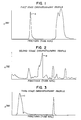
- Figures 1-3 are respectively chromatography profiles developed as a result of first stage, second stage and third stage column chromatographies of ammonium sulfate fractionated Parvovirus-immunized positive goat serum in accordance with the preferred method of producing the biologic of the invention.
- This Example sets forth the preferred procedures for the production and recovery of the biologic of the present invention.
- the goat blood samples were separately centrifuged (about 500 ml. at a time) using a fixed angle rotor centrifuge operated at 2000 rpm for 45 minutes to pellet the red blood cells.
- the plasma was then removed from the packed red cells in each sample, and volumetrically measured.
- Each separate culture was then stained with two types of fluorescent-labeled monoclonal antibodies respectively specific against T-helper cells (CD4) OKT-4 monoclonal antibody sold by Ortho Diagnostic of Raritan, New Jersey) and Natural Killer cells (CD 16) (LEU-7 monoclonal antibody sold by The Becton-Dickinson Co. of Mountain View, California).
- the stainings were performed following the supplier's directions, and after about one hour, the stained samples were analyzed using a flow cytometry device, namely a model 50H cytofluorograph (Ortho Instruments, Westwood, Mass.) to count Natural Killer cells in each culture.
- test animal serums were compared against a stained and counted control sample comprising cultured human white blood cells and 50 microliters of normal goat serum prepared as outlined previously. Those cultures which exhibited about a 50% increase in the number of Natural Killer cells, as compared with the control, were considered positives for the biologic of the invention. In this specific test three of the five goat serum samples gave positive results; one sample gave about a 50% increase, whereas the other two samples gave an increase on the order of 125%.
- the three positive serum samples were each further treated as described below (the procedure for only a single serum sample is set forth, but the method of treating all the samples was the same). In this example, the respective positive serum samples were treated separately; however, such samples could be pooled if desired.
- Second Stage Chromatography (using S-Sepharose® cation exchange chromatography resin Pharmacia Fine Chemicals, Sigma Chemical Co., St. Louis, Missouri)
- the final biologic product comprises proteinaceous component(s) which have not to date been completely characterized.
- the product is presently believed to be an interleukin protein or proteins having an apparent molecular weight in the range of 100,000 to 120,00 daltons; the components also appear to be glycosylated.
- a sample of the purified biologic made in accordance with the present invention has been deposited with the American Type Culture Collection; such sample has been accorded accession number 40105. Obviously, however, there is no desire to be bound to any preliminary or partial characterizations, and such are offered only in an effort to disclose all presently available pertinent information.
- ATH8 cells were used as targets for HIV infection. ATH8 cells were first treated with polybrene (a polymer of positively charged residues sold by Sigma Chemical Co. of St. Louis, Missouri) at a level of 2 micrograms per milliliter for 30 minutes at 37°C (5% CO2-supplemented air atmosphere). The treated cells were then collected by centrifugation and resuspended in freshly harvested and clarified RPMI -1640 medium containing HTLV-III-B virus.
- polybrene a polymer of positively charged residues sold by Sigma Chemical Co. of St. Louis, Missouri
- 0.1 ml of the cell suspension (containing 104 cells) was added to duplicate wells of a tissue culture plate.
- 0.1 milliliters of stimulant diluted with PBS was added to each test well, and 0.1 milliliters of straight PBS dilutant was added to each of the control wells.
- the stimulant was tested at concentrations of 0.32 and 1.0 micrograms per milliliter.
- the plate was incubated at 37°C with 5% CO2-supplemented atmosphere. After ten days of incubation, a 15 microliter aliquot was removed from each well, mixed with an equal volume of trypan blue, and the stained cells were examined microscopically for cell number and viability.
- a second test was run for seven days. The exposure and culture conditions were identical to Example II except concentration of 0.1, 0.32, 1.0, 3.2, 10, 32, and 100 micrograms/ml were tested with the incubation period shortened to seven days post-infection. The results for triplicate assays are presented in Table II. TABLE II CONCENTRATION PERCENT VIABILITY 100 5 32 11 10 13.5 3.2 12 1 15.5 0.32 16.5 0.1 21.5 Uninfected cell control 49 Virus Infected control 14.25
- Histopaque-separated monocytes isolated from the whole blood of an AIDS patient were cultured in RPMI -1640 medium containing 10% fetal calf serum at 37°C.
- the cells were cultured at a density of 2x10⁵ per 200 microliters (106 cells/ml) for five days in air enriched with 5% CO2.
- the interleukin-2 is commerically available from Collaborative Research, Inc. of Lexington, Mass. (Polyclone) and each culture contained 2.5 units of interleukin-2 per milliliter.
- the biologic was present in each culture at 50 micrograms per milliliter. Control cultures were run in parallel with the test cultures under identical conditions.
Landscapes
- Health & Medical Sciences (AREA)
- Life Sciences & Earth Sciences (AREA)
- Chemical & Material Sciences (AREA)
- Virology (AREA)
- General Health & Medical Sciences (AREA)
- Medicinal Chemistry (AREA)
- Organic Chemistry (AREA)
- Immunology (AREA)
- Public Health (AREA)
- Biochemistry (AREA)
- Animal Behavior & Ethology (AREA)
- Pharmacology & Pharmacy (AREA)
- Mycology (AREA)
- Veterinary Medicine (AREA)
- Microbiology (AREA)
- Proteomics, Peptides & Aminoacids (AREA)
- Molecular Biology (AREA)
- Epidemiology (AREA)
- Biophysics (AREA)
- Genetics & Genomics (AREA)
- Gastroenterology & Hepatology (AREA)
- Zoology (AREA)
- Toxicology (AREA)
- Medicines Containing Material From Animals Or Micro-Organisms (AREA)
- Micro-Organisms Or Cultivation Processes Thereof (AREA)
- Medicines Containing Antibodies Or Antigens For Use As Internal Diagnostic Agents (AREA)
Claims (3)
- Verwendung der mit der Hinterlegungsnummer ATCC 40105 bezeichneten und identifizierten immunstimulierenden biologischen Substanz zur Herstellung eines Medikaments zum in vivo-Inhibieren der Replikation des menschlichen Immunschwäsche-Virus in Gegenwart weißer Blutkörperchen in Zellen, die mit dem Virus infiziert sind.
- Verwendung nach Anspruch 1 zur Herstellung eines Medikaments zur Behandlung von Menschen.
- Verwendung der mit der Hinterlegungsnummer ATCC 40105 bezeichneten und identifizierten immunstimulierenden biologischen Substanz zum Inhibieren der Replikation des menschlichen Immunschwäche-Virus durch in vitro-Kontaktieren von Zellen, die mit dem Virus infiziert sind, mit der biologischen Substanz in Gegenwart weißer Blutkörperchen.
Priority Applications (1)
| Application Number | Priority Date | Filing Date | Title |
|---|---|---|---|
| AT88114582T ATE76302T1 (de) | 1987-09-22 | 1988-09-07 | Verwendung von einer immunstimulanten biologisten substanz zur herstellung eines medikaments zur behandlung des menschlichen immunschwaechevirus. |
Applications Claiming Priority (2)
| Application Number | Priority Date | Filing Date | Title |
|---|---|---|---|
| US9955487A | 1987-09-22 | 1987-09-22 | |
| US99554 | 2002-03-13 |
Publications (3)
| Publication Number | Publication Date |
|---|---|
| EP0308724A2 EP0308724A2 (de) | 1989-03-29 |
| EP0308724A3 EP0308724A3 (en) | 1990-01-31 |
| EP0308724B1 true EP0308724B1 (de) | 1992-05-20 |
Family
ID=22275565
Family Applications (1)
| Application Number | Title | Priority Date | Filing Date |
|---|---|---|---|
| EP88114582A Expired - Lifetime EP0308724B1 (de) | 1987-09-22 | 1988-09-07 | Verwendung von einer immunstimulanten biologisten Substanz zur Herstellung eines Medikaments zur Behandlung des menschlichen Immunschwächevirus |
Country Status (3)
| Country | Link |
|---|---|
| EP (1) | EP0308724B1 (de) |
| AT (1) | ATE76302T1 (de) |
| DE (1) | DE3871305D1 (de) |
Family Cites Families (2)
| Publication number | Priority date | Publication date | Assignee | Title |
|---|---|---|---|---|
| US4572834A (en) * | 1984-04-10 | 1986-02-25 | Clinical Reference Laboratory, Inc. | Biologic and method of preparing same |
| US4711876A (en) * | 1985-12-05 | 1987-12-08 | Catapano Salvatore J | Process for the treatment and remission of AIDS (acquired immune deficiency syndrome) |
-
1988
- 1988-09-07 DE DE8888114582T patent/DE3871305D1/de not_active Expired - Fee Related
- 1988-09-07 AT AT88114582T patent/ATE76302T1/de not_active IP Right Cessation
- 1988-09-07 EP EP88114582A patent/EP0308724B1/de not_active Expired - Lifetime
Also Published As
| Publication number | Publication date |
|---|---|
| DE3871305D1 (de) | 1992-06-25 |
| EP0308724A3 (en) | 1990-01-31 |
| EP0308724A2 (de) | 1989-03-29 |
| ATE76302T1 (de) | 1992-06-15 |
Similar Documents
| Publication | Publication Date | Title |
|---|---|---|
| Nair et al. | Immunoregulatory effects of morphine on human lymphocytes | |
| Hoffman et al. | Human T-cell leukemia virus type I infection of monocytes and microglial cells in primary human cultures. | |
| Schultze et al. | Neuraminidase treatment of avian infectious bronchitis coronavirus reveals a hemagglutinating activity that is dependent on sialic acid-containing receptors on erythrocytes | |
| EP0431129A1 (de) | Verfahren zur inaktivierung von viren in mit viren verunreinigten pharmazeutischen zusammensetzungen. | |
| US5213970A (en) | Method for obtaining soluble antitumor factor | |
| US5707814A (en) | CD8+ cell antiviral factor | |
| US4883662A (en) | Method of increasing natural killer cell population of cancer patients | |
| US7625565B2 (en) | Antiviral compositions comprising lysine-rich histone fractions prepared by pepsin treatment of thymic cell nuclei | |
| US4572834A (en) | Biologic and method of preparing same | |
| Lebon et al. | Different mechanisms for α and β interferon induction | |
| US5888726A (en) | Pertussis toxin induced lymphocytosis | |
| WO1980002375A1 (en) | High purity animal interferons | |
| US6027731A (en) | Pertussis toxin induced lymphocytosis | |
| EP0308724A2 (de) | Verwendung von einer immunstimulanten biologisten Substanz zur Herstellung eines Medikaments zur Behandlung des menschlichen Immunschwächevirus | |
| EP0133200A1 (de) | Diagnostisches Antigen für Träger der durch Pseudorabiesviren verursachten Krankheit bei Schweinen | |
| US5565549A (en) | CD8+ cell antiviral factor | |
| US4687665A (en) | Biologic and method of preparing same | |
| EP0048283A1 (de) | Virushemmende verbindung und verfahren zu deren herstellung | |
| EP0308717B1 (de) | Methode für die Behandlung von viraler Gehirnentzündung | |
| Storz et al. | On enteropathogenic bovine coronavirus | |
| US5563120A (en) | Cytokine preparation for immunotherapy | |
| US5580769A (en) | CD8+ cell antiviral factor | |
| EP1104770A2 (de) | Zusammensetzungen und Verfahren zur Detektion und Behandlung des Erworbenen Immun-Defizienz-Syndroms | |
| Pottathill et al. | Interferon-induced biochemical changes in cell membranes: Possible role of cellular enzyme superoxide dismutase | |
| Havell | [72] Production and quantitation of neutralizing antibodies for human fibroblast interferon |
Legal Events
| Date | Code | Title | Description |
|---|---|---|---|
| PUAI | Public reference made under article 153(3) epc to a published international application that has entered the european phase |
Free format text: ORIGINAL CODE: 0009012 |
|
| AK | Designated contracting states |
Kind code of ref document: A2 Designated state(s): AT BE CH DE ES FR GB GR IT LI LU NL SE |
|
| PUAL | Search report despatched |
Free format text: ORIGINAL CODE: 0009013 |
|
| RHK1 | Main classification (correction) |
Ipc: A61K 45/05 |
|
| AK | Designated contracting states |
Kind code of ref document: A3 Designated state(s): AT BE CH DE ES FR GB GR IT LI LU NL SE |
|
| 17P | Request for examination filed |
Effective date: 19900316 |
|
| 17Q | First examination report despatched |
Effective date: 19910225 |
|
| GRAA | (expected) grant |
Free format text: ORIGINAL CODE: 0009210 |
|
| AK | Designated contracting states |
Kind code of ref document: B1 Designated state(s): AT BE CH DE ES FR GB GR IT LI LU NL SE |
|
| PG25 | Lapsed in a contracting state [announced via postgrant information from national office to epo] |
Ref country code: IT Free format text: LAPSE BECAUSE OF FAILURE TO SUBMIT A TRANSLATION OF THE DESCRIPTION OR TO PAY THE FEE WITHIN THE PRE;WARNING: LAPSES OF ITALIAN PATENTS WITH EFFECTIVE DATE BEFORE 2007 MAY HAVE OCCURRED AT ANY TIME BEFORE 2007. THE CORRECT EFFECTIVE DATE MAY BE DIFFERENT FROM THE ONE RECORDED.SCRIBED TIME-LIMIT Effective date: 19920520 Ref country code: AT Effective date: 19920520 Ref country code: BE Effective date: 19920520 Ref country code: SE Effective date: 19920520 Ref country code: ES Free format text: THE PATENT HAS BEEN ANNULLED BY A DECISION OF A NATIONAL AUTHORITY Effective date: 19920520 Ref country code: GR Free format text: LAPSE BECAUSE OF FAILURE TO SUBMIT A TRANSLATION OF THE DESCRIPTION OR TO PAY THE FEE WITHIN THE PRESCRIBED TIME-LIMIT Effective date: 19920520 |
|
| REF | Corresponds to: |
Ref document number: 76302 Country of ref document: AT Date of ref document: 19920615 Kind code of ref document: T |
|
| REF | Corresponds to: |
Ref document number: 3871305 Country of ref document: DE Date of ref document: 19920625 |
|
| ET | Fr: translation filed | ||
| PG25 | Lapsed in a contracting state [announced via postgrant information from national office to epo] |
Ref country code: LU Free format text: LAPSE BECAUSE OF NON-PAYMENT OF DUE FEES Effective date: 19920930 |
|
| PLBE | No opposition filed within time limit |
Free format text: ORIGINAL CODE: 0009261 |
|
| STAA | Information on the status of an ep patent application or granted ep patent |
Free format text: STATUS: NO OPPOSITION FILED WITHIN TIME LIMIT |
|
| 26N | No opposition filed | ||
| PGFP | Annual fee paid to national office [announced via postgrant information from national office to epo] |
Ref country code: CH Payment date: 19950810 Year of fee payment: 8 |
|
| PGFP | Annual fee paid to national office [announced via postgrant information from national office to epo] |
Ref country code: FR Payment date: 19950811 Year of fee payment: 8 Ref country code: NL Payment date: 19950811 Year of fee payment: 8 |
|
| PGFP | Annual fee paid to national office [announced via postgrant information from national office to epo] |
Ref country code: DE Payment date: 19950818 Year of fee payment: 8 |
|
| PGFP | Annual fee paid to national office [announced via postgrant information from national office to epo] |
Ref country code: GB Payment date: 19950825 Year of fee payment: 8 |
|
| PG25 | Lapsed in a contracting state [announced via postgrant information from national office to epo] |
Ref country code: GB Effective date: 19960907 |
|
| PG25 | Lapsed in a contracting state [announced via postgrant information from national office to epo] |
Ref country code: LI Effective date: 19960930 Ref country code: FR Effective date: 19960930 Ref country code: CH Effective date: 19960930 |
|
| PG25 | Lapsed in a contracting state [announced via postgrant information from national office to epo] |
Ref country code: NL Effective date: 19970401 |
|
| GBPC | Gb: european patent ceased through non-payment of renewal fee |
Effective date: 19960907 |
|
| REG | Reference to a national code |
Ref country code: CH Ref legal event code: PL |
|
| NLV4 | Nl: lapsed or anulled due to non-payment of the annual fee |
Effective date: 19970401 |
|
| PG25 | Lapsed in a contracting state [announced via postgrant information from national office to epo] |
Ref country code: DE Effective date: 19970603 |
|
| REG | Reference to a national code |
Ref country code: FR Ref legal event code: ST |
|
| REG | Reference to a national code |
Ref country code: FR Ref legal event code: ST |