EP0308785A2 - Dihydropyridinether, Verfahren zu ihrer Herstellung und ihre Verwendung - Google Patents
Dihydropyridinether, Verfahren zu ihrer Herstellung und ihre Verwendung Download PDFInfo
- Publication number
- EP0308785A2 EP0308785A2 EP88114979A EP88114979A EP0308785A2 EP 0308785 A2 EP0308785 A2 EP 0308785A2 EP 88114979 A EP88114979 A EP 88114979A EP 88114979 A EP88114979 A EP 88114979A EP 0308785 A2 EP0308785 A2 EP 0308785A2
- Authority
- EP
- European Patent Office
- Prior art keywords
- general formula
- carbon atoms
- chain
- straight
- nitro
- Prior art date
- Legal status (The legal status is an assumption and is not a legal conclusion. Google has not performed a legal analysis and makes no representation as to the accuracy of the status listed.)
- Granted
Links
- 0 CC1=C(C)NC(*)=C(*)C1* Chemical compound CC1=C(C)NC(*)=C(*)C1* 0.000 description 2
Classifications
-
- C—CHEMISTRY; METALLURGY
- C07—ORGANIC CHEMISTRY
- C07D—HETEROCYCLIC COMPOUNDS
- C07D401/00—Heterocyclic compounds containing two or more hetero rings, having nitrogen atoms as the only ring hetero atoms, at least one ring being a six-membered ring with only one nitrogen atom
- C07D401/02—Heterocyclic compounds containing two or more hetero rings, having nitrogen atoms as the only ring hetero atoms, at least one ring being a six-membered ring with only one nitrogen atom containing two hetero rings
- C07D401/12—Heterocyclic compounds containing two or more hetero rings, having nitrogen atoms as the only ring hetero atoms, at least one ring being a six-membered ring with only one nitrogen atom containing two hetero rings linked by a chain containing hetero atoms as chain links
-
- A—HUMAN NECESSITIES
- A61—MEDICAL OR VETERINARY SCIENCE; HYGIENE
- A61P—SPECIFIC THERAPEUTIC ACTIVITY OF CHEMICAL COMPOUNDS OR MEDICINAL PREPARATIONS
- A61P9/00—Drugs for disorders of the cardiovascular system
-
- C—CHEMISTRY; METALLURGY
- C07—ORGANIC CHEMISTRY
- C07D—HETEROCYCLIC COMPOUNDS
- C07D211/00—Heterocyclic compounds containing hydrogenated pyridine rings, not condensed with other rings
- C07D211/04—Heterocyclic compounds containing hydrogenated pyridine rings, not condensed with other rings with only hydrogen or carbon atoms directly attached to the ring nitrogen atom
- C07D211/80—Heterocyclic compounds containing hydrogenated pyridine rings, not condensed with other rings with only hydrogen or carbon atoms directly attached to the ring nitrogen atom having two double bonds between ring members or between ring members and non-ring members
- C07D211/84—Heterocyclic compounds containing hydrogenated pyridine rings, not condensed with other rings with only hydrogen or carbon atoms directly attached to the ring nitrogen atom having two double bonds between ring members or between ring members and non-ring members with hetero atoms or with carbon atoms having three bonds to hetero atoms, with at the most one bond to halogen directly attached to ring carbon atoms
- C07D211/86—Oxygen atoms
-
- C—CHEMISTRY; METALLURGY
- C07—ORGANIC CHEMISTRY
- C07D—HETEROCYCLIC COMPOUNDS
- C07D211/00—Heterocyclic compounds containing hydrogenated pyridine rings, not condensed with other rings
- C07D211/04—Heterocyclic compounds containing hydrogenated pyridine rings, not condensed with other rings with only hydrogen or carbon atoms directly attached to the ring nitrogen atom
- C07D211/80—Heterocyclic compounds containing hydrogenated pyridine rings, not condensed with other rings with only hydrogen or carbon atoms directly attached to the ring nitrogen atom having two double bonds between ring members or between ring members and non-ring members
- C07D211/84—Heterocyclic compounds containing hydrogenated pyridine rings, not condensed with other rings with only hydrogen or carbon atoms directly attached to the ring nitrogen atom having two double bonds between ring members or between ring members and non-ring members with hetero atoms or with carbon atoms having three bonds to hetero atoms, with at the most one bond to halogen directly attached to ring carbon atoms
- C07D211/90—Carbon atoms having three bonds to hetero atoms with at the most one bond to halogen
Definitions
- the invention relates to new dihydropyridine ethers, several processes for their preparation and their use in medicaments, in particular in medicaments which influence the circulation.
- the present invention relates to new dihydropyridine ethers of the general formula (I) in which R1 - for cyano, nitro or - represents a group -COOR5, wherein R5 - straight-chain, branched or cyclic alkyl having up to 6 carbon atoms, which can be interrupted by an oxygen in the chain, and the one or more identical or different by halogen, cyano, hydroxy, phenyl, phenoxy or by a group of formula can be substituted R2 - represents aryl having 6 to 12 carbon atoms, which can be substituted up to 3 times identically or differently by halogen, cyano, nitro, trifluoromethyl, trifluoromethoxy, trifluoromethylthio, alkyl having up to 4 carbon atoms or alkoxy having up to 4 carbon atoms, R3 - represents aryl having 6 to 12 carbon atoms, or - represents straight-chain, branched or cyclic alkyl having up to 6 carbon
- Physiologically acceptable salts can be salts of the compounds according to the invention with inorganic or organic acids.
- examples include: hydrohalides such as hydrochlorides or hydrobromides ⁇ hydrogen sulfates, sulfates, hydrogen phosphates, phosphates, or acetates, maleates, fumarates, citrates, tartrates, lactates or benzoates.
- the compounds according to the invention exist in stereoisomeric forms which either behave like image and mirror image (enantiomers) or do not behave like image and mirror image (diastereomers).
- the invention relates to both the antipodes and the racemic forms as well as the diastereomer mixtures.
- the racemic forms, like the diastereomers, can be separated into the stereoisomerically uniform constituents in a known manner (cf. E.L. Eliel, Stereochemistry of Carbon Compounds, McGraw Hill, 1962).
- the compounds according to the invention are new and have valuable pharmacological properties. They affect blood pressure and can therefore be used to combat circulatory diseases.
- Preferred compounds of the general formula (I) are those in which R1 - for nitro or - represents a group -COOR5, wherein R5 - straight-chain or branched alkyl having up to 4 carbon atoms, which can be interrupted by an oxygen atom in the chain, and by fluorine, chlorine, bromine, cyano, hydroxy, phenyl or by a group of the formula can be substituted R2 - stands for phenyl, which can be substituted up to 2 times the same or different by fluorine, chlorine, bromine, nitro, trifluoromethyl, trifluoromethoxy, methyl or methoxy
- R3 - represents phenyl, or - for straight-chain or branched alkyl having up to 4 carbon atoms, and R4 - for straight-chain alkyl with up to 4 carbon atoms or - stands for amino, and their physiologically acceptable salts.
- Particularly preferred compounds of the general formula (I) are those in which R1 - for nitro or - stands for a group -COOR5 wherein R5 - represents straight-chain or branched alkyl having up to 3 carbon atoms, which is represented by a group of the formula can be substituted R2 - stands for phenyl which can be substituted up to 2 times by the same or different means by chlorine, nitro or trifluoromethyl, R3 - for phenyl or methyl, and R4 - for methyl or - stands for amino and their physiologically acceptable salts.
- solvents are suitable as solvents. These preferably include alcohols such as methanol, ethanol, propanol or isopropanol, or ethers such as diethyl ether, dioxane, tetrahydrofuran, glycol monomethyl ether or glycol dimethyl ether, or amides such as dimethylformamide or hexamethylphosphoric acid triamide, or glacial acetic acid, acetonitrile, dimethyl sulfoxide or pyridine, mixtures of these are also possible Use solvents.
- alcohols such as methanol, ethanol, propanol or isopropanol
- ethers such as diethyl ether, dioxane, tetrahydrofuran, glycol monomethyl ether or glycol dimethyl ether, or amides such as dimethylformamide or hexamethylphosphoric acid triamide, or glacial acetic acid, acetonitrile, dimethyl sulfoxide or pyridine, mixture
- reaction temperatures can be varied within a wide range. In general, one works between + 20 ° C and + 150 ° C, preferably between + 20 ° C and + 100 ° C, in particular the boiling point of the respective solvent.
- the reaction can be carried out at normal pressure, but also at elevated or reduced pressure. Generally one works under normal pressure.
- the ratio of the substances involved in the reaction is arbitrary. In general, one works with molar amounts of the reactants. However, it has proven expedient to use nitroacetone or the nitroacetone-ammonia addition product in an excess of up to 20 times, preferably up to 10 times.
- aldehydes of the general formula (II) used as starting materials are known or can be known ten methods are produced [E. Mosettig, Organic Reactions Vol. III, 218 (1954)].
- ketones of the general formula (III) used as starting materials are known or can be prepared by known methods [D. Borrmann, Houben-Weyls “Methods of Organic Chemistry” Vol. VII / 4, 230 (1968); N. Levy, CW Scaife, J. Chem. Soc. (London) 1946 , 1100; CD Hurd, ME Nilson, J. Org. Chem. 20 , 927 (1955)].
- ketones of the general formula (VI) used as starting materials are known or can be prepared by known methods [Tegner, Acta Chem. Scand. 6: 782 (1952); Reppe et al., Liebigs Ann. Chem. 596 , 1 (1955); D. Gauthier, Annales de Chimie [8] 16 , 318; Stroemer et al., Chem. Ber. 28 , 1253 (1895); St. Welin, Chem. Ber. 35 , 3553 (1902)].
- the enamines of the general formulas (V) and (VIII) used as starting materials are known or can be prepared by known methods [FA Glickman, AC Cope, J. Am. Chem. Soc. 67: 1017 (1945); H. Boehme, K.-H. Weisel, Arch. Pharm. 310 , 30 (1977)].
- Knoevenagel condensation products of the formula (IV) used as starting materials are known or can be prepared by methods known per se [G. Jones, "The Knoevenagel Condensation” Organic Reactions XV, 204 (1976); A. Dornow, W. Sassenberg, Liebigs Ann. Chem., 602 , 14 (1957)].
- the compounds according to the invention influence the contractile force of the heart and the tone of the smooth muscles. They can therefore be used in medicinal products to influence the pathologically changed blood pressure, as coronary therapeutic agents and for the treatment of heart failure. They can also be used to treat irregular heartbeat, to lower blood sugar, to reduce swelling of the mucous membranes and to influence the salt and fluid balance.
- the cardiac effect was found on isolated atria of guinea pig hearts.
- the left atria are isolated from guinea pig hearts and hung in an organ bath thermostatted to 32 ° C. Krebs-Henseleit solution with the following composition (118.5 mmol / l NaCl, 4.75 mmol / l KCl, 1.19 mmol / l KH2PO4, 119 mmol / l MgSO4, 25 mmol / l NaHCO3, 0.013 mmol / l NaEDTA, 1.8 mmol / l CaCl2) with the addition of 10 mmol / l Glucose as an energy-supplying substrate.
- the solution is gassed with carbogen (95% CO2, 5% O2) to maintain a pH of 7.4.
- the formulations are prepared, for example, by stretching the active ingredients with solvents and / or carriers, if appropriate using emulsifiers and / or dispersants, it being possible, for example if organic solvents to be used as diluents, to use organic solvents as auxiliary solvents.
- auxiliary substances are: water, non-toxic organic solvents, such as paraffins (e.g. petroleum fractions), vegetable oils (e.g. peanut / sesame oil), alcohols (e.g. ethyl alcohol, glycerin), carriers, e.g. natural stone flours (e.g. kaolins, clays, talc, chalk), synthetic stone flours (e.g. highly disperse silica, silicates), sugar (e.g. cane, milk and dextrose), emulsifiers (e.g. polyoxyethylene fatty acid esters, polyoxyethylene fatty alcohol ethers, Alkyl sulfonates and aryl sulfonates), dispersants (e.g.
- paraffins e.g. petroleum fractions
- vegetable oils e.g. peanut / sesame oil
- alcohols e.g. ethyl alcohol, glycerin
- carriers e.g. natural stone flours (e.g
- lignin e.g. lignin, sulfite lye, methyl cellulose, starch and polyvinylpyrrolidone
- lubricants e.g. magnesium stearate, talc, stearic acid and sodium lauryl sulfate.
- tablets can of course also contain additives, such as sodium citrate, calcium carbonate and dicalcium phosphate, together with various additives, such as starch, preferably potato starch, gelatin and the like, in addition to the carrier substances mentioned.
- Lubricants such as magnesium stearate, sodium lauryl sulfate and talc can also be used for tableting.
- the active ingredients can be mixed with various flavor enhancers or colorants in addition to the above-mentioned auxiliaries.
- solutions of the active ingredients can be used using suitable liquid carrier materials.
- Example 6 Analogously to Example 6, the title compound is obtained from 2-phenoxy-1- (2-trifluoromethylphenyl) but-1-en-3-one and nitroacetone-ammonia addition compound after chromatography on silica gel. Yield: 18% of theory Mp: 123 ° C
Landscapes
- Chemical & Material Sciences (AREA)
- Organic Chemistry (AREA)
- Health & Medical Sciences (AREA)
- Engineering & Computer Science (AREA)
- Bioinformatics & Cheminformatics (AREA)
- Cardiology (AREA)
- Heart & Thoracic Surgery (AREA)
- Chemical Kinetics & Catalysis (AREA)
- General Chemical & Material Sciences (AREA)
- Medicinal Chemistry (AREA)
- Nuclear Medicine, Radiotherapy & Molecular Imaging (AREA)
- Pharmacology & Pharmacy (AREA)
- Life Sciences & Earth Sciences (AREA)
- Animal Behavior & Ethology (AREA)
- General Health & Medical Sciences (AREA)
- Public Health (AREA)
- Veterinary Medicine (AREA)
- Pharmaceuticals Containing Other Organic And Inorganic Compounds (AREA)
- Hydrogenated Pyridines (AREA)
- Plural Heterocyclic Compounds (AREA)
Abstract
Description
- Die Erfindung betrifft neue Dihydropyridinether, mehrere Verfahren zu ihrer Herstellung und ihre Verwendung in Arzneimitteln, insbesondere in kreislaufbeeinflussenden Arzneimitteln.
- Die vorliegende Erfindung betrifft neue Dihydropyridinether der allgemeinen Formel (I)

R¹ - für Cyano, Nitro oder
- für eine Gruppe -COOR⁵ steht,
worin
R⁵ - geradkettiges, verzweigtes oder cyclisches Alkyl mit bis zu 6 Kohlenstoffatomen bedeutet, das durch ein Sauerstoff in der Kette unterbrochen sein kann, und das ein- oder mehrfach gleich oder verschieden durch Halogen, Cyano, Hydroxy, Phenyl, Phenoxy oder durch eine Gruppe der Formel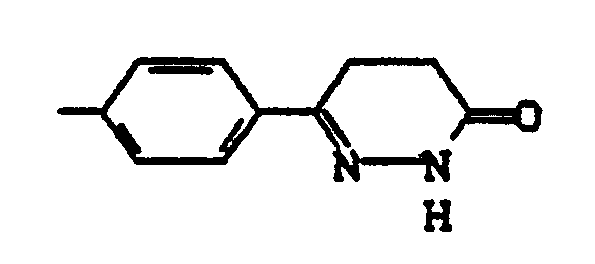
R² - für Aryl mit 6 bis 12 Kohlenstoffatomen steht, das bis zu 3-fach gleich oder verschieden durch Halogen, Cyano, Nitro, Trifluormethyl, Trifluormethoxy, Trifluormethylthio, Alkyl mit bis zu 4 Kohlenstoffatomen oder Alkoxy mit bis zu 4 Kohlenstoffatomen substituiert sein kann,
R³ - für Aryl mit 6 bis 12 Kohlenstoffatomen steht, oder
- für geradkettiges, verzweigtes oder cyclisches Alkyl mit bis zu 6 Kohlenstoffatomen steht
und
R⁴ - für geradkettiges Alkyl mit bis 2 bis 4 Kohlenstoffatomen oder
- für Amino steht
und deren physiologisch unbedenkliche Salze. - Physiologisch unbedenkliche Salze können Salze der erfindungsgemäßen Verbindungen mit anorganischen oder organischne Säuren sein. Als Beispiele seien genannt: Hydrohalogenide wie zum Beispiel Hydrochloride oder Hydrobromide¸ Hydrogensulfate, Sulfate, Hydrogenphosphate, Phosphate, oder Acetate, Maleate, Fumarate, Citrate, Tartrate, Lactate oder Benzoate.
- Die erfindungsgemäßen Verbindungen existieren in stereoisomeren Formen, die sich entweder wie Bild und Spiegelbild (Enantiomere) oder die sich nicht wie Bild und Spiegelbild (Diastereomere) verhalten. Die Erfindung betrifft sowohl die Antipoden als auch die Racemformen sowie die Diastereomerengemische. Die Racemformen lassen sich ebenso wie die Diastereomeren in bekannter Weise in die stereoisomer einheitlichen Bestandteile trennen (vgl. E.L. Eliel, Stereochemistry of Carbon Compounds, McGraw Hill, 1962).
- Die erfindungsgemäßen Verbindungen sind neu und besitzen wertvolle pharmakologische Eigenschaften. Sie beeinflussen den Blutdruck und können somit zur Bekämpfung von Kreislauferkrankungen eingesetzt werden.
- Bevorzugte Verbindungen der allgemeinen Formel (I) sind solche
in denen
R¹ - für Nitro oder
- für eine Gruppe -COOR⁵ steht,
worin
R⁵ - geradkettiges oder verzweigtes Alkyl mit bis zu 4 Kohlenstoffatomen bedeutet, das durch ein Sauerstoffatom in der Kette unterbrochen sein kann, und das durch Fluor, Chlor, Brom, Cyano, Hydroxy, Phenyl oder durch eine Gruppe der Formel
R² - für Phenyl steht, das bis zu 2-fach gleich oder verschieden durch Fluor, Chlor, Brom, Nitro, Trifluormethyl, Trifluormethoxy, Methyl oder Methoxy substituiert sein kann
R³ - für Phenyl steht, oder
- für geradkettiges oder verzweigtes Alkyl mit bis zu 4 Kohlenstoffatomen,
und
R⁴ - für geradkettiges Alkyl mit bis zu 4 Kohlenstoffatomen oder
- für Amino steht,
und deren physiologisch unbedenkliche Salze. - Besonders bevorzugte Verbindungen der allgemeinen Formel (I) sind solche,
in denen
R¹ - für Nitro oder
- für eine Gruppe -COOR⁵ steht
worin
R⁵ - für geradkettiges oder verzweigtes Alkyl mit bis zu 3 Kohlenstoffatomen steht, das durch eine Gruppe der Formel
R² - für Phenyl steht, das bis zu 2-fach gleich oder verschieden durch Chlor, Nitro oder Trifluormethyl substituiert sein kann,
R³ - für Phenyl oder Methyl,
und
R⁴ - für Methyl oder
- für Amino steht
und deren physiologisch unbedenkliche Salze. - Die erfindungsgemäßen Verbindungen der allgemeinen Formel (I),
in welcher
R¹, R², R³ und R⁴ die oben angegebene Bedeutung haben,
erhält man,
indem man
[A] Aldehyde der allgemeinen Formel (II)
R² - die oben angegebene Bedeutung hat
und Ketone der allgemeinen Formel (III)
R¹ und R⁴ die oben angegebene Bedeutung haben,
oder deren Knoevenagel-Kondensationsprodukte (Ylidenverbindungen) der allgemeinen Formel (IV)
R¹, R² und R⁴ die oben angegebene Bedeutung haben,
mit Enaminen der allgemeinen Formel (V)
R³ die oben angegebene Bedeutung hat,
in inerten Lösemitteln umsetzt,
oder indem man
[B] Aldehyde der allgemeinen Formel (II) und Ketone der allgemeinen Formel (VI)

R³ die oben angegebene Bedeutung hat,
oder deren Ylidenverbindungen der allgemeinen Formel (VII)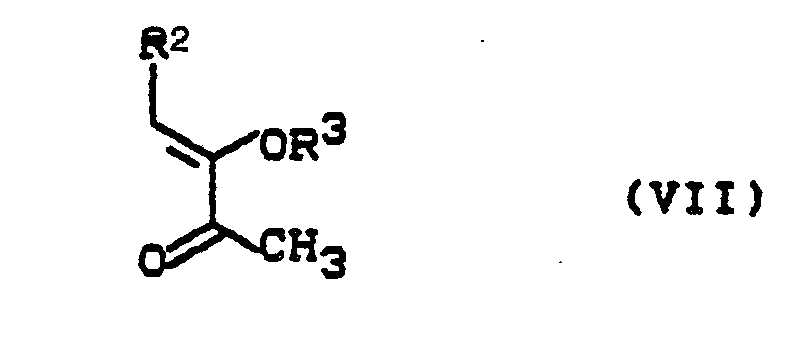
R² und R³ die oben angegebene Bedeutung haben,
mit Ammoniak und Ketonen der allgemeinen Formel (III), oder mit Enaminen der allgemeinen Formel (VIII)
R¹ und R⁴ die oben angegebene Bedeutung haben,
in inerten Lösemitteln umsetzt. - Je nach Art der verwendeten Ausgangsstoffe können die Synthesevarianten A bzw. B für die erfindungsgemäßen Verbindungen durch folgende Formelschemata wiedergegeben werden:

- Als Lösemittel kommen alle inerten organischen Lösemittel in Frage. Hierzu gehören vorzugsweise Alkohole wie Methanol, Ethanol, Propanol oder Isopropanol, oder Ether wie Diethylether, Dioxan, Tetrahydrofuran, Glykolmonomethylether oder Glykoldimethylether, oder Amide wie Dimethylformamid oder Hexamethylphosphorsäuretriamid, oder Eisessig, Acetonitril, Dimethylsulfoxid oder Pyridin, Ebenso ist es möglich, Gemische der genannten Lösemittel einzusetzen.
- Die Reaktionstemperaturen können in einem größeren Bereich variiert werden. Im allgemeinen arbeitet man zwischen +20°C und +150°C, vorzugsweise zwischen +20°C und +100°C, insbesondere der Siedetemperatur des jeweiligen Lösemittels.
- Die Umsetzung kann bei Normaldruck, aber auch bei erhöhtem oder erniedrigtem Druck durchgeführt werden. Im allgemeinen arbeitet man unter Normaldruck.
- Bei der Durchführung der erfindungsgemäßen Verfahren A und B ist das Verhältnis der an der Reaktion beteiligten Stoffe beliebig. Im allgemeinen arbeitet man mit molaren Mengen der Reaktanden. Es hat sich aber als zweckmäßig erwiesen, Nitroaceton bzw. das Nitroaceton-Ammoniak-Additionsprodukt im bis zu 20-fachen, bevorzugt bis zu 10-fachen Überschuß einzusetzen.
- Die als Ausgangsstoffe eingesetzten Aldehyde der allgemeinen Formel (II) sind bekannt oder können nach bekann ten Methoden hergestellt werden [E. Mosettig, Organic Reactions Vol. III, 218 (1954)].
- Die als Ausgangsstoffe eingesetzten Ketone der allgemeinen Formel (III) sind bekannt oder können nach bekannten Methoden hergestellt werden [D. Borrmann, Houben-Weyls "Methoden der organischen Chemie" Bd. VII/4, 230 (1968); N. Levy, C.W. Scaife, J. Chem. Soc. (London) 1946, 1100; C.D. Hurd, M.E. Nilson, J. Org. Chem. 20, 927 (1955)].
- Die als Ausgangsstoffe eingesetzten Ketone der allgemeinen Formel (VI) sind bekannt oder können nach bekannten Methoden hergestellt werden [Tegner, Acta Chem. Scand. 6, 782 (1952); Reppe et al., Liebigs Ann. Chem. 596, 1 (1955); D. Gauthier, Annales de Chimie [8] 16, 318; Stroemer et al., Chem. Ber. 28, 1253 (1895); St. Welin, Chem. Ber. 35, 3553 (1902)].
- Die als Ausgangsstoffe eingesetzten Enamine der allgemeinen Formeln (V) und (VIII) sind bekannt oder können nach bekannten Methoden hergestellt werden [F.A. Glickman, A.C. Cope, J. Am. Chem. Soc. 67, 1017 (1945); H. Boehme, K.-H. Weisel, Arch. Pharm. 310, 30 (1977)].
- Die als Ausgangsstoffe eingesetzten Knoevenagel-Kondensationsprodukte der Formel (IV) (Ylidenverbindungen) sind teilweise bekannt oder können nach an sich bekannten Methoden hergestellt werden [G. Jones, "The Knoevenagel Condensation" Organic Reactions XV, 204 (1976); A. Dornow, W. Sassenberg, Liebigs Ann. Chem., 602, 14 (1957)].
- Die als Ausgangsstoffe eingesetzten Ylidenverbindungen der allgemeinen Formel (VII) sind teilweise bekannt oder können nach bekannten Methoden hergestellt werden [W. Grell, H. Machleit, Liebigs Ann. Chem. 699, 53 (1966); V. Rosnati, A. Salimbeni, Gazz. Chim. Ital. 107, 271 (1977)].
- Die vorstehenden Herstellungsverfahren sind lediglich zur Verdeutlichung angegeben. Die Herstellung der Verbindungen der Formel I ist nicht auf diese Verfahren beschränkt, sondern jede Modifikation dieser Verfahren ist in gleicher Weise für die Herstellung der erfindungsgemäßen Verbindungen anwendbar.
- Die erfindungsgemäßen Verbindungen beeinflussen die Kontraktionskraft des Herzens und den Tonus der glatten Muskulatur. Sie können deshalb in Arzneimitteln zur Beeinflussung des pathologisch veränderten Blutdrucks, als Koronartherapeutika und zur Behandlung der Herzinsuffizienz, eingesetzt werden. Darüberhinaus können sie zur Behandlung von Herzrhythmusstörungen, zur Senkung des Blutzuckers, zur Abschwellung von Schleimhäuten und zur Beeinflussung des Salz- und Flüssigkeitshaushaltes verwendet werden.
- Die Herzwirkung wurde an isolierten Vorhöfen von Meerschweinschenherzen gefunden.
- Dazu werden die linken Vorhöfe von Meerschweinchenherzen isoliert, und in ein auf 32°C thermostatisiertes Organbad gehängt. Als Inkubationsmedium dient Krebs-Henseleit-Lösung mit folgender Zusammensetzung (118,5 mmol/l NaCl, 4,75 mmol/l KCl, 1,19 mmol/l KH₂PO₄, 119 mmol/l MgSO₄, 25 mmol/l NaHCO₃, 0,013 mmol/l NaEDTA, 1,8 mmol/l CaCl₂) unter Zusatz von 10 mmol/l Glukose als energielieferndes Substrat. Die Lösung wird mit Carbogen (95 % CO₂, 5 % O₂) zur Aufrechterhaltung eines pH-Wertes von 7,4 begast. Die linken Vorhöfe werden unter Einstellung eines bestimmten Grundtones in das Organbad eingespannt, und die Spannung mittels eines Kraftaufnehmers registriert. Unter periodischer elektrischer Reizung werden die dabei erfolgenden Kontraktionen fortlaufend auf einem Schnellschreiber aufgezeichnet. In Gegenwart der jeweiligen erfindungsgemäßen Verbindungen kommt es dabei zu einer prozentualen Veränderung gegenüber dem gleich 100 % gesetzten Ausgangswert:
Beispiel-Nr. Konzentration prozentuale Änderung der Kontraktionskraft 5 10⁻² + 23 7 10⁻² + 30 - Die Formulierungen werden beispielsweise hergestellt durch Verstrecken der Wirkstoffe mit Lösungsmitteln und/oder Trägerstoffen, gegebenenfalls unter Verwendung von Emulgiermitteln und/oder Dispergiermitteln, wobei z.B. im Fall der Benutzung von Wasser als Verdünnungsmittel gegebenenfalls organische Lösungsmittel als Hilfslösungsmittel verwendet werden können.
- Als Hilfsstoffe seien beispielsweise aufgeführt: Wasser, nicht-toxische organische Lösungsmittel, wie Paraffine (z.B. Erdölfraktionen), pflanzliche Öle (z.B. Erdnuß/Sesamöl), Alkohole (z. B. Ethylalkohol, Glycerin), Trägerstoffe, wie z.B. natürliche Gesteinsmehle (z.B. Kaoline, Tonerden, Talkum, Kreide), synthetische Gesteinsmehle (z.B. hochdisperse Kieselsäure, Silikate), Zucker (z.B. Rohr-, Milch- und Traubenzucker), Emulgiermittel (z.B. Polyoxyethylen-Fettsäure-Ester, Polyoxyethylen-Fettalkohol-Ether, Alkylsulfonate und Arylsulfonate), Dispergiermittel (z.B. Lignin, Sulfitablaugen, Methylcellulose, Stärke und Polyvinylpyrrolidon) und Gleitmittel (z.B. Magnesiumstearat, Talkum, Stearinsäure und Natriumlaurylsulfat).
- Die Applikation erfolgt in üblicher Weise, vorzugsweise oral oder parenteral, insbesondere perlingual oder intravenös. Im Falle der oralen Anwendung können Tabletten selbstverständlich außer den genannten Trägerstoffen auch Zusätze, wie Natriumcitrat, Calciumcarbonat und Dicalciumphosphat zusammen mit verschiedenen Zuschlagstoffen, wie Stärke, vorzugsweise Kartoffelstärke, Gelatine und dergleichen enthalten. Weiterhin können Gleitmittel, wie Magnesiumstearat, Natriumlaurylsulfat und Talkum zum Tablettieren mitverwendet werden. Im Falle wäßriger Sus pensionen können die Wirkstoffe außer den obengenannten Hilfsstoffen mit verschiedenen Geschmacksaufbesserern oder Farbstoffen versetzt werden.
- Für den Fall der parenteralen Anwendung können Lösungen der Wirkstoffe unter Verwendung geeigneter flüssiger Trägermaterialien eingesetzt werden.
- Im allgemeinen hat es sich als vorteilhaft erwiesen, bei intravenöser Applikation Mengen von etwa 0,001 bis 1 mg/kg, vorzugsweise etwa 0,01 bis 0,5 mg/kg Körpergewicht zur Erzielung wirksamer Ergebnisse zu verabreichen, und bei oraler Applikation beträgt die Dosierung etwa 0,01 bis 20 mg/kg, vorzugsweise 0,1 bis 10 mg/kg Körpergewicht.
- Trotzdem kann es gegebenenfalls erforderlich sein, von den genannten Mengen abzuweichen, und zwar in Abhängigkeit vom Körpergewicht bzw. der Art des Applikationsweges, vom individuellen Verhalten gegenüber dem Medikament, der Art von dessen Formulierung und dem Zeitpunkt bzw. Intervall, zu welchen die Verabreichung erfolgt. So kann es in einigen Fällen ausreichend sein, mit weniger als der vorgenannten Mindestmenge auszukommen, während in anderen Fällen die genannte obere Grenze überschritten werden muß. Im Falle der Applikation größerer Mengen kann es empfehlenswert sein, diese in mehreren Einzelgaben über den Tag zu verteilen.
-

- In 2 mol 1,1-Dimethoxyaceton werden bei max. 60°C 2 mol Acetylbromid zugetropft und 1 h bei 60°C nachgerührt. Das 1-Brom-1-methoxy-aceton wird im Vakuum destilliert (55% / 11 Torr); man erhält 271 g , die tropfenweise mit 1,614 mol Triethylphosphit versetzt werden. Danach wird 1 h bei 120°C und 1 h bei 140°C Ethylbromid abdestilliert. Der Rückstand wird im Ölpumpenvakuum destilliert (88°C / 0,05 Torr) (Ann. Chem. 696, 59 (1966))
Ausbeute: 280,4 g (62,5% der Theorie) -

- Zu einer Suspension von 0,106 mol Natriumhydrid in 200 ml absolutem Dioxan tropft man in 0,5 h 0,102 mol Phosphonat aus Beispiel 1, läßt 0,5 h nachrühren und tropft dann unter Kühlung bei Raumtemperatur 0,100 Mol o-Trifluormethylbenzaldehyd zu. Man läßt 3 h nachrühren, gibt 2 ml Wasser in 20 ml Dioxan zu, dampft das Lösemittel im Vakuum ab und fraktioniert den Rückstand im Ölpumpenvakuum.
Sdp.: 60 - 65°C (0,01 Torr)
Ausbeute: 12,2 g (50% der Theorie)
Das Produkt liegt laut NMR als cis/trans-Gemisch im Verhältnis 2:3 vor. -

- 50 mmol Methoxybenzalaceton aus Beispiel 2 werden in 30 ml Isopropanol bei 60°C über 4 h in Portionen mit insgesamt 0,15 mol Nitroaceton-Ammoniak-Addukt versetzt. Es wird weitere 4 h bei 60°C gerührt. Anschließend wird das Lösemittel abrotiert, der Rückstand wird an Kiesel gel mit Chloroform chromatographiert. Die vereinigten Produktfraktionen werden aus Isopropanol/Petrolether 1:1 umkristallisiert.
Ausbeute: 2,6 g (16% der Theorie)
Schmp.: 201°C - 0,2 Mol Phenoxyaceton werden in 200 ml Tetrahydrofuran bei Rückflußtemperatur unter Zusatz von 0,2 g p-Toluolsulfonsäure mit Ammoniakgas gesättigt. Man läßt 24 Stunden bei Raumtemperatur stehen und dampft das Lösemittel dann im Vakuum ab. Der Eindampfrückstand wird roh in die Reaktion von Beispiel 5 B eingesetzt.
-
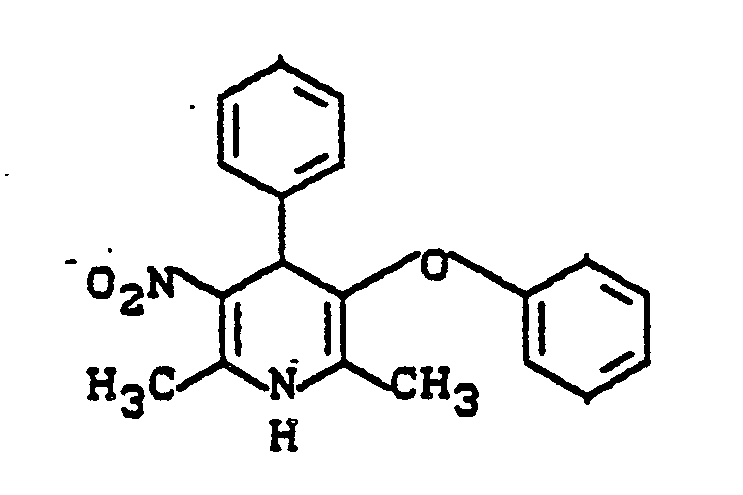
- A) 10 mmol 2-Phenoxy-1-phenyl-but-1-en-3-on (hergestellt analog Beispiel 3) werden in 30 ml Isopropanol bei 40°C portionsweise mit 30 mmol Nitro aceton-Ammoniak-Additionsverbindung versetzt. Es wird 1 h auf 60°C und unter Zusatz von 1 ml wäßrigem Ammoniak 8 h zum Rückfluß erhitzt. Das Lösemittel wird abgedampft und der Rückstand am Kieselgel mit Chloroform chromatographiert.
Ausbeute: 12% der Theorie
Schmp.: Harz - B) 20 mmol 2-Nitro-1-phenyl-but-1-en-3-on werden in 50 ml Isopropanol mit 25 mmol rohem 2-Amino-1-phenoxy-propen versetzt und 8 h bei 60°C gerührt. Das Lösemittel wird abgedampft, der Rückstand an Kieselgel mit Chloroform chromatographiert.
Ausbeute: 15% der Theorie
Schmp.: Harz -

- 0,2 mol Phenoxyaceton und 0,25 mol o-Trifluormethylbenzaldehyd werden in 8 l entgastem Wasser mit 16 g Natriumhydroxid 3 Tage unter Luftabschluß intensiv gerührt. Der Ansatz wird mit Methylenchlorid angeschüttelt, die organische Phase wird getrocknet, eingeengt, mit Petrolether digeriert und dann aus Ethanol umkristallisiert.
Ausbeute: 45,2% der Theorie
Schmp.: 89°C -

- Analog Beispiel 6 wird aus 2-Phenoxy-1-(2-trifluormethylphenyl)-but-1-en-3-on und Nitroaceton-Ammoniak-Additionsverbindung nach Chromatographie an Kieselgel die Titelverbindung erhalten.
Ausbeute: 18% der Theorie
Schmp.: 123°C -

- Unter Schutzgas werden 12,75 g (0,53 mol) Magnesium-Späne in 200 ml Tetrahydrofuran mit wenig Iod aktiviert, dann läßt man 135 g p-Brombenzyl-tetrahydropyranylether langsam zutropfen. Die Reaktion verläuft stark exotherm. Zur vollständigen Umsetzung läßt man 2 h unter Erwärmen nachrühren. Die Lösung wird auf -80°C gekühlt und 53 g Bernsteinsäureanhydrid, suspendiert in 200 ml Tetrahydrofuran werden portionsweise zugegeben. Es wird 2 h nachgerührt, dann mit 4 l Wasser hydrolysiert und mit 2 N Natronlauge auf pH 8 eingestellt. Es wird mit Methylenchlorid gewaschen. Die wäßrige Phase wird mit Citronensäure auf pH 4,5 eingestellt. Das Produkt wird mit Methylenchlorid extrahiert, getrocknet und durch Zugabe von Petrolether ausgefällt.
Ausbeute: 59 g (40,4% der Theorie)
Schmp.: 97°C -

- 50 g 4-Oxo-4-[4-(tetrahydropyran-2-yl-oxymethyl)-phenyl]-buttersäure werden in 240 ml Wasser suspendiert und mit 10 ml Hydrazinhydrat 3 h bei 90°C verrührt. Nach dem Abkühlen saugt man die ausgefallenen Kristalle ab. Diese werden in 500 ml Tetrahydrofuran gelöst und mit je 100 ml Eisessig, 1 N Salzsäure und Wasser versetzt. Man läßt 24 h bei Raumtemperatur stehen, destilliert das Tetrahydrofuran ab und extrahiert den Rückstand mit Methylenchlorid. Dabei fällt das Produkt bereits teilweise aus und wird abgesaugt. Die Methylenchloridphase wird aufgearbeitet. Beide Kristallisate werden verunreinigt.
Ausbeute: 22,7 g (64% der Theorie)
Schmp.: 188°C -

- 20 g 4-(6-Oxo-1,4,5,6-tetrahydropyridazin-3-yl)benzylalkohol werden in 50 ml Tetrahydrofuran suspendiert und nach Zugabe von 100 mg 4-Dimethylaminopyridin unter Rückfluß mit 10,7 Diketen umgesetzt. Man läßt 2 h nachreagieren, sättigt bei Rückflußtemperatur mit Ammoniakgas, läßt über Nacht erkalten¸ dampft das Tetrahydrofuran ab und kocht den Rückstand mit Isopropanol aus.
Ausbeute: 17,5 g (92% der Theorie) / Schmp.: 183°C
Schmp.: 183°C -
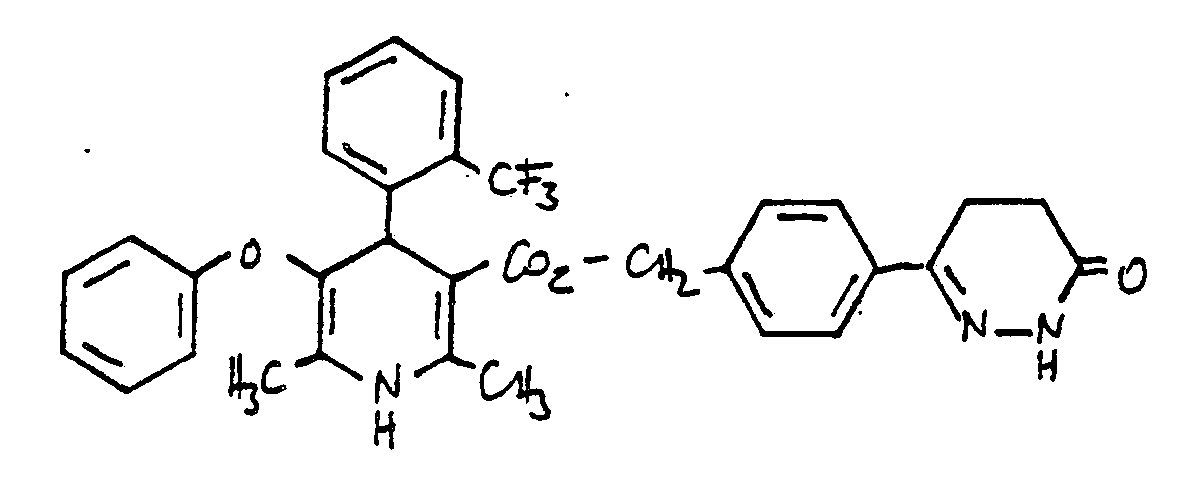
- 10 mMol 2-Phenoxy-1-(2-trifluormethylphenyl)-but-1-en-3-on und 10 mMol 3-Aminocrotonsäure-[4-(6-oxo-1,4,5,6-tetrahydropyridazin-3-yl)-benzyl]-ester werden in 20 ml Isopropanol 6 Stunden zum Rückfluß erhitzt. Der rohe Eindampfrückstand wird an Kieselgel mit Chloroform plus 6% Methanol chromatographiert.
Schmp.: 168°C
Ausbeute: 8% der Theorie -

- Zu 10 mmol 3-Phenoxy-1-phenyl-but-1-en-3-on werden in 20 ml Ethanol bei Rückflußtemperatur eine Lösung von 25 mmol Amidinoessigester-hydrochlorid und 25 mmol Natriummethylat in 20 ml Ethanol zugetropft. Man erhitzt noch 2 h zum Rückfluß, dampft das Lösemittel ab und chromatographiert das Rohprodukt an Kieselgel mit Chloroform. Das Produkt wird als Harz isoliert.
Ausbeute: 6% der Theorie
Claims (10)

R¹ - für Cyano, Nitro oder
- für eine Gruppe -COOR⁵ steht,
worin
R⁵ - geradkettiges, verzweigtes oder cyclisches Alkyl mit bis zu 6 Kohlenstoffatomen bedeutet, das durch ein Sauerstoffatom in der Kette unterbrochen sein kann, und das ein- oder mehrfach gleich oder verschieden durch Halogen, Cyano, Hydroxy, Phenyl, Phenoxy oder durch eine Gruppe der Formel

R² - für Aryl mit 6 bis 12 Kohlenstoffatomen steht, das bis zu 3-fach gleich oder verschieden durch Halogen, Cyano, Nitro, Trifluormethyl, Trifluormethoxy, Trifluormethylthio, Alkyl mit bis zu 4 Kohlenstoffatomen oder Alkoxy mit bis zu 4 Kohlenstoffatomen substituiert sein kann,
R³ - für Aryl mit 6 bis 12 Kohlenstoffatomen steht, oder
- für geradkettiges, verzweigtes oder cyclisches Alkyl mit bis zu 6 Kohlenstoffatomen steht
und
R⁴ - für geradkettiges Alkyl mit bis 2 bis 4 Kohlenstoffatomen oder
- für Amino steht
und deren physiologisch unbedenkliche Salze.
R¹ - für Nitro oder
- für eine Gruppe -COOR⁵ steht, worin
R⁵ - geradkettiges oder verzweigtes Alkyl mit bis zu 4 Kohlenstoffatomen bedeutet, das durch ein Sauerstoffatom in der Kette unterbrochen sein kann, und das durch Fluor, Chlor, Brom, Cyano, Hydroxy, Phenyl oder durch eine Gruppe der Formel

R² - für Phenyl steht, das bis zu 2-fach gleich oder verschieden durch Fluor, Chlor, Brom, Nitro¸ Trifluormethyl, Trifluormethoxy, Methyl oder Methoxy substituiert sein kann
R³ - für Phenyl steht, oder
- für geradkettiges oder verzweigtes Alkyl mit bis zu 4 Kohlenstoffatomen,
und
R⁴ - für geradkettiges Alkyl mit bis zu 4 Kohlenstoffatomen oder
- für Amino steht,
und deren physiologisch unbedenkliche Salze.
R¹ - für Nitro oder
- für eine Gruppe -COOR⁵ steht
worin
R⁵ - für geradkettiges oder verzweigtes Alkyl mit bis zu 3 Kohlenstoffatomen steht, das durch eine Gruppe der Formel

R² - für Phenyl steht, das bis zu 2-fach gleich oder verschieden durch Chlor, Nitro oder Trifluormethyl substituiert sein kann,
R³ - für Phenyl oder Methyl,
und
R⁴ - für Methyl oder
- für Amino steht
und deren physiologisch unbedenkliche Salze.

R¹ - für Cyano, Nitro oder
- für eine Gruppe -COOR⁵ steht,
worin
R⁵ - geradkettiges, verzweigtes oder cyclisches Alkyl mit bis zu 6 Kohlenstoffatomen bedeutet, das durch ein Sauerstoffatom in der Kette unterbrochen sein kann, und das ein- oder mehrfach gleich oder verschieden durch Halogen, Cyano, Hydroxy, Phenyl, Phenoxy oder durch eine Gruppe der Formel

R² - für Aryl mit 6 bis 12 Kohlenstoffatomen steht, das bis zu 3-fach gleich oder verschieden durch Halogen, Cyano, Nitro, Trifluormethyl, Trifluormethoxy, Trifluormethylthio, Alkyl mit bis zu 4 Kohlenstoffatomen oder Alkoxy mit bis zu 4 Kohlenstoffatomen substituiert sein kann,
R³ - für Aryl mit 6 bis 12 Kohlenstoffatomen steht, oder
- für geradkettiges, verzweigtes oder cyclisches Alkyl mit bis zu 6 Kohlenstoffatomen steht
und
R⁴ - für geradkettiges Alkyl mit bis 2 bis 4 Kohlenstoffatomen oder
- für Amino steht
und deren physiologisch unbedenkliche Salze,
dadurch gekennzeichnet, daß man
[A] Aldehyde der allgemeinen Formel (II)
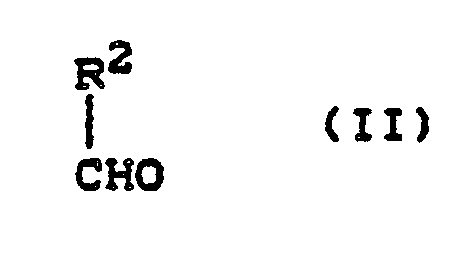
R² - die oben angegebene Bedeutung hat
und Ketone der allgemeinen Formel (III)

R¹ und R⁴ die oben angegebene Bedeutung haben,
oder deren Knoevenagel-Kondensationsprodukte (Ylidenverbindungen) der allgemeinen Formel (IV)

R¹, R² und R⁴ die oben angegebene Bedeutung haben,
mit Enaminen der allgemeinen Formel (V)

R³ die oben angegebene Bedeutung hat,
in inerten Lösemitteln umsetzt,
oder indem man
[B] Aldehyde der allgemeinen Formel (II) und Ketone der allgemeinen Formel (VI)

R³ die oben angegebene Bedeutung hat,
oder deren Ylidenverbindungen der allgemeinen Formel (VII)

R² und R³ die oben angegebene Bedeutung haben,
mit Ammoniak und Ketonen der allgemeinen Formel (III), oder mit Enaminen der allgemeinen Formel (VIII)

R¹ und R⁴ die oben angegebene Bedeutung haben,
in inerten Lösemitteln umsetzt.
Priority Applications (1)
| Application Number | Priority Date | Filing Date | Title |
|---|---|---|---|
| AT88114979T ATE76067T1 (de) | 1987-09-25 | 1988-09-14 | Dihydropyridinether, verfahren zu ihrer herstellung und ihre verwendung. |
Applications Claiming Priority (2)
| Application Number | Priority Date | Filing Date | Title |
|---|---|---|---|
| DE3732380 | 1987-09-25 | ||
| DE19873732380 DE3732380A1 (de) | 1987-09-25 | 1987-09-25 | Dihydropyridinether, verfahren zu ihrer herstellung und ihre verwendung |
Publications (3)
| Publication Number | Publication Date |
|---|---|
| EP0308785A2 true EP0308785A2 (de) | 1989-03-29 |
| EP0308785A3 EP0308785A3 (en) | 1989-11-02 |
| EP0308785B1 EP0308785B1 (de) | 1992-05-13 |
Family
ID=6336897
Family Applications (1)
| Application Number | Title | Priority Date | Filing Date |
|---|---|---|---|
| EP88114979A Expired - Lifetime EP0308785B1 (de) | 1987-09-25 | 1988-09-14 | Dihydropyridinether, Verfahren zu ihrer Herstellung und ihre Verwendung |
Country Status (7)
| Country | Link |
|---|---|
| US (1) | US4886804A (de) |
| EP (1) | EP0308785B1 (de) |
| JP (1) | JPH01102063A (de) |
| AT (1) | ATE76067T1 (de) |
| DE (2) | DE3732380A1 (de) |
| ES (1) | ES2037166T3 (de) |
| GR (1) | GR3004706T3 (de) |
Cited By (3)
| Publication number | Priority date | Publication date | Assignee | Title |
|---|---|---|---|---|
| US5185370A (en) * | 1988-09-01 | 1993-02-09 | Orion-Yhtyma Oy | Substituted β-diketones and their use |
| US5288750A (en) * | 1988-09-01 | 1994-02-22 | Orion-Yhtyma Oy | Substituted β-diketones |
| WO2001000590A1 (de) * | 1999-06-29 | 2001-01-04 | Bayer Aktiengesellschaft | Substituierte 6-[4-(oxymethyl)-phenyl]-dihydropyridazinone und ihre verwendung |
Families Citing this family (2)
| Publication number | Priority date | Publication date | Assignee | Title |
|---|---|---|---|---|
| US5100892A (en) * | 1990-11-13 | 1992-03-31 | Glaxo Inc. | Dihydropyridine vasodilator agents |
| CN102964311B (zh) * | 2011-09-01 | 2016-03-09 | 大丰海嘉诺药业有限公司 | 一种合成4-甲基-5-烷氧基噁唑的方法 |
Family Cites Families (16)
| Publication number | Priority date | Publication date | Assignee | Title |
|---|---|---|---|---|
| US3495964A (en) * | 1967-05-11 | 1970-02-17 | Corning Glass Works | Method of making bluish-green borosilicate glasses |
| DE2210650C3 (de) * | 1972-03-06 | 1981-04-02 | Bayer Ag, 5090 Leverkusen | 2-Amino-6-alkoxy-4,5-dihydropyridin-3,5-dicarbonsäureester, Verfahren zu ihrer Herstellung sowie diese enthaltende Arzneimittel |
| US4031104A (en) * | 1972-04-18 | 1977-06-21 | Bayer Aktiengesellschaft | 1,4-Dihydropyridine carboxylic acid esters |
| US3996234A (en) * | 1972-04-18 | 1976-12-07 | Bayer Aktiengesellschaft | 1,4-Dihydropyridine carboxylic acid esters |
| US4038399A (en) * | 1972-04-18 | 1977-07-26 | Bayer Aktiengesellschaft | 1,4-dihydropyridine carboxylic acid esters useful as coronary vessel dilators and anti-hypertensives |
| US3974275A (en) * | 1972-04-18 | 1976-08-10 | Bayer Aktiengesellschaft | 1,4-Dihydropyridine carboxylic acid esters useful as coronary vessel dilators and anti-hypertensives |
| DE2218644C3 (de) * | 1972-04-18 | 1982-08-19 | Bayer Ag, 5090 Leverkusen | Basische Ester von 1,4-Dihydropyridinen, Verfahren zu ihrer Herstellung sowie ihre Verwendung als Arzneimittel |
| DE2641746C2 (de) * | 1976-09-16 | 1986-11-06 | Bayer Ag, 5090 Leverkusen | 1,4-Dihydropyridin-Zuckerderivate, Verfahren zu ihrer Herstellung sowie ihre Verwendung als Arzneimittel |
| DE2752820A1 (de) * | 1977-11-26 | 1979-05-31 | Bayer Ag | Neue nitrosubstituierte 1,4-dihydropyridine, verfahren zu ihrer herstellung sowie ihre verwendung als arzneimittel |
| NZ201395A (en) * | 1981-07-30 | 1987-02-20 | Bayer Ag | Pharmaceutical compositions containing 1,4-dihydropyridines and certain of these dihydropyridines |
| US4514400A (en) * | 1981-10-26 | 1985-04-30 | William H. Rorer, Inc. | Cardiotonic 5-heteroaryl-pyridone |
| DE3420784A1 (de) * | 1984-06-04 | 1985-12-05 | Bayer Ag, 5090 Leverkusen | 3-nitro-dihydropyridine, verfahren zu ihrer herstellung sowie ihre verwendung in arzneimitteln |
| DE3431862A1 (de) * | 1984-08-30 | 1986-03-13 | Bayer Ag, 5090 Leverkusen | Neue 1,4-dihydropyridine, verfahren zu ihrer herstellung sowie ihre verwendung in arzneimitteln |
| CA1267416A (en) * | 1985-06-17 | 1990-04-03 | Ila Sircar | 1,4-dihydropyridine derivatives useful for the treatment of cardiovascular disorders |
| DE3601397A1 (de) * | 1986-01-18 | 1987-07-23 | Bayer Ag | Substituierte 1,4-dihydropyridin-3-carbonsaeurepiperazide, verfahren zu ihrer herstellung und ihre verwendung in arzneimitteln |
| US4742068A (en) * | 1986-06-09 | 1988-05-03 | Mcneilab, Inc. | Dihydropyridine compounds having 1,4,4-trisubstitution useful as antihypertensive agents |
-
1987
- 1987-09-25 DE DE19873732380 patent/DE3732380A1/de not_active Withdrawn
-
1988
- 1988-09-14 AT AT88114979T patent/ATE76067T1/de not_active IP Right Cessation
- 1988-09-14 EP EP88114979A patent/EP0308785B1/de not_active Expired - Lifetime
- 1988-09-14 ES ES198888114979T patent/ES2037166T3/es not_active Expired - Lifetime
- 1988-09-14 DE DE8888114979T patent/DE3871052D1/de not_active Expired - Lifetime
- 1988-09-20 US US07/249,391 patent/US4886804A/en not_active Expired - Fee Related
- 1988-09-22 JP JP63236641A patent/JPH01102063A/ja active Pending
-
1992
- 1992-05-26 GR GR920401042T patent/GR3004706T3/el unknown
Cited By (4)
| Publication number | Priority date | Publication date | Assignee | Title |
|---|---|---|---|---|
| US5185370A (en) * | 1988-09-01 | 1993-02-09 | Orion-Yhtyma Oy | Substituted β-diketones and their use |
| US5288750A (en) * | 1988-09-01 | 1994-02-22 | Orion-Yhtyma Oy | Substituted β-diketones |
| US5292771A (en) * | 1988-09-01 | 1994-03-08 | Orion-Yhtyma Oy | Substituted β-diketones and their use |
| WO2001000590A1 (de) * | 1999-06-29 | 2001-01-04 | Bayer Aktiengesellschaft | Substituierte 6-[4-(oxymethyl)-phenyl]-dihydropyridazinone und ihre verwendung |
Also Published As
| Publication number | Publication date |
|---|---|
| US4886804A (en) | 1989-12-12 |
| ATE76067T1 (de) | 1992-05-15 |
| DE3871052D1 (de) | 1992-06-17 |
| JPH01102063A (ja) | 1989-04-19 |
| EP0308785B1 (de) | 1992-05-13 |
| GR3004706T3 (de) | 1993-04-28 |
| ES2037166T3 (es) | 1993-06-16 |
| DE3732380A1 (de) | 1989-04-06 |
| EP0308785A3 (en) | 1989-11-02 |
Similar Documents
| Publication | Publication Date | Title |
|---|---|---|
| EP0088274B1 (de) | Neue 1,4-Dihydropyridine, Verfahren zu ihrer Herstellung und ihrer Verwendung in Arzneimitteln | |
| EP0012180B1 (de) | Neue 1,4-Dihydropyridinverbindungen, Verfahren zu ihrer Herstellung, die genannten Verbindungen enthaltende Arzneimittel und Verfahren zur Herstellung dieser Arzneimittel | |
| EP0452712B1 (de) | Neue 4-Chinolyl-dihydropyridine, Verfahren zu ihrer Herstellung und ihre Verwendung in Arzneimitteln | |
| EP0291799A2 (de) | Dioxyalkylenaryl-Dihydropyridine Zwischenprodukte zu ihrer Herstellung, Verfahren zu ihrer Herstellung und ihre Verwendung | |
| EP0185964A2 (de) | Dihydropyridin-carbonsäureamide, Verfahren zu ihrer Herstellung und ihre Verwendung in Arzneimitteln | |
| EP0209701B1 (de) | Neue 1,4-Dihydropyridine, Verfahren zur Herstellung und ihre Verwendung in Arzneimitteln | |
| EP0039863B1 (de) | 1,4-Dihydropyridine mit unterschiedlichen Substituenten in 2- und 6-Position, Verfahren zu ihrer Herstellung und ihre Verwendung in Arzneimitteln | |
| DE4011106A1 (de) | Neue heterocyclisch substituierte dihydropyridine, verfahren zu ihrer herstellung und ihre verwendung in arzneimitteln | |
| EP0127826B1 (de) | 1,4-Dihydropyridine, Verfahren zu ihrer Herstellung sowie ihre Verwendung in Arzneimitteln | |
| EP0179386B1 (de) | 1,4-Dihydropyridin-hydroxyamine, Verfahren zu ihrer Herstellung sowie ihre Verwendung in Arzneimitteln | |
| DE3601397A1 (de) | Substituierte 1,4-dihydropyridin-3-carbonsaeurepiperazide, verfahren zu ihrer herstellung und ihre verwendung in arzneimitteln | |
| EP0308785B1 (de) | Dihydropyridinether, Verfahren zu ihrer Herstellung und ihre Verwendung | |
| EP0315018A2 (de) | Fluormethoxyphenyl-dihydropyridine, Verfahren zur Herstellung und ihre Verwendung in Arzneimitteln | |
| EP0627427A1 (de) | 3-Chinolyl substituierte Dihydropyridine, Verfahren zu ihrer Herstellung und ihre Verwendung in Arzneimitteln | |
| EP0538690B1 (de) | Aryl-Chinolyl-substituierte 1,4-Dihydropyridin-dicarbonsäurederivate, Verfahren zu ihrer Herstellung und ihre Verwendung in Arzneimitteln | |
| EP0214437B1 (de) | Verfahren zur Herstellung von 1,4-Dihydropyridinderivaten über neue Zwischenprodukte | |
| DE3712371A1 (de) | Substituierte 1,4-dihydropyridine, verfahren zu ihrer herstellung und ihre verwendung | |
| EP0555657A1 (de) | Neue 4-Cinnolinyl- und 4-Naphthyridinyl-dihydropyridine, Verfahren zur ihrer Herstellung und ihre Verwendung in Arzneimitteln | |
| DE3712369A1 (de) | Substituierte 5-nitro-1,4-dihydropyridine, verfahren zur herstellung und ihre verwendung | |
| EP0308608A1 (de) | Neue substituierte Nitro-Dihydropyridine, Verfahren zu ihrer Herstellung und ihre Verwendung | |
| DE3789411T2 (de) | Dihydropyridin-5-phosphonsaure zyklische Ester. | |
| EP0164010B1 (de) | 3-Nitro-dihydropyridine, Verfahren zu ihrer Herstellung sowie ihre Verwendung in Arzneimitteln | |
| EP0315019A2 (de) | Neue Fluormethoxyphenyl-dihydropyridine, Verfahren zur Herstellung und ihre Verwendung in Arzneimitteln | |
| EP0205511A1 (de) | Neue piperazinderivate | |
| EP0202527B1 (de) | Pyrimidinyl-dihydropyridine, Verfahren zur Herstellung und ihre Verwendung in Arzneimitteln |
Legal Events
| Date | Code | Title | Description |
|---|---|---|---|
| PUAI | Public reference made under article 153(3) epc to a published international application that has entered the european phase |
Free format text: ORIGINAL CODE: 0009012 |
|
| 17P | Request for examination filed |
Effective date: 19880916 |
|
| AK | Designated contracting states |
Kind code of ref document: A2 Designated state(s): AT BE CH DE ES FR GB GR IT LI NL SE |
|
| PUAL | Search report despatched |
Free format text: ORIGINAL CODE: 0009013 |
|
| AK | Designated contracting states |
Kind code of ref document: A3 Designated state(s): AT BE CH DE ES FR GB GR IT LI NL SE |
|
| 17Q | First examination report despatched |
Effective date: 19910814 |
|
| GRAA | (expected) grant |
Free format text: ORIGINAL CODE: 0009210 |
|
| AK | Designated contracting states |
Kind code of ref document: B1 Designated state(s): AT BE CH DE ES FR GB GR IT LI NL SE |
|
| REF | Corresponds to: |
Ref document number: 76067 Country of ref document: AT Date of ref document: 19920515 Kind code of ref document: T |
|
| ITF | It: translation for a ep patent filed | ||
| REF | Corresponds to: |
Ref document number: 3871052 Country of ref document: DE Date of ref document: 19920617 |
|
| GBT | Gb: translation of ep patent filed (gb section 77(6)(a)/1977) | ||
| ET | Fr: translation filed | ||
| REG | Reference to a national code |
Ref country code: GR Ref legal event code: FG4A Free format text: 3004706 |
|
| PLBE | No opposition filed within time limit |
Free format text: ORIGINAL CODE: 0009261 |
|
| STAA | Information on the status of an ep patent application or granted ep patent |
Free format text: STATUS: NO OPPOSITION FILED WITHIN TIME LIMIT |
|
| 26N | No opposition filed | ||
| REG | Reference to a national code |
Ref country code: ES Ref legal event code: FG2A Ref document number: 2037166 Country of ref document: ES Kind code of ref document: T3 |
|
| EAL | Se: european patent in force in sweden |
Ref document number: 88114979.3 |
|
| PGFP | Annual fee paid to national office [announced via postgrant information from national office to epo] |
Ref country code: DE Payment date: 19950811 Year of fee payment: 8 |
|
| PGFP | Annual fee paid to national office [announced via postgrant information from national office to epo] |
Ref country code: SE Payment date: 19950816 Year of fee payment: 8 |
|
| PGFP | Annual fee paid to national office [announced via postgrant information from national office to epo] |
Ref country code: GR Payment date: 19950823 Year of fee payment: 8 |
|
| PGFP | Annual fee paid to national office [announced via postgrant information from national office to epo] |
Ref country code: FR Payment date: 19950831 Year of fee payment: 8 |
|
| PGFP | Annual fee paid to national office [announced via postgrant information from national office to epo] |
Ref country code: GB Payment date: 19950905 Year of fee payment: 8 |
|
| PGFP | Annual fee paid to national office [announced via postgrant information from national office to epo] |
Ref country code: CH Payment date: 19950907 Year of fee payment: 8 |
|
| PGFP | Annual fee paid to national office [announced via postgrant information from national office to epo] |
Ref country code: ES Payment date: 19950908 Year of fee payment: 8 |
|
| PGFP | Annual fee paid to national office [announced via postgrant information from national office to epo] |
Ref country code: BE Payment date: 19950920 Year of fee payment: 8 |
|
| PGFP | Annual fee paid to national office [announced via postgrant information from national office to epo] |
Ref country code: AT Payment date: 19950921 Year of fee payment: 8 |
|
| PGFP | Annual fee paid to national office [announced via postgrant information from national office to epo] |
Ref country code: NL Payment date: 19950929 Year of fee payment: 8 |
|
| PG25 | Lapsed in a contracting state [announced via postgrant information from national office to epo] |
Ref country code: GB Effective date: 19960914 Ref country code: AT Effective date: 19960914 |
|
| PG25 | Lapsed in a contracting state [announced via postgrant information from national office to epo] |
Ref country code: SE Effective date: 19960915 |
|
| PG25 | Lapsed in a contracting state [announced via postgrant information from national office to epo] |
Ref country code: ES Free format text: LAPSE BECAUSE OF THE APPLICANT RENOUNCES Effective date: 19960916 |
|
| PG25 | Lapsed in a contracting state [announced via postgrant information from national office to epo] |
Ref country code: LI Effective date: 19960930 Ref country code: FR Effective date: 19960930 Ref country code: CH Effective date: 19960930 Ref country code: BE Effective date: 19960930 |
|
| BERE | Be: lapsed |
Owner name: BAYER A.G. Effective date: 19960930 |
|
| PG25 | Lapsed in a contracting state [announced via postgrant information from national office to epo] |
Ref country code: GR Free format text: THE PATENT HAS BEEN ANNULLED BY A DECISION OF A NATIONAL AUTHORITY Effective date: 19970331 |
|
| PG25 | Lapsed in a contracting state [announced via postgrant information from national office to epo] |
Ref country code: NL Effective date: 19970401 |
|
| REG | Reference to a national code |
Ref country code: GR Ref legal event code: MM2A Free format text: 3004706 |
|
| GBPC | Gb: european patent ceased through non-payment of renewal fee |
Effective date: 19960914 |
|
| REG | Reference to a national code |
Ref country code: CH Ref legal event code: PL |
|
| NLV4 | Nl: lapsed or anulled due to non-payment of the annual fee |
Effective date: 19970401 |
|
| PG25 | Lapsed in a contracting state [announced via postgrant information from national office to epo] |
Ref country code: DE Effective date: 19970603 |
|
| EUG | Se: european patent has lapsed |
Ref document number: 88114979.3 |
|
| REG | Reference to a national code |
Ref country code: FR Ref legal event code: ST |
|
| REG | Reference to a national code |
Ref country code: FR Ref legal event code: ST |
|
| REG | Reference to a national code |
Ref country code: ES Ref legal event code: FD2A Effective date: 19991007 |
|
| PG25 | Lapsed in a contracting state [announced via postgrant information from national office to epo] |
Ref country code: IT Free format text: LAPSE BECAUSE OF NON-PAYMENT OF DUE FEES;WARNING: LAPSES OF ITALIAN PATENTS WITH EFFECTIVE DATE BEFORE 2007 MAY HAVE OCCURRED AT ANY TIME BEFORE 2007. THE CORRECT EFFECTIVE DATE MAY BE DIFFERENT FROM THE ONE RECORDED. Effective date: 20050914 |