EP0308843A2 - Bispidinderivate als Klasse III-Antiarrhythmika - Google Patents
Bispidinderivate als Klasse III-Antiarrhythmika Download PDFInfo
- Publication number
- EP0308843A2 EP0308843A2 EP88115299A EP88115299A EP0308843A2 EP 0308843 A2 EP0308843 A2 EP 0308843A2 EP 88115299 A EP88115299 A EP 88115299A EP 88115299 A EP88115299 A EP 88115299A EP 0308843 A2 EP0308843 A2 EP 0308843A2
- Authority
- EP
- European Patent Office
- Prior art keywords
- alkyl
- benzyl
- diazabicyclo
- alkoxy
- halogen
- Prior art date
- Legal status (The legal status is an assumption and is not a legal conclusion. Google has not performed a legal analysis and makes no representation as to the accuracy of the status listed.)
- Granted
Links
Classifications
-
- C—CHEMISTRY; METALLURGY
- C07—ORGANIC CHEMISTRY
- C07D—HETEROCYCLIC COMPOUNDS
- C07D471/00—Heterocyclic compounds containing nitrogen atoms as the only ring hetero atoms in the condensed system, at least one ring being a six-membered ring with one nitrogen atom, not provided for by groups C07D451/00 - C07D463/00
- C07D471/02—Heterocyclic compounds containing nitrogen atoms as the only ring hetero atoms in the condensed system, at least one ring being a six-membered ring with one nitrogen atom, not provided for by groups C07D451/00 - C07D463/00 in which the condensed system contains two hetero rings
- C07D471/08—Bridged systems
-
- A—HUMAN NECESSITIES
- A61—MEDICAL OR VETERINARY SCIENCE; HYGIENE
- A61P—SPECIFIC THERAPEUTIC ACTIVITY OF CHEMICAL COMPOUNDS OR MEDICINAL PREPARATIONS
- A61P9/00—Drugs for disorders of the cardiovascular system
- A61P9/06—Antiarrhythmics
Definitions
- the invention relates to new bispidine derivatives, medicaments containing them and their use for the production of class III antiarrhythmics according to Vaughan-Williams.
- the antiarrhythmics can be divided into 4 groups: I. sodium antagonists, II. Adrenergic ⁇ -receptor blockers, III. Potassium channel inhibitors, IV. Calcium antagonists.
- Bispidine derivatives are known as antiarrhythmics (Peter C. Ruenitz and Corwin M. Mokler, J. Med. Chem., 22, 1142 (1979), EP-A-62 199; DE-A-27 26 571). Because of their mechanism of action, they largely belong to class I according to Vaughan-Williams as sodium antagonists. In contrast, Ambasilide (EP-A-62 199) additionally has a class III effect.
- Class III antiarrhythmics are often preferable in therapy because they work with otherwise therapy-resistant arrhythmias. Class III antiarrhythmics lead to an extension of the QT distance in the ECG without affecting the PQ duration and without a major reduction in heart rate.
- EP-A-164 165, EP-A-178 874 and EP-A-158 775 are known for example from EP-A-164 165, EP-A-178 874 and EP-A-158 775.
- R3 is preferably hydrogen, X -CH2- and -CO-, Y -CONH- and Z methylene.
- the N-monobenzylbispidine known from DE-A 27 26 571 is reacted by customary methods with an appropriately substituted benzoyl chloride to give the amide, the benzyl group is split off with hydrogenation and the secondary amino group formed with a compound wherein R, R1 and Z have the meaning given above and A represents a leaving group, converted to the end product I.
- the leaving group A which can be displaced by nucleophiles, can be, for example, a chlorine or bromine atom, a methoxy or ethoxy group, an oxisuccinimide, 1-imidazolyl or ethoxycarbonyloxy radical.
- N, N'-dibenzylbispidone is partially debenzylated (cf. Ex. 28), as above with A benzoylated and thus already converted into a compound of general formula I.
- the benzyl residue can again be used against another residue are exchanged, and the carbonyl group can be reduced, for example, with sodium boranate or with a Grignard compound, and the hydroxyl group formed can be esterified or etherified by customary methods.
- R2 represents a primary or secondary amino group in the various synthesis options, this can be protected, for example, by acetylation and the acetyl group can be split off hydrolytically after further reactions on the molecule.
- the bispidine derivatives thus obtained are optionally converted into the acid addition salt of a physiologically tolerated acid.
- a compilation of customary physiologically acceptable acids can be found in Advances in Pharmaceutical Research, 1966, Birkhäuser Verlag, Vol. 10, pp. 224 to 285, Germany, Switzerland.
- the acid addition salts are generally in a manner known per se by mixing the free base or its solutions with the corresponding acid or its solutions in an organic solvent, for example a lower alcohol, such as methanol, ethanol or propanol, or a lower ketone, such as acetone , Methyl ethyl ketone or methyl isobutyl ketone, or an ether such as diethyl ether, tetrahydrofuran or dioxane. Mixtures of the solvents mentioned can be used for better crystal deposition.
- pharmaceutically acceptable aqueous solutions of acid addition compounds of the bispidine derivatives of the formula I can be prepared by dissolving the free bases in an aqueous acid solution.
- the invention further relates to therapeutic agents for topical and, above all, systemic use, which contain a compound of formula (I) in addition to conventional carriers or diluents as an active ingredient, and the use of a compound of formula (I) for the manufacture of a medicament, in particular an antiarrhythmic.
- the new compounds have a good antiarrhythmic class III effect, as the following experiment shows: Male and female Pirbright white guinea pigs weighing 300 to 500 g serve as experimental animals. Anesthesia is carried out with 1.5 g / kg urethane ip. The substances are administered intravenously. The second limb lead is recorded to measure the ECG lead times and the heart rate. Measured variables are the QT and PQ distances and the heart rate. 4 to 6 animals are used per dose. The criterion for class III effects is an increase in the duration of QT compared to the values before substance administration. PQ increase and strong heart rate decrease serve as exclusion criteria.
- the ED 20% is calculated from the linear relationship between the log dose (mg / kg) of the substance and the relative extension of the QT duration ( ⁇ %).
- Table 1 Anti-arrhythmic class III effects in guinea pigs after intravenous administration.
- the substances according to the invention are more effective with regard to QT prolongation than the antiarrhythmic agent Ambasilide and in some cases also the D-sotalol known as class III antiarrhythmic agent (Clin. Sci., 69, 631-636 (1985); J. Cardiovascul Pharmacol., 6, 1132-1141 (1984)).
- the new substances are therefore suitable for the treatment of otherwise therapy-resistant arrhythmias, in particular they eliminate ventricular tachycardias which occur after myocardial infarction and are based on a "re-entry" mechanism (lit. Cardiac Arrhythmia Ed. P. Brugada, HJJ Wellens, Futura Publishing Co., Mount Kisko, New York 1987).
- the therapeutic agents or preparations are prepared using the customary liquid or solid carriers or diluents and the pharmaceutical-technical auxiliaries used in the customary manner, in accordance with the desired type of application and with a dosage suitable for use, in the customary manner, for example by mixing the active ingredient with the solid and liquid carriers and auxiliaries which are conventional in such preparations.
- the agents can be administered orally, parenterally or topically.
- preparations are, for example, tablets, film-coated tablets, dragees, capsules, pills, powders, solutions or suspensions, infusion or injection solutions, and pastes, ointments, gels, creams, lotions, powders, solutions or emulsions and sprays.
- the therapeutic agents can be the compounds to be used according to the invention when used locally in a concentration of 0.0001 to 1%, preferably in a concentration of 0.001 to 0.1% and when used systemically Use preferably in a single dose of 0.1 to 20 mg per kg weight, namely parenterally 0.1 to 4 and orally 1 to 20 mg per kg body weight, and daily in one or more doses depending on the type and severity of the diseases be administered.
- Alcohols such as ethanol, isopropanol, ethoxylated castor oil or ethoxylated hydrogenated castor oil, polyacrylic acid, glycerol monostearate, paraffin oil, petroleum jelly, wool fat, polyethylene glycol, polypropylene glycol, stearate and ethoxylated fatty alcohol, for systemic use lactose, for systemic use.
- an antioxidant for example tocopherol and butylated hydroxyanisole or butylated hydroxytoluene or flavor-improving additives, stabilizers, emulsifiers, bleaches, etc.
- an antioxidant for example tocopherol and butylated hydroxyanisole or butylated hydroxytoluene or flavor-improving additives, stabilizers, emulsifiers, bleaches, etc.
- the prerequisite is that all substances used in the manufacture of pharmaceutical preparations are toxicologically safe and compatible with the active substances used.
Landscapes
- Chemical & Material Sciences (AREA)
- Organic Chemistry (AREA)
- Health & Medical Sciences (AREA)
- Engineering & Computer Science (AREA)
- Bioinformatics & Cheminformatics (AREA)
- Cardiology (AREA)
- Heart & Thoracic Surgery (AREA)
- Chemical Kinetics & Catalysis (AREA)
- General Chemical & Material Sciences (AREA)
- Medicinal Chemistry (AREA)
- Nuclear Medicine, Radiotherapy & Molecular Imaging (AREA)
- Pharmacology & Pharmacy (AREA)
- Life Sciences & Earth Sciences (AREA)
- Animal Behavior & Ethology (AREA)
- General Health & Medical Sciences (AREA)
- Public Health (AREA)
- Veterinary Medicine (AREA)
- Nitrogen Condensed Heterocyclic Rings (AREA)
- Pharmaceuticals Containing Other Organic And Inorganic Compounds (AREA)
Abstract

R, R¹ und R³ gleich oder verschieden sind und H, C₁-C₄-Alkyl, Halogen oder C₁-C₄-Alkoxy bedeuten, und
R² wenn
Y = -

ist, C₁-C₄-Alkyl, Halogen, -CN, C₁-C₄-Alkoxy, -NHSO₂CH₃, -CF₃, NH-Acetyl und -NR⁴R⁵ bedeutet, wobei R⁴ und R⁵ C₁-C₄-Alkyl darstellen, und wenn
Y = -

ist, C₁-C₄-Alkyl, Halogen, -CN, C₁-C₄-Alkoxy, -NHSO₂CH₃, -CF₃, NH-Acetyl und -NR⁹R¹⁰ bedeuten, wobei R⁹ C₁-C₄-Alkyl und R¹⁰ H oder C₁-C₄-Alkyl bedeuten, und R², wenn nicht X = CH₂ ist, auch NO₂ und NH₂ sein kann,
X -CH₂-, -C(O)- oder -C(R⁶)OR⁷- (worin R⁶ H, C₁-C₄-Alkyl und R⁷ H, C₁-C₄-Alkyl und
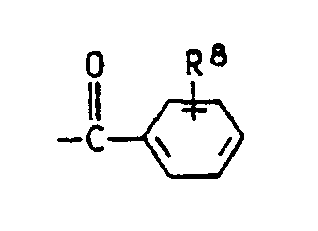
Y -C(O)- oder -CONH- und
Z C₁-C₄-Alkylen, welches olefinisch ungesättigt und/oder verzweigt sein kann,
bedeuten, sowie deren physiologisch verträglichen Salze.
Description
- Die Erfindung betrifft neue Bispidinderivate, sie enthaltende Arzneimittel und deren Verwendung zur Herstellung von Antiarrhythmika der Klasse III nach Vaughan-Williams.
- Die Antiarrhythmika lassen sich auf Grund der Klassifizierung von Vaughan-Williams in 4 Gruppen einteilen: I. Natrium-Antagonisten, II. adrenerge β-Rezeptorenblocker, III. Kalium-Kanal-Hemmstoffe, IV. Calcium-Antagonisten.
- Bispidinderivate sind als Antiarrhythmika bekannt (Peter C. Ruenitz und Corwin M. Mokler, J. Med. Chem., 22, 1142 (1979), EP-A-62 199; DE-A-27 26 571). Sie gehören aufgrund ihres Wirkungsmechanismus zum größten Teil als Natrium-Antagonisten zur Klasse I nach Vaughan-Williams. Ambasilide (EP-A-62 199) weist dagegen zusätzlich eine Klasse-III-Wirkung auf.
- Antiarrhythmika der Klasse III sind in der Therapie oft vorzuziehen, da sie bei sonst therapieresistenten Arrythmien wirken. Klasse-III-Antiarrhythmika führen zu Verlängerung der QT-Strecke im EKG, ohne die PQ-Dauer zu beeinflussen und ohne stärkere Herzfrequenzsenkung.
- Solche sind bekannt beispielsweise aus EP-A-164 165, EP-A-178 874 und EP-A-158 775.
- Es wurde nun gefunden, daß Bispidinderivate der Formel I

R, R¹ und R³ gleich oder verschieden sind und H, C₁-C₄-Alkyl, Halogen oder C₁-C₄-Alkoxy bedeuten, und
R² wenn
Y = --
ist, C₁-C₄-Alkyl, Halogen, -CN, C₁-C₄-Alkoxy, -NHSO₂CH₃, -CF₃, NH-Acetyl und -NR⁴R⁵ bedeutet, wobei R⁴ und R⁵ C₁-C₄-Alkyl darstellen, und wenn
Y = -- NH-
ist, C₁-C₄-Alkyl, Halogen, -CN, C₁-C₄-Alkoxy, -NHSO₂CH₃, -CF₃, NH-Acetyl und -NR⁹R¹⁰ bedeuten, wobei R⁹ C₁-C₄-Alkyl und R¹⁰ H oder C₁-C₄-Alkyl bedeuten, und R², wenn nicht X = CH₂ ist, auch NO₂ und NH₂ sein kann,
X -CH₂-, -C(O)- oder -C(R⁶)OR⁷- (worin R⁶ H, C₁-C₄-Alkyl und R⁷ H, C₁-C₄-Alkyl und
Y -C(O)- oder -CONH- und
Z C₁-C₄-Alkylen, welches olefinisch ungesättigt und/oder verzweigt sein kann,
bedeuten, sowie deren physiologisch verträglichen Salze überlegene Eigenschaften besitzen. - R³ ist bevorzugt Wasserstoff, X -CH₂- und -CO-, Y -CONH- und Z Methylen.
- Die erfindungsgemäßen Verbindungen können beispielsweise nach den folgenden Reaktionsschemata A bis C hergestellt werden:

- Das aus der DE-A 27 26 571 bekannte N-Monobenzylbispidin wird nach üblichen Methoden mit einem entsprechend substituierten Benzoylchlorid zum Amid umgesetzt, die Benzylgruppe hydrierend abgespalten und die entstandene sekundäre Aminogruppe mit einer Verbindung


- Dies ist eine von mehreren Möglichkeiten zur Herstellung von Verbindungen der allgemeinen Formel I mit einer Harnstoffgruppierung (vgl. Houben-Weyl, Meth. d. org. Ch., 4. Auflage, E4, S. 334ff). Bei der so erhaltenen Verbindung I, kann genau wie oben unter A beschrieben, der Benzylrest durch die Reste R und R¹ substituiert sein.

- N,N′-Dibenzylbispidon wird partiell debenzyliert (vgl. Bsp. 28), wie oben bei A benzoyliert und damit bereits in eine Verbindung der allgemeinen Formel I überführt. Hier kann nun wieder der Benzylrest gegen einen anderen Rest

- Falls bei den verschiedenen Synthesemöglichkeiten R² eine primäre oder sekundäre Aminogruppe darstellt, kann diese beispielsweise durch Acetylierung geschützt und die Acetylgruppe nach weiteren Umsetzungen am Molekül hydrolytisch wieder abgespalten werden.
- Gegebenenfalls werden die so erhaltenen Bispidinderivate in das Säureadditionssalz einer physiologisch verträglichen Säure überführt. Eine Zusammenstellung üblicher physiologisch verträglicher Säuren kann aus Fortschritte der Arzneimittelforschung, 1966, Birkhäuser Verlag, Bd. 10, S. 224 bis 285, Deutschland, Schweiz entnommen werden.
- Die Säureadditionssalze werden in der Regel in an sich bekannter Weise durch Mischen der freien Base oder deren Lösungen mit der entsprechenden Säure oder deren Lösungen in einem organischen Lösungsmittel, beispielsweise einem niederen Alkohol, wie Methanol, Ethanol oder Propanol, oder einem niederen Keton, wie Aceton, Methylethylketon oder Methylisobutylketon, oder einem Ether, wie Diethylether, Tetrahydrofuran oder Dioxan erhalten. Zur besseren Kristallabscheidung können Mischungen der genannten Lösungsmittel verwendet werden. Darüber hinaus können pharmazeutisch vertretbare wäßrige Lösungen von Säure-Additionsverbindungen der Bispidinderivate der Formel I durch Auflösen der freien Basen in einer wäßrigen Säurelösung hergestellt werden.
- Die Erfindung betrifft weiter therapeutische Mittel zur topischen und vor allem systemischen Anwendung, die eine Verbindung der Formel (I) neben üblichen Trägerstoffen oder Verdünnungsmitteln als Wirkstoff enthalten, und die Verwendung einer Verbindung der Formel (I) zur Herstellung eines Arzneimittels, insbesondere eines Antiarrhythmikums.
- Die neuen Verbindungen besitzen, wie der folgende Versuch zeigt, eine gute antiarrhythmische Klasse-III-Wirkung:
Als Versuchstiere dienen männliche und weibliche Pirbright-white-Meerschweinchen im Gewicht von 300 bis 500 g. Die Narkose erfolgt mit 1,5 g/kg Urethan i.p. Die Substanzen werden intravenös appliziert. Zur Messung der EKG-Leitungszeiten und der Herzfrequenz wird die II. Extremitätenableitung registriert. Meßgrößen sind die QT- und die PQ-Strecken und die Herzfrequenz. Pro Dosis werden 4 bis 6 Tiere eingesetzt. Kriterium für Klasse-III-Wirkung ist Zunahme der QT-Dauer im Vergleich zu den Werten vor Substanzgabe. PQ-Zunahme und starke Herzfrequenzabnahme dienen als Ausschlußkriterien. Aus der linearen Beziehung zwischen log Dosis (mg/kg) der Substanz und der relativen Verlängerung der QT-Dauer (Δ %) wird die ED 20 % berechnet.Tabelle 1 Antiarrhythmische Klasse-III-Wirkung beim Meerschweinchen nach intravenöser Applikation. Beispiel Nr. Verlängerung der QT-Dauer ED 20 % [mg/kg] Mittelwert; 2 4,6 21 2,6 23 2,4 26 3,6 Ambasilide 6,3 D-Sotalol 3,6 - Die erfindungsgemäßen Substanzen (Tabelle 1) sind hinsichtlich QT-Verlängerung wirksamer als das Antiarrhythmikum Ambasilide und zum Teil auch dem als Klasse-III-Antiarrhythmikum bekannten D-Sotalol (Clin. Sci., 69, 631-636 (1985); J. Cardiovascul. Pharmacol., 6, 1132-1141 (1984)) überlegen.
- Die neuen Substanzen eignen sich daher zur Behandlung sonst therapieresistenter Arrhythmien, insbesondere beseitigen sie ventrikuläre Tachykardien die nach Myokard-Infarkt auftreten und auf einem "re-entry"-Mechanismus beruhen (Lit. Cardiac Arrhythmia Ed. P. Brugada, H.J.J. Wellens, Futura Publishing Co., Mount Kisko, New York 1987).
- Die Herstellung der therapeutischen Mittel oder Zubereitungen erfolgt mit den üblichen flüssigen oder festen Trägerstoffen oder Verdünnungsmitteln und den in üblicher Weise verwendeten pharmazeutisch-technischen Hilfsstoffen, entsprechend der gewünschten Applikationsart und mit einer zur Anwendung geeigneten Dosierung, in üblicher Weise, beispielsweise durch Vermischen des Wirkstoffes mit den an sich in solchen Präparaten üblichen festen und flüssigen Träger- und Hilfsstoffen.
- Die Mittel können peroral, parenteral oder topisch verabreicht werden. Derartige Zubereitungen sind beispielsweise Tabletten, Filmtabletten, Dragees, Kapseln, Pillen, Pulver, Lösungen oder Suspensionen, Infusions- oder Injektionslösungen sowie Pasten, Salben, Gele, Cremes, Lotionen, Puder, Lösungen oder Emulsionen und Sprays.
- Die therapeutischen Mittel können die erfindungsgemäß zu verwendenden Verbindungen bei lokaler Anwendung in 0,0001 bis 1 %iger Konzentration, bevorzugt in 0,001 bis 0,1 %iger Konzentration und bei systemischer An wendung vorzugsweise in einer Einzeldosis von 0,1 bis 20 mg pro kg-Gew, und zwar parenteral 0,1 bis 4 und oral 1 bis 20 mg pro kg Körpergewicht, enthalten und täglich in einer oder mehreren Dosierungen je nach Art und Schwere der Erkrankungen verabreicht werden.
- Üblicherweise verwendete pharmazeutisch technische Hilfsstoffe sind beispielsweise für die lokale Anwendung Alkohole, wie Ethanol, Isopropanol, oxethyliertes Ricinusöl oder oxethyliertes hydriertes Ricinusöl, Polyacrylsäure, Glycerinmonostearat, Paraffinöl, Vaseline, Wollfett, Polyethylenglykol, Polypropylenglykol, Stearat sowie ethoxylierter Fettalkohol, für die systemische Anwendung Milchzucker, Propylenglykol und Ethanol, Stärke, Talk, Polyvinylpyrrolidon. Den Präparaten kann gegebenenfalls ein Antioxidationsmittel, beispielsweise Tocopherol sowie butyliertes Hydroxyanisol oder butyliertes Hydroxytoluol oder geschmacksverbessernde Zusätze, Stabilisierungsmittel, Emulgiermittel, Bleichmittel usw. zugesetzt werden. Voraussetzung ist, daß alle bei der Herstellung pharmazeutischer Zubereitungen verwendeten Stoffe toxikologisch unbedenklich und mit den verwendeten Wirkstoffen verträglich sind.
- 80,2 g (0,24 mol) 3-(4-Aminobenzoyl)-7-benzyl-3,7-diazabicyclo[3.3.1]nonan (vgl. EP 62 199) wurden in 500 ml wasserfreiem Tetrahydrofuran gelöst und mit Eis gekühlt. Dazu tropfte man 23,5 g (0,3 mol) Acetylchlorid, gelöst in 50 ml Tetrahydrofuran, und anschließend bei Raumtemperatur noch 48,6 g (0,48 mol) Triethylamin. Man ließ alles über Nacht rühren. Anschließend wurde im Vakuum eingeengt. Der Rückstand wurde in Wasser aufgenommen und 3 x mit Methylenchlorid extrahiert. Die vereinigten organischen Phasen wurden mit Wasser gewaschen, getrocknet und im Vakuum eingeengt. Ausbeute: 78,1 g, Schmp.: 208°C.
- 5 g (23 mmol) des Monobenzylbispidins wurden in 100 ml Methylenchlorid gelöst und mit 20 ml 2 M NaOH versetzt. Bei Eiskühlung und kräftigem Rühren tropfte man 4,9 g (28 mmol) 4-Chlorbenzoylchlorid, gelöst in 10 ml Methylenchlorid, zu. Man ließ 1 h rühren, verdünnte mit Wasser und isolierte die Methylenchlorid-Phase, die danach noch mit Wasser gewaschen, getrocknet und mit etherischem HCl versetzt wurde. Das erhaltene Öl kristallisierte aus Essigester/Ether. Ausbeute 4,9 g, Schmp. 166°C (x2HCl).
- Analog Beispiel 2 wurden folgende Verbindungen hergestellt:
- 3. 7-Benzyl-3-(2-methoxybenzoyl)-3,7-diaza-bicyclo[3.3.1]-nonanhydrochlorid, Schmp. 162°C (xHCl).
- 4. 7-Benzyl-3-(2-chlorbenzoyl)-3,7-diaza-bicyclo[3.3.1]-nonan, Schmp. 266°C (x2HCl).
- 5. 7-Benzyl-3-(4-dimethylaminobenzoyl)-3,7-diaza-bicyclo[3.3.1]-nonan, Schmp. 66°C (x2HCl).
- 6. 7-Benzyl-3-(4-methoxybenzoyl)-3,7-diazabicyclo[3.3.1]-nonan, Schmp. 119°C (xHCl).
- 7. 7-Benzyl-3-(4-cyanobenzoyl)-3,7-diazabicyclo[3.3.1]-nonan, Schmp.: 170°C (x2HCl).
- 8. 7-Benzyl-3-(2-methylbenzoyl)-3,7-diazabicyclo[3.3.1]-nonan, Schmp.: 243°C (xHCl).
- 9. 7-Benzyl-3-(4-brombenzoyl)-3,7-diazabicyclo[3.3.1]-nonan, Schmp.: 166°C (x2HCl).
- 10. 7-Benzyl-3-(4-methylbenzoyl)-3,7-diazabicyclo[3.3.1]-nonan, Schmp. 133°C (x2HCl).
- 11. 7-Benzyl-3-(4-fluorbenzoyl)-3,7-diazabicyclo[3.3.1]-nonan, Schmp.: 133°C (x2HCl).
- 12. 7-Benzyl-3-(4-trifluormethylbenzoyl)-3,7-diazabicyclo[3.3.1]-nonan, Schmp. 89°C.
- 10 g (46 mmol) Monobenzylbispidin wurden in 100 ml Methylenchlorid gelöst und mit 20 ml 2 M Natronlauge versetzt. Bei Eiskühlung wurden unter Rühren 9 g (48,5 mmol) 3-Nitrobenzoylchlorid, gelöst in 30 ml Methylenchlorid zugetropft. Man ließ 1 h rühren und trennte die organische Phase ab, die anschließend mit Wasser gewaschen, getrocknet und in Vakuum eingeengt wurde. Man erhielt 11,5 g 7-Benzyl-3-(3-nitrobenzoyl)-3,7-diazabicyclo[3.3.1]nonan.
- 10,5 g (28,8 mmol) dieses Nitro-Derivats wurden in 250 ml Methanol gelöst, mit 0,5 g Platin/Kohle (5 %ig) versetzt und bis zur vollständigen Wasserstoffaufnahme hydriert. Danach wurde der Katalysator abfiltriert und das Filtrat in Vakuum eingeengt. Der Rückstand wurde in Methylenchlorid gelöst, mit 2 M Natronlauge und Wasser gewaschen, getrocknet und mit etherischem HCl versetzt. Man isolierte ein Öl, das aus Aceton kristallisierte. Ausbeute 9,75 g, Schmp.: 235°C (x2HCl).
- Analog Beispiel 13 wurden hergestellt:
- 14. 3-(4-Amino-2-chlorbenzyl)-7-benzyl-3,7-diazabicyclo[3.3.1]nonan, Schmp.: 213°C (x2HCl).
- 15. 3-(2-Aminobenzoyl)-7-benzyl-3,7-diazabicyclo[3.3.1]nonan, Schmp.: 178°C.
- 78,0 g (0,21 mol) 3-(4-Acetaminobenzoyl)-7-benzyl-3,7-diazabicyclo[3.3.1]nonan (vgl. Beispiel 1) wurden in 1,3 l Methanol gelöst und mit 3,0 g Palladium/ Kohle (10 %ig) versetzt. Man hydrierte bis zum equimolaren Wasserstoffverbrauch. Das Reaktionsgemisch wurde filtriert und das Filtrat in Vakuum eingeengt. Man erhielt das kristalline 3-(4-Acetaminobenzoyl)-3,7-diazabicyclo[ ]3.3.1]nonan. Ausbeute 59 g, Schmp. 186 bis 189°C.
- 5,0 g (17,4 mmol) dieses Produktes wurden zusammen mit 3,6 g (17,5 mmol) 4-Chlorbenzylbromid und 5 ml Triethylamin in 100 ml Methanol gelöst und 60 h bei 25°C gerührt. Anschließend engte man im Vakuum ein und löste den Rückstand in Methylenchlorid. Die organische Phase wurde mit 2 M Natronlauge und Wasser gewaschen, getrocknet und im Vakuum eingeengt. Man erhielt 6,6 g 3-(4-Acetaminobenzoyl)-7-(4-chlorbenzyl)-3,7-diaza-bicyclo[3.3.1]nonan. Schmp. 181°C.
- 6,6 g (16 mmol) des obigen Produkts wurden in 50 ml Methanol gelöst und mit 60 ml 0,1 M Natronlauge versetzt. Man erwärmte 3 h auf 100°C. Der dabei entstehende Niederschlag wurde isoliert und aus Toluol/Ethanol umkristallisiert. Ausbeute 2,3 g, Schmp.: 255°C.
- Analog Beispiel 16 wurden folgende Verbindungen aus 3-(4-Acetaminobenzoyl)-3,7-diazabicyclo[3.3.1]nonan hergestellt:
- 17. 3-(4-Aminobenzoyl)-7-(3-cinnamyl)-3,7-diazabicyclo[3.3.1]nonan, Schmp.: 194°C (x2HCl).
- 18. 3-(4-Aminobenzoyl)-7-(2-phenylethyl)-3,7-diazabicyclo[3.3.1]nonan, Schmp.: 167°C.
- 19. 3-(4-Aminobenzoyl)-7-(2,6-dichlorbenzyl)-3,7-diazabicyclo[3.3.1]nonan, Schmp.: 213°C.
- Zu 5,0 g (14,9 mmol) des 3-(4-Aminobenzoyl)-7-benzyl-3,7-diazabicyclo[3.3.1]nonans, das in 50 ml Pyridin gelöst wurde, tropfte man bei 5 bis 10°C 1,9 g (16,4 mmol) Methansulfonylchlorid. Es wurde noch 16 h bei der Temperatur gerührt. Das Reaktionsgemisch wurde auf 200 ml Wasser gegossen, wobei sich das Produkt abschied, das durch Abdekantieren vom Wasser befreit wurde. Das erhaltene Produkt wurde aus Essigester umkristallisiert. Ausbeute 4,1 g, Schmp. 172°C.
- 2,6 g (0,012 mol) Monobenzylbispidin, 1,6 g (0,012 mol) 4-Methylphenylisocyanat und 0,25 ml Triethylamin wurden in 25 ml Ligroin gelöst und 1 h auf Rückflußtemperatur erwärmt. Der entstandene Niederschlag wurde isoliert und aus Ligroin/2-Propanol umkristallisiert. Ausbeute: 2,5 g, Schmp.: 150°C.
- Analog Beispiel 21 wurden folgende Verbindungen aus Monobenzylbispidin hergestellt:
- 22. 7-Benzyl-3-(4-methoyphenylcarbamoyl)-3,7-diaza-bicyclo[3.3.1]nonan, Schmp.: 161°C.
- 23. 7-Benzyl-3-(4-chlorphenylcarbamoyl)-3,7-diaza-bicyclo[3.3.1]nonan, Schmp.: 175°C.
- 24. 7-Benzyl-3-(phenylcarbamoyl)-3,7-diaza-bicyclo[3.3.1]nonan, Öl.
- 5,2 g (24 mmol) Monobenzylbispidin, 3,95 g (24 mmol) 4-Nitrophenylisocyanat und 0,50 ml Triethylamin wurden in 50 ml Ligroin zusammengegeben und anschließend für 1 h auf Rückflußtemperatur erwärmt. Man isolierte den entstandenen Niederschlag und kristallisierte aus Methanol/Isopropanol um. Ausbeute: 6,7 g.
- 5,6 g (14,7 mmol) der so erhaltenen Nitro-Verbindung wurden in 100 ml Methanol aufgenommen, mit 0,6 g Platin/Kohle (5 %ig) versetzt und bei RT und 1 bar hydriert. Anschließend wurde filtriert und das Filtrat im Vakuum eingeengt. Ausbeute 4,5 g, Schmp.: 77°C.
- 18,7 g (55,7 mmol) 7-Benzyl-3-(phenylcarbamoyl)-3,7-diazabicyclo[3.3.1]nonans wurden in 170 ml Methanol und 30 ml Eisessig gelöst. Man versetzte mit 1,1 g Palladium/Kohle (10 %ig) und hydrierte bei Raumtemperatur bis zum equimolaren Wasserstoffverbrauch. Anschließend wurde filtriert, das Filtrat mit Natronlauge alkalisiert und im Vakuum eingeengt. Der Rückstand wurde 3x mit Methylenchlorid extrahiert. Die so erhaltene organische Phase wurde getrocknet und im Vakuum eingeengt. Man kristallisierte aus Essigester um. Ausbeute 8,7 g.
- 3,5 g (14,3 mmol) des so erhaltenen Amins, 3,2 g (20,0 mmol) 4-Chlorbenzylchlorid und 5 ml Triethylamin wurden in 50 ml Methanol gelöst und für 60 h bei Raumtemperatur gerührt. Anschließend erwärmte man für 2 h auf 60°C. Das Reaktionsgemisch wurde danach mit Natronlauge schwach alkalisch gestellt und im Vakuum eingeengt. Der Rückstand wurde 3x mit Methylenchlorid extrahiert, die organische Phase getrocknet und im Vakuum eingeengt. Man kristallisierte aus Essigester um. Ausbeute 2,0 g, Schmp.: 161°C.
- Analog Beispiel 26 wurde hergestellt:
- 27. 7-(4-Nitrobenzyl)-3-(phenylcarbamoyl)-3,7-diazabicyclo[3.3.1]nonan, Schmp. 187°C (xHCl)
- 32,0 g (0,1 mol) 3,7-Dibenzyl-3,7-diazabicyclo[3.3.1]-9-nonon wurden in 250 ml Methanol gelöst, mit 1 g Palladium/Kohle (10 %ig) versetzt und bis zum equimolaren Wasserstoffverbrauch hydriert. Man filtrierte anschließend und engte das Filtrat im Vakuum ein. Man erhielt 14,1 g 3-Benzyl-3,7-diazabicyclo[3.3.1]-9-nonon. Schmp. 110°C.
- 14,0 g (60,9 mmol) des so erhaltenen Produkts wurden in 100 ml Methylenchlorid gelöst, mit 100 ml 2 M Natronlauge versetzt und eisgekühlt. Man ließ 16,0 g (91,3 mmol) 4-Chlorbenzoylchlorid, in Methylenchlorid gelöst, zutropfen und weitere 3 min rühren. Die organische Phase wurde abgetrennt, mit Natronlauge und Wasser gewaschen, getrocknet und im Vakuum eingeengt. Ausbeute: 22 g, Schmp.: 154°C (xHCl).
- 14,2 g (38,5 mmol) des nach Beispiel 28 erhaltenen Ketons wurden in 150 ml Methanol gelöst und portionsweise mit 1,5 g (39,5 mmol) Natriumborhydrid versetzt. Man ließ noch 1 h bei RT rühren und tropfte dann 70 ml 1 M Salzsäure zu. Die Lösung wurde im Vakuum eingeengt, der Rückstand in Methylenchlorid gelöst, mit Natronlauge und Wasser gewaschen, getrocknet und eingeengt. Ausbeute: 14 g, Schmp.: 167°C.
- 3,0 g (8,1 mmol) des obigen Alkohols wurden in 50 ml Pyridin gelöst. bei 5 bis 10°C tropfte man eine Lösung aus 2,3 g (16,2 mmol) Benzoylchlorid in 30 ml Pyridin zu. Man ließ über Nacht rühren. Danach wurde das Reaktionsgemisch mit 500 ml Wasser verdünnt und 2 x mit CH₂Cl₂ extrahiert. Die organische Phase wurde mit Wasser gewaschen, getrocknet und eingeengt. Der Rückstand wurde aus Essigester umkristallisiert. Ausbeute 2,0 g, Schmp.: 165°C.
- 11,3 g (49,1 mmol) 7-Benzyl-3,7-diazabiyclo[3.3.1]-9-nonon wurden in 100 ml Methylenchlorid gelöst und mit 100 ml 2 M Natronlauge versetzt. Bei 0°C tropfte man eine Lösung aus 13,7 g (73,7 mmol) 4-Nitrobenzoylchlorid in 30 ml Methylenchlorid zu und ließ noch 1 h rühren. Die organische Phase wurde abgetrennt, mit Natronlauge und Wasser gewaschen, getrocknet und eingeengt. Der Rückstand wurde aus Aceton umkristallisiert. Man erhielt 10,5 g, Schmp. 138°C.
- 15,0 g (39,6 mmol) des nach Beispiel 31 erhaltenen Ketons wurden in 150 ml Methanol gelöst. Bei Raumtemperatur gab man 1,5 g (39,6 mmol) Natriumborhydrid portionsweise zu und ließ noch 1 h rühren. Danach tropfte man 50 ml 2 M Salzsäure zu, ließ 2 h bei Raumtemperatur rühren und engte das Gemisch im Vakuum ein. Der Rückstand wurde zwischen Methylenchlorid und Natronlauge verteilt, die organische PHase separiert, nochmals mit Natronlauge, dann mit Wasser gewaschen, getrocknet und eingeengt. Man kristallisierte aus Essigester und erhielt 11,5 g, Schmp.: 210°C.
- 4,0 g (10,5 mmol) des nach Beispiel 32 erhaltenen Alkohols wurden in 50 ml Pyridin gelöst. Bei 5 bis 10°C tropfte man 3,0 g (21 mmol) Benzoylchlorid zu und ließ bei Raumtemperatur noch 3 h rühren. Das Reaktionsgemisch wurde anschließend mit 500 ml Wasser verdünnt und 2 x mit Ether extrahiert. Die organische Phase wurde noch 2 x mit Wasser gewaschen, getrocknet und eingeengt. Der erhaltene Rückstand wurde aus Essigester umkristallisiert. Man erhielt 3,8 g, Schmp.: 180°C.
- 3,8 g (7,8 mmol) des nach Beispiel 33 erhaltenen Esters wurden in 250 ml Methanol gelöst, mit0,1 g Platin/Kohle (5 %) und bei Raumtemperatur hydriert. Anschließend wurde filtriert und das Filtrat im Vakuum eingeengt. Durch Umkristallisation des Rückstandes aus Essigester erhielt man 1,1 g, Schmp.: 99°C.
- Analog Beispiel 34 wurden durch katalytische Hydrierung hergestellt:
- 35. 3-(4-Aminobenzoyl)-7-benzyl-3,7-diazabicyclo[3.3.1]-9-nonon, Schmp.: 235°C (xHCl).
- 36. 3-(4-Aminobenzoyl)-7-benzyl-3,7-diazabicyclo[3.3.1]-9-nonol, Schmp. 232°C (x2HCl).
- Zu der Grignard-Verbindung aus 0,7 g (27,2 mmol) Magnesium und 3,4 g Ethylbromid in Ether tropfte man bei Raumtemperatur eine Lösung aus 5,0 g (13,6 mmol) 7-Benzyl-3-(4-chlorbenzoyl)-3,7-diazabicyclo[3.3.1]-9-nonon (Bsp. 28) und 50 ml wasserfreiem Tetrahydrofuran. Man ließ 1 h rühren und hydrolysierte anschließend mit 50 ml Wasser und wenig 2 M Salzsäure. Das Gemisch wurde im Vakuum eingeengt. Der Rückstand wurde zwischen Methylenchlorid und 2 M Natronlauge verteilt, die organische Phase abgetrennt, nochmals mit 2 M Natronlauge und Wasser gewaschen, getrocknet und eingeengt. Ausbeute: 3,4 g, Schmp.: 72°C.
Claims (8)

R, R¹ und R³ gleich oder verschieden sind und H, C₁-C₄-Alkyl, Halogen oder C₁-C₄-Alkoxy bedeuten, und
R² wenn
Y = -

ist, C₁-C₄-Alkyl, Halogen, -CN, C₁-C₄-Alkoxy, -NHSO₂CH₃, -CF₃, NH-Acetyl und -NR⁴R⁵ bedeutet, wobei R⁴ und R⁵ C₁-C₄-Alkyl darstellen, und wenn
Y= -

ist, C₁-C₄-Alkyl, Halogen, -CN, C₁-C₄-Alkoxy, -NHSO₂CH₃, -CF₃, NH-Acetyl und -NR⁹R¹⁰ bedeuten, wobei R⁹ C₁-C₄-Alkyl und R¹⁰ H oder C₁-C₄-Alkyl bedeuten, und R², wenn nicht X = CH₂ ist, auch NO₂ und NH₂ sein kann,
X -CH₂-, -C(O)- oder -C(R⁶)OR⁷- (worin R⁶ H, C₁-C₄-Alkyl und R⁷ H, C₁-C₄-Alkyl und

Y -C(O)- oder -CONH- und
Z C₁-C₄-Alkylen, welches olefinisch ungesättigt und/oder verzweigt sein kann,
bedeuten, sowie deren physiologisch verträglichen Salze.
Applications Claiming Priority (2)
| Application Number | Priority Date | Filing Date | Title |
|---|---|---|---|
| DE19873732094 DE3732094A1 (de) | 1987-09-24 | 1987-09-24 | Bispidinderivate als klasse iii-antiarrhythmika |
| DE3732094 | 1987-09-24 |
Publications (3)
| Publication Number | Publication Date |
|---|---|
| EP0308843A2 true EP0308843A2 (de) | 1989-03-29 |
| EP0308843A3 EP0308843A3 (en) | 1990-08-08 |
| EP0308843B1 EP0308843B1 (de) | 1993-12-15 |
Family
ID=6336720
Family Applications (1)
| Application Number | Title | Priority Date | Filing Date |
|---|---|---|---|
| EP88115299A Expired - Lifetime EP0308843B1 (de) | 1987-09-24 | 1988-09-17 | Bispidinderivate als Klasse III-Antiarrhythmika |
Country Status (4)
| Country | Link |
|---|---|
| US (1) | US4959373A (de) |
| EP (1) | EP0308843B1 (de) |
| JP (1) | JPH01102078A (de) |
| DE (2) | DE3732094A1 (de) |
Cited By (22)
| Publication number | Priority date | Publication date | Assignee | Title |
|---|---|---|---|---|
| WO1994028899A1 (de) * | 1993-06-08 | 1994-12-22 | Knoll Aktiengesellschaft | Neue verwendung von ambasilide |
| EP0665014A1 (de) * | 1994-02-01 | 1995-08-02 | Kali-Chemie Pharma GmbH | 3-Benzoyl-3,7-diazabicyclo(3,3,1)nonan-Verbindungen mit anti-arrhythmischer Wirkung |
| WO1999031100A1 (en) * | 1997-12-17 | 1999-06-24 | Astrazeneca Ab | Novel bispidine antiarrhythmic compounds |
| WO2000077000A1 (en) * | 1999-06-16 | 2000-12-21 | Astrazeneca Ab | New bispidine compounds useful in the treatment of cardiac arrhythmias |
| WO2000076999A1 (en) * | 1999-06-16 | 2000-12-21 | Astrazeneca Ab | New bispidine compounds useful in the treatment of cardiac arrhythmias |
| WO2000076998A1 (en) * | 1999-06-16 | 2000-12-21 | Astrazeneca Ab | New bispidine compounds useful in the treatment of cardiac arrhythmias |
| WO2000076997A1 (en) * | 1999-06-16 | 2000-12-21 | Astrazeneca Ab | New bispidine compounds useful in the treatment of cardiac arrhythmias |
| WO2002004446A1 (en) * | 2000-07-07 | 2002-01-17 | Astrazeneca Ab | New bispidine compounds and their use in the treatment of cardiac arrhythmias |
| WO2002028863A1 (en) * | 2000-10-02 | 2002-04-11 | Astrazeneca Ab | New oxabispidine compound useful in the treatment of cardiac arrhythmias |
| WO2002083691A1 (en) * | 2001-04-12 | 2002-10-24 | Astrazeneca Ab | New process for the preparation of oxabispidines |
| WO2002083687A1 (en) * | 2001-04-12 | 2002-10-24 | Astrazeneca Ab | 3,7-diazybicyclo [3.3.1] formulations as antiarrhytmic compounds |
| WO2002083689A1 (en) * | 2001-04-12 | 2002-10-24 | Astrazeneca Ab | 3,7-diazabicyclo [3.3.1] formulations as anti-arrythmic compounds |
| WO2002083688A1 (en) * | 2001-04-12 | 2002-10-24 | Astrazeneca Ab | 3,7-diazabicyclo [3.3.1] formulations as antiarhythmic compounds |
| US6559162B2 (en) | 1999-12-23 | 2003-05-06 | Astrazeneca Ab | Azabicyclooctane derivatives useful in the treatment of cardiac arrhythmias |
| US6808924B1 (en) | 2000-07-11 | 2004-10-26 | Claudia Lanari | Mouse mammary tumor lines expressing estrogen and progesterone receptors |
| WO2005037052A3 (en) * | 2003-10-20 | 2005-07-07 | Astrazeneca Ab | Binding assay with labelled bispidine variant |
| WO2005123748A1 (en) | 2004-06-15 | 2005-12-29 | Astrazeneca Ab | Novel oxabispidine compounds and their use in the treatment of cardiac arrhythmias |
| US7012074B2 (en) | 2000-10-20 | 2006-03-14 | Astrazeneca Ab | 3,8-Diazabicyclo[3.2.1]octanes and their use in the treatment of cardiac arrhythmias |
| US7144914B2 (en) | 2001-02-02 | 2006-12-05 | Astrazeneca Ab | 3,7-diazabicyclo[3.3.0]octanes and their use in the treatment of cardiac arrhythmias |
| US7164017B2 (en) | 1999-10-18 | 2007-01-16 | Astrazeneca Ab | Oxabispidine compounds useful in the treatment of cardiac arrhythmias |
| US7354917B2 (en) | 2004-06-15 | 2008-04-08 | Astrazeneca Ab | Oxabispidine compounds and their use in the treatment of cardiac arrhythmias |
| US7928225B2 (en) | 2005-06-13 | 2011-04-19 | Astrazeneca Ab | Oxabispidine compounds for the treatment of cardiac arrhythmias |
Families Citing this family (5)
| Publication number | Priority date | Publication date | Assignee | Title |
|---|---|---|---|---|
| US20040229900A1 (en) * | 1999-06-16 | 2004-11-18 | Astrazeneca Ab | Bispidine compounds useful in the treatment of cardiac arrythmias |
| US20050004113A1 (en) * | 1999-06-16 | 2005-01-06 | Astrazeneca Ab | New bispidine compounds useful in the treatment of cardiac arrhythmias |
| US7038054B1 (en) * | 1999-09-03 | 2006-05-02 | Pharmacopeia Drug Discovery, Inc. | Diazabicyclononane scaffold for combinatorial synthesis |
| RU2472793C1 (ru) * | 2011-07-20 | 2013-01-20 | Федеральное государственное бюджетное образовательное учреждение высшего профессионального образования "Московский государственный университет тонких химических технологий имени М.В. Ломоносова" (МИТХТ им.М.В.Ломоносова) | 1,5-бис[(трет-бутиламино)метил]-n,n'-ди-трет-бутилбиспидин-9-она и способ его получения |
| RU2548915C2 (ru) * | 2013-04-01 | 2015-04-20 | Федеральное государственное бюджетное образовательное учреждение высшего профессионального образования "Московский государственный университет тонких химических технологий имени М.В. Ломоносова" (МИТХТ им. М.В. Ломоносова) | N,N'-дИ(1-АДАМАНТИЛ)БИСПИДИН-9-ОНЫ И СПОСОБ ИХ ПОЛУЧЕНИЯ |
Family Cites Families (6)
| Publication number | Priority date | Publication date | Assignee | Title |
|---|---|---|---|---|
| DE2658558A1 (de) * | 1976-12-23 | 1978-06-29 | Bayer Ag | Diazabicyclo(3,3,1)nonane, verfahren zu ihrer herstellung sowie ihre verwendung als arzneimittel |
| DE2726571A1 (de) * | 1977-06-13 | 1978-12-21 | Basf Ag | Neue bispidinderivate, verfahren zu deren herstellung und arzneimittel, welche diese enthalten |
| DE3112055A1 (de) * | 1981-03-27 | 1982-10-07 | Basf Ag, 6700 Ludwigshafen | Bispidinderivate, ihre herstellung und diese enthaltende arzneimittel |
| US4544654A (en) * | 1984-03-20 | 1985-10-01 | Schering A.G. | Substituted sulfonamidobenzamides, antiarrhythmic agents and compositions thereof |
| NL8401710A (nl) * | 1984-05-29 | 1985-12-16 | Philips Nv | Inrichting voor het afbeelden van een maskerpatroon op een substraat. |
| US4569801A (en) * | 1984-10-15 | 1986-02-11 | Eli Lilly And Company | Alkylsulfonamidophenylalkylamines |
-
1987
- 1987-09-24 DE DE19873732094 patent/DE3732094A1/de not_active Withdrawn
-
1988
- 1988-09-17 DE DE88115299T patent/DE3886327D1/de not_active Expired - Fee Related
- 1988-09-17 EP EP88115299A patent/EP0308843B1/de not_active Expired - Lifetime
- 1988-09-21 JP JP63235124A patent/JPH01102078A/ja active Pending
- 1988-09-22 US US07/247,645 patent/US4959373A/en not_active Expired - Fee Related
Cited By (29)
| Publication number | Priority date | Publication date | Assignee | Title |
|---|---|---|---|---|
| WO1994028899A1 (de) * | 1993-06-08 | 1994-12-22 | Knoll Aktiengesellschaft | Neue verwendung von ambasilide |
| EP0665014A1 (de) * | 1994-02-01 | 1995-08-02 | Kali-Chemie Pharma GmbH | 3-Benzoyl-3,7-diazabicyclo(3,3,1)nonan-Verbindungen mit anti-arrhythmischer Wirkung |
| WO1999031100A1 (en) * | 1997-12-17 | 1999-06-24 | Astrazeneca Ab | Novel bispidine antiarrhythmic compounds |
| US6291475B1 (en) | 1997-12-17 | 2001-09-18 | Astrazeneca Ab | Bispidine antiarrhythmic compounds |
| WO2000077000A1 (en) * | 1999-06-16 | 2000-12-21 | Astrazeneca Ab | New bispidine compounds useful in the treatment of cardiac arrhythmias |
| WO2000076999A1 (en) * | 1999-06-16 | 2000-12-21 | Astrazeneca Ab | New bispidine compounds useful in the treatment of cardiac arrhythmias |
| WO2000076998A1 (en) * | 1999-06-16 | 2000-12-21 | Astrazeneca Ab | New bispidine compounds useful in the treatment of cardiac arrhythmias |
| WO2000076997A1 (en) * | 1999-06-16 | 2000-12-21 | Astrazeneca Ab | New bispidine compounds useful in the treatment of cardiac arrhythmias |
| US6887881B1 (en) | 1999-06-16 | 2005-05-03 | Astrazeneca Ab | Bispidine compounds useful in the treatment of cardiac arrythmias |
| RU2250903C2 (ru) * | 1999-06-16 | 2005-04-27 | Астразенека Аб | Новые биспидиновые соединения, полезные при лечении сердечных аритмий |
| US7164017B2 (en) | 1999-10-18 | 2007-01-16 | Astrazeneca Ab | Oxabispidine compounds useful in the treatment of cardiac arrhythmias |
| US6559162B2 (en) | 1999-12-23 | 2003-05-06 | Astrazeneca Ab | Azabicyclooctane derivatives useful in the treatment of cardiac arrhythmias |
| WO2002004446A1 (en) * | 2000-07-07 | 2002-01-17 | Astrazeneca Ab | New bispidine compounds and their use in the treatment of cardiac arrhythmias |
| US6808924B1 (en) | 2000-07-11 | 2004-10-26 | Claudia Lanari | Mouse mammary tumor lines expressing estrogen and progesterone receptors |
| WO2002028863A1 (en) * | 2000-10-02 | 2002-04-11 | Astrazeneca Ab | New oxabispidine compound useful in the treatment of cardiac arrhythmias |
| US7012074B2 (en) | 2000-10-20 | 2006-03-14 | Astrazeneca Ab | 3,8-Diazabicyclo[3.2.1]octanes and their use in the treatment of cardiac arrhythmias |
| US7144914B2 (en) | 2001-02-02 | 2006-12-05 | Astrazeneca Ab | 3,7-diazabicyclo[3.3.0]octanes and their use in the treatment of cardiac arrhythmias |
| WO2002083691A1 (en) * | 2001-04-12 | 2002-10-24 | Astrazeneca Ab | New process for the preparation of oxabispidines |
| EP1550663A1 (de) * | 2001-04-12 | 2005-07-06 | Astra Zeneca AB | Neue kristalline Formen von antiarrythmischen Verbindungen |
| WO2002083689A1 (en) * | 2001-04-12 | 2002-10-24 | Astrazeneca Ab | 3,7-diazabicyclo [3.3.1] formulations as anti-arrythmic compounds |
| RU2286993C2 (ru) * | 2001-04-12 | 2006-11-10 | Астразенека Аб | 3,7-диазабицикло[3.3.1]-препараты как антиаритмические соединения |
| WO2002083687A1 (en) * | 2001-04-12 | 2002-10-24 | Astrazeneca Ab | 3,7-diazybicyclo [3.3.1] formulations as antiarrhytmic compounds |
| WO2002083688A1 (en) * | 2001-04-12 | 2002-10-24 | Astrazeneca Ab | 3,7-diazabicyclo [3.3.1] formulations as antiarhythmic compounds |
| US7217708B2 (en) | 2001-04-12 | 2007-05-15 | Astrazeneca Ab | 3,7-Diazabicyclo [3.3.1] formulations as anti-arrhythmic compounds |
| WO2005037052A3 (en) * | 2003-10-20 | 2005-07-07 | Astrazeneca Ab | Binding assay with labelled bispidine variant |
| WO2005123748A1 (en) | 2004-06-15 | 2005-12-29 | Astrazeneca Ab | Novel oxabispidine compounds and their use in the treatment of cardiac arrhythmias |
| US7354917B2 (en) | 2004-06-15 | 2008-04-08 | Astrazeneca Ab | Oxabispidine compounds and their use in the treatment of cardiac arrhythmias |
| US7648985B2 (en) | 2004-06-15 | 2010-01-19 | Astrazeneca Ab | Oxabispidine compounds and their use in the treatment of cardiac arrhythmias |
| US7928225B2 (en) | 2005-06-13 | 2011-04-19 | Astrazeneca Ab | Oxabispidine compounds for the treatment of cardiac arrhythmias |
Also Published As
| Publication number | Publication date |
|---|---|
| EP0308843B1 (de) | 1993-12-15 |
| JPH01102078A (ja) | 1989-04-19 |
| US4959373A (en) | 1990-09-25 |
| EP0308843A3 (en) | 1990-08-08 |
| DE3732094A1 (de) | 1989-04-06 |
| DE3886327D1 (de) | 1994-01-27 |
Similar Documents
| Publication | Publication Date | Title |
|---|---|---|
| EP0308843B1 (de) | Bispidinderivate als Klasse III-Antiarrhythmika | |
| DE1695556C3 (de) | 3-Alkyl-1,2,3,4,4a,9-hexahydropyrazino[1,2-f]morphanthridinderivate | |
| DE60014130T2 (de) | Heterocyclische verbindungen verwendbar als tyrosinkinase inhibitoren | |
| EP0047923B1 (de) | Isochinolinderivate, Verfahren zu ihrer Herstellung und sie enthaltende pharmazeutische Zubereitungen | |
| EP0101574B1 (de) | 2-Substituierte 1-Aminoalkyl-1,2,3,4-tetrahydro-beta-carboline, ihre Herstellung und Verwendung als Arzneimittel | |
| DE4304650A1 (de) | Kondensierte 5-gliedrige Heterocyclen, Verfahren zu ihrer Herstellung und diese Verbindungen enthaltende Arzneimittel | |
| EP0307814B1 (de) | Tetracyclische Chinazolinderivate, Herstellung und Verwendung | |
| EP0000784B1 (de) | 4-Hydroxy-2-Benzimidazolinon-derivate, Verfahren zu deren Herstellung sowie diese Verbindungen enthaltende Arzneimittel | |
| EP0116360A1 (de) | 1-Phenyl-2-aminocarbonylindol-Verbindungen sowie Verfahren zu ihrer Herstellung und diese Verbindungen enthaltende Arzneimittel | |
| EP0621037A1 (de) | Pyrido-pyrimidindione, Verfahren zu ihrer Herstellung und ihre Verwendung als Arzneimittel | |
| DE2502588A1 (de) | Basisch substituierte derivate des 7-amino-2-chinolons, verfahren zu ihrer herstellung sowie ihre verwendung als arzneimittel | |
| EP0284914B1 (de) | Benzofuranderivate und diese enthaltende therapeutische Mittel | |
| EP0056866A2 (de) | Phenylpiperazinderivate von Hetarylphenolen und Hetarylanilinen, ihre Herstellung und diese enthaltende therapeutische Mittel | |
| EP0065295A1 (de) | Substituierte Tryptaminderivate von Thienyloxypropanolaminen, Verfahren zu ihrer Herstellung, pharmazeutische Präparate auf Basis dieser Verbindungen sowie ihre Verwendung | |
| DE2817083A1 (de) | Benzylisochinolin-derivate, verfahren zu ihrer herstellung und diese verbindungen enthaltende arzneipraeparate | |
| US3455928A (en) | 9:10-dihydro-9:10-ethanoanthracen-9-alkanamides | |
| EP0003298B1 (de) | 4-Hydroxy-2-benzimidazolin-thion-Derivate, Verfahren zu deren Herstellung sowie diese Verbindungen enthaltende Arzneimittel | |
| EP0301245B1 (de) | 3-Sulfonyl-3,7-diazabicyclo-(3,3,1)nonan-Verbindungen sowie Verfahren zu ihrer Herstellung und diese Verbindungen enthaltende Arzneimittel | |
| EP0352639B1 (de) | p-Hydroxiphenon-Derivate und deren Anwendung | |
| EP0301371A2 (de) | Basisch substituierte Benzofurancarbonsäureamide, Verfahren zu ihrer Herstellung und sie enthaltende therapeutische Mittel | |
| EP0352640B1 (de) | p-Hydroxiphenon-Derivate und diese enthaltende Arzneimittel | |
| EP0580644B1 (de) | 1,3,4-trisubstituierte piperidin-derivate, ihre herstellung und verwendung | |
| EP0481288B1 (de) | 1-Phenylpiperid-4-ylamine und diese enthaltende Arzneimittel | |
| DD141927A5 (de) | Verfahren zur herstellung von 1,1-disubstituierten octahydroindolo eckige klammer auf 2,3-a eckige klammer zu chinolizinen | |
| DE3886125T2 (de) | Harnstoff-Derivate. |
Legal Events
| Date | Code | Title | Description |
|---|---|---|---|
| PUAI | Public reference made under article 153(3) epc to a published international application that has entered the european phase |
Free format text: ORIGINAL CODE: 0009012 |
|
| AK | Designated contracting states |
Kind code of ref document: A2 Designated state(s): BE CH DE FR GB IT LI NL SE |
|
| PUAL | Search report despatched |
Free format text: ORIGINAL CODE: 0009013 |
|
| AK | Designated contracting states |
Kind code of ref document: A3 Designated state(s): BE CH DE FR GB IT LI NL SE |
|
| 17P | Request for examination filed |
Effective date: 19900711 |
|
| 17Q | First examination report despatched |
Effective date: 19920211 |
|
| GRAA | (expected) grant |
Free format text: ORIGINAL CODE: 0009210 |
|
| AK | Designated contracting states |
Kind code of ref document: B1 Designated state(s): BE CH DE FR GB IT LI NL SE |
|
| ITF | It: translation for a ep patent filed | ||
| REF | Corresponds to: |
Ref document number: 3886327 Country of ref document: DE Date of ref document: 19940127 |
|
| GBT | Gb: translation of ep patent filed (gb section 77(6)(a)/1977) |
Effective date: 19940131 |
|
| ET | Fr: translation filed | ||
| PLBE | No opposition filed within time limit |
Free format text: ORIGINAL CODE: 0009261 |
|
| STAA | Information on the status of an ep patent application or granted ep patent |
Free format text: STATUS: NO OPPOSITION FILED WITHIN TIME LIMIT |
|
| 26N | No opposition filed | ||
| EAL | Se: european patent in force in sweden |
Ref document number: 88115299.5 |
|
| PGFP | Annual fee paid to national office [announced via postgrant information from national office to epo] |
Ref country code: FR Payment date: 19970814 Year of fee payment: 10 |
|
| PGFP | Annual fee paid to national office [announced via postgrant information from national office to epo] |
Ref country code: SE Payment date: 19970815 Year of fee payment: 10 |
|
| PGFP | Annual fee paid to national office [announced via postgrant information from national office to epo] |
Ref country code: NL Payment date: 19970821 Year of fee payment: 10 |
|
| PGFP | Annual fee paid to national office [announced via postgrant information from national office to epo] |
Ref country code: CH Payment date: 19970826 Year of fee payment: 10 |
|
| PGFP | Annual fee paid to national office [announced via postgrant information from national office to epo] |
Ref country code: BE Payment date: 19970909 Year of fee payment: 10 |
|
| PGFP | Annual fee paid to national office [announced via postgrant information from national office to epo] |
Ref country code: GB Payment date: 19970915 Year of fee payment: 10 |
|
| PGFP | Annual fee paid to national office [announced via postgrant information from national office to epo] |
Ref country code: DE Payment date: 19970929 Year of fee payment: 10 |
|
| PG25 | Lapsed in a contracting state [announced via postgrant information from national office to epo] |
Ref country code: GB Free format text: LAPSE BECAUSE OF NON-PAYMENT OF DUE FEES Effective date: 19980917 |
|
| PG25 | Lapsed in a contracting state [announced via postgrant information from national office to epo] |
Ref country code: SE Free format text: LAPSE BECAUSE OF NON-PAYMENT OF DUE FEES Effective date: 19980918 |
|
| PG25 | Lapsed in a contracting state [announced via postgrant information from national office to epo] |
Ref country code: LI Free format text: LAPSE BECAUSE OF NON-PAYMENT OF DUE FEES Effective date: 19980930 Ref country code: CH Free format text: LAPSE BECAUSE OF NON-PAYMENT OF DUE FEES Effective date: 19980930 Ref country code: BE Free format text: LAPSE BECAUSE OF NON-PAYMENT OF DUE FEES Effective date: 19980930 |
|
| BERE | Be: lapsed |
Owner name: BASF A.G. Effective date: 19980930 |
|
| PG25 | Lapsed in a contracting state [announced via postgrant information from national office to epo] |
Ref country code: NL Free format text: LAPSE BECAUSE OF NON-PAYMENT OF DUE FEES Effective date: 19990401 |
|
| GBPC | Gb: european patent ceased through non-payment of renewal fee |
Effective date: 19980917 |
|
| REG | Reference to a national code |
Ref country code: CH Ref legal event code: PL |
|
| EUG | Se: european patent has lapsed |
Ref document number: 88115299.5 |
|
| PG25 | Lapsed in a contracting state [announced via postgrant information from national office to epo] |
Ref country code: FR Free format text: LAPSE BECAUSE OF NON-PAYMENT OF DUE FEES Effective date: 19990531 |
|
| NLV4 | Nl: lapsed or anulled due to non-payment of the annual fee |
Effective date: 19990401 |
|
| PG25 | Lapsed in a contracting state [announced via postgrant information from national office to epo] |
Ref country code: DE Free format text: LAPSE BECAUSE OF NON-PAYMENT OF DUE FEES Effective date: 19990701 |
|
| REG | Reference to a national code |
Ref country code: FR Ref legal event code: ST |
|
| PG25 | Lapsed in a contracting state [announced via postgrant information from national office to epo] |
Ref country code: IT Free format text: LAPSE BECAUSE OF NON-PAYMENT OF DUE FEES;WARNING: LAPSES OF ITALIAN PATENTS WITH EFFECTIVE DATE BEFORE 2007 MAY HAVE OCCURRED AT ANY TIME BEFORE 2007. THE CORRECT EFFECTIVE DATE MAY BE DIFFERENT FROM THE ONE RECORDED. Effective date: 20050917 |