EP0309432A2 - A cleaning method and apparatus therefor - Google Patents
A cleaning method and apparatus thereforInfo
- Publication number
- EP0309432A2 EP0309432A2 EP88850310A EP88850310A EP0309432A2 EP 0309432 A2 EP0309432 A2 EP 0309432A2 EP 88850310 A EP88850310 A EP 88850310A EP 88850310 A EP88850310 A EP 88850310A EP 0309432 A2 EP0309432 A2 EP 0309432A2
- Authority
- EP
- European Patent Office
- Prior art keywords
- tank
- washing liquid
- cleaning
- liquid tank
- tenside
- Prior art date
- Legal status (The legal status is an assumption and is not a legal conclusion. Google has not performed a legal analysis and makes no representation as to the accuracy of the status listed.)
- Granted
Links
Images

Classifications
-
- B—PERFORMING OPERATIONS; TRANSPORTING
- B08—CLEANING
- B08B—CLEANING IN GENERAL; PREVENTION OF FOULING IN GENERAL
- B08B3/00—Cleaning by methods involving the use or presence of liquid or steam
- B08B3/04—Cleaning involving contact with liquid
- B08B3/08—Cleaning involving contact with liquid the liquid having chemical or dissolving effect
-
- B—PERFORMING OPERATIONS; TRANSPORTING
- B08—CLEANING
- B08B—CLEANING IN GENERAL; PREVENTION OF FOULING IN GENERAL
- B08B3/00—Cleaning by methods involving the use or presence of liquid or steam
- B08B3/04—Cleaning involving contact with liquid
- B08B3/10—Cleaning involving contact with liquid with additional treatment of the liquid or of the object being cleaned, e.g. by heat, by electricity or by vibration
- B08B3/102—Cleaning involving contact with liquid with additional treatment of the liquid or of the object being cleaned, e.g. by heat, by electricity or by vibration with means for agitating the liquid
-
- C—CHEMISTRY; METALLURGY
- C11—ANIMAL OR VEGETABLE OILS, FATS, FATTY SUBSTANCES OR WAXES; FATTY ACIDS THEREFROM; DETERGENTS; CANDLES
- C11D—DETERGENT COMPOSITIONS; USE OF SINGLE SUBSTANCES AS DETERGENTS; SOAP OR SOAP-MAKING; RESIN SOAPS; RECOVERY OF GLYCEROL
- C11D3/00—Other compounding ingredients of detergent compositions covered in group C11D1/00
- C11D3/16—Organic compounds
- C11D3/38—Products with no well-defined composition, e.g. natural products
- C11D3/381—Microorganisms
-
- C—CHEMISTRY; METALLURGY
- C23—COATING METALLIC MATERIAL; COATING MATERIAL WITH METALLIC MATERIAL; CHEMICAL SURFACE TREATMENT; DIFFUSION TREATMENT OF METALLIC MATERIAL; COATING BY VACUUM EVAPORATION, BY SPUTTERING, BY ION IMPLANTATION OR BY CHEMICAL VAPOUR DEPOSITION, IN GENERAL; INHIBITING CORROSION OF METALLIC MATERIAL OR INCRUSTATION IN GENERAL
- C23G—CLEANING OR DE-GREASING OF METALLIC MATERIAL BY CHEMICAL METHODS OTHER THAN ELECTROLYSIS
- C23G5/00—Cleaning or de-greasing metallic material by other methods; Apparatus for cleaning or de-greasing metallic material with organic solvents
-
- C—CHEMISTRY; METALLURGY
- C11—ANIMAL OR VEGETABLE OILS, FATS, FATTY SUBSTANCES OR WAXES; FATTY ACIDS THEREFROM; DETERGENTS; CANDLES
- C11D—DETERGENT COMPOSITIONS; USE OF SINGLE SUBSTANCES AS DETERGENTS; SOAP OR SOAP-MAKING; RESIN SOAPS; RECOVERY OF GLYCEROL
- C11D2111/00—Cleaning compositions characterised by the objects to be cleaned; Cleaning compositions characterised by non-standard cleaning or washing processes
- C11D2111/40—Specific cleaning or washing processes
Definitions
- the present invention relates to a method for cleaning objects and materials, and particularly, although not exclusively, for removing organic substances such as hydrocarbons, greases, waxes, oils, tars, pitches, proteins and peptides, particularly oils and greases and their decomposition products for biodegradation thereof.
- the invention also relates to apparatus for carrying out the method.
- the invention relates more specifically, although not exclusively, to degreasing biologically objects which are contaminated with cutting oils, lubricants, grinding oils or process oils, prior to the further treatment of said objects.
- Degreasing is an absolute necessity when the objects concerned are to be treated by processes such as phosphating processes, electrolytic processes, varnishing etc., if good results are to be achieved.
- Conventional degreasing of such objects is more often than not effected with a caustic soda solution, or lye, at high bath temperatures, which affords a good result initially.
- the bath gradually becomes enriched with oils removed from the objects and the degreasing capacity of the bath will fall-off radically when the oil contents of the bath exceeds 0.5 % by weight. This also applies to degreasing baths, which are maintained at temperatures of from 90 to 95°C. Objects which have been treated with a caustic soda solution are also difficult to wash clean.
- the objects are instead washed with tensides which emulsify the organic substances, whereafter the emulsified hydrocarbons are degraded to carbon dioxide and water, by adding nutrient salts to the bath, so as to activate the microorganisms present in the contaminating ssubstances and therewith result in the degradation of said substances.
- the novel method thus enables tensides to be used for cleaning purposes instead of caustic soda solutions. Furthermore, the tensides are not consumed to the same extent as the caustic soda solutions used in conventional methods, because the cleaning bath composed in accordance with the invention can be used effectively for two years owing to the degradation of entrant oils and greases. Conventional degreasing processes using caustic soda solutions can only be used effectively for a short period of time. Furthermore, the inventive cleaning process can be carried out at a low temperature.
- Objects or materials cleaned with the aid of tensides can also be washed easily.
- the use of tensides has been prohibited by the fact that their degreasing ability falls off rapidly with increasing oil levels, thereby necessitating quick replenishment of the tensides. Because of the tenside costs incurred hereby, such replenishment has rendered the process highly expensive.
- the proposed bacteria degradation or decomposition, of the contaminants present enables, for the first time, tensides to be used in an efficient and rational fashion.
- the present invention thus relates to a method for cleaning objects which is characterized by cleaning said objects by treating them with an aqueous solution of tensides such as to emulsify the organic contaminants present, and by adding nutrient salts to the tenside solution so as to initiate the growth of microorganisms for the purpose of biologically degrading the organic substances so that the tenside solution substantially is unaffected, the biodegradation being performed separately from or simultaneously with the cleaning.
- the oil is preferably accumulated in the cleaning bath, by adding thereto a tenside solution of basic pH 7-14, particularly by adding a basic tenside solution of pH 9-11.
- Cleaning can be effected with any kind of water-soluble tenside whatsoever, such as anionic, cationic, nonionic and amphoteric tensides.
- These can be tensides which are not-readily degradable by microorganisms, such as the halogen-containing (chloro-bromo- and fluoro-containing) tensides and heterocyclic tensides.
- Biodegradable tensides are preferably used, however, so that sludge, slime, separated from the process will not contaminate the surroundings. It is correct procedure, however, to control the process so that the microorganisms will not degrade the tensides.
- This control process is preferably effected by ensuring that the hydrocarbon content of the bath will not fall beneath 50 mg/liter and that the tenside content will not rise above 15 % by weight.
- the tensides will probably work at a pH of 7 up to an alkaline pH-value which will not block microbial growth. This pH-value is, at present, about 9.5, but may conceivably increase through genetic manipulation of the microorganisms. It has been found that good cleaning and degreasing results are achieved at alkaline pH-values above 8.5.
- the cleaning and biodegradation processes can be carried out at pH-values of from 7 to 14.
- the pH-value is preferably adjusted to between 9.0 and 9.5.
- the tenside content is preferably maintained at between 1-15 o/o by weight, preferably between 2-5 0/ 0 by weight in the case of objects soiled to normal levels, and between 5 and 10% by weight in the case of heavily soiled or contaminated objects.
- the tenside content of the cleaning bath may be maintained at a high level, while the bath in which biogradation takes place is maintained at the aforesaid tenside level.
- the content of organic substances should not fall beneath 50 mg/ml in the biodegradation process, since bacteria can begin to consume the tensides at lower contents of organic contaminants.
- the pH-value may fall rapidly as a result of the high consumption of emulsifying chemicals and also as a result of acid generation by dead bacteria.
- the contaminant content such as oil and grease should be maintained between 50-1000 mg/ml, preferably between 50 and 250 mg/ml, by adding to the system nutrient substances and pH-increasing substances.
- the temperature has also a decisive significance on optimum cleaning capacity.
- the temperature of the cleaning bath may be between 20 and 100°C.
- the bath should be maintained at a temperature of between 20 and 80°C, preferably between 30 and 40° C, and more preferably between 35 and 40°C, which has been found to be a spectacular working range in the case of mesophilic bacteria. Good cleaning results are obtained in this temperature range while, at the same time, the low temperature used requires only a low energy input.
- the degreasing temperature In the case of certain degreasing processes used, for instance, to remove waxes and paraffins, the degreasing temperature must lie above 50-S0°C, in which case it may be suitable to use separate facilities for degreasing and biodegradation purposes.
- the method is preferably made aerobic by introducing air, which can be atomized with the aid of nozzles.
- R is an alkyl residue having a long chain with 8-20 carbon atoms
- R' is a short alkyl residue having 1-8 carbon atoms or H
- X is an alkylene residue, particularly -(CH 2 ) n when n is 1, 2 or 3.
- the tensides used in accordance with the invention may be anionic tensides, such as detergents and soaps, e.g. salts of carboxylic acids, suitably alkali, particularly potassium salts and amine salts (mono-, di- and triethanolamine salts), morpholine salts of fatty acids R-COO-,
- Sulfuric acid esters can also be used, such as sulfated oils and fatty acids, such as sulfuric acid esters
- Alkyl sulfonates can also be used, such as simple alkyl sulfonates
- Alkylaryl sulfonates can also be used, such as alkyl naphthalene sulfonates
- cationic tensides particularly with chlorine or methylsulfate ions as catanions, e.g. amine salts, primary, secondary and teriary amine salts
- Amphoteric tensides can also be used, such as betaines
- Nonionic tensides can also be used, such as ethylene oxide adducts, such as alkyl polyethylene glycols R-(O-CH 2 -CH 2 ) n -OH,
- n about 0.3-0.7x 2 , where n is the number of moles ethylene oxide per mole of starting substance and c i's the number of carbon atoms in the hydrophobic residue).
- Fatty acid monoglycerides are also used anhydrosorbite-monofatty acid esters
- tensides can either be used individually or in mixtures. Cationic and nonionic tensides and mixtures thereof are used in particular, especially nondionic ethylene oxice adducts. Examples of tensides which can be used in this regard include 616 Allrent (contains nonionic tensides 2-nonyl-phenol, cationic tensides alkyl polyglycolether ammonium methyl sulfate, tetra potassium pyrophosphate, sodium citrate, preservatives, isopropanol, perfume, water and trisodium nitrilo triacetate).
- Via® Surf, Radion®, Meggem 8510 0 ethylene oxide adducts, glycols, phosphates, silicates. These detergents often contain an alkaline substance which will not block microbiological growth and auxiliary washing agents such as polyphosphates.
- the substances used to adjust the pH of the system shall be soluble in water, although they should not have a negative effect on the tensides and the microbiological conversion.
- Examples of such basic substances include alkali salts of basic pyrosulfates M 4 P 2 0 7 , where M signifies an alkali or alkali metal, preferably potassium, polyphosphates, tripolyphosphate, metasilicates such as sodium metasilicate, and primary, secondary, tertiary amines, particularly water soluble and/or grease-emulsifying primary, secondary and tertiary alkanol amines preferably having 1-10 carbon atoms and optionally substituted on the alkyl part, e.g.
- the pH-value may fall rapidly due to high consumption of emulsifying chemicals and to the generation of acid by dead bacteria. Consequently, in order to prevent the tenside-consumption from becoming excessive, the nutrient solution introduced to the bath may also contain a pH-increasing substance suitable for tensides, e.g. one of the aforementioned.
- sodium metasilicate or alternatively amines are used.
- Tensides based on sodium metasilicate are not suitable for use in a number of industrial surface -treatment processes, such as electrolytic processes for applying chromium, nickel and other metals. In the case of these processes, the alkaline substance used must be based on amines.
- the nutrient substances charged in accordance with the invention are those conventionally used for the cultivation of microorganisms. These substances shall contain N, S, Mg, K, P, and a carbon source, and may also contain trace metals such as Zn, Mn, Cu, Co, Mo.
- a suitable mixture will contain one part by weight Mg 2+ , one part by weight S0 2- , 8 parts by weight K 4+ , 32 parts by weight P0 3- , 80 parts by weight NH + , a carbon source in the form of glucose 1600 parts by weight, minor quantities of zink, manganese, copper, cobalt and molybdenum, pH-increasing substances, e.g. alkali and pH-lowering acid, e.g. H 3 P0 4 , 0 2 3000 parts by weight in the form oxygen or air.
- the composition of the nutrient substances forms part of the present state of the art and can be readily established by the skilled person.
- microorganisms activated in accordance with the present invention are the following:
- the inventive method enables tensides to be used effectively and in a rational manner to clean industrial goods prior to subjecting said goods to further treatment processes, degreasing of said goods having been previously effected mainly with caustic soda solutions.
- the method enables tensides to be used, because the content organic contaminants in the cleaning bath can be held constantly at a low level.
- the bath can be used for a period of up to about 2 years as opposed to a period of about 1 month in the case of the earlier known cleaning method, depending upon the quantity of contaminated objects, or goods, degreased in the bath.
- the objects cleaned in accordance with the inventive method can also be washed easily free from the cleaning solution.
- the present inventive method can also be carried out at low temperatures, in the region of 35-40° C, instead of the relatively high temperatures of 90-95° C used in the earlier degreasing process. This means that energy can be saved. Since energy can be saved and the chemicals can be used more effectively, there is obtained a cost reduction of 60-80%.
- the invention also relates to apparatus for carrying out the inventive cleaning method.
- This apparatus is characterized by a cleansing tank which is located above a washing liquid tank and above a rinsing liquid tank, the bottom of the cleansing tank being totally or partially common to the ceiling of the washing liquid tank and the rinsing liquid tank respectively.
- the bottoms of the three tanks may be conical in shape.
- the cleansing tank may have any desired shape, such as round, square, rectangular, although it is preferably open and round.
- the washing liquid and rinsing liquid tanks may also have any desired shape.
- the tanks are preferably closed.
- the rinsing liquid and washing liquid tanks may have a ceiling or roof whose total surface area is greater than or smaller than the bottom surface of the cleansing tank. These ceilings may also coincide fully or partially with the bottom of the cleansing tank. Thus, the rinsing liquid tank and washing liquid tank may project beyond the bottom of the cleansing tank or coincide with the outer boundaries thereof, as illustrated in Fig. 3, or the ceilings may leave part of the outer bottom surface of the cleansing tank free.
- the three tanks for cleansing and holding washing liquid and rinsing liquid respectively are preferably configured in a first cylindrical tank having a conical bottom.
- the tank is first divided transversely of its longitudinal axis, so as to obtain an upper, cleansing tank, and then diametrically downwards beneath the cleansing tank, so as to obtain a washing liquid tank and a rinsing liquid tank.
- Preferably, only the conical part of the first cylindrical tank is divided into a tank for washing liquid and a tank for rinsing liquid as illustrated in Fig. 3.
- the first cylindrical tank may also be partitioned transversely to the longitudinal axis, above the conical part, so that the washing-liquid and rinsing-liquid tanks obtain an upper cylindrical part and a lower conical part.
- outlet openings from the cleansing tank to the washing liquid tank and the rinsing liquid tank respectively openings for further transportation of washing and rinsing liquid from respective washing and rinsing liquid tanks to the cleansing tank, closeable outlets from respective washing liquid and rinsing liquid tanks, closeable inlets for fresh water, washing liquid and additives to the washing liquid tank and a closeable inlet for supplying fresh water to the rinsing liquid tank.
- the rinsing liquid and washing liquid tanks may include means for heating the contents of said tanks and also means for aerating said tanks.
- the washing liquid tank preferably includes aerating means.
- the washing liquid tank may also include agitating or stirring means. Agitation of the tank contents, however, is preferably effected through aerating of the tank.
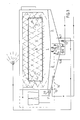
- Fig. 3 When using the illustrated apparatus, goods or objects A to be cleaned are placed in the cleansing tank 1, e.g. with the aid of a basket.
- the valve 6 is opened and a pump activated, whereupon washing liquid comprising tenside and alkali is pumped up from the tank 2 and applied to the objects or goods under powerful pressure. This can either be carried out manually or through nozzles installed in the cleansing tank 1.
- the washing liquid emulsifies oil, grease and like contaminants.
- the valve 4 in the cleansing tank 1 is opened, and the used washing liquid is allowed to run back to the washing liquid tank 2.
- valve 7 is then opened and a pump activated, whereupon rinsing water is sprayed, in the aforedescribed manner, over the objects, to rinse washing liquid therefrom.
- the valve 5 in the cleansing tank 1 is then opened and the rinsing water is allowed to run back to the tank 3.
- oil and grease will have accumulated in the washing liquid in the tank 2.
- continuous metering of tensides, alkali and nutrient salts can be commenced and the pH-value adjusted to 8.5-9.5, so as to enable maximum growth of the microorganisms.
- the washing liquid tank which in the case of the illustrated apparatus is the tank in which the contaminants are broken down biologically, is aerated and the contents thereof agitated with the aid of air entering through an air conduit 16.
- the pH-value falls with increasing oil contents.
- the pH-value is therefore adjusted to the aforesaid pH-range, so as to maintain the oil content within the range of 100-500 mg/liter.
- the method is facilitated by the fact that the lower part of the apparatus is conical in shape. Because the washing liquid tank 2 is conical it has a confined lowest point to which contaminants and dead bacteria are able to sink and from which the contaminants can be removed continuously to a waste outlet, through the valve 8.
- the rinsing water tank 3 is also conical in shape and incorporates an outlet valve 9.
- the bacteria population can be run at low temperatures, preferably at 35-40° C in the case of a thermophilic process or at 40-60° C in the case of mesophilic bacteria. These temperature ranges can be maintained in the washing liquid tank 2 with the aid of the heating means 13.
- the tank contents may also be heated with hot air.
- the temperature of the contents of the rinsing water tank 3 can also be regulated, with the aid of the means 14. Optimization of the washing process for high bacteria populations, by adjusting the pH-value and the nutrient substances and fresh tensides, enables the tenside consumption to be kept as low as 10°/o of the calculated amount of oil introduced to the system. Oxygen is supplied continuously, by aeration, and the oxygen blow is positioned in a manner such that dead bacteria and entrant contaminants can be removed continuously through the valve 6. This affords optimum bacteria growth conditions and enables tensides to be used effectively and rationally for degreasing industrial objects and goods.
- a stream of objects, or goods, to be cleansed are conveyed by a transverse conveyer or drum to the process bath 17 see Fig. 1) and are left in the bath for about 2-20 minutes, so that oil and contaminants are washed off.
- Air is blown with a motor 18 and a fan 19 through line 20 into the bath continuously from the bottom of said bath, so as to thorougly agitate the bath contents and maximize the oxygen supply.
- Bath liquid is fed through a valve 21 with a pump 22 continuously from the bath to a separator unit 23, for extraction of contaminants and dead bacteria through a valve 24 to a sludge tank 25. Sludge, or slime, is withdrawn from the separator compression zone.
- Tensides are metered to the bath continuously from a tank 26 at the same rate as the tensides are consumed.
- Nutrient solution, Camex Bio 104-1 is metered to the bath intermittently from a tank 27, so as to maintain the set-point values set on the pH-meter constant. The best mesophilic bacteria culture is obtained when the bath temperature is maintained at 38 ⁇ 1°C.
- the nutrient solution and the tenside solution are fed through valves 28, 29, 30 and 31 respectively with pumps 32 and 33 and are mixed with separated solution from the separator 23 through valve 34 in a mixing unit 35 and fed to the process tank 17.
- a thermostate 36 and a heater 37 are placed in the process tank 16. Fresh water is fed into the tank 17 through a line 37.
- the tenside solution used is Camex Bio 104, which comprises a mixture of 1-5% by weight sodium metasilicate, 5-10% tetrapotassium pyrophosphate, 5-10 % nonionic and cationic tensides, having a pH of 13. This solution is diluted to a 5%-tenside solution of pH 10.
- the nutrient solution used has the following basic composition
- This solution is diluted with water to 300 liters. 2 kg of this basic solution is mixed with 210 kg NH 4 Si0 3 and the mixture diluted to 600 liters.
- Example 1 above is repeated but with the difference that the nutrient solution is mixed with amine instead of sodium silicate, in accordance with the following.
- 2 kg of basic solution are mixed with 400 kg alkaline amine such as diethanol amine or trietanol amine.
- the mix is diluted with water to 600 liters.
- This example is particularly suited for application with goods or objects which are to be coated with chromium, nickel or other metals by electrolytic coating processes.
- the objects or goods are passed through a washing machine 39 on a conveyor belt 40 and then rinced in a rincing unit 42.
- a 50/o-tenside solution is mixed from the basic solution according to Example 1 at a temperature of 50-90° C, whereafter the solution is applied under high pressure to the surfaces of the objects or goods, so as to dissolve and emulsify oil and contaminants present thereon. Washing and rincing is done through nozzzles 42. Part of the washing liquid is transferred to a biodegradation unit 43 for the reduction of oil and contaminants.
- Nutrient solution as in example 1 is added to the biodegradation unit 43 from a tank 44.
- Fresh tenside solution is fed to the regeneration unit 43 from a tank 45.
- the temperature in the biodegradation unit is lowered to 20-30° C, upon oxygenation of the unit contents, by injecting air thereinto. Consequently, a mesophilic bacteria culture obtains optimized growth conditions when the flow passes through the biological unit.
- the flow is then passed to the central separation part, in which dead bacteria and sludge, slime, are passed to a compression zone for removal to a sludge tank 46. Air is also injected in the cleaning tank 39. Heaters are arranged in all tanks 39, 41 and 43.
- the biodegradation process is controlled in the same manner as that described in Example 1 and the injection of air and metering of tensides is effected continuously, whereas the alkaline nutrient solution is metered intermittently, to a pH-value of 9.4-9.5.
Landscapes
- Chemical & Material Sciences (AREA)
- Chemical Kinetics & Catalysis (AREA)
- Organic Chemistry (AREA)
- General Chemical & Material Sciences (AREA)
- Life Sciences & Earth Sciences (AREA)
- Engineering & Computer Science (AREA)
- Microbiology (AREA)
- Wood Science & Technology (AREA)
- Oil, Petroleum & Natural Gas (AREA)
- Materials Engineering (AREA)
- Mechanical Engineering (AREA)
- Metallurgy (AREA)
- Detergent Compositions (AREA)
- Preparation Of Compounds By Using Micro-Organisms (AREA)
- Cleaning By Liquid Or Steam (AREA)
- Apparatus Associated With Microorganisms And Enzymes (AREA)
- Micro-Organisms Or Cultivation Processes Thereof (AREA)
- Cleaning And De-Greasing Of Metallic Materials By Chemical Methods (AREA)
Abstract
Description
- The present invention relates to a method for cleaning objects and materials, and particularly, although not exclusively, for removing organic substances such as hydrocarbons, greases, waxes, oils, tars, pitches, proteins and peptides, particularly oils and greases and their decomposition products for biodegradation thereof. The invention also relates to apparatus for carrying out the method.
- The invention relates more specifically, although not exclusively, to degreasing biologically objects which are contaminated with cutting oils, lubricants, grinding oils or process oils, prior to the further treatment of said objects.
- Degreasing is an absolute necessity when the objects concerned are to be treated by processes such as phosphating processes, electrolytic processes, varnishing etc., if good results are to be achieved. Conventional degreasing of such objects is more often than not effected with a caustic soda solution, or lye, at high bath temperatures, which affords a good result initially. However, the bath gradually becomes enriched with oils removed from the objects and the degreasing capacity of the bath will fall-off radically when the oil contents of the bath exceeds 0.5 % by weight. This also applies to degreasing baths, which are maintained at temperatures of from 90 to 95°C. Objects which have been treated with a caustic soda solution are also difficult to wash clean.
- Furthermore, processes which utilize caustic acid solu tions and high bath temperatures are hazardous to the environment.
- When practicing the inventive method, the objects are instead washed with tensides which emulsify the organic substances, whereafter the emulsified hydrocarbons are degraded to carbon dioxide and water, by adding nutrient salts to the bath, so as to activate the microorganisms present in the contaminating ssubstances and therewith result in the degradation of said substances. By composing a degreasing bath in accordance with the invention and utilizing natural oil-consuming bacteria which accompany the contaminated objects, it is possible to degrease the objects while biologically reducing, at the same time, the entrant oils carried into the bath.
- The novel method thus enables tensides to be used for cleaning purposes instead of caustic soda solutions. Furthermore, the tensides are not consumed to the same extent as the caustic soda solutions used in conventional methods, because the cleaning bath composed in accordance with the invention can be used effectively for two years owing to the degradation of entrant oils and greases. Conventional degreasing processes using caustic soda solutions can only be used effectively for a short period of time. Furthermore, the inventive cleaning process can be carried out at a low temperature. These advantages afforded by the invention result in a considerable reduction in costs compared with prior art degreasing processes in which caustic soda solutions are used. The inventive process is also more friendly to the environment. Objects or materials cleaned with the aid of tensides can also be washed easily. Prior to this invention, the use of tensides has been prohibited by the fact that their degreasing ability falls off rapidly with increasing oil levels, thereby necessitating quick replenishment of the tensides. Because of the tenside costs incurred hereby, such replenishment has rendered the process highly expensive. The proposed bacteria degradation or decomposition, of the contaminants present enables, for the first time, tensides to be used in an efficient and rational fashion.
- The present invention thus relates to a method for cleaning objects which is characterized by cleaning said objects by treating them with an aqueous solution of tensides such as to emulsify the organic contaminants present, and by adding nutrient salts to the tenside solution so as to initiate the growth of microorganisms for the purpose of biologically degrading the organic substances so that the tenside solution substantially is unaffected, the biodegradation being performed separately from or simultaneously with the cleaning.
- In order to initiate a cleaning process of this kind, it is necessary first to accumulate a given amount of organic substances such as oil and accompanying bacteria, prior to activation of the bacteriological life. The oil is preferably accumulated in the cleaning bath, by adding thereto a tenside solution of basic pH 7-14, particularly by adding a basic tenside solution of pH 9-11.
- Cleaning can be effected with any kind of water-soluble tenside whatsoever, such as anionic, cationic, nonionic and amphoteric tensides. These can be tensides which are not-readily degradable by microorganisms, such as the halogen-containing (chloro-bromo- and fluoro-containing) tensides and heterocyclic tensides. Biodegradable tensides are preferably used, however, so that sludge, slime, separated from the process will not contaminate the surroundings. It is correct procedure, however, to control the process so that the microorganisms will not degrade the tensides. This control process is preferably effected by ensuring that the hydrocarbon content of the bath will not fall beneath 50 mg/liter and that the tenside content will not rise above 15 % by weight. By proceeding in this way it is ensured that the microorganisms will substantially degrade the organic contaminants present under all conditions and that the tensides are practically unaffected and regenerated and can be reused. The tensides will probably work at a pH of 7 up to an alkaline pH-value which will not block microbial growth. This pH-value is, at present, about 9.5, but may conceivably increase through genetic manipulation of the microorganisms. It has been found that good cleaning and degreasing results are achieved at alkaline pH-values above 8.5.
- It is also possible to draw off part of the cleaning liquid and to allow biodegradation to take place in a separate unit or facility. In this case higher alkaline pH-values can be used in the actual cleaning bath. Thus, when the cleaning and biodegradation processes are effected separately, the. cleaning process can be carried out at pH-values of from 7 to 14. When the cleaning processes and biodegradation processes are carried out in one and the same bath, the pH-value is preferably adjusted to between 9.0 and 9.5.
- Because organic substances such as oil and grease are emulsified continuously in the bath, the pH-value will decrease as a result of tensides being consumed and bound by the emulsified substances. When the pH-value has fallen to about 9.2-9.4, careful metering of nutrient solution to the bath can be commenced, so as to activate the latent bacteria culture in the bath. In the case of systems having a volumetric capacity of 2 m3, the system should be activated immediately, whereas systems having volumetric capacities in the order of 50-100 m3 should not be activated until the oil content of the bath has risen to about 500-1000 mg/liter. It is also important that fresh tensides are metered continuously to the bath, such as to maintain a constant tenside content and emulsifying capacity. The tenside content is preferably maintained at between 1-15 o/o by weight, preferably between 2-5 0/0 by weight in the case of objects soiled to normal levels, and between 5 and 10% by weight in the case of heavily soiled or contaminated objects. When the cleaning and biodegradation processes are carried out separately from one another, the tenside content of the cleaning bath may be maintained at a high level, while the bath in which biogradation takes place is maintained at the aforesaid tenside level.
- The content of organic substances should not fall beneath 50 mg/ml in the biodegradation process, since bacteria can begin to consume the tensides at lower contents of organic contaminants. In the case of large bacteria populations, the pH-value may fall rapidly as a result of the high consumption of emulsifying chemicals and also as a result of acid generation by dead bacteria. The contaminant content such as oil and grease should be maintained between 50-1000 mg/ml, preferably between 50 and 250 mg/ml, by adding to the system nutrient substances and pH-increasing substances.
- The temperature has also a decisive significance on optimum cleaning capacity. When the cleaning and biodegradation processes are effected separately from one another, the temperature of the cleaning bath may be between 20 and 100°C. When cleaning and biodegradation are effected in one and the same bath, the bath should be maintained at a temperature of between 20 and 80°C, preferably between 30 and 40° C, and more preferably between 35 and 40°C, which has been found to be a splendid working range in the case of mesophilic bacteria. Good cleaning results are obtained in this temperature range while, at the same time, the low temperature used requires only a low energy input. In the case of certain degreasing processes used, for instance, to remove waxes and paraffins, the degreasing temperature must lie above 50-S0°C, in which case it may be suitable to use separate facilities for degreasing and biodegradation purposes.
- Conversion of the bacteria population takes place more rapidly at temperatures above 40°C, at which preferably termophilic bacteria are active, and consequently the content of organic contaminants should lie above 300 mg/liter in order to prevent the bacteria from attacking the degreasing chemicals.
- A high degree of bacteria activity is required when large quantities of organic contaminants enter the bath. Large numbers of bacteria are also killed therewith. Certain bacteria species when dead produce toxic substances which are liable to destroy the biological life. Consequently, it is essential to separate dead bacteria continuously from the cleaning bath. Since dead bacteria have a low sedimentation rate (about 0.1 m/h) their separation from the bath may at times prove troublesome. The separating apparatus described in Swedish Patent Specification 7701734-1 is preferably used in this regard. This specification is hereby incorporated as a reference.
- The method is preferably made aerobic by introducing air, which can be atomized with the aid of nozzles.
- The tensides used in accordance with the invention are described in more detail hereinafter, wherein in the formulae recited R is an alkyl residue having a long chain with 8-20 carbon atoms, R' is a short alkyl residue having 1-8 carbon atoms or H, and X is an alkylene residue, particularly -(CH2)n when n is 1, 2 or 3. The tensides used in accordance with the invention may be anionic tensides, such as detergents and soaps, e.g. salts of carboxylic acids, suitably alkali, particularly potassium salts and amine salts (mono-, di- and triethanolamine salts), morpholine salts of fatty acids R-COO-,
- particularly having 12, 13, 14, 15, 16, 17 and 18 carbon atoms. There is also used salts of carboxylic acids having inserted ether-, carbon-, amide-, ester- and sulfonamide groups. R-CONH-X-COO,
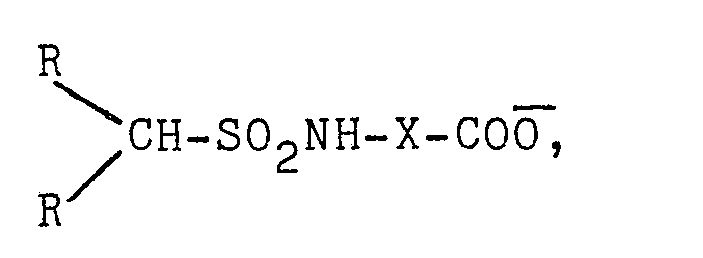
- R-O-X-CO- O,
- R-S-X-COO,
- R-S02-X-COO.
- Sulfuric acid esters can also be used, such as sulfated oils and fatty acids, such as sulfuric acid esters

- sulfated amides

- alkyl sulfates
- R-OSO3,
- sulfated fatty acids monoglycerides of the formula
- sulfated fatty acid alkylene amides
- R-COHN-X-OSO- 3,
- sulfated ethers
- R-O-X-OSO- 3.
- Alkyl sulfonates can also be used, such as simple alkyl sulfonates

- sulfosuccinic acid esters

- alkyl sulfonates having intermediate groups X RCOO-X-SO- 3,

- alkyl phosphates
- R-O-POs.
- Alkylaryl sulfonates can also be used, such as alkyl naphthalene sulfonates

- and alkyl benzene sulfonates

- and alkyl phosphates and salts of alkyl benzene phosphonic acids.

- According to the invention there are also used cationic tensides, particularly with chlorine or methylsulfate ions as catanions, e.g. amine salts, primary, secondary and teriary amine salts
- R-NH3'
- R-NH2-R',

- primary, secondary and tertiary amine salts with intermediate ions X
- R-COO-X-NHR2
- R-CONH-X-NHR3',
- R-O-X-NHR2',
- quarternary ammonium salts

- also with intermediate molecyles X as for the amine salts, phosphonium salts

- and sulfonium salts

- Amphoteric tensides can also be used, such as betaines

- sulfobetaines

- and sulfate betaines

- Nonionic tensides can also be used, such as ethylene oxide adducts, such as alkyl polyethylene glycols R-(O-CH2-CH2)n-OH,
- alkylene polyethylene glycols

- Acyl polyethylene glycols R-CO(O-CH2-CH2)n-OH, n = 1-60 oxyethylated polypropylene glycols

amine toxilate
- Among these compounds there is preferably used those which have a weak to average degree of oxyethylisation (n = about 0.3-0.7x2, where n is the number of moles ethylene oxide per mole of starting substance and c i's the number of carbon atoms in the hydrophobic residue). Fatty acid monoglycerides are also used

anhydrosorbite-monofatty acid esters - R-COO-C6H11O4,
- fatty acid alkylene amides
- R-CONH-X-OH,

- saccharose-monofatty acid esters
- These tensides can either be used individually or in mixtures. Cationic and nonionic tensides and mixtures thereof are used in particular, especially nondionic ethylene oxice adducts. Examples of tensides which can be used in this regard include 616 Allrent (contains nonionic tensides 2-nonyl-phenol, cationic tensides alkyl polyglycolether ammonium methyl sulfate, tetra potassium pyrophosphate, sodium citrate, preservatives, isopropanol, perfume, water and trisodium nitrilo triacetate). Via® Surf, Radion®, Meggem 85100 (ethylene oxide adducts, glycols, phosphates, silicates). These detergents often contain an alkaline substance which will not block microbiological growth and auxiliary washing agents such as polyphosphates.
- The substances used to adjust the pH of the system shall be soluble in water, although they should not have a negative effect on the tensides and the microbiological conversion. Examples of such basic substances include alkali salts of basic pyrosulfates M4P207, where M signifies an alkali or alkali metal, preferably potassium, polyphosphates, tripolyphosphate, metasilicates such as sodium metasilicate, and primary, secondary, tertiary amines, particularly water soluble and/or grease-emulsifying primary, secondary and tertiary alkanol amines preferably having 1-10 carbon atoms and optionally substituted on the alkyl part, e.g. mono-, di- and triethanolamine, 2-amino-1-butanol, 2-amino-3-methyl-propanol, 2-amino-2-methyl-1,3-pro- pandiol, 2-amino-2-ethyl-1,3-propandiol, tris(hydroximethyl)amino methane and isopropanol amine. These alkali substances can be charged in mixtures with the tensides.
- In the case of large bacteria populations, the pH-value may fall rapidly due to high consumption of emulsifying chemicals and to the generation of acid by dead bacteria. Consequently, in order to prevent the tenside-consumption from becoming excessive, the nutrient solution introduced to the bath may also contain a pH-increasing substance suitable for tensides, e.g. one of the aforementioned.
- Preferably, sodium metasilicate or alternatively amines are used. Tensides based on sodium metasilicate are not suitable for use in a number of industrial surface -treatment processes, such as electrolytic processes for applying chromium, nickel and other metals. In the case of these processes, the alkaline substance used must be based on amines.
- The nutrient substances charged in accordance with the invention are those conventionally used for the cultivation of microorganisms. These substances shall contain N, S, Mg, K, P, and a carbon source, and may also contain trace metals such as Zn, Mn, Cu, Co, Mo. A suitable mixture will contain one part by weight Mg2+, one part by weight S02-, 8 parts by weight K4+, 32 parts by weight P03-, 80 parts by weight NH+, a carbon source in the form of glucose 1600 parts by weight, minor quantities of zink, manganese, copper, cobalt and molybdenum, pH-increasing substances, e.g. alkali and pH-lowering acid, e.g. H3P04, 02 3000 parts by weight in the form oxygen or air. The composition of the nutrient substances, however, forms part of the present state of the art and can be readily established by the skilled person.
- The microorganisms activated in accordance with the present invention are the following:
- In mineral oils there are found
- Pseudomonas spp
- Pseudomonas pseudoalcaligenes
- Pseudomonas alcaligenes
- Alteromonas putrefaciens
- Pseudomonas stutzeri
- Aeromonas spp
- Enterobacteriaceae spp
- Klebsiella pneumoniae
- Enterobacter agglomerans
- Klebsiella oxytoca
- Proteus vulgaris
- Citrobacter diversus
- Escherichia coli
- Citrobacter freundii
- Morganella morganii
- Thiobacillus spp
- Thiobacillus ferrooxidans
- Aerococcus viridans
- Cladisporium resinae
- Alkane oxidizing spp
- Acinetobacter spp
- Arthrobacter spp
- Nocardia spp
- Cyronebacterium spp
- Xanthomonas spp
- Brevibacterium spp
- In synthetic oils there are found
- Pseudomonas spp
- Pseudomonas pseudoalcaligenes
- Pseudomonas alcaligenes
- Pseudomonas fluorescens
- Pseudomonas putida
- Acinetobacter spp
- Acinetobacter calcoaceticus
- Thiobacillus spp
- Thiobacillus thiooxidans
- Flavobacterium odoratum
- Enterobacteriaceae spp
- Bacillus spp
- Alkane oxidizing spp
- Arthrobacter spp
- Nocardia spp
- Corynebacterium spp
- Xanthomonas spp
- Brevibacterium spp
- In accordance with the invention it is also possible to initiate a process by adding cultivated strains of the aforesaid bacteria. It is also possible to initiate a cleaning process by adding slime or sludge isolated from a previous process to the bath.
- The inventive method enables tensides to be used effectively and in a rational manner to clean industrial goods prior to subjecting said goods to further treatment processes, degreasing of said goods having been previously effected mainly with caustic soda solutions. The method enables tensides to be used, because the content organic contaminants in the cleaning bath can be held constantly at a low level. When practising the present inventive method the bath can be used for a period of up to about 2 years as opposed to a period of about 1 month in the case of the earlier known cleaning method, depending upon the quantity of contaminated objects, or goods, degreased in the bath. The objects cleaned in accordance with the inventive method can also be washed easily free from the cleaning solution. Objects cleaned in accordance with the earlier known method cannot be washed so readily, since caustic soda, or lye, is difficult to wash off. The present inventive method can also be carried out at low temperatures, in the region of 35-40° C, instead of the relatively high temperatures of 90-95° C used in the earlier degreasing process. This means that energy can be saved. Since energy can be saved and the chemicals can be used more effectively, there is obtained a cost reduction of 60-80%.
- The invention also relates to apparatus for carrying out the inventive cleaning method. This apparatus is characterized by a cleansing tank which is located above a washing liquid tank and above a rinsing liquid tank, the bottom of the cleansing tank being totally or partially common to the ceiling of the washing liquid tank and the rinsing liquid tank respectively. The bottoms of the three tanks may be conical in shape.
- The cleansing tank may have any desired shape, such as round, square, rectangular, although it is preferably open and round. The washing liquid and rinsing liquid tanks may also have any desired shape. The tanks are preferably closed. The rinsing liquid and washing liquid tanks may have a ceiling or roof whose total surface area is greater than or smaller than the bottom surface of the cleansing tank. These ceilings may also coincide fully or partially with the bottom of the cleansing tank. Thus, the rinsing liquid tank and washing liquid tank may project beyond the bottom of the cleansing tank or coincide with the outer boundaries thereof, as illustrated in Fig. 3, or the ceilings may leave part of the outer bottom surface of the cleansing tank free.
- The three tanks for cleansing and holding washing liquid and rinsing liquid respectively are preferably configured in a first cylindrical tank having a conical bottom. The tank is first divided transversely of its longitudinal axis, so as to obtain an upper, cleansing tank, and then diametrically downwards beneath the cleansing tank, so as to obtain a washing liquid tank and a rinsing liquid tank. Preferably, only the conical part of the first cylindrical tank is divided into a tank for washing liquid and a tank for rinsing liquid as illustrated in Fig. 3. The first cylindrical tank, however, may also be partitioned transversely to the longitudinal axis, above the conical part, so that the washing-liquid and rinsing-liquid tanks obtain an upper cylindrical part and a lower conical part.
- Preferably, there are provided outlet openings from the cleansing tank to the washing liquid tank and the rinsing liquid tank respectively, and openings for further transportation of washing and rinsing liquid from respective washing and rinsing liquid tanks to the cleansing tank, closeable outlets from respective washing liquid and rinsing liquid tanks, closeable inlets for fresh water, washing liquid and additives to the washing liquid tank and a closeable inlet for supplying fresh water to the rinsing liquid tank.
- The rinsing liquid and washing liquid tanks may include means for heating the contents of said tanks and also means for aerating said tanks. The washing liquid tank preferably includes aerating means. The washing liquid tank may also include agitating or stirring means. Agitation of the tank contents, however, is preferably effected through aerating of the tank.
- The invention will now be described in more detail with reference to the accompanying drawings, in which
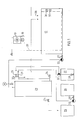
- Fig. 1 is a flow chart, illustrating a common bath for carrying out degreasing and biodegradation processes in accordance with Example 1,
- Fig. 2 is a flow chart illustrated separate units for effecting degreasing and biodegradation processes in accordance with
Fxample 3, and - Fig. 3 illustrates a preferred embodiment of apparatus for carrying out the inventive method.
- The inventive apparatus will now be described with reference to Fig. 3. When using the illustrated apparatus, goods or objects A to be cleaned are placed in the
cleansing tank 1, e.g. with the aid of a basket. The valve 6 is opened and a pump activated, whereupon washing liquid comprising tenside and alkali is pumped up from the tank 2 and applied to the objects or goods under powerful pressure. This can either be carried out manually or through nozzles installed in thecleansing tank 1. The washing liquid emulsifies oil, grease and like contaminants. Subsequent to washing the objects, thevalve 4 in thecleansing tank 1 is opened, and the used washing liquid is allowed to run back to the washing liquid tank 2. The valve 7 is then opened and a pump activated, whereupon rinsing water is sprayed, in the aforedescribed manner, over the objects, to rinse washing liquid therefrom. The valve 5 in thecleansing tank 1 is then opened and the rinsing water is allowed to run back to thetank 3. After the apparatus has been used for some hours, oil and grease will have accumulated in the washing liquid in the tank 2. At this stage, continuous metering of tensides, alkali and nutrient salts can be commenced and the pH-value adjusted to 8.5-9.5, so as to enable maximum growth of the microorganisms. The washing liquid tank, which in the case of the illustrated apparatus is the tank in which the contaminants are broken down biologically, is aerated and the contents thereof agitated with the aid of air entering through anair conduit 16. The pH-value falls with increasing oil contents. The pH-value is therefore adjusted to the aforesaid pH-range, so as to maintain the oil content within the range of 100-500 mg/liter. - Under these conditions it is possible to effect continuously a degreasing process in which oil-contaminated objects are constantly introduced into the
cleansing tank 1 and degreased with washing liquid based on tensides and alkali, which emulsifies oil and bacteria present therein upon contact with the objects, such that the bacteria are able subsequently to reduce the oil content of the washing liquid tank 2 to within the range of 100-500 mg/liter, said tank 2 functioning as a microorganism cultivating tank. - The method is facilitated by the fact that the lower part of the apparatus is conical in shape. Because the washing liquid tank 2 is conical it has a confined lowest point to which contaminants and dead bacteria are able to sink and from which the contaminants can be removed continuously to a waste outlet, through the
valve 8. The rinsingwater tank 3 is also conical in shape and incorporates anoutlet valve 9. The bacteria population can be run at low temperatures, preferably at 35-40° C in the case of a thermophilic process or at 40-60° C in the case of mesophilic bacteria. These temperature ranges can be maintained in the washing liquid tank 2 with the aid of the heating means 13. The tank contents may also be heated with hot air. The temperature of the contents of the rinsingwater tank 3 can also be regulated, with the aid of themeans 14. Optimization of the washing process for high bacteria populations, by adjusting the pH-value and the nutrient substances and fresh tensides, enables the tenside consumption to be kept as low as 10°/o of the calculated amount of oil introduced to the system. Oxygen is supplied continuously, by aeration, and the oxygen blow is positioned in a manner such that dead bacteria and entrant contaminants can be removed continuously through the valve 6. This affords optimum bacteria growth conditions and enables tensides to be used effectively and rationally for degreasing industrial objects and goods. - The invention will now be described in more detail with reference to a number of working examples.
- A standard method carried out in a low-temperature cleaning system in which cleaning and biodegradation are effected in one and the same bath.
- A stream of objects, or goods, to be cleansed are conveyed by a transverse conveyer or drum to the
process bath 17 see Fig. 1) and are left in the bath for about 2-20 minutes, so that oil and contaminants are washed off. Air is blown with amotor 18 and afan 19 throughline 20 into the bath continuously from the bottom of said bath, so as to thorougly agitate the bath contents and maximize the oxygen supply. Bath liquid is fed through avalve 21 with apump 22 continuously from the bath to aseparator unit 23, for extraction of contaminants and dead bacteria through avalve 24 to asludge tank 25. Sludge, or slime, is withdrawn from the separator compression zone. Tensides are metered to the bath continuously from a tank 26 at the same rate as the tensides are consumed. Nutrient solution, Camex Bio 104-1, is metered to the bath intermittently from atank 27, so as to maintain the set-point values set on the pH-meter constant. The best mesophilic bacteria culture is obtained when the bath temperature is maintained at 38 ±1°C. - The nutrient solution and the tenside solution are fed through
valves pumps 32 and 33 and are mixed with separated solution from theseparator 23 throughvalve 34 in a mixing unit 35 and fed to theprocess tank 17. A thermostate 36 and aheater 37 are placed in theprocess tank 16. Fresh water is fed into thetank 17 through aline 37. - The tenside solution used is Camex Bio 104, which comprises a mixture of 1-5% by weight sodium metasilicate, 5-10% tetrapotassium pyrophosphate, 5-10 % nonionic and cationic tensides, having a pH of 13. This solution is diluted to a 5%-tenside solution of
pH 10. - The nutrient solution used has the following basic composition
- 1.2 kg MgC126H20 magnesium chloride
- 1.8 kg KOH potassium hydroxide
- 3.3 kg H2S04 37 %-sulfuric acid
- 100 kg HsP04 85%-phosphoric acid
- 40 kg NH4CI ammonium chloride
- 25 kg glucose.
- This solution is diluted with water to 300 liters. 2 kg of this basic solution is mixed with 210 kg NH4Si03 and the mixture diluted to 600 liters.
- The following operating parameters are maintained:
- Bath water 25 m3
-
Heating power 20 kWh - Tenside concentration 50/0
-
Temperature 38°C - Air injection 180 m3/h
- Objects or goods to bath 6000 tonnes/year
- Production time 1700 h/year
- Object surface area 600 000 M 2/year
- Object surface area . 2800 m2/day
- Oil emulsified in bath 3000 kg/year
- Oil emulsified in
bath 14 kg/day - Tenside consumption 1250 kg/year
- Quantity of tenside metered
- (24 h) CB 104 0.15 kg/h
- Bacteria activity with
- normal operation 1.2 x 10⁶ bact/ml
- Quantity of nutrient solution
- metered CB 104-1 to pH 9.4-9.5
- Sludge removed TS-content
- 5-8% 3 m3/year
- Sludge removed Ts-content
- 5-8% 10 i/day
- Bacteria activity sludge 2.4 x 10⁷ bact./ml
- Normal oil or aromatic
- content of bath 50-250 mg/I
- Normal oil or aromatic content of the sludge 50-150 mg/I
- Example 1 above is repeated but with the difference that the nutrient solution is mixed with amine instead of sodium silicate, in accordance with the following. 2 kg of basic solution are mixed with 400 kg alkaline amine such as diethanol amine or trietanol amine. The mix is diluted with water to 600 liters. This example is particularly suited for application with goods or objects which are to be coated with chromium, nickel or other metals by electrolytic coating processes.
- High-temperature degreasing bath and a separate unit for biodegradation (Figure 2).
- The objects or goods are passed through a
washing machine 39 on aconveyor belt 40 and then rinced in arincing unit 42. A 50/o-tenside solution is mixed from the basic solution according to Example 1 at a temperature of 50-90° C, whereafter the solution is applied under high pressure to the surfaces of the objects or goods, so as to dissolve and emulsify oil and contaminants present thereon. Washing and rincing is done throughnozzzles 42. Part of the washing liquid is transferred to abiodegradation unit 43 for the reduction of oil and contaminants. Nutrient solution as in example 1 is added to thebiodegradation unit 43 from atank 44. Fresh tenside solution is fed to theregeneration unit 43 from atank 45. - The temperature in the biodegradation unit is lowered to 20-30° C, upon oxygenation of the unit contents, by injecting air thereinto. Consequently, a mesophilic bacteria culture obtains optimized growth conditions when the flow passes through the biological unit. The flow is then passed to the central separation part, in which dead bacteria and sludge, slime, are passed to a compression zone for removal to a
sludge tank 46. Air is also injected in thecleaning tank 39. Heaters are arranged in alltanks - The biodegradation process is controlled in the same manner as that described in Example 1 and the injection of air and metering of tensides is effected continuously, whereas the alkaline nutrient solution is metered intermittently, to a pH-value of 9.4-9.5.
Claims (12)
Priority Applications (1)
| Application Number | Priority Date | Filing Date | Title |
|---|---|---|---|
| AT88850310T ATE88224T1 (en) | 1987-09-21 | 1988-09-19 | CLEANING METHOD AND DEVICE THEREOF. |
Applications Claiming Priority (4)
| Application Number | Priority Date | Filing Date | Title |
|---|---|---|---|
| SE8703644 | 1987-09-21 | ||
| SE8703644A SE8703644D0 (en) | 1987-09-21 | 1987-09-21 | AVFETTNINGSFORFARANDE |
| SE8801511 | 1988-04-22 | ||
| SE8801511A SE8801511L (en) | 1987-09-21 | 1988-04-22 | DEFROSTING PROCEDURE AND DEVICE THEREOF |
Publications (3)
| Publication Number | Publication Date |
|---|---|
| EP0309432A2 true EP0309432A2 (en) | 1989-03-29 |
| EP0309432A3 EP0309432A3 (en) | 1991-03-13 |
| EP0309432B1 EP0309432B1 (en) | 1993-04-14 |
Family
ID=26659951
Family Applications (1)
| Application Number | Title | Priority Date | Filing Date |
|---|---|---|---|
| EP88850310A Revoked EP0309432B1 (en) | 1987-09-21 | 1988-09-19 | A cleaning method and apparatus therefor |
Country Status (6)
| Country | Link |
|---|---|
| EP (1) | EP0309432B1 (en) |
| JP (1) | JPH01159387A (en) |
| AU (1) | AU613402B2 (en) |
| DE (1) | DE3880246T2 (en) |
| ES (1) | ES2041338T3 (en) |
| SE (1) | SE8801511L (en) |
Cited By (12)
| Publication number | Priority date | Publication date | Assignee | Title |
|---|---|---|---|---|
| EP0588282A1 (en) * | 1992-09-14 | 1994-03-23 | Haldor Dr. Aamot | Rinsing and cleaning method for industrial goods |
| FR2706790A1 (en) * | 1993-06-21 | 1994-12-30 | Vitobio Sa | Process and biological composition for cleaning paint brushes and rollers |
| DE4340058A1 (en) * | 1993-11-24 | 1995-06-01 | Aamot Haldor | Cleaning method for degreasing baths using micro-organisms |
| WO1996004083A1 (en) * | 1994-08-01 | 1996-02-15 | B & S Research | Method and apparatus for remediating contaminated material |
| EP0715549A4 (en) * | 1993-07-16 | 1996-07-17 | ||
| DE19644714A1 (en) * | 1996-10-28 | 1998-04-30 | Klaus F Dr Ing Roth | Biological treatment of fat |
| US6019110A (en) * | 1994-09-30 | 2000-02-01 | Chemfree Corporation | Parts washing system |
| US6328045B1 (en) * | 1994-09-30 | 2001-12-11 | Chemfree Corporation | Parts washing system |
| US6391836B1 (en) * | 2001-01-16 | 2002-05-21 | Bioclean, Usa | Biological cleaning system which forms a conversion coating on substrates |
| EP0784518B1 (en) * | 1994-09-30 | 2002-06-26 | ZYMO International Inc. | Microbiological parts washer |
| WO2004113589A1 (en) * | 2003-06-25 | 2004-12-29 | Cb Chemie Und Biotechnologie Gmbh | Device in the form of a washing machine comprising a bioreactor for cleaning machine parts that are soiled with oil and fat |
| DE102019005395A1 (en) * | 2019-07-24 | 2021-01-28 | Jens Fridolin Olschewski | Process for the treatment of solid particles contaminated by mineral oil, native oil and / or tar oil |
Family Cites Families (6)
| Publication number | Priority date | Publication date | Assignee | Title |
|---|---|---|---|---|
| IT1090470B (en) * | 1976-09-24 | 1985-06-26 | Niigata Engineering Co Ltd | PROCEDURE AND PLANT FOR TREATING WASTE WATER THROUGH MICROORGANISMS |
| US4124504A (en) * | 1977-05-25 | 1978-11-07 | George Munden | Process for treating caustic wash solutions |
| FR2474473A1 (en) * | 1979-12-20 | 1981-07-31 | Inst Francais Du Petrole | NEW FORMULATION FOR THE TREATMENT OF WATER POLLUTED BY HYDROCARBONS |
| FR2528087B1 (en) * | 1982-06-04 | 1986-06-06 | Nal Expl Oceans Centre | PROCESS FOR DEGRADATION AND DISPERSION OF HYDROCARBON COILS AT SEA BY FERMENTATION |
| DE3247431A1 (en) * | 1982-12-22 | 1984-06-28 | Henkel KGaA, 4000 Düsseldorf | METHOD FOR REGENERATION OR FOR RECYCLING AQUEOUS DEGREASING AND CLEANING SOLUTIONS |
| CH667449A5 (en) * | 1986-04-23 | 1988-10-14 | Sulzer Ag | METHOD FOR THE BIOLOGICAL PURIFICATION OF WATER OR WASTE WATER FROM ORGANIC NITROGEN-BASED IMPURITIES. |
-
1988
- 1988-04-22 SE SE8801511A patent/SE8801511L/en not_active Application Discontinuation
- 1988-09-13 AU AU22163/88A patent/AU613402B2/en not_active Ceased
- 1988-09-19 EP EP88850310A patent/EP0309432B1/en not_active Revoked
- 1988-09-19 DE DE88850310T patent/DE3880246T2/en not_active Expired - Fee Related
- 1988-09-19 ES ES198888850310T patent/ES2041338T3/en not_active Expired - Lifetime
- 1988-09-20 JP JP63236204A patent/JPH01159387A/en active Pending
Cited By (24)
| Publication number | Priority date | Publication date | Assignee | Title |
|---|---|---|---|---|
| US5532162A (en) * | 1992-09-14 | 1996-07-02 | Aamot; Haldor | Elimination of used degreasing solution through biological degradation |
| EP0588282A1 (en) * | 1992-09-14 | 1994-03-23 | Haldor Dr. Aamot | Rinsing and cleaning method for industrial goods |
| FR2706790A1 (en) * | 1993-06-21 | 1994-12-30 | Vitobio Sa | Process and biological composition for cleaning paint brushes and rollers |
| EP0715549A4 (en) * | 1993-07-16 | 1996-07-17 | ||
| DE4340058A1 (en) * | 1993-11-24 | 1995-06-01 | Aamot Haldor | Cleaning method for degreasing baths using micro-organisms |
| US5772782A (en) * | 1994-08-01 | 1998-06-30 | B&S Research, Inc. | Method for remediating contaminated material |
| WO1996004083A1 (en) * | 1994-08-01 | 1996-02-15 | B & S Research | Method and apparatus for remediating contaminated material |
| US5589004A (en) * | 1994-08-01 | 1996-12-31 | B&S Research, Inc. | Method for remediating contaminated material |
| US5709234A (en) * | 1994-08-01 | 1998-01-20 | B&S Research, Inc. | Method and apparatus for remediating contaminated material |
| US6095163A (en) * | 1994-09-30 | 2000-08-01 | Chemfree Corporation | Parts washing system |
| US6019110A (en) * | 1994-09-30 | 2000-02-01 | Chemfree Corporation | Parts washing system |
| US6074491A (en) * | 1994-09-30 | 2000-06-13 | Chemfree Corporation | Parts washing system |
| US6328045B1 (en) * | 1994-09-30 | 2001-12-11 | Chemfree Corporation | Parts washing system |
| US7980257B2 (en) | 1994-09-30 | 2011-07-19 | Zymo International, Inc. | Parts washing system |
| EP0784518B1 (en) * | 1994-09-30 | 2002-06-26 | ZYMO International Inc. | Microbiological parts washer |
| DE19644714A1 (en) * | 1996-10-28 | 1998-04-30 | Klaus F Dr Ing Roth | Biological treatment of fat |
| WO2002057031A3 (en) * | 2001-01-16 | 2002-09-19 | Bio Clean Llc | Biological cleaning system |
| EP1351782A4 (en) * | 2001-01-16 | 2004-05-12 | Bio Clean Llc | Biological cleaning system |
| US6884301B2 (en) * | 2001-01-16 | 2005-04-26 | Bioclean, Usa | Biological cleaning system comprising microbes for digesting oils and/or greases |
| EP2316583A1 (en) * | 2001-01-16 | 2011-05-04 | Bio Clean LLC | Biological cleaning system |
| US6391836B1 (en) * | 2001-01-16 | 2002-05-21 | Bioclean, Usa | Biological cleaning system which forms a conversion coating on substrates |
| WO2004113589A1 (en) * | 2003-06-25 | 2004-12-29 | Cb Chemie Und Biotechnologie Gmbh | Device in the form of a washing machine comprising a bioreactor for cleaning machine parts that are soiled with oil and fat |
| EP1491661A1 (en) * | 2003-06-25 | 2004-12-29 | CB Chemie und Biotechnologie GmbH | Device for purification of machine parts contaminated by oil and grease of the washing machine type with a bioreactor |
| DE102019005395A1 (en) * | 2019-07-24 | 2021-01-28 | Jens Fridolin Olschewski | Process for the treatment of solid particles contaminated by mineral oil, native oil and / or tar oil |
Also Published As
| Publication number | Publication date |
|---|---|
| DE3880246T2 (en) | 1993-11-25 |
| AU613402B2 (en) | 1991-08-01 |
| AU2216388A (en) | 1989-03-23 |
| EP0309432A3 (en) | 1991-03-13 |
| SE8801511L (en) | 1989-03-22 |
| EP0309432B1 (en) | 1993-04-14 |
| JPH01159387A (en) | 1989-06-22 |
| DE3880246D1 (en) | 1993-05-19 |
| SE8801511D0 (en) | 1988-04-22 |
| ES2041338T3 (en) | 1993-11-16 |
Similar Documents
| Publication | Publication Date | Title |
|---|---|---|
| EP0309432B1 (en) | A cleaning method and apparatus therefor | |
| US3635797A (en) | Enzymatic composition | |
| US5532162A (en) | Elimination of used degreasing solution through biological degradation | |
| EP0424340A2 (en) | A method for pickling iron and steel surfaces | |
| US5885459A (en) | Process for purifying and reusing surfactant-containing waste waters | |
| TWI312339B (en) | ||
| US6063206A (en) | De-oiling process using enzymes | |
| US6057147A (en) | Apparatus and method for bioremediation of hydrocarbon-contaminated objects | |
| JP6508503B1 (en) | Storage method of seed microorganism and storage device of seed microorganism | |
| CN1223666C (en) | Biological purification system | |
| CN1673125A (en) | Harmless oil field mud and sand treating method and apparatus | |
| JPH11323391A (en) | Aqueous degreasing bath for metal products and its operation method | |
| KR20040031964A (en) | The method and wastewater disposal plant of high concentration using a vacuum pump | |
| JP2002113489A (en) | Method and apparatus for biodegradation of oil | |
| KR100306224B1 (en) | The method for process and stock raising of aparatus | |
| US2338688A (en) | Cleaning composition | |
| JP2001120252A (en) | Method for culturing red nonsulfur bacterium and low- smell wastewater treatment equipment | |
| US4209489A (en) | Apparatus for treating spent hydrochloric acid | |
| CN102417881A (en) | Application of waste acid in microalgae industry | |
| JPWO2018207826A1 (en) | Microbial preparation automatic injection device, wastewater treatment system, and microbial preparation injection method | |
| CN1102432A (en) | Acidic cleaning agent | |
| KR101732680B1 (en) | Apparatus For Treating Sludge From Slaughter House | |
| PL161554B1 (en) | A method of chemical cleaning of water systems, especially central heating networks | |
| Lewis et al. | Cleaning and sanitation | |
| PLANT | Technews |
Legal Events
| Date | Code | Title | Description |
|---|---|---|---|
| PUAI | Public reference made under article 153(3) epc to a published international application that has entered the european phase |
Free format text: ORIGINAL CODE: 0009012 |
|
| AK | Designated contracting states |
Kind code of ref document: A2 Designated state(s): AT BE CH DE ES FR GB GR IT LI LU NL SE |
|
| RHK1 | Main classification (correction) |
Ipc: C23G 1/36 |
|
| PUAL | Search report despatched |
Free format text: ORIGINAL CODE: 0009013 |
|
| AK | Designated contracting states |
Kind code of ref document: A3 Designated state(s): AT BE CH DE ES FR GB GR IT LI LU NL SE |
|
| 17P | Request for examination filed |
Effective date: 19910511 |
|
| 17Q | First examination report despatched |
Effective date: 19920513 |
|
| GRAA | (expected) grant |
Free format text: ORIGINAL CODE: 0009210 |
|
| AK | Designated contracting states |
Kind code of ref document: B1 Designated state(s): AT BE CH DE ES FR GB GR IT LI LU NL SE |
|
| PG25 | Lapsed in a contracting state [announced via postgrant information from national office to epo] |
Ref country code: BE Effective date: 19930414 Ref country code: IT Free format text: LAPSE BECAUSE OF FAILURE TO SUBMIT A TRANSLATION OF THE DESCRIPTION OR TO PAY THE FEE WITHIN THE PRESCRIBED TIME-LIMIT;WARNING: LAPSES OF ITALIAN PATENTS WITH EFFECTIVE DATE BEFORE 2007 MAY HAVE OCCURRED AT ANY TIME BEFORE 2007. THE CORRECT EFFECTIVE DATE MAY BE DIFFERENT FROM THE ONE RECORDED. Effective date: 19930414 Ref country code: CH Effective date: 19930414 Ref country code: AT Effective date: 19930414 Ref country code: LI Effective date: 19930414 Ref country code: SE Effective date: 19930414 Ref country code: NL Effective date: 19930414 |
|
| REF | Corresponds to: |
Ref document number: 88224 Country of ref document: AT Date of ref document: 19930415 Kind code of ref document: T |
|
| REF | Corresponds to: |
Ref document number: 3880246 Country of ref document: DE Date of ref document: 19930519 |
|
| PG25 | Lapsed in a contracting state [announced via postgrant information from national office to epo] |
Ref country code: GR Free format text: LAPSE BECAUSE OF FAILURE TO SUBMIT A TRANSLATION OF THE DESCRIPTION OR TO PAY THE FEE WITHIN THE PRESCRIBED TIME-LIMIT Effective date: 19930716 |
|
| REG | Reference to a national code |
Ref country code: CH Ref legal event code: PL |
|
| ET | Fr: translation filed | ||
| PGFP | Annual fee paid to national office [announced via postgrant information from national office to epo] |
Ref country code: GB Payment date: 19930909 Year of fee payment: 6 |
|
| PGFP | Annual fee paid to national office [announced via postgrant information from national office to epo] |
Ref country code: ES Payment date: 19930910 Year of fee payment: 6 |
|
| NLV1 | Nl: lapsed or annulled due to failure to fulfill the requirements of art. 29p and 29m of the patents act | ||
| PGFP | Annual fee paid to national office [announced via postgrant information from national office to epo] |
Ref country code: FR Payment date: 19930916 Year of fee payment: 6 |
|
| PG25 | Lapsed in a contracting state [announced via postgrant information from national office to epo] |
Ref country code: LU Free format text: LAPSE BECAUSE OF NON-PAYMENT OF DUE FEES Effective date: 19930930 |
|
| REG | Reference to a national code |
Ref country code: ES Ref legal event code: FG2A Ref document number: 2041338 Country of ref document: ES Kind code of ref document: T3 |
|
| PGFP | Annual fee paid to national office [announced via postgrant information from national office to epo] |
Ref country code: DE Payment date: 19931125 Year of fee payment: 6 |
|
| PLBI | Opposition filed |
Free format text: ORIGINAL CODE: 0009260 |
|
| 26 | Opposition filed |
Opponent name: DR.AAMOT, HALDOR Effective date: 19940114 |
|
| PG25 | Lapsed in a contracting state [announced via postgrant information from national office to epo] |
Ref country code: GB Effective date: 19940919 |
|
| PG25 | Lapsed in a contracting state [announced via postgrant information from national office to epo] |
Ref country code: ES Free format text: LAPSE BECAUSE OF NON-PAYMENT OF DUE FEES Effective date: 19940920 |
|
| GBPC | Gb: european patent ceased through non-payment of renewal fee |
Effective date: 19940919 |
|
| PG25 | Lapsed in a contracting state [announced via postgrant information from national office to epo] |
Ref country code: FR Effective date: 19950531 |
|
| PG25 | Lapsed in a contracting state [announced via postgrant information from national office to epo] |
Ref country code: DE Effective date: 19950601 |
|
| REG | Reference to a national code |
Ref country code: FR Ref legal event code: ST |
|
| RDAG | Patent revoked |
Free format text: ORIGINAL CODE: 0009271 |
|
| STAA | Information on the status of an ep patent application or granted ep patent |
Free format text: STATUS: PATENT REVOKED |
|
| 27W | Patent revoked |
Effective date: 19950812 |