EP0309983A2 - Procédé enzymatique de synthèse des peptides, surtout des dipeptides et sa mise en oeuvre - Google Patents
Procédé enzymatique de synthèse des peptides, surtout des dipeptides et sa mise en oeuvre Download PDFInfo
- Publication number
- EP0309983A2 EP0309983A2 EP88115873A EP88115873A EP0309983A2 EP 0309983 A2 EP0309983 A2 EP 0309983A2 EP 88115873 A EP88115873 A EP 88115873A EP 88115873 A EP88115873 A EP 88115873A EP 0309983 A2 EP0309983 A2 EP 0309983A2
- Authority
- EP
- European Patent Office
- Prior art keywords
- amino acid
- protected
- peptide
- enzyme
- reaction
- Prior art date
- Legal status (The legal status is an assumption and is not a legal conclusion. Google has not performed a legal analysis and makes no representation as to the accuracy of the status listed.)
- Withdrawn
Links
Images

Classifications
-
- C—CHEMISTRY; METALLURGY
- C07—ORGANIC CHEMISTRY
- C07K—PEPTIDES
- C07K1/00—General methods for the preparation of peptides, i.e. processes for the organic chemical preparation of peptides or proteins of any length
- C07K1/14—Extraction; Separation; Purification
- C07K1/16—Extraction; Separation; Purification by chromatography
- C07K1/20—Partition-, reverse-phase or hydrophobic interaction chromatography
-
- C—CHEMISTRY; METALLURGY
- C07—ORGANIC CHEMISTRY
- C07K—PEPTIDES
- C07K1/00—General methods for the preparation of peptides, i.e. processes for the organic chemical preparation of peptides or proteins of any length
- C07K1/02—General methods for the preparation of peptides, i.e. processes for the organic chemical preparation of peptides or proteins of any length in solution
-
- C—CHEMISTRY; METALLURGY
- C07—ORGANIC CHEMISTRY
- C07K—PEPTIDES
- C07K5/00—Peptides containing up to four amino acids in a fully defined sequence; Derivatives thereof
-
- Y—GENERAL TAGGING OF NEW TECHNOLOGICAL DEVELOPMENTS; GENERAL TAGGING OF CROSS-SECTIONAL TECHNOLOGIES SPANNING OVER SEVERAL SECTIONS OF THE IPC; TECHNICAL SUBJECTS COVERED BY FORMER USPC CROSS-REFERENCE ART COLLECTIONS [XRACs] AND DIGESTS
- Y02—TECHNOLOGIES OR APPLICATIONS FOR MITIGATION OR ADAPTATION AGAINST CLIMATE CHANGE
- Y02P—CLIMATE CHANGE MITIGATION TECHNOLOGIES IN THE PRODUCTION OR PROCESSING OF GOODS
- Y02P20/00—Technologies relating to chemical industry
- Y02P20/50—Improvements relating to the production of bulk chemicals
- Y02P20/55—Design of synthesis routes, e.g. reducing the use of auxiliary or protecting groups
-
- Y—GENERAL TAGGING OF NEW TECHNOLOGICAL DEVELOPMENTS; GENERAL TAGGING OF CROSS-SECTIONAL TECHNOLOGIES SPANNING OVER SEVERAL SECTIONS OF THE IPC; TECHNICAL SUBJECTS COVERED BY FORMER USPC CROSS-REFERENCE ART COLLECTIONS [XRACs] AND DIGESTS
- Y10—TECHNICAL SUBJECTS COVERED BY FORMER USPC
- Y10S—TECHNICAL SUBJECTS COVERED BY FORMER USPC CROSS-REFERENCE ART COLLECTIONS [XRACs] AND DIGESTS
- Y10S435/00—Chemistry: molecular biology and microbiology
- Y10S435/803—Physical recovery methods, e.g. chromatography, grinding
-
- Y—GENERAL TAGGING OF NEW TECHNOLOGICAL DEVELOPMENTS; GENERAL TAGGING OF CROSS-SECTIONAL TECHNOLOGIES SPANNING OVER SEVERAL SECTIONS OF THE IPC; TECHNICAL SUBJECTS COVERED BY FORMER USPC CROSS-REFERENCE ART COLLECTIONS [XRACs] AND DIGESTS
- Y10—TECHNICAL SUBJECTS COVERED BY FORMER USPC
- Y10S—TECHNICAL SUBJECTS COVERED BY FORMER USPC CROSS-REFERENCE ART COLLECTIONS [XRACs] AND DIGESTS
- Y10S435/00—Chemistry: molecular biology and microbiology
- Y10S435/813—Continuous fermentation
Definitions
- the invention relates to a process for the preparation of optionally N-protected peptides, in particular dipeptides, by enzymatic reaction of N-protected amino acid alkyl ester with amino acid used in a large excess in the aqueous phase in the presence of serine protease or peptidase and enzymatic cleavage of the protective group from the formed Peptide and a suitable device.
- Di- and oligopeptides such as. B. Tyr-Ala
- peptides are characterized in part by highly interesting pharmacological properties, such as the peptide hormones (e.g. Tyr-Arg).
- their approval as pharmaceutical agents requires high purity, in particular enantiomeric purity of more than 99.9 ee.
- Such high enantiomeric purities can only be achieved with great effort in conventional chemical processes. The enzymatic peptide synthesis therefore appears particularly attractive.
- N-protected (N-acylated) dipeptides by enzymatic reaction of N-acylamino acid alkyl esters (A) with optionally C-ge is known from US Pat. No. 4,339,534 protected amino acid (B) using carboxypeptidase as an enzyme, which is used in particular in immobilized form (carrier-fixed).
- the examples outline a batch-wise production with chromatographic separation of the reaction mixture at the end.
- benzoyl-, acetyl- and benzyloxycarbonyl are predominantly used as N-protecting groups from a plurality of groups specified as possible.
- F. Widmer et al. (“Enzymatic Peptide Synthesis” in "Peptides 1982” Walter de Gruyter & Co, Berlin New York, 1983, pages 375 to 379) also describes the use of the N-phenacetyl group as a protective group for the implementation of N-acyl-amino acid alkyl ester with amino acid amide in the presence of carboxypeptidase Y was reported and a possible enzymatic cleavage of the protective group with penicillin acylase was pointed out.
- the aim of the invention is now to increase the economy of the peptide synthesis by continuous operation, paying particular attention to a minimal enzyme consumption and the additional separation of the C-protecting group is to be avoided by using amino acid as component B.
- the process according to the invention of the type mentioned at the outset, which was developed for this purpose, is characterized in that the reaction is carried out continuously with the exclusion of organic solubilizers and with enzyme retained in the reaction space, with such an excess of amino acids and with a residence time which leads to the quantitative conversion of the amino acid ester, that the N-protected peptide by adsorption on a hydro separates phobic adsorber from the reaction mixture leaving the reaction space, which is returned for conversion and that, if appropriate, the protective group is finally cleaved off enzymatically from the N-protected peptide eluted with aqueous solution from the adsorber.
- N-protected dipeptides or oligopeptides can optionally be obtained economically.
- the enzyme is used in particular in a carrier-fixed form (for example a high-molecular carrier with epoxy groups on eupergite; in general, high-molecular carriers with groups which are chemically reactive for protein attachment) or in an enzyme membrane reactor.
- a carrier-fixed form for example a high-molecular carrier with epoxy groups on eupergite; in general, high-molecular carriers with groups which are chemically reactive for protein attachment
- an enzyme membrane reactor for example a carrier-fixed form (for example a high-molecular carrier with epoxy groups on eupergite; in general, high-molecular carriers with groups which are chemically reactive for protein attachment) or in an enzyme membrane reactor.
- Amberlite XAD-2 is used in particular to separate the N-protected (di) peptide formed from the reaction mixture.
- the molar ratio of amino acid to N-protected amino acid ester is in particular> 50: 1, preferably ⁇ 200: 1, depending on the components to be reacted.
- a ratio of approximately 500: 1 was successfully used.
- Carboxypeptidases especially carboxypeptidase Y, are used in particular as enzymes for peptide formation.
- the N-protected amino acid alkyl ester (component A) is in particular an N-acyl, especially a phenacetylamino acid alkyl ester, and in particular penicillin-G acylase is used for the enzymatic removal of the protective group (especially in the enzyme membrane reactor or in a fixed form).
- N-phenacetylamino acid alkyl ester is, in particular, an ester of an aromatic amino acid and, in particular, N-phenacetyltyrosine lower alkyl ester (lower alkyl should in particular comprise 1 to 4 carbon atoms).
- the peptide formation (I) was carried out both in the enzyme membrane reactor (EMR; see, for example, EP-A-23 346 and 24 547) and with an enzyme immobilized on a support.
- EMR enzyme membrane reactor
- CPDY from Carlbiotech was used as the enzyme.
- Eupergit a polymer carrier with oxirane rings was used for the fixation. With residence times of less than 10 min. worked, which were determined in advance depending on the enzyme concentration. The enzyme deactivation was about 0.7% / d. It was found that the selectivity of the reaction was slightly increased (by 5 to 10%) with homogeneous catalysis (in the enzyme membrane reactor).
- the N-acylated dipeptide obtained in the reaction (I) was adsorbed from the reaction mixture a hydrophobic adsorber, such as. B. Amberlite XAD-2, on which the N-acyl dipeptide from the EMR run is adsorbed without any pH change being necessary.
- a hydrophobic adsorber such as. B. Amberlite XAD-2, on which the N-acyl dipeptide from the EMR run is adsorbed without any pH change being necessary.
- two layers of Amberlite are expediently used, one of which is charged with an EMR discharge, while the other accumulates the N-acyl dipeptide accumulated in phase 1.
- the amino acid used in large excess is not retained by the adsorber and is returned to the reaction.
- the protective group (reaction II) is advantageously split off with penicillin-G-acylase at pH values of 7 to 8.5, in particular around 7.5.
- This reaction can also be carried out both with carrier-fixed enzyme and in a homogeneous phase in the EMR.
- the reaction with enzyme immobilized on Eupergit proved to be particularly suitable.
- the dipeptide obtained can be obtained from the reaction mixture, e.g. B. can be obtained by crystallization and cleaned.
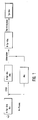
- the apparatus shown in FIG. 2 with inlet at a and outlet at b comprises a compensating and substrate storage vessel 1, which is charged with starting material and receives recycled alanine (after removal of the alcohol by gas stripping). Of this is pumped through a primary filter 2 by means of a metering pump 3 via a sterile filter 4 reaction liquid into the enzyme membrane reactor 5 for peptide synthesis, which works at 25 ° C.
- the outlet of the reactor runs over one of the columns 6, operated alternately for product separation, where the N-acyl dipeptide formed is collected on the column until breakthrough, while the alanine in the outlet of the column runs back to the outlet via a polarimeter 7, with the aid of which the Residual alanine concentration is determined.
- rinsing liquid (dilute hydrochloric acid) is pumped from a supply 8 into the fully loaded column and subsequently from 9 elution liquid (dilute NaOH).
- the elution liquid enters the vessel 10, which acts as a compensation vessel and in which the pH is brought into the range suitable for the deacylation.
- a 10 ml EMR was operated with 1 mg CPDY at 25 ° C. The residence time was 10 minutes. The concentration of the substrate solution corresponded to 2 mM Phenac-Tyr-OMe and 1 M alanine. Her pH was 8.4.
- the product solution drawn off from the EMR contained 65% N-acylated dipeptide and 35% hydrolyzate N-Phenac-Tyr (based on the ester used) with a space-time yield of 50.6 g / ld. Enzyme deactivation was 0.7% per day, i.e. H. 3.4 mg of enzyme were consumed per kg of dipeptide.
- the N-acyl dipeptide was separated by adsorption on Amberlite XAD-2. The unreacted alanine was again mixed with Phenac-Tyr-OMe and returned to the reactor.
- the adsorbed N-acyl dipeptide was desorbed from amberlite with 50 mM NaOH, the solution was brought to pH 7.7 with dilute HCl and the protecting group Phenac in aqueous solution with the help of penicillin-G-acylase immobilized on Eupergit (10 mg enzyme / 1 g Eupergit) at 25 ° C.
- the cleavage was complete when the residence time in the column was 55 minutes.
- the residence time is usually selected in the range from 40 to 70 minutes, with excessively long residence times being avoided because of the then increasing hydrolysis of the dipeptide. In the enzyme membrane reactor, residence times down to 10 minutes could be achieved with comparable enzyme concentrations.
- the phenylacetic acid contained in the drain was removed from the product solution by adsorption on Amberlite XAD-2.
- a 2 mM N-acyl dipeptide solution (outflow from the Amberlite XAD-2 column) was adjusted to pH 7.8 and pumped with a residence time of 15 min through a 10 ml EMR with a membrane with a cut-off of 5000. There were 20 mg penicillin G acylase in the reactor. The maximum turnover was 85%. Enzyme deactivation was 1.3% per day.
- N-protected peptide ester For the production of oligopeptides, of course, instead of the free amino acid, free peptide and / or instead of the N-protected amino acid ester, an N-protected peptide ester is used.
Landscapes
- Chemical & Material Sciences (AREA)
- Organic Chemistry (AREA)
- General Health & Medical Sciences (AREA)
- Life Sciences & Earth Sciences (AREA)
- Biochemistry (AREA)
- Biophysics (AREA)
- Health & Medical Sciences (AREA)
- Genetics & Genomics (AREA)
- Medicinal Chemistry (AREA)
- Molecular Biology (AREA)
- Proteomics, Peptides & Aminoacids (AREA)
- Analytical Chemistry (AREA)
- Preparation Of Compounds By Using Micro-Organisms (AREA)
Applications Claiming Priority (2)
| Application Number | Priority Date | Filing Date | Title |
|---|---|---|---|
| DE3733198 | 1987-10-01 | ||
| DE19873733198 DE3733198A1 (de) | 1987-10-01 | 1987-10-01 | Enzymatisches verfahren zur herstellung von dipeptiden |
Publications (2)
| Publication Number | Publication Date |
|---|---|
| EP0309983A2 true EP0309983A2 (fr) | 1989-04-05 |
| EP0309983A3 EP0309983A3 (fr) | 1991-03-27 |
Family
ID=6337394
Family Applications (1)
| Application Number | Title | Priority Date | Filing Date |
|---|---|---|---|
| EP19880115873 Withdrawn EP0309983A3 (fr) | 1987-10-01 | 1988-09-27 | Procédé enzymatique de synthèse des peptides, surtout des dipeptides et sa mise en oeuvre |
Country Status (6)
| Country | Link |
|---|---|
| US (1) | US5057415A (fr) |
| EP (1) | EP0309983A3 (fr) |
| JP (1) | JPH01222795A (fr) |
| DD (1) | DD282918A5 (fr) |
| DE (1) | DE3733198A1 (fr) |
| DK (1) | DK549688A (fr) |
Cited By (1)
| Publication number | Priority date | Publication date | Assignee | Title |
|---|---|---|---|---|
| EP0996627A4 (fr) * | 1997-01-08 | 2002-01-02 | Proligo L L C | Procede de synthese en phase solution d'oligonucleotides et de peptides |
Families Citing this family (15)
| Publication number | Priority date | Publication date | Assignee | Title |
|---|---|---|---|---|
| DE4014564C1 (fr) * | 1990-05-07 | 1991-07-18 | Forschungszentrum Juelich Gmbh, 5170 Juelich, De | |
| DE4101895C1 (fr) * | 1991-01-23 | 1991-12-05 | Forschungszentrum Juelich Gmbh, 5170 Juelich, De | |
| JPH11171895A (ja) * | 1997-12-11 | 1999-06-29 | Ajinomoto Co Inc | アスパルテームとアスパルテーム誘導体の分離精製方法 |
| US20030032083A1 (en) * | 2001-05-23 | 2003-02-13 | Diversa Corporation | Peptide synthesis method |
| WO2012118780A2 (fr) * | 2011-02-28 | 2012-09-07 | Polytechnic Institute Of New York University | Préparation de mélanges peptidiques par catalyse des protéases conçus pour donner des propriétés physiques et biologiques utiles |
| TWI640541B (zh) | 2011-12-28 | 2018-11-11 | 中外製藥股份有限公司 | Peptide compound having an annular portion and pharmaceutical composition thereof |
| US10815489B2 (en) | 2015-03-13 | 2020-10-27 | Chugai Seiyaku Kabushiki Kaisha | Modified aminoacyl-tRNA synthetase and use thereof |
| US12391971B2 (en) | 2017-01-31 | 2025-08-19 | Chugai Seiyaku Kabushiki Kaisha | Method for synthesizing peptides in cell-free translation system |
| KR20250007021A (ko) | 2017-06-09 | 2025-01-13 | 추가이 세이야쿠 가부시키가이샤 | N-치환 아미노산을 포함하는 펩타이드의 합성 방법 |
| CN111479819B (zh) | 2017-12-15 | 2024-06-14 | 中外制药株式会社 | 制备肽的方法和处理碱的方法 |
| EP3878836B1 (fr) | 2018-11-07 | 2025-07-23 | Chugai Seiyaku Kabushiki Kaisha | Procédé de production d'un dérivé de sérine o-substitué |
| WO2020111238A1 (fr) | 2018-11-30 | 2020-06-04 | 中外製薬株式会社 | Procédé de déprotection et procédé d'élimination de résine dans une réaction en phase solide d'un composé peptidique ou d'un composé amide, et procédé de production d'un composé peptidique |
| CN113692401A (zh) | 2019-03-15 | 2021-11-23 | 中外制药株式会社 | 芳香族氨基酸衍生物的制备方法 |
| JP6880352B1 (ja) | 2019-11-07 | 2021-06-02 | 中外製薬株式会社 | Kras阻害作用を有する環状ペプチド化合物 |
| DE102021108406A1 (de) * | 2021-04-01 | 2022-10-06 | Jacobs University Bremen Ggmbh | Vorrichtung und Verfahren zum Abtrennen von in einer Trägerflüssigkeit aufgenommenen Proteinen |
Family Cites Families (4)
| Publication number | Priority date | Publication date | Assignee | Title |
|---|---|---|---|---|
| WO1980002157A1 (fr) * | 1979-04-06 | 1980-10-16 | Forenede Bryggerier As | Procede enzymatique de preparation de peptides |
| DE2930087A1 (de) * | 1979-07-25 | 1981-02-26 | Biotechnolog Forschung Gmbh | Verfahren zur kontinuierlichen enzymatischen umwandlung von wasserloeslichen alpha -ketocarbonsaeuren in die entsprechenden alpha -hydroxycarbonsaeuren |
| DE2930070A1 (de) * | 1979-07-25 | 1981-02-19 | Biotechnolog Forschung Gmbh | Verfahren zur kontinuierlichen enzymatischen umwandlung von wasserloeslichen alpha -ketocarbonsaeuren in die entsprechenden aminosaeuren |
| DK72587D0 (da) * | 1987-02-13 | 1987-02-13 | Carlsberg Biotechnology Ltd | Fremgangsmaade til enzymatisk fremstilling af dipeptider |
-
1987
- 1987-10-01 DE DE19873733198 patent/DE3733198A1/de not_active Withdrawn
-
1988
- 1988-09-27 EP EP19880115873 patent/EP0309983A3/fr not_active Withdrawn
- 1988-09-29 JP JP63242646A patent/JPH01222795A/ja active Pending
- 1988-09-29 DD DD88320269A patent/DD282918A5/de not_active IP Right Cessation
- 1988-09-30 US US07/251,176 patent/US5057415A/en not_active Expired - Fee Related
- 1988-09-30 DK DK549688A patent/DK549688A/da not_active Application Discontinuation
Cited By (1)
| Publication number | Priority date | Publication date | Assignee | Title |
|---|---|---|---|---|
| EP0996627A4 (fr) * | 1997-01-08 | 2002-01-02 | Proligo L L C | Procede de synthese en phase solution d'oligonucleotides et de peptides |
Also Published As
| Publication number | Publication date |
|---|---|
| DK549688A (da) | 1989-04-02 |
| DK549688D0 (da) | 1988-09-30 |
| DD282918A5 (de) | 1990-09-26 |
| DE3733198A1 (de) | 1989-04-13 |
| US5057415A (en) | 1991-10-15 |
| EP0309983A3 (fr) | 1991-03-27 |
| JPH01222795A (ja) | 1989-09-06 |
Similar Documents
| Publication | Publication Date | Title |
|---|---|---|
| DD282918A5 (de) | Enzymatisches verfahren zur herstellung von peptiden, insbesondere dipeptiden und vorrichtung dafuer | |
| EP0087750B1 (fr) | Préparation d'aminoacides contenant des restes glutaminiques | |
| DE3884976T2 (de) | Verfahren zur enzymatischen Herstellung von Dipeptiden. | |
| DE3789309T2 (de) | Enzymatische membran, verfahren zur herstellung und trennung von peptiden. | |
| DE3887246T2 (de) | Verfahren zur Herstellung von Glutamin-Derivaten. | |
| DE69125614T2 (de) | Verfahren zur herstellung c-terminal amidierter peptide | |
| EP0003786B1 (fr) | Séparation stéréosélective de dérivés phénylglycine et 4-hydroxyphénylglycine à l'aide de polymères contenant des enzymes | |
| US4736060A (en) | Method for optical resolution of DL-cysteine and (R,S)-1-(1-naphthyl) ethylamine | |
| EP0109681B1 (fr) | Procédé pour la préparation d'esters de cyanométhyl optiquement actifs | |
| Könnecke et al. | Peptide synthesis by means of immobilized enzymes: I. Immobilized α-chymotrypsin | |
| CA1179328A (fr) | Analogues d'oxytocine et leur preparation | |
| DE3781555T2 (de) | Verfahren zur herstellung einer zwei diastereoisomerische n-acylaminosaeureester enthaltenden diastereoisomerischen mischung. | |
| DE3203292C2 (fr) | ||
| DE10220740A1 (de) | Verfahren zur enzymatischen Herstellung enantiomerenangereicherter beta-Aminosäuren | |
| EP1300392B1 (fr) | Procede de production d'un alpha-amino acide optiquement actif et d'un amide d'alpha-amino acide optiquement actif | |
| DE69736561T2 (de) | Acyltransfer mit einem stabilisierten übergangskomplex unter verwendung eines katalysators mit einer katalytischen imidazolfunktion (z.b. histidin) | |
| DE68923625T2 (de) | Enzymatischer Prozess zur Herstellung immunomodulatorischer Pentapeptide und Intermediate zu deren Herstellung. | |
| EP0092280B1 (fr) | Procédé semi-synthétique de préparation de l'insuline | |
| DE10320211A1 (de) | Verfahren zur enzymatischen Herstellung enantiomerenangereicherter β-Aminosäuren | |
| EP0321722B1 (fr) | Procédé pour l'obtention de dipeptides | |
| DE3787882T2 (de) | Enzym vermittelnde Kupplungsreaktionen. | |
| DE19529211C2 (de) | Verfahren zur Herstellung von (R)-tertiär-Leucin | |
| EP0310012A2 (fr) | Procédé de préparation de l'homophénylalanine optiquement pure | |
| EP0253199A2 (fr) | Procédé pour la conversion biocatalytique de substrats peu solubles en solutions aqueuses | |
| EP0534992A1 (fr) | Procede de production de peptides. |
Legal Events
| Date | Code | Title | Description |
|---|---|---|---|
| PUAI | Public reference made under article 153(3) epc to a published international application that has entered the european phase |
Free format text: ORIGINAL CODE: 0009012 |
|
| AK | Designated contracting states |
Kind code of ref document: A2 Designated state(s): AT BE CH DE FR GB IT LI LU NL SE |
|
| RAP3 | Party data changed (applicant data changed or rights of an application transferred) |
Owner name: FORSCHUNGSZENTRUM JUELICH GMBH |
|
| PUAL | Search report despatched |
Free format text: ORIGINAL CODE: 0009013 |
|
| AK | Designated contracting states |
Kind code of ref document: A3 Designated state(s): AT BE CH DE FR GB IT LI LU NL SE |
|
| 17P | Request for examination filed |
Effective date: 19910805 |
|
| STAA | Information on the status of an ep patent application or granted ep patent |
Free format text: STATUS: THE APPLICATION HAS BEEN WITHDRAWN |
|
| 18W | Application withdrawn |
Withdrawal date: 19921109 |