EP0312865B1 - Dispositif de gestion d'espace pour un système d'accès aux données d'un processeur d'accès aux fichiers - Google Patents
Dispositif de gestion d'espace pour un système d'accès aux données d'un processeur d'accès aux fichiers Download PDFInfo
- Publication number
- EP0312865B1 EP0312865B1 EP88116740A EP88116740A EP0312865B1 EP 0312865 B1 EP0312865 B1 EP 0312865B1 EP 88116740 A EP88116740 A EP 88116740A EP 88116740 A EP88116740 A EP 88116740A EP 0312865 B1 EP0312865 B1 EP 0312865B1
- Authority
- EP
- European Patent Office
- Prior art keywords
- space
- file
- application support
- catalog
- file space
- Prior art date
- Legal status (The legal status is an assumption and is not a legal conclusion. Google has not performed a legal analysis and makes no representation as to the accuracy of the status listed.)
- Expired - Lifetime
Links
Images



Classifications
-
- G—PHYSICS
- G06—COMPUTING OR CALCULATING; COUNTING
- G06F—ELECTRIC DIGITAL DATA PROCESSING
- G06F16/00—Information retrieval; Database structures therefor; File system structures therefor
- G06F16/10—File systems; File servers
- G06F16/17—Details of further file system functions
- G06F16/176—Support for shared access to files; File sharing support
- G06F16/1767—Concurrency control, e.g. optimistic or pessimistic approaches
-
- Y—GENERAL TAGGING OF NEW TECHNOLOGICAL DEVELOPMENTS; GENERAL TAGGING OF CROSS-SECTIONAL TECHNOLOGIES SPANNING OVER SEVERAL SECTIONS OF THE IPC; TECHNICAL SUBJECTS COVERED BY FORMER USPC CROSS-REFERENCE ART COLLECTIONS [XRACs] AND DIGESTS
- Y10—TECHNICAL SUBJECTS COVERED BY FORMER USPC
- Y10S—TECHNICAL SUBJECTS COVERED BY FORMER USPC CROSS-REFERENCE ART COLLECTIONS [XRACs] AND DIGESTS
- Y10S707/00—Data processing: database and file management or data structures
- Y10S707/99941—Database schema or data structure
- Y10S707/99942—Manipulating data structure, e.g. compression, compaction, compilation
-
- Y—GENERAL TAGGING OF NEW TECHNOLOGICAL DEVELOPMENTS; GENERAL TAGGING OF CROSS-SECTIONAL TECHNOLOGIES SPANNING OVER SEVERAL SECTIONS OF THE IPC; TECHNICAL SUBJECTS COVERED BY FORMER USPC CROSS-REFERENCE ART COLLECTIONS [XRACs] AND DIGESTS
- Y10—TECHNICAL SUBJECTS COVERED BY FORMER USPC
- Y10S—TECHNICAL SUBJECTS COVERED BY FORMER USPC CROSS-REFERENCE ART COLLECTIONS [XRACs] AND DIGESTS
- Y10S707/00—Data processing: database and file management or data structures
- Y10S707/99951—File or database maintenance
- Y10S707/99952—Coherency, e.g. same view to multiple users
Definitions
- the present invention relates generally to a Space Management System which forms a part of a Data Access System of a File Access Processor.
- a File Access Processor services requests from a set of Application Support Processors, which can exist in a global network, with each Application Support Processor sharing access to data in files stored by the File Access Processor.
- Application Support Processors may operate asynchronously, sharing the set of file resources managed by one or more File Access Processors.
- a File Access Processor manages access to a set of data files and information about files held in file directories therein. File directories allow for managing file collections, can relate to each other hierarchically, and may be shared.
- the File Access Processor also maintains therein a set of catalogs, which are repositories of information in the File Access Processor for its own internal use, and which are not available and accessible to Application Support Processors, as are the data files and directories.
- Each Application Support Processor also maintains therein an internal cache of file information to improve performance by reducing communications required with the File Access Processor for information about files.
- the File Access Processor provides the Application Support Processors with information for updating and maintenance of local caches of directory and file description information through a centralized accumulation and distribution of cache change notifications.
- the present invention relates to a Space Management System which manages file space assigned to each Application Support Processor and supports the space management functions of adding space, deleting space, setting thresholds for limit warnings, querying space, charging space used, warning notifications, crediting space freed, and permitting file spaces to be shared by more than one Application Support Processor.
- the SQL/DS system is based on a substantially different system design providing compiled access routines which are compiled and executed, as opposed to the present system which provides interpretive request routines which are specifically designed to accomplish particular functions.
- the SQL/DS system does not provide for an internal cache of file information similar to the present invention.
- the SQL/DS system also does not provide for on- line data space management, and provides no warning as the SQL/DS equivalent of file space thresholds are approached. Dynamic changes to space limits are not provided, and the system can only provide for migration to new data base space.
- the SQL/DS system basically represents an entirely different approach to recognition of space limits based on different requirements. The SQL/DS system provides an immediate recognition when a consumption limit is reached, whereas DAS Space Management permits temporarily exceeding limits (until time of commit), such that only permanent space consumption is subject to enforced limits.
- the VM Minidisk File System does not provide for sharing of files or for a hierarchical directory support. There is no provision for globally maintained cache information, and no provision for work units (requires keeping temporary copies of old versions of files for example).
- the VM Minidisk File System does not provide for sharing of data, and for support of separate caches.
- the VM Minidisk File System also has no provision for space management similar to the present invention, and only provides for mini-disks (virtual disks implemented as contiguous segments of real disks).
- the system does not provide a capability for on-line administration of space (changes to available space, limits, etc.). Since space is directly associated with a contiguous storage assignment, an expansion requires a reassignment to another (larger) minidisk, and physical transfer of data files leading to delays, fragmentation of space, administrative burdens, etc.
- the sharing of minidisks is haphazard and awkward. No concurrency controls are provided for synchronizing multiple writers (unpredictable results). After updates, readers must re-access the minidisk or risk unpredictable results (loss of data integrity).
- no space thresholds are provided.
- VM Minidisk File System access authorization is controlled at the minidisk level, whereas the present system controls access at the file level which provides greater granularity-finer control.
- This object of the invention is accomplished by the method and system as defined in claims 1 and 8, respectively. Further advantages of the invention are characterized in the subclaims.
- the present invention provides a Space Management System which is provided with access to a Space Catalog which records therein a record for each Application Support Processor representing logical file space that is assigned thereto.
- the Data Access System includes a Global Control structure which is maintained permanently for all activations of the Data Access System, and which anchors and provides a basis for locating File Space Control Blocks which maintain file space information in temporary storage, with each File Space Control Block being initially created from a Space Catalog record when a work unit is initiated for a particular Application Support Processor.
- the Data Access System updates the record in the Space Catalog for the particular Application Support Processor when the work unit is finished and committed.
- multiple Application Support Processors can consume space in a file space concurrently, and the Data Access System and Space Management System enforce and support a common set of space consumption limits and thresholds.
- one Application Support Processor can authorize another Application Support Processor to share its file space.
- the File Space Control Block created during activation initiation is utilized for space management.
- file space consumption is in a file space owned by another Application Support Processor
- the initiating Application Support Processor utilizes the file Space Control Block created during the activation of the owning Application Support Processor.
- a File Space Control Block is created by the first non-owner that utilizes the file space.
- write locks are utilized to prevent concurrent changes to the same file.
- concurrent changes to different files in a file space should be allowed except during the period of Space Catalog update and commit of a work unit.
- the Space Management System is designed to allow Space Catalog change coordination between contending Application Support Processors in such a manner as to maximize concurrency.
- the Space Management System accomplishes these system objections by the sequence of operations at commit time. Initially, all catalogs are updated except the Space Catalog. Write locks exist on individual files, and are held until the commit is completed. A commit latch on an FSCB serializes commits of the Space Catalog changes. The FSCB latch is only held while doing the commit call to the Space Access System, thereby minimizing the period of non-concurrency for writers to a particular file space.
- the File Space Control block for an Application Support Processor includes fields for, SPACE LIMIT which is the total space permitted for files, SPACE THRESHOLD which is a percentage of the space limit, SPACE CURRENTLY CONSUMED which is updated for each file request that affects space consumption and is utilized to determine if the space threshold has been reached, SPACE COMMITED which is updated when the work unit is committed, and File Space Control Block LATCH which is used to synchronize changes to the space catalog.
- an activity counter is maintained in each File Space Control Block which is incremented by one for each activity initiated that involves a change in space consumption and decremented by one for each committed or terminated activity of that File Space Control Block.
- the File Space Control Block is finally released only when its activity counter goes to zero, which retains the File Space Control Block while it is expected to be reused or currently active.
- the Data Access System also builds Local Control structures, one for each activation of the Data Access System by a particular Application Support Processor.
- the Local Control structure provides a basis for locating a File Control Block which is used to retain information about a particular file while it is being accessed by a local activation of an Application Support processor.
- the File Control Block has particular fields for space management, including a locator for the File Space Control Block that is set when the file access is initiated, and used for rapid reference to the File Space Control Block thereafter.
- the File Control Block also includes fields for SPACE CONSUMED-CURRENT REQUEST which is the change in space consumption caused by the completion of the most recent request against the file represented by this File Control Block, and SPACE CONSUMED-CURRENT WORK UNIT which is the change in space consumption caused by all changes to the file represented by this File Control Block in the current work unit.
- the global control structure also includes a File Space Control Block hash table by which a File Space Control Block of a particular Application Support Processor can be located.
- a Work Request Block is built containing information required for updating File Space Control Blocks and the Space Catalog records. Information is transferred from the File Control Block to the Work Request Block, and then the File Control Block is released.
- the Work Request Blocks are used to retain information that is needed to update the Space Catalog for changes in space management information when the work unit is successfully completed and committed.
- a separate Work Request Block is provided for each record in each catalog that must be updated.
- the Work Request Block includes fields for, SPACE CONSUMED-CURRENT WORK UNIT which is the change in space consumption caused by all changes to the file represented by this Work Request Block in the current work unit, REQUEST TYPE which is an encoding of the type of request that caused the Work Request Block generation, PARAMETER VALUE which is used to hold the new space limit or space threshold for add-space, delete-space, and change-threshold requests so that it is available for modifying the File Space Control Block and Space Catalog at commit time, and SPACE CATALOG RECORD which is a copy of the Space Catalog record read into this area in preparation for selectively updating it.
- SPACE CONSUMED-CURRENT WORK UNIT which is the change in space consumption caused by all changes to the file represented by this Work Request Block in the current work unit
- REQUEST TYPE which is an encoding of the type of request that caused the Work Request Block generation
- PARAMETER VALUE which is used to hold the new space limit or space threshold for add-space, delete-space, and
- the local control structure also provides a basis for locating UNDO Lists which are used to save the status of File Space Control Blocks at the beginning of the current work unit so that the File Space Control Blocks can be restored in the event of a failure in updating the Space Catalog during commit processing.
- the Space Management System supports a technical approach which presents a clear separation of functions to permit high performance, allowing easy maintenance and extensibility, while supporting the required functions.
- control structures of the Data Access System support the following particular features of the design.
- the design of the Data Access System provides structures for the following.
- the DAS Space Management component provides for support of on-line control of file space consumption limits in an environment where multiple ASPs can consume space in a repository (file space) concurrently, while enforcing and supporting a common set of space consumption limits and thresholds, and includes.
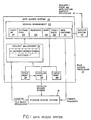
- a Data Access System 14 is illustrated in terms of the functions of its subcomponents, the relationships between its subcomponents, and its relationships with other components of a File Access Processor 12.
- the Data Access System 14 is described and claimed in European Patent Application EP-A-0312 786 (IBM).
- the data Access System 14 is one component of a File Access Processor 12, which also includes two other components, a Service System 16 and a Storage Access System 18, the functions of which are generally known in existing computer systems, and are not described in detail herein, but their basic functions are described briefly to establish perspective.
- a File Access Processor 12 services requests from a set of Application Support Processors 10 which can exist in a global network, with each Application Support Processor 10 sharing access to data in files stored by the File Access Processor 12.
- Application Support Processors 10 may operate asynchronously, sharing the set of file resources managed by one or more File Access Processors 12.
- Each Application Support Processor 10 also maintains therein an internal cache of file information to improve performance by reducing communications with the File Access Processor 12 for information about files.
- the File Access Processor 12 provides the Application Support Processors 10 with information for updating this cache, and also responds to normal file access requests.
- a File Access Processor 12 manages access to a set of data files and information about files held in file directories.
- File directories allow for managing file collections, relate to each other hierarchically, and may be shared.
- the File Access Processor also maintains therein a set of catalogs, which are repositories of internal information in the File Access Processor for its own internal use, and which are not available and accessible to Application Support Processors, as are the data files and directories.
- Some of the requests supported by the File Access Processor 12 are as follows: OPEN, READ, WRITE and CLOSE for file access, DELETE files, COPY files, GRANT and REVOKE authorization to files, CREATE and DELETE directories, OPEN, READ and CLOSE for directory access, RENAME files and directories, RELOCATE files from one directory to another, and ADMINISTER file storage for files.
- the Service System 16 provides environmentally dependent services for the processor 12, including the initial receipt of requests, forwarding requests for file access, and dispatching and activation of the Data Access System 14 of the present invention. These activations persist through a set of file requests that represent a recoverable unit of work (defined as a work unit herein), which is explicitly concluded by a commit or rollback request (back-out) or certain other implicit terminations.
- the Data Access System 14 processes individual requests, and maintains a set of catalogs that contain control and descriptive information concerning the set of files managed by the File Access Processor 12. This information includes data file control, security, integrity, concurrency, inter-relationship, recovery, status, and control information.
- the Data Access System 14 also accumulates cache update information, representing changes to file descriptions and characteristics, that are forwarded to maintain current the data in the caches of the Application Support Processors.
- the Storage Access System 18 manages the data blocks that comprise the data files - mapping them to external storage devices, the set of records that comprise the catalogs, the set of locks that permit concurrency, and the grouping of work items that represent recovery units. It maps access to physical data with minimal sensitivity to logical grouping or content.
- the Storage Access System 18 runs in the same activation as the Data Access System 14 that invokes it.
- the Data Access System 14 Subcomponents have the following functions.
- the Session Management Subcomponent 20 is at the hierarchical top of Data Access System 14 request processing. It receives requests through the Service System 16. It is the focal point of control and includes a set of fundamental services for response formulation. It determines which Request Management Subcomponent 32 routine should be invoked to service the request and passes control to it. At the end of request processing, control is passed back to the Session Management Subcomponent 20 to finish request processing and forward the requested response.
- the Session Management Subcomponent provides the primary routing and control functions for the Data Access System. In addition, it manages work units, supports deferred commit of work, supports response buffer management and ordering, as well as initialization and termination of the Data Access System. A number of routines support the operation of Session Management. Some of these routines are also utilized by other subcomponents of the Data Access System as common services.
- Start-up routine 22 to initialize Data Access System 14 control structures.
- the Pool Routine is a general Data Access System service for allocating and de-allocating control structures from large blocks of working storage.
- the routine supports allocating or deallocating single or multiple control structures of the same type (changed) with a single invocation.
- the Response routine 26 to assist Request Management Subcomponent 32 routines in the building of response messages, and to assemble the response and cache update information into a properly formatted response message.
- the Response routine has two aspects.
- Work routine 28 to coordinate and initiate processing required when a logical group of requests are "committed” or “rolled back", i.e. manage activities at designated points of recovery (termination of a work unit).
- the Work routine 28 supports the commit and rollback explicit requests as well as implicit commit and rollback conditions.
- the Work routine 28 is invoked through the Request Management Subcomponent 32. To maintain consistency and integrity, actual catalog updates are deferred until the successful completion of the work unit.
- the Work routine 28 invokes:
- Terminate routine 30 to clean up control structures at the conclusion of an activation of the Data Access System 14.
- the Terminate Routine manages the clean-up of storage and control structures when service to a particular Application Support Processor is ended. Terminations occur from implicit failures (communications between an Application Support Processor and a File Access Processor, deadlock on resources, etc.) and explicit actions (system operator forced, Application Support Processor ended, etc.). Terminations are discovered upon initial entry into Session Management or at any other point when an activation of the Data Access System regains control after an invocation of either the Service System or the Storage Access System. Therefore the Terminate Routine is a service that is invoked from many places in the Data Access System where other File Access Processor components are invoked.
- WRB Condense routine 31 supports reduction of multiple changes to the same catalog entry into a single change.
- the Data Access System utilizes several catalogs for managing file and directory information. Each entry in the Object Catalog, for example, contains descriptive and control information about a particular file. Work Request Blocks (WRBs) are used to save catalog change information from the time of file request processing until the time that the work unit is committed. When multiple WRBs exist for the same catalog entry, they are condensed into a single WRB. This is important for two reasons:
- the Request Management Subcomponent 32 includes routines, illustrated as R1 through R9 - although typically totaling thirty to forty routines. It utilizes the Catalog Management Subcomponent 36 to access catalogs, the Space Management Subcomponent 34 to manage logical space, and the Cache Management Subcomponent 38 for cache control processing.
- the Request Management Subcomponent 32 builds and maintains WRBs (Work Request Blocks) which go to the Work routine 28 at commit time (successful completion of a work unit) to drive catalog and cache updates.
- WRBs Work Request Blocks
- the Request Management Subcomponent 32 utilizes the Storage Access System 18 directly to engage or disengage one or more logical locks that represent commitments against files and catalogs. It also invokes the Storage Access System 18 to add, delete, and update data blocks associated with particular files according to the requirements of the current request.
- the Catalog Management Subcomponent 36 builds the control structures required for invoking the Storage Access System 18 to access the set of catalogs that the Data Access System 14 utilizes for control information for its set of files. Following are the catalogs managed by the Catalog Management Subcomponent 36:
- the Catalog Management Subcomponent 36 When requested to retrieve catalog information, the Catalog Management Subcomponent 36 first searches for possible changes made by the current work unit, but not yet written into the catalogs. This is done by searching the Work Request Blocks that represent changes that have not been committed until the end of the work unit.
- the Space Management Subcomponent 34 manages the logical space for an Application Support Processor 10 represented by a FSCB (File Space Control Block), a local representation of the Space Catalog entry for the Application Support Processor 10. Requests that affect logical space consumption due to changes in the storage consumed by files accomplish space accounting through the Space Management Subcomponent 34.
- FSCB Full Space Control Block
- the Space Management Subcomponent 34 uses the Catalog Management Subcomponent 36 to access the Space Catalog.
- the Cache Management Subcomponent 38 is invoked by the Work routine 28 of the Session Management Subcomponent 20 at the successful completion of a work unit (commit) to update the cached data maintained by the Data Access System 14, using information in Work Request Blocks (WRBs) built by the Request Management Subcomponent 32 to establish which directories are to be supported in the cache for the current Application Support Processor 10.
- WRBs Work Request Blocks
- the Cache Management System 38 is described and disclosed in further detail in European Patent Application EP-A-0 312 785 (IBM).
- the purpose of the Cache Management System 38 is to collect a set (cache) of directory change information, representing updates to file descriptions and characteristics, and periodically distribute them to Application Support Processors for updating of their local caches. These caches improve performance by reducing the occasion for going to a File Access Processor for file information.
- Application Support Processors permit files to be grouped in directories.
- a cache is kept for a particular directory whenever the Application Support Processor "acquires" the directory.
- the Application Support Processor requests all information about the directory and its files from the File access Processor. This information is used to initially load the Application Support Processor's local cache. Concurrently, the File Access Processor is notified that the Application Support Processor requires notification of all future changes that affect that directory. This change notification continues until the directory is explicitly "released”.
- CNRs Cache Notification Records
- the Data Access System In order to manage cache notification information for Application Support Processors, the Data Access System must support the following functions:
- the Request Management Subcomponent 32 of the Data Access System supports the Cache Management functions in the following respects.
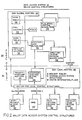
- FIG. 2 illustrates the major control structures of the Data Access System 14, and the following is a description of these major control structures.
- Data Access System Global Control structure 40 is provided on a permanent basis for the Data Access System 14. It is the anchor for global control structures, those that are shared by all activations of the Data Access System 14. Since its associated control structures are shared in a multiprocessing environment, appropriate latches associated with each set of structures are provided for controlling concurrent access by participating activations.
- a separate Data Access System (DAS) Local Control structure 42 is created for each activation of the Data Access System 14.
- the Local structure 42 is the basis for controlling the processing of the current request or set of requests from an Application Support Processor 10. It is the anchor for the Request Buffer 44 that is provided by the Service System 16 Processor, as well as response information built by one of the Request Management Subcomponent 32 routines. It also contains status information for request processing, and is the anchor for other control structures that are required to transfer control data between the subcomponents of the Data Access System 14 and with the Storage Access System 18.
- a DAS Local structure 42 and its parts are created and are maintained only to the end of the current work unit, i.e. for the set of requests serviced by the current activation. At the completion of the work unit, the work is either committed or rolled back.
- the following are the primary control structures associated with the DAS Global structure.
- File Space Control Blocks 46 are used to do space accounting for a particular Application Support Processor 10. It provides limits and warning thresholds for the number of data blocks that may be consumed by the associated Application Support Processor 10.
- a File Space Control Block 46 is built from a Space Catalog entry, and is the basis for updating the Space Catalog when the work unit is committed. File Space Control Blocks 46 are accessed through a Hash Table 48 utilizing a unique identifier for each Application Support Processor 10. File Space Control Blocks 46 are managed by the Space Management Subcomponent 34.
- Directory Gate Blocks 50 are used to define directories that are currently maintained in the cache. Each Directory Gate Block 50 represents a cached directory, and is the anchor for change information about files in the directory. Directory Gate Blocks 50 are accessed through a Hash Table 52 hashing on a unique directory identifier. Directory Gate Blocks 50 are managed by the Cache Management Subcomponent 38.
- Directory Change Refresh Blocks 54 record the actual change information about files in a directory. They are used by all Data Access System 14 activations that have the associated directory cached for notifying respective Application Support Processors 10 of the changes. Directory Change Refresh Blocks 54 are managed by the Cache Management Subcomponent 38.
- Catalog Locators 56 are used by each Data Access System 14 activation to identify the catalogs when invoking the Storage Access System 18 for catalog access through the Catalog Management Subcomponent 36.
- Storage Pool Anchors 58 are maintained for each type of storage pool 60, and provide a basis for fast access to unused storage blocks that may be allocated to a Data Access System 14 activation. Storage pools exist for each major type of control structure in the Data Access System 14. The storage blocks are used to build new control structures. The storage pools 60 are managed by the Storage Pool routine 24 of the Session Management Subcomponent 20.
- the major control structures associated with each DAS Local structure 42 are as follows.
- Directory Acquired Blocks 62 represent each directory that a particular Application Support Processor 10 has acquired for cache purposes. They are managed by the Cache Management Subcomponent 38.
- Work Request Blocks 64 are used to retain control information concerning a particular request.
- the information is used for the following:
- In-process Chain 64 represents Work Request Blocks that are associated with processing the current request.
- Commitable Chain 64 represents Work Request Blocks from previously completed, but uncommitted requests.
- Work Request Blocks 64 are built by Request Management Subcomponent 32 routines and are utilized by the Catalog Management Subcomponent 36, the Space Management Subcomponent 34 and the Cache Management Subcomponent 38.
- FCBs File Control Blocks 68
- Application Support Processors 10 have available requests that can open files, retrieve information in them, and close them when completed.
- FSBs are used by some Request Management Subcomponent 32 routines.
- Catalog Scan Blocks 70 contain information needed to process a catalog retrieval scan. A CSB 70 is retained until the scan is closed. They are managed by the Catalog Management Subcomponent 36.
- Space Management System of the present invention is to manage file space assigned to each Application Support Processor, supporting the space management functions: adding space, deleting space, setting thresholds for limit warnings, querying space, charging space used, warning notifications, crediting space freed, and permitting file spaces to be shared by more than one Application Support Processor.
- the significant design characteristics include:
- File space is assigned to Application Support Processors 10 by those authorized as administrators. It is consumed as files are created or expanded and reduced as they are deleted or contracted.
- Space management information is permanently recorded in the Space Catalog 74, Figure 3, which contains a record for each Application Support Processor 10.
- This record represents a logical file space that is assigned to each Application Support Processor. This record is updated when committing a work unit that impacts the file space.
- file space management information is kept in non-permanent storage in a File Space Control Block 46 (FSCB).
- FSCB File Space Control Block 46
- An FSCB 46 is initially built from a Space Catalog record when a work unit is begun for an Application Support Processor. A local activation of the Data Access System is initiated to service the requests of the Application Support Processor for File Access Processor 12 work. Since an Application Support Processor may authorize another Application Support Processor to share its file space, the FSCBs that represents file spaces are global to, and potentially shared by, Data Access System activations. If the owning Application Support Processor is not active, FSCB creation may also be initiated by a sharing Application Support Processor when it initiates space consumption activity for the shared file space. When an Application Support Processor initiates file space consumption:
- Figure 3 illustrates the set of control structures that are relevant to Space Management.
- FSCBs 46 are anchored to, and may be located from, FSCB Hash Table 48 entries.
- the FSCB Hash Table is located in the Global Control structure 40.
- the Hash Table Entry is determined from a hashing algorithm applied to the owning Application Support Processor ID.
- the set of synonym FSCBs (assigned to the same data location) represented by collisions in hashing are chained from the associated FSCB Hash Table Entry.
- An FSCB may also be found through a locator from the owning Application Support Processor's DAS Local Control 42 where the locator is stored during initialization of the DAS activation.
- an Activity Counter is maintained in each FSCB, see Figure 4.
- the Activity Counter is incremented by one for each activity initiated that involves the FSCB (change in space consumption) and decremented by one for each committed or terminated activity.
- the FSCB is released only when its Activity Counter goes to zero.
- the Activity Counter is incremented when the FSCB is created for the initiation of the owning Application Support Processor's Data Access System activation and decremented when it terminates. It is also incremented when each new file is created or accessed for writing, then decremented when the file activity is committed or terminated. This retains the FSCBs while they are expected to be reused or currently active.
- a File Control Block (FCB) 68 is used to retain information about a particular file while it is being accessed by a local activation of an Application Support Processor. It has some particular fields for Space Management, including a locator for the FSCB that is set when the file access is initiated and used for rapid reference to the FSCB thereafter.
- a Work Request Block (WRB) 64 is built. Certain information is transferred from the File Control Block 68 to the Work Request Block 64, and then the File Control Block is released. Work Request Blocks are used to retain information that is needed to update the Object Catalog (changes in file information) and the Space Catalog (changes in space management information) when the work unit is successfully completed (committed). A separate WRB 64 is provided for each record in each catalog that must be updated.
- UNDO Lists 76 are used to save the status of FSCBs at the beginning of the current work unit so that they can be restored in the event of a failure in updating the Space Catalog 74 during commit processing.
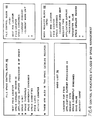
- Figure 4 shows pertinent fields for space management in the FSCB 46, FCB 68, WRB 64, and UNDO List 76.
- FCB 68 The following are pertinent fields in the FCB 68.
- Figure 5 illustrates the flow of control and data that occurs at the completion of a work unit (commit or rollback).
- the Space Management System of the present invention is designed to minimize the periods of non-concurrency for multiple Application Support Processor participating in updates to separate files in a file space.
- write locks are utilized to prevent concurrent changes to the same file.
- concurrent changes to different files in a file space are allowed except during the period of Space Catalog update and commit of a work unit.
- the Space Management System is designed to allow Space Catalog change coordination between contending Application Support Processors in such a manner as to maximize concurrency.
- the Space Management System accomplishes these system objectives by the sequence of operations at commit time as illustrated in Figure 5. Initially, all catalogs are updated except the Space Catalog. Write locks exist on individual files, and are held until the commit is completed. A commit latch on an FSCB serializes commits of Space Catalog changes. The FSCB latch is only held while doing the commit call to the Space Access System, thereby minimizing the period of non-concurrency for writers to a particular file space.
- Latches are mechanisms which provide serialization between multiple Data Access System activations that may operate concurrently.
- the following two types of latches are used in Space Management:
- the Hash Table Entry Latch - which synchronizes the following for a particular synonym chain of FSCBs: searching for FSCBs, adding FSCBs, deleting FSCBs, changing the ACTIVITY COUNT for an FSCB in the chain, and changing SPACE CURRENTLY CONSUMED for an FSCB in the chain.
- the FSCB Latch - which synchronizes Space Catalog updates, preventing other activations from doing likewise for the latched FSCB until the commit by the latching activation is complete.
- latches are acquired for the FSCBs, and Space Catalog updates occur in an order dictated by their respective Application Support Processor ID values. This assures that deadlocks between sharing activations are prevented.
- Hash Table Entry Latch is acquired first to prevent deadlocks.
- Space Management 34 the more complicated of which are illustrated in the logic flow diagrams of Figures 6 through 11:
- This operation adds to the file space permitted for the specified Application Support Processor.
- Input is the Application Support Processor ID and the space quantity increment.
- Build a WRB for the request. Set the REQUEST TYPE to ADD-SPACE. Store the Application Support Processor ID. Put the space quantity increment value in the PARAMETER VALUE field. Put the WRB in the chained list for processing at the end of the work unit.
- This operation reduces file space permitted for the specified Application Support Processor.
- Input is the Application Support Processor ID and the space quantity for reduction.
- Processing is about the same as for ADD-SPACE except the REQUEST TYPE is DELETE-SPACE.
- This operation changes the threshold value for the file space, changing the point at which warnings will occur.
- Input is the new threshold percentage and the Application Support Processor ID.
- Build a WRB for the request Set the REQUEST TYPE to CHANGE-THRESHOLD. Store the Application Support Processor ID. Put the new threshold value in the PARAMETER VALUE field. Put the WRB in the chained list for processing at the end of the work unit.
- This operation updates the SPACE CURRENTLY CONSUMED field of the FSCB and returns an indicator if the threshold has been reached.
- Input is the Application Support Processor ID, the change value, and an FCB locator.
- Hash the Application Support Processor ID to determine the Hash Table Entry. Acquire the latch for the Hash Table Entry.
- Add the SPACE CONSUMED-CURRENT REQUEST of the FCB to the SPACE CURRENTLY CONSUMED of the FSCB. If SPACE CURRENTLY CONSUMED the product of the SPACE THRESHOLD and the SPACE LIMIT, then return a warning indicator.
- This operation returns information from the Space Catalog for the specified Application Support Processor.
- Information includes SPACE LIMIT, SPACE THRESHOLD, and SPACE COMMITTED. Read the appropriate Space Catalog record. Return the information from the record.
- This operation attempts to find an existing FSCB for the specified Application Support Processor. If an existing FSCB is found, the ACTIVITY COUNT is incremented by one. If an existing FSCB in not found, an FSCB is created. Input is an Application Support Processor ID. An FSCB locator is returned. Hash the Application Support Processor ID to get the Hash Table Entry. Acquire the latch for the hash Table Entry. Search for the FSCB for the Application Support Processor in Hash Table synonym chain. If FSCB not found: Read the Space Catalog record for the Application Support Processors file space. Build an FSCB from the Space Catalog record. Set the ACTIVITY COUNT to one. Put the FSCB in the Hash Table synonym chain. If FSCB found, increment ACTIVITY COUNT by one. Release the latch on the Hash Table Entry. Return the locator to the FSCB.
- This operation uses an FSCB locator to go directly to an FSCB and increments its ACTIVITY COUNT by one.
- Input is an FSCB locator.
- the operator is used in lieu of CREATE FSCB when the locator is known.
- This operation releases the current FSCB from the Data Access System. There is no input.
- the FSCB locator from the current DAS Local Control is used.
- FIG. 10 illustrates a logic flow diagram of the UNDO operation supported by Space Management 34 and explained hereinbelow. Process each element of the UNDO List: Hash the Application Support Processor ID. Acquire the Hash Table Entry Latch. If REQUEST TYPE is WRITE-SPACE, then
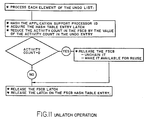
- FIG. 11 illustrates a logic flow diagram of the UNLATCH operation supported by Space Management 34 and explained hereinbelow. Process each element of the UNDO List: Hash the Application Support Processor ID. Acquire the Hash Table Entry Latch. Reduce ACTIVITY COUNT in the FSCB by the value of the ACTIVITY COUNT in the UNDO entry. If the ACTIVITY COUNT is zero, release the FSCB, unchaining it, and making it available for reuse. If the ACTIVITY COUNT in the FSCB is not zero, then proceed. Release the FSCB Latch. Release the Latch on the FSCB Hash Table Entry.
Landscapes
- Engineering & Computer Science (AREA)
- Theoretical Computer Science (AREA)
- Data Mining & Analysis (AREA)
- Databases & Information Systems (AREA)
- Physics & Mathematics (AREA)
- General Engineering & Computer Science (AREA)
- General Physics & Mathematics (AREA)
- Information Retrieval, Db Structures And Fs Structures Therefor (AREA)
Claims (20)
- Une méthode de gestion d'espace de fichiers dans un système d'accès aux données (14) qui assure l'accès partagé à des fichiers par une pluralité de processeurs de support d'application (10), comprenant les étapes suivantes:- la garde dans un catalogue d'espace (74; figure 3), des divers paramètres d'espace de fichiers associés à chaque espace de fichiers logique attribué à un processeur de support d'application particulier (10),- la création d'un bloc de commande d'espace de fichiers (46) qui contient de l'information qui concerne ledit espace de fichiers logique afin de faciliter les changements des coordonnées qui affectent la quantité d'espace de fichiers nécessaire lorsqu'une unité de travail est initialisée pour un processeur de support d'application particulier (10),et étant caractérisée par les étapes supplémentaires suivantes:- la construction de blocs de demande de travail (64) pour conserver le suivi des changements en consommation d'espace de fichiers provoqués par ladite unité de travail, générés par l'un des processeurs de support d'application (10);- dans le cas de l'achèvement satisfaisant de ladite unité de travail, l'exécution d'une opération d'engagement et de mise à jour par le transfert des changements en consommation d'espace de fichiers des blocs de demande de travail (64) au catalogue d'espace ainsi qu'au bloc de commande d'espace de fichiers approprié (46).
- La méthode de la revendication 1 qui comprend en outre l'étape d'exécution d'une opération de reprise dans le cas d'un achèvement insatisfaisant d'une routine d'unité de travail par la restauration de l'information dans le bloc de commande d'espace de fichiers (46) à ses valeurs au début de l'unité de travail.
- La méthode selon la revendication 2 qui comprend en outre l'étape de garde d'une liste de valeurs d'information originales d'un bloc de commande d'espace de fichiers (46) à utiliser pour l'exécution de ladite opération de reprise.
- La méthode de l'une quelconque des revendications ci dessus dans laquelle ladite étape de création comprend le maintien du suivi des changements qui suppriment de l'espace ou ajoutent de l'espace, ainsi que le maintien du suivi de la valeur de seuil pour l'espace de fichiers au point où des avertissements apparaîtront.
- La méthode de l'une quelconque des revendications ci dessus dans laquelle lesdites routines d'unité de travail comprennent à la fois des fichiers de lecture ainsi que des fichiers d'écriture par ladite pluralité de processeurs de support d'application (10).
- La méthode de l'une quelconque des revendications ci dessus dans laquelle ladite étape de création comprend en outre la création d'un compteur d'activité (figure 4) dans le bloc de commande d'espace de fichiers (46), qui est incrémenté pour chaque activité qui implique un changement dans la consommation d'espace de fichiers et est décrémenté pour chaque activité d'engagement ou de terminaison afin d'assurer le maintien de chaque bloc de commande d'espace de fichiers (46) pour une utilisation continue sans être prématurément débloqué.
- La méthode de l'une quelconque des revendications ci dessus comprenant en outre les étapes suivantes:- la garde dans un catalogue d'espace entretenu en permanence, des divers paramètres d'espace de fichiers associés à l'espace de fichiers logique utilisé par ladite pluralité de processeurs de support d'application (10);- la création d'un bloc de commande d'espace de fichiers temporaire qui contient une certaine quantité d'information du même type que celle du catalogue d'espace, ainsi que de l'information supplémentaire concernant l'activité de l'espace pour un espace de fichiers particulier associé à un processeur de support d'application (10) ainsi qu'une commande de verrouillage pour assurer l'accès séquentiel à l'espace de fichiers particulier par ladite pluralité de processeurs de support d'application (10).
- Dans un système d'accès à des données (14) qui gère un accès partagé par une pluralité de processeurs de support d'application (10) à des fichiers de données et l'information de répertoire concernée, un système de gestion d'espace (34) pour gérer l'espace de fichiers attribué aux processeurs de support d'application (10) comprenant:- un catalogue d'espace (74) pour y enregistrer un enregistrement de chaque processeur de support d'application (10) représentant l'espace de fichiers logique qui est attribué à chaque processeur de support d'application (10);- des moyens de structure de commande connectés audit catalogue d'espace pour construire un bloc de commande d'espace de fichiers (46) à partir d'un enregistrement du catalogue d'espace lorsqu'une unité de travail est initialisée pour un processeur de support d'application particulier (10);caractérisé en ce que ladite structure de commande comprend:- une structure de commande globale (40) en communication avec l'information de répertoire (52, 50) relative à l'unité de travail initialisée et qui est entretenue en permanence pour toutes les activations du système d'accès à des données (14) et qui comprend des moyens de localisation (48) pour localiser des blocs de commande d'espace de fichiers (46) ayant de l'information d'espace de fichiers en mémoire temporaire;- des moyens pour construire des blocs de demande de travail (64) pour garder le suivi des changements dans la consommation de l'espace de fichiers provoqués par ladite unité de travail initialisée pour un processeur de support d'application particulier (10); et- des moyens de mise à jour comprenant les blocs de demande de travail connectés audit catalogue d'espace (74) pour mettre à jour les enregistrements dans le catalogue d'espace (74) et dans le bloc de commande d'espace de fichiers représentant l'espace de fichiers logique du processeur de support d'application particulier (10) lorsque ladite unité de travail est terminée et engagée.
- Le système de gestion d'espace de la revendication 8 dans lequel de multiples processeurs de support d'application (10) peuvent, en même temps, consommer de l'espace dans un espace de fichiers, et comprend en outre des moyens pour supporter l'administration en-ligne d'une ensemble commun de limites et de seuils de consommation d'espace.
- Le système de gestion d'espace de la revendication 9 qui comprend en outre des moyens de coordination pour minimiser des périodes de non-concurrence pour de multiples processeurs de support d'application (10) participant à des mises à jour pour séparer des fichiers dans un espace de fichiers, et qui comprend en outre des moyens de verrouillage pour utiliser des verrous d'écriture afin d'éviter l'application de changements simultanés à un fichier, lesdits moyens de verrouillage permettant l'application de changements simultanés à des fichiers différents dans un espace de fichiers sauf pendant une période de mise à jour dudit catalogue d'espace et d'engagement d'une unité de travail.
- Le système de gestion d'espace de la revendication 10 dans lequel lesdits moyens de coordination permettent la coordination des changements du catalogue d'espace entre les processeurs de support d'application en conflit (10) de manière à maximiser la simultanéité par une séquence d'opérations au moment de l'engagement au cours duquel tous les catalogues sont initialement mis à jour sauf le catalogue d'espace, et dans lequel lesdits moyens de verrouillage assurent la présence de verrous d'écriture sur des lignes individuelles à maintenir jusqu'à ce qu'un engagement soit achevé, et comprenant en outre un verrou d'engagement sur un bloc de commande d'espace de fichiers afin de sérialiser des engagements de changements dudit catalogue d'espace et de ne continuer que pendant un engagement, ce qui minimise ainsi toute période de non-simultanéité pour des écritures à un espace de fichiers particulier.
- Le système de gestion d'espace de la revendication 9 dans lequel un processeur de support d'application d'autorisation (10) peut autoriser un autre processeur de support d'application (10) à partager son espace de fichiers, et lorsqu'un processeur de support d'application (10) initialise de la consommation d'espace de fichiers dans son propre espace de fichiers, un bloc de commande d'espace de fichiers (46) crée pendant l'initialisation de l'activation, est utilisé pour la gestion de l'espace, et lorsque la consommation d'espace de fichiers est située dans un espace de fichiers d'un autre processeur de support d'application d'autorisation (10), le processeur de support d'application d'initialisation utilise un bloc de commande d'espace de fichiers crée pendant l'activation du processeur de support d'application titulaire de l'autorisation (10), et si le processeur de support d'application d'autorisation n'est pas actif, un bloc de commande d'espace de fichiers (46) est crée par le premier processeur de support d'application qui utilise l'espace de fichiers.
- Le système de gestion d'espace de l'une quelconque des revendications 8 à 12 dans lequel ledit bloc de commande d'espace de fichiers (46) comprend des champs pour: la limite d'espace qui définit un espace total permis pour des fichiers; le seuil d'espace qui est un pourcentage prédéterminé de la limite d'espace; l'espace couramment consommé qui donne une valeur continuellement mise à jour pour déterminer si le seuil d'espace a été atteint en se basant sur des demandes de travail; l'espace engagé qui donne une valeur continuellement mise à jour en se basant sur des unités de travail engagées; et le verrou du bloc de commande d'espace de fichiers utilisé pour synchroniser des changements apportés au catalogue d'espace.
- Le système de gestion d'espace de l'une quelconque des revendications 8 à 13 dans lequel ledit bloc de commande d'espace de fichiers comprend un compteur d'activité pour commander le lancement d'un bloc de commande d'espace de fichiers (46), qui est incrémenté pour chaque activité initialisée qui implique un changement en consommation d'espace et décrémenté pour chaque activité engagée ou terminée de ce bloc de commande d'espace de fichiers (46) afin d'éviter le lancement d'un bloc de commande d'espace de fichiers (46) lorsqu'il est en cours d'activité.
- Le système de gestion d'espace de l'une quelconque des revendications 8 à 14 dans lequel ladite structure de commande globale (40) comprend une table de hachage de bloc de commande d'espace de fichiers (48) dans laquelle un bloc de commande d'espace de fichiers (46) d'un processeur de support d'application particulier (10) peut être situé.
- Le système de gestion d'espace de l'une quelconque des revendications 8 à 15 dans lequel ledit moyen pour construire des blocs de demande de travail est une structure de commande locale (42) ayant des champs de gestion d'espace qui comprennent un localisateur qui est conditionné lorsqu'un accès de fichier est initialisé afin d'assurer un accès rapide à un bloc de commande d'espace de fichiers particulier (46).
- Le système de gestion d'espace de la revendication 16 dans lequel ladite structure de commande locale (42) comprend des champs de gestion d'espace qui gardent le suivi de l'espace consommé par l'achèvement de la demande la plus courante par rapport à un espace de fichiers particulier ainsi que des champs de gestion d'espace qui gardent le suivi de l'espace consommé par l'achèvement de tous les changements de consommation d'espace résultant d'une unité de travail courante.
- Le système de gestion d'espace de l'une quelconque des revendications 8 à 17 qui comprend en outre un bloc de demande de travail (66) pour retenir l'information de consommation d'espace nécessaire à la mise à jour du catalogue d'espace (74) lorsqu'une unité de travail est achevée et engagée avec succès, et dans lequel un bloc de demande de travail séparé (64) est prévu pour chaque enregistrement dans chaque catalogue qui doit être mis à jour.
- Le système de gestion d'espace de la revendication 18 dans lequel ledit bloc de demande de travail (64) comprend des champs pour: le changement en consommation d'espace provoqué par une unité de travail courante; le type de demande qui a affecté la consommation d'espace; les valeurs des paramètres pour la valeur d'avertissement de la nouvelle limite d'espace ou du nouveau seuil d'espace; et une copie de l'enregistrement du catalogue d'espace associé à ce bloc de demande de travail (64).
- Le système de gestion d'espace de l'une quelconque des revendications 8 à 19 qui comprend en outre des moyens à liste de rétention (76) pour sauvegarder de l'information d'espace (76) initialement gardée dans un bloc de commande d'espace de fichiers (46) au début d'une unité de travail courante de façon qu'un bloc de commande d'espace de fichiers modifié (46) puisse être restauré à ses valeurs initiales si une défaillance est rencontrée au cours du traitement de l'unité de travail.
Applications Claiming Priority (2)
| Application Number | Priority Date | Filing Date | Title |
|---|---|---|---|
| US110463 | 1987-10-19 | ||
| US07/110,463 US4888681A (en) | 1987-10-19 | 1987-10-19 | Space management system for data files having shared access |
Publications (3)
| Publication Number | Publication Date |
|---|---|
| EP0312865A2 EP0312865A2 (fr) | 1989-04-26 |
| EP0312865A3 EP0312865A3 (en) | 1990-07-18 |
| EP0312865B1 true EP0312865B1 (fr) | 1995-03-29 |
Family
ID=22333146
Family Applications (1)
| Application Number | Title | Priority Date | Filing Date |
|---|---|---|---|
| EP88116740A Expired - Lifetime EP0312865B1 (fr) | 1987-10-19 | 1988-10-10 | Dispositif de gestion d'espace pour un système d'accès aux données d'un processeur d'accès aux fichiers |
Country Status (4)
| Country | Link |
|---|---|
| US (1) | US4888681A (fr) |
| EP (1) | EP0312865B1 (fr) |
| JP (1) | JPH0682329B2 (fr) |
| DE (1) | DE3853460T2 (fr) |
Families Citing this family (52)
| Publication number | Priority date | Publication date | Assignee | Title |
|---|---|---|---|---|
| US5237682A (en) * | 1987-10-19 | 1993-08-17 | International Business Machines Corporation | File management system for a computer |
| CA1341310C (fr) * | 1988-07-15 | 2001-10-23 | Robert Filepp | Reseau informatique interactif, ainsi que sa procedure d'utilisation |
| US5251318A (en) * | 1988-09-02 | 1993-10-05 | Hitachi, Ltd. | Multiprocessing system comparing information copied from extended storage before and after processing for serializing access to shared resource |
| IT1228728B (it) * | 1989-03-15 | 1991-07-03 | Bull Hn Information Syst | Sistema multiprocessore con replicazione di dati globali e due livelli di unita' di traduzione indirizzi. |
| EP0402542B1 (fr) * | 1989-06-13 | 1997-01-22 | International Business Machines Corporation | Méthode de retrait de changements non engagés opérés sur des données stockées par un système de gestion de base de données |
| JPH0666056B2 (ja) * | 1989-10-12 | 1994-08-24 | 甲府日本電気株式会社 | 情報処理システム |
| US5410691A (en) * | 1990-05-07 | 1995-04-25 | Next Computer, Inc. | Method and apparatus for providing a network configuration database |
| US5386553A (en) * | 1990-10-10 | 1995-01-31 | Fuji Xerox Co., Ltd. | Disk file updating control device and method using updating data stored in a first-in-first-out queue |
| JPH04165541A (ja) * | 1990-10-30 | 1992-06-11 | Hitachi Ltd | ファイル再配置方法 |
| US5276835A (en) * | 1990-12-14 | 1994-01-04 | International Business Machines Corporation | Non-blocking serialization for caching data in a shared cache |
| US5237681A (en) * | 1991-05-24 | 1993-08-17 | Bell Communications Research, Inc. | Relational data base memory utilization analyzer |
| US5355483A (en) * | 1991-07-18 | 1994-10-11 | Next Computers | Asynchronous garbage collection |
| US5475833A (en) * | 1991-09-04 | 1995-12-12 | International Business Machines Corporation | Database system for facilitating comparison of related information stored in a distributed resource |
| US5627967A (en) * | 1991-09-24 | 1997-05-06 | International Business Machines Corporation | Automated generation on file access control system commands in a data processing system with front end processing of a master list |
| US5386525A (en) * | 1991-10-29 | 1995-01-31 | Pacific Bell | System for providing application programs with direct addressability into a shared dataspace |
| JP3349715B2 (ja) * | 1991-12-03 | 2002-11-25 | 富士通株式会社 | 分散メモリ型計算機システム。 |
| US6026452A (en) * | 1997-02-26 | 2000-02-15 | Pitts; William Michael | Network distributed site cache RAM claimed as up/down stream request/reply channel for storing anticipated data and meta data |
| EP0579368A1 (fr) * | 1992-07-17 | 1994-01-19 | International Computers Limited | Système de fichiers pour un ordinateur |
| CA2108833A1 (fr) * | 1992-10-22 | 1994-04-23 | Masanori Ishii | Processeur a compression de fichiers |
| WO1994018634A1 (fr) * | 1993-02-01 | 1994-08-18 | Lsc, Inc. | Systeme de fichiers d'archivage pour serveurs de donnees dans un environnement informatique reparti |
| US5491818A (en) * | 1993-08-13 | 1996-02-13 | Peoplesoft, Inc. | System for migrating application data definition catalog changes to the system level data definition catalog in a database |
| JP3197403B2 (ja) * | 1993-09-07 | 2001-08-13 | 富士通株式会社 | 計算機システムのアプリケーションプログラム障害発生時の制御方法 |
| US5588147A (en) * | 1994-01-14 | 1996-12-24 | Microsoft Corporation | Replication facility |
| US6119151A (en) | 1994-03-07 | 2000-09-12 | International Business Machines Corp. | System and method for efficient cache management in a distributed file system |
| JP2682811B2 (ja) * | 1994-03-22 | 1997-11-26 | インターナショナル・ビジネス・マシーンズ・コーポレイション | データ記憶管理システム及び方法 |
| US5627994A (en) * | 1994-07-29 | 1997-05-06 | International Business Machines Corporation | Method for the assignment of request streams to cache memories |
| WO1996032685A1 (fr) | 1995-04-11 | 1996-10-17 | Kinetech, Inc. | Identification des donnees dans un systeme informatique |
| US5956712A (en) * | 1995-06-07 | 1999-09-21 | International Business Machines Corporation | Byte range locking in a distributed environment |
| US6412017B1 (en) | 1996-07-01 | 2002-06-25 | Microsoft Corporation | Urgent replication facility |
| US6049809A (en) * | 1996-10-30 | 2000-04-11 | Microsoft Corporation | Replication optimization system and method |
| US6088764A (en) * | 1997-07-14 | 2000-07-11 | International Business Machines Corporation | Method and apparatus for reducing space allocation failures in storage management systems |
| US6260040B1 (en) | 1998-01-05 | 2001-07-10 | International Business Machines Corporation | Shared file system for digital content |
| US6295608B1 (en) * | 1998-02-17 | 2001-09-25 | Microsoft Corporation | Optimized allocation of data elements among cache lines |
| US6189069B1 (en) | 1998-02-17 | 2001-02-13 | Microsoft Corporation | Optimized logging of data elements to a data storage device |
| US8631066B2 (en) * | 1998-09-10 | 2014-01-14 | Vmware, Inc. | Mechanism for providing virtual machines for use by multiple users |
| US6823338B1 (en) | 1998-11-19 | 2004-11-23 | International Business Machines Corporation | Method, mechanism and computer program product for processing sparse hierarchical ACL data in a relational database |
| US6502174B1 (en) * | 1999-03-03 | 2002-12-31 | International Business Machines Corporation | Method and system for managing meta data |
| US6438661B1 (en) * | 1999-03-03 | 2002-08-20 | International Business Machines Corporation | Method, system, and program for managing meta data in a storage system and rebuilding lost meta data in cache |
| US6513097B1 (en) | 1999-03-03 | 2003-01-28 | International Business Machines Corporation | Method and system for maintaining information about modified data in cache in a storage system for use during a system failure |
| FR2795197A1 (fr) * | 1999-06-21 | 2000-12-22 | Galina Luquet | Procede de gestion de donnees contenues dans une bibliotheque de supports de stockage |
| US6751635B1 (en) * | 2000-08-18 | 2004-06-15 | Network Appliance, Inc. | File deletion and truncation using a zombie file space |
| JP2002116945A (ja) * | 2000-10-11 | 2002-04-19 | Nec Corp | オブジェクト配信システム及びそれに用いる携帯端末におけるメモリ管理方法 |
| US7716187B2 (en) * | 2003-05-21 | 2010-05-11 | Microsoft Corporation | System and method for transparent storage reorganization |
| GB2405495B (en) | 2003-08-18 | 2006-09-20 | Orchestria Ltd | Data storage system |
| JP4526337B2 (ja) * | 2004-09-15 | 2010-08-18 | 株式会社日立製作所 | データ管理システム及び方法 |
| US8185576B2 (en) | 2006-03-14 | 2012-05-22 | Altnet, Inc. | Filter for a distributed network |
| US7653664B2 (en) * | 2006-11-03 | 2010-01-26 | Microsoft Corporation | Anchor for database synchronization excluding uncommitted transaction modifications |
| US20080243966A1 (en) * | 2007-04-02 | 2008-10-02 | Croisettier Ramanakumari M | System and method for managing temporary storage space of a database management system |
| US20090049449A1 (en) * | 2007-08-15 | 2009-02-19 | Srinidhi Varadarajan | Method and apparatus for operating system independent resource allocation and control |
| US9692840B2 (en) | 2013-11-11 | 2017-06-27 | Dropbox, Inc. | Systems and methods for monitoring and applying statistical data related to shareable links associated with content items stored in an online content management service |
| US9690910B2 (en) | 2013-11-11 | 2017-06-27 | Dropbox, Inc. | Systems and methods for monitoring and applying statistical data related to shareable links associated with content items stored in an online content management service |
| US10802973B1 (en) | 2019-07-01 | 2020-10-13 | Bank Of America Corporation | Data access tool |
Family Cites Families (11)
| Publication number | Priority date | Publication date | Assignee | Title |
|---|---|---|---|---|
| US4408273A (en) * | 1980-05-27 | 1983-10-04 | International Business Machines Corporation | Method and means for cataloging data sets using dual keyed data sets and direct pointers |
| US4399504A (en) * | 1980-10-06 | 1983-08-16 | International Business Machines Corporation | Method and means for the sharing of data resources in a multiprocessing, multiprogramming environment |
| US4480304A (en) * | 1980-10-06 | 1984-10-30 | International Business Machines Corporation | Method and means for the retention of locks across system, subsystem, and communication failures in a multiprocessing, multiprogramming, shared data environment |
| US4432057A (en) * | 1981-11-27 | 1984-02-14 | International Business Machines Corporation | Method for the dynamic replication of data under distributed system control to control utilization of resources in a multiprocessing, distributed data base system |
| US4498145A (en) * | 1982-06-30 | 1985-02-05 | International Business Machines Corporation | Method for assuring atomicity of multi-row update operations in a database system |
| US4507751A (en) * | 1982-06-21 | 1985-03-26 | International Business Machines Corporation | Method and apparatus for logging journal data using a log write ahead data set |
| US4641274A (en) * | 1982-12-03 | 1987-02-03 | International Business Machines Corporation | Method for communicating changes made to text form a text processor to a remote host |
| US4506326A (en) * | 1983-02-28 | 1985-03-19 | International Business Machines Corporation | Apparatus and method for synthesizing a query for accessing a relational data base |
| EP0121015B1 (fr) * | 1983-03-31 | 1990-03-07 | International Business Machines Corporation | Gestion de l'espace de présentation et visualisation dans une partie déterminée de l'écran d'un appareil terminal virtuel à fonctions multiples |
| AU575182B2 (en) * | 1984-06-28 | 1988-07-21 | Wang Laboratories, Inc. | Self extending memory file |
| JPS63305438A (ja) * | 1987-06-05 | 1988-12-13 | Nec Corp | 複数ホストコンピュ−タ間のファイル共有排他制御方式 |
-
1987
- 1987-10-19 US US07/110,463 patent/US4888681A/en not_active Expired - Fee Related
-
1988
- 1988-07-20 JP JP63179347A patent/JPH0682329B2/ja not_active Expired - Lifetime
- 1988-10-10 DE DE3853460T patent/DE3853460T2/de not_active Expired - Fee Related
- 1988-10-10 EP EP88116740A patent/EP0312865B1/fr not_active Expired - Lifetime
Non-Patent Citations (3)
| Title |
|---|
| IBM TECHNICAL DISCLOSURE BULLETIN VOL. 25, NO. 11A, APRIL 1983, PAGES 5456-5459, NEW YORK, US; R. W. DEY ET AL.: "DATA SPACE MANAGER" * |
| IBM TECHNICAL DISCLOSURE BULLETIN VOL. 25, NO. 7A, DECEMBER 1982, PAGES 3280, 3281, NEW YORK, US; R.W. DEY ET AL.: "ANTICIPATION OF DATA SET EXPANSION" * |
| PATENT ABSTRACTS OF JAPAN VOL. 6, NO. 192 (P-145) (1070), 30 SEPTEMBER 1982; & JP-A-57 101 939 (NIPPON DENSHIN DENWA KOSHA) 24.06.1982 * |
Also Published As
| Publication number | Publication date |
|---|---|
| US4888681A (en) | 1989-12-19 |
| DE3853460D1 (de) | 1995-05-04 |
| DE3853460T2 (de) | 1995-10-12 |
| EP0312865A3 (en) | 1990-07-18 |
| JPH01112443A (ja) | 1989-05-01 |
| JPH0682329B2 (ja) | 1994-10-19 |
| EP0312865A2 (fr) | 1989-04-26 |
Similar Documents
| Publication | Publication Date | Title |
|---|---|---|
| US4888681A (en) | Space management system for data files having shared access | |
| US5077658A (en) | Data access system for a file access processor | |
| US5237682A (en) | File management system for a computer | |
| EP0312785B1 (fr) | Méthode et système de gestion de cache dans un système d'utilisation partagée de fichiers | |
| EP0541381B1 (fr) | Gestion de récupération de base de donnée d'une défaillance | |
| CA2302981C (fr) | Restructuration de tables de bases de donnees en direct | |
| EP0336035B1 (fr) | Système de base de données comportant une structure en arbre | |
| US5574902A (en) | Efficient destaging of updated local cache pages for a transaction in a multisystem and multiprocess database management system with a high-speed shared electronic store | |
| US7970748B2 (en) | Systems and methods for reorganizing a database object | |
| US5524205A (en) | Methods and apparatus for optimizing undo log usage | |
| US5355477A (en) | Method for updating a block using record-level locks by committing the update if the block has not been updated by another process otherwise spinning | |
| US5933820A (en) | System, method, and program for using direct and indirect pointers to logically related data and targets of indexes | |
| US5485608A (en) | Methods and apparatus for updating information in a computer system using logs and state identifiers | |
| US7664799B2 (en) | In-memory space management for database systems | |
| US5999976A (en) | Parallel file system and method with byte range API locking | |
| Mohan et al. | Algorithms for flexible space management in transaction systems supporting fine-granularity locking | |
| Salzberg et al. | Principles of transaction-based on-line reorganization | |
| EP0312786B1 (fr) | Système d'accès de données pour un processeur d'accès de fichier | |
| Peterson et al. | Log write-ahead protocols and IMS/VS logging | |
| Wu et al. | Dynamic finite versioning: An effective versioning approach to concurrent transaction and query processing | |
| KR100292643B1 (ko) | 바이트 범위 api 로킹(byte rangeati locking)을 갖춘병렬 파일 시스템 및 방법 | |
| Zou et al. | Towards efficient online database reorganization | |
| Cho | Cache coherency and concurrency control in a multisystem data sharing environment | |
| Hisgen et al. | New-value logging in the Echo replicated file system | |
| Kim et al. | A design and implementation of savepoints and partial rollbacks considering transaction isolation levels of SQL2 |
Legal Events
| Date | Code | Title | Description |
|---|---|---|---|
| PUAI | Public reference made under article 153(3) epc to a published international application that has entered the european phase |
Free format text: ORIGINAL CODE: 0009012 |
|
| AK | Designated contracting states |
Kind code of ref document: A2 Designated state(s): DE FR GB IT |
|
| 17P | Request for examination filed |
Effective date: 19890809 |
|
| PUAL | Search report despatched |
Free format text: ORIGINAL CODE: 0009013 |
|
| AK | Designated contracting states |
Kind code of ref document: A3 Designated state(s): DE FR GB IT |
|
| 17Q | First examination report despatched |
Effective date: 19930402 |
|
| GRAA | (expected) grant |
Free format text: ORIGINAL CODE: 0009210 |
|
| AK | Designated contracting states |
Kind code of ref document: B1 Designated state(s): DE FR GB IT |
|
| PG25 | Lapsed in a contracting state [announced via postgrant information from national office to epo] |
Ref country code: IT Free format text: LAPSE BECAUSE OF FAILURE TO SUBMIT A TRANSLATION OF THE DESCRIPTION OR TO PAY THE FEE WITHIN THE PRE;WARNING: LAPSES OF ITALIAN PATENTS WITH EFFECTIVE DATE BEFORE 2007 MAY HAVE OCCURRED AT ANY TIME BEFORE 2007. THE CORRECT EFFECTIVE DATE MAY BE DIFFERENT FROM THE ONE RECORDED.SCRIBED TIME-LIMIT Effective date: 19950329 |
|
| REF | Corresponds to: |
Ref document number: 3853460 Country of ref document: DE Date of ref document: 19950504 |
|
| ET | Fr: translation filed | ||
| PGFP | Annual fee paid to national office [announced via postgrant information from national office to epo] |
Ref country code: GB Payment date: 19950926 Year of fee payment: 8 |
|
| PGFP | Annual fee paid to national office [announced via postgrant information from national office to epo] |
Ref country code: FR Payment date: 19951009 Year of fee payment: 8 |
|
| PGFP | Annual fee paid to national office [announced via postgrant information from national office to epo] |
Ref country code: DE Payment date: 19951030 Year of fee payment: 8 |
|
| PLBE | No opposition filed within time limit |
Free format text: ORIGINAL CODE: 0009261 |
|
| STAA | Information on the status of an ep patent application or granted ep patent |
Free format text: STATUS: NO OPPOSITION FILED WITHIN TIME LIMIT |
|
| 26N | No opposition filed | ||
| PG25 | Lapsed in a contracting state [announced via postgrant information from national office to epo] |
Ref country code: GB Effective date: 19961010 |
|
| GBPC | Gb: european patent ceased through non-payment of renewal fee |
Effective date: 19961010 |
|
| PG25 | Lapsed in a contracting state [announced via postgrant information from national office to epo] |
Ref country code: FR Effective date: 19970630 |
|
| PG25 | Lapsed in a contracting state [announced via postgrant information from national office to epo] |
Ref country code: DE Effective date: 19970701 |
|
| REG | Reference to a national code |
Ref country code: FR Ref legal event code: ST |