EP0314040A1 - Méthode pour enlever le dioxyde de carbone et l'humidité dans une production de gaz de ville - Google Patents
Méthode pour enlever le dioxyde de carbone et l'humidité dans une production de gaz de ville Download PDFInfo
- Publication number
- EP0314040A1 EP0314040A1 EP88117670A EP88117670A EP0314040A1 EP 0314040 A1 EP0314040 A1 EP 0314040A1 EP 88117670 A EP88117670 A EP 88117670A EP 88117670 A EP88117670 A EP 88117670A EP 0314040 A1 EP0314040 A1 EP 0314040A1
- Authority
- EP
- European Patent Office
- Prior art keywords
- gas
- pressure
- reformed
- adsorption
- refined
- Prior art date
- Legal status (The legal status is an assumption and is not a legal conclusion. Google has not performed a legal analysis and makes no representation as to the accuracy of the status listed.)
- Granted
Links
Images


Classifications
-
- C—CHEMISTRY; METALLURGY
- C10—PETROLEUM, GAS OR COKE INDUSTRIES; TECHNICAL GASES CONTAINING CARBON MONOXIDE; FUELS; LUBRICANTS; PEAT
- C10K—PURIFYING OR MODIFYING THE CHEMICAL COMPOSITION OF COMBUSTIBLE GASES CONTAINING CARBON MONOXIDE
- C10K1/00—Purifying combustible gases containing carbon monoxide
- C10K1/32—Purifying combustible gases containing carbon monoxide with selectively adsorptive solids, e.g. active carbon
-
- B—PERFORMING OPERATIONS; TRANSPORTING
- B01—PHYSICAL OR CHEMICAL PROCESSES OR APPARATUS IN GENERAL
- B01D—SEPARATION
- B01D53/00—Separation of gases or vapours; Recovering vapours of volatile solvents from gases; Chemical or biological purification of waste gases, e.g. engine exhaust gases, smoke, fumes, flue gases, aerosols
- B01D53/02—Separation of gases or vapours; Recovering vapours of volatile solvents from gases; Chemical or biological purification of waste gases, e.g. engine exhaust gases, smoke, fumes, flue gases, aerosols by adsorption, e.g. preparative gas chromatography
- B01D53/04—Separation of gases or vapours; Recovering vapours of volatile solvents from gases; Chemical or biological purification of waste gases, e.g. engine exhaust gases, smoke, fumes, flue gases, aerosols by adsorption, e.g. preparative gas chromatography with stationary adsorbents
- B01D53/047—Pressure swing adsorption
- B01D53/0476—Vacuum pressure swing adsorption
-
- C—CHEMISTRY; METALLURGY
- C01—INORGANIC CHEMISTRY
- C01B—NON-METALLIC ELEMENTS; COMPOUNDS THEREOF; METALLOIDS OR COMPOUNDS THEREOF NOT COVERED BY SUBCLASS C01C
- C01B3/00—Hydrogen; Gaseous mixtures containing hydrogen; Separation of hydrogen from mixtures containing it; Purification of hydrogen; Reversible storage of hydrogen
- C01B3/50—Separation of hydrogen or hydrogen-containing gases from gaseous mixtures, e.g. purification
- C01B3/56—Separation of hydrogen or hydrogen-containing gases from gaseous mixtures, e.g. purification by contacting with solids; Regeneration of used solids
-
- C—CHEMISTRY; METALLURGY
- C07—ORGANIC CHEMISTRY
- C07C—ACYCLIC OR CARBOCYCLIC COMPOUNDS
- C07C7/00—Purification; Separation; Use of additives
- C07C7/12—Purification; Separation; Use of additives by adsorption, i.e. purification or separation of hydrocarbons with the aid of solids, e.g. with ion-exchangers
-
- B—PERFORMING OPERATIONS; TRANSPORTING
- B01—PHYSICAL OR CHEMICAL PROCESSES OR APPARATUS IN GENERAL
- B01D—SEPARATION
- B01D2253/00—Adsorbents used in seperation treatment of gases and vapours
- B01D2253/10—Inorganic adsorbents
- B01D2253/116—Molecular sieves other than zeolites
-
- B—PERFORMING OPERATIONS; TRANSPORTING
- B01—PHYSICAL OR CHEMICAL PROCESSES OR APPARATUS IN GENERAL
- B01D—SEPARATION
- B01D2253/00—Adsorbents used in seperation treatment of gases and vapours
- B01D2253/25—Coated, impregnated or composite adsorbents
-
- B—PERFORMING OPERATIONS; TRANSPORTING
- B01—PHYSICAL OR CHEMICAL PROCESSES OR APPARATUS IN GENERAL
- B01D—SEPARATION
- B01D2253/00—Adsorbents used in seperation treatment of gases and vapours
- B01D2253/30—Physical properties of adsorbents
- B01D2253/302—Dimensions
- B01D2253/311—Porosity, e.g. pore volume
-
- B—PERFORMING OPERATIONS; TRANSPORTING
- B01—PHYSICAL OR CHEMICAL PROCESSES OR APPARATUS IN GENERAL
- B01D—SEPARATION
- B01D2256/00—Main component in the product gas stream after treatment
- B01D2256/24—Hydrocarbons
- B01D2256/245—Methane
-
- B—PERFORMING OPERATIONS; TRANSPORTING
- B01—PHYSICAL OR CHEMICAL PROCESSES OR APPARATUS IN GENERAL
- B01D—SEPARATION
- B01D2257/00—Components to be removed
- B01D2257/50—Carbon oxides
- B01D2257/504—Carbon dioxide
-
- B—PERFORMING OPERATIONS; TRANSPORTING
- B01—PHYSICAL OR CHEMICAL PROCESSES OR APPARATUS IN GENERAL
- B01D—SEPARATION
- B01D2257/00—Components to be removed
- B01D2257/80—Water
-
- B—PERFORMING OPERATIONS; TRANSPORTING
- B01—PHYSICAL OR CHEMICAL PROCESSES OR APPARATUS IN GENERAL
- B01D—SEPARATION
- B01D2259/00—Type of treatment
- B01D2259/40—Further details for adsorption processes and devices
- B01D2259/40011—Methods relating to the process cycle in pressure or temperature swing adsorption
- B01D2259/40013—Pressurization
- B01D2259/40015—Pressurization with two sub-steps
-
- B—PERFORMING OPERATIONS; TRANSPORTING
- B01—PHYSICAL OR CHEMICAL PROCESSES OR APPARATUS IN GENERAL
- B01D—SEPARATION
- B01D2259/00—Type of treatment
- B01D2259/40—Further details for adsorption processes and devices
- B01D2259/40011—Methods relating to the process cycle in pressure or temperature swing adsorption
- B01D2259/4002—Production
- B01D2259/40022—Production with two sub-steps
-
- B—PERFORMING OPERATIONS; TRANSPORTING
- B01—PHYSICAL OR CHEMICAL PROCESSES OR APPARATUS IN GENERAL
- B01D—SEPARATION
- B01D2259/00—Type of treatment
- B01D2259/40—Further details for adsorption processes and devices
- B01D2259/40011—Methods relating to the process cycle in pressure or temperature swing adsorption
- B01D2259/40028—Depressurization
- B01D2259/40032—Depressurization with three sub-steps
-
- B—PERFORMING OPERATIONS; TRANSPORTING
- B01—PHYSICAL OR CHEMICAL PROCESSES OR APPARATUS IN GENERAL
- B01D—SEPARATION
- B01D2259/00—Type of treatment
- B01D2259/40—Further details for adsorption processes and devices
- B01D2259/40011—Methods relating to the process cycle in pressure or temperature swing adsorption
- B01D2259/40043—Purging
- B01D2259/4005—Nature of purge gas
- B01D2259/40052—Recycled product or process gas
-
- B—PERFORMING OPERATIONS; TRANSPORTING
- B01—PHYSICAL OR CHEMICAL PROCESSES OR APPARATUS IN GENERAL
- B01D—SEPARATION
- B01D2259/00—Type of treatment
- B01D2259/40—Further details for adsorption processes and devices
- B01D2259/404—Further details for adsorption processes and devices using four beds
-
- B—PERFORMING OPERATIONS; TRANSPORTING
- B01—PHYSICAL OR CHEMICAL PROCESSES OR APPARATUS IN GENERAL
- B01D—SEPARATION
- B01D53/00—Separation of gases or vapours; Recovering vapours of volatile solvents from gases; Chemical or biological purification of waste gases, e.g. engine exhaust gases, smoke, fumes, flue gases, aerosols
- B01D53/26—Drying gases or vapours
- B01D53/261—Drying gases or vapours by adsorption
-
- C—CHEMISTRY; METALLURGY
- C01—INORGANIC CHEMISTRY
- C01B—NON-METALLIC ELEMENTS; COMPOUNDS THEREOF; METALLOIDS OR COMPOUNDS THEREOF NOT COVERED BY SUBCLASS C01C
- C01B2203/00—Integrated processes for the production of hydrogen or synthesis gas
- C01B2203/04—Integrated processes for the production of hydrogen or synthesis gas containing a purification step for the hydrogen or the synthesis gas
- C01B2203/042—Purification by adsorption on solids
- C01B2203/043—Regenerative adsorption process in two or more beds, one for adsorption, the other for regeneration
-
- C—CHEMISTRY; METALLURGY
- C01—INORGANIC CHEMISTRY
- C01B—NON-METALLIC ELEMENTS; COMPOUNDS THEREOF; METALLOIDS OR COMPOUNDS THEREOF NOT COVERED BY SUBCLASS C01C
- C01B2203/00—Integrated processes for the production of hydrogen or synthesis gas
- C01B2203/04—Integrated processes for the production of hydrogen or synthesis gas containing a purification step for the hydrogen or the synthesis gas
- C01B2203/0465—Composition of the impurity
- C01B2203/0475—Composition of the impurity the impurity being carbon dioxide
-
- C—CHEMISTRY; METALLURGY
- C01—INORGANIC CHEMISTRY
- C01B—NON-METALLIC ELEMENTS; COMPOUNDS THEREOF; METALLOIDS OR COMPOUNDS THEREOF NOT COVERED BY SUBCLASS C01C
- C01B2203/00—Integrated processes for the production of hydrogen or synthesis gas
- C01B2203/04—Integrated processes for the production of hydrogen or synthesis gas containing a purification step for the hydrogen or the synthesis gas
- C01B2203/0465—Composition of the impurity
- C01B2203/0495—Composition of the impurity the impurity being water
-
- Y—GENERAL TAGGING OF NEW TECHNOLOGICAL DEVELOPMENTS; GENERAL TAGGING OF CROSS-SECTIONAL TECHNOLOGIES SPANNING OVER SEVERAL SECTIONS OF THE IPC; TECHNICAL SUBJECTS COVERED BY FORMER USPC CROSS-REFERENCE ART COLLECTIONS [XRACs] AND DIGESTS
- Y02—TECHNOLOGIES OR APPLICATIONS FOR MITIGATION OR ADAPTATION AGAINST CLIMATE CHANGE
- Y02C—CAPTURE, STORAGE, SEQUESTRATION OR DISPOSAL OF GREENHOUSE GASES [GHG]
- Y02C20/00—Capture or disposal of greenhouse gases
- Y02C20/40—Capture or disposal of greenhouse gases of CO2
-
- Y—GENERAL TAGGING OF NEW TECHNOLOGICAL DEVELOPMENTS; GENERAL TAGGING OF CROSS-SECTIONAL TECHNOLOGIES SPANNING OVER SEVERAL SECTIONS OF THE IPC; TECHNICAL SUBJECTS COVERED BY FORMER USPC CROSS-REFERENCE ART COLLECTIONS [XRACs] AND DIGESTS
- Y02—TECHNOLOGIES OR APPLICATIONS FOR MITIGATION OR ADAPTATION AGAINST CLIMATE CHANGE
- Y02P—CLIMATE CHANGE MITIGATION TECHNOLOGIES IN THE PRODUCTION OR PROCESSING OF GOODS
- Y02P20/00—Technologies relating to chemical industry
- Y02P20/151—Reduction of greenhouse gas [GHG] emissions, e.g. CO2
Definitions
- This invention relates to a refinement of reformed gas in a process for producing a city gas, more particularly a method for removing carbon dioxide gas as an incombustible component and separating moisture which is harmful in corroding gas pipe lines and the like.
- the object of the present invention is to recover the available components (combustible gases) as much as possible toward the city gas which are contained within the exhaust gas produced by the pressure swing adsorption method as first, that is to say, any losses accompanied with aforesaid processes of removal and separation are to be reduced as little as possible, and secondly those fluctuations of flow rate, pressure and calorific value are to be eliminated in the prior art and after sequential processing.
- the object of the present invention is solved by firstly, to adsorb the carbon dioxide gas and the moisture from the reformed gas produced in the process of city gas production by means of the pressure swing adsorption method which consists of more than four units of adsorption columns being used cyclically wherein said reformed gas is refined; secondly, after a partial amount of desorbed gas in the above process are regulated with a predetermined pressure and calorific value by means of the water-sealed gas holder with a uniformalizer, a further partial amount of the desorbed gas is refined by the adsorption column which is used throughout the whole processes and the refined gas are returned into the reformed gas, on the other hand, another partial amount of refined gas is used as a repressurizing gas to repressurize the adsorption columns through a constant flow rate controlling valve and/or used as a rinsing gas to displace prior gas remained within the gas pipe line system and the like, whereby it is performed to refine the reformed city gas
- the reformed gas (hereinafter it is referred to as reformed gas prior processed) consists mainly of combustible components such as CH4 and H2 which are produced in a process of city gas production from methanol as a raw material for example, which is generally a wet type mixed gas containing CO2 gas and moisture, and then the reformed gas prior processed is supplied from the gas producing device under a continuously constant pressure with a predetermined flow rate.
- the feed pressure of reformed gas prior processed it is determined in accordance with the reaction pressure within the gas producing device, however, it will be 9 Kg/cm2G in this case hereinafter.
- the reformed gas prior processed is fed into the adsorption columns of the pressure swing adsorption device (hereinafter it is referred to as PSA device) wherein CO2 gas and H2O moisture are adsorbed by an adsorbent which is packed within the adsorption columns, whereby it is delivered as a refined gas after processed from said adsorption columns.
- PSA device pressure swing adsorption device
- any process of prior art treatment for removing the moisture wherein it does not need to provide any device for separating the moisture thus it can be minimize the size of whole system and cut down the total cost of whole system.
- the adsorbent is made use of carbon molecular sieve with approximately 3 ⁇ (angstrom) of pore diameter in average.
- the above PSA device consists of four adsorption columns which those four cycles based on adsorption, readsorption, depressurization and repressurization are repeated by means of four adsorption columns (A, B, C and D), a vacuum pump, the water-sealed gas holder and a compressor which are shown in the flow chart of Fig. 2 and the block diagram of process in Fig. 4, wherein when column A is in the adsorption process, column B is in the readsorption process, column C is in the pressure uniformalization and the self-depressurization, the depressurization by suction and the suction & exhaust and then the delivery of the evacuated carbon dioxide gas and lastly column D is in the primary repressurization. (pressure uniformalization)
- Table 1 shows the relationship between each gases flow in its process and sequences when column A is in the refining (adsorption) process so that it is operated by the following five steps shown in the Table 1;
- the partial amount of refined gas delivered from the column A is used continuously for such two purposes as the secondary repressurization gas for column D and the rinsing gas for the recycle circuits in which so as to not fluctuate the pressure and flow rate.
- a riched combustible component is contained densely in the upper portion of column C so that the depressurization to the intermediate pressure is performed through such both outlets of the upper and lower portions at the same time and then the self-depressurized gas is flowed into column D through both inlets of column D as the primary repressurization gas.
- the depressurized gas with the intermediate pressure is transferred into the water-sealed gas holder and then when the inside pressure of column C is mostly balanced with the inside pressure of water-sealed gas holder, the gas of column C is delivered by a vacuum pump and depressed until around 500 Torr. wherein sent into the water-sealed gas holder.
- the purpose of accumulating those gases such as the depressurized gas with the intermediate pressure which still remains the combustible component and the evacuated gas sucked by the vacuum pump into the water-sealed gas holder with a uniformalizer will be to regulate the calorie of desorption gas which fluctuates by the difference of delivery time and furtherly to balance such both pressures between a delivery and suction pressures of a recycle gas compressor which will be described later.
- the recycle gas with a constant pressure with mostly equalized calorie is sent into column B by the recycle gas compressor because of an adsorption ability being remained still in column B wherein the carbon dioxide gas is readsorped therein and then returned to the reformed gas prior processed.
- the after processed gas is accumulated in the water-sealed gas holder partially, at the same time, another partial amount of after processed gas is utilized for rinsing the pipe line system whereby it enhances such the content of combustible components within the refined gas for a preparation of next cycle, thus these series steps are extremely effective to recover the combustible components without any bad influence upon the upstream of PSA device, furtherly to minimize the remainder of combustible components contained within the exhaust gas and moreover to stabilize those fluctuations of calorie and pressure of refined gases in the downstream.
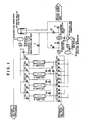
- the present invention is comprised of: the four units of adsorption columns A, B, C and D; the water-sealed gas holder (12); the desorbed gas vacuum pump (13); the recycle gas compressor (14) and the other necessary devices which communicate each other through the pipe line system, and characterized in that according to the open-close action of valves where being arranged at the necessary positions of pipe line in which such as (1A) - (1D), (2A) - (2D), (3A - 3D), (4A) - (4D), (5A) - (5D), (6A) - (6D), (7), (8), (9), (10) and (11), wherein the gas flows are switched and controlled, whereby those ten process es consisting of four cycles with five steps in four units of adsorption column will be performed repeatedly and continuously.
- column A when the column A is in the refining, column B is in the readsorption (recycle), column C is operated by the series of pressure uniformalization, self-depressurization, depressurization by suction, suction & exhaust in turn, further, column D is in the primary repressurization (pressure uniformalization) and then secondary repressurization respectively.
- step 1 those valves of (1A), (2A), (3B), (4A), (5C), (5D), (6C) and (6D) are opened (Fig.1) and then the reformed gas prior processed is fed into the column A wherein CO2 gas and H2O moisture contained within the reformed gas prior processed 1are adsorbed by the adsorbent wherein it steps up to the refined gas 2 which is sent finally into a carburation process by adding butane through a refined gas cooler (15) and a refined gas surge tank (16).
- the recycle gas 9 which is reserved once time in the water-sealed gas holder (12) is fed pursuantly into column B by the recycle gas compressor (14) through the recycle gas cooler (17) and a recycle gas moisture separator (18) wherein the recycle gas 9 is reabsorbed in the column B thereafter it is returned to the main flow of reformed gas prior processed 1.
- the gas temperature is raised by the compression heat itself, therefore, it is cooled by the recycle gas cooler (17) there, however, in the last stage of recycle process, the gas temperature is again raised in order to prepare the next cycle, that is, the desorption in column B.
- the reheating of gas is performed by switching the cooling circuit of recycle gas cooler (17) to its by-pass circuit, otherwise by reducing the flow rate of cooling water into the cooler (17), whereby the gas temperature is regulated adequately toward the desorption temperature. In this way, this system can control the gas temperature preferably in response to its process, which is more advantageous for the adsorption and desorption.
- step 2 of cycle 1 the column C is channelled to the depressurization to the intermediate pressure where it is achieved to release the gas with 4.5 kg/cm2 G pressure in column C into the water-sealed gas holder (12) by closing the valve (6D) and opening the valve (8) instead (Fig. 1) through the desorbed gas cooler (19) (Fig.1), wherein the pressure of column C becomes to balance with the pressure of water-sealed gas holder (12) which has the pressure of approximately 200 mm H2O (water column).
- step 3 of cycle 1 the column C is further depressurized mechanically at around 500 Torr. (Fig.3) by the desorbed gas vacuum pump (13) by closing the valve (8) and opening the valves (9) and (10) instead.
- the purged gas from column C is reserved into the water-sealed gas holder (12). This process is the depressurization by suction.
- step 4 of cycle 1 the column C is further channelled to the desorption process which desorbs CO2 gas and H2O moisture from the adsorbent by an extremely lower pressure with 50 Torr. which is depressurized by the desorbed gas vacuum pump (13) by closing the valve (10) and opening the valve (11). This desorption is done under such pressure areas as 500 Torr. to 50 Torr. and then the exhaust gas 8 contains a rich CO2 gas and H2O moisture to exhaust to the outside.
- This desorption process causes the adsorbent to restore and regenerate.
- the vacuum pump becomes less and less available in the work according to the degree of vacuum state.
- the desorption of CO2 gas and H2O moisture are performed actively and then exhausted. According to the progress of the degree of vacuum state, the content ratio of CO2 gas is increased in the gas components of depressurization gas and the content ratio of CH4 gas against the CO2 gas ratio becomes smaller.
- step 5 of cycle 1 in Table 2 the rinsing is done (in step 5 of cycle 1 in Table 2).
- a partial amount of refined gas 2 is sent into the water-sealed gas holder and the pipe lines of recycle by switching in the half way as the rinsing gas 10.
- the above supply of refined gas 2 to the water-sealed gas holder (12) is operated by closing the valve (5D) and opening the valve (7) instead through the constant gas flow rate controlling valve (20).
- This rinsing is effective to enhance the content of combustible components within the refined gas after processed 2and then useful for next cycle.
- step 5 of cycle 1 column D is kept intact afterthere.
- each pressure between the neighbor columns show to approach each other in step 1, that is, it means that one column is in the state of uniformalization to the intermediate pressure and another column is in the state of primary repressurization where the both pressures are mostly approached together at around 4.5 kg/cm2 G.
- Fig. 3 The pressure variation of each adsorption column in each step will be shown in Fig. 3.
- the each pressure between the neighbor columns show to approach each other in step 1, that is, it means that one column is in the state of uniformalization to the intermediate pressure and another column is in the state of primary repressurization where the both pressures are mostly approached together at around 4.5 kg/cm2 G.
- step 1 of cycle 3 the graph line of column A shows to start to release the compressed gas with 9 kg/cm2 G, that is, this state means the uniformalization to the sequentiale pressure and the graph line descends to at the point of 4.5 kg/cm2 G, in contrast the graph line of column B shows to rise at around 4.5 kg/cm2 G.
- the other graph lines such as between column C and column D or column D and column A in cycle 4.
- CO2 gas has a higher partial pressure than CH4 gas, therefore, in the highly pressurized environment such as in the refining process with 9 kg/cm2 G, the adsorption of CO2 gas by the adsorbent is preferably effective due to its high partial pressure, in contrast the lower partial pressure owned CH4 gas is not adsorbed in that environment.
- the above relationship between the both gases earns a prominent effect upon the adsorbent. Because, it gains 75.80% of refined gas 2 and only 18.80% of recycle gas is returned, whereby the whole size of facilities can be minimized due to the minimized flow ratio of recycle gas.
- the present invention Since the present invention is comprised as the above, it has the following technical effects; (1) Since a desorbed gas is recycled firstly and then during the recycle the desorbed gas is further readsorbed repeatedly, it can recover a combustible components for city gas with an extremely high yield from an exhaust gas which is produced by PSA method, wherein it can minimize the loss of combustible gas from the exhaust gas. As the result, the refined gas becomes to contain a high calorie contents for the city gas, in contrast the exhaust gas contains an extremely lower content of the combustible component, thus such expenses of treatment against the exhaust gas air pollution can be save due to its no pollution character.
Landscapes
- Chemical & Material Sciences (AREA)
- Organic Chemistry (AREA)
- Engineering & Computer Science (AREA)
- Combustion & Propulsion (AREA)
- Oil, Petroleum & Natural Gas (AREA)
- Chemical Kinetics & Catalysis (AREA)
- General Chemical & Material Sciences (AREA)
- Analytical Chemistry (AREA)
- Inorganic Chemistry (AREA)
- Water Supply & Treatment (AREA)
- Separation Of Gases By Adsorption (AREA)
Applications Claiming Priority (2)
| Application Number | Priority Date | Filing Date | Title |
|---|---|---|---|
| JP26991687 | 1987-10-24 | ||
| JP269916/87 | 1987-10-24 |
Publications (2)
| Publication Number | Publication Date |
|---|---|
| EP0314040A1 true EP0314040A1 (fr) | 1989-05-03 |
| EP0314040B1 EP0314040B1 (fr) | 1995-03-08 |
Family
ID=17479002
Family Applications (1)
| Application Number | Title | Priority Date | Filing Date |
|---|---|---|---|
| EP88117670A Expired - Lifetime EP0314040B1 (fr) | 1987-10-24 | 1988-10-24 | Méthode pour enlever le dioxyde de carbone et l'humidité dans une production de gaz de ville |
Country Status (2)
| Country | Link |
|---|---|
| EP (1) | EP0314040B1 (fr) |
| DE (1) | DE3853252T2 (fr) |
Cited By (5)
| Publication number | Priority date | Publication date | Assignee | Title |
|---|---|---|---|---|
| EP0367618A1 (fr) * | 1988-11-04 | 1990-05-09 | Mitsui Engineering and Shipbuilding Co, Ltd. | Procédé de production de monoxyde de carbone |
| EP0426937A1 (fr) * | 1989-11-04 | 1991-05-15 | Saibu Gas Co.,Ltd. | Système pour la récupération de gaz avec procédé de réadsorption excessive dans un dispositif pour adsorption à pression alternée |
| EP2803656A1 (fr) * | 2013-05-16 | 2014-11-19 | Green Vision Holding B.V. | Procédé et dispositif pour séparer un mélange gazeux contenant du dioxide de carbone et du méthane |
| CN108910824A (zh) * | 2018-09-17 | 2018-11-30 | 重庆金苏化工有限公司 | 一种高纯氢气提纯系统及提纯方法 |
| CN115920586A (zh) * | 2022-12-22 | 2023-04-07 | 中触媒新材料股份有限公司 | 一种变压吸附除水的方法 |
Families Citing this family (1)
| Publication number | Priority date | Publication date | Assignee | Title |
|---|---|---|---|---|
| PL234955B1 (pl) | 2013-03-19 | 2020-05-18 | Osaka Gas Co Ltd | Sposób oczyszczania gazu |
Citations (4)
| Publication number | Priority date | Publication date | Assignee | Title |
|---|---|---|---|---|
| DE2624346A1 (de) * | 1976-05-31 | 1977-12-15 | Linde Ag | Verfahren zur zerlegung von gasen durch adsorption |
| US4404004A (en) * | 1981-06-06 | 1983-09-13 | Bergwerksverband Gmbh | Method for separating gas mixtures by means of pressure changing adsorption technique |
| GB2155805A (en) * | 1984-03-07 | 1985-10-02 | Osaka Oxygen Ind | Gas separation process and apparatus |
| US4705541A (en) * | 1987-02-12 | 1987-11-10 | Air Products And Chemicals, Inc. | Production of mixed gases of controlled composition by pressure swing adsorption |
Family Cites Families (1)
| Publication number | Priority date | Publication date | Assignee | Title |
|---|---|---|---|---|
| EP0193716A3 (fr) * | 1985-01-25 | 1987-06-16 | Air Products And Chemicals, Inc. | Séparation adsorptive de mélanges de gaz de méthane et de dioxyde de carbone |
-
1988
- 1988-10-24 EP EP88117670A patent/EP0314040B1/fr not_active Expired - Lifetime
- 1988-10-24 DE DE3853252T patent/DE3853252T2/de not_active Expired - Fee Related
Patent Citations (4)
| Publication number | Priority date | Publication date | Assignee | Title |
|---|---|---|---|---|
| DE2624346A1 (de) * | 1976-05-31 | 1977-12-15 | Linde Ag | Verfahren zur zerlegung von gasen durch adsorption |
| US4404004A (en) * | 1981-06-06 | 1983-09-13 | Bergwerksverband Gmbh | Method for separating gas mixtures by means of pressure changing adsorption technique |
| GB2155805A (en) * | 1984-03-07 | 1985-10-02 | Osaka Oxygen Ind | Gas separation process and apparatus |
| US4705541A (en) * | 1987-02-12 | 1987-11-10 | Air Products And Chemicals, Inc. | Production of mixed gases of controlled composition by pressure swing adsorption |
Cited By (7)
| Publication number | Priority date | Publication date | Assignee | Title |
|---|---|---|---|---|
| EP0367618A1 (fr) * | 1988-11-04 | 1990-05-09 | Mitsui Engineering and Shipbuilding Co, Ltd. | Procédé de production de monoxyde de carbone |
| EP0426937A1 (fr) * | 1989-11-04 | 1991-05-15 | Saibu Gas Co.,Ltd. | Système pour la récupération de gaz avec procédé de réadsorption excessive dans un dispositif pour adsorption à pression alternée |
| EP2803656A1 (fr) * | 2013-05-16 | 2014-11-19 | Green Vision Holding B.V. | Procédé et dispositif pour séparer un mélange gazeux contenant du dioxide de carbone et du méthane |
| NL2010816C2 (nl) * | 2013-05-16 | 2014-11-24 | Green Vision Holding B V | Werkwijze en inrichting voor het scheiden van een kooldioxide en methaan bevattend gasmengsel. |
| CN108910824A (zh) * | 2018-09-17 | 2018-11-30 | 重庆金苏化工有限公司 | 一种高纯氢气提纯系统及提纯方法 |
| CN108910824B (zh) * | 2018-09-17 | 2023-08-04 | 重庆金苏化工有限公司 | 一种高纯氢气提纯系统及提纯方法 |
| CN115920586A (zh) * | 2022-12-22 | 2023-04-07 | 中触媒新材料股份有限公司 | 一种变压吸附除水的方法 |
Also Published As
| Publication number | Publication date |
|---|---|
| EP0314040B1 (fr) | 1995-03-08 |
| DE3853252T2 (de) | 1995-08-24 |
| DE3853252D1 (de) | 1995-04-13 |
Similar Documents
| Publication | Publication Date | Title |
|---|---|---|
| EP0489555B1 (fr) | Production d'hydrogène et du monoxyde de carbone par la purification par adsorption à pression alternée | |
| US5234472A (en) | Separation of gas mixtures including hydrogen | |
| EP0008512B1 (fr) | Séparation de mélanges gazeux à composants multiples | |
| EP0501344B1 (fr) | Procédé de séparation de mélanges de gaz à plusieurs composants par absorption sélective | |
| US6245127B1 (en) | Pressure swing adsorption process and apparatus | |
| US5112590A (en) | Separation of gas mixtures including hydrogen | |
| EP0451677A2 (fr) | Procédé par adsorption à vide alterné pour la production de N2 à 95+% à partir d'air ambient | |
| US4440548A (en) | Pressure swing absorption system | |
| CN1984705B (zh) | 连续送进三床变压吸附系统 | |
| US4914218A (en) | Adsorptive process for separating multicomponent gas mixtures | |
| US4359328A (en) | Inverted pressure swing adsorption process | |
| EP0008882A1 (fr) | Séparation de mélanges gazeux à composants multiples par adsorption sous pression alternée | |
| CA2516989C (fr) | Procede d'amenee d'effluents gazeux et systeme de purification de gaz cibles | |
| JPH01127021A (ja) | 埋立ごみ処理ガスからのメタン精製ならびに回収の方法 | |
| US3221476A (en) | Adsorption-desorption method | |
| KR100252333B1 (ko) | 동시처리압력순환흡착방법 | |
| US6045603A (en) | Two phase pressure swing adsorption process | |
| KR19980086952A (ko) | 단일 흡착 베드를 이용한 압력 스윙 흡착 방법 | |
| JPH0639230A (ja) | アルゴン−酸素−炭素除去プロセス廃ガスからのアルゴンを回収する方法 | |
| JPH09103630A (ja) | 圧力スイング吸着装置及び圧力スイング吸着法 | |
| AU2009326953A1 (en) | Production of hydrogen from a reforming gas and simultaneous capture of CO2 co-product | |
| KR20090068375A (ko) | 수소가스의 분리방법 및 분리장치 | |
| JPS61176540A (ja) | メタンと二酸化炭素とのガス混合物の回収方法 | |
| US5547492A (en) | Method for adsorbing and separating argon and hydrogen gases in high concentration from waste ammonia purge gas, and apparatus therefor | |
| Hayashi et al. | Dynamics of high purity oxygen PSA |
Legal Events
| Date | Code | Title | Description |
|---|---|---|---|
| PUAI | Public reference made under article 153(3) epc to a published international application that has entered the european phase |
Free format text: ORIGINAL CODE: 0009012 |
|
| AK | Designated contracting states |
Kind code of ref document: A1 Designated state(s): DE FR GB |
|
| 17P | Request for examination filed |
Effective date: 19891027 |
|
| 17Q | First examination report despatched |
Effective date: 19910517 |
|
| GRAA | (expected) grant |
Free format text: ORIGINAL CODE: 0009210 |
|
| AK | Designated contracting states |
Kind code of ref document: B1 Designated state(s): DE FR GB |
|
| ET | Fr: translation filed | ||
| REF | Corresponds to: |
Ref document number: 3853252 Country of ref document: DE Date of ref document: 19950413 |
|
| PLBE | No opposition filed within time limit |
Free format text: ORIGINAL CODE: 0009261 |
|
| STAA | Information on the status of an ep patent application or granted ep patent |
Free format text: STATUS: NO OPPOSITION FILED WITHIN TIME LIMIT |
|
| 26N | No opposition filed | ||
| PGFP | Annual fee paid to national office [announced via postgrant information from national office to epo] |
Ref country code: FR Payment date: 19960927 Year of fee payment: 9 |
|
| PGFP | Annual fee paid to national office [announced via postgrant information from national office to epo] |
Ref country code: GB Payment date: 19961004 Year of fee payment: 9 |
|
| PGFP | Annual fee paid to national office [announced via postgrant information from national office to epo] |
Ref country code: DE Payment date: 19961127 Year of fee payment: 9 |
|
| PG25 | Lapsed in a contracting state [announced via postgrant information from national office to epo] |
Ref country code: GB Free format text: LAPSE BECAUSE OF NON-PAYMENT OF DUE FEES Effective date: 19971024 |
|
| PG25 | Lapsed in a contracting state [announced via postgrant information from national office to epo] |
Ref country code: FR Free format text: THE PATENT HAS BEEN ANNULLED BY A DECISION OF A NATIONAL AUTHORITY Effective date: 19971031 |
|
| GBPC | Gb: european patent ceased through non-payment of renewal fee |
Effective date: 19971024 |
|
| PG25 | Lapsed in a contracting state [announced via postgrant information from national office to epo] |
Ref country code: DE Free format text: LAPSE BECAUSE OF NON-PAYMENT OF DUE FEES Effective date: 19980701 |
|
| REG | Reference to a national code |
Ref country code: FR Ref legal event code: ST |