EP0316486B1 - Procédé pour la fabrication de fibres et films de polyamide aromatique - Google Patents
Procédé pour la fabrication de fibres et films de polyamide aromatique Download PDFInfo
- Publication number
- EP0316486B1 EP0316486B1 EP19870310090 EP87310090A EP0316486B1 EP 0316486 B1 EP0316486 B1 EP 0316486B1 EP 19870310090 EP19870310090 EP 19870310090 EP 87310090 A EP87310090 A EP 87310090A EP 0316486 B1 EP0316486 B1 EP 0316486B1
- Authority
- EP
- European Patent Office
- Prior art keywords
- solvent
- dope
- process according
- fibre
- polymerisation
- Prior art date
- Legal status (The legal status is an assumption and is not a legal conclusion. Google has not performed a legal analysis and makes no representation as to the accuracy of the status listed.)
- Expired
Links
Images




Classifications
-
- C—CHEMISTRY; METALLURGY
- C08—ORGANIC MACROMOLECULAR COMPOUNDS; THEIR PREPARATION OR CHEMICAL WORKING-UP; COMPOSITIONS BASED THEREON
- C08J—WORKING-UP; GENERAL PROCESSES OF COMPOUNDING; AFTER-TREATMENT NOT COVERED BY SUBCLASSES C08B, C08C, C08F, C08G or C08H
- C08J5/00—Manufacture of articles or shaped materials containing macromolecular substances
- C08J5/18—Manufacture of films or sheets
-
- C—CHEMISTRY; METALLURGY
- C08—ORGANIC MACROMOLECULAR COMPOUNDS; THEIR PREPARATION OR CHEMICAL WORKING-UP; COMPOSITIONS BASED THEREON
- C08G—MACROMOLECULAR COMPOUNDS OBTAINED OTHERWISE THAN BY REACTIONS ONLY INVOLVING UNSATURATED CARBON-TO-CARBON BONDS
- C08G69/00—Macromolecular compounds obtained by reactions forming a carboxylic amide link in the main chain of the macromolecule
- C08G69/02—Polyamides derived from amino-carboxylic acids or from polyamines and polycarboxylic acids
- C08G69/26—Polyamides derived from amino-carboxylic acids or from polyamines and polycarboxylic acids derived from polyamines and polycarboxylic acids
- C08G69/32—Polyamides derived from amino-carboxylic acids or from polyamines and polycarboxylic acids derived from polyamines and polycarboxylic acids from aromatic diamines and aromatic dicarboxylic acids with both amino and carboxylic groups aromatically bound
-
- D—TEXTILES; PAPER
- D01—NATURAL OR MAN-MADE THREADS OR FIBRES; SPINNING
- D01F—CHEMICAL FEATURES IN THE MANUFACTURE OF ARTIFICIAL FILAMENTS, THREADS, FIBRES, BRISTLES OR RIBBONS; APPARATUS SPECIALLY ADAPTED FOR THE MANUFACTURE OF CARBON FILAMENTS
- D01F6/00—Monocomponent artificial filaments or the like of synthetic polymers; Manufacture thereof
- D01F6/58—Monocomponent artificial filaments or the like of synthetic polymers; Manufacture thereof from homopolycondensation products
- D01F6/60—Monocomponent artificial filaments or the like of synthetic polymers; Manufacture thereof from homopolycondensation products from polyamides
- D01F6/605—Monocomponent artificial filaments or the like of synthetic polymers; Manufacture thereof from homopolycondensation products from polyamides from aromatic polyamides
-
- C—CHEMISTRY; METALLURGY
- C08—ORGANIC MACROMOLECULAR COMPOUNDS; THEIR PREPARATION OR CHEMICAL WORKING-UP; COMPOSITIONS BASED THEREON
- C08J—WORKING-UP; GENERAL PROCESSES OF COMPOUNDING; AFTER-TREATMENT NOT COVERED BY SUBCLASSES C08B, C08C, C08F, C08G or C08H
- C08J2377/00—Characterised by the use of polyamides obtained by reactions forming a carboxylic amide link in the main chain; Derivatives of such polymers
- C08J2377/10—Polyamides derived from aromatically bound amino and carboxyl groups of amino carboxylic acids or of polyamines and polycarboxylic acids
Definitions
- DE-A-1,810,426 discloses a method for increasing the tensile strength and modulus of the fibre by wet-spinning using aromatic polyamide dope having optically anisotropic property, and heating the fibre or film while applying tension. Pulp-like short fibres made by the above method have been widely employed as insulating materials, adiabatics, and friction resistant materials, in place of asbestos.
- inorganic salt and aromatic diamine are dissolved in an amide solvent, the diamine is polymerised with aromatic diacid chloride at a low temperature to make the polymer in an acid crumb form, and the crumb is washed to remove the polymerisation solvent and inorganic salt and is continuously dried.
- Liquid crystalline dope is obtained by redissolving the polymer in 20% by weight sulfuric acid or chlorosulfuric acid or fluorosulfuric acid. This dope is then spun through an orifice into water, neutralised, washed, dried and treated by mechanical processes to prepare the aromatic polyamide fibre and film.
- the process is costly (partly because of corrosion of apparatus by the acid) and somewhat dangerous, and the polymer can be decomposed in the dope so that the property of the fibres is reduced. Also the process yields an inorganic sulfate, often CaSO4, as a by-product which is difficult to handle, and the colour of fibres changes with time due to residual sulfuric acid.
- the compression strength of the fibre obtained by this method is much weaker than the theoretical value and the resistance to chemicals is also weak, because a crystal defect layer is formed in the fibre.
- US-A-3,672,143 and US-A-3,817,941 disclose methods where the polymerisation is performed in the presence of a chain terminator in a solution to form a dope which is spun or ejected by extrusion into water as a precipitatant.
- the fibres are therefore obtained by a simple process but it is difficult to obtain adequate molecular weight because of the use of a chain terminator during polymerisation and water as a precipitatant.
- Another known method, which is referred to below as the "prior method" for preparing aromatic polyamide fibre comprises polymerising, washing, preparing 20% by weight dope of high molecular weight poly-(p-phenylenediamine terephthalate) and concentrated sulfuric acid, and spinning into water through an air gap to produce fibres. This method is described in Journal of Polymer Science; Polymer Physics Edition, Vol 21, 1955-1969 (1983).
- Patent Abstract of Japan, 11.232 (C-437) [2679] (1987) discloses the preparation of polyamide fibres by first forming a pre-polymer dope in an amide-type solvent, then extruding the dope into a fluid inert to acid halide.
- the resulting aromatic polyamide fibres have an outer skin and inner core.
- the microscopic structure is shown diagrammatically in Figures 6(a) and (b) of the accompanying drawings.
- the core portion has crystal defects every 250 nm and a radially arranged pleated sheet structure, while the skin portion has a compact and well-oriented structure.
- the fibre strength is considerably lower than the theoretical strength because of the radially arranged pleated sheet structure of the core portion.
- the strength of fibres is generally less than 4.45 dN/tex (5 g/d). However, if the molecular chains are stretched by the spinning method known as gel spinning, the strength is increased to at least 17.8 dN/tex (20 g/d). Although the chemical structure of the two products are the same, their properties are remarkably different owing to their different crystalline structures.
- the object of the present invention is to provide aromatic polyamide fibre and film having improved strength and other properties as a result of having a high degree of orientation.
- the manufacturing cost is inexpensive and process control is easy and the polymer and product can be produced successively and directly in the same overall process.
- the final aromatic polyamide fibre or film can have an inherent viscosity higher than 3.0, random molecular chain end distribution, and can be substantially free of a crystal defect layer perpendicular to the fibre axis, and can be stable against colour change on storage.
- the fibre can have a tensile strength above 13.4 dN/tex (15 g/d).
- the film can have a tensile strength above 1.28GPa. It is novel. Textiles can be made from it in conventional manner and short fibres can be used as reinforcement for resins.
- aromatic polyamide in the form of fibre and film is made by a process comprising polycondensing difunctional aromatic amine and acid chloride while dissolved in a first solvent comprising a solution in an amide or DMSO of an inorganic salt and thereby forming a liquid crystalline prepolymer dope (LCPD), extruding the dope as a fibre or film product with or into a precipitating solvent comprising a polymerisation accelerator which comprises a tertiary amine that will complete the polycondensation of the prepolymer, and stretching the extruded product while completing the polycondensation.
- LCPD liquid crystalline prepolymer dope
- the dope is preferably extruded directly after formation of the prepolymer, generally just before gelation. Typically it is when the dope is opalescent on stirring.
- the dope should be preferably optically anisotropic, and advantageously should be formed at low temperature.
- the first solvent may include a small amount of tertiary amine.
- the precipitating solvent must accelerate the polymerisation and comprises a tertiary amine. It may also comprise other solvent mixed with the tertiary amine, often an amide solvent. Inorganic salt may be dissolved in it.
- the prepolymer is preferably a homopolymer or copolymer having the formula - CO - R1 - CO - NH - R2 - NH (I) or - CO - R3 - NH - (II) wherein R1 and R2 are the same or different and are present generally in equivalent molar amounts and R1, R2 and R3 are each an aromatic group, preferably selected from
- the rings may include optional substituents such as X, where X may be Cl or another halogen atom.
- the prepolymer is formed by polycondensation between aromatic diamine and aromatic diacid chloride. Preferably a solution is formed of the diamine in the first solvent and then the dichloride is added, usually in a substantially equimolar amount.
- the prepolymer in the dope preferably has an inherent viscosity (I.V.-D) of from 1 to 4 and the dope may have stir opalescence.
- the resulting LCPD is extruded into or with the polymerisation accelerating-precipitation solvent.
- the LPCD is spun into the precipitating solvent and drawn off with a spin-stretch factor of from 1 to 4, generally at a temperature of -40 to +50°C. This yields a film or endless fibre.
- short fibres are made by extruding the LPCD into or with the precipitating solvent and applying shear. Thus they may be simultaneously ejected by extrusion or contacted with each other and the LCPD is subjected to at least a shear rate of 20 s ⁇ 1.
- the aromatic polyamide fibre is obtained as a pulp-like short fibre.
- the microscopic structure of the final film or fibre product is a fully extended chain structure having sufficient molecular orientation of its polymeric structure. It has random chain end distributions in the direction of the fibre or film axis.
- the fibre and film of this invention are substantially or wholly free of crystal defect layers such as defect zones caused by NH3+, HSO4 ⁇ ionic clusters.
- the product has a unique structure characterised as generally having an inherent viscosity of at least 3.0, and the fibre generally having a strength of at least 13.4 dN/tex (15g/d), or the film having a strength of at least 1.28GPa.
- the LCPD is the polymerisation solution and it may be formed by dissolving aromatic diamine in an amide solvent containing inorganic salts and optionally a little tertiary amine and cooling in the presence of nitrogen, and causing solution polymerisation by reaction with aromatic diacid chloride at a temperature of less than 40°C.
- the monomer and solvent should be as pure as possible so as to optimise the molecular weight and the polymerisation should occur substantially quantitatively.
- the monomers and solvent should be as dry as possible.
- the first solvent may be a mixture of organic solvents such as amides (including ureas) and inorganic salts, optionally with some tertiary amine.
- the amide or urea or other solvent may be selected from N-methyl-2-pyrrolidone (NMP), N,N-dimethylacetamide (DMAc), hexamethylphosphoramide (HMPA), N,N-dimethylformamide (DMF), N,N-dimethyl sulfoxide (DMSO), and N,N,N ⁇ ,N ⁇ -tetramethylurea (TMU), N-methylpiperidone, N-methylcaprolactam, N-acetylpyrrolidine, N-ethylpyrrolidine, dimethylpropionamide, dimethyl isobutyramide, and dimethylpropylurea.
- NMP N-methyl-2-pyrrolidone
- DMAc N,N-dimethylacetamide
- HMPA hexamethylphosphoramide
- DMF N,N-dimethylformamide
- DMSO N,N-dimethyl sulfoxide
- TNU N,N,N ⁇ ,N ⁇ -tetramethyl
- the amount of tertiary amine, if present, in the first solvent is preferably about 0.01 to 2% by weight of the first solvent.
- examples are pyridine (Py), quinoline, triethylamine, dimethylethylamine, t-butylamine, quinuclidine, picoline, pyrimidine, pyrazine and quinoxaline.
- the amount of tertiary amine in the first solvent is less than 0.01% by weight, the desired effect of tertiary amine addition, namely an increased polymerisation rate, is not achieved. If the amount is more than 2% by weight, control of the reaction rate and the process becomes difficult.
- Inorganic salts are used in order to increase the solubility of the polymer.
- Preferred inorganic salts include metal halides such as LiCl, CaCl2, KCl, KBr, and LiBr.
- the amount is preferably 0.5 to 15% by weight (Weight of salt/Volume of amide solvent).
- p-phenylenediamine and terephthaloyl chloride are added to the amide solvent containing the above inorganic salts, optionally containing some tertiary amine, and then the resulting mixture is stirred.
- Poly(p-phenyleneterephthalamide) (PPDT) represented by following formula (III), is obtained as a prepolymer solution in the LCPD
- the prepolymer solution is directly used as the dope.
- the LCPD preferably has a polymer concentration of 4 to 20% by weight.
- the amount is greater than 20% by weight, LCPD may not be suitable for use as dope because extrusion may be difficult and the reaction rate may increase suddenly and so process control may become difficult. If the amount is less than 4% by weight, the inherent viscosity of the final polymer may decrease remarkably, and the process may become less economic.
- a suitable inherent viscosity of the prepolymer in the LCPD ranges between 1.0 and 4.0, preferably between 1.5 and 3.5. Extrusion may be difficult if I.V.-D is too high.
- the LCPD may be transferred to a temperature-controllable extrusion device, e.g., a cylinder or slot, having one or more extrusion orifices, and spun into the polymerisation accelerating-precipitation solvent.
- a temperature-controllable extrusion device e.g., a cylinder or slot, having one or more extrusion orifices
- the polymerisation - acceleratingprecipitation solvent contributes to the improvement in the degree of polymerisation and the molecular orientation.
- the shear force of the solvent may promote formation of hydrogen bonds between the amide bonds.
- Tertiary amine is preferably used alone or as a mixed solvent with amide, preferably one of the amides named above.
- a suitable amount of amide solvent is 10 to 90% by volume of the tertiary amine solvent.
- Inorganic salt generally one of those named above, may be included, generally in an amount of 0.01 to 10% of the precipitating solvent.
- the tertiary amine solvent alone, or mixed solvent of amide solvent and tertiary amine solvent, should be used in an amount greater than is required to react with all the HCl produced by reacting the diacid chloride and diamine.
- tertiary amines Any of the tertiary amines mentioned above may be used but pyridine is preferred.
- the tertiary amine, and all solvent components, should be substantially pure and dry.
- the amount of moisture in the tertiary amine should be below 5000 ppm.
- the process of contacting the LCPD and polymerisation-accelerating precipitation solvent is usually carried out at a temperature of less than 50°C, preferably -40 to 50°C. Below -40°C additional equipment would be required to maintain the temperature, and this causes an increase in manufacturing costs. In general, the lower the temperature, the better the molecular orientation effect; a temperature of higher than 50°C results in less molecular orientation.
- the contact process is preferably carried out at -10°C to 40 or 45°C, and more preferably at 0 to 25°C, e.g., room temperature.
- the diameter of nozzles through which the LCPD is extruded is preferably 50 ⁇ m to 10,000 ⁇ m.
- the ratio of tube length to nozzle diameter or width (L/D) in the spinning-nozzle jet is preferred to be 0.5 to 10, especially when the resultant produce is spun or drawn off as a continuous fibre or film.
- the use of a small nozzle promotes penetration by the tertiary amine solvent and thus tends to increase the final inherent viscosity and the degree of molecular orientation can be improved.
- adjusting the speed of winding will control the molecular orientation of the polymer.
- the contact time is within the range of 0.1 to 1,000 s.
- the spinning speed (“JV", the average velocity of LCPD in the tube of the spinning nozzle calculated from the cross-sectional area of the orifice and the volume of LCPD passing through the orifice) is generally 1 m/min to 300 m/min, preferably 50 to 100 m/min.
- the spin-stretch factor (SSF) refers to the ratio of fibre winding speed to the ejecting speed, and is preferably in the range 1 to 4.
- Pulp-like short fibres may be made from the continuous filament or film before drying by known methods.
- the filament fibre or film may be transferred to a grinder through a feed roll, and chopped and ground by mechanical treatment.
- the invention also includes a process for directly preparing the pulp-like short fibre by ejection or by contact with the above LCPD having optical anisotropy and the polymerisation accelerating-precipitation solvent under a shear rate of at least 20 s ⁇ 1. Suitable apparatus is described in more detail below.
- the properties of the products made in the invention may be evaluated in terms of their inherent viscosity (I.V.-P) calculated from the equation wherein ⁇ rel represents relative viscosity; and C represents a concentration of 0.5 grams of polymer in 100 ml of sulfuric acid.
- I.V.-P inherent viscosity
- the relative viscosity, ⁇ rel is the flow time ratio between a sulfuric acid and a solution of the polymer. Flow times are determined at 30°C by a capillary viscometer, using mainly concentrated sulfuric acid (95 to 98%) as a solvent.
- the invention is remarkably different from the prior art, as follows.
- the LCPD may be spun into a polymerisation accelerating-precipitation solvent with a spin stretch factor of 1 to 4 or it is ejected by extrusion under a shear rate of more than 20 s ⁇ 1 by the polymerisation accelerating-precipitation solvent, and the desired aromatic polyamide fibre and film having high strength and high degree of orientation is obtained by simultaneous molecular orientation and polymerisation of the polymer.
- the invention there are two separate processes, namely one for making LCPD and the other for preparing a polymer having high degree of polymerisation with the proper molecular orientation. It is therefore possible to optimise individual processing conditions, for example the polymer content in the polymerisation solvent, the temperature of polymerisation, and the temperature of contacting the LCPD and the precipitation solvent.
- the prepolymer of the LCPD can maintain an inherent viscosity of 1.0 to 4.0 for 30 minutes and so process control becomes easy.
- the inherent viscosity of fibre and film can be improved to more than 3.0 by the molecular orientation polymerisation method using the tertiary amine solvent.
- the fibre or film, having a high degree of orientation and an extended molecular chain can be prepared easily because it is possible to accelerate the polymerisation rate and the orientation of the molecular chains by the polymerisation accelerating-precipitation solvent.
- the fibre and film can directly be prepared during the polymerisation process without the traditional process steps of separating polymer from the resulting solution, washing, preparing sulfuric acid dope, and spinning. So, the whole process becomes simple and economical, and the fibre is not decolorised by residual sulfuric acid.
- the size (length and diameter), shape, and inherent viscosity of the fibre and film can be easily controlled by changing the extrusion pressure, the spin-stretch factor, the length of the transfer line, and the diameter of nozzle.
- the polymerisation accelerating-precipitation solvent can be reused provided it has not become contaminated with impurities that affect the degree of polymerisation.
- the product of the process is considerably superior to prior fibres as follows.
- the molecular chains of prior fibres cannot be fully oriented and have crystal joints, and the fibres are easily dissolved by strong acids such as sulfuric acid, chlorosulfuric acid and fluorosulfuric acid, and also they are hydrolysed by acids or alkalis.
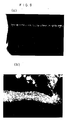
- Figure 10(a) is a picture of a prior aromatic polyamide fibre taken with SEM after being etched by NaOH (or HCl) to remove a layer 2 nm thick.
- the defect bands are etched preferentially. Crystal defect layers exist along the axis of the fibre at regular intervals.
- the prior fibres have a double structure of skin-core portions resulting from an insufficient orientation due to the high viscosity of more than 100 Pa ⁇ s (1,000 poise) and the concentration of polymer (20%) and the sulphuric acid used in the dope.
- the preferred molecular orientation is easily achieved at a comparatively low molecular weight and the crystal defects are uniformly distributed.
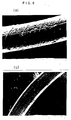
- the fibre does not have crystal defect layers and as shown in Figure 9(b) it does not have transverse bands and skin core effects.
- the fully extended aromatic polyamide fibre and film obtained in the invention can have excellent properties such as denier D, strength, modulus (mi), tensile strength (T), elongation (E), and compression strength, as compared with prior fibres.
- Typical properties of PPDT fibre according to this invention are compared to those of the prior fibre in Table 1.
- Table 1 Prior Fibre Invention IV-P 5.3 1.5 2.0 3.0 5.3 6.2
- 2.1 2.1 1.0 Modulus (g/d) 480 440 510 760 460 520 Modulus (dN/ tex) 427 392 454 676 409 463
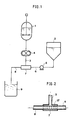
- Examples 14 to 23 were conducted using the apparatus illustrated in Figure 1 and 2, Examples 24 to 28 using the apparatus of Figure 3, and Examples 29 to 32 using the apparatus of Figure 4.
- FIG. 1 is a schematic diagram of the manufacturing process according to Example 14 of the invention.
- a reaction vessel 1 contains the LCPD and a separate storage vessel 2 stores the polymerisation accelerating-precipitation solvent.
- the LCPD is fed through a line 3 by an operating gear pump 4 to a nozzle jet 7 and simultaneously the solvent is fed through line 6 by the circulatory pump 5 to the jet 7.
- a plurality of orifices 27 in the line 6 cause the LPCD to be forced into the flow through line 6.
- Molecular orientation and polymerisation occur in the ejection tube 8.
- the flow velocity in the transfer line 6 is selected to orient the LCPD and the LCPD:solvent flow velocity ratio is preferably 1:50 to 1:0.1, more preferably 1:15 to 1:0.2.
- the diameter of transfer line 3 can be 1.5, 3, 6 or 13 mm and the ejection speed of the LCPD from transfer line 3 is preferably higher than 5 m/min.
- the diameter of the orifices in the nozzle jet 7 shown in Figure 2 is preferably 0.006 to 1 mm, more preferably 0.01 to 0.7 mm, and the number of orifices ranges from about 5 to 500.
- the orifices are preferably circular.
- the length of the ejection tube 8 is chosen to allow sufficient time for the reaction to be terminated before the fibres are separated from the solvent, e.g., in the vessel 9.
- FIG. 3 is the process schematic diagram of Example 24.
- the LCPD is held in the storage tank 21 maintained at a temperature of less than 30°C by the circulation of brine introduced through inlet 22 and discharged through outlet 23.
- a nitrogen pressure of 196 to 1960kPa (2 to 20 kg/cm2) is applied to the LCPD in storage tank 21 through inlet 24.
- the LPCD passes through a stainless steel ejection tube 25 of 3 mm diameter and is fed to the impeller 30.
- the end of the tube 25 is provided with a nozzle, that may be a smaller tube, at its end.
- the nozzle has a diameter less than 3 mm. It may be of stainless steel.
- the LCPD is thereby ejected into the polymerisation accelerating-precipitation solvent 28 and is sheared by impeller 30 that is rotated by operating motor 29.
- the distance between the impeller 30 and the nozzle 27 is preferably less than 2.5 mm in order to increase the shearing force and to cause sufficient intra-molecular orientation, in accordance with a shear rate of about 20 s ⁇ 1.
- the LCPD in vessel 26 is polymerised and oriented by the molecular orientation polymerisation method while being stirred and contacted with the polymerisation accelerating-precipitation solvent. It is transferred along the transfer line 31 to the filter 32 by which the fibres are filtered from the solvent. The recovered solvent is returned to the vessel 26 along the circulating tube 34 through a one-way pump 35.
- FIG. 4 shows the process of Example 29.
- the solution of aromatic diamine in the amide solvent containing inorganic salts, or additionally containing tertiary amine, is in the reaction vessel 41 under nitrogen as in Example 14. This solution is added to the mixer 43 and aromatic diacid chloride from tank 42 is simultaneously fed to the mixer 43, in stoichiometric amounts.
- the LCPD obtained by reacting the two components in the mixer 43 is transferred to the inlet 48 of an ejector 46 at a flow rate controlled by the gear pump 45, just after the removal of gases by a vacuum pump 44.
- the LCPD is contacted in the ejector 46 with polymerisation acceleration-precipitation solvent provided through feed lines 47 from solvent store tanks 57.
- This ejector 46 is shown in Figure 5.
- the solvent is flowed towards the LPCD at a contact angle 49 and the streams are simultaneously ejected through the conflux ejection orifice 50 with a shear rate of at least 20 s ⁇ 1.
- the orifice 50 is preferably circular in shape and may have a size of 0.005 ⁇ m to 50 nm.
- L/D (the ratio of length to diameter of orifice) of the conflux ejection orifice 50 is preferably in the range of 1 to 10.
- the contact angle 49 is preferably in the range of 20° to 80°. If it is less than 20°, the effect of molecular orientation increases but the grinding effect decreases. If it is more than 80°, the effect of molecular orientation decreases and the grinding effect increases. Preferably it is 40° to 50°.
- the ejection speed is preferably 1 m/min to 300 m/min, and the most preferable length of conflux ejection orifice 50 is 100 mm to 1,000 mm in order to allow the LCPD and the solvent to make good contact.
- the ejected LCPD and solvent are divided into a solid phase and a liquid phase by the filter conveyer 51, and the fibres are transferred to a roller 52, and recovered in the recovery vessel 54 by scrubber 53.
- the polymerisation accelerating-precipitation solvent is recovered into storage 57 along recovery line 56 using a pump 55.
- a 4-neck flask of 5 l is purged with nitrogen gas and then the moisture in the flask is removed as much as possible and 1,200 ml of NMP is introduced.
- the temperature is increased to 100°C, 27.0 g of CaCl2 is completely dissolved into the solution and 24.5 g of PPD is dissolved sufficiently into the solution.
- Example 2 The process of Example 1 is repeated but with the materials and results shown by Table 2.
- Py/CaCl2 5% means that the solvent is pyridine
- Example 1 is repeated, using pyridine as the precipitating solvent but with the materials and results shown in Table 3.
- Example 1 is repeated but the solvents, L/D and spin stretch factor (SSF) are in accordance with Table 4.
- I.V.-W is the inherent viscosity obtained when, in a comparative test, the dope is extruded into water instead of the precipitation
- the LCPD is spun into pyridine through an orifice having a diameter of 0.6 mm and L/D of 0.8, and is wound with a winding speed of 40 m/min.
- the resultant fibre is washed with water and dried.
- the I.V. of the fibre is 4.9 and D/E/T/Mi is 3/12/21/450.
- Example 5 The process of Example 5 is repeated except that the polymerisation solvent is replaced and SSF and L/D are adjusted, as shown in Table 5.
- Table 5 Exp. No. Polymerization solvent SSF L/D Precipitation solvent I.V-P D/E/T/Mi 1 NMP(180ml)/ DMAc(20ml) 2.0 0.8 Pyridine 5.2 5/11/18/382 2 NMP(100ml)/ DMAc(100ml) " 1.0 Pyridine 4.8 10/15/14/350 3 NMP(50ml)/ DMAc(150ml) " 1.0 " 6.0 3/13/21/451 4 NMP(180ml)/ HMPA(20ml) 2.5 0.5 " 7.1 7/9/17/400 5 NMP(150ml)/ HMPA(50ml) " " " 4.7 4/10/21/340 6 NMP(100ml)/ HMPA(100ml) " 1.0 " 5.4 2/13/23/500 7 NMP(50ml)
- Example 6 The process of Example 6 is repeated except that the polymerisation solvent, L/D, SSF and polymerisation accelerating-precipitation solvent are substituted in accordance with Table 6.
- the resulting LCPD is extruded into pyridine through a T-type die.
- the resulting film is washed with water and dried.
- I.V.-P is 5.1, and tensile strength is 1.30GPa.
- the resultant fibre is washed with water and dried.
- the fibre has an I.V. of 4.9 and D/E/T/Mi of 31/1.5/22/450.
- the LCPD is allowed to react for 20 minutes and is then introduced into a cylinder equipped with an orifice having diameter of 0.5 mm and L/D of 0.5, and is spun into pyridine.
- the spun fibre is wound with a winding speed of 30 m/min, and the fibre is washed with water and dried.
- the thus produced fibre has an I.V. of 4.3 and D/E/T/Mi of 5/11/19/450.
- Fibres are prepared in the same process as in Example 10 except that a number of conditions including the polymerisation solvent, L/D, SSF and polymerisation accelerating-precipitation solvent are changed in accordance with Table 7. TABLE 7 Exp. No. Polymerisation Solvent L/D SSF Precipitation Solvent I.V.
- the fibres are prepared by the same process as in Example 11 except that the resultant LCPD is spun into water.
- the resulting LCPD are spun into pyridine through an orifice with a diameter of 0.3 mm and L/D of, at a winding speed of 50 m/min and simultaneously washed with water and ried to obtain a fibre which has an I.V. of 5.6.
- This example uses the apparatus of figures 1 and 2 and makes pulp-like short fibres.
- the reaction vessel 1 is purged with nitrogen gas and moisture in the vessel is removed. 250 ml of NMP is introduced into the vessel 1 and the temperature is increased to 80°C. After that, 10.0 g of CaCl2 as metal halide is added and stirred for 30 min in order to dissolve it. 10.38 g of PPD is then added and dissolved while stirring for 10 min, and 19.55 g of TPC is also added and simultaneously stirred vigorously while maintaining a temperature of 30°C.
- the resulting LCPD is transferred to the nozzle jet apparatus 7 through a transfer line 3 with a diameter of 3 mm by the operating gear pump 4.
- the diameter of each nozzle is 0.3 mm, there are 15 nozzles and the gear pump is operated at a pressure of 294 kPa (3 kg/cm2.)
- pyridine having a water content less than 1,000 ppm is forced from vessel 2 through transfer line 6 having 6 mm diameter into the nozzle jet by the operating transfer pump 5 which provides a pressure of 29.4 kPa (0.3 kg/cm2).
- the LCPD come into contact with pyridine at 20°C and then they are simultaneously ejected by extrusion through an ejection tube 8 that is 6 mm in diameter and 4 m in length.
- the resulting pulp-like particles and pyridine solvent are separated by filtration.
- the filtrate is recirculated, and the fibres are dried for 5 hours in a vacuum drier maintained at 110°C.
- the inherent viscosity of the pulp-like short fibre is 4.03.
- the fibres are prepared by the same process as in Example 14 except that the transfer pressure is adjusted to 49 kPa (0.5 kg/cm2) and I.V.-D and precipitation solvents are as shown in Table 10.
- Table 10 Exp. No. Precipitation solvent I.V.-D I.V.-P 1 Py 90 parts/ NMP 10 parts 2.37 5.84 2 Py 70 parts/ NMP 30 parts 2.63 5.31 3 Py 50 parts/ NMP 50 parts 2.45 5.12 4 Py 30 parts/ NMP 70 parts/CaCl2 8% 3.04 6.30 5 Py 6 parts/ NMP 94 parts 3.71 4.80 6 Py 50 parts/ DMAc 50 parts 2.46 5.31 7 Py 70 parts/ HMPA 30 parts 2.95 5.59 8 Py 50 parts/ HMPA 50 parts 3.43 6.13
- Pulp-like short fibres are prepared by the same process as in Example 14 except that a tertiary amine is used as shown in Table 11.
- I.V.-D is 2.71.
- Table 11 Exp.No. Precipitation solvent I.V.-P 1 triethylamine 4.3 2 t-butylamine 5.47 3 dimethylethylamine 4.1
- Example 14 The process of Example 14 is carried out but the extrusion speeds of the LCPD and pyridine, and I.V.-D, are changed as shown in Table 12.
- the diameter of the nozzle is 0.5 mm.
- Speed of LCPD (m/min)
- Speed of pyridine (m/min)
- I.V.-D I.V.-P 1 2 10 2.73 4.70 2 2 12 2.73 4.80 3 2 20 2.73 5.81 4 4 20 2.59 5.53 5 4 50 2.59 4.76 6 10 50 3.12 6.34 7 10 30 3.12 6.91 8 15 35 2.95 6.07 9 15 50 2.95 5.91 10 20 50 3.46 6.63 11 25 70 3.46 5.74 12 30 70 3.46 6.41 13 40 100 3.77 7.14 14 50 130 3.77 6.91
- Example 14 The process of Example 14 is repeated except that the pressure of the gear pump is adjusted to 490 kPa (5 kg/cm2) and the pressure of circulatory pump is adjusted to 68.7 kPa (0.7 kg/cm2).
- the I.V. of the polymer of the LCPD, diameter and number of nozzles are changed as described in Table 13. TABLE 13 Exp. No.
- Example 14 the processes are carried out as in Example 14 except that the I.V. of the polymer of the LCPD and the length of ejection tube are altered as shown in Table 14.
- the diameter and number of nozzles are 0.5 mm and 15, the pressure applied to the LCPD is 490 kPa (5 kg/cm2), and the pressure of pyridine is 68.7 kPa (0.7 kg/cm2).
- TABLE 14 Exp. Length (m) I.V.-D I.V.-P 1 5 2.07 5.09 2 7 3.28 6.73 3 10 2.73 5.13 4 20 2.91 6.27 5 30 3.15 6.47 6 40 2.36 6.43 7 50 2.38 6.27
- Processes are carried out under the same conditions as in Example 14, except that different precipitation solvents are used, as shown in Table 15.
- the solvent is a mixture of NMP and HMPA, 10.0 g of CaCl2 is used.
- the solvent is DMAc alone or a mixture of DMAc and HMPA, 10.0 g of LiCl is used.
- the nozzles and the pressures of the LCPD and pyridine are the same as in Example 20. TABLE 15 Exp. No.
- the process is carried out under the same conditions as in Example 14, except that the monomers are replaced according to Table 16.
- the monomers are preferably 25 mole percent p-phenylenediamine, 50 mole percent terephthaloyl chloride, and 25 mole percent of 3,4'-diaminodiphenyl ether.
- the diameter and number of nozzles are 0.7 mm and 15, and the pressures of the LCPD and pyridine are 392 kPa (4 kg/cm2) and 49 kPa (0.5 kg/cm2).
- This example uses the apparatus of Example 3.
- Preparation of the LCPD is according to the process of Example 14 but using 240 ml of NMP, 7.2 g of CaCl2, 6.53 g of PPD and 12.26 g of TPC.
- the resultant LCPD is transferred into dope storage, maintained at a low temperature by cooling water, and ejected through 3 mm stainless steel tube into pyridine at 0°C and 294 kPa (3 kg/cm2) nitrogen pressure, while stirring.
- the impeller has a diameter of 6.5 cm, a width of 1.2 cm and revolves at a rate of 1,500 rev/min. The distance between the impeller and the end of ejection tube is approximately 1.0 mm.
- the LCPD is also ejected into both water and a 6% NaHCO3 aqueous solution.
- the resultant polymers are washed with water and dried under vacuum, at 110°C for 6 hours.
- Example 20 the same process as in Example 24 is carried out, but the polymerisation time after adding TPC, and size and shape of the ejection tube, the stir rate during extrusion, and the polymerisation accelerating-precipitation solvent are changed as shown in Table 20.
- the pulp-like short fibre is prepared by the same process as in Example 24 except that polymerisation time, stir rate, and polymerisation accelerating-percipitation solvent are replaced as shown in Table 21.
- Example 24 A process having the same reaction conditions as in Example 24 is carried out, but using DMAc as amide solvent, and LiCl instead of CaCl2.
- the polymerisation time after adding TPC, and the diameter and shape of the ejection tube are changed as shown in Table 22.
- Example 24 The conditions of this example are the same as in Example 24 except that the composition of the polymerisation solvent and the inorganic salt are changed as described in Table 23.
- This example uses the apparatus of Figure 4.
- the LCPD is prepared by the same process as in Example 14, and transferred to the mixer. Simultaneously the LCPD and the pyridine from the storage cylinder are transferred to the ejector.
- the LCPD and pyridine are ejected at the same time.
- the temperature is -6°C
- the diameter and length of the ejection orifice are 0.3 mm and 3 m
- the ejection speed of the LCPD is 1 m/min
- the ejection speed of pyridine is 30 m/min.
- the resultant pulp-like short fibre had an I.V. of 6.5.
- Pulp-like short fibre is prepared under the same reaction conditions as in Example 29 except that the conditions are as described in Table 24. TABLE 24 Exp. No. Polymerisation solvent Inorganic salt Precipitation solvent I.V.-D I.V.-P 1 NMP CaCl2 Pyridine 2.1 4.9 2 NMP LiCl Pyridine 2.35 6.52 3 NMP CaCl2 Py/CaCl2 5% 2.35 6.52 4 DMAc LiCl Pyridine 2.21 5.87 5 DMAc CaCl2 Pyridine 2.48 7.68 6 DMAc LiCl Py/ Acetone 2.39 4.01
- Example 29 The conditions of this example are the same as in Example 29 with the exception of the I.V. of the polymer of the LCPD and the ejection speed (m/min) which are changed as shown in Table 25. TABLE 25 Exp. No. Ejection Speed (m/min) I.V.-D I.V.-P 1 10 2.18 4.53 2 20 2.53 4.81 3 50 2.41 5.84 4 100 2.05 6.40 5 500 2.23 5.90 6 1000 2.30 7.7
- Pulp-like short fibre is prepared under the same conditions as in Example 29.
- I.V.s of the polymer of the LCPD and the resultant pulp-like short fibres are measured as the content of the polymer (weight) to polymerisation solvent (volume) in changed according to Table 26. TABLE 26 Exp. No. Content (%) I.V.-D I.V.-P 1 4.5 1.90 5.61 2 6 2.34 5.81 3 8 2.15 6.04 4 10 2.41 5.73 5 12 2.05 6.41 6 14 2.23 7.00
- pulp-like short fibre is prepared under the same conditions as in Example 29 except that the precipitation solvent is changed as shown in Table 27.
- Table 27 TABLE 27 Exp. No. Precipitation Solvent I.V.-D I.V.-P 1 H2O 1.85 2.45 2 NMP/H2O (1:1) 2.07 2.58 3 Methyl alcohol 2.14 2.77
Landscapes
- Chemical & Material Sciences (AREA)
- Engineering & Computer Science (AREA)
- Chemical Kinetics & Catalysis (AREA)
- Organic Chemistry (AREA)
- Manufacturing & Machinery (AREA)
- Health & Medical Sciences (AREA)
- Medicinal Chemistry (AREA)
- Polymers & Plastics (AREA)
- Materials Engineering (AREA)
- General Chemical & Material Sciences (AREA)
- Textile Engineering (AREA)
- Artificial Filaments (AREA)
- Manufacture Of Macromolecular Shaped Articles (AREA)
Claims (24)
- Un procédé de préparation d'un polyamide aromatique sous la forme de fibre et de film qui comprend la polycondensation d'une amine aromatique difonctionnelle et d'un chlorure d'acide à l'état dissous dans un premier solvant comprenant une solution dans un amide ou dans le DMSO d'un sel inorganique pour former une dope de prépolymère cristallin liquide, l'extrusion de la dope sous la forme d'une fibre ou d'un film dans ou avec un fluide et l'étirage du produit extrudé tout en complétant la polymérisation, caractérisé en ce que le fluide est un solvant de précipitation comprenant un accélérateur de polymérisation qui comprend une amine tertiaire qui complète la polymérisation du prépolymère.
- Un procédé selon la revendication 1, selon lequel le premier solvant inclut jusqu'à 2 % d'amine tertiaire.
- Un procédé selon la revendication 1 ou ta revendication 2, selon lequel le prépolymère dans la dope contient des unités de récurrence de formule (I) ou (II) suivantes :
- CO - R₁ - CO - NH - R₂ - NH - (I)
- CO - R₃ - NH - (II)
dans lesquelles R₁ et R₂ sont identiques ou différents et R₁, R₂ et R₃ sont choisis parmi les suivants (X est H, Cl, Br ou I)

- Un procédé selon l'une quelconque des revendications précédentes, selon lequel la teneur en polymère de la dope est comprise entre environ 4,0 et 20 % en poids, de préférence entre environ 5 et 15 % en poids.
- Un procédé selon l'une quelconque des revendications précédentes, selon lequel la ou chaque amine tertiaire comprend l'une des suivantes : pyridine, quinoléine, triéthylamine, t-butylamine, picoline, pyrimidine, pyrazine ou quinoxaline, de préférence la pyridine.
- Un procédé selon l'une quelconque des revendications précédentes, selon lequel le premier solvant comprend un amide, de préférence au moins l'un des suivants : N-méthyl-2-pyrrolidone, N,N-diméthylacétamide, hexaméthylphosphoramide, N,N-diméthylformamide, tétraméthylurée, N-méthylpipéridone, N-méthylcaprolactame, N-acétylpyrrolidine, N-éthylpyrrolidone, diméthylpropionamide, diméthylisobutyramide et diméthylpropylurée.
- Un procédé selon l'une quelconque des revendications précédentes, selon lequel le premier solvant inclut un sel inorganique en quantité de 0,5 à 15 % en poids.
- Un procédé selon la revendication 7, selon lequel le sel inorganique est au moins l'un des suivants : CaCl₂, KCl, LiCl, KBr et LiBr, préférablement CaCl₂.
- Un procédé selon l'une quelconque des revendications précédentes, selon lequel le solvant de précipitation comprend 10 à 100 % d'amine tertiaire, jusqu'à 90 % d'amide ou de DMSO et jusqu'à 10 % de sel inorganique, les pourcentages étant comptés en volume.
- Un procédé selon l'une quelconque des revendications précédentes, selon lequel la viscosité inhérente du prépolymère de la dope est de 1,5 à 3,5.
- Un procédé selon l'une quelconque des revendications précédentes, selon lequel la température durant l'extrusion de la dope est de -40°C à 50°C, de préférence de -10°C à 40°C.
- Un procédé selon l'une quelconque des revendications précédentes, selon lequel la dope est extrudée en continu dans le solvant de précipitation et est enroulée à un facteur d'étirage-filage de 1 à 4 sous la forme d'un filament ou d'un film.
- Un procédé selon l'une quelconque des revendications 1 à 11, selon lequel la dope est extrudée avec ou dans le solvant de précipitation avec un taux de cisaillement d'au moins 20 s⁻¹ et est convertie en fibres courtes.
- Un procédé selon la revendication 13, selon lequel la vitesse d'éjection de la dope est supérieure à 5 m/min.
- Un procédé selon la revendication 13, selon lequel la dope est éjectée dans le solvant de précipitation sous une agitation suffisante pour donner un taux de cisaillement d'au moins 20 s⁻¹.
- Le procédé selon la revendication 13, selon lequel un courant de la dope rejoint un courant de solvant de précipitation selon un angle de contact de 20° à 80° et le courant combiné est éjecté.
- Un procédé selon l'une quelconque des revendications précédentes, selon lequel la dope est extrudée pendant qu'elle est opalescente sous agitation et juste avant la gélification, et ensuite elle est optiquement anisotrope.
- Un procédé selon l'une quelconque des revendications précédentes, selon lequel le prépolymère dans la dope est un copolymère ou un homopolymère.
- Une fibre de polyamide aromatique préparée selon le procédé de l'une quelconque des revendications 1 à 18.
- Une fibre selon la revendication 19 ayant une résistance à la traction d'au moins 13,4 cN/dtex (15 g/d).
- Un textile fabriqué à partir de la fibre de polyamide aromatique selon la revendication 19.
- Une résine de renforcement contenant, comme renforcement fibreux, les fibres selon la revendication 19.
- Utilisation de la fibre de polyamide aromatique selon la revendication 19 dans la fabrication des textiles.
- Utilisation de la fibre selon la revendication 19 comme renforcement fibreux dans une résine de renforcement.
Priority Applications (3)
| Application Number | Priority Date | Filing Date | Title |
|---|---|---|---|
| ES87310090T ES2032297T3 (es) | 1987-11-16 | 1987-11-16 | Procedimiento de preparacion de fibras y pelicula de poliamida aromatica. |
| EP19870310090 EP0316486B1 (fr) | 1987-11-16 | 1987-11-16 | Procédé pour la fabrication de fibres et films de polyamide aromatique |
| AU81339/87A AU613594B2 (en) | 1987-11-16 | 1987-11-18 | Process for preparing aromatic polyamide fiber and film |
Applications Claiming Priority (1)
| Application Number | Priority Date | Filing Date | Title |
|---|---|---|---|
| EP19870310090 EP0316486B1 (fr) | 1987-11-16 | 1987-11-16 | Procédé pour la fabrication de fibres et films de polyamide aromatique |
Publications (2)
| Publication Number | Publication Date |
|---|---|
| EP0316486A1 EP0316486A1 (fr) | 1989-05-24 |
| EP0316486B1 true EP0316486B1 (fr) | 1992-04-15 |
Family
ID=8198107
Family Applications (1)
| Application Number | Title | Priority Date | Filing Date |
|---|---|---|---|
| EP19870310090 Expired EP0316486B1 (fr) | 1987-11-16 | 1987-11-16 | Procédé pour la fabrication de fibres et films de polyamide aromatique |
Country Status (3)
| Country | Link |
|---|---|
| EP (1) | EP0316486B1 (fr) |
| AU (1) | AU613594B2 (fr) |
| ES (1) | ES2032297T3 (fr) |
Cited By (1)
| Publication number | Priority date | Publication date | Assignee | Title |
|---|---|---|---|---|
| RU2113561C1 (ru) * | 1992-05-28 | 1998-06-20 | Сумитомо Кемикал Компани, Лимитед | Параарамидный прядильный раствор, параарамидное волокно, параарамидная волокнистая масса, способ получения параарамидного волокна и способ получения параарамидной волокнистой массы |
Families Citing this family (3)
| Publication number | Priority date | Publication date | Assignee | Title |
|---|---|---|---|---|
| US4810770A (en) * | 1986-11-10 | 1989-03-07 | E. I. Du Pont De Nemours And Company | Elastomers |
| US5004834A (en) * | 1990-04-05 | 1991-04-02 | E. I. Du Pont De Nemours And Company | Preparation of polyamides from unstable diamines |
| KR102159410B1 (ko) * | 2013-03-14 | 2020-09-23 | 제이엔씨 주식회사 | 액정 배향제 및 액정 표시 소자 |
Family Cites Families (4)
| Publication number | Priority date | Publication date | Assignee | Title |
|---|---|---|---|---|
| GB1283066A (en) * | 1968-06-12 | 1972-07-26 | Du Pont | Optically anisotropic dopes comprising wholly aromatic polyamides |
| KR840000726B1 (ko) * | 1982-08-30 | 1984-05-24 | 전학제 | 방향족 폴리아미드로 된 단섬유의 제조방법 |
| DE3778965D1 (de) * | 1986-05-15 | 1992-06-17 | Kolon Inc | Verfahren zur herstellung von fasern oder folien aus aromatischem polyamid. |
| US4758649A (en) * | 1986-05-21 | 1988-07-19 | Kuraray Co., Ltd. | Heat resistant organic synthetic fibers and process for producing the same |
-
1987
- 1987-11-16 ES ES87310090T patent/ES2032297T3/es not_active Expired - Lifetime
- 1987-11-16 EP EP19870310090 patent/EP0316486B1/fr not_active Expired
- 1987-11-18 AU AU81339/87A patent/AU613594B2/en not_active Ceased
Cited By (1)
| Publication number | Priority date | Publication date | Assignee | Title |
|---|---|---|---|---|
| RU2113561C1 (ru) * | 1992-05-28 | 1998-06-20 | Сумитомо Кемикал Компани, Лимитед | Параарамидный прядильный раствор, параарамидное волокно, параарамидная волокнистая масса, способ получения параарамидного волокна и способ получения параарамидной волокнистой массы |
Also Published As
| Publication number | Publication date |
|---|---|
| AU613594B2 (en) | 1991-08-08 |
| EP0316486A1 (fr) | 1989-05-24 |
| ES2032297T3 (es) | 1993-02-01 |
| AU8133987A (en) | 1989-05-18 |
Similar Documents
| Publication | Publication Date | Title |
|---|---|---|
| EP0246732B1 (fr) | Procédé pour la fabrication de fibres ou de films de polyamide aromatique | |
| US5646234A (en) | Production of fibers or films using specific forming solutions and the fibers of films obtainable thereby | |
| CA1070447A (fr) | Copolyamides aromatiques, articles profiles derives et procede pour leur production | |
| US4507467A (en) | Wholly aromatic halogenated polyamide fiber and film | |
| KR0151718B1 (ko) | 전방향족 코폴리아미드, 이의 제조방법 및 이로부터 형성된 성형구조물 | |
| US5698324A (en) | Aramid fibers of high strength and high linear density, production thereof, and use thereof | |
| EP0316486B1 (fr) | Procédé pour la fabrication de fibres et films de polyamide aromatique | |
| EP0426049B1 (fr) | Copolyamide entièrement aromatique et articles préparés à partir de ce copolyamide | |
| EP0846794B1 (fr) | Crin en polyamide aromatique | |
| US4072664A (en) | Aromatic polyamides from N,N'-bis(p-aminobenzoyl)ethylene diamine | |
| KR920011027B1 (ko) | 신규 전방향족 코폴리아미드 | |
| US5128440A (en) | Wholly aromatic polyamide from alkylsulfonyl aromatic diamine | |
| CA1286867C (fr) | Methode de preparation de la fibre et de la pellicule de polyamide | |
| US5334694A (en) | Aromatic copolyamides, processes for their preparation and structures formed therefrom | |
| KR880000494B1 (ko) | 방향족 폴리아미드섬유와 그의 제조방법 | |
| KR900003334B1 (ko) | 방향족 폴리아미드펄프상단섬유와 그의 제조방법 | |
| KR880001784B1 (ko) | 꼬임 구조를 갖는 전방향족 폴리아미드 펄프상 단섬유와 그의 제조방법 | |
| CN120099662B (zh) | 一种具有高断裂伸长率的改性聚对苯二甲酰对苯二胺纤维及其制备方法 | |
| US5235029A (en) | Aromatic copolyamide | |
| KR900004911B1 (ko) | 방향족 폴리아미드 펄프상 단섬유와 그의 제조방법 | |
| NO174559B (no) | Fremgangsmaate for fremstilling av polyamidfiber og -film samt der av fremstilte produkter | |
| KR930006241B1 (ko) | 방향족 폴리아미드 필름의 제조방법 | |
| JPS6321917A (ja) | 芳香族ポリアミド繊維の製造方法 | |
| KR900003327B1 (ko) | 신규한 방향족 폴리아미드 펄프상 단섬유와 그의 제조방법 | |
| JPH0617310A (ja) | メタ−アラミドからの繊維の調製 |
Legal Events
| Date | Code | Title | Description |
|---|---|---|---|
| PUAI | Public reference made under article 153(3) epc to a published international application that has entered the european phase |
Free format text: ORIGINAL CODE: 0009012 |
|
| 17P | Request for examination filed |
Effective date: 19881215 |
|
| AK | Designated contracting states |
Kind code of ref document: A1 Designated state(s): BE CH ES GR LI LU SE |
|
| RBV | Designated contracting states (corrected) |
Designated state(s): BE CH ES LI LU SE |
|
| 17Q | First examination report despatched |
Effective date: 19900212 |
|
| GRAA | (expected) grant |
Free format text: ORIGINAL CODE: 0009210 |
|
| AK | Designated contracting states |
Kind code of ref document: B1 Designated state(s): BE CH ES LI LU SE |
|
| REG | Reference to a national code |
Ref country code: ES Ref legal event code: FG2A Ref document number: 2032297 Country of ref document: ES Kind code of ref document: T3 |
|
| PLBE | No opposition filed within time limit |
Free format text: ORIGINAL CODE: 0009261 |
|
| STAA | Information on the status of an ep patent application or granted ep patent |
Free format text: STATUS: NO OPPOSITION FILED WITHIN TIME LIMIT |
|
| 26N | No opposition filed | ||
| EPTA | Lu: last paid annual fee | ||
| EAL | Se: european patent in force in sweden |
Ref document number: 87310090.3 |
|
| PGFP | Annual fee paid to national office [announced via postgrant information from national office to epo] |
Ref country code: SE Payment date: 19971117 Year of fee payment: 11 |
|
| PGFP | Annual fee paid to national office [announced via postgrant information from national office to epo] |
Ref country code: CH Payment date: 19971126 Year of fee payment: 11 |
|
| PGFP | Annual fee paid to national office [announced via postgrant information from national office to epo] |
Ref country code: ES Payment date: 19971128 Year of fee payment: 11 |
|
| PGFP | Annual fee paid to national office [announced via postgrant information from national office to epo] |
Ref country code: LU Payment date: 19971203 Year of fee payment: 11 |
|
| PGFP | Annual fee paid to national office [announced via postgrant information from national office to epo] |
Ref country code: BE Payment date: 19980115 Year of fee payment: 11 |
|
| PG25 | Lapsed in a contracting state [announced via postgrant information from national office to epo] |
Ref country code: LU Free format text: LAPSE BECAUSE OF NON-PAYMENT OF DUE FEES Effective date: 19981116 |
|
| PG25 | Lapsed in a contracting state [announced via postgrant information from national office to epo] |
Ref country code: SE Free format text: LAPSE BECAUSE OF NON-PAYMENT OF DUE FEES Effective date: 19981117 Ref country code: ES Free format text: LAPSE BECAUSE OF NON-PAYMENT OF DUE FEES Effective date: 19981117 |
|
| PG25 | Lapsed in a contracting state [announced via postgrant information from national office to epo] |
Ref country code: LI Free format text: LAPSE BECAUSE OF NON-PAYMENT OF DUE FEES Effective date: 19981130 Ref country code: CH Free format text: LAPSE BECAUSE OF NON-PAYMENT OF DUE FEES Effective date: 19981130 Ref country code: BE Free format text: LAPSE BECAUSE OF NON-PAYMENT OF DUE FEES Effective date: 19981130 |
|
| BERE | Be: lapsed |
Owner name: KOLON INDUSTRIES INC. Effective date: 19981130 |
|
| REG | Reference to a national code |
Ref country code: CH Ref legal event code: PL |
|
| EUG | Se: european patent has lapsed |
Ref document number: 87310090.3 |
|
| REG | Reference to a national code |
Ref country code: ES Ref legal event code: FD2A Effective date: 19991214 |