EP0318301A2 - Tourette Syndrom, Autismus und assoziiertes Verhalten - Google Patents
Tourette Syndrom, Autismus und assoziiertes Verhalten Download PDFInfo
- Publication number
- EP0318301A2 EP0318301A2 EP88311157A EP88311157A EP0318301A2 EP 0318301 A2 EP0318301 A2 EP 0318301A2 EP 88311157 A EP88311157 A EP 88311157A EP 88311157 A EP88311157 A EP 88311157A EP 0318301 A2 EP0318301 A2 EP 0318301A2
- Authority
- EP
- European Patent Office
- Prior art keywords
- gene
- human
- procedure
- tryptophan
- tryptophan oxygenase
- Prior art date
- Legal status (The legal status is an assumption and is not a legal conclusion. Google has not performed a legal analysis and makes no representation as to the accuracy of the status listed.)
- Ceased
Links
Images



Classifications
-
- C—CHEMISTRY; METALLURGY
- C12—BIOCHEMISTRY; BEER; SPIRITS; WINE; VINEGAR; MICROBIOLOGY; ENZYMOLOGY; MUTATION OR GENETIC ENGINEERING
- C12N—MICROORGANISMS OR ENZYMES; COMPOSITIONS THEREOF; PROPAGATING, PRESERVING, OR MAINTAINING MICROORGANISMS; MUTATION OR GENETIC ENGINEERING; CULTURE MEDIA
- C12N9/00—Enzymes; Proenzymes; Compositions thereof; Processes for preparing, activating, inhibiting, separating or purifying enzymes
- C12N9/0004—Oxidoreductases (1.)
- C12N9/0069—Oxidoreductases (1.) acting on single donors with incorporation of molecular oxygen, i.e. oxygenases (1.13)
-
- C—CHEMISTRY; METALLURGY
- C12—BIOCHEMISTRY; BEER; SPIRITS; WINE; VINEGAR; MICROBIOLOGY; ENZYMOLOGY; MUTATION OR GENETIC ENGINEERING
- C12Q—MEASURING OR TESTING PROCESSES INVOLVING ENZYMES, NUCLEIC ACIDS OR MICROORGANISMS; COMPOSITIONS OR TEST PAPERS THEREFOR; PROCESSES OF PREPARING SUCH COMPOSITIONS; CONDITION-RESPONSIVE CONTROL IN MICROBIOLOGICAL OR ENZYMOLOGICAL PROCESSES
- C12Q1/00—Measuring or testing processes involving enzymes, nucleic acids or microorganisms; Compositions therefor; Processes of preparing such compositions
- C12Q1/68—Measuring or testing processes involving enzymes, nucleic acids or microorganisms; Compositions therefor; Processes of preparing such compositions involving nucleic acids
- C12Q1/6876—Nucleic acid products used in the analysis of nucleic acids, e.g. primers or probes
- C12Q1/6883—Nucleic acid products used in the analysis of nucleic acids, e.g. primers or probes for diseases caused by alterations of genetic material
-
- C—CHEMISTRY; METALLURGY
- C12—BIOCHEMISTRY; BEER; SPIRITS; WINE; VINEGAR; MICROBIOLOGY; ENZYMOLOGY; MUTATION OR GENETIC ENGINEERING
- C12Y—ENZYMES
- C12Y113/00—Oxidoreductases acting on single donors with incorporation of molecular oxygen (oxygenases) (1.13)
- C12Y113/11—Oxidoreductases acting on single donors with incorporation of molecular oxygen (oxygenases) (1.13) with incorporation of two atoms of oxygen (1.13.11)
- C12Y113/11011—Tryptophan 2,3-dioxygenase (1.13.11.11), i.e. indolamine 2,3-dioxygenase 2
-
- C—CHEMISTRY; METALLURGY
- C12—BIOCHEMISTRY; BEER; SPIRITS; WINE; VINEGAR; MICROBIOLOGY; ENZYMOLOGY; MUTATION OR GENETIC ENGINEERING
- C12Q—MEASURING OR TESTING PROCESSES INVOLVING ENZYMES, NUCLEIC ACIDS OR MICROORGANISMS; COMPOSITIONS OR TEST PAPERS THEREFOR; PROCESSES OF PREPARING SUCH COMPOSITIONS; CONDITION-RESPONSIVE CONTROL IN MICROBIOLOGICAL OR ENZYMOLOGICAL PROCESSES
- C12Q2600/00—Oligonucleotides characterized by their use
- C12Q2600/156—Polymorphic or mutational markers
Definitions
- This invention relates to the diagnosis of genetic Tourette syndrome and related psychiatric and behavioral disorders by genetic tests to identify deletions, duplications or defective alleles in the human tryptophan oxygenase (TO) gene and to probes for use in such tests. More particularly, the invention relates to certain cDNA tryptophan oxygenase clones derived from mRNA and to the use of such clones as probes to identify genomic clones from a human genomic library and to identify the chromosomal location of the human TO gene.
- TO tryptophan oxygenase
- Diagnostic tests are provided for, among other things, tourette syndrome (TS) chronic motor and vocal tics, attention deficit disorder (ADD) with or without hyperactivity, obsessive-compulsive behaviour, unipolar or bipolar affective disorder, phobias, panic attacks, generalized anxiety disorder, autism, pervasive developmental disorder, dyslexia, learning disabilities, dysgraphia, borderline personality disorder, exhibitionism, stuttering, delayed speech, schizophreniform disorder, schizoid disorder, drug or alcohol addiction, bulimia, compulsive eating with obesity, physical or sexual abuse of spouse or children, and severe mental retardation (MR).
- TS is a wide-based, generalized behavioral disorder associated with the above list of abnormalities is documented in Comings, D.E.
- Tourette syndrome is a common, hereditary, neuro-behavioral disorder characterized by motor and vocal tics. Autism is a trait of three sets of symptoms: (1) a professed failure to develop social relationships; (2) defective speech and language; and (3) ritualistic or compulsive behaviour.
- TS and its related disorders fit a model in which the frontal lobe and limbic system in the brain are disinhibited by a relative deficiency in brain serotonin and tryptophan.
- autism and MR are neurological disorders.
- the areas of the brain involved in autism and MR, the frontal lobe and limbic system, are often the same as those involved in TS.
- TS brain serotonin and tryptophan levels tend to be low
- MR MR each is often significantly elevated.
- the rate limiting step is the 90% degradation of tryptophan to kynurenine is TO activity.
- TO activity is implicated in both TS and autism.
- the level of the enzyme is proposed to be increased in TS but decreased in autism, a reciprocal disorder.
- Tryptophan-2,3 dioxygenase (tryptophan oxygenase, tryptophan pyrrolase) is considered primarily to be a liver enzyme.
- indoleamine 2,3 dioxygenase is also present in the brain, intestines and other organs. Gal, E.M. and Sherman, A.D. "L-kynurenine: its synthesis and possible regulatory function in brain", Neurochem. Res. 5 : 223-239 (1980).
- Table I depicts several differences between the functions of these enzymes. Hayaishi, O., "Properties and function of indoleamine 2,3-dioxygenase", J.
- liver and brain-intestine enzymes are referenced collectively herein as tryptophan oxygenase or TO.
- Diagram 3 depicts a focal postulate of this invention, i.e., that the genetic defect in TS related disorders is either a duplication or a mutation of the TO gene resulting in high levels of hyperinducability, whereas in autism and some forms of MR the TO gene is either defective or deleted.
- this invention provides genetic tests for TS, autism and related disorders which entail the identification of deletions, duplications and other defective alleles of the TO gene.
- the invention includes a cloned cDNA and genomic DNA probe for the human TO gene useful to conduct such genetic tests.
- the rat pcTO1 clone was labelled and hybridized to a Clonetech Clonetech Laboratories, Inc., Human Liver cDNA, Library Catalogue No. HL 101B, Lot No. 2102. human liver cDNA library in ⁇ GT11 containing several hundred thousand liver cDNA clones. Duplicate lifts on nitrocellulose filter papers were made with each petri dish that contained about 30,000 plaques. Non-specific artifacts were ruled out if a positive signal (dark spot on the autoradiogram) was obtained in the same position on each duplicate lift as determined by superimposing the two autoradiograms in a slightly shifted position and examination for double spots.
- Figure 1 from just one of nine different dishes, depicts autoradiograms of duplicate filter lifts superimposed and turned slightly. Double spots (duplicate hybridizations) each represent a cDNA clone of human tryptophan oxygenase. The +'s are orientation markers.
- cDNA clones useful as or to provide, in a manner known to persons skilled in the art, probes for the conduct of genetic tests pursuant to the invention have been identified. While cDNA clone was derived from a liver library, in view of the close similarity, if not identity, of the liver and brain-intestine TO genes, such probes may be used with respect to both.
- the pcTO1 insert DNA was labelled with 32p by nick translation and hybridized overnight in 6X SSC, 1X Denhardts, 0.1% SDS, 65°C, then washed in 2X SSC, 1X Denhardts at room temperature for 30 min, then twice in 0.3X SSC, 0.5% SDS, 65°C for 1 hour.
- the plaques that were positive on both duplicate plaque lifts were identified and replated at low density and final single plaques grown up of each positive clone. These represented cDNA clones of human liver messenger RNA that gave a hybridization signal cDNA clones to rat liver tryptophan oxidase.
- Lane D of Figure 2 shows the results of gel electrophoresis of the cut ⁇ vector. Four bands totalling an insert of approximately 16,000 base pairs are apparent.
- a ⁇ phage containing human genomic sequences that hybridized to the pHTO3 probe was digested with HindIII, electrophoresed in 1% agarose, and transferred by Southern blotting to Nytran filters.
- the pHTO3 probe was labelled with 32p by nick translation.
- the labelled probe was hybridized to the Southern blot and autoradiographed with XAR-S with Lightning+ screen.
- Hybridization showed that band 4 DNA of almost 2,000 base pairs contained most of the sequences homologous to a pHTO3 probe (lane C) and shows slight hybridization of the DNA of band 3 with the pHTO3 probe.
- Lane B of Figure 2 shows that the DNA of band 1, when hybridized against 32p labelled total human DNA, appears to contain repetitious DNA sequences present in the human genome.
- Lane A of Figure 2 shows the result of gel electrophoresis of mixed marker of HindIII and EcoRI ⁇ digests.
- Example III establishes that the human TO gene is located on the short arm of chromosome 4 between band q25 and the tip or telomere.
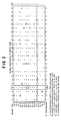
- DNA from a set of 16 Chinese hamster cell hybrids containing varying amounts of human chromosomes was obtained from Dr. Mohandas, the Department of Medical Genetics of the University of California at Los Angeles (UCLA). These 16 samples of DNA were cut with a restriction endonuclease, specifically Puv II, electrophoresed and Southern blotted on a nylon filter. The DNA restriction fragments were then hybridized with 32p labelled pHTO3.
- Figure 3 shows the results.
- the column labelled A.R. shows the results of the hybridization to the human DNA where ++ to +- indicates positive hybridization and - represents no hybridization. No discrepancies were observed for chromosome #4, thus indicating that the pHTO3 sequences were on chromosome #4.
- the serotonin levels in some severe mental retardation are even higher than those in autism, it is likely that the genetic defect causing the elevated serotonin is also more severe and may represent a deletion of the TO gene.
- the TO genes are duplicated or otherwise mutated so the amount of enzyme is increased.
- a single base change mutation within the gene may have no effect, a mild effect or a significant effect on the function of the enzyme that gene makes.
- a deletion of a TO gene will be termed TO 0, a base pair substitution mutation will be termed TO -, a normal gene will be termed TO + and a duplicated gene, or a gene with a mutation causing increased levels or increased efficiency of the tryptophan oxygenase enzyme, as TO ++.
- mutations of the human TO gene which result in decreased activity of the TO gene are likely to be involved in some cases of the autism or autism with mental retardation. These mutations would be various heterozygous or homozygous combinations of deletions or base pair mutations affecting activity or function of the human TO gene or genes.
- mutations of the human TO gene which result in increased activity, or increased inducability or increased efficiency of the TO gene are likely to be involved in Tourette syndrome and many of the wide range of behaviors associated with the TS spectrum of behaviors. These mutations would be various heterozygous or homozygous combinations of gene duplications, or mutations of the regulatory or structural sequences of the human TO gene or genes.
- Vitamin B6 is a cofactor for many of the enzymes involved in the kynurenine pathway.
Landscapes
- Chemical & Material Sciences (AREA)
- Life Sciences & Earth Sciences (AREA)
- Organic Chemistry (AREA)
- Health & Medical Sciences (AREA)
- Engineering & Computer Science (AREA)
- Genetics & Genomics (AREA)
- Wood Science & Technology (AREA)
- Zoology (AREA)
- Bioinformatics & Cheminformatics (AREA)
- General Engineering & Computer Science (AREA)
- General Health & Medical Sciences (AREA)
- Biochemistry (AREA)
- Proteomics, Peptides & Aminoacids (AREA)
- Analytical Chemistry (AREA)
- Biotechnology (AREA)
- Microbiology (AREA)
- Molecular Biology (AREA)
- Biomedical Technology (AREA)
- Pathology (AREA)
- Medicinal Chemistry (AREA)
- Physics & Mathematics (AREA)
- Biophysics (AREA)
- Immunology (AREA)
- Measuring Or Testing Involving Enzymes Or Micro-Organisms (AREA)
Applications Claiming Priority (4)
| Application Number | Priority Date | Filing Date | Title |
|---|---|---|---|
| US12557787A | 1987-11-25 | 1987-11-25 | |
| US125577 | 1987-11-25 | ||
| US27165388A | 1988-11-16 | 1988-11-16 | |
| US271653 | 1988-11-16 |
Publications (2)
| Publication Number | Publication Date |
|---|---|
| EP0318301A2 true EP0318301A2 (de) | 1989-05-31 |
| EP0318301A3 EP0318301A3 (de) | 1991-01-16 |
Family
ID=26823705
Family Applications (1)
| Application Number | Title | Priority Date | Filing Date |
|---|---|---|---|
| EP19880311157 Ceased EP0318301A3 (de) | 1987-11-25 | 1988-11-25 | Tourette Syndrom, Autismus und assoziiertes Verhalten |
Country Status (2)
| Country | Link |
|---|---|
| EP (1) | EP0318301A3 (de) |
| AU (1) | AU620574B2 (de) |
Cited By (2)
| Publication number | Priority date | Publication date | Assignee | Title |
|---|---|---|---|---|
| EP0495090A4 (en) * | 1990-08-03 | 1993-07-21 | City Of Hope | Diagnostic tests for tourette syndrome and related behaviors |
| US5698686A (en) * | 1994-10-20 | 1997-12-16 | Arch Development Corporation | Yeast telomerase compositions |
Family Cites Families (1)
| Publication number | Priority date | Publication date | Assignee | Title |
|---|---|---|---|---|
| IL71505A0 (en) * | 1983-04-14 | 1984-07-31 | Hughes Howard Med Inst | Phenylalanine hydroxylase cdna clones,their production and their use in the diagnosis of classical phenylketonuria |
-
1988
- 1988-11-25 AU AU25943/88A patent/AU620574B2/en not_active Ceased
- 1988-11-25 EP EP19880311157 patent/EP0318301A3/de not_active Ceased
Cited By (4)
| Publication number | Priority date | Publication date | Assignee | Title |
|---|---|---|---|---|
| EP0495090A4 (en) * | 1990-08-03 | 1993-07-21 | City Of Hope | Diagnostic tests for tourette syndrome and related behaviors |
| US5698686A (en) * | 1994-10-20 | 1997-12-16 | Arch Development Corporation | Yeast telomerase compositions |
| US5916752A (en) * | 1994-10-20 | 1999-06-29 | Arch Development Corporation | Telomerase screening methods |
| US6387619B1 (en) | 1994-10-20 | 2002-05-14 | Arch Development | Telomerase compositions and methods |
Also Published As
| Publication number | Publication date |
|---|---|
| AU620574B2 (en) | 1992-02-20 |
| EP0318301A3 (de) | 1991-01-16 |
| AU2594388A (en) | 1989-06-22 |
Similar Documents
| Publication | Publication Date | Title |
|---|---|---|
| Trifan et al. | A third locus (GLC1D) for adult-onset primary open-angle glaucoma maps to the 8q23 region | |
| St George-Hyslop et al. | The genetic defect causing familial Alzheimer's disease maps on chromosome 21 | |
| Schmidt et al. | Different allele distribution of a regulatory MAOA gene promoter polymorphism in antisocial and anxious-depressive alcoholics | |
| Hauser et al. | Distribution of WDR36 DNA sequence variants in patients with primary open-angle glaucoma | |
| Wissinger et al. | Cone dystrophy with supernormal rod response is strictly associated with mutations in KCNV2 | |
| Abitbol et al. | Nucleus basalis magnocellularis and hippocampus are the major sites of FMR-1 expression in the human fetal brain | |
| Sims et al. | Monoamine oxidase deficiency in males with an X chromosome deletion | |
| Burdon et al. | Association of polymorphisms in the hepatocyte growth factor gene promoter with keratoconus | |
| Ionides et al. | Clinical and genetic heterogeneity in autosomal dominant cataract | |
| Wallis et al. | Genotype-phenotype correlation between position of constitutional APC gene mutation and CHRPE expression in familial adenomatous polyposis | |
| Kohl et al. | RDS/peripherin gene mutations are frequent causes of central retinal dystrophies. | |
| Allingham et al. | Early adult-onset POAG linked to 15q11-13 using ordered subset analysis | |
| Wang et al. | AUNX1, a novel locus responsible for X linked recessive auditory and peripheral neuropathy, maps to Xq23–27.3 | |
| Colomb et al. | Association of a single nucleotide polymorphism in the TIGR/MYOCILIN gene promoter with the severity of primary open‐angle glaucoma | |
| Leroy et al. | Spectrum of mutations in USH2A in British patients with Usher syndrome type II | |
| Martin et al. | Molecular characterisation of congenital glaucoma in a consanguineous Canadian community: a step towards preventing glaucoma related blindness | |
| Riazuddin et al. | Autosomal recessive retinitis pigmentosa is associated with mutations in RP1 in three consanguineous Pakistani families | |
| Kirschhofer et al. | Autosomal-dominant, prelingual, nonprogressive sensorineural hearing loss: localization of the gene (DFNA8) to chromosome 11q by linkage in an Austrian family | |
| Bitner et al. | A homozygous frameshift mutation in BEST1 causes the classical form of Best disease in an autosomal recessive mode | |
| Parisi et al. | Hydrocephalus and intestinal aganglionosis: is L1CAM a modifier gene in Hirschsprung disease? | |
| Go et al. | Autosomal dominant rhegmatogenous retinal detachment associated with an Arg453Ter mutation in the COL2A1 gene | |
| Takeuchi et al. | A novel haplotype with the R345W mutation in the EFEMP1 gene associated with autosomal dominant drusen in a Japanese family | |
| Piri et al. | A substitution of G to C in the cone cGMP-phosphodiesterase γ subunit gene found in a distinctive form of cone dystrophy | |
| Zhang et al. | FOXC1 gene deletion is associated with eye anomalies in ring chromosome 6 | |
| Comings et al. | Human tryptophan oxygenase localized to 4q31: Possible implications for alcoholism and other behavioral disorders |
Legal Events
| Date | Code | Title | Description |
|---|---|---|---|
| PUAI | Public reference made under article 153(3) epc to a published international application that has entered the european phase |
Free format text: ORIGINAL CODE: 0009012 |
|
| AK | Designated contracting states |
Kind code of ref document: A2 Designated state(s): DE FR GB |
|
| PUAL | Search report despatched |
Free format text: ORIGINAL CODE: 0009013 |
|
| AK | Designated contracting states |
Kind code of ref document: A3 Designated state(s): DE FR GB |
|
| 17P | Request for examination filed |
Effective date: 19910625 |
|
| 17Q | First examination report despatched |
Effective date: 19921019 |
|
| STAA | Information on the status of an ep patent application or granted ep patent |
Free format text: STATUS: THE APPLICATION HAS BEEN REFUSED |
|
| 18R | Application refused |
Effective date: 19950515 |