EP0318775A2 - Gène codant pour une lipase - Google Patents
Gène codant pour une lipase Download PDFInfo
- Publication number
- EP0318775A2 EP0318775A2 EP88119211A EP88119211A EP0318775A2 EP 0318775 A2 EP0318775 A2 EP 0318775A2 EP 88119211 A EP88119211 A EP 88119211A EP 88119211 A EP88119211 A EP 88119211A EP 0318775 A2 EP0318775 A2 EP 0318775A2
- Authority
- EP
- European Patent Office
- Prior art keywords
- lipase
- escherichia coli
- dna
- pseudomonas
- recombinant dna
- Prior art date
- Legal status (The legal status is an assumption and is not a legal conclusion. Google has not performed a legal analysis and makes no representation as to the accuracy of the status listed.)
- Granted
Links
- 108090001060 Lipase Proteins 0.000 title claims abstract description 63
- 241000588724 Escherichia coli Species 0.000 claims abstract description 63
- 239000004367 Lipase Substances 0.000 claims abstract description 60
- 102000004882 Lipase Human genes 0.000 claims abstract description 60
- 235000019421 lipase Nutrition 0.000 claims abstract description 60
- 108020004414 DNA Proteins 0.000 claims abstract description 55
- 108020004511 Recombinant DNA Proteins 0.000 claims abstract description 33
- 241000894006 Bacteria Species 0.000 claims abstract description 31
- 241000589516 Pseudomonas Species 0.000 claims abstract description 28
- 238000000034 method Methods 0.000 claims abstract description 22
- 241000589538 Pseudomonas fragi Species 0.000 claims description 22
- 239000013598 vector Substances 0.000 claims description 14
- 239000002773 nucleotide Substances 0.000 claims description 7
- 125000003729 nucleotide group Chemical group 0.000 claims description 7
- 108090000623 proteins and genes Proteins 0.000 abstract description 24
- 210000000349 chromosome Anatomy 0.000 abstract description 20
- 238000010367 cloning Methods 0.000 abstract description 4
- 108091028043 Nucleic acid sequence Proteins 0.000 abstract 2
- 239000013612 plasmid Substances 0.000 description 21
- 108091008146 restriction endonucleases Proteins 0.000 description 17
- 239000000243 solution Substances 0.000 description 16
- 239000012634 fragment Substances 0.000 description 15
- LFQSCWFLJHTTHZ-UHFFFAOYSA-N Ethanol Chemical compound CCO LFQSCWFLJHTTHZ-UHFFFAOYSA-N 0.000 description 12
- UYXTWWCETRIEDR-UHFFFAOYSA-N Tributyrin Chemical compound CCCC(=O)OCC(OC(=O)CCC)COC(=O)CCC UYXTWWCETRIEDR-UHFFFAOYSA-N 0.000 description 10
- 230000014509 gene expression Effects 0.000 description 9
- 229920001184 polypeptide Polymers 0.000 description 9
- 102000004196 processed proteins & peptides Human genes 0.000 description 9
- 108090000765 processed proteins & peptides Proteins 0.000 description 9
- 230000001580 bacterial effect Effects 0.000 description 8
- 239000013600 plasmid vector Substances 0.000 description 8
- 239000000047 product Substances 0.000 description 8
- 239000000126 substance Substances 0.000 description 8
- 230000015572 biosynthetic process Effects 0.000 description 7
- 239000007853 buffer solution Substances 0.000 description 7
- FAPWRFPIFSIZLT-UHFFFAOYSA-M Sodium chloride Chemical compound [Na+].[Cl-] FAPWRFPIFSIZLT-UHFFFAOYSA-M 0.000 description 6
- 238000006243 chemical reaction Methods 0.000 description 6
- 239000003550 marker Substances 0.000 description 6
- 238000001962 electrophoresis Methods 0.000 description 5
- 239000000499 gel Substances 0.000 description 5
- QKNYBSVHEMOAJP-UHFFFAOYSA-N 2-amino-2-(hydroxymethyl)propane-1,3-diol;hydron;chloride Chemical compound Cl.OCC(N)(CO)CO QKNYBSVHEMOAJP-UHFFFAOYSA-N 0.000 description 4
- DBMJMQXJHONAFJ-UHFFFAOYSA-M Sodium laurylsulphate Chemical compound [Na+].CCCCCCCCCCCCOS([O-])(=O)=O DBMJMQXJHONAFJ-UHFFFAOYSA-M 0.000 description 4
- 239000011543 agarose gel Substances 0.000 description 4
- 150000002148 esters Chemical class 0.000 description 4
- 238000004519 manufacturing process Methods 0.000 description 4
- 239000000523 sample Substances 0.000 description 4
- 229940083575 sodium dodecyl sulfate Drugs 0.000 description 4
- 238000002415 sodium dodecyl sulfate polyacrylamide gel electrophoresis Methods 0.000 description 4
- 235000019333 sodium laurylsulphate Nutrition 0.000 description 4
- 229920001817 Agar Polymers 0.000 description 3
- PEDCQBHIVMGVHV-UHFFFAOYSA-N Glycerine Chemical compound OCC(O)CO PEDCQBHIVMGVHV-UHFFFAOYSA-N 0.000 description 3
- 239000008272 agar Substances 0.000 description 3
- AVKUERGKIZMTKX-NJBDSQKTSA-N ampicillin Chemical compound C1([C@@H](N)C(=O)N[C@H]2[C@H]3SC([C@@H](N3C2=O)C(O)=O)(C)C)=CC=CC=C1 AVKUERGKIZMTKX-NJBDSQKTSA-N 0.000 description 3
- 229960000723 ampicillin Drugs 0.000 description 3
- 238000002156 mixing Methods 0.000 description 3
- 229920002401 polyacrylamide Polymers 0.000 description 3
- 239000011780 sodium chloride Substances 0.000 description 3
- GUBGYTABKSRVRQ-WFVLMXAXSA-N DEAE-cellulose Chemical compound OC1C(O)C(O)C(CO)O[C@H]1O[C@@H]1C(CO)OC(O)C(O)C1O GUBGYTABKSRVRQ-WFVLMXAXSA-N 0.000 description 2
- 108010054576 Deoxyribonuclease EcoRI Proteins 0.000 description 2
- ZGTMUACCHSMWAC-UHFFFAOYSA-L EDTA disodium salt (anhydrous) Chemical compound [Na+].[Na+].OC(=O)CN(CC([O-])=O)CCN(CC(O)=O)CC([O-])=O ZGTMUACCHSMWAC-UHFFFAOYSA-L 0.000 description 2
- 102000004190 Enzymes Human genes 0.000 description 2
- 108090000790 Enzymes Proteins 0.000 description 2
- TWRXJAOTZQYOKJ-UHFFFAOYSA-L Magnesium chloride Chemical compound [Mg+2].[Cl-].[Cl-] TWRXJAOTZQYOKJ-UHFFFAOYSA-L 0.000 description 2
- 102000016943 Muramidase Human genes 0.000 description 2
- 108010014251 Muramidase Proteins 0.000 description 2
- 108010062010 N-Acetylmuramoyl-L-alanine Amidase Proteins 0.000 description 2
- 108700026244 Open Reading Frames Proteins 0.000 description 2
- ISWSIDIOOBJBQZ-UHFFFAOYSA-N Phenol Chemical compound OC1=CC=CC=C1 ISWSIDIOOBJBQZ-UHFFFAOYSA-N 0.000 description 2
- 239000007983 Tris buffer Substances 0.000 description 2
- 150000001413 amino acids Chemical class 0.000 description 2
- 210000004027 cell Anatomy 0.000 description 2
- NKLPQNGYXWVELD-UHFFFAOYSA-M coomassie brilliant blue Chemical compound [Na+].C1=CC(OCC)=CC=C1NC1=CC=C(C(=C2C=CC(C=C2)=[N+](CC)CC=2C=C(C=CC=2)S([O-])(=O)=O)C=2C=CC(=CC=2)N(CC)CC=2C=C(C=CC=2)S([O-])(=O)=O)C=C1 NKLPQNGYXWVELD-UHFFFAOYSA-M 0.000 description 2
- 230000000694 effects Effects 0.000 description 2
- 229940088598 enzyme Drugs 0.000 description 2
- 238000010931 ester hydrolysis Methods 0.000 description 2
- 150000002632 lipids Chemical class 0.000 description 2
- 239000004325 lysozyme Substances 0.000 description 2
- 229960000274 lysozyme Drugs 0.000 description 2
- 235000010335 lysozyme Nutrition 0.000 description 2
- 230000002101 lytic effect Effects 0.000 description 2
- 239000000463 material Substances 0.000 description 2
- 238000005259 measurement Methods 0.000 description 2
- 239000000203 mixture Substances 0.000 description 2
- 230000001376 precipitating effect Effects 0.000 description 2
- 238000012163 sequencing technique Methods 0.000 description 2
- 238000003786 synthesis reaction Methods 0.000 description 2
- LENZDBCJOHFCAS-UHFFFAOYSA-N tris Chemical compound OCC(N)(CO)CO LENZDBCJOHFCAS-UHFFFAOYSA-N 0.000 description 2
- DGVVWUTYPXICAM-UHFFFAOYSA-N β‐Mercaptoethanol Chemical compound OCCS DGVVWUTYPXICAM-UHFFFAOYSA-N 0.000 description 2
- 102000002260 Alkaline Phosphatase Human genes 0.000 description 1
- 108020004774 Alkaline Phosphatase Proteins 0.000 description 1
- 102000012410 DNA Ligases Human genes 0.000 description 1
- 108010061982 DNA Ligases Proteins 0.000 description 1
- 108090000204 Dipeptidase 1 Proteins 0.000 description 1
- 101100420773 Drosophila melanogaster sca gene Proteins 0.000 description 1
- 108010042407 Endonucleases Proteins 0.000 description 1
- 102000004533 Endonucleases Human genes 0.000 description 1
- 108010067770 Endopeptidase K Proteins 0.000 description 1
- QIVBCDIJIAJPQS-VIFPVBQESA-N L-tryptophane Chemical compound C1=CC=C2C(C[C@H](N)C(O)=O)=CNC2=C1 QIVBCDIJIAJPQS-VIFPVBQESA-N 0.000 description 1
- GUBGYTABKSRVRQ-QKKXKWKRSA-N Lactose Natural products OC[C@H]1O[C@@H](O[C@H]2[C@H](O)[C@@H](O)C(O)O[C@@H]2CO)[C@H](O)[C@@H](O)[C@H]1O GUBGYTABKSRVRQ-QKKXKWKRSA-N 0.000 description 1
- 102000003960 Ligases Human genes 0.000 description 1
- 108090000364 Ligases Proteins 0.000 description 1
- UEZVMMHDMIWARA-UHFFFAOYSA-N Metaphosphoric acid Chemical compound OP(=O)=O UEZVMMHDMIWARA-UHFFFAOYSA-N 0.000 description 1
- 101710116435 Outer membrane protein Proteins 0.000 description 1
- 108091005804 Peptidases Proteins 0.000 description 1
- 102000035195 Peptidases Human genes 0.000 description 1
- 240000004808 Saccharomyces cerevisiae Species 0.000 description 1
- VMHLLURERBWHNL-UHFFFAOYSA-M Sodium acetate Chemical compound [Na+].CC([O-])=O VMHLLURERBWHNL-UHFFFAOYSA-M 0.000 description 1
- 108091081024 Start codon Proteins 0.000 description 1
- 108020005038 Terminator Codon Proteins 0.000 description 1
- QIVBCDIJIAJPQS-UHFFFAOYSA-N Tryptophan Natural products C1=CC=C2C(CC(N)C(O)=O)=CNC2=C1 QIVBCDIJIAJPQS-UHFFFAOYSA-N 0.000 description 1
- 239000002253 acid Substances 0.000 description 1
- 238000000246 agarose gel electrophoresis Methods 0.000 description 1
- 238000004458 analytical method Methods 0.000 description 1
- 102000006635 beta-lactamase Human genes 0.000 description 1
- 238000009835 boiling Methods 0.000 description 1
- UDSAIICHUKSCKT-UHFFFAOYSA-N bromophenol blue Chemical compound C1=C(Br)C(O)=C(Br)C=C1C1(C=2C=C(Br)C(O)=C(Br)C=2)C2=CC=CC=C2S(=O)(=O)O1 UDSAIICHUKSCKT-UHFFFAOYSA-N 0.000 description 1
- 239000003054 catalyst Substances 0.000 description 1
- 239000013599 cloning vector Substances 0.000 description 1
- 150000001875 compounds Chemical class 0.000 description 1
- 239000000470 constituent Substances 0.000 description 1
- 230000007547 defect Effects 0.000 description 1
- 239000003599 detergent Substances 0.000 description 1
- 238000011161 development Methods 0.000 description 1
- 238000000502 dialysis Methods 0.000 description 1
- 235000014113 dietary fatty acids Nutrition 0.000 description 1
- 239000003866 digestant Substances 0.000 description 1
- VHJLVAABSRFDPM-QWWZWVQMSA-N dithiothreitol Chemical compound SC[C@@H](O)[C@H](O)CS VHJLVAABSRFDPM-QWWZWVQMSA-N 0.000 description 1
- 239000003814 drug Substances 0.000 description 1
- 238000004043 dyeing Methods 0.000 description 1
- ZMMJGEGLRURXTF-UHFFFAOYSA-N ethidium bromide Chemical compound [Br-].C12=CC(N)=CC=C2C2=CC=C(N)C=C2[N+](CC)=C1C1=CC=CC=C1 ZMMJGEGLRURXTF-UHFFFAOYSA-N 0.000 description 1
- 229960005542 ethidium bromide Drugs 0.000 description 1
- 238000002474 experimental method Methods 0.000 description 1
- 239000000194 fatty acid Substances 0.000 description 1
- 229930195729 fatty acid Natural products 0.000 description 1
- 150000004665 fatty acids Chemical class 0.000 description 1
- 238000013467 fragmentation Methods 0.000 description 1
- 238000006062 fragmentation reaction Methods 0.000 description 1
- 230000006872 improvement Effects 0.000 description 1
- 238000002955 isolation Methods 0.000 description 1
- 239000008101 lactose Substances 0.000 description 1
- 239000007788 liquid Substances 0.000 description 1
- 229910001629 magnesium chloride Inorganic materials 0.000 description 1
- 230000035772 mutation Effects 0.000 description 1
- 150000002989 phenols Chemical class 0.000 description 1
- 239000000843 powder Substances 0.000 description 1
- 239000002244 precipitate Substances 0.000 description 1
- 238000001556 precipitation Methods 0.000 description 1
- 238000002360 preparation method Methods 0.000 description 1
- 238000012545 processing Methods 0.000 description 1
- 239000012474 protein marker Substances 0.000 description 1
- 102000004169 proteins and genes Human genes 0.000 description 1
- 230000003362 replicative effect Effects 0.000 description 1
- 238000011160 research Methods 0.000 description 1
- 239000012723 sample buffer Substances 0.000 description 1
- 238000012216 screening Methods 0.000 description 1
- 239000001632 sodium acetate Substances 0.000 description 1
- 235000017281 sodium acetate Nutrition 0.000 description 1
- 239000000725 suspension Substances 0.000 description 1
- 230000009466 transformation Effects 0.000 description 1
- 238000011282 treatment Methods 0.000 description 1
- 238000005406 washing Methods 0.000 description 1
Images

Classifications
-
- C—CHEMISTRY; METALLURGY
- C12—BIOCHEMISTRY; BEER; SPIRITS; WINE; VINEGAR; MICROBIOLOGY; ENZYMOLOGY; MUTATION OR GENETIC ENGINEERING
- C12N—MICROORGANISMS OR ENZYMES; COMPOSITIONS THEREOF; PROPAGATING, PRESERVING, OR MAINTAINING MICROORGANISMS; MUTATION OR GENETIC ENGINEERING; CULTURE MEDIA
- C12N9/00—Enzymes; Proenzymes; Compositions thereof; Processes for preparing, activating, inhibiting, separating or purifying enzymes
- C12N9/14—Hydrolases (3)
- C12N9/16—Hydrolases (3) acting on ester bonds (3.1)
- C12N9/18—Carboxylic ester hydrolases (3.1.1)
- C12N9/20—Triglyceride splitting, e.g. by means of lipase
Definitions
- This invention relates to a DNA arrangement coding a lipase originated from Pseudomonas genus bacterium, a recombinant DNA containing the DNA arrangement and Escherichia coli containing the same and further a process for producing the lipase.
- Lipases have been used as a lipid-hydrolyzing enzyme, for oils- and fats-processing, medicine for clinical diagonosis, detergents, digestants, etc. Further, in recent years, they are important enzymes which catalyze ester hydrolysis, ester synthesis or ester conversion in the production of chemical products, particularly optically active compounds.
- Pseudomonas genus bacterium has been known to produce lipases useful as a catalyst for ester hydrolysis, ester synthesis or ester conversion (Japanese patent application laid-open No. Sho 62-166,898/1987).
- the specific feature of the lipases produced by the Pseudomonas genus bacterium is interesting in the aspect of commercial utilization, but in order to achieve the object, a more substrate-specificity (including steric specificity) has been desired.
- lipases are produced by expression of usually one structural gene contained in the chromosome DNA of the production bacteria, it has been difficult to improve the production of lipases with a leap.
- the present inventors have made extensive research in order to improve the above-mentioned conventional processes for modifying lipases, which processes, however, have been inferior in the efficiency.
- the object of the present invention is to clone the structural gene of a lipase present in the chromosome of Pseudomonas genus bacterium to thereby determine a DNA arrangement coding the lipase, and obtain a recombinant DNA containing such a DNA arrangement and further by using Escherichia coli containing such a recombinant DNA, obtain a lipase originated from Pseudomomas genus bacterium or its variant retaining substantially the same specific features as those of the above-mentioned lipase, which lipase and variant are utilizable for commerical use applications.
- the present inventors have succeeded in cloning of the structural gene of a lipase present in the chromosome of Pseudomonas fragi IFO 12049 strain, determination of a DNA arrangement coding the lipase and production of the lipase by the medium of Escherichia coli, and have achieved the present invention.
- the present invention has the following constitutions (1) to (8):
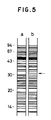
- the numeral figures on the left side each show the molecular weight ( ⁇ 1,000) of protein marker simultaneously subjected to electrophoresis.
- the recombinant DNA of the present invention is obtained by fragmenting the chromosome DNA of Pseudomonas genus bacterium producing a lipase, incorporating the resulting fragment into a multicopy type plasmid vector replicating the fragment inside Escherichia coli and selecting, from among the resulting recombinant DNAs, that containing a lipase structural gene.
- the chromosome DNA of the Pseudomonas genus bacterium is prepared by subjecting the bacterial body Pseudomonas genus bacterium treated with lysozyme to lytic reaction with a proteolytic enzyme in the presence of sodium dodecylsulfate (SDS), followed by extracting the resulting lytic substance with phenol to carry out protein-removal and precipitating the DNA with ethanol.
- SDS sodium dodecylsulfate
- the fragmentation of the chromosome DNA is carried out with an endonuclease having no base arrangement specificity.
- pUC9 is used as DNA-introducing vector for Escherichia coli, but in the present invention, any kind may be used as far as it can be replicated inside Escherichia coli, and has a suitable selective marker and the character expression of a foreign gene can be expected therefrom.
- pUC8, pUC18, pUC19, etc. may be used.
- the chromosome DNA fragment of the Pseudomonas genus bacterium decomposed with a restriction enzyme is separated according to electrophoresis in agarose gel and visualized by dyeing with ethidium bromide under ultraviolet rays and the resulting DNA fragment having a desired size is adsorbed onto a DEAE cellulose paper.
- the adsorbed substance is dissolved away with 1M NaCl solution and recovered by precipitation with ethanol.
- chromosome DNA of the Pseudomonas genus bacterium is achieved by cleaving the chromosome DNA and the plasmid vector by means of a restriction enzyme and link both the resulting fragments together.
- the cleaved vector is dephosphorylated by a bacterial alkaline phosphatase to prevent self-linking.
- the chromosome DNA fragment and the plasmid vector can be linked with a ligase.
- Escherichia coli is transformed with the combinant DNA obtained through the above-mentioned steps and Escherichia coli having a lipase productivity is selected based on the marker of the plasmid vector and a lipase productivity.
- Escherichia coli as those which have an adequate marker afforded by inserting a specified cloning vector such as ampicillin-resistant bacterium selected, JM83 strain (M. Messing, R. Crea and P.H. Seeburg, Nucl. Acid. Res., 2309 (1981) may be used. Further, it is also possible to use Escherichia colis such as HB1O1, LE392, etc.
- the transformation is carried out according to well-known competent cell method, and the selection by means of the plasmid marker is carried out by adding ambicillin (about 50 ⁇ g/ml) to a medium.
- the choice through the productivity of the lipase may be carried out by adding tributyrin (about 1%) to the medium. Namely, such a phenomenon is utilized that when the lipase is formed on the medium, a lipid is decomposed into fatty acids and the emulsified state of the lipid changes to form a circular clear zone on the periphery of the resulting colony (W. Kugiyama, Y. Otani, Y. Hashimoto and Y. Takagi, Biochem. Biophys. Res. Commun., 141 , 185 (1986)).
- the recombinant DNA containing the lipase structural gene obtained through the above-mentioned steps is decomposed by various restriction enzymes; a map of the restriction enzymes is prepared based on measurement according to electophoresis method using agarose gel; and subcloning of the present recombinant DNA is carried out.
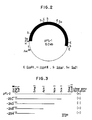
- Fig. 2 shows an example of the restriction enzyme map of plasmid pFL-1 containing the lipase structural gene of Pseudomonas fragi IFO 12049 strain.
- Fig. 3 shows an example of the presence or absence of formation of clear zone in a tributyrin agar medium, of Escherichia colis having the respective plasmids pFL-2, pFL-2SC, pFL-2ND, pFL-2AB and pFL-2SM, having DNA fragments broken by means of various restriction enzymes, Eco RI, Sca I, Nde I, Apa I and Sma I of plasmid pFL-1, inserted therein.
- Determination of the DNA region wherein the DNA arrangement coding the lipase originated from Pseudomonas genus bacterium is present can be made according to a known method such as Sanger et al's dideoxy method (Sanger. F. et al, Proc. Natl. Acad. Sci., USA 74 , 5463, 1977).
- the DNA arrangement of the lipase structural gene of Pseudomonas IFO 12049 strain contained in the plasmid pFL-2 has been judged from a fact that the above arrangement includes an arrangement recognized by the restriction enzyme Nde I but does not include an arrangement recognized by Sca I and it is of an open reading frame wherein the molecular weight is ca. 33,000.
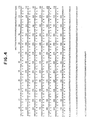
- Fig. 4 shows a chart of a chromosome DNA arrangement (partly containing the linker of the plasmid pUC9) including a region wherein the lipase of the Pseudomonas fragi IFO 12049 strain of the plasmid pFL-2 is coded and an amino acid arrangement corresponding to the DNA arrangement of the lipase gene.
- Escherichia coli When Escherichia coli is transformed with a recombinant DNA containing a lipase structural gene originated from Pseudomonas genus bacterium, which recombinant DNA has been reduced in the molecular weight at the above-mentioned subcloning step, then it is possible to again obtain Escherichia coli capable of producing the lipase.
- the constituent of the Escherichia coli capable of producing the lipase is separated up to a polypeptide level according to electrophoresis in SDS-polyacrylamide gel.
- the thus separated polypeptide is dyed in Coomassie Brilliant Blue and visualized.
- FIG. 5 shows a view of polypeptides separated in SDS-polyacrylamide gel and visualized, with Escherichia coli JM83 (pUC9) strain ("a” in Fig. 5) and Escherichia coli JM83 (pFL-2) strain ("b” in Fig. 5).
- lactose (lac) operon lactose (lac) operon
- tryptophan (trp) operon tryptophan (trp) operon
- lpp outer membrane protein gene promotor
- ⁇ -lactamase promotor ⁇ -lactamase promotor
- reproduction conditions may be determined depending on the specific features of Escherichia coli strains so that the lipase can be reproduced most efficiently.
- Pseudomonas fragi IFO 12049 strain was cultivated in L-medium (containing Bactotryptone (1%), a yeast powder (0.5%) and NaCl (0.5%) and adjusted to pH 7.2) (200 ml) at 30°C overnight, followed by collecting the resulting bacterial bodies, once washing the bacterial bodies with 10 mM-Tris-HCl buffer solution (pH 8.0) and 30-mM NaCl solution (10 ml) and suspending them in 10 mM-Tris-HCl buffer solution (pH 8.0) and 1mM-EDTA 2Na solution (12 ml), based on 100 ml of the culture solution.
- Tris-HCl buffer solution Tris 2Na, EDTA-HCl buffer solution (pH 8.0) and lysozyme (made by Seikagaku Kogyo Company) so that their final concentrations could be 50 mM, 50 mM, 50 mM and 1 mg/ml, respectively, followed by allowing the resulting solution to stand at room temperature (25°C) for one hour.
- Proteinase K (trademark of product made by Merck Company) in the presence of 0.5% SDS so as to give a concentration of 100 ⁇ g/ml, followed by slowly shaking the mixture at 50°C for 3 hours to dissolve the bacterial bodies.
- the resulting sample was twice extracted with an equal quantity of Tris-saturated phenol, followed by precipitating the extract with ethanol, dissolving the precipitates in 10 mM Tris-HCl buffer solution (pH 8.0) -1mM-EDTA solution (hereinafter abbreviated to TE solution), and subjecting the solution to dialysis at 4°C for 2 days to prepare a chromosome DNA.
- Pseudomonas fragi IFO 12049 strain chromosome DNA (about 7 ⁇ g) prepared in Example 1 was partially digested with 1U Sau 3AI at 37°C according to reactions with lapse of times of 5, 15, 25, 35 and 50 minutes, followed by stopping the reactions with EDTA 2Na solution so as to give a final concentration of 20 mM and mixing the respective reaction solutions.
- the resulting sample obtained by the mixing was subjected to electrophoresis with 40 mA for 16 hours in 0.7% agarose gel in 40 mM Tris, 2 mM sodium acetate and 1 mM EDTA 2Na, at pH 7-9.
- DNA fragments of 2-6 Kb in the agarose gel were adsorbed onto Whatman DE81 DEAE cellulose paper (tradename of product made by Whatman Company), followed by dissolving out the adsorbed substance with 300 ⁇ l 1M-NaCl-TE solution, twice extracting the resulting dissolved-out substance with an equal quantity of 300 ⁇ l 1M-NaCl-TE solution and adding ethanol in 2.5 times the quantity of the extract to precipitate and recover it.
- JM 83 strain of ⁇ 2 ⁇ 109 bacterial bodies was transformed according to competent cell method, followed by cultivating the resulting substance for 16 hours on L-agar medium containing Ampicillin (trademark of product made by Meiji Seika Company) (50 ⁇ g/ml), tributyrin (1%) and X-gel (0.0002%).
- Plasmid pFL-1 was digested with various restriction enzymes, followed by preparing a restriction enzyme map based on measurement according to agarose gel electrophoresis.
- the restriction enzyme map of pFL-1 is shown in Fig. 2.
- Fig. 3 shows the presence or absence of formation of clear zone of Escherichia colis having plasmids i.e. pFL-2, pFL-2SC, pFl-2ND, pFL-2AB and pFL-2SM, having DNA fragments obtained by breaking plasmid pFL-1 with various restriction enzymes i.e. Eco RI, Sca I, Nde I, Apa I or Sma I, inserted into the respective plasmids.
- various restriction enzymes i.e. Eco RI, Sca I, Nde I, Apa I or Sma I
- Escherichia colis JM 83 (pUC9) strain and JM 83 (pFL-2) strain were cultivated in a shaking culture machine at 37° for 16 hours, in a L liquid medium containing 50 ⁇ g/ml of Ampicillin (trademark of product made by Meiji Seika Company).
- the resulting bacterial bodies were collected, followed by again suspending the bodies in 0.1 M phosphoric acid buffer solution (pH 0.7), mixing the bacterial bodies corresponding to the culture solution (30 ⁇ l) with an equal quantity of 2X sample buffer solution (10% glycerol, 5% 2-mercaptoethanol, 2.3% SDS and 0.0625 M Tris-HCl (pH 6.8), boiling the mixture for 5 minutes and analyzing with polypeptide according to 15% SDS-polyacrylamide gel electrophoresis.
- 2X sample buffer solution 10% glycerol, 5% 2-mercaptoethanol, 2.3% SDS and 0.0625 M Tris-HCl (pH 6.8)
- the SDS-polyacrylamide gel electrophoresis was carried out according to Laemmli et al's method (Laemmli, U.K. Nature 227 680 (1970)), and the electrophoresis was carried out with 20 mA till Bromophenol Blue reached the lower end of the gel.
- Fig. 5 shows polypeptides relative to Escherichia colis JM 83 (pUC9) strain (lane a) and JM 83 (pFl-2) strain (lane b) dyed by Coomassie Brilliant Blue solution in 15% SDS-polyacrylamide gel.
- Expression polypeptide shown by an arrow mark ( ⁇ )) in Escherichia coli JM 83 strain of a lipase structural gene originated from Pseudomonas fragi IFO 12049 strain contained in plasmid pFL-2 was confirmed.
Landscapes
- Life Sciences & Earth Sciences (AREA)
- Chemical & Material Sciences (AREA)
- Health & Medical Sciences (AREA)
- Genetics & Genomics (AREA)
- Organic Chemistry (AREA)
- Engineering & Computer Science (AREA)
- Bioinformatics & Cheminformatics (AREA)
- Zoology (AREA)
- Wood Science & Technology (AREA)
- Molecular Biology (AREA)
- Microbiology (AREA)
- Biotechnology (AREA)
- Biomedical Technology (AREA)
- Biochemistry (AREA)
- General Engineering & Computer Science (AREA)
- General Health & Medical Sciences (AREA)
- Medicinal Chemistry (AREA)
- Enzymes And Modification Thereof (AREA)
- Micro-Organisms Or Cultivation Processes Thereof (AREA)
Applications Claiming Priority (6)
| Application Number | Priority Date | Filing Date | Title |
|---|---|---|---|
| JP306638/87 | 1987-12-03 | ||
| JP30663887A JPH01148188A (ja) | 1987-12-03 | 1987-12-03 | リパーゼ構造遺伝子を含む組換え体dna,それを含む大腸菌、及びリパーゼの製造法 |
| JP123672/88 | 1988-05-20 | ||
| JP12367288A JPH01291789A (ja) | 1988-05-20 | 1988-05-20 | リパーゼの製造法 |
| JP63187684A JPH0720430B2 (ja) | 1988-07-27 | 1988-07-27 | リパーゼ遺伝子 |
| JP187684/88 | 1988-07-27 |
Publications (3)
| Publication Number | Publication Date |
|---|---|
| EP0318775A2 true EP0318775A2 (fr) | 1989-06-07 |
| EP0318775A3 EP0318775A3 (en) | 1990-05-30 |
| EP0318775B1 EP0318775B1 (fr) | 1994-02-02 |
Family
ID=27314772
Family Applications (1)
| Application Number | Title | Priority Date | Filing Date |
|---|---|---|---|
| EP19880119211 Expired - Lifetime EP0318775B1 (fr) | 1987-12-03 | 1988-11-18 | Gène codant pour une lipase |
Country Status (2)
| Country | Link |
|---|---|
| EP (1) | EP0318775B1 (fr) |
| DE (1) | DE3887656T2 (fr) |
Cited By (15)
| Publication number | Priority date | Publication date | Assignee | Title |
|---|---|---|---|---|
| US4933287A (en) * | 1985-08-09 | 1990-06-12 | Gist-Brocades N.V. | Novel lipolytic enzymes and their use in detergent compositions |
| WO1991000908A1 (fr) * | 1989-07-07 | 1991-01-24 | Novo Nordisk A/S | Adn encodant une lipase et un modulateur de lipase |
| EP0451452A1 (fr) * | 1990-03-07 | 1991-10-16 | Chisso Corporation | Plasmide recombinante pour l'expression de lipase et procédé de production de lipase |
| EP0464922A1 (fr) * | 1990-07-06 | 1992-01-08 | Unilever N.V. | Préparation de lipase active de pseudomonas glumae à partir d'hôtes homologues ou hétérologues |
| WO1993000924A1 (fr) * | 1991-07-01 | 1993-01-21 | Basf Aktiengesellschaft | Utilisation de lipases pour la fabrication de medicaments |
| US5227300A (en) * | 1989-03-16 | 1993-07-13 | Olin Corporation | Identification, characterization and method of production of a novel microbial lipase |
| EP0576899A1 (fr) * | 1992-06-17 | 1994-01-05 | Chisso Corporation | Gène codant pour une protéine ayant une activité lipasique et procédé de production |
| AT399886B (de) * | 1992-07-31 | 1995-08-25 | Helmut Dipl Ing Dr Schwab | Esterase aus pseudomonas marginata |
| EP0657535A3 (fr) * | 1993-11-19 | 1996-07-31 | Chisso Corp | Gène codant pour une lipase de pseudomonas. |
| US5641671A (en) * | 1990-07-06 | 1997-06-24 | Unilever Patent Holdings B.V. | Production of active Pseudomonas glumae lipase in homologous or heterologous hosts |
| US6004776A (en) * | 1989-07-07 | 1999-12-21 | Unilever Patent Holdings, B.V. | Process for preparing a protein by a fungus transformed by multicopy integration of an expression vector |
| US6020180A (en) * | 1992-07-06 | 2000-02-01 | Novo Nordisk A/S | C. antarctica lipase and lipase variants |
| US6090574A (en) * | 1989-07-07 | 2000-07-18 | Unilever Patent Holdings, B.V. | Process for preparing a protein by a fungus transformed by multicopy integration of an expression vector |
| EP0880590A4 (fr) * | 1996-02-16 | 2000-11-08 | Diversa Corp | Esterases |
| US7288400B2 (en) | 1996-02-16 | 2007-10-30 | Verenium Corporation | Nucleic acids encoding esterases and methods of making and using them |
-
1988
- 1988-11-18 EP EP19880119211 patent/EP0318775B1/fr not_active Expired - Lifetime
- 1988-11-18 DE DE19883887656 patent/DE3887656T2/de not_active Expired - Fee Related
Non-Patent Citations (3)
| Title |
|---|
| AGRICULTURAL AND BIOLOGICAL CHEMISTRY, vol. 51, no. 1, January 1987, pages 181-186, Tokyo, JP; T. NISHIO et al.: "Purification and some properties of lipase produced by Pseudomonas fragi 22.39 B" * |
| BIOCHEMICAL AND BIOPHYSICAL RESEARCH COMMUNICATIONS, vol. 141, no. 1, 26th November 1986, pages 185-190, Academic Press, Inc., Duluth, MN, US; W. KUGIMIYA et al.: "Molecular cloning and nucleotide sequence of the lipase gene from Pseudomonas fragi" * |
| FEBS LETTERS, vol. 242, no. 1, 19th December 1988, pages 36-40, Elsevier, Amsterdam, NL; S. AOYAMA et al.: "Cloning, sequencing and expression of the lipase gene from Pseudomonas fragi IFO-12049 in E. coli" * |
Cited By (18)
| Publication number | Priority date | Publication date | Assignee | Title |
|---|---|---|---|---|
| US4933287A (en) * | 1985-08-09 | 1990-06-12 | Gist-Brocades N.V. | Novel lipolytic enzymes and their use in detergent compositions |
| US5227300A (en) * | 1989-03-16 | 1993-07-13 | Olin Corporation | Identification, characterization and method of production of a novel microbial lipase |
| US6004776A (en) * | 1989-07-07 | 1999-12-21 | Unilever Patent Holdings, B.V. | Process for preparing a protein by a fungus transformed by multicopy integration of an expression vector |
| WO1991000908A1 (fr) * | 1989-07-07 | 1991-01-24 | Novo Nordisk A/S | Adn encodant une lipase et un modulateur de lipase |
| US6090574A (en) * | 1989-07-07 | 2000-07-18 | Unilever Patent Holdings, B.V. | Process for preparing a protein by a fungus transformed by multicopy integration of an expression vector |
| EP0451452A1 (fr) * | 1990-03-07 | 1991-10-16 | Chisso Corporation | Plasmide recombinante pour l'expression de lipase et procédé de production de lipase |
| EP0464922A1 (fr) * | 1990-07-06 | 1992-01-08 | Unilever N.V. | Préparation de lipase active de pseudomonas glumae à partir d'hôtes homologues ou hétérologues |
| US5641671A (en) * | 1990-07-06 | 1997-06-24 | Unilever Patent Holdings B.V. | Production of active Pseudomonas glumae lipase in homologous or heterologous hosts |
| US5804409A (en) * | 1990-07-06 | 1998-09-08 | Unilever Patent Holdings B.V. | Production of active Pseudomonas glumae lipase in homologous or heterologous hosts |
| WO1993000924A1 (fr) * | 1991-07-01 | 1993-01-21 | Basf Aktiengesellschaft | Utilisation de lipases pour la fabrication de medicaments |
| EP0576899A1 (fr) * | 1992-06-17 | 1994-01-05 | Chisso Corporation | Gène codant pour une protéine ayant une activité lipasique et procédé de production |
| US6020180A (en) * | 1992-07-06 | 2000-02-01 | Novo Nordisk A/S | C. antarctica lipase and lipase variants |
| US6074863A (en) * | 1992-07-06 | 2000-06-13 | Novo Nordisk A/S | C. antarctica lipase variants |
| AT399886B (de) * | 1992-07-31 | 1995-08-25 | Helmut Dipl Ing Dr Schwab | Esterase aus pseudomonas marginata |
| EP0657535A3 (fr) * | 1993-11-19 | 1996-07-31 | Chisso Corp | Gène codant pour une lipase de pseudomonas. |
| EP0880590A4 (fr) * | 1996-02-16 | 2000-11-08 | Diversa Corp | Esterases |
| EP1550721A3 (fr) * | 1996-02-16 | 2007-04-18 | Diversa Corporation | Esterases |
| US7288400B2 (en) | 1996-02-16 | 2007-10-30 | Verenium Corporation | Nucleic acids encoding esterases and methods of making and using them |
Also Published As
| Publication number | Publication date |
|---|---|
| DE3887656T2 (de) | 1994-06-16 |
| EP0318775B1 (fr) | 1994-02-02 |
| DE3887656D1 (de) | 1994-03-17 |
| EP0318775A3 (en) | 1990-05-30 |
Similar Documents
| Publication | Publication Date | Title |
|---|---|---|
| EP0318775B1 (fr) | Gène codant pour une lipase | |
| US5290694A (en) | Recombinant DNA, bacterium of the genus Pseudomonas containing it, and process for preparing lipase by using it | |
| US5389536A (en) | Lipase from Pseudomonas mendocina having cutinase activity | |
| JP4199422B2 (ja) | ポリペプチド | |
| JP2530181B2 (ja) | アルカリセルラ―ゼ遺伝子を含むdna断片並びに該dna断片を組み込んだ組換えプラスミド及び組換え微生物 | |
| Hirata et al. | Molecular basis of isozyme formation of beta-galactosidases in Bacillus stearothermophilus: isolation of two beta-galactosidase genes, bgaA and bgaB | |
| US5908772A (en) | Gene encoding lacto-N-biosidase | |
| JP3086115B2 (ja) | 超耐熱性β−ガラクトシダーゼ遺伝子 | |
| EP0268452B1 (fr) | Hydrolase et son procédé de préparation | |
| US5026645A (en) | RNA polymerase gene, microorganism having said gene and the production of RNA polymerase by the use of said microorganism | |
| EP0451452B1 (fr) | Plasmide recombinante pour l'expression de lipase et procédé de production de lipase | |
| US5238821A (en) | Endo F-free PNGase | |
| US6218167B1 (en) | Stable biocatalysts for ester hydrolysis | |
| US5049501A (en) | Production method for PvuI restriction endonuclease | |
| EP0506262B1 (fr) | Préparation de L-fucose déhydrogénase | |
| CA2242864A1 (fr) | Biocatalyseurs stables pour l'hydrolyse d'esters | |
| JPH01148188A (ja) | リパーゼ構造遺伝子を含む組換え体dna,それを含む大腸菌、及びリパーゼの製造法 | |
| EP0576899B1 (fr) | Gène codant pour une protéine ayant une activité lipasique et procédé de production | |
| KR100330359B1 (ko) | 슈도모나스 이어루지노사 유래의 신규 에스터라제, 그유전자 및 이를 이용한 광학활성 카르복실산의 제조방법 | |
| US5585255A (en) | Bile acid sulfate sulfatase gene, plasmid containing said gene and method of producing bile acid sulfate sulfatase | |
| JPH0720430B2 (ja) | リパーゼ遺伝子 | |
| JP2777947B2 (ja) | Nsp 7524V制限・修飾系酵素遺伝子及び製造方法 | |
| KR0180570B1 (ko) | 신규한 플라스미드 pKLE와 이를 이용한 리파제의 대량생산방법 | |
| US6218163B1 (en) | Stable biocatalysts for ester hydrolysis | |
| JPH02190188A (ja) | リパーゼをコードするdna配列,該dna配列を有するプラスミド,該プラスミドを有する形質転換体および該形質転換体を用いてリパーゼを製造する方法 |
Legal Events
| Date | Code | Title | Description |
|---|---|---|---|
| PUAI | Public reference made under article 153(3) epc to a published international application that has entered the european phase |
Free format text: ORIGINAL CODE: 0009012 |
|
| AK | Designated contracting states |
Kind code of ref document: A2 Designated state(s): BE CH DE FR GB LI |
|
| PUAL | Search report despatched |
Free format text: ORIGINAL CODE: 0009013 |
|
| AK | Designated contracting states |
Kind code of ref document: A3 Designated state(s): BE CH DE FR GB LI |
|
| 17P | Request for examination filed |
Effective date: 19900712 |
|
| 17Q | First examination report despatched |
Effective date: 19920424 |
|
| GRAA | (expected) grant |
Free format text: ORIGINAL CODE: 0009210 |
|
| AK | Designated contracting states |
Kind code of ref document: B1 Designated state(s): BE CH DE FR GB LI |
|
| REF | Corresponds to: |
Ref document number: 3887656 Country of ref document: DE Date of ref document: 19940317 |
|
| ET | Fr: translation filed | ||
| PLBE | No opposition filed within time limit |
Free format text: ORIGINAL CODE: 0009261 |
|
| STAA | Information on the status of an ep patent application or granted ep patent |
Free format text: STATUS: NO OPPOSITION FILED WITHIN TIME LIMIT |
|
| 26N | No opposition filed | ||
| PGFP | Annual fee paid to national office [announced via postgrant information from national office to epo] |
Ref country code: BE Payment date: 19961025 Year of fee payment: 9 |
|
| PGFP | Annual fee paid to national office [announced via postgrant information from national office to epo] |
Ref country code: GB Payment date: 19971110 Year of fee payment: 10 |
|
| PGFP | Annual fee paid to national office [announced via postgrant information from national office to epo] |
Ref country code: FR Payment date: 19971125 Year of fee payment: 10 |
|
| PG25 | Lapsed in a contracting state [announced via postgrant information from national office to epo] |
Ref country code: BE Free format text: LAPSE BECAUSE OF NON-PAYMENT OF DUE FEES Effective date: 19971130 |
|
| BERE | Be: lapsed |
Owner name: CHISSO CORP. Effective date: 19971130 |
|
| PG25 | Lapsed in a contracting state [announced via postgrant information from national office to epo] |
Ref country code: GB Free format text: LAPSE BECAUSE OF NON-PAYMENT OF DUE FEES Effective date: 19981118 |
|
| GBPC | Gb: european patent ceased through non-payment of renewal fee |
Effective date: 19981118 |
|
| PG25 | Lapsed in a contracting state [announced via postgrant information from national office to epo] |
Ref country code: FR Free format text: LAPSE BECAUSE OF NON-PAYMENT OF DUE FEES Effective date: 19990730 |
|
| REG | Reference to a national code |
Ref country code: FR Ref legal event code: ST |
|
| PGFP | Annual fee paid to national office [announced via postgrant information from national office to epo] |
Ref country code: DE Payment date: 19991119 Year of fee payment: 12 |
|
| PGFP | Annual fee paid to national office [announced via postgrant information from national office to epo] |
Ref country code: CH Payment date: 19991129 Year of fee payment: 12 |
|
| PG25 | Lapsed in a contracting state [announced via postgrant information from national office to epo] |
Ref country code: LI Free format text: LAPSE BECAUSE OF NON-PAYMENT OF DUE FEES Effective date: 20001130 Ref country code: CH Free format text: LAPSE BECAUSE OF NON-PAYMENT OF DUE FEES Effective date: 20001130 |
|
| REG | Reference to a national code |
Ref country code: CH Ref legal event code: PL |
|
| PG25 | Lapsed in a contracting state [announced via postgrant information from national office to epo] |
Ref country code: DE Free format text: LAPSE BECAUSE OF NON-PAYMENT OF DUE FEES Effective date: 20010801 |