EP0320539B1 - Séparation des isomères de nitrobenzaldéhyde par adsorption - Google Patents
Séparation des isomères de nitrobenzaldéhyde par adsorption Download PDFInfo
- Publication number
- EP0320539B1 EP0320539B1 EP19870310950 EP87310950A EP0320539B1 EP 0320539 B1 EP0320539 B1 EP 0320539B1 EP 19870310950 EP19870310950 EP 19870310950 EP 87310950 A EP87310950 A EP 87310950A EP 0320539 B1 EP0320539 B1 EP 0320539B1
- Authority
- EP
- European Patent Office
- Prior art keywords
- adsorbent
- nitrobenzaldehyde
- zeolite
- desorbent
- isomers
- Prior art date
- Legal status (The legal status is an assumption and is not a legal conclusion. Google has not performed a legal analysis and makes no representation as to the accuracy of the status listed.)
- Expired - Lifetime
Links
- CMWKITSNTDAEDT-UHFFFAOYSA-N 2-nitrobenzaldehyde Chemical class [O-][N+](=O)C1=CC=CC=C1C=O CMWKITSNTDAEDT-UHFFFAOYSA-N 0.000 title claims description 32
- 238000000926 separation method Methods 0.000 title description 28
- 230000000274 adsorptive effect Effects 0.000 title description 11
- 239000003463 adsorbent Substances 0.000 claims description 92
- 239000000463 material Substances 0.000 claims description 55
- 239000000203 mixture Substances 0.000 claims description 50
- 238000000034 method Methods 0.000 claims description 47
- 239000010457 zeolite Substances 0.000 claims description 42
- 229910021536 Zeolite Inorganic materials 0.000 claims description 35
- HNPSIPDUKPIQMN-UHFFFAOYSA-N dioxosilane;oxo(oxoalumanyloxy)alumane Chemical compound O=[Si]=O.O=[Al]O[Al]=O HNPSIPDUKPIQMN-UHFFFAOYSA-N 0.000 claims description 31
- XEKOWRVHYACXOJ-UHFFFAOYSA-N Ethyl acetate Chemical compound CCOC(C)=O XEKOWRVHYACXOJ-UHFFFAOYSA-N 0.000 claims description 18
- 150000001768 cations Chemical class 0.000 claims description 17
- WEVYAHXRMPXWCK-UHFFFAOYSA-N Acetonitrile Chemical compound CC#N WEVYAHXRMPXWCK-UHFFFAOYSA-N 0.000 claims description 15
- 238000001179 sorption measurement Methods 0.000 claims description 14
- -1 lithium cations Chemical class 0.000 claims description 11
- ZETIVVHRRQLWFW-UHFFFAOYSA-N 3-nitrobenzaldehyde Chemical group [O-][N+](=O)C1=CC=CC(C=O)=C1 ZETIVVHRRQLWFW-UHFFFAOYSA-N 0.000 claims description 10
- 238000003795 desorption Methods 0.000 claims description 10
- TZIHFWKZFHZASV-UHFFFAOYSA-N methyl formate Chemical compound COC=O TZIHFWKZFHZASV-UHFFFAOYSA-N 0.000 claims description 10
- DGAQECJNVWCQMB-PUAWFVPOSA-M Ilexoside XXIX Chemical compound C[C@@H]1CC[C@@]2(CC[C@@]3(C(=CC[C@H]4[C@]3(CC[C@@H]5[C@@]4(CC[C@@H](C5(C)C)OS(=O)(=O)[O-])C)C)[C@@H]2[C@]1(C)O)C)C(=O)O[C@H]6[C@@H]([C@H]([C@@H]([C@H](O6)CO)O)O)O.[Na+] DGAQECJNVWCQMB-PUAWFVPOSA-M 0.000 claims description 8
- XBDQKXXYIPTUBI-UHFFFAOYSA-M Propionate Chemical group CCC([O-])=O XBDQKXXYIPTUBI-UHFFFAOYSA-M 0.000 claims description 8
- 229910052708 sodium Inorganic materials 0.000 claims description 8
- 239000011734 sodium Substances 0.000 claims description 8
- KXKVLQRXCPHEJC-UHFFFAOYSA-N acetic acid trimethyl ester Natural products COC(C)=O KXKVLQRXCPHEJC-UHFFFAOYSA-N 0.000 claims description 7
- 125000002091 cationic group Chemical group 0.000 claims description 7
- ILRRQNADMUWWFW-UHFFFAOYSA-K aluminium phosphate Chemical compound O1[Al]2OP1(=O)O2 ILRRQNADMUWWFW-UHFFFAOYSA-K 0.000 claims description 6
- 229940001007 aluminium phosphate Drugs 0.000 claims description 6
- 229910000147 aluminium phosphate Inorganic materials 0.000 claims description 6
- HUMNYLRZRPPJDN-UHFFFAOYSA-N benzaldehyde Chemical compound O=CC1=CC=CC=C1 HUMNYLRZRPPJDN-UHFFFAOYSA-N 0.000 claims description 6
- 229910052744 lithium Inorganic materials 0.000 claims description 6
- WHXSMMKQMYFTQS-UHFFFAOYSA-N Lithium Chemical compound [Li] WHXSMMKQMYFTQS-UHFFFAOYSA-N 0.000 claims description 3
- QNGNSVIICDLXHT-UHFFFAOYSA-N para-ethylbenzaldehyde Natural products CCC1=CC=C(C=O)C=C1 QNGNSVIICDLXHT-UHFFFAOYSA-N 0.000 claims description 3
- FYYHWMGAXLPEAU-UHFFFAOYSA-N Magnesium Chemical compound [Mg] FYYHWMGAXLPEAU-UHFFFAOYSA-N 0.000 claims description 2
- ZLMJMSJWJFRBEC-UHFFFAOYSA-N Potassium Chemical compound [K] ZLMJMSJWJFRBEC-UHFFFAOYSA-N 0.000 claims description 2
- 229910052791 calcium Inorganic materials 0.000 claims description 2
- 239000011575 calcium Substances 0.000 claims description 2
- 229910052749 magnesium Inorganic materials 0.000 claims description 2
- 239000011777 magnesium Substances 0.000 claims description 2
- 229910052700 potassium Inorganic materials 0.000 claims description 2
- 239000011591 potassium Substances 0.000 claims description 2
- 238000012360 testing method Methods 0.000 description 19
- VYPSYNLAJGMNEJ-UHFFFAOYSA-N Silicium dioxide Chemical compound O=[Si]=O VYPSYNLAJGMNEJ-UHFFFAOYSA-N 0.000 description 12
- PNEYBMLMFCGWSK-UHFFFAOYSA-N aluminium oxide Inorganic materials [O-2].[O-2].[O-2].[Al+3].[Al+3] PNEYBMLMFCGWSK-UHFFFAOYSA-N 0.000 description 9
- 229910052593 corundum Inorganic materials 0.000 description 7
- 239000007791 liquid phase Substances 0.000 description 7
- 239000012071 phase Substances 0.000 description 7
- 239000000700 radioactive tracer Substances 0.000 description 7
- 229910001845 yogo sapphire Inorganic materials 0.000 description 7
- 239000002808 molecular sieve Substances 0.000 description 6
- RZJRJXONCZWCBN-UHFFFAOYSA-N octadecane Chemical compound CCCCCCCCCCCCCCCCCC RZJRJXONCZWCBN-UHFFFAOYSA-N 0.000 description 6
- 239000002245 particle Substances 0.000 description 6
- 239000000377 silicon dioxide Substances 0.000 description 6
- URGAHOPLAPQHLN-UHFFFAOYSA-N sodium aluminosilicate Chemical compound [Na+].[Al+3].[O-][Si]([O-])=O.[O-][Si]([O-])=O URGAHOPLAPQHLN-UHFFFAOYSA-N 0.000 description 6
- 239000000126 substance Substances 0.000 description 6
- 229910000323 aluminium silicate Inorganic materials 0.000 description 5
- 238000004821 distillation Methods 0.000 description 5
- 239000011148 porous material Substances 0.000 description 5
- XLYOFNOQVPJJNP-UHFFFAOYSA-N water Substances O XLYOFNOQVPJJNP-UHFFFAOYSA-N 0.000 description 5
- 229910052783 alkali metal Inorganic materials 0.000 description 4
- 150000001340 alkali metals Chemical class 0.000 description 4
- 238000009835 boiling Methods 0.000 description 4
- 229910052681 coesite Inorganic materials 0.000 description 4
- 150000001875 compounds Chemical class 0.000 description 4
- 229910052906 cristobalite Inorganic materials 0.000 description 4
- 235000012239 silicon dioxide Nutrition 0.000 description 4
- 229910052682 stishovite Inorganic materials 0.000 description 4
- 229910052905 tridymite Inorganic materials 0.000 description 4
- BXRFQSNOROATLV-UHFFFAOYSA-N 4-nitrobenzaldehyde Chemical compound [O-][N+](=O)C1=CC=C(C=O)C=C1 BXRFQSNOROATLV-UHFFFAOYSA-N 0.000 description 3
- YXFVVABEGXRONW-UHFFFAOYSA-N Toluene Chemical compound CC1=CC=CC=C1 YXFVVABEGXRONW-UHFFFAOYSA-N 0.000 description 3
- 229910052784 alkaline earth metal Inorganic materials 0.000 description 3
- 239000011230 binding agent Substances 0.000 description 3
- 238000004587 chromatography analysis Methods 0.000 description 3
- 239000013078 crystal Substances 0.000 description 3
- 239000002178 crystalline material Substances 0.000 description 3
- 230000007717 exclusion Effects 0.000 description 3
- 239000012530 fluid Substances 0.000 description 3
- 239000007788 liquid Substances 0.000 description 3
- 239000011800 void material Substances 0.000 description 3
- IJGRMHOSHXDMSA-UHFFFAOYSA-N Atomic nitrogen Chemical compound N#N IJGRMHOSHXDMSA-UHFFFAOYSA-N 0.000 description 2
- 150000001491 aromatic compounds Chemical group 0.000 description 2
- 125000003118 aryl group Chemical group 0.000 description 2
- 238000006243 chemical reaction Methods 0.000 description 2
- 239000004927 clay Substances 0.000 description 2
- 230000018044 dehydration Effects 0.000 description 2
- 238000006297 dehydration reaction Methods 0.000 description 2
- 230000001419 dependent effect Effects 0.000 description 2
- 238000006073 displacement reaction Methods 0.000 description 2
- 239000003814 drug Substances 0.000 description 2
- 230000000694 effects Effects 0.000 description 2
- 238000005194 fractionation Methods 0.000 description 2
- 239000007789 gas Substances 0.000 description 2
- 230000036571 hydration Effects 0.000 description 2
- 238000006703 hydration reaction Methods 0.000 description 2
- 229910052739 hydrogen Inorganic materials 0.000 description 2
- 239000001257 hydrogen Substances 0.000 description 2
- 230000014759 maintenance of location Effects 0.000 description 2
- 238000004519 manufacturing process Methods 0.000 description 2
- 239000011159 matrix material Substances 0.000 description 2
- VNWKTOKETHGBQD-UHFFFAOYSA-N methane Chemical compound C VNWKTOKETHGBQD-UHFFFAOYSA-N 0.000 description 2
- 238000010926 purge Methods 0.000 description 2
- 238000011084 recovery Methods 0.000 description 2
- 239000007787 solid Substances 0.000 description 2
- 230000003068 static effect Effects 0.000 description 2
- DKPFZGUDAPQIHT-UHFFFAOYSA-N Butyl acetate Natural products CCCCOC(C)=O DKPFZGUDAPQIHT-UHFFFAOYSA-N 0.000 description 1
- 241000255925 Diptera Species 0.000 description 1
- OTMSDBZUPAUEDD-UHFFFAOYSA-N Ethane Chemical compound CC OTMSDBZUPAUEDD-UHFFFAOYSA-N 0.000 description 1
- UFHFLCQGNIYNRP-UHFFFAOYSA-N Hydrogen Chemical compound [H][H] UFHFLCQGNIYNRP-UHFFFAOYSA-N 0.000 description 1
- 229910019142 PO4 Inorganic materials 0.000 description 1
- 150000001241 acetals Chemical class 0.000 description 1
- 229910001413 alkali metal ion Inorganic materials 0.000 description 1
- 229910001420 alkaline earth metal ion Inorganic materials 0.000 description 1
- 150000001342 alkaline earth metals Chemical class 0.000 description 1
- 150000001412 amines Chemical class 0.000 description 1
- 238000004458 analytical method Methods 0.000 description 1
- 239000003963 antioxidant agent Substances 0.000 description 1
- 230000003078 antioxidant effect Effects 0.000 description 1
- 238000013459 approach Methods 0.000 description 1
- 150000003934 aromatic aldehydes Chemical group 0.000 description 1
- 238000001354 calcination Methods 0.000 description 1
- 239000003795 chemical substances by application Substances 0.000 description 1
- 229930002875 chlorophyll Natural products 0.000 description 1
- 235000019804 chlorophyll Nutrition 0.000 description 1
- ATNHDLDRLWWWCB-AENOIHSZSA-M chlorophyll a Chemical compound C1([C@@H](C(=O)OC)C(=O)C2=C3C)=C2N2C3=CC(C(CC)=C3C)=[N+]4C3=CC3=C(C=C)C(C)=C5N3[Mg-2]42[N+]2=C1[C@@H](CCC(=O)OC\C=C(/C)CCC[C@H](C)CCC[C@H](C)CCCC(C)C)[C@H](C)C2=C5 ATNHDLDRLWWWCB-AENOIHSZSA-M 0.000 description 1
- 238000011109 contamination Methods 0.000 description 1
- 238000010924 continuous production Methods 0.000 description 1
- 238000000354 decomposition reaction Methods 0.000 description 1
- 238000013461 design Methods 0.000 description 1
- 239000003085 diluting agent Substances 0.000 description 1
- 230000008034 disappearance Effects 0.000 description 1
- 239000000975 dye Substances 0.000 description 1
- 238000002474 experimental method Methods 0.000 description 1
- WBJINCZRORDGAQ-UHFFFAOYSA-N formic acid ethyl ester Natural products CCOC=O WBJINCZRORDGAQ-UHFFFAOYSA-N 0.000 description 1
- 238000001640 fractional crystallisation Methods 0.000 description 1
- 238000004817 gas chromatography Methods 0.000 description 1
- 239000008187 granular material Substances 0.000 description 1
- FUZZWVXGSFPDMH-UHFFFAOYSA-N hexanoic acid Chemical compound CCCCCC(O)=O FUZZWVXGSFPDMH-UHFFFAOYSA-N 0.000 description 1
- 229930195733 hydrocarbon Natural products 0.000 description 1
- 150000002430 hydrocarbons Chemical class 0.000 description 1
- 150000002431 hydrogen Chemical class 0.000 description 1
- 238000005216 hydrothermal crystallization Methods 0.000 description 1
- 239000012535 impurity Substances 0.000 description 1
- 238000002844 melting Methods 0.000 description 1
- 230000008018 melting Effects 0.000 description 1
- YKYONYBAUNKHLG-UHFFFAOYSA-N n-Propyl acetate Natural products CCCOC(C)=O YKYONYBAUNKHLG-UHFFFAOYSA-N 0.000 description 1
- 229910052757 nitrogen Inorganic materials 0.000 description 1
- 125000004430 oxygen atom Chemical group O* 0.000 description 1
- 239000012188 paraffin wax Substances 0.000 description 1
- 239000010452 phosphate Substances 0.000 description 1
- 125000002467 phosphate group Chemical group [H]OP(=O)(O[H])O[*] 0.000 description 1
- 239000000843 powder Substances 0.000 description 1
- 238000012545 processing Methods 0.000 description 1
- 230000000750 progressive effect Effects 0.000 description 1
- 229940090181 propyl acetate Drugs 0.000 description 1
- 150000003242 quaternary ammonium salts Chemical class 0.000 description 1
- 239000000376 reactant Substances 0.000 description 1
- 230000000717 retained effect Effects 0.000 description 1
- 238000002336 sorption--desorption measurement Methods 0.000 description 1
- 239000004094 surface-active agent Substances 0.000 description 1
- 238000012546 transfer Methods 0.000 description 1
- NQPDZGIKBAWPEJ-UHFFFAOYSA-N valeric acid Chemical compound CCCCC(O)=O NQPDZGIKBAWPEJ-UHFFFAOYSA-N 0.000 description 1
- 239000012808 vapor phase Substances 0.000 description 1
Images







Classifications
-
- C—CHEMISTRY; METALLURGY
- C07—ORGANIC CHEMISTRY
- C07C—ACYCLIC OR CARBOCYCLIC COMPOUNDS
- C07C201/00—Preparation of esters of nitric or nitrous acid or of compounds containing nitro or nitroso groups bound to a carbon skeleton
- C07C201/06—Preparation of nitro compounds
- C07C201/16—Separation; Purification; Stabilisation; Use of additives
Definitions
- This invention relates to the separation of chemical isomers and more specifically, to the separation of nitrobenzaldehyde isomers through the employment of a bed of adsorbent.
- nitrobenzaldehydes result in mixtures of the isomers.
- mixtures of ortho-nitrobenzaldehyde and meta-nitrobenzaldehyde prepared by the method of Davey and Gwilt, J. Chem. Soc. 1950, 208 comprise up to 80% of ortho-nitrobenzaldehyde; up to 20% of meta-nitrobenzaldehyde and a small amount of para-nitrobenzaldehyde.
- nitrobenzaldehyde isomers can be separated by an adsorption-desorption process.
- the adsorbent is a Y-zeolite, and the desorbent is preferably a nitro-substituted aromatic compound or aldehyde-substituted aromatic compound.
- the present invention provides a process for separating the isomers of nitrobenzaldehyde from a feed mixture comprising at least two isomers of nitrobenzaldehyde, by contacting said mixture under adsorption conditions with an adsorbent comprising X-type zeolite having sodium or lithium cations at exchangeable cationic sites, or a Y-type zeolite having sodium, lithium, potassium, magnesium or calcium cations at the cation exchangeable sites, or a crystalline aluminium phosphate zeolite, or mixtures thereof, thereby selectively adsorbing one of said isomers to the substantial exclusion of the other isomers, and recovering the selectively adsorbed nitrobenzaldehyde isomer as an extract stream by contacting said adsorbent at desorption conditions with a desorbent material selected as follows: 1) for the X-zeolite and the aluminium phosphate zeolite, the desorbent is methyl acetate, methyl
- meta-nitrobenzaldehyde is separated from a feed mixture comprising meta-nitrobenzaldehyde and at least one other isomer of nitrobenzaldehyde.
- the adsorbent comprises an X-type zeolite having sodium or lithium cations at exchangeable cationic sites.
- the meta-isomer is selectively adsorbed to the substantial exclusion of the para and ortho-isomers, and para- and ortho-nitrobenzaldehyde are recovered in the raffinate stream.
- ortho-nitrobenzaldehyde is separated from a feed mixture comprising ortho-nitrobenzaldehyde and at least one other isomer of nitrobenzaldehyde.
- the adsorbent comprises a Y-type zeolite having alkali metal or alkaline earth metal cations at exchangeable cationic sites or a phosphate substituted crystalline aluminium phosphate zeolite, selectively adsorbing the ortho-isomer to the substantial exclusion of the remaining isomers, removing the remaining isomers from contact with the adsorbent, and thereafter recovering high purity ortho-nitrobenzaldehyde.
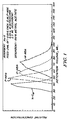
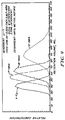
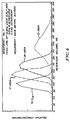
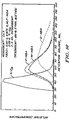
- FIGS. 1 to 12 of the accompanying Drawings are chromatographic traces of the pulse tests described in the Examples, illustrating the separations achieved with various zeolites and desorbents, and will be described in more detail in the Examples.
- feed mixture is a mixture containing one or more extract components and one or more raffinate components to be fed to an adsorbent.
- feed stream indicates a stream of feed mixture which passes to an adsorbent.
- an "extract component” is a type of compound or a compound, such as a particular isomer, that is more selectively adsorbed by the adsorbent while a “raffinate component” is a compound or type of compound that is less selectively adsorbed.
- the ortho- or meta-isomers are respective extract components and the meta- and para-isomer or ortho- and para-isomers are respective raffinate components.
- the term "raffinate stream” or "raffinate output stream” means a stream in which a raffinate component is removed from an adsorbent.
- the composition of the raffinate stream can vary from essentially 100% desorbent material (hereinafter defined) to essentially 100% raffinate components.
- extract stream or "extract output stream” means a stream in which an extract material which has been desorbed by a desorbent material is removed from the adsorbent.
- the composition of the extract stream likewise, can vary from essentially 100% desorbent material to essentially 100% extract components.
- high-purity extract product hereinafter defined
- a raffinate product hereinafter defined
- the extract and raffinate streams then are further distinguished from each other and from the feed mixture by the ratio of the concentrations of an extract component and a specific raffinate component, both appearing in the particular stream.
- the ratio of concentration of the more selectively adsorbed meta-isomer to the concentration of less selectively adsorbed ortho- and para-isomers will be highest in the extract stream, next highest in the feed mixture, and lowest in the raffinate stream.
- the ratio of the less selectively adsorbed ortho- and para-isomers to the more selectively adsorbed meta-isomer will be highest in the raffinate stream, next highest in the feed mixture, and the lowest in the extract stream.
- the ratio of concentration of the more selectively adsorbed ortho-isomer to the concentration of the less selectively adsorbed meta- and para-isomers will be highest in the extract stream, next highest in the feed stream and lowest in the raffinate stream.
- the ratio of the less selectively adsorbed meta- and para-isomers to the more selectively adsorbed ortho-isomer will be highest in the raffinate stream, next highest in the feed mixture and the lowest in the extract stream.
- desorbent material means generally a material capable of desorbing an extract component.
- desorbent stream or "desorbent input stream” indicates the stream by means of which desorbent material passes into the adsorbent.
- separation means typically fractionators, where at least a portion of the desorbent material will be separated under separation conditions to produce an extract product and a raffinate product.
- extract product and "raffinate product” mean products produced by the process containing, respectively, an extract component and a raffinate component in higher concentrations than those found in the respective extract stream and the raffinate stream.
- selective pore volume of the adsorbent is defined as the volume of the adsorbent which selectively adsorbs extract components from a feed mixture.
- non-selective void volume of an adsorbent is the volume of an adsorbent which does not selectively retain an extract component from a feed mixture. This volume includes the cavities of the adsorbent which contain no adsorptive sites and the interstitial void spaces between adsorbent particles.
- the selective pore volume and the non-selective void volume are generally expressed in volumetric quantities and are of importance in determining the proper flow rates of fluid required to be passed into the process for efficient operations to take place for a given quantity of adsorbent.
- Feed mixtures which can be utilized in the process of this invention will comprise at least two nitrobenzaldehyde isomers. Isomers can be characterized by reference to Formula 1 below.
- ortho-nitrobenzaldehyde The major use for ortho-nitrobenzaldehyde is in the manufacture of coronary-dilating pharmaceuticals.
- the major outlets for meta-nitrobenzaldehyde are in the manufacture of pharmaceuticals, dyes, surface active agents, chlorophyll, antioxidant and mosquito repellant.
- the mixture is contacted with the appropriate adsorbent, whereby the first isomer is more selectively adsorbed and retained by the adsorbent, while the other isomers are relatively unadsorbed, with the first isomer being recovered as part of the extract stream, the other isomers, being relatively unadsorbed, would be recovered as part of the raffinate stream.
- the ortho- or meta-isomer can be recovered as the extract product, depending on the choice of adsorbent.
- the adsorbed isomer is recovered from the adsorbent by contacting the adsorbent with a desorbent material.
- desorbent material as used herein means any fluid substance capable of removing a selectively adsorbed feed component from the adsorbent.
- desorbent material selection is not too critical and desorbent materials comprising gaseous hydrocarbons such as methane, ethane, etc., or other types of gases such as nitrogen or hydrogen may be used at elevated temperatures, or reduced pressures, or both, so as effectively to purge the adsorbed feed component from the adsorbent.
- the desorbent material relied upon must be judiciously selected to satisfy several criteria. Firstly, the desorbent material must displace the extract components from the adsorbent at reasonable mass flow rates without itself being so strongly adsorbed as unduly to prevent the extract component from displacing the desorbent material in a succeeding adsorption cycle. Expressed in terms of the selectivity (hereinafter discussed in more detail), it is preferred that the adsorbent be more selective for the extract component with respect to a raffinate component than it is for the desorbent material with respect to a raffinate component.
- desorbent materials must be compatible with the particular adsorbent and the particular feed mixture. More specifically, the desorbent must not react with either the adsorbent or any component of the feed material and must not reduce or destroy the critical selectivity of the adsorbent for the extract components with respect to the raffinate component.
- Desorbent materials to be used in the process of this invention should additionally be substances which are easily separable from the feed mixture that is passed into the process. After desorbing the extract components of the feed, both desorbent material and the extract components are typically removed in admixture from the adsorbent.
- any desorbent material used in this process will have an average boiling point substantially different from that of the feed mixture, to allow separation of desorbent material from feed components in the extract and raffinate streams by simple fractionation, thereby permitting reuse of desorbent material in the process.
- substantially different as used herein means that the difference between the average boiling points of the desorbent material and of the feed mixture is at least 5°C. The boiling range of the desorbent material may be higher or lower than that of the feed mixture.
- lower alkyl acetates e.g., methyl acetate, ethyl acetate, propyl acetate and butyl acetate
- lower alkyl formates e.g., methyl formate and ethyl formate
- acetonitrile and benzaldehyde have been found to be effective desorbents.
- the desorbent may be dissolved in a suitable diluent, such as toluene, so that the rate of desorption may be modified as desired.
- adsorbents are highly desirable, if not absolutely necessary, to the successful operation of a selective adsorption process. Among such characteristics are: adsorptive capacity for some volume of an extract component per volume of adsorbent; the selective adsorption of an extract component with respect to a raffinate component and the desorbent material; and, sufficiently fast rates of adsorption and desorption of the extract components to and from the adsorbent.
- Capacity of the adsorbent for adsorbing a specific volume of one or more extract components is, of course, a necessity; without such capacity the adsorbent is useless for adsorptive separation. Furthermore, the higher the adsorbent's capacity for an extract component, the better is the adsorbent. Increased capacity of a particular adsorbent makes it possible to reduce the amount of adsorbent needed to separate the extract component contained in a particular charge rate of feed mixture. A reduction in the amount of adsorbent required for a specific adsorptive separation reduces the cost of the separation process. It is important that the good initial capacity of the adsorbent be maintained during actual use in the separation process over some economically desirable life.
- the second necessary characteristic of an adsorbent is its ability to separate components of the feed; or, in other words, that the adsorbent possess adsorptive selectivity, (B), for one component as compared to another component.
- Relative selectivity can be expressed not only for one feed component as compared to another but can also be expressed between any feed mixture component and the desorbent material.
- the selectivity, (B), as used throughout this specification is defined as the ratio of the two components of the adsorbed phase over the ratio of the same two components in the unadsorbed phase at equilibrium conditions.
- Equation 1 Relative selectivity is shown as Equation 1 below:
- C and D are two components of the feed represented in volume percent and the subscripts A and U represent the adsorbed and unadsorbed phases, respectively.
- the equilibrium conditions are determined when the feed passing over a bed of adsorbent does not change composition after contacting the bed of adsorbent. In other words, there is no net transfer of material occurring between the unadsorbed and adsorbed phases.
- selectivity of two components approaches 1.0 there is no preferential adsorption of one component by the adsorbent with respect to the other; they are both adsorbed (or non-adsorbed) to about the same degree with respect to each other.
- a (B) larger than 1.0 indicates preferential adsorption of component C within the adsorbent.
- a (B) less than 1.0 would indicate that component D is preferentially adsorbed leaving an unadsorbed phase richer in component C and an adsorbed phase richer in component D.
- selectivity of the adsorbent for the extract component with respect to the raffinate component just exceeds a value of 1.0, it is preferred that such selectivity have a value approaching or exceeding 2.
- selectivity Like relative volatility, the higher the selectivity, the easier the separation is to perform. Higher selectivities permit a smaller amount of adsorbent to be used in the process.
- desorbent materials should have a selectivity equal to 1, or less than 1, with respect to all extract components so that all of the extract components can be extracted as a class and all raffinate components clearly rejected into the raffinate stream
- the third important characteristics is the rate of exchange of the extract component of the feed mixture material with the desorbent material or, in other words, the relative rate of desorption of the extract component.
- This characteristic relates directly to the amount of desorbent material that must be employed to recover the extract component from the adsorbent; faster rates of exchange reduce the amount of desorbent material needed to remove the extract component and, therefore, permit a reduction in the operating cost of the process. With faster rates of exchange, less desorbent material has to be pumped through the process and separated from the extract stream for reuse.
- a dynamic testing apparatus In order to test various adsorbents and desorbent materials with a particular feed mixture to measure the adsorbent characteristics of adsorptive capacity and selectivity and exchange rate, a dynamic testing apparatus is employed.
- the apparatus comprises an adsorbent chamber of approximately 70 cc volume having inlet and outlet portions at opposite ends of the chamber.
- the chamber is contained within a temperature control means and, in addition, pressure control equipment is used to operate the chamber at a constant predetermined pressure.
- Chromatographic analysis equipment can be attached to the outlet line of the chamber and used to analyze "on-stream" the effluent stream leaving the adsorbent chamber.
- a pulse test performed using this apparatus and the following general procedure, is used to determine selectivities and other data for various adsorbent systems.
- the adsorbent is filled to equilibrium with a particular desorbent by passing the desorbent material through the adsorbent chamber.
- a pulse of feed containing known concentrations of a non-adsorbed tracer (n-octadecane for instance) and of the particular nitrobenzaldehyde isomers, all diluted in desorbent, is injected for a duration of several minutes.
- Desorbent flow is resumed, and the tracer and the aromatic isomers are eluted as in a liquid-solid chromatographic operation.
- the effluent can be analyzed by on-stream chromatographic equipment and traces of the envelopes of corresponding component peaks developed. Alternatively, effluent samples can be collected periodically and later analyzed separately by gas chromatography.
- adsorbent performance can be rated in terms of capacity index for an extract component, selectivity for one isomer with respect to the other, and the rate of desorption of an extract component by the desorbent.
- the capacity index may be determined from the distance between the centres of the peak envelope of the selectivity adsorbed isomer and the peak envelope of the tracer component, or some other known reference point. It is expressed in terms of the volume in cubic centimeters of desorbent pumped during this time interval.
- Selectivity, (B), for an extract component with respect to a raffinate component may be determined from the ratio of the distance between the centres of an extract component peak envelope and the tracer peak envelope (or other reference point) compared with the corresponding distance between the centres of a raffinate component peak envelope and the tracer peak envelope.
- the rate of exchange of an extract component with the desorbent can generally be determined from the width of the peak envelopes at half intensity. The narrower the peak width, the faster the desorption rate.
- the desorption rate can also be determined from the distance between the centre of the tracer peak envelope and the disappearance of an extract component which has just been desorbed. This distance is again the volume of desorbent pumped during this time interval.
- the adsorbent to be used in the process of this invention comprises specific crystalline aluminosilicates.
- Crystalline aluminosilicates such as those used according to the present invention include crystalline aluminosilicate cage structures in which the alumina and silica tetrahedra are intimately connected in an open three-dimensional network.
- the tetrahedra are crosslinked by the sharing of oxygen atoms, with spaces between the tetrahedra occupied by water molecules before partial or total dehydration of this zeolite.
- the dehydration of the zeolite results in crystals interlaced with cells having molecular dimensions.
- the crystalline aluminosilicates are often referred to as "molecular sieves" when the separation which they effect is dependent essentially upon differences between the sizes of the feed molecules as, for intance, when smaller normal paraffin molecules are separated from larger isoparaffin molecules by using a particular molecular sieve.
- molecular sieves although widely used, is not strictly suitable, since the separation of specific aromatic isomers is apparently dependent on differences in electrochemical attraction of the different isomers and the adsorbent rather than solely on physical size differences in the isomer molecules.
- the crystalline aluminosilicates generally encompass those zeolites represented by the Formula below:
- M is a cation which balances the electrovalence of the tetrahedra and is generally referred to as an exchangeable cationic site
- n represents the valence of the cation
- w represents the moles of SiO2
- y represents the moles of water.
- the generalized cation "M” may comprise monovalent, divalent or trivalent cations or mixtures thereof.
- the type X zeolite in the hydrated or partially hydrated form can be represented in terms of mole oxides as shown in Formula 3 below:
- M represents at least one cation having a valence of not more than 3
- n represents the valence of "M”
- y is a value up to 9 depending upon the identity of "M” and the degree of hydration of the crystal.
- the SiO2/Al2O3 mole ratio is 2.5 - 0.5.
- the cation "M” may be one or more of a number of cations such as those of hydrogen, alkali metals, or alkaline earth metals, or other selected cations, and is generally referred to as an exchangeable cationic site.
- the cation "M" is usually predominately sodium and the zeolite is, therefore, referred to as a sodium-type X zeolite.
- the zeolite is, therefore, referred to as a sodium-type X zeolite.
- other cations mentioned above may be present, however, as impurities.
- the type Y zeolite in the hydrated or partially hydrated form can be similarly represented in terms of mole oxides as in Formula 4 below:
- the cation "M” may be one or more of a variety of cations but, as the type Y zeolite is intially prepared, the cation "M" is also usually predominately sodium.
- microporous crystalline materials with which the invention can be practiced are the family of aluminophosphate compositions synthesized by hydrothermal crystallization of an aluminophosphate gel containing a molecular structure-forming template, followed by calcination to yield a microporous crystalline adsorbent with uniform pores.
- the template can be an organic amine or a quaternary ammonium salt. These may be prepared by the procedure described in US-A-4310440. Although others may be useful in the invention, particularly preferred is AlPO4-5, having a uniform pore size of 8 A, which can be prepared as set forth in Examples 1 - 26 of said patent.
- the present invention is based on the discovery that the type Y zeolite with alkali metal or alkaline earth metal cations at exchangeable cation sites is more selective for the ortho-isomers of nitrobenzaldehyde than for the meta- and para-isomers, and that the type X zeolite having alkali metal cations at exchangeable cationic sites, and preferably, sodium or lithium is more selective for the meta-isomer than the other isomers.
- adsorbents used in separative processes contain the crystalline material dispersed in an amorphous binder material or inorganic matrix, having channels and cavities therein which enable liquid access to the crystalline material.
- Silica, alumina, or mixtures thereof are typical of such inorganic matrix materials.
- the binder aids in forming or agglomerating the crystalline particles which otherwise would comprise a fine powder.
- the adsorbent may thus be in the form of particles such as extrudates, aggregates, tablets, macrospheres or granules having a desired particle range, preferably from 16 to 60 mesh (Standard U.S. Mesh) which corresponds to 0.25 to 1.19mm nominal aperture. Lower water content in the adsorbent is advantageous from the standpoint of having less water contamination of the product.
- the adsorbent may be employed in the form of a dense fixed bed which is alternately contacted with a feed mixture and a desorbent material, in which case the process will be only semicontinuous.
- a set of two or more static beds of adsorbent may be employed with appropriate valving, so that a feed mixture can be passed through one or more adsorbent beds of a set, while a desorbent material can be passed through one or more of the other beds in a set.
- the flow of a feed mixture and a desorbent material may be either upwards or downwards through an adsorbent in such beds. Any of the conventional apparatus employed in a static bed fluid-solid contacting may be used.
- Moving bed or simulated moving bed flow system have a much greater separation efficiency than fixed bed systems and are, therefore, preferred.
- the retention and displacement operations are continuously taking place which allows both continuous production of an extract and a raffinate stream, and the continual use of feed and displacement fluid streams.
- One preferred embodiment of this process utilizes what is known in the art as the simulated moving bed countercurrent flow system. In such a system, it is the progressive movement of multiple liquid access points down a molecular sieve chamber that simulates the upward movement of molecular sieve contained in the chamber.
- Another embodiment of a simulated moving bed flow system suitable for use in the process of the present invention is the cocurrent high efficiency simulated moving bed process disclosed in US-A-4402832.
- At least a portion of the extract output stream will pass into a separation means wherein at least a portion of the desorbent material can be separated, under separating conditions to produce an extract product containing a reduced concentration of desorbent material.
- at least a portion of the raffinate output stream will also be passed to a separation means wherein at least a portion of the desorbent material can be separated under separating conditions to produce a desorbent stream which can be reused in the process and a raffinate product containing a reduced concentration of desorbent material.
- the concentration of desorbent material in the extract product and the raffinate product will be less than 5 vol. %, and more preferably less than 1 vol. %.
- the separation means will typically be a fractionation column, the design and operation of which is well known to the separation art.
- Adsorption conditions will generally include a temperature of from 20 to 250°C, with 100 to 200°C being more preferred, and a pressure sufficient to maintain liquid phase.
- Desorption conditions will include the same range of temperatures and pressure as used for adsorption conditions.
- the size of the units which can utilize the process of this invention can vary anywhere from those of pilot-plant scale (see for example US-A-3706812) to those of commercial scale and can range in flow rates from as little as a few cc an hour up to many thousands of litres per hour.
- the pulse test was performed to evaluate the ability of the present invention to separate isomers of nitrobenzaldehyde.
- the adsorbent used was a sodium-exchanged X zeolite and was mixed with 15 wt. % clay. Water was added and the resulting mixture was extruded, calcined at 400°C, then ground to 20 to 60 mesh size (corresponding to a nominal aperture of 0.25 to 0.84 mm). The adsorbent was re-dried at 350°C before it was utilized in the process in each test.
- the desorbent used was methyl acetate.
- the testing apparatus was the above-described pulse test apparatus.
- the column was maintained at a temperature of 110°C and a pressure of 125 psig (862 kPa gauge) to maintain liquid-phase operations.
- Gas chromatographic analysis equipment was used to analyze the column effluent stream in order to determine the composition of the effluent material at given time intervals.
- the feed mixture employed for each test comprised 2 cc pulses of a mixture containing 0.5 g each of the three isomers, o-, m- and p-nitrobenzaldehyde, 0.25 g of n-octadecane, which was used as a tracer, and 2.5 ml of the desorbent material (methyl acetate).
- the operations taking place for each test were as follows.
- the desorbent material was run continuously at a nominal liquid hourly space velocity (LHSV) of 1.0 hr ⁇ 1. At some convenient time interval, a pulse of the feed mixture was introduced.
- the desorbent stream was then resumed at 1 LHSV and continued to pass into the adsorbent column until all of the feed components had been eluted from the column, as determined by chromatographic analysis of the effluent material leaving the adsorption column.
- LHSV liquid hourly space velocity
- Example 1 The test of Example 1 was repeated for several additional X-type molecular sieves. In a first test a type X sodium-exchanged zeolite and in a second test, a lithium-exchanged type X zeolite was used.
- AlPO4-5 which can be prepared according to the procedure set forth in US-A-4310440, Examples 1 - 26, having 8 ⁇ pores, was mixed with a clay binder to produce an adsorbent of 20-60 mesh particle size (corresponding to a nominal aperture of 0.25 to 0.84 mm).
- the pulse test column was filled with the adsorbent and a 2 cc pulse of feed material containing 0.50 g each of o-nitrobenzaldehyde, m-nitrobenzaldehyde and p-benzaldehyde, 0.25 g n-octadecane and 2.5 ml desorbent was injected into the column as previously explained. Following the feed, the flow of ethyl acetate desorbent was continued. Ortho-nitrobenzaldehyde was preferentially adsorbed and was well-separated from the meta- and para-isomers as shown in Figure 13.
- the selectivities (B) were as follows:
Landscapes
- Chemical & Material Sciences (AREA)
- Organic Chemistry (AREA)
- Organic Low-Molecular-Weight Compounds And Preparation Thereof (AREA)
- Solid-Sorbent Or Filter-Aiding Compositions (AREA)
Claims (5)
- Procédé pour séparer les isomères de nitrobenzaldéhyde d'un mélange de charge comprenant au moins deux isomères de nitrobenzaldéhyde, qui consiste à mettre en contact ledit mélange, dans des conditions d'adsorption, avec un adsorbant zéolithique, pour adsorber sélectivement l'un desdits isomères et récupérer l'isomère de nitrobenzaldéhyde adsorbé sélectivement sous forme de courant d'extrait, en mettant en contact ledit adsorbant, dans des conditions de désorption, avec une matière désorbante, caractérisé en ce que l'adsorbant comprend une zéolithe de type X renfermant des cations sodium ou lithium aux sites cationiques échangeables, ou une zéolithe de type Y renfermant des cations sodium, lithium, potassium, magnésium ou calcium aux sites cationiques échangeables, ou une zéolithe de type phosphate d'aluminium cristallin, ou des mélanges de celles-ci, et en ce que le désorbant est choisi de la manière suivante : 1) pour la zéolithe X et la zéolithe de type phosphate d'aluminium, le désorbant est l'acétate d'éthyle, le formiate de méthyle, le benzaldéhyde, l'acétate d'éthyle, l'acétonitrile ou un mélange de ceux-ci, et 2) pour la zéolithe Y, le désorbant est l'acétate de méthyle, l'acétate d'éthyle, l'acétonitrile, le formiate de méthyle, et des mélanges de ceux-ci.
- Procédé selon la revendication 1, caractérisé en ce que ledit adsorbant est une zéolithe de type Y ou une zéolithe de type phosphate d'aluminium, et ledit isomère adsorbé est l'ortho-nitrobenzaldéhyde.
- Procédé selon la revendication 1, caractérisé en ce que ledit adsorbant est une zéolithe de type X et ledit isomère adsorbé est le méta-nitrobenzaldéhyde.
- Procédé selon l'une quelconque des revendications 1 à 3, caractérisé en ce que lesdites conditions d'adsorption et de désorption comprennent une température de 20 à 250°C.
- Procédé selon l'une quelconque des revendications 1 à 4, caractérisé en ce que ledit procédé est réalisé avec un système d'écoulement à lit mobile simulé.
Priority Applications (4)
| Application Number | Priority Date | Filing Date | Title |
|---|---|---|---|
| US06/861,792 US4714783A (en) | 1986-05-12 | 1986-05-12 | Separation of nitrobenzaldehyde isomers |
| IN1058/DEL/87A IN168419B (fr) | 1986-05-12 | 1987-12-10 | |
| DE19873786084 DE3786084T2 (de) | 1987-12-14 | 1987-12-14 | Adsorptive trennung von nitrobenzaldehyd-isomeren. |
| EP19870310950 EP0320539B1 (fr) | 1987-12-14 | 1987-12-14 | Séparation des isomères de nitrobenzaldéhyde par adsorption |
Applications Claiming Priority (1)
| Application Number | Priority Date | Filing Date | Title |
|---|---|---|---|
| EP19870310950 EP0320539B1 (fr) | 1987-12-14 | 1987-12-14 | Séparation des isomères de nitrobenzaldéhyde par adsorption |
Publications (2)
| Publication Number | Publication Date |
|---|---|
| EP0320539A1 EP0320539A1 (fr) | 1989-06-21 |
| EP0320539B1 true EP0320539B1 (fr) | 1993-06-02 |
Family
ID=8198139
Family Applications (1)
| Application Number | Title | Priority Date | Filing Date |
|---|---|---|---|
| EP19870310950 Expired - Lifetime EP0320539B1 (fr) | 1986-05-12 | 1987-12-14 | Séparation des isomères de nitrobenzaldéhyde par adsorption |
Country Status (2)
| Country | Link |
|---|---|
| EP (1) | EP0320539B1 (fr) |
| DE (1) | DE3786084T2 (fr) |
Families Citing this family (1)
| Publication number | Priority date | Publication date | Assignee | Title |
|---|---|---|---|---|
| DE4434848A1 (de) * | 1994-09-29 | 1996-04-04 | Bayer Ag | Verfahren zur Trennung von Nitrobenzaldehyd-Isomerengemischen |
Family Cites Families (1)
| Publication number | Priority date | Publication date | Assignee | Title |
|---|---|---|---|---|
| US4714783A (en) * | 1986-05-12 | 1987-12-22 | Uop Inc. | Separation of nitrobenzaldehyde isomers |
-
1987
- 1987-12-14 EP EP19870310950 patent/EP0320539B1/fr not_active Expired - Lifetime
- 1987-12-14 DE DE19873786084 patent/DE3786084T2/de not_active Expired - Fee Related
Also Published As
| Publication number | Publication date |
|---|---|
| EP0320539A1 (fr) | 1989-06-21 |
| DE3786084T2 (de) | 1993-09-16 |
| DE3786084D1 (de) | 1993-07-08 |
Similar Documents
| Publication | Publication Date | Title |
|---|---|---|
| US4642397A (en) | Process for separating isomers of dinitrotoluene | |
| CA1168990A (fr) | Methode de separation du m-xylene | |
| US4529828A (en) | Separation of ortho-xylene | |
| EP0464277B1 (fr) | Procédé pour la séparation par adsorption de 2,6- ou 3,5-diéthyltoluène à partir d'un mélange de celui-ci avec un autre isomère de diéthyltoluène | |
| US5057643A (en) | Zeolitic para-xylene separation with tetralin derivatives as heavy desorbent | |
| CA1322176C (fr) | Utilisation d'un desorbant fluoroaromatique dans un procede pour la separation par adsorption d'hydrocarbures para-alkylaromatiques | |
| EP0138107B1 (fr) | Procédé de séparation d'isomères de toluidine | |
| CA1328082C (fr) | Separation par adsorption du para-xylene a l'aide de desorbant dielthyltoluene | |
| US4051192A (en) | Separation of bi-alkyl substituted monocyclic aromatic isomers | |
| CA1262360A (fr) | Separation des isomeres du toluenediamine | |
| EP0160744B1 (fr) | Séparation d'isomères monocycliques et aromatiques ortho-bisubstitués par des groupes alcoyl | |
| US4721806A (en) | Process for separating 2,4-toluene diisocyanate from isomers of toluene diisocyanate | |
| US4270013A (en) | Process for the separation of nitrotoluene isomers | |
| CA1130319A (fr) | Methode de separation pour l'orthochloronitrobenzene | |
| US4714783A (en) | Separation of nitrobenzaldehyde isomers | |
| US4721807A (en) | Process for separating 2,6-toluene diisocyanate from isomers of toluene diisocyanate | |
| EP0320539B1 (fr) | Séparation des isomères de nitrobenzaldéhyde par adsorption | |
| US4717778A (en) | Process for separating the minor isomers of dinitrotoluene | |
| US5118876A (en) | Separation of dichlorophenol isomers with zeolite adsorbents | |
| US4794202A (en) | Process for separating halogen substituted toluene isomers | |
| EP0173440B1 (fr) | Séparation d'isomères de picoline | |
| US4929796A (en) | Separation of 2,7 diisopropylnaphthalene from a feed mixture comprising various diisopropylnaphthalene isomers with a zeolite adsorbent | |
| EP0181106B1 (fr) | Séparation d'ortho-nitrotoluène | |
| US4408065A (en) | Process for the separation of methylparaben from wintergreen oil | |
| CA1313192C (fr) | Methode pour la separation d'un melange renfermant du diisocyante de 6-methyl-1,5-phenylene et du diisocyanate de 6-methyl-1,3-phenylene |
Legal Events
| Date | Code | Title | Description |
|---|---|---|---|
| PUAI | Public reference made under article 153(3) epc to a published international application that has entered the european phase |
Free format text: ORIGINAL CODE: 0009012 |
|
| AK | Designated contracting states |
Kind code of ref document: A1 Designated state(s): DE FR GB IT NL SE |
|
| 17P | Request for examination filed |
Effective date: 19891128 |
|
| 17Q | First examination report despatched |
Effective date: 19910423 |
|
| RAP1 | Party data changed (applicant data changed or rights of an application transferred) |
Owner name: UOP |
|
| GRAA | (expected) grant |
Free format text: ORIGINAL CODE: 0009210 |
|
| AK | Designated contracting states |
Kind code of ref document: B1 Designated state(s): DE FR GB IT NL SE |
|
| PG25 | Lapsed in a contracting state [announced via postgrant information from national office to epo] |
Ref country code: SE Effective date: 19930602 Ref country code: NL Effective date: 19930602 Ref country code: FR Effective date: 19930602 Ref country code: IT Free format text: LAPSE BECAUSE OF FAILURE TO SUBMIT A TRANSLATION OF THE DESCRIPTION OR TO PAY THE FEE WITHIN THE PRE;WARNING: LAPSES OF ITALIAN PATENTS WITH EFFECTIVE DATE BEFORE 2007 MAY HAVE OCCURRED AT ANY TIME BEFORE 2007. THE CORRECT EFFECTIVE DATE MAY BE DIFFERENT FROM THE ONE RECORDED.SCRIBED TIME-LIMIT Effective date: 19930602 |
|
| REF | Corresponds to: |
Ref document number: 3786084 Country of ref document: DE Date of ref document: 19930708 |
|
| EN | Fr: translation not filed | ||
| NLV1 | Nl: lapsed or annulled due to failure to fulfill the requirements of art. 29p and 29m of the patents act | ||
| PLBE | No opposition filed within time limit |
Free format text: ORIGINAL CODE: 0009261 |
|
| STAA | Information on the status of an ep patent application or granted ep patent |
Free format text: STATUS: NO OPPOSITION FILED WITHIN TIME LIMIT |
|
| 26N | No opposition filed | ||
| PGFP | Annual fee paid to national office [announced via postgrant information from national office to epo] |
Ref country code: GB Payment date: 19941206 Year of fee payment: 8 |
|
| PGFP | Annual fee paid to national office [announced via postgrant information from national office to epo] |
Ref country code: DE Payment date: 19941208 Year of fee payment: 8 |
|
| PG25 | Lapsed in a contracting state [announced via postgrant information from national office to epo] |
Ref country code: GB Effective date: 19951214 |
|
| GBPC | Gb: european patent ceased through non-payment of renewal fee |
Effective date: 19951214 |
|
| PG25 | Lapsed in a contracting state [announced via postgrant information from national office to epo] |
Ref country code: DE Effective date: 19960903 |