EP0321882A2 - Polyfunctional ethylenically unsaturated cellulosic polymer-based photocurable compositions - Google Patents
Polyfunctional ethylenically unsaturated cellulosic polymer-based photocurable compositions Download PDFInfo
- Publication number
- EP0321882A2 EP0321882A2 EP88121126A EP88121126A EP0321882A2 EP 0321882 A2 EP0321882 A2 EP 0321882A2 EP 88121126 A EP88121126 A EP 88121126A EP 88121126 A EP88121126 A EP 88121126A EP 0321882 A2 EP0321882 A2 EP 0321882A2
- Authority
- EP
- European Patent Office
- Prior art keywords
- hydroxyl
- reactive
- isocyanate
- cellulosic
- reactant
- Prior art date
- Legal status (The legal status is an assumption and is not a legal conclusion. Google has not performed a legal analysis and makes no representation as to the accuracy of the status listed.)
- Granted
Links
Classifications
-
- G—PHYSICS
- G03—PHOTOGRAPHY; CINEMATOGRAPHY; ANALOGOUS TECHNIQUES USING WAVES OTHER THAN OPTICAL WAVES; ELECTROGRAPHY; HOLOGRAPHY
- G03F—PHOTOMECHANICAL PRODUCTION OF TEXTURED OR PATTERNED SURFACES, e.g. FOR PRINTING, FOR PROCESSING OF SEMICONDUCTOR DEVICES; MATERIALS THEREFOR; ORIGINALS THEREFOR; APPARATUS SPECIALLY ADAPTED THEREFOR
- G03F7/00—Photomechanical, e.g. photolithographic, production of textured or patterned surfaces, e.g. printing surfaces; Materials therefor, e.g. comprising photoresists; Apparatus specially adapted therefor
- G03F7/004—Photosensitive materials
- G03F7/038—Macromolecular compounds which are rendered insoluble or differentially wettable
- G03F7/0388—Macromolecular compounds which are rendered insoluble or differentially wettable with ethylenic or acetylenic bands in the side chains of the photopolymer
-
- C—CHEMISTRY; METALLURGY
- C08—ORGANIC MACROMOLECULAR COMPOUNDS; THEIR PREPARATION OR CHEMICAL WORKING-UP; COMPOSITIONS BASED THEREON
- C08B—POLYSACCHARIDES; DERIVATIVES THEREOF
- C08B15/00—Preparation of other cellulose derivatives or modified cellulose, e.g. complexes
- C08B15/05—Derivatives containing elements other than carbon, hydrogen, oxygen, halogens or sulfur
- C08B15/06—Derivatives containing elements other than carbon, hydrogen, oxygen, halogens or sulfur containing nitrogen, e.g. carbamates
-
- C—CHEMISTRY; METALLURGY
- C08—ORGANIC MACROMOLECULAR COMPOUNDS; THEIR PREPARATION OR CHEMICAL WORKING-UP; COMPOSITIONS BASED THEREON
- C08G—MACROMOLECULAR COMPOUNDS OBTAINED OTHERWISE THAN BY REACTIONS ONLY INVOLVING UNSATURATED CARBON-TO-CARBON BONDS
- C08G18/00—Polymeric products of isocyanates or isothiocyanates
- C08G18/06—Polymeric products of isocyanates or isothiocyanates with compounds having active hydrogen
- C08G18/28—Polymeric products of isocyanates or isothiocyanates with compounds having active hydrogen characterised by the compounds used containing active hydrogen
- C08G18/40—High-molecular-weight compounds
- C08G18/64—Macromolecular compounds not provided for by groups C08G18/42 - C08G18/63
- C08G18/6484—Polysaccharides and derivatives thereof
-
- C—CHEMISTRY; METALLURGY
- C08—ORGANIC MACROMOLECULAR COMPOUNDS; THEIR PREPARATION OR CHEMICAL WORKING-UP; COMPOSITIONS BASED THEREON
- C08G—MACROMOLECULAR COMPOUNDS OBTAINED OTHERWISE THAN BY REACTIONS ONLY INVOLVING UNSATURATED CARBON-TO-CARBON BONDS
- C08G18/00—Polymeric products of isocyanates or isothiocyanates
- C08G18/06—Polymeric products of isocyanates or isothiocyanates with compounds having active hydrogen
- C08G18/70—Polymeric products of isocyanates or isothiocyanates with compounds having active hydrogen characterised by the isocyanates or isothiocyanates used
- C08G18/81—Unsaturated isocyanates or isothiocyanates
- C08G18/8141—Unsaturated isocyanates or isothiocyanates masked
- C08G18/815—Polyisocyanates or polyisothiocyanates masked with unsaturated compounds having active hydrogen
- C08G18/8158—Polyisocyanates or polyisothiocyanates masked with unsaturated compounds having active hydrogen with unsaturated compounds having only one group containing active hydrogen
- C08G18/8175—Polyisocyanates or polyisothiocyanates masked with unsaturated compounds having active hydrogen with unsaturated compounds having only one group containing active hydrogen with esters of acrylic or alkylacrylic acid having only one group containing active hydrogen
-
- G—PHYSICS
- G03—PHOTOGRAPHY; CINEMATOGRAPHY; ANALOGOUS TECHNIQUES USING WAVES OTHER THAN OPTICAL WAVES; ELECTROGRAPHY; HOLOGRAPHY
- G03F—PHOTOMECHANICAL PRODUCTION OF TEXTURED OR PATTERNED SURFACES, e.g. FOR PRINTING, FOR PROCESSING OF SEMICONDUCTOR DEVICES; MATERIALS THEREFOR; ORIGINALS THEREFOR; APPARATUS SPECIALLY ADAPTED THEREFOR
- G03F7/00—Photomechanical, e.g. photolithographic, production of textured or patterned surfaces, e.g. printing surfaces; Materials therefor, e.g. comprising photoresists; Apparatus specially adapted therefor
- G03F7/004—Photosensitive materials
- G03F7/038—Macromolecular compounds which are rendered insoluble or differentially wettable
-
- Y—GENERAL TAGGING OF NEW TECHNOLOGICAL DEVELOPMENTS; GENERAL TAGGING OF CROSS-SECTIONAL TECHNOLOGIES SPANNING OVER SEVERAL SECTIONS OF THE IPC; TECHNICAL SUBJECTS COVERED BY FORMER USPC CROSS-REFERENCE ART COLLECTIONS [XRACs] AND DIGESTS
- Y10—TECHNICAL SUBJECTS COVERED BY FORMER USPC
- Y10T—TECHNICAL SUBJECTS COVERED BY FORMER US CLASSIFICATION
- Y10T428/00—Stock material or miscellaneous articles
- Y10T428/31504—Composite [nonstructural laminate]
- Y10T428/31551—Of polyamidoester [polyurethane, polyisocyanate, polycarbamate, etc.]
- Y10T428/31591—Next to cellulosic
-
- Y—GENERAL TAGGING OF NEW TECHNOLOGICAL DEVELOPMENTS; GENERAL TAGGING OF CROSS-SECTIONAL TECHNOLOGIES SPANNING OVER SEVERAL SECTIONS OF THE IPC; TECHNICAL SUBJECTS COVERED BY FORMER USPC CROSS-REFERENCE ART COLLECTIONS [XRACs] AND DIGESTS
- Y10—TECHNICAL SUBJECTS COVERED BY FORMER USPC
- Y10T—TECHNICAL SUBJECTS COVERED BY FORMER US CLASSIFICATION
- Y10T428/00—Stock material or miscellaneous articles
- Y10T428/4935—Impregnated naturally solid product [e.g., leather, stone, etc.]
- Y10T428/662—Wood timber product [e.g., piling, post, veneer, etc.]
Definitions
- This invention relates to photocurable coating compositions comprising polyfunctional ethylenically unsaturated cellulosic polymers, a process for making them, and their use.
- 4,565,857, 4,654,233, and 4,656,202 describe photocurable coating compositions comprising cellulosic polymers and polyisocyanates, specifically including polymerizable ethylenically unsaturated cellulosic esters derived from the reaction of a cellulosic polymer having isocyanate-reactive hydroxyl functionality and a monoethylenically unsaturated compound having a hydroxyl reactive group, for instance, 2-isocyanatoethyl acrylate or methacrylate.
- Such known photocurable compositions which contain no more than two isocyanate groups, have the disadvantage that toxic or irritating reactive diluents or plasticizers are needed to crosslink with the ethylenically unsaturated cellulosic esters to achieve satisfactory solvent resistance and strength in the cured coating.
- a polymerizable ethylenically unsaturated cellulosic polyester suitable for use as a photocurable coating composition and derived from the reaction of (a) a cellulosic polymer having isocyanate-reactive hydroxyl functionality and (b) a monoethylenically unsaturated compound having a hydroxyl-reactive group, is characterized in that the reactant (a) constitutes from about 48 to about 69 weight percent of the composition, the reactant (b) constitutes about 52 to about 31 weight percent of the composition and is a hydroxyl-reactive poly(alpha,beta-ethylenically unsaturated) isocyanate produced from the reaction of (i) a hydroxyl functional (meth)acrylic ester with (ii) a polyisocyanate having an average of at least three hydroxyl reactive isocyanate groups, the molar ratio of (meth)acrylic ester to poly
- Cellulosic polymers that may be used as reactant (a) in this invention include ester and ether derivatives of cellulose that have isocyanate-reactive hydroxyl functionality.
- ester derivatives include nitrocellulose and cellulosic esters of saturated aliphatic mono-carboxylic acids having from 1 to 6 carbon atoms or aromatic monocarboxylic acids, preferably cellulose acetate, cellulose acetate propionate. cellulose acetate butyrate or cellulose acetate benzoate.
- carboxylated cellulose esters having isocyanate-reactive hydroxyl functionality include cellulose acetate succinate, cellulose acetate tetrahydrophthalate, cellulose propionate phthalate, cellulose butyrate phthalate, cellulose butyrate 3-nitrophthalate, cellulose butyrate phthaloyl dicarboxylic acid, cellulose butyrate succinate, and the like.
- Such cellullose esters are well known in the art and are described, for example, in U.S. Patent No. 4,134,809.
- cellulosic ether derivatives include hydroxyethyl cellulose, hydroxypropyl cellulose, hydroxyethylhydroxypropyl cellulose and the like. Such ether derivatives are also well known.
- the molecular weight of those cellulosic polymers that are useful in this invention is not critical, however, polymers having molecular weights ranging from about 2,000 to about 200,000, and an average degree of substitution of about 0.3 to about 1.8 isocyanate-reactive hydroxyl groups per anhydroglucose unit of cellulosic polymer are preferred, with an average of about 0.5 to about 1.3 being most preferred.
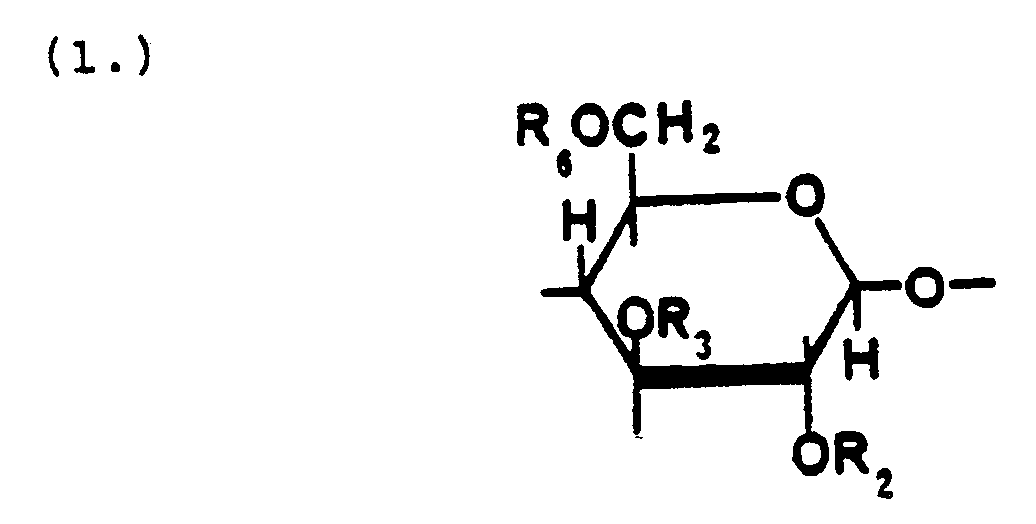
- Anhydroglucose unit of cellulosic polymer is well known in the art and can be characterized for purposes of this invention by the following structural formula: where R represents a substituted moiety with the subscripts 2,3 and 6 denoting the substituted position on the anhydroglucose unit.
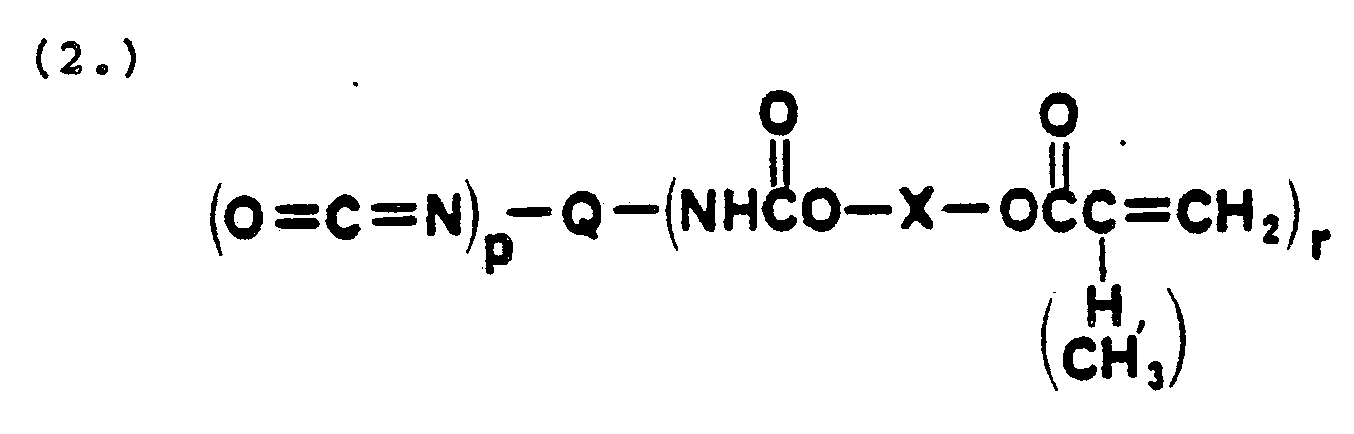
- Hydroxyl-reactive poly(alpha,beta-ethylenically unsaturated) isocyanates that are reacted with the cellulosic polymers described above, in accordance with this invention, can be represented by the following general structural formula: where Q is a multivalent organic radical and x is a saturated or unsaturated, linear, branched or cyclic divalent organic radical having from 2 to 20 carbon atoms, and where p is an average of at least 1 and r is an average of at least 1.5.
- Such unsaturated isocyanates can be conveniently prepared from the reaction of a hydroxyl functional (meth)acrylic ester and a polyisocyanate.
- Acrylic or methacrylic esters useful herein include any of the various hydroxymono-, di-, and tri(meth)acrylic esters containing terminal alpha, beta-ethylenic unsaturation, and their corresponding glycol or ester-extended analogues.
- Examples of such (meth)acrylic esters include 2-hydroxyethyl (meth)acrylate, 2-hydroxyproply(meth)acrylate, 4-hydroxybutyl (meth)acrylate 12-hydroxydodecanyl(meth)acrylate, 2-hydroxy-3-chloropropyl(meth)acrylate, trimethylol propane di(meth)acrylate, pentaerythritol diacrylate, pentaerythritol triacrylate, and the like.
- caprolactone extended hydroxyethyl acrylate available as Tone M-100 from Union Carbide Corporation
- polypropylene glycol monomethacrylate PGMM
- Photomers 4152 hydroxydiacrylate and 4171 hydroxytriacrylate PH 4152 and PH 4172, respectively
- Related (meth)acrylamide derivatives are also useful herein, for example, N-hydroxymethylacrylamide and N-hydroxymethylmethacrylamide, as are glycidyl(meth)acrylic esters, such as described in U.S. Patent No. 4,134,809.
- Any polyisocyanate having an average of at least three hydroxyl reactive isocyanate groups is useful for preparing the poly(alpha,beta-ethylenically unsaturated) isocyanates reactant (b).
- Examples of such polyisocyanates include diisocyanate oligomers containing biuret, isocyanurate, urethane or similar linkages between diisocyanate monomer units. It is preferred, however, that such polyisocyanates are derivatives of acyclic, saturated or unsaturated, linear or branched, polyvalent organic radicals having at least three atoms selected from carbon, oxygen, phosphorous, nitrogen and sulfur.
- polyisocyanates obtained from the reaction of typically low molecular weight diisocyanates (e.g., toluene diisocyanate) or mixtures of two or more of such compounds with water or other known oligomerization catalysts, and/or low molecular weight polyols, e.g., glycerine, and/or polyamines, e.g., ethylenediamine.
- typically low molecular weight diisocyanates e.g., toluene diisocyanate
- polyamines e.g., ethylenediamine
- polyisocyanates examples include the adduct of trimethylol propane and toluene diisocyanate, the adduct of hexamethylene diisocyanate, isophorone diisocyanate and trimethylol propane, and the adduct of pentaerythritol and hexamethylene diisocyante, such as disclosed in U.S. 4,164,459.
- the conditions and stoichiometry of the reaction between the hydroxyl functional (meth)acrylic ester (or related compound) and the polyisocyanate is controlled such that a substantial portion, preferably an average of at least 5 mole percent and most preferably an average of 10 mole percent or more, of the resulting product is at least a monoisocyanate compound containing an average of at least 1.5 terminal alpha,beta-ethylenic unsaturations per molecule.
- the molar ratio of hydroxyl functional (meth)acrylic ester (or related compound) to polyisocyanate can range from about 0.6 to about 0.9, preferably from about 0.7 to about 0.9, depending, of course, on such factors as the specific reactants employed, i.e., the average number of isocyanate groups per molecule of polyisocyanate employed, and the degree of hydroxyl reactive isocyanate group substitution desired in the resulting product.
- the ratio will increase as the average number of hydroxyl reactive isocyanate groups per molecule of polyisocyanate increases, therein requiring less equivalents of polyisocyanate to react with the hydroxyl functionality of the (meth)acrylic esters or related compounds.
- this reaction is preferably conducted by mixing the hydroxyl functional (meth)acrylic ester with the polyisocyanate in a suitable dry, non-reactive solvent, for example, tetrahydrofuran, toluene, acetone, acetone, methylethylketone, ethylacetate, butylacetate and the like.
- a suitable dry, non-reactive solvent for example, tetrahydrofuran, toluene, acetone, acetone, methylethylketone, ethylacetate, butylacetate and the like.
- Suitable urethane catalysts that are well known to those skilled in the art are also preferably employed. Such catalysts are described, for example, in U.S. Patent No. 4,656,202.
- metallic-based catalysts such as dibutyltindilaurate, dibutyltindiacetate, stannous acetate, stannous octoate, stannous tallate, dibutyltinoxide and the like.
- catalysts are employed in amounts from about 0.001 to about 1.0 weight percent, based on the total weight percent of reactants.
- a radical polymerization inhibitor in the reaction mixture to insure that the ethylenically unsaturated reactants do not polymerize prematurely.
- Such compounds are useful in amounts ranging from about 0.001 to about 0.1 weight percent based on the amount of ethylenically unsaturated reactant present.
- these inhibitors include hydroquinone, hydroquinone monomethyl ether, catechol, 2,6-diterbutyl-4-methyl-phenol, phenothiazine and the like.
- Reaction temperatures can vary from about 0°C to about 100°C.
- Desmodur N 100 an oligomer of hexamethylene diisocyanate containing an average of 3.8 isocyanate groups per molecule
- a dry solvent such as those described above, which also contains 27 milligrams of a 1:1 mixture of 2,6-diterbutyl-4-methyl phenol and hydroquinone monomethyl ether.
- HEMA hydroxyethylmethacrylate
- dibutyltindilaurate catalyst 0.10 grams (0.22 weight percent
- Example 1 the same procedure as set out in Example 1 is followed, except that molar ratio of HEMA to polyisocyanate is altered according to that as summarized in Table I below.
- Desmodur N 3200 an oligomer of hexamethylene diisocyanate containing an average of 3.2 isocyanate groups per molecule
- At least one hydroxyl reactive poly(alpha, beta-ethylenically unsaturated) isocyanate is then reacted with a cellulosic polymer having isocyanate-reactive hydroxyl functionality, again as described above, to produce a polyfunctional cellulosic polymer having an average of at least 1.5 terminal alpha,beta-ethylenic unsaturations per substituted position of anhydroglucose unit of the polymer, and that are useful in the photocurable coating compositions of this invention.
- anhydroglucose unit of cellulosic polymer can be characterized for purposes of this invention by the following general formula: where R represents a substituted moiety with the subscripts 2, 3 and 6 denoting the substituted position on the anhydroglucose unit.
- This reaction is preferably conducted by simply mixing the poly(unsaturated)isocyanate, the cellulosic polymer, a catalyst for the isocyanate/hydroxyl reaction, and a radical polymerization inhibitor in a suitable dry solvent.
- a suitable dry solvent preferably a suitable dry solvent.
- the same solvents, catalysts and other reagents and their respective amounts described above for use in the preparation of the poly(alpha,beta-ethylenically unsaturated) isocyanates of this invention are also useful in this reaction.
- the instant reaction may be carried out in a "two-step, one-pot" method, wherein a poly(alpha,beta-ethylenically unsaturated) isocyanate is prepared according to the procedure set forth in Example 1, followed by the addition thereto of a solution or suspension of the cellulosic polymer.
- the reaction mixture is allowed to react at temperatures ranging from about 0°C to 100°C for a period of time as demonstrated by the disappearance of infrared detectable isocyanate groups.
- any unreacted isocyanate remaining at this point can be consumed by the addition of a low molecular weight primary alcohol, preferably ethanol.
- a low molecular weight primary alcohol preferably ethanol.
- the resulting polyfunctional ethylenically unsaturated cellulosic polymer can then be isolated, if desired, by precipitation into a suitable non-solvent to remove any non-reacted ethylenically unsaturated material.
- the molar ratio of isocyanate-reactive hydroxyl groups on the cellulosic polymer to hydroxyl-reactive poly(unsaturated) isocyanate will range from about 20:1 to about 1:1, most preferably, from about 10:1 to about 1:1, depending upon such factors as the average degree of substitution of isocyanate-reactive hydroxyl functionality present in the cellulosic polymer and the polymer's reactivity towards hydroxyl reactive isocyanates.
- the reaction is accomplished in the presence of a molar excess of isocyanate-reactive hydroxyl functionality on the cellulosic polymer.
- solutions of poly(alpha,beta-ethylenically unsaturated) isocyanates are prepared according to the procedure set forth in Examples 1-8 based on the tabulated stoichiometries summarized in Table 2 below.
- HEMA has been substituted for other hydroxyl functional (meth)acrylic esters, for example, hydroxybutyl acrylate (HBA), caprolactone extended hydroxyethyl acrylate (Tone M-100), polypropylene glycol monomethacrylate (PPGMM), Photomer 4152 hydroxyldiacrylate (PH 4152), and Photomer 4171 hydroxytriacrylate (PH 4171).
- Polyfunctional ethylenical unsaturated cellulosic polymers are then conveniently prepared via a "two-step, one-pot" method by adding solutions of various cellulosic polymers in a common solvent and in their respective indicated amounts, as summarized in Table 2, to the previously prepared solutions of poly(unsaturated) isocyanates.
- the reaction mixtures are then stirred for approximately 16-24 hours at ambient temperature. Any unreacted isocyanate then remaining, as detected by infrared spectroscopy, is consumed by the addition of ethyl alcohol.
- Photocurable coating compositions having greatly improved crosslinking efficiency, therein significantly reducing or eliminating the need for added cocurable reactive diluents, plasticizers and the like, can be conveniently prepared using the polyfunctional ethylenically unsaturated cellulosic polymers of this invention. Coating compositions prepared as such display comparable or improved solvent and abrasion resistance relative to those coating compositions that are currently available.
- Preparation of the coating compositions can be conducted by simply mixing in the desired proportions the polyfunctional ethylenically unsaturated cellulosic polymer described above with a suitable ultraviolet photoinitiator in a suitable solvent or solvent mixture.
- a suitable ultraviolet photoinitiator in a suitable solvent or solvent mixture.
- the solvent employed in the preparation of the poly(alpha, beta-ethylenically unsaturated) isocyanates and their subsequent reaction with the cellulosic polymer in accordance with this invention is employed herein.
- Compounds useful as photoinitiators in the practice of this invention are well known in the art and include, for example, benzophenone, 1-chloronaphthalene, 2-chloronaphthalene, 2-chlorothioxanthone, 2,2-diethoxyacetophenone, 2,3-dichloronaphthoquinone, 4,4′-bis(2-chloroacetyl) benzene, 2,2,2-trichloroacetophenone, benzoin isopropyl ether, 4′-tertbutyl-2,2,2-trichloroacetophenone, 4,4′-bis(chloromethyl) benzophenone, 4-chloromethyl-4′-carbomethoxy benzophenone, 2-chloromethylbenzimidazole, 4,4′-dimethylbenzophenone, 3,4-bis(chloromethyl) benzophenone, benzophenone/methyl diethanolamine, 2,2-dimethoxy-2-phenyl-acetophenone
- photoinitiators can be added at any point in the production of the coating compositions in amounts ranging from about 0.1 to about 10 weight percent, preferably from about 1 to about 5 weight percent, based on the total weight of the coating composition. The amount will depend, of course, on the particular photoinitiator employed.
- the photocurable coating compositions can be prepared in the absence of photoinitiators when curing is to be carried out by electron beam radiation.
- the coating compositions can be cured without active radiation upon the addition thereto of metal oxidation catalysts such as those based on Ca, Zn, Pb, Fe and the like.
- metal oxidation catalysts such as those based on Ca, Zn, Pb, Fe and the like.
- Such catalysts are well known in the art.
- the amount of polyfunctional, ethylenically unsaturated cellulosic polymer component of the photocurable coating composition can range from about 10 to about 100 weight percent, preferably from about 50 to about 80 weight percent based on the total curable solids present in the coating composition.
- additives that may be compounded with the photocurable coating compositions of the instant invention include, for example, binders, fillers, e.g. silica and metal oxides, pigments, dyes, flow control or thixotropic agents, reinforcing agents, plasticizers, stabilizers, inhibitors, lubricants, and the like.
- binders e.g. silica and metal oxides, pigments, dyes, flow control or thixotropic agents, reinforcing agents, plasticizers, stabilizers, inhibitors, lubricants, and the like.
- fillers e.g. silica and metal oxides
- pigments e.g. silica and metal oxides
- pigments e.g. silica and metal oxides
- pigments e.g. silica and metal oxides
- pigments e.g. silica and metal oxides
- pigments e.g. silica and metal oxides
- pigments e.g
- polymerizable or copolymerizable compounds that can react with the polyfunctional ethylenically unsaturated cellulosic polymer component can be optionally incorporated into the coating compositions, again depending on the particular end uses contemplated, to modify the properties thereof, e.g. hardness, flexibility, adhesion, and the like.
- Such compounds include, for example, ethylenically unsaturated monomers such as methyl methacrylate, ethyl acrylate, chlorohexyl acrylate, styrene, divinylbenzene, 2-chlorostyrene, acrylic acid, acrylamide, acrylonitrile, tert-butyl acrylate, methyl acrylate and the like.
- ethylenically unsaturated monomers such as methyl methacrylate, ethyl acrylate, chlorohexyl acrylate, styrene, divinylbenzene, 2-chlorostyrene, acrylic acid, acrylamide, acrylonitrile, tert-butyl acrylate, methyl acrylate and the like.
- Such polymerizable or copolymerizable compounds useful in this invention will be readily apparent to those skilled in the art.
- such compounds are useful in the instant coating compositions up to about 75, preferably less than about 50
- non-reactive film forming resins can be included in the coating compositions of the instant invention, for example, nitrocellulose and other non-ethylenically unsaturated derivatives of cellulosic polymers and oligomers thereof such as are useful in the instant invention for forming the polyfunctional ethylenically unsaturated cellulosic polymers.
- the amount of such resins employed can vary within the range mentioned above, again depending on such factors as the particular property of the coating composition to be modified, and those end uses contemplated.
- the photocurable coating compositions can be coated on various substrates by any procedure known in the art, including spraying, brushing, dipping and the like. Suitable substrates which can be coated include any of the conventional materials such as wood, plastics, metal and ceramics. However, such coatings are particularly suited for use as a top coating in furniture and wood or wood veneer coating applications where minor flaws or finish imperfections can be removed, for example, by buffing, rubbing or sanding after the coating composition is applied thereto and the solvent is allowed to evaporate, thus resulting in a workable intermediate dried stage of the composition.
- the intermediate stage can thereafter be fully cured by any of the several known methods in the art, for example by exposure to ultraviolet or electron beam radiation, to provide a hard, durable, rub- and abrasion-resistant finish. During this final cure, it is believed that ethylenically unsaturated components in the coating composition undergo a cross-linking reaction to form a tough, crosslinked polymeric matrix.
- Any of the several base and/or sealer coating compositions can be employed in one or more coats on a given substrate prior to application of the coating composition of the present invention. Such base and/or sealer coating compositions are described, for example, in U.S.
- Patent 4,656,202 include alkyd resins, acrylic resins and cellulose acetate butyrate type resins.
- the coating compositions of the instant invention may be employed both as an initial base coat(s) and a final top coating. Should this method be employed, both the base coat and the top coat or finish coat can be cured as described herein subsequent to application and solvent evaporation.
- Polyfunctional ethylenically unsaturated cellulosic polymers prepared in Examples 9-12 above are further precipitated to remove all non-reacted ethylenically unsaturated materials that can function as reactive diluents.
- the precipitated polymers are dried and then dissolved in 6:1 ethyl: butyl acetate to about 25 percent weight total solids.
- a photoinitiator (dimethoxyphenyl acetophenone) is next added to each solution in an amount equal to 5 weight percent solids, based on the total solids content, and the solids then adjusted to 20 weight percent.
- hexanediol diacrylate is added as a reactive diluent in amounts equal to 10 weight percent based on the total weight of the composition.
- Films from each composition are then cast on both clean degreased glass and Bonderite 100 steel plates to provide dry films with a nominal thickness of 1 mil. All dried films are then exposed under high intensity ultraviolet light (total energy equal to 3.8 J/CM2) for 20 seconds, then aged for three days.
- Total energy total energy equal to 3.8 J/CM2
- Each cured film cast on glass plates is next extracted for a period of about 24 hours with acetone in a soxhlet extractor and the percent of material insoluble in acetone, representaive of crosslinked solvent resistant material, is determined.
- each film cured on steel plates is tested for rub resistance to methyl ethyl ketone (MEK) by pushing on absorbant paper towel that has been saturated with the solvent back and forth across the surface of the film until the metal surface of the plate is exposed.
- MEK methyl ethyl ketone
- coating compositions are prepared in accordance with the instant invention as described in Examples 21-26 above using polyfunctional ethylenically unsaturated cellulosic polymers prepared in Examples 10-12. Films of each composition are then cast on steel plates and cured for respective times of 30, 60 and 90 seconds, again as described in the examples above, then aged for three days. Each respective sample is then tested for rub resistance in the manner described above.
- Comparative coating compositions in Examples 30-32 are prepared in accordance with procedures described in U.S. Patent No. 4,565,857, which comprise ethylenically unsaturated cellulosic polymers prepared from the reactants and their respective stoichiometries summarized immediately below in Table 4.
- TABLE 4 Example No. Isocyanatoethyl methacrylate *polymer type Cellulosic polymer weight (grams) isocyanate milliquivalents weight (grams) hydroxyl milliquivalents 30 31.00 200 NC 104.00 400 31 7.75 50 CAP 33.11 99 32 7.75 50 CAB 40.00 101 *nitrocellulose (NC) grade RS 1/4 from Hercules Incorporated.
- Examples 33-35 ethylenically unsaturated cellulosic polymers in accordance with this invention are prepared according to the procedure described in Examples 9-20, from reactants and their respective stoichiometries summarized below in Table 6.
- Comparative unsaturated cellulosic polymers in Examples 36-37 are then prepared according to procedures set forth in U.S. Patent Nos. 4,565,857 and 3,749,592, respectively, using the reactants and their respective amounts as further summarized below in Table 6.
- the isocyanate employed is isocyanatoethyl methacrylate (IEM)
- IEM isocyanatoethyl methacrylate
- no hydroxyl functional (meth)acrylic ester is needed since IEM contains unsaturation.
- the isocyanate is toluene diisocyanate (TDI).
- Coating compositions are then prepared in the manner described in Examples 21-26 from each of the unsaturated cellulosic polymers in the examples above without removing non-reacted ethylenically unsaturated materials that can further function as reactive diluents during curing of films formed from the compositions.
- Films are next prepared from each example composition on glass plates and exposed for 10 seconds except Example 33a, which was exposed for 90 seconds.
- Half of each film is then extracted with acetone for a period of about 24 hours immediately after exposure, and in turn the other half extracted after aging for three days. The percent of acetone-insoluble material, indicative of crosslinked solvent resistant material, is determined for each extraction sample and the results recorded in Table 6 below.
- Hydroxyl Functional (meth)acrylic ester Isocyanate Cellulosic Polumer Type weight (grams) hydroxyl milliquivalents Type weight (grams) isocyanate milliquivalents *Type weight (grams) hydroxyl milliquivalents 33 HEMA 84 646 N-100 167 874 RS 1/4 250 962 34 HEMA 13.0 100 N-100 27.0 141.4 CAP 38.9 117 35 HEMA 15.0 115.4 N-100 30.0 157.1 SS 1/4 55.0 220 36 -- -- -- IEM 29.6 191 RS 1/4 49.4 190 37 HEMA 7.2 55 TDI 8.8 100 RS 1/4 50.0 192 *RS 1/4 and SS 1/4 are grades of nitrocellulose (NC) available from Hercules Incorporated.
- NC nitrocellulose
Landscapes
- Chemical & Material Sciences (AREA)
- Physics & Mathematics (AREA)
- Health & Medical Sciences (AREA)
- Chemical Kinetics & Catalysis (AREA)
- Organic Chemistry (AREA)
- Polymers & Plastics (AREA)
- Medicinal Chemistry (AREA)
- General Physics & Mathematics (AREA)
- Spectroscopy & Molecular Physics (AREA)
- Materials Engineering (AREA)
- Life Sciences & Earth Sciences (AREA)
- Biochemistry (AREA)
- Engineering & Computer Science (AREA)
- Macromonomer-Based Addition Polymer (AREA)
- Polyurethanes Or Polyureas (AREA)
- Compositions Of Macromolecular Compounds (AREA)
- Graft Or Block Polymers (AREA)
- Paints Or Removers (AREA)
- Polymerisation Methods In General (AREA)
Abstract
Description
- This invention relates to photocurable coating compositions comprising polyfunctional ethylenically unsaturated cellulosic polymers, a process for making them, and their use.
- It is known that polyfunctional cellulosic polyesters containing alpha, beta unsaturation are useful as resins and modifying resins in formulating photocurable compositions for use, such as, protective coatings for wood and other solid substrates. For example, U.S. Patents. 4,565,857, 4,654,233, and 4,656,202 describe photocurable coating compositions comprising cellulosic polymers and polyisocyanates, specifically including polymerizable ethylenically unsaturated cellulosic esters derived from the reaction of a cellulosic polymer having isocyanate-reactive hydroxyl functionality and a monoethylenically unsaturated compound having a hydroxyl reactive group, for instance, 2-isocyanatoethyl acrylate or methacrylate.
- Such known photocurable compositions, which contain no more than two isocyanate groups, have the disadvantage that toxic or irritating reactive diluents or plasticizers are needed to crosslink with the ethylenically unsaturated cellulosic esters to achieve satisfactory solvent resistance and strength in the cured coating.
- There is a need for a photocurable coating composition with improved crosslinking efficiency that significantly reduces or eliminates the need for reactive diluents, plasticizers or the like to provide maximum solvent resistance and strength in the cured products.
- According to the invention, a polymerizable ethylenically unsaturated cellulosic polyester suitable for use as a photocurable coating composition and derived from the reaction of (a) a cellulosic polymer having isocyanate-reactive hydroxyl functionality and (b) a monoethylenically unsaturated compound having a hydroxyl-reactive group, is characterized in that the reactant (a) constitutes from about 48 to about 69 weight percent of the composition, the reactant (b) constitutes about 52 to about 31 weight percent of the composition and is a hydroxyl-reactive poly(alpha,beta-ethylenically unsaturated) isocyanate produced from the reaction of (i) a hydroxyl functional (meth)acrylic ester with (ii) a polyisocyanate having an average of at least three hydroxyl reactive isocyanate groups, the molar ratio of (meth)acrylic ester to polyisocyanate being from about 0.6 to about 0.9, and the ethylenically unsaturated cellulosic polyester has an average of at least 1.5 terminal alpha,beta-ethylenic unsaturations per substituted position of anhydroglucose unit of the polymer.
- Cellulosic polymers that may be used as reactant (a) in this invention include ester and ether derivatives of cellulose that have isocyanate-reactive hydroxyl functionality. Examples of such ester derivatives include nitrocellulose and cellulosic esters of saturated aliphatic mono-carboxylic acids having from 1 to 6 carbon atoms or aromatic monocarboxylic acids, preferably cellulose acetate, cellulose acetate propionate. cellulose acetate butyrate or cellulose acetate benzoate. Other useful carboxylated cellulose esters having isocyanate-reactive hydroxyl functionality include cellulose acetate succinate, cellulose acetate tetrahydrophthalate, cellulose propionate phthalate, cellulose butyrate phthalate, cellulose butyrate 3-nitrophthalate, cellulose butyrate phthaloyl dicarboxylic acid, cellulose butyrate succinate, and the like. Such cellullose esters are well known in the art and are described, for example, in U.S. Patent No. 4,134,809.
- Examples of cellulosic ether derivatives include hydroxyethyl cellulose, hydroxypropyl cellulose, hydroxyethylhydroxypropyl cellulose and the like. Such ether derivatives are also well known.
- Generally, the molecular weight of those cellulosic polymers that are useful in this invention is not critical, however, polymers having molecular weights ranging from about 2,000 to about 200,000, and an average degree of substitution of about 0.3 to about 1.8 isocyanate-reactive hydroxyl groups per anhydroglucose unit of cellulosic polymer are preferred, with an average of about 0.5 to about 1.3 being most preferred.
- An anhydroglucose unit of cellulosic polymer is well known in the art and can be characterized for purposes of this invention by the following structural formula:
- Hydroxyl-reactive poly(alpha,beta-ethylenically unsaturated) isocyanates that are reacted with the cellulosic polymers described above, in accordance with this invention, can be represented by the following general structural formula:

- Any polyisocyanate having an average of at least three hydroxyl reactive isocyanate groups is useful for preparing the poly(alpha,beta-ethylenically unsaturated) isocyanates reactant (b). Examples of such polyisocyanates include diisocyanate oligomers containing biuret, isocyanurate, urethane or similar linkages between diisocyanate monomer units. It is preferred, however, that such polyisocyanates are derivatives of acyclic, saturated or unsaturated, linear or branched, polyvalent organic radicals having at least three atoms selected from carbon, oxygen, phosphorous, nitrogen and sulfur. Specific examples include isocyanate oligomers of hexamethylene diisocyanate 2,2,4-trimethyl-hexane-1,6-diisocyanate, 2,4,4-trimethylhexane-1,6-diisocyanate, cyclohexyl-1,4-diisocyanate, diphenylene methane diisocyanate, isophorone diisocyanate, toluene diisocyanate, and any of those commercially available from Mobay Chemical Corporation under the trade names Mondur and Desmondur (oligomers of hexamethylene diisocyanate) that contain an average of at least 3 hydroxyl reactive isocyanate groups, preferably Desmondur N 3200 (containing an average of 3.2 isocyanate groups per molecule) and Desmodur N 100 (containing an average of 3.8 isocyanate groups per molecule).
- Also useful in this invention are the various polyisocyanates obtained from the reaction of typically low molecular weight diisocyanates (e.g., toluene diisocyanate) or mixtures of two or more of such compounds with water or other known oligomerization catalysts, and/or low molecular weight polyols, e.g., glycerine, and/or polyamines, e.g., ethylenediamine. Examples of such polyisocyanates include the adduct of trimethylol propane and toluene diisocyanate, the adduct of hexamethylene diisocyanate, isophorone diisocyanate and trimethylol propane, and the adduct of pentaerythritol and hexamethylene diisocyante, such as disclosed in U.S. 4,164,459.
- In a preferred embodiment of this invention, the conditions and stoichiometry of the reaction between the hydroxyl functional (meth)acrylic ester (or related compound) and the polyisocyanate is controlled such that a substantial portion, preferably an average of at least 5 mole percent and most preferably an average of 10 mole percent or more, of the resulting product is at least a monoisocyanate compound containing an average of at least 1.5 terminal alpha,beta-ethylenic unsaturations per molecule. Accordingly, the molar ratio of hydroxyl functional (meth)acrylic ester (or related compound) to polyisocyanate can range from about 0.6 to about 0.9, preferably from about 0.7 to about 0.9, depending, of course, on such factors as the specific reactants employed, i.e., the average number of isocyanate groups per molecule of polyisocyanate employed, and the degree of hydroxyl reactive isocyanate group substitution desired in the resulting product. Generally, the ratio will increase as the average number of hydroxyl reactive isocyanate groups per molecule of polyisocyanate increases, therein requiring less equivalents of polyisocyanate to react with the hydroxyl functionality of the (meth)acrylic esters or related compounds.
- In general, this reaction is preferably conducted by mixing the hydroxyl functional (meth)acrylic ester with the polyisocyanate in a suitable dry, non-reactive solvent, for example, tetrahydrofuran, toluene, acetone, acetone, methylethylketone, ethylacetate, butylacetate and the like. Suitable urethane catalysts that are well known to those skilled in the art are also preferably employed. Such catalysts are described, for example, in U.S. Patent No. 4,656,202. Preferred are metallic-based catalysts such as dibutyltindilaurate, dibutyltindiacetate, stannous acetate, stannous octoate, stannous tallate, dibutyltinoxide and the like. Preferably, such catalysts are employed in amounts from about 0.001 to about 1.0 weight percent, based on the total weight percent of reactants.
- It is also preferred to employ a radical polymerization inhibitor in the reaction mixture to insure that the ethylenically unsaturated reactants do not polymerize prematurely. Such compounds are useful in amounts ranging from about 0.001 to about 0.1 weight percent based on the amount of ethylenically unsaturated reactant present. Examples of these inhibitors include hydroquinone, hydroquinone monomethyl ether, catechol, 2,6-diterbutyl-4-methyl-phenol, phenothiazine and the like. Such inhibitors are also described in U.S. Patent No. 4,656,202. Reaction temperatures can vary from about 0°C to about 100°C.
- The following examples more fully illustrate the preparation of hydroxyl reactive poly(alpha, beta-ethylenically unsaturated) isocyanates useful in this invention. It is to be understood, however, that this invention is not to be limited in any way thereto.
- These examples illustrate the preparation of preferred poly(alpha,beta-ethylenically unsaturated) isocyanates that are reacted with the aforementioned cellulosic polymers to form the polyfunctional cellulosic polymers useful in the photocurable coating compositions of this invention.
- In this example, 30.03 grams of Desmodur N 100 (an oligomer of hexamethylene diisocyanate containing an average of 3.8 isocyanate groups per molecule) is dissolved in 50 milliliters of a dry solvent, such as those described above, which also contains 27 milligrams of a 1:1 mixture of 2,6-diterbutyl-4-methyl phenol and hydroquinone monomethyl ether. To this mixture is added 14.97 grams of hydroxyethylmethacrylate (HEMA) and 0.10 grams (0.22 weight percent) of dibutyltindilaurate catalyst. The reaction mixture is then allowed to stir at 25°C for approximately 16 hours.
- In these examples, the same procedure as set out in Example 1 is followed, except that molar ratio of HEMA to polyisocyanate is altered according to that as summarized in Table I below.
- The same procedure as set out in Examples 1-4 was followed except that Desmodur N 3200 (an oligomer of hexamethylene diisocyanate containing an average of 3.2 isocyanate groups per molecule) is substituted for Desmodur N 100.
- Product distribution described in terms of average mole percent of product containing at least one or more isocyanate groups per molecule available for further reaction with isocyanate-reactive hydroxyl groups present in the cellulosic polymers described above, and also containing an average of at least 1.5 terminal alpha,beta-ethylenic unsaturations per molecule is then calculated for each example using well known methods of statistical analysis described, for example, in "Monto Carlo Methods", by J. M. Hammersley and D. C. Handscomb, Methuem, London (1964). The results are summarized in Table 1 below.
TABLE 1 Example No. *Hema/polyisocyanate % Average non-reacted isocyanate groups Average mole % isocyanate groups remaining in molecule Average ethylenic unsaturations per molecule having one or more isocyanate groups 0(groups) 1 2 1 35/60 42 16 21 63 2.1 2 40/60 32 23 23 54 2.1 3 45/60 25 31 23 46 2.1 4 50/60 17 41 23 36 2.2 5 35/60 42 30 25 45 1.6 6 40/60 32 40 24 36 1.9 7 45/60 25 51 23 26 1.7 8 50/60 17 65 18 17 1.7 *Describes molar ratio of equivalent isocyanate-reactive hydroxyl groups to reactive isocyanate groups. - In accordance with this invention, at least one hydroxyl reactive poly(alpha, beta-ethylenically unsaturated) isocyanate, as described above, is then reacted with a cellulosic polymer having isocyanate-reactive hydroxyl functionality, again as described above, to produce a polyfunctional cellulosic polymer having an average of at least 1.5 terminal alpha,beta-ethylenic unsaturations per substituted position of anhydroglucose unit of the polymer, and that are useful in the photocurable coating compositions of this invention.
- As previously mentioned herein an anhydroglucose unit of cellulosic polymer can be characterized for purposes of this invention by the following general formula:

- This reaction is preferably conducted by simply mixing the poly(unsaturated)isocyanate, the cellulosic polymer, a catalyst for the isocyanate/hydroxyl reaction, and a radical polymerization inhibitor in a suitable dry solvent. The same solvents, catalysts and other reagents and their respective amounts described above for use in the preparation of the poly(alpha,beta-ethylenically unsaturated) isocyanates of this invention are also useful in this reaction. In a preferred embodiment the instant reaction may be carried out in a "two-step, one-pot" method, wherein a poly(alpha,beta-ethylenically unsaturated) isocyanate is prepared according to the procedure set forth in Example 1, followed by the addition thereto of a solution or suspension of the cellulosic polymer. In any event, the reaction mixture is allowed to react at temperatures ranging from about 0°C to 100°C for a period of time as demonstrated by the disappearance of infrared detectable isocyanate groups. Preferably about 5 to 30 percent of the available isocyanate-reactive hydroxyl groups present on the cellulosic polymer are reacted with the poly(unsaturated) isocyanate. In a preferred embodiment of this invention, any unreacted isocyanate remaining at this point can be consumed by the addition of a low molecular weight primary alcohol, preferably ethanol. The resulting polyfunctional ethylenically unsaturated cellulosic polymer can then be isolated, if desired, by precipitation into a suitable non-solvent to remove any non-reacted ethylenically unsaturated material.
- Preferably, the molar ratio of isocyanate-reactive hydroxyl groups on the cellulosic polymer to hydroxyl-reactive poly(unsaturated) isocyanate will range from about 20:1 to about 1:1, most preferably, from about 10:1 to about 1:1, depending upon such factors as the average degree of substitution of isocyanate-reactive hydroxyl functionality present in the cellulosic polymer and the polymer's reactivity towards hydroxyl reactive isocyanates. In a preferred procedure in accordance with this invention, the reaction is accomplished in the presence of a molar excess of isocyanate-reactive hydroxyl functionality on the cellulosic polymer.
- The following examples are provided to better illustrate the preparation of polyfunctional ethyleniclly unsaturated cellulosic polymers in accordance with the present invention.
- In these examples, solutions of poly(alpha,beta-ethylenically unsaturated) isocyanates are prepared according to the procedure set forth in Examples 1-8 based on the tabulated stoichiometries summarized in Table 2 below. Where indicated in Table 2, HEMA has been substituted for other hydroxyl functional (meth)acrylic esters, for example, hydroxybutyl acrylate (HBA), caprolactone extended hydroxyethyl acrylate (Tone M-100), polypropylene glycol monomethacrylate (PPGMM), Photomer 4152 hydroxyldiacrylate (PH 4152), and Photomer 4171 hydroxytriacrylate (PH 4171). Polyfunctional ethylenical unsaturated cellulosic polymers are then conveniently prepared via a "two-step, one-pot" method by adding solutions of various cellulosic polymers in a common solvent and in their respective indicated amounts, as summarized in Table 2, to the previously prepared solutions of poly(unsaturated) isocyanates. The reaction mixtures are then stirred for approximately 16-24 hours at ambient temperature. Any unreacted isocyanate then remaining, as detected by infrared spectroscopy, is consumed by the addition of ethyl alcohol.
TABLE 2 Example No. Hydroxy Functional (meth)acrylic ester Polyisocyanate Cellulosic polymer Type Weight (grams) hydroxyl milliquivalents Type Weight (grams) isocyanate milliquivalents *Type Weight (grams) hydroxylmilliquivalents 9 HEMA 6.5 50.0 N-3200 11.0 60.1 RS 1/4 26.0 100 10 HEMA 26.0 200.0 N-3200 45.8 250.3 RS 1/4 104.0 400 11 HEMA 6.5 50.0 N-3200 11.0 60.1 CAP 33.3 100 12 HEMA 6.5 50.0 N-3200 11.0 60.1 CAB 39.5 100 13 HEMA 13.0 100.0 N-100 27.0 141.4 CAP 38.9 117 14 HEMA 15.0 115.4 N-100 30.0 157.1 SS 1/4 55.0 220 15 HBA 6.5 45.1 N-3200 11.0 60.1 RS 1/4 39.0 150 16 TONE 17.2 50.0 N-3200 11.4 62.6 RS 1/4 26.0 100 17 TONE 15.5 45.0 N-3200 11.0 60.1 RS 1/4 39.0 100 18 PPGMM 18.0 45.0 N-3200 11.0 60.1 RS 1/4 39.0 100 19 PH 4152 28.8 45.0 N-3200 11.0 60.1 RS 1/4 39.0 100 20 PH 4171 24.0 45.0 N-3200 11.0 60.1 RS 1/4 39.0 100 *RS 1/4 and SS 1/4 are different grades of nitrocellulose (NC) available from Hercules Incorporated. CAP and CAB denote cellulose acetate propionate and cellulose acetate butyrate, respectively. - Photocurable coating compositions having greatly improved crosslinking efficiency, therein significantly reducing or eliminating the need for added cocurable reactive diluents, plasticizers and the like, can be conveniently prepared using the polyfunctional ethylenically unsaturated cellulosic polymers of this invention. Coating compositions prepared as such display comparable or improved solvent and abrasion resistance relative to those coating compositions that are currently available.
- Preparation of the coating compositions can be conducted by simply mixing in the desired proportions the polyfunctional ethylenically unsaturated cellulosic polymer described above with a suitable ultraviolet photoinitiator in a suitable solvent or solvent mixture. Preferably, the solvent employed in the preparation of the poly(alpha, beta-ethylenically unsaturated) isocyanates and their subsequent reaction with the cellulosic polymer in accordance with this invention is employed herein.
- Compounds useful as photoinitiators in the practice of this invention are well known in the art and include, for example, benzophenone, 1-chloronaphthalene, 2-chloronaphthalene, 2-chlorothioxanthone, 2,2-diethoxyacetophenone, 2,3-dichloronaphthoquinone, 4,4′-bis(2-chloroacetyl) benzene, 2,2,2-trichloroacetophenone, benzoin isopropyl ether, 4′-tertbutyl-2,2,2-trichloroacetophenone, 4,4′-bis(chloromethyl) benzophenone, 4-chloromethyl-4′-carbomethoxy benzophenone, 2-chloromethylbenzimidazole, 4,4′-dimethylbenzophenone, 3,4-bis(chloromethyl) benzophenone, benzophenone/methyl diethanolamine, 2,2-dimethoxy-2-phenyl-acetophenone, and benzoin isobutyl ether. Other photoinitiators useful herein include those described, for example, in U.S. Patent No. 4,134,809; the use of any particular photoinitiator is not critical to the practice of this invention.
- These photoinitiators can be added at any point in the production of the coating compositions in amounts ranging from about 0.1 to about 10 weight percent, preferably from about 1 to about 5 weight percent, based on the total weight of the coating composition. The amount will depend, of course, on the particular photoinitiator employed.
- Alternatively, the photocurable coating compositions can be prepared in the absence of photoinitiators when curing is to be carried out by electron beam radiation.
- In yet another embodiment of this invention, the coating compositions can be cured without active radiation upon the addition thereto of metal oxidation catalysts such as those based on Ca, Zn, Pb, Fe and the like. Such catalysts are well known in the art.
- Generally, the amount of polyfunctional, ethylenically unsaturated cellulosic polymer component of the photocurable coating composition can range from about 10 to about 100 weight percent, preferably from about 50 to about 80 weight percent based on the total curable solids present in the coating composition.
- Of course, other additives that may be compounded with the photocurable coating compositions of the instant invention include, for example, binders, fillers, e.g. silica and metal oxides, pigments, dyes, flow control or thixotropic agents, reinforcing agents, plasticizers, stabilizers, inhibitors, lubricants, and the like. The addition of such materials, which are preferably transparent to radiation, will depend on the specific end uses contemplated for the coating compositions.
- Additionally, other polymerizable or copolymerizable compounds that can react with the polyfunctional ethylenically unsaturated cellulosic polymer component can be optionally incorporated into the coating compositions, again depending on the particular end uses contemplated, to modify the properties thereof, e.g. hardness, flexibility, adhesion, and the like. Such compounds include, for example, ethylenically unsaturated monomers such as methyl methacrylate, ethyl acrylate, chlorohexyl acrylate, styrene, divinylbenzene, 2-chlorostyrene, acrylic acid, acrylamide, acrylonitrile, tert-butyl acrylate, methyl acrylate and the like. Such polymerizable or copolymerizable compounds useful in this invention will be readily apparent to those skilled in the art. Typically, such compounds are useful in the instant coating compositions up to about 75, preferably less than about 50 weight percent, based on the total polymerizable solids weight of the composition. However, the amount employed can extend well outside these ranges, depending upon the particular property of the composition to be modified and the contemplated end use of the resulting coating composition.
- Furthermore, non-reactive film forming resins can be included in the coating compositions of the instant invention, for example, nitrocellulose and other non-ethylenically unsaturated derivatives of cellulosic polymers and oligomers thereof such as are useful in the instant invention for forming the polyfunctional ethylenically unsaturated cellulosic polymers. The amount of such resins employed can vary within the range mentioned above, again depending on such factors as the particular property of the coating composition to be modified, and those end uses contemplated.
- The photocurable coating compositions can be coated on various substrates by any procedure known in the art, including spraying, brushing, dipping and the like. Suitable substrates which can be coated include any of the conventional materials such as wood, plastics, metal and ceramics. However, such coatings are particularly suited for use as a top coating in furniture and wood or wood veneer coating applications where minor flaws or finish imperfections can be removed, for example, by buffing, rubbing or sanding after the coating composition is applied thereto and the solvent is allowed to evaporate, thus resulting in a workable intermediate dried stage of the composition. The intermediate stage, free of minor flaws and imperfections, can thereafter be fully cured by any of the several known methods in the art, for example by exposure to ultraviolet or electron beam radiation, to provide a hard, durable, rub- and abrasion-resistant finish. During this final cure, it is believed that ethylenically unsaturated components in the coating composition undergo a cross-linking reaction to form a tough, crosslinked polymeric matrix. Any of the several base and/or sealer coating compositions, all of which are well known in the art, can be employed in one or more coats on a given substrate prior to application of the coating composition of the present invention. Such base and/or sealer coating compositions are described, for example, in U.S. Patent 4,656,202, and include alkyd resins, acrylic resins and cellulose acetate butyrate type resins. Alternatively, the coating compositions of the instant invention may be employed both as an initial base coat(s) and a final top coating. Should this method be employed, both the base coat and the top coat or finish coat can be cured as described herein subsequent to application and solvent evaporation.
- The following examples are provided to further illustrate the photocurable coating compositions of the instant invention that have unexpectedly improved crosslinking efficiency therein providing for improved solvent- and abrasion-resistance compared to that displayed by coating compositions currently known in the art.
- These examples illustrate the improved crosslinking efficiency of photocurable coating compositions prepared in accordance with this invention.
- Polyfunctional ethylenically unsaturated cellulosic polymers prepared in Examples 9-12 above are further precipitated to remove all non-reacted ethylenically unsaturated materials that can function as reactive diluents. The precipitated polymers are dried and then dissolved in 6:1 ethyl: butyl acetate to about 25 percent weight total solids. A photoinitiator (dimethoxyphenyl acetophenone) is next added to each solution in an amount equal to 5 weight percent solids, based on the total solids content, and the solids then adjusted to 20 weight percent. To designated solutions of the unsaturated cellulosic polymer mixture summarized below in Table 3, hexanediol diacrylate is added as a reactive diluent in amounts equal to 10 weight percent based on the total weight of the composition. Films from each composition are then cast on both clean degreased glass and Bonderite 100 steel plates to provide dry films with a nominal thickness of 1 mil. All dried films are then exposed under high intensity ultraviolet light (total energy equal to 3.8 J/CM²) for 20 seconds, then aged for three days. Each cured film cast on glass plates is next extracted for a period of about 24 hours with acetone in a soxhlet extractor and the percent of material insoluble in acetone, representaive of crosslinked solvent resistant material, is determined. In turn, each film cured on steel plates is tested for rub resistance to methyl ethyl ketone (MEK) by pushing on absorbant paper towel that has been saturated with the solvent back and forth across the surface of the film until the metal surface of the plate is exposed. The results are recorded in Table 3 below.
TABLE 3 Example No. Polymer (type) from Example No. Coating Composition: polymer/reactive diluent Acetone insoluble Material (%) *MEK rub resistance 21 9 (NC) 100/0 49 50 22 10 (NC) 90/10 62 200+ 23 11 (CAP) 100/0 60 200+ 24 11 (CAP) 90/10 80 200+ 25 12 (CAB) 100/0 45 200+ 26 12 (CAB) 90/10 84 200+ *denotes the number of double rubs. - The following examples illustrate that the improved photocurable coating compositions of the instant invention, which comprise novel modified cellulosic polymers with 1/10 the molar substitution by unsaturated polymerizable material as required by currently known coating compositions, exhibit solvent resistance that is equivalent or superior to such known compositions.
- In Examples 27-29, coating compositions are prepared in accordance with the instant invention as described in Examples 21-26 above using polyfunctional ethylenically unsaturated cellulosic polymers prepared in Examples 10-12. Films of each composition are then cast on steel plates and cured for respective times of 30, 60 and 90 seconds, again as described in the examples above, then aged for three days. Each respective sample is then tested for rub resistance in the manner described above.
- Comparative coating compositions in Examples 30-32 are prepared in accordance with procedures described in U.S. Patent No. 4,565,857, which comprise ethylenically unsaturated cellulosic polymers prepared from the reactants and their respective stoichiometries summarized immediately below in Table 4.
TABLE 4 Example No. Isocyanatoethyl methacrylate *polymer type Cellulosic polymer weight (grams) isocyanate milliquivalents weight (grams) hydroxyl milliquivalents 30 31.00 200 NC 104.00 400 31 7.75 50 CAP 33.11 99 32 7.75 50 CAB 40.00 101 *nitrocellulose (NC) grade RS 1/4 from Hercules Incorporated. - Respective sample films are cast from each composition, then cured and tested for rub resistance in the manner described above. Results for all of the above examples are recorded in Table 5 below.
TABLE 5 Example No. Polymer (type) from Example No. Cellulosic polymer molar substitution MEK Rub Resistance (seconds) 30 60 90 27 21 (NC) 0.05 120 189 200+ 28 23 (CAP) 0.05 200+ 200+ 200+ 29 25 (CAB) 0.05 30 100 195 30 30 (NC) 0.5 100 155 200+ 31 31 (CAP) 0.5 45 170 185 32 32 (CAB) 0.5 90 115 195 - These examples further illustrate the improved coating compositions of the instant invention wherein films prepared therefrom exhibit superior crosslinking efficiency in both the presence and absence of reactive diluents compared to such coating compositions known in the art.
- In Examples 33-35, ethylenically unsaturated cellulosic polymers in accordance with this invention are prepared according to the procedure described in Examples 9-20, from reactants and their respective stoichiometries summarized below in Table 6.
- Comparative unsaturated cellulosic polymers in Examples 36-37 are then prepared according to procedures set forth in U.S. Patent Nos. 4,565,857 and 3,749,592, respectively, using the reactants and their respective amounts as further summarized below in Table 6. In comparative Example 36, where the isocyanate employed is isocyanatoethyl methacrylate (IEM), no hydroxyl functional (meth)acrylic ester is needed since IEM contains unsaturation. In comparative Example 37, the isocyanate is toluene diisocyanate (TDI).
- Coating compositions are then prepared in the manner described in Examples 21-26 from each of the unsaturated cellulosic polymers in the examples above without removing non-reacted ethylenically unsaturated materials that can further function as reactive diluents during curing of films formed from the compositions. Films are next prepared from each example composition on glass plates and exposed for 10 seconds except Example 33a, which was exposed for 90 seconds. Half of each film is then extracted with acetone for a period of about 24 hours immediately after exposure, and in turn the other half extracted after aging for three days. The percent of acetone-insoluble material, indicative of crosslinked solvent resistant material, is determined for each extraction sample and the results recorded in Table 6 below.
- In Examples 38-40, unsaturated cellulosic polymers are prepared, again as above, except that prior to formulating coating compositions therefrom in the same manner as above all non-reacted ethylenically unsaturated material that could act as reactive diluents is twice precipitated out. Films are then formed, and cured as above, and the percent acetone insoluble material determined after a three day aging period. The results are also recorded below in Table 7.
TABLE 6 Example No. Hydroxyl Functional (meth)acrylic ester Isocyanate Cellulosic Polumer Type weight (grams) hydroxyl milliquivalents Type weight (grams) isocyanate milliquivalents *Type weight (grams) hydroxyl milliquivalents 33 HEMA 84 646 N-100 167 874 RS 1/4 250 962 34 HEMA 13.0 100 N-100 27.0 141.4 CAP 38.9 117 35 HEMA 15.0 115.4 N-100 30.0 157.1 SS 1/4 55.0 220 36 -- -- -- IEM 29.6 191 RS 1/4 49.4 190 37 HEMA 7.2 55 TDI 8.8 100 RS 1/4 50.0 192 *RS 1/4 and SS 1/4 are grades of nitrocellulose (NC) available from Hercules Incorporated. TABLE 7 Example No. Polymer from Example No. Acetone Insoluble Material (%) non-aged film aged film 33 33 48 54 33a 33 -- 79 34 34 83 -- 35 35 -- 79 36 36 29 28 37 37 1 -- 38 33 -- 37 39 35 -- 78 40 36 -- 0
Claims (9)
Applications Claiming Priority (2)
| Application Number | Priority Date | Filing Date | Title |
|---|---|---|---|
| US07/137,832 US4861629A (en) | 1987-12-23 | 1987-12-23 | Polyfunctional ethylenically unsaturated cellulosic polymer-based photocurable compositions |
| US137832 | 1987-12-23 |
Publications (3)
| Publication Number | Publication Date |
|---|---|
| EP0321882A2 true EP0321882A2 (en) | 1989-06-28 |
| EP0321882A3 EP0321882A3 (en) | 1990-05-30 |
| EP0321882B1 EP0321882B1 (en) | 1994-03-02 |
Family
ID=22479219
Family Applications (1)
| Application Number | Title | Priority Date | Filing Date |
|---|---|---|---|
| EP19880121126 Expired - Lifetime EP0321882B1 (en) | 1987-12-23 | 1988-12-16 | Polyfunctional ethylenically unsaturated cellulosic polymer-based photocurable compositions |
Country Status (6)
| Country | Link |
|---|---|
| US (1) | US4861629A (en) |
| EP (1) | EP0321882B1 (en) |
| JP (1) | JP2732535B2 (en) |
| CA (1) | CA1302626C (en) |
| DE (1) | DE3888134T2 (en) |
| NO (1) | NO173608C (en) |
Cited By (4)
| Publication number | Priority date | Publication date | Assignee | Title |
|---|---|---|---|---|
| EP0456611A3 (en) * | 1990-05-10 | 1992-03-18 | Ciba-Geigy Ag | Hydroxyethyl cellulose derivatives containing pendant (meth)acryloyl units bound through urethane groups and hydrogel contact lenses made therefrom |
| WO1997004011A1 (en) * | 1995-07-21 | 1997-02-06 | Novartis Ag | Photochemically cross-linked polysaccharide derivatives having no photopolymerisable functional groups |
| EP0894808A1 (en) * | 1997-07-29 | 1999-02-03 | Tokyo Ohka Kogyo Co., Ltd. | Modified cellulose compound and photopolymerizable resin composition containing the same |
| US6011149A (en) * | 1995-03-07 | 2000-01-04 | Novartis Ag | Photochemically cross-linked polysaccharide derivatives as supports for the chromatographic separation of enantiomers |
Families Citing this family (49)
| Publication number | Priority date | Publication date | Assignee | Title |
|---|---|---|---|---|
| JP2675997B2 (en) * | 1988-05-16 | 1997-11-12 | 工業技術院長 | Novel polyurethane manufacturing method |
| US5843156A (en) | 1988-08-24 | 1998-12-01 | Endoluminal Therapeutics, Inc. | Local polymeric gel cellular therapy |
| US5010155A (en) * | 1988-09-28 | 1991-04-23 | Ciba-Geigy Corporation | Vinyl-urethane substituted hydroxyethyl cellulose |
| US5254429A (en) * | 1990-12-14 | 1993-10-19 | Anocoil | Photopolymerizable coating composition and lithographic printing plate produced therefrom |
| US5254603A (en) * | 1990-12-24 | 1993-10-19 | Hercules Incorporated | Low toxicity radiation curable resins and coatings made therefrom |
| US5138006A (en) * | 1991-02-11 | 1992-08-11 | Eastman Kodak Company | Radiation polymerizable starch ester-urethanes |
| US5242490A (en) * | 1991-06-28 | 1993-09-07 | Lilly Industries, Inc. | Surface reactive veneer finishing composition and method |
| WO1993009176A2 (en) * | 1991-10-29 | 1993-05-13 | Clover Consolidated, Limited | Crosslinkable polysaccharides, polycations and lipids useful for encapsulation and drug release |
| US6010598A (en) * | 1997-05-08 | 2000-01-04 | The Procter & Gamble Company | Papermaking belt with improved life |
| US6576408B2 (en) | 1998-04-29 | 2003-06-10 | Brewer Science, Inc. | Thermosetting anti-reflective coatings comprising aryl urethanes of hydroxypropyl cellulose |
| US6632852B1 (en) | 1999-10-27 | 2003-10-14 | Frank Bor-Her Chen | No-rub finishing compositions |
| JP3864794B2 (en) * | 2001-02-23 | 2007-01-10 | 富士フイルムホールディングス株式会社 | CURABLE COMPOSITION AND HARD COAT TREATED ARTICLE |
| JP2004206102A (en) * | 2002-12-12 | 2004-07-22 | Dainippon Printing Co Ltd | Alignment film composition and method for manufacturing optical element using the same |
| JP4514089B2 (en) * | 2003-01-22 | 2010-07-28 | 関西ペイント株式会社 | Curable starch composition, modified starch, method for producing the same, and article thereof |
| WO2009029049A1 (en) * | 2007-08-30 | 2009-03-05 | National University Of Singapore | A bone and/or dental cement composition and uses thereof |
| AU2013231111B2 (en) * | 2008-04-30 | 2015-09-24 | Armstrong World Industries, Inc. | UV/EB curable biobased coating for flooring application |
| ES2500915T3 (en) * | 2008-04-30 | 2014-10-01 | Awi Licensing Company | Ultraviolet hardenable / electronic beam coating for flooring applications |
| US9200147B2 (en) | 2010-06-29 | 2015-12-01 | Eastman Chemical Company | Processes for making cellulose ester compositions |
| US9273195B2 (en) | 2010-06-29 | 2016-03-01 | Eastman Chemical Company | Tires comprising cellulose ester/elastomer compositions |
| US9708474B2 (en) | 2011-12-07 | 2017-07-18 | Eastman Chemical Company | Cellulose esters in pneumatic tires |
| US10077342B2 (en) | 2016-01-21 | 2018-09-18 | Eastman Chemical Company | Elastomeric compositions comprising cellulose ester additives |
| WO2018089610A1 (en) | 2016-11-11 | 2018-05-17 | Eastman Chemical Company | Polymer-based resin compositions derived from cellulose and articles made using these compositions |
| CN110168006B (en) | 2016-11-11 | 2023-04-11 | 伊士曼化工公司 | Cellulose ester and ethylene-vinyl acetate compositions and articles made using these compositions |
| EP3538601A1 (en) | 2016-11-11 | 2019-09-18 | Eastman Chemical Company | Cellulose ester and impact modifier compositions and articles made using these compositions |
| CN111684004B (en) | 2018-02-13 | 2023-06-27 | 伊士曼化工公司 | Cellulose ester and polymerized aliphatic polyester compositions and articles |
| EP3824027A2 (en) | 2018-07-19 | 2021-05-26 | Eastman Chemical Company | Cellulose ester and elastomer compositions |
| US11286436B2 (en) | 2019-02-04 | 2022-03-29 | Eastman Chemical Company | Feed location for gasification of plastics and solid fossil fuels |
| US11365357B2 (en) | 2019-05-24 | 2022-06-21 | Eastman Chemical Company | Cracking C8+ fraction of pyoil |
| CN113993977B (en) | 2019-05-24 | 2024-09-13 | 伊士曼化工公司 | A small amount of pyrolysis oil is mixed into the liquid stream entering the gas cracker for processing |
| CN117700565A (en) | 2019-05-24 | 2024-03-15 | 伊士曼化工公司 | Recovery of component cellulose esters |
| WO2020247192A1 (en) | 2019-05-24 | 2020-12-10 | Eastman Chemical Company | Recycle content cracked effluent |
| WO2020242916A1 (en) | 2019-05-24 | 2020-12-03 | Eastman Chemical Company | Cracking a c4-c7 fraction of pyoil |
| EP4003948A4 (en) | 2019-07-29 | 2023-09-06 | Eastman Chemical Company | CHANNEL WITH RECYCLED CONTENT (C4) |
| KR20220043165A (en) | 2019-07-29 | 2022-04-05 | 이스트만 케미칼 컴파니 | Recycled Cyclobutane Diol Polyester |
| US11945998B2 (en) | 2019-10-31 | 2024-04-02 | Eastman Chemical Company | Processes and systems for making recycle content hydrocarbons |
| US12312540B2 (en) | 2019-10-31 | 2025-05-27 | Eastman Chemical Company | Pyrolysis method and system for recycled waste |
| US12655356B2 (en) | 2019-10-31 | 2026-06-16 | ExxonMobil Product Solutions Company | Pyrolysis method and system for recycled waste |
| US12528995B2 (en) | 2019-10-31 | 2026-01-20 | ExxonMobil Product Solutions Company | Pyrolysis method and system for recycled waste |
| US11319262B2 (en) | 2019-10-31 | 2022-05-03 | Eastman Chemical Company | Processes and systems for making recycle content hydrocarbons |
| US12649805B2 (en) | 2019-11-07 | 2026-06-09 | Eastman Chemical Company | Recycle content poly(vinyl acetal) |
| WO2021092305A1 (en) | 2019-11-07 | 2021-05-14 | Eastman Chemical Company | Recycle content mixed esters and solvents |
| WO2021092306A1 (en) | 2019-11-07 | 2021-05-14 | Eastman Chemical Company | Recycle content alpha olefins and fatty alcohols |
| CN114728869B (en) | 2019-11-07 | 2024-07-12 | 伊士曼化工公司 | Recycled Propanol |
| EP4054996A4 (en) | 2019-11-07 | 2024-03-27 | Eastman Chemical Company | OXOALCOHOLS AND OXOPLASTICIANS WITH RECYCLED CONTENT |
| JP7638624B2 (en) * | 2020-02-18 | 2025-03-04 | 三星エスディアイ株式会社 | Resin compositions, cured products, polarizing plates, image display devices |
| WO2021211517A1 (en) | 2020-04-13 | 2021-10-21 | Eastman Chemical Company | Liquefying and dehalogenating waste plastics |
| US12195674B2 (en) | 2021-09-21 | 2025-01-14 | Eastman Chemical Company | Using spent caustic solution from pygas treatment to neutralize halogens from liquified waste plastic |
| DK4536744T3 (en) | 2022-06-13 | 2026-06-15 | Lego As | CELLULOSE ESTER POLYMER COMPOSITION WITH LOW FRICTION COEFFICIENT |
| CN119570096B (en) * | 2024-12-07 | 2025-09-09 | 广东彩龙新材料股份有限公司 | Polylactic acid aluminized film and preparation method thereof |
Family Cites Families (19)
| Publication number | Priority date | Publication date | Assignee | Title |
|---|---|---|---|---|
| DE895648C (en) * | 1944-03-30 | 1953-11-05 | Bayer Ag | Process for the production of high molecular weight products |
| US3328324A (en) * | 1964-06-30 | 1967-06-27 | Hercules Inc | Cross-linking polymers with aromatic polyazides |
| US3509234A (en) * | 1965-08-13 | 1970-04-28 | Ford Motor Co | Radiation curable paint binders containing vinyl monomers and a hydroxylated polymer reacted with a polyisocyanate and an hydroxyl alkyl acrylate |
| GB1147732A (en) * | 1966-05-20 | 1969-04-02 | O Brien Corp | Improvements in or relating to isocyano-acrylic polymerization systems |
| US3776889A (en) * | 1971-01-07 | 1973-12-04 | Powers Chemco Inc | Allyl carbamate esters of hydroxy-containing polymers |
| DE2112141A1 (en) * | 1971-03-13 | 1972-10-05 | Agfa Gevaert Ag | Photographic material |
| US3749592A (en) * | 1971-03-25 | 1973-07-31 | Desoto Inc | Radiation curing lacquers |
| US4056453A (en) * | 1973-11-27 | 1977-11-01 | Basf Aktiengesellschaft | Uv-curing printing inks |
| DE2433908A1 (en) * | 1974-07-15 | 1976-02-05 | Basf Ag | RADIANT COATING COMPOUNDS |
| US4066582A (en) * | 1976-09-27 | 1978-01-03 | Union Carbide Corporation | Improved acrylate based radiation curable coating compositions containing nitrocellulose |
| US4112182A (en) * | 1977-04-04 | 1978-09-05 | Eastman Kodak Company | Plastic moldings and sheeting |
| US4134809A (en) * | 1977-08-22 | 1979-01-16 | Eastman Kodak Company | Radiation curable cellulose ester-acrylate compositions |
| NL7711121A (en) * | 1977-10-11 | 1979-04-17 | Akzo Nv | UV-HARDABLE COATING COMPOSITION. |
| US4670068A (en) * | 1981-02-19 | 1987-06-02 | Hercules Incorporated | Polyfunctional isocyanate crosslinking agents for propellant binders |
| JPS60252664A (en) * | 1984-05-28 | 1985-12-13 | Nippon Paint Co Ltd | Coating composition |
| US4654233A (en) * | 1984-11-21 | 1987-03-31 | Minnesota Mining And Manufacturing Company | Radiation-curable thermoplastic coating |
| US4565857A (en) * | 1984-11-21 | 1986-01-21 | Minnesota Mining And Manufacturing Company | Radiation-curable cellulose coating |
| US4560494A (en) * | 1984-12-27 | 1985-12-24 | The Sherwin-Williams Company | Isocyanate functional prepolymers and coating materials based thereon |
| US4656202A (en) * | 1985-08-28 | 1987-04-07 | Reliance Universal, Inc. | Acrylated cellulosic furniture coatings |
-
1987
- 1987-12-23 US US07/137,832 patent/US4861629A/en not_active Expired - Lifetime
-
1988
- 1988-12-16 DE DE3888134T patent/DE3888134T2/en not_active Expired - Fee Related
- 1988-12-16 EP EP19880121126 patent/EP0321882B1/en not_active Expired - Lifetime
- 1988-12-21 NO NO885675A patent/NO173608C/en unknown
- 1988-12-22 CA CA 586761 patent/CA1302626C/en not_active Expired - Fee Related
- 1988-12-22 JP JP32226088A patent/JP2732535B2/en not_active Expired - Lifetime
Cited By (5)
| Publication number | Priority date | Publication date | Assignee | Title |
|---|---|---|---|---|
| EP0456611A3 (en) * | 1990-05-10 | 1992-03-18 | Ciba-Geigy Ag | Hydroxyethyl cellulose derivatives containing pendant (meth)acryloyl units bound through urethane groups and hydrogel contact lenses made therefrom |
| US6011149A (en) * | 1995-03-07 | 2000-01-04 | Novartis Ag | Photochemically cross-linked polysaccharide derivatives as supports for the chromatographic separation of enantiomers |
| WO1997004011A1 (en) * | 1995-07-21 | 1997-02-06 | Novartis Ag | Photochemically cross-linked polysaccharide derivatives having no photopolymerisable functional groups |
| EP0894808A1 (en) * | 1997-07-29 | 1999-02-03 | Tokyo Ohka Kogyo Co., Ltd. | Modified cellulose compound and photopolymerizable resin composition containing the same |
| US6054545A (en) * | 1997-07-29 | 2000-04-25 | Tokyo Ohka Kogyo Co., Ltd. | Modified cellulose compound and photopolymerizable resin composition containing the same |
Also Published As
| Publication number | Publication date |
|---|---|
| DE3888134T2 (en) | 1994-06-01 |
| JP2732535B2 (en) | 1998-03-30 |
| NO173608B (en) | 1993-09-27 |
| NO885675L (en) | 1989-06-26 |
| US4861629A (en) | 1989-08-29 |
| EP0321882A3 (en) | 1990-05-30 |
| EP0321882B1 (en) | 1994-03-02 |
| NO885675D0 (en) | 1988-12-21 |
| CA1302626C (en) | 1992-06-02 |
| NO173608C (en) | 1994-01-05 |
| JPH01203453A (en) | 1989-08-16 |
| DE3888134D1 (en) | 1994-04-07 |
Similar Documents
| Publication | Publication Date | Title |
|---|---|---|
| EP0321882B1 (en) | Polyfunctional ethylenically unsaturated cellulosic polymer-based photocurable compositions | |
| US4164486A (en) | Radiation-curable prepolymer | |
| US4565857A (en) | Radiation-curable cellulose coating | |
| EP0712415B1 (en) | Photocurable coating compositions | |
| US4188472A (en) | Curable lactone derived resins | |
| US6031046A (en) | Unsaturated polyester resin composition | |
| US4855184A (en) | Radiation-curable protective coating composition | |
| US4614761A (en) | Process for producing curable resin | |
| US4183796A (en) | Radiation curable oligomers based on tris(2-hydroxyethyl) isocyanurate | |
| JPH03167209A (en) | Unsaturated urethanated polyester resin | |
| US4123421A (en) | Stable tertiary amine containing terminally unsaturated polyurethane resins | |
| JP4017055B2 (en) | (Meth) acrylic acid ester and resin composition using the same | |
| JP2987887B2 (en) | Radiation-curable resin composition | |
| JP4017056B2 (en) | (Meth) acrylic acid ester and resin composition using the same | |
| JP3193495B2 (en) | Active energy ray-curable resin composition | |
| US5728750A (en) | Radiation-curable compositions comprising polyfunctional acrylates and capped amines | |
| JPS61195110A (en) | Urethane (meth)acrylate polymer, its production and composition containing same | |
| JPH033690B2 (en) | ||
| JPH10507480A (en) | Radiation curable coatings based on lignin derivatives | |
| JPS6210131A (en) | Novel urethane compound and its production | |
| JPS6354412A (en) | Photocurable resin composition | |
| JPH0673146A (en) | Curable resin composition and its cured product | |
| JPS6323973A (en) | Paint resin and production thereof | |
| JP4072880B2 (en) | (Meth) acrylic acid ester and resin composition using the same | |
| JPS6361331B2 (en) |
Legal Events
| Date | Code | Title | Description |
|---|---|---|---|
| PUAI | Public reference made under article 153(3) epc to a published international application that has entered the european phase |
Free format text: ORIGINAL CODE: 0009012 |
|
| AK | Designated contracting states |
Kind code of ref document: A2 Designated state(s): BE DE FR GB IT SE |
|
| PUAL | Search report despatched |
Free format text: ORIGINAL CODE: 0009013 |
|
| AK | Designated contracting states |
Kind code of ref document: A3 Designated state(s): BE DE FR GB IT SE |
|
| 17P | Request for examination filed |
Effective date: 19900830 |
|
| 17Q | First examination report despatched |
Effective date: 19920507 |
|
| GRAA | (expected) grant |
Free format text: ORIGINAL CODE: 0009210 |
|
| AK | Designated contracting states |
Kind code of ref document: B1 Designated state(s): BE DE FR GB IT SE |
|
| ITF | It: translation for a ep patent filed | ||
| REF | Corresponds to: |
Ref document number: 3888134 Country of ref document: DE Date of ref document: 19940407 |
|
| ET | Fr: translation filed | ||
| PLBE | No opposition filed within time limit |
Free format text: ORIGINAL CODE: 0009261 |
|
| STAA | Information on the status of an ep patent application or granted ep patent |
Free format text: STATUS: NO OPPOSITION FILED WITHIN TIME LIMIT |
|
| EAL | Se: european patent in force in sweden |
Ref document number: 88121126.2 |
|
| 26N | No opposition filed | ||
| PGFP | Annual fee paid to national office [announced via postgrant information from national office to epo] |
Ref country code: SE Payment date: 19981203 Year of fee payment: 11 |
|
| PGFP | Annual fee paid to national office [announced via postgrant information from national office to epo] |
Ref country code: BE Payment date: 19990111 Year of fee payment: 11 |
|
| PG25 | Lapsed in a contracting state [announced via postgrant information from national office to epo] |
Ref country code: SE Free format text: LAPSE BECAUSE OF NON-PAYMENT OF DUE FEES Effective date: 19991217 |
|
| PG25 | Lapsed in a contracting state [announced via postgrant information from national office to epo] |
Ref country code: BE Free format text: LAPSE BECAUSE OF NON-PAYMENT OF DUE FEES Effective date: 19991231 |
|
| BERE | Be: lapsed |
Owner name: HERCULES INC. Effective date: 19991231 |
|
| EUG | Se: european patent has lapsed |
Ref document number: 88121126.2 |
|
| PGFP | Annual fee paid to national office [announced via postgrant information from national office to epo] |
Ref country code: GB Payment date: 20011102 Year of fee payment: 14 |
|
| PGFP | Annual fee paid to national office [announced via postgrant information from national office to epo] |
Ref country code: FR Payment date: 20011203 Year of fee payment: 14 |
|
| PGFP | Annual fee paid to national office [announced via postgrant information from national office to epo] |
Ref country code: DE Payment date: 20011228 Year of fee payment: 14 |
|
| REG | Reference to a national code |
Ref country code: GB Ref legal event code: IF02 |
|
| PG25 | Lapsed in a contracting state [announced via postgrant information from national office to epo] |
Ref country code: GB Free format text: LAPSE BECAUSE OF NON-PAYMENT OF DUE FEES Effective date: 20021216 |
|
| PG25 | Lapsed in a contracting state [announced via postgrant information from national office to epo] |
Ref country code: DE Free format text: LAPSE BECAUSE OF NON-PAYMENT OF DUE FEES Effective date: 20030701 |
|
| GBPC | Gb: european patent ceased through non-payment of renewal fee |
Effective date: 20021216 |
|
| PG25 | Lapsed in a contracting state [announced via postgrant information from national office to epo] |
Ref country code: FR Free format text: LAPSE BECAUSE OF NON-PAYMENT OF DUE FEES Effective date: 20030901 |
|
| REG | Reference to a national code |
Ref country code: FR Ref legal event code: ST |
|
| PG25 | Lapsed in a contracting state [announced via postgrant information from national office to epo] |
Ref country code: IT Free format text: LAPSE BECAUSE OF NON-PAYMENT OF DUE FEES;WARNING: LAPSES OF ITALIAN PATENTS WITH EFFECTIVE DATE BEFORE 2007 MAY HAVE OCCURRED AT ANY TIME BEFORE 2007. THE CORRECT EFFECTIVE DATE MAY BE DIFFERENT FROM THE ONE RECORDED. Effective date: 20051216 |