EP0321990B1 - New chlorotrifluoroethylene telomers and process for preparing them - Google Patents
New chlorotrifluoroethylene telomers and process for preparing them Download PDFInfo
- Publication number
- EP0321990B1 EP0321990B1 EP88121539A EP88121539A EP0321990B1 EP 0321990 B1 EP0321990 B1 EP 0321990B1 EP 88121539 A EP88121539 A EP 88121539A EP 88121539 A EP88121539 A EP 88121539A EP 0321990 B1 EP0321990 B1 EP 0321990B1
- Authority
- EP
- European Patent Office
- Prior art keywords
- radical
- chlorotrifluoroethylene
- telomers
- atoms
- carbon atoms
- Prior art date
- Legal status (The legal status is an assumption and is not a legal conclusion. Google has not performed a legal analysis and makes no representation as to the accuracy of the status listed.)
- Expired - Lifetime
Links
Classifications
-
- C—CHEMISTRY; METALLURGY
- C07—ORGANIC CHEMISTRY
- C07C—ACYCLIC OR CARBOCYCLIC COMPOUNDS
- C07C43/00—Ethers; Compounds having groups, groups or groups
- C07C43/02—Ethers
- C07C43/03—Ethers having all ether-oxygen atoms bound to acyclic carbon atoms
- C07C43/04—Saturated ethers
- C07C43/12—Saturated ethers containing halogen
- C07C43/123—Saturated ethers containing halogen both carbon chains are substituted by halogen atoms
-
- C—CHEMISTRY; METALLURGY
- C07—ORGANIC CHEMISTRY
- C07C—ACYCLIC OR CARBOCYCLIC COMPOUNDS
- C07C17/00—Preparation of halogenated hydrocarbons
- C07C17/26—Preparation of halogenated hydrocarbons by reactions involving an increase in the number of carbon atoms in the skeleton
- C07C17/272—Preparation of halogenated hydrocarbons by reactions involving an increase in the number of carbon atoms in the skeleton by addition reactions
-
- C—CHEMISTRY; METALLURGY
- C07—ORGANIC CHEMISTRY
- C07C—ACYCLIC OR CARBOCYCLIC COMPOUNDS
- C07C19/00—Acyclic saturated compounds containing halogen atoms
- C07C19/08—Acyclic saturated compounds containing halogen atoms containing fluorine
-
- C—CHEMISTRY; METALLURGY
- C07—ORGANIC CHEMISTRY
- C07C—ACYCLIC OR CARBOCYCLIC COMPOUNDS
- C07C19/00—Acyclic saturated compounds containing halogen atoms
- C07C19/08—Acyclic saturated compounds containing halogen atoms containing fluorine
- C07C19/10—Acyclic saturated compounds containing halogen atoms containing fluorine and chlorine
-
- C—CHEMISTRY; METALLURGY
- C07—ORGANIC CHEMISTRY
- C07C—ACYCLIC OR CARBOCYCLIC COMPOUNDS
- C07C19/00—Acyclic saturated compounds containing halogen atoms
- C07C19/08—Acyclic saturated compounds containing halogen atoms containing fluorine
- C07C19/10—Acyclic saturated compounds containing halogen atoms containing fluorine and chlorine
- C07C19/12—Acyclic saturated compounds containing halogen atoms containing fluorine and chlorine having two carbon atoms
-
- C—CHEMISTRY; METALLURGY
- C07—ORGANIC CHEMISTRY
- C07C—ACYCLIC OR CARBOCYCLIC COMPOUNDS
- C07C41/00—Preparation of ethers; Preparation of compounds having groups, groups or groups
- C07C41/01—Preparation of ethers
- C07C41/05—Preparation of ethers by addition of compounds to unsaturated compounds
- C07C41/06—Preparation of ethers by addition of compounds to unsaturated compounds by addition of organic compounds only
-
- C—CHEMISTRY; METALLURGY
- C07—ORGANIC CHEMISTRY
- C07C—ACYCLIC OR CARBOCYCLIC COMPOUNDS
- C07C43/00—Ethers; Compounds having groups, groups or groups
- C07C43/02—Ethers
- C07C43/03—Ethers having all ether-oxygen atoms bound to acyclic carbon atoms
- C07C43/04—Saturated ethers
- C07C43/12—Saturated ethers containing halogen
- C07C43/126—Saturated ethers containing halogen having more than one ether bond
Definitions
- the present invention relates to new telomers of chlorotrifluoroethylene. Particularly, it relates to new telomers prepared by reaction of chlorotrifluoroethylene with perhalofluoroxy compounds.
- Chlorotrifluoroethylene telomers are utilized in particular as hydraulic fluids. In general, they are prepared by reacting chlorotrifluoroethylene with chlorinated telogens, such as e.g. CC1 4 and S0 2 CI 2 .
- chlorinated telogens such as e.g. CC1 4 and S0 2 CI 2 .
- the telomers so obtained contain polychlorinated end groups, for example -CFCI 2 and -CC1 3 which, in applications where high temperatures or oxidizing media are used, can be hydrolysed or oxidized and result in corrosive acid groups.
- the telomers so obtained require a stabilizing fluorination treatment for the conversion of the polychlorinated end groups to groups having a higher fluorine content. This treatment is complex and expensive.
- GB-A-2,148,286 describes a process for the production of telomers of formula CF 3 0(CFCICF 2 ) n X wherein n ranges from 1 to 10 and X represents F or OCF 3 , which comprises reacting chlorotrifluoroethylene with fluoroxytrifluoromethane or bisfluoroxydifluoromethane.
- FR-A-1,206,546 is concerned with compounds of formula X(CF 2 CFCI) n Y wherein X and Y preferably represent F, Cl, CF 3 , CF 2 CI or CCI2 and n ranges from 3 to 15.
- telomeric species obtained by reaction of CF 2 CFCI with CF 3 0F.
- the following telomeric species were obtained: F(CF 2 -CFCI) n F, CF 3 0-(CF 2 CFCI) n -F and CF 3 0-(CF 2 CFCI) n -OCF 3 , in which n usually ranges from 1 to 10 and telomeric units (CF 2 -CFCI) are randomly distributed: i.e. they can be linked to one another both in head-to-head and head-to-tail fashion.
- telomers have a low degree of telomerization, it is assumed that the nature of the end groups and the type of bond (namely oxygen-carbon or carbon-carbon) by which these groups are bound to the monomeric units, may exert a considerable influence on the physical and chemical properties of the telomers, due, in particular, to different binding forces, different sizes of the groups and differences in the steric environment of said groups and in the flexibility of the type of bond (oxygen-carbon or carbon-carbon).
- telomers of chlorotrifluoroethylene with CF 3 0F cannot exhibit a large variety of properties as they possess only the CF 3 0- and F- end groups.
- an optimum property for a particular application of the chlorotrifluoroethylene telomers may be a handicap for another application.
- Another object is that of providing a process which allows to vary, over a wide range, both distribution and nature of the end groups which are present in the telomers.
- a further object is that of providing a process which allows to vary, over a wide range, the F/Cl ratio in the telomers.
- This embodiment has two important aspects. On the one hand, a higher F/Cl ratio, achieved by means of ether and non-ether perfluorinated end groups, leads to a modification of the physical and chemical properties of the telomers, which makes it possible, for example, to obtain lower pour point temperatures, lower heat of combustion values, a lower surface tension and a different variation of the viscosity as a function of temperature. On the other hand, for certain uses, a low F/Cl ratio, achieved through end groups containing CI and F atoms, of the ether and non-ether type, results in special properties such as, for example, a decrease in the compressibility.
- a still further object of the present invention is to provide a process which allows, within certain limits, to control the telomerization reaction so as to obtain telomeric species having a low telomerization degree or, on the contrary, a higher telomerization degree.
- the present invention provides a very flexible process capable of yielding a very broad range of products, with different physical and chemical characteristics, which makes it possible to meet various applicative requirements.
- chlorotrifluoroethylene telomers This process is characterized in that chlorotrifluoroethylene is reacted, at a temperature ranging from -100 to +40 ° C, with a perhalofluoroxy compound of formula R x -CF 2 0F, wherein R x is a perhalogenated alkyl radical, a perhaloalkylmonoether radical or a perhaloalkylpolyether radical, either linear or branched, having from 1 to 10 carbon atoms and containing fluorine atoms or fluorine and chlorine atoms, but being free of vicinal chlorine atoms and -CCl 3 groups.
- R x is a perhalogenated alkyl radical, a perhaloalkylmonoether radical or a perhaloalkylpolyether radical, either linear or branched, having from 1 to 10 carbon atoms and containing fluorine atoms or fluorine and chlorine atoms, but being free of vicinal chlorine
- reaction mechanism involves in part the homolytic rupture of the O-F bond of the fluoroxy compound according to the equation: wherefore radicals R x -CF 2 -O . and F' can act as telomerization starters and terminators. It is likewise assumed that the above radicald can also undergo further fragmentation and re-arrangement reactions with formation of other radicals which, in turn, can act as telomerization starters and terminators.
- radicals R x containing CI atoms it is furthermore supposed that one or more chlorine atoms can be substituted by fluorine atoms.
- R 1 radicals derived from R x form, in which R x having at least two carbon atoms has lost one or more carbon atoms and/or R x having at least three carbon atoms has undergone a re-arrangement. More frequently, radical R 1 is a radical R 2 which contains a lower number of carbon atoms with respect to R x . Thus, when R x contains from 2 to 10 carbon atoms, R 2 contains from 1 to 9 carbon atoms.
- radicals R 3 derived from R x are formed, in which R x having at least two carbon atoms has lost one or more carbon atoms and/or R x having at least 3 carbon atoms has undergone a re-arrangement and one or more chlorine atoms of R x have been substituted by fluorine atoms.
- radical R 3 is a radical R 4 which contains a lower number of carbon atoms with respect to R x (i.e. when R x contains from 2 to 10 carbon atoms, R 4 contains from 1 to 9 carbon atoms) and in which one or more chlorine atoms have been substituted by fluorine atoms.
- telomerization product consists of a mixture of telomers having different end groups.
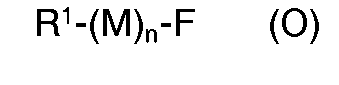
- the telomers obtained are the following (in each telomer, the monomeric unit CF 2 -CFCI is schematically represented by the letter M): wherein R x has the meaning defined above and "n" ranges from 2 to 20. wherein R 1 is a radical derived from R x , in which R x having at least two carbon atoms has lost one or more carbon atoms and/or R x having at least three carbon atoms has undergone a re-arrangement.
- telomers from (A) to (E) and from (G) to (O) are new compounds as long as in formulae (C), (I) and (O) R x and R 1 , resp. is different from perfluoroalkyl and in formula (D) R x is different from perhalomethyl when n ranges from 3 to 15.
- the telomers (F) are new when R x is different from -CF 3 .
- the telomers obtained are the following (in each of the telomers, the monomeric unit CF 2 -CFCI is schematically represented by M: (A), (B), (C), (D), (E), (P) and (Q), indicated above wherein R x and n have the meaning defined above while R 3 is a radical derived from R x , in which R x having at least two carbon atoms has lost one or more carbon atoms and/or R x having at least three carbon atoms has undergone a re-arrangement and one or more chlorine atoms of R x have been substituted by fluorine atoms
- Telomers (R), (S), (T), (U) and (V) are new products.
- telomer chain (M) the monomeric units CF 2 -CFCI are bonded to each other at random, i.e. they follow one another both in a head-to-head and a head-to-tail fashion.
- telomer formulae (M) can be either (CF 2 -CFCI) or (CFCI-CF 2 ). So, with telomers R x -CF 2 -O-(M) n -F (A) there are two corresponding series of products represented by the formulae: in which the end group R x -CF 2 -O- is bound to the group CF 2 , while the end group F is bound to the group CFCI, independently of the linkage of the intermediate monomeric units when n is higher than 2. in which the end group R x -CF 2 -0- is bound to the group CFCI, while the end group F is bound to the group CF 2 , independently of the linkage of the intermediate monomeric units when n is higher than 2.
- telomer mixtures obtained from perfluorofluoroxy compounds or from perhalofluoroxy compounds containing chlorine small amounts of telomers having a formula different from those indicated above can be present.
- R x are perhalogenated methyl, ethyl, n-propyl, i-propyl, n-butyl, sec.-butyl, i-butyl, tert.- butyl, pentyl, hexyl, heptyl, octyl, nonyl and decyl.
- Said groups may have e.g. one or two interspersed O atoms, such as e.g. methoxyethyl, ethoxyethyl, ethoxyethoxyethyl etc.
- R x is a perhaloalkylpolyether radical, it preferably contains two oxygen atoms. Preferably, the radical R x contains from 1 to 5 carbon atoms.
- R x when R x contains chlorine, it is free of vicinal chlorine atoms and -CCl 3 groups; furthermore it is preferably free of -CCI 2 - groups.
- n generally ranges from 2 to 10.
- telomer mixtures prepared by the process of the present invention are useful in particular as hydraulic fluids and as service fluids (operating fluids).
- a gaseous or liquid flow of perhalofluoroxy compound is generally fed to a reactor containing chlorotrifluoroethylene in the liquid state or dissolved in a solvent.
- the reaction can be conducted at a temperature which is higher than the chlorotrifluoroethylene boiling point (-27.9 °C).
- a solvent for chlorotrifluoroethylene which is inert under the reaction conditions, in particular a chlorofluorohydrocarbon, such as for example 1,2-dichlorotetrafluoroethane, fluorotrichloromethane and dichlorodifluoromethane; usually, the chlorotrifluoroethylene content in the solution ranges from 20 to 80% by weight.
- the fluoroxy compound is fed to the reactor as a gas stream.
- the gaseous fluoroxy compound is diluted with a gas which is inert under the reaction conditions.
- inert diluting gases are nitrogen, argon, helium and a gaseous chlorofluorohydrocarbon selected, for example, from 1,2-dichlorotetrafluoroethane and dichlorodifluoromethane.
- the fluoroxy compound concentration in the gaseous mixture ranges from 5 to 80% by volume.
- the fluoroxy compound is fed to the reactor in the liquid state, it is subjected to mixing with a liquid which is inert under the reaction conditions, in particular a chlorofluorohydrocarbon, for example 1,2-dichlorotetrafluoroethane, fluorotrichloromethane and dichlorodifluoromethane, or it is carried, in the form of an aerosol, by a gas which is inert under the reaction conditions, for example nitrogen, argon or helium.
- a liquid which is inert under the reaction conditions in particular a chlorofluorohydrocarbon, for example 1,2-dichlorotetrafluoroethane, fluorotrichloromethane and dichlorodifluoromethane
- a gas which is inert under the reaction conditions for example nitrogen, argon or helium.
- chlorotrifluoroethylene is preferably fed in the liquid state.
- the temperature at which the reaction is conducted ranges from -100 to + 40 ° C.
- a temperature which is at least equal to the threshold temperature of its reaction with chlorotrifluoroethylene this temperature varying from telogen to telogen.
- the variation of the temperature makes it possible to vary, over a wide range, both distribution and nature of the end groups which are present in the telomers, and to adjust, to a certain extent, the telomerization degree.
- the temperature ranges from -30 to -80 ° C.
- the result can be achieved by employing conditions which reduce the amount of heat generated in the reaction medium and promote an effective dispersion thereof.
- telomerization is effected by adduction of a telogen gaseous flow to the chlorotrifluoroethylene, either as a liquid or in solution, this result is obtained by following one or more or all of the following procedures:
- telomers (A), (B) and (Q) By operating according to the above procedures and starting from CF 3 CF 2 0F it is possible to obtain said telomers (A), (B) and (Q) in amounts which can reach or exceed 90% by weight of the total weight of the reaction products.
- telomers different from (A) and (B) will predominantly be obtained. More precisely, in the case of perfluorinated telogens, for example, the following telomers are predominantly obtained:
- the above telomers are obtained in amounts which can reach or exceed 90% by weight of the total weight of the reaction products.
- telomerization degree towards low values.
- This is achieved with low telogen flow rates and with a low temperature of the rection medium and, optionally, by pre-cooling the telogen.
- Another measure which helps to obtain this result consists in carrying out an effective stirring in the reactor. It is possible to obtain, e.g., up to 80% or more of telomers having a value of "n" ranging from 3 to 6.
- telomers having higher values of "n" By operating under inverse conditions, i.e. with higher telogen flow rates and/or with a higher temperature of the reaction medium and, optionally, with a less intense stirring, the production of telomers having higher values of "n" is promoted.
- telogen For each telogen it is possible, therefore, to control the reaction towards the predominant production of telomers containing particular end groups, and to obtain, to a certain extent, a more or less low or a more or less high telomerization degree. It is therefore evident that the process of the present invention allows to obtain a large variety of products capable of meeting various applicative requirements.
- telogen mixture is almost exclusively composed of the following species:
- species la, Ila and Illa may constitute more than 85% of the obtained telomer mixture.
- species la and IVa through IXa may constitute more than 90% of the obtained mixture.
- telomer mixture is almost exclusively composed of the following species:
- species la and IIb through Vlb may constitute more than 90% of the obtained telomer mixture.
- telomer mixture is almost exclusively composed of the following species:
- species la and IIc through Vlc may constitute more than 90% of the obtained telomer mixture.
- a flow of 1.0 NI/h of fluoroxypentafluoroethane and 3.0 NI/h of N 2 was continuously bubbled through 450 g of liquid chlorotrifluoroethylene, cooled to -55 °C, in a 1-liter glass reactor equipped with a reflux condenser, a thermometer and a mechanical stirrer. After 4 hours and 30 minutes the reaction was stopped and the unreacted CTFE (chlorotrifluoroethylene) was distilled off.
- CTFE chlorotrifluoroethylene
- telomeric species la to Xa out of which species la to Illa proved to constitute more than 85% of the mixture.
- Species IXa was present in an amount lower than 1 %.
- the gas-chromatographic analyses revealed that the telomers having a value of "n" from 3 to 6 represented about 90% of the crude product.
- telomers per liter of gaseous CF 3 CF 2 0F.
- Compounds la to Xa were present. About 90% of the mixture was composed of species la to IIIa.
- 1.0 NI/h of CF 3 -CF 2 0F and 5.0 NI/h of N 2 were bubbled through 200 g of CTFE mixed with 200 g of CFCl 3 , at -75 °C, for 14 hours. After the unreacted CTFE and the solvent were distilled off, there were obtained 180 g of product with a yield of about 12.9 g of telomers per liter of gaseous CF 3 -CF 2 0F. Compounds la to Xa were present. Species la to IIIa represented about 90% of the mixture. The telomers having a "n" value ranging from 3 to 6 corresponded to 66% of the total.
- telomers IIb to Xllb, la, Ila, Villa and IXa were present.
- the species la and IIb to Vlb represented about 90% of the mixture.
- Species IXa was present in an amount lower than 1%.
- the "n" values were distributed as follows:
- 1.0 NI/h of CF 3 -CF 2 -CF 2 0F and 8.0 NI/h of N 2 were bubbled through 260 g of CTFE mixed with 260 g of CF 2 Cl-CF 2 Cl, at -50°C, for 5 hours and 30 minutes. After having distilled off the unreacted CTFE and the solvent, 54 g of product were obtained. A yield of about 9.7 g of telomers per liter of gaseous CF 3 -CF 2 -CF 2 0F was calculated. Compounds IIb to Xllb, la, Ila, IXa and Villa were present. More than 90% of the mixture was composed of species la and IIb to Vlb. The telomers having "n" values from 3 to 6 amounted to about 60% of the total.
- 1.0 NI/h of CCIF 2 -CF 2 0F and 5.0 NI/h of N 2 were bubbled through 260 g of CTFE, at -75 °C, for 7 hours and 15 minutes. After distilling-off of the unreacted CTFE, there were obtained 80 g of product with a yield of 11.0 g of telomers per liter of gaseous CCIF 2 -CF 2 0F. Telomers IIc to Xc, la, Ila and IXa were present. More than 90% of the mixture consisted of species la and from IIc to Vlc. Species IXa was present in an amount lower than 1 %.
- the pour point value, the vapor tension value and the unsaturation value are particularly low. Also the heat of combustion value is low. From a comparison of the bulk modulus value with the one of sample 2 (see example 1), a higher value can be observed, which is attributable to the presence of CI in the end groups. Due to the high bulk modulus value, the sample is particularly suited for use in applications where a low compressibility is required.
- n-CaF 7 -O-CF(CF3)-CF 2 OF and 5.0 NI/h of N 2 were bubbled through 250 g of CTFE at -74 °C for 10 hours. After having distilled off the unreacted CTFE, there were obtained 58.5 g of product.
- telomers resulted: where "n" ranges from 2 to 8.
Landscapes
- Chemical & Material Sciences (AREA)
- Organic Chemistry (AREA)
- Chemical Kinetics & Catalysis (AREA)
- Organic Low-Molecular-Weight Compounds And Preparation Thereof (AREA)
- Addition Polymer Or Copolymer, Post-Treatments, Or Chemical Modifications (AREA)
- Lubricants (AREA)
Description
- The present invention relates to new telomers of chlorotrifluoroethylene. Particularly, it relates to new telomers prepared by reaction of chlorotrifluoroethylene with perhalofluoroxy compounds.
- Chlorotrifluoroethylene telomers are utilized in particular as hydraulic fluids. In general, they are prepared by reacting chlorotrifluoroethylene with chlorinated telogens, such as e.g. CC14 and S02CI2. The telomers so obtained contain polychlorinated end groups, for example -CFCI2 and -CC13 which, in applications where high temperatures or oxidizing media are used, can be hydrolysed or oxidized and result in corrosive acid groups.
- Due to the above drawbacks, the telomers so obtained require a stabilizing fluorination treatment for the conversion of the polychlorinated end groups to groups having a higher fluorine content. This treatment is complex and expensive.
- GB-A-2,148,286 describes a process for the production of telomers of formula CF30(CFCICF2)nX wherein n ranges from 1 to 10 and X represents F or OCF3, which comprises reacting chlorotrifluoroethylene with fluoroxytrifluoromethane or bisfluoroxydifluoromethane.
- JP-A-60/184,032 (Chem. Abstr. Vol. 104, No. 13, March 31,1986, Abstr. no. 109007z) describes chlorotrifluoroethylene oligomers of formula R(C2F3CI)nR' wherein R = fluoroalkyl, R1 = F or fluoroalkyl and n = 1-20, prepared by telomerization of C2F3CI with RI and subsequent fluorination or coupling reaction.
- GB-A-927,403 discloses, among others, a composition containing compounds of formulae CF3CFCI-(CF2CFCI)nF and CF3CCI2(CF2CFCI)nF wherein n = 4 to 6.
- FR-A-1,206,546 is concerned with compounds of formula X(CF2CFCI)nY wherein X and Y preferably represent F, Cl, CF3, CF2CI or CCI2 and n ranges from 3 to 15.
- Furthermore, US-A- 4,577,044 describes chlorotrifluoroethylene telomers obtained by reaction of CF2CFCI with CF30F. The following telomeric species were obtained: F(CF2-CFCI)nF, CF30-(CF2CFCI)n-F and CF30-(CF2CFCI)n-OCF3, in which n usually ranges from 1 to 10 and telomeric units (CF2-CFCI) are randomly distributed: i.e. they can be linked to one another both in head-to-head and head-to-tail fashion.
- Since said telomers have a low degree of telomerization, it is assumed that the nature of the end groups and the type of bond (namely oxygen-carbon or carbon-carbon) by which these groups are bound to the monomeric units, may exert a considerable influence on the physical and chemical properties of the telomers, due, in particular, to different binding forces, different sizes of the groups and differences in the steric environment of said groups and in the flexibility of the type of bond (oxygen-carbon or carbon-carbon).
- Consequently, the telomers of chlorotrifluoroethylene with CF30F cannot exhibit a large variety of properties as they possess only the CF30- and F- end groups. On the other hand, it is well known that an optimum property for a particular application of the chlorotrifluoroethylene telomers may be a handicap for another application.
- Thus, it is an object of the present invention to provide a process for the production of chlorotrifluoroethylene telomers with inert end groups both of the perhaloalkyl type (which consequently bind to the monomeric units by means of a carbon-carbon bond) and of the perhaloalkoxy type, i.e. of the ether type (which bind to the monomeric units by means of an oxygen-carbon bond).
- Another object is that of providing a process which allows to vary, over a wide range, both distribution and nature of the end groups which are present in the telomers.
- A further object is that of providing a process which allows to vary, over a wide range, the F/Cl ratio in the telomers. This embodiment has two important aspects. On the one hand, a higher F/Cl ratio, achieved by means of ether and non-ether perfluorinated end groups, leads to a modification of the physical and chemical properties of the telomers, which makes it possible, for example, to obtain lower pour point temperatures, lower heat of combustion values, a lower surface tension and a different variation of the viscosity as a function of temperature. On the other hand, for certain uses, a low F/Cl ratio, achieved through end groups containing CI and F atoms, of the ether and non-ether type, results in special properties such as, for example, a decrease in the compressibility.
- A still further object of the present invention is to provide a process which allows, within certain limits, to control the telomerization reaction so as to obtain telomeric species having a low telomerization degree or, on the contrary, a higher telomerization degree.
- It is therefore apparent that the present invention provides a very flexible process capable of yielding a very broad range of products, with different physical and chemical characteristics, which makes it possible to meet various applicative requirements.
- These and still other objects are achieved by the process of the present invention for preparing chlorotrifluoroethylene telomers. This process is characterized in that chlorotrifluoroethylene is reacted, at a temperature ranging from -100 to +40°C, with a perhalofluoroxy compound of formula Rx-CF20F, wherein Rx is a perhalogenated alkyl radical, a perhaloalkylmonoether radical or a perhaloalkylpolyether radical, either linear or branched, having from 1 to 10 carbon atoms and containing fluorine atoms or fluorine and chlorine atoms, but being free of vicinal chlorine atoms and -CCl3 groups.
- It is assumed that the reaction mechanism involves in part the homolytic rupture of the O-F bond of the fluoroxy compound according to the equation:

- When starting from a perfluorofluoroxy compound, R1 radicals derived from Rx form, in which Rx having at least two carbon atoms has lost one or more carbon atoms and/or Rx having at least three carbon atoms has undergone a re-arrangement. More frequently, radical R1 is a radical R2 which contains a lower number of carbon atoms with respect to Rx. Thus, when Rx contains from 2 to 10 carbon atoms, R2 contains from 1 to 9 carbon atoms. Starting from a perhalofluoroxy compound which contains chlorine, radicals R3 derived from Rx are formed, in which Rx having at least two carbon atoms has lost one or more carbon atoms and/or Rx having at least 3 carbon atoms has undergone a re-arrangement and one or more chlorine atoms of Rx have been substituted by fluorine atoms.
- More commonly, radical R3 is a radical R4 which contains a lower number of carbon atoms with respect to Rx (i.e. when Rx contains from 2 to 10 carbon atoms, R4 contains from 1 to 9 carbon atoms) and in which one or more chlorine atoms have been substituted by fluorine atoms.
- It has been found that the telomerization product consists of a mixture of telomers having different end groups.
- When starting from a perfluorofluoroxy compound, the telomers obtained are the following (in each telomer, the monomeric unit CF2-CFCI is schematically represented by the letter M):








- The telomers from (A) to (E) and from (G) to (O) are new compounds as long as in formulae (C), (I) and (O) Rx and R1, resp. is different from perfluoroalkyl and in formula (D) Rx is different from perhalomethyl when n ranges from 3 to 15. The telomers (F) are new when Rx is different from -CF3.
- When starting from a perhalofluoroxy compound which contains chlorine, the telomers obtained are the following (in each of the telomers, the monomeric unit CF2-CFCI is schematically represented by M: (A), (B), (C), (D), (E), (P) and (Q), indicated above


- Telomers (R), (S), (T), (U) and (V) are new products. In the telomer chain (M)n the monomeric units CF2-CFCI are bonded to each other at random, i.e. they follow one another both in a head-to-head and a head-to-tail fashion.
- It has to be borne in mind that in the indicated telomer formulae (M) can be either (CF2-CFCI) or (CFCI-CF2). So, with telomers Rx-CF2-O-(M)n-F (A) there are two corresponding series of products represented by the formulae:


- In the telomer mixtures obtained from perfluorofluoroxy compounds or from perhalofluoroxy compounds containing chlorine, small amounts of telomers having a formula different from those indicated above can be present.
- Examples of Rx are perhalogenated methyl, ethyl, n-propyl, i-propyl, n-butyl, sec.-butyl, i-butyl, tert.- butyl, pentyl, hexyl, heptyl, octyl, nonyl and decyl. Said groups may have e.g. one or two interspersed O atoms, such as e.g. methoxyethyl, ethoxyethyl, ethoxyethoxyethyl etc.
- When Rx is a perhaloalkylpolyether radical, it preferably contains two oxygen atoms. Preferably, the radical Rx contains from 1 to 5 carbon atoms.
- As already mentioned herein, when Rx contains chlorine, it is free of vicinal chlorine atoms and -CCl3 groups; furthermore it is preferably free of -CCI2- groups. In the preferred products, n generally ranges from 2 to 10.
- The telomer mixtures prepared by the process of the present invention are useful in particular as hydraulic fluids and as service fluids (operating fluids).
- To carry out the reaction, a gaseous or liquid flow of perhalofluoroxy compound is generally fed to a reactor containing chlorotrifluoroethylene in the liquid state or dissolved in a solvent. When operating under pressure, the reaction can be conducted at a temperature which is higher than the chlorotrifluoroethylene boiling point (-27.9 °C). If the reaction is carried out in solution, a solvent for chlorotrifluoroethylene is used which is inert under the reaction conditions, in particular a chlorofluorohydrocarbon, such as for example 1,2-dichlorotetrafluoroethane, fluorotrichloromethane and dichlorodifluoromethane; usually, the chlorotrifluoroethylene content in the solution ranges from 20 to 80% by weight.
- Generally, the fluoroxy compound is fed to the reactor as a gas stream. Preferably, the gaseous fluoroxy compound is diluted with a gas which is inert under the reaction conditions. Examples of inert diluting gases are nitrogen, argon, helium and a gaseous chlorofluorohydrocarbon selected, for example, from 1,2-dichlorotetrafluoroethane and dichlorodifluoromethane. Usually, the fluoroxy compound concentration in the gaseous mixture ranges from 5 to 80% by volume.
- If the fluoroxy compound is fed to the reactor in the liquid state, it is subjected to mixing with a liquid which is inert under the reaction conditions, in particular a chlorofluorohydrocarbon, for example 1,2-dichlorotetrafluoroethane, fluorotrichloromethane and dichlorodifluoromethane, or it is carried, in the form of an aerosol, by a gas which is inert under the reaction conditions, for example nitrogen, argon or helium.
- It is also possible to feed to the reactor containing a solvent for chlorotrifluoroethylene a gaseous or liquid fluoroxy compound flow, according to one of the feeding methods indicated herein-before, and, separately, a gaseous or liquid chlorotrifluoroethylene flow: in this case, chlorotrifluoroethylene is preferably fed in the liquid state.
- The temperature at which the reaction is conducted ranges from -100 to + 40 ° C. For each fluoroxy compound it is necessary to work at a temperature which is at least equal to the threshold temperature of its reaction with chlorotrifluoroethylene, this temperature varying from telogen to telogen. Furthermore, as will be explained below, the variation of the temperature makes it possible to vary, over a wide range, both distribution and nature of the end groups which are present in the telomers, and to adjust, to a certain extent, the telomerization degree. Preferably, the temperature ranges from -30 to -80 ° C.
- By means of the process of the present invention it is possible to control the reaction in such way as to obtain prevailingly the telomers of formula:



- The result can be achieved by employing conditions which reduce the amount of heat generated in the reaction medium and promote an effective dispersion thereof.
- If the telomerization is effected by adduction of a telogen gaseous flow to the chlorotrifluoroethylene, either as a liquid or in solution, this result is obtained by following one or more or all of the following procedures:
- 1) according to the first procedure, the reaction is conducted in a lower temperature range, provided the temperature is still higher than the threshold temperature of the reaction;
- 2) another procedure consists in the precooling of the telogen before it is fed to the reactor. In this case, the telogen is employed in the gaseous or in the liquid state: if it is introduced in the liquid state, the feeding is carried out according to the previously described procedure;
- 3) a further procedure consists in decreasing the telogen flow rate or in increasing its dilution in the inert gas.
- Effective stirring in the reactor also helps to obtain the desired result. Obviously, the lower the temperature of the reaction medium and the more effective the stirring and the lower the precooling temperature of the telogen, the higher is the telogen flow rate which can be used.
- By operating according to the above procedures and starting from CF3CF20F it is possible to obtain said telomers (A), (B) and (Q) in amounts which can reach or exceed 90% by weight of the total weight of the reaction products.
- Conversely, if higher temperatures of the reaction medium and/or higher telogen flow rates and a less effective stirring are employed, telomers different from (A) and (B) will predominantly be obtained. More precisely, in the case of perfluorinated telogens, for example, the following telomers are predominantly obtained:


- In the case of chlorine-containing telogens there are prevailingly obtained, for example, the following telomers.


- When working according to the last mentioned procedures and starting from CCIF2-CF20F, the above telomers are obtained in amounts which can reach or exceed 90% by weight of the total weight of the reaction products.
- According to another embodiment of the process of the present invention, using conditions which make it possible to direct the telomerization reaction prevailingly to the desired telomeric species, it is also possible, by reducing the amount of heat evolved in the reaction medium and by promoting an effective dispersion thereof, to direct, within certain limits, the telomerization degree towards low values. This is achieved with low telogen flow rates and with a low temperature of the rection medium and, optionally, by pre-cooling the telogen. Another measure which helps to obtain this result consists in carrying out an effective stirring in the reactor. It is possible to obtain, e.g., up to 80% or more of telomers having a value of "n" ranging from 3 to 6.
- By operating under inverse conditions, i.e. with higher telogen flow rates and/or with a higher temperature of the reaction medium and, optionally, with a less intense stirring, the production of telomers having higher values of "n" is promoted.
- For each telogen it is possible, therefore, to control the reaction towards the predominant production of telomers containing particular end groups, and to obtain, to a certain extent, a more or less low or a more or less high telomerization degree. It is therefore evident that the process of the present invention allows to obtain a large variety of products capable of meeting various applicative requirements.
- Among the fluoroxy compounds utilizable in the process of the present invention, the following can be cited:
- fluoroxy pentafluoroethane
- 1-fluoroxy heptafluoropropane
- 1-fluoroxy nonafluorobutane
- 1-fluoroxy 2-chlorotetrafluoroethane
- 1-fluoroxy 2,2'-dichlorotrifluoroethane
- fluoroxy heptafluoroisopropane
- fluoroxy nonafluoroisobutane
- fluoroxy nonafluoro-ter.butane
- 1-fluoroxy-2-perfluoro n.propoxy-hexafluoropropane
- 1-fluoroxy-2-perfluoromethoxy-hexafluoropropane
- 1-fluoroxy-2-perfluoroethoxy-hexafluoropropane and
- 1-fluoroxy-3-chlorohexafluoro n.propane.
- When CF3CF20F is used as a telogen, the resulting telogen mixture is almost exclusively composed of the following species:





- By reducing the amount of heat evolved in the reaction medium and by promoting its effective dispersion, according to the procedures specified hereinbefore, species la, Ila and Illa may constitute more than 85% of the obtained telomer mixture.
- Conversely, by increasing the amount of heat evolved in the reaction medium, according to the procedures indicated hereinbefore, species la and IVa through IXa may constitute more than 90% of the obtained mixture.
- When CF3-CF2-CF20F is used as the telogen, the obtained telomer mixture is almost exclusively composed of the following species:





- By reducing the amount of heat evolved in the reaction medium and by promoting an effective dispersion thereof according to the previously indicated procedures, species la and IIb through Vlb may constitute more than 90% of the obtained telomer mixture.
- When CICF2-CF20F is used as the telogen, the obtained telomer mixture is almost exclusively composed of the following species:





- When reducing the amount of heat evolved in the reaction medium and promoting an effective dispersion thereof, according to the procedures indicated hereinbefore, species la and IIc through Vlc may constitute more than 90% of the obtained telomer mixture.
- The main advantages of the present invention can be summarized as follows:
- 1) inert end groups are obtained which impart high chemical and thermal stability to the telomers;
- 2) it is possible to vary, over a wide range, both distribution and nature of the end groups which are present in the obtained telomeric species and, to a certain extent, the telomerization degree, thus resulting in large variety of products having different physical and chemical properties, which are suited to meet various different applicative requirements;
- 3) it is possible to vary, over a wide range, the F/Cl ratio of the telomers obtained. Thus, it is possible to obtain products having a high F/Cl ratio and endowed with particular physical and chemical properties. Furthermore, it is possible to obtain telomers with a lower F/Cl ratio which can impart particular properties to the products such as, for example, a low compressibility.
- The following examples are given merely to illustrate the present invention and are not to be construed as a limitation thereof.
- A flow of 1.0 NI/h of fluoroxypentafluoroethane and 3.0 NI/h of N2 was continuously bubbled through 450 g of liquid chlorotrifluoroethylene, cooled to -55 °C, in a 1-liter glass reactor equipped with a reflux condenser, a thermometer and a mechanical stirrer. After 4 hours and 30 minutes the reaction was stopped and the unreacted CTFE (chlorotrifluoroethylene) was distilled off. There were obtained 71 g of product; by gas-chromatographic analysis, the composition was evaluated in terms of "n" values, whereafter it was possible to calculate a yield of about 50%, based on CF3-CF20F, corresponding to about 15.8 g of telomers per liter of gaseous telogen. The product was subjected to further analysis via gas-mass spectroscopy by means of a capillary column SE-52. Moreover, 19 F-N.M.R. spectra were recorded on a BRUKER apparatus AM 300, dissolving the samples in CDCl3.
- From these tests it was concluded that the product consisted of telomeric species la to Xa, out of which species la to Illa proved to constitute more than 85% of the mixture. Species IXa was present in an amount lower than 1 %. The gas-chromatographic analyses revealed that the telomers having a value of "n" from 3 to 6 represented about 90% of the crude product.
- Said product was then subjected to fractionated distillation under reduced pressure. In this manner there were removed a head product consisting of CTFE residues and of non-telomeric by-products, and a tail product consisting of telomeric high-boiling products and of telomeric waxy products. The thus obtained product was a colorless oil (designated as sample 1), whose distribution in terms of "n" values, as concluded from the gas-chromatographic analysis, was as follows:

- A second distillation under reduced pressure was then carried out in order to decrease the amount of telomers having a "n" value equal to 2. Thus, sample 2 having the following distribution of the "n" values was obtained:

- On samples 1 and 2, the following physical and chemical properties were determined :
- - density according to method ISO R/758
- - viscosity according to standard ASTM D445
- - pour point according to standard ASTM D99
- - vapour tension according to the method of the pressure transducer as described in Journ. of Chem. and Eng. Data, vol. 13, No. 3, July 1969
- - heat of combustion according to standard ASTM D240
- - unsaturation according to the method illustrated in the technical handbook by Halocarbon Product Corporation
- - bulk modulus by measuring the propagation rate of the supersonic waves.
- The results obtained are given in the following Table 1.

- To be noticed are the particularly low values of pour point, heat of combustion and unsaturation.
- Following the procedure of example 1, 1.0 NI/h of CF3-CF20F and 4.0 NI/h of nitrogen were bubbled through 450 g of liquid CTFE, at -75 °C, during 6 hours. After removal of the unreacted CTFE there were obtained 101 g of product with a yield of about 15.0 g of telomers per liter of gaseous CF3-CF20F. The compounds la to Xa were present. About 90% of the mixture was composed of the species la to IIIa. The telomers having a value of "n" ranging from 3 to 6 amounted to about 93% of the total.
- Following the procedure of example 1, 2.0 NI/h of CF3-CF20F and 4.0 NI/h of N2 were bubbled through 260 g of liquid CTFE, at -40 ° C, for 3 hours and 30 minutes. After removal of the unreacted CTFE, there were obtained 63 g of product with a yield of about 9.0 g of telomers per liter of gaseous CF3-CF20F. Compounds la to Xa were present. The species IVa to Xa represented about 90% of the mixture.
- After the unreacted CTFE was distilled off, the following distribution of the "n" values resulted:

- Following the procedure of example 1, 1.0 NI/h of CF3-CF20F and 3.0 NI/h of N2 were bubbled through 160 g of CTFE mixed with 160 g of CF2Cl-CF2Cl, at -55°C, for 6 hours.
- After the unreacted CTFE and the solvent were distilled off, 71 g of product were obtained, the yield being about 11.3 g of telomers per liter of gaseous CF3CF20F. Compounds la to Xa were present. About 90% of the mixture was composed of species la to IIIa. The telomers having a "n" value ranging from 3 to 6 amounted to 76% of the total.
- Following the procedure of example 1, 1.0 NI/h of CF3-CF20F and 5.0 NI/h of N2 were bubbled through 200 g of CTFE mixed with 200 g of CFCl3, at -75 °C, for 14 hours. After the unreacted CTFE and the solvent were distilled off, there were obtained 180 g of product with a yield of about 12.9 g of telomers per liter of gaseous CF3-CF20F. Compounds la to Xa were present. Species la to IIIa represented about 90% of the mixture. The telomers having a "n" value ranging from 3 to 6 corresponded to 66% of the total.
- Following the procedure of example 1, 1.0 NI/h of CF3-CF2-CF20F and 8.0 NI/h of N2 were bubbled through 260 g of CTFE, at -50 ° C, for 8 hours. After the unreacted CTFE was distilled off, 72 g of product were obtained. A yield of about 9.0 g of telomers per liter of gaseous CF3-CF2-CF20F was calculated. The telomers IIb to Xllb, la, Ila, Villa and IXa were present. The species la and IIb to Vlb represented about 90% of the mixture. Species IXa was present in an amount lower than 1%. The "n" values were distributed as follows:

- Following the procedure of example 1, 1.0 NI/h of CF3-CF2-CF20F and 8.0 NI/h of N2 were bubbled through 260 g of CTFE mixed with 260 g of CF2Cl-CF2Cl, at -50°C, for 5 hours and 30 minutes. After having distilled off the unreacted CTFE and the solvent, 54 g of product were obtained. A yield of about 9.7 g of telomers per liter of gaseous CF3-CF2-CF20F was calculated. Compounds IIb to Xllb, la, Ila, IXa and Villa were present. More than 90% of the mixture was composed of species la and IIb to Vlb. The telomers having "n" values from 3 to 6 amounted to about 60% of the total.
- Following the procedure of example 1, 1.0 NI/h of CCIF2-CF20F and 5.0 NI/h of N2 were bubbled through 260 g of CTFE, at -75 °C, for 7 hours and 15 minutes. After distilling-off of the unreacted CTFE, there were obtained 80 g of product with a yield of 11.0 g of telomers per liter of gaseous CCIF2-CF20F. Telomers IIc to Xc, la, Ila and IXa were present. More than 90% of the mixture consisted of species la and from IIc to Vlc. Species IXa was present in an amount lower than 1 %.
- The product was then subjected to fractionated distillation at reduced pressure. Thereby there were removed a head product prevailingly consisting of CTFE residues and a tail product consisting of high-boiling products and waxy products. A colorless oil (designated as fraction 3) was obtained which had the following "n" value distribution:

- On sample 3 there were determined the same physical and chemical properties as in example 1. The results are given in the following Table 2.

- It is to be noticed that the pour point value, the vapor tension value and the unsaturation value are particularly low. Also the heat of combustion value is low. From a comparison of the bulk modulus value with the one of sample 2 (see example 1), a higher value can be observed, which is attributable to the presence of CI in the end groups. Due to the high bulk modulus value, the sample is particularly suited for use in applications where a low compressibility is required.
- Following the procedure of example 1, 1.0 NI/h of CCIF2-CF20F and 5.0 NI/h of N2 were bubbled through 130 g of CTFE mixed with 160 g of CF2Cl-CF2Cl at -74°C for 9 hours. After having distilled off the unreacted CTFE and the solvent, there were obtained 59 g of product, with a yield of about 6.6 g of telomers per liter of gaseous CCIF2-CF20F. Compounds la, IXa and IIc to Xc were present. More than 90% of the mixture were composed of species la and IIc to Vlc. About 40% of the mixture were composed of species la and IIc to IVc.
- The telomers having a value of "n" ranging from 3 to 6 amounted to 58% of the total.
- Following the procedure of example 1, 1.0 NI/h of n-CaF7-O-CF(CF3)-CF2OF and 5.0 NI/h of N2 were bubbled through 250 g of CTFE at -74 °C for 10 hours. After having distilled off the unreacted CTFE, there were obtained 58.5 g of product. The following telomers resulted:


Claims (19)





















Applications Claiming Priority (2)
| Application Number | Priority Date | Filing Date | Title |
|---|---|---|---|
| IT2317987 | 1987-12-23 | ||
| IT8723179A IT1233434B (en) | 1987-12-23 | 1987-12-23 | CHLOROTRIFLUOROETHYLENE TELOMERI AND PROCESS FOR THEIR PREPARATION |
Publications (2)
| Publication Number | Publication Date |
|---|---|
| EP0321990A1 EP0321990A1 (en) | 1989-06-28 |
| EP0321990B1 true EP0321990B1 (en) | 1993-04-14 |
Family
ID=11204596
Family Applications (1)
| Application Number | Title | Priority Date | Filing Date |
|---|---|---|---|
| EP88121539A Expired - Lifetime EP0321990B1 (en) | 1987-12-23 | 1988-12-22 | New chlorotrifluoroethylene telomers and process for preparing them |
Country Status (5)
| Country | Link |
|---|---|
| US (1) | US5013472A (en) |
| EP (1) | EP0321990B1 (en) |
| JP (1) | JP2807888B2 (en) |
| DE (1) | DE3880287T2 (en) |
| IT (1) | IT1233434B (en) |
Families Citing this family (9)
| Publication number | Priority date | Publication date | Assignee | Title |
|---|---|---|---|---|
| IT1219736B (en) * | 1988-06-30 | 1990-05-24 | Ausimont Spa | 1.2 DICHLORO 1.2 DIFLUOROETHYLENE TELOMERI AND PROCESS FOR THEIR PREPARATION |
| IT1227850B (en) * | 1989-01-12 | 1991-05-10 | Ausimont Srl M | PROCESS FOR THE PREPARATION OF CHLOROTRIFLUOROETHYLENE TELOMERI AND NEW TELOMERI OBTAINED. |
| IT1230873B (en) * | 1989-06-20 | 1991-11-08 | Ausimont Srl | PROCESS FOR THE PREPARATION OF PERALOETHERS FROM PERALOOLEFINS AND NEW PERALOETHERS OBTAINED. |
| IT1241679B (en) * | 1990-03-06 | 1994-01-31 | Ausimont Spa | PERFLUOROPOLYETERS AND PROCESSES FOR THEIR PREPARATION |
| US5237108A (en) * | 1990-03-06 | 1993-08-17 | Ausimont S.R.L. | Perfluoropolyethers and processes for their preparation |
| US5220076A (en) * | 1990-03-06 | 1993-06-15 | Ausimont S.R.L. | Perfluoropolyethers and processes for their preparation |
| US5145592A (en) * | 1990-12-17 | 1992-09-08 | Dow Corning Corporation | Neutral hydrogen-free fluorocarbon cotelomers |
| IT1275568B (en) * | 1995-07-19 | 1997-08-07 | Ausimont Spa | PROCESS FOR THE PREPARATION OF FLUOROSSI- OR CHLOROSSI- PERFLUOROACILFLUORURI |
| US7276467B2 (en) * | 2000-09-07 | 2007-10-02 | Southwest Research Institute | Insulating medium |
Family Cites Families (8)
| Publication number | Priority date | Publication date | Assignee | Title |
|---|---|---|---|---|
| US3076765A (en) * | 1957-02-15 | 1963-02-05 | Minnesota Mining & Mfg | High viscosity flotation and damping fluid |
| FR1206546A (en) * | 1957-11-02 | 1960-02-10 | Hoechst Ag | Drive agents for vacuum pumps |
| GB927403A (en) | 1958-08-21 | 1963-05-29 | Pennsalt Chemicals Corp | Fluorine-containing telomer halides |
| US4528109A (en) * | 1983-08-03 | 1985-07-09 | Occidental Chemical Corporation | Non-flammable hydraulic fluids |
| GB2148286B (en) * | 1983-10-24 | 1987-09-30 | Occidental Chem Co | Preparation of chlorotrifluoroethylene telomers with fluoroxytrifluoromethane and bisfluoroxydifluoro methane |
| US4577044A (en) * | 1983-10-24 | 1986-03-18 | Occidental Chemical Corporation | Preparation of chlorotrifluoroethylene telomers with fluoroxytrifluoromethane |
| US4533762A (en) * | 1983-10-24 | 1985-08-06 | Occidental Chemical Corporation | Preparation of chlorotrifluoroethylene telomers with bisfluoroxydifluoromethane |
| IT1213536B (en) * | 1986-11-14 | 1989-12-20 | Ausimont Spa | 2-BROMO, 1 ', 2', - DICHLORO-PERFLUORO DIETYL-ETHER AND PROCEDURE FOR LASUA PREPARATION. |
-
1987
- 1987-12-23 IT IT8723179A patent/IT1233434B/en active
-
1988
- 1988-12-22 EP EP88121539A patent/EP0321990B1/en not_active Expired - Lifetime
- 1988-12-22 DE DE88121539T patent/DE3880287T2/en not_active Expired - Fee Related
- 1988-12-22 JP JP63322256A patent/JP2807888B2/en not_active Expired - Fee Related
- 1988-12-23 US US07/289,004 patent/US5013472A/en not_active Expired - Lifetime
Also Published As
| Publication number | Publication date |
|---|---|
| JP2807888B2 (en) | 1998-10-08 |
| IT8723179A0 (en) | 1987-12-23 |
| JPH01265043A (en) | 1989-10-23 |
| US5013472A (en) | 1991-05-07 |
| DE3880287T2 (en) | 1993-10-21 |
| IT1233434B (en) | 1992-03-31 |
| DE3880287D1 (en) | 1993-05-19 |
| EP0321990A1 (en) | 1989-06-28 |
Similar Documents
| Publication | Publication Date | Title |
|---|---|---|
| EP0393700B1 (en) | Process for the preparation of peroxidic perfluoropolyethers | |
| EP0321990B1 (en) | New chlorotrifluoroethylene telomers and process for preparing them | |
| JP3830175B2 (en) | Process for producing perfluoropolyethers | |
| GB2311522A (en) | Perfluorocarbon production | |
| EP0404076B1 (en) | Process for preparing perhaloethers from perhaloolefins and perhaloethers obtained thereby | |
| US4577044A (en) | Preparation of chlorotrifluoroethylene telomers with fluoroxytrifluoromethane | |
| GB2148286A (en) | Preparation of chlorotrifluoroethylene telomers with fluoroxytrifluromethane and bisfluoroxydifluoro methane | |
| EP0348981B1 (en) | Process for preparing fluorinated conjugated olefinic products | |
| EP1947163B1 (en) | Use for lubricating metals | |
| EP0379070B1 (en) | Process for preparing chlorotrifluoroethylene telomers and telomers obtained thereby | |
| US4533762A (en) | Preparation of chlorotrifluoroethylene telomers with bisfluoroxydifluoromethane | |
| US3219712A (en) | Method for the preparation of telomer iodides | |
| US5145592A (en) | Neutral hydrogen-free fluorocarbon cotelomers | |
| WO1999019284A1 (en) | Thermal process for the preparation of a telomeric alkyl iodide | |
| US3156732A (en) | Telomers from tetrafluoroethylene and secondary iodides | |
| US4634797A (en) | Coupling of chloroperfluoroalkanes | |
| CA2642730A1 (en) | Terminally iodized polyfluoroalkane oligomer and method for producing same | |
| US3089911A (en) | Halogenated organic compounds | |
| US2898382A (en) | Halogenated cotelomers | |
| JPH0276834A (en) | Novel telomer of 1, 2-dichloro-1, 2-difluoroethylene and its production | |
| JP2005213255A (en) | Method for producing fluorohalogen ether | |
| EP0093579A2 (en) | Process for fluorinating chlorofluoro telomers | |
| JP2000319217A (en) | New fluorine-containing tertiary butyl ether |
Legal Events
| Date | Code | Title | Description |
|---|---|---|---|
| PUAI | Public reference made under article 153(3) epc to a published international application that has entered the european phase |
Free format text: ORIGINAL CODE: 0009012 |
|
| AK | Designated contracting states |
Kind code of ref document: A1 Designated state(s): BE DE FR GB IT NL |
|
| 17P | Request for examination filed |
Effective date: 19890908 |
|
| 17Q | First examination report despatched |
Effective date: 19910513 |
|
| ITF | It: translation for a ep patent filed | ||
| RAP1 | Party data changed (applicant data changed or rights of an application transferred) |
Owner name: AUSIMONT S.P.A. |
|
| GRAA | (expected) grant |
Free format text: ORIGINAL CODE: 0009210 |
|
| AK | Designated contracting states |
Kind code of ref document: B1 Designated state(s): BE DE FR GB IT NL |
|
| REF | Corresponds to: |
Ref document number: 3880287 Country of ref document: DE Date of ref document: 19930519 |
|
| ET | Fr: translation filed | ||
| PLBE | No opposition filed within time limit |
Free format text: ORIGINAL CODE: 0009261 |
|
| STAA | Information on the status of an ep patent application or granted ep patent |
Free format text: STATUS: NO OPPOSITION FILED WITHIN TIME LIMIT |
|
| 26N | No opposition filed | ||
| PGFP | Annual fee paid to national office [announced via postgrant information from national office to epo] |
Ref country code: NL Payment date: 19991228 Year of fee payment: 12 |
|
| PG25 | Lapsed in a contracting state [announced via postgrant information from national office to epo] |
Ref country code: NL Free format text: LAPSE BECAUSE OF NON-PAYMENT OF DUE FEES Effective date: 20010701 |
|
| NLV4 | Nl: lapsed or anulled due to non-payment of the annual fee |
Effective date: 20010701 |
|
| REG | Reference to a national code |
Ref country code: GB Ref legal event code: IF02 |
|
| PGFP | Annual fee paid to national office [announced via postgrant information from national office to epo] |
Ref country code: DE Payment date: 20041216 Year of fee payment: 17 |
|
| PGFP | Annual fee paid to national office [announced via postgrant information from national office to epo] |
Ref country code: GB Payment date: 20041222 Year of fee payment: 17 |
|
| PGFP | Annual fee paid to national office [announced via postgrant information from national office to epo] |
Ref country code: BE Payment date: 20050701 Year of fee payment: 17 |
|
| PGFP | Annual fee paid to national office [announced via postgrant information from national office to epo] |
Ref country code: FR Payment date: 20050825 Year of fee payment: 18 |
|
| PG25 | Lapsed in a contracting state [announced via postgrant information from national office to epo] |
Ref country code: IT Free format text: LAPSE BECAUSE OF NON-PAYMENT OF DUE FEES;WARNING: LAPSES OF ITALIAN PATENTS WITH EFFECTIVE DATE BEFORE 2007 MAY HAVE OCCURRED AT ANY TIME BEFORE 2007. THE CORRECT EFFECTIVE DATE MAY BE DIFFERENT FROM THE ONE RECORDED. Effective date: 20051222 Ref country code: GB Free format text: LAPSE BECAUSE OF NON-PAYMENT OF DUE FEES Effective date: 20051222 |
|
| PG25 | Lapsed in a contracting state [announced via postgrant information from national office to epo] |
Ref country code: BE Free format text: LAPSE BECAUSE OF NON-PAYMENT OF DUE FEES Effective date: 20051231 |
|
| PG25 | Lapsed in a contracting state [announced via postgrant information from national office to epo] |
Ref country code: DE Free format text: LAPSE BECAUSE OF NON-PAYMENT OF DUE FEES Effective date: 20060701 |
|
| GBPC | Gb: european patent ceased through non-payment of renewal fee |
Effective date: 20051222 |
|
| REG | Reference to a national code |
Ref country code: FR Ref legal event code: ST Effective date: 20070831 |
|
| BERE | Be: lapsed |
Owner name: *AUSIMONT S.P.A. Effective date: 20051231 |
|
| PG25 | Lapsed in a contracting state [announced via postgrant information from national office to epo] |
Ref country code: FR Free format text: LAPSE BECAUSE OF NON-PAYMENT OF DUE FEES Effective date: 20070102 |