EP0322181A2 - Methode zur Trennung von organischen flüchtigen Elementen - Google Patents
Methode zur Trennung von organischen flüchtigen Elementen Download PDFInfo
- Publication number
- EP0322181A2 EP0322181A2 EP88312037A EP88312037A EP0322181A2 EP 0322181 A2 EP0322181 A2 EP 0322181A2 EP 88312037 A EP88312037 A EP 88312037A EP 88312037 A EP88312037 A EP 88312037A EP 0322181 A2 EP0322181 A2 EP 0322181A2
- Authority
- EP
- European Patent Office
- Prior art keywords
- acetonitrile
- organic
- compounds
- water
- composition
- Prior art date
- Legal status (The legal status is an assumption and is not a legal conclusion. Google has not performed a legal analysis and makes no representation as to the accuracy of the status listed.)
- Ceased
Links
Images





Classifications
-
- G—PHYSICS
- G01—MEASURING; TESTING
- G01N—INVESTIGATING OR ANALYSING MATERIALS BY DETERMINING THEIR CHEMICAL OR PHYSICAL PROPERTIES
- G01N25/00—Investigating or analyzing materials by the use of thermal means
- G01N25/14—Investigating or analyzing materials by the use of thermal means by using distillation, extraction, sublimation, condensation, freezing, or crystallisation
-
- Y—GENERAL TAGGING OF NEW TECHNOLOGICAL DEVELOPMENTS; GENERAL TAGGING OF CROSS-SECTIONAL TECHNOLOGIES SPANNING OVER SEVERAL SECTIONS OF THE IPC; TECHNICAL SUBJECTS COVERED BY FORMER USPC CROSS-REFERENCE ART COLLECTIONS [XRACs] AND DIGESTS
- Y10—TECHNICAL SUBJECTS COVERED BY FORMER USPC
- Y10T—TECHNICAL SUBJECTS COVERED BY FORMER US CLASSIFICATION
- Y10T436/00—Chemistry: analytical and immunological testing
- Y10T436/25—Chemistry: analytical and immunological testing including sample preparation
Definitions
- the present invention is directed to methods and apparatus for analysis of organic flavor volatile components of food products. More particularly, the present invention is directed to methods and apparatus for phase separation extraction and quantitative or qualitative analysis of organic flavor volatile compounds of biological materials, such as food products.
- Flavor volatile compounds particularly including relatively nonpolar, flavor volatile organic compounds having less than 15 carbon atoms comprising at least one polarity-inducing element (e.g., oxygen, sulfur or nitrogen) are generally well known as important constituents of food products, which may profoundly or subtly affect their palatability and organoleptic characteristics. Very small amounts of flavor volatile components have an extremely important effect on the flavor and palatability of food products. Accordingly, in the preparation or testing of conventional food products, as well as in the development of new food products, it is desirable to analyze the food products, either quantitatively or qualitatively, for flavor volatile compounds.
- polarity-inducing element e.g., oxygen, sulfur or nitrogen
- food products such as dairy products may typically contain major proportions of components such as fats, proteins, amino acids and salts which mask, dilute or otherwise interfere with flavor volatile assay.
- one method for assay of flavor volatile compounds in cheese products involves comminution of the cheese product samples with a filler substrate such as a clay substrate to form an intimate substrate-cheese blend, and packing the blend into a column for subsequent extraction. Pure acetonitrile may be passed through the column, with flavor components being extracted into the acetonitrile [N.P. Wong, et al., J. Dairy Sci., 51 (1968) 1768-69].
- New methods for assay of organic flavor volatile compounds which provide effective and convenient extraction of flavor volatile compounds from food products while minimizing interfering or masking components would be desirable, and it is an object of the present invention to provide such methods.
- New methods for extraction of selected polar components of biological fermentations would also be desirable, and it is similarly an object of the present invention to provide such methods.
- It is a further object of the invention to provide automated methods for organic flavor component analysis which may be readily and conveniently used in repetitive analytical testing systems.
- organic flavor compound such as an organic flavor volatile compound
- a polar organic compound which is a constituent of a food product or a bioculture composition or product, having less than 15 carbon atoms and comprising at least one element selected from the group consisting of oxygen, sulfur and nitrogen.
- organic flavor compound includes derivatized flavor compounds, such as 3-methyl-2-benzothiazolinone hydrazone derivatives of ketone flavor volatile compounds. Derivatizations may be utilized to modify or improve separation and/or detection characteristics.
- the food composition may be any edible food product, mixture of food products or biological material for which flavor component analysis is desired.
- Such food compositions may comprise carbohydrate-rich foods such as cereals and grains (e.g., rice, oats, barley, corn and wheat), protein-rich foods such as meat, poultry, fish, eggs, legumes, nuts and dairy products (e.g., milk, natural cheese, process cheese, cottage cheese and cream cheese), lipid-rich foods such as butter and vegetable oils, vegetables and fruits, edible seasonings and flavorings, as well as mixtures, blends and prepared combinations of such food compositions.
- carbohydrate-rich foods such as cereals and grains (e.g., rice, oats, barley, corn and wheat)
- protein-rich foods such as meat, poultry, fish, eggs, legumes, nuts and dairy products (e.g., milk, natural cheese, process cheese, cottage cheese and cream cheese)
- lipid-rich foods such as butter and vegetable oils, vegetables and fruits, edible seasonings and flavorings, as well
- bioculture compositions which may also be food products or compounds of food products.
- bioculture compositions are bacterial, animal, yeast or other plant cell cultures in which one or more polar organic compounds is elaborated or produced by the culture. Included in this term are hydrolysis products and derivatives of sequential or stepwise hydrolysis products of cell components and products, which may be separated by methods in accordance with the present invention for genetic engineering or purification purposes.
- the food compostion or bioculture product is dispersed in a fluid mixture of acetonitrile and water to provide a fluid food composition dispersion at a preselected dispersion-extraction temperature in the range of from about 10°C. to about 100°C.
- the food composition may be dispersed in an acetonitrile/water mixture by any suitable mixing technique such as dissolution, homogenization, maceration and/or high or low shear blending or milling in admixture with a fluid acetonitrile-water mixture.
- the acetonitrile-water mixture will consist essentially of acetonitrile and water.
- the acetonitrile mixture will be substantially free of other solvent components, but in various applications, small amounts of other solvent components may be included if they do not interfere with the analysis or extraction.
- appropriate amounts of the food or bioculture composition, water and acetonitrile will be combined to provide a fluid food composition and/or bioculture composition dispersion having from about 10 to about 50 percent by weight of nonaqueous food or bioculture solids and from about 50 to about 90 weight percent of acetonitrile, based on the total weight of the fluid food and/or bioculture composition dispersion.
- the food or bioculture composition itself may be anhydrous (e.g., certain dried or lipid based food products) or, more typically, may contain a substantial amount of water.
- the amount of water in the food or bioculture composition product, and the affinity of the food or bioculture composition for water, will be a factor in the determination of the respective amount of water (if any) and acetonitrile to combine with the food or bioculture composition to form the dispersion with acetonitrile and water.
- the acetonitrile and water components of the fluid food or bioculture composition dispersion form a homogeneous solution at ambient temperature which functions as a solvent for the flavor volatile compounds of the food composition. Because the food composition is intimately distributed in the acetonitrile-water solution, a rapid and highly efficient extraction of such compounds to the acetonitrile-water phase is accomplished in the fluid food composition dispersion.
- the dispersion is cooled at least about 5°C., and preferably at least about 25°C. to a temperature of less than about -10°C., which is sufficient to cause a phase separation of the acetonitrile-water solution to produce an acetonitrile-rich phase containing flavor volatile compounds of the food composition and a separate water rich phase containing food composition components depleted in flavor volatile components.
- phase separated mixture should best be maintained at a phase separation temperature of less than about -10°C. under quiescent conditions for a period of time, preferably at least about 10 minutes, which is sufficient to separate the phases into two distinct layers, the water-rich phase, and the acetonitrile-rich phase, respectively.
- quiescent conditions nonturbulent conditions suitable for phase coalescence.
- phase coalescence may be carried out in a vessel suitable for phase separation, preferably with a height to width ratio greater than one, in a fixed position with little or no agitation during the phase separation time.
- a countercurrent extraction apparatus may be used with similar temperature and acetonitrile/water ratios.
- the layer formation may be enhanced by centrifugation under quiescent conditions if desired.
- the acetonitrile-rich phase will comprise at least about 85 weight percent of acetoni trile, and less than about 15 weight percent of water, based on the total weight of the acetonitrile-rich phase.
- the water-rich phase will generally comprise at least about 80 weight percent of water and less than about 20 weight percent of acetonitrile, based on the total weight of the separate water-rich phase.
- the phase separation and layer formations may be carried out to provide a clarified acetonitrile layer substantially free of undissolved food components, which is suitable for direct utilization in subsequent analytical procedures such as high performance liquid chromatography (HPLC) or gas chromatography (GC).
- HPLC high performance liquid chromatography
- GC gas chromatography
- FIGURE 1a An embodiment of an online acetonitrile organic component extractor and quantitative analysis system 10 is illustrated in FIGURE 1a.
- the illustrated device 10 functions to obtain a liquid sample of a food product, such as from a process stream, which sample is derivatized if necessary.
- the sample is extracted using a binary aqueous/acetonitrile phase separation, and analyzed directly by an HPLC, GC, FIA, or other suitable analytical instrument, without the need for extensive filtration, solid phase extraction, or other methods of sample clean up.
- the acetonitrile selectively extracts nonpolar materials from polar, ionic and high molecular weight compounds, and may be directly injected onto an analytical device such as a high performance liquid chromatograph.
- the analysis of compounds which normally would be excluded in the organic extraction is facilitated by using a derivatizing reagent such as 3-methyl-2-benzothiazolinone, which forms a less polar derivative of the compound, which is then selectively extracted into the organic phase of a binary system.
- a derivatizing reagent such as 3-methyl-2-benzothiazolinone, which forms a less polar derivative of the compound, which is then selectively extracted into the organic phase of a binary system.
- the acetonitrile phase is formed by subjecting the mixture to low temperature and therefore has no additional compounds which may interfere with the analysis.
- the operation of the device 10 of FIGURE 1a begins when a liquid sample 12 from a process stream 14 is drawn by pump 16 and directed to sample line 18. After the sample volume has entered the line 18, valve 20 actuates, causing air to follow and propel the sample into the extraction vessel 22. If the sample requires derivatization, pump 24 adds the required volume of derivatizing reagent from reservoir 26. Temperature and stirring are controlled in vessel 22 by means of appropriate cooling coils, stirrer and/or heater assemblies of the vessel 22 to complete the derivatization step.
- the proper volume of cold acetonitrile (-20°C.) is then added from reservoir 30 by pump 32 to a preselected ratio (1:1 or greater). Stirring continues and the temperature is maintained at -20°C. by means of the cooling coil assembly of the vessel 22 for a preselected time period to completely chill the sample (1 to 10 minutes), stirring is then stopped, and the acetonitrile phase separates from the aqueous material, extracting the low molecular weight (e.g., less than 150 daltons) nonpolar and aromatic compounds to be analyzed.
- the low molecular weight e.g., less than 150 daltons
- a 3 ml sample of the organic phase is then drawn off by pump 34.
- valves 36 and 38 actuate, causing air to propel the sample into the HPLC sampling vial in the autosampler 40.
- the autosampler then injects a precise amount (5-100 microliters) into the analytical system, such as a high performance liquid chromatograph comprising a liquid mobile phase in reservoir 42, HPLC pump 44, autosampler 40, analytical column 46 and UV detector 48, in accordance with conventional practice.
- valve 38 actuates and pump 34 runs, forcing the sample out to a waste receptacle. Pump 34 then stops and valve 36 actuates, resetting it. Pump 50 runs, clearing the extraction vessel, then stops, completing the operational cycle.
- Computer 52 is shown along with extraction system interface 54 and analytical interface 56.
- the computer system may be any data acquisition/control configuration capable of running the extraction system based on programmed events timing, as well as the analytical system.
- a separate microprocessing system may run the analytical device and optionally send the data via standard data transmission and protocols to computer 52.
- Tables 1b and 1c accompanying FIGURE 1a describe a control matrix used to implement computer control of the extraction system, and the overall running of the complete system.
- the timing values and sequences are approximate and may be changed to accommodate different extractive steps, analytical devices or analysis times desired.
- HPLC Reverse phase high performance liquid chromatography
- the mobile phase had the following composition: 45% acetonitrile, 55% water, 0.2% KH2PO4, pH 3.0.
- the flow rate was 1.0 ml/minute.
- the vials were then placed in a freezer (-20°C.) for one hour. 250 uL of the resulting organic and aqueous phases were then placed in a limited volume insert vial, the sample injected and peak integrations acquired.
- the partition coefficient, P was calculated by dividing the organic phase by the aqueous phase integration values.
- Table 1 lists the retention times and partition coefficients calculated for several organic volatile and nonvolatile compounds.
- TABLE 1 RETENTION TIMES AND PARTITION COEFFICIENTS FOR ORGANIC COMPOUNDS IN ACETONITRILE PHASE SYSTEMS Compound Retention Time (Min) Partition Coefficient Binary Ternary Ethyl Valerate 13.8 25.9 25.6
- Hydrogen sulfide 3.9 4.6 5.2 Butyric acid 3.2 3.1 2.7 1-phenylalanine 2.8 0.1 0.3 1-methionine 2.5 0.03 0.2 acetic acid 2.5 1.1 0.9 lactic acid 2.3 0.6 0.8 1-galactono-1,4
- Amphiphatic compounds partitioned to the aqueous phase while the relatively less polar volatile compounds exhibited organic partitioning.
- Nonpolar aromatic compounds with molecular weights of 250 Daltons or less were selectively extracted to the acetonitrile-rich organic phase, presumably due to pi-pi bond interaction of the aromatic ring with the nitrile group of acetonitrile.
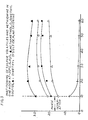
- FIGURES 2-4 There was a relationship between HPLC retention times and organic partitioning as shown in FIGURES 2-4. The more nonpolar compounds, with retention times of 8 or more minutes, strongly partitioned to the organic phase with partition coefficients greater than 10.
- FIGURES 4a and 4b, and Table 1 show that the partition coefficient (P) of organic compounds in the binary (acetonitrile and water only) phase system is independent of temperature and the organic/aqueous volume ratio.
- Data points describing phase characteristics for the ternary system are included in the table and figures for comparison purposes.
- the levels of chloroform added may cause interference in the chromatographic qualitative and quantitative analysis.
- Acetonitrile/water is a very good solvent for most polar and nonpolar low molecular weight organic compounds.
- the described partitioning method has been utilized for rapid extraction and concentration of volatiles from more complex aqueous materials for analysis by HPLC or other systems. Clear organic phases suitable for direct injection were obtained from microbiological growth media with cells, and from foods.
- This example illustrates the extraction of caffeine from cola beverage using cold, aqueous partitioning of an acetonitrile solution of a cola beverage.
- a commercially available cola beverage (Pepsi) was used to demonstrate selective extraction of the relatively nonpolar organic compound caffeine using the binary phase extraction.
- 1.5 ml of the cola was placed in a 3 ml vial, and 1.7 ml of acetonitrile. The sample was shaken for 20 seconds and was chilled to -20°C. for 1 hour. 0.3 ml of the organic layer was then placed in an HPLC sampling vial.
- the HPLC system used was: a phenyl reversed phase column (Alltech Associates, Deerfield, Illinois) 250 x 4.6 mm, 5 micron. 25% acetonitrile, 75% water 0.2% w/v KH2PO4, pH 3.0 mobile phase, 1.5 ml/min. flow rate 20 uL injection by the autosampler. UV detection at 210 nm.
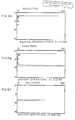
- FIGURE 5a is a chromatogram of the original cola plus acetonitrile mixture prior to cold phase partitioning.
- the chromatogram in FIGURE 5b is of the organic phase after cold phase partitioning.
- Caffeine retention time 3.7 minutes
- Caffeine is selectively extracted into the organic phase, while the other polar and ionic compounds are excluded.
- This example illustrates the extraction of a keto acid derivative from ripe banana through the use of cold partitioning of an aqueous acetonitrile slurry of the banana.
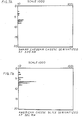
- FIGURES 6a and 6b quantitatively show the amount of underivatized and derivatized samples, respectively, measured at 210 nm UV absorption wavelength. Smaller peaks represent nonpolar compounds extracted directly from the banana pulp. The large peak present in the derivatized sample is presumed to be the derivative of a keto compound.
- FIGURE 6c is another chromatogram of the derivatized sample, detected at 320 nm UV, a wavelength at which the MBTH-keto linkage absorbs. The chromatogram shows that the peak at 8.3 minutes is an MBTH derivative.
- the compound was presumptively identified as oxaloacetic acid. The oxaloacetic acid would normally have been excluded from the organic phase, but the selective derivatization step produced a nonpolar compound which is selectively extracted into the organic phase.
- This example illustrates the extraction of Keto flavor compound derivatives from cheese through the use of cold partitioning of an aqueous acetonitrile slurry of the cheese.
- FIGURES 7a, 7b and 7c are the absorption chromatograms of the three cheese types, at 320 nm to absorption wavelength exclusively detect the MBTH-keto derivatives.
- biological cultures of bacteria, plant or animal cells may be processed with or without disruption of the cell wall, to clarified, partitioned layers comprising an acetonitrile-rich layer containing extracted components and a water-rich layer containing the bacteria, proteins and other cellular materials.
- Brevibacterium species are commonly used for lumberyard and other surface-ripened cheeses. It is known that species such as B. linens possess methionine lyase enzyme [E.C.C. 4.4.11] which cleaves the amino acid 1-methionine in the cheese to methanethiol, a flavor compound contributing a strong oniony or garlicy smell and taste in cheeses [Ferchichi, M., et al., J. General Microbiology, 131, pp. 715-723 (1985)]. Quantitation of the methanethiol produced from methionine by a growing culture of a B. casei in nonoptimized growth medium was done using an HPLC system with both ultraviolet and radioisotope detectors.
- FIGURE 8 shows the radioisotope detector chromatogram of the organic phase. Methanethiol and dimethyl disulfide were detected at ppm levels.
Landscapes
- Physics & Mathematics (AREA)
- Health & Medical Sciences (AREA)
- Life Sciences & Earth Sciences (AREA)
- Chemical & Material Sciences (AREA)
- Analytical Chemistry (AREA)
- Biochemistry (AREA)
- General Health & Medical Sciences (AREA)
- General Physics & Mathematics (AREA)
- Immunology (AREA)
- Pathology (AREA)
- Seasonings (AREA)
- Organic Low-Molecular-Weight Compounds And Preparation Thereof (AREA)
- Sampling And Sample Adjustment (AREA)
Applications Claiming Priority (2)
| Application Number | Priority Date | Filing Date | Title |
|---|---|---|---|
| US07/136,696 US4865991A (en) | 1987-12-22 | 1987-12-22 | Methods for partitioning of organic flavor compounds |
| US136696 | 1998-08-19 |
Publications (2)
| Publication Number | Publication Date |
|---|---|
| EP0322181A2 true EP0322181A2 (de) | 1989-06-28 |
| EP0322181A3 EP0322181A3 (de) | 1990-09-05 |
Family
ID=22473955
Family Applications (1)
| Application Number | Title | Priority Date | Filing Date |
|---|---|---|---|
| EP19880312037 Ceased EP0322181A3 (de) | 1987-12-22 | 1988-12-19 | Methode zur Trennung von organischen flüchtigen Elementen |
Country Status (5)
| Country | Link |
|---|---|
| US (1) | US4865991A (de) |
| EP (1) | EP0322181A3 (de) |
| CA (1) | CA1325163C (de) |
| DK (1) | DK717488A (de) |
| PT (1) | PT89308B (de) |
Cited By (2)
| Publication number | Priority date | Publication date | Assignee | Title |
|---|---|---|---|---|
| FR2731012A1 (fr) * | 1995-02-23 | 1996-08-30 | Systemes Bio Ind | Nouvelles souches de brevibacterium linens |
| US8263144B2 (en) | 2005-11-17 | 2012-09-11 | Kraft Foods Global Brands Llc | Cheese flavor composition and process for making same |
Families Citing this family (3)
| Publication number | Priority date | Publication date | Assignee | Title |
|---|---|---|---|---|
| US5646047A (en) * | 1993-10-20 | 1997-07-08 | Powertech Labs Inc. | Method and reagent kit for determining paper degredation in transformers |
| FR2762479B1 (fr) * | 1997-04-25 | 1999-06-04 | Agronomique Inst Nat Rech | Utilisation de cetoacides pour intensifier la flaveur de produits a base de fromage |
| CN106290192B (zh) * | 2016-08-16 | 2019-04-09 | 中国农业科学院北京畜牧兽医研究所 | 一种紫花苜蓿总皂甙提取纯化及快速测定方法 |
Family Cites Families (6)
| Publication number | Priority date | Publication date | Assignee | Title |
|---|---|---|---|---|
| US4083690A (en) * | 1975-10-02 | 1978-04-11 | Kirin Beer Kabushiki Kaisha | Automatic preparation of sample for analysis |
| SU885873A1 (ru) * | 1980-03-28 | 1981-11-30 | Ордена Ленина Институт Элементоорганических Соединений Ан Ссср | Способ определени ароматообразующих веществ в пищевых продуктах |
| SU1120237A1 (ru) * | 1982-01-15 | 1984-10-23 | Украинский Ордена Трудового Красного Знамени Научно-Исследовательский Институт Экспериментальной Ветеринарии | Способ определени количества фенотиазина в меде |
| SU1201769A1 (ru) * | 1983-12-02 | 1985-12-30 | Днепропетровский Ордена Трудового Красного Знамени Государственный Университет Им.300-Летия Воссоединения Украины С Россией | Способ вы влени опаковой формы кукурузы |
| DE3625205A1 (de) * | 1985-08-22 | 1987-02-26 | Sueddeutsche Kalkstickstoff | Verfahren zur bestimmung von cyanamid in pflanzen oder pflanzenteilen |
| US4705690A (en) * | 1985-11-18 | 1987-11-10 | The Procter & Gamble Co. | Weighting oil substitutes |
-
1987
- 1987-12-22 US US07/136,696 patent/US4865991A/en not_active Expired - Fee Related
-
1988
- 1988-12-14 CA CA000585871A patent/CA1325163C/en not_active Expired - Fee Related
- 1988-12-19 EP EP19880312037 patent/EP0322181A3/de not_active Ceased
- 1988-12-22 PT PT89308A patent/PT89308B/pt not_active IP Right Cessation
- 1988-12-22 DK DK717488A patent/DK717488A/da not_active Application Discontinuation
Cited By (2)
| Publication number | Priority date | Publication date | Assignee | Title |
|---|---|---|---|---|
| FR2731012A1 (fr) * | 1995-02-23 | 1996-08-30 | Systemes Bio Ind | Nouvelles souches de brevibacterium linens |
| US8263144B2 (en) | 2005-11-17 | 2012-09-11 | Kraft Foods Global Brands Llc | Cheese flavor composition and process for making same |
Also Published As
| Publication number | Publication date |
|---|---|
| DK717488A (da) | 1989-06-23 |
| EP0322181A3 (de) | 1990-09-05 |
| PT89308B (pt) | 1993-11-30 |
| CA1325163C (en) | 1993-12-14 |
| US4865991A (en) | 1989-09-12 |
| DK717488D0 (da) | 1988-12-22 |
| PT89308A (pt) | 1989-12-29 |
Similar Documents
| Publication | Publication Date | Title |
|---|---|---|
| Moio et al. | Neutral volatile compounds in the raw milks from different species | |
| Kovacs et al. | A simple method for the determination of cholesterol and some plant sterols in fishery‐based food products | |
| Yu et al. | Characterization of aroma profiles and aroma-active compounds in high-salt and low-salt shrimp paste by molecular sensory science | |
| Canale et al. | Determination of volatile carboxylic acids (C1–C5i) and lactic acid in aqueous acid extracts of silage by high performance liquid chromatography | |
| Smith | Quantitative fatty acid analysis of milk fat by gas-liquid chromatography | |
| Pikul et al. | Evaluation of three modified TBA methods for measuring lipid oxidation in chicken meat | |
| Raith et al. | A new LC/APCI-MS method for the determination of cholesterol oxidation products in food | |
| Chiacchierini et al. | Evaluation of two different extraction methods for chromatographic determination of bioactive amines in tomato products | |
| Jakob et al. | Application of a simplified HPLC assay for the determination of phylloquinone (vitamin K1) in animal and plant food items | |
| Schüep et al. | [25] Analysis of vitamin E homologs in plasma and tissue: High-performance liquid chromatography | |
| Chisholm et al. | Comparison of some French-American hybrid wines with White Riesling using gas chromatography-olfactometry | |
| Piironen et al. | Determination of phylloquinone in oils, margarines and butter by high-performance liquid chromatography with electrochemical detection | |
| Dartey et al. | Rate of formation of methyl ketones during blue cheese ripening | |
| Willaert et al. | Objective measurement of aroma quality of Golden Delicious apples as a function of controlled atmosphere storage time | |
| Entz et al. | Residues of volatile halocarbons in foods using headspace gas chromatography | |
| Reindl et al. | Determination of volatile aldehydes in meat as 2, 4-dinitrophenylhydrazones using reversed-phase high-performance liquid chromatography | |
| Kacem et al. | Simultaneous analysis of ascorbic and dehydroascorbic acid by high-performance liquid chromatography with post column derivatization and UV absorbance | |
| Zhang et al. | An improved method of cholesterol determination in egg yolk by HPLC | |
| Lin et al. | A simple method for the simultaneous determination of various preservatives in liquid foods | |
| US4865991A (en) | Methods for partitioning of organic flavor compounds | |
| CN111366647A (zh) | 一种顶空固相微萃取结合气相色谱-质谱联用检测甘蓝叶片挥发性成分的方法 | |
| Banno et al. | Simultaneous determination of pantothenic acid and hopantenic acid in biological samples and natural products by gas chromatography-mass fragmentography | |
| Maheshwari et al. | An HPLC method for simultaneous quantitation of individual isothiocyanates and oxazolidinethione in myrosinase digests of rapeseed meal | |
| Toran et al. | HPLC method for cyst (e) ine and methionine in infant formulas | |
| Reeves III | Use of nitrobenzene oxidation for study of lignin composition with an improved method for product extraction |
Legal Events
| Date | Code | Title | Description |
|---|---|---|---|
| PUAI | Public reference made under article 153(3) epc to a published international application that has entered the european phase |
Free format text: ORIGINAL CODE: 0009012 |
|
| AK | Designated contracting states |
Kind code of ref document: A2 Designated state(s): AT BE CH DE ES FR GB GR IT LI LU NL SE |
|
| PUAL | Search report despatched |
Free format text: ORIGINAL CODE: 0009013 |
|
| AK | Designated contracting states |
Kind code of ref document: A3 Designated state(s): AT BE CH DE ES FR GB GR IT LI LU NL SE |
|
| 17P | Request for examination filed |
Effective date: 19910226 |
|
| 17Q | First examination report despatched |
Effective date: 19930115 |
|
| STAA | Information on the status of an ep patent application or granted ep patent |
Free format text: STATUS: THE APPLICATION HAS BEEN REFUSED |
|
| 18R | Application refused |
Effective date: 19950612 |