EP0322946A2 - Composition détergente - Google Patents
Composition détergente Download PDFInfo
- Publication number
- EP0322946A2 EP0322946A2 EP88202799A EP88202799A EP0322946A2 EP 0322946 A2 EP0322946 A2 EP 0322946A2 EP 88202799 A EP88202799 A EP 88202799A EP 88202799 A EP88202799 A EP 88202799A EP 0322946 A2 EP0322946 A2 EP 0322946A2
- Authority
- EP
- European Patent Office
- Prior art keywords
- weight
- composition according
- copolymer
- composition
- acrylic acid
- Prior art date
- Legal status (The legal status is an assumption and is not a legal conclusion. Google has not performed a legal analysis and makes no representation as to the accuracy of the status listed.)
- Withdrawn
Links
Images
Classifications
-
- C—CHEMISTRY; METALLURGY
- C11—ANIMAL OR VEGETABLE OILS, FATS, FATTY SUBSTANCES OR WAXES; FATTY ACIDS THEREFROM; DETERGENTS; CANDLES
- C11D—DETERGENT COMPOSITIONS; USE OF SINGLE SUBSTANCES AS DETERGENTS; SOAP OR SOAP-MAKING; RESIN SOAPS; RECOVERY OF GLYCEROL
- C11D3/00—Other compounding ingredients of detergent compositions covered in group C11D1/00
- C11D3/16—Organic compounds
- C11D3/37—Polymers
- C11D3/3746—Macromolecular compounds obtained by reactions only involving carbon-to-carbon unsaturated bonds
- C11D3/3757—(Co)polymerised carboxylic acids, -anhydrides, -esters in solid and liquid compositions
- C11D3/3765—(Co)polymerised carboxylic acids, -anhydrides, -esters in solid and liquid compositions in liquid compositions
-
- C—CHEMISTRY; METALLURGY
- C11—ANIMAL OR VEGETABLE OILS, FATS, FATTY SUBSTANCES OR WAXES; FATTY ACIDS THEREFROM; DETERGENTS; CANDLES
- C11D—DETERGENT COMPOSITIONS; USE OF SINGLE SUBSTANCES AS DETERGENTS; SOAP OR SOAP-MAKING; RESIN SOAPS; RECOVERY OF GLYCEROL
- C11D17/00—Detergent materials or soaps characterised by their shape or physical properties
- C11D17/0008—Detergent materials or soaps characterised by their shape or physical properties aqueous liquid non soap compositions
- C11D17/0026—Structured liquid compositions, e.g. liquid crystalline phases or network containing non-Newtonian phase
Definitions
- the invention relates to built aqueous alkaline liquid detergent compositions.
- Aqueous alkaline built liquid detergent compositions for use in fabric or dishwashing machines are well known. They are often considered to be more convenient to the user than the equivalent dry powdered or particulate products, as they are easier to dose, dissolve more readily, are non-dusting and usually occupy less storage space. Their formulation, however, is difficult since, on the one hand, considerable quantities of builder salts and alkaline agents should be incorporated to provide consumer-satisfactory detergency and, on the other hand, liquid products should be stable under a wide range of storage conditions and should have good pourability for consumer convenience.
- EP-A-120533 It is known, for example, from EP-A-120533 to provide alkaline liquid detergent compositions containing relatively substantial amounts of an alkaline agent and a detergency builder together with rather smaller quantities of a nonionic detergent active and a structuring polymeric agent which may be cross-linked polyacrylate.
- the detergency builder used in such a composition may be a phosphate builder, in particular sodium tripolyphosphate.
- US-A-6,608,188 describes a low phosphate machine dishwashing composition in which an acrylic acid/maleic acid copolymer is employed as builder. This composition also contains nonionic detergent active, some phosphate and an alkaline agent, but the compositions specifically described are solid, presumably in powder form.
- a difficulty in providing aqueous alkaline built liquid detergent compositions is that of keeping the liquid stable against sedimentation.
- Commercial compositions in accordance with the above-mentioned European application have tripolyphosphate and nonionic detergent active present in the liquid as a dispersed phase.
- the polyacrylate acts to stabilise the dispersion against sedimentation.
- acrylic acid/maleic acid copolymers can be utilised successfully in these liquid compositions and moreover are advantageous as a builder to replace tripolyphosphate.
- acrylic acid/maleic acid copolymers do have some detrimental effect on physical stability of the liquid compositions but much less than would be predicted. Moreover, at low percentages of the copolymer, stability actually increases with the quantity of copolymer included until a maximum stability is reached, after which the stability begins to reduce with increasing quantity of copolymer.
- copolymers are advantageous as builders in that they can replace tripolyphosphae, giving adequate building performance, at reasonable cost, without bringing other problems of scaling or excessive foaming. They do not fall foul of current environmental protection regulations and also allow the products to contain active chlorine.
- an alkaline built liquid detergent composition containing in an aqueous medium:
- the copolymer employed in this invention will generally contain acrylic acid and maleic acid in a mole ratio of 1:0.2 up to 1:1. Copolymers with more maleic acid are not stable.
- the molecular weight of the copolymer will generally be at least 5,000, may be at least 40,000 and may extend up to 100,000 or even more. It is preferred to employ copolymer in which the ratio of acrylic acid to maleic acid is 1:0.25 to 1:1.
- Suitable copolymers are produced by BASF under their designations Sokalan CP5 and Sokalan CP7. In the former, the mole ratio of acrylic acid to maleic acid is 1:0.3 and the average molecular weight is 70,000, while in Sokalan CP7 the mole ratio is 1:0.6 and the average molecular weight is 50,000.
- the preferred amount of the copolymer is in the range from 5 to 15% by weight of the composition.
- the nonionic detergent active which may be used in the composition is preferably of the type consisting of a fatty alcohol condensed with an alkylene oxide or a mixture of alkylene oxides. It is particularly preferred to employ a nonionic detergent active of the type called for in EP-A-120553, that is to say fatty alcohol condensed with an ethylene oxide and propylene oxide and/or butylene oxide. It is desirable to select the alkoxylated fatty alcohol or mixture thereof such that the overall ratio between the number of ethylene oxide units and the propylene and/or butylene oxide units is below 9, preferably below 2.5 or even 1.8.
- all ratio refers to the fact that either a single alkoxylated alcohol may be used having in its alkylene oxide radical a suitable ratio of ethylene oxide to propylene and/or butylene oxide units or a mixture of alkoxylated alcohols may be used having a suitable ratio only on an average.
- the nonionic detergent is normally present in an amount of at least 1% by weight, the amount preferably ranging from 1 to 15% by weight of the total composition.
- Nonionic detergents for use in compositions of the present invention can be readily obtained commercially, such as e.g. those sold under the trade names Lutensol LF 400 to 1300 (ex BASF AG) and Plurafac RA 30 to 343 (ex Produits Chimiques Ugine-Kuhlmann).
- nonionic detergents can be used as sole detergent but other detergent-active ingredients, such as e.g. water-soluble anionic sulphate or sulphonate detergents, can be tolerated provided their amount does not exceed 50% by weight, preferably 3% by weight or even 1% by weight of the total composition.
- the alkaline agent is preferably present in an amount of at least 10% by weight, more preferably 15 to 30% by weight of the total composition.
- the preferred alkaline agents are the alkali metal hydroxides.
- Other agents may be used, such as alkali metal orthosilicates, metasilicates and disilicates. Of these, sodium metasilicate is preferred.
- mixtures of alkaline agents may be used, such as a combination of approximately equal weights of sodium orthosilicate and potassium hydroxide which is another preferred possibility.
- compositions are externally structured and for this purpose they contain a structuring or thickening polymeric agent, which may be essentially a single such agent.
- Suitable agents are found among the alkali-stable polymers, notably cross-linked polymers of acrylic acid, having molecular weights of 500,000 to 4,000,000, preferably 1,000,000 to 1,500,000.
- the water-soluble polymers of acrylic acid cross-linked with about 1% of a polyallyl ether of sucrose having an average of about 5.8 allyl groups for each sucrose molecule, the polymer having a molecular weight in excess of 1,000,000.
- Examples of such polymers are Carbopol 934 and 941. Carbopol is the Registered Trademark of B.F. Goodrich Co.
- the preferred polymer is Carbopol 941.
- they may be included in the range of from 0.1% to 1% by weight, but preferably their amount varies from 0.2% to 0.8% by weight, and in particular from 0.2 to 0.6% by weight of the total composition.
- the liquid detergent composition of the invention may further contain any of the adjuvants normally used in fabric-washing detergent compositions, e.g. sequestering agents such as ethylene diamine tetraacetate and diethylene tetramine methylene phosphoric acid, soil-suspending and anti-redeposition agents such as carboxymethylcellulose, polyvinylpyrrolidone and the maleic anhydride/vinylmethylether copolymer; fluorescent agents, hydrotropes, conditioning agents, lather boosters; lather-depressors such as liquid polysiloxane anti-foam compounds; alkaline-stable enzymes; perfumes, germicides and colourants.
- sequestering agents such as ethylene diamine tetraacetate and diethylene tetramine methylene phosphoric acid
- soil-suspending and anti-redeposition agents such as carboxymethylcellulose, polyvinylpyrrolidone and the maleic anhydride/vinylmethylether copoly
- the compositions of this invention may include from 0 to 15% of phosphate builder.
- the amount of phosphate builder is in the range 0 to 10% by weight of the composition.
- One possibility within the invention is to omit phosphate builder entirely and rely on the copolymer as sole builder.
- Another possibility is to include some phosphate builder, with the copolymer then being a second builder employed to give adequate detergency building while keeping the quantity of phosphate down to within the maximum of 15% (preferably 10%) by weight of the composition.
- a quantity of phosphate may be within the range of 1 to 15%, preferably 1 to 10%, by weight of the composition, with the preferred phosphate being alkali metal tripolyphosphate.
- compositions of this invention may contain a source of active chlorine such as hypochlorite bleach. If a source of active chlorine is present, it is preferred that the amount of active chlorine is 0.2 to 2%, preferably 0.5 to 1% by weight of the composition.
- compositions of the present invention normally have viscosities within the range of 400 to 3,000 mPa.s at 21 sec ⁇ 1 at 20°C and preferably within the range of 500 to 1500 mPa.s at 21 sec ⁇ 1 at 20°C.
- compositions of the present invention are especially advantageous having pH-values within the high alkaline region, in particular values equal to or above 11, but preferred are pH-values above 12 or even above 13.
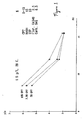
- compositions A, B and C were each dissolved in samples of water of varying hardness, at 1.5 g/litre and at 20°C.
- the residual calcium ion concentration was measured.
- Figure 1 is a graph of pCa against hardness in French Hardness units.
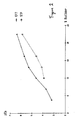
- compositions of this Example were dissolved in 7 French Hardness water at 1.5 g/litre and at 20°C.
- Figure 2 the resulting residual calcium ion concentration as pCa is plotted against the level of Sokalan CP7. Values of pCa for equivalent compositions where Sokalan CP7 is replaced by sodium tripolyphosphate are also shown. It can be seen that on weight basis Sokalan CP7 is more effective as a builder.
- Sokalan CP5 was used in built liquid detergent products with low, but some, phosphate.
- the compositions and viscosities are set out below: Water 61.2% 56.2% 51.2% Sokalan CP5 5.0% 10.0% 15.0% NaOH 20.0% 20.0% 20.0% STP 8.0% 8.0% 8.0% Plurafac RA340 5.0% 5.0% 5.0% Carbopol 941 0.8% 0.8% 0.8% S(kPa.s) 15 36 31
- Viscosity and hence stability were greatest at around 10% Sokalan CP5.
Landscapes
- Chemical & Material Sciences (AREA)
- Life Sciences & Earth Sciences (AREA)
- Engineering & Computer Science (AREA)
- Chemical Kinetics & Catalysis (AREA)
- Oil, Petroleum & Natural Gas (AREA)
- Wood Science & Technology (AREA)
- Organic Chemistry (AREA)
- Crystallography & Structural Chemistry (AREA)
- Detergent Compositions (AREA)
Applications Claiming Priority (2)
| Application Number | Priority Date | Filing Date | Title |
|---|---|---|---|
| GB8730205 | 1987-12-24 | ||
| GB878730205A GB8730205D0 (en) | 1987-12-24 | 1987-12-24 | Detergent composition |
Publications (2)
| Publication Number | Publication Date |
|---|---|
| EP0322946A2 true EP0322946A2 (fr) | 1989-07-05 |
| EP0322946A3 EP0322946A3 (fr) | 1990-09-05 |
Family
ID=10629100
Family Applications (1)
| Application Number | Title | Priority Date | Filing Date |
|---|---|---|---|
| EP19880202799 Withdrawn EP0322946A3 (fr) | 1987-12-24 | 1988-12-07 | Composition détergente |
Country Status (4)
| Country | Link |
|---|---|
| EP (1) | EP0322946A3 (fr) |
| AU (1) | AU2736388A (fr) |
| FI (1) | FI885898A7 (fr) |
| GB (1) | GB8730205D0 (fr) |
Cited By (6)
| Publication number | Priority date | Publication date | Assignee | Title |
|---|---|---|---|---|
| WO1991005845A1 (fr) * | 1989-10-12 | 1991-05-02 | Unilever N.V. | Detergents liquides |
| US5273675A (en) * | 1990-02-16 | 1993-12-28 | Rohm And Haas Company | Phosphate-free liquid cleaning compositions containing polymer |
| WO1996027000A1 (fr) * | 1995-02-28 | 1996-09-06 | Kay Chemical Company | Gel liquide concentre constituant un detergent de lavage de vaisselle |
| EP0877002A3 (fr) * | 1997-05-09 | 1999-03-24 | Rohm And Haas Company | Agents antitartres |
| EP1216293B1 (fr) * | 1999-09-28 | 2008-01-02 | Colgate-Palmolive Company | Composition liquide multicouche |
| WO2014065852A1 (fr) * | 2012-10-26 | 2014-05-01 | Ecolab Usa Inc. | Composition de détergent comprenant un hydroxyde de métal alcalin et procédés de modification d'une surface |
Families Citing this family (1)
| Publication number | Priority date | Publication date | Assignee | Title |
|---|---|---|---|---|
| IE902759A1 (en) * | 1990-02-16 | 1991-08-28 | Rohm & Haas | Liquid cleaning compositions containing water-soluble¹polymer |
Family Cites Families (4)
| Publication number | Priority date | Publication date | Assignee | Title |
|---|---|---|---|---|
| US4215004A (en) * | 1979-03-28 | 1980-07-29 | Chemed Corporation | Slurried laundry detergent |
| DE3277630D1 (en) * | 1981-05-30 | 1987-12-17 | Procter & Gamble | Detergent composition containing performance additive and copolymeric compatibilizing agent therefor |
| GB8308263D0 (en) * | 1983-03-25 | 1983-05-05 | Unilever Plc | Aqueous liquid detergent composition |
| US4678596A (en) * | 1986-05-01 | 1987-07-07 | Rohm And Haas Company | Rinse aid formulation |
-
1987
- 1987-12-24 GB GB878730205A patent/GB8730205D0/en active Pending
-
1988
- 1988-12-07 EP EP19880202799 patent/EP0322946A3/fr not_active Withdrawn
- 1988-12-20 AU AU27363/88A patent/AU2736388A/en not_active Abandoned
- 1988-12-21 FI FI885898A patent/FI885898A7/fi not_active IP Right Cessation
Cited By (10)
| Publication number | Priority date | Publication date | Assignee | Title |
|---|---|---|---|---|
| WO1991005845A1 (fr) * | 1989-10-12 | 1991-05-02 | Unilever N.V. | Detergents liquides |
| AU667660B2 (en) * | 1989-10-12 | 1996-04-04 | Unilever Plc | Liquid detergents |
| US5273675A (en) * | 1990-02-16 | 1993-12-28 | Rohm And Haas Company | Phosphate-free liquid cleaning compositions containing polymer |
| WO1996027000A1 (fr) * | 1995-02-28 | 1996-09-06 | Kay Chemical Company | Gel liquide concentre constituant un detergent de lavage de vaisselle |
| US5981457A (en) * | 1995-02-28 | 1999-11-09 | Kay Chemical Company | Concentrated liquid gel warewash detergent |
| EP0877002A3 (fr) * | 1997-05-09 | 1999-03-24 | Rohm And Haas Company | Agents antitartres |
| US6114294A (en) * | 1997-05-09 | 2000-09-05 | Rohm And Haas Company | Copolymeric scale inhibitors for (Poly)phosphate scale control |
| EP1216293B1 (fr) * | 1999-09-28 | 2008-01-02 | Colgate-Palmolive Company | Composition liquide multicouche |
| WO2014065852A1 (fr) * | 2012-10-26 | 2014-05-01 | Ecolab Usa Inc. | Composition de détergent comprenant un hydroxyde de métal alcalin et procédés de modification d'une surface |
| US9102905B2 (en) | 2012-10-26 | 2015-08-11 | Ecolab Usa Inc. | Detergent composition comprising alkali metal hydroxide and methods of modifying a surface |
Also Published As
| Publication number | Publication date |
|---|---|
| AU2736388A (en) | 1989-06-29 |
| GB8730205D0 (en) | 1988-02-03 |
| FI885898L (fi) | 1989-06-25 |
| EP0322946A3 (fr) | 1990-09-05 |
| FI885898A7 (fi) | 1989-06-25 |
Similar Documents
| Publication | Publication Date | Title |
|---|---|---|
| EP0120533B1 (fr) | Composition détergente aqueuse alcaline liquide | |
| US3816320A (en) | Stable dishwashing compositions containing sodium dichloroisocyanurate dihydrate | |
| AU634474B2 (en) | Liquid automatic dishwashing compositions providing silver protection | |
| CA1120819A (fr) | Comprime detersif | |
| US4753755A (en) | Solid alkaline detergent and process for making the same | |
| EP0385595B1 (fr) | Compositions liquides pour le lavage automatique de la vaisselle ayant un système épaississant optimisé | |
| EP1625195B1 (fr) | Detergent ayant une composition amelioree | |
| GB2219596A (en) | Liquid automatic dishwashing compositions having enhanced stability | |
| EP0299691A1 (fr) | Emulsions stables de détergent | |
| US4913833A (en) | Sterically hindered polyether polyols as chlorine bleach stable surfactants | |
| EP0077588A1 (fr) | Composition pour lave-vaisselle | |
| EP0322946A2 (fr) | Composition détergente | |
| US5510048A (en) | Nonaqueous liquid, phosphate-free, improved autoamatic dishwashing composition containing enzymes | |
| EP0337760A2 (fr) | Compositions détergentes | |
| EP0375022B1 (fr) | Détergent solide sous forme de bloc | |
| AU635107B2 (en) | A main wash detergent composition | |
| EP0479370A2 (fr) | Compositions détergentes liquides | |
| US5733861A (en) | Hydrophilic copolymers for reducing the viscosity of detergent slurries | |
| US4436642A (en) | Nonionic surfactants for automatic dishwasher detergents | |
| US5595968A (en) | Polymeric dispersants for soda ash based detergent slurries | |
| EP0331370A2 (fr) | Composition détergente | |
| US3468803A (en) | Dishwashing compositions | |
| US4259199A (en) | Alkaline dishwasher detergent | |
| EP0414285B1 (fr) | Coacervats de polymères adjuvants et leur utilisation | |
| EP0316152B1 (fr) | Utilisation de phosphates d'alkyle pour la stabilisation de compositions thixotropiques |
Legal Events
| Date | Code | Title | Description |
|---|---|---|---|
| PUAI | Public reference made under article 153(3) epc to a published international application that has entered the european phase |
Free format text: ORIGINAL CODE: 0009012 |
|
| AK | Designated contracting states |
Kind code of ref document: A2 Designated state(s): CH DE ES FR GB IT LI NL SE |
|
| PUAL | Search report despatched |
Free format text: ORIGINAL CODE: 0009013 |
|
| AK | Designated contracting states |
Kind code of ref document: A3 Designated state(s): CH DE ES FR GB IT LI NL SE |
|
| STAA | Information on the status of an ep patent application or granted ep patent |
Free format text: STATUS: THE APPLICATION IS DEEMED TO BE WITHDRAWN |
|
| 18D | Application deemed to be withdrawn |
Effective date: 19910306 |