EP0324604A1 - Gerät und Verfahren zur Steuerung der Pulsenergie in Antitachyarrhythmia und Bradykardie-Schrittmacher - Google Patents
Gerät und Verfahren zur Steuerung der Pulsenergie in Antitachyarrhythmia und Bradykardie-Schrittmacher Download PDFInfo
- Publication number
- EP0324604A1 EP0324604A1 EP89300232A EP89300232A EP0324604A1 EP 0324604 A1 EP0324604 A1 EP 0324604A1 EP 89300232 A EP89300232 A EP 89300232A EP 89300232 A EP89300232 A EP 89300232A EP 0324604 A1 EP0324604 A1 EP 0324604A1
- Authority
- EP
- European Patent Office
- Prior art keywords
- energy level
- tachycardia
- energy
- pacing
- antitachycardia
- Prior art date
- Legal status (The legal status is an assumption and is not a legal conclusion. Google has not performed a legal analysis and makes no representation as to the accuracy of the status listed.)
- Granted
Links
- 208000006218 bradycardia Diseases 0.000 title claims abstract description 59
- 230000036471 bradycardia Effects 0.000 title claims abstract description 59
- 238000000034 method Methods 0.000 title claims abstract description 10
- 238000002560 therapeutic procedure Methods 0.000 claims abstract description 42
- 206010003119 arrhythmia Diseases 0.000 claims abstract description 20
- 238000013194 cardioversion Methods 0.000 claims abstract description 9
- 208000001871 Tachycardia Diseases 0.000 claims description 58
- 230000006794 tachycardia Effects 0.000 claims description 36
- 238000012790 confirmation Methods 0.000 claims description 3
- 230000006793 arrhythmia Effects 0.000 abstract description 11
- 230000035939 shock Effects 0.000 description 22
- 206010049447 Tachyarrhythmia Diseases 0.000 description 20
- 206010047302 ventricular tachycardia Diseases 0.000 description 19
- 230000000875 corresponding effect Effects 0.000 description 14
- 238000001514 detection method Methods 0.000 description 12
- 230000000747 cardiac effect Effects 0.000 description 11
- 230000004044 response Effects 0.000 description 8
- 238000010586 diagram Methods 0.000 description 7
- 230000035945 sensitivity Effects 0.000 description 7
- 208000003663 ventricular fibrillation Diseases 0.000 description 6
- 230000008859 change Effects 0.000 description 5
- 238000004891 communication Methods 0.000 description 4
- 230000006854 communication Effects 0.000 description 4
- 238000002633 shock therapy Methods 0.000 description 4
- 230000006870 function Effects 0.000 description 3
- 238000009258 post-therapy Methods 0.000 description 3
- 230000033764 rhythmic process Effects 0.000 description 3
- 206010011906 Death Diseases 0.000 description 2
- 208000033986 Device capturing issue Diseases 0.000 description 2
- 102100026827 Protein associated with UVRAG as autophagy enhancer Human genes 0.000 description 2
- 101710102978 Protein associated with UVRAG as autophagy enhancer Proteins 0.000 description 2
- 208000003734 Supraventricular Tachycardia Diseases 0.000 description 2
- 238000011161 development Methods 0.000 description 2
- 210000002837 heart atrium Anatomy 0.000 description 2
- 210000005003 heart tissue Anatomy 0.000 description 2
- 238000002513 implantation Methods 0.000 description 2
- 208000014674 injury Diseases 0.000 description 2
- 230000001360 synchronised effect Effects 0.000 description 2
- 208000032953 Device battery issue Diseases 0.000 description 1
- 208000008131 Ventricular Flutter Diseases 0.000 description 1
- 230000002159 abnormal effect Effects 0.000 description 1
- 238000013459 approach Methods 0.000 description 1
- 230000001746 atrial effect Effects 0.000 description 1
- 230000009286 beneficial effect Effects 0.000 description 1
- OMFRMAHOUUJSGP-IRHGGOMRSA-N bifenthrin Chemical compound C1=CC=C(C=2C=CC=CC=2)C(C)=C1COC(=O)[C@@H]1[C@H](\C=C(/Cl)C(F)(F)F)C1(C)C OMFRMAHOUUJSGP-IRHGGOMRSA-N 0.000 description 1
- 230000005540 biological transmission Effects 0.000 description 1
- 239000003990 capacitor Substances 0.000 description 1
- 239000004020 conductor Substances 0.000 description 1
- 230000000694 effects Effects 0.000 description 1
- 230000001435 haemodynamic effect Effects 0.000 description 1
- 208000019622 heart disease Diseases 0.000 description 1
- 230000006872 improvement Effects 0.000 description 1
- 238000012986 modification Methods 0.000 description 1
- 230000004048 modification Effects 0.000 description 1
- 230000001536 pro-arrhythmogenic effect Effects 0.000 description 1
- 230000008569 process Effects 0.000 description 1
- QHGVXILFMXYDRS-UHFFFAOYSA-N pyraclofos Chemical compound C1=C(OP(=O)(OCC)SCCC)C=NN1C1=CC=C(Cl)C=C1 QHGVXILFMXYDRS-UHFFFAOYSA-N 0.000 description 1
- 230000036279 refractory period Effects 0.000 description 1
- 230000002311 subsequent effect Effects 0.000 description 1
- 230000008733 trauma Effects 0.000 description 1
- 230000000472 traumatic effect Effects 0.000 description 1
- 230000002861 ventricular Effects 0.000 description 1
- 208000021816 ventricular bradycardia Diseases 0.000 description 1
Images


Classifications
-
- A—HUMAN NECESSITIES
- A61—MEDICAL OR VETERINARY SCIENCE; HYGIENE
- A61N—ELECTROTHERAPY; MAGNETOTHERAPY; RADIATION THERAPY; ULTRASOUND THERAPY
- A61N1/00—Electrotherapy; Circuits therefor
- A61N1/18—Applying electric currents by contact electrodes
- A61N1/32—Applying electric currents by contact electrodes alternating or intermittent currents
- A61N1/36—Applying electric currents by contact electrodes alternating or intermittent currents for stimulation
- A61N1/362—Heart stimulators
- A61N1/3621—Heart stimulators for treating or preventing abnormally high heart rate
-
- A—HUMAN NECESSITIES
- A61—MEDICAL OR VETERINARY SCIENCE; HYGIENE
- A61N—ELECTROTHERAPY; MAGNETOTHERAPY; RADIATION THERAPY; ULTRASOUND THERAPY
- A61N1/00—Electrotherapy; Circuits therefor
- A61N1/18—Applying electric currents by contact electrodes
- A61N1/32—Applying electric currents by contact electrodes alternating or intermittent currents
- A61N1/38—Applying electric currents by contact electrodes alternating or intermittent currents for producing shock effects
- A61N1/39—Heart defibrillators
- A61N1/3956—Implantable devices for applying electric shocks to the heart, e.g. for cardioversion
- A61N1/3962—Implantable devices for applying electric shocks to the heart, e.g. for cardioversion in combination with another heart therapy
- A61N1/39622—Pacing therapy
Definitions
- This invention relates to implantable medical devices which deliver electrical energy to cardiac tissue in an attempt to revert tachycardia and restore a normal sinus rhythm, and more particularly to such devices which exhibit multiple pacing energy levels.
- antitachycardia pacing will mean any pacing for the reversion of tachycardia.
- Tachycardia refers to any fast abnormal rhythm of the heart which may be amenable to electrical discharges and specifically includes ventricular tachycardia (VT), supraventricular tachycardia (SVT), ventricular flutter and/or ventricular fibrillation (VF).
- VT ventricular tachycardia
- SVT supraventricular tachycardia
- VF ventricular fibrillation
- therapy includes the processes used between the detection and reversion of a tachyarrhythmia and includes the actions of antitachycardia pacing, cardioversion and/or defibrillation shocks.
- cardioversion refers to the discharge of electrical energy into the cardiac tissue in an attempt to terminate or revert a tachyarrhythmia. This may take the form of a high energy discharge (up to 40 Joules or more) or a low energy discharge (less than 1 Joule). Cardioversion shocks may or may not be synchronized to the rhythm of the heart. Defibrillation is a particular example of cardioversion.
- This invention applies equally to devices which deliver energy synchronized to an R-wave and to those that do not, and applies to devices which use lower energy pulses (up to 1 Joule) as well as to devices which use higher energy pulses (up to 40 Joules or more).
- the invention applies to devices which deliver cardioverting shocks alone as well as to devices which deliver antitachycardia pacing pulses alone or in combination with cardioverting shocks.
- the invention will usually apply to ventricular implantable cardioverters, but is equally applicable to atrial cardioverters or multiple chamber cardioverters or defibrillators.
- the invention applies also to the delivery of any antitachycardia pacing pulse and post reversion pacing therapy.
- United States Patent No. 4,181,133 to Kolenik et. al. discloses an apparatus which provides cardiac pacing and tachycardia break-up pulses.
- the tachycardia pacing pulses are generated and delivered through an output circuit utilized commonly with demand pacer circuitry.
- the tachycardia pacing pulses are programmed with the same pulse width and amplitude as the bradycardia pacing pulses.
- pulses which have under bradycardia conditions captured suddenly no longer capture.
- pulse amplitude and/or pulse width are automatic strictlyally increased when tachycardia has been detected, and post reversion pulse width and/or amplitude remains high for a predetermined time interval (which interval may be made a programmable parameter).
- an apparatus for treating cardiac arrhythmias comprises means for delivering bradycardia pacing pulses, means for the detection of tachycardia, means for delivering antitachycardia pacing pulses from the time of said tachycardia detection wherein said antitachycardia pacing pulses have a higher energy relative to said bradycardia pacing pulses.
- an apparatus for treating cardiac arrhythmias comprises means for delivering bradycardia pacing pulses, means for the detection of tachycardia, means for delivering antitachycardia therapy after onset of said tachycardia detection, means for reconfirmation of the absence of tachycardia following the delivery of said antitachycardia therapy and means for delivering post reversion bradycardia pacing pulses for a pre-determined time period wherein said post reversion bradycardia pacing pulses are of a higher energy than said bradycardia pacing pulses delivered prior to the onset of said tachycardia.
- the invention further includes a method for treating cardiac arrhythmias and of operating a tachycardia reversion device comprising the steps of delivering bradycardia pacing pulses, detecting the presence of tachycardia, and delivering antitachycardia pacing pulses from the time of said tachycardia detection wherein said antitachycardia pacing pulses have a higher energy than the preceding bradycardia pacing pulses.
- the invention provides a method for treating cardiac arrhythmias and of operating a tachycardia reversion device comprising the steps of delivering bradycardia pacing pulses, detecting the presence of tachycardia, delivering antitachycardia therapy after the onset of said tachycardia detection, reconfirming the absence of tachycardia following the delivery of said antitachycardia therapy, and delivering post reversion bradycardia pacing pulses for a pre-determined time period wherein said post reversion bradycardia pacing pulses are of a higher energy than said bradycardia pacing pulses delivered prior to the onset of said tachycardia.
- System 10 is designed to be implantable and includes a pulse module 11 and appropriate leads. More particularly, system 10 will generally include: a cardiac lead 12 connected to the patient's heart 14; a pacemaker 15 for the detection of analog signals representing cardiac electrical activity and for the delivery of pacing pulses to the heart; a microprocessor 16 which, in response to various inputs received from the pacemaker 15 as well as from a defibrillator 17, performs various operations so as to generate different control and data outputs to both pacemaker 15 and defibrillator 17; and a power supply 18 for the provision of a reliable voltage level to pacemaker 15, microprocessor 16 and defibrillator 17 by suitable electrical conductors (not shown).
- Defibrillator 17 produces a high voltage to charge its capacitors and then discharges them in response to control signals from microprocessor 16.
- a defibrillator electrode lead 19 transfers the energy of a defibrillator shock 20 from the implanted pulse module to the surface of the heart 14.
- Microprocessor 16 is connected to an external memory 21 by an address and data bus 22.
- An end-of-life (EOL) signal line 24 is used to provide, to microprocessor 16, a logic signal indicative of the approach of battery failure in power supply 18.
- microprocessor 16 and pacemaker 15 are connected by a communication bus 25, a sense line 26, a pace control line 27, a sensitivity control bus 28, and a pacing energy control 29.
- microprocessor 16 is connected to defibrillator 17 by a charge level line 30, a charge control bus 31, a shock control bus 32, and a dump control bus 34.
- pacemaker 15 comprises pacing circuit 35 which includes a pacing pulse generator 36, sens ing circuit 37, and telemetry circuit 38.
- control block 39 which includes an interface to microprocessor 16.
- sensing circuit 37 detects analog signals 40 from the heart 14 and converts the detected signals to digital signals. Furthermore, sensing circuit 37 receives an input sense control signal (which determines the sensitivity of the detection circuits in sensing circuit 37) by way of a sense control bus 41 from control block 39. A change in this sensitivity will affect the voltage deviation required at the sensing electrode for a sense to be registered .
- a sense control bus 41 from control block 39.
- a change in this sensitivity will affect the voltage deviation required at the sensing electrode for a sense to be registered .
- circuits or logic arrangements known to those skilled in the art, which may be used to change the sensitivity in an appropriate manner.
- Pacing circuit 35 also receives inputs from control block 39 including a pace control and a pacing energy control by way of pacing control bus 42 which carries the signals on pace control line 27 and pacing energy control bus 29.
- the pace control determines the type of pacing to occur while the magnitude of the pulse energy is determined by the pacing energy control.
- Pacing circuit 35 causes pulse generator 36 to generate the pacing pulse 44 which is delivered to the patient's heart 14 by means of cardiac lead 12.
- Telemetry circuit 38 provides a bi-directional link between control block 39 of pacemaker 15 and an external device such as a programmer. It allows data such as the operating parameters to be read from or altered in the implanted pulse module 11.
- microprocessor 16 comprises two 16-bit timers 47 and 48, CPU 49, vectored interrupt block 50, RAM 54, ROM 55, ports interface 57 and an internal communications bus 58.
- RAM 54 acts as a scratch pad memory during execution of the various programs stored in ROM 55 and used by microprocessor 16.
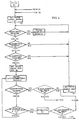
- These programs include system supervisory programs, detection algorithms, and programming implementing the logic flow diagram of FIG. 4, as well as storage programs for storing, in external memory 21, data concerning the functioning of module 11 and the electrogram provided by cardiac lead 12.
- Timers 47 and 48 and associated control software implement some timing functions required by microprocessor 16 without resort entirely to software, thus reducing computational loads on and power dissipation by CPU 49.
- Signals received from telemetry circuit 38 permit an external programmer (not shown) to change the operating parameters of pacemaker 15 by supplying appropriate signals to control block 39.
- Communications bus 25 serves to provide signals indicative of such control to microprocessor 16.
- an external programmer to control operation of defibrillator 17 by means of signals provided to microprocessor 16.
- Appropriate telemetry commands may cause telemetry circuit 38 to transmit data to the external programmer.
- Data stored is read out, by microprocessor 16, on to communications bus 25, through control block 39 in pacemaker 15, and into control block 38 for transmission to the external programmer by a transmitter in telemetry circuit 38.
- Microprocessor 16 receives various status and/or control inputs from pacemaker 15 and defibrillator 17. During normal pacer operations the input signal to pacemaker 15 is a sense signal on sense line 26 which is used by microprocessor 16 to perform operations such as arrhythmia detection. Microprocessor 16 produces outputs such as the pace control on pace control line 27 which determines the type of pacing to take place. Other pacemaker control out puts generated by microprocessor 16 include a pacing energy control signal on pacing energy control bus 29 which determines the magnitude of the pulse energy, and a sensitivity control signal on sensitivity control bus 28, which determines the sensitivity setting of the sensing circuit.
- Microprocessor 16 provides to defibrillator 17 a shock control signal on shock control line 32 which indicates that a shock is to be delivered to the patient, a dump control signal on dump control line 34 which indicates that a shock is to be dumped at an internal load within defibrillator 17, and a charge control signal on charge control bus 31 which determines the voltage level of the shock to be delivered.
- Charge voltage level line 30 provides a digital signal representative of charge voltage from an analog to digital converter within defribillator 17, thus providing a feedback loop which assures that a shock of proper energy level is delivered by debribillator 17.
- FIG. 4 is a logic diagram of the microprocessor flow control for changing pulse energies.
- the start is shown at 80, and at 81 the pacing energy is set to the normal value corresponding to 4 volts.
- a determination is made as to whether a bradycardia condition exists. If it does, then bradycardia pacing is delivered at normal pacing energy at 83.
- a tachyarrhythmia condition is confirmed, as shown at 85B, then the pacing energy is set to the very high level corresponding to 8 volts as shown at 86.
- Antitachyarrhythmia therapy is then delivered to the patient as shown at 87.
- a determination is made at 88 as to whether or not the tachyarrhythmia has been reverted. If the tachyarrhythmia condition has not been reverted, as shown at 88B, then further antitachyarrhythmia therapy is delivered at 87. The therapy continues until reversion takes place at 88A, or for a given limited time as determined at 89 and as more fully explained below.
- Reversion of a tachyarrhythmia at 88A starts a post-pacing timer at 90.
- the pacing energy is set to the high level (corresponding to 6 volts) at 91 and it will remain at that high level until the expiration of the post-pacing timeout period at 90.
- the post-pacing timeout is a programmed period of time following antitachyarrhythmia therapy (in this case pacing) where the pulse energy is set at the high level in order to prevent a loss of capture due to the high probability of the heart being in a traumatic state. Programming may be performed by the physician either just prior to implantation, or changed after implantation through telemetry circuit 38.
- the command is given to set the pacing energy to the normal value corresponding to 4 volts at 81. If the time since tachyarrhythmia reversion has not exceeded the post-pacing timeout period, or if the pacing energy has been set (at 81) to the normal 4 volt value following the expiration of the post-pacing timeout period as shown at 90A, then at 82 branching occurs based on whether or not bradycardia has been detected. If a bradycardia condition is detected as shown at 82A, then bradycardia pacing is delivered as shown at 83. The pacing pulse energy will be either at the level corresponding to 6 volts (high) if the post-pacing timeout period has not expired, or at the level corresponding to 4 volts if the post-pacing timeout period has expired.
- the pacing energy is set to the high level of 6 volts, as shown at 91, and the loop passes back to 82. If the post-pacing timeout has occurred, at 90A branching to 81 occurs and the pacing energy is set to normal.
- the timeouts for high energy pacing may be different time intervals (as programmed into or fixed by the timers 90 and 93) depending upon whether antitachycardia has been reverted at 88 or defibrillation has occurred at 92. It is possible to implement a system wherein the same programmable timer is used in both cases, by, for example, eliminating timer 93 and connecting the output of block 92 as an additional input to timer 90, which could then be called, generally, a post-therapy timer. In that case, the timeout interval would be programmed (or fixed) to be the same after high energy pacing or defibrillation.
- bradycardia support pacing be inhibited for programmable periods of time after antitachycardia pacing or defibrillation which reverts a tachyarrhythmia so as to avoid any pro-arrhythmic effect.
- the time limit for the application of antitachyarrythmia therapy at 87, determined by 89, is of importance.
- the time limit for application of a shock is determined in accordance with the haemodynamic condition of the patient.
- bradycardia back-up pacing is given at 100.
- the pulse energy is the "normal" bradycardia pacing energy of 4 volts.
- the bradycardia pacing energy is used for bradycardia support pacing in general and is programmed to a low energy sufficient to maintain capture.
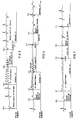
- a VT arrhythmia is shown on the ECG.
- the therapy given at 102 in this instance is VT pacing and takes place at the "very high" pulse energy corresponding to 8 volts.
- These antitachyarrhythmia pacing pulses are delivered at a programmable energy (in this case corresponding to 8 volts) and are set independently of the bradycardia support pacing energies.
- Both the amplitude and the pulse width may be independently programmed. It is beneficial to set the antitachyarrhythmia pacing energies to a high value to be assured of capture during a VT episode.
- pulse energy associated with an increase from the normal 4 volts to the very high 8 volts.
- the VT pacing therapy has reverted the tachyarrhythmia as shown at 103 on the ECG trace.
- a high energy known as the post antitachyarrhythmia pacing energy and corresponding to a voltage of 6 volts, is used for bradycardia support pacing pulses which are delivered immediately after antitachyarrhythmia therapy.
- These pulses have a lower energy than the antitachyarrhythmia pacing pulses, but have a higher energy than the bradycardia pacing pulses in order to ensure capture in a heart that has just been traumatized by an episode of VT/VF and possibly shocks.
- bradycardia support pacing pulses are delivered at the post antitachyarrhythmia therapy pacing energy (in this case 6 volt pulses).
- the bradycardia support pacing pulses are delivered at this higher energy (relative to the normal bradycardia support pacing pulses of 4 volts), until a programmable timeout period has expired. This is the period between 103 and 104.
- the subsequent bradycardia support pacing pulses are delivered at the normal bradycardia pacing energy corresponding to 4 volts.
- FIG. 6 there is depicted another ECG trace outlining the changing energy of pacing pulses in response to various cardiac conditions and therapies in an antitachyarrhythmia device.
- bradycardia support pacing is given at the normal bradycardia pacing energy corresponding to 4 volts.
- a VT arrhythmia has developed.
- Antitachyarrhythmia or VT pacing is given at 112 in an attempt to revert the tachyarrhythmia.
- These antitachyarrhythmia pacing pulses are delivered at a physician programmable energy and are set to a very high value in order to be assured of capture during the VT episode.
- the VT pacing energy is programmed at 8 volts.
- the VT pacing has not proved to be successful in reverting the VT arrhythmia and thus the device performs a defibrillation shock at 113.
- the defibrillation shock has succeeded in reverting the VT arrhythmia and the device then performs post shock bradycardia support pacing at 114.
- the post antitachyarrhythmia therapy pacing energy is now used for the bradycardia support pacing pulses which are delivered immediately after the antitachyarrhythmia therapy, or as in this instance, defibrillation shock therapy.
- These pulses are programmed in this embodiment at 6 volts and have a higher energy than the normal bradycardia support pacing energy pulses of 4 volts to ensure capture in a heart which has just been traumatized by a defibrillation shock.
- the post antitachyarrhythmia pacing energy (6 volts) changes to the normal bradycardia support pacing energy (4 volts).
- FIG. 7 there is depicted a further ECG trace outlining the changing energy of pacing pulses in response to various cardiac conditions and therapies in an antitachyarrhythmia device.
- Bradycardia support pacing is shown at 120. These pacing pulses are delivered at the normal bradycardia pacing energy corresponding to 4 volts.
- a VT arrhythmia is shown to have developed at 121.
- defibrillation shock therapy is applied. The defibrillation shock therapy has been successful in reverting the VT arrhythmia.
- the pulse energy is set to correspond to 6 volts which is the higher energy level post antitachyarrhythmia pacing energy.
- pacing pulses are delivered at the higher energy until the physician programmable timeout period has expired. This is shown at 124 on the ECG trace where there is a change from the post-shock pacing energy of 6 volts to the normal bradycardia pacing energy of 4 volts.
- This invention applies to antitachyarrhythmia devices capable of delivering one or more cardioversion or defibrillation shocks as well as to devices which deliver antitachycardia pacing pulses alone or in combination with cardioversion or defibrillation shocks.
- the antitachycardia pacing may be delivered to the atrium, the ventricle, or to both the atrium and the ventricle.
- FIG. 4 may be implemented using hard-wired logic rather than software, as the distinction between hardware and software has become less significant.
- engineering judgment including considerations of conserving energy so as to prolong battery life, is exercised in deciding on a particular implementation of the invention for a given application.
Landscapes
- Health & Medical Sciences (AREA)
- Cardiology (AREA)
- Heart & Thoracic Surgery (AREA)
- Engineering & Computer Science (AREA)
- Biomedical Technology (AREA)
- Nuclear Medicine, Radiotherapy & Molecular Imaging (AREA)
- Radiology & Medical Imaging (AREA)
- Life Sciences & Earth Sciences (AREA)
- Animal Behavior & Ethology (AREA)
- General Health & Medical Sciences (AREA)
- Public Health (AREA)
- Veterinary Medicine (AREA)
- Electrotherapy Devices (AREA)
Applications Claiming Priority (2)
| Application Number | Priority Date | Filing Date | Title |
|---|---|---|---|
| US142535 | 1980-04-21 | ||
| US07/142,535 US4869252A (en) | 1988-01-11 | 1988-01-11 | Apparatus and method for controlling pulse energy in antitachyarrhythmia and bradycardia pacing device |
Publications (2)
| Publication Number | Publication Date |
|---|---|
| EP0324604A1 true EP0324604A1 (de) | 1989-07-19 |
| EP0324604B1 EP0324604B1 (de) | 1995-10-11 |
Family
ID=22500219
Family Applications (1)
| Application Number | Title | Priority Date | Filing Date |
|---|---|---|---|
| EP89300232A Revoked EP0324604B1 (de) | 1988-01-11 | 1989-01-11 | Gerät und Verfahren zur Steuerung der Pulsenergie in Antitachyarrhythmia und Bradykardie-Schrittmacher |
Country Status (3)
| Country | Link |
|---|---|
| US (1) | US4869252A (de) |
| EP (1) | EP0324604B1 (de) |
| DE (1) | DE68924490T2 (de) |
Cited By (11)
| Publication number | Priority date | Publication date | Assignee | Title |
|---|---|---|---|---|
| WO1992010236A1 (en) * | 1990-12-12 | 1992-06-25 | Medtronic, Inc. | Electronic capture detection for a pacer |
| EP0426775A4 (en) * | 1989-01-25 | 1992-10-21 | Siemens Elema Ab | Automatically adjustable energy controlled rate-responsive pacemaker |
| EP0450943A3 (en) * | 1990-04-03 | 1992-12-16 | Telectronics N.V. | Apparatus and method for antitachycardia pacing in arrhythmia control systems |
| EP0485521A4 (en) * | 1989-04-12 | 1993-01-13 | Siemens Elema Ab | Programmable automatic implantable cardioverter/defibrillator and pacemaker system |
| EP0469817A3 (en) * | 1990-07-30 | 1993-02-03 | Telectronics N.V. | Arrhythmia control system employing arrhythmia recognition algorithm |
| WO1994003233A1 (en) * | 1992-07-30 | 1994-02-17 | Medtronic, Inc. | Atrial defibrillator employing transvenous and subcutaneous electrodes and method of use |
| EP0465241A3 (en) * | 1990-07-03 | 1994-06-29 | Telectronics Nv | Apparatus and method for the detection and treatment of arrhythmias using a neural network |
| EP0599588A3 (de) * | 1992-11-23 | 1995-11-22 | Siemens Ag | Verfahren und Gerät zur Herzrhythmuskorrektur und -reizung mit Frühladungsfähigkeit. |
| EP0340045B1 (de) * | 1988-04-29 | 1998-06-24 | Telectronics N.V. | Vorrichtung zur Beendigung von Tachyarrythmien einschliesslich Nachtherapie-Stimulierungsverzögerung |
| EP0588125B1 (de) * | 1992-09-16 | 1999-01-20 | Pacesetter AB | Vorrichtung zur Abgabe von Herz-Defibrillationssequenzen aus Stimulationspulsen und Defibrillationsshocks |
| EP2337608A1 (de) * | 2008-08-14 | 2011-06-29 | Cardiac Pacemakers, Inc. | Systeme und verfahren zur erhöhung der herzschrittleistung nach einem externen hochenergetischen elektroschock |
Families Citing this family (84)
| Publication number | Priority date | Publication date | Assignee | Title |
|---|---|---|---|---|
| US5156148A (en) * | 1987-10-06 | 1992-10-20 | Leonard Bloom | System for treating a malfunctioning heart |
| US4971058A (en) * | 1989-07-06 | 1990-11-20 | Ventritex, Inc. | Cardiac therapy method with duration timer |
| US4969465A (en) * | 1989-05-19 | 1990-11-13 | Ventritex, Inc. | Cardiac therapy method |
| US5215081A (en) * | 1989-12-28 | 1993-06-01 | Telectronics Pacing Systems, Inc. | Method and device for measuring subthreshold defibrillation electrode resistance and providing a constant energy shock delivery |
| US5251626A (en) * | 1990-07-03 | 1993-10-12 | Telectronics Pacing Systems, Inc. | Apparatus and method for the detection and treatment of arrhythmias using a neural network |
| US5074301A (en) * | 1990-07-16 | 1991-12-24 | Telectronics Pacing Systems, Inc. | Apparatus and method for atrial pace before ventricular shock in dual chamber arrhythmia control system |
| US5105810A (en) * | 1990-07-24 | 1992-04-21 | Telectronics Pacing Systems, Inc. | Implantable automatic and haemodynamically responsive cardioverting/defibrillating pacemaker with means for minimizing bradycardia support pacing voltages |
| US5184614A (en) * | 1990-10-19 | 1993-02-09 | Telectronics Pacing Systems, Inc. | Implantable haemodynamically responsive cardioverting/defibrillating pacemaker |
| US5119813A (en) * | 1990-11-05 | 1992-06-09 | Leonard Bloom | Mixed venous oxygen saturation responsive system for and method of treating a malfunctioning heart |
| US5193536A (en) * | 1990-12-20 | 1993-03-16 | Medtronic, Inc. | Paced cardioversion |
| US5161527A (en) * | 1991-02-13 | 1992-11-10 | Telectronics Pacing Systems, Inc. | Apparatus and method for detecting abnormal cardiac rhythms in dual chamber arrhythmia control system |
| US5184615A (en) * | 1991-03-08 | 1993-02-09 | Telectronics Pacing Systems, Inc. | Apparatus and method for detecting abnormal cardiac rhythms using evoked potential measurements in an arrhythmia control system |
| US5183040A (en) * | 1991-03-08 | 1993-02-02 | Telectronics Pacing Systems, Inc. | Apparatus and method for detecting abnormal cardiac rhythms using an ultrasound sensor in an arrhythmia control system |
| US5209229A (en) * | 1991-05-20 | 1993-05-11 | Telectronics Pacing Systems, Inc. | Apparatus and method employing plural electrode configurations for cardioversion of atrial fibrillation in an arrhythmia control system |
| US5292339A (en) * | 1991-06-14 | 1994-03-08 | Telectronics Pacing Systems, Inc. | Implantable pacemaker/cardioverter/defibrillator device and method incorporating multiple bradycardia support pacing rates |
| US5184616A (en) * | 1991-10-21 | 1993-02-09 | Telectronics Pacing Systems, Inc. | Apparatus and method for generation of varying waveforms in arrhythmia control system |
| US5181511A (en) * | 1991-10-21 | 1993-01-26 | Telectronics Pacing Systems, Inc. | Apparatus and method for antitachycardia pacing using a virtual electrode |
| US5251625A (en) * | 1991-10-22 | 1993-10-12 | Telectronics Pacing Systems, Inc. | Apparatus and method for controlling tachyarrhythmia confirmation in response to patient history |
| US5203326A (en) * | 1991-12-18 | 1993-04-20 | Telectronics Pacing Systems, Inc. | Antiarrhythmia pacer using antiarrhythmia pacing and autonomic nerve stimulation therapy |
| US5251621A (en) * | 1991-12-18 | 1993-10-12 | Telectronics Pacing Systems, Inc. | Arrhythmia control pacer using skeletal muscle cardiac graft stimulation |
| US5370667A (en) * | 1992-04-03 | 1994-12-06 | Intermedics, Inc. | Device and method for automatically adjusting tachycardia recognition criteria based on detected parameter |
| WO1995007728A2 (en) * | 1993-09-15 | 1995-03-23 | Pacesetter, Inc. | Synchronized cardioverter shock therapy for preemptive depolarization |
| US5620469A (en) * | 1994-10-11 | 1997-04-15 | Angeion Corporation | Stepped cardioversion system for an implantable cardioverter defibrillator |
| US5500004A (en) | 1994-11-08 | 1996-03-19 | Telectronics Pacing Systems, Inc. | Cardio myostimulation system with defibrillation |
| US5620471A (en) * | 1995-06-16 | 1997-04-15 | Pacesetter, Inc. | System and method for discriminating between atrial and ventricular arrhythmias and for applying cardiac therapy therefor |
| US5645569A (en) * | 1996-06-04 | 1997-07-08 | Incontrol, Inc. | Post atrial cardioversion atrial pacing and method |
| US5632716A (en) * | 1996-06-20 | 1997-05-27 | Telectronics Pacing Systems, Inc. | Apparatus and method of muscle training in dynamic cardiomyoplasty |
| US5728139A (en) * | 1996-10-31 | 1998-03-17 | Hewlett-Packard Company | Automatic waveform selection for defibrillation |
| US5897575A (en) * | 1997-10-24 | 1999-04-27 | Pacesetter, Inc. | Arrhythmia classification system with reliability indication that allows for low quality input signals in pacemakers |
| US6205357B1 (en) | 1998-12-04 | 2001-03-20 | Uab Research Foundation | Methods and apparatus for detecting and treating medical conditions of the heart |
| US7062325B1 (en) | 1999-05-21 | 2006-06-13 | Cardiac Pacemakers Inc | Method and apparatus for treating irregular ventricular contractions such as during atrial arrhythmia |
| US8064997B2 (en) | 1999-05-21 | 2011-11-22 | Cardiac Pacemakers, Inc. | Method and apparatus for treating irregular ventricular contractions such as during atrial arrhythmia |
| US6501988B2 (en) * | 2000-12-26 | 2002-12-31 | Cardiac Pacemakers Inc. | Apparatus and method for ventricular rate regularization with biventricular sensing |
| US6430438B1 (en) | 1999-05-21 | 2002-08-06 | Cardiac Pacemakers, Inc. | Cardiac rhythm management system with atrial shock timing optimization |
| US7212860B2 (en) | 1999-05-21 | 2007-05-01 | Cardiac Pacemakers, Inc. | Apparatus and method for pacing mode switching during atrial tachyarrhythmias |
| US7181278B2 (en) * | 1999-05-21 | 2007-02-20 | Cardiac Pacemakers, Inc. | Apparatus and method for ventricular rate regularization |
| US6285909B1 (en) | 1999-05-27 | 2001-09-04 | Cardiac Pacemakers, Inc. | Preserving patient specific data in implantable pulse generator systems |
| US6314321B1 (en) | 1999-06-30 | 2001-11-06 | Cardiac Pacemakers, Inc. | Therapy-selection methods for implantable heart monitors |
| US7039461B1 (en) | 2000-05-13 | 2006-05-02 | Cardiac Pacemakers, Inc. | Cardiac pacing system for prevention of ventricular fibrillation and ventricular tachycardia episode |
| US6501987B1 (en) | 2000-05-26 | 2002-12-31 | Cardiac Pacemakers, Inc. | Rate smoothing control |
| US7239914B2 (en) * | 2000-05-13 | 2007-07-03 | Cardiac Pacemakers, Inc. | Rate smoothing control |
| US8512220B2 (en) | 2000-05-26 | 2013-08-20 | Cardiac Pacemakers, Inc. | Rate smoothing control |
| US6424865B1 (en) | 2000-07-13 | 2002-07-23 | Cardiac Pacemakers, Inc. | Ventricular conduction delay trending system and method |
| US6978177B1 (en) * | 2000-11-14 | 2005-12-20 | Cardiac Pacemakers, Inc. | Method and apparatus for using atrial discrimination algorithms to determine optimal pacing therapy and therapy timing |
| US20020087198A1 (en) * | 2000-12-29 | 2002-07-04 | Kramer Andrew P. | Apparatus and method for ventricular rate regularization |
| US6957100B2 (en) | 2000-12-26 | 2005-10-18 | Cardiac Pacemakers, Inc. | Method and system for display of cardiac event intervals in a resynchronization pacemaker |
| US6892094B2 (en) * | 2002-04-30 | 2005-05-10 | Medtronic, Inc. | Combined anti-tachycardia pacing (ATP) and high voltage therapy for treating ventricular arrhythmias |
| SE0202881D0 (sv) * | 2002-09-27 | 2002-09-27 | St Jude Medical | Implantable cardioverter defibrillator |
| US7328066B1 (en) * | 2003-03-28 | 2008-02-05 | Pacesetter, Inc. | Implantable cardiac stimulation device, system and method that identifies and prevents impending arrhythmias of the atria |
| PL1617770T3 (pl) * | 2003-04-22 | 2013-05-31 | Patrick Leahy | Urządzenie chirurgiczne |
| US7239915B2 (en) * | 2003-12-16 | 2007-07-03 | Medtronic, Inc. | Hemodynamic optimization system for biventricular implants |
| US7515956B2 (en) | 2004-05-12 | 2009-04-07 | Cardiac Pacemakers, Inc. | Template based AV/VA interval comparison for the discrimination of cardiac arrhythmias |
| US7480531B1 (en) | 2004-05-26 | 2009-01-20 | Pacesetter, Inc. | System and method for reducing pain associated with cardioversion shocks generated by implantable cardiac stimulation devices |
| US7775966B2 (en) | 2005-02-24 | 2010-08-17 | Ethicon Endo-Surgery, Inc. | Non-invasive pressure measurement in a fluid adjustable restrictive device |
| US8066629B2 (en) | 2005-02-24 | 2011-11-29 | Ethicon Endo-Surgery, Inc. | Apparatus for adjustment and sensing of gastric band pressure |
| US7927270B2 (en) | 2005-02-24 | 2011-04-19 | Ethicon Endo-Surgery, Inc. | External mechanical pressure sensor for gastric band pressure measurements |
| US7775215B2 (en) | 2005-02-24 | 2010-08-17 | Ethicon Endo-Surgery, Inc. | System and method for determining implanted device positioning and obtaining pressure data |
| US7658196B2 (en) | 2005-02-24 | 2010-02-09 | Ethicon Endo-Surgery, Inc. | System and method for determining implanted device orientation |
| US8016744B2 (en) | 2005-02-24 | 2011-09-13 | Ethicon Endo-Surgery, Inc. | External pressure-based gastric band adjustment system and method |
| US7699770B2 (en) | 2005-02-24 | 2010-04-20 | Ethicon Endo-Surgery, Inc. | Device for non-invasive measurement of fluid pressure in an adjustable restriction device |
| US8152710B2 (en) | 2006-04-06 | 2012-04-10 | Ethicon Endo-Surgery, Inc. | Physiological parameter analysis for an implantable restriction device and a data logger |
| US8870742B2 (en) | 2006-04-06 | 2014-10-28 | Ethicon Endo-Surgery, Inc. | GUI for an implantable restriction device and a data logger |
| US8187163B2 (en) | 2007-12-10 | 2012-05-29 | Ethicon Endo-Surgery, Inc. | Methods for implanting a gastric restriction device |
| WO2009075725A1 (en) | 2007-12-13 | 2009-06-18 | Cardiac Pacemakers, Inc. | Supraventricular tachy sensing vector |
| US8100870B2 (en) | 2007-12-14 | 2012-01-24 | Ethicon Endo-Surgery, Inc. | Adjustable height gastric restriction devices and methods |
| US8142452B2 (en) | 2007-12-27 | 2012-03-27 | Ethicon Endo-Surgery, Inc. | Controlling pressure in adjustable restriction devices |
| US8377079B2 (en) | 2007-12-27 | 2013-02-19 | Ethicon Endo-Surgery, Inc. | Constant force mechanisms for regulating restriction devices |
| US8192350B2 (en) | 2008-01-28 | 2012-06-05 | Ethicon Endo-Surgery, Inc. | Methods and devices for measuring impedance in a gastric restriction system |
| US8337389B2 (en) | 2008-01-28 | 2012-12-25 | Ethicon Endo-Surgery, Inc. | Methods and devices for diagnosing performance of a gastric restriction system |
| US8591395B2 (en) | 2008-01-28 | 2013-11-26 | Ethicon Endo-Surgery, Inc. | Gastric restriction device data handling devices and methods |
| US7844342B2 (en) | 2008-02-07 | 2010-11-30 | Ethicon Endo-Surgery, Inc. | Powering implantable restriction systems using light |
| US8221439B2 (en) | 2008-02-07 | 2012-07-17 | Ethicon Endo-Surgery, Inc. | Powering implantable restriction systems using kinetic motion |
| US8114345B2 (en) | 2008-02-08 | 2012-02-14 | Ethicon Endo-Surgery, Inc. | System and method of sterilizing an implantable medical device |
| US8057492B2 (en) | 2008-02-12 | 2011-11-15 | Ethicon Endo-Surgery, Inc. | Automatically adjusting band system with MEMS pump |
| US8591532B2 (en) | 2008-02-12 | 2013-11-26 | Ethicon Endo-Sugery, Inc. | Automatically adjusting band system |
| US8034065B2 (en) | 2008-02-26 | 2011-10-11 | Ethicon Endo-Surgery, Inc. | Controlling pressure in adjustable restriction devices |
| US8233995B2 (en) | 2008-03-06 | 2012-07-31 | Ethicon Endo-Surgery, Inc. | System and method of aligning an implantable antenna |
| US8187162B2 (en) | 2008-03-06 | 2012-05-29 | Ethicon Endo-Surgery, Inc. | Reorientation port |
| US8412325B2 (en) * | 2008-04-08 | 2013-04-02 | Cardiac Pacemakers, Inc. | High-energy anti-tachycardia therapy |
| EP3741424B1 (de) | 2014-02-24 | 2022-05-04 | Element Science, Inc. | Externer defibrillator |
| US9782601B2 (en) | 2014-04-15 | 2017-10-10 | Cardiac Pacemakers, Inc. | Pacing device with autonomous anti-tachycardia pacing |
| EP4678105A3 (de) | 2015-08-26 | 2026-04-01 | Element Science, Inc. | Tragbare defibrillationsvorrichtungen |
| US10821288B2 (en) * | 2017-04-03 | 2020-11-03 | Cardiac Pacemakers, Inc. | Cardiac pacemaker with pacing pulse energy adjustment based on sensed heart rate |
| CN112839585A (zh) | 2018-10-10 | 2021-05-25 | 元素科学公司 | 具有一次性部件和可重新使用部件的可穿戴式装置 |
Citations (2)
| Publication number | Priority date | Publication date | Assignee | Title |
|---|---|---|---|---|
| US4403614A (en) * | 1979-07-19 | 1983-09-13 | Medtronic, Inc. | Implantable cardioverter |
| US4693253A (en) * | 1981-03-23 | 1987-09-15 | Medtronic, Inc. | Automatic implantable defibrillator and pacer |
Family Cites Families (5)
| Publication number | Priority date | Publication date | Assignee | Title |
|---|---|---|---|---|
| US3857398A (en) * | 1971-12-13 | 1974-12-31 | L Rubin | Electrical cardiac defibrillator |
| US3952750A (en) * | 1974-04-25 | 1976-04-27 | Mieczyslaw Mirowski | Command atrial cardioverting device |
| US4181133A (en) * | 1978-05-22 | 1980-01-01 | Arco Medical Products Company | Programmable tachycardia pacer |
| US4473078A (en) * | 1982-05-24 | 1984-09-25 | Cardiac Resuscitator Corporation | Cardiac arrhythmia analysis system |
| US4577633A (en) * | 1984-03-28 | 1986-03-25 | Medtronic, Inc. | Rate scanning demand pacemaker and method for treatment of tachycardia |
-
1988
- 1988-01-11 US US07/142,535 patent/US4869252A/en not_active Expired - Lifetime
-
1989
- 1989-01-11 DE DE68924490T patent/DE68924490T2/de not_active Revoked
- 1989-01-11 EP EP89300232A patent/EP0324604B1/de not_active Revoked
Patent Citations (2)
| Publication number | Priority date | Publication date | Assignee | Title |
|---|---|---|---|---|
| US4403614A (en) * | 1979-07-19 | 1983-09-13 | Medtronic, Inc. | Implantable cardioverter |
| US4693253A (en) * | 1981-03-23 | 1987-09-15 | Medtronic, Inc. | Automatic implantable defibrillator and pacer |
Cited By (12)
| Publication number | Priority date | Publication date | Assignee | Title |
|---|---|---|---|---|
| EP0340045B1 (de) * | 1988-04-29 | 1998-06-24 | Telectronics N.V. | Vorrichtung zur Beendigung von Tachyarrythmien einschliesslich Nachtherapie-Stimulierungsverzögerung |
| EP0426775A4 (en) * | 1989-01-25 | 1992-10-21 | Siemens Elema Ab | Automatically adjustable energy controlled rate-responsive pacemaker |
| EP0485521A4 (en) * | 1989-04-12 | 1993-01-13 | Siemens Elema Ab | Programmable automatic implantable cardioverter/defibrillator and pacemaker system |
| EP0450943A3 (en) * | 1990-04-03 | 1992-12-16 | Telectronics N.V. | Apparatus and method for antitachycardia pacing in arrhythmia control systems |
| EP0465241A3 (en) * | 1990-07-03 | 1994-06-29 | Telectronics Nv | Apparatus and method for the detection and treatment of arrhythmias using a neural network |
| EP0469817A3 (en) * | 1990-07-30 | 1993-02-03 | Telectronics N.V. | Arrhythmia control system employing arrhythmia recognition algorithm |
| WO1992010236A1 (en) * | 1990-12-12 | 1992-06-25 | Medtronic, Inc. | Electronic capture detection for a pacer |
| AU651989B2 (en) * | 1990-12-12 | 1994-08-11 | Medtronic, Inc. | Electronic capture detection for a pacer |
| WO1994003233A1 (en) * | 1992-07-30 | 1994-02-17 | Medtronic, Inc. | Atrial defibrillator employing transvenous and subcutaneous electrodes and method of use |
| EP0588125B1 (de) * | 1992-09-16 | 1999-01-20 | Pacesetter AB | Vorrichtung zur Abgabe von Herz-Defibrillationssequenzen aus Stimulationspulsen und Defibrillationsshocks |
| EP0599588A3 (de) * | 1992-11-23 | 1995-11-22 | Siemens Ag | Verfahren und Gerät zur Herzrhythmuskorrektur und -reizung mit Frühladungsfähigkeit. |
| EP2337608A1 (de) * | 2008-08-14 | 2011-06-29 | Cardiac Pacemakers, Inc. | Systeme und verfahren zur erhöhung der herzschrittleistung nach einem externen hochenergetischen elektroschock |
Also Published As
| Publication number | Publication date |
|---|---|
| EP0324604B1 (de) | 1995-10-11 |
| US4869252A (en) | 1989-09-26 |
| DE68924490D1 (de) | 1995-11-16 |
| DE68924490T2 (de) | 1996-05-30 |
Similar Documents
| Publication | Publication Date | Title |
|---|---|---|
| EP0324604B1 (de) | Gerät und Verfahren zur Steuerung der Pulsenergie in Antitachyarrhythmia und Bradykardie-Schrittmacher | |
| EP0518599B1 (de) | Implantierbare Vorrichtung zur Herzrhythmuskorrektur, Herzreizung und Defibrillation mit unterschiedlichen Stimulationsfrequenzen zum unterstützen von Bradykardien | |
| US4940054A (en) | Apparatus and method for controlling multiple sensitivities in arrhythmia control system including post therapy packing delay | |
| US4998974A (en) | Apparatus and method for antitachycardia pacing in dual chamber arrhythmia control system | |
| US5545185A (en) | Cardiac pacer which compensates for effects of abrupt changes in heart rate | |
| EP0467652B2 (de) | Gerät zur Reizung des Vorhofes vor dem Herzkammerschock in einem Zweikammer-Arrhythmiekontrollsystem | |
| US8046061B2 (en) | System and method for preventing recurrence of atrial tachyarrhythmia | |
| AU757287B2 (en) | Cardioverter and method for cardioverting an atrial tachyarrhythmia while maintaining atrial pacing | |
| US4548209A (en) | Energy converter for implantable cardioverter | |
| DE69323989T2 (de) | Vorhof-Defibrillator mit Prüfmodus | |
| EP0334618B1 (de) | Schaltung zur Unterscheidung zwischen Arrhythmie und Rauschen in einem Arrhythmiesteuersystem | |
| US5265600A (en) | Atrial defibrillator and method for providing post-cardioversion pacing | |
| EP0450943B1 (de) | Schrittmacher Gerät und Verfahren für Antitachykardien in einem Arrythmiesteuersystem | |
| US6324422B1 (en) | Methods for sensing arrhythmias in a pacemaker/defibrillator and a pacemaker/defibrillator programmed to implement the same | |
| US7079891B1 (en) | System and method for providing cardioversion therapy and overdrive pacing using an implantable cardiac stimulation device | |
| US5851220A (en) | System and method for automatic adjustment of shock parameters | |
| EP0340045B1 (de) | Vorrichtung zur Beendigung von Tachyarrythmien einschliesslich Nachtherapie-Stimulierungsverzögerung |
Legal Events
| Date | Code | Title | Description |
|---|---|---|---|
| PUAI | Public reference made under article 153(3) epc to a published international application that has entered the european phase |
Free format text: ORIGINAL CODE: 0009012 |
|
| AK | Designated contracting states |
Kind code of ref document: A1 Designated state(s): DE FR GB |
|
| 17P | Request for examination filed |
Effective date: 19900119 |
|
| 17Q | First examination report despatched |
Effective date: 19920630 |
|
| GRAA | (expected) grant |
Free format text: ORIGINAL CODE: 0009210 |
|
| AK | Designated contracting states |
Kind code of ref document: B1 Designated state(s): DE FR GB |
|
| REF | Corresponds to: |
Ref document number: 68924490 Country of ref document: DE Date of ref document: 19951116 |
|
| ET | Fr: translation filed | ||
| PLBQ | Unpublished change to opponent data |
Free format text: ORIGINAL CODE: EPIDOS OPPO |
|
| PLBI | Opposition filed |
Free format text: ORIGINAL CODE: 0009260 |
|
| PLBF | Reply of patent proprietor to notice(s) of opposition |
Free format text: ORIGINAL CODE: EPIDOS OBSO |
|
| 26 | Opposition filed |
Opponent name: BIOTRONIK MESS- UND THERAPIEGERAETE GMBH & CO INGE Effective date: 19960711 |
|
| PLBF | Reply of patent proprietor to notice(s) of opposition |
Free format text: ORIGINAL CODE: EPIDOS OBSO |
|
| PGFP | Annual fee paid to national office [announced via postgrant information from national office to epo] |
Ref country code: GB Payment date: 19970102 Year of fee payment: 9 |
|
| PLBF | Reply of patent proprietor to notice(s) of opposition |
Free format text: ORIGINAL CODE: EPIDOS OBSO |
|
| PG25 | Lapsed in a contracting state [announced via postgrant information from national office to epo] |
Ref country code: GB Free format text: LAPSE BECAUSE OF NON-PAYMENT OF DUE FEES Effective date: 19980111 |
|
| PLAW | Interlocutory decision in opposition |
Free format text: ORIGINAL CODE: EPIDOS IDOP |
|
| GBPC | Gb: european patent ceased through non-payment of renewal fee |
Effective date: 19980111 |
|
| APAC | Appeal dossier modified |
Free format text: ORIGINAL CODE: EPIDOS NOAPO |
|
| APAE | Appeal reference modified |
Free format text: ORIGINAL CODE: EPIDOS REFNO |
|
| APAC | Appeal dossier modified |
Free format text: ORIGINAL CODE: EPIDOS NOAPO |
|
| PLBQ | Unpublished change to opponent data |
Free format text: ORIGINAL CODE: EPIDOS OPPO |
|
| PLAB | Opposition data, opponent's data or that of the opponent's representative modified |
Free format text: ORIGINAL CODE: 0009299OPPO |
|
| R26 | Opposition filed (corrected) |
Opponent name: BIOTRONIK MESS- UND THERAPIEGERAETE GMBH & CO INGE Effective date: 19960711 |
|
| PGFP | Annual fee paid to national office [announced via postgrant information from national office to epo] |
Ref country code: DE Payment date: 20011220 Year of fee payment: 14 |
|
| PGFP | Annual fee paid to national office [announced via postgrant information from national office to epo] |
Ref country code: FR Payment date: 20021218 Year of fee payment: 15 |
|
| RAP2 | Party data changed (patent owner data changed or rights of a patent transferred) |
Owner name: PACESETTER, INC. |
|
| APAC | Appeal dossier modified |
Free format text: ORIGINAL CODE: EPIDOS NOAPO |
|
| RDAH | Patent revoked |
Free format text: ORIGINAL CODE: EPIDOS REVO |
|
| RDAG | Patent revoked |
Free format text: ORIGINAL CODE: 0009271 |
|
| STAA | Information on the status of an ep patent application or granted ep patent |
Free format text: STATUS: PATENT REVOKED |
|
| 27W | Patent revoked |
Effective date: 20021212 |
|
| REG | Reference to a national code |
Ref country code: FR Ref legal event code: TP |
|
| APAH | Appeal reference modified |
Free format text: ORIGINAL CODE: EPIDOSCREFNO |