EP0324912A2 - Schnelles Verfahren zur Herstellung von chromogenen Verbindungen, die als Substrate für alpha-Amylase wirken, mit hohen präparativen Ausbeuten - Google Patents
Schnelles Verfahren zur Herstellung von chromogenen Verbindungen, die als Substrate für alpha-Amylase wirken, mit hohen präparativen Ausbeuten Download PDFInfo
- Publication number
- EP0324912A2 EP0324912A2 EP88118721A EP88118721A EP0324912A2 EP 0324912 A2 EP0324912 A2 EP 0324912A2 EP 88118721 A EP88118721 A EP 88118721A EP 88118721 A EP88118721 A EP 88118721A EP 0324912 A2 EP0324912 A2 EP 0324912A2
- Authority
- EP
- European Patent Office
- Prior art keywords
- chromogenic
- amylase
- compound
- maltooligosaccharide
- glucoside
- Prior art date
- Legal status (The legal status is an assumption and is not a legal conclusion. Google has not performed a legal analysis and makes no representation as to the accuracy of the status listed.)
- Withdrawn
Links
Images



Classifications
-
- C—CHEMISTRY; METALLURGY
- C07—ORGANIC CHEMISTRY
- C07H—SUGARS; DERIVATIVES THEREOF; NUCLEOSIDES; NUCLEOTIDES; NUCLEIC ACIDS
- C07H17/00—Compounds containing heterocyclic radicals directly attached to hetero atoms of saccharide radicals
- C07H17/02—Heterocyclic radicals containing only nitrogen as ring hetero atoms
-
- C—CHEMISTRY; METALLURGY
- C12—BIOCHEMISTRY; BEER; SPIRITS; WINE; VINEGAR; MICROBIOLOGY; ENZYMOLOGY; MUTATION OR GENETIC ENGINEERING
- C12P—FERMENTATION OR ENZYME-USING PROCESSES TO SYNTHESISE A DESIRED CHEMICAL COMPOUND OR COMPOSITION OR TO SEPARATE OPTICAL ISOMERS FROM A RACEMIC MIXTURE
- C12P19/00—Preparation of compounds containing saccharide radicals
- C12P19/18—Preparation of compounds containing saccharide radicals produced by the action of a glycosyl transferase, e.g. alpha-, beta- or gamma-cyclodextrins
-
- C—CHEMISTRY; METALLURGY
- C12—BIOCHEMISTRY; BEER; SPIRITS; WINE; VINEGAR; MICROBIOLOGY; ENZYMOLOGY; MUTATION OR GENETIC ENGINEERING
- C12P—FERMENTATION OR ENZYME-USING PROCESSES TO SYNTHESISE A DESIRED CHEMICAL COMPOUND OR COMPOSITION OR TO SEPARATE OPTICAL ISOMERS FROM A RACEMIC MIXTURE
- C12P19/00—Preparation of compounds containing saccharide radicals
- C12P19/44—Preparation of O-glycosides, e.g. glucosides
- C12P19/60—Preparation of O-glycosides, e.g. glucosides having an oxygen of the saccharide radical directly bound to a non-saccharide heterocyclic ring or a condensed ring system containing a non-saccharide heterocyclic ring, e.g. coumermycin, novobiocin
-
- C—CHEMISTRY; METALLURGY
- C12—BIOCHEMISTRY; BEER; SPIRITS; WINE; VINEGAR; MICROBIOLOGY; ENZYMOLOGY; MUTATION OR GENETIC ENGINEERING
- C12Q—MEASURING OR TESTING PROCESSES INVOLVING ENZYMES, NUCLEIC ACIDS OR MICROORGANISMS; COMPOSITIONS OR TEST PAPERS THEREFOR; PROCESSES OF PREPARING SUCH COMPOSITIONS; CONDITION-RESPONSIVE CONTROL IN MICROBIOLOGICAL OR ENZYMOLOGICAL PROCESSES
- C12Q1/00—Measuring or testing processes involving enzymes, nucleic acids or microorganisms; Compositions therefor; Processes of preparing such compositions
- C12Q1/34—Measuring or testing processes involving enzymes, nucleic acids or microorganisms; Compositions therefor; Processes of preparing such compositions involving hydrolase
- C12Q1/40—Measuring or testing processes involving enzymes, nucleic acids or microorganisms; Compositions therefor; Processes of preparing such compositions involving hydrolase involving amylase
-
- C—CHEMISTRY; METALLURGY
- C12—BIOCHEMISTRY; BEER; SPIRITS; WINE; VINEGAR; MICROBIOLOGY; ENZYMOLOGY; MUTATION OR GENETIC ENGINEERING
- C12Q—MEASURING OR TESTING PROCESSES INVOLVING ENZYMES, NUCLEIC ACIDS OR MICROORGANISMS; COMPOSITIONS OR TEST PAPERS THEREFOR; PROCESSES OF PREPARING SUCH COMPOSITIONS; CONDITION-RESPONSIVE CONTROL IN MICROBIOLOGICAL OR ENZYMOLOGICAL PROCESSES
- C12Q2334/00—O-linked chromogens for determinations of hydrolase enzymes, e.g. glycosidases, phosphatases, esterases
-
- Y—GENERAL TAGGING OF NEW TECHNOLOGICAL DEVELOPMENTS; GENERAL TAGGING OF CROSS-SECTIONAL TECHNOLOGIES SPANNING OVER SEVERAL SECTIONS OF THE IPC; TECHNICAL SUBJECTS COVERED BY FORMER USPC CROSS-REFERENCE ART COLLECTIONS [XRACs] AND DIGESTS
- Y10—TECHNICAL SUBJECTS COVERED BY FORMER USPC
- Y10S—TECHNICAL SUBJECTS COVERED BY FORMER USPC CROSS-REFERENCE ART COLLECTIONS [XRACs] AND DIGESTS
- Y10S435/00—Chemistry: molecular biology and microbiology
- Y10S435/81—Packaged device or kit
Definitions
- the present invention relates to chromogenic enzyme substrate compounds which are useful as optical indicator compounds in analytical test systems.
- the present invention relates to chromogenic ⁇ -amylase substrate compounds for the detection of ⁇ -amylase in a liquid test sample.
- ⁇ -Amylase is an endoenzyme which hydrolyzes complex carbohydrates, such as starch and glycogen, which are polymers of ⁇ -D-glucose units linked through the 1 and 4 carbon atoms located on adjacent glucose residues.
- complex carbohydrates such as starch and glycogen
- amylase isoenzymes present in serum and urine, the predominant species are from the pancreas (p-type amylase) and salivary glands (s-type amylase), with the p-type comprising approximately one-half of the total amylase activity.
- pancreas pancreas
- salivary glands salivary glands
- the level of amylase in serum and urine becomes increasingly elevated. Accordingly, the determination of total amylase activity in serum or urine is particularly useful for the clinical diagnosis of pancreatitis and mumps.
- chromogenic methods employing maltooligosaccharides coupled to a soluble dye or chromogen which provides a detectable optical signal when the chromogen is liberated.
- ⁇ -amylase is capable of cleaving only covalent bonds between adjacent glucose units, it is necessary to employ an endoenzyme such as ⁇ -glucosidase or ⁇ -glucosidase to cleave the bond between the final glucose unit and the chromogen coupled thereto.
- the liberated form of the chromogen has the desired optical activity which can be measured and correlated to the amount of ⁇ -amylase present in a liquid test sample.
- 4,544,631 describes a chromogenic amylase assay using p-nitrophenyl- ⁇ -D-maltooligosaccharide, with four to seven glucose units, as the substrate.
- the p-nitrophenyl moiety is covalently bound to the reducing end of the maltooligosaccharide through a ⁇ -1,4-hemiacetal linkage whereby when hydrolyzed by amylase and an indicator enzyme, such as ⁇ -glucosidase, the rate of formation of yellow nitrophenol is used to quantitate amylase activity.
- chromogenic substrates for ⁇ -amylase are prepared employing cyclodextrin glucanotransferase (CDGT), derived from Bacillus macerans (EC 2.4.1.19), according to methods known in the art [French, et al. , J. Am. Chem. Soc. , Vol 76, p.2387 (1954), Bender, Carbohydrate Research , Vol. 78, pp.133 and 147 (1980), and Wallenfels, et al. , Carbohydrate Research , Vol. 61, p.539 (1978)].
- CDGT cyclodextrin glucanotransferase
- CDGT glycosyl-transferring properties
- a glucoside compound to a pre-formed polysaccharide chain (e.g., ⁇ -cyclodextrin) by CDGT, i.e., transglucosylation
- ⁇ -amylase substrate compound e.g., maltoheptaoside
- CDGT is also capable of catalyzing the hydrolysis of long-chain maltooligosaccharides into shorter lengths thereof (e.g., glucose, maltosides, maltotriosides, and the like) which do not serve as substrates for ⁇ -amylase.
- reaction conditions which maximize the synthetic activity of CDGT while, at the same time, minimize the hydrolytic activity thereof, in order to provide high yields of ⁇ -amylase substrate compounds having the required length of the maltooligosaccharide chain.
- the prior art methods previously described provide reaction conditions which result in low yields of the desired compound (e.g., maltoheptaoside or derivatives thereof), usually less than 5%, and typically require reaction times of 24 hours or more.
- ⁇ -amylase substrate compounds which are sensitive to the presence of ⁇ -amylase to thereby permit the rapid and accurate determination thereof in an analytical test system.
- chromogenic ⁇ -amylase substrate compounds comprising a chromogenic glucoside compound coupled to a maltooligosaccharide chain can be prepared at substantially high preparative yields in a relatively short period of time.
- the present inventors have found that by reacting a chromogenic glucoside compound with a maltooligosaccharide in the presence of cyclodextrin glucanotransferase wherein the molar concentration of the maltooligosaccharide is at least about 3 times greater than the concentration of the glucoside compound, resulting in conversion of at least about 50% of the glucoside compound to the desired chromogenic ⁇ -amylase substrate compound.
- the chromogenic glucoside compound is reacted with a maltooligosaccharide comprising from between about 3 and 20 glucose units in the presence of greater than about 50,000 units of cyclodextrin glucanotransferase/liter at between about 40°C and about 55°C and at from between about pH 5.0 and pH 7.0, preferably pH 6.0, to result in the desired ⁇ -amylase substrate compound in about 4 hours.
- a maltooligosaccharide comprising from between about 3 and 20 glucose units in the presence of greater than about 50,000 units of cyclodextrin glucanotransferase/liter at between about 40°C and about 55°C and at from between about pH 5.0 and pH 7.0, preferably pH 6.0, to result in the desired ⁇ -amylase substrate compound in about 4 hours.
- the enzymatic preparation of chromogenic ⁇ -amylase substrate compounds according to the present invention is the result of the transglucosylation of a selected chromogenic glucoside compound to a maltooligosaccharide with cyclodextrin glucanotransferase [1,4- ⁇ -glucan-4-glucosyltransferase, EC 2.4.1.19] derived from Bacillus macerans.
- Cyclodextrin glucanotransferase in addition to its hydrolytic and cyclization action, possesses glucosyl transferring activity whereby the chromogenic glucoside compound is enzymatically transferred to a pre-formed maltooligosaccharide chain to form an ⁇ -1,4 glucoside linkage between the glucose unit at the reducing end of the maltooligosaccharide chain and the glucose unit at the non-reducing end of the chromogenic glucoside compound.
- cyclodextrin glucanotransferase on maltooligosaccharides results in the hydrolysis or break-down of longer maltooligosaccharide chains which can have undesirable effects.
- cyclodextrin glucanotransferase will not only transfer the desired length maltooligosaccharide to form a linear maltoheptaoside derivative, but it will also hydrolyze maltoheptaosides into shorter chains comprising, for example, 2 or 3 glucose units.
- the transglucosylation of the chromogenic glucoside compound results in ⁇ -amylase substrate compounds having the desired length maltooligosaccharide chain coupled thereto, as well as the undesirable shorter maltooligosaccharide chains coupled thereto which do not provide suitable substrates for ⁇ -amylase in a test system for the determination of ⁇ -amylase.
- control of the relative concentrations of the chromogenic glucoside compound and the maltooligosaccharide permits the formation of the chromogenic ⁇ -amylase substrate compound having the desired maltooligosaccharide chain coupled thereto.
- concentration of the maltooligosaccharide is at least about 3 times, and preferably about 5 times, greater than the concentration of the chromogenic glucoside compound in carrying out the method of the present invention
- the transglucosylation activity of cyclodextrin glucanotransferase is significantly greater than the hydrolytic activity thereof due to the substantially greater presence thereof in the reaction mixture. Accordingly, such transglucosylation activity results in at least about 50% of the glucoside compound present in the reaction mixture being converted to the desired ⁇ -amylase substrate compound having the desired length maltooligosaccharide coupled thereto.
- the concentration of the maltooligosaccharide be sufficiently in excess over the concentration of the chromogenic glucoside compound to maximize the synthetic activity of cyclodextrin glucanotransferase while, at the same time, minimize the hydrolytic activity thereof. Accordingly, as will be understood by one skilled in the art, such relative concentration can be varied, preferably from between about 3 and 7 times greater, to achieve the maximum synthetic activity and minimum hydrolytic activity of the enzyme.
- the method of the present invention can be carried out from between about 37°C and 60°C, the activity of cyclodextrin glucanotransferase is significantly less at the lower and upper regions of this range resulting in reaction times of up to, and even greater than, 24 hours.
- the method of the present invention is carried out at from between about 40°C and about 55°C, more preferably at about 50°C, to result in the aforementioned conversion of the chromogenic glucoside compound to the desired ⁇ -amylase substrate compound in significantly less than 24 hours, usually in about 4 hours.
- the length of time necessary for preparing the substrate compound according to the present invention further depends upon the concentraion of cyclodextrin glucanotransferase in the reaction mixture.
- the concentration of cyclodextrin glucanotransferase increases from between about 14% to 52%, respectively, in about 24 hours.
- a similar yield of greater than about 50% can be achieved in about 4 hours when carried out at the temperature and relative concentrations of the chromogenic glucoside compound and the maltooligosaccharide as previously described.
- the method of the present invention can be carried out employing various chromogenic glucoside compounds known in the art which, when hydrolysed by an appropriate enzyme such as ⁇ -glucosidase or ⁇ -glucosidase, results in an optically active chromogenic compound, e.g., flourescence, phosphorescence, color, ultraviolet absorbance, and the like, which can be detected and correlated to the amount of ⁇ -amylase present in a liquid test sample.
- an appropriate enzyme such as ⁇ -glucosidase or ⁇ -glucosidase
- Such chromogenic glucoside compounds include, but are not intended to be limited to, phenylglucoside, mononitrophenylglucoside, dinitrophenylglucoside, chloro-nitrophenyl glucoside, indolyl- ⁇ -D-glucoside, O -6-deoxy-6-[(2-pyridyl)amine]- ⁇ -D-glucoside, umbelliferone, resorufin, and the like.
- the present invention can be followed for preparing higher molecular weight saccharides as well as by the transglucosylation of a maltooligosaccharide to, for example, D-glucose, D-glucoheptulose, polygalitol, maltose, maltobionic acid, cellobiose, turanose, sucrose, planteose, melezitose, panose, 6′-( ⁇ -D-glucopyranosyl)-maltose, isomaltose and the glucosides ⁇ -methyl-D-glucopyranoside, ⁇ -phenyl-D-glucopyranoside, aucubin and phlorizin.
- a maltooligosaccharide to, for example, D-glucose, D-glucoheptulose, polygalitol, maltose, maltobionic acid, cellobiose, turanose, sucrose, planteose, melezitose, panose,
- the chromogenic glucoside compound is 7- ⁇ - D -glucopyranosyloxy-9,9-dimethyl-9 H -acridin-2-one (DMA-G1) of the formula: which is prepared according to the method described in the European Patent Application, No. 87 117 548.5 (1987) entitled "Chromogenic Acridinone Enzyme Substrates".
- a 7-hydroxy-9,9-dimethyl- 9H -acridin-2-one chromogen derived from a 7-hydroxy-1,3-dichloro-9,9-dimethyl- 9H -acridin-2-one intermediate, is reacted with acetobromoglucose and silver oxide in quinoline to yield 7-(tetra-O-acetyl- ⁇ - D -glucopyranosyloxy)-9,-9-dimethyl- 9H -acridin-2-one.
- the acetate protecting groups are then hydrolyzed with sodium methoxide in methanol to obtain the desired 7- ⁇ - D -glucopyranosyloxy-9,9-dimethyl- 9H -acridin-2-one indicator compound for use as the chromogenic glucoside compound herein.
- the resulting glucoside ahs an absorbance ( ⁇ max ) of 438 nm (yellow), an extinction coefficient of 27,400, and is soluble in a phosphate buffered solution (pH 7.4).
- ⁇ max absorbance
- ⁇ - D -glucosidase a phosphate buffered solution
- the liberated chromogen anion is soluble in the phosphate buffered solution and exhibits an absorbance of 634 nm (blue) to provide a 196 nm change in absorbance maxima.
- the enzyme cleaves the substrate (K cat ) at the rate of 1.32 x 10⁴ mol. min. ⁇ 1/mol.
- such compound provides a very advantageous substrate for a secondary enzyme, such as ⁇ - D -glucosidase, in an assay system for ⁇ -amylase.
- the chromogenic glucoside compound is transglucosylated to a maltooligosaccharide comprising from between about 3 and about 20 glucose units as described above.
- the maltooligosaccharide comprises a chain from between about 5 and about 10 glucose units.
- the maltooligosaccharide is a chain comprising 6 glucose units, most preferably in the form of ⁇ -cyclodextrin.
- cyclodextrin glucanotransferase enzymatically opens the ⁇ -cyclodextrin glucose ring structure to form the desired maltooligosaccharide chain comprising 6 glucose units.
- the chromogenic glucoside compound is then transglucosylated to the glucoside chain to result in an ⁇ -amylase substrate compound comprising the chromogenic glucoside compound coupled to a maltooligosaccharide chain comprising 6 glucose units.
- a maltooligosaccharide chain comprising 6 glucose units.
- 7- ⁇ - D -glucopyranosyloxy-9,9-dimethyl-9 H -acridin-2-one is transglucosylated to ⁇ -cyclodextrin to result in greater than about a 50% yield of the desired chromogenic maltoheptaoside, i.e., 7- ⁇ -maltoheptaosyloxy-9,9-dimethyl-acridin-2-one (DMA-G7) in about 4 hours. It is to be understood that the amount of DMA-G1 converted to DMA-G7 is significantly less when the reaction is carried out for time periods greater than about or less than about 4 hours. (Fig.
- the chromogenic ⁇ -amylase substrate compounds prepared according to the present invention are particularly useful in analytical test systems for the determination of ⁇ -amylase from a liquid test sample.
- ⁇ -glucosidase or ⁇ -glucosidase is employed as a secondary enzyme, or endoenzyme, whereby ⁇ -amylase cleaves the maltooligosaccharide chain into shorter chains thereof to release species of chromogenic maltooligosaccharide compounds such as 7- ⁇ -maltosyloxy-9,9-dimethyl-acridin-2-one, 7- ⁇ -maltotriosyloxy-9,9-dimethyl-acridin-2-one and 7- ⁇ -maltotetraosyloxy-9,9-dimethyl-acridin-2-one.
- the ⁇ -glucosidase and/or the ⁇ -glucosidase present in the test system enzymatically acts upon such chromogenic compounds to liberate an optically active form of the chromogen which can be measured and correlated to the amount of ⁇ -amylase present in the liquid test sample.
- such determination is made in a liquid assay environment whereby a liquid test sample containing ⁇ -amylase is combined with the ⁇ -amylase substrate compound, ⁇ -glucosidase and ⁇ -glucosidase in an appropriately buffered solution.
- the change in color of the solution as a result of the liberated chromogen is then measured with, for example, a spectrophotometer, and correlated to the amount of ⁇ -amylase present in the liquid test sample.
- the aforementioned assay reagents can be incorporated into an analytical test device comprising a carrier matrix such as those known in the art utilized for reagent strips for solution analysis.
- the carrier matrix comprises a bibulous material, such as filter paper, whereby an appropriately buffered solution of the aforementioned assay reagents is employed to impregnate the matrix. Accordingly, the liquid test sample containing ⁇ -amylase is applied to such test device and the rate of color change produced by the liberated chromogen is measured with an appropriate instrument and correlated to the amount of ⁇ -amylase present in the test sample.
- the resulting deep blue reaction mixture was allowed to stir at 0°C for 1.5 hours and was then blended into a vigorously agitated mixture of saturated aqueous NH4Cl (500 mL) and ethyl acetate (300 mL). The phases were separated and the aqueous phase was extracted once with ethyl acetate (100 mL), then the combined ethyl acetate layers were washed once with saturated aqueous NH4Cl (200 mL). The resulting ethyl acetate solution was then washed twice with a solution of Na2S2O4 (25 g) in H2O (250 mL).
- reaction mixture was cooled to ambient temperature, stirred rapidly with ethyl acetate (200 mL) and the phases separated; the aqueous layer was extracted once with ethyl acetate (200 mL) and then the combined ethyl acetate layers were washed once with brine (50 mL).
- the foam was crystallized from ethyl acetate/hexane (1:1) to afford 7-(tetra-O-acetyl- ⁇ - D -glucopyranosyloxy)-9,9-dimethyl- 9H -acridin-2-one (0.498 g; 87%) in the form of golden-yellow tiny needles.
- a portion was recrystallized as above to obtain an analytical sample having a melting point of 142.0-143.5°C.
- DMA-G1 7- ⁇ - D -glucopyranosyloxy-9,9-dimethyl- 9H -acridin-2-one
- DMA-G1 glucoside
- unsubstituted maltooligosaccharides e.g., glucose, maltose, maltotriose, maltotetrose, maltopentose, maltohexose, maltoheptose, and ⁇ -cyclodextrin
- DMA-G7 glucoside
- chromogenic maltooligosaccharides 7- ⁇ -malto,-maltotrio,-maltotetra,-maltopenta and -maltohexaosyloxy-9,9-dimethyl-acridin-2-ones, i.e., hereinafter referred to as DMA-G
- the desired DMA-G7 species were separated from DMA-G1 to DMA-G6 species by high pressure liquid chromatography (HPLC) (Fig. 2) employing a preparative reversed-phase C-18 column (Regis Chemical Co., Morton Grove, IL, USA).
- HPLC high pressure liquid chromatography
- Fig. 2 employing a preparative reversed-phase C-18 column (Regis Chemical Co., Morton Grove, IL, USA).
- the system consisted of two Constametric-III metering pumps, Chromatography Control Module, and a Spectromonitor II detector (all from Laboratory Data Control, Riviera Beach, FL, USA).
- the redissolved substrate reaction mixture was injected into the HPLC system and eluted for 90 minutes at a flow rate of 6.0 mL/minute.
- a linear gradient from 0% to 25% CH3CN/H2O was employed for eluting the aforementioned species (DMA-G1 to DMA-G7 and unsubstituted maltooligosaccharides) from the column.
- the unsubstituted maltooligosaccharides were eluted and removed at the void volume, and the column eluant was monitored at 520 nm to detect the fractions containing the DMA-G1 to DMA-G7 species.
- the fractions (9.0 mL) containing DMA-G7, DMA-G6, DMA-G5, DMA-G4, DMA-G3, DMA-G2 and DMA-G1 were collected at retention times of 42.5, 44.6, 48.5, 53.1, 58.5, 64.6 and 70.8 minutes, respectively, with a fraction collector (LKB, Bromma, Sweden) whereby about 50% of the DMA-G1 from the reaction mixture was converted to the desired DMA-G7.
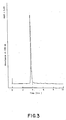
- the fraction containing the DMA-G7 collected at 42.5 minutes was reanalyzed by HPLC to assure its purity (Fig. 3).
- a liquid ⁇ -amylase detection reagent was prepared by combining 1.8 mM DMA-G7 prepared according to Example 2, 38 units of ⁇ -glucosidase and 20 units of ⁇ -glucosidase in 1.0 mL of buffered solution comprising 50 mM PIPES, 50 mM NaCl, and 5.0 mM calcium chloride (pH 7.0).
- Amylase control serum (0.025 mL) containing 37 IU/L, 175 IU/L, and 313 IU/L, respectively, of ⁇ -amylase were added to the detection reagent, independently, and incubated at 37°C.
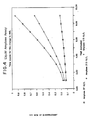
- the rate of color change produced by the liberated chromogen in each of the mixutres was measured at 634 nm on a Cary 219 spectrophotometer (Varian Associates, Inc., Sonnyvale, CA, USA) from between 1 and 9 minutes after each of the serum samples were added to the detection reagent (Table 2/Fig. 4).
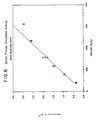
- the ⁇ -amylase reactivities in the samples were calculated by taking an average of three consecutive readings between 3 and 6 minutes and a linear dose response to the ⁇ -amylase concentrations was derived therefrom (Table 3/Fig. 5).
- a sheet of Whatman 54 filter paper (Whatman, Inc., Clifton, NJ, USA) was immersed into a solution comprising the liquid ⁇ -amylase detection reagent prepared according to Example 3, 0.1% Triton X-100 (Sigma Chemical Co., St. Louis, MO, USA) and 0.5% carboxycellulose, and dried.
- Analytical test devices were prepared by mounting 0.5 cm wide x 1.0 cm long segment of the aforementioned impregnated filter paper onto and along the edge of one surface of 0.5 cm x 8.125 cm polystyrene supports (Tricite®, Dow Chemical Co., Midland, MI, USA) previously laminated with a 2 mm strip of Double Stick® double-faced adhesive tape (3M Company, St. Paul, MN, USA).
Landscapes
- Chemical & Material Sciences (AREA)
- Organic Chemistry (AREA)
- Life Sciences & Earth Sciences (AREA)
- Engineering & Computer Science (AREA)
- Zoology (AREA)
- Wood Science & Technology (AREA)
- Health & Medical Sciences (AREA)
- Genetics & Genomics (AREA)
- General Health & Medical Sciences (AREA)
- Biotechnology (AREA)
- Biochemistry (AREA)
- Bioinformatics & Cheminformatics (AREA)
- General Engineering & Computer Science (AREA)
- Microbiology (AREA)
- Chemical Kinetics & Catalysis (AREA)
- General Chemical & Material Sciences (AREA)
- Proteomics, Peptides & Aminoacids (AREA)
- Molecular Biology (AREA)
- Physics & Mathematics (AREA)
- Analytical Chemistry (AREA)
- Biophysics (AREA)
- Immunology (AREA)
- Measuring Or Testing Involving Enzymes Or Micro-Organisms (AREA)
Applications Claiming Priority (2)
| Application Number | Priority Date | Filing Date | Title |
|---|---|---|---|
| US07/123,375 US4932871A (en) | 1987-11-20 | 1987-11-20 | Rapid method for preparing chromogenic alpha-amylase substrate compounds at high preparative yields |
| US123375 | 1987-11-20 |
Publications (2)
| Publication Number | Publication Date |
|---|---|
| EP0324912A2 true EP0324912A2 (de) | 1989-07-26 |
| EP0324912A3 EP0324912A3 (de) | 1990-02-07 |
Family
ID=22408321
Family Applications (1)
| Application Number | Title | Priority Date | Filing Date |
|---|---|---|---|
| EP88118721A Withdrawn EP0324912A3 (de) | 1987-11-20 | 1988-11-10 | Schnelles Verfahren zur Herstellung von chromogenen Verbindungen, die als Substrate für alpha-Amylase wirken, mit hohen präparativen Ausbeuten |
Country Status (2)
| Country | Link |
|---|---|
| US (1) | US4932871A (de) |
| EP (1) | EP0324912A3 (de) |
Cited By (3)
| Publication number | Priority date | Publication date | Assignee | Title |
|---|---|---|---|---|
| KR100374358B1 (ko) * | 2000-07-13 | 2003-03-04 | 주식회사 코메드 | 미생물 동정을 위한 비피검사법과 구연산염 검사법을대체하는 글루코시드 분해검사배지와 셀로비오스분해검사배지 및 그 검사법 |
| EP1342791A3 (de) * | 2002-03-07 | 2004-03-03 | Toyama University | Reagenzien, Methode und Apparat zur Messung von Amylase Aktivität |
| US7186696B2 (en) | 2002-03-07 | 2007-03-06 | Toyama University | Reagent and method for measuring amylase |
Families Citing this family (9)
| Publication number | Priority date | Publication date | Assignee | Title |
|---|---|---|---|---|
| AT362526B (de) * | 1977-09-13 | 1981-05-25 | Boehringer Mannheim Gmbh | Verfahren und reagens zur bestimmung von alpha- -amylase |
| US5043436A (en) * | 1986-11-20 | 1991-08-27 | Kurita Water Ind., Ltd. | Substrate for measurement of alpha-amylase activity |
| US5183743A (en) * | 1989-06-12 | 1993-02-02 | Miles Inc. | Chromogenic dibenzoxazepinone and dibenzothiazepinone enzyme substrates |
| US5104980A (en) * | 1989-06-12 | 1992-04-14 | Miles Inc. | Chromogenic dibenzoxazepinone and dibenzothiazepinone enzyme substrates |
| JP3075377B2 (ja) * | 1991-11-06 | 2000-08-14 | 東洋紡績株式会社 | α−アミラーゼ活性の測定法およびα−アミラーゼ活性測定用試薬 |
| JPH05294984A (ja) * | 1992-04-15 | 1993-11-09 | Wako Pure Chem Ind Ltd | マルトオリゴ糖誘導体の新規な製造方法 |
| DE4401868C1 (de) * | 1994-01-22 | 1995-02-16 | Lobbe Xenex Gmbh | Mikrobielles Verfahren zum Nachweis von Schadstoffen |
| US5567624A (en) * | 1995-04-27 | 1996-10-22 | Utah Medical Products, Inc. | Carbazine dyes and derivatives for pH measurement |
| US6448422B1 (en) | 2000-07-03 | 2002-09-10 | Eli Lilly And Company | Chromogenic compound |
Family Cites Families (12)
| Publication number | Priority date | Publication date | Assignee | Title |
|---|---|---|---|---|
| US3694318A (en) * | 1968-08-19 | 1972-09-26 | Bernard Klein | Substrate and method for alpha-amylase assay |
| US3819484A (en) * | 1970-12-16 | 1974-06-25 | Hayashibara Ken | Process for preparing sucrose-starch sweetner free from reducing sugar |
| AT362526B (de) * | 1977-09-13 | 1981-05-25 | Boehringer Mannheim Gmbh | Verfahren und reagens zur bestimmung von alpha- -amylase |
| US4169765A (en) * | 1977-09-14 | 1979-10-02 | Technicon Instruments Corp. | Apparatus for the quantitative determination of α-amylase |
| DE2748036C2 (de) * | 1977-10-26 | 1986-08-21 | Boehringer Mannheim Gmbh, 6800 Mannheim | Verfahren zur Gewinnung von Maltose-phosphorylase oder/und β-Phosphoglucose-mutase und Verwendung derselben |
| US4225672A (en) * | 1979-02-27 | 1980-09-30 | Hall Leo M | Method for producing maltooligosaccharide glycosides |
| DE3000292A1 (de) * | 1980-01-05 | 1981-07-09 | Behringwerke Ag, 3550 Marburg | Indoxylmaltodextrine, verfahren zu ihrer herstellung und ihre verwendung |
| US4505756A (en) * | 1980-07-01 | 1985-03-19 | Cooperbiomedical, Inc. | Alpha-amylase assay and substrates for use therein |
| DE3411574A1 (de) * | 1984-03-29 | 1985-10-10 | Boehringer Mannheim Gmbh, 6800 Mannheim | Glycoside von resorufin-derivaten, verfahren zu deren herstellung sowie deren verwendung zur bestimmung der aktivitaet von glycosidasen |
| DE3412939A1 (de) * | 1984-04-06 | 1985-10-17 | Behringwerke Ag, 3550 Marburg | Substrate fuer hydrolasen, verfahren zu ihrer herstellung und ihre verwendung |
| EP0252525B1 (de) * | 1986-07-11 | 1993-11-10 | Wako Pure Chemical Industries Ltd | Verfahren zur Bestimmung von alpha-Amylase unter Anwendung von modifizierten Oligosacchariden und Verfahren zu deren Herstellung |
| US4810636A (en) * | 1986-12-09 | 1989-03-07 | Miles Inc. | Chromogenic acridinone enzyme substrates |
-
1987
- 1987-11-20 US US07/123,375 patent/US4932871A/en not_active Expired - Fee Related
-
1988
- 1988-11-10 EP EP88118721A patent/EP0324912A3/de not_active Withdrawn
Cited By (4)
| Publication number | Priority date | Publication date | Assignee | Title |
|---|---|---|---|---|
| KR100374358B1 (ko) * | 2000-07-13 | 2003-03-04 | 주식회사 코메드 | 미생물 동정을 위한 비피검사법과 구연산염 검사법을대체하는 글루코시드 분해검사배지와 셀로비오스분해검사배지 및 그 검사법 |
| EP1342791A3 (de) * | 2002-03-07 | 2004-03-03 | Toyama University | Reagenzien, Methode und Apparat zur Messung von Amylase Aktivität |
| US7183069B2 (en) | 2002-03-07 | 2007-02-27 | Toyama University | Reagent, method and apparatus for measuring amylase activity |
| US7186696B2 (en) | 2002-03-07 | 2007-03-06 | Toyama University | Reagent and method for measuring amylase |
Also Published As
| Publication number | Publication date |
|---|---|
| EP0324912A3 (de) | 1990-02-07 |
| US4932871A (en) | 1990-06-12 |
Similar Documents
| Publication | Publication Date | Title |
|---|---|---|
| EP0270946B1 (de) | Acridinone als chromogene Enzymsubstrate | |
| US4697006A (en) | Modified oligosaccharides used as substrate for measuring α-amylase activity | |
| CA1336417C (en) | Aromatic substituted glycoside | |
| US4932871A (en) | Rapid method for preparing chromogenic alpha-amylase substrate compounds at high preparative yields | |
| EP0301522A2 (de) | Verfahren zur Herstellung von Isomaltulose | |
| JPH0631293B2 (ja) | マルトオリゴ糖誘導体およびアミラーゼ活性測定用試薬 | |
| US5393660A (en) | Reagent for Determining α-amylase activity and method for determining α-amylase activity | |
| EP0530850B1 (de) | Verfahren zur Herstellung eines modifizierten Oligosaccharids | |
| JPH0655753B2 (ja) | 新規オリゴグルコシド誘導体、α‐アミラーゼの測定方法および測定試薬 | |
| KR0168864B1 (ko) | 말토올리고시드 유도체, 이것을 유효 성분으로 함유하는 알파-아밀라아제 활성측정용 시약 및 이것을 사용한 알파-아밀라아제 활성의 측정방법 | |
| EP0459536A1 (de) | Acridinone als chromogene Enzymsubstrate | |
| US5319076A (en) | Oligosaccharide derivatives suitable for α-amylase determination | |
| Tokutake et al. | Syntheses of subtractively modified 2-chloro-4-nitrophenyl β-maltopentaosides and their application to the differential assay of human alpha-amylases | |
| JP3029925B2 (ja) | マルトオリゴ糖誘導体およびその製造法 | |
| JPS6323199B2 (de) | ||
| EP0346912B1 (de) | Zuckerester-Derivate, Reagenzien zur Messung der Hydrolase-Aktivität und Verfahren zur Messung der Hydrolase-Aktivität | |
| EP0452067A2 (de) | Oligosaccharidverbindungen und ihre Herstellung | |
| JP3070709B2 (ja) | マルトオリゴ糖誘導体の製造法 | |
| JP2770892B2 (ja) | アルコキシメチリデンマルトオリゴ糖誘導体、これを有効成分とするα‐アミラーゼ活性測定用試薬及びこれを用いたα‐アミラーゼ活性の測定方法 | |
| JPH0650996B2 (ja) | α−アミラ−ゼ活性測定用基質及び測定方法 | |
| JPS63196297A (ja) | マリトオリゴ糖―配糖体化合物の製造方法 | |
| JPH0686474B2 (ja) | 非還元末端修飾オリゴサッカライド誘導体の新規製造法 | |
| JPH05161498A (ja) | 非還元末端修飾フェニル化マルトテトラオース誘導体の製造法 | |
| JPH0646895A (ja) | α‐アミラーゼ活性の測定方法 | |
| JPH1017590A (ja) | 修飾α−マルトオリゴシド誘導体、これを有効成分とするα−アミラーゼ活性測定試薬、これを用いたα−アミラーゼ活性の測定方法及び修飾α−マルトオリゴシド誘導体の製造方法 |
Legal Events
| Date | Code | Title | Description |
|---|---|---|---|
| PUAI | Public reference made under article 153(3) epc to a published international application that has entered the european phase |
Free format text: ORIGINAL CODE: 0009012 |
|
| 17P | Request for examination filed |
Effective date: 19881110 |
|
| AK | Designated contracting states |
Kind code of ref document: A2 Designated state(s): DE FR GB IT |
|
| PUAL | Search report despatched |
Free format text: ORIGINAL CODE: 0009013 |
|
| AK | Designated contracting states |
Kind code of ref document: A3 Designated state(s): DE FR GB IT |
|
| 17Q | First examination report despatched |
Effective date: 19911203 |
|
| STAA | Information on the status of an ep patent application or granted ep patent |
Free format text: STATUS: THE APPLICATION HAS BEEN WITHDRAWN |
|
| 18W | Application withdrawn |
Withdrawal date: 19930317 |