EP0325768A2 - Virus à ARN non retournant - Google Patents
Virus à ARN non retournant Download PDFInfo
- Publication number
- EP0325768A2 EP0325768A2 EP88121231A EP88121231A EP0325768A2 EP 0325768 A2 EP0325768 A2 EP 0325768A2 EP 88121231 A EP88121231 A EP 88121231A EP 88121231 A EP88121231 A EP 88121231A EP 0325768 A2 EP0325768 A2 EP 0325768A2
- Authority
- EP
- European Patent Office
- Prior art keywords
- rna viral
- rna
- cdna
- viral
- poliovirus
- Prior art date
- Legal status (The legal status is an assumption and is not a legal conclusion. Google has not performed a legal analysis and makes no representation as to the accuracy of the status listed.)
- Granted
Links
Images


Classifications
-
- C—CHEMISTRY; METALLURGY
- C12—BIOCHEMISTRY; BEER; SPIRITS; WINE; VINEGAR; MICROBIOLOGY; ENZYMOLOGY; MUTATION OR GENETIC ENGINEERING
- C12N—MICROORGANISMS OR ENZYMES; COMPOSITIONS THEREOF; PROPAGATING, PRESERVING, OR MAINTAINING MICROORGANISMS; MUTATION OR GENETIC ENGINEERING; CULTURE MEDIA
- C12N15/00—Mutation or genetic engineering; DNA or RNA concerning genetic engineering, vectors, e.g. plasmids, or their isolation, preparation or purification; Use of hosts therefor
-
- A—HUMAN NECESSITIES
- A61—MEDICAL OR VETERINARY SCIENCE; HYGIENE
- A61K—PREPARATIONS FOR MEDICAL, DENTAL OR TOILETRY PURPOSES
- A61K39/00—Medicinal preparations containing antigens or antibodies
- A61K39/12—Viral antigens
-
- A—HUMAN NECESSITIES
- A61—MEDICAL OR VETERINARY SCIENCE; HYGIENE
- A61K—PREPARATIONS FOR MEDICAL, DENTAL OR TOILETRY PURPOSES
- A61K39/00—Medicinal preparations containing antigens or antibodies
- A61K39/12—Viral antigens
- A61K39/125—Picornaviridae, e.g. calicivirus
- A61K39/13—Poliovirus
-
- C—CHEMISTRY; METALLURGY
- C07—ORGANIC CHEMISTRY
- C07K—PEPTIDES
- C07K14/00—Peptides having more than 20 amino acids; Gastrins; Somatostatins; Melanotropins; Derivatives thereof
- C07K14/005—Peptides having more than 20 amino acids; Gastrins; Somatostatins; Melanotropins; Derivatives thereof from viruses
-
- A—HUMAN NECESSITIES
- A61—MEDICAL OR VETERINARY SCIENCE; HYGIENE
- A61K—PREPARATIONS FOR MEDICAL, DENTAL OR TOILETRY PURPOSES
- A61K39/00—Medicinal preparations containing antigens or antibodies
- A61K2039/51—Medicinal preparations containing antigens or antibodies comprising whole cells, viruses or DNA/RNA
- A61K2039/525—Virus
- A61K2039/5254—Virus avirulent or attenuated
-
- C—CHEMISTRY; METALLURGY
- C12—BIOCHEMISTRY; BEER; SPIRITS; WINE; VINEGAR; MICROBIOLOGY; ENZYMOLOGY; MUTATION OR GENETIC ENGINEERING
- C12N—MICROORGANISMS OR ENZYMES; COMPOSITIONS THEREOF; PROPAGATING, PRESERVING, OR MAINTAINING MICROORGANISMS; MUTATION OR GENETIC ENGINEERING; CULTURE MEDIA
- C12N2770/00—MICROORGANISMS OR ENZYMES; COMPOSITIONS THEREOF; PROPAGATING, PRESERVING, OR MAINTAINING MICROORGANISMS; MUTATION OR GENETIC ENGINEERING; CULTURE MEDIA ssRNA viruses positive-sense
- C12N2770/00011—Details
- C12N2770/32011—Picornaviridae
- C12N2770/32611—Poliovirus
- C12N2770/32622—New viral proteins or individual genes, new structural or functional aspects of known viral proteins or genes
-
- C—CHEMISTRY; METALLURGY
- C12—BIOCHEMISTRY; BEER; SPIRITS; WINE; VINEGAR; MICROBIOLOGY; ENZYMOLOGY; MUTATION OR GENETIC ENGINEERING
- C12N—MICROORGANISMS OR ENZYMES; COMPOSITIONS THEREOF; PROPAGATING, PRESERVING, OR MAINTAINING MICROORGANISMS; MUTATION OR GENETIC ENGINEERING; CULTURE MEDIA
- C12N2770/00—MICROORGANISMS OR ENZYMES; COMPOSITIONS THEREOF; PROPAGATING, PRESERVING, OR MAINTAINING MICROORGANISMS; MUTATION OR GENETIC ENGINEERING; CULTURE MEDIA ssRNA viruses positive-sense
- C12N2770/00011—Details
- C12N2770/32011—Picornaviridae
- C12N2770/32611—Poliovirus
- C12N2770/32634—Use of virus or viral component as vaccine, e.g. live-attenuated or inactivated virus, VLP, viral protein
-
- Y—GENERAL TAGGING OF NEW TECHNOLOGICAL DEVELOPMENTS; GENERAL TAGGING OF CROSS-SECTIONAL TECHNOLOGIES SPANNING OVER SEVERAL SECTIONS OF THE IPC; TECHNICAL SUBJECTS COVERED BY FORMER USPC CROSS-REFERENCE ART COLLECTIONS [XRACs] AND DIGESTS
- Y02—TECHNOLOGIES OR APPLICATIONS FOR MITIGATION OR ADAPTATION AGAINST CLIMATE CHANGE
- Y02A—TECHNOLOGIES FOR ADAPTATION TO CLIMATE CHANGE
- Y02A50/00—TECHNOLOGIES FOR ADAPTATION TO CLIMATE CHANGE in human health protection, e.g. against extreme weather
- Y02A50/30—Against vector-borne diseases, e.g. mosquito-borne, fly-borne, tick-borne or waterborne diseases whose impact is exacerbated by climate change
Definitions
- This invention relates to attenuated RNA viral strains having a low rate of replication. More particularly this invention relates to vaccines and the use of such vaccines comprising those attenuated RNA viral strains.
- RNA viruses or picornaviruses are well known.
- Typical picornaviruses include polioviruses, echoviruses, coxsackieviruses and rhinovirus (common cold viruses).
- Vaccines to protect against diseases induced by such viruses are prepared using live or killed viral varients or mutants that are attenuated. Attenuated viruses exhibit a lowered pathogenicity.
- Albert Sabin in the 1950's isolated attenuated strains of the poliovirus by passing the virus in tissues from different animal hosts in cultured cells, until varients were selected,having lost their capacity to cause disease [A. J. Sabin et al., "History of Sabin Attenuated Poliovirus Oral Live Vaccine Strains", J. Biol. Stard. , 1, p. 115 (1973)].
- Virus based vaccines are useful because they are able to replicate and induce adequate immunity through the production of antibodies.
- live vaccines have the additional benefit of inducing immunity at the site of infection whereas killed vaccines are limited to inducing serum immunity.
- Live virus vaccines are commonly distriheaded because of the ease of oral administration, low cost and the rapidity vaccine recipients develop long-lasting immunity.
- the live viruses may revert, i.e., from the live viral pool may emerge new varients that are capable of replicating to cause disease, either once in the vaccine recipient or during manufacture. It would therefore be of interest to produce a strain that is less likely to revert for use as a vaccine.
- RNA viral strains of this invention are useful in vaccines to protect recipients or those in close contact from viral induced disease.
- One embodiment of a process of this invention for producing these attenuated RNA viral strains is the modification of a RNA viral genome to increase the base pairing of the viral genome to itself.
- a second embodiment of a process of this invention is the modification of a RNA viral genome, in order to increase or decrease base pairing between the viral RNA and mammalian host ribosomal RNA.
- the process of this invention modifies viral RNA bases in regions containing complementarity with host ribosomal RNA.
- a third embodiment of a process of this invention is the combination of the above two embodiments to provide highly attenuated RNA viral strains.
- Such modifications of base pairing comprise the steps of isolating RNA viruses, reverse transcrib ing the RNA to give cDNA copies; mutagenizing the cDNA to cause one or both of the effects referred to above in the two embodiments; transfecting cells capable of producing viral RNA with the mutagenized RNA viral cDNA; and, culturing to produce attenuated RNA virus.
- These modifications are effective to reduce the transcriptional or translational efficiency of RNA viral strains.
- An object of this invention is to employ the attenuated RNA viruses in a live vaccine.
- Administration of the vaccine may be via any of the conventional accepted modes of administering live vaccines.
- the present invention relates to a process for the production of highly attenuated RNA viral strains.
- Attenuated RNA viral strains as defined by this invention, have a lowered transcriptional or translational efficiency which results in slower replication of viruses. Because the generation of new viral populations is reduced, there is a less likelihood of producing a viral varient that causes disease.
- the viral RNA genome has been altered by increasing the base pairing to itself. While not wishing to be bound by theory, we believe an increase in base pairing stabilizes viral RNA folding, which in turn makes it more difficult to unwind for initiation of transcription of translation. We also believe modified base pairing involves changes the secondary structure of the viral RNA, which disrupts its binding to host ribosomal RNA during transcription or translation. These disruptions reduce the efficiency of transcription or translation, hence viral production decreases. Accordingly, viral strains modified by the processes of this invention are characterized by a reduced rate of replication as compared with the native or other unmodified strains. A more attenuated strain results because the rate of producing any potential viral varient that may induce disease is lowered.
- the viral RNA that is modified is located in the looped regions of the genome. In these loops, caused by base-base interactions, there are unbound base residues. We choose to substitute according to the method described below, unbound bases with bases having complementarity with another unbound base.
- the viral RNA genome is modified in regions containing complementarity with host ribosomal RNA to provide highly attenuated viruses. Modifications of this sort includes increasing or decreasing base pairing between the viral RNA and host ribosomal RNA. We believe such base-base alteration also disrupts the efficiency of translation, which leads to power production of any potential viral variant.
- the invention also relates to a process for producing highly attenuated RNA viruses of this invention.
- this process we purify viruses in order to remove any cellular debris, followed by synthesizing full length viral double stranded cDNa according to the method of Racaniello et al. [Y. R. Racaniello et al., "Molecular Cloning of Poliovirus cDNA And Determination Of The Complete Nucleotide Sequence Of the Viral Genome", Proc. Natl. Acad. Sci. U.S.A. , 78, p. 4887 (1981)].
- RNA viral cDNA that correspond to the RNA bases that were unbound in the RNA viral genome looped structure are mutagenized using conventional techniques to increase base pairing.
- the RNA viral cDNA corresponding to regions of the viral RNA containing complementarity with host ribosomal RNA is mutagenized either to increase or decrease the base pairing between the RNA genome and the ribosomal RNA.
- mutagenesis cells capable of RNA production for example CV-1, VERO, or Hela cells, are transfected with cDNA, using conventional techniques.
- Live virus is next detected, using known methods and sequenced by known techniques to determine if the RNA viral sequence corresponds to the mutagenized cDNA sequence. Finally, the degree of attenuation is detected. We use an assay measuring the rate of production of viral protein labelled with 35S-methionine.
- RNA viral strains of this invention can be employed in a vaccine using known methods in produce live vaccines.
- the resulting vaccine will contain an amount of live virus effective in the recipient to protect against viral infection.
- Administration of those vaccines may be via any of the conventional accepted modes of administration of live vaccines.
- rat ribosomal RNA as a host and polio viral RNA as a model.
- the preferred host and corresponding ribosomal RNA is human.
- a rat host to exemplify the teachings of this invention.
- polioviruses available from the F.D.A. maintained in culture conditions described by A. Sabin et al., "Studies on Varients of Poliomyetits Virus", J. Exp. Med. , 99:551 (1954).
- Specifically we infected primary monkey kidney tissue at a low multiplicity of infection and incubated the virus at 34° at pH 7.3.
- To remove any cellular debris we centrifuged harvest fluid containing the strain at low speed (2000 RPM for 20 minutes).
- We precipitated the virus by adding NaCl (.12M) and polyethylene glycol 8000 (12% by weight) followed by stirring overnight at 4°C. The precipitated virus was collected by centrifugation at 10,000 RPM for 20 minutes.
- RNA pellet was resuspended in water for injection (WF1) that had been previously treated with diethyl pyrocarbonate (DEP) and reprecipitated the RNA by adding 2.5 volumes of absolute ethanol. After repelling the RNA and washing twice with ice cold 70% ethanol, the final RNA pellet was resuspended in 20 ul of DEP treated WFI.
- RNA from the previous step is used as a template for the synthesis of double stranded cDNA Racaniello et al., supra .
- oligo(dg).oligo(dc) tailing method of Bothwell et al. [A. L. M. Bothwell, Cell , 24, p. 625 (1981)]
- double stranded cDNA are inserted into the PstI site of plasmid pBR322.
- Tetracycline-resistant clones are screened for inserts by colony hybridization, using poliovirus cDNA probe [M. Grunstein et al., Proc. Nat'l. Acad. Sci USA , 72, p. 3961 (1975)].
- poliovirus cDNA from the previous step corresponding to unbound bases in the looped RNA genome are mutagenized to increase base pairing with other unbound bases located within the loop or outside of the loop in the linear portion of the genome.
- site-directed mutagenesis of poliovirus cDNA is employed using the M13 method [C. A. Hutchinson III et al., "Mutagenesis At A Specific Position In A DNA Sequence", J. Biol. Chem. , 253, p. 655 (1978); A. Razin et al., "Efficient Correction Of A Mutation By Use Of A Chemically Synthesized DNA”, Proc. Natl. Acad. Sci. USA , 75, p. 4268 (1978)].
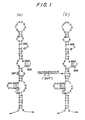
- Fig. 1 depicts a cDNA loop of the polio genome with unbound bases.
- the adenine base at position "397" is substituted by a cytosine base in order to bind to the unbound quanine (See Fig. 1.).
- Other unbound bases can be substituted in this manner in order to increase base pairing.
- telomeres RNA production
- VERD RNA production
- HeLa HeLa cells
- Transfection is conducted using a calcium-phosphate technique [B. A. Parker, J. Virol. , 31, p. 360 (1979)], modified by treating the host cells with electroportion to help them take up this cDNA (apparatus from Promega, Madison, Wisconsin).
- RNA viral sequence corresponds to the mutagenized cDNA sequence
- the RNA genome is sequenced according to the method of Sanger et al., infra .
- the rate of production of viral protein is used as an assay for attenuation, comparing the currently used Sabin strain and the strain of this invention.
- viral protein is labelled in the presence of 35S methionine and the protein products are separated by SDS-polyacrylamide electrophoresis, followed by autoradiographing and scanning the gel to determine the different levels of viral proteins and the degree of inhibition of host protein synthesis. Confirmation that the decrease in translational and efficiency results in decreased neurovirulance is determined by comparing existing vaccine strains to newly made strains, in accordance with this invention. in a monkey neurovirulence test (21 CFR 600-799, 1987).
- the viral particle selected now becomes the master seed from which other colonies are derived.
- the master seed is infected to Vero cells on microcarriers contained in a bioreactor, harvested and purified for use in a vaccine.
Landscapes
- Health & Medical Sciences (AREA)
- Life Sciences & Earth Sciences (AREA)
- Chemical & Material Sciences (AREA)
- Virology (AREA)
- General Health & Medical Sciences (AREA)
- Organic Chemistry (AREA)
- Genetics & Genomics (AREA)
- Engineering & Computer Science (AREA)
- Medicinal Chemistry (AREA)
- Microbiology (AREA)
- Biophysics (AREA)
- Biomedical Technology (AREA)
- Public Health (AREA)
- Veterinary Medicine (AREA)
- Zoology (AREA)
- Biochemistry (AREA)
- Epidemiology (AREA)
- Pharmacology & Pharmacy (AREA)
- Molecular Biology (AREA)
- Wood Science & Technology (AREA)
- Mycology (AREA)
- Bioinformatics & Cheminformatics (AREA)
- Immunology (AREA)
- Animal Behavior & Ethology (AREA)
- Biotechnology (AREA)
- General Engineering & Computer Science (AREA)
- Plant Pathology (AREA)
- Physics & Mathematics (AREA)
- Proteomics, Peptides & Aminoacids (AREA)
- Gastroenterology & Hepatology (AREA)
- Medicines Containing Antibodies Or Antigens For Use As Internal Diagnostic Agents (AREA)
- Micro-Organisms Or Cultivation Processes Thereof (AREA)
- Saccharide Compounds (AREA)
- Pharmaceuticals Containing Other Organic And Inorganic Compounds (AREA)
- Physical Deposition Of Substances That Are Components Of Semiconductor Devices (AREA)
Applications Claiming Priority (2)
| Application Number | Priority Date | Filing Date | Title |
|---|---|---|---|
| US14250788A | 1988-01-11 | 1988-01-11 | |
| US142507 | 1988-01-11 |
Publications (3)
| Publication Number | Publication Date |
|---|---|
| EP0325768A2 true EP0325768A2 (fr) | 1989-08-02 |
| EP0325768A3 EP0325768A3 (en) | 1989-08-30 |
| EP0325768B1 EP0325768B1 (fr) | 1995-04-26 |
Family
ID=22500099
Family Applications (1)
| Application Number | Title | Priority Date | Filing Date |
|---|---|---|---|
| EP88121231A Expired - Lifetime EP0325768B1 (fr) | 1988-01-11 | 1988-12-19 | Virus à ARN non retournant |
Country Status (9)
| Country | Link |
|---|---|
| EP (1) | EP0325768B1 (fr) |
| JP (1) | JPH01222774A (fr) |
| AT (1) | ATE121779T1 (fr) |
| AU (1) | AU2833789A (fr) |
| DE (1) | DE3853672T2 (fr) |
| DK (1) | DK8789A (fr) |
| ES (1) | ES2070846T3 (fr) |
| FI (1) | FI890116L (fr) |
| IL (1) | IL88731A0 (fr) |
Cited By (10)
| Publication number | Priority date | Publication date | Assignee | Title |
|---|---|---|---|---|
| WO1990008186A1 (fr) * | 1989-01-18 | 1990-07-26 | National Research Development Corporation | Virus attenues |
| EP0401421A3 (fr) * | 1989-06-08 | 1991-01-30 | American Cyanamid Company | Des virus d'ARN non réversibles |
| EP0508783A1 (fr) * | 1991-04-10 | 1992-10-14 | British Technology Group Ltd | Poliovirus atténués et vaccines |
| US5286640A (en) * | 1988-01-05 | 1994-02-15 | Almond Jeffrey W | Attenuated polioviruses |
| US5298416A (en) * | 1989-01-18 | 1994-03-29 | British Technology Group Ltd. | Attenuated polioviruses |
| US5639462A (en) * | 1991-04-10 | 1997-06-17 | British Technology Group Limited | Attenuated polyiviruses vaccine containing them and vaccination methods using them |
| WO1998041619A1 (fr) * | 1997-03-19 | 1998-09-24 | Btg International Limited | Poliovirus attenues |
| US6853093B2 (en) | 2002-12-20 | 2005-02-08 | Lipman Electronic Engineering Ltd. | Anti-tampering enclosure for electronic circuitry |
| US8405506B2 (en) | 2010-08-02 | 2013-03-26 | Verifone, Inc. | Secure data entry device |
| US8593824B2 (en) | 2010-10-27 | 2013-11-26 | Verifone, Inc. | Tamper secure circuitry especially for point of sale terminal |
Family Cites Families (3)
| Publication number | Priority date | Publication date | Assignee | Title |
|---|---|---|---|---|
| US4719177A (en) * | 1981-04-20 | 1988-01-12 | Massachusetts Institute Of Technology | Production of complementary DNA representing RNA viral sequences by recombinant DNA methods and uses therefor |
| JPS59173084A (ja) * | 1982-11-30 | 1984-09-29 | インステイチユ−ト・パスツ−ル | ポリオウイルスの免疫原性部位よりなるペプチド類及びこれらのペプチド類を暗合化するヌクレオチド配列を含有するdna類 |
| EP0156299A3 (fr) * | 1984-03-26 | 1987-04-01 | Chiron Corporation | Vaccins viraux à LTR modifié |
-
1988
- 1988-12-19 AT AT88121231T patent/ATE121779T1/de not_active IP Right Cessation
- 1988-12-19 EP EP88121231A patent/EP0325768B1/fr not_active Expired - Lifetime
- 1988-12-19 ES ES88121231T patent/ES2070846T3/es not_active Expired - Lifetime
- 1988-12-19 DE DE3853672T patent/DE3853672T2/de not_active Expired - Fee Related
- 1988-12-20 IL IL88731A patent/IL88731A0/xx unknown
-
1989
- 1989-01-10 DK DK008789A patent/DK8789A/da not_active Application Discontinuation
- 1989-01-10 AU AU28337/89A patent/AU2833789A/en not_active Abandoned
- 1989-01-10 FI FI890116A patent/FI890116L/fi not_active Application Discontinuation
- 1989-01-10 JP JP1002171A patent/JPH01222774A/ja active Pending
Cited By (14)
| Publication number | Priority date | Publication date | Assignee | Title |
|---|---|---|---|---|
| US5286640A (en) * | 1988-01-05 | 1994-02-15 | Almond Jeffrey W | Attenuated polioviruses |
| US5298413A (en) * | 1989-01-18 | 1994-03-29 | British Technology Group Limited | Attenuated polioviruses |
| EP0383434A1 (fr) * | 1989-01-18 | 1990-08-22 | Btg International Limited | Virus atténués |
| WO1990008186A1 (fr) * | 1989-01-18 | 1990-07-26 | National Research Development Corporation | Virus attenues |
| US5298416A (en) * | 1989-01-18 | 1994-03-29 | British Technology Group Ltd. | Attenuated polioviruses |
| EP0401421A3 (fr) * | 1989-06-08 | 1991-01-30 | American Cyanamid Company | Des virus d'ARN non réversibles |
| EP0508783A1 (fr) * | 1991-04-10 | 1992-10-14 | British Technology Group Ltd | Poliovirus atténués et vaccines |
| WO1992018620A1 (fr) * | 1991-04-10 | 1992-10-29 | British Technology Group Limited | Virus poliomyelitique attenue et vaccins a base de celui-ci |
| US5639462A (en) * | 1991-04-10 | 1997-06-17 | British Technology Group Limited | Attenuated polyiviruses vaccine containing them and vaccination methods using them |
| WO1998041619A1 (fr) * | 1997-03-19 | 1998-09-24 | Btg International Limited | Poliovirus attenues |
| US6853093B2 (en) | 2002-12-20 | 2005-02-08 | Lipman Electronic Engineering Ltd. | Anti-tampering enclosure for electronic circuitry |
| US8405506B2 (en) | 2010-08-02 | 2013-03-26 | Verifone, Inc. | Secure data entry device |
| US8710987B2 (en) | 2010-08-02 | 2014-04-29 | Verifone, Inc. | Secure data entry device |
| US8593824B2 (en) | 2010-10-27 | 2013-11-26 | Verifone, Inc. | Tamper secure circuitry especially for point of sale terminal |
Also Published As
| Publication number | Publication date |
|---|---|
| FI890116A0 (fi) | 1989-01-10 |
| DK8789A (da) | 1989-07-12 |
| IL88731A0 (en) | 1989-07-31 |
| AU2833789A (en) | 1989-07-13 |
| DE3853672D1 (de) | 1995-06-01 |
| DK8789D0 (da) | 1989-01-10 |
| EP0325768A3 (en) | 1989-08-30 |
| FI890116A7 (fi) | 1989-07-12 |
| DE3853672T2 (de) | 1996-01-11 |
| JPH01222774A (ja) | 1989-09-06 |
| FI890116L (fi) | 1989-07-12 |
| EP0325768B1 (fr) | 1995-04-26 |
| ATE121779T1 (de) | 1995-05-15 |
| ES2070846T3 (es) | 1995-06-16 |
Similar Documents
| Publication | Publication Date | Title |
|---|---|---|
| CN111560354B (zh) | 重组新型冠状病毒及其制备方法和应用 | |
| EP0076847B1 (fr) | ADNc REPRESENTANT DES SEQUENCES VIRALES ARN | |
| Zhang et al. | Interactions between the cytoplasmic proteins and the intergenic (promoter) sequence of mouse hepatitis virus RNA: correlation with the amounts of subgenomic mRNA transcribed | |
| CN101695569A (zh) | 一种手足口病单、双价基因工程亚单位疫苗及其制备方法 | |
| EP0325768B1 (fr) | Virus à ARN non retournant | |
| US6423318B1 (en) | Hepatitis A virus vaccines | |
| CN113564133A (zh) | 柯萨奇病毒a16型毒株及其免疫原性组合物和应用 | |
| CN109810976A (zh) | 猪塞内卡病毒全长感染性克隆的制备方法及应用 | |
| JP3045581B2 (ja) | 麻疹ワクチンウイルス株同定方法 | |
| US10894081B2 (en) | Recombinant bivalent inactivated vaccine against foot-and-mouth disease virus, preparation method and use thereof | |
| EP0162054A1 (fr) | PRODUCTION DE cADN REPRESENTANT DES SEQUENCES DU VIRUS DE L'HEPATITE A. | |
| EP0496875B1 (fr) | PROCEDES POUR PRODUIRE DES ARN VIRAUX A PARTIR D'ADNc | |
| Meyer et al. | Genetic variation of foot-and-mouth disease virus from field outbreaks to laboratory isolation | |
| US5358856A (en) | Gene expression in mammalian cells using a cap independent 5' noncoding region | |
| US5849562A (en) | Production of complementary DNA representing hepatitis A viral sequences by recombinant DNA methods and uses therefor | |
| Kwon et al. | Construction of an infectious cDNA clone of avian hepatitis E virus (avian HEV) recovered from a clinically healthy chicken in the United States and characterization of its pathogenicity in specific-pathogen-free chickens | |
| KR100872840B1 (ko) | 돼지생식기호흡기증후군 바이러스에 대한 전체-길이의감염성이 있는 cDNA 클론 및 이의 용도 | |
| EP0401421B1 (fr) | Des virus d'ARN non réversibles | |
| US5268292A (en) | Reproducible generation of high yields of hepatitis A virus by cell culture | |
| Kanno et al. | Viruses produced from complementary DNA of virulent and avirulent strains of swine vesicular disease viruses retain the in vivo and in vitro characteristics of the parental strain | |
| Zheng et al. | Infective viruses produced from full-length complementary DNA of swine vesicular disease viruses HK/70 strain | |
| KR100337194B1 (ko) | 내위 표준 rna와 이를 이용한 장내바이러스성 질환의 진단방법 |
Legal Events
| Date | Code | Title | Description |
|---|---|---|---|
| PUAI | Public reference made under article 153(3) epc to a published international application that has entered the european phase |
Free format text: ORIGINAL CODE: 0009012 |
|
| PUAL | Search report despatched |
Free format text: ORIGINAL CODE: 0009013 |
|
| AK | Designated contracting states |
Kind code of ref document: A2 Designated state(s): AT BE CH DE ES FR GB GR IT LI NL SE |
|
| AK | Designated contracting states |
Kind code of ref document: A3 Designated state(s): AT BE CH DE ES FR GB GR IT LI NL SE |
|
| 17P | Request for examination filed |
Effective date: 19900122 |
|
| 17Q | First examination report despatched |
Effective date: 19920316 |
|
| RAP1 | Party data changed (applicant data changed or rights of an application transferred) |
Owner name: AMERICAN CYANAMID COMPANY |
|
| GRAA | (expected) grant |
Free format text: ORIGINAL CODE: 0009210 |
|
| AK | Designated contracting states |
Kind code of ref document: B1 Designated state(s): AT BE CH DE ES FR GB GR IT LI NL SE |
|
| REF | Corresponds to: |
Ref document number: 121779 Country of ref document: AT Date of ref document: 19950515 Kind code of ref document: T |
|
| REF | Corresponds to: |
Ref document number: 3853672 Country of ref document: DE Date of ref document: 19950601 |
|
| ET | Fr: translation filed | ||
| REG | Reference to a national code |
Ref country code: ES Ref legal event code: FG2A Ref document number: 2070846 Country of ref document: ES Kind code of ref document: T3 |
|
| ITF | It: translation for a ep patent filed | ||
| REG | Reference to a national code |
Ref country code: GR Ref legal event code: FG4A Free format text: 3016271 |
|
| PLBE | No opposition filed within time limit |
Free format text: ORIGINAL CODE: 0009261 |
|
| STAA | Information on the status of an ep patent application or granted ep patent |
Free format text: STATUS: NO OPPOSITION FILED WITHIN TIME LIMIT |
|
| 26N | No opposition filed | ||
| PGFP | Annual fee paid to national office [announced via postgrant information from national office to epo] |
Ref country code: NL Payment date: 19960924 Year of fee payment: 9 |
|
| K2C3 | Correction of patent specification (complete document) published |
Effective date: 19950426 |
|
| PGFP | Annual fee paid to national office [announced via postgrant information from national office to epo] |
Ref country code: GR Payment date: 19961024 Year of fee payment: 9 |
|
| PGFP | Annual fee paid to national office [announced via postgrant information from national office to epo] |
Ref country code: GB Payment date: 19961108 Year of fee payment: 9 |
|
| PGFP | Annual fee paid to national office [announced via postgrant information from national office to epo] |
Ref country code: SE Payment date: 19961119 Year of fee payment: 9 |
|
| PGFP | Annual fee paid to national office [announced via postgrant information from national office to epo] |
Ref country code: AT Payment date: 19961127 Year of fee payment: 9 |
|
| PGFP | Annual fee paid to national office [announced via postgrant information from national office to epo] |
Ref country code: FR Payment date: 19961211 Year of fee payment: 9 |
|
| PGFP | Annual fee paid to national office [announced via postgrant information from national office to epo] |
Ref country code: ES Payment date: 19961219 Year of fee payment: 9 |
|
| PGFP | Annual fee paid to national office [announced via postgrant information from national office to epo] |
Ref country code: DE Payment date: 19961227 Year of fee payment: 9 |
|
| PGFP | Annual fee paid to national office [announced via postgrant information from national office to epo] |
Ref country code: BE Payment date: 19970108 Year of fee payment: 9 |
|
| PGFP | Annual fee paid to national office [announced via postgrant information from national office to epo] |
Ref country code: CH Payment date: 19970123 Year of fee payment: 9 |
|
| PG25 | Lapsed in a contracting state [announced via postgrant information from national office to epo] |
Ref country code: GB Free format text: LAPSE BECAUSE OF NON-PAYMENT OF DUE FEES Effective date: 19971219 Ref country code: AT Free format text: LAPSE BECAUSE OF NON-PAYMENT OF DUE FEES Effective date: 19971219 |
|
| PG25 | Lapsed in a contracting state [announced via postgrant information from national office to epo] |
Ref country code: SE Free format text: LAPSE BECAUSE OF NON-PAYMENT OF DUE FEES Effective date: 19971220 Ref country code: ES Free format text: LAPSE BECAUSE OF THE APPLICANT RENOUNCES Effective date: 19971220 |
|
| PG25 | Lapsed in a contracting state [announced via postgrant information from national office to epo] |
Ref country code: LI Free format text: LAPSE BECAUSE OF NON-PAYMENT OF DUE FEES Effective date: 19971231 Ref country code: GR Free format text: LAPSE BECAUSE OF NON-PAYMENT OF DUE FEES Effective date: 19971231 Ref country code: FR Free format text: THE PATENT HAS BEEN ANNULLED BY A DECISION OF A NATIONAL AUTHORITY Effective date: 19971231 Ref country code: CH Free format text: LAPSE BECAUSE OF NON-PAYMENT OF DUE FEES Effective date: 19971231 Ref country code: BE Free format text: LAPSE BECAUSE OF NON-PAYMENT OF DUE FEES Effective date: 19971231 |
|
| BERE | Be: lapsed |
Owner name: AMERICAN CYANAMID CY Effective date: 19971231 |
|
| PG25 | Lapsed in a contracting state [announced via postgrant information from national office to epo] |
Ref country code: NL Free format text: LAPSE BECAUSE OF NON-PAYMENT OF DUE FEES Effective date: 19980701 |
|
| GBPC | Gb: european patent ceased through non-payment of renewal fee |
Effective date: 19971219 |
|
| REG | Reference to a national code |
Ref country code: CH Ref legal event code: PL |
|
| NLV4 | Nl: lapsed or anulled due to non-payment of the annual fee |
Effective date: 19980701 |
|
| PG25 | Lapsed in a contracting state [announced via postgrant information from national office to epo] |
Ref country code: DE Free format text: LAPSE BECAUSE OF NON-PAYMENT OF DUE FEES Effective date: 19980901 |
|
| EUG | Se: european patent has lapsed |
Ref document number: 88121231.0 |
|
| REG | Reference to a national code |
Ref country code: FR Ref legal event code: ST |
|
| REG | Reference to a national code |
Ref country code: ES Ref legal event code: FD2A Effective date: 20010402 |
|
| PG25 | Lapsed in a contracting state [announced via postgrant information from national office to epo] |
Ref country code: IT Free format text: LAPSE BECAUSE OF NON-PAYMENT OF DUE FEES;WARNING: LAPSES OF ITALIAN PATENTS WITH EFFECTIVE DATE BEFORE 2007 MAY HAVE OCCURRED AT ANY TIME BEFORE 2007. THE CORRECT EFFECTIVE DATE MAY BE DIFFERENT FROM THE ONE RECORDED. Effective date: 20051219 |