EP0326076A2 - Air dried cellulose acetate membranes - Google Patents
Air dried cellulose acetate membranes Download PDFInfo
- Publication number
- EP0326076A2 EP0326076A2 EP89101188A EP89101188A EP0326076A2 EP 0326076 A2 EP0326076 A2 EP 0326076A2 EP 89101188 A EP89101188 A EP 89101188A EP 89101188 A EP89101188 A EP 89101188A EP 0326076 A2 EP0326076 A2 EP 0326076A2
- Authority
- EP
- European Patent Office
- Prior art keywords
- membrane
- dried
- water
- membrane prepared
- dried membrane
- Prior art date
- Legal status (The legal status is an assumption and is not a legal conclusion. Google has not performed a legal analysis and makes no representation as to the accuracy of the status listed.)
- Granted
Links
- 239000012528 membrane Substances 0.000 title claims abstract description 123
- 229920002301 cellulose acetate Polymers 0.000 title claims abstract description 30
- XLYOFNOQVPJJNP-UHFFFAOYSA-N water Substances O XLYOFNOQVPJJNP-UHFFFAOYSA-N 0.000 claims abstract description 70
- 238000000034 method Methods 0.000 claims abstract description 49
- 239000002274 desiccant Substances 0.000 claims abstract description 31
- 239000007788 liquid Substances 0.000 claims abstract description 31
- 238000000926 separation method Methods 0.000 claims abstract description 27
- 239000000203 mixture Substances 0.000 claims abstract description 19
- 238000001223 reverse osmosis Methods 0.000 claims abstract description 13
- 229930195733 hydrocarbon Natural products 0.000 claims abstract description 9
- 150000002430 hydrocarbons Chemical class 0.000 claims abstract description 9
- 238000010612 desalination reaction Methods 0.000 claims abstract description 7
- 150000002576 ketones Chemical class 0.000 claims abstract description 6
- 238000001704 evaporation Methods 0.000 claims abstract description 5
- 238000005373 pervaporation Methods 0.000 claims abstract description 5
- -1 polysiloxanes Polymers 0.000 claims abstract description 5
- 238000000108 ultra-filtration Methods 0.000 claims abstract description 5
- 150000002170 ethers Chemical class 0.000 claims abstract description 4
- 239000008246 gaseous mixture Substances 0.000 claims abstract description 4
- 150000002894 organic compounds Chemical class 0.000 claims abstract description 4
- 229920001296 polysiloxane Polymers 0.000 claims abstract description 4
- 239000000470 constituent Substances 0.000 claims abstract description 3
- 230000002209 hydrophobic effect Effects 0.000 claims abstract description 3
- 238000005266 casting Methods 0.000 claims description 24
- 239000007789 gas Substances 0.000 claims description 20
- 239000002904 solvent Substances 0.000 claims description 19
- 238000001035 drying Methods 0.000 claims description 17
- OKKJLVBELUTLKV-UHFFFAOYSA-N Methanol Chemical compound OC OKKJLVBELUTLKV-UHFFFAOYSA-N 0.000 claims description 9
- 238000009835 boiling Methods 0.000 claims description 8
- 239000001257 hydrogen Substances 0.000 claims description 8
- 229910052739 hydrogen Inorganic materials 0.000 claims description 8
- CSCPPACGZOOCGX-UHFFFAOYSA-N Acetone Chemical group CC(C)=O CSCPPACGZOOCGX-UHFFFAOYSA-N 0.000 claims description 6
- 125000000217 alkyl group Chemical group 0.000 claims description 6
- 150000001336 alkenes Chemical class 0.000 claims description 5
- 238000001556 precipitation Methods 0.000 claims description 5
- 239000004215 Carbon black (E152) Substances 0.000 claims description 4
- 150000001345 alkine derivatives Chemical class 0.000 claims description 4
- 239000003795 chemical substances by application Substances 0.000 claims description 4
- 125000001309 chloro group Chemical group Cl* 0.000 claims description 4
- 125000000449 nitro group Chemical group [O-][N+](*)=O 0.000 claims description 4
- 230000008961 swelling Effects 0.000 claims description 4
- RYHBNJHYFVUHQT-UHFFFAOYSA-N 1,4-Dioxane Chemical compound C1COCCO1 RYHBNJHYFVUHQT-UHFFFAOYSA-N 0.000 claims description 3
- 229920002284 Cellulose triacetate Polymers 0.000 claims description 3
- NNLVGZFZQQXQNW-ADJNRHBOSA-N [(2r,3r,4s,5r,6s)-4,5-diacetyloxy-3-[(2s,3r,4s,5r,6r)-3,4,5-triacetyloxy-6-(acetyloxymethyl)oxan-2-yl]oxy-6-[(2r,3r,4s,5r,6s)-4,5,6-triacetyloxy-2-(acetyloxymethyl)oxan-3-yl]oxyoxan-2-yl]methyl acetate Chemical compound O([C@@H]1O[C@@H]([C@H]([C@H](OC(C)=O)[C@H]1OC(C)=O)O[C@H]1[C@@H]([C@@H](OC(C)=O)[C@H](OC(C)=O)[C@@H](COC(C)=O)O1)OC(C)=O)COC(=O)C)[C@@H]1[C@@H](COC(C)=O)O[C@@H](OC(C)=O)[C@H](OC(C)=O)[C@H]1OC(C)=O NNLVGZFZQQXQNW-ADJNRHBOSA-N 0.000 claims description 3
- 150000001335 aliphatic alkanes Chemical class 0.000 claims description 3
- 125000003118 aryl group Chemical group 0.000 claims description 3
- 150000001924 cycloalkanes Chemical class 0.000 claims description 3
- 150000001925 cycloalkenes Chemical class 0.000 claims description 3
- 230000004907 flux Effects 0.000 claims description 3
- 239000000758 substrate Substances 0.000 claims description 3
- 239000003960 organic solvent Substances 0.000 claims description 2
- 230000001376 precipitating effect Effects 0.000 claims description 2
- RTZKZFJDLAIYFH-UHFFFAOYSA-N Diethyl ether Chemical compound CCOCC RTZKZFJDLAIYFH-UHFFFAOYSA-N 0.000 claims 2
- 230000008020 evaporation Effects 0.000 abstract description 3
- 210000004379 membrane Anatomy 0.000 description 90
- VLKZOEOYAKHREP-UHFFFAOYSA-N n-Hexane Chemical compound CCCCCC VLKZOEOYAKHREP-UHFFFAOYSA-N 0.000 description 24
- TVMXDCGIABBOFY-UHFFFAOYSA-N octane Chemical compound CCCCCCCC TVMXDCGIABBOFY-UHFFFAOYSA-N 0.000 description 21
- 239000000243 solution Substances 0.000 description 21
- 239000011148 porous material Substances 0.000 description 15
- 229920000642 polymer Polymers 0.000 description 12
- 239000000654 additive Substances 0.000 description 8
- 230000000996 additive effect Effects 0.000 description 7
- 239000000126 substance Substances 0.000 description 7
- 238000009472 formulation Methods 0.000 description 5
- 230000003993 interaction Effects 0.000 description 4
- CIBMHJPPKCXONB-UHFFFAOYSA-N propane-2,2-diol Chemical compound CC(C)(O)O CIBMHJPPKCXONB-UHFFFAOYSA-N 0.000 description 4
- LFQSCWFLJHTTHZ-UHFFFAOYSA-N Ethanol Chemical compound CCO LFQSCWFLJHTTHZ-UHFFFAOYSA-N 0.000 description 3
- KFZMGEQAYNKOFK-UHFFFAOYSA-N Isopropanol Chemical group CC(C)O KFZMGEQAYNKOFK-UHFFFAOYSA-N 0.000 description 3
- 238000000137 annealing Methods 0.000 description 3
- 238000013459 approach Methods 0.000 description 3
- 239000006185 dispersion Substances 0.000 description 3
- 229920001971 elastomer Polymers 0.000 description 3
- 239000012530 fluid Substances 0.000 description 3
- 239000005060 rubber Substances 0.000 description 3
- 238000002791 soaking Methods 0.000 description 3
- ILJSQTXMGCGYMG-UHFFFAOYSA-N triacetic acid Chemical compound CC(=O)CC(=O)CC(O)=O ILJSQTXMGCGYMG-UHFFFAOYSA-N 0.000 description 3
- IJGRMHOSHXDMSA-UHFFFAOYSA-N Atomic nitrogen Chemical compound N#N IJGRMHOSHXDMSA-UHFFFAOYSA-N 0.000 description 2
- CURLTUGMZLYLDI-UHFFFAOYSA-N Carbon dioxide Chemical compound O=C=O CURLTUGMZLYLDI-UHFFFAOYSA-N 0.000 description 2
- CTQNGGLPUBDAKN-UHFFFAOYSA-N O-Xylene Chemical compound CC1=CC=CC=C1C CTQNGGLPUBDAKN-UHFFFAOYSA-N 0.000 description 2
- 239000002202 Polyethylene glycol Substances 0.000 description 2
- 230000015572 biosynthetic process Effects 0.000 description 2
- MVPPADPHJFYWMZ-UHFFFAOYSA-N chlorobenzene Chemical compound ClC1=CC=CC=C1 MVPPADPHJFYWMZ-UHFFFAOYSA-N 0.000 description 2
- ILLHQJIJCRNRCJ-UHFFFAOYSA-N dec-1-yne Chemical compound CCCCCCCCC#C ILLHQJIJCRNRCJ-UHFFFAOYSA-N 0.000 description 2
- 239000004744 fabric Substances 0.000 description 2
- ZSIAUFGUXNUGDI-UHFFFAOYSA-N hexan-1-ol Chemical compound CCCCCCO ZSIAUFGUXNUGDI-UHFFFAOYSA-N 0.000 description 2
- JVTAAEKCZFNVCJ-UHFFFAOYSA-N lactic acid Chemical compound CC(O)C(O)=O JVTAAEKCZFNVCJ-UHFFFAOYSA-N 0.000 description 2
- VNWKTOKETHGBQD-UHFFFAOYSA-N methane Chemical compound C VNWKTOKETHGBQD-UHFFFAOYSA-N 0.000 description 2
- LQNUZADURLCDLV-UHFFFAOYSA-N nitrobenzene Chemical compound [O-][N+](=O)C1=CC=CC=C1 LQNUZADURLCDLV-UHFFFAOYSA-N 0.000 description 2
- BKIMMITUMNQMOS-UHFFFAOYSA-N nonane Chemical compound CCCCCCCCC BKIMMITUMNQMOS-UHFFFAOYSA-N 0.000 description 2
- 230000035699 permeability Effects 0.000 description 2
- 229920001223 polyethylene glycol Polymers 0.000 description 2
- 229920005597 polymer membrane Polymers 0.000 description 2
- 230000008569 process Effects 0.000 description 2
- 239000007787 solid Substances 0.000 description 2
- RSJKGSCJYJTIGS-UHFFFAOYSA-N undecane Chemical compound CCCCCCCCCCC RSJKGSCJYJTIGS-UHFFFAOYSA-N 0.000 description 2
- 239000008096 xylene Substances 0.000 description 2
- WDCYWAQPCXBPJA-UHFFFAOYSA-N 1,3-dinitrobenzene Chemical compound [O-][N+](=O)C1=CC=CC([N+]([O-])=O)=C1 WDCYWAQPCXBPJA-UHFFFAOYSA-N 0.000 description 1
- OCJBOOLMMGQPQU-UHFFFAOYSA-N 1,4-dichlorobenzene Chemical compound ClC1=CC=C(Cl)C=C1 OCJBOOLMMGQPQU-UHFFFAOYSA-N 0.000 description 1
- DURPTKYDGMDSBL-UHFFFAOYSA-N 1-butoxybutane Chemical compound CCCCOCCCC DURPTKYDGMDSBL-UHFFFAOYSA-N 0.000 description 1
- KWKAKUADMBZCLK-UHFFFAOYSA-N 1-octene Chemical compound CCCCCCC=C KWKAKUADMBZCLK-UHFFFAOYSA-N 0.000 description 1
- 241000894006 Bacteria Species 0.000 description 1
- 229920001747 Cellulose diacetate Polymers 0.000 description 1
- 229920004934 Dacron® Polymers 0.000 description 1
- RRHGJUQNOFWUDK-UHFFFAOYSA-N Isoprene Chemical compound CC(=C)C=C RRHGJUQNOFWUDK-UHFFFAOYSA-N 0.000 description 1
- 229920000134 Metallised film Polymers 0.000 description 1
- 239000004677 Nylon Substances 0.000 description 1
- 125000000218 acetic acid group Chemical group C(C)(=O)* 0.000 description 1
- 239000000853 adhesive Substances 0.000 description 1
- 230000001070 adhesive effect Effects 0.000 description 1
- 230000002411 adverse Effects 0.000 description 1
- 150000001338 aliphatic hydrocarbons Chemical class 0.000 description 1
- 239000007864 aqueous solution Substances 0.000 description 1
- 150000004945 aromatic hydrocarbons Chemical class 0.000 description 1
- 125000004429 atom Chemical group 0.000 description 1
- QVGXLLKOCUKJST-UHFFFAOYSA-N atomic oxygen Chemical compound [O] QVGXLLKOCUKJST-UHFFFAOYSA-N 0.000 description 1
- 239000001569 carbon dioxide Substances 0.000 description 1
- 229910002092 carbon dioxide Inorganic materials 0.000 description 1
- 229920002678 cellulose Polymers 0.000 description 1
- 239000001913 cellulose Substances 0.000 description 1
- 238000006243 chemical reaction Methods 0.000 description 1
- 229940000425 combination drug Drugs 0.000 description 1
- 238000004891 communication Methods 0.000 description 1
- 238000005056 compaction Methods 0.000 description 1
- 230000002860 competitive effect Effects 0.000 description 1
- 150000001875 compounds Chemical class 0.000 description 1
- 239000000356 contaminant Substances 0.000 description 1
- WJTCGQSWYFHTAC-UHFFFAOYSA-N cyclooctane Chemical compound C1CCCCCCC1 WJTCGQSWYFHTAC-UHFFFAOYSA-N 0.000 description 1
- 239000004914 cyclooctane Substances 0.000 description 1
- DIOQZVSQGTUSAI-NJFSPNSNSA-N decane Chemical compound CCCCCCCCC[14CH3] DIOQZVSQGTUSAI-NJFSPNSNSA-N 0.000 description 1
- 229940117389 dichlorobenzene Drugs 0.000 description 1
- 238000009792 diffusion process Methods 0.000 description 1
- 239000000428 dust Substances 0.000 description 1
- 150000002148 esters Chemical class 0.000 description 1
- 239000000835 fiber Substances 0.000 description 1
- 239000007863 gel particle Substances 0.000 description 1
- 238000001879 gelation Methods 0.000 description 1
- 239000001307 helium Substances 0.000 description 1
- 229910052734 helium Inorganic materials 0.000 description 1
- SWQJXJOGLNCZEY-UHFFFAOYSA-N helium atom Chemical compound [He] SWQJXJOGLNCZEY-UHFFFAOYSA-N 0.000 description 1
- 239000012510 hollow fiber Substances 0.000 description 1
- 239000003906 humectant Substances 0.000 description 1
- 125000004435 hydrogen atom Chemical class [H]* 0.000 description 1
- 230000001771 impaired effect Effects 0.000 description 1
- 230000006872 improvement Effects 0.000 description 1
- 239000004310 lactic acid Substances 0.000 description 1
- 235000014655 lactic acid Nutrition 0.000 description 1
- 239000007791 liquid phase Substances 0.000 description 1
- 238000004519 manufacturing process Methods 0.000 description 1
- 239000000463 material Substances 0.000 description 1
- 125000002496 methyl group Chemical group [H]C([H])([H])* 0.000 description 1
- 238000002156 mixing Methods 0.000 description 1
- DIOQZVSQGTUSAI-UHFFFAOYSA-N n-butylhexane Natural products CCCCCCCCCC DIOQZVSQGTUSAI-UHFFFAOYSA-N 0.000 description 1
- AFFLGGQVNFXPEV-UHFFFAOYSA-N n-decene Natural products CCCCCCCCC=C AFFLGGQVNFXPEV-UHFFFAOYSA-N 0.000 description 1
- 229910052757 nitrogen Inorganic materials 0.000 description 1
- 229920001778 nylon Polymers 0.000 description 1
- 239000003791 organic solvent mixture Substances 0.000 description 1
- 239000001301 oxygen Substances 0.000 description 1
- 229910052760 oxygen Inorganic materials 0.000 description 1
- 239000005020 polyethylene terephthalate Substances 0.000 description 1
- 229920001195 polyisoprene Polymers 0.000 description 1
- 239000002861 polymer material Substances 0.000 description 1
- 239000002244 precipitate Substances 0.000 description 1
- 238000012545 processing Methods 0.000 description 1
- 238000010791 quenching Methods 0.000 description 1
- 230000000171 quenching effect Effects 0.000 description 1
- 238000011084 recovery Methods 0.000 description 1
- 238000011160 research Methods 0.000 description 1
- 229920006395 saturated elastomer Polymers 0.000 description 1
- 229930195734 saturated hydrocarbon Natural products 0.000 description 1
- 239000011555 saturated liquid Substances 0.000 description 1
- 150000003377 silicon compounds Chemical class 0.000 description 1
- 238000000935 solvent evaporation Methods 0.000 description 1
- 238000003860 storage Methods 0.000 description 1
- 239000004094 surface-active agent Substances 0.000 description 1
- 229930195735 unsaturated hydrocarbon Natural products 0.000 description 1
- 239000012808 vapor phase Substances 0.000 description 1
- 238000009736 wetting Methods 0.000 description 1
Classifications
-
- B—PERFORMING OPERATIONS; TRANSPORTING
- B01—PHYSICAL OR CHEMICAL PROCESSES OR APPARATUS IN GENERAL
- B01D—SEPARATION
- B01D67/00—Processes specially adapted for manufacturing semi-permeable membranes for separation processes or apparatus
- B01D67/0081—After-treatment of organic or inorganic membranes
- B01D67/0095—Drying
-
- F—MECHANICAL ENGINEERING; LIGHTING; HEATING; WEAPONS; BLASTING
- F26—DRYING
- F26B—DRYING SOLID MATERIALS OR OBJECTS BY REMOVING LIQUID THEREFROM
- F26B5/00—Drying solid materials or objects by processes not involving the application of heat
- F26B5/005—Drying solid materials or objects by processes not involving the application of heat by dipping them into or mixing them with a chemical liquid, e.g. organic; chemical, e.g. organic, dewatering aids
-
- Y—GENERAL TAGGING OF NEW TECHNOLOGICAL DEVELOPMENTS; GENERAL TAGGING OF CROSS-SECTIONAL TECHNOLOGIES SPANNING OVER SEVERAL SECTIONS OF THE IPC; TECHNICAL SUBJECTS COVERED BY FORMER USPC CROSS-REFERENCE ART COLLECTIONS [XRACs] AND DIGESTS
- Y02—TECHNOLOGIES OR APPLICATIONS FOR MITIGATION OR ADAPTATION AGAINST CLIMATE CHANGE
- Y02A—TECHNOLOGIES FOR ADAPTATION TO CLIMATE CHANGE
- Y02A20/00—Water conservation; Efficient water supply; Efficient water use
- Y02A20/124—Water desalination
- Y02A20/131—Reverse-osmosis
-
- Y—GENERAL TAGGING OF NEW TECHNOLOGICAL DEVELOPMENTS; GENERAL TAGGING OF CROSS-SECTIONAL TECHNOLOGIES SPANNING OVER SEVERAL SECTIONS OF THE IPC; TECHNICAL SUBJECTS COVERED BY FORMER USPC CROSS-REFERENCE ART COLLECTIONS [XRACs] AND DIGESTS
- Y10—TECHNICAL SUBJECTS COVERED BY FORMER USPC
- Y10S—TECHNICAL SUBJECTS COVERED BY FORMER USPC CROSS-REFERENCE ART COLLECTIONS [XRACs] AND DIGESTS
- Y10S264/00—Plastic and nonmetallic article shaping or treating: processes
- Y10S264/48—Processes of making filters
Definitions
- This invention relates to asymmetric cellulose acetate membranes and their use for desalination, non-aqueous liquid separation, ultrafiltration, pervaporation and gas separation. More particularly, the invention relates to a method for converting asymmetric membranes from their aqueous state to the dry state by direct evaporation of water. In another aspect, the invention relates to the use of these membranes to separate liquid or gaseous mixtures into various fractions and to their use for reverse osmosis, ultrafiltration, and pervaporation.
- Loeb and his co-workers disclose in, for example, United States Patent No. 3,133,132 a method for preparing a modified cellulose acetate membrane for desalination of water by first casting a solution of cellulose acetate as a thin layer, and then forming a dense membrane skin on the thin layer through various techniques such solvent evaporation followed by quenching in cold water.
- Many research programs on reverse osmosis membranes have been very actively conducted. Reverse osmosis is now widely available for many industrial applications such as desalination, pollution control, water reclamation, food processing and many other separation concentration and recovery processes.
- the membranes prepared by the techniques of Loeb and Sourirajan must be kept wet or in the case of gas separation, dried through special drying processes. If they are allowed to dry under ambient conditions, they undergo compaction and suffer a non-recoverable loss in permeation rate and selectivity. It is believed that the collapse of the membrane porosity is due to surface-tension related forces between the water and the membrane. These are so great that as the water globules within the membrane decrease in size, the pores around them collapse. Therefore, special drying processes are necessary for application to gas separation in order to prevent the membrane from shrinking and losing its asymmetric character as it does when the water is simply allowed to evaporate.
- the drying method that is most widely used today is solvent exchange.
- the water-wet membrane is soaked successively in a series of solvents so as to end up with a solvent that has little interaction with the polymer and thus will not affect the membrane in an adverse manner as it evaporates.
- the general scheme has been to replace the water by soaking the membrane in an alcohol such as isopropanol alcohol (IPA). Then the alcohol, which would still cause the membrane to collapse if the membrane were dried from it, is often replaced with hydrocarbon such as hexane. At this point, the membrane can be dried without damage or loss of performance.
- IPA isopropanol alcohol
- the hexane is sometimes exchanged with a non-flammable liquid such as Freon prior to the final drying.
- this invention pertains to a direct air-dried asymmetric cellulose acetate membrane prepared by an improvement in the Loeb et al technique.
- These selectively permeable membranes are directly dried from their annealing step by evaporation of water.
- these air-dried membranes exhibit the same gas permeation rates and high separation factors as cellulose acetate membranes dried by solvent exchange.
- the membranes of this invention can be rewetted to provide desirable flux rates and selectivities in brackish water desalination by reverse osmosis.
- the advantages of the dry reverse osmosis membrane are several, including easier handling and increased storage life because of no bacteria growth.
- this invention provides a method for making direct air-dried cellulose acetate membranes in one preferred embodiment wherein the asymmetric structures are preserved by adding the hydropobic chemical drying agent to the casting solution.
- our invention comprises the method of preparing a novel dry semipermeable asymmetric cellulosic membrane which comprises:
- the invention further includes dried membranes prepared by the foregoing method.
- the drying agents are hydrophobic organic compounds having normal boiling points above 100°C, weak hydrogen bonding characteristics, and low solubility parameters.
- the novel semipermeable membrane is prepared from a casting solution containing a blend of cellulose triacetate and cellulose diacetate polymer, an organic solvent mixture, a swelling agent, a poor or nonsolvent for the polymer and, a minimum concentration of at least one drying agent that typically has very weak hydrogen bonding characteristics, a low solubility parameter and appropriate boiling point (>100°C).
- the novel membrane is fabricated by casting the solvent solution to form a thin layer on a smooth substrate, exposing it briefly to a gas such as air and precipating the membrane in cold water followed by annealing in hot water. The final dry membrane can be achieved by evaporating water at or somewhat above ambient temperature.
- drying agent as used in the present specification and claims is meant the particular chemical introduced in the casting formulation wherein the polymer is already dissolved in the appropriate solvents, or in the alternative, refers to the same chemical introduced into the isopropyl alcohol exchange both following precipitation of the membrane in water.
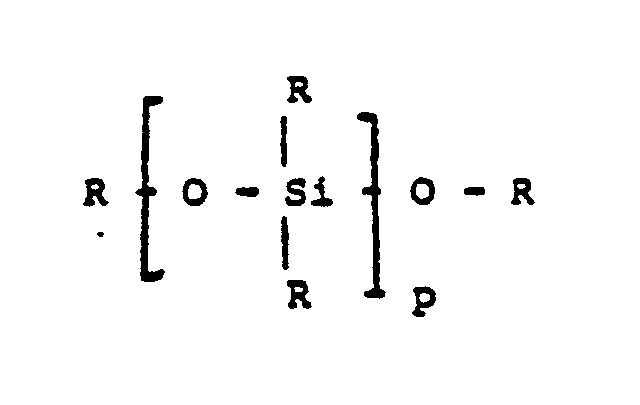
- a non-exhaustive list of classes of suitable drying agents for use in the practice of the present invention is as follows: C n H 2n +2 (alkanes) (II) C n H 2n (alkenes) (III) C n H n (alkynes) (IV) C n H 2n+1 X (V) R - - R (ketones)(VI) (VI) R - O - R (ethers) (VII) (CH2) m (cycloalkanes) (VIII) C a H 2a-2 (cycloalkenes) (IX) where: R is an alkyl, aryl or alkyl-substituted derivative p is a integer of at least 1, and normally not more than about 20 n is a integer of at least 8, and normally not more than about 20 X is a chloro or nitro group m is an integer from 7 to about 12 a is an integer of at least 7, and normally not more than about 20 Y, if present,
- the cellulosic polymers used to manufacture the air-dried semi-permeable membrane of this invention are the ester derivatives of cellulose, including the diacetate and the triacetate.
- a mixture of diacetate and triacetate is preferrable to the pure component and thus is used in the preferred embodiments.
- the practical acetyl content of cellulose acetate is about 39.8% by weight for diacetate and 43.2% by weight for triacetate. These materials are commercially available and well known in the art.
- Examples of the organic solvents used in the practice of the present invention are acetone, dioxane, methanol and mixtures thereof.
- the drying agents used to prepare the air-dried membranes of this invention are generally of the formulae (I) to (XI) where R, p, n, X, m, a and Y are as previously defined.
- the subscript p in formula (I) can range from a relatively small number, such as 1 to a relatively large number such as 10 or more and the silicon compounds of the formula (I) are generally known as siloxanes.
- a mixture of the high and low molecular weight is also effective as the drying agent for its intended purpose.
- hydrocarbons of formulae (II), (III) and (IV) suitable for air-dried membrane according to the invention can be saturated or unsaturated hydrocarbons of 8 to about 20 carbons atoms, such as octane, nonane, decane, undecane, cyclooctane, octene, decene, pinene and decyne.
- Aromatic or substituted aromatic hydrocarbons including xylene, chlorobenzene and nitrobenzene are also suitable for the application.
- ether derivatives of formula (VII) aliphatic ether compounds such as n-butyl ether is preferred.
- drying agents for the air-dried membrane may be made on the basis of low solubility parameter ( ⁇ 10 to 23), weak hydrogen bonding characteristics ( ⁇ H 0 to 7) and suitable boiling point (greater than or equal to 100°C), as well as other factors dictated by the compatibility of the casting solution toward the particular chemical.
- the air-dried membranes here can be prepared by casting from a solution comprised of a mixture of a good solvents, a poor or nonsolvent for the polymer material, a swelling agent and at least one of the drying agents to preserve the asymmetric structure of the membrane after the water is evaporated from the membrane.
- the cellulosic polymers are dissolved in suitable solvents to form about 10 to 18, preferably 13 to 17, weight percent solutions.
- the ratio of dioxane to acetone is 1 : 1 to 7 : 1, but preferively 3 : 1.
- the concentration of the nonsolvent, preferably methanol, can be 7 to 13% based on the total mixture.
- the amount of swelling agent, preferably lactic acid, can be 1 to 4% of the total weight.
- the amount of drying agent added to the casting solution can vary widely but is an effective amount, typically between about 1 and about 10 weight percent based on the combined weight of the total mixture, and more preferably between about 2 and 5 weight percent.
- the drying agents are generally admixed neat with the polymer solution to form a uniform mixture.
- the mixing can be done at a convenient temperature but is generally done at room temperature.
- the resulting mixture is then carefully filtered to remove all contaminants such as fibers, dust and undissolved gel particles.
- the filtered casting solution is first cast onto a smooth substrate, such as nylon or dacron cloth followed by precipitation in cold water and finally annealed in hot water.
- the precipitation temperature is 0 to 2°C and the soaking of the membrane in the cold bath is preferably 10 minutes or more.
- the annealing temperature for the membrane is generally between 70 and 90°C for at least 4 minutes or more.
- the resulting wet membrane is then air-dried either under ambient conditions for suitable periods of time, generally in excess of 20 minutes at ambient temperature or at low heat with air.
- Free standing blend membranes i.e., membrane without a support cloth, have also been successfully cast on aluminized Mylar.
- Non-solvent for cellulose acetate Soluble in the casting solution. Insoluble in water. Low surface tension. Boiling point above that of water.
- the formulation having the composition shown was prepared, and the solution cast to form a thin, uniform membrane layer which was precipitated in water. The membrane was then dried.
- the drying agent was present in the casting solution.
- Formulation 6 did not include the drying agent in the casting solution.
- the approach in the present invention is a break from the previous methods used for drying cellulose acetate membranes and is the essence of simplicity. It consists of adding a carefully selected fluid, the "drying agent", to the casting solution. Upon gelation, the drying agent surrounds and isolates the water in the pores of the resulting membrane and allows it to be dried without collapsing.
- This liquid which is an inert non-solvent for cellulose acetate, is soluble in the casting solution but insoluble in water. Its boiling point is preferably quite a bit higher than that of water. Its surface tension is much lower than the surface tension of water as well as the critical surface tension of wetting, ⁇ c of cellulose acetate.
- the main importance of the critical surface tension is that liquids having a surface tension lower than the critical surface tension spread on that surface, thus obeying the general rule that liquids of lower surface free energy spread over liquids or solids of higher surface free energy, thereby lowering the total system surface free energy.
- Silicone fluids as well as most hydrocarbons have surface tensions much lower than that of water as well as the critical surface tension value of 39 reported for cellulose acetate. As the nascent membrane precipitates in the gel bath, these liquids are forced out of solution and due to their low surface tensions, spread at the interface between the cellulose acetate and the water. They wet the membrane, not just on the dense layer, but more importantly, throughout the entire porous region as well. As a result, the membrane is shielded from the water, which is no longer in direct contact with the pore walls.
- liquid additive Since the liquid additive has been selected to spread on the polymer, it must bond more strongly to the pore wall than it does to itself, which leaves the later three places referred to above for separation to occur.
- n-octane Since the surface tension of n-octane is only slightly higher than that of hexane, i.e., 21.8 vs. 18.4 mN m ⁇ 1, the work of forming a new interface in the water-octane system is not much more than it is when the membrane is dried from hexane alone in the solvent exchange process, i.e., 43.6 vs. 36.8 mJ m ⁇ 2.
- the water within the membrane becomes isolated from the pore walls by a film of n-octane. Due to its lower boiling point, the water evaporates first. As negative forces develop that previously led to membrane collapse, the water breaks free from the n-octane but remains isolated from the pore wall by the n-octane. After the water is all gone, the n-octane evaporates, leaving the membrane with its structure fully intact and with no trace of residue.
- Cohesive energy density i.e., cohesive energy per unit volume, -U/V
- ⁇ Hildebrand solubility parameter
Landscapes
- Chemical & Material Sciences (AREA)
- Engineering & Computer Science (AREA)
- Chemical Kinetics & Catalysis (AREA)
- Health & Medical Sciences (AREA)
- Life Sciences & Earth Sciences (AREA)
- Molecular Biology (AREA)
- General Chemical & Material Sciences (AREA)
- Mechanical Engineering (AREA)
- General Engineering & Computer Science (AREA)
- Inorganic Chemistry (AREA)
- Manufacturing & Machinery (AREA)
- Separation Using Semi-Permeable Membranes (AREA)
- Carbon And Carbon Compounds (AREA)
- Manufacture Of Porous Articles, And Recovery And Treatment Of Waste Products (AREA)
Abstract
Description
- This invention relates to asymmetric cellulose acetate membranes and their use for desalination, non-aqueous liquid separation, ultrafiltration, pervaporation and gas separation. More particularly, the invention relates to a method for converting asymmetric membranes from their aqueous state to the dry state by direct evaporation of water. In another aspect, the invention relates to the use of these membranes to separate liquid or gaseous mixtures into various fractions and to their use for reverse osmosis, ultrafiltration, and pervaporation.
- Loeb and his co-workers disclose in, for example, United States Patent No. 3,133,132 a method for preparing a modified cellulose acetate membrane for desalination of water by first casting a solution of cellulose acetate as a thin layer, and then forming a dense membrane skin on the thin layer through various techniques such solvent evaporation followed by quenching in cold water. Many research programs on reverse osmosis membranes have been very actively conducted. Reverse osmosis is now widely available for many industrial applications such as desalination, pollution control, water reclamation, food processing and many other separation concentration and recovery processes.
- Separation of gases by permeation through polymer membranes has generated considerable interest in recent years. Although the process has been known for over a century, recent advances are making it economically competitive in many areas. One of the earliest permeation studies was done bY G. J. Van Amerongen, "The Permeability of Rubberlike Substances to Gases," Communication No. 46, Rubber Stichting Rev. gen caoutchouc 21, 50-6 (1944). He measured the permeability of nine rubbers to hydrogen, helium, oxygen, nitrogen, carbon dioxide and methane and independently determined solubilities and diffusivities which related to the nature of gases and rubbers. William J. Ward III and Charles K. Neulander, U. S. Clearinghouse Fed. Sci. Tech. Inform. PB Rep. 1970, No. 191769, 15 pp (Eng.) chose immobilized liquid membranes such as polyethylene glycol as a viable alternative. Some liquids have much larger diffusion coefficiants than solid polymers and may also have enormous solubilities for reactive gases. However, although the resulting polyethylene glycol membrane had shown excellent selectivity, the permeation rate was an order of magnitude too low for practical applications.
- In addition to homogenous polymer membranes and immobilized liquid gas membranes, a third type of membrane that has been considered for gas separations is again the asymmetric membrane which was based on knowledge developed concerning liquid-liquid separation membranes by Loeb and Sourirajan. Jitendra P. Agrawal and Sourirajan Srinivasa, J. Appl. Polym. Sci. 1970, 14 (5), 1303 - 21 (Eng.) studied the permeation of pure gases and several binary gas mixtures through porous freeze-dried cellulose acetate membranes. Due to the porosity of the membrane, separation factors were rather low but the permeation rates were reasonable. Schell, William J.; Lawrence, Ralph W. and King, William M., United States Energy Research and Development Administration Contract No. E (149-18-2000)). William J. Schell, Ralph W. Lawrence and William M. King, United States Energy Research and Development Administration Contract No. E (149-18-2000) reported asymmetric cellulose acetate membranes which had selectivities characteristic of nonporous cellulose acetate films but much higher permeation rates. They used these membranes to separate hydrogen from methane and carbon monoxide and suggested applications in coal utilization processes.
- As is well known to those skilled in the art, the membranes prepared by the techniques of Loeb and Sourirajan must be kept wet or in the case of gas separation, dried through special drying processes. If they are allowed to dry under ambient conditions, they undergo compaction and suffer a non-recoverable loss in permeation rate and selectivity. It is believed that the collapse of the membrane porosity is due to surface-tension related forces between the water and the membrane. These are so great that as the water globules within the membrane decrease in size, the pores around them collapse. Therefore, special drying processes are necessary for application to gas separation in order to prevent the membrane from shrinking and losing its asymmetric character as it does when the water is simply allowed to evaporate.
- Many workers have attempted to dry asymmetric cellulose acetate membranes directly from the water-wet state that results from their being cast and gelled in water. Prior to this invention, all attempts to dry the membrane directly from water resulted in shrinkage and total flux loss, or involved the use of surfactants and generally humectants as well that were incorporated into the membrane by soaking it in an aqueous solution of the chemical prior to drying. This method worked fairly well when the membrane was used in reverse osmosis since the chemicals were washed out with the water when the membrane was put into service. It is not suitable for drying gas separation membranes, however, since the residue plugs the pores and renders the membrane impermeable to gases.
- Only a few efforts to freeze-dry asymmetric membranes for gas separation have been made. This method is expensive and the membranes generally have impaired performance.
- The drying method that is most widely used today is solvent exchange. In this approach, the water-wet membrane is soaked successively in a series of solvents so as to end up with a solvent that has little interaction with the polymer and thus will not affect the membrane in an adverse manner as it evaporates.
- The general scheme has been to replace the water by soaking the membrane in an alcohol such as isopropanol alcohol (IPA). Then the alcohol, which would still cause the membrane to collapse if the membrane were dried from it, is often replaced with hydrocarbon such as hexane. At this point, the membrane can be dried without damage or loss of performance. The hexane is sometimes exchanged with a non-flammable liquid such as Freon prior to the final drying.
- Accordingly, this invention pertains to a direct air-dried asymmetric cellulose acetate membrane prepared by an improvement in the Loeb et al technique. These selectively permeable membranes are directly dried from their annealing step by evaporation of water. In general, these air-dried membranes exhibit the same gas permeation rates and high separation factors as cellulose acetate membranes dried by solvent exchange. Moreover, the membranes of this invention can be rewetted to provide desirable flux rates and selectivities in brackish water desalination by reverse osmosis. The advantages of the dry reverse osmosis membrane are several, including easier handling and increased storage life because of no bacteria growth. Furthermore, this invention provides a method for making direct air-dried cellulose acetate membranes in one preferred embodiment wherein the asymmetric structures are preserved by adding the hydropobic chemical drying agent to the casting solution.
- Briefly, our invention comprises the method of preparing a novel dry semipermeable asymmetric cellulosic membrane which comprises:
- a. Forming a casting solution comprising cellulose acetates and solvents for the cellulose acetates,
- b. Casting the solution to form a thin uniform layer as a membrane,
- c. Precipitating the membrane in water, and
- d. Drying the membrane to recover a membrane having outstanding characteristics for desalination by reverse osmosis and for separation of gaseous mixtures into their constituent parts;
- The invention further includes dried membranes prepared by the foregoing method.
- The drying agents are hydrophobic organic compounds having normal boiling points above 100°C, weak hydrogen bonding characteristics, and low solubility parameters.
- It is an important object of this invention to provide a novel method of preparing dry cellulosic membranes useful in reverse osmosis, non-aqueous liquid separation, ultrafiltration, pervaporation and for gas separation.
- More specifically, it is an object of our invention to provide dry cellulose acetate membranes having excellent gas separation and reverse osmosis membrane properties.
- These and other objects and advantages of this invention will be apparent from the more detailed description which follows.
- In accordance with the preferred embodiment of this invention, the novel semipermeable membrane is prepared from a casting solution containing a blend of cellulose triacetate and cellulose diacetate polymer, an organic solvent mixture, a swelling agent, a poor or nonsolvent for the polymer and, a minimum concentration of at least one drying agent that typically has very weak hydrogen bonding characteristics, a low solubility parameter and appropriate boiling point (>100°C). The novel membrane is fabricated by casting the solvent solution to form a thin layer on a smooth substrate, exposing it briefly to a gas such as air and precipating the membrane in cold water followed by annealing in hot water. The final dry membrane can be achieved by evaporating water at or somewhat above ambient temperature.
- It should be understood that, by the term "drying agent" as used in the present specification and claims is meant the particular chemical introduced in the casting formulation wherein the polymer is already dissolved in the appropriate solvents, or in the alternative, refers to the same chemical introduced into the isopropyl alcohol exchange both following precipitation of the membrane in water.
- A non-exhaustive list of classes of suitable drying agents for use in the practice of the present invention is as follows:

CnH2n (alkenes) (III)
CnHn (alkynes) (IV)
CnH2n+1X (V)
R -- R (ketones)(VI) (VI)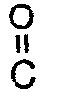
R - O - R (ethers) (VII)
(CH₂)m (cycloalkanes) (VIII)
CaH2a-2 (cycloalkenes) (IX)
R is an alkyl, aryl or alkyl-substituted derivative
p is a integer of at least 1, and normally not more than about 20
n is a integer of at least 8, and normally not more than about 20
X is a chloro or nitro group
m is an integer from 7 to about 12
a is an integer of at least 7, and normally not more than about 20
Y, if present, is a methyl or other lower alkyl, chloro or nitro. More than one Y group can be present as in xylene dichlorobenzene, or dinitrobenzene. - The cellulosic polymers used to manufacture the air-dried semi-permeable membrane of this invention are the ester derivatives of cellulose, including the diacetate and the triacetate. A mixture of diacetate and triacetate is preferrable to the pure component and thus is used in the preferred embodiments. The practical acetyl content of cellulose acetate is about 39.8% by weight for diacetate and 43.2% by weight for triacetate. These materials are commercially available and well known in the art. Examples of the organic solvents used in the practice of the present invention are acetone, dioxane, methanol and mixtures thereof.
- The drying agents used to prepare the air-dried membranes of this invention are generally of the formulae (I) to (XI) where R, p, n, X, m, a and Y are as previously defined. The subscript p in formula (I) can range from a relatively small number, such as 1 to a relatively large number such as 10 or more and the silicon compounds of the formula (I) are generally known as siloxanes. A mixture of the high and low molecular weight is also effective as the drying agent for its intended purpose. Typically hydrocarbons of formulae (II), (III) and (IV) suitable for air-dried membrane according to the invention can be saturated or unsaturated hydrocarbons of 8 to about 20 carbons atoms, such as octane, nonane, decane, undecane, cyclooctane, octene, decene, pinene and decyne. Aromatic or substituted aromatic hydrocarbons including xylene, chlorobenzene and nitrobenzene are also suitable for the application. In the case of ether derivatives of formula (VII), aliphatic ether compounds such as n-butyl ether is preferred.
- Selection of the drying agents for the air-dried membrane may be made on the basis of low solubility parameter (δτ10 to 23), weak hydrogen bonding characteristics (δH0 to 7) and suitable boiling point (greater than or equal to 100°C), as well as other factors dictated by the compatibility of the casting solution toward the particular chemical. The air-dried membranes here can be prepared by casting from a solution comprised of a mixture of a good solvents, a poor or nonsolvent for the polymer material, a swelling agent and at least one of the drying agents to preserve the asymmetric structure of the membrane after the water is evaporated from the membrane.
- In general, the cellulosic polymers are dissolved in suitable solvents to form about 10 to 18, preferably 13 to 17, weight percent solutions. In particular, the ratio of dioxane to acetone is 1 : 1 to 7 : 1, but preferably 3 : 1. The concentration of the nonsolvent, preferably methanol, can be 7 to 13% based on the total mixture. The amount of swelling agent, preferably lactic acid, can be 1 to 4% of the total weight. The amount of drying agent added to the casting solution can vary widely but is an effective amount, typically between about 1 and about 10 weight percent based on the combined weight of the total mixture, and more preferably between about 2 and 5 weight percent.
- The drying agents are generally admixed neat with the polymer solution to form a uniform mixture. The mixing can be done at a convenient temperature but is generally done at room temperature. The resulting mixture is then carefully filtered to remove all contaminants such as fibers, dust and undissolved gel particles. The filtered casting solution is first cast onto a smooth substrate, such as nylon or dacron cloth followed by precipitation in cold water and finally annealed in hot water. The precipitation temperature is 0 to 2°C and the soaking of the membrane in the cold bath is preferably 10 minutes or more. The annealing temperature for the membrane is generally between 70 and 90°C for at least 4 minutes or more. The resulting wet membrane is then air-dried either under ambient conditions for suitable periods of time, generally in excess of 20 minutes at ambient temperature or at low heat with air.
- "Free standing" blend membranes, i.e., membrane without a support cloth, have also been successfully cast on aluminized Mylar.
- As shown herein, the effective drying agents must meet several criteria:
Non-solvent for cellulose acetate.
Soluble in the casting solution.
Insoluble in water.
Low surface tension.
Boiling point above that of water. - In order to meet these criteria, it has been found that the polar and hydrogen bonding components of the solubility parameter must be very low. Silicone fluids and many hydrocarbons having largely dispersion forces meet these criteria quite well. They do not dissolve cellulose acetate. They are soluble in the cellulose acetate casting solution. They are insoluble in water and they have very low surface tensions. They are available in the desirable boiling point range, which ranges from 150 to 200 degrees centigrade for the most effective additives.
- The following examples are illustrations of certain specific embodiments of this invention.


- In each of the foregoing examples, the formulation having the composition shown was prepared, and the solution cast to form a thin, uniform membrane layer which was precipitated in water. The membrane was then dried. In the Formulations 1 through 5 and 7, the drying agent was present in the casting solution. Formulation 6 did not include the drying agent in the casting solution.
- The data using Formulation 6 near the end of Table I demonstrate that the drying agents also prevent the membrane from collapsing when it is directly dried from alcohol (IPA) containing the drying agent. The appropriate amount of the drying agent is introduced into the IPA exchange bath and the membrane is dried from it.
- The foregoing data show that organic compounds having the characteristics described herein are quite effective as drying agents in yielding useful dry cellulosic membranes and that compounds which lack these characteristics e.g. (the highly polar hexanol) result in failure. The data also show that, in general, the use of the drying agents of this invention yield membranes having performance properties in both gas separation and reverse osmosis applications equal to or better than the properties of membranes prepared by solvent exchange.
- The foregoing data were obtained using flat sheet membranes. Similar results are obtainable using membranes having other configurations such as tubular and hollow fibers.
- While not bound by any theory, it is believed that the following discussion serves to explain the working of our invention. A molecule in the interior of a liquid is attracted equally in all directions since it is equally surrounded on all sides by other molecules. For a molecule on the surface, however, there is a net inward attractive force because there are more molecules per unit volume in the liquid than there are in the vapor phase. Liquids thus tend to contract to a minimum area surface, as in the case of drops and bubbles. As a result of this tendency to contract, a surface always behaves as if it were in a state of tension. If a cut were made along a line in the surface, a force would have to be applied to hold the edges together. It is called the surface tension.
- One of the many consequences of surface tension is that the pressure on the concave side of a surface must be greater than that on the convex side. If this were not so, a bubble could not exist, for it would collapse as a result of the force due to surface tension. The excess internal pressure (P) required to prevent the collapse of a gas bubble in a liquid is given by the following equation.
P = 2 γ/r
where γ is the surface tension of the liquid and r is the radius of the bubble. As shown above, the excess internal pressure required to maintain an air bubble in a liquid is inversely proportional to the radius of the bubble, which is critical in membrane drying. - As water diffuses out of a pore within a membrane, negative forces develop that must lead to one of three things: formation of a cavity within the water in the pore, separation of the water from the pore wall or collapse of the pore.
- Since the cavity would initially be only a few Angstroms in diameter, a negative force of thousands of pounds per square inch would be exerted on the pore before cohesive failure of the water could lead to the formation of a cavity.
- Young's equation shows that the work of adhesion between water and the wet cellulose acetate membrane, which exhibits a contact angle of about 15 degrees with water, is almost as great at the work of cohesion (twice the surface tension) of water alone:
W(polymer/water) = γ(water) X (1 + Cosine 15)
= 143.4 mJ m⁻²
W(water) = 2 X γ (water)
= 145.6 mJ m⁻² - It is thus seen that nearly the full cohesive strength of water is exerted on the membrane during drying. With its high surface tension, it is no wonder that water tends to collapse the pores of cellulose acetate membranes.
- Hexane by contrast has a much lower surface tension and does not cause the membrane to collapse. Its work of cohesion is:
W(hexane) =2 X γ(hexane)
= 36.8 mJ m⁻² - The approach in the present invention is a break from the previous methods used for drying cellulose acetate membranes and is the essence of simplicity. It consists of adding a carefully selected fluid, the "drying agent", to the casting solution. Upon gelation, the drying agent surrounds and isolates the water in the pores of the resulting membrane and allows it to be dried without collapsing. This liquid, which is an inert non-solvent for cellulose acetate, is soluble in the casting solution but insoluble in water. Its boiling point is preferably quite a bit higher than that of water. Its surface tension is much lower than the surface tension of water as well as the critical surface tension of wetting, γc of cellulose acetate.
- The main importance of the critical surface tension is that liquids having a surface tension lower than the critical surface tension spread on that surface, thus obeying the general rule that liquids of lower surface free energy spread over liquids or solids of higher surface free energy, thereby lowering the total system surface free energy.
- Silicone fluids as well as most hydrocarbons have surface tensions much lower than that of water as well as the critical surface tension value of 39 reported for cellulose acetate. As the nascent membrane precipitates in the gel bath, these liquids are forced out of solution and due to their low surface tensions, spread at the interface between the cellulose acetate and the water. They wet the membrane, not just on the dense layer, but more importantly, throughout the entire porous region as well. As a result, the membrane is shielded from the water, which is no longer in direct contact with the pore walls.
- There are now two interfaces within the pore, whereas before there was only the water-polymer interface. As water diffuses out of the membrane during the drying step and negative forces develop that previously led to membrane collapse, separation can now occur at any one of four places:
Between the pore wall and the liquid additive.
Within the liquid additive.
Between the liquid additive and the water.
Within the water. - Since the liquid additive has been selected to spread on the polymer, it must bond more strongly to the pore wall than it does to itself, which leaves the later three places referred to above for separation to occur.
- As shown earlier, the work of cohesion is much greater for water than it is for a hydrocarbon such as hexane. Therefore, cohesive failure of the additive will take place before a cavity can form in the water.
- Cohesive failure of the liquid additive and adhesive separation between the liquid additive and the water are closely related in terms of the work required to generate a new interface. It has been pointed out that the work of adhesion between two mutually saturated liquids is equal to the work of cohesion of the liquid of lower surface tension after saturation with that of higher surface tension. Since water raises the surface tension of aliphatic hydrocarbons only slightly, the work of adhesion between water and simple hydrocarbons such as n-octane is therefore essentially equal to the work of cohesion of the hydrocarbon itself.
- The work of separation during drying can now be compared for a membrane containing water alone with one containing water plus n-octane:
W(polymer/water) = γ (water) X (1 + Cosine 15)
= 143.4 mJ m⁻²
W(n-octane/water) = 2 X γ (n-octane)
= 43.6 mJ m⁻² - As shown above, the work of separation during drying has been reduced from 143.4 mJ m⁻² for a water only system to only 43.6 mJ m⁻² for the system containing n-octane. It is clear that low surface tension liquids are best suited to this purpose.
- Since the surface tension of n-octane is only slightly higher than that of hexane, i.e., 21.8 vs. 18.4 mN m⁻¹, the work of forming a new interface in the water-octane system is not much more than it is when the membrane is dried from hexane alone in the solvent exchange process, i.e., 43.6 vs. 36.8 mJ m⁻².
- In summary, the water within the membrane becomes isolated from the pore walls by a film of n-octane. Due to its lower boiling point, the water evaporates first. As negative forces develop that previously led to membrane collapse, the water breaks free from the n-octane but remains isolated from the pore wall by the n-octane. After the water is all gone, the n-octane evaporates, leaving the membrane with its structure fully intact and with no trace of residue.
- Surface tension values are not readily available for some of the liquids involved in this study. Since solubility data is widely known and the dispersion, polar and hydrogen bonding components are generally available, the solubility parameter was helpful in selecting the liquids for this study.
- Strong attractive or cohesive forces exist between molecules in liquid phases. An estimate of their magnitude is provided by the molar cohesive density, -U. Cohesive energy density, i.e., cohesive energy per unit volume, -U/V, is the basis of the original definition by Hildebrand and Scott of what is now generally called the Hildebrand solubility parameter, δ . This parameter was intended for non-polar, non-dissociating systems, but has now been extended to all systems.
- An empirical equation relating the solubility parameter to surface tension was developed by Hildebrand and Scott:
δ = k(γ/V1/3)0.43
where k is a constant and V is the molar volume. - Another approach to determining the Hildebrand solubility parameter was developed by Hansen. He assumed that the cohesive energy is made up of a linear combination of contributions from dispersion interactions (-Ud), polar interactions (-Up), and hydrogen bonding or similar specific association interactions (-Uh).
-U = -Ud -Up -Uh - It follows that the corresponding cohesive pressures and cohesion parameters can be defined so that:
-U/V = -Ud/V -Up/V -Uh/V
and hence:
δ²t = δ²d + δ²p + δ²h - In the past, the cohesive energy density has been given in units of energy per unit volume, often cal cm⁻³. Although the units cal cm⁻³ for cohesive energy density and cal1/2 cm-3/2 for solubility parameters are still widely used, eventual conversion to the International System of Units (SI) is inevitable and it was used by Allan Barton when he compiled the CRC Handbook of Solubility Parameters and Other Cohesion Parameters in 1983. The most appropriate unit for the cohesion parameter is mPa1/2.
- Having fully described the invention, it is intended that it be limited only by the lawful scope of the appended claims.
Claims (34)
a) forming a casting solution comprising cellulose acetates and a solvent for the cellulose acetates,
b) casting the solution to form a thin uniform layer,
c) precipitating the membrane in water, and
d) drying the membrane to recover a membrane having outstanding characteristics for desalination by reverse osmosis, ultrafiltration, non-aqueous liquid separation, pervaporation, and for separation of gaseous mixtures into their constituent parts,
wherein a drying agent is introduced prior to the drying step and is a hydrophobic organic compound having a normal boiling point above 100° C, weak hydrogen bonding characteristics, and a low solubility parameter.
CnH2n (alkenes)
CnHn (alkynes)
CnH2n+1X
R -

R - O - R (ethers)
(CH₂)m (cycloalkanes)
CaH2a-2 (cycloalkenes)

R is an alkyl, aryl or alkyl-substituted derivative
p is a integer of at least 1,
n is a integer of at least 8,
X is a chloro or nitro group,
a is an integer of at least 7,
m is an integer from 7 to about 12, and
Y, if present, is lower alkyl, chloro or nitro.
Applications Claiming Priority (2)
| Application Number | Priority Date | Filing Date | Title |
|---|---|---|---|
| US07/150,265 US4855048A (en) | 1987-09-22 | 1988-01-29 | Air dried cellulose acetate membranes |
| US150265 | 1988-01-29 |
Publications (3)
| Publication Number | Publication Date |
|---|---|
| EP0326076A2 true EP0326076A2 (en) | 1989-08-02 |
| EP0326076A3 EP0326076A3 (en) | 1990-05-23 |
| EP0326076B1 EP0326076B1 (en) | 1994-07-20 |
Family
ID=22533763
Family Applications (1)
| Application Number | Title | Priority Date | Filing Date |
|---|---|---|---|
| EP89101188A Expired - Lifetime EP0326076B1 (en) | 1988-01-29 | 1989-01-24 | Air dried cellulose acetate membranes |
Country Status (5)
| Country | Link |
|---|---|
| US (1) | US4855048A (en) |
| EP (1) | EP0326076B1 (en) |
| JP (1) | JP2584308B2 (en) |
| CA (1) | CA1323150C (en) |
| DE (1) | DE68916816T2 (en) |
Cited By (4)
| Publication number | Priority date | Publication date | Assignee | Title |
|---|---|---|---|---|
| EP0631806A3 (en) * | 1993-06-30 | 1995-03-01 | Praxair Technology Inc | The production and use of improved composite fluid separation membranes. |
| US10478778B2 (en) | 2015-07-01 | 2019-11-19 | 3M Innovative Properties Company | Composite membranes with improved performance and/or durability and methods of use |
| US10618008B2 (en) | 2015-07-01 | 2020-04-14 | 3M Innovative Properties Company | Polymeric ionomer separation membranes and methods of use |
| US10737220B2 (en) | 2015-07-01 | 2020-08-11 | 3M Innovative Properties Company | PVP- and/or PVL-containing composite membranes and methods of use |
Families Citing this family (37)
| Publication number | Priority date | Publication date | Assignee | Title |
|---|---|---|---|---|
| US5205934A (en) * | 1991-08-30 | 1993-04-27 | Membrane Products Kiryat Weitzman Ltd. | Silicone-derived solvent stable membranes |
| US5151182A (en) * | 1991-08-30 | 1992-09-29 | Membrane Products Kiryat Weizmann Ltd. | Polyphenylene oxide-derived membranes for separation in organic solvents |
| US5265734A (en) * | 1991-08-30 | 1993-11-30 | Membrane Products Kiryat Weitzman Ltd. | Silicon-derived solvent stable membranes |
| US5520807A (en) * | 1994-05-11 | 1996-05-28 | Uop | Stacked fluid-separation membrane disk module assemblies |
| US5500122A (en) * | 1994-05-11 | 1996-03-19 | Uop | Stacked fluid-separation membrane disk module assemblies |
| US5536405A (en) * | 1994-05-11 | 1996-07-16 | Uop | Stacked membrane disk assemblies for fluid separations |
| US8123945B2 (en) * | 2007-05-09 | 2012-02-28 | The United States of America as represented by the Secretary of the Interior, The Bereau of Reclamation | Method for making high flux, high salt rejection cellulose desalting membranes |
| US20090277837A1 (en) * | 2008-05-06 | 2009-11-12 | Chunqing Liu | Fluoropolymer Coated Membranes |
| US20100018926A1 (en) * | 2008-06-25 | 2010-01-28 | Chunqing Liu | Mixed Matrix Membranes Containing Ion-Exchanged Molecular Sieves |
| US8561812B2 (en) * | 2009-03-27 | 2013-10-22 | Uop Llc | Blend polymer membranes comprising thermally rearranged polymers derived from aromatic polyimides containing ortho-positioned functional groups |
| US8132678B2 (en) * | 2009-03-27 | 2012-03-13 | Uop Llc | Polybenzoxazole polymer-based mixed matrix membranes |
| US20100133171A1 (en) * | 2009-03-27 | 2010-06-03 | Chunqing Liu | Polybenzoxazole Polymer-Based Mixed Matrix Membranes |
| US8132677B2 (en) | 2009-03-27 | 2012-03-13 | Uop Llc | Polymer membranes prepared from aromatic polyimide membranes by thermal treating and UV crosslinking |
| US8127936B2 (en) * | 2009-03-27 | 2012-03-06 | Uop Llc | High performance cross-linked polybenzoxazole and polybenzothiazole polymer membranes |
| US8613362B2 (en) | 2009-03-27 | 2013-12-24 | Uop Llc | Polymer membranes derived from aromatic polyimide membranes |
| US8127937B2 (en) * | 2009-03-27 | 2012-03-06 | Uop Llc | High performance cross-linked polybenzoxazole and polybenzothiazole polymer membranes |
| US8231785B2 (en) * | 2009-05-12 | 2012-07-31 | Uop Llc | Staged membrane system for gas, vapor, and liquid separations |
| GB0909967D0 (en) * | 2009-06-10 | 2009-07-22 | Membrane Extraction Tech Ltd | Polyimide membrane |
| US8459469B2 (en) * | 2009-06-25 | 2013-06-11 | Uop Llc | Polybenzoxazole membranes prepared from aromatic polyamide membranes |
| US20100133188A1 (en) * | 2009-06-25 | 2010-06-03 | Chunqing Liu | Polybenzoxazole Membranes Prepared From Aromatic Polyamide Membranes |
| US20100326913A1 (en) * | 2009-06-25 | 2010-12-30 | Uop Llc | Polybenzoxazole membranes prepared from aromatic polyamide membranes |
| US7810652B2 (en) | 2009-09-25 | 2010-10-12 | Uop Llc | Method to improve the selectivity of polybenzoxazole membranes |
| US8575414B2 (en) | 2010-12-17 | 2013-11-05 | Uop Llc | Membrane system for natural gas upgrading |
| EP2719445A1 (en) * | 2012-10-09 | 2014-04-16 | Clariant International Ltd. | Process for concentrating small organic molecules from liquid or gaseous mixtures using a composite membrane comprising a fluoropolymer and hydrophobic siliceous particles |
| CA2906344C (en) * | 2013-03-15 | 2021-07-27 | Gp Cellulose Gmbh | High-permeability cellulose fibers |
| US9731985B2 (en) | 2015-06-03 | 2017-08-15 | Lg Nanoh2O, Inc. | Chemical additives for enhancement of water flux of a membrane |
| US9695065B2 (en) | 2015-06-03 | 2017-07-04 | Lg Nanoh2O, Inc. | Combination of chemical additives for enhancement of water flux of a membrane |
| US9724651B2 (en) | 2015-07-14 | 2017-08-08 | Lg Nanoh2O, Inc. | Chemical additives for water flux enhancement |
| US9861940B2 (en) | 2015-08-31 | 2018-01-09 | Lg Baboh2O, Inc. | Additives for salt rejection enhancement of a membrane |
| WO2017069990A1 (en) | 2015-10-22 | 2017-04-27 | Uop Llc | Dual layer-coated membranes for gas separations |
| US10155203B2 (en) | 2016-03-03 | 2018-12-18 | Lg Nanoh2O, Inc. | Methods of enhancing water flux of a TFC membrane using oxidizing and reducing agents |
| US10632417B2 (en) | 2018-01-23 | 2020-04-28 | Uop Llc | High hydrocarbon recovery membrane plus solvent based system |
| CR20210005A (en) | 2018-06-27 | 2021-04-13 | Lubrizol Advanced Mat Inc | POROUS FLAT SHEET MEMBRANE |
| KR20220025813A (en) | 2019-06-24 | 2022-03-03 | 루브리졸 어드밴스드 머티어리얼스, 인코포레이티드 | hollow fiber membrane |
| WO2024129533A1 (en) | 2022-12-14 | 2024-06-20 | The Lubrizol Corporation | Compositions for preparing membranes from polymer solutions |
| WO2025154552A1 (en) * | 2024-01-16 | 2025-07-24 | コニカミノルタ株式会社 | Carbon dioxide separation membrane manufacturing method and separation membrane module manufacturing method |
| WO2025250460A1 (en) | 2024-05-30 | 2025-12-04 | The Lubrizol Corporation | Polyurethane and polyurea porous polymer films |
Family Cites Families (12)
| Publication number | Priority date | Publication date | Assignee | Title |
|---|---|---|---|---|
| NL271831A (en) * | 1960-11-29 | |||
| US3415038A (en) * | 1966-06-23 | 1968-12-10 | Gulf General Atomic Inc | Method and apparatus for gas separation by diffusion |
| CA923664A (en) * | 1968-05-03 | 1973-04-03 | D. Slowig Walter | Preparation of dry, stabilized, rewettable semipermeable membranes |
| US3593855A (en) * | 1969-05-13 | 1971-07-20 | Westinghouse Electric Corp | High flow porous reverse osmosis membranes containing lipids |
| DE2621519C3 (en) * | 1976-05-14 | 1982-07-15 | Sartorius GmbH, 3400 Göttingen | Process for the production of asymmetric permselective cellulose triacetate membranes with skin layer |
| US4080743A (en) * | 1976-06-22 | 1978-03-28 | E. I. Du Pont De Nemours And Company | Membrane drying process |
| US4068387A (en) * | 1976-07-06 | 1978-01-17 | E. I. Du Pont De Nemours And Company | Solvent drying of cellulose ester membranes |
| JPS5530406A (en) * | 1978-08-18 | 1980-03-04 | Nippon Zeon Co Ltd | Production of hollow fiber |
| JPS5696910A (en) * | 1979-12-29 | 1981-08-05 | Nippon Zeon Co Ltd | Preparation of hollow fiber |
| US4430807A (en) * | 1982-05-17 | 1984-02-14 | The Dow Chemical Company | Process for drying water-wet membranes |
| US4428776A (en) * | 1982-06-23 | 1984-01-31 | The Standard Oil Company | Cellulosic semipermeable membranes containing silicon compounds |
| US4527999A (en) * | 1984-03-23 | 1985-07-09 | Abcor, Inc. | Separation membrane and method of preparing and using same |
-
1988
- 1988-01-29 US US07/150,265 patent/US4855048A/en not_active Expired - Lifetime
-
1989
- 1989-01-23 CA CA000588920A patent/CA1323150C/en not_active Expired - Fee Related
- 1989-01-24 EP EP89101188A patent/EP0326076B1/en not_active Expired - Lifetime
- 1989-01-24 DE DE68916816T patent/DE68916816T2/en not_active Expired - Fee Related
- 1989-01-30 JP JP1020658A patent/JP2584308B2/en not_active Expired - Fee Related
Cited By (5)
| Publication number | Priority date | Publication date | Assignee | Title |
|---|---|---|---|---|
| EP0631806A3 (en) * | 1993-06-30 | 1995-03-01 | Praxair Technology Inc | The production and use of improved composite fluid separation membranes. |
| CN1050771C (en) * | 1993-06-30 | 2000-03-29 | 普拉塞尔技术有限公司 | The production and use of improved composite fluid separation membranes |
| US10478778B2 (en) | 2015-07-01 | 2019-11-19 | 3M Innovative Properties Company | Composite membranes with improved performance and/or durability and methods of use |
| US10618008B2 (en) | 2015-07-01 | 2020-04-14 | 3M Innovative Properties Company | Polymeric ionomer separation membranes and methods of use |
| US10737220B2 (en) | 2015-07-01 | 2020-08-11 | 3M Innovative Properties Company | PVP- and/or PVL-containing composite membranes and methods of use |
Also Published As
| Publication number | Publication date |
|---|---|
| US4855048A (en) | 1989-08-08 |
| EP0326076A3 (en) | 1990-05-23 |
| EP0326076B1 (en) | 1994-07-20 |
| CA1323150C (en) | 1993-10-19 |
| JPH026830A (en) | 1990-01-11 |
| DE68916816D1 (en) | 1994-08-25 |
| DE68916816T2 (en) | 1994-10-27 |
| JP2584308B2 (en) | 1997-02-26 |
Similar Documents
| Publication | Publication Date | Title |
|---|---|---|
| EP0326076B1 (en) | Air dried cellulose acetate membranes | |
| EP3458183B1 (en) | Selectively permeable graphene oxide membrane | |
| US6726744B2 (en) | Mixed matrix membrane for separation of gases | |
| US7622045B2 (en) | Hydrophilic cross-linked polymeric membranes and sorbents | |
| US4080743A (en) | Membrane drying process | |
| US10543455B2 (en) | Gas separation membrane, gas separation module, gas separation apparatus, gas separation method, and method for producing asymmetric gas separation membrane | |
| US4776936A (en) | Process for increasing the selectivity of anisotropic gas separation membranes | |
| US4851121A (en) | Process for rendering porous membrane hydrophilic | |
| JPH0647058B2 (en) | Gas selective permeable membrane | |
| US3842515A (en) | Method for drying water-wet membranes | |
| EP3600635A1 (en) | Selectively permeable graphene oxide membrane | |
| US5061301A (en) | Process for the preparation of surface modified, multilayered, composite membranes for oxygen enrichment and the gas separation membranes | |
| US4142966A (en) | Membrane separation of water from aqueous mixtures | |
| JP6355058B2 (en) | Gas separation membrane, gas separation module, gas separation device, and gas separation method | |
| KR100531129B1 (en) | A method for preparing ionic liquid supported liquid membrane | |
| Aptel et al. | Novel polymer alloy membranes composed of poly (4‐vinyl pyridine) and cellulose acetate. I. Asymmetric membranes | |
| JP5833986B2 (en) | Gas separation composite membrane, method for producing the same, gas separation module using the same, gas separation device, and gas separation method | |
| JPH02138136A (en) | Selective separation of aromatic hydrocarbon from mixture of aromatic hydrocarbon and saturated hydrocarbon using polyethylene glycol-impregnated hydrophilic membrane | |
| JP6323847B2 (en) | Gas separation membrane, gas separation module, gas separation device, and gas separation method | |
| JPH0248529B2 (en) | ||
| KR102526294B1 (en) | Composition for preparing gas separation membrane, method for preparing gas separation membrane using the same and gas separation membrane | |
| CN1221649A (en) | Method for prepn. of permeation vaporization compound membrane | |
| KR102637321B1 (en) | Gas separation membrane, gas separation membrane module comprising the same and preparation method for the same | |
| JP4902137B2 (en) | Gas permselective material | |
| JP2918687B2 (en) | Polyparabanic acid selective separation membrane |
Legal Events
| Date | Code | Title | Description |
|---|---|---|---|
| PUAI | Public reference made under article 153(3) epc to a published international application that has entered the european phase |
Free format text: ORIGINAL CODE: 0009012 |
|
| AK | Designated contracting states |
Kind code of ref document: A2 Designated state(s): DE FR GB IT NL |
|
| PUAL | Search report despatched |
Free format text: ORIGINAL CODE: 0009013 |
|
| AK | Designated contracting states |
Kind code of ref document: A3 Designated state(s): DE FR GB IT NL |
|
| 17P | Request for examination filed |
Effective date: 19900725 |
|
| 17Q | First examination report despatched |
Effective date: 19920403 |
|
| RAP1 | Party data changed (applicant data changed or rights of an application transferred) |
Owner name: HOECHST CELANESE CORPORATION |
|
| GRAA | (expected) grant |
Free format text: ORIGINAL CODE: 0009210 |
|
| AK | Designated contracting states |
Kind code of ref document: B1 Designated state(s): DE FR GB IT NL |
|
| REF | Corresponds to: |
Ref document number: 68916816 Country of ref document: DE Date of ref document: 19940825 |
|
| ET | Fr: translation filed | ||
| ITF | It: translation for a ep patent filed | ||
| PLBE | No opposition filed within time limit |
Free format text: ORIGINAL CODE: 0009261 |
|
| STAA | Information on the status of an ep patent application or granted ep patent |
Free format text: STATUS: NO OPPOSITION FILED WITHIN TIME LIMIT |
|
| 26N | No opposition filed | ||
| REG | Reference to a national code |
Ref country code: GB Ref legal event code: IF02 |
|
| PGFP | Annual fee paid to national office [announced via postgrant information from national office to epo] |
Ref country code: NL Payment date: 20041229 Year of fee payment: 17 |
|
| PGFP | Annual fee paid to national office [announced via postgrant information from national office to epo] |
Ref country code: FR Payment date: 20050117 Year of fee payment: 17 |
|
| PGFP | Annual fee paid to national office [announced via postgrant information from national office to epo] |
Ref country code: GB Payment date: 20050119 Year of fee payment: 17 |
|
| PGFP | Annual fee paid to national office [announced via postgrant information from national office to epo] |
Ref country code: DE Payment date: 20050228 Year of fee payment: 17 |
|
| PG25 | Lapsed in a contracting state [announced via postgrant information from national office to epo] |
Ref country code: GB Free format text: LAPSE BECAUSE OF NON-PAYMENT OF DUE FEES Effective date: 20060124 |
|
| PG25 | Lapsed in a contracting state [announced via postgrant information from national office to epo] |
Ref country code: FR Free format text: LAPSE BECAUSE OF NON-PAYMENT OF DUE FEES Effective date: 20060131 |
|
| PGFP | Annual fee paid to national office [announced via postgrant information from national office to epo] |
Ref country code: IT Payment date: 20060131 Year of fee payment: 18 |
|
| PG25 | Lapsed in a contracting state [announced via postgrant information from national office to epo] |
Ref country code: NL Free format text: LAPSE BECAUSE OF NON-PAYMENT OF DUE FEES Effective date: 20060801 Ref country code: DE Free format text: LAPSE BECAUSE OF NON-PAYMENT OF DUE FEES Effective date: 20060801 |
|
| GBPC | Gb: european patent ceased through non-payment of renewal fee |
Effective date: 20060124 |
|
| NLV4 | Nl: lapsed or anulled due to non-payment of the annual fee |
Effective date: 20060801 |
|
| REG | Reference to a national code |
Ref country code: FR Ref legal event code: ST Effective date: 20060929 |
|
| PG25 | Lapsed in a contracting state [announced via postgrant information from national office to epo] |
Ref country code: IT Free format text: LAPSE BECAUSE OF NON-PAYMENT OF DUE FEES Effective date: 20070124 |