EP0327000A2 - Fragments de gènes codant pour la région variable d'un anticorps anti-HIV, anticorps chimériques anti-HIV exprimés lors de leur utilisation et procédé pour leur préparation - Google Patents
Fragments de gènes codant pour la région variable d'un anticorps anti-HIV, anticorps chimériques anti-HIV exprimés lors de leur utilisation et procédé pour leur préparation Download PDFInfo
- Publication number
- EP0327000A2 EP0327000A2 EP89101583A EP89101583A EP0327000A2 EP 0327000 A2 EP0327000 A2 EP 0327000A2 EP 89101583 A EP89101583 A EP 89101583A EP 89101583 A EP89101583 A EP 89101583A EP 0327000 A2 EP0327000 A2 EP 0327000A2
- Authority
- EP
- European Patent Office
- Prior art keywords
- gene
- chain
- hiv
- coding
- antibody
- Prior art date
- Legal status (The legal status is an assumption and is not a legal conclusion. Google has not performed a legal analysis and makes no representation as to the accuracy of the status listed.)
- Granted
Links
Images





Classifications
-
- C—CHEMISTRY; METALLURGY
- C07—ORGANIC CHEMISTRY
- C07K—PEPTIDES
- C07K16/00—Immunoglobulins [IG], e.g. monoclonal or polyclonal antibodies
- C07K16/08—Immunoglobulins [IG], e.g. monoclonal or polyclonal antibodies against material from viruses
- C07K16/10—RNA viruses
- C07K16/112—Retroviridae (F), e.g. leukemia viruses
- C07K16/114—Lentivirus (G), e.g. human immunodeficiency virus [HIV], feline immunodeficiency virus [FIV] or simian immunodeficiency virus [SIV]
- C07K16/1145—Env proteins, e.g. gp41, gp110/120, gp160, V3, principal neutralising domain [PND] or CD4-binding site
-
- A—HUMAN NECESSITIES
- A61—MEDICAL OR VETERINARY SCIENCE; HYGIENE
- A61P—SPECIFIC THERAPEUTIC ACTIVITY OF CHEMICAL COMPOUNDS OR MEDICINAL PREPARATIONS
- A61P31/00—Antiinfectives, i.e. antibiotics, antiseptics, chemotherapeutics
- A61P31/12—Antivirals
-
- A—HUMAN NECESSITIES
- A61—MEDICAL OR VETERINARY SCIENCE; HYGIENE
- A61K—PREPARATIONS FOR MEDICAL, DENTAL OR TOILETRY PURPOSES
- A61K38/00—Medicinal preparations containing peptides
-
- C—CHEMISTRY; METALLURGY
- C07—ORGANIC CHEMISTRY
- C07K—PEPTIDES
- C07K2317/00—Immunoglobulins specific features
- C07K2317/20—Immunoglobulins specific features characterized by taxonomic origin
- C07K2317/24—Immunoglobulins specific features characterized by taxonomic origin containing regions, domains or residues from different species, e.g. chimeric, humanized or veneered
Definitions
- the present invention relates to novel chimeric anti-human immunodeficiency virus (HIV) antibodies which are useful for the treatment and prevention of the acquired immunodeficiency syndrome (AIDS) caused by HIV. More particularly, the present invention relates to gene fragments coding for variable regions of the H and L chains of the chimeric anti-HIV antibodies which are capable of expressing chimeric anti-HIV antibodies having an HIV-neutralizing activity, to a transformant into which such gene fragments are incorporated, to chimeric anti-HIV antibodies expressed therefrom and to a process for preparing the same.
- HIV immunodeficiency virus
- AIDS is a viral disease caused by the retrovirus HIV [Barre-Sinoussi et al., Science, 220 , 868 (1983); Popovic et al., Science, 224 , 497 (1984)].
- This disease was discovered in five homosexuals in Los Angeles that suffered from Kalini pneumonia in 1981 as reported by the American CDC Weekly [Centers for Disease Control: MMWR, 30 , 250 (1981)]. Since then, this disease has very rapidly spread all over the world. According to a statistical report by the World Health Organization (WHO), this disease has already been found in 122 countries and the total number of patients exceeded 60,000 as of August 12, 1987. Also in Japan, fifty patients have been confirmed as of September 4, 1987, twenty eight patients thereof having already died. Although AIDS has spread all over the world so rapidly, prevention and treatment of this disease are not yet effectively possible.
- WHO World Health Organization
- AZT 3′-azido-3′-deoxythymidine
- RT reverse transcriptase
- a clue for immunotherapy may have been found in comparison of the immunological profiles of serologically positive healthy individuals with those of patients with AIDS-related complex (ARC) and AIDS.
- Neutralizing anti bodies against HIV were frequently detected in infected individuals, and low or absent neutralizing titers correlated with poor prognosis.
- the level of antibody relates with the presence of antibody dependent cell cytotoxicity (ADCC) or inhibits the function of RT which is present in the asymptomatic phase but declines in the symptomatic phase [Ho et al., J. Virology, 61 , 2024 (1987)].
- anti-HIV antibodies are a potential agent for preventing expansion of the disease and for removing affected cells in vivo and they are expected to show an excellent effect when used in combination with the antiviral agent and the like which have already been clinically used.
- monoclonal antibodies having the neutralizing activity against HIV can be used.
- the fundamental techniques for preparing monoclonal antibodies have already been established, but most of these are concerned with mouse monoclonal antibodies.
- the application of these mouse monoclonal antibodies is regarded as still being unsuitable for practical use. This is due to their physiological activity (e.g. complement-activating activity or ADCC) or antigenicity (mouse monoclonal antibodies induce side-effects such as anaphylactic shock or serum disease when administered to humans as a foreign protein).
- Human monoclonal antibodies are free from these problems and are expected to be of practical use.
- Chimeric antibodies are considered an approach to solve this problem.
- immunoglobulin molecules consist of variable region and constant region domains.
- the constant domains of mouse immunoglobulin molecules are probably an important target for the antigenic recognition by the human immune system. If the constant domains of murine antibodies could be replaced by their human counterparts, the resultant chimeric mouse-human molecules would be expected to retain the original specificity but have a much lower antigenicity to humans.
- Technologies in gene manipulation have now been available which permit the preparation of artificial chimeric mouse-human antibodies [Neuberger et al., Nature 312 , 604 (1984); Boulianne et al., Nature, 312 , 643 (1984); Morrison et al., Proc. Natl. Acad. Sci. USA, 81 , 6851 (1984)].
- immunoglobulin gene has made much progress as development of the genetic engineering techniques in recent years [Susumu Tonegawa, Nature, 307 , 575 (1983); Tasuku Honjo, Annual Rev. Immunol. 1 , 499 (1983)].
- immunoglobulins are encoded by genes for the variable region (V region) which binds to the antigen and by genes for the constant region (C region) which has a physiological activity associated with the interaction with a component of the complement system or with a specific cell.
- V-J and V-D-J joinings are essential for the formation of the DNA sequence coding for the variable region of the light (L) chain and the heavy (H) chain, respectively, while switch recombination replaces the coding sequences of the C region of the H chain classes (isotypes).
- the most important function of the V-J and V-D-J joinings is to create complete immunoglobulin genes with a diverse set of V region-coding DNA sequences from the limited number of gene segments carried in the germ-line genome. Therefore, when an antibody binds specifically to a certain epitope, the V region-coding DNA sequences of the L chain and the H chain, respectively, are almost unique sequences against the epitope.
- Each V region gene is formed in such a way that one gene fragment is selected from a number of V gene fragments, D gene fragments (not found for the L chain) and J gene fragments and which are then coupled to each other in this order.
- the specificity of an antibody strongly depends on which gene fragment is selected from each group of gene fragments, in other words, the specificity of an antibody is determined by the combination of the gene fragments in the V region gene of the H chain and L chain. Therefore, it is presumed that a particular combination of V-D-J (or V-J) gene fragments of the H chain and the L chain corresponds to a specific antigen.
- the present inventors have intensively studied to prepare chimeric antibodies having a neutralizing activity against HIV.
- genes DNA sequences coding for the variable region of an antibody having a neutralizing activity against HIV was isolated from a hybridoma cell which produces a monoclonal antibody having a neutralizing activity against HIV, and chimeric anti-HIV mouse-human antibodies having neutralizing activity against HIV were prepared by expression of the thus prepared genes.
- An object of the present invention is to provide a gene fragment coding for the variable region of the H chain of an immunoglobulin having a neutralizing activity against HIV, which contains DNA sequences coding for the following amino acid sequences (a) to (d):
- Another object is to provide chimeric anti-HIV antibodies which comprise a variable (V) region derived from the antigen-binding site of a mouse monoclonal antibody having an anti-HIV neutralizing activity and a constant (C) region derived from a human monoclonal antibody, wherein the variable regions of the H chain and the L chain contain the following amino acid sequences, respectively:
- Still another object of the present invention is to provide a transformed myeloma cell which is cotransformed with: an expression vector which contains a gene coding for the H chain of a chimeric anti-HIV antibody, the gene comprising a gene fragment coding for a human immunoglobulin H chain constant region linked to the 3′-end (downstream) of a gene fragment coding for an H chain variable region of an immunoglobulin having an anti-HIV neutralizing activity, and a promoter upstream of said gene; and an expression vector which contains a gene coding for the L chain of a chimeric anti-HIV antibody, the gene comprising a gene fragment coding for a human immunoglobulin L chain constant region linked to the 3′-end of a gene fragment coding for an L chain variable region of an immunoglobulin having an anti-HIV neutralizing activity, and a promoter upstream of said gene.
- a further object of the present invention is to provide a transformed myeloma cell which is transformed with an expression vector which contains a gene coding for a chimeric anti-HIV antibody H chain, the gene comprising a gene fragment coding for a human immunoglobulin H chain constant region linked to the 3′-end of a gene fragment coding for an H chain variable region of an immunoglobulin having an anti-HIV neutralizing activity, and a promoter upstream of said gene coding for the chimeric anti-HIV antibody H chain; and a gene coding for a chimeric anti-HIV antibody L chain, the gene comprising a gene fragment coding for a human immunoglobulin constant region linked to the 3′-end of a gene fragment coding for an L chain variable region of an immunoglobulin having an anti-HIV neutralizing activity, and a promoter upstream of said gene coding for the chimeric anti-HIV antibody L chain.
- Still further object of the present invention is to provide a process for preparing a chimeric anti-HIV antibody which comprises simultaneously expressing in a mouse myeloma cell a gene coding for a chimeric anti-HIV antibody H chain wherein a gene fragment coding for a human immunoglobulin H chain constant region is linked to the 3′-end (downstream) of a gene fragment coding for an H chain variable region of an immunoglobulin having an anti-HIV neutralizing activity, and a gene coding for a chimeric anti-HIV antibody L chain wherein a gene fragment coding for a human immunoglubulin L chain constant region is linked to the upstream of a gene fragment coding for an L chain variable region of an immunoglobulin having an anti-HIV neutralizing activity, and collecting the expressed product.
- the chimeric anti-HIV antibodies according to the present invention retain their original specificity, thereby showing an anti-HIV neutralizing activity, but have a much lower antigenicity to humans, they can be used as an agent for diagnosis, treatment and prevention of AIDS which is safe and causes no side effects.
- an anti-HIV mouse monoclonal antibody-producing cell used in the present invention can be prepared in accordance with the conventional procedures for preparing mouse monoclonal antibodies.
- an anti-HIV mouse monoclonal antibody-producing cell can be prepared by using the HIV or the HIV glycoprotein (env; gp41, gp120) as an antigen in accordance with the conventional procedures for preparing hybridomas.
- the HIV or HIV glycoprotein can be prepared from available HIV-affected cells such as H9/HTLV-IIIB (ATCC No. CRL8543) or Molt3/HTLV-IIIB (ATCC No. CRL 8602).
- the thus prepared anti-HIV mouse monoclonal antibody-producing cells are screened for cells producing a monoclonal antibody having neutralizing activity against HIV.
- hybridoma 54′CB1 cell line which produces an antibody having neutralizing activity against HIV [Shuzo Matsushita et al., Medical Immunology, 3 , 14 (1987)], is the preferred cell line for the preparation of the gene fragment of the present invention.
- the gene fragments coding for the variable region of the present invention are gene fragments separated from such a cell as mentioned above which produces an anti-HIV neutralizing monoclolan antibody and are determined for their nucleotide sequence.
- a cell contains a large number of V region gene fragments in addition to the gene fragments coding for the V region characteristic of the desired anti-HIV antibody (for example, the mouse gene cluster encoding the VH claim of an antibody contains 100 or more V gene fragments, 11 or more D gene fragments and 4 J gene fragments; and the mouse gene cluster encoding the V ⁇ chain contains 300 or more V gene fragments and 4 J gene fragments), it is necessary to separate the genes coding for the V region characteristic of the desired anti-HIV antibody from other chromosomal genes contained in the cells.
- V region genes There can be employed two processes for isolating the genes coding for the variable (V) region of the H chain and L chain of a mouse immunoglobulin.
- One method is cloning of the V region genes from the chromosomal DNA of the cell in accordance with the usual procedure [cf. for example, T. Maniatis et al., "Molecular Cloning", Cold Spring Harbor Lab. (1982)].
- the other method is to synthesize cDNA from mRNA of the cell in accordance with the usual procedure [for example, D. M. Glover ed. "DNA cloning Vol. I" IRL press (1985)] and to clone the V region genes therefrom.
- a DNA probe can be used as a probe for cloning the V region genes which is synthesized based on a nucleic acid sequence of mouse immunoglobulin genes which nucleic acid sequence has already been reported [for example, Sakano et al., Nature, 286 , 676 (1980); E. E. Max et al., J. Biol. Chem., 256 , 5116 (1981)].
- an active and expressible V region gene where the V-D-J genes are rearranged, transcribed to mRNA and translated into proteins, is identified by the Southern hybridization procedure in accordance with the usual method [cf. for example T.
- the gene fragments coding for the V region of the antibody having an anti-HIV neutralizing activity were analyzed by comparing them with other gene fragments coding for antibodies not having an anti-HIV neutralizing activity.
- the gene fragments coding for the V region of the anti-HIV antibody of the present invention are characteristic in that the gene coding for a H chain V region contains a DNA sequence coding for the following amino acid sequence:
- the chimeric anti-HIV antibody of the present invention is characterized in that the H chain and the L chain V regions contain DNA sequences coding for the above amino acid sequences.
- the genes coding for the V region of the antibody molecule having the anti-HIV neutralizing activity preferred examples are a gene fragment coding for the amino acid sequence shown in Fig. 6 for the H chain gene and a gene fragment coding for the amino acid sequence shown in Fig. 8 for the L chain gene, respectively.
- Concerning the nucleotide sequence of such genes, Fig. 5 and Fig. 6 show one example of a nucleotide sequence for the H chain and the L chain gene, respectively.
- the constant (C) region genes of the human immunoglobulin H chain gene and L chain gene used for preparing the chimeric anti-HIV antibody of the present invention can be isolated from a human antibody-producing cell such as ARH-77 cell line (ATCC CRL1621) in the same manner as in the case of the V region gene.
- Human antibody-producing cells are not necessarily employed for isolating the human C region gene since the C region gene is not rearranged.
- the human C region gene can be isolated by two methods.
- a DNA probe can be used which is synthesized based on a nucleic acid sequence of human immunoglobulin gives which nucleic acid sequence has already been reported [for example, J. M. Ellison et al., Nuc. Acids. Res., 10 , 4071 (1982); P.A. Heiter et al., Cell, 22 , 197 (1980)].
- the C region gene is not limited to the ⁇ 1 and ⁇ isotype but also includes genes of the ⁇ , ⁇ , ⁇ , ⁇ 2-4 and ⁇ isotype. However, the ⁇ 1 chain gene is preferred if a higher complement-activating effect and ADCC are desired.
- the chimeric anti-HIV antibody genes can be basically constructed by combining the above-mentioned two gene fragments (V region gene fragment and C region gene fragment) to each other in both cases of the H chain gene and the L chain gene. Furthermore, there are two combinations of these gene fragments depending on the isolating procedure of the gene, i. e. a combination of the V region gene and the C region gene isolated from chromosomal DNA and a combination of the V region gene and the C region gene isolated from cDNA.
- the mouse V region gene When the V region gene isolated from a mouse chromosomal DNA is combined with the C region gene isolated from a human chromosomal DNA, the mouse V region gene preferably contains regulatory elements such as a promoter and an enhancer necessary for expression. Such promoter and enhancer are not necessarily derived from mouse but may be derived from humans or viruses. Preferably, the promoter is situated upstream (5′ side) of the V region gene and the enhancer is situated, but not limited to, between the V region gene and the C region gene.
- regulatory elements such as a promoter and an enhancer necessary for expression.
- promoter and enhancer are not necessarily derived from mouse but may be derived from humans or viruses.
- the promoter is situated upstream (5′ side) of the V region gene and the enhancer is situated, but not limited to, between the V region gene and the C region gene.
- the combination should be made in such a way that the reading frames of the amino acid sequence encoded by the V region gene and the amino acid sequence encoded by the C region gene are not shifted and that the V region amino acid sequence and the C region amino acid sequence are not changed. Further, it is necessary to incorporate regulatory elements upstream of the genes (promoter and enhancer) for permitting their expression in animal cells.
- the thus prepared chimeric antibody gene may preferably be incorporated into an appropriate vector plasmid with a selection marker such as pSV2-gpt [R. C. Mulligan et al., P.N.A.S. USA, 78 , 2027 (1981)] or pSV2-neo [P. J. Southern et al., J. Mol. Appl. Genet., 1 , 327 (1982)], or a vector plasmid having a part of a viral gene (e.g. papilloma virus) capable of multiplying in a host cell, with the H chain gene and the L chain gene incorporated separately or simultaneously, to construct a chimeric antibody gene plasmid.
- a selection marker such as pSV2-gpt [R. C. Mulligan et al., P.N.A.S. USA, 78 , 2027 (1981)] or pSV2-neo [P. J. Southern et al., J. Mol. Appl.
- an animal host cell is transformed with the thus prepared plasmid containing the chimeric antibody gene.
- animal host cells are immortalized mouse cells and other animal cells, preferably B lymphocyte cell lines [e.g. plasma cells such as P3X63Ag8 ⁇ 653 (ATCC CRL 1580), P3X63Ag8U ⁇ 1 (ATCC CRL 1597), P3/NS1/1-Ag4-1 (ATCC CRL18), Sp2/0-Ag12 (ATCC CRL 1581) or hybridomas.
- B lymphocyte cell lines e.g. plasma cells such as P3X63Ag8 ⁇ 653 (ATCC CRL 1580), P3X63Ag8U ⁇ 1 (ATCC CRL 1597), P3/NS1/1-Ag4-1 (ATCC CRL18), Sp2/0-Ag12 (ATCC CRL 1581) or hybridomas.
- Transformation of the host cell with DNA can be effected by any conventional method including the DEAE-dextrane method, the calcium phosphate transfection method, the protoplast fusion method, and the electroporation method [cf. for example, B. D. Hames et al., ed. "Transcription and Translation” IRL Press (1984)].
- the transformation is conducted with a plasmid containing the chimeric antibody gene of both the H chain and L chain, only one selection marker is sufficient, but when the transformation is conducted with separate plasmids containing the two chimeric antibody genes of the H chain and L chain, two selection markers are required. In the latter case, a sequential transformation method is preferred where the transformation is conducted with one plasmid followed by the transformation with the other plasmid.
- the thus transformed cell is cultured under appropriate conditions (for example, in RPMI-1640 medium containing 10 % fetal calf serum) to produce and secrete the chimeric anti-HIV antibody in the same manner as a usual hybridoma.
- the produced chimeric antibody can be purified in the same manner as in the purification of antibodies.
- the thus prepared chimeric antibody of the present invention was confirmed to posess anti-HIV neutralizing activity, and hence, the present invention enables to prepare a chimeric anti-HIV antibody which hitherto has never been prepared.
- the chimeric anti-HIV antibody of the present invention can be used as an effective AIDS-treating agent which hitherto has never been found.
- the characteristic amino acid sequence or DNA sequence of the variable region of the antibody molecule of the present invention having the anti-HIV neutralizing activity were determined. These data permit the preparation of recombinant antibody molecules having a stronger neutralizing activity by modification or partial replacement of the desired antibody molecule by employing further developed genetic recombination techniques.
- An anti-HIV mouse monoclonal antibody-producing hybridoma was prepared as follows, i. e. BALB/c mouse was immunized four times with an immunogen consisting of a purified virus [HTLV (human T cell lymphotropic virus) -IIIB) which has been inactivated by heating and a viral glycoprotein fraction purified with a combination of ConA (concanavalin A)-Sepharose (manufactured by Pharmacia) and immunoaffinity sepharose.
- HTLV human T cell lymphotropic virus
- spleen cells were taken out and fused with X63 mouse myeloma cells by employing polyethylene glycol (manufactured by Sigma Chemical) and the fused cells were cloned [Robert-Guroff et al., J. Exp. Med., 154 , 1957 (1981)].
- the culture supernatants of the hybridoma clones thus obtained were screened for antibodies to the HTLV-IIIB protein by an enzyme-linked immunosorbent assay (ELISA).
- the positive clones were further assayed by a Western blotting method and an immunofluorescence surface staining of virus producing cells to establish a hybridoma (designated 54′CB1 cell) producing an anti-HIV monoclonal antibody (0.5 ⁇ antibody) [Shuzo Matsushita et al., Medical Immunology, 3 , 14 (1987), Matsushita et al., J. Virology, 62 , 2107 (1988)].
- the molecule recognized by the above monoclonal antibody was confirmed to be identical to that recognized by an anti-gp120 antibody which is found in human serum infected with HIV.
- the 0.5 ⁇ antibody was proved to be indentical to the monoclonal antibody recognizing the external envelope glycoprotein gp120 of HTLV-IIIB or lymphadenopathy-associated virus type 1 (LAV1).
- LAV1 lymphadenopathy-associated virus type 1
- the 0.5 ⁇ antibody inhibits syncytium formation between the HIV-infected cells and CD4 positive cells uninfected with HIV.
- the 0.5 ⁇ antibody has been proved to inhibit the infection at a concentration as low as 100 ng/ml.
- the 54′CB1 cell producing the anti-HIV mouse monoclonal antibody (0.5 ⁇ ) having such neutralizing activity was employed.
- VH immunoglobulin H chain variable
- Chromosomal DNAs were prepared from 54′CB1 cells, X63 cells and BALB/c mouse liver cells in accordance with the method of N. Blin and D. W. Stafford [Nuc. Acids. Res., 3 , 2303 (1976)], and each 10 ⁇ g of the prepared chromosomal DNA was digested with restriction enzyme EcoRI (manufactured by Takara Shuzo Co. Ltd.,: the reagents used in the following Examples are manufactured by Takara Shuzo Co. Ltd., or Toyobo Co. Ltd., unless otherwise mentioned).
- EcoRI manufactured by Takara Shuzo Co. Ltd., the reagents used in the following Examples are manufactured by Takara Shuzo Co. Ltd., or Toyobo Co. Ltd., unless otherwise mentioned).
- the DNA digested with the restriction enzyme was subjected to 0.7 % agarose gel electrophoresis and transferred onto a Nylon membrane filter (Gene Screen Plus, manufactured by NEN Research Product), followed by Southern hybridization with a [32P]-labelled synthesized DNA probe containing a mouse JH region gene [Sakano et al., Nature, 286 , 676 (1980)].
- the Southern hybridization was conducted in accordance with the protocol of a manual attached to the Gene Screen Plus filter. Bands detected for the DNA of each cell were compared with each other, and as a result, a band of 3.3 kb was identified as a band characteristic of the EcoRI-digested DNA of the 54′CB1 cell when the mouse JH probe was employed.
- This band is an active gene which contains a functional VH region gene and participates in the expression of specificity of the anti-HIV antibody produced by the 54′CB1 cell.
- the molecular size of this gene was determined by a marker DNA which is prepared by digesting ⁇ phage DNA with the restriction enzyme Hind III.
- the DNA fragment corresponding to this size was purified by sucrose density gradient centrifugation [sucrose 10 to 40 % (w/v), 26,000 rpm, 18 hours, 15°C].
- This DNA fragment and EcoRI arm of ⁇ gt11 vector DNA (manufactured by Stratagene) were linked to each other with T4 DNA ligase, and an in vitro packaging was carried out with a kit available from Stratagene to prepare a VH gene library of the 54′CB1 cell.
- a plaque hybridization procedure [W. D. Benton and R. W. Davis, Science, 196 , 180 (1977)] was conducted on this library and a clone gH11 containing the anti-HIV antibody VH region gene was screened by using mouse JH probe.
- Fig. 1 shows a restriction map of this clone.
- An EcoRI-inserted fragment of this clone was isolated from phage DNA by the method of Thomas and Davis [M. Thomas and R. W. Davis, J. Mol. Biol., 91 , 315 (1974)] and used in the following Northern hybridization.
- RNA was extracted from the 54′CB1 cells, and the X63 cells by the guanidinium isothiocyanate method [J. M. Chirgwin et al., Biochemistry, 18 , 5294 (1979)].
- the obtained RNA (10 ⁇ g) was subjected to electrophoresis with an 0.75 % agarose gel containing 3 % formaldehyde and transferred onto a nylon membrane filter (Gene Screen Plus), followed by Northern hybridization with a [32P]-labelled synthesized DNA probe containing a mouse C ⁇ 1 region gene [Honjo et al., Cell, 18 , 559 (1979)] or a [32P]-labelled EcoRI-inserted gene fragment of gH11.
- the Northern hybri dization was conducted in accordance with the protocol of the manual attached to the Gene Screen Plus filter. In the hybridization with both probes, a band was detected at 1.8 kb (Fig. 2). Therefore, the clone gH11 contains a functional VH region gene.
- V ⁇ mouse immunoglobulin ⁇ chain variable
- Chromosomal DNAs were prepared from 54′CB1 cells, X63 cells and BALB/c mouse liver cells in accordance with the method of N. Blin and D. W. Stafford. Each 10 ⁇ g of the prepared chromosomal DNA was digested with the restriction enzyme HindIII. The DNA digested with the restriction enzyme was subjected to a 0.7 % agarose gel electrophoresis and transferred onto a Nylon membrane filter (Gene Screen Plus), followed by Southern hybridization with [32P]-labelled synthesized DNA probe containing a mouse J ⁇ region gene [E. E. Max et al., J. Biol. Chem., 256 , 5116 (1981)].
- the DNA fragment corrsponding to this size was purified by sucrose density gradient centrifugation [sucrose 10 to 40 % (w/v), 26,000 rpm, 18 hours, 15°C].
- This DNA fragment and the HindIII arm of Charon28 vector DNA (manufactured by Bethesda Research Laboratories) were linked to each other with T4 DNA ligase, and an in vitro packaging was carried out with a kit available from Stratagene to prepare a V ⁇ gene library of the 54′CB1 cell.
- a plaque hybridization procedure by Benton and Davis was conducted on this library and a clone gL41 containing the anti-HIV antibody V ⁇ region gene was screened by using the mouse J ⁇ probe.
- Fig. 3 shows the restriction map of this clone.
- a HindIII-inserted fragment of this clone was isolated from phage DNA by the method of Thomas and Davis and used in the following Northern hybridization.
- RNA was extracted from the 54′CB1 cells and the X63 cells by the guanidinium isothiocyanate method.
- the obtained RNA (10 ⁇ g) was subjected to an electrophoresis with 0.75 % agarose gel containing 3 % formaldehyde and transferred onto a Nylon membrane filter (Gene Screen Plus), followed by Northern hybridization with a [32P]-labelled synthesized DNA probe containing the mouse C ⁇ region gene [E. E. Max et al., J. Biol. Chem., 256 , 5116 (1981)] or a [32P]-labelled HindIII-inserted gene fragment of gL41. In the hybridization with both probes, a band was detected at 1.2 kb (Fig. 4). Therefore, the clone gL41 contains a functional V ⁇ region gene.
- the gene containing a human C ⁇ 1 region-coding gene and the gene containing a human C ⁇ region-coding gene to be used for the preparation of the anti-HIV chimeric antibody were cloned from human plasma cell leukemia-cell line ARH77 [ATCC CRL 1621] and available from Professor Takeshi Watanabe at Kyushu University, Seitai Bogyo Igaku Kenkyusho (Medical Institute of Bioregulation) [Kudo et al., Gene, 33 , 181 (1985); Nishimura et al., Cancer Res., 47 , 999 (1987)].
- the nucleotide sequence of the anti-HIV antibody VH region gene was determined in the following manner.
- a DNA fragment (HincII-XbaI) of 1.4 kb containing the VH region gene was isolated from the clone gH11. The obtained DNA fragment was blunt-ended at both termini with DNA polymerase large fragment (Takara Shuzo Co. Ltd.,) and recloned into the HincII site of the pUC18 vector to prepare two clones where the DNA fragment was inserted in opposite orientations. These clones were digested with KpnI and BamHI. Deletion mutant clones having a different distance from the BamHI site were prepared with the Takara Kilosequence Deletion Kit and digested with the restriction enzymes EcoRI and HindIII to give VH gene fragments having a different length. These VH gene fragments were inserted into the EcoRI-HindIII site of the M13mp19 vector with the Takara Ligation Kit.
- a competent JM101 cell was prepared in accordance with the procedure of the Toyobo instruction manual and transformed with M13mp19 DNA where the VH genes were inserted.
- a single-stranded DNA was extracted and purified from the transformant and a nucleotide sequence thereof was determined with the Takara M13 Sequencing Kit and the Fuji Gencer Gel System.
- the VH gene comprising two exons was confirmed as shown in Fig. 5.
- the obtained nucleotide sequence shows the presence of an octanucleotide sequence, ATGCAAAT, believed to be essential to a promoter of immunoglobulin gene, and a VH gene comprising a V gene fragment, a D gene fragment and a JH4 gene fragment (Fig. 5).
- the N-terminal amino acid sequence of the 0.5 ⁇ antibody H chain was analyzed by the Edman degradation method described in "Zoku Seikagaku Jikken Koza (Biochemistry Experimental Text, Second Volume) No. 2, Chemistry of Proteins, Volume One" ed. by Biochemical Society of Japan, 313 (1987), but could not be determined due to modification of the N-terminal amino acid in some way.
- the N-terminal amino acid deduced from the nucleotide sequence is glutamine and it was assumed that the susceptibility of this glutamine to be pyroglutamated interrupted the Edman degradation.
- nucleotide sequence of the anti-HIV antibody V ⁇ region gene was determined in the following manner.
- a DNA fragment (BstEII-HincII) of 2.0 kb containing the V ⁇ region gene was isolated from the clone gL41.
- the obtained DNA fragment was blunt-ended at both termini with DNA polymerase large fragment (Takara Shuzo Co. Ltd.,) and recloned into the HincII site of the pUC18 vector to prepare two clones where the DNA fragment was inserted in opposite orientations.
- One (right orientation) of these clones was digested with the restriction enzymes SacI and SmaI and the other clone (opposite orientation) was digested with the restriction enzymes SacI and AccI.
- Deletion mutant clones having a different distance from the SmaI site or AccI site were prepared with the Takara Kilosequence Deletion Kit and digested with the restriction enzymes EcoRI and HindIII to give V ⁇ gene fragments having a different length. These V ⁇ gene fragments were inserted into the EcoRI-HindIII site of the M13mp19 vector with the Takara Ligation Kit.
- a competent JM101 cell was prepared in accordance with the procedure of the Toyobo instruction manual and transformed with the M13mp19 DNA where the V ⁇ genes were inserted.
- a single-stranded DNA was extracted and purified from the transformant and a nucleotide sequence thereof was determined with the Takara M13 Sequencing Kit and the Fuji Gencer Gel System.
- the V ⁇ gene comprising two exons were confirmed as shown in Fig. 7.
- the obtained nucleotide sequence shows the presence of the octanucleotide sequence, ATTTGCAT, believed to be essential to a promoter of the immunoglobulin gene, and a V ⁇ gene comprising a V gene fragment and a J ⁇ 3 gene fragment (Fig. 7).
- the exons were deduced into an amino acid sequence, and as a result, it is shown that the exons have an open reading frame (Fig. 8).
- the N-terminal amino acid sequence of the 0.5 ⁇ antibody H chain was analyzed by the Edman degradation method as described above to determine the sequence of five amino acids from the N-terminal (asparagine-isoleucine-valine-leucine-threonine) which agreed with the sequence of the five amino acid deduced from the nucleotide sequence (Fig. 8). It was also confirmed therefrom that this V ⁇ gene is an expressable gene.
- Example 5 Construction of plasmid pSV2- ⁇ 1 containing a gene coding for mouse VH having anti-HIV activity and human C ⁇ 1 gene
- the inserted vector was cleaved with the restriction enzyme XbaI and the cleaved site was blunt-ended with T4-DNA polymerase.
- a DNA fragment (EcoRI-EcoRI) of 3.3 kb containing a mouse H chain promoter region, a mouse VH gene and a mouse H enhancer region was blunt-ended with T4-DNA polymerase at both termini.
- Example 6 Construction of plasmids pSV2′- ⁇ and pSV2- ⁇ 2 containing a gene coding for mouse V ⁇ having anti-HIV activity and a human C ⁇ gene
- pSV2-neo vector [P. J. Southern et al., J. Mol. Appl. Genet., 1 , 327 (1982)] containing a EcoRI and BamHI cloning sites was modified to contain an additional HindIII cloning site.
- the pSV2-neo vector was cleaved with the restriction enzyme HindIII and the cleaved site was blunt-ended with T4-DNA polymerase and the blunt-ended site was again ligated to each other with T4-DNA ligase so that the original HindIII site contained in the vector was lost.
- this vector was digested with the restriction enzymes EcoRI and BamHI and a DNA fragment of about 5.0 kb was isolated by means of agarose gel electrophoresis.
- This CNA fragment and the EcoRI-BamHI DNA fragment (375 bp) of pBR322 were ligated to each other with the Takara Ligation Kit to construct the pSV2′-neo vector.
- the pSV2′-neo vector was cleaved with the restriction enzymes EcoRI and HindIII.
- EcoRI and HindIII To the cleaved site of the pSV2′-neo vector was ligated a HindIII-EcoRI DNA fragment of 1.1 kb containing a mouse ⁇ chain enhancer region the original XmnI site has been converted to an EcoRI site with an EcoRI linker; this gene is obtainable from Professor Takeshi Watanabe at Kyushu University, Seitai Bogyo Igaku Kenkyusho (Medical Institute of Bioregulation)] by means of the Takara Ligation Kit.
- the obtained plasmid was cleaved with the restriction enzyme EcoRI and to the cleaved site was ligated a EcoRI-EcoRI DNA fragment of 2.6 kb containing a human C ⁇ gene.
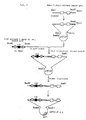
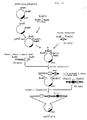
- the resulting plasmid was further cleaved with the restriction enzyme HindIII and to the cleaved site was ligated a HindIII-HindIII DNA fragment of 3.6 kb containing a mouse ⁇ chain promoter region and a mouse V ⁇ gene to construct pSV2′- ⁇ (Fig. 10).
- pSV2- ⁇ 2 was also constructed using the human immunoglobulin H chain gene enhancer.
- a HindIII-HindIII DNA fragment of 3.6 kb containing a mouse ⁇ chain promoter region and a mouse V ⁇ gene was blunt-ended with T4-DNA polymerase at both termini and inserted into a HincII site of the pUC18 vector to convert the HindIII site at 5′ end of the mouse V ⁇ gene fragment 5′ end into an EcoRI site.
- the EcoRI site at 3′ end of an EcoRI-EcoRI DNA fragment of 2.6 kb containing the human C ⁇ gene was converted into a HindIII site.
- Example 7 Construction of plasmid pSV2′- ⁇ 1 ⁇ containing a gene coding for mouse-human chimeric H chain having anti-HIV activity and a gene coding for mouse-human chimeric L chain
- pSV2′- ⁇ DNA was partially digested with the restriction enzyme BamHI and DNA fragments where only one of the two BamHI sites was cleaved were isolated by means of agarose gel electrophoresis.
- pSV2- ⁇ 1 DNA was cleaved with the restriction enzyme BamHI and a DNA fragment containing a mouse-human chimeric H chain was isolated by means of agarose gel electrophoresis. The thus prepared two DNA fragments were ligated to each other with the Takara Ligation Kit.
- Example 8 Transformation of myeloma with plasmids pSV2- ⁇ 1, pSV2′- ⁇ and pSV2- ⁇ 2
- DNA of pSV2- ⁇ 1, pSV2′- ⁇ or pSV2- ⁇ 2 was introduced into a variety of myeloma cell lines such as P3X63Ag8.653 (ATCC CRL 1580), P3X63Ag8U ⁇ 1 (ATCC CRL 1597), P3/NS1/1-Ag4-1 (ATCC CRL 18) and Sp2/0-Ag12 (ATCC CRL 1581) strains [Kohler et al., Nature, 256 , 495 (1975); Kohler et al., Eur. J. Immunol., 6 , 292 (1976)] by the DEAE-dextran method to carry out transformation.
- P3X63Ag8.653 ATCC CRL 1580
- P3X63Ag8U ⁇ 1 ATCC CRL 1597
- P3/NS1/1-Ag4-1 ATCC CRL 18
- Sp2/0-Ag12 ATCC CRL 1581
- the myeloma cells were washed with DMEM medium not containing fetal calf serum (FCS) for several times and thereafter the cells (1 X 10⁸) were suspended in DMEM 2.5 ml) containing 90 ⁇ g of pSV2- ⁇ 1, pSV2′- ⁇ or pSV2- ⁇ 2 plasmid DNA and 200 ⁇ g/ml of DEAE-dextran (Pharmacia) for 30 minutes. After the cells were washed with DMEM not containing FCS for several times, they were suspended in RPMI-1640 medium containing 10 % FCS and transferred to 24-well plate so that each well receives 1 ml containing 5 X 10⁵ cells, followed by culture for 48 hours.
- FCS fetal calf serum
- the culture medium was replaced with RPMI-1640 medium containing 6.5 ⁇ g/ml of mycophenolic acid (Sigma Chemical), 250 ⁇ g of xanthin (Sigma Chemical) and 10 % FCS in case that pSV2- ⁇ 1 DNA was introduced, or with RPMI-1640 medium containing 1.5 mg/ml of Geneticin (Sigma Chemical) and 10 % FCS in case that pSV2′- ⁇ or pSV2- ⁇ 2 DNA was introduced, and the transformed cells were screened.
- RPMI-1640 medium containing 6.5 ⁇ g/ml of mycophenolic acid (Sigma Chemical), 250 ⁇ g of xanthin (Sigma Chemical) and 10 % FCS in case that pSV2- ⁇ 1 DNA was introduced, or with RPMI-1640 medium containing 1.5 mg/ml of Geneticin (Sigma Chemical) and 10 % FCS in case that pSV2′- ⁇ or pSV2- ⁇ 2 DNA was introduced, and the transformed cells were screened.
- the transformed cells were fixed on a slide, treated with acetone-ethanol (1:1), and stained with FITC (fluorescein isothiocyanate)-labelled goat anti-human IgG antibody ( ⁇ chain specificity or ⁇ chain specificity: Cappel Lab. Inc.) to screen transformant cells having strong and specific fluorescence in cytoplasm, and as a result, establish cells where the introduced DNA is highly expressed to give human ⁇ 1 chain or human ⁇ chain.
- FITC fluorescein isothiocyanate
- pSV2′- ⁇ or pSV2- ⁇ DNA was further introduced into the cells transformed with pSV2- ⁇ 1 DNA, and pSV2- ⁇ 1 DNA was further introduced into cells transformed with pSV2′- ⁇ or pSV2- ⁇ 2 DNA in the same manner as described hereinabove to give sequentially transformed cells.
- an ELISA was carried out with use of anti-human IgG antibody (Cappel Lab. Inc.). That is, the culture supernatant of the sequentially transformed cells was added to a plastic plate (Falcon 3912) coated with anti-human IgG antibody (Cappel Lab. Inc.), reacted with peroxidase-conjugated goat anti-human IgG (Cappel Lab Inc.) and developed with TMBZ (3.3′.5.5′-tetramethylbenzidine: Dojin Kagaku K.K.) to screen and establish chimeric antibody-producing cells.
- Cappel Lab. Inc. anti-human IgG antibody
- TMBZ 3.3′.5.5′-tetramethylbenzidine: Dojin Kagaku K.K.
- DNA of pSV2′- ⁇ 1 ⁇ was introduced into a variety of myeloma cell lines such as P3X63Ag8 ⁇ 653 (ATCC CRL 1580), P3X63Ag8 ⁇ U1 (ATCC CRL 1597), P3/NS1/1-Ag4-1 (ATCC CRL 18) and Sp2/0-Ag12 (ATCC CRL 1581) strains [Kohler et al., Nature, 256 , 495 (1975); Kohler et al., Eur. J. Immunol., 6 , 292 (1976)] by DEAE-dextran method to carry out transformation.
- P3X63Ag8 ⁇ 653 ATCC CRL 1580
- P3X63Ag8 ⁇ U1 ATCC CRL 1597
- P3/NS1/1-Ag4-1 ATCC CRL 18
- Sp2/0-Ag12 ATCC CRL 1581
- the myeloma cells were washed with DMEM medium not containing FCS for several times and thereafter the cells (1 X 10⁸) were suspended in DMEM (2.5 ml) containing 90 ⁇ g of DNA and 200 ⁇ g/ml of DEAE-dextran (Pharmacia) for 30 minutes. After the cells were washed with DMEM not containing FCS for several times, they were suspended in RPMI-1640 medium containing 10 % FCS and transferred to 24-well plate so that each well receives 1 ml containing 5 X 10⁵ cells, followed by culture for 48 hours. Thereafter, the culture medium was replaced with RPMI-1640 medium containing 1.5 mg/ml of Geneticin (Sigma Chemical) and 10 % FCS, and transformed cells were screened.
- an ELISA was carried out with use of anti-human IgG antibody (Cappel Lab. Inc.). That is, to the plastic plate (Falcon 3912) coated with anti-human IgG antibody (Cappel Lab. Inc.) were added the culture supernatant of the transformed cells, peroxidase-conjugated goat anti-human IgG (Cappel lab Inc.) for reaction and TMBZ for development to screen and establish chimeric antibody-producing cells.
- Example 10 Expression of gene coding for anti-HIV chimeric antibody
- the chimeric antibody produced by the chimeric antibody-producing cell has a specificity against gp120, and that the H chain and L chain thereof are similar to those derived from human. Further, the amount of the expressed chimeric antibody was estimated by calibration using human polyclonal IgG, and as a result, it was confirmed that 1 X 10⁷ cells produced the anti-HIV chimeric antibody in 10 ml of culture supernatant in a range of about 0.5 to 5 ⁇ g/ml.
- mRNA of the chimeric (C ⁇ 1) antibody was normally produced.
- mRNA was extracted from the C ⁇ 1 antibody-producing cell and its parent cell P3X63Ag8 ⁇ 653 (P3 ⁇ 653).
- Northern blotting analysis was carried out by using the 0.5 ⁇ VH gene (gH11), the 0.5 ⁇ V ⁇ gene (gL41), the human C ⁇ 1 chain gene and the human C ⁇ chain gene as a probe.
- a band at about 1.8 kb was detected with the 0.5 ⁇ VH and human C ⁇ 1 probes as to H chain while a band at about 1.3 kb was detected with the 0.5 ⁇ V ⁇ and human C ⁇ probe as to L chain, as shown in Fig. 13.
- This suggested that the chimeric antibody was made chimeric in a mRNA step.
- C ⁇ 1 antibody or normal human IgG antibody was subjected to SDS-PAGE (sodium dodecyl sulfate-polyacrylamide gel electrophoresis analysis in the presence or absence of 2ME and transferred to nitrocellulose filter (Bio Rad).
- SDS-PAGE sodium dodecyl sulfate-polyacrylamide gel electrophoresis analysis in the presence or absence of 2ME and transferred to nitrocellulose filter (Bio Rad).
- the filter was incubated with goat anti-human IgG (H+L) antibody (Cappel Lab. Inc.) for reaction, peroxidase-conjugated anti-goat IgG antibody (Cappel Lab. Inc.) and HRP Color Development Reagent (Bio Rad) for development.
- the chimeric C ⁇ 1 antibody had a specificity against gp120 of HIV like the mouse 0.5 ⁇ antibody having a specificity against gp120 of HIV by Western blotting analysis using HIV particles.
- the HIV particles were solubilized, subjected to SDS-PAGE and transferred to a nitrocellulose filter in the same manner as mentioned above.
- This filter was incubated with mouse 0.5 ⁇ antibody, C ⁇ 1 antibody, normal human serum or human HIV positive serum for reaction, peroxidase-conjugated anti-mouse IgG antibody (Cappel Lab. Inc.) in case of mouse 0.5 ⁇ antibody or peroxidase-conjugated human IgG antibody (Cappel Lab.
- the C ⁇ 1 antibody did react with HIV-infected cells.
- the C ⁇ 1 antibody was incubated with HIV-infected H9 cells and analysis was made with facster (Becton Deckinson). As shown in Fig. 16, the C ⁇ 1 antibody had a shifted fluorescent strength as compared to that of normal human IgG, proving that the C ⁇ 1 antibody recognized the gp120 antigen on the HIV-infected H9 cells.
- the HIV neutralizing activity of the C ⁇ 1 antibody was evaluated.
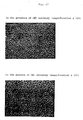
- syncytium formation inhibiting activity of the C ⁇ 1 antibody was evaluated by using syncytium formation system of HIV-infected cells. That is, when LAV1-infected CEM cells (ATCC CCL119) were previously treated with the C ⁇ 1 antibody and incubated with uninfected CEM cells to culture together, syncytium formation was inhibited by 100 % as shown in Fig. 17, though the syncytium formation was usually observed 24 hours after LAV1-infected CEM cells were incubated with uninfected CEM cells to culture together. Therefore, the C ⁇ 1 antibody was expected to have an activity to inhibit a cell-to-cell infection.
- the C ⁇ 1 antibody was then evaluated for its activity to inhibit cell-free HIV particle infection. That is, a giant cell formation was observed as a consequence of the LAV1 infection when MT4 cells were infected with HIV (LAV1) particles and cultured for 3 days. A giant cell formation was not observed. In other words, LAV infection did not occur, when LAV was previously treated with the C ⁇ 1 antibody (Fig. 18). Furthermore, an indirect flurescent antibody technique using the anti-P24 monoclonal antibody (Cellular Products) was conducted to detect infected cells, but an expression of the P24 antigen was not observed. Consequently, the C ⁇ 1 antibody appears to have an activity to inhibit HIV particle infection. From the above two results, the C ⁇ 1 antibody appears to have HIV neutralizing activity.
- the transformant cell of the present invention produced the mouse-human chimeric antibody, comprising the mouse 0.5 ⁇ antibody variable region (VH, V ⁇ ) capable of specifically binding to the HIV external envelope gp120 glycoprotein and the constant region of the human IgG antibody (C ⁇ 1, C ⁇ ), in the form of an intact immunoglobulin (H2L2).
Landscapes
- Health & Medical Sciences (AREA)
- Life Sciences & Earth Sciences (AREA)
- Chemical & Material Sciences (AREA)
- Virology (AREA)
- Organic Chemistry (AREA)
- Medicinal Chemistry (AREA)
- General Health & Medical Sciences (AREA)
- Animal Behavior & Ethology (AREA)
- Immunology (AREA)
- Nuclear Medicine, Radiotherapy & Molecular Imaging (AREA)
- Chemical Kinetics & Catalysis (AREA)
- Pharmacology & Pharmacy (AREA)
- Oncology (AREA)
- Communicable Diseases (AREA)
- Public Health (AREA)
- Veterinary Medicine (AREA)
- General Chemical & Material Sciences (AREA)
- Biochemistry (AREA)
- Biophysics (AREA)
- Genetics & Genomics (AREA)
- Molecular Biology (AREA)
- Proteomics, Peptides & Aminoacids (AREA)
- Preparation Of Compounds By Using Micro-Organisms (AREA)
- Medicines Containing Antibodies Or Antigens For Use As Internal Diagnostic Agents (AREA)
- Peptides Or Proteins (AREA)
- Micro-Organisms Or Cultivation Processes Thereof (AREA)
Priority Applications (1)
| Application Number | Priority Date | Filing Date | Title |
|---|---|---|---|
| AT89101583T ATE92102T1 (de) | 1988-01-30 | 1989-01-30 | Genfragmente, die die variable region eines anti- hiv-antikoerpers codieren, von diesen exprimierte chimaere anti-hiv-antikoerper und verfahren zu deren herstellung. |
Applications Claiming Priority (4)
| Application Number | Priority Date | Filing Date | Title |
|---|---|---|---|
| JP20255/88 | 1988-01-30 | ||
| JP2025588 | 1988-01-30 | ||
| JP171385/88 | 1988-07-08 | ||
| JP63171385A JP2646007B2 (ja) | 1988-01-30 | 1988-07-08 | 抗hiv抗体可変領域をコードする遺伝子断片およびこれらを用いて発現された抗hivキメラ抗体ならびにその製法 |
Publications (3)
| Publication Number | Publication Date |
|---|---|
| EP0327000A2 true EP0327000A2 (fr) | 1989-08-09 |
| EP0327000A3 EP0327000A3 (en) | 1990-05-30 |
| EP0327000B1 EP0327000B1 (fr) | 1993-07-28 |
Family
ID=26357160
Family Applications (1)
| Application Number | Title | Priority Date | Filing Date |
|---|---|---|---|
| EP89101583A Expired - Lifetime EP0327000B1 (fr) | 1988-01-30 | 1989-01-30 | Fragments de gènes codant pour la région variable d'un anticorps anti-HIV, anticorps chimériques anti-HIV exprimés lors de leur utilisation et procédé pour leur préparation |
Country Status (5)
| Country | Link |
|---|---|
| EP (1) | EP0327000B1 (fr) |
| JP (1) | JP2646007B2 (fr) |
| AU (1) | AU613699B2 (fr) |
| DE (1) | DE68907735T2 (fr) |
| ES (1) | ES2059577T3 (fr) |
Cited By (12)
| Publication number | Priority date | Publication date | Assignee | Title |
|---|---|---|---|---|
| EP0453561A4 (en) * | 1989-11-13 | 1993-02-10 | Xoma Corporation | Chimeric mouse human antibodies with specificity to hiv antigens |
| EP0453554A4 (en) * | 1989-11-13 | 1993-02-17 | Xoma Corporation | Chimeric mouse human antibodies with specificity to hiv antigens |
| EP0699755A2 (fr) | 1994-06-30 | 1996-03-06 | Centro de Inmunologia Molecular | Procédé pour obtenir des immunoglobulines modifiées avec une immunogénicité réduite des domaines variables d'un anticorps murin, compositions les contenant |
| US5773247A (en) * | 1993-01-14 | 1998-06-30 | Juridical Foundation The Chemo-Sero-Therapeutic Research Institute | Recombinant anti-HIV antibody and process for preparing the same |
| US5914110A (en) * | 1993-09-07 | 1999-06-22 | Smithkline Beecham Corporation | Recombinant IL4 antibodies useful in treatment of IL4 mediated disorders |
| US5928904A (en) * | 1993-09-07 | 1999-07-27 | Smithkline Beecham Corporation | DNA encoding recombinant IL4 antibodies useful in treatment of IL4 mediated disorders |
| EP0730609A4 (fr) * | 1993-09-07 | 2000-05-10 | Smithkline Beecham Corp | Anticorps recombines contre l'il4 utiles dans le traitement des affections induites par l'il4 |
| US6719971B1 (en) | 1991-06-14 | 2004-04-13 | Genentech, Inc. | Method for making humanized antibodies |
| US6797492B2 (en) | 1991-05-17 | 2004-09-28 | Merck & Co., Inc. | Method for reducing the immunogenicity of antibody variable domains |
| US6800738B1 (en) | 1991-06-14 | 2004-10-05 | Genentech, Inc. | Method for making humanized antibodies |
| US7098006B1 (en) | 1990-09-17 | 2006-08-29 | Burroughs Wellcome Co. | Chimeric antibody, pharmaceutical composition and process of its production |
| US7807793B2 (en) | 1993-09-07 | 2010-10-05 | Glaxosmithkline Llc | Recombinant IL4 antibodies useful in treatment of IL4 mediated disorders |
Families Citing this family (1)
| Publication number | Priority date | Publication date | Assignee | Title |
|---|---|---|---|---|
| EP0365209A3 (fr) * | 1988-10-17 | 1990-07-25 | Becton, Dickinson and Company | Séquence aminoacidique de l'anti-leu 3a |
Citations (2)
| Publication number | Priority date | Publication date | Assignee | Title |
|---|---|---|---|---|
| JPS60155132A (ja) | 1983-04-08 | 1985-08-15 | ジエネンテツク・インコ−ポレイテツド | 組換免疫グロブリン |
| JPS6147500A (ja) | 1984-08-15 | 1986-03-07 | Res Dev Corp Of Japan | キメラモノクロ−ナル抗体及びその製造法 |
Family Cites Families (1)
| Publication number | Priority date | Publication date | Assignee | Title |
|---|---|---|---|---|
| DE3853779T2 (de) * | 1987-05-29 | 1995-09-07 | Baylor College Medicine | Hiv-1 neutralisierende monoklonale antikörper. |
-
1988
- 1988-07-08 JP JP63171385A patent/JP2646007B2/ja not_active Expired - Fee Related
-
1989
- 1989-01-30 DE DE89101583T patent/DE68907735T2/de not_active Expired - Fee Related
- 1989-01-30 ES ES89101583T patent/ES2059577T3/es not_active Expired - Lifetime
- 1989-01-30 EP EP89101583A patent/EP0327000B1/fr not_active Expired - Lifetime
- 1989-01-31 AU AU28954/89A patent/AU613699B2/en not_active Ceased
Patent Citations (2)
| Publication number | Priority date | Publication date | Assignee | Title |
|---|---|---|---|---|
| JPS60155132A (ja) | 1983-04-08 | 1985-08-15 | ジエネンテツク・インコ−ポレイテツド | 組換免疫グロブリン |
| JPS6147500A (ja) | 1984-08-15 | 1986-03-07 | Res Dev Corp Of Japan | キメラモノクロ−ナル抗体及びその製造法 |
Non-Patent Citations (40)
| Title |
|---|
| "Chemistry of Proteins", 1987, BIOCHEMICAL SOCIETY OF JAPAN, article "Zoku Seikagaku Jikken Koza", pages: 313 |
| "DNA cloning", vol. I, 1985, IRL PRESS |
| A. C. HAYDAY ET AL., NATURE, vol. 307, 1984, pages 334 |
| BARRE-SINOUSSI ET AL., SCIENCE, vol. 220, 1983, pages 868 |
| BOULIANNE ET AL., NATURE, vol. 312, 1984, pages 643 |
| C. QUEEN ET AL., CELL, vol. 33, 1983, pages 741 |
| CARROLL EZZELL, NATURE, vol. 326, 1987, pages 430 |
| E. E. MAX ET AL., J. BIOL. CHEM., vol. 256, 1981, pages 5116 |
| HO ET AL., J. VIROLOGY, vol. 61, 1987, pages 2024 |
| HONJO ET AL., CELL, vol. 18, 1979, pages 559 |
| J. BANERJI ET AL., CELL, vol. 33, 1983, pages 729 |
| J. M. CHIRGWIN ET AL., BIOCHEMISTRY, vol. 18, 1979, pages 5294 |
| J. M. ELLISON ET AL., NUC. ACIDS. RES., vol. 10, 1982, pages 4071 |
| KOHLER ET AL., EUR. J. IMMUNOL., vol. 6, 1976, pages 292 |
| KOHLER ET AL., NATURE, vol. 256, 1975, pages 495 |
| KUDO ET AL., GENE, vol. 33, 1985, pages 181 |
| L. EMORINE ET AL., NATURE, vol. 304, 1983, pages 447 |
| M. THOMAS; R. W. DAVIS, J. MOL. BIOL., vol. 91, 1974, pages 315 |
| MATSUSHITA ET AL., J. VIROLOGY, vol. 62, 1988, pages 2107 |
| MORRISON ET AL., PROC. NATL. ACAD. SCI. USA, vol. 81, 1984, pages 6851 |
| MULLIGAN ET AL., P.N.A.S. USA, vol. 78, 1981, pages 2027 |
| NEUBERGER ET AL., NATURE, vol. 312, 1984, pages 604 |
| NISHIMURA ET AL., CANCER RES., vol. 47, 1987, pages 999 |
| NUC. ACIDS. RES., vol. 3, 1976, pages 2303 |
| P. A. HEITER ET AL., CELL, vol. 22, 1980, pages 197 |
| P. J. SOUTHERN ET AL., J. MOL. APPL. GENET., vol. 1, 1982, pages 327 |
| POPOVIC ET AL., SCIENCE, vol. 224, 1984, pages 497 |
| R. C. MULLIGAN ET AL., P.N.A.S. USA, vol. 78, 1981, pages 2072 |
| R. GURCFF ET AL., PEDIATRIC RESEARCH |
| R. GUROFF ET AL., J. IMMUNOL., vol. 138, 1987, pages 3731 |
| ROBERT-GUROFF ET AL., J. EXP. MED., vol. 154, 1981, pages 1957 |
| S. D. GILLIES ET AL., CELL, vol. 33, 1983, pages 717 |
| SAKANO ET AL., NATURE, vol. 286, 1980, pages 676 |
| SALK, J., NATURE, vol. 327, 1987, pages 473 |
| SHUZO MATSUSHITA ET AL., MEDICAL IMMUNOLOGY, vol. 3, 1987, pages 14 |
| SUSUMU TONEGAWA, NATURE, vol. 307, 1983, pages 575 |
| T. MANIATIS ET AL., MOLECULAR CLONING |
| T. MANIATIS ET AL.: "Molecular Cloning", 1982, COLD SPRING HARBOR LAB. |
| TASUKU HONJO, ANNUAL REV. IMMUNOL., vol. 1, 1983, pages 499 |
| W. D. BENTON; R. W. DAVIS, SCIENCE, vol. 196, 1977, pages 180 |
Cited By (15)
| Publication number | Priority date | Publication date | Assignee | Title |
|---|---|---|---|---|
| EP0453554A4 (en) * | 1989-11-13 | 1993-02-17 | Xoma Corporation | Chimeric mouse human antibodies with specificity to hiv antigens |
| EP0453561A4 (en) * | 1989-11-13 | 1993-02-10 | Xoma Corporation | Chimeric mouse human antibodies with specificity to hiv antigens |
| USRE46877E1 (en) | 1990-09-17 | 2018-05-29 | Btg International Limited | Altered antibodies and their preparation |
| USRE43898E1 (en) | 1990-09-17 | 2013-01-01 | Glaxo Wellcome Inc. Research | Altered antibodies and their preparation |
| US7098006B1 (en) | 1990-09-17 | 2006-08-29 | Burroughs Wellcome Co. | Chimeric antibody, pharmaceutical composition and process of its production |
| US6797492B2 (en) | 1991-05-17 | 2004-09-28 | Merck & Co., Inc. | Method for reducing the immunogenicity of antibody variable domains |
| US6800738B1 (en) | 1991-06-14 | 2004-10-05 | Genentech, Inc. | Method for making humanized antibodies |
| US8075890B2 (en) | 1991-06-14 | 2011-12-13 | Genentech, Inc. | Method for making humanized antibodies |
| US6719971B1 (en) | 1991-06-14 | 2004-04-13 | Genentech, Inc. | Method for making humanized antibodies |
| US5773247A (en) * | 1993-01-14 | 1998-06-30 | Juridical Foundation The Chemo-Sero-Therapeutic Research Institute | Recombinant anti-HIV antibody and process for preparing the same |
| EP0730609A4 (fr) * | 1993-09-07 | 2000-05-10 | Smithkline Beecham Corp | Anticorps recombines contre l'il4 utiles dans le traitement des affections induites par l'il4 |
| US7807793B2 (en) | 1993-09-07 | 2010-10-05 | Glaxosmithkline Llc | Recombinant IL4 antibodies useful in treatment of IL4 mediated disorders |
| US5928904A (en) * | 1993-09-07 | 1999-07-27 | Smithkline Beecham Corporation | DNA encoding recombinant IL4 antibodies useful in treatment of IL4 mediated disorders |
| US5914110A (en) * | 1993-09-07 | 1999-06-22 | Smithkline Beecham Corporation | Recombinant IL4 antibodies useful in treatment of IL4 mediated disorders |
| EP0699755A2 (fr) | 1994-06-30 | 1996-03-06 | Centro de Inmunologia Molecular | Procédé pour obtenir des immunoglobulines modifiées avec une immunogénicité réduite des domaines variables d'un anticorps murin, compositions les contenant |
Also Published As
| Publication number | Publication date |
|---|---|
| ES2059577T3 (es) | 1994-11-16 |
| DE68907735D1 (de) | 1993-09-02 |
| DE68907735T2 (de) | 1994-01-05 |
| AU613699B2 (en) | 1991-08-08 |
| EP0327000B1 (fr) | 1993-07-28 |
| AU2895489A (en) | 1989-08-10 |
| JP2646007B2 (ja) | 1997-08-25 |
| JPH022352A (ja) | 1990-01-08 |
| EP0327000A3 (en) | 1990-05-30 |
Similar Documents
| Publication | Publication Date | Title |
|---|---|---|
| EP0690132B1 (fr) | Anticorps monoclonal dirige contre le vih | |
| US7223844B2 (en) | Broadly cross-reactive neutralizing antibodies against human immunodeficiency virus selected by Env-CD4-co-receptor complexes | |
| US5607847A (en) | Recombinant human anti-human immunodeficiency virus antibody | |
| JPWO1994020632A1 (ja) | 抗hivモノクローナル抗体 | |
| JPH08503121A (ja) | 中和反応性ヒト抗−gp120組換え抗体、それをコードするdnaおよびその使用 | |
| EP0327000B1 (fr) | Fragments de gènes codant pour la région variable d'un anticorps anti-HIV, anticorps chimériques anti-HIV exprimés lors de leur utilisation et procédé pour leur préparation | |
| EP0678523B1 (fr) | Anticorps anti-vih recombine et sa preparation | |
| EP0577243A2 (fr) | Anticorps monoclonaux recombinants, neutralisant le HIV pour la prévention et traitement des infections du HIV | |
| JPH06503970A (ja) | Hiv免疫療法 | |
| WO1994028933A1 (fr) | Anticorps monoclonaux humains a double specificite, specifiques contre le virus de l'immunodeficience humaine | |
| US6657050B1 (en) | Chimeric viral-neutralizing immunoglobulins | |
| EP0453554A1 (fr) | Anticorps murins humains chimeriques a specificite aux antigenes du vih | |
| EP0453561A1 (fr) | Anticorps murins humains chimeriques a specificite aux antigenes du vih | |
| Matsushita et al. | Characterization of a mouse/human chimeric monoclonal antibody (Cβ1) to a principal neutralizing domain of the human immunodeficiency virus type 1 envelope protein | |
| Takeda et al. | Two-phase approach for the expression of high-affinity human anti-human immunodeficiency virus immunoglobulin Fab domains in Escherichia coli | |
| RU2134724C1 (ru) | Гуманизированное антитело и способ его получения, полинуклеотид (варианты), гибридомная клеточная линия (варианты) | |
| Major et al. | Construction and characterization of chimeric and humanized forms of a broadly neutralizing monoclonal antibody to HIV-1 | |
| Shankar et al. | A chimeric antibody to varicella-zoster virus glycoprotein e | |
| DE69330280T2 (de) | Immuntherapeutika gegen hiv | |
| CA2157874C (fr) | Anticorps monoclonal anti-vih | |
| AU644811B2 (en) | Chimeric HIV-1-neutralizing immunoglobulins | |
| KR100266554B1 (ko) | 재조합항-hiv항체및그의제조방법 | |
| KR100282576B1 (ko) | 사람 면역 결핍 바이러스 면역치료제 | |
| WO1992001719A1 (fr) | Immunoglobulines chimeriques netralisant le hiv-1 |
Legal Events
| Date | Code | Title | Description |
|---|---|---|---|
| PUAI | Public reference made under article 153(3) epc to a published international application that has entered the european phase |
Free format text: ORIGINAL CODE: 0009012 |
|
| AK | Designated contracting states |
Kind code of ref document: A2 Designated state(s): AT BE CH DE ES FR GB GR IT LI LU NL SE |
|
| PUAL | Search report despatched |
Free format text: ORIGINAL CODE: 0009013 |
|
| AK | Designated contracting states |
Kind code of ref document: A3 Designated state(s): AT BE CH DE ES FR GB GR IT LI LU NL SE |
|
| 17P | Request for examination filed |
Effective date: 19901116 |
|
| 17Q | First examination report despatched |
Effective date: 19910927 |
|
| GRAA | (expected) grant |
Free format text: ORIGINAL CODE: 0009210 |
|
| AK | Designated contracting states |
Kind code of ref document: B1 Designated state(s): AT BE CH DE ES FR GB GR IT LI LU NL SE |
|
| REF | Corresponds to: |
Ref document number: 92102 Country of ref document: AT Date of ref document: 19930815 Kind code of ref document: T |
|
| ITF | It: translation for a ep patent filed | ||
| REF | Corresponds to: |
Ref document number: 68907735 Country of ref document: DE Date of ref document: 19930902 |
|
| REG | Reference to a national code |
Ref country code: GR Ref legal event code: FG4A Free format text: 3008752 |
|
| ET | Fr: translation filed | ||
| EPTA | Lu: last paid annual fee | ||
| PLBE | No opposition filed within time limit |
Free format text: ORIGINAL CODE: 0009261 |
|
| STAA | Information on the status of an ep patent application or granted ep patent |
Free format text: STATUS: NO OPPOSITION FILED WITHIN TIME LIMIT |
|
| 26N | No opposition filed | ||
| REG | Reference to a national code |
Ref country code: ES Ref legal event code: FG2A Ref document number: 2059577 Country of ref document: ES Kind code of ref document: T3 |
|
| EAL | Se: european patent in force in sweden |
Ref document number: 89101583.6 |
|
| REG | Reference to a national code |
Ref country code: GB Ref legal event code: IF02 |
|
| PGFP | Annual fee paid to national office [announced via postgrant information from national office to epo] |
Ref country code: GR Payment date: 20051130 Year of fee payment: 18 |
|
| PGFP | Annual fee paid to national office [announced via postgrant information from national office to epo] |
Ref country code: BE Payment date: 20051220 Year of fee payment: 18 |
|
| PGFP | Annual fee paid to national office [announced via postgrant information from national office to epo] |
Ref country code: SE Payment date: 20060105 Year of fee payment: 18 |
|
| PGFP | Annual fee paid to national office [announced via postgrant information from national office to epo] |
Ref country code: LU Payment date: 20060118 Year of fee payment: 18 |
|
| PGFP | Annual fee paid to national office [announced via postgrant information from national office to epo] |
Ref country code: GB Payment date: 20060120 Year of fee payment: 18 |
|
| PGFP | Annual fee paid to national office [announced via postgrant information from national office to epo] |
Ref country code: FR Payment date: 20060125 Year of fee payment: 18 Ref country code: AT Payment date: 20060125 Year of fee payment: 18 |
|
| PGFP | Annual fee paid to national office [announced via postgrant information from national office to epo] |
Ref country code: IT Payment date: 20060131 Year of fee payment: 18 Ref country code: ES Payment date: 20060131 Year of fee payment: 18 Ref country code: NL Payment date: 20060131 Year of fee payment: 18 |
|
| PGFP | Annual fee paid to national office [announced via postgrant information from national office to epo] |
Ref country code: CH Payment date: 20060201 Year of fee payment: 18 |
|
| PGFP | Annual fee paid to national office [announced via postgrant information from national office to epo] |
Ref country code: DE Payment date: 20060228 Year of fee payment: 18 |
|
| PG25 | Lapsed in a contracting state [announced via postgrant information from national office to epo] |
Ref country code: LI Free format text: LAPSE BECAUSE OF NON-PAYMENT OF DUE FEES Effective date: 20070131 Ref country code: CH Free format text: LAPSE BECAUSE OF NON-PAYMENT OF DUE FEES Effective date: 20070131 Ref country code: SE Free format text: LAPSE BECAUSE OF NON-PAYMENT OF DUE FEES Effective date: 20070131 |
|
| PG25 | Lapsed in a contracting state [announced via postgrant information from national office to epo] |
Ref country code: DE Free format text: LAPSE BECAUSE OF NON-PAYMENT OF DUE FEES Effective date: 20070801 |
|
| REG | Reference to a national code |
Ref country code: CH Ref legal event code: PL |
|
| EUG | Se: european patent has lapsed | ||
| GBPC | Gb: european patent ceased through non-payment of renewal fee |
Effective date: 20070130 |
|
| NLV4 | Nl: lapsed or anulled due to non-payment of the annual fee |
Effective date: 20070801 |
|
| REG | Reference to a national code |
Ref country code: FR Ref legal event code: ST Effective date: 20070930 |
|
| PG25 | Lapsed in a contracting state [announced via postgrant information from national office to epo] |
Ref country code: AT Free format text: LAPSE BECAUSE OF NON-PAYMENT OF DUE FEES Effective date: 20070130 Ref country code: GB Free format text: LAPSE BECAUSE OF NON-PAYMENT OF DUE FEES Effective date: 20070130 |
|
| BERE | Be: lapsed |
Owner name: JURIDICAL FOUNDATION THE *CHEMO-SERO-THERAPEUTIC R Effective date: 20070131 |
|
| PG25 | Lapsed in a contracting state [announced via postgrant information from national office to epo] |
Ref country code: BE Free format text: LAPSE BECAUSE OF NON-PAYMENT OF DUE FEES Effective date: 20070131 |
|
| PG25 | Lapsed in a contracting state [announced via postgrant information from national office to epo] |
Ref country code: NL Free format text: LAPSE BECAUSE OF NON-PAYMENT OF DUE FEES Effective date: 20070801 |
|
| REG | Reference to a national code |
Ref country code: ES Ref legal event code: FD2A Effective date: 20070131 |
|
| PG25 | Lapsed in a contracting state [announced via postgrant information from national office to epo] |
Ref country code: FR Free format text: LAPSE BECAUSE OF NON-PAYMENT OF DUE FEES Effective date: 20070131 |
|
| PG25 | Lapsed in a contracting state [announced via postgrant information from national office to epo] |
Ref country code: ES Free format text: LAPSE BECAUSE OF NON-PAYMENT OF DUE FEES Effective date: 20070131 |
|
| PG25 | Lapsed in a contracting state [announced via postgrant information from national office to epo] |
Ref country code: GR Free format text: LAPSE BECAUSE OF NON-PAYMENT OF DUE FEES Effective date: 20070802 |
|
| PG25 | Lapsed in a contracting state [announced via postgrant information from national office to epo] |
Ref country code: LU Free format text: LAPSE BECAUSE OF NON-PAYMENT OF DUE FEES Effective date: 20070130 |
|
| PG25 | Lapsed in a contracting state [announced via postgrant information from national office to epo] |
Ref country code: IT Free format text: LAPSE BECAUSE OF NON-PAYMENT OF DUE FEES Effective date: 20070130 |