EP0328280A1 - Verfahren zur Herstellung von Nitrilen und Oxiden - Google Patents
Verfahren zur Herstellung von Nitrilen und Oxiden Download PDFInfo
- Publication number
- EP0328280A1 EP0328280A1 EP89300853A EP89300853A EP0328280A1 EP 0328280 A1 EP0328280 A1 EP 0328280A1 EP 89300853 A EP89300853 A EP 89300853A EP 89300853 A EP89300853 A EP 89300853A EP 0328280 A1 EP0328280 A1 EP 0328280A1
- Authority
- EP
- European Patent Office
- Prior art keywords
- reactor
- hydrogen
- oxygen
- stream
- alkene
- Prior art date
- Legal status (The legal status is an assumption and is not a legal conclusion. Google has not performed a legal analysis and makes no representation as to the accuracy of the status listed.)
- Ceased
Links
- 238000000034 method Methods 0.000 title claims abstract description 68
- 150000002825 nitriles Chemical class 0.000 title claims abstract description 18
- 238000004519 manufacturing process Methods 0.000 title claims abstract description 13
- ATUOYWHBWRKTHZ-UHFFFAOYSA-N Propane Chemical compound CCC ATUOYWHBWRKTHZ-UHFFFAOYSA-N 0.000 claims abstract description 72
- QVGXLLKOCUKJST-UHFFFAOYSA-N atomic oxygen Chemical compound [O] QVGXLLKOCUKJST-UHFFFAOYSA-N 0.000 claims abstract description 59
- 229910052760 oxygen Inorganic materials 0.000 claims abstract description 59
- 239000001301 oxygen Substances 0.000 claims abstract description 59
- 239000001257 hydrogen Substances 0.000 claims abstract description 47
- 229910052739 hydrogen Inorganic materials 0.000 claims abstract description 47
- UFHFLCQGNIYNRP-UHFFFAOYSA-N Hydrogen Chemical compound [H][H] UFHFLCQGNIYNRP-UHFFFAOYSA-N 0.000 claims abstract description 41
- 239000003054 catalyst Substances 0.000 claims abstract description 39
- 239000001294 propane Substances 0.000 claims abstract description 36
- 239000007789 gas Substances 0.000 claims abstract description 29
- 230000003647 oxidation Effects 0.000 claims abstract description 28
- 238000007254 oxidation reaction Methods 0.000 claims abstract description 28
- QGZKDVFQNNGYKY-UHFFFAOYSA-N Ammonia Chemical compound N QGZKDVFQNNGYKY-UHFFFAOYSA-N 0.000 claims abstract description 27
- 150000001336 alkenes Chemical class 0.000 claims abstract description 25
- 150000001335 aliphatic alkanes Chemical class 0.000 claims abstract description 18
- 238000001179 sorption measurement Methods 0.000 claims abstract description 18
- 238000010791 quenching Methods 0.000 claims abstract description 17
- 239000003463 adsorbent Substances 0.000 claims abstract description 16
- 229910021529 ammonia Inorganic materials 0.000 claims abstract description 14
- 238000006243 chemical reaction Methods 0.000 claims abstract description 11
- QQONPFPTGQHPMA-UHFFFAOYSA-N propylene Natural products CC=C QQONPFPTGQHPMA-UHFFFAOYSA-N 0.000 claims description 33
- 125000004805 propylene group Chemical group [H]C([H])([H])C([H])([*:1])C([H])([H])[*:2] 0.000 claims description 33
- NLHHRLWOUZZQLW-UHFFFAOYSA-N Acrylonitrile Chemical compound C=CC#N NLHHRLWOUZZQLW-UHFFFAOYSA-N 0.000 claims description 20
- IJGRMHOSHXDMSA-UHFFFAOYSA-N Atomic nitrogen Chemical compound N#N IJGRMHOSHXDMSA-UHFFFAOYSA-N 0.000 claims description 18
- 230000003197 catalytic effect Effects 0.000 claims description 10
- MYMOFIZGZYHOMD-UHFFFAOYSA-N Dioxygen Chemical compound O=O MYMOFIZGZYHOMD-UHFFFAOYSA-N 0.000 claims description 9
- 239000007792 gaseous phase Substances 0.000 claims description 9
- 229910052757 nitrogen Inorganic materials 0.000 claims description 9
- OTMSDBZUPAUEDD-UHFFFAOYSA-N Ethane Chemical group CC OTMSDBZUPAUEDD-UHFFFAOYSA-N 0.000 claims description 7
- VYPSYNLAJGMNEJ-UHFFFAOYSA-N Silicium dioxide Chemical group O=[Si]=O VYPSYNLAJGMNEJ-UHFFFAOYSA-N 0.000 claims description 7
- VGGSQFUCUMXWEO-UHFFFAOYSA-N Ethene Chemical compound C=C VGGSQFUCUMXWEO-UHFFFAOYSA-N 0.000 claims description 6
- 239000005977 Ethylene Substances 0.000 claims description 6
- 150000002431 hydrogen Chemical class 0.000 claims description 6
- 239000007791 liquid phase Substances 0.000 claims description 5
- 239000000741 silica gel Substances 0.000 claims description 5
- 229910002027 silica gel Inorganic materials 0.000 claims description 5
- IAYPIBMASNFSPL-UHFFFAOYSA-N Ethylene oxide Chemical compound C1CO1 IAYPIBMASNFSPL-UHFFFAOYSA-N 0.000 claims description 3
- 229910021536 Zeolite Inorganic materials 0.000 claims description 3
- HNPSIPDUKPIQMN-UHFFFAOYSA-N dioxosilane;oxo(oxoalumanyloxy)alumane Chemical compound O=[Si]=O.O=[Al]O[Al]=O HNPSIPDUKPIQMN-UHFFFAOYSA-N 0.000 claims description 3
- 238000010438 heat treatment Methods 0.000 claims description 3
- 239000007788 liquid Substances 0.000 claims description 3
- 239000002808 molecular sieve Substances 0.000 claims description 3
- URGAHOPLAPQHLN-UHFFFAOYSA-N sodium aluminosilicate Chemical compound [Na+].[Al+3].[O-][Si]([O-])=O.[O-][Si]([O-])=O URGAHOPLAPQHLN-UHFFFAOYSA-N 0.000 claims description 3
- 239000010457 zeolite Substances 0.000 claims description 3
- 230000000171 quenching effect Effects 0.000 claims description 2
- 238000011144 upstream manufacturing Methods 0.000 claims 5
- 239000003570 air Substances 0.000 abstract description 27
- 229930195733 hydrocarbon Natural products 0.000 abstract description 8
- 150000002430 hydrocarbons Chemical class 0.000 abstract description 8
- 239000000047 product Substances 0.000 description 19
- VNWKTOKETHGBQD-UHFFFAOYSA-N methane Chemical compound C VNWKTOKETHGBQD-UHFFFAOYSA-N 0.000 description 13
- WEVYAHXRMPXWCK-UHFFFAOYSA-N Acetonitrile Chemical compound CC#N WEVYAHXRMPXWCK-UHFFFAOYSA-N 0.000 description 11
- UGFAIRIUMAVXCW-UHFFFAOYSA-N Carbon monoxide Chemical compound [O+]#[C-] UGFAIRIUMAVXCW-UHFFFAOYSA-N 0.000 description 11
- 239000000203 mixture Substances 0.000 description 9
- CURLTUGMZLYLDI-UHFFFAOYSA-N Carbon dioxide Chemical compound O=C=O CURLTUGMZLYLDI-UHFFFAOYSA-N 0.000 description 8
- 229910002090 carbon oxide Inorganic materials 0.000 description 7
- 238000006356 dehydrogenation reaction Methods 0.000 description 7
- LELOWRISYMNNSU-UHFFFAOYSA-N hydrogen cyanide Chemical compound N#C LELOWRISYMNNSU-UHFFFAOYSA-N 0.000 description 6
- HGINCPLSRVDWNT-UHFFFAOYSA-N Acrolein Chemical compound C=CC=O HGINCPLSRVDWNT-UHFFFAOYSA-N 0.000 description 5
- 239000000463 material Substances 0.000 description 5
- 239000000376 reactant Substances 0.000 description 5
- XLYOFNOQVPJJNP-UHFFFAOYSA-N water Substances O XLYOFNOQVPJJNP-UHFFFAOYSA-N 0.000 description 5
- 239000006227 byproduct Substances 0.000 description 4
- 229910002092 carbon dioxide Inorganic materials 0.000 description 4
- 229910002091 carbon monoxide Inorganic materials 0.000 description 4
- 238000010586 diagram Methods 0.000 description 4
- BASFCYQUMIYNBI-UHFFFAOYSA-N platinum Chemical compound [Pt] BASFCYQUMIYNBI-UHFFFAOYSA-N 0.000 description 4
- 238000010926 purge Methods 0.000 description 4
- 230000008929 regeneration Effects 0.000 description 4
- 238000011069 regeneration method Methods 0.000 description 4
- 239000002699 waste material Substances 0.000 description 4
- 238000009825 accumulation Methods 0.000 description 3
- 239000001569 carbon dioxide Substances 0.000 description 3
- 125000004122 cyclic group Chemical group 0.000 description 3
- 239000012071 phase Substances 0.000 description 3
- 239000007858 starting material Substances 0.000 description 3
- 230000009286 beneficial effect Effects 0.000 description 2
- 229910052799 carbon Inorganic materials 0.000 description 2
- 238000002485 combustion reaction Methods 0.000 description 2
- 238000001816 cooling Methods 0.000 description 2
- NNPPMTNAJDCUHE-UHFFFAOYSA-N isobutane Chemical compound CC(C)C NNPPMTNAJDCUHE-UHFFFAOYSA-N 0.000 description 2
- 239000003345 natural gas Substances 0.000 description 2
- 229910000510 noble metal Inorganic materials 0.000 description 2
- 229910052697 platinum Inorganic materials 0.000 description 2
- 238000003303 reheating Methods 0.000 description 2
- OKTJSMMVPCPJKN-UHFFFAOYSA-N Carbon Chemical compound [C] OKTJSMMVPCPJKN-UHFFFAOYSA-N 0.000 description 1
- 239000004215 Carbon black (E152) Substances 0.000 description 1
- GYCMBHHDWRMZGG-UHFFFAOYSA-N Methylacrylonitrile Chemical compound CC(=C)C#N GYCMBHHDWRMZGG-UHFFFAOYSA-N 0.000 description 1
- SRMHXBZITDMFAA-UHFFFAOYSA-N [U].[Sb]=O Chemical compound [U].[Sb]=O SRMHXBZITDMFAA-UHFFFAOYSA-N 0.000 description 1
- 230000002411 adverse Effects 0.000 description 1
- PNEYBMLMFCGWSK-UHFFFAOYSA-N aluminium oxide Inorganic materials [O-2].[O-2].[O-2].[Al+3].[Al+3] PNEYBMLMFCGWSK-UHFFFAOYSA-N 0.000 description 1
- 239000007864 aqueous solution Substances 0.000 description 1
- 230000015572 biosynthetic process Effects 0.000 description 1
- YLSLSHTYFFBCKG-UHFFFAOYSA-N bismuth;oxomolybdenum Chemical compound [Mo].[Bi]=O YLSLSHTYFFBCKG-UHFFFAOYSA-N 0.000 description 1
- UBAZGMLMVVQSCD-UHFFFAOYSA-N carbon dioxide;molecular oxygen Chemical compound O=O.O=C=O UBAZGMLMVVQSCD-UHFFFAOYSA-N 0.000 description 1
- 150000001875 compounds Chemical class 0.000 description 1
- 238000007796 conventional method Methods 0.000 description 1
- 238000013461 design Methods 0.000 description 1
- 238000003795 desorption Methods 0.000 description 1
- 230000000694 effects Effects 0.000 description 1
- 239000008246 gaseous mixture Substances 0.000 description 1
- GVILRDNUHSXADM-UHFFFAOYSA-N iron;oxoantimony Chemical compound [Fe].[Sb]=O GVILRDNUHSXADM-UHFFFAOYSA-N 0.000 description 1
- 239000001282 iso-butane Substances 0.000 description 1
- 238000002156 mixing Methods 0.000 description 1
- 238000012986 modification Methods 0.000 description 1
- 230000004048 modification Effects 0.000 description 1
- QJGQUHMNIGDVPM-UHFFFAOYSA-N nitrogen group Chemical group [N] QJGQUHMNIGDVPM-UHFFFAOYSA-N 0.000 description 1
- 238000011084 recovery Methods 0.000 description 1
- 238000005057 refrigeration Methods 0.000 description 1
- 230000001105 regulatory effect Effects 0.000 description 1
- 230000000717 retained effect Effects 0.000 description 1
- 238000000926 separation method Methods 0.000 description 1
- 239000000377 silicon dioxide Substances 0.000 description 1
- 239000000243 solution Substances 0.000 description 1
- 238000003786 synthesis reaction Methods 0.000 description 1
- 238000013022 venting Methods 0.000 description 1
Images


Classifications
-
- B—PERFORMING OPERATIONS; TRANSPORTING
- B01—PHYSICAL OR CHEMICAL PROCESSES OR APPARATUS IN GENERAL
- B01D—SEPARATION
- B01D53/00—Separation of gases or vapours; Recovering vapours of volatile solvents from gases; Chemical or biological purification of waste gases, e.g. engine exhaust gases, smoke, fumes, flue gases, aerosols
- B01D53/02—Separation of gases or vapours; Recovering vapours of volatile solvents from gases; Chemical or biological purification of waste gases, e.g. engine exhaust gases, smoke, fumes, flue gases, aerosols by adsorption, e.g. preparative gas chromatography
- B01D53/04—Separation of gases or vapours; Recovering vapours of volatile solvents from gases; Chemical or biological purification of waste gases, e.g. engine exhaust gases, smoke, fumes, flue gases, aerosols by adsorption, e.g. preparative gas chromatography with stationary adsorbents
-
- C—CHEMISTRY; METALLURGY
- C07—ORGANIC CHEMISTRY
- C07C—ACYCLIC OR CARBOCYCLIC COMPOUNDS
- C07C253/00—Preparation of carboxylic acid nitriles
- C07C253/32—Separation; Purification; Stabilisation; Use of additives
- C07C253/34—Separation; Purification
-
- C—CHEMISTRY; METALLURGY
- C07—ORGANIC CHEMISTRY
- C07C—ACYCLIC OR CARBOCYCLIC COMPOUNDS
- C07C253/00—Preparation of carboxylic acid nitriles
- C07C253/24—Preparation of carboxylic acid nitriles by ammoxidation of hydrocarbons or substituted hydrocarbons
- C07C253/26—Preparation of carboxylic acid nitriles by ammoxidation of hydrocarbons or substituted hydrocarbons containing carbon-to-carbon multiple bonds, e.g. unsaturated aldehydes
-
- C—CHEMISTRY; METALLURGY
- C07—ORGANIC CHEMISTRY
- C07D—HETEROCYCLIC COMPOUNDS
- C07D301/00—Preparation of oxiranes
- C07D301/02—Synthesis of the oxirane ring
- C07D301/03—Synthesis of the oxirane ring by oxidation of unsaturated compounds, or of mixtures of unsaturated and saturated compounds
- C07D301/04—Synthesis of the oxirane ring by oxidation of unsaturated compounds, or of mixtures of unsaturated and saturated compounds with air or molecular oxygen
- C07D301/08—Synthesis of the oxirane ring by oxidation of unsaturated compounds, or of mixtures of unsaturated and saturated compounds with air or molecular oxygen in the gaseous phase
-
- Y—GENERAL TAGGING OF NEW TECHNOLOGICAL DEVELOPMENTS; GENERAL TAGGING OF CROSS-SECTIONAL TECHNOLOGIES SPANNING OVER SEVERAL SECTIONS OF THE IPC; TECHNICAL SUBJECTS COVERED BY FORMER USPC CROSS-REFERENCE ART COLLECTIONS [XRACs] AND DIGESTS
- Y02—TECHNOLOGIES OR APPLICATIONS FOR MITIGATION OR ADAPTATION AGAINST CLIMATE CHANGE
- Y02P—CLIMATE CHANGE MITIGATION TECHNOLOGIES IN THE PRODUCTION OR PROCESSING OF GOODS
- Y02P20/00—Technologies relating to chemical industry
- Y02P20/50—Improvements relating to the production of bulk chemicals
- Y02P20/582—Recycling of unreacted starting or intermediate materials
Definitions
- the present invention relates to a process for producing nitriles and oxides from alkanes, an oxygen-containing gas and ammonia in the presence of a suitable catalyst under conditions which achieve high efficiency and selectivity toward the desired product.
- nitriles and oxides by ammoxidation and oxidation, respectively, of an appropriate alkene in the presence of a suitable catalyst is well known.
- acrylonitrile for example, from a gaseous feed of propylene, ammonia and air is described by Bruce E Gates et al in Chemistry of Catalytic Processes , McGraw-Hill (1979) pp 380-384.
- the feed is sent to an anmoxidation reactor where, in the presence of a suitable catalyst, acrylonitrile is produced along with lesser amounts of other nitrogen-containing compounds.
- the effluent from the ammoxidation reaction is quenched with water and the desired products are obtained in the liquid phase.
- the gas phase by-products typically oxygen, carbon dioxide, carbon monoxide, nitrogen and unreacted hydrocarbon, are combined with natural gas and sent to a boiler for combustion as disclosed, for example, in Yoshino et al, US Patent 3,591,620 and Callahan et al, US Patent No 4,335,056.
- Khoobiar et al in US Patent 4,609,502 disclosed a cyclic process for producing acrylonitrile using propane as a starting material which is initially dehydrogenated catalytically in the presence of steam to form propylene. This is in contrast to most conventional dehydrogenation processes which avoid steam primarily due to the costs involved. After ammoxidation, the effluent is quenched, the desired product removed, and the off gases, including propylene and propane, are sent to an oxidation reactor to remove oxygen by selective reaction with hydrogen to form water vapor.
- the gas mixture exiting the selective oxidation reactor includes substantial amounts of methane, ethane and ethylene, which are by-products of dehydrogenation, and unreacted propylene in addition to carbon oxides.
- this gas mixture is split and a portion is sent to a separator which removes only carbon dioxide. A portion of the effluent from the separator is purged to remove light hydrocarbons. The non-purged stream is mixed with the remainder of the oxidator effluent, fresh propane and steam, if necessary, sent to the dehydrogenator where the propane is converted to propylene.
- Another option is to cool and liquify the C3 hydrocarbons therefrom and then vaporize them prior to recycle.
- Khoobiar et al process stems from the use of the selective oxidation reactor to treat the gaseous effluent from the quencher.
- the gases exiting the quencher are at ambient temperature and must be heated prior to introduction into the oxidation reactor in order to promote oxygen removal. Because there is a significant amount of oxygen in the quencher effluent, the heat of reaction generated in the oxidation reactor can result in excessive temperatures in the system.
- Second, multiple reactors can be utilized with a cooling means between each pair of reactors.
- Third, a portion of the effluent from the reactor is passed through a cooling means and recycled to the feed to reduce the internal temperature of the reactor. one of these measures is attractive from the viewpoint of cost and efficiency.
- the oxidation reactor in the Khoobiar et al process is operated with oxidation catalysts such as noble metals (eg platinum). Olefins and carbon monoxide, which are generated in the dehydrogenation reactor, are known to deactivate these catalysts, as disclosed in Catalytic Processes and Proven Catalysts, Charles L Thomas, Academic Press (1970) pp 118-119. Accordingly, multiple oxidation reactors must be used to allow for frequent regeneration of the catalyst which represents yet another addition to production costs (US Patent No 4,609,502, column 4, lines 51-56).
- oxidation catalysts such as noble metals (eg platinum).
- Olefins and carbon monoxide which are generated in the dehydrogenation reactor, are known to deactivate these catalysts, as disclosed in Catalytic Processes and Proven Catalysts, Charles L Thomas, Academic Press (1970) pp 118-119. Accordingly, multiple oxidation reactors must be used to allow for frequent regeneration of the catalyst which represents yet
- the process of this invention is applicable to the synthesis of nitriles and oxides.
- an alkene which has been formed by the dehydrogenation of the corresponding alkane, is reacted with an oxygen-containing gas comprising pure oxygen, air, or a gas-enriched in oxygen relative to air in the presence of a suitable catalyst.
- suitable catalyst indicates a catalyst that will catalyse the production of the desired product under the conditions utilized in the reactor.
- an oxide eg ethylene oxide
- an oxidation catalyst is utilized.
- the feed to the reactor additionally includes ammonia and the catalyst is an ammoxidation catalyst.
- Illustrative of products, and their respective starting gaseous alkanes, which can be advantageously produced by the method of this invention are acrylonitrile from propane, methacrylonitrile from isobutane, ethylene oxide from ethane and the like.
- the subject process will be described with reference to the production of acrylonitrile from propane, but is in no way intended to be limited thereto.
- FIG. 1 a process currently utilized commercially to produce acrylonitrile is illustrated in Figure 1.
- Propylene, ammonia and air are fed into a conventional reactor containing a suitable ammoxidation catalyst.
- the reactor may be of any conventional fixed or fluidized bed design, typically the latter.
- Such processes which do not involve a recycle step, utilize air or oxygen-enriched air in the reactor feed, although air is normally used for reasons of economy.
- the oxygen concentration in the reactor feed is not considered to be critical in regard to the accumulation of other gases, primarily nitrogen, in the system due to the lack of recycle.
- Those skilled in the art are aware that the oxygen content in the feed of such a process must be regulated in regard to other aspects of the process.
- the reactor product gases are cooled in a heat exchanger, not shown, to form steam and then passed to a water quench column or tower to dissolve the products, ie acrylonitrile, acetonitrile, acrolein and hydrogen cyanide, as well as unreacted ammonia.
- the acrylonitrile is subsequently recovered from the aqueous solution by conventional methods.
- the off-gases from the quench tower are combined with natural gas and combusted in a boiler to generate steam.
- the off-gases of the boiler are vented. Since there is no recycle provided in such a process, the yield of acrylonitrile realized is directly related to the efficiency of the reactor.
- Figure 2 illustrates the cyclic process for producing acrylonitrile disclosed in Khoobiar et al US Patent No 4,609,502.
- propane and steam are fed into a dehydrogenator to form propylene which is then mixed with pure oxygen and ammonia and fed into an ammoxidation reactor such as described in Figure 1.
- the product is fed to an aqueous quench tower as in Figure 1 and the products withdrawn in solution.
- the gaseous take-off from the quench tower typically containing oxygen, hydrogen, carbon monoxide, carbon dioxide, methane, ethane, ethylene, propane and propylene, is fed to a selective oxidation reactor.
- a portion of the off-gas from the oxidation reactor is passed to a separator to remove carbon oxides by an undisclosed mechanism.
- a portion of the separator effluent which contains light hydrocarbons and hydrogen, is purged, treated to remove propane and propylene and discarded, thereby preventing build-up of by-products in the system.
- the propane and propylene are combined with the remainder of the oxidator effluent and the remainder of the separator effluent and recycled to the dehydrogenator. It is, of course, necessary for the oxidator to be effective in removing all oxygen from the quench tower effluent to prevent significant loss of effectiveness of the dehydrogenator. It is also necessary for the oxygen feed to be pure oxygen because the use of air or oxygen-enriched air would produce a rapid accumulation of nitrogen in the system. This would, in turn, require the purging of a larger portion of the recycle stream with resulting loss of efficiency.
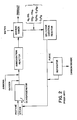
- the process of the present invention is illustrated in Figure 3.
- the present process provides the efficiency of recycle afforded by the process illustrated in Figure 2, yet does not require the capital cost of oxidation units, does not have a loss of efficiency through a purge stream and does not lose effectiveness of the dehydrogenation catalyst due to oxygen in the recycle stream thereto.
- the process of the present invention can advantageously and efficiently utilize air and oxygen-enriched air as a feed to the ammoxidation/oxidation reactor.
- propane is fed into the multi-stage dehydrogenator where it is converted to propylene.
- a hydrogen-containing gas into the dehydrogenator with the propane feed.
- the catalyst utilized in the dehydrogenator can be any conventional dehydrogenation catalyst, preferably one or more Group VIII noble metals such as platinum on an alumina support.
- the effluent product stream from the dehydrogenator comprising unreacted propane, propylene and hydrogen is fed into a conventional ammoxidation/oxidation reactor along with pure oxygen, air or, preferably, oxygen-enriched air and ammonia.
- the ammoxidation/oxidation reactor utilized in the present process is conventional and may employ either a fixed or fluidized catalyst bed.
- a typical example of an ammoxidation reactor is disclosed in Angstadt et al, US Patent No 4,070,393 and Gates et al, ibid, pp 381-383, each incorporated herein by reference.
- the reactor contains a conventional ammoxidation catalyst, such as bismuth-molybdenum oxide, iron-antimony oxide, uranium-antimony oxide precipitated on silica and the like.
- the ammoxidation reaction is conducted at a temperature of from about 375° to 550°C, preferably from about 400° to 500°C, at low pressures, typically in the range of from about 3 to 30 psig, preferably from about 5 to 20 psig.
- the reactants are passed through the reactor at a relatively low velocity, typically in the range of from about 1.75 to 2.2 ft/sec.
- the oxygen feed may be pure oxygen, air or oxygen-enriched air.
- oxygen-enriched air preferably contains from about 30 to about 80, most preferably from about 55 to 65, percent by volume of oxygen.
- Such mixtures may be produced by adjusting the capacity of a conventional oxygen-producing unit, eg a conventional pressure swing adsorption unit, or by mixing pure oxygen with air in the proper proportions.
- the ratio of oxygen to propylene in the feed is suitably in the range of from about 1.6:1 to 2.4:1 by volume.
- the ratio of ammonia to propylene in the feed is suitably in the range of from about 0.7 to 1.2:1 by volume.
- the ammoxidation reaction results in the production of a major amount of acrylonitrile and minor amounts of acrolein, hydrogen cyanide, acetonitrile, carbon oxides and nitrogen, when present in the feed, as well as unreacted oxygen, propylene and propane.
- This gaseous mixture is quenched or scrubbed with a liquid, such as water, to dissolve the water-soluble compounds for subsequent separation and recovery of acrylonitrile, acetonitrile and hydrogen cyanide.
- PSA pressure swing adsorption
- a pressure swing adsorption unit The gas phase effluent from the quench step is introduced into a pressure swing adsorption (PSA) unit.
- PSA is a well known process for separating the components of a mixture of gases by virtue of the difference in the degree of adsorption among them on a particular adsorbent retained in a stationary bed.
- two or more such beds are operated in a cyclic process comprising adsorption under relatively high pressure and desorption or bed regeneration under low pressure or vacuum.
- the desired component or components may be obtained during either of these stages.
- the cycle may contain other steps in addition to the fundamental steps of adsorption and regeneration, and it is commonplace to have two or more adsorbent beds cycled out of phase to assure a pseudo continuous flow of desired product. It is preferred to pass the quench tower effluent through a conventional dryer (not shown) to remove moisture therefrom prior to introducing it into the PSA unit.
- the compressor increases the pressure of the quench tower gaseous effluent to the operating pressure of a PSA unit, typically from about 3 to 50 psig, preferably from about 20 to 40 psig. These ranges may vary to an extent depending on the adsorbent in the PSA unit.
- the adsorbent in the PSA unit may be any material recognised in the art which will adsorb propane and propylene to a substantially greater degree than carbon oxides, nitrogen and oxygen, or vice versa.
- Silica gel or a conventional molecular sieve material, such as 4A zeolite, are preferred adsorbent materials.
- Silica gel is a particularly preferred material when oxygen-enriched air is utilized as a reactor feed material.
- the PSA unit produces a recycle stream and a waste stream.
- the latter comprises oxygen, carbon oxides, ie carbon monoxide and carbon dioxide, nitrogen wherein the feed to the ammoxidation/oxidation reactor is air or oxygen-enriched air, and C1 ⁇ 2 hydrocarbons, ie methane, ethane and ethylene, as well as trace amounts of propane and propylene.
- the PSA recycle stream contains propane, propylene and a minor quantity of oxygen, typically not more than about 3 percent by volume and a minor quantity of nitrogen.
- the oxygen content in the recycle stream would ordinarily have an adverse effect on the efficiency of the dehydrogenator. This is readily apparent, for example, from the Khoobiar et al patent discussed above wherein it is required that the effluent from the quench tower be fed into a selective oxidation reactor.
- an adsorbent in the PSA unit which will adsorb propane and propylene, such as a silica gel, will cause substantially all of the hydrogen in the quench tower effluent to be removed with the waste stream since the hydrogen is not adsorbed.
- the recycle stream is formed by desorbing propane and propylene from the silica gel. Therefore, it is desirable to add an appropriate quantity of hydrogen to the propane/propylene recycle stream before introducing it into a latter stage of the dehydrogenator.
- an adsorbent which adsorbs carbon oxides and oxygen, but does not separate hydrogen from propane and propylene such as 4A zeolite molecular sieve is used as the adsorbent in the PSA unit, the hydrogen will be withdrawn in the recycle stream (which in this case is the unadsorbed gas). Therefore, it will not be necessary to add hydrogen thereto. In fact, it may be necessary to remove some hydrogen therefrom to prevent excessive build-up in the system.
- a PSA system comprising parallel PSA units, each containing one of the two types of adsorbers mentioned above, is utilized wherein the feed is disproportionately divided between them so that the combined effluents contain the desired amount of hydrogen.
- the waste streams from the two units are combined and discarded.
- the amount of hydrogen required in the recycle feed to the dehydrogenator will vary with the catalyst and can be determined by operation of the system utilizing a given catalyst.
- the present invention utilizes a multistage dehydrogenator which is efficient and which, modified in accordance with the present invention, eliminates the need for the selective oxidation reactor in the Khoobiar et al process.
- a multistage catalytic reactor is described in the literature, eg Pujado et al in a paper entitled "Catalytic Conversation of LPG" presented at the American Institute of Chemical Engineers, April 6-10, 1986.
- the catalyst sequentially flows through a series of discrete reactors and is withdrawn at the end for regeneration and recycle.
- the reactant gas stream likewise flows through the reactors and is withdrawn into a heating means between each of the individual reactors.
- the dehydrogenator typically operates at a temperature of from about 500° to 800°C, preferably from about 600° to 700°C.
- the reheating of the reactant stream as it flows through the reactors is especially beneficial for an endothermic reaction such as the conversion of propane to propylene.
- the reactant gas stream does not flow through all reactors, but is withdrawn as a 'product' stream from a reactor intermediate the first and last reactors.
- a reactor intermediate the first and last reactors Preferably, there are at least four reactors and the product stream is withdrawn from the penultimate reactor. It is beneficial to withdraw the product stream from a latter stage of the dehydrogenator to obtain maximum efficiency therefrom.
- the reheating of the reactant stream takes place only up to and including the reactor from which the product stream is withdrawn.
- the recycle stream from the PSA unit which comprises unreacted alkane and alkene and minor amounts of oxygen and nitrogen, if present, is introduced into the reactor following that from which the product is withdrawn, passed therethrough and through subsequent reactors, if any, the low oxygen content thereof can be eliminated without detriment to the system.
- the initial propane feed passes through reactors A through C and is thereafter withdrawn for passage to the anmoxidation reactor, see Figure 3.
- the recycle stream from the PSA unit is heated, introduced into reactor D and thereafter introduced into the process as described above.
- the spent catalyst withdrawn from reactor D is passed through a conventional catalyst regenerator and returned to reactor A. In the regenerator, accummulated carbon is burned off of the catalyst after which it is chemically reduced.
- the effluent from the final reactor of the dehydrogenator is introduced into the initial feed stream.
- the effluent is introduced into such intermediate reactor. It is further contemplated herein to introduce the effluent from the final reactor directly to the ammoxidation/oxidation reactor if the propylene content thereof is sufficiently high. This might occur, for example, when the PSA effluent passes through two or more reactors of the dehydrogenator.
- the recycle stream from the PSA unit contains no hydrogen
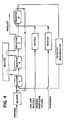
- it is combined with a hydrogen-containing stream at elevated temperature and passed through reactor D.
- the resulting oxygen-free effluent is introduced into the initial feed, an intermediate reactor or the ammoxidation/oxidation reactor.
- it is desirable to add hydrogen to the initial feed to prolong the life of the catalyst.
- a single heater can be utilized in Figure 4 with all streams flowing therethrough.
- the hydrogen-containing stream in Figure 4 can be a stream of medium purity hydrogen obtained from an external source, or a recycle hydrogen stream from within the process.
- the hydrogen added to the initial feed can likewise be recycled or obtained from an external source.
- Hydrogen may also be supplied to the heater in combination with an oxygen feed for combustion.
- Hydrogen recycle can be obtained from a stream also containing propane and propylene produced by the PSA unit in the event the adsorbent therein adsorbs carbon oxides and oxygen as described above. Hydrogen recycle can also be obtained in the same manner from the product stream of the dehydrogenator before it is introduced into the ammoxidation/oxidation reactor. It is preferred, as stated previously, to utilize a PSA system containing parallel PSA units each containing a different adsorbent and combining their effluents into a recycle stream containing the proper amount of hydrogen.
- compositions at various points in the system were determined and are presented in Table I.
- the compositions are expressed in mole percent based on 100 moles of acrylonitrile produced.
- the propane feed was virtually 100 percent propane, and the feed to the ammoxidation reactor was 32.88 percent of ammonia and 67.12 percent of pure oxygen.
- Point A is the feed into the dehydrogenator after the stream from the final stage thereof has been combined with fresh propane
- Point B is the combined feed into the ammoxidation reactor
- Point C is the ammoxidation reactor effluent
- Point D is the quench tower gaseous effluent
- Point E is the recycle stream from the PSA unit
- Point F is the PSA unit waste stream.
- the oxygen feed to the ammoxidation reactor was changed to a mixture of equal parts of pure oxygen and air which produced oxygen-enriched air containing approximately 60 percent of oxygen.
- the compositions at the various points in the system were determined utilizing 100 percent air as the oxygen-containing gas and are also presented in Table II.
- the data expressed in Table II represents operation of the system under conditions such that 60 percent and 80 percent, respectively, of the propylene in the ammoxidation reactor is converted therein to different products, including acrylonitrile.
- the process of this invention is advantageous in that it is very efficient and is cost attractive in comparison to prior art processes requiring a selective oxidation unit.
- the process of the invention has a comparatively small incidence of build-up of any of the components of the various gaseous streams formed or separated at any stage thereof.
- the subject process can be utilized with air or oxygen-enriched air as a feed to the ammoxidation/oxidation reactor, heretofore not feasible with a closed loop system.
- the subject process operates at particularly enhanced efficiency with an oxygen-enriched air feed.
Landscapes
- Chemical & Material Sciences (AREA)
- Organic Chemistry (AREA)
- Engineering & Computer Science (AREA)
- Analytical Chemistry (AREA)
- General Chemical & Material Sciences (AREA)
- Oil, Petroleum & Natural Gas (AREA)
- Chemical Kinetics & Catalysis (AREA)
- Organic Low-Molecular-Weight Compounds And Preparation Thereof (AREA)
- Epoxy Compounds (AREA)
Applications Claiming Priority (4)
| Application Number | Priority Date | Filing Date | Title |
|---|---|---|---|
| US15415788A | 1988-02-09 | 1988-02-09 | |
| US154157 | 1988-02-09 | ||
| US07/215,859 US4849537A (en) | 1988-02-09 | 1988-07-06 | Process for the production of nitriles |
| US215859 | 1998-12-18 |
Publications (1)
| Publication Number | Publication Date |
|---|---|
| EP0328280A1 true EP0328280A1 (de) | 1989-08-16 |
Family
ID=26851203
Family Applications (1)
| Application Number | Title | Priority Date | Filing Date |
|---|---|---|---|
| EP89300853A Ceased EP0328280A1 (de) | 1988-02-09 | 1989-01-27 | Verfahren zur Herstellung von Nitrilen und Oxiden |
Country Status (6)
| Country | Link |
|---|---|
| US (1) | US4849537A (de) |
| EP (1) | EP0328280A1 (de) |
| JP (1) | JPH021449A (de) |
| KR (1) | KR890012693A (de) |
| AU (1) | AU618309B2 (de) |
| TR (1) | TR25102A (de) |
Cited By (7)
| Publication number | Priority date | Publication date | Assignee | Title |
|---|---|---|---|---|
| EP0372972A1 (de) * | 1988-12-08 | 1990-06-13 | The Boc Group, Inc. | Verfahren zur Herstellung von Nitrilen und Oxiden |
| EP0381369A1 (de) * | 1989-01-30 | 1990-08-08 | The Boc Group, Inc. | Verfahren zur Herstellung von Nitrilen und Oxiden |
| EP0467538A1 (de) * | 1990-07-09 | 1992-01-22 | The Boc Group, Inc. | Verfahren zur Herstellung von Alkylenoxid |
| EP0749950A1 (de) * | 1995-06-23 | 1996-12-27 | The Boc Group, Inc. | Verfahren zur Herstellung von partiell oxidierten Produkten |
| EP0893435A3 (de) * | 1997-07-25 | 1999-12-29 | Praxair Technology, Inc. | Sauerstoffzugabe zur Reduzierung von Inerten in einem Acrylnitrilreaktor |
| WO2003002520A1 (de) * | 2001-06-29 | 2003-01-09 | Basf Aktiengesellschaft | Verfahren zur herstellung von ungesättigten nitrilen aus alkanen |
| WO2003011804A3 (de) * | 2001-06-29 | 2003-12-11 | Basf Ag | Verfahren zur herstellung von partiellen (amm) oxidationsprodukten eines olefins |
Families Citing this family (9)
| Publication number | Priority date | Publication date | Assignee | Title |
|---|---|---|---|---|
| US4849538A (en) * | 1988-03-23 | 1989-07-18 | The Boc Group, Inc. | Process for the production of nitriles |
| KR960003792B1 (ko) * | 1992-12-31 | 1996-03-22 | 한국과학기술원 | 신규한 다성분계 혼합산화물 촉매 조성물 및 그의 제조방법 |
| KR0169027B1 (ko) * | 1995-04-07 | 1999-03-20 | 유미꾸라 레이이찌 | 알파,베타-불포화 니트릴의 제조 방법 |
| US5801265A (en) * | 1995-08-24 | 1998-09-01 | Praxair Technology, Inc. | Method and apparatus for direct oxygen injection with a reactant stream into a fluidized bed reactor |
| EP0850936B1 (de) * | 1996-12-25 | 2004-10-27 | Agency Of Industrial Science And Technology | Verfahren zur Herstellung von Epoxiden und Katalysator zur Verwendung bei diesem Verfahren |
| US5895817A (en) * | 1997-06-19 | 1999-04-20 | Praxair Technology, Inc. | Method and apparatus for direct oxygen injection with a reactant stream into a fluidized bed reactor |
| DE10211275A1 (de) * | 2002-03-13 | 2003-09-25 | Basf Ag | Verfahren der kontinuierlichen heterogen katalysierten partiellen Dehydrierung |
| US20030073788A1 (en) | 2001-10-12 | 2003-04-17 | Golden Timothy Christopher | Recovery of olefin monomers |
| JP5033394B2 (ja) | 2006-10-30 | 2012-09-26 | Hoya株式会社 | 内視鏡システム、内視鏡システムの作動方法、内視鏡プロセッサ、および内視鏡プロセッサ制御装置 |
Citations (4)
| Publication number | Priority date | Publication date | Assignee | Title |
|---|---|---|---|---|
| US3591620A (en) * | 1967-11-28 | 1971-07-06 | Nitto Chemical Industry Co Ltd | Process for producing acrylonitrile |
| US4335056A (en) * | 1981-01-05 | 1982-06-15 | Standard Oil Company | Processing acrylonitrile waste gas |
| US4609502A (en) * | 1985-02-14 | 1986-09-02 | The Halcon Sd Group, Inc. | Process for preparing unsaturated nitriles from alkanes |
| US4754049A (en) * | 1985-02-14 | 1988-06-28 | Atlantic Richfield Company | Process for preparing unsaturated nitriles from alkanes |
Family Cites Families (6)
| Publication number | Priority date | Publication date | Assignee | Title |
|---|---|---|---|---|
| US3161670A (en) * | 1960-12-12 | 1964-12-15 | Shell Oil Co | Preparation of olefinic compounds |
| NL297067A (de) * | 1962-09-04 | 1900-01-01 | ||
| IL48991A (en) * | 1975-03-18 | 1978-04-30 | Sun Ventures Inc | Ammoxidation process |
| US4246192A (en) * | 1979-10-29 | 1981-01-20 | Uop Inc. | Ammoxidation process with isolated catalyst regeneration zone |
| DE3150137A1 (de) * | 1981-12-18 | 1983-06-30 | Linde Ag, 6200 Wiesbaden | Adsorptionsverfahren zur trennung von kohlenwasserstoffen |
| CA1320735C (en) * | 1987-11-24 | 1993-07-27 | Ramakrishnan Ramachandran | Process for the production of nitriles and anhydrides |
-
1988
- 1988-07-06 US US07/215,859 patent/US4849537A/en not_active Expired - Lifetime
-
1989
- 1989-01-26 TR TR89/0083A patent/TR25102A/xx unknown
- 1989-01-27 EP EP89300853A patent/EP0328280A1/de not_active Ceased
- 1989-01-30 AU AU28894/89A patent/AU618309B2/en not_active Expired - Fee Related
- 1989-02-08 KR KR1019890001443A patent/KR890012693A/ko not_active Withdrawn
- 1989-02-09 JP JP1030914A patent/JPH021449A/ja active Pending
Patent Citations (4)
| Publication number | Priority date | Publication date | Assignee | Title |
|---|---|---|---|---|
| US3591620A (en) * | 1967-11-28 | 1971-07-06 | Nitto Chemical Industry Co Ltd | Process for producing acrylonitrile |
| US4335056A (en) * | 1981-01-05 | 1982-06-15 | Standard Oil Company | Processing acrylonitrile waste gas |
| US4609502A (en) * | 1985-02-14 | 1986-09-02 | The Halcon Sd Group, Inc. | Process for preparing unsaturated nitriles from alkanes |
| US4754049A (en) * | 1985-02-14 | 1988-06-28 | Atlantic Richfield Company | Process for preparing unsaturated nitriles from alkanes |
Cited By (12)
| Publication number | Priority date | Publication date | Assignee | Title |
|---|---|---|---|---|
| EP0372972A1 (de) * | 1988-12-08 | 1990-06-13 | The Boc Group, Inc. | Verfahren zur Herstellung von Nitrilen und Oxiden |
| EP0381369A1 (de) * | 1989-01-30 | 1990-08-08 | The Boc Group, Inc. | Verfahren zur Herstellung von Nitrilen und Oxiden |
| EP0467538A1 (de) * | 1990-07-09 | 1992-01-22 | The Boc Group, Inc. | Verfahren zur Herstellung von Alkylenoxid |
| TR26167A (tr) * | 1990-07-09 | 1995-02-15 | Boc Group Inc | ALKILEN OKSIT üRETIMI ICIN ISLEM |
| CN1038934C (zh) * | 1990-07-09 | 1998-07-01 | 美国Boc氧气集团有限公司 | 用于生产环氧化物的方法 |
| EP0749950A1 (de) * | 1995-06-23 | 1996-12-27 | The Boc Group, Inc. | Verfahren zur Herstellung von partiell oxidierten Produkten |
| EP0893435A3 (de) * | 1997-07-25 | 1999-12-29 | Praxair Technology, Inc. | Sauerstoffzugabe zur Reduzierung von Inerten in einem Acrylnitrilreaktor |
| WO2003002520A1 (de) * | 2001-06-29 | 2003-01-09 | Basf Aktiengesellschaft | Verfahren zur herstellung von ungesättigten nitrilen aus alkanen |
| WO2003011804A3 (de) * | 2001-06-29 | 2003-12-11 | Basf Ag | Verfahren zur herstellung von partiellen (amm) oxidationsprodukten eines olefins |
| US7271279B2 (en) | 2001-06-29 | 2007-09-18 | Basf Aktiengesellschaft | Method for the production of unsaturated nitriles from alkanes |
| US7348443B2 (en) | 2001-06-29 | 2008-03-25 | Basf Aktiengesellschaft | Method for producing partial oxidation products and/or partial ammoxidation products of at least one olefinic hydrocarbon |
| CZ301444B6 (cs) * | 2001-06-29 | 2010-03-03 | Basf Aktiengesellschaft | Zpusob výroby parciálních oxidacních produktu a/nebo parciálních ammoxidacních produktu alespon jednoho olefinového uhlovodíku |
Also Published As
| Publication number | Publication date |
|---|---|
| TR25102A (tr) | 1992-09-28 |
| AU618309B2 (en) | 1991-12-19 |
| US4849537A (en) | 1989-07-18 |
| AU2889489A (en) | 1989-08-10 |
| KR890012693A (ko) | 1989-09-18 |
| JPH021449A (ja) | 1990-01-05 |
Similar Documents
| Publication | Publication Date | Title |
|---|---|---|
| EP0372972B1 (de) | Verfahren zur Herstellung von Nitrilen und Oxiden | |
| US4870201A (en) | Process for the production of nitriles | |
| US4849538A (en) | Process for the production of nitriles | |
| KR0138536B1 (ko) | 알파, 베타 올레핀형 불포화 니트릴의 순환 제조방법 | |
| US4849537A (en) | Process for the production of nitriles | |
| US4572829A (en) | Ammonia synthesis gas purification | |
| US5179215A (en) | Process for the production of petrochemicals | |
| US4990632A (en) | Process for the production of oxides | |
| KR100363179B1 (ko) | 탄화수소의부분산화반응생성물의제조방법 | |
| JPH01305801A (ja) | メタノールの接触リフォーミングによる高純度水素の製造方法 | |
| US4943650A (en) | Process for the production of nitriles | |
| US5008412A (en) | Process for the production of oxides | |
| JPH04288023A (ja) | 石油化学製品の製造方法 | |
| US5268497A (en) | Process for the production of nitriles | |
| US6667409B2 (en) | Process and apparatus for integrating an alkene derivative process with an ethylene process | |
| US5043461A (en) | Process for the production of oxides | |
| CA2130686C (en) | Process for the production of hydrocarbon partial oxidation products | |
| US5264608A (en) | Process for the production of nitriles from alkenes | |
| JP2918285B2 (ja) | ニトリル類の製造法 |
Legal Events
| Date | Code | Title | Description |
|---|---|---|---|
| PUAI | Public reference made under article 153(3) epc to a published international application that has entered the european phase |
Free format text: ORIGINAL CODE: 0009012 |
|
| AK | Designated contracting states |
Kind code of ref document: A1 Designated state(s): AT BE DE ES FR GB IT NL |
|
| 17P | Request for examination filed |
Effective date: 19900118 |
|
| 17Q | First examination report despatched |
Effective date: 19911010 |
|
| STAA | Information on the status of an ep patent application or granted ep patent |
Free format text: STATUS: THE APPLICATION HAS BEEN REFUSED |
|
| 18R | Application refused |
Effective date: 19931003 |