EP0329361A2 - 2-Pyranon-Derivat und Verfahren zu dessen Herstellung - Google Patents
2-Pyranon-Derivat und Verfahren zu dessen Herstellung Download PDFInfo
- Publication number
- EP0329361A2 EP0329361A2 EP89301336A EP89301336A EP0329361A2 EP 0329361 A2 EP0329361 A2 EP 0329361A2 EP 89301336 A EP89301336 A EP 89301336A EP 89301336 A EP89301336 A EP 89301336A EP 0329361 A2 EP0329361 A2 EP 0329361A2
- Authority
- EP
- European Patent Office
- Prior art keywords
- derivative
- pyranone
- compound
- streptomyces
- microorganism
- Prior art date
- Legal status (The legal status is an assumption and is not a legal conclusion. Google has not performed a legal analysis and makes no representation as to the accuracy of the status listed.)
- Granted
Links
Images
Classifications
-
- A—HUMAN NECESSITIES
- A01—AGRICULTURE; FORESTRY; ANIMAL HUSBANDRY; HUNTING; TRAPPING; FISHING
- A01N—PRESERVATION OF BODIES OF HUMANS OR ANIMALS OR PLANTS OR PARTS THEREOF; BIOCIDES, e.g. AS DISINFECTANTS, AS PESTICIDES OR AS HERBICIDES; PEST REPELLANTS OR ATTRACTANTS; PLANT GROWTH REGULATORS
- A01N57/00—Biocides, pest repellants or attractants, or plant growth regulators containing organic phosphorus compounds
- A01N57/10—Biocides, pest repellants or attractants, or plant growth regulators containing organic phosphorus compounds having phosphorus-to-oxygen bonds or phosphorus-to-sulfur bonds
- A01N57/16—Biocides, pest repellants or attractants, or plant growth regulators containing organic phosphorus compounds having phosphorus-to-oxygen bonds or phosphorus-to-sulfur bonds containing heterocyclic radicals
-
- C—CHEMISTRY; METALLURGY
- C07—ORGANIC CHEMISTRY
- C07F—ACYCLIC, CARBOCYCLIC OR HETEROCYCLIC COMPOUNDS CONTAINING ELEMENTS OTHER THAN CARBON, HYDROGEN, HALOGEN, OXYGEN, NITROGEN, SULFUR, SELENIUM OR TELLURIUM
- C07F9/00—Compounds containing elements of Groups 5 or 15 of the Periodic Table
- C07F9/02—Phosphorus compounds
- C07F9/547—Heterocyclic compounds, e.g. containing phosphorus as a ring hetero atom
- C07F9/655—Heterocyclic compounds, e.g. containing phosphorus as a ring hetero atom having oxygen atoms, with or without sulfur, selenium, or tellurium atoms, as the only ring hetero atoms
- C07F9/6552—Heterocyclic compounds, e.g. containing phosphorus as a ring hetero atom having oxygen atoms, with or without sulfur, selenium, or tellurium atoms, as the only ring hetero atoms the oxygen atom being part of a six-membered ring
-
- C—CHEMISTRY; METALLURGY
- C12—BIOCHEMISTRY; BEER; SPIRITS; WINE; VINEGAR; MICROBIOLOGY; ENZYMOLOGY; MUTATION OR GENETIC ENGINEERING
- C12N—MICROORGANISMS OR ENZYMES; COMPOSITIONS THEREOF; PROPAGATING, PRESERVING, OR MAINTAINING MICROORGANISMS; MUTATION OR GENETIC ENGINEERING; CULTURE MEDIA
- C12N1/00—Microorganisms; Compositions thereof; Processes of propagating, maintaining or preserving microorganisms or compositions thereof; Processes of preparing or isolating a composition containing a microorganism; Culture media therefor
- C12N1/20—Bacteria; Culture media therefor
- C12N1/205—Bacterial isolates
-
- C—CHEMISTRY; METALLURGY
- C12—BIOCHEMISTRY; BEER; SPIRITS; WINE; VINEGAR; MICROBIOLOGY; ENZYMOLOGY; MUTATION OR GENETIC ENGINEERING
- C12P—FERMENTATION OR ENZYME-USING PROCESSES TO SYNTHESISE A DESIRED CHEMICAL COMPOUND OR COMPOSITION OR TO SEPARATE OPTICAL ISOMERS FROM A RACEMIC MIXTURE
- C12P17/00—Preparation of heterocyclic carbon compounds with only O, N, S, Se or Te as ring hetero atoms
- C12P17/02—Oxygen as only ring hetero atoms
- C12P17/06—Oxygen as only ring hetero atoms containing a six-membered hetero ring, e.g. fluorescein
-
- C—CHEMISTRY; METALLURGY
- C12—BIOCHEMISTRY; BEER; SPIRITS; WINE; VINEGAR; MICROBIOLOGY; ENZYMOLOGY; MUTATION OR GENETIC ENGINEERING
- C12R—INDEXING SCHEME ASSOCIATED WITH SUBCLASSES C12C - C12Q, RELATING TO MICROORGANISMS
- C12R2001/00—Microorganisms ; Processes using microorganisms
- C12R2001/01—Bacteria or Actinomycetales ; using bacteria or Actinomycetales
- C12R2001/465—Streptomyces
- C12R2001/585—Streptomyces platensis
Definitions
- the present invention relates to novel 2-pyranone derivatives, processes for production thereof, and to antimicrobial compositions containing them.
- the derivatives may exhibit antimicrobial activity at a very low concentration, especially against plant pathogenic fungi and therefore are useful as an active ingredient for a agricultural biocidal composition.
- biocidal compounds which do not exhibit disadvantageous side effects on agricultural plants, and may be useful in particular for prevention and control of Botrytic cinerea which can be parasitic on a very wide range of plants (for example cucumber, tomato, eggplant, strawberry, lettuce, udo ( Aralia cordata ), and onion), at low temperature and high moisture condition.
- the present inventors worked to isolate from nature a microorganism which produces biologically active compounds suppressing gray mold, and found that an actinomyces belonging to the genus Streptomyces produces in a culture broth substances which exhibit a growth-preventing effect on fungi including dermatophytes and plant pathogenic fungi at a very low concentration.
- the present inventors further isolated and purified the substance and determined a structure thereof, and confirmed that the purified substance strongly suppresses gray mold.
- the present invention provides a 2-pyranone derivative represented by the formula (I): wherein R represents a hydrogen atom, or a linear or branched alkyl carbonyloxy, or cyclo-alkyl carbonyloxy group having 3 to 10 carbon atoms, and salts thereof.
- a process for the production of a 2-pyranone derivative (I) as defined comprising the steps of culturing a microorganism belonging to the genus Streptomyces and capable of producing the derivative, to produce the derivative, and recovering the produced derivative from the cultured product.
- a biocidal composition comprising a biocidally effective amount of the above-mentioned 2-pyranone derivative. Still further, the present invention provides a microorganism belonging to the genus Streptomyces and capable of producing the above-mentioned 2-pyranone derivatives.
- US-A-4578383 which corresponds to EP-A-87021, and EP-A-128651, describe a compound having a basic structure of the formula (I) above but having a hydrogen atom or a hydroxyl group at the 5-position of the pyranone ring, rather than the ethyl group in formula (I), and having a 1-propenyl or 3-hydroxy-1-propenyl at a position most distant from the pyranone ring, rather than a cyclohexyl ring as in formula (I).
- US-A-4575500 discloses a compound having a structure similar to that of formula (I) except for a cyclohexenone structure instead of the pyranone ring of the present invention.
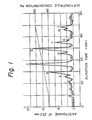
- Figure 1 represents an elution profile where components in a concentrated supernatant from a culture broth were separated by a high performance liquid chromatography.
- the alkylcarbonyloxy group is preferably butyryloxy, isobutyryloxy, isovaleryloxy, 2-methylbutyryloxy, cyclohexylcarbonyloxy, 4-methylhexanoyloxy, 6-methyl-heptanoyloxy, or octanoyloxy.
- the producer microorganism may be any microorganism belonging to the genus Streptomyces and capable of producing the present 2-pyranone derivatives.
- Such a microorganism may be obtained by isolating microorganisms belonging to Streptomyces from microbial sources such as soil, by a conventional procedure for the isolation of actinomyces, and selecting a microorganism which produces a substance having an antimicrobial activity against Botrytic cinerea .
- the strain SAM-0654 has the following taxonomical properties.
- An aerial mycelium shows simple branches, and at the top thereof, a spiral spore chain comprising 10 to 50 or more spores is formed.
- the spore is semi-spherical (crescent), has a length of 0.6 to 1.0 ⁇ m and a width of 0.3 to 0.4 ⁇ m, and has a smooth surface.
- Table 1 Culture media Growth Aerial mycelium Vegetative mycelium Soluble pigment Other appearance Yeast extract - Malt extract Agar (ISP-2) Good Abundant White - Light yellowish - Gray Brown Yellow Hygroscopic Oat meal agar (ISP-3) Good Abundant White - Gray Yellowish brown - Brown Yellow Hygroscopic Inorganic salts - Starch agar (ISP-4) Good Abundant White - Light yellowish - Gray Yellow - Yellowish brown Light yellow Hygroscopic Glycerol - Asparagine agar (ISP-5) Good Abundant White - Light yellowish gray Orange - Yellowish brown Yellow 1/10 V-8 agar Good Moderate White - Gray Deep greenish gray - Hygroscopic Yeast extract - Starch agar Good Abundant White Yellow - Light yellowish brown Light yellow No spore formation 1/10
- the strain SAM 0654 has melaquinone-9(H6) and melaquinone -9(H8) as major quinones.
- the present strain SAM-0654 is considered to be an actinomyces belonging to the genus Streptomyces . Comparison of the present strain with the known species of the genus Streptomyces , on the basis of the above-mentioned taxonomical properties, revealed that the present strain is most similar to Streptomyces platensis (International Journal of Systematic Bacteriology, Vol. 18, pp 360, 1968).
- the present strain SAM-0654 was compared with a type strain of Streptomyces platensis , viz. Streptomyces platensis JCM 4662, and a summary of the results thereof is given in Table 2.
- properties of the SAM-0654 are very similar to those of Streptomyces platensis , and the only difference is that color tone of the vegetative mycelium and soluble pigments.
- the color tone of the vegetative mycelium and soluble pigments is reddish; on the other hand in the strain SAM-0654 it is yellowish.
- the present inventors consider these differences to be not enough to separate the strain SAM-0654 from Streptomyces platensis , and then identified the strain SAM-0654 as Streptomyces platensis SAM 0654.
- a producer strain is preferably cultured in a liquid medium under an aerobic condition provided by shaking or by aeration and agitation, although a solid medium may be used.
- a solid medium may be used.
- Any medium in which a producer microorganism can grow and produce the present compound may be used, as long as the medium contains a carbon source such as glucose, lactose, glycerol, starch, sucrose, dextrin, molasses and/or organic acids, and a nitrogen source, such as hydrolyzed protein product such as pepton or casamino acid, meat extract, yeast extract, defatted soybean pellet, corn steep liquor, amino acids, ammonium salts, nitrate or other organic or inorganic nitrogen-containing substances.
- a carbon source such as glucose, lactose, glycerol, starch, sucrose, dextrin, molasses and/or organic acids
- a nitrogen source such as hydrolyzed protein product such as pepton or casamino acid, meat extract
- Inorganic salts such as various phosphates, magnesium sulfate, and/or sodium chloride may be added to a medium.
- vitamins and nucleic acid-related compounds may be added to accelerate the growth of the strain.
- an antifoamer such as silicone, propylene glycol derivatives, and soy bean oil may increase the accumulation level of the present compound.
- a preculture is prepared on a small scale, and the preculture is innoculated to a production culture medium, although direct inoculation to a production culture medium may be allowed.
- Culture conditions including culture temperature, pH value of culture medium, and duration of culture are chosen or controlled so that the conditions provide a maximum production of the present compound.
- culturing is carried out at 25°C to 35°C, at pH 5.5 - 7.2, under an aerobic condition, for two to three days.
- the present compounds are extracellularly accumulated in a culture broth. Therefore, in a preferred embodiment for recovering the products, a culture broth is filtrated or centrifuged to obtain a filtrate or supernatant containing the products, and the desired products are recovered from the filtrate or supernatant. Alternatively, the production can be directly recovered from a culture broth. The recovery process is followed by a disk method using Aspercillus oryzae or Botrytis cinerea as a test organism, or a cucumber seedling assay described in the examples.
- the desired compound is isolated and purified from the culture broth by various procedures chosen according to the nature of the desired compound. Namely, extraction using a organic solvent, such as 1-butanol, which is immiscible with water and dissolves the desired compound, dissolution in a high polar solvent such as methanol or ethanol, removal of impurities by treatment with hexane or the like, gel filtration through Sephadex, ion exchange chromatography on an ion exchange resin, Sephadex ion exchanger or the like, or adsorption chromatography on active carbon, silica gel or Amberlite XAD-1 or -2, or a combination thereof, may be used to isolate and purify the desired compound.
- a organic solvent such as 1-butanol
- a high polar solvent such as methanol or ethanol
- Diaion HP-20 Mitsubishi Chemical Industry Ltd.
- Sepabeads FP-DAI3 Mitsubishi Chemical Industry Ltd.
- YMC-C18 Yamamura Chemical Laboratories Co. Ltd.
- Figure 1 represents a chromatogram of separation of components shown by absorbance at 232 nm, obtained using a column YMC-C18 (50 mm of an inner diameter and 300 mm of a length, Yamamura Chemical Laboratories Co. Ltd.) and a gradient elution with 40% to 60% acetonitrile containing 0.1% formic acid at a flow rate of 32 ml/minute. Each peak was fractionated, the component was purified, and each component was found to have the following structure (I):
- Peak A in Fig. 1 represents a compound (I-a) embodying the invention, wherein R in the formula (I) is a hydrogen atom; Peak B represents a mixture of a compound (I-b), wherein R is n-butyryloxy, and a compound (I-c), wherein R is isobutyryloxy; Peak C represents a mixture of a compound (I-d), wherein R is isovaleryloxy, and a compound (I-e), wherein R is 2-methylbutyryloxy; Peak E represents a compound (I-f), wherein R is cyclohexylcarbonyloxy; Peak F represents a compound (I-g), wherein R is 4-methylhexanoyloxy; Peak H represents a compound (I-h), wherein R is 6-methylheptanoyloxy; and Peak I represents a mixture of a major compound (I-i), wherein R is octanoyloxy,
- the present compounds can be present in the form of salts, such as hydrochloride, phosphate, nitrate.
- the present compound When used as a anti-microbial agent, it may be admixed with a carrier, and if necessary, with other additives to form a conventional formulation used as an agricultural antimicrobial agent, such as solid, including finely divided powers and granules materials, as well as liquid, such as solutions, emulsions, suspensions, concentrates, slurries and the like.
- Suitable liquid carriers include water; alcohols such as ethanol, ethyleneglycol; ketones such as acetone; ethers such as dioxane, cellosolves; aliphatic hydrocarbons such as kerosene; aromatic hydrocarbons such as benzene, toluene; organic bases such as pyridine; halogenated hydrocarbons such as chloroform, carbon tetrachloride; esters such as ethyl acetate, fatty acid glycerol esters; nitriles such as acetonitrile; dimethylformamide; and dimethyl sulfoxide.
- Suitable solid carriers include powders having a plant origin, such as starches, wheat flour; and mineral powders such as kaolin, bentonite, calcium phosphate, clays, talks, silicas. These can be used alone or in combination.
- emulsifier fixing agent, penetrating agent or dispersant, soap, sulfate esters of higher alcohols, alkyl sulfonic acid, alkyl aryl sulfonic acids, tertiary ammonium salts, oxyalkylamines, fatty acid esters, polyalkyleneoxides, and anhydrosolbitols are used.
- these additives are used in an amount of 0.2 to 10% by weight relative to the formulation.
- other antimicrobial agents, insecticides, nematocides, herbicides, plant growth regulators, plant nutrients, fertilizer, and/or soil modifiers can be included in the formulation.
- Antimicrobial compositions of the present invention may be produced by conventional procedures from the 2-pyranone derivative (I), carriers, additives and the like.
- the present compound (I) is preferably contained in an amount of 0.5 to 50% by weight in a solid formulation, and in an amount of 5 to 90% by weight in a liquid formulation.
- the liquid formulations are preferably diluted by an appropriate amount of water, for example, 50 to 5000-fold, prior to application.
- An amount of the present compound (I) used, and the ratio thereof to other components in the composition depends on the stage of growth of a plant to which the composition is to be applied, condition of growth of the plant, a nature of the pathogen, condition of pathology, method of application and the like, and is usually 10 to 300 g of the present compound (I) per 10 ares.
- a concentration of the compound (I) in a liquid composition in use is usually 10 to 1000 ppm.
- the method of application of the composition is not particularly limited, and it can be applied by, for example, spraying, dusting or by irrigation, or in the form of a seed coat, as long as it is applied safely and effectively to a target plant.
- the culture broth thus obtained was centrifuged to obtain 27 l of a supernatant, which was then passed through a column (14 cm x 33 cm) packed with Diaion HP-20 (Mitsubishi Chemical Industry Ltd.) to adsorb the product.
- the column was washed with 30 l of water and 36 l of 50% methanol, and was eluted with 18 l of methanol to obtain a eluate having an anti- Aspergillus (or Botrytis) activity.
- the eluate was concentrated under a reduced pressure, centrifuged to eliminate impurities, and 400 ml of the concentrate was applied to a column (5.6 cm x 33 cm) packed with Sepabeads FP-DA13 (Mitsubishi Chemical Industry Ltd.), which had been washed with methanol, and the column was eluted with methanol. Since an anti-microbial activity was found at an elution volume of 3000 ml to 6600 ml, this fraction was concentrated under a reduced pressure, water was added to the concentrate, and the mixture was lyophilized to obtain 800 mg of a dry preparation.
- Fractions No. 31 to 33 containing a peak A provided 13 mg of the above-mentioned compound I-a; fractions No. 35 to 37 containing a peak B provided 50 mg of a mixture comprising the compound I-b and the compound I-c (1:2); fractions No. 44.to 47 containing a peak C provided 120 mg of a mixture comprising the compound I-d and the compound I-e (3:2); fractions No. 60 to 63 containing a peak E provided 119 mg of the compound I-f; fractions No. 67 to 69 containing a peak F provided 35 mg of the compound I-g; and fractions No. 81 to 87 containing peaks H and I provided 84 mg of a mixture comprising the compound I-h, the compound I-i, and the compound I-j (3:2:1).
- the mixture comprising the compounds I-a and I-c, the mixture comprising the compounds I-d and I-e, and the mixture comprising the compounds I-h, I-i, and I-j were separately subjected to high performance liquid chromatography under the same conditions as described above, and as a result, the compounds I-b and I-c, the compounds I-d and I-e, and the compounds I-h, I-i and I-j were isolated, respectively.
- the compounds I-a to I-j thus obtained were white powders, exhibited a maximum ultraviolet absorbance at 232 nm in methanol, had a positive ninhydrin reaction, Ryndon Smith reaction, iodine reaction, anisaldehyde sulfuric acid reaction, and phosphomolybdic acidperchloric acid reaction, and a negative BTB and p-anisidine reaction. Note, as the compound I-j was obtained in only a small amount, the exact structure thereof was not determined. The structures and physico-chemical properties of the compounds I-a to I-i are shown in Table 3.
- the disease suppressive activity of the present compounds I-a, I-c (and I-b), I-d (and I-e), I-f, I-g, I-h, and I-i against the gray mold was tested by the following procedure.
- a solution of the present compound having a predetermined concentration was coated,with an absorbent cotton block, on the cotyledon of a cucumber seedling seven days after seeding.
- an agar disk having a diameter of 5 mm containing Botrytis cinerea was put on the coated cotyledon, the plant was incubated at 20°C for three days, and the disease suppresive activity of the tested compound was observed.
- Table 4 The results are shown in Table 4.
- Botrytis cinerea RR-4 is a strain resistant to antimicrobial agents (multi-resistant strain), isolated from a diseased seedling of egg plant
- Botrytis cinerea S-9 is a strain sensitive to antimicrobial agents, isolated from a diseased petal of orange blossom. Note, the extent of the disease suppressive effect is expressed by symbols + (no lesion), ⁇ (lesion having a diameter of less than 10 mm formed), and - (lesion having a diameter of not less than 10 mm formed).
Landscapes
- Life Sciences & Earth Sciences (AREA)
- Chemical & Material Sciences (AREA)
- Organic Chemistry (AREA)
- Health & Medical Sciences (AREA)
- Engineering & Computer Science (AREA)
- Zoology (AREA)
- Wood Science & Technology (AREA)
- General Health & Medical Sciences (AREA)
- Bioinformatics & Cheminformatics (AREA)
- Genetics & Genomics (AREA)
- Biochemistry (AREA)
- Biotechnology (AREA)
- General Engineering & Computer Science (AREA)
- Microbiology (AREA)
- Virology (AREA)
- Plant Pathology (AREA)
- Tropical Medicine & Parasitology (AREA)
- Medicinal Chemistry (AREA)
- Molecular Biology (AREA)
- Chemical Kinetics & Catalysis (AREA)
- General Chemical & Material Sciences (AREA)
- Agronomy & Crop Science (AREA)
- Pest Control & Pesticides (AREA)
- Biomedical Technology (AREA)
- Dentistry (AREA)
- Environmental Sciences (AREA)
- Preparation Of Compounds By Using Micro-Organisms (AREA)
- Pharmaceuticals Containing Other Organic And Inorganic Compounds (AREA)
- Saccharide Compounds (AREA)
- Agricultural Chemicals And Associated Chemicals (AREA)
- Micro-Organisms Or Cultivation Processes Thereof (AREA)
Applications Claiming Priority (2)
| Application Number | Priority Date | Filing Date | Title |
|---|---|---|---|
| JP3006988 | 1988-02-13 | ||
| JP30069/88 | 1988-02-13 |
Publications (3)
| Publication Number | Publication Date |
|---|---|
| EP0329361A2 true EP0329361A2 (de) | 1989-08-23 |
| EP0329361A3 EP0329361A3 (en) | 1990-10-31 |
| EP0329361B1 EP0329361B1 (de) | 1995-12-06 |
Family
ID=12293523
Family Applications (1)
| Application Number | Title | Priority Date | Filing Date |
|---|---|---|---|
| EP89301336A Expired - Lifetime EP0329361B1 (de) | 1988-02-13 | 1989-02-13 | 2-Pyranon-Derivat und Verfahren zu dessen Herstellung |
Country Status (5)
| Country | Link |
|---|---|
| EP (1) | EP0329361B1 (de) |
| AT (1) | ATE131169T1 (de) |
| CA (1) | CA1335365C (de) |
| DE (1) | DE68924991T2 (de) |
| ES (1) | ES2080068T3 (de) |
Cited By (6)
| Publication number | Priority date | Publication date | Assignee | Title |
|---|---|---|---|---|
| EP0506463A3 (en) * | 1991-03-27 | 1993-01-13 | Sankyo Company Limited | New compounds, named the "leustroducsins" their preparation and their therapeutic uses |
| US5284870A (en) * | 1992-02-26 | 1994-02-08 | Shionogi Seiyaku Kabushiki Kaisha | Aldose reductase inhibitor |
| US5314911A (en) * | 1992-03-13 | 1994-05-24 | Shionogi Seiyaku Kabushiki Kaisha | Immunosuppressive agent |
| WO2000021437A3 (en) * | 1998-10-13 | 2001-07-19 | Medoptix Inc | Infrared atr glucose measurement system |
| US6362144B1 (en) | 1998-10-13 | 2002-03-26 | Medoptix, Inc. | Cleaning system for infrared ATR glucose measurement system (II) |
| US6522903B1 (en) | 2000-10-19 | 2003-02-18 | Medoptix, Inc. | Glucose measurement utilizing non-invasive assessment methods |
Family Cites Families (2)
| Publication number | Priority date | Publication date | Assignee | Title |
|---|---|---|---|---|
| IE54287B1 (en) * | 1982-02-24 | 1989-08-16 | Warner Lambert Co | Cl 1565 antibiotic compounds and their production |
| US4575500A (en) * | 1984-03-26 | 1986-03-11 | Merck & Co., Inc. | Antifungal substances and process for their production |
-
1989
- 1989-02-13 EP EP89301336A patent/EP0329361B1/de not_active Expired - Lifetime
- 1989-02-13 CA CA000590894A patent/CA1335365C/en not_active Expired - Fee Related
- 1989-02-13 AT AT89301336T patent/ATE131169T1/de not_active IP Right Cessation
- 1989-02-13 ES ES89301336T patent/ES2080068T3/es not_active Expired - Lifetime
- 1989-02-13 DE DE68924991T patent/DE68924991T2/de not_active Expired - Fee Related
Cited By (14)
| Publication number | Priority date | Publication date | Assignee | Title |
|---|---|---|---|---|
| EP0506463A3 (en) * | 1991-03-27 | 1993-01-13 | Sankyo Company Limited | New compounds, named the "leustroducsins" their preparation and their therapeutic uses |
| US5334587A (en) * | 1991-03-27 | 1994-08-02 | Sankyo Company, Limited | Compounds, named the "Leustroducsins", their preparation and their therapeutic uses |
| US5443972A (en) * | 1991-03-27 | 1995-08-22 | Sankyo Company, Limited | Process to prepare leustroducsins |
| CN1058294C (zh) * | 1991-03-27 | 2000-11-08 | 三共株式会社 | 路斯绰达克星化合物的制备方法 |
| US5284870A (en) * | 1992-02-26 | 1994-02-08 | Shionogi Seiyaku Kabushiki Kaisha | Aldose reductase inhibitor |
| US5314911A (en) * | 1992-03-13 | 1994-05-24 | Shionogi Seiyaku Kabushiki Kaisha | Immunosuppressive agent |
| WO2000021437A3 (en) * | 1998-10-13 | 2001-07-19 | Medoptix Inc | Infrared atr glucose measurement system |
| US6362144B1 (en) | 1998-10-13 | 2002-03-26 | Medoptix, Inc. | Cleaning system for infrared ATR glucose measurement system (II) |
| US6421548B1 (en) | 1998-10-13 | 2002-07-16 | Medoptix, Inc. | Infrared ATR glucose measurement system having an ATR with mirrored ends |
| US6424851B1 (en) | 1998-10-13 | 2002-07-23 | Medoptix, Inc. | Infrared ATR glucose measurement system (II) |
| US6424848B1 (en) | 1998-10-13 | 2002-07-23 | Medoptix, Inc. | Method for preparing skin surface and determining glucose levels from that surface |
| US6430424B1 (en) | 1998-10-13 | 2002-08-06 | Medoptix, Inc. | Infrared ATR glucose measurement system utilizing a single surface of skin |
| US6522903B1 (en) | 2000-10-19 | 2003-02-18 | Medoptix, Inc. | Glucose measurement utilizing non-invasive assessment methods |
| US7039447B2 (en) | 2000-10-19 | 2006-05-02 | Vivomedical, Inc. | Glucose measurement utilizing non-invasive assessment methods |
Also Published As
| Publication number | Publication date |
|---|---|
| AU609940B2 (en) | 1991-05-09 |
| AU2969489A (en) | 1989-08-17 |
| EP0329361A3 (en) | 1990-10-31 |
| DE68924991D1 (de) | 1996-01-18 |
| DE68924991T2 (de) | 1996-07-11 |
| CA1335365C (en) | 1995-04-25 |
| ATE131169T1 (de) | 1995-12-15 |
| ES2080068T3 (es) | 1996-02-01 |
| EP0329361B1 (de) | 1995-12-06 |
Similar Documents
| Publication | Publication Date | Title |
|---|---|---|
| US5021406A (en) | 2-pyranone derivative and process for production thereof | |
| JP2802097B2 (ja) | 新規な制癌抗生物質mi43―37f11及びその製造法 | |
| EP0329361B1 (de) | 2-Pyranon-Derivat und Verfahren zu dessen Herstellung | |
| US5866377A (en) | Aminooligosaccharide derivative and process for preparing the same | |
| US4814449A (en) | Substance 4181-2 | |
| US4764602A (en) | Antibiotics, and their production | |
| US4952234A (en) | Imidazoledione compounds useful as herbicides | |
| US4493845A (en) | Antibiotic AM-3603 | |
| DK144658B (da) | Fremgangsmaade til fremstilling af antibiotikum c-15003 p-4 | |
| EP0414914A1 (de) | Trehalostatin und seine herstellung | |
| US4292309A (en) | Antibiotics C-14482 B1, B2 and B3 | |
| US4686308A (en) | Novel physiologically active substance MH435 | |
| US4734492A (en) | Macrolide antibiotic M 119 | |
| US4565781A (en) | Antibiotic, Spicamycin | |
| EP2468879B1 (de) | A-87774-verbindung oder salz daraus, verfahren zur herstellung der verbindung oder des salzes daraus und landwirtschaftliche chemikalie mit der verbindung oder dem salz daraus als wirkstoff | |
| EP0205981B1 (de) | Antitumor- und Antimikroben-Verbindung, deren mikrobiologische Herstellung und deren Benutzung als Arzneimittel | |
| EP0050961B1 (de) | Antibiotika, Verfahren zu ihrer Herstellung, sie enthaltende Arzneipräparate und ein zu Streptomyces-Arten gehörender Stamm, der zu ihrer Herstellung verwendbar ist | |
| JPH0515385A (ja) | 新規な抗生物質アリサマイシンおよびその製法 | |
| JP2971204B2 (ja) | 新規物質wk−2955およびその製造法 | |
| FR2463618A1 (fr) | Nouvel antibiotique aminoglycoside et sa production | |
| JPH0398591A (ja) | 抗腫瘍活性を有する新規抗生物質およびその製造方法 | |
| JP3327982B2 (ja) | 新規な抗生物質mi481−42f4−a関連物質 | |
| KR960009723B1 (ko) | 스트렙토마이세스 속의 신규한 미생물, 이로부터 제조되는 신규한 항생물질 및 이의 제조방법 | |
| JPH0788364B2 (ja) | 新規物質アロサミゾリン | |
| JPS63280073A (ja) | 新規抗生物質yp−02978l−c及びその製造方法 |
Legal Events
| Date | Code | Title | Description |
|---|---|---|---|
| PUAI | Public reference made under article 153(3) epc to a published international application that has entered the european phase |
Free format text: ORIGINAL CODE: 0009012 |
|
| AK | Designated contracting states |
Kind code of ref document: A2 Designated state(s): AT DE ES FR GB IT SE |
|
| PUAL | Search report despatched |
Free format text: ORIGINAL CODE: 0009013 |
|
| AK | Designated contracting states |
Kind code of ref document: A3 Designated state(s): AT DE ES FR GB IT SE |
|
| 17P | Request for examination filed |
Effective date: 19901224 |
|
| 17Q | First examination report despatched |
Effective date: 19930910 |
|
| GRAA | (expected) grant |
Free format text: ORIGINAL CODE: 0009210 |
|
| AK | Designated contracting states |
Kind code of ref document: B1 Designated state(s): AT DE ES FR GB IT SE |
|
| REF | Corresponds to: |
Ref document number: 131169 Country of ref document: AT Date of ref document: 19951215 Kind code of ref document: T |
|
| REF | Corresponds to: |
Ref document number: 68924991 Country of ref document: DE Date of ref document: 19960118 |
|
| REG | Reference to a national code |
Ref country code: ES Ref legal event code: FG2A Ref document number: 2080068 Country of ref document: ES Kind code of ref document: T3 |
|
| ET | Fr: translation filed | ||
| ITF | It: translation for a ep patent filed | ||
| PLBE | No opposition filed within time limit |
Free format text: ORIGINAL CODE: 0009261 |
|
| STAA | Information on the status of an ep patent application or granted ep patent |
Free format text: STATUS: NO OPPOSITION FILED WITHIN TIME LIMIT |
|
| 26N | No opposition filed | ||
| PGFP | Annual fee paid to national office [announced via postgrant information from national office to epo] |
Ref country code: AT Payment date: 19990226 Year of fee payment: 11 |
|
| PG25 | Lapsed in a contracting state [announced via postgrant information from national office to epo] |
Ref country code: AT Free format text: LAPSE BECAUSE OF NON-PAYMENT OF DUE FEES Effective date: 20000213 |
|
| PGFP | Annual fee paid to national office [announced via postgrant information from national office to epo] |
Ref country code: DE Payment date: 20010205 Year of fee payment: 13 |
|
| PGFP | Annual fee paid to national office [announced via postgrant information from national office to epo] |
Ref country code: SE Payment date: 20010206 Year of fee payment: 13 |
|
| PGFP | Annual fee paid to national office [announced via postgrant information from national office to epo] |
Ref country code: GB Payment date: 20010207 Year of fee payment: 13 |
|
| PGFP | Annual fee paid to national office [announced via postgrant information from national office to epo] |
Ref country code: FR Payment date: 20010213 Year of fee payment: 13 |
|
| PGFP | Annual fee paid to national office [announced via postgrant information from national office to epo] |
Ref country code: ES Payment date: 20010214 Year of fee payment: 13 |
|
| REG | Reference to a national code |
Ref country code: GB Ref legal event code: IF02 |
|
| PG25 | Lapsed in a contracting state [announced via postgrant information from national office to epo] |
Ref country code: GB Free format text: LAPSE BECAUSE OF NON-PAYMENT OF DUE FEES Effective date: 20020213 |
|
| PG25 | Lapsed in a contracting state [announced via postgrant information from national office to epo] |
Ref country code: SE Free format text: LAPSE BECAUSE OF NON-PAYMENT OF DUE FEES Effective date: 20020214 Ref country code: ES Free format text: LAPSE BECAUSE OF NON-PAYMENT OF DUE FEES Effective date: 20020214 |
|
| PG25 | Lapsed in a contracting state [announced via postgrant information from national office to epo] |
Ref country code: DE Free format text: LAPSE BECAUSE OF NON-PAYMENT OF DUE FEES Effective date: 20020903 |
|
| EUG | Se: european patent has lapsed |
Ref document number: 89301336.7 |
|
| GBPC | Gb: european patent ceased through non-payment of renewal fee |
Effective date: 20020213 |
|
| PG25 | Lapsed in a contracting state [announced via postgrant information from national office to epo] |
Ref country code: FR Free format text: LAPSE BECAUSE OF NON-PAYMENT OF DUE FEES Effective date: 20021031 |
|
| REG | Reference to a national code |
Ref country code: FR Ref legal event code: ST |
|
| REG | Reference to a national code |
Ref country code: ES Ref legal event code: FD2A Effective date: 20030922 |
|
| PG25 | Lapsed in a contracting state [announced via postgrant information from national office to epo] |
Ref country code: IT Free format text: LAPSE BECAUSE OF NON-PAYMENT OF DUE FEES;WARNING: LAPSES OF ITALIAN PATENTS WITH EFFECTIVE DATE BEFORE 2007 MAY HAVE OCCURRED AT ANY TIME BEFORE 2007. THE CORRECT EFFECTIVE DATE MAY BE DIFFERENT FROM THE ONE RECORDED. Effective date: 20050213 |