EP0330431A1 - Verpackungen - Google Patents
Verpackungen Download PDFInfo
- Publication number
- EP0330431A1 EP0330431A1 EP89301677A EP89301677A EP0330431A1 EP 0330431 A1 EP0330431 A1 EP 0330431A1 EP 89301677 A EP89301677 A EP 89301677A EP 89301677 A EP89301677 A EP 89301677A EP 0330431 A1 EP0330431 A1 EP 0330431A1
- Authority
- EP
- European Patent Office
- Prior art keywords
- packaging
- packaging material
- ceramic powders
- paper
- film
- Prior art date
- Legal status (The legal status is an assumption and is not a legal conclusion. Google has not performed a legal analysis and makes no representation as to the accuracy of the status listed.)
- Withdrawn
Links
- 238000004806 packaging method and process Methods 0.000 title claims abstract description 28
- 239000000843 powder Substances 0.000 claims abstract description 70
- 239000005022 packaging material Substances 0.000 claims abstract description 47
- 239000000919 ceramic Substances 0.000 claims abstract description 40
- 230000005855 radiation Effects 0.000 claims abstract description 26
- 239000007789 gas Substances 0.000 claims abstract description 23
- 238000004320 controlled atmosphere Methods 0.000 claims abstract description 6
- 239000000123 paper Substances 0.000 claims description 57
- 238000000034 method Methods 0.000 claims description 19
- XLYOFNOQVPJJNP-UHFFFAOYSA-N water Substances O XLYOFNOQVPJJNP-UHFFFAOYSA-N 0.000 claims description 16
- 239000012785 packaging film Substances 0.000 claims description 13
- 229920006280 packaging film Polymers 0.000 claims description 13
- 239000000463 material Substances 0.000 claims description 11
- 229910021502 aluminium hydroxide Inorganic materials 0.000 claims description 9
- WNROFYMDJYEPJX-UHFFFAOYSA-K aluminium hydroxide Chemical compound [OH-].[OH-].[OH-].[Al+3] WNROFYMDJYEPJX-UHFFFAOYSA-K 0.000 claims description 9
- 229910001679 gibbsite Inorganic materials 0.000 claims description 9
- 239000004033 plastic Substances 0.000 claims description 8
- 229920003023 plastic Polymers 0.000 claims description 8
- 239000000203 mixture Substances 0.000 claims description 6
- 229910018626 Al(OH) Inorganic materials 0.000 claims description 3
- 230000000052 comparative effect Effects 0.000 claims description 3
- 229910006016 Si6O18 Inorganic materials 0.000 claims description 2
- 239000000654 additive Substances 0.000 claims description 2
- 239000011230 binding agent Substances 0.000 claims description 2
- 239000003153 chemical reaction reagent Substances 0.000 claims description 2
- 238000001914 filtration Methods 0.000 claims description 2
- 229910052909 inorganic silicate Inorganic materials 0.000 claims description 2
- 230000000063 preceeding effect Effects 0.000 claims 1
- 238000003756 stirring Methods 0.000 claims 1
- 239000000047 product Substances 0.000 description 22
- 241000220324 Pyrus Species 0.000 description 14
- 238000003860 storage Methods 0.000 description 12
- 235000021017 pears Nutrition 0.000 description 11
- 235000001674 Agaricus brunnescens Nutrition 0.000 description 10
- -1 proteins Chemical class 0.000 description 10
- 241000220223 Fragaria Species 0.000 description 9
- 235000013372 meat Nutrition 0.000 description 9
- 108090000623 proteins and genes Proteins 0.000 description 9
- 102000004169 proteins and genes Human genes 0.000 description 9
- 235000021012 strawberries Nutrition 0.000 description 9
- 235000013311 vegetables Nutrition 0.000 description 9
- CURLTUGMZLYLDI-UHFFFAOYSA-N Carbon dioxide Chemical compound O=C=O CURLTUGMZLYLDI-UHFFFAOYSA-N 0.000 description 8
- 238000001179 sorption measurement Methods 0.000 description 8
- 238000012360 testing method Methods 0.000 description 8
- 239000004698 Polyethylene Substances 0.000 description 7
- 239000001301 oxygen Substances 0.000 description 7
- 229910052760 oxygen Inorganic materials 0.000 description 7
- 229920006255 plastic film Polymers 0.000 description 7
- 239000002985 plastic film Substances 0.000 description 7
- 229920000573 polyethylene Polymers 0.000 description 7
- 238000010521 absorption reaction Methods 0.000 description 6
- 239000002002 slurry Substances 0.000 description 6
- 241000894006 Bacteria Species 0.000 description 5
- 235000011299 Brassica oleracea var botrytis Nutrition 0.000 description 5
- 235000017647 Brassica oleracea var italica Nutrition 0.000 description 5
- 240000003259 Brassica oleracea var. botrytis Species 0.000 description 5
- OKTJSMMVPCPJKN-UHFFFAOYSA-N Carbon Chemical compound [C] OKTJSMMVPCPJKN-UHFFFAOYSA-N 0.000 description 5
- QVGXLLKOCUKJST-UHFFFAOYSA-N atomic oxygen Chemical compound [O] QVGXLLKOCUKJST-UHFFFAOYSA-N 0.000 description 5
- 235000015278 beef Nutrition 0.000 description 5
- 239000013078 crystal Substances 0.000 description 5
- 230000000694 effects Effects 0.000 description 5
- VGGSQFUCUMXWEO-UHFFFAOYSA-N Ethene Chemical compound C=C VGGSQFUCUMXWEO-UHFFFAOYSA-N 0.000 description 4
- 239000005977 Ethylene Substances 0.000 description 4
- 230000004888 barrier function Effects 0.000 description 4
- 229910002092 carbon dioxide Inorganic materials 0.000 description 4
- 235000013399 edible fruits Nutrition 0.000 description 4
- 229910052500 inorganic mineral Inorganic materials 0.000 description 4
- 239000011707 mineral Substances 0.000 description 4
- 235000015277 pork Nutrition 0.000 description 4
- 229920002994 synthetic fiber Polymers 0.000 description 4
- 230000000007 visual effect Effects 0.000 description 4
- QTBSBXVTEAMEQO-UHFFFAOYSA-N Acetic acid Chemical compound CC(O)=O QTBSBXVTEAMEQO-UHFFFAOYSA-N 0.000 description 3
- 241000251468 Actinopterygii Species 0.000 description 3
- 244000291564 Allium cepa Species 0.000 description 3
- 235000002732 Allium cepa var. cepa Nutrition 0.000 description 3
- IJGRMHOSHXDMSA-UHFFFAOYSA-N Atomic nitrogen Chemical compound N#N IJGRMHOSHXDMSA-UHFFFAOYSA-N 0.000 description 3
- UHOVQNZJYSORNB-UHFFFAOYSA-N Benzene Chemical compound C1=CC=CC=C1 UHOVQNZJYSORNB-UHFFFAOYSA-N 0.000 description 3
- 241000196324 Embryophyta Species 0.000 description 3
- 102000004190 Enzymes Human genes 0.000 description 3
- 108090000790 Enzymes Proteins 0.000 description 3
- 235000014443 Pyrus communis Nutrition 0.000 description 3
- 230000015556 catabolic process Effects 0.000 description 3
- 238000006731 degradation reaction Methods 0.000 description 3
- 235000019688 fish Nutrition 0.000 description 3
- 239000011888 foil Substances 0.000 description 3
- 239000002808 molecular sieve Substances 0.000 description 3
- URGAHOPLAPQHLN-UHFFFAOYSA-N sodium aluminosilicate Chemical compound [Na+].[Al+3].[O-][Si]([O-])=O.[O-][Si]([O-])=O URGAHOPLAPQHLN-UHFFFAOYSA-N 0.000 description 3
- 239000000126 substance Substances 0.000 description 3
- IKHGUXGNUITLKF-UHFFFAOYSA-N Acetaldehyde Chemical compound CC=O IKHGUXGNUITLKF-UHFFFAOYSA-N 0.000 description 2
- DGAQECJNVWCQMB-PUAWFVPOSA-M Ilexoside XXIX Chemical compound C[C@@H]1CC[C@@]2(CC[C@@]3(C(=CC[C@H]4[C@]3(CC[C@@H]5[C@@]4(CC[C@@H](C5(C)C)OS(=O)(=O)[O-])C)C)[C@@H]2[C@]1(C)O)C)C(=O)O[C@H]6[C@@H]([C@H]([C@@H]([C@H](O6)CO)O)O)O.[Na+] DGAQECJNVWCQMB-PUAWFVPOSA-M 0.000 description 2
- VYPSYNLAJGMNEJ-UHFFFAOYSA-N Silicium dioxide Chemical compound O=[Si]=O VYPSYNLAJGMNEJ-UHFFFAOYSA-N 0.000 description 2
- PNEYBMLMFCGWSK-UHFFFAOYSA-N aluminium oxide Inorganic materials [O-2].[O-2].[O-2].[Al+3].[Al+3] PNEYBMLMFCGWSK-UHFFFAOYSA-N 0.000 description 2
- 239000011575 calcium Substances 0.000 description 2
- 239000001569 carbon dioxide Substances 0.000 description 2
- 150000001875 compounds Chemical class 0.000 description 2
- 238000000354 decomposition reaction Methods 0.000 description 2
- 230000002542 deteriorative effect Effects 0.000 description 2
- 238000001125 extrusion Methods 0.000 description 2
- 239000002657 fibrous material Substances 0.000 description 2
- 235000012055 fruits and vegetables Nutrition 0.000 description 2
- 239000011148 porous material Substances 0.000 description 2
- 244000144977 poultry Species 0.000 description 2
- 235000013594 poultry meat Nutrition 0.000 description 2
- 235000020989 red meat Nutrition 0.000 description 2
- 239000011734 sodium Substances 0.000 description 2
- 229910052708 sodium Inorganic materials 0.000 description 2
- GETQZCLCWQTVFV-UHFFFAOYSA-N trimethylamine Chemical compound CN(C)C GETQZCLCWQTVFV-UHFFFAOYSA-N 0.000 description 2
- OYPRJOBELJOOCE-UHFFFAOYSA-N Calcium Chemical compound [Ca] OYPRJOBELJOOCE-UHFFFAOYSA-N 0.000 description 1
- 240000000491 Corchorus aestuans Species 0.000 description 1
- 235000011777 Corchorus aestuans Nutrition 0.000 description 1
- 235000010862 Corchorus capsularis Nutrition 0.000 description 1
- 241000287828 Gallus gallus Species 0.000 description 1
- 240000008415 Lactuca sativa Species 0.000 description 1
- 235000003228 Lactuca sativa Nutrition 0.000 description 1
- 235000007688 Lycopersicon esculentum Nutrition 0.000 description 1
- 108010070551 Meat Proteins Proteins 0.000 description 1
- 241001465754 Metazoa Species 0.000 description 1
- XUIMIQQOPSSXEZ-UHFFFAOYSA-N Silicon Chemical compound [Si] XUIMIQQOPSSXEZ-UHFFFAOYSA-N 0.000 description 1
- 240000003768 Solanum lycopersicum Species 0.000 description 1
- 235000009337 Spinacia oleracea Nutrition 0.000 description 1
- 244000300264 Spinacia oleracea Species 0.000 description 1
- 229920006328 Styrofoam Polymers 0.000 description 1
- QAOWNCQODCNURD-UHFFFAOYSA-N Sulfuric acid Chemical compound OS(O)(=O)=O QAOWNCQODCNURD-UHFFFAOYSA-N 0.000 description 1
- 239000002250 absorbent Substances 0.000 description 1
- 230000002745 absorbent Effects 0.000 description 1
- 239000000853 adhesive Substances 0.000 description 1
- 230000001070 adhesive effect Effects 0.000 description 1
- 239000002156 adsorbate Substances 0.000 description 1
- 230000032683 aging Effects 0.000 description 1
- XAGFODPZIPBFFR-UHFFFAOYSA-N aluminium Chemical compound [Al] XAGFODPZIPBFFR-UHFFFAOYSA-N 0.000 description 1
- 229910052782 aluminium Inorganic materials 0.000 description 1
- 239000004411 aluminium Substances 0.000 description 1
- REDXJYDRNCIFBQ-UHFFFAOYSA-N aluminium(3+) Chemical compound [Al+3] REDXJYDRNCIFBQ-UHFFFAOYSA-N 0.000 description 1
- 239000010425 asbestos Substances 0.000 description 1
- 230000001580 bacterial effect Effects 0.000 description 1
- 235000015173 baked goods and baking mixes Nutrition 0.000 description 1
- 239000006227 byproduct Substances 0.000 description 1
- 229910052791 calcium Inorganic materials 0.000 description 1
- 229910052799 carbon Inorganic materials 0.000 description 1
- 150000001768 cations Chemical class 0.000 description 1
- 230000008859 change Effects 0.000 description 1
- 235000013330 chicken meat Nutrition 0.000 description 1
- 238000010411 cooking Methods 0.000 description 1
- 235000013365 dairy product Nutrition 0.000 description 1
- 230000006735 deficit Effects 0.000 description 1
- 229910001873 dinitrogen Inorganic materials 0.000 description 1
- 238000006073 displacement reaction Methods 0.000 description 1
- 238000009826 distribution Methods 0.000 description 1
- 238000001035 drying Methods 0.000 description 1
- 229940117927 ethylene oxide Drugs 0.000 description 1
- 238000001704 evaporation Methods 0.000 description 1
- 230000008020 evaporation Effects 0.000 description 1
- 230000001747 exhibiting effect Effects 0.000 description 1
- 239000004744 fabric Substances 0.000 description 1
- 239000012467 final product Substances 0.000 description 1
- 239000005021 flexible packaging material Substances 0.000 description 1
- 235000013305 food Nutrition 0.000 description 1
- 238000003306 harvesting Methods 0.000 description 1
- 235000008216 herbs Nutrition 0.000 description 1
- 239000005556 hormone Substances 0.000 description 1
- 229940088597 hormone Drugs 0.000 description 1
- 230000036571 hydration Effects 0.000 description 1
- 238000006703 hydration reaction Methods 0.000 description 1
- 239000004615 ingredient Substances 0.000 description 1
- 239000004816 latex Substances 0.000 description 1
- 229920000126 latex Polymers 0.000 description 1
- 238000012423 maintenance Methods 0.000 description 1
- 238000004519 manufacturing process Methods 0.000 description 1
- 235000013622 meat product Nutrition 0.000 description 1
- 238000012986 modification Methods 0.000 description 1
- 230000004048 modification Effects 0.000 description 1
- 230000007935 neutral effect Effects 0.000 description 1
- 229910052757 nitrogen Inorganic materials 0.000 description 1
- 235000014571 nuts Nutrition 0.000 description 1
- 150000002894 organic compounds Chemical class 0.000 description 1
- 230000000149 penetrating effect Effects 0.000 description 1
- 230000035699 permeability Effects 0.000 description 1
- 230000000704 physical effect Effects 0.000 description 1
- 230000008569 process Effects 0.000 description 1
- 235000020991 processed meat Nutrition 0.000 description 1
- 238000012545 processing Methods 0.000 description 1
- 230000029058 respiratory gaseous exchange Effects 0.000 description 1
- 229910052895 riebeckite Inorganic materials 0.000 description 1
- 239000011138 rigid packaging material Substances 0.000 description 1
- 229920006395 saturated elastomer Polymers 0.000 description 1
- 150000004760 silicates Chemical class 0.000 description 1
- 229910052710 silicon Inorganic materials 0.000 description 1
- 239000010703 silicon Substances 0.000 description 1
- 239000000377 silicon dioxide Substances 0.000 description 1
- 229910001415 sodium ion Inorganic materials 0.000 description 1
- 239000007787 solid Substances 0.000 description 1
- 239000003381 stabilizer Substances 0.000 description 1
- 239000001117 sulphuric acid Substances 0.000 description 1
- 235000011149 sulphuric acid Nutrition 0.000 description 1
- 239000002699 waste material Substances 0.000 description 1
Images


Classifications
-
- D—TEXTILES; PAPER
- D21—PAPER-MAKING; PRODUCTION OF CELLULOSE
- D21H—PULP COMPOSITIONS; PREPARATION THEREOF NOT COVERED BY SUBCLASSES D21C OR D21D; IMPREGNATING OR COATING OF PAPER; TREATMENT OF FINISHED PAPER NOT COVERED BY CLASS B31 OR SUBCLASS D21G; PAPER NOT OTHERWISE PROVIDED FOR
- D21H17/00—Non-fibrous material added to the pulp, characterised by its constitution; Paper-impregnating material characterised by its constitution
- D21H17/63—Inorganic compounds
- D21H17/67—Water-insoluble compounds, e.g. fillers, pigments
- D21H17/675—Oxides, hydroxides or carbonates
-
- B—PERFORMING OPERATIONS; TRANSPORTING
- B65—CONVEYING; PACKING; STORING; HANDLING THIN OR FILAMENTARY MATERIAL
- B65D—CONTAINERS FOR STORAGE OR TRANSPORT OF ARTICLES OR MATERIALS, e.g. BAGS, BARRELS, BOTTLES, BOXES, CANS, CARTONS, CRATES, DRUMS, JARS, TANKS, HOPPERS, FORWARDING CONTAINERS; ACCESSORIES, CLOSURES, OR FITTINGS THEREFOR; PACKAGING ELEMENTS; PACKAGES
- B65D65/00—Wrappers or flexible covers; Packaging materials of special type or form
- B65D65/38—Packaging materials of special type or form
-
- B—PERFORMING OPERATIONS; TRANSPORTING
- B65—CONVEYING; PACKING; STORING; HANDLING THIN OR FILAMENTARY MATERIAL
- B65D—CONTAINERS FOR STORAGE OR TRANSPORT OF ARTICLES OR MATERIALS, e.g. BAGS, BARRELS, BOTTLES, BOXES, CANS, CARTONS, CRATES, DRUMS, JARS, TANKS, HOPPERS, FORWARDING CONTAINERS; ACCESSORIES, CLOSURES, OR FITTINGS THEREFOR; PACKAGING ELEMENTS; PACKAGES
- B65D81/00—Containers, packaging elements, or packages, for contents presenting particular transport or storage problems, or adapted to be used for non-packaging purposes after removal of contents
- B65D81/24—Adaptations for preventing deterioration or decay of contents; Applications to the container or packaging material of food preservatives, fungicides, pesticides or animal repellants
- B65D81/26—Adaptations for preventing deterioration or decay of contents; Applications to the container or packaging material of food preservatives, fungicides, pesticides or animal repellants with provision for draining away, or absorbing, or removing by ventilation, fluids, e.g. exuded by contents; Applications of corrosion inhibitors or desiccators
- B65D81/266—Adaptations for preventing deterioration or decay of contents; Applications to the container or packaging material of food preservatives, fungicides, pesticides or animal repellants with provision for draining away, or absorbing, or removing by ventilation, fluids, e.g. exuded by contents; Applications of corrosion inhibitors or desiccators for absorbing gases, e.g. oxygen absorbers or desiccants
- B65D81/267—Adaptations for preventing deterioration or decay of contents; Applications to the container or packaging material of food preservatives, fungicides, pesticides or animal repellants with provision for draining away, or absorbing, or removing by ventilation, fluids, e.g. exuded by contents; Applications of corrosion inhibitors or desiccators for absorbing gases, e.g. oxygen absorbers or desiccants the absorber being in sheet form
-
- D—TEXTILES; PAPER
- D21—PAPER-MAKING; PRODUCTION OF CELLULOSE
- D21H—PULP COMPOSITIONS; PREPARATION THEREOF NOT COVERED BY SUBCLASSES D21C OR D21D; IMPREGNATING OR COATING OF PAPER; TREATMENT OF FINISHED PAPER NOT COVERED BY CLASS B31 OR SUBCLASS D21G; PAPER NOT OTHERWISE PROVIDED FOR
- D21H17/00—Non-fibrous material added to the pulp, characterised by its constitution; Paper-impregnating material characterised by its constitution
- D21H17/63—Inorganic compounds
- D21H17/67—Water-insoluble compounds, e.g. fillers, pigments
- D21H17/68—Water-insoluble compounds, e.g. fillers, pigments siliceous, e.g. clays
Definitions
- This invention relates to packaging materials and more particularly to packaging materials which assist in increasing the shelf life of products such as vegetables, flowers, meat and the like.
- packaging material including one or more ceramic powders able to emit long wave infrared radiation.
- a packaging paper said paper including one or more ceramic powders able to emit long wave infrared radiation.
- a plastic packaging film including one or more ceramic powders able to emit long wave infrared radiation, said one or more powders extruded within one or more layers of said film.
- a method of packaging including the step of at least partly containing said produce within packaging material, wherein said packaging material includes one or more ceramic powders able to emit long wave infrared radiation.
- a method of packaging produce including the step of containing said produce within a package, said package including at least some packaging material which includes one or more ceramic powders able to emit long wave infrared radiation; and creating within said package a controlled atmosphere environment.
- packaging material which includes ceramic powder able to emit long wave infrared radiation.
- Such packaging material has application in the packaging of fresh produce and the like and assists in extending the shelf life of the produce.
- Packaging material according to the present invention includes semi-rigid or flexible packaging material.
- Produce such as fruit, vegetables, flowers and the like, and meat products are composed of organic compounds including proteins, and also of water.
- a large percentage of these products may comprise water and protein.
- a typical composition, at a molecular level, is protein 1 surrounded by a number of layers of water molecules 2.
- the degradation of produce after harvesting, processing and the like, is due to the decomposition of the protein 2 by bacteria 3.
- the decomposition is generally caused by bacteria 3 attacking the layers of water 2, and thus penetrating the protein 1, to expose the carbon 4 which is at the core of the protein.
- the result is often discharges forming in the bottom of a pack or package containing such produce.
- long wave infrared radiation has the most suitable range of wavelengths for absortion by organic substances, such as water.
- organic substances such as water.
- water's peak absorption of infrared radiation occurs at wavelengths of between three and nine microns.
- the long wave infrared radiation emitted by the packaging material according to the present invention excites the molecules of the produce contained therewithin. This increases the activity of the water molecules bound to proteins 1. The result is an increase in density of water molecules and thus an increase in the natural resistance of the proteins to degradation by bacteria and enzyme growth.
- the radiation causes the water molecules binding to the meat proteins to achieve a high activity state, thus preventing the bacteria from entering the molecule, or at least slowing down this process.
- the packaging material according to the present invention is provided with ceramic powders able to emit long wave infrared radiation.
- ceramic powders when used throughout the specification includes naturally occurring minerals and non-naturally occuring minerals, and combinations of the same (all of which are able to emit long wave infrared radiation).
- packaging material including non metallic mineral powders in combination with one or more mineral hydrated silicates of aluminium, calcium or sodium are particularly preferred.
- Ceramic powders which have the characteristic of long wave infrared radiation are: Type A: (Na Al(OH) 2CO 3) hereafter called Dorsonite or Type A Type B: 6 Ca 0 . 6 Si O2 . H 2O AL(OH3) hereafter called Type B
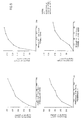
- the long wave infrared radiation emission efficiencies of Type A and Type B powder when compared to a theoretical black box at 100°C are contained in the graphs in Figure 7.
- the radiation efficiencies in wavelengths between four and nine microns range from 71% to 91% for Type A powder and range from 73% to 93% for Type B powder.
- ceramic powders may form molecular seives, which may assist in the removal or discharge of waste products such as hormones, oxygen, ethylene gas and excessive carbon dioxide.
- combination of one or more suitable ceramic powders into packaging materials may assist in moisture regulation and oxygen level regulation. The result is an extension in the shelf life of the produce packaged in packaging material according to the present invention.
- meat wrapped in a packaging material of the present invention and lying in contact with such material has a shelf life extended by up to 50%, and retains an appropriate colour for a considerably extended period.
- the graphs contained in figure 8 demonstrate the gas adsorption properties of Type A and Type B powders for various gases over time.
- Type A and Type B powders have a comparative surface area of 50-100 square meters per gram which is available for the adsorption of gases.
- Type A and Type B powders are surprisingly efficient in the adsorption of ethylene gas, H2S, acetaldehyde gas, trimethylamine gas and benzene when measured over time compared to other known compounds.
- the fundamental building-block of a molecular sieve crystal structure is a tetrahedron of four oxygen anions surrounding a smaller silicon or aluminium cation.
- the sodium ions or other cations serve to make up the positive charge deficit in the alumina tetrahedra.
- Each of the four oxygen anions is shared, in turn, with another silica or alumina tetrahedron to extend the crystal lattice in three dimensions.
- the resulting crystal is unusual in that it is honey-combed with relatively large cavities, each cavity connected with six adjacent ones through apertures or pores.
- the water of hydration is contained within these cavities.
- Type A for example, contains roughly spherical cavities approximately eleven angstroms in diameter and about 925 cubic angstroms in volume, that account for almost half of the total crystalline volume. This volume is available for adsorption.
- the free aperture size in the sodium-bearing type 1 is 3.5 angstroms in diameter. At usual operating temperatures, this allows the passage of molecules with an effective diameter as large as 4 angstroms.
- the external surface area of the molecular sieve crystal is available for adsorption of molecules of all sizes, whereas the internal area is available only to molecules small enough to enter the pores.
- the external area is only about 1 per cent of the total surface area. Materials which are too large to be adsorbed internally will commonly be adsorbed externally to the extent of 0.2 to weight per cent.
- packaging material is provided in the form of a paper.
- the paper includes one or more of the ceramic powders described.
- the paper includes appropriate fibrous substances, soaked in a suitable ceramic powder, for example Type A.
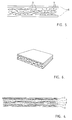
- the paper according to the present invention comprises fibrous material 6 which may be for example plant fibres, synthetic fibres, animal fibres or inorganic fibres.
- Type A powder 7 is added to the fibrous mixture and there may also be added connector and stabilising agents which are required to form the finished paper. These additives will depend on the requirements of the paper, and its ultimate use.
- the components required to form the paper are formed into a slurry, and thereafter formed into a suitable paper product, by a suitable method such as for example the method of dry non-woven cloth.
- a paper-leaf shaped product is formed.
- the Type A powder 7 is dispersed through the paper 6.
- the Type A may be sandwiched between layers of the fibrous material.
- the Type A containing paper may also be coated with a plastic polyethylene material 8 on both sides thereof, as shown in Figure 5 of the accompanying drawings.
- Type A and 50 parts by weight of pulp material are agitated in 1000 parts of water by volume.
- solid SBR-Latex is preferably added (3 parts w/v) and one part w/v of sulphuric acid. Thereafter, 0.5 parts (w/v) of tita-gum as a water filtration reagent may be added. The mixture is thereafter stirred or agitated for a further 5 to 10 minutes.
- Test No 2 The results of Test No 2 as outlined above were obtained by measuring the adsorption efficiency of acetic acid, with the method being conducted in accordance with the weight-volume method in ambient temperature at saturated steam pressure.
- paper according to the present invention has an increased absorption capability, when compared with previously available papers.
- Both 30-50 parts (w/v) pulp and 20 parts (w/v) of synthetic fibres are placed in 1000 parts (w/v) of water, and thereafter agitated or stirred.
- a known paper manufacturing process is thereafter used to form a normal paper with a weight/volume of 80-115g/m .
- This paper forms a base paper for paper according to the present invention.
- a slurry is formed containing ingredients substantially as described in Example 1 above, and this slurry is coated onto the base paper.
- the Type A slurry is absorbed into the base paper.
- the slurry is such that between 70-115g/m thereof is absorbed on top of the base paper.
- the final product is thus a paper weight after drying of 150-230g/m.
- a paper may be provided which includes a foil laminate on one side.
- This foil may be used for cooking processed meats at between 60° C and 200 °C, and then maintaining freshness during cold or frozen storage.
- This paper foil may also be used to directionally orientate the wavelength emission of infrared radiation, in one field only.
- the paper in one form of the invention may be coated with two sides of polyethylene 3. Such a product is particularly suitable for storage of fresh meats and vegetables.
- the packaging material in this form of the invention may also be provided with perforations therein, which allow for absorption of any moisture within the package, and assists in absorption of gases such as ethylene and carbon dioxide.
- the packaging paper according to the present invention has application in a large number of uses, including as soaker pads in retail packages of red meat, pork, fish and chicken. A further use is as liner pads for all retail packaged fruits and vegetables. Packaging paper according to the present invention may also be used at a carton liner for bulk shipments of tomatoes, green leaved vegetables, fruit, mushrooms and the like.
- a further use is as liner pads for bulk fresh meat distribution for a bag in a box type arrangement, or for box in a bag bulk packaging of meats, poultry, fish and the like.
- Packaging film has particular application to the packaging of leafy plants and vegetables, which naturally respire during transportation and storage. A key factor in prolonging shelf life and appearance of such products is controlling the respiration rate of the fruit and vegetables, as well as establishing an environment which continually eliminates unwanted gases and by-products out of the package.
- a plastic packaging film according to the present invention is preferably a permeable film, including ceramic powders as defined previously.
- the combination of the ceramic powders in the plastic packaging film help with the adsorbtion of ethylene gas and also allows oxygen or nitrogen to pass through the film into the package itself.
- the ceramic powders provided in a film according to the present invention adsorb unwanted gases, or stop adsorbtion when certain levels are reached, thus acting like a filter to control the environment inside the package.
- the infrared emission of the ceramic powders inhibit enzyme and bacterial activity.
- the film is sufficiently permeable to allow for proper air permeation and moisture permeation, while at the same time controlling water evaporation so that vegetables, leafy plants and the like, will be maintained in a fresh condition. This also prevents moisture accumulating on the inside of the film.
- impermeable films which are also be referred to as barrier films.
- packaging film according to the present invention may be used in conjunction with a controlled atmosphere or environment, to substantially increase the shelf life of products packaged therein.
- Packaging films according to the present invention may be used with or without paper according to the present invention.
- a controlled atmosphere is defined as the generation and/or maintenance of a gas or a combination of gases in the package, adapted to enhance the shelf life of the produce. Gases may be injected during packaging and may or may not interact with ceramic powders to create the desired controlled atmosphere.
- the packaging film is extruded in flexible tubes.
- Packaging bags and the like may be formed from such film.
- a packaging film may be provided which includes a 5 layer extruded film, which includes layers of ceramic powders 7.
- films according to the present invention may include from one to seven layer film extrusions.
- At least one wall of a cardboard carton which includes an uncoated ceramic powder paper according to the present invention, the ceramic powder paper including one or more ceramic powders.
- Cardboard cartons are generally made of various layers of paper with "flutes" provided therebetween, to give strength.
- ceramic powder paper according to the present invention is applied by adhesive to one or more of the inner layers of the cardboard carton.
- a cardboard carton or container which includes one or more layers of ceramic powder paper. Such a cardboard carton or container allows for an increased shelf life of the product.
- the carton or container may or may not be used on conjunction with a plastic film and the plastic film may or may not contain ceramic powders according to the present invention.
- the ceramic powder paper material may be put in any or all of the layers of the corrugation, depending on the application or the degree of either the effect of the ceramic powders required for the specific product application.
- a visual appearance scale of 1 to 5 was established where on signified excellent visual quality and 5 signified spoiled and visually unappealing.
- Tests were conducted with strawberries, broccoli and mushrooms.
- Four Type B powder impregnated bags were filled with strawberries, broccoli and mushrooms respectively and then were sealed in each bag by closing the open end.
- the same packaging procedure was utilised by placing strawberries, broccoli and mushrooms in conventional polyethylene plastic film of the same thickness as the Type B powder impregnated film to utilise as control.
- the packages were then stored at 18°- 23°C and visually inspected at two day intervals.
- Type A paper was laminated to the interior surface of corrugated cardboard cartons and each filled with 1 kilogram of mushrooms. Tests were conducted using conventional non-laminated cardboard cartons filled with mushrooms as a control. Storage temperature was held at 10°C. Mushrooms contained in the Type A paper coated cartons visually spoiled at a rate one half of that of controlled mushrooms.
- Cuts of beef were placed on a piece of Type A paper and then placed on a stryofoam tray and then overwrapped with commercially available permeable PVC film. Control beef cuts were packaged in the same manner but substituting a commercially available soaker pad instead of Type a paper.
- the pH of the commercially available soaker pad was 6.0 or neutral, while the pH of the Type A paper ranged between 8.5 to 9.0.
- Four individual trays of each product were then placed in a flexible non shrink barrier bag with an opening on one end. The barrier bags were then evacuated to remove substantially all the oxygen, and 100% nitrogen gas was then injected into the barrier bags and sealed. After 14 days storage at 2°C the masterpacks were opened.
- the pork loins as previously packaged achieved a shelf life of 30 days with good surface colour on the meat and no undesirable odours, when compared to packaged used as control which did not use Type B film but were packaged in a similar manner. 6)
- Diced onions were placed in a permeable plastic bag incorporating Type B powder. The packaged was then evaculated and a gas mixture of 5% O2, 15% CO2, 80% N2 by volume injected into the package and heat sealed.
- Control product was packaged in the same manner but in a permeable film not incorporating Type B powder. Storage temperature was held at 8°C. Diced onions stored in control bags began deteriorating within 2 days and bags had a strong odour emanating from them almost immediately upon packaging. Onions packaged in Type B powder film did not start deteriorating until day 5 and the bags had little or no odour emanating from them.
- Packaging film according to the present invention may be formed, in one preferred form of the invention, by any suitable or appropriate technique.
Landscapes
- Engineering & Computer Science (AREA)
- Chemical & Material Sciences (AREA)
- Mechanical Engineering (AREA)
- Inorganic Chemistry (AREA)
- Food Science & Technology (AREA)
- Dispersion Chemistry (AREA)
- Packages (AREA)
- Packging For Living Organisms, Food Or Medicinal Products That Are Sensitive To Environmental Conditiond (AREA)
Applications Claiming Priority (2)
| Application Number | Priority Date | Filing Date | Title |
|---|---|---|---|
| NZ223589 | 1988-02-22 | ||
| NZ22358988 | 1988-02-22 |
Publications (1)
| Publication Number | Publication Date |
|---|---|
| EP0330431A1 true EP0330431A1 (de) | 1989-08-30 |
Family
ID=19922374
Family Applications (1)
| Application Number | Title | Priority Date | Filing Date |
|---|---|---|---|
| EP89301677A Withdrawn EP0330431A1 (de) | 1988-02-22 | 1989-02-21 | Verpackungen |
Country Status (2)
| Country | Link |
|---|---|
| EP (1) | EP0330431A1 (de) |
| AU (1) | AU3016589A (de) |
Cited By (1)
| Publication number | Priority date | Publication date | Assignee | Title |
|---|---|---|---|---|
| WO2008061682A1 (en) * | 2006-11-21 | 2008-05-29 | Domenico Rodeschini | Cover element structure for water containers |
Citations (2)
| Publication number | Priority date | Publication date | Assignee | Title |
|---|---|---|---|---|
| US3422183A (en) * | 1961-03-22 | 1969-01-14 | Silaco Chem Co | Ultra-violet irradiated silver fluoride compositions and biocide uses thereof |
| JPS63137962A (ja) * | 1986-12-01 | 1988-06-09 | Mitsui Toatsu Chem Inc | 合成樹脂フイルム |
-
1989
- 1989-02-21 AU AU30165/89A patent/AU3016589A/en not_active Abandoned
- 1989-02-21 EP EP89301677A patent/EP0330431A1/de not_active Withdrawn
Patent Citations (2)
| Publication number | Priority date | Publication date | Assignee | Title |
|---|---|---|---|---|
| US3422183A (en) * | 1961-03-22 | 1969-01-14 | Silaco Chem Co | Ultra-violet irradiated silver fluoride compositions and biocide uses thereof |
| JPS63137962A (ja) * | 1986-12-01 | 1988-06-09 | Mitsui Toatsu Chem Inc | 合成樹脂フイルム |
Non-Patent Citations (4)
| Title |
|---|
| ABSTRACT BULLETIN OF THE INSTITUTE OF PAPER CHEMISTRY, vol. 55, no. 3, September 1984, abstract no. 3498, Appleton, Wisconsin, US; T. KATSUSHIMA et al.: "Filter paper" * |
| ABSTRACT BULLETIN OF THE INSTITUTE OF PAPER CHEMISTRY, vol. 57, no. 6, December 1986, abstract no. 7800, Appleton, Wisconsin, US; S. NAKAMURA: "Paper containing inorganic filter" * |
| CHEMICAL ABSTRACTS, vol. 109, no. 18, 9th June 1988, page 75, abstract no. 151086c, Columbus, Ohio, US; & JP-A-63 137 962 (MITSUI TOATSU CHEMICALS, INC.) 09-06-1988 * |
| CHEMICAL ABSTRACTS, vol. 109, no. 20, 9th June 1988, page 66, abstract no 171883p, Columbus, Ohio, US; T. MASUDA et al.: "Infrared ray-emitting polyethylene films for fruit packagings" * |
Cited By (1)
| Publication number | Priority date | Publication date | Assignee | Title |
|---|---|---|---|---|
| WO2008061682A1 (en) * | 2006-11-21 | 2008-05-29 | Domenico Rodeschini | Cover element structure for water containers |
Also Published As
| Publication number | Publication date |
|---|---|
| AU3016589A (en) | 1989-08-24 |
Similar Documents
| Publication | Publication Date | Title |
|---|---|---|
| US5207943A (en) | Oxygen absorber for low moisture products | |
| US4337276A (en) | Method for storing produce and container and freshness keeping agent therefore | |
| CA2325992C (en) | Modified atmosphere package with accelerated reduction of oxygen level in meat compartment | |
| US5908649A (en) | Package for perishable food and horticultural products | |
| CA2072967C (en) | Method of packaging perishable food or horticultural products | |
| CN87107591A (zh) | 气调包装膜 | |
| WO2000009418A1 (en) | Corrugated-paperboard package for cut flowers | |
| DE1692210A1 (de) | Verfahren zur Verpackung verderblicher Erzeugnisse | |
| KR102020183B1 (ko) | 신선도 유지 기능이 부여된 밀키트 | |
| JP2013507302A (ja) | バナナの貯蔵および輸送用バッグ | |
| US20100127059A1 (en) | Packaging systems for the control of relative humidity of fresh fruits, vegetables and flowers with simultaneous regulation of carbon dioxide and oxygen | |
| US4235750A (en) | Container for prevention of postharvest decay, maturation and senescense of harvested crops | |
| Hosseinnia et al. | Zeolite‐based polymer composite films for vegetables and fruits packaging: A review | |
| EP2207671B1 (de) | Antimikrobielles gaserzeugungssystem | |
| CA2213251A1 (en) | A method of packing a food and a package containing the food | |
| EP0255461B1 (de) | Reaktives Sorbentmittel für die Konservierung von geernteten Pflanzenprodukten | |
| JP2002186420A (ja) | 青果物又は花卉の鮮度維持方法 | |
| KR100229216B1 (ko) | 제오라이트층을 갖는 골판지 및 그 제조방법 | |
| CA2072996C (en) | Package for perishable food and horticultural products | |
| JP4052747B2 (ja) | 青果物の鮮度保持方法 | |
| JPS6386757A (ja) | プラスチツクフイルム | |
| GB2576272A (en) | Laser-modified biodegradable and compostable packaging material | |
| KR101307506B1 (ko) | 선도유지기능을 갖는 골판지 및 이를 포함하는 포장박스 | |
| JPS6322501A (ja) | 農産物の鮮度保持剤 | |
| JPS6333278A (ja) | 食品類の鮮度保持法 |
Legal Events
| Date | Code | Title | Description |
|---|---|---|---|
| PUAI | Public reference made under article 153(3) epc to a published international application that has entered the european phase |
Free format text: ORIGINAL CODE: 0009012 |
|
| AK | Designated contracting states |
Kind code of ref document: A1 Designated state(s): AT BE CH DE ES FR GB GR IT LI LU NL SE |
|
| STAA | Information on the status of an ep patent application or granted ep patent |
Free format text: STATUS: THE APPLICATION IS DEEMED TO BE WITHDRAWN |
|
| 18D | Application deemed to be withdrawn |
Effective date: 19900301 |