EP0332010A2 - Method for making a dressing for transdermal delivery of pharmaceuticals - Google Patents
Method for making a dressing for transdermal delivery of pharmaceuticals Download PDFInfo
- Publication number
- EP0332010A2 EP0332010A2 EP19890103441 EP89103441A EP0332010A2 EP 0332010 A2 EP0332010 A2 EP 0332010A2 EP 19890103441 EP19890103441 EP 19890103441 EP 89103441 A EP89103441 A EP 89103441A EP 0332010 A2 EP0332010 A2 EP 0332010A2
- Authority
- EP
- European Patent Office
- Prior art keywords
- active ingredient
- polymer
- meth
- active
- release
- Prior art date
- Legal status (The legal status is an assumption and is not a legal conclusion. Google has not performed a legal analysis and makes no representation as to the accuracy of the status listed.)
- Withdrawn
Links
- 238000000034 method Methods 0.000 title claims abstract description 10
- 239000003814 drug Substances 0.000 title abstract description 5
- 230000037317 transdermal delivery Effects 0.000 title abstract 2
- 229920000642 polymer Polymers 0.000 claims abstract description 30
- 239000006185 dispersion Substances 0.000 claims abstract description 22
- 239000004815 dispersion polymer Substances 0.000 claims abstract description 10
- 239000003960 organic solvent Substances 0.000 claims abstract description 7
- XLYOFNOQVPJJNP-UHFFFAOYSA-N water Substances O XLYOFNOQVPJJNP-UHFFFAOYSA-N 0.000 claims abstract description 7
- 238000001035 drying Methods 0.000 claims abstract description 5
- 238000002156 mixing Methods 0.000 claims abstract description 5
- 239000011248 coating agent Substances 0.000 claims abstract description 3
- 238000000576 coating method Methods 0.000 claims abstract description 3
- 230000009477 glass transition Effects 0.000 claims abstract description 3
- 239000004480 active ingredient Substances 0.000 claims description 64
- 238000004519 manufacturing process Methods 0.000 claims description 15
- 239000013543 active substance Substances 0.000 claims description 10
- KAKZBPTYRLMSJV-UHFFFAOYSA-N Butadiene Chemical compound C=CC=C KAKZBPTYRLMSJV-UHFFFAOYSA-N 0.000 claims description 8
- PPBRXRYQALVLMV-UHFFFAOYSA-N Styrene Chemical compound C=CC1=CC=CC=C1 PPBRXRYQALVLMV-UHFFFAOYSA-N 0.000 claims description 7
- 229920001577 copolymer Polymers 0.000 claims description 7
- HRPVXLWXLXDGHG-UHFFFAOYSA-N Acrylamide Chemical compound NC(=O)C=C HRPVXLWXLXDGHG-UHFFFAOYSA-N 0.000 claims description 3
- NLHHRLWOUZZQLW-UHFFFAOYSA-N Acrylonitrile Chemical compound C=CC#N NLHHRLWOUZZQLW-UHFFFAOYSA-N 0.000 claims description 3
- XTXRWKRVRITETP-UHFFFAOYSA-N Vinyl acetate Chemical compound CC(=O)OC=C XTXRWKRVRITETP-UHFFFAOYSA-N 0.000 claims description 3
- 230000008569 process Effects 0.000 claims description 3
- 229940127291 Calcium channel antagonist Drugs 0.000 claims description 2
- CERQOIWHTDAKMF-UHFFFAOYSA-N Methacrylic acid Chemical compound CC(=C)C(O)=O CERQOIWHTDAKMF-UHFFFAOYSA-N 0.000 claims description 2
- 229940035676 analgesics Drugs 0.000 claims description 2
- 239000000730 antalgic agent Substances 0.000 claims description 2
- 230000003288 anthiarrhythmic effect Effects 0.000 claims description 2
- 239000003416 antiarrhythmic agent Substances 0.000 claims description 2
- 229940065524 anticholinergics inhalants for obstructive airway diseases Drugs 0.000 claims description 2
- 229940125715 antihistaminic agent Drugs 0.000 claims description 2
- 239000000739 antihistaminic agent Substances 0.000 claims description 2
- 229940030600 antihypertensive agent Drugs 0.000 claims description 2
- 239000002220 antihypertensive agent Substances 0.000 claims description 2
- 239000000939 antiparkinson agent Substances 0.000 claims description 2
- 229940125688 antiparkinson agent Drugs 0.000 claims description 2
- 239000002876 beta blocker Substances 0.000 claims description 2
- 125000004432 carbon atom Chemical group C* 0.000 claims description 2
- 239000000812 cholinergic antagonist Substances 0.000 claims description 2
- 239000005556 hormone Substances 0.000 claims description 2
- 229940088597 hormone Drugs 0.000 claims description 2
- 229940127240 opiate Drugs 0.000 claims description 2
- 239000011505 plaster Substances 0.000 claims description 2
- 229940001470 psychoactive drug Drugs 0.000 claims description 2
- 239000004089 psychotropic agent Substances 0.000 claims description 2
- 229940124549 vasodilator Drugs 0.000 claims description 2
- 239000003071 vasodilator agent Substances 0.000 claims description 2
- 229940124599 anti-inflammatory drug Drugs 0.000 claims 1
- 239000000480 calcium channel blocker Substances 0.000 claims 1
- 150000001875 compounds Chemical class 0.000 abstract 4
- 239000002245 particle Substances 0.000 description 10
- 239000004816 latex Substances 0.000 description 9
- 229920000126 latex Polymers 0.000 description 9
- 239000000243 solution Substances 0.000 description 9
- QAOWNCQODCNURD-UHFFFAOYSA-N Sulfuric acid Chemical compound OS(O)(=O)=O QAOWNCQODCNURD-UHFFFAOYSA-N 0.000 description 8
- 238000004132 cross linking Methods 0.000 description 8
- WVLOADHCBXTIJK-YNHQPCIGSA-N hydromorphone Chemical compound O([C@H]1C(CC[C@H]23)=O)C4=C5[C@@]12CCN(C)[C@@H]3CC5=CC=C4O WVLOADHCBXTIJK-YNHQPCIGSA-N 0.000 description 7
- 229960001410 hydromorphone Drugs 0.000 description 7
- XQLWNAFCTODIRK-UHFFFAOYSA-N Gallopamil Chemical compound C1=C(OC)C(OC)=CC=C1CCN(C)CCCC(C#N)(C(C)C)C1=CC(OC)=C(OC)C(OC)=C1 XQLWNAFCTODIRK-UHFFFAOYSA-N 0.000 description 6
- CQEYYJKEWSMYFG-UHFFFAOYSA-N butyl acrylate Chemical compound CCCCOC(=O)C=C CQEYYJKEWSMYFG-UHFFFAOYSA-N 0.000 description 6
- 229960000457 gallopamil Drugs 0.000 description 6
- 238000003756 stirring Methods 0.000 description 6
- LFQSCWFLJHTTHZ-UHFFFAOYSA-N Ethanol Chemical compound CCO LFQSCWFLJHTTHZ-UHFFFAOYSA-N 0.000 description 5
- PHFDAOXXIZOUIX-UHFFFAOYSA-N anipamil Chemical compound C=1C=CC(OC)=CC=1C(CCCCCCCCCCCC)(C#N)CCCN(C)CCC1=CC=CC(OC)=C1 PHFDAOXXIZOUIX-UHFFFAOYSA-N 0.000 description 5
- 229950011530 anipamil Drugs 0.000 description 5
- 239000000203 mixture Substances 0.000 description 5
- HIQIXEFWDLTDED-UHFFFAOYSA-N 4-hydroxy-1-piperidin-4-ylpyrrolidin-2-one Chemical compound O=C1CC(O)CN1C1CCNCC1 HIQIXEFWDLTDED-UHFFFAOYSA-N 0.000 description 4
- PEDCQBHIVMGVHV-UHFFFAOYSA-N Glycerol Natural products OCC(O)CO PEDCQBHIVMGVHV-UHFFFAOYSA-N 0.000 description 4
- NIXOWILDQLNWCW-UHFFFAOYSA-N acrylic acid group Chemical group C(C=C)(=O)O NIXOWILDQLNWCW-UHFFFAOYSA-N 0.000 description 4
- 239000000853 adhesive Substances 0.000 description 4
- 239000012790 adhesive layer Substances 0.000 description 4
- 239000007864 aqueous solution Substances 0.000 description 4
- 238000009792 diffusion process Methods 0.000 description 4
- 239000003995 emulsifying agent Substances 0.000 description 4
- DCAYPVUWAIABOU-UHFFFAOYSA-N hexadecane Chemical compound CCCCCCCCCCCCCCCC DCAYPVUWAIABOU-UHFFFAOYSA-N 0.000 description 4
- 229920006254 polymer film Polymers 0.000 description 4
- 159000000000 sodium salts Chemical class 0.000 description 4
- JHWGFJBTMHEZME-UHFFFAOYSA-N 4-prop-2-enoyloxybutyl prop-2-enoate Chemical compound C=CC(=O)OCCCCOC(=O)C=C JHWGFJBTMHEZME-UHFFFAOYSA-N 0.000 description 3
- 229940079593 drug Drugs 0.000 description 3
- 239000010410 layer Substances 0.000 description 3
- 239000007788 liquid Substances 0.000 description 3
- 239000000825 pharmaceutical preparation Substances 0.000 description 3
- -1 styrene Chemical compound 0.000 description 3
- MYRTYDVEIRVNKP-UHFFFAOYSA-N 1,2-Divinylbenzene Chemical compound C=CC1=CC=CC=C1C=C MYRTYDVEIRVNKP-UHFFFAOYSA-N 0.000 description 2
- SMZOUWXMTYCWNB-UHFFFAOYSA-N 2-(2-methoxy-5-methylphenyl)ethanamine Chemical compound COC1=CC=C(C)C=C1CCN SMZOUWXMTYCWNB-UHFFFAOYSA-N 0.000 description 2
- GOXQRTZXKQZDDN-UHFFFAOYSA-N 2-Ethylhexyl acrylate Chemical compound CCCCC(CC)COC(=O)C=C GOXQRTZXKQZDDN-UHFFFAOYSA-N 0.000 description 2
- MUMGGOZAMZWBJJ-DYKIIFRCSA-N Testostosterone Chemical compound O=C1CC[C@]2(C)[C@H]3CC[C@](C)([C@H](CC4)O)[C@@H]4[C@@H]3CCC2=C1 MUMGGOZAMZWBJJ-DYKIIFRCSA-N 0.000 description 2
- 230000002378 acidificating effect Effects 0.000 description 2
- 239000002313 adhesive film Substances 0.000 description 2
- 239000002390 adhesive tape Substances 0.000 description 2
- 239000003945 anionic surfactant Substances 0.000 description 2
- 239000003795 chemical substances by application Substances 0.000 description 2
- 239000002131 composite material Substances 0.000 description 2
- 235000014113 dietary fatty acids Nutrition 0.000 description 2
- LQZZUXJYWNFBMV-UHFFFAOYSA-N dodecan-1-ol Chemical compound CCCCCCCCCCCCO LQZZUXJYWNFBMV-UHFFFAOYSA-N 0.000 description 2
- 239000000839 emulsion Substances 0.000 description 2
- 150000002148 esters Chemical class 0.000 description 2
- 229930195729 fatty acid Natural products 0.000 description 2
- 239000000194 fatty acid Substances 0.000 description 2
- 150000002191 fatty alcohols Chemical class 0.000 description 2
- 235000011187 glycerol Nutrition 0.000 description 2
- LNEPOXFFQSENCJ-UHFFFAOYSA-N haloperidol Chemical compound C1CC(O)(C=2C=CC(Cl)=CC=2)CCN1CCCC(=O)C1=CC=C(F)C=C1 LNEPOXFFQSENCJ-UHFFFAOYSA-N 0.000 description 2
- 238000000338 in vitro Methods 0.000 description 2
- 230000007774 longterm Effects 0.000 description 2
- 239000000546 pharmaceutical excipient Substances 0.000 description 2
- 229920000058 polyacrylate Polymers 0.000 description 2
- 229920005862 polyol Polymers 0.000 description 2
- 150000003077 polyols Chemical class 0.000 description 2
- 238000002360 preparation method Methods 0.000 description 2
- 239000000126 substance Substances 0.000 description 2
- 230000008961 swelling Effects 0.000 description 2
- 125000000391 vinyl group Chemical group [H]C([*])=C([H])[H] 0.000 description 2
- WJTCHBVEUFDSIK-NWDGAFQWSA-N (2r,5s)-1-benzyl-2,5-dimethylpiperazine Chemical compound C[C@@H]1CN[C@@H](C)CN1CC1=CC=CC=C1 WJTCHBVEUFDSIK-NWDGAFQWSA-N 0.000 description 1
- TWBNMYSKRDRHAT-RCWTXCDDSA-N (S)-timolol hemihydrate Chemical compound O.CC(C)(C)NC[C@H](O)COC1=NSN=C1N1CCOCC1.CC(C)(C)NC[C@H](O)COC1=NSN=C1N1CCOCC1 TWBNMYSKRDRHAT-RCWTXCDDSA-N 0.000 description 1
- FYKZHAJQLBLBJO-UHFFFAOYSA-N 1-[4-(2-methoxyphenyl)piperazin-1-yl]-3-[3-(5-methyl-1,3,4-oxadiazol-2-yl)phenoxy]propan-2-ol Chemical compound COC1=CC=CC=C1N1CCN(CC(O)COC=2C=C(C=CC=2)C=2OC(C)=NN=2)CC1 FYKZHAJQLBLBJO-UHFFFAOYSA-N 0.000 description 1
- AXTGDCSMTYGJND-UHFFFAOYSA-N 1-dodecylazepan-2-one Chemical compound CCCCCCCCCCCCN1CCCCCC1=O AXTGDCSMTYGJND-UHFFFAOYSA-N 0.000 description 1
- VOXZDWNPVJITMN-ZBRFXRBCSA-N 17β-estradiol Chemical compound OC1=CC=C2[C@H]3CC[C@](C)([C@H](CC4)O)[C@@H]4[C@@H]3CCC2=C1 VOXZDWNPVJITMN-ZBRFXRBCSA-N 0.000 description 1
- SGTNSNPWRIOYBX-UHFFFAOYSA-N 2-(3,4-dimethoxyphenyl)-5-{[2-(3,4-dimethoxyphenyl)ethyl](methyl)amino}-2-(propan-2-yl)pentanenitrile Chemical compound C1=C(OC)C(OC)=CC=C1CCN(C)CCCC(C#N)(C(C)C)C1=CC=C(OC)C(OC)=C1 SGTNSNPWRIOYBX-UHFFFAOYSA-N 0.000 description 1
- 229930000680 A04AD01 - Scopolamine Natural products 0.000 description 1
- FERIUCNNQQJTOY-UHFFFAOYSA-M Butyrate Chemical compound CCCC([O-])=O FERIUCNNQQJTOY-UHFFFAOYSA-M 0.000 description 1
- FERIUCNNQQJTOY-UHFFFAOYSA-N Butyric acid Natural products CCCC(O)=O FERIUCNNQQJTOY-UHFFFAOYSA-N 0.000 description 1
- GJSURZIOUXUGAL-UHFFFAOYSA-N Clonidine Chemical compound ClC1=CC=CC(Cl)=C1NC1=NCCN1 GJSURZIOUXUGAL-UHFFFAOYSA-N 0.000 description 1
- STECJAGHUSJQJN-GAUPFVANSA-N Hyoscine Natural products C1([C@H](CO)C(=O)OC2C[C@@H]3N([C@H](C2)[C@@H]2[C@H]3O2)C)=CC=CC=C1 STECJAGHUSJQJN-GAUPFVANSA-N 0.000 description 1
- FXHOOIRPVKKKFG-UHFFFAOYSA-N N,N-Dimethylacetamide Chemical compound CN(C)C(C)=O FXHOOIRPVKKKFG-UHFFFAOYSA-N 0.000 description 1
- STECJAGHUSJQJN-UHFFFAOYSA-N N-Methyl-scopolamin Natural products C1C(C2C3O2)N(C)C3CC1OC(=O)C(CO)C1=CC=CC=C1 STECJAGHUSJQJN-UHFFFAOYSA-N 0.000 description 1
- SNIOPGDIGTZGOP-UHFFFAOYSA-N Nitroglycerin Chemical compound [O-][N+](=O)OCC(O[N+]([O-])=O)CO[N+]([O-])=O SNIOPGDIGTZGOP-UHFFFAOYSA-N 0.000 description 1
- 239000000006 Nitroglycerin Substances 0.000 description 1
- 239000002202 Polyethylene glycol Substances 0.000 description 1
- 229920001328 Polyvinylidene chloride Polymers 0.000 description 1
- XBDQKXXYIPTUBI-UHFFFAOYSA-M Propionate Chemical compound CCC([O-])=O XBDQKXXYIPTUBI-UHFFFAOYSA-M 0.000 description 1
- 229920002125 Sokalan® Polymers 0.000 description 1
- 230000001070 adhesive effect Effects 0.000 description 1
- 239000002998 adhesive polymer Substances 0.000 description 1
- 150000001298 alcohols Chemical class 0.000 description 1
- 239000003435 antirheumatic agent Substances 0.000 description 1
- 230000004888 barrier function Effects 0.000 description 1
- 230000008901 benefit Effects 0.000 description 1
- 230000015572 biosynthetic process Effects 0.000 description 1
- YSXKPIUOCJLQIE-UHFFFAOYSA-N biperiden Chemical compound C1C(C=C2)CC2C1C(C=1C=CC=CC=1)(O)CCN1CCCCC1 YSXKPIUOCJLQIE-UHFFFAOYSA-N 0.000 description 1
- 229960003003 biperiden Drugs 0.000 description 1
- HQIRNZOQPUAHHV-UHFFFAOYSA-N bupranolol Chemical compound CC1=CC=C(Cl)C(OCC(O)CNC(C)(C)C)=C1 HQIRNZOQPUAHHV-UHFFFAOYSA-N 0.000 description 1
- 229960000330 bupranolol Drugs 0.000 description 1
- 239000000969 carrier Substances 0.000 description 1
- 239000001913 cellulose Substances 0.000 description 1
- 229920002678 cellulose Polymers 0.000 description 1
- 229960002896 clonidine Drugs 0.000 description 1
- 239000007957 coemulsifier Substances 0.000 description 1
- 125000004386 diacrylate group Chemical group 0.000 description 1
- 238000010790 dilution Methods 0.000 description 1
- 239000012895 dilution Substances 0.000 description 1
- 230000002500 effect on skin Effects 0.000 description 1
- 238000004945 emulsification Methods 0.000 description 1
- 230000001804 emulsifying effect Effects 0.000 description 1
- 238000003912 environmental pollution Methods 0.000 description 1
- 229960005309 estradiol Drugs 0.000 description 1
- 229930182833 estradiol Natural products 0.000 description 1
- 150000004665 fatty acids Chemical class 0.000 description 1
- 229960002428 fentanyl Drugs 0.000 description 1
- IVLVTNPOHDFFCJ-UHFFFAOYSA-N fentanyl citrate Chemical compound OC(=O)CC(O)(C(O)=O)CC(O)=O.C=1C=CC=CC=1N(C(=O)CC)C(CC1)CCN1CCC1=CC=CC=C1 IVLVTNPOHDFFCJ-UHFFFAOYSA-N 0.000 description 1
- 229960003711 glyceryl trinitrate Drugs 0.000 description 1
- 229960003878 haloperidol Drugs 0.000 description 1
- 230000036541 health Effects 0.000 description 1
- 238000010438 heat treatment Methods 0.000 description 1
- 238000004128 high performance liquid chromatography Methods 0.000 description 1
- 230000003993 interaction Effects 0.000 description 1
- 150000002646 long chain fatty acid esters Chemical class 0.000 description 1
- 238000012153 long-term therapy Methods 0.000 description 1
- 239000000155 melt Substances 0.000 description 1
- 125000005397 methacrylic acid ester group Chemical group 0.000 description 1
- KUYQDJOFVBGZID-UHFFFAOYSA-N n,n-diethyl-2-methylbenzamide Chemical compound CCN(CC)C(=O)C1=CC=CC=C1C KUYQDJOFVBGZID-UHFFFAOYSA-N 0.000 description 1
- 229950007126 nesapidil Drugs 0.000 description 1
- 230000006855 networking Effects 0.000 description 1
- 239000002736 nonionic surfactant Substances 0.000 description 1
- YYZUSRORWSJGET-UHFFFAOYSA-N octanoic acid ethyl ester Natural products CCCCCCCC(=O)OCC YYZUSRORWSJGET-UHFFFAOYSA-N 0.000 description 1
- 239000008177 pharmaceutical agent Substances 0.000 description 1
- 239000008363 phosphate buffer Substances 0.000 description 1
- 229920003023 plastic Polymers 0.000 description 1
- 239000004033 plastic Substances 0.000 description 1
- 239000002985 plastic film Substances 0.000 description 1
- 229920006255 plastic film Polymers 0.000 description 1
- 239000004014 plasticizer Substances 0.000 description 1
- 229920001485 poly(butyl acrylate) polymer Polymers 0.000 description 1
- 229920000120 polyethyl acrylate Polymers 0.000 description 1
- 229920001223 polyethylene glycol Polymers 0.000 description 1
- 238000006116 polymerization reaction Methods 0.000 description 1
- 239000005033 polyvinylidene chloride Substances 0.000 description 1
- 229920000036 polyvinylpyrrolidone Polymers 0.000 description 1
- 239000001267 polyvinylpyrrolidone Substances 0.000 description 1
- 235000013855 polyvinylpyrrolidone Nutrition 0.000 description 1
- 239000000843 powder Substances 0.000 description 1
- 230000001681 protective effect Effects 0.000 description 1
- 150000003839 salts Chemical class 0.000 description 1
- 229960002646 scopolamine Drugs 0.000 description 1
- STECJAGHUSJQJN-FWXGHANASA-N scopolamine Chemical compound C1([C@@H](CO)C(=O)O[C@H]2C[C@@H]3N([C@H](C2)[C@@H]2[C@H]3O2)C)=CC=CC=C1 STECJAGHUSJQJN-FWXGHANASA-N 0.000 description 1
- 239000007787 solid Substances 0.000 description 1
- 239000002904 solvent Substances 0.000 description 1
- GMJHUSJLZXFFQJ-UHFFFAOYSA-N soquinolol Chemical compound C1N(C=O)CCC2=C1C=CC=C2OCC(O)CNC(C)(C)C GMJHUSJLZXFFQJ-UHFFFAOYSA-N 0.000 description 1
- 229950000137 soquinolol Drugs 0.000 description 1
- 239000004094 surface-active agent Substances 0.000 description 1
- 125000000999 tert-butyl group Chemical group [H]C([H])([H])C(*)(C([H])([H])[H])C([H])([H])[H] 0.000 description 1
- 229960003604 testosterone Drugs 0.000 description 1
- 230000008646 thermal stress Effects 0.000 description 1
- 230000008719 thickening Effects 0.000 description 1
- 229960004605 timolol Drugs 0.000 description 1
- 229960001722 verapamil Drugs 0.000 description 1
- 229920001567 vinyl ester resin Polymers 0.000 description 1
- 229920003176 water-insoluble polymer Polymers 0.000 description 1
Images

Classifications
-
- A—HUMAN NECESSITIES
- A61—MEDICAL OR VETERINARY SCIENCE; HYGIENE
- A61K—PREPARATIONS FOR MEDICAL, DENTAL OR TOILETRY PURPOSES
- A61K9/00—Medicinal preparations characterised by special physical form
- A61K9/70—Web, sheet or filament bases ; Films; Fibres of the matrix type containing drug
- A61K9/7023—Transdermal patches and similar drug-containing composite devices, e.g. cataplasms
- A61K9/703—Transdermal patches and similar drug-containing composite devices, e.g. cataplasms characterised by shape or structure; Details concerning release liner or backing; Refillable patches; User-activated patches
- A61K9/7038—Transdermal patches of the drug-in-adhesive type, i.e. comprising drug in the skin-adhesive layer
- A61K9/7046—Transdermal patches of the drug-in-adhesive type, i.e. comprising drug in the skin-adhesive layer the adhesive comprising macromolecular compounds
- A61K9/7053—Transdermal patches of the drug-in-adhesive type, i.e. comprising drug in the skin-adhesive layer the adhesive comprising macromolecular compounds obtained by reactions only involving carbon to carbon unsaturated bonds, e.g. polyvinyl, polyisobutylene, polystyrene
- A61K9/7061—Polyacrylates
Definitions
- the invention relates to a manufacturing process for a solvent-free preparation in the form of a self-adhesive polymer film containing the active ingredient for long-term transdermal application of systemically active, lipophilic pharmaceutical active ingredients with a molecular weight below 1,000 on a film largely impermeable to the active ingredient and water vapor.
- Such laminar products are e.g. in US Pat. Nos. 3,995,632, 4,060,084, 3,731,683, 3,742,951 or 4,031,894 and generally consist of an impermeable backing film which simultaneously provides protection to the outside, a reservoir which contains the active ingredient in liquid or contains solid suspended form, a suitable device for controlling the release of active ingredient applied thereon, and devices for adhesive fixing of the system to the skin.
- compositions can be produced more simply in the form of a polymer film in which the active ingredient is incorporated.
- Preparations are known from DE-A-2 449 865, 3 204 551, 3 525 767, 3 423 293 and 3 242 837 and EP-A-169 364, 186 109 and 159 168 which consist of water-insoluble polymers exist and are in principle suitable for long-term therapy.
- the use of organic solvents and mixtures in all the systems mentioned requires a high level of technical and financial expenditure to avoid damage to health and the environment during production.
- DE-A-2 929 500 and DD-A-217 989 describe polymer films as active substance carriers for dermal active substance application, the production of which from aqueous polyacrylate dispersions avoids the production problems mentioned above.
- DE-A-2 920 500 the film made from polyethyl acrylate and ethyl methacrylate copolymers is subsequently impregnated with a solution of the active ingredient in a suitable organic solvent.
- DE-A-3 204 551 there are disadvantages with this production method due to technical difficulties when applying the active ingredient solution and due to a lack of reproducibility in the production of the pharmaceutical form.
- solutions of active ingredients in water-miscible organic solvents are mixed with suitable aqueous polymer dispersions and films containing active ingredients are produced therefrom.
- this method is not suitable for lipophilic active substances, and there are also problems with environmental pollution during production.
- the aim of the invention is to develop a simple, economical and environmentally friendly method for producing a pharmaceutical preparation for transdermal use.
- This aim is achieved by a process for the production of a patch for the transdermal application of systemically active, lipophilic pharmaceutical active substances with a molecular weight below 1,000, by mixing an aqueous dispersion of a polymer with a glass transition temperature between -70 and -10, preferably -55 to - 25'C, with the active ingredient, coating a carrier film which is practically impermeable to water vapor and the active ingredient, with the active ingredient-containing polymer dispersion and drying, an active ingredient which does not dissolve the polymer so strongly that its adhesiveness suffers, and none volatile organic solvent is used.
- Suitable pharmaceutical agents with molecular weights below 1,000 are lipophilic in nature so that they are able to penetrate through human skin. In addition, they must not dissolve the polymer layer in which they are embedded and thereby impair the adherence to the skin, such as e.g. would be the case with nitroglycerin and similar nitrated polyols.
- Examples of classes of drugs with suitable active ingredients are: calcium antagonists, antihypertensives, antiarrhythmics, ⁇ -receptor blockers, strong analgesics (opiates), psychotropic drugs, vasodilators, antiparkinson agents, anticholinergics, antihistamines, antirheumatic drugs and hormones.
- suitable active ingredients are: verapamil, gallopamil, anipamil, hydromorphone, biperiden, soquinolol, nesapidil, estradiol, clonidine, scopolamine, haloperidol, bupranolol, timolol, fentanyl, testosterone.
- copolymers based on acrylic and methacrylic acid esters of alcohols having 2 to 12, preferably 4 to 8, carbon atoms which may contain numerous other comonomers in copolymerized form, for example (meth) acrylic acid, (meth ) acrylonitrile, (meth) acrylic amide, N-tert-butyl (meth) acrylamide, vinyl esters such as vinyl acetate, propionate or butyrate, other vinyl compounds such as styrene, and also butadiene. Butyl acrylate and 2-ethylhexyl acrylate are particularly noteworthy.
- the polymers can also be crosslinked by adding small amounts of comonomers with two or more copolymerizable double bonds, for example diacrylates, such as butanediol diacrylate, or divinyl compounds, such as divinylbenzene.
- the particle size of the dispersions should be between 50 and 500 nm, preferably between 50 and 200 nm.
- the particle size and the degree of crosslinking can be adjusted in a known manner depending on the polymerization conditions and the comonomers. Smaller particle sizes and an increased degree of crosslinking can cause an increase in the active ingredient release.
- the pharmaceutical preparation according to the invention is produced in such a way that a lipophilic active ingredient is incorporated into the aqueous latex dispersion in an uncharged form by means of an emulsion process.
- the fine powder (particle size below 200, preferably below 50 .mu.m) or liquid lipophilic active ingredient can be dispersed in an aqueous emulsifier solution and in this mixture one of the above-mentioned aqueous latex dispersions at a temperature of 10-80. C, preferably 30-70 ° C, are stirred in.
- the salt of an acidic or basic active ingredient in aqueous solution can be mixed with the polymer dispersion at a pH at which the active ingredient is predominantly in the water-soluble ionized form.
- the active ingredient is then brought into the uncharged, water-insoluble form by pH shifting and simultaneously emulsified into the dispersion.
- entraining agents which are usually lipophilic, non-volatile, liquid substances, e.g. Isopropyl myristate, N, N-diethyltoluamide, N, N-dimethylacetamide, ethyl caprylate, azone, dodecanol.
- Such an entrainer can be incorporated either by mixing it with the active ingredient, emulsifying it and then combining it with the polymer dispersion, or by incorporating it into an aqueous active ingredient emulsion or dispersion at different times and then combining it with the polymer dispersion.
- the active ingredient is expediently introduced, the emulsifier and water are added, and the mixture is then mixed with the polymer dispersion.
- the active ingredient-containing dispersion obtained in this way is optionally provided with customary auxiliaries and drawn out in a manner known per se to form a film on a support film and dried.
- the drying temperature can be between room temperature and 100 ° C, with an optimum between the desired rapid drying and the formation of bubbles to be avoided in the film and the thermal stress on the active ingredient generally at 35-45 ° C.
- a decisive advantage over existing methods is the avoidance of organic solvents in the manufacture of the pharmaceutical form.
- the resulting films have thicknesses of 10-800, preferably 50-300, um.
- the film can be produced continuously or discontinuously.
- the application process can be repeated several times until the film has reached the desired thickness.
- the sticky polymer layer contains the lipophilic active ingredient in a concentration in the range from 1 to 40, preferably 5 to 25,% by weight.
- the surfactants customary for this purpose are used as emulsifiers for both the active ingredients and the polymers, such as the sodium salt of longer-chain fatty acids and the sulfuric acid half-ester of an (optionally oxyethylated) fatty alcohol as examples of anionic surfactants as well as polyoxethylated alkylphenols and longer-chain fatty alcohols (e.g. hexadecane (1 ) -ol) and glycerol fatty acid partial esters as examples of nonionic surfactants and co-emulsifiers.
- anionic surfactants e.g. hexadecane (1 ) -ol
- polyoxethylated alkylphenols and longer-chain fatty alcohols e.g. hexadecane (1 ) -ol
- glycerol fatty acid partial esters examples of nonionic surfactants and co-emulsifiers.
- auxiliary substances that are considered are e.g. Polyacrylic acids for thickening the aqueous dispersions and e.g. Polyols such as glycerin and polyethylene glycol as plasticizers to influence the adhesiveness of the dried adhesive layer, furthermore swelling agents which improve the swelling capacity of the film and thereby accelerate the release of the active ingredient, e.g. Cellulose derivatives, polyacrylates, polyvinyl pyrrolidone.
- the support film on which the active ingredient-containing polymer dispersion is dried should be practically impermeable both for the active ingredient and for water vapor. It can e.g. made of an aluminum-plastic composite film or a plastic film, which on the active ingredient side with a barrier layer made of e.g. Polyvinylidene chloride is provided.
- One way of controlling the release results from the use of dispersions of polymers and copolymers of different polarities and different degrees of crosslinking.
- polymers of suitable polarity By selecting polymers of suitable polarity, the binding of the active ingredient in the polymer can be minimized and the release of the active ingredient to the skin can thus be optimized.
- a measure of the polarity of lipophilic active substances and polymers is, for example, the solubility parameter according to Hildebrandt, JH, Prausnitz JM, Scott RL, Regular and Related Solutions, van Nostrand Reinhold, New York 1970.
- the solubility parameter of the polymer and the extent of the difference in the solubility parameters between drug and polymer can be a measure for different interactions and thus for different release rates of Active ingredient from the polymer.
- the release rate of the active ingredient can also be controlled via the degree of crosslinking of the polymer, an increasing degree of crosslinking reducing the solubility of the active ingredient in the polymer and thereby increasing the release rate. This is shown in Table 2 and Figure 2 for the active ingredient hydromorphone. It is also possible to control the release via the particle size of the polymer, smaller particles generally causing faster release. This is shown in Table 3 and Figure 3 for the active ingredient gallopamil. Another possibility for controlling the release of the active ingredient is to add lipophilic excipients (more lipophilic than the active ingredient), for example long-chain fatty acid esters such as isopropyl myristate. By combining all of the aforementioned control principles, the release of an active ingredient from the active ingredient carrier can be influenced within wide limits.
- the plaster obtainable according to the invention has a very simple structure, it only consists of the support or carrier film and the active substance-containing polymer adhesive layer. It can either come on the market in rolled up form or be provided with an easily removable protective film on the adhesive layer. The entire manufacturing process is simple and economical because an organic volatile solvent that would later have to be evaporated is not used in any phase.
- the self-adhesive gallopamil-containing film thus produced with an active ingredient content of 15%, was then further packaged in the usual way.
- basis weights of 5 mgicm 2 resulted, which could be increased further by multiple application.
- hydromorphone-HCl 1 part was dissolved in 10 parts of a 2% aqueous solution of the sodium salt of the sulfuric acid semi-ester of 2 to 3 times ethoxylated C 12 to C 14 alcohol.
- 100 parts of a 50% acidic dispersion of a copolymer of 50% butyl acrylate and 50% vinyl acetate were adjusted to a pH of 7.0 by adding a little less than 1 part of concentrated NH 3 solution with stirring, then with 10 parts of a 7. 5% solution of the anionic surfactant already used above and in Examples 1 and 2 mixed.
- 10 parts of the emulsifier-containing polymer dispersion were introduced and 3 parts of the hydromorphone-HCl solution were stirred in at room temperature within 15 minutes.
- NHA solution was under vigorous stirring (1000 -1) then by the dropwise addition of 10% accommodated within 15-30 min at pH 9.5-10.0, wherein hydromorphone base was liberated. After stirring for a further half hour to homogenize the active ingredient-containing dispersion, it was processed into a film as described in Example 1.
- the self-adhesive hydromorphone-containing film thus produced had an active ingredient content of 5.5%.
- film pieces of a suitable size were inserted into a release cell and brought into contact with an isotonic phosphate buffer pH 6.0 as the acceptor medium at a specified temperature and mixing.
- the acceptor medium was mixed with 25% (v / v) ethanol to increase the solubility of the active ingredient.
- 3% of the release medium was taken as a sample and replaced with fresh release medium.
- the active substance content of the samples was determined by means of HPLC. The volume correction was carried out according to the Münzel dilution scheme.
- Active ingredient-containing films with anipamil were produced from 2 latex types of different polarity according to Example 2.
- the effective diffusion coefficients obtained from the release studies are shown in Table 1.
- Active substance-containing films with hydromorphone were produced from 3 types of latex with different crosslinking according to Example 3.
- the effective diffusion coefficients obtained from the release studies are shown in Table 2.
- Active ingredient-containing films with gallopamil were produced from three latex types of different latex particle sizes in accordance with Example 1.
- the effective diffusion coefficients obtained from the release studies are shown in Table 3.
- the release behavior of the active ingredient can also be influenced by the different latex particle size of the polymer.
- Active ingredient-containing films with gallopamil were produced with and without isopropyl myristate as a lipophilic auxiliary according to Example 1.
- the effective diffusion coefficients obtained from the release studies are shown in Table 4.
Landscapes
- Health & Medical Sciences (AREA)
- Engineering & Computer Science (AREA)
- Bioinformatics & Cheminformatics (AREA)
- Dermatology (AREA)
- Chemical & Material Sciences (AREA)
- Medicinal Chemistry (AREA)
- Pharmacology & Pharmacy (AREA)
- Epidemiology (AREA)
- Life Sciences & Earth Sciences (AREA)
- Animal Behavior & Ethology (AREA)
- General Health & Medical Sciences (AREA)
- Public Health (AREA)
- Veterinary Medicine (AREA)
- Medicinal Preparation (AREA)
Abstract
Description
Die Erfindung betrifft ein Herstellungsverfahren für eine lösungsmittelfreie Zubereitung in Form eines selbstklebenden, den Wirkstoff enthaltenden Polymerfilms zur transdermalen Langzeitapplikation systemisch wirksamer, lipophiler pharmazeutischer Wirkstoffe mit einem Molekulargewicht unter 1 000 auf einer für Wirkstoff und Wasserdampf weitgehend undurchlässigen Folie.The invention relates to a manufacturing process for a solvent-free preparation in the form of a self-adhesive polymer film containing the active ingredient for long-term transdermal application of systemically active, lipophilic pharmaceutical active ingredients with a molecular weight below 1,000 on a film largely impermeable to the active ingredient and water vapor.
Zur transdermalen Langzeitapplikation von Wirkstoffen sind verschiedene mehrschichtig zusammengesetzte Systeme bekannt, die einen Film zur Kontrolle der Arzneistofffreisetzung nutzen. Derartige laminar aufgebaute Produkte sind z.B. in den US-PS 3 995 632, 4 060 084, 3 731 683, 3 742 951 oder 4 031 894 beschrieben und bestehen im allgemeinen aus einer undurchlässigen Stützfolie, welche gleichzeitig Schutz nach außen gewährt, einem Reservoir, welches den Wirkstoff in flüssiger oder fester suspendierter Form enthält, einer darauf aufgebrachten geeigneten Vorrichtung zur Steuerung der Wirkstofffreigabe sowie aus Einrichtungen zur klebenden Fixierung des Systems auf der Haut.For the transdermal long-term application of active substances, various multilayer systems are known which use a film to control the drug release. Such laminar products are e.g. in US Pat. Nos. 3,995,632, 4,060,084, 3,731,683, 3,742,951 or 4,031,894 and generally consist of an impermeable backing film which simultaneously provides protection to the outside, a reservoir which contains the active ingredient in liquid or contains solid suspended form, a suitable device for controlling the release of active ingredient applied thereon, and devices for adhesive fixing of the system to the skin.
Die Herstellung dieser Systeme ist aufgrund ihres mehrschichtigen Aufbaus aufwendig.The production of these systems is complex due to their multilayer structure.
Demgegenüber können pharmazeutische Zubereitungen einfacher in Form eines Polymerfilms hergestellt werden, in den der Wirkstoff inkorporiert ist. So sind aus den DE-A- 2 449 865, 3 204 551, 3 525 767, 3 423 293 und 3 242 837 und den EP-A-169 364, 186 109 und 159 168 Zubereitungen bekannt, die aus in Wasser unlöslichen Polymeren bestehen und prinzipiell für eine Langzeittherapie geeignet sind. Die Verwendung organischer Lösungsmittel und -gemische bei allen genannten Systemen bedingt einen hohen technischen und finanziellen Aufwand zur Vermeidung von Gesundheits- und Umweltschäden bei der Herstellung.In contrast, pharmaceutical preparations can be produced more simply in the form of a polymer film in which the active ingredient is incorporated. Preparations are known from DE-A-2 449 865, 3 204 551, 3 525 767, 3 423 293 and 3 242 837 and EP-A-169 364, 186 109 and 159 168 which consist of water-insoluble polymers exist and are in principle suitable for long-term therapy. The use of organic solvents and mixtures in all the systems mentioned requires a high level of technical and financial expenditure to avoid damage to health and the environment during production.
Schließlich beschreiben DE-A- 2 929 500 und DD-A- 217 989 Polymerfilme als Wirkstoffträger zur dermalen Wirkstoffapplikation, deren Herstellung aus wäßrigen Polyacrylatdispersionen die obengenannten Herstellungsprobleme vermeidet. Hierbei wird bei DE-A- 2 920 500 der aus Polyethylacrylat und - ethylmethacrylat-Copolymeren hergestellte Film nachträglich mit einer Lösung des Wirkstoffs in einem geeigneten, organischen Lösungsmittel imprägniert. Gemäß DE-A- 3 204 551 ergeben sich jedoch Nachteile bei dieser Herstellungsmethode durch technische Schwierigkeiten bei der Auftragung der Wirkstofflösung und durch mangelnde Reproduzierbarkeit bei der Herstellung der Arzneiform. Nach der DD-A-217 989 werden Lösungen von Wirkstoffen in mit Wasser mischbaren organischen Lösungsmitteln mit geeigneten wäßrigen Polymerdispersionen gemischt und daraus wirkstoffhaltige Filme hergestellt. Aus Gründen der Dispersionsstabilität ist dieses Verfahren nicht für lipophile Wirkstoffe geeignet, außerdem ergeben sich auch hier teilweise Probleme durch Umweltbelastung bei der Herstellung.Finally, DE-A-2 929 500 and DD-A-217 989 describe polymer films as active substance carriers for dermal active substance application, the production of which from aqueous polyacrylate dispersions avoids the production problems mentioned above. In DE-A-2 920 500, the film made from polyethyl acrylate and ethyl methacrylate copolymers is subsequently impregnated with a solution of the active ingredient in a suitable organic solvent. According to DE-A-3 204 551, there are disadvantages with this production method due to technical difficulties when applying the active ingredient solution and due to a lack of reproducibility in the production of the pharmaceutical form. According to DD-A-217 989, solutions of active ingredients in water-miscible organic solvents are mixed with suitable aqueous polymer dispersions and films containing active ingredients are produced therefrom. For reasons of dispersion stability, this method is not suitable for lipophilic active substances, and there are also problems with environmental pollution during production.
Ziel der Erfindung ist es, ein einfaches, wirtschaftliches und umweltfreundliches Verfahren zur Herstellung einer pharmazeutischen Zubereitung zur transdermalen Anwendung zu entwickeln.The aim of the invention is to develop a simple, economical and environmentally friendly method for producing a pharmaceutical preparation for transdermal use.
Dieses Ziel wird erreicht durch ein Verfahren zur Herstellung eines Pflasters zur transdermalen Anwendung von systemisch wirksamen, lipophilen pharmazeutischen Wirkstoffen mit einem Molekulargewicht unter 1 000, durch Mischen einer wäßrigen Dispersion eines Polymeren mit einer Glastemperatur zwischen -70 und -10, vorzugsweise -55 bis -25'C, mit dem Wirkstoff, Beschichten einer Trägerfolie, die gegenüber Wasserdampf und dem Wirkstoff praktisch undurchlässig ist, mit der wirkstoffhaltigen Polymer- dispersion und Trocknen, wobei ein Wirkstoff, der das Polymere nicht so stark anlöst, daß dessen Haftfähigkeit leidet, und kein flüchtiges organisches Lösungsmittel eingesetzt wird.This aim is achieved by a process for the production of a patch for the transdermal application of systemically active, lipophilic pharmaceutical active substances with a molecular weight below 1,000, by mixing an aqueous dispersion of a polymer with a glass transition temperature between -70 and -10, preferably -55 to - 25'C, with the active ingredient, coating a carrier film which is practically impermeable to water vapor and the active ingredient, with the active ingredient-containing polymer dispersion and drying, an active ingredient which does not dissolve the polymer so strongly that its adhesiveness suffers, and none volatile organic solvent is used.
Geeignete pharmazeutische Wirkstoffe mit Molekulargewichten unter 1 000 sind lipophiler Natur, so daß sie in der Lage sind, durch die menschliche Haut zu penetrieren. Außerdem dürfen sie die Polymerschicht, in die sie eingebettet sind, nicht anlösen und dadurch das Haftvermögen auf der Haut beeinträchtigen, wie das z.B. bei Nitroglycerin und ähnlichen nitrierten Polyolen der Fall wäre.Suitable pharmaceutical agents with molecular weights below 1,000 are lipophilic in nature so that they are able to penetrate through human skin. In addition, they must not dissolve the polymer layer in which they are embedded and thereby impair the adherence to the skin, such as e.g. would be the case with nitroglycerin and similar nitrated polyols.
Als Beispiele für Arzneistoffklassen mit geeigneten Wirkstoffen seien genannt: Calciumantagonisten, Antihypertensiva, Antiarrhythmika, ß-Rezeptorenblocker, starke Analgetika (Opiate), Psychopharmaka, Vasodilatatoren, Antiparkinsonmittel, Anticholinergika, Antihistaminika, Antirheumatika und Hormone. Beispiele für geeignete Wirkstoffe sind: Verapamil, Gallopamil, Anipamil, Hydromorphon, Biperiden, Soquinolol, Nesapidil, Estradiol, Clonidin, Scopolamin, Haloperidol, Bupranolol, Timolol, Fentanyl, Testosteron.Examples of classes of drugs with suitable active ingredients are: calcium antagonists, antihypertensives, antiarrhythmics, β-receptor blockers, strong analgesics (opiates), psychotropic drugs, vasodilators, antiparkinson agents, anticholinergics, antihistamines, antirheumatic drugs and hormones. Examples of suitable active ingredients are: verapamil, gallopamil, anipamil, hydromorphone, biperiden, soquinolol, nesapidil, estradiol, clonidine, scopolamine, haloperidol, bupranolol, timolol, fentanyl, testosterone.
Die Herstellung von klebrigen Polymeren, die ihrerseits zur Herstellung von selbstklebenden Bändern und Folien geeignet sind, ist bekannt, beispielsweise aus den US-Patenten 2 973 286 und 3 307 544. Die selbstklebenden Bänder und Folien sollen auf bloßen Kontakt auf der menschlichen Haut kleben, doch soll die Kohäsion der Klebschicht größer sein als die Adhäsion an der Haut, so daß sie sich weitgehend rückstandslos wieder abziehen lassen. Es handelt sich in der Regel um Copolymerisate auf der Basis von Acryl- und Methacrylsäureestern von Alkoholen mit 2 bis 12, vorzugsweise 4 bis 8 Kohlenstoffatomen, die zahlreiche andere Comonomere einpolymerisiert enthalten können, beispielsweise (Meth-)acrylsäure, (Meth- )acrylnitril, (Meth-)acryl-amid, N-tert.-Butyl-(meth-)acrylamid, Vinylester wie Vinylacetat, -propionat oder -butyrat, andere Vinylverbindungen wie Styrol, ferner Butadien. Besonders hervorgehoben seien Butylacrylat und 2-Ethylhexylacrylat. Die Polymeren können auch durch Zusatz geringer Mengen Comonomerer mit zwei oder mehr copolymerisierbaren Doppelbindungen, also beispielsweise von Diacrylaten, wie Butandioldiacrylat, oder Divinylverbindungen, wie Divinylbenzol, vernetzt sein. Die Teilchengröße der Dispersionen soll zwischen 50 und 500 nm, bevorzugt zwischen 50 und 200 nm liegen. Die Teilchengröße und der Vernetzungsgrad können in bekannter Weise in Abhängigkeit von den Polymerisationsbedingungen und den Comonomeren eingestellt werden. Kleinere Teilchengrößen und ein erhöhter Vernetzungsgrad können eine Steigerung der Wirkstofffreisetzung bewirken.The production of sticky polymers, which in turn are suitable for the production of self-adhesive tapes and films, is known, for example from US Pat. Nos. 2,973,286 and 3,307,544. The self-adhesive tapes and films are intended to stick to human skin on mere contact. however, the cohesion of the adhesive layer should be greater than the adhesion to the skin, so that they can be removed again largely without residue. These are generally copolymers based on acrylic and methacrylic acid esters of alcohols having 2 to 12, preferably 4 to 8, carbon atoms, which may contain numerous other comonomers in copolymerized form, for example (meth) acrylic acid, (meth ) acrylonitrile, (meth) acrylic amide, N-tert-butyl (meth) acrylamide, vinyl esters such as vinyl acetate, propionate or butyrate, other vinyl compounds such as styrene, and also butadiene. Butyl acrylate and 2-ethylhexyl acrylate are particularly noteworthy. The polymers can also be crosslinked by adding small amounts of comonomers with two or more copolymerizable double bonds, for example diacrylates, such as butanediol diacrylate, or divinyl compounds, such as divinylbenzene. The particle size of the dispersions should be between 50 and 500 nm, preferably between 50 and 200 nm. The particle size and the degree of crosslinking can be adjusted in a known manner depending on the polymerization conditions and the comonomers. Smaller particle sizes and an increased degree of crosslinking can cause an increase in the active ingredient release.
Die Herstellung der erfindungsgemäßen pharmazeutischen Zubereitung erfolgt in der Weise, daß ein lipophiler Wirkstoff in ungeladener Form mittels eines Emulsionsverfahrens in die wäßrige Latexdispersion eingearbeitet wird. Dazu kann der feinpulvrige (Teilchengröße unter 200, vorzugsweise unter 50 u.m) oder flüssige lipophile Wirkstoff in einer wäßrigen Emulgatorlösung dispergiert und in diese Mischung eine der obengenannten wäßrigen Latexdispersionen bei einer Temperatur von 10-80. C, bevorzugt 30-70 °C, eingerührt werden. Daneben kann auch das Salz eines sauren oder basischen Wirkstoffes in wäßriger Lösung mit der Polymerdispersion bei einem pH-Wert gemischt werden, bei dem der Wirkstoff vorwiegend in der wasserlöslichen ionisierten Form vorliegt. Durch pH-Verschiebung wird dann der Wirkstoff in die ungeladene wasserunlösliche Form gebracht und simultan in die Dispersion einemulgiert.The pharmaceutical preparation according to the invention is produced in such a way that a lipophilic active ingredient is incorporated into the aqueous latex dispersion in an uncharged form by means of an emulsion process. For this purpose, the fine powder (particle size below 200, preferably below 50 .mu.m) or liquid lipophilic active ingredient can be dispersed in an aqueous emulsifier solution and in this mixture one of the above-mentioned aqueous latex dispersions at a temperature of 10-80. C, preferably 30-70 ° C, are stirred in. In addition, the salt of an acidic or basic active ingredient in aqueous solution can be mixed with the polymer dispersion at a pH at which the active ingredient is predominantly in the water-soluble ionized form. The active ingredient is then brought into the uncharged, water-insoluble form by pH shifting and simultaneously emulsified into the dispersion.
Gleichzeitig können mittels dieses Verfahrens zusammen mit dem Wirkstoff auch Schleppmittel eingearbeitet werden, die in der Regel lipophile nichtflüchtige, flüssige Stoffe darstellen, z.B. Isopropylmyristat, N,N-Diethyltoluamid, N,N-Dimethylacetamid, Ethylcaprylat, Azone, Dodecanol. Die Einarbeitung eines solchen Schleppmittels kann dadurch erfolgen, daß dieses entweder mit dem Wirkstoff gemischt, emulgiert und anschließend mit der Polymerdispersion vereinigt wird, oder daß es zeitlich getrennt in eine wäßrige Wirkstoffemulsion bzw. -dispersion eingearbeitet und anschließend mit der Polymerdispersion vereinigt wird.At the same time, entraining agents, which are usually lipophilic, non-volatile, liquid substances, e.g. Isopropyl myristate, N, N-diethyltoluamide, N, N-dimethylacetamide, ethyl caprylate, azone, dodecanol. Such an entrainer can be incorporated either by mixing it with the active ingredient, emulsifying it and then combining it with the polymer dispersion, or by incorporating it into an aqueous active ingredient emulsion or dispersion at different times and then combining it with the polymer dispersion.
In jedem Fall legt man zweckmäßig den Wirkstoff vor, gibt den Emulgator und Wasser zu und mischt dann mit der Polymerdispersion. Die so erhaltene wirkstoffhaltige Dispersion wird gegebenenfalls mit üblichen Hilfsstoffen versehen und in an sich bekannter Weise auf einer Stützfolie zu einem Film ausgezogen und getrocknet. Die Trocknungstemperatur kann hierbei zwischen Raumtemperatur und 100°C liegen, wobei ein Optimum zwischen angestrebter schneller Trocknung und zu vermeidender Blasenbildung im Film sowie thermischer Belastung des Wirkstoffs im allgemeinen bei 35-45 C liegt. Ein entscheidender Vorteil gegenüber bestehenden Methoden ist die Vermeidung von organischen Lösungsmitteln bei der Herstellung der Arzneiform.In any case, the active ingredient is expediently introduced, the emulsifier and water are added, and the mixture is then mixed with the polymer dispersion. The active ingredient-containing dispersion obtained in this way is optionally provided with customary auxiliaries and drawn out in a manner known per se to form a film on a support film and dried. The drying temperature can be between room temperature and 100 ° C, with an optimum between the desired rapid drying and the formation of bubbles to be avoided in the film and the thermal stress on the active ingredient generally at 35-45 ° C. A decisive advantage over existing methods is the avoidance of organic solvents in the manufacture of the pharmaceutical form.
Die resultierenden Filme haben Dicken von 10-800, bevorzugt 50-300 urn. Die Filmherstellung kann kontinuierlich oder diskontinuierlich erfolgen. Das Auftrageverfahren kann mehrmals wiederholt werden, bis der Film die gewünschte Dicke erreicht hat. Die klebrige Polymerschicht enthält den lipophilen Wirkstoff in einer Konzentration im Bereich von 1 bis 40, vorzugsweise 5 bis 25 Gew.%.The resulting films have thicknesses of 10-800, preferably 50-300, um. The film can be produced continuously or discontinuously. The application process can be repeated several times until the film has reached the desired thickness. The sticky polymer layer contains the lipophilic active ingredient in a concentration in the range from 1 to 40, preferably 5 to 25,% by weight.
Als Emulgatoren sowohl für die Wirkstoffe wie auch die Polymeren werden die hierfür üblichen Tenside verwendet, wie das Natriumsalz von längerkettigen Fettsäuren und des Schwefelsäurehalbesters eines (ggf. oxethylierten) Fettalkohols als Beispiele für anionische Tenside sowie polyoxethylierte Alkylphenole und längerkettige Fettalkohole (z.B. Hexadekan-(1 )-ol) und Glycerin-Fettsäurepartialester als Beispiele für nichtionische Tenside und Coemulgatoren.The surfactants customary for this purpose are used as emulsifiers for both the active ingredients and the polymers, such as the sodium salt of longer-chain fatty acids and the sulfuric acid half-ester of an (optionally oxyethylated) fatty alcohol as examples of anionic surfactants as well as polyoxethylated alkylphenols and longer-chain fatty alcohols (e.g. hexadecane (1 ) -ol) and glycerol fatty acid partial esters as examples of nonionic surfactants and co-emulsifiers.
Weitere in Betracht kommende Hilfsstoffe sind z.B. Polyacrylsäuren zur Verdickung der wäßrigen Dispersionen sowie z.B. Polyole wie Glycerin und Polyethylenglykol als Weichmacher zur Beeinflussung der Haftfähigkeit der getrockneten Klebeschicht, ferner Quellstoffe, die das Quellungsvermögen des Filmes verbessern und dadurch die Freisetzung des Wirkstoffs beschleunigen, z.B. Cellulosederivate, Polyacrylate, Polyvinylpyrrolidon.Other auxiliary substances that are considered are e.g. Polyacrylic acids for thickening the aqueous dispersions and e.g. Polyols such as glycerin and polyethylene glycol as plasticizers to influence the adhesiveness of the dried adhesive layer, furthermore swelling agents which improve the swelling capacity of the film and thereby accelerate the release of the active ingredient, e.g. Cellulose derivatives, polyacrylates, polyvinyl pyrrolidone.
Die Stützfolie, auf die die wirkstoffhaltige Polymerdispersion aufgetrocknet wird, soll sowohl für den Wirkstoff wie für Wasserdampf praktisch undurchlässig sein. Sie kann z.B. aus einer Aluminium-KunststoffVerbundfolie oder einer Kunststoffolie, die zur Wirkstoffseite hin mit einer Sperrschicht aus z.B. Polyvinylidenchlorid versehen ist, bestehen.The support film on which the active ingredient-containing polymer dispersion is dried should be practically impermeable both for the active ingredient and for water vapor. It can e.g. made of an aluminum-plastic composite film or a plastic film, which on the active ingredient side with a barrier layer made of e.g. Polyvinylidene chloride is provided.
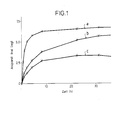
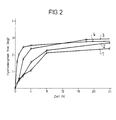
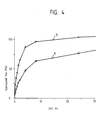
Eine Möglichkeit zur Steuerung der Freigabe ergibt sich durch den Einsatz von Dispersionen aus Polymeren und Copolymeren unterschiedlicher Polarität sowie unterschiedlichen Vernetzungsgrades. Durch Auswahl von Polymeren geeigneter Polarität kann die Bindung des Wirkstoffs im Polymer minimiert und somit die Freigabe des Wirkstoffs an die Haut optimiert werden. Ein Maß für die Polarität lipophiler Wirkstoffe und Polymerer stellt z.B. der Löslichkeitsparameter nach Hildebrandt, J.H., Prausnitz J.M., Scott R.L., Regular and Related Solutions, van Nostrand Reinhold, New York 1970, dar. Der Löslichkeitsparameter des Polymeren und das Ausmaß der Differenz der Löslichkeitsparameter zwischen Wirkstoff und Polymer können ein Maß für unterschiedliche Wechselwirkungen und damit für unterschiedliche Freigaberaten des Wirkstoffs aus dem Polymer sein. In Tabelle 1 und Figur 1 ist dies für den Wirkstoff Anipamil verdeutlicht. Auch über den Vernetzungsgrad des Polymeren kann die Freigaberate des Wirkstoffs gesteuert werden, wobei ein steigender Vernetzungsgrad die Löslichkeit des Wirkstoffs im Polymer vermindert und dadurch die Freigaberate steigert. Dies ist in Tabelle 2 und Figur 2 für den Wirkstoff Hydromorphon dargestellt. Ebenso ist eine Steuerung der Freisetzung über die Teilchengröße des Polymeren möglich, wobei kleinere Teilchen im allgemeinen eine schnellere Freisetzung bewirken. Dies ist in Tabelle 3 und Figur 3 für den Wirkstoff Gallopamil dargestellt. Eine weitere Möglichkeit zur Steuerung der Wirkstofffreigabe besteht in der Zumischung von lipophilen Hilfsstoffen (lipophiler als der Wirkstoff), beispielsweise von langkettigen Fettsäureestern wie Isopropylmyristat. Durch die Kombination aller vorgenannten Steuerungsprinzipien ist die Beeinflussung der Freigabe eines Wirkstoffs aus dem Wirkstoffträger in weiten Grenzen möglich.One way of controlling the release results from the use of dispersions of polymers and copolymers of different polarities and different degrees of crosslinking. By selecting polymers of suitable polarity, the binding of the active ingredient in the polymer can be minimized and the release of the active ingredient to the skin can thus be optimized. A measure of the polarity of lipophilic active substances and polymers is, for example, the solubility parameter according to Hildebrandt, JH, Prausnitz JM, Scott RL, Regular and Related Solutions, van Nostrand Reinhold, New York 1970. The solubility parameter of the polymer and the extent of the difference in the solubility parameters between drug and polymer can be a measure for different interactions and thus for different release rates of Active ingredient from the polymer. This is illustrated in Table 1 and Figure 1 for the active ingredient anipamil. The release rate of the active ingredient can also be controlled via the degree of crosslinking of the polymer, an increasing degree of crosslinking reducing the solubility of the active ingredient in the polymer and thereby increasing the release rate. This is shown in Table 2 and Figure 2 for the active ingredient hydromorphone. It is also possible to control the release via the particle size of the polymer, smaller particles generally causing faster release. This is shown in Table 3 and Figure 3 for the active ingredient gallopamil. Another possibility for controlling the release of the active ingredient is to add lipophilic excipients (more lipophilic than the active ingredient), for example long-chain fatty acid esters such as isopropyl myristate. By combining all of the aforementioned control principles, the release of an active ingredient from the active ingredient carrier can be influenced within wide limits.
Das erfindungsgemäß erhältliche Pflaster hat einen denkbar einfachen Aufbau, es besteht lediglich aus der Stütz- oder Trägerfolie und der wirkstoffhaltigen polymeren Klebeschicht. Es kann entweder in aufgerollter Form in den Handel kommen oder auf der Klebeschicht mit einer leicht abziehbaren Schutzfolie versehen sein. Das gesamte Herstellverfahren ist einfach und wirtschaftlich, weil in keiner Phase ein organisches flüchtiges Lösungsmittel verwendet wird, das später abgedampft werden müßte.The plaster obtainable according to the invention has a very simple structure, it only consists of the support or carrier film and the active substance-containing polymer adhesive layer. It can either come on the market in rolled up form or be provided with an easily removable protective film on the adhesive layer. The entire manufacturing process is simple and economical because an organic volatile solvent that would later have to be evaporated is not used in any phase.
Die in den Beispielen genannten Teile und Prozente beziehen sich auf das Gewicht.The parts and percentages given in the examples relate to the weight.
1 Teil Gallopamil-Base und 1 Teil Isopropylmyristat wurden unter Erwärmung auf 50 C und starkem Rühren in 6 Teilen einer 1,5%igen wäßrigen Lösung des Natriumsalzes des Schwefelsäurehalbesters von 2 bis 3fach oxethyliertem C12- bis C14-Alkohol dispergiert. Diese Mischung wurde unter gleichen Bedingungen in 14 Teile einer 50%igen Poly-Butylacrylatdispersion eingerührt und die erhaltene wirkstoffhaltige Polymerdispersion auf einer glatten, ausgeloteten Unterlage mittels einer geeigneten Ausstreichrakel auf einer Aluminium-Polyethylen-Verbundfolie (Tscheulin GmbH, D-Teningen) ausgestrichen und bei 35-40 C unter kontrollierter Luftfeuchtigkeit getrocknet. Der so hergestellte selbstklebende gallopamilhaltige Film mit einem Wirkstoffgehalt von 15% wurde dann in üblicher Weise weiter konfektioniert. Je nach Rakeleinstellung resultierten Flächengewichte von 5 mgicm2, die durch Mehrfachauftrag weiter erhöht werden konnten.1 part of gallopamil base and 1 part of isopropyl myristate were dispersed with heating to 50 ° C. and vigorous stirring in 6 parts of a 1.5% strength aqueous solution of the sodium salt of the sulfuric acid half-ester of 2 to 3 times oxyethylated C 12 to C 14 alcohol. This mixture was stirred into 14 parts of a 50% poly-butyl acrylate dispersion under the same conditions, and the resulting active ingredient-containing polymer dispersion was spread out on a smooth, plastered base by means of a suitable doctor blade on an aluminum-polyethylene composite film (Tscheulin GmbH, D-Teningen) Dried 35-40 C under controlled humidity. The self-adhesive gallopamil-containing film thus produced, with an active ingredient content of 15%, was then further packaged in the usual way. Depending on the doctor blade setting, basis weights of 5 mgicm 2 resulted, which could be increased further by multiple application.
2 Teile Anipamil-Base wurden in einer Schmelze von 2 Teilen Hexadecan-(1)-oi bei 65. C unter Rühren gelöst; diese Mischung wurde in 10 Teilen einer 2%igen wäßrigen Lösung des Natriumsalzes des Schwefelsäurehalbesters von 2 bis 3fach oxethyliertem C12- bis C14-Alkohol in Wasser unter starkem Rühren dispergiert. In die entstandene Emulsion wurden 30 Teile einer 50%igen wäßrigen Dispersion eines Copolymerisates aus 90 Gew.% 2-Ethylhexylacrylat, 7% Acrylnitril und 3% Acrylsäure bei gleichen Bedingungen langsam eingerührt und wie in Beispiel 1 beschrieben zu einem Film verarbeitet. Der so hergestellte selbstklebende Anipamil-haltige Film hatte einen Wirkstoffgehalt von 10%.2 parts of anipamil base were in a melt of 2 parts of hexadecane (1) -oi at 65 . C dissolved with stirring; this mixture was dispersed in 10 parts of a 2% strength aqueous solution of the sodium salt of the sulfuric acid half-ester of 2 to 3 times oxyethylated C 12 to C 14 alcohol in water with vigorous stirring. 30 parts of a 50% aqueous dispersion of a copolymer of 90% by weight 2-ethylhexyl acrylate, 7% acrylonitrile and 3% acrylic acid were slowly stirred into the resulting emulsion under the same conditions and processed to a film as described in Example 1. The self-adhesive anipamil-containing film thus produced had an active ingredient content of 10%.
1 Teil Hydromorphon-HCI wurde in 10 Teilen einer 2%igen wäßrigen Lösung des Natriumsalzes des Schwefelsäurehalbesters von 2 bis 3fach oxethyliertem C12- bis C14-Alkohol gelöst. 100 Teile einer 50%igen sauren Dispersion eines Copolymerisats aus 50% Butylacrylat und 50% Vinylacetat wurden durch Zugabe von etwas weniger als 1 Teil konzentrierter NH3-Lösung unter Rühren auf einen pH von 7,0 eingestellt, sodann mit 10 Teilen einer 7,5 %igen Lösung des oben und bei den Beispielen 1 und 2 bereits verwendeten anionischen Tensids gemischt. 10 Teile der emulgatorhaltigen Polymer-Dispersion wurden vorgelegt und 3 Teile der Hydromorphon-HCI-Lösung innerhalb 15 min bei Raumtemperatur eingerührt. Unter starkem Rühren (1000-1) wurde dann durch tropfenweise Zugabe von 10% NHa-Lösung innerhalb 15-30 min auf pH 9,5-10,0 gebracht, wobei Hydromorphon-Base freigesetzt wurde. Nach weiterem halbstündigen Rühren zur Homogenisierung der wirkstoffhaltigen Dispersion wurde diese wie in Beispiel 1 beschrieben zu einem Film verarbeitet. Der so hergestellte selbstklebende Hydromorphon-haltige Film hatte einen Wirkstoffgehalt von 5,5%.1 part of hydromorphone-HCl was dissolved in 10 parts of a 2% aqueous solution of the sodium salt of the sulfuric acid semi-ester of 2 to 3 times ethoxylated C 12 to C 14 alcohol. 100 parts of a 50% acidic dispersion of a copolymer of 50% butyl acrylate and 50% vinyl acetate were adjusted to a pH of 7.0 by adding a little less than 1 part of concentrated NH 3 solution with stirring, then with 10 parts of a 7. 5% solution of the anionic surfactant already used above and in Examples 1 and 2 mixed. 10 parts of the emulsifier-containing polymer dispersion were introduced and 3 parts of the hydromorphone-HCl solution were stirred in at room temperature within 15 minutes. NHA solution was under vigorous stirring (1000 -1) then by the dropwise addition of 10% accommodated within 15-30 min at pH 9.5-10.0, wherein hydromorphone base was liberated. After stirring for a further half hour to homogenize the active ingredient-containing dispersion, it was processed into a film as described in Example 1. The self-adhesive hydromorphone-containing film thus produced had an active ingredient content of 5.5%.
Zur Bestimmung der in-vitro-Freisetzung wurden Filmstücke geeigneter Größe in eine Freigabezelle eingesetzt und bei festgelegter Temperatur und Durchmischung mit einem isotonischen Phosphatpuffer pH 6.0 als Akzeptormedium in Kontakt gebracht. Bei einzelnen Wirkstoffen wurde zur Erhöhung der Wirkstofflöslichkeit das Akzeptormedium mit 25% (V/V) Ethanol vermischt. Zu festgelegten Zeitpunkten wurden 3% des Freigabemediums als Probe gezogen und durch frisches Freigabemedium ersetzt. Der Wirkstoffgehalt der Proben wurde mittels HPLC bestimmt. Die Volumenkorrektur wurde nach dem Verdünnungsschema nach Münzel durchgeführt.To determine the in vitro release, film pieces of a suitable size were inserted into a release cell and brought into contact with an isotonic phosphate buffer pH 6.0 as the acceptor medium at a specified temperature and mixing. In the case of individual active ingredients, the acceptor medium was mixed with 25% (v / v) ethanol to increase the solubility of the active ingredient. At specified times, 3% of the release medium was taken as a sample and replaced with fresh release medium. The active substance content of the samples was determined by means of HPLC. The volume correction was carried out according to the Münzel dilution scheme.
Wirkstoffhaltige Filme mit Anipamil wurden aus 2 Latextypen unterschiedlicher Polarität gemäß Beispiel 2 hergestellt. Die aus den Freigabeuntersuchungen erhaltenen effektiven Diffusionskoeffizienten sind in Tabelle 1 dargestellt.

In Figur 1 sind die Freigaberaten für die 2 Dispersionen
- a) Copolymerisat aus 49 gew.% Butadien, 49 Gew.% Styrol und 2 Gew.% Acrylsäure
- b) Polybutylacrylat
unterschiedlicher Polarität gezeigt. Wie aus den Kurvenverläufen ersichtlich, kann das Freigabeverhalten durch die Polarität des Polymeren beeinflußt werden.The release rates for the 2 dispersions are in FIG
- a) copolymer of 49% by weight of butadiene, 49% by weight of styrene and 2% by weight of acrylic acid
- b) polybutyl acrylate
different polarity shown. As can be seen from the curves, the release behavior can be influenced by the polarity of the polymer.
Wirkstoffhaltige Filme mit Hydromorphon wurden aus 3 Latextypen unterschiedlicher Vernetzung gemäß Beispiel 3 hergestellt. Die aus den Freigabeuntersuchungen erhaltenen effektiven Diffusionskoeffizienten sind in Tabelle 2 dargestellt.

In Figur 2 sind die Freigaberaten für 3 Dispersionen von Poly-n-butylacrylat unterschiedlichen Vernetzungsgrades dargestellt:
- 1) K-Wert 78
- 2) vernetzt mit 0,5 Gew.% Butandioldiacrylat
- 3)
vernetzt mit 3 Gew.% Butandioldiacrylat
Wie aus den Kurvenläufen ersichtlich, kann das Freigabeverhalten des Wirkstoffs auch über den Vernetzungsgrad des Polymeren beeinflußt werden.FIG. 2 shows the release rates for 3 dispersions of poly-n-butyl acrylate with different degrees of crosslinking:
- 1) K value 78
- 2) crosslinked with 0.5% by weight of butanediol diacrylate
- 3) crosslinked with 3% by weight of butanediol diacrylate
As can be seen from the curves, the release behavior of the active ingredient can also be influenced by the degree of crosslinking of the polymer.
Wirkstoffhaltige Filme mit Gallopamil wurden aus drei Latextypen unterschiedlicher Latex-Teilchengröße gemäß Beispiel 1 hergestellt. Die aus den Freigabeuntersuchungen erhaltenen effektiven Diffusionskoeffizienten sind in Tabelle 3 dargestellt.

In Figur 3 sind die Freigaberaten für drei Dispersionen unterschiedlicher Latex-Teilchengröße dargestellt:
- X) 119 nm
- Y) 160 nm
- Z) 200 nm.
- X) 119 nm
- Y) 160 nm
- Z) 200 nm.
Wie aus den Kurvenläufen ersichtlich, kann das Freigabeverhalten des Wirkstoffs auch über die unterschiedliche Latex-Teilchengröße des Polymeren beeinflußt werden.As can be seen from the curves, the release behavior of the active ingredient can also be influenced by the different latex particle size of the polymer.
Wirkstoffhaltige Filme mit Gallopamil wurden mit und ohne Isopropylmyristat als lipophilen Hilfsstoff gemäß Beispiel 1 hergestellt. Die aus den Freigabeuntersuchungen erhaltenen effektiven Diffusionskoeffizienten sind in der Tabelle 4 dargestellt.

In Figur 4 sind die Freigaberaten für 2 Dispersionen
- a) Poly-n-Butylacrylat ohne IPM
- b) Poly-n-Butylacrylat mit 15 Gew.% IPM
dargestellt. Wie aus den Kurvenläufen ersichtlich, kann das Freigabeverhalten des Wirkstoffs auch über den Zusatz lipophiler Hilfsstoffe zum Polymer beeinflußt werden.The release rates for 2 dispersions are in FIG
- a) Poly-n-butyl acrylate without IPM
- b) poly-n-butyl acrylate with 15% by weight IPM
shown. As can be seen from the curves, the release behavior of the active ingredient can also be influenced by adding lipophilic excipients to the polymer.
Claims (4)
Applications Claiming Priority (2)
| Application Number | Priority Date | Filing Date | Title |
|---|---|---|---|
| DE3807283 | 1988-03-05 | ||
| DE19883807283 DE3807283A1 (en) | 1988-03-05 | 1988-03-05 | METHOD FOR PRODUCING A PLASTER FOR TRANSDERMAL USE OF PHARMACEUTICAL ACTIVE SUBSTANCES |
Publications (1)
| Publication Number | Publication Date |
|---|---|
| EP0332010A2 true EP0332010A2 (en) | 1989-09-13 |
Family
ID=6348973
Family Applications (1)
| Application Number | Title | Priority Date | Filing Date |
|---|---|---|---|
| EP19890103441 Withdrawn EP0332010A2 (en) | 1988-03-05 | 1989-02-28 | Method for making a dressing for transdermal delivery of pharmaceuticals |
Country Status (3)
| Country | Link |
|---|---|
| EP (1) | EP0332010A2 (en) |
| JP (1) | JPH01268629A (en) |
| DE (1) | DE3807283A1 (en) |
Cited By (1)
| Publication number | Priority date | Publication date | Assignee | Title |
|---|---|---|---|---|
| US5352457A (en) * | 1990-10-05 | 1994-10-04 | Ethical Pharmaceuticals Limited | Transdermal device |
Families Citing this family (7)
| Publication number | Priority date | Publication date | Assignee | Title |
|---|---|---|---|---|
| DE4020144A1 (en) * | 1990-06-25 | 1992-01-09 | Lohmann Therapie Syst Lts | Patches for topical or transdermal drug delivery - with adhesive layer contg. polyacrylate adhesive and film former |
| DE4115849A1 (en) * | 1991-05-15 | 1992-11-19 | Lohmann Therapie Syst Lts | PENETRATION PROMOTING SUBSTANCE |
| DE102010002558A1 (en) | 2009-11-20 | 2011-06-01 | Symrise Ag | Use of physiological cooling agents and agents containing such agents |
| EP2394703B1 (en) | 2010-06-14 | 2015-12-23 | Symrise AG | Cooling mixture with reinforced cooling effect of 5-methyl-2-(propan-2-yl)cyclohexyl-N-ethyloxamate |
| US9029415B2 (en) | 2010-06-14 | 2015-05-12 | Symrise Ag | Cooling mixtures with an enhanced cooling effect of 5-methyl-2-(propane-2-yl)cyclohexyl-N-ethyloxamate |
| ES2861268T3 (en) | 2011-09-20 | 2021-10-06 | Basf Se | Low molecular weight modulators of the TRPM8 cold menthol receptor and their use |
| ES2967435T3 (en) | 2017-08-31 | 2024-04-30 | Basf Se | Use of physiological refreshing active ingredients and products containing said active ingredients |
-
1988
- 1988-03-05 DE DE19883807283 patent/DE3807283A1/en not_active Withdrawn
-
1989
- 1989-02-28 EP EP19890103441 patent/EP0332010A2/en not_active Withdrawn
- 1989-03-06 JP JP5219489A patent/JPH01268629A/en active Pending
Cited By (1)
| Publication number | Priority date | Publication date | Assignee | Title |
|---|---|---|---|---|
| US5352457A (en) * | 1990-10-05 | 1994-10-04 | Ethical Pharmaceuticals Limited | Transdermal device |
Also Published As
| Publication number | Publication date |
|---|---|
| JPH01268629A (en) | 1989-10-26 |
| DE3807283A1 (en) | 1989-09-14 |
Similar Documents
| Publication | Publication Date | Title |
|---|---|---|
| EP0617972B1 (en) | Dermal therapeutic system based on a mixture of fusible polymethacrylates | |
| DE4002281C2 (en) | ||
| DE69010076T2 (en) | Transdermal therapeutic agent. | |
| DE60017831T2 (en) | DERIVED COMPOSITIONS | |
| DE69011885T2 (en) | Pharmaceutical preparation that can be applied to the oral mucosa. | |
| EP0813865B1 (en) | Drug patch | |
| DE69616302T2 (en) | METHOD FOR PRODUCING A SURFACE WITH AN ADHESIVE FOR THE SKIN | |
| EP1171104A2 (en) | Transdermal therapeutic system with neutralized acrylic adhesive patch | |
| EP1372619B1 (en) | Process for the production of a highly flexible transdermal therapeutic system having nicotine as active substance | |
| EP0848960A2 (en) | Adhesive for dermal or transdermal therapy systems | |
| EP1411937A2 (en) | Matrix controlled transdermal therapeutic system for the use of pramipexole and ropinirole | |
| EP0332010A2 (en) | Method for making a dressing for transdermal delivery of pharmaceuticals | |
| EP1361869A2 (en) | Transdermal therapeutic system containing testosterone and method for the production thereof | |
| DE10118282A1 (en) | Pressure sensitive adhesive based on ethylene-vinyl acetate copolymers and adhesive resins, for medical purposes | |
| WO1996008251A1 (en) | Scopolamine plaster | |
| EP0380989B1 (en) | Plaster for transdermal administration | |
| DE69103459T2 (en) | Transdermal absorbable eperisone or tolperisone drug preparation. | |
| DE69813982T2 (en) | Stabilized compositions for percutaneous absorption | |
| DE60013431T2 (en) | TRANSDERMAL DEVICE FOR THE ADMINISTRATION OF TESTOSTERONE OR A DERIVATIVE THEREOF | |
| EP0456792B1 (en) | IMPROVED SYSTEM FOR THE TRANSDERMAL APPLICATION OF PHARMACOLOGICALLY ACTIVE COMPOUNDS AT CONTROLLED pH | |
| DE69630051T2 (en) | ADHESIVE MATERIAL CONTAINED BY WATER-ACTIVATED AMETHOCAIN | |
| DE10025971B4 (en) | Transdermal therapeutic system in plaster form with reduced tendency for drug crystallization and its use | |
| DE60108870T2 (en) | Transdermal delivery system for the treatment of urinary tract disorders | |
| WO2001089488A1 (en) | Plaster containing estrogen, with an active agent reservoir based on ethylcellulose, polyoxyethylene lauryl alcohol and an ethylene-vinylacetate-vinylpyrrolidone copolymer | |
| DD279611A1 (en) | METHOD FOR PRODUCING A RESISTANT FILM |
Legal Events
| Date | Code | Title | Description |
|---|---|---|---|
| PUAI | Public reference made under article 153(3) epc to a published international application that has entered the european phase |
Free format text: ORIGINAL CODE: 0009012 |
|
| AK | Designated contracting states |
Kind code of ref document: A2 Designated state(s): AT CH DE ES FR GB IT LI SE |
|
| STAA | Information on the status of an ep patent application or granted ep patent |
Free format text: STATUS: THE APPLICATION HAS BEEN WITHDRAWN |
|
| 18W | Application withdrawn |
Withdrawal date: 19891016 |
|
| R18W | Application withdrawn (corrected) |
Effective date: 19891016 |