EP0335237A2 - Tinten für Ink-Jet-Aufzeichnungsverfahren - Google Patents
Tinten für Ink-Jet-Aufzeichnungsverfahren Download PDFInfo
- Publication number
- EP0335237A2 EP0335237A2 EP89105094A EP89105094A EP0335237A2 EP 0335237 A2 EP0335237 A2 EP 0335237A2 EP 89105094 A EP89105094 A EP 89105094A EP 89105094 A EP89105094 A EP 89105094A EP 0335237 A2 EP0335237 A2 EP 0335237A2
- Authority
- EP
- European Patent Office
- Prior art keywords
- dye
- diphenylxanthene
- quinophthalone
- ink
- inks
- Prior art date
- Legal status (The legal status is an assumption and is not a legal conclusion. Google has not performed a legal analysis and makes no representation as to the accuracy of the status listed.)
- Granted
Links
Classifications
-
- C—CHEMISTRY; METALLURGY
- C09—DYES; PAINTS; POLISHES; NATURAL RESINS; ADHESIVES; COMPOSITIONS NOT OTHERWISE PROVIDED FOR; APPLICATIONS OF MATERIALS NOT OTHERWISE PROVIDED FOR
- C09D—COATING COMPOSITIONS, e.g. PAINTS, VARNISHES OR LACQUERS; FILLING PASTES; CHEMICAL PAINT OR INK REMOVERS; INKS; CORRECTING FLUIDS; WOODSTAINS; PASTES OR SOLIDS FOR COLOURING OR PRINTING; USE OF MATERIALS THEREFOR
- C09D11/00—Inks
- C09D11/30—Inkjet printing inks
- C09D11/32—Inkjet printing inks characterised by colouring agents
- C09D11/328—Inkjet printing inks characterised by colouring agents characterised by dyes
-
- C—CHEMISTRY; METALLURGY
- C09—DYES; PAINTS; POLISHES; NATURAL RESINS; ADHESIVES; COMPOSITIONS NOT OTHERWISE PROVIDED FOR; APPLICATIONS OF MATERIALS NOT OTHERWISE PROVIDED FOR
- C09B—ORGANIC DYES OR CLOSELY-RELATED COMPOUNDS FOR PRODUCING DYES, e.g. PIGMENTS; MORDANTS; LAKES
- C09B69/00—Dyes not provided for by a single group of this subclass
- C09B69/001—Dyes containing an onium group attached to the dye skeleton via a bridge
Definitions
- droplets of the recording liquids are jetted out of a small nozzle provided on a writing head, and an image is thus recorded on the surface of a recording material.
- Writing utensils e.g. Fountain pens or felt-tip pens used for recording on recording materials such as paper and the like usually use an ink composed of various dyes dissolved in water or organic solvents.
- Inks of various dyes and water and / or organic solvents are also known for use in ink jet recording systems (ink jet systems), in which the liquid inside the recording head from the jet nozzle under the influence of a piezo oscillator or under the influence of electrostatic Attractive forces are given when high voltage is applied.
- ink jet systems ink jet systems
- the requirements for the recording liquid for an ink-jet pen are in many ways significantly higher.
- the recording is carried out by ejecting the recording liquid / ink in droplets in the form of a jet, the ejected ink droplets remaining attached to the recording receiving material.
- the recording liquid (ink) is composed of a recording medium (dye) and a liquid medium, e.g. Water, various organic solvents or mixtures thereof, which dissolves the recording medium.
- a liquid medium e.g. Water, various organic solvents or mixtures thereof, which dissolves the recording medium.
- the inks may also contain various additives.
- Ink jet recording methods have numerous methods for creating the droplets and controlling the jet and its direction.
- a recording signal is supplied to a write head which contains a piezo oscillator, droplets of the ink being generated as a function of the supplied signal in order to effect the recording.
- the recording signal is processed by signal processing device converted into a pulse and fed to the piezo oscillator.
- a change in pressure on the ink within the liquid chamber caused by the pulse results in the ejection of ink droplets from the jet nozzle. That is, an image is written on the recording material using the droplets.
- the chamber for the liquid (ink) has the shape of a nozzle and is surrounded by a cylindrical piezo oscillator.
- the mechanism of droplet generation is essentially the same as that described above. It is also known to continuously generate electrically charged droplets and to use only a part of the droplets for recording by suitable electrostatic deflection. It is also known to supply thermal energy in accordance with a recording signal to an ink located in a chamber of the writing head so as to generate droplets.
- EP-A-224 909 EP-A-121 993, EP-A-176 196, DE-A-25 43 092, DE-A-34 33 508 and EP-A-159 291.
- the object of the invention was to provide inks for ink-jet recording processes which deliver recordings on recording materials which are water-resistant and which only slightly or not smear when exposed to text markers.
- the cationic dyes previously used in such inks e.g. B. crystal violet, malachite green have the disadvantage that the records thus obtained smear when exposed to text markers.
- the radicals Fa are derived from monoaza, disazo polyazo dyes, from quinophthalone, from bisdioxazines, from 2,7-diphenylxanthene dyes or from copper phthalocyanines.
- the dyes of the formula (I) are known, for. B. from DE-A-30 44 563, 31 11 199, 30 06 013, 31 33 391, 31 11 200 ,. 28 10 246 and 27 35 488.
- Suitable anions are those which give the salts good solubility in the solvents or solvent mixtures.
- Anions A ⁇ are derived from inorganic or organic acids and are e.g. B. fluoride, chloride, bromide, hydrogen sulfate, sulfate, aminosulfate, methosulfate, ethosulfate, perchlorate, tetrafluoroborate, trichlorozincate, methanesulfonate, benzenesulfonate, p-toluenesulfonate, C2-C20-alkylbenzenesulfonate, formate, acetate, oxalate, benzate Succinate or mixtures of these anions.
- B fluoride, chloride, bromide, hydrogen sulfate, sulfate, aminosulfate, methosulfate, ethosulfate, perchlorate, tetrafluoroborate, trichlorozincate, methanesulfonate, benzenesulfonate,
- the ink jet ink according to the invention contains at least one dye of the formula (I) and at least one water-miscible organic solvent.
- the dye (I) is usually in the form of a mixture of isomeric dyes.
- Water-miscible organic solvents are e.g. B. C1-C4 alkanols, such as methanol, ethanol, propanol, isopropanol, butanol, isobutanol, sec-butanol or tert-butanol, aliphatic carboxamides, such as N, N-dimethylformamide or N, N-dimethylacetamide, lactams, such as N- Methylpyrrolidin-2-one, cyclic ureas, such as 1,3-dimethylimidazolidin-2-one, ketones or keto alcohols with 3 to 10 C atoms, such as acetone, methyl ethyl ketone or 2-methyl-2-hydroxypentan-4-one, ether, such as tetrahydrofuran or dioxane, mono-, di- or polyalkylene glycols or -thioglycols which have C2-C6 alkylene units, such as
- N-methylpyrrolidin-2-one mono-, di- or trialkylene glycols which have C2-C6 alkylene units, in particular mono-, di- and triethylene glycol and dimethyl sulfoxide or mixtures thereof.
- N-methylpyrrolidin-2-one diethylene glycol and / or dimethyl sulfoxide.
- the proportion of the dye of the formula I is 2 to 10% by weight, preferably 3 to 5% by weight, in each case based on the total weight of the recording liquid.
- the recording liquid according to the invention for the ink jet process generally contains 50 to 95% by weight, preferably 70 to 95% by weight, in each case based on the total weight of the solvent system, of water.
- the new recording liquid can also be used with aids, e.g. Contain agents for influencing the viscosity, such as polyvinyl chloride or cellulose derivatives, surfactants (nonionic, anionic or cationic) or buffer systems.
- aids e.g. Contain agents for influencing the viscosity, such as polyvinyl chloride or cellulose derivatives, surfactants (nonionic, anionic or cationic) or buffer systems.
- 3 to 5 parts by weight of a dye which has been freed of electrolytes by the reverse osmosis process are dissolved in 95 to 97 parts by weight of a liquid, the composition of which is given in the examples below.
- the solution is filtered under pressure through a 1 ⁇ m pore size Teflon filter and then degassed under reduced pressure.
- the receptacle of an ink jet printhead With this recording liquid, the receptacle of an ink jet printhead is filled, which ejects the ink in droplets under the influence of heat supplied.
- This thermal ink jet print head is used to print commercially available paper, such as that used for typewriting.
- the abrasion resistance of the typeface obtained is checked using two methods:
- the authenticity of the typeface is rated with marks from 5 to 1. Grade 5 means that there is no bleeding, and Grade 1 that the typeface smears so much that it is no longer recognizable.
Landscapes
- Chemical & Material Sciences (AREA)
- Organic Chemistry (AREA)
- Life Sciences & Earth Sciences (AREA)
- Engineering & Computer Science (AREA)
- Materials Engineering (AREA)
- Wood Science & Technology (AREA)
- Inks, Pencil-Leads, Or Crayons (AREA)
- Ink Jet Recording Methods And Recording Media Thereof (AREA)
Abstract
Fa-(-X)n (I),
in der
X für -CH₂-NH₂ oder

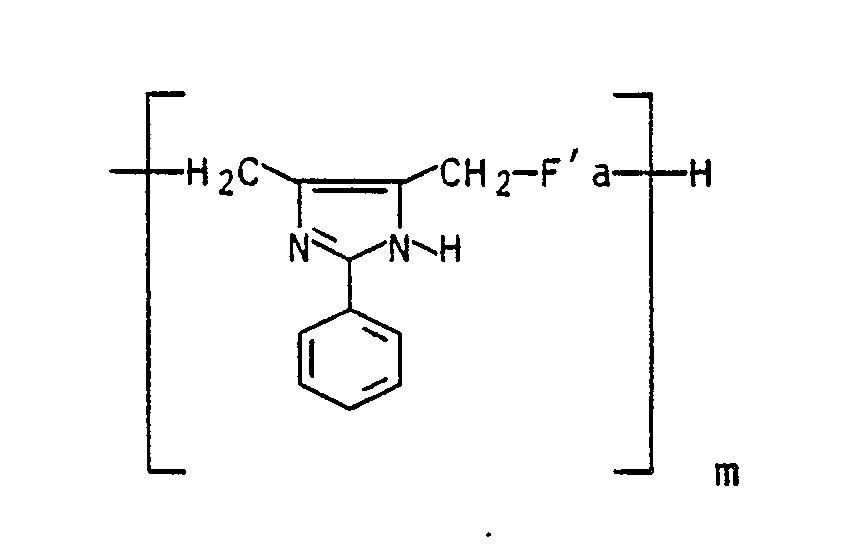


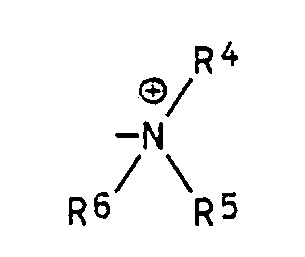
R⁶ Methyl, Ethyl oder Hydroxyethyl oder
und z 1 oder 2 bedeuten.
Description
- Beim Ink-Jet-Aufzeichnungsverfahren werden Tröpfchen der Aufzeichnungsflüssigkeiten aus einer kleinen, an einem Schreibkopf vorhandenen Düse in Strahlform ausgestoßen und so ein Bild auf der Oberfläche eines Aufzeichnungsmaterials aufgezeichnet.
- Schreibutensilien, z.B. Füllfederhalter oder Filzstifte, die zu Aufzeichnungen auf Aufzeichnungsmaterialien wie Papier und dergleichen benutzt werden, verwenden üblicherweise eine Tinte, die sich aus verschiedenen, in Wasser oder organischen Lösungsmitteln gelösten Farbstoffen zusammensetzten.
- Es sind auch Tinten aus verschiedenen Farbstoffen und Wasser und/oder organischen Lösungsmitteln für die Anwendung in Tintenstrahlaufzeichnungssystemen (Ink-Jet-Systemen) bekannt, bei denen die Flüssigkeit innerhalb des Aufzeichnungskopfs von der Strahldüse unter dem Einfluß eines Piezo-Schwingers oder unter dem Einfluß elektrostatischer Anziehungskräfte bei angelegter hoher Spannung abgegeben wird. Im Vergleich zu Tinten für Schreibutensilien wie Füllfederhalter, Filzstifte und andere sind jedoch die Anforderungen an die Aufzeichnungsflüssigkeit für einen Tintenstrahlschreiber in vielerlei Hinsicht wesentlich höher.
- Beim Ink-Jet-Verfahren erfolgt die Aufzeichnung durch Ausstoßen der Aufzeichnungsflüssigkeit/Tinte in Tröpfchen in Form eines Strahls, wobei die ausgestoßenen Tintentröpfchen an dem Aufzeichnungsempfangsmaterial haften bleiben.
- Die Aufzeichnungsflüssigkeit (Tinte) setzt sich zusammen aus einem Aufzeichnungsmittel (Farbstoff) und einem flüssigen Medium, z.B. Wasser, verschiedene organische Lösungsmittel oder Mischungen davon, das das Aufzeichnungsmittel löst. Neben diesen Hauptkomponenten können die Tinten gegebenenfalls noch verschiedene Zusätze enthalten.
- Bei den Ink-Jet-Aufzeichnungsmverfahren gibt es zahlreiche Verfahren zur Erzeugung der Tröpfchen und der Steuerung des Strahls und seiner Richtung.
- Bei einer Anordnung wird z.B. ein Aufzeichnungssignal einem Schreibkopf zugeführt, der einen Piezo-Schwinger enthält, wobei Tröpfchen der Tinte in Abhängigkeit vom zugeführten Signal erzeugt werden, um die Aufzeichnung zu bewirken. Das Aufzeichnungssignal wird durch eine Signalverarbeitungs einrichtung in einen Impuls umgesetzt und dem Piezo-Schwinger zugeführt. Eine durch den Impuls verursachte Änderung im Druck auf die Tinte innerhalb der Flüssigkeitskammer führt zum Ausstoß von Tintentröpfchen aus der Strahldüse. D.h. es wird ein Bild auf dem Aufzeichnungsmaterial mit Hilfe der Tröpfchen geschrieben.
- Neben dieser Art der Anordnung gibt es zahlreiche weitere bekannte Aufzeichnungssysteme. So kann z.B. die Kammer für die Flüssigkeit (Tinte) Düsenform haben und von einem zylindrischen Piezo-Schwinger umgeben sein. Der Mechanismus der Tröpfchenerzeugung ist im wesentlichen der gleiche wie der vorstehend beschriebene. Es ist auch bekannt, elektrisch geladene Tröpfchen kontinuierlich zu erzeugen und durch geeignete elektrostatische Ablenkung nur einen Teil der Tröpfchen zur Aufzeichnung heranzuziehen. Weiterhin ist bekannt, Wärmeenergie entsprechend einem Aufzeichnungssignal einer in einer Kammer des Schreibkopfes befindliche Tinte zuzuführen, um so Tröpfchen zu erzeugen.
- Bei Zufuhr eines elektrischen Signals an die Elektroden eines Wärmeerzeugungskopfes wird rasch Wärme erzeugt und in der Tinte entsteht eine Blase. Der hierdurch entstehende Druck auf die Tinte wölbt den Meniskus der Tinte an der Düse nach außen und führt zum Austoß eines Tintentröpfchens aus der Strahldüse.
- Weitergehende Informationen zum Stand der Technik sind dem Fachmann aus der Patentliteratur und der dort genannten Literatur bekannt. Stellvertretend seien genannt:
EP-A-224 909, EP-A-121 993, EP-A-176 196, DE-A-25 43 092, DE-A-34 33 508 und EP-A-159 291. - Eine Übersicht über die Patent- und Zeitschriftenliteratur auf diesem Gebiet enthält die Veröffentlichung "Tinten für Ink-Jet" in farbe + lack, Heft 7, 1987, Seiten 550 bis 553.
- Für das Ink-Jet-Aufzeichnungsverfahren geeignete Tinten werden z.B. in der JP-B-8361/1975, 40484/1976, 13126/1977, 13127/1977 und in der JP-A-95 008/1975 beschrieben. Die in der genannten Literatur beschriebenen Tinten enthalten verschiedene Farbstoffe und/oder Pigmente, die in wäßrigen oder nichtwäßrigen Lösungsmitteln gelöst oder dispergiert sind. Für Ink-Jet-Tinten sind folgende Eigenschaften wünschenswert:
- (1) Anpassung der Flüssigkeitseigenschaften (Viskosität, Oberflächenspannung, Leitfähigkeit und dergleichen) an die Strahlerzeugungsbedingungen (Bestätigungsspannung des piezoelektrischen Bauelementes, Betätigungsfrequenz, Form und Qualität des Strahldüsenmaterials, Durchmesser der Strahldüse und dergleichen);
- (2) kein Zusetzen der feinen Düse und benutzter Kapillaren wegen guter Langzeitlagerungseigenschaften;
- (3) rasche Fixierung auf dem Aufzeichnungsmaterial (Papier, Film und dergleichen) bei keinem bis geringem Auslaufen des durch die Tröpfchen erzeugten Aufzeichnungsflecks;
- (4) scharfe Kontur der Aufzeichnung bei hoher optischer Dichte;
- (5) gute Wasserbeständigkeit und Lichtechtheit der Aufzeichnung;
- (6) keine Korrosion an den mit der Tinte in Berührung gelangenden Materialien (Gefäße, Verbindungsleitungen, Abdichtmaterialien usw.);
- (7) Die Tinte soll weder schlecht riechen, noch toxisch, noch entflammbar sein.
- Dem Fachmann ist bekannt, daß es schwierig ist, die vorstehenden Bedingungen gleichzeitig zu erfüllen.
- Aufgabe der Erfindung war es, Tinten für Ink-Jet-Aufzeichnungsverfahren bereitzustellen, die auf Aufzeichnungsmaterialien Aufzeichnungen liefern, die wasserfest sind und die bei Einwirkung von Text-Markern nur gering bis nicht verschmieren.
- Die Erfindung betrifft Tinten für Ink-Jet-Aufzeichnungsverfahren, die kationische Farbstoffe und ein mit Wasser mischbares organisches Lösungsmittel enthalten und dadurch gekennzeichnet sind, daß diese
- a) mindestens einen Farbstoff der allgemeinen Formel (I)
Fa-(-X)n (I)
enthalten, in der
R¹ und R² unabhängig voneinander Wasserstoff, Methyl oder 2-Hydroxyethyl,
R³ Wasserstoff oder Methyl und
A⊖ ein Anion bedeuten, und
Fa für einen n-wertigen Rest eines Monoazo-, Disazo- oder Polyazofarbstoffs, eines Chinophthalons, eines Bisdioxazins, eines 2,7-Diphenylxanthenfarbstoffs oder Kupferphthalocyanins und
n für 1,2,3 oder 4 stehen oder, wenn n = 1 und Fa der Rest eines Chinophthalons oder eines 2,7-Diphenylxanthenfarbstoffs ist, kann X auch für
-CH₂-NH-CO-(CH₂)z-Y
stehen, worin

R⁶ Methyl, Ethyl oder Hydroxyethyl oder
und z 1 oder 2 bedeuten oder - b) ein Isomerengemisch von Farbstoffen der Formel (I), worin X für -CH₂-NH₂ steht.
- Die bisher in solchen Tinten verwendeten kationischen Farbstoffe, z. B. Kristallviolett, Malachitgrün haben den Nachteil, daß die damit erhaltenen Aufzeichnungen bei Einwirkung von Text-Markern verschmieren.
- Die Reste Fa leiten sich ab von Monoaza-, Disazo- Polyazofarbstoffen, vom Chinophthalon, von Bisdioxazinen, von 2,7-Diphenylxanthenfarbstoffen oder von Kupferphthalocyaninen.
- Die Farbstoffe der Formel (I) sind bekannt, z. B. aus den DE-A-30 44 563, 31 11 199, 30 06 013, 31 33 391, 31 11 200,. 28 10 246 und 27 35 488. Als Anionen kommen solche in Betracht, die den Salzen gute Löslichkeit in den Lösungsmitteln oder Lösungsmittelgemischen verleihen.
- Anionen A⊖ leiten sich von anorganischen oder organischen Säuren ab und sind z. B. Fluorid, Chlorid, Bromid, Hydrogensulfat, Sulfat, Aminosulfat, Methosulfat, Ethosulfat, Perchlorat, Tetrafluoroborat, Trichlorozinkat, Methansulfonat, Benzolsulfonat, p-Toluolsulfonat, C₂-C₂₀-Alkylbenzolsulfonat, Formiat, Acetat, Propionat, Lactat, Benzoat, Oxalat oder Succinat oder Gemische dieser Anionen.
- Die erfindungsgemäße Ink-Jet-Tinte enthält mindestens einen Farbstoff der Formel (I) und mindestens ein mit Wasser mischbares organisches Lösungsmittel. Der Farbstoff (I) liegt in der Regel in Form des Gemisches isomerer Farbstoffe vor.
- Mit Wasser mischbare organische Lösungsmittel sind z. B. C₁-C₄-Alkanole, wie Methanol, Ethanol, Propanol, Isopropanol, Butanol, Isobutanol, sec-Butanol oder tert-Butanol, aliphatische Carbonsäureamide, wie N,N-Dimethylformamid oder N,N-Dimethylacetamid, Lactame, wie N-Methylpyrrolidin-2-on, cyclische Harnstoffe, wie 1,3-Dimethylimidazolidin-2-on, Ketone oder Ketoalkohole mit 3 bis 10 C-Atomen, wie Aceton, Methylethylketon oder 2-Methyl-2-hydroxypentan-4-on, Ether, wie Tetrahydrofuran oder Dioxan, Mono-, Di- oder Polyalkylenglykole oder -thioglykole, die C₂-C₆-Alkyleneinheiten aufweisen, wie Ethylenglykol, 1,2- oder 1,3-Propylenglykol, 1,2- oder 1,4-Butylenglykol, 1,6-Hexylenglykol, Diethylenglykol, Triethylenglykol, Thiodiglykol, Polyethylenglykol oder Polypropylenglykol, andere Polyole, wie Glycerin oder Hexan-1,2,6-triol, C₁-C₄-Alkylether von mehrwertigen Alkoholen, wie Ethylenglykolmonomethyl- oder -monoethylether, Diethylenglykolmonomethyl- oder -monoethylether oder Triethylenglykolmonomethyl- oder -monoethylether oder Dimethylsulfoxid.
- Als mit Wasser mischbare organische Lösungsmittel, sind z.B. bevorzugt: N-Methylpyrrolidin-2-on, Mono-, Di- oder Trialkylenglykole, die C₂-C₆-Alkyleneinheiten aufweisen, insbesondere Mono-, Di- und Triethylenglykol und Dimethylsulfoxid oder Gemische davon. Ganz besonders hervorzuheben sind N-Methylpyrrolidin-2-on, Diethylenglykol und/oder Dimethylsulfoxid.
- Der Anteil des Farbstoffs der Formel I liegt bei 2 bis 10 Gew.%, vorzugsweise 3 bis 5 Gew.%, jeweils bezogen auf das Gesamtgewicht der Aufzeichnungsflüssigkeit.
- Bevorzugt ist eine Aufzeichnungsflüssigkeit, die neben dem Farbstoff der Formel (I) und einem mit Wasser mischbaren organischen Lösungsmittel zusätzlich noch Wasser enthält.
- In diesem Fall enthält die erfindungsgemäße Aufzeichnungsflüssigkeit für das Ink-Jet-Verfahren im allgemeinen 50 bis 95 Gew.%, vorzugsweise 70 bis 95 Gew.%, jeweils bezogen auf das Gesamtgewicht des Lösungsmittelsystems, an Wasser.
- Die neue Aufzeichnungsflüssigkeit kann weiterhin Hilfsmittel, z.B. Mittel zur Beeinflussung der Viskosität, wie Polyvinylchlorid oder Cellulosederivate, Tenside (nichtionisch, anionisch oder kationisch) oder Puffersysteme enthalten.
- Die folgenden Beispiele sollen die Erfindung näher erläutern.
- 3 bis 5 Gew.-Teile eines Farbstoffs, der nach dem Verfahren der umgekehrten Osmose von Elektrolyten befreit worden ist, werden in 95 bis 97 Gew.-Teilen einer Flüssigkeit gelöst, deren Zusammensetzung in den nachfolgenden Beispielen angegeben ist. Die Lösung wird unter Druck durch ein Teflon-Filter der Porengröße 1 µm filtriert und danach unter vermindertem Druck entgast.
- Mit dieser Aufzeichnungsflüssigkeit wird das Aufnahmegefäß eines Tintenstrahl-Druckkopfes gefüllt, der unter dem Einfluß von zugeführter Wärme die Tinte tröpfchenförmig ausstößt. Mit diesem Thermo-Ink-Jet-Druckkopf wird ein handelsübliches Papier, wie es für Maschinenschriften verwendet wird, bedruckt.
- Die Abriebechtheit des erhaltenen Schriftbildes wird nach zwei Methoden geprüft:
- Überstreichen der Schrift mit einem handelsüblichen Textmarker
- Reiben einer beschriebenen Stelle mit einem angefeuchteten Finger
- Die Echtheit des Schriftbildes wird mit Noten von 5 bis 1 bewertet. Dabei bedeutet Note 5, daß kein Ausbluten erfolgt, und Note 1, daß das Schriftbild so stark verschmiert, daß es nicht mehr erkennbar ist.
- Für die Herstellung der Tinten wurden die in der Tabelle 1 angegebenen Farbstoffe der Formel
Fa-(X)n
verwendet.Tabelle 1 Farbstoff Nr. Fa aus der Gruppe X aus der Gruppe beschrieben in DE-A- Beispiel 1 Chinophthalon Imidazolylmethyl 30 44 563 72 2 Chinophthalon Imidazolylmethyl 30 44 563 71 3 Azo Imidazolylmethyl 30 44 563 64 4 Azo Imidazolylmethyl 30 44 563 65 5 Azo Imidazolylmethyl 30 44 563 66 6 Triphendioxazin Imidazolylmethyl 30 44 563 75 7 Xanthen Imidazolylmethyl 30 44 563 88 8 Xanthen Imidazolylmethyl 31 33 391 1 (Oligomer) 9 Xanthen Imidazolylmethyl 31 33 391 3 (Oligomer) 10 Chinophthalon Imidazolylmethyl 31 33 391 6 11 Cu-Phthalocyanin Imidazolylmethyl 30 06 013 2 12 Chinophthalon Imidazolylmethyl 30 06 013 4 13 Azo Aminomethyl 28 10 246 47 14 Azo Aminomethyl 28 10 246 27 15 Cu-Phthalocyanin Aminomethyl 27 35 485 16 Xanthen Pyrrolidinopropionamidomethyl 31 11 200 25 17 Cu-Phthalocyanin Dibutylaminoacetamidomethyl 31 11 199 9 - Die Zusammensetzung der Tinten sowie die Bewertung der Abriebechtheit der mit der Tinte erhaltenen Aufzeichnung ist in der Tabelle 2 zusammengestellt.
Tabelle 2 Tinte (Beispiel) Farbstoff Nr. Farbstoff in Aufzeichnungsflüsigkeit [Gew.%] Lösungsmittelsystem [Gew.-Teile] Farbe Echtheit nach Methode 1 2 1 1 3,5 W:DEG:NMP = 6:3:1 gelb 5 5 2 2 3,5 W:DEG:NMP = 7:2:1 gelb 4-5 5 3 3 5 W:DEG:NMP = 6:3:1 gelb 4-5 4 4 4 4 W:DEG = 9:1 rot 4-5 4-5 5 5 3,5 W:DEG = 8:2 orange 4 4-5 6 6 4,5 W:DEG = 1:2 violett 5 4 7 7 3,0 W:DEG = 9:1 rot 3-4 4 8 8 3,5 W:DEG = 9:1 rot 5 4-5 9 9 3,5 W:DEG = 9:1 rot 5 5 10 10 4 W:DEG:NMP = 7:2:1 gelb 4-5 5 11 11 3,5 W:DEG:NMP = 8:1:1 blau 4-5 4-5 12 12 3,5 W:DEG = 9:1 blau 5 4-5 13 13 3,5 W:DEG = 9:1 gelb 4 3-4 14 14 4,5 W:DEG:NMP = 6:3:1 rot 4-5 4-5 15 15 4 W:DEG:NMP = 7:1:2 blau 5 5 16 16 4,0 W:DEG:NMP = 6:3:1 rot 4 4-5 17 17 3,5 W:DEG:NMP = 7:2:1 blau 4-5 5 W = Wasser DEG = Diethylenglykol NMP = N-Methylpyrrolidon
Claims (1)
- Tinten für Ink-Jet-Aufzeichnungsverfahren, enthaltend kationische Farbstoffe und ein mit Wasser mischbares organisches Lösungsmittel, dadurch gekennzeichnet, daß diesea) mindestens einen Farbstoff der allgemeinen Formel (I)
Fa-(-X)n (I)
enthalten, in der
R¹ und R² unabhängig voneinander Wasserstoff, Methyl oder 2-Hydroxyethyl,
R³ Wasserstoff oder Methyl und
A⊖ ein Anion bedeuten, und
Fa für einen n-wertigen Rest eines Monoazo-, Disazo- oder Polyazofarbstoffs, eines Chinophthalons, eines Bisdioxazins, eines 2,7-Diphenylxanthenfarbstoffs oder Kupferphthalocyanins und
n für 1, 2, 3 oder 4 stehen oder,
wenn n = 1 und Fa der Rest eines Chinophthalons oder eines 2,7-Diphenylxanthenfarbstoffs ist, kann X auch für
-CH₂-NH-CO-(CH₂)z-Y
stehen, worin

R⁶ Methyl, Ethyl oder Hydroxyethyl oder
und z 1 oder 2 bedeuten, oderb) ein Isomerengemisch von Farbstoffen der Formel (I) enthalten, worin X für -CH₂-NH₂ steht.
Applications Claiming Priority (2)
| Application Number | Priority Date | Filing Date | Title |
|---|---|---|---|
| DE3810958A DE3810958A1 (de) | 1988-03-31 | 1988-03-31 | Tinten fuer ink-jet-aufzeichnungsverfahren |
| DE3810958 | 1988-03-31 |
Publications (3)
| Publication Number | Publication Date |
|---|---|
| EP0335237A2 true EP0335237A2 (de) | 1989-10-04 |
| EP0335237A3 EP0335237A3 (de) | 1991-03-06 |
| EP0335237B1 EP0335237B1 (de) | 1992-09-23 |
Family
ID=6351140
Family Applications (1)
| Application Number | Title | Priority Date | Filing Date |
|---|---|---|---|
| EP89105094A Expired - Lifetime EP0335237B1 (de) | 1988-03-31 | 1989-03-22 | Tinten für Ink-Jet-Aufzeichnungsverfahren |
Country Status (4)
| Country | Link |
|---|---|
| EP (1) | EP0335237B1 (de) |
| JP (1) | JPH01289879A (de) |
| DE (2) | DE3810958A1 (de) |
| ES (1) | ES2045226T3 (de) |
Cited By (7)
| Publication number | Priority date | Publication date | Assignee | Title |
|---|---|---|---|---|
| WO2002000643A1 (de) * | 2000-06-29 | 2002-01-03 | Basf Aktiengesellschaft | Kristallisationsmodifikatoren auf der basis von chinophthalonderivaten |
| US7314887B2 (en) | 2004-10-25 | 2008-01-01 | Ligand Pharmaceuticals, Inc. | Thrombopoietin activity modulating compounds and methods |
| US7662804B2 (en) | 2004-05-28 | 2010-02-16 | Smithkline Beecham Corp. | Thrombopoietin activity modulating compounds and methods |
| WO2016197234A1 (en) | 2015-06-11 | 2016-12-15 | National Research Council Of Canada | Preparation of high conductivity copper films |
| US11472980B2 (en) | 2017-02-08 | 2022-10-18 | National Research Council Of Canada | Molecular ink with improved thermal stability |
| US11746246B2 (en) | 2017-02-08 | 2023-09-05 | National Research Council Of Canada | Silver molecular ink with low viscosity and low processing temperature |
| US11873409B2 (en) | 2017-02-08 | 2024-01-16 | National Research Council Of Canada | Printable molecular ink |
Families Citing this family (2)
| Publication number | Priority date | Publication date | Assignee | Title |
|---|---|---|---|---|
| DE19941253A1 (de) * | 1999-08-31 | 2001-03-08 | Basf Ag | Glanzpigmente mit absorbierender, niedrigbrechender Beschichtung |
| WO2018021159A1 (ja) * | 2016-07-28 | 2018-02-01 | 富士フイルム株式会社 | インクジェット捺染方法、着色組成物、インクジェットインク、インクカートリッジ、及び染料ポリマー |
Family Cites Families (4)
| Publication number | Priority date | Publication date | Assignee | Title |
|---|---|---|---|---|
| DE3044563A1 (de) * | 1980-11-26 | 1982-07-08 | Basf Ag, 6700 Ludwigshafen | Imidazolylmethylengruppen enthaltende farbstoffe und deren verwendung |
| JPS575771A (en) * | 1980-06-13 | 1982-01-12 | Fuji Photo Film Co Ltd | Formation of colored image by ink jetting method |
| DE3133391A1 (de) * | 1981-08-24 | 1983-03-10 | Basf Ag, 6700 Ludwigshafen | Kationische farbstoffe |
| GB8421555D0 (en) * | 1984-08-24 | 1984-09-26 | Ici Plc | Water-soluble dye |
-
1988
- 1988-03-31 DE DE3810958A patent/DE3810958A1/de not_active Withdrawn
-
1989
- 1989-03-22 DE DE8989105094T patent/DE58902316D1/de not_active Expired - Lifetime
- 1989-03-22 ES ES89105094T patent/ES2045226T3/es not_active Expired - Lifetime
- 1989-03-22 EP EP89105094A patent/EP0335237B1/de not_active Expired - Lifetime
- 1989-03-31 JP JP1078696A patent/JPH01289879A/ja active Pending
Cited By (10)
| Publication number | Priority date | Publication date | Assignee | Title |
|---|---|---|---|---|
| WO2002000643A1 (de) * | 2000-06-29 | 2002-01-03 | Basf Aktiengesellschaft | Kristallisationsmodifikatoren auf der basis von chinophthalonderivaten |
| US6849116B2 (en) | 2000-06-29 | 2005-02-01 | Basf Aktiengesellschaft | Quinophthalone-derivative based crystallization modifiers |
| US7662804B2 (en) | 2004-05-28 | 2010-02-16 | Smithkline Beecham Corp. | Thrombopoietin activity modulating compounds and methods |
| US7314887B2 (en) | 2004-10-25 | 2008-01-01 | Ligand Pharmaceuticals, Inc. | Thrombopoietin activity modulating compounds and methods |
| US7691895B2 (en) | 2004-10-25 | 2010-04-06 | Ligand Pharmaceuticals, Inc. | Thrombopoietin activity modulating compounds and methods |
| WO2016197234A1 (en) | 2015-06-11 | 2016-12-15 | National Research Council Of Canada | Preparation of high conductivity copper films |
| US10954406B2 (en) | 2015-06-11 | 2021-03-23 | National Research Council Of Canada | Preparation of high conductivity copper films |
| US11472980B2 (en) | 2017-02-08 | 2022-10-18 | National Research Council Of Canada | Molecular ink with improved thermal stability |
| US11746246B2 (en) | 2017-02-08 | 2023-09-05 | National Research Council Of Canada | Silver molecular ink with low viscosity and low processing temperature |
| US11873409B2 (en) | 2017-02-08 | 2024-01-16 | National Research Council Of Canada | Printable molecular ink |
Also Published As
| Publication number | Publication date |
|---|---|
| EP0335237B1 (de) | 1992-09-23 |
| DE3810958A1 (de) | 1989-10-12 |
| DE58902316D1 (de) | 1992-10-29 |
| ES2045226T3 (es) | 1994-01-16 |
| JPH01289879A (ja) | 1989-11-21 |
| EP0335237A3 (de) | 1991-03-06 |
Similar Documents
| Publication | Publication Date | Title |
|---|---|---|
| DE3433508C2 (de) | ||
| DE69300656T2 (de) | Tinte, Tintenstrahlaufzeichnungsverfahren unter Verwendung derselben und Gerät hierfür. | |
| DE69434442T2 (de) | Tinte, Tintenstrahlaufzeichnungsverfahren und -vorrichtung | |
| DE69527336T2 (de) | Wässrige Dispersion-Druckfarbe zum Bläschenstrahldrucken, Tintenstrahl-Aufzeichnungsverfahren und Vorrichtung unter Verwendung derselben | |
| DE3410855C2 (de) | ||
| DE69222245T2 (de) | Azoverbindungen, diese enthaltende Tinten und diese verwendendes Aufzeichnungsverfahren und -instrument | |
| DE68909630T2 (de) | Aufzeichnungs-Flüssigkeit und Tintenstrahlverfahren unter Verwendung dieser Flüssigkeit. | |
| DE69106750T2 (de) | Tinte, Tintenstrahlaufzeichnungsverfahren und diese Tinte verwendendes Instrument. | |
| DE3629854C2 (de) | ||
| DE69102662T2 (de) | Tinte, Tintenstrahldruckverfahren und diese Tinte verwendendes Instrument. | |
| DE68911281T2 (de) | Aufzeichnungs-Flüssigkeit und Tintenstrahlverfahren unter Verwendung dieser Flüssigkeit. | |
| DE69232625T2 (de) | Strahldrucktintenzusammensetzung und Druckverfahren | |
| DE3343409C2 (de) | Aufzeichnungsflüssigkeit | |
| DE69102664T2 (de) | Tinte, Tintenstrahldruckverfahren und Tintenstrahldruckvorrichtung unter Verwendung derselben. | |
| DE69209533T2 (de) | Tinte, Tintenstrahlaufzeichnungsverfahren und Gerät unter Verwendung desselben | |
| DE69315644T2 (de) | Tinte, Verfahren und Gerät zur Tintenstrahlaufzeichnung | |
| DE3338835C2 (de) | ||
| DE69102441T2 (de) | Tinte und Tintenstrahl-Aufzeichnungsverfahren und Vorrichtung für diese Tinte. | |
| DE3117943A1 (de) | Aufzeichnungsfluessigkeit und verfahren zu deren herstellung | |
| DE69204171T2 (de) | Trisazofarbstoffe enthaltende Tinte, Tintenstrahlaufzeichnungsverfahren und Gerät unter Verwendung desselben. | |
| WO2004094541A1 (de) | Wasserbasierende farbmittelpräparationen für den ink-jet-druck | |
| DE3438421A1 (de) | Aufzeichnungsfluessigkeit | |
| DE69424894T2 (de) | Tinte, Tintenstrahl-Aufzeichnungsverfahren und Vorrichtung unter Verwendung derselben | |
| DE60211265T2 (de) | Wässrige Tinte für Tintenstrahldrucker | |
| DE69605378T2 (de) | Tinte, Tintenstrahl-Aufzeichnungsverfahren und Vorrichtung hierfür |
Legal Events
| Date | Code | Title | Description |
|---|---|---|---|
| PUAI | Public reference made under article 153(3) epc to a published international application that has entered the european phase |
Free format text: ORIGINAL CODE: 0009012 |
|
| AK | Designated contracting states |
Kind code of ref document: A2 Designated state(s): CH DE ES FR GB IT LI |
|
| PUAL | Search report despatched |
Free format text: ORIGINAL CODE: 0009013 |
|
| 17P | Request for examination filed |
Effective date: 19901227 |
|
| AK | Designated contracting states |
Kind code of ref document: A3 Designated state(s): CH DE ES FR GB IT LI |
|
| 17Q | First examination report despatched |
Effective date: 19920123 |
|
| GRAA | (expected) grant |
Free format text: ORIGINAL CODE: 0009210 |
|
| AK | Designated contracting states |
Kind code of ref document: B1 Designated state(s): CH DE ES FR GB IT LI |
|
| ITF | It: translation for a ep patent filed | ||
| REF | Corresponds to: |
Ref document number: 58902316 Country of ref document: DE Date of ref document: 19921029 |
|
| GBT | Gb: translation of ep patent filed (gb section 77(6)(a)/1977) | ||
| ET | Fr: translation filed | ||
| PLBE | No opposition filed within time limit |
Free format text: ORIGINAL CODE: 0009261 |
|
| STAA | Information on the status of an ep patent application or granted ep patent |
Free format text: STATUS: NO OPPOSITION FILED WITHIN TIME LIMIT |
|
| 26N | No opposition filed | ||
| REG | Reference to a national code |
Ref country code: ES Ref legal event code: FG2A Ref document number: 2045226 Country of ref document: ES Kind code of ref document: T3 |
|
| PGFP | Annual fee paid to national office [announced via postgrant information from national office to epo] |
Ref country code: CH Payment date: 19980311 Year of fee payment: 10 |
|
| PGFP | Annual fee paid to national office [announced via postgrant information from national office to epo] |
Ref country code: ES Payment date: 19980316 Year of fee payment: 10 |
|
| PG25 | Lapsed in a contracting state [announced via postgrant information from national office to epo] |
Ref country code: ES Free format text: THE PATENT HAS BEEN ANNULLED BY A DECISION OF A NATIONAL AUTHORITY Effective date: 19990323 |
|
| PG25 | Lapsed in a contracting state [announced via postgrant information from national office to epo] |
Ref country code: LI Free format text: LAPSE BECAUSE OF NON-PAYMENT OF DUE FEES Effective date: 19990331 Ref country code: CH Free format text: LAPSE BECAUSE OF NON-PAYMENT OF DUE FEES Effective date: 19990331 |
|
| REG | Reference to a national code |
Ref country code: CH Ref legal event code: PL |
|
| PGFP | Annual fee paid to national office [announced via postgrant information from national office to epo] |
Ref country code: DE Payment date: 19991223 Year of fee payment: 12 |
|
| PGFP | Annual fee paid to national office [announced via postgrant information from national office to epo] |
Ref country code: FR Payment date: 20000223 Year of fee payment: 12 |
|
| PGFP | Annual fee paid to national office [announced via postgrant information from national office to epo] |
Ref country code: GB Payment date: 20000315 Year of fee payment: 12 |
|
| PG25 | Lapsed in a contracting state [announced via postgrant information from national office to epo] |
Ref country code: DE Free format text: LAPSE BECAUSE OF THE APPLICANT RENOUNCES Effective date: 20010316 |
|
| PG25 | Lapsed in a contracting state [announced via postgrant information from national office to epo] |
Ref country code: GB Free format text: LAPSE BECAUSE OF NON-PAYMENT OF DUE FEES Effective date: 20010322 |
|
| GBPC | Gb: european patent ceased through non-payment of renewal fee |
Effective date: 20010322 |
|
| REG | Reference to a national code |
Ref country code: ES Ref legal event code: FD2A Effective date: 20011010 |
|
| PG25 | Lapsed in a contracting state [announced via postgrant information from national office to epo] |
Ref country code: FR Free format text: LAPSE BECAUSE OF NON-PAYMENT OF DUE FEES Effective date: 20011130 |
|
| REG | Reference to a national code |
Ref country code: FR Ref legal event code: ST |
|
| PG25 | Lapsed in a contracting state [announced via postgrant information from national office to epo] |
Ref country code: IT Free format text: LAPSE BECAUSE OF NON-PAYMENT OF DUE FEES;WARNING: LAPSES OF ITALIAN PATENTS WITH EFFECTIVE DATE BEFORE 2007 MAY HAVE OCCURRED AT ANY TIME BEFORE 2007. THE CORRECT EFFECTIVE DATE MAY BE DIFFERENT FROM THE ONE RECORDED. Effective date: 20050322 |