EP0335638B1 - Système pour faciliter la coordination d'activités entre une pluralité d'acteurs - Google Patents
Système pour faciliter la coordination d'activités entre une pluralité d'acteurs Download PDFInfo
- Publication number
- EP0335638B1 EP0335638B1 EP89303007A EP89303007A EP0335638B1 EP 0335638 B1 EP0335638 B1 EP 0335638B1 EP 89303007 A EP89303007 A EP 89303007A EP 89303007 A EP89303007 A EP 89303007A EP 0335638 B1 EP0335638 B1 EP 0335638B1
- Authority
- EP
- European Patent Office
- Prior art keywords
- actor
- action
- state
- role
- activity
- Prior art date
- Legal status (The legal status is an assumption and is not a legal conclusion. Google has not performed a legal analysis and makes no representation as to the accuracy of the status listed.)
- Expired - Lifetime
Links
Images


Classifications
-
- G—PHYSICS
- G06—COMPUTING OR CALCULATING; COUNTING
- G06Q—INFORMATION AND COMMUNICATION TECHNOLOGY [ICT] SPECIALLY ADAPTED FOR ADMINISTRATIVE, COMMERCIAL, FINANCIAL, MANAGERIAL OR SUPERVISORY PURPOSES; SYSTEMS OR METHODS SPECIALLY ADAPTED FOR ADMINISTRATIVE, COMMERCIAL, FINANCIAL, MANAGERIAL OR SUPERVISORY PURPOSES, NOT OTHERWISE PROVIDED FOR
- G06Q10/00—Administration; Management
- G06Q10/10—Office automation; Time management
-
- Y—GENERAL TAGGING OF NEW TECHNOLOGICAL DEVELOPMENTS; GENERAL TAGGING OF CROSS-SECTIONAL TECHNOLOGIES SPANNING OVER SEVERAL SECTIONS OF THE IPC; TECHNICAL SUBJECTS COVERED BY FORMER USPC CROSS-REFERENCE ART COLLECTIONS [XRACs] AND DIGESTS
- Y10—TECHNICAL SUBJECTS COVERED BY FORMER USPC
- Y10S—TECHNICAL SUBJECTS COVERED BY FORMER USPC CROSS-REFERENCE ART COLLECTIONS [XRACs] AND DIGESTS
- Y10S707/00—Data processing: database and file management or data structures
- Y10S707/99931—Database or file accessing
- Y10S707/99938—Concurrency, e.g. lock management in shared database
Definitions
- the invention relates to digital data processing systems and more particularly provides a computer system that facilitates coordination of activities of a plurality of actors in connection with a common operation.
- computers As the costs of digital data processing systems, that is, computers, decrease, they are being used more widely in the workplace. For some time, computers have been used to provide critical personnel, bookkeeping, accounting and inventory services for companies. More recently, computers have been used to provide assistance in a number of other office activities, most notably word processing and communications, and computer-aided design, engineering and manufacturing.
- Prior art reference "ACM Transactions on Office Information Systems," Volume 4, No. 3, July 1986, pages 185 - 204, discloses a model for office problem-solving.
- This prior art reference defines four (4) types of "objects,” namely data objects (that store information); task objects (model for office procedures); task monitor objects (logical workstations, which are defined as independent, yet cooperating knowledge bases); and agent objects (a representative sent by a task monitor object to communicate with an object located in another task monitor object).
- a task monitor object supervises the activity of task objects and agent objects.
- the task objects may access data objects and may pass control to another task monitor.
- the invention provides a new and improved system, used in conjunction with a computer, for coordinating activities by a plurality of actors within a common enterprise.
- the invention in its broad form resides in a system for coordinating actions by a plurality of actors, as recited in claim 1, and in a method performed in a data processing system for coordinating actions by a plurality of actors, as recited in claim 2.
- the new activity coordination system coordinates actions in connection with the various constituents of an activity by a plurality of actors.
- the system includes a plurality of objects each associated with a constituent, with each object including state information defining a state and constituent information containing information relating to said constituent.
- the system further includes an action definition table identifying processing actions in connection with the various states of each object, a state transition definition table for defining state transitions for each object in connection with each action defined by said action definition table, and an object access definition table identifying actors associated with each constituent.
- the system initially determines, in response to constituent information from an actor and the object access definition table, the association of the actor with respect to a constituent and selectively processes the object associated with the constituent as defined by said action definition table and modifies the state of the object as defined by said state transition definition table.
- the activity coordination system by use of the objects and tables, formalizes the various constituents of an activity, the actors in those constituents and also the actions which may be taken in connection with each of the constituents at any given time.
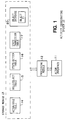
- Fig. 1 is a general functional diagram depicting an activity coordination system 10 constructed in accordance with the invention.
- the activity coordination system 10 generally comprises a suitably programmed digital computer system.
- the activity coordination system 10 includes an actor interface 11 through which an operator, or actor, using the activity coordination system 10 provides information and receives responses, a processing module 12 that processes the information received from the actor interface 11 and provides responses, in the form of processed information, to the actor interface 11, and a storage module 13 that stores information that the processing module uses in its processing.
- the information in the storage module 13 is organized into data structures including several tables, namely, an actor/role table 14, a role/object table 15, a state/action table 16 and a state transition table 17, and an object database 20 containing one or more objects generally identified by reference numeral 21.
- the activity coordination system 10 using the contents of the various tables 14 through 17 and the objects 21 in the object database 20, formalizes and coordinates the actions of a number of actors in connection with a single activity within an organization, such as a business, while the actors may have competing demands on them from a number of activities in the organization.
- the activity coordination system 10 facilitates coordination of the various constituents of an activity, formalizing negotiations among actors in the various roles, recording proposed and committed terms resulting from the negotiations, permitting scheduling, and so forth, to enable the achievement of the intended result of the activity.
- the actor/role table 14 identifies roles each actor performs in the activity and the role/object table 15 identifies objects which may be controlled by the roles identified in the actor/role table 14.
- Each object 21 contains information relating to a constituent of an activity, such as the state of the constituent, as well as negotiations, commitments, and so forth which take place among actors, using the activity coordination system 10, in connection with the constituent.
- the state/action table 16 determines the actions that the actor may take in connection with the objects based on their states, and the state transition table 17 determines, based on the state of the object and an action selected by the actor, a new state for the object.
- the activity coordination system 10 assists in an activity which includes the design and manufacture of a product, within the context of an organization which may including a plurality of such activities.
- the actors comprise the particular people who are involved in the activity, and the roles may include such actions as Product Manager, Engineer, Finance, Marketing, Manufacturing, and so forth.
- the actor/role table 14 thus identifies the particular persons who may perform the various roles.
- the Product Manager role is associated with the actor responsible for the product.
- the Engineer role is associated with the actor responsible for providing engineering services in connection with the design of this product as well as other products, if any.
- the Finance role is associated with the actor who is responsible for providing funding in connection with this product as well as other products, if any.
- the Marketing and Manufacturing roles are associated with the actors who are responsible for providing the respective services in connection with this product as well as other products, if any.
- the objects 21 identify various constituents required in connection with the activity.
- the actor performing the Product Manager role may, for example, need to obtain funding for the activity from the actor with the Finance role, and so Funding may comprise a constituent of the activity.
- the actor performing the Product Manager role may also need to have the actor performing the Engineer role provide engineering services over a time period to provide a product design by a certain date and with a selected cost, which comprises another constituent of the activity.
- the actor performing the Product Manager role may also need to have the actors performing the Marketing and Manufacturing roles provide services in connection with such constituents of the activity as the marketing and manufacture of the product, on scheduling and financial arrangements as the various actors may agree.
- Each of the constituent activities is associated with an object 21, which includes information as to the negotiations among actors to determine the various scheduling and financial terms under which the constituent activity will be performed, as well as the state of the constituent.
- the state may indicate, for example, whether negotiations are proceeding, whether the actors have committed to scheduling, financial and other terms relating to the constituent, whether the constituent has been completed, and so forth.
- the state further relates to the actions which may be taken in connection with the respective constituents.
- the states of the objects corresponding to those constituents will reflect a negotiation state.
- the states of the corresponding objects will reflect the commitment state.
- the states of the corresponding objects will reflect the completion state.
- the activity coordination system 10 permits the formalization and coordination of the various constituents of an activity to enable the orderly achievement of the intended result of the activity.
- the actor/role table 14 includes a plurality of entries 30(A) through 30(N) (generally identified by reference numeral 30) each including an actor identification field 31 and a plurality of role flag fields 32(1) through 32(k) (generally identified by reference numeral 32) each defining a flag.
- Each entry 30 is associated with one actor, who is identified by the contents of the actor field 31, whose actions are to be coordinated by the activity coordination system 10.
- each role flag field 32 in each entry 30 is associated with one role in the activity, that is, the first role flag fields 32(1) in all of the entries 30 are associated with one specific role in the activity, the second role flag fields 32(2) in all of the entries 30 are associated with a second specific role, and so forth. If an actor is associated with, that is, if the actor can perform, one or more roles, the flags of the role flag fields 32 associated therewith have set conditions; alternatively, if an actor cannot perform a specific role in connection with the activity, the flag of the role flag field 32 associated with the activity have cleared conditions.
- the role/object table 15 which is shown in detail in Fig. 2B, includes a plurality of entries 40(1) through 40(k) (generally identified by reference numeral 40), each including a role identification field 41 and a plurality of object flag fields 42(a) through 42(g) (generally identified by reference numeral 42).
- Each entry 40 is associated with a role, which is identified by the contents of the role identification field 41, which is, in turn, associated with the role flag fields 32 in the actor/role table 14.
- each object flag field 42 is associated with one object 21, that is, the first object flag fields 42(a) in all of the entries 40 are associated with one specific object 21, the second object flag fields 42(b) in all of the entries 40 are associated with a second object 21, and so forth.
- a role is associated with one or more objects 21, that is, if an actor in a role can access and modify one or more objects 21, the flags of the respective object flag fields 42 have set conditions; alternatively, if a role is not associated with an object 21, such that an actor in a role cannot access and modify the object 21, the flag of the associated object flag field 42 has a cleared condition.
- the state/action table 16 which is shown in detail in Fig. 2C, also includes a plurality of entries 50(1) through 50(Z) (generally identified by reference numeral 50), each including a state identification field 51 and a plurality of action flag fields 52(I) through 52(M) (generally identified by reference numeral 52).
- each object 21 can exist in one of a plurality of states, and each entry 50 is associated with a state in which the object 21 can exist.
- the state identification field 51 identifies the state associated with the entry
- the action flag fields 52 contain flags that identify the actions that can be taken in connection with the object 21 when the object 21 is in the state associated with the entry 50.
- the sequential action flag fields 52 in the entries 50 are associated with the same actions, that is, action flag fields 52(I) in the entries 50 are all associated with one action, action flag fields 52(II) in all of the entries 50 are all associated with a second action, and so forth. If a particular action can be performed in connection with an object 21 which has a particular state, the flag in the action flag field 52 associated with the action of the entry 50 associated with the state has a set condition; alternatively if an action cannot be performed in connection with the object 21 which has a particular state, the flag in the action flag field 52 associated with the action of the entry 50 associated with the state has a cleared condition.
- the state transition table 17 which is shown in detail in Fig. 2D, has a plurality of entries 60(1) through 60(Z) (generally identified by reference numeral 60), each including a state identification field 61 and a plurality of state transition fields 62(1) through 62(Z).
- each entry 60 in the state transition table 17 is associated with one state in which an object 21 can exist.
- the state identification field 61 identifies the state with which the entry 61 is associated.
- Each of the state transition fields 62 in each entry 60 is also associated with a state, with one state transition field 62 being associated with each state in which the object 21 can exist.
- each state transition field 62 in an entry 60 identify an action, which, when performed in connection with an object 21 which is in the state identified in the entry's state identification field 61, will result in the object 21 being in the state associated with the state transition field 62.
- the activity coordination system 10 may include a plurality of objects 21 which have different sets of states and actions.
- the activity coordination system 10 may include a plurality of state/action tables 16, with each state/action table 16 being associated with one of the objects 21 to define the actions which can be performed in connection with the object 21.
- each of the state/action tables 16 includes a tag identifying the object 21 associated with the state/action table 16.
- actions performed by the activity coordination system 10 in connection with diverse objects 21 may result in transitions to different states.
- the activity coordination system 10 may include a plurality of state transition tables 17, with each state transition table 17 defining the state transitions that can occur in connection with the actions that can be performed in connection with an object.
- each of the state transition tables 17 includes a tag identifying the object 21 associated with the state transition table 17.
- each object 21 stored in the object database 20 contains state and other information relating to a constituent of an activity and is accessed and modified by the processing module 12 in response to information provided by the actor through the actor interface 11 as described below.
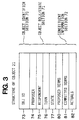
- the structure of an object 21 in the object database 20 is depicted in Fig. 3.
- an object 21 includes three sections, namely, an object identifier section 70, an object role/state section 71 and a constituent information section 72.
- the object identifier section 70 includes a single field, namely, an object identification field 73.
- the object role/state section 71 of object 21 includes four fields, namely, a proposer field 74, a respondent field 75, a turn field 76, which identify the roles in which the various actors can enable the processing module 12 to access the object, and a state field 77 which identifies the state of the object 21.
- the proposer field 74 and respondent field 75 identify roles, which are associated with the various role flag fields 32 (Fig. 2A) in the actor/role table 14. If either the proposer field 74 or the respondent field 75 identify a role which an actor can perform, as indicated by the actor/role table 14, the actor may enable the processing module 12 to access the object 21.
- the turn field 76 of the object role/state section 71 further serves to restrict access to the object 21, in particular to an actor performing either the role identified by the requester field 74 or an actor performing the role identified by the respondent field 75.
- the contents of the turn field 76 identify either the proposer field 74 or the respondent field 75, and an actor performing the role identified by the contents of the field 74 or 75 identified by the turn field 75 can enable the processing module to access the object 21.
- the processing module 12 modifies the contents of the turn field 76 to identify the other of the proposer field 74 or the respondent field 75 so that access to the object 21 alternates between an actor performing the role identified by the proposer field 74 and an actor performing the role identified by the respondent field 75.
- the state field 77 contains state information identifying the state of the object 21.
- the constituent information section 72 contains information as to the constituent of the activity associated with the object 21.
- the particular fields which are included in the constituent information section 72 depend upon the particular constituent or activity being coordinated by the activity coordination system 10.
- the constituent information section includes a proposed terms field 80, a committed terms field 81 and an actuals field 82.
- the processing module 12 inserts into the proposed terms field 80 information identifying terms under which the actors performing the roles and operating as proposer and respondent as identified in fields 74 and 75, propose to perform the constituent of the activity associated with the object.
- the processing module 12 inserts the agreed terms in the committed terms field 81.
- the actuals field 82 is provided to receive information as to the actual result of the constituent, to facilitate comparisons with the previously-agreed terms in the committed terms field 81.
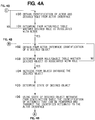
- the processing module 12 when an actor initiates use of the activity coordination system 10, the processing module 12 first obtains from the actor, through the actor interface 11, the identification of the actor and a role (step 100). The processing module 12 then determines from the actor/role table 14 whether the actor may perform the identified role (step 101) by determining whether a flag is set in the role flag field 32 associated with the role in the entry 30 in the actor/role table 14 associated with the actor. If the flag is not set, the actor is not permitted to perform the requested role and so the processing module 12 returns to step 100 to permit the actor may identify another role.
- step 101 the processing module 12 determines that the flag is set in the role flag field 32 associated with the role identified by the actor, the processing module 12 sequences to step 102, in which it obtains, from the actor through the actor interface 11, the identification of an object 21 that the actor wishes the processing module 12 to access.
- the processing module 12, using the role/object table 15, determines whether the identified object 21 is associated with the role, that is, whether the actor, performing the role, can enable the processing module 12 to access the object 21 (step 103). In that operation, the processing module 12 determines whether the flag is set in the object flag field 42, associated with the identified object 21, of the entry 40 associated with the role in the role/object table 15 (Fig. 2B). If the flag is not set, the processing module 12 returns to step 102 to obtain the identification of another object 21, or alternatively returns to step 100 if no other object 21 is identified.
- step 103 the processing module 12 determines that the flag is set in the object flag field 42 indicating that the actor, performing the role, can enable the processing module 12 to access the object 21, the processing module 12 retrieves the identified object 21 from the object database 20 (step 104) and determines its state (step 105) as indicated by the contents of its state field 77. Using the identified state, the processing module 12 then, using the state/action table 16, identifies the actions that can be performed in connection with the object 21 (step 106). In so doing, the processing module 12 identifies the actions associated with the flags that are set in the action flag fields 52 in the entry 50 associated with the state identified by the contents of the state field 77. It will be appreciated that, if the storage module contains a plurality of state/action tables 16 each associated with one or more selected objects, the processing module 12 will use the state/action table 16 associated with the object 21 in this operation.
- the processing module 12 transmits the identified actions to the actor interface 11 to permit the actor to identify a desired action and provide additional information, if necessary, to permit the object 21 to perform processing of the object 21 as required in connection with the action.
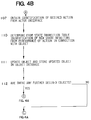
- the processing module 12 determines from the state transition table 17 the identification of the new state resulting from performance of the action in connection with the object 21 (step 110).
- the processing module 12 then performs any necessary processing in connection with the additional information, updating the constituent information section 72 and state field 77 of the object 21 in the object database 20 (step 111).
- step 111 which is the last step in the processing of the selected object 21
- the processing module 12 inquires of the actor, through the actor interface 11, whether the actor wishes to initiate processing in connection with any other objects 21 (step 112). If so, the processing module 12 returns to step 102 to permit the selection of another object 21. However, if the actor does not wish to initiate processing in connection with any other objects 21, the processing module 12 returns to step 100. At that point, another actor may initiate processing of objects by the processing module 12.
- the activity coordination system 10 (Fig. 1), through the various objects 21 and the tables 14 through 17, facilitates coordination of the various constituents of an activity, formalizing negotiations among actors in the various roles, recording proposed and committed terms resulting from the negotiations, permitting scheduling, and so forth, to enable the achievement of the intended result of the activity.
- the various constituents of the activity are identified and formalized by the various objects 21 provided in the activity coordination system 10.
- Each object 21 identifies the state of a constituent, and provides a mechanism to record the various negotiations and other information in connection with the constituent.
- the actor/role table 14 and role/object table 15 jointly provide a mechanism for limiting access to the various objects 21, so that only selected actors in selected roles can effect certain constituents.
- the state/action table 16 and state transition table 17 formalize the progression of the various constituents, by limiting the actions which may be taken in connection with each of the constituents to those set forth in the state transition table 17, with the actions which can be taken at any time being limited to those set forth in the state/action table 16.
- the actor/role table 14 and role/object table 15 limit the constituents in which each actor may participate and the state/action table 16 and state transition table 17 limit and formalize the actions which may be taken in connection with each of the objects 21.
Landscapes
- Engineering & Computer Science (AREA)
- Business, Economics & Management (AREA)
- Strategic Management (AREA)
- Entrepreneurship & Innovation (AREA)
- Human Resources & Organizations (AREA)
- Operations Research (AREA)
- Economics (AREA)
- Marketing (AREA)
- Data Mining & Analysis (AREA)
- Quality & Reliability (AREA)
- Tourism & Hospitality (AREA)
- Physics & Mathematics (AREA)
- General Business, Economics & Management (AREA)
- General Physics & Mathematics (AREA)
- Theoretical Computer Science (AREA)
- Information Retrieval, Db Structures And Fs Structures Therefor (AREA)
- Management, Administration, Business Operations System, And Electronic Commerce (AREA)
- Stored Programmes (AREA)
Claims (2)
- Appareil pour coordonner des actions exécutées par une multiplicité d'acteurs relativement à divers constituants d'une activité, comportant un moyen formant interface d'acteur (11) pour déclencher l'utilisation du système par un acteur sélectionné, pour fournir des informations de l'acteur au système, et pour fournir des réponses du système à l'acteur depuis le système, et un moyen de traitement (12),
caractérisé en ce que:A) l'appareil comporte, en outre:1) un moyen de définition acteur/rôles (14) pour emmagasiner et définir une multiplicité de rôles que l'acteur peut assumer relativement aux constituants;2) une base de données (20) pour emmagasiner une multiplicité d'objets (21), chaque objet étant associé à un constituant, chaque objet comportant:a) des moyens d'identification (73) pour identifier l'objet;b) des moyens de définition d'état (77) pour définir un état de l'objet;c) des moyens de stockage d'informations (72) pour emmagasiner des informations relatives au constituant associé;d) des moyens de définition état/action (74, 75) pour emmagasiner et définir une multiplicité d'actions que les acteurs peuvent effectuer relativement aux divers états de chaque objet; ete) des moyens de définition de transition d'état (76) pour emmagasiner et définir des transitions d'état pour chaque objet relativement à chaque action définie par les moyens de définition état/action; et3) des moyens de définition d'accès rôle/objet (15) pour emmagasiner et définir les objets auxquels peut accéder l'acteur qui assume un rôle particulier; etB) le moyen de traitement, réagissant aux informations fournies par le moyen formant interface d'acteur, prévoit, en outre:1) des moyens pour déterminer, en réponse aux moyens de définition d'accès rôle/objet, si l'acteur assumant un rôle particulier, tel que défini par le moyen de définition acteur/rôles, peut accéder à un objet;2) des moyens pour déterminer, en réponse aux moyens de définition état/action, si l'acteur peut exécuter une action sur l'objet;3) des moyens pour exécuter l'action sur l'objet selon les informations fournies par le moyen formant interface d'acteur, en réponse à la détermination de la possibilité pour l'acteur d'accéder à l'objet et à la détermination de la possibilité d'exécuter l'action sur l'objet; et4) des moyens pour modifier l'état de l'objet tel que défini par les moyens de définition de transitions d'état en réponse à l'action exécutée sur l'objet. - Procédé, exécuté dans un système de traitement de données, pour coordonner des actions exécutées relativement à des constituants d'une activité par une multiplicité d'acteurs, caractérisé en ce que le procédé comporte les étapes consistant:à définir une multiplicité d'acteurs associés à une activité;à définir une multiplicité de rôles que les acteurs peuvent assumer relativement aux constituants de l'activité;à définir une base de données (20) contenant une multiplicité d'objets, chaque objet étant associé à un constituant de l'activité et chaque objet contenant des informations concernant le constituant associé, les informations comportant les résultats de négociations parmi les acteurs pour déterminer les termes selon lesquels le constituant sera exécuté et des informations concernant l'état du constituant;à obtenir (100) des informations d'identification d'un acteur sélectionné et des informations concernant un rôle particulier souhaité par l'acteur;à déterminer (101), en utilisant une table de définitions de rôles (14) pour identifier les rôles que l'acteur peut assumer;à déterminer (102, 103), en utilisant une table de définitions d'objets pour identifier un objet auquel l'acteur peut accéder en considération du rôle particulier que l'acteur a assumé, tel qu'identifié par la table de définitions de rôles;à extraire (104) l'objet de la base de données d'objets;à déterminer (105), en utilisant une table de transitions d'état pour enregistrer les divers états de l'objet;à utiliser (106) une table de définitions d'actions pour identifier les actions que l'acteur peut exécuter sur l'objet en considération de l'état de l'objet et des termes selon lesquels le constituant sera exécuté;à transmettre à l'acteur des informations concernant les actions que l'acteur pourra exécuter sur l'objet;à obtenir (107) de l'acteur des informations concernant une action à exécuter sur l'objet;à exécuter l'action sur l'objet, en réponse aux informations obtenues de l'acteur, après avoir déterminé la possibilité pour l'acteur d'accéder à l'objet en se référant à la table de définitions d'objets, ainsi que la possibilité pour l'acteur d'exécuter l'action sur l'objet en se référant à la table de définitions d'actions;à mettre à jour (111) la table de transitions d'état pour enregistrer des modifications des divers états de l'objet suite à l'exécution de l'action; età fournir des réponses à l'acteur relativement à l'action exécutée sur l'objet.
Applications Claiming Priority (2)
| Application Number | Priority Date | Filing Date | Title |
|---|---|---|---|
| US173768 | 1988-03-28 | ||
| US07/173,768 US5050074A (en) | 1988-03-28 | 1988-03-28 | System for facilitating coordination of activities by a plurality of actors with an object database and state/action identification |
Publications (3)
| Publication Number | Publication Date |
|---|---|
| EP0335638A2 EP0335638A2 (fr) | 1989-10-04 |
| EP0335638A3 EP0335638A3 (fr) | 1992-10-07 |
| EP0335638B1 true EP0335638B1 (fr) | 1996-09-18 |
Family
ID=22633406
Family Applications (1)
| Application Number | Title | Priority Date | Filing Date |
|---|---|---|---|
| EP89303007A Expired - Lifetime EP0335638B1 (fr) | 1988-03-28 | 1989-03-28 | Système pour faciliter la coordination d'activités entre une pluralité d'acteurs |
Country Status (5)
| Country | Link |
|---|---|
| US (1) | US5050074A (fr) |
| EP (1) | EP0335638B1 (fr) |
| JP (1) | JPH01311363A (fr) |
| CA (1) | CA1316266C (fr) |
| DE (1) | DE68927196T2 (fr) |
Cited By (3)
| Publication number | Priority date | Publication date | Assignee | Title |
|---|---|---|---|---|
| EP0453152A3 (en) * | 1990-04-17 | 1993-05-26 | American Telephone And Telegraph Company | Computer program specification system |
| WO2001003037A3 (fr) * | 1999-07-01 | 2001-07-12 | Microsoft Corp | Circulation automatisee des documents au moyen de machines a etats scriptables et commandees par transition de donnees |
| US6421700B1 (en) | 1995-12-22 | 2002-07-16 | Xerox Corporation | Method and system for work process support using independent system and user states |
Families Citing this family (24)
| Publication number | Priority date | Publication date | Assignee | Title |
|---|---|---|---|---|
| JP2846054B2 (ja) * | 1990-04-20 | 1999-01-13 | 株式会社日立製作所 | 出力仕様例示形情報処理システム |
| US5216592A (en) * | 1991-04-25 | 1993-06-01 | International Business Machines Corporation | System and method for business process automation |
| US5386464A (en) * | 1991-12-19 | 1995-01-31 | Telefonaktiebolaget L M Ericsson | Feature control system utilizing design oriented state table language |
| CA2098415A1 (fr) * | 1992-10-07 | 1994-04-08 | David L. Campbell | Systeme et methode de commande de processus universelle informatisee utilisant des elements de processus generiques |
| EP0603513A3 (fr) * | 1992-12-21 | 1994-11-02 | Motorola Inc | Gestion de processus, système de commande et méthode pour la conversion de documents. |
| JP2986051B2 (ja) * | 1993-08-04 | 1999-12-06 | インターナショナル・ビジネス・マシーンズ・コーポレイション | オブジェクト指向コンピュータ・システム及びオブジェクト実行方法 |
| US6052678A (en) * | 1993-12-16 | 2000-04-18 | Fujitsu Limited | Problem solving operation apparatus using a state transition |
| US5604907A (en) * | 1993-12-30 | 1997-02-18 | International Business Machines Corporation | Computer system for executing action slots including multiple action object classes |
| US5664183A (en) * | 1994-04-19 | 1997-09-02 | International Business Machines Corporation | Application of groupware to ISO 9000 registration via facilitated work sessions |
| JP2927325B2 (ja) * | 1994-06-29 | 1999-07-28 | 富士ゼロックス株式会社 | データ管理システム |
| US5671360A (en) * | 1995-01-20 | 1997-09-23 | International Business Machines Corporation | Project management tool implementing authority for a people oriented work environment tool |
| US5836011A (en) * | 1995-01-20 | 1998-11-10 | International Business Machines Corporation | Implementation of teams and roles within a people oriented work environment |
| JP3865775B2 (ja) * | 1995-04-11 | 2007-01-10 | キネテック インコーポレイテッド | データ処理システムにおけるデータの識別 |
| US5826085A (en) * | 1995-07-12 | 1998-10-20 | Oracle Corporation | Object oriented computer interface supporting interactive networked applications |
| US5740236A (en) * | 1995-12-21 | 1998-04-14 | Ericsson, Inc. | System for providing feature services in a telecommunications system |
| US6088739A (en) * | 1996-06-28 | 2000-07-11 | Microsoft Corporation | Method and system for dynamic object clustering |
| US6049664A (en) * | 1997-11-25 | 2000-04-11 | Alphablox Corporation | Tier-neutral development mechanism for hypertext based applications |
| US6272673B1 (en) | 1997-11-25 | 2001-08-07 | Alphablox Corporation | Mechanism for automatically establishing connections between executable components of a hypertext-based application |
| JP3790661B2 (ja) * | 2000-09-08 | 2006-06-28 | インターナショナル・ビジネス・マシーンズ・コーポレーション | アクセス制御システム |
| US7231630B2 (en) * | 2002-07-12 | 2007-06-12 | Ensequence Inc. | Method and system automatic control of graphical computer application appearance and execution |
| US7236982B2 (en) * | 2003-09-15 | 2007-06-26 | Pic Web Services, Inc. | Computer systems and methods for platform independent presentation design |
| US7788634B2 (en) * | 2004-09-03 | 2010-08-31 | Ensequence, Inc. | Methods and systems for efficient behavior generation in software application development tool |
| US8185576B2 (en) | 2006-03-14 | 2012-05-22 | Altnet, Inc. | Filter for a distributed network |
| US20150220327A1 (en) * | 2014-01-31 | 2015-08-06 | Dell Products L.P. | Extensible data model and service for infrastructure management |
Family Cites Families (2)
| Publication number | Priority date | Publication date | Assignee | Title |
|---|---|---|---|---|
| US4503499A (en) * | 1982-09-14 | 1985-03-05 | Eaton Corporation | Controlled work flow system |
| US4866605A (en) * | 1984-11-05 | 1989-09-12 | Hitachi, Ltd. | System function simulation method and apparatus therefor using Petri net symbols |
-
1988
- 1988-03-28 US US07/173,768 patent/US5050074A/en not_active Expired - Lifetime
-
1989
- 1989-03-23 CA CA000594745A patent/CA1316266C/fr not_active Expired - Fee Related
- 1989-03-28 EP EP89303007A patent/EP0335638B1/fr not_active Expired - Lifetime
- 1989-03-28 DE DE68927196T patent/DE68927196T2/de not_active Expired - Fee Related
- 1989-03-28 JP JP1076357A patent/JPH01311363A/ja active Pending
Cited By (4)
| Publication number | Priority date | Publication date | Assignee | Title |
|---|---|---|---|---|
| EP0453152A3 (en) * | 1990-04-17 | 1993-05-26 | American Telephone And Telegraph Company | Computer program specification system |
| US6421700B1 (en) | 1995-12-22 | 2002-07-16 | Xerox Corporation | Method and system for work process support using independent system and user states |
| WO2001003037A3 (fr) * | 1999-07-01 | 2001-07-12 | Microsoft Corp | Circulation automatisee des documents au moyen de machines a etats scriptables et commandees par transition de donnees |
| US7607130B2 (en) | 1999-07-01 | 2009-10-20 | Microsoft Corporation | Workflow as data-transition driven, scriptable state machines |
Also Published As
| Publication number | Publication date |
|---|---|
| CA1316266C (fr) | 1993-04-13 |
| US5050074A (en) | 1991-09-17 |
| DE68927196D1 (de) | 1996-10-24 |
| JPH01311363A (ja) | 1989-12-15 |
| EP0335638A2 (fr) | 1989-10-04 |
| EP0335638A3 (fr) | 1992-10-07 |
| DE68927196T2 (de) | 1997-04-03 |
Similar Documents
| Publication | Publication Date | Title |
|---|---|---|
| EP0335638B1 (fr) | Système pour faciliter la coordination d'activités entre une pluralité d'acteurs | |
| CA2275399C (fr) | Systeme informatique de gestion utilise dans le deroulement de travaux | |
| US6311192B1 (en) | Method for initiating workflows in an automated organization management system | |
| US6061506A (en) | Adaptive strategy-based system | |
| US5361199A (en) | Automated procurement system with multi-system data access | |
| US5802493A (en) | Method and apparatus for generating a proposal response | |
| US6119102A (en) | MRP system with viewable master production schedule | |
| US5848271A (en) | Process and apparatus for controlling the work flow in a multi-user computing system | |
| US20080065460A1 (en) | Apparatus, system, method, and computer program for task and process management | |
| US20030171947A1 (en) | system and method for enterprise-wide business process management | |
| US6341369B1 (en) | Method and data processing system for specifying and applying rules to classification-based decision points in an application system | |
| EP0854431A2 (fr) | Evènements comme activités dans des modèles de systèmes de gestion de flux de travail | |
| EP1677241A1 (fr) | Optimisation de résolution d'événements supportée par un système | |
| US6092067A (en) | Desktop information manager for recording and viewing important events data structure | |
| US20020165898A1 (en) | Recipient-determined method for sharing tasks in an advanced electronic messaging/workflow system | |
| US6725445B1 (en) | System for minimizing notifications in workflow management system | |
| IL139640A (en) | Cross-implementation of a timesheet | |
| US20060101052A1 (en) | Method and system for sequencing and scheduling | |
| US7752172B2 (en) | Transaction processing | |
| Lau et al. | Virtual agent modeling of an agile supply chain infrastructure | |
| Krömker et al. | An infrastructure to support concurrent engineering in bid preparation | |
| US20110282708A1 (en) | Integrating external data in human workflow tasks | |
| US7376602B2 (en) | Method for facilitating and maintaining an active parts data repository | |
| Yeh | Production data modelling: an integrated approach | |
| Miller | Building an effective information systems function |
Legal Events
| Date | Code | Title | Description |
|---|---|---|---|
| PUAI | Public reference made under article 153(3) epc to a published international application that has entered the european phase |
Free format text: ORIGINAL CODE: 0009012 |
|
| 17P | Request for examination filed |
Effective date: 19890407 |
|
| AK | Designated contracting states |
Kind code of ref document: A2 Designated state(s): DE FR GB NL |
|
| PUAL | Search report despatched |
Free format text: ORIGINAL CODE: 0009013 |
|
| AK | Designated contracting states |
Kind code of ref document: A3 Designated state(s): DE FR GB NL |
|
| 17Q | First examination report despatched |
Effective date: 19931210 |
|
| GRAH | Despatch of communication of intention to grant a patent |
Free format text: ORIGINAL CODE: EPIDOS IGRA |
|
| GRAH | Despatch of communication of intention to grant a patent |
Free format text: ORIGINAL CODE: EPIDOS IGRA |
|
| GRAA | (expected) grant |
Free format text: ORIGINAL CODE: 0009210 |
|
| AK | Designated contracting states |
Kind code of ref document: B1 Designated state(s): DE FR GB NL |
|
| REF | Corresponds to: |
Ref document number: 68927196 Country of ref document: DE Date of ref document: 19961024 |
|
| ET | Fr: translation filed | ||
| PLBE | No opposition filed within time limit |
Free format text: ORIGINAL CODE: 0009261 |
|
| STAA | Information on the status of an ep patent application or granted ep patent |
Free format text: STATUS: NO OPPOSITION FILED WITHIN TIME LIMIT |
|
| 26N | No opposition filed | ||
| PGFP | Annual fee paid to national office [announced via postgrant information from national office to epo] |
Ref country code: NL Payment date: 19980223 Year of fee payment: 10 |
|
| PG25 | Lapsed in a contracting state [announced via postgrant information from national office to epo] |
Ref country code: NL Free format text: LAPSE BECAUSE OF NON-PAYMENT OF DUE FEES Effective date: 19991001 |
|
| NLV4 | Nl: lapsed or anulled due to non-payment of the annual fee |
Effective date: 19991001 |
|
| REG | Reference to a national code |
Ref country code: GB Ref legal event code: 732E |
|
| REG | Reference to a national code |
Ref country code: GB Ref legal event code: IF02 |
|
| PGFP | Annual fee paid to national office [announced via postgrant information from national office to epo] |
Ref country code: GB Payment date: 20070327 Year of fee payment: 19 |
|
| PGFP | Annual fee paid to national office [announced via postgrant information from national office to epo] |
Ref country code: DE Payment date: 20070430 Year of fee payment: 19 |
|
| PGFP | Annual fee paid to national office [announced via postgrant information from national office to epo] |
Ref country code: FR Payment date: 20070319 Year of fee payment: 19 |
|
| GBPC | Gb: european patent ceased through non-payment of renewal fee |
Effective date: 20080328 |
|
| REG | Reference to a national code |
Ref country code: FR Ref legal event code: ST Effective date: 20081125 |
|
| PG25 | Lapsed in a contracting state [announced via postgrant information from national office to epo] |
Ref country code: DE Free format text: LAPSE BECAUSE OF NON-PAYMENT OF DUE FEES Effective date: 20081001 |
|
| PG25 | Lapsed in a contracting state [announced via postgrant information from national office to epo] |
Ref country code: FR Free format text: LAPSE BECAUSE OF NON-PAYMENT OF DUE FEES Effective date: 20080331 |
|
| PG25 | Lapsed in a contracting state [announced via postgrant information from national office to epo] |
Ref country code: GB Free format text: LAPSE BECAUSE OF NON-PAYMENT OF DUE FEES Effective date: 20080328 |