EP0336552A2 - Identification d'unités de programme dans un environnement d'exploitation dans un ordinateur - Google Patents
Identification d'unités de programme dans un environnement d'exploitation dans un ordinateur Download PDFInfo
- Publication number
- EP0336552A2 EP0336552A2 EP89301902A EP89301902A EP0336552A2 EP 0336552 A2 EP0336552 A2 EP 0336552A2 EP 89301902 A EP89301902 A EP 89301902A EP 89301902 A EP89301902 A EP 89301902A EP 0336552 A2 EP0336552 A2 EP 0336552A2
- Authority
- EP
- European Patent Office
- Prior art keywords
- function
- code
- dynamic link
- selectors
- selector
- Prior art date
- Legal status (The legal status is an assumption and is not a legal conclusion. Google has not performed a legal analysis and makes no representation as to the accuracy of the status listed.)
- Ceased
Links
Images

Classifications
-
- H—ELECTRICITY
- H10—SEMICONDUCTOR DEVICES; ELECTRIC SOLID-STATE DEVICES NOT OTHERWISE PROVIDED FOR
- H10D—INORGANIC ELECTRIC SEMICONDUCTOR DEVICES
- H10D62/00—Semiconductor bodies, or regions thereof, of devices having potential barriers
- H10D62/80—Semiconductor bodies, or regions thereof, of devices having potential barriers characterised by the materials
- H10D62/85—Semiconductor bodies, or regions thereof, of devices having potential barriers characterised by the materials being Group III-V materials, e.g. GaAs
- H10D62/852—Semiconductor bodies, or regions thereof, of devices having potential barriers characterised by the materials being Group III-V materials, e.g. GaAs being Group III-V materials comprising three or more elements, e.g. AlGaN or InAsSbP
-
- G—PHYSICS
- G06—COMPUTING OR CALCULATING; COUNTING
- G06F—ELECTRIC DIGITAL DATA PROCESSING
- G06F9/00—Arrangements for program control, e.g. control units
- G06F9/06—Arrangements for program control, e.g. control units using stored programs, i.e. using an internal store of processing equipment to receive or retain programs
- G06F9/44—Arrangements for executing specific programs
- G06F9/445—Program loading or initiating
- G06F9/44521—Dynamic linking or loading; Link editing at or after load time, e.g. Java class loading
Definitions
- This invention relates generally to information processing systems and, more particularly, to operating systems and subsystems therefor and applications implemented as multiple loadable/executable program units.
- One of the desirable features of some of the aforementioned multi-tasking operating environments is that an application program is prevented by the operating system from crashing or otherwise damaging the system. If the application or a subsystem seeks to access memory not allocated thereto, systems were devised whereby the application was terminated and the termination reported.
- Such systems typically took advantage of newly developed microprocessor families which provided a protected mode of operation in which physical memory addresses were computed indirectly from a selector and an offset which thereby effects the aforementioned memory isolation and enables the operating system to prevent damage to the system from applications.
- Operating systems were thereby devised which enabled application programs to have external references to segments that were not included in the application's executable code through "dynamic linking". References to the segments were resolved in special program libraries hereinafter referred to as dynamic link libraries (DLLs) by a loader, i.e., the portion of the operating system's kernel responsible for loading programs from disk into memory.
- DLLs dynamic link libraries
- Source level debugger An example of this is a product sold by the Microsoft Corporation under the commercial name "Codeview" for IBM/Microsoft C. Such a tool generally makes it unnecessary to know the values of selectors since it allows the programmer to refer to code and data locations mnemonically.
- these tools do not solve the problem for the end user reporting a problem since the end user typically does not have access to the source code or a debugger.
- source level debugging tools are vendor language-dependent and are not readily available for all of the many source languages in use.
- an assembler level debugger (requiring knowledge of selector values) is sometimes more desirable (such as when the programs resource requirements exceed the capacity of the source level debugger, or for timing-dependent problems).
- Yet another approach to providing more detailed error indication could be effected by writing a device driver accessing internal data areas of the operating system and thence writing a program to obtain the information from the driver.
- One problem with such an approach well known in the art is that building the drivers is relatively difficult and expensive, involving tedious design, coding, and debugging which can be particularly difficult.
- building the drivers is relatively difficult and expensive, involving tedious design, coding, and debugging which can be particularly difficult.
- a driver even if designed effectively, would operate along with the operating system itself at the same protection level. The driver would thus have access to all system data segments whereupon the previously noted advantage of the operating system environment under consideration, namely the memory isolation, is thereby defeated.
- a method of operating a computer within an operating environment wherein an application executes as multiple loadable program units, for identifying one of said program units, comprising the steps of: generating at least one dynamic link library; generating a plurality of code selectors; generating a first code module in said at least one of said dynamic link libraries related to said plurality of code selectors; deriving a first function corresponding to said dynamic link libraries and said plurality of code selectors; and generating an indication corresponding to said first function.
- an operating system environment allowing applications to execute multiple loadable program units.
- the system runs in a protected memory mode and permits application programs to externally reference to segments not included in the application's executable code through dynamic linking.
- Application programs contain these external references by way of application program interface calls to special program dynamic link libraries, DLLs, which contain run-time application program interface function code.
- DLLs special program dynamic link libraries
- a loader portion of the system kernel resolves inter-segment references to segments in the DLLs during load.
- Each application has a correlative local descriptor table, LDT, containing segments private to the application.
- the LDT also contains a replica of a system global descriptor table, GDT, which provides all segments available to all tasks in the system. Access to all system segments is thereby provided to the application.
- the loader When the loader loads an application, the corresponding DLL is loaded and assigned a selector.
- the correlative segment is stored in the GDT and LDT by the loader which resolves the address of the function to its selector and offset. External references of subsequent applications referencing the same function are resolved to the same selector and offset. Only one copy of application program interface code is thereby required for a plurality of applications in the multi-tasking environment.
- a dynamic link identifier function For each DLL, a dynamic link identifier function, DLIF, is included as an entry point within the DLL.
- the DLIF allows programs to be written calling routines which provide selectors for each DLL in the respective program.
- a program provides display of all DLLs by name with respective selectors.
- Another program takes a selector reported to the system kernel upon abnormal application termination and returns the DLL identification including the number of the selector within the DLL.
- an application program interface to the system kernel identifies code selectors for a given DLL file or, alternatively, identifies a DLL file given a code selector.
- Memory models of some microprocessors provide memory indirection as is well known in the art.
- the memory model of the familiar 286/386 processor family manufactured by the Intel Corporation operating in "protected mode” provides such memory indirection.
- protected mode is distinguished from “real mode” in this regard as follows:
- the protected mode provides several benefits, amongst these being memory isolation whereby applications are prevented from damaging the system.
- the table, 6, which is used for all segments available to all tasks in the system, is called the Global Descriptor Table (GDT).
- GDT Global Descriptor Table
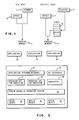
- FIG. 2 which illustrates the system architecture structure of the OS/2 operating system of the IBM Corporation, applications access the operating system using the Application Program Interface (API) 11.
- API Application Program Interface
- This system is representative of operating systems which are characterized by their multi-tasking and dynamic linking capabilities, other examples of which include AIX and some versions of UNIX.
- the term operating system as used hereinafter is intended to refer to such systems. Accordingly, although the OS/2 operating system details may be used herein to describe one embodiment of the subject invention, it should be understood that the invention is not intended to be so limited and contemplates applications generally to other operating systems. Further details regarding the OS/2 operating system may be obtained from Ed Iacobucci, OS/2 Programmer's Guide , McGraw-Hill, 1988 which is incorporated by reference herein.
- GDT Included in the GDT are the segments required for the API to the operating system kernel code 15 and common subsystem services 13.
- One way in which the operating system is designed to be extendable is that applications 10 can write their own subsystems 14, making their APIs 12 a logical extension of the operating system.
- the segments required for these subsystems are also included in the GDT.
- the loader In the operating system the part of the system kernel responsible for loading programs from other media such as a hard file into memory is called the loader.
- the operating system enables application programs to have external references to segments that are not included in the application's executable code (EXE file) through "dynamic linking".
- the loader can resolve references to segments included in special program libraries called Dynamic Link Libraries (DLLs).
- DLLs Dynamic Link Libraries
- the entire API (and its extensions) is based on dynamic linking. All of the run-time API code is contained in DLLs.
- the loader resolves the inter-segment references.
- Each application in the preferred embodiment has its own descriptor table, called a Local Descriptor Table (LDT), containing segments private to the application, as well as a replica of the GDT, giving the application access to system segments.
- LDT Local Descriptor Table
- the run-time code for an API function is contained in a DLL.
- Examples of such API functions include reading and writing files. If an application contains a call to this function, the application's EXE file contains only an external reference to the function.
- the loader loads the application, it also loads the DLL as required (assigning it a selector and storing the actual segment in the GDT and LDT) and resolves the address of the function to its selector and offset. Subsequent applications referencing the same function have their external references resolved to the same selector and offset. Thus only one copy of the API code is required for all applications in the multi-tasking environment.
- One of the desirable features of a multi-tasking operating environment is that an application program cannot bring down the system. Because protected mode provides memory isolation, the operating system can prevent applications from damaging the system. If an application (or a subsystem) attempts to access memory that is not allocated it, the system terminates the application and reports the protection violation along with information that can be used to correct the problem. This information contains, among other items, the code selector and offset at which the program attempted the illegal operation.
- One way to solve these problems would be for the system kernel to provide an API to identify the selectors for a given DLL file, or identify a DLL file given a selector.
- a programmer could provide the function by writing a device driver that accesses operating system internal data areas to determine the information, and then writing a program to get the information from the device driver.
- writing a device driver is a very tedious operation and the code is especially difficult to debug.
- such a device driver runs at the same protection level as the operating system itself, and thus has access to all system data segments, exposing the memory isolation of the system to being compromised.
- a simple solution that any programmer could implement for an application is more desirable.
- a function is included that is an entry point within the DLL (the function is exported by the DLL) called the Dynamic Link Identifier function (DLIF).
- DLIF Dynamic Link Identifier function
- Table 1 which follows is the source code in the C programming language of the Dynamic Link Identifier function of the present invention.
- line 1 includes an operating system header file defining macros for determining the offset and selector portion of a C pointer as shown by the following.
- #define FP_SEG(fp) (*((unsigned *)&(fp) + 1))
- FP_OFF(fp) (*((unsigned *)&(fp))
- Table 2 which follows is the source code in assembler code of a function that returns its code selector.
- line 2 declares the function getsel, which is defined and implemented in Table 2 as an assembler language routine that returns its code selector (CS register).
- Line 3 declares a dummy function which is defined on lines 12-14.
- Line 4 defines the DLIF function itself as required to be an entry point into a DLL, and as returning a 4-byte far pointer, (fp).
- Line 7 declares fp as a pointer to a function; fp is set to the address of the dummy function immediately following the DLIF. This causes the selector portion of the pointer fp to contain the selector of the DLIF, which should be equivalent to the first selector of the DLL.
- On line 8 rc is assigned the selector of the getsel function, which should be the last selector of the DLL.
- the number of code selectors for the DLL is calculated by dividing the difference between the selector for the getsel function and the selector for the DLIF function by 16, and adding one. This number is stored in place of the offset in the pointer to the DLIF.
- the variable fp still containing the selector of the DLIF, and modified to now contain the number of code selectors for the DLL, is returned to the caller.
- the number of code selectors for the DLL is accurately returned given that the module containing the DLIF is the first module in the link list for the DLL, and the getsel routine is statically linked from a library, and coded with: _text segment byte public 'CODE'
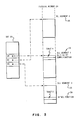
- the DLL When the DLL is loaded by the loader, it is assigned the first selector for the DLL 21.
- the linking process also forces the getsel function 29 to be with other C library functions in the last code segment for the DLL 28.
- the DLL When the DLL is loaded by the loader, it is assigned the last selector for the DLL 23.
- Other selectors are assigned sequentially in between by the loader (as code segment 2 25 in the example), in increments of 16.
- the assignment of code selectors in the Global Descriptor Table 20 can now be used to identify all the code segments of the DLL.
- this invention is not intended to be limited to the method of assigning code selectors and contemplates loaders in which other methods are employed such as assigning successive code selectors in increments of eight. Moreover, this invention is not intended to be limited to the described linking process and contemplates linkers in which some other process is required (such as explicitly specifying the segment order by segment name).
- the DLIF allows application programs to be written that call these routines and obtain the selectors for each of the DLLs in the program.
- Table 3 which follows is a flow diagram of the operation of the present invention for identifying the code selectors of a set of dynamic link libraries. Referring to Table 3, a program such as the one illustrated therein can be written to display all DLLs by name with their respective selectors.
- Table 4 which follows is the screen print of the output of an embodiment of the function described in Table 3. The screen output for the program is shown in Table 4.
- Selectors for DLL1 are 5C7 5D7 Selector for DLL2 is 777 Selector for DLL3 is B17 Selector for DLL4 is B67 Selectors for DLL5 are B87 B97 Selector for DLL6 is BB7 Selector for DLL7 is BE7 Selector for DLL8 is CO7 Selector for DLL9 is C67 Selectors for DLL10 are C87 C97 CA7 Selector for DLL11 is CC7 Selector for DLL12 is CF7 Selector for DLL13 is D87 Selector for DLL14 is D47 Selector for DLL15 is D17
- Table 5 which follows is is a flow diagram of the operation of the present invention for identifying a dynamic link libraries given a code selector.
- Another program such as the one depicted in the above Table 5 can be written that takes the selector reported by the system kernel when an application is abnormally terminated and return the DLL identification, including the number of the selector within the DLL. To use this program it is necessary to concurrently (when the abnormal termination occurs) be executing another application that references the same set of DLLs as the terminated application.
- the program described in Table 3 can be used for this purpose. This ensures that the selectors assigned to the DLLs will not be freed and reassigned when the program described in Table 5 is run. It will be apparent that the hereinbefore described functions of the present invention are of great benefit to program developers in problem determination and debugging.
- a block diagram is shown of a processing apparatus which may be used to run computer programs providing the function of the previously described algorithms, thereby implementing the system of the present invention.
- the system preferably takes the form of a typical personal computer architecture such as that embodied in the IBM Personal System/2.
- a microprocessor 32 is provided such as an Intel 80286 or 80386 device which is interconnected to a desired selection of I/O devices 34, ROM 36, memory 38, and media 40 by means of a bus 42.
- the bus 42 will be comprised of address, command, and data lines for purposes well known in the art.
- the I/O devices 34 which may be included in the system 30 of the present invention may include a display such as an IBM Personal System Color Display 8510, a keyboard, mouse or the like for user input, and a printer if desired. It will also be appreciated that for purposes of simplicity, adapters have been omitted from Fig. 4 although it will be appreciated that such adapters for the various devices 34-40 may either be included as part of the IBM Personal System/2 or available as plug in options from the IBM Corporation.
- BIOS basic input/output operating system
- the BIOS controls the fundamental operations of the computer system 30.
- an operating system 44 is provided such as OS/2 which will be loaded into memory 38 and will run in conjunction with the BIOS in ROM 36.
- an application program 10 is further provided which may be loaded into memory 38 or stored in media 40.
- This media 40 may be of any conventional form such as a hard file, diskettes associated with a disk drive, or the like.
- the data base application program 10 may be considered as an operating system 44 extension and will include numerous functions conventionally associated with a database program providing instructions to the processor 32 so as to enable the system 30 to perform relational database functions as hereinbefore described.
- the operator may interface with the database program through the various I/O devices 34, such interfacing including entering, accessing, changing, or deleting data from the database and other such tasks.
- the user may interact with the database program 46 by inputting some form of command such as an SQL command well known in the art via the keyboard, whereupon the system 30 will query the data resident in the database and output the desired answer set for inspection by the user on a video terminal, printer, or the like.
- some form of command such as an SQL command well known in the art via the keyboard
- the operating system 44 will be recognized on Fig. 4 as a generalized illustration of software means for implementing the functions discussed with reference to the components 11-16 of Fig. 2 of the present invention.
Landscapes
- Engineering & Computer Science (AREA)
- Software Systems (AREA)
- Theoretical Computer Science (AREA)
- Physics & Mathematics (AREA)
- General Engineering & Computer Science (AREA)
- General Physics & Mathematics (AREA)
- Stored Programmes (AREA)
Applications Claiming Priority (2)
| Application Number | Priority Date | Filing Date | Title |
|---|---|---|---|
| US17918988A | 1988-04-08 | 1988-04-08 | |
| US179189 | 1988-04-08 |
Publications (2)
| Publication Number | Publication Date |
|---|---|
| EP0336552A2 true EP0336552A2 (fr) | 1989-10-11 |
| EP0336552A3 EP0336552A3 (fr) | 1991-05-08 |
Family
ID=22655592
Family Applications (1)
| Application Number | Title | Priority Date | Filing Date |
|---|---|---|---|
| EP19890301902 Ceased EP0336552A3 (fr) | 1988-04-08 | 1989-02-27 | Identification d'unités de programme dans un environnement d'exploitation dans un ordinateur |
Country Status (3)
| Country | Link |
|---|---|
| EP (1) | EP0336552A3 (fr) |
| JP (1) | JPH01263734A (fr) |
| BR (1) | BR8901646A (fr) |
Cited By (18)
| Publication number | Priority date | Publication date | Assignee | Title |
|---|---|---|---|---|
| WO1992015940A1 (fr) * | 1991-03-07 | 1992-09-17 | Digital Equipment Corporation | Liaison d'unites de programme au moment du declenchement du programme |
| WO1993004426A1 (fr) * | 1991-08-22 | 1993-03-04 | Rec Software, Inc. | Serveur de code |
| EP0442676A3 (en) * | 1990-02-12 | 1993-09-01 | International Business Machines Corporation | Computer display adaptor interfacing |
| WO1994010628A1 (fr) * | 1992-10-30 | 1994-05-11 | Tao Systems Ltd. | Systeme de traitement de donnees et systeme d'exploitation |
| US5375241A (en) * | 1992-12-21 | 1994-12-20 | Microsoft Corporation | Method and system for dynamic-link library |
| US5513351A (en) * | 1994-07-28 | 1996-04-30 | International Business Machines Corporation | Protecting a system during system maintenance by usage of temporary filenames in an alias table |
| GB2331601A (en) * | 1997-09-30 | 1999-05-26 | Pitney Bowes Inc | Method and system of implementing a carrier manager librarian |
| US6078945A (en) * | 1995-06-21 | 2000-06-20 | Tao Group Limited | Operating system for use with computer networks incorporating two or more data processors linked together for parallel processing and incorporating improved dynamic load-sharing techniques |
| US6332168B1 (en) | 1995-09-28 | 2001-12-18 | International Business Machines Corporation | Method of, system for, and computer program product for providing a run time subsystem for run time libraries |
| US6873978B1 (en) | 1997-10-01 | 2005-03-29 | Pitney Bowes Inc. | Event interface for a carrier manager system |
| US6910047B1 (en) | 1997-10-01 | 2005-06-21 | Pitney Bowes Inc. | Method and system for changing rating data via internet or modem in a carrier management system |
| US6951016B2 (en) | 1991-08-22 | 2005-09-27 | Pickett Stephen F B | Code server |
| CN100442302C (zh) * | 2004-12-21 | 2008-12-10 | 国际商业机器公司 | 利用快速运行时间识别计量软件产品的使用的方法和系统 |
| EP2249295A3 (fr) * | 2009-05-08 | 2010-12-08 | Sap Ag | Utilisation de systèmes composites pour améliorer la fonctionnalité |
| EP2249294A3 (fr) * | 2009-05-08 | 2010-12-08 | Sap Ag | Utilisation de couches d'abstraction pour faciliter la communication entre les systèmes |
| ITAN20090055A1 (it) * | 2009-09-08 | 2011-03-09 | Isi Holding S R L | Sistema per l'acquisizione di segnale e la reazione automatica in sistemi di sicurezza |
| US8407356B1 (en) * | 1996-04-01 | 2013-03-26 | Daniel L Marks | Real time communications system |
| CN116126690A (zh) * | 2022-12-12 | 2023-05-16 | 湖南艾科诺维科技有限公司 | 一种用于轻量级嵌入式系统的调试方法及系统 |
Families Citing this family (2)
| Publication number | Priority date | Publication date | Assignee | Title |
|---|---|---|---|---|
| US5581687A (en) * | 1994-11-10 | 1996-12-03 | Baxter International Inc. | Interactive control systems for medical processing devices |
| US7320075B2 (en) | 2001-11-20 | 2008-01-15 | Safenet, Inc. | Software protection method utilizing hidden application code in a protection dynamic link library object |
Family Cites Families (1)
| Publication number | Priority date | Publication date | Assignee | Title |
|---|---|---|---|---|
| JPS583042A (ja) * | 1981-06-30 | 1983-01-08 | Fujitsu Ltd | プログラム実行方式 |
-
1989
- 1989-02-06 JP JP1025965A patent/JPH01263734A/ja active Pending
- 1989-02-27 EP EP19890301902 patent/EP0336552A3/fr not_active Ceased
- 1989-04-07 BR BR898901646A patent/BR8901646A/pt unknown
Cited By (36)
| Publication number | Priority date | Publication date | Assignee | Title |
|---|---|---|---|---|
| EP0442676A3 (en) * | 1990-02-12 | 1993-09-01 | International Business Machines Corporation | Computer display adaptor interfacing |
| US5491813A (en) * | 1990-02-12 | 1996-02-13 | International Business Machines Corporation | Display subsystem architecture for binding device independent drivers together into a bound driver for controlling a particular display device |
| AU655464B2 (en) * | 1991-03-07 | 1994-12-22 | Digital Equipment Corporation | Linking of program units at program activation |
| US5297291A (en) * | 1991-03-07 | 1994-03-22 | Digital Equipment Corporation | System for linking program units by binding symbol vector index in the symbol table into calling image to obtain current value of the target image |
| WO1992015940A1 (fr) * | 1991-03-07 | 1992-09-17 | Digital Equipment Corporation | Liaison d'unites de programme au moment du declenchement du programme |
| WO1993004426A1 (fr) * | 1991-08-22 | 1993-03-04 | Rec Software, Inc. | Serveur de code |
| US5649204A (en) * | 1991-08-22 | 1997-07-15 | Rec Software, Inc. | Method and apparatus for consolidating software module linkage information used for starting a multi-module program |
| US6951016B2 (en) | 1991-08-22 | 2005-09-27 | Pickett Stephen F B | Code server |
| WO1994010628A1 (fr) * | 1992-10-30 | 1994-05-11 | Tao Systems Ltd. | Systeme de traitement de donnees et systeme d'exploitation |
| KR100384085B1 (ko) * | 1992-10-30 | 2003-05-16 | 타오 그룹 리미티드 | 데이터 처리 시스템 |
| GB2286269A (en) * | 1992-10-30 | 1995-08-09 | Tao Systems Ltd | Data processing system and operating system |
| GB2286269B (en) * | 1992-10-30 | 1996-06-12 | Tao Systems Ltd | Data processing system and operating system |
| US5930511A (en) * | 1992-10-30 | 1999-07-27 | Tao Group Limited | Operating system for use with computer networks incorporating one or more data processors linked together for parallel processing and incorporating improved dynamic binding and/or load-sharing techniques |
| KR100419108B1 (ko) * | 1992-10-30 | 2004-05-20 | 타오 그룹 리미티드 | 데이터처리시스템 |
| US5375241A (en) * | 1992-12-21 | 1994-12-20 | Microsoft Corporation | Method and system for dynamic-link library |
| US5513351A (en) * | 1994-07-28 | 1996-04-30 | International Business Machines Corporation | Protecting a system during system maintenance by usage of temporary filenames in an alias table |
| US6078945A (en) * | 1995-06-21 | 2000-06-20 | Tao Group Limited | Operating system for use with computer networks incorporating two or more data processors linked together for parallel processing and incorporating improved dynamic load-sharing techniques |
| US6332168B1 (en) | 1995-09-28 | 2001-12-18 | International Business Machines Corporation | Method of, system for, and computer program product for providing a run time subsystem for run time libraries |
| US8407356B1 (en) * | 1996-04-01 | 2013-03-26 | Daniel L Marks | Real time communications system |
| US8694657B1 (en) | 1996-04-01 | 2014-04-08 | Daniel L Marks | Real time communications system |
| US8601066B1 (en) | 1996-04-01 | 2013-12-03 | Daniel L Marks | Real time communications system |
| US8473552B1 (en) | 1996-04-01 | 2013-06-25 | Daniel L Marks | Communications system |
| US8458245B1 (en) | 1996-04-01 | 2013-06-04 | Daniel L Marks | Real time communications system |
| GB2331601B (en) * | 1997-09-30 | 2002-11-13 | Pitney Bowes Inc | Method and system of implementing a carrier manager librarian |
| US6078889A (en) * | 1997-09-30 | 2000-06-20 | Pitney Bowes Inc. | Method and system of implementing a carrier manager librarian |
| GB2331601A (en) * | 1997-09-30 | 1999-05-26 | Pitney Bowes Inc | Method and system of implementing a carrier manager librarian |
| US6910047B1 (en) | 1997-10-01 | 2005-06-21 | Pitney Bowes Inc. | Method and system for changing rating data via internet or modem in a carrier management system |
| US6873978B1 (en) | 1997-10-01 | 2005-03-29 | Pitney Bowes Inc. | Event interface for a carrier manager system |
| CN100442302C (zh) * | 2004-12-21 | 2008-12-10 | 国际商业机器公司 | 利用快速运行时间识别计量软件产品的使用的方法和系统 |
| US8234649B2 (en) | 2009-05-08 | 2012-07-31 | Sap Ag | Composite system to integrate process systems using secondarily created process objects for local database operations and inter process system communications |
| EP2249294A3 (fr) * | 2009-05-08 | 2010-12-08 | Sap Ag | Utilisation de couches d'abstraction pour faciliter la communication entre les systèmes |
| EP2249295A3 (fr) * | 2009-05-08 | 2010-12-08 | Sap Ag | Utilisation de systèmes composites pour améliorer la fonctionnalité |
| US8863132B2 (en) | 2009-05-08 | 2014-10-14 | Sap Se | Using abstraction layers to facilitate communication between systems |
| ITAN20090055A1 (it) * | 2009-09-08 | 2011-03-09 | Isi Holding S R L | Sistema per l'acquisizione di segnale e la reazione automatica in sistemi di sicurezza |
| CN116126690A (zh) * | 2022-12-12 | 2023-05-16 | 湖南艾科诺维科技有限公司 | 一种用于轻量级嵌入式系统的调试方法及系统 |
| CN116126690B (zh) * | 2022-12-12 | 2026-04-03 | 湖南艾科诺维科技有限公司 | 一种用于轻量级嵌入式系统的调试方法及系统 |
Also Published As
| Publication number | Publication date |
|---|---|
| EP0336552A3 (fr) | 1991-05-08 |
| BR8901646A (pt) | 1989-11-21 |
| JPH01263734A (ja) | 1989-10-20 |
Similar Documents
| Publication | Publication Date | Title |
|---|---|---|
| EP0336552A2 (fr) | Identification d'unités de programme dans un environnement d'exploitation dans un ordinateur | |
| US6637025B1 (en) | Dynamic selection/definition of which class/methods should or should not be jit'ed using information stored in a jar file | |
| US5528753A (en) | System and method for enabling stripped object software monitoring in a computer system | |
| US6026236A (en) | System and method for enabling software monitoring in a computer system | |
| US5611043A (en) | Debugger system and method for controlling child processes | |
| US5291601A (en) | Shared libraries implemented with linking program loader | |
| US6240545B1 (en) | Setting instance breakpoints in object oriented computer programs | |
| CN1042862C (zh) | 延缓装载共享库的系统和方法 | |
| US5038281A (en) | Acceleration of system interrupts between operating systems in guest-host relationship | |
| US6067641A (en) | Demand-based generation of symbolic information | |
| EP0665496B1 (fr) | Méthode et appareil pour vérification d'erreur pendant l'exécution de programme en le modifiant dynamiquement | |
| US5583988A (en) | Method and apparatus for providing runtime checking features in a compiled programming development environment | |
| US5636366A (en) | System and method for preserving instruction state-atomicity for translated program | |
| US5375241A (en) | Method and system for dynamic-link library | |
| US5953530A (en) | Method and apparatus for run-time memory access checking and memory leak detection of a multi-threaded program | |
| US5355469A (en) | Method for detecting program errors | |
| US6263488B1 (en) | System and method for enabling software monitoring in a computer system | |
| US8887141B2 (en) | Automatically modifying a native code module accessed from virtual machine bytecode to determine execution information | |
| US20120317551A1 (en) | Post-compile instrumentation of object code for generating execution trace data | |
| Johnson | Some requirements for architectural support of software debugging | |
| FI87704C (fi) | Foerfarande och anordning foer sjaelvtestning av flyttalsacceleratorprocessorer | |
| EP1369787A2 (fr) | Processeur, dispositif de traitement d'informations, dispositif de compilation, et méthode de compilation utilisant ce processeur | |
| US5715458A (en) | Incorporation of services written in one operating system environment into another operating system environment | |
| US6738778B1 (en) | Method and apparatus for monitoring the execution of a program | |
| US5630137A (en) | Condition handling in a multi-language computer program |
Legal Events
| Date | Code | Title | Description |
|---|---|---|---|
| PUAI | Public reference made under article 153(3) epc to a published international application that has entered the european phase |
Free format text: ORIGINAL CODE: 0009012 |
|
| AK | Designated contracting states |
Kind code of ref document: A2 Designated state(s): BE CH DE FR GB IT LI NL SE |
|
| 17P | Request for examination filed |
Effective date: 19900224 |
|
| PUAL | Search report despatched |
Free format text: ORIGINAL CODE: 0009013 |
|
| AK | Designated contracting states |
Kind code of ref document: A3 Designated state(s): BE CH DE FR GB IT LI NL SE |
|
| 17Q | First examination report despatched |
Effective date: 19940601 |
|
| STAA | Information on the status of an ep patent application or granted ep patent |
Free format text: STATUS: THE APPLICATION HAS BEEN REFUSED |
|
| 18R | Application refused |
Effective date: 19960318 |