EP0337677A2 - Bouchon de ventilation - Google Patents
Bouchon de ventilation Download PDFInfo
- Publication number
- EP0337677A2 EP0337677A2 EP89303463A EP89303463A EP0337677A2 EP 0337677 A2 EP0337677 A2 EP 0337677A2 EP 89303463 A EP89303463 A EP 89303463A EP 89303463 A EP89303463 A EP 89303463A EP 0337677 A2 EP0337677 A2 EP 0337677A2
- Authority
- EP
- European Patent Office
- Prior art keywords
- end wall
- vent
- flask
- opening
- membrane
- Prior art date
- Legal status (The legal status is an assumption and is not a legal conclusion. Google has not performed a legal analysis and makes no representation as to the accuracy of the status listed.)
- Withdrawn
Links
- 239000012528 membrane Substances 0.000 claims abstract description 32
- 230000002209 hydrophobic effect Effects 0.000 claims abstract description 12
- 241000894006 Bacteria Species 0.000 claims abstract description 8
- 239000000356 contaminant Substances 0.000 claims abstract description 6
- 239000007788 liquid Substances 0.000 claims abstract 3
- 239000012982 microporous membrane Substances 0.000 claims description 6
- 238000007789 sealing Methods 0.000 claims description 4
- 239000011324 bead Substances 0.000 claims 2
- 239000007789 gas Substances 0.000 description 16
- CURLTUGMZLYLDI-UHFFFAOYSA-N Carbon dioxide Chemical compound O=C=O CURLTUGMZLYLDI-UHFFFAOYSA-N 0.000 description 10
- 229910002092 carbon dioxide Inorganic materials 0.000 description 5
- XLYOFNOQVPJJNP-UHFFFAOYSA-N water Substances O XLYOFNOQVPJJNP-UHFFFAOYSA-N 0.000 description 5
- 238000011109 contamination Methods 0.000 description 4
- 238000005336 cracking Methods 0.000 description 4
- 239000011148 porous material Substances 0.000 description 4
- QVGXLLKOCUKJST-UHFFFAOYSA-N atomic oxygen Chemical compound [O] QVGXLLKOCUKJST-UHFFFAOYSA-N 0.000 description 3
- 239000001569 carbon dioxide Substances 0.000 description 3
- 239000000463 material Substances 0.000 description 3
- 229910052760 oxygen Inorganic materials 0.000 description 3
- 239000001301 oxygen Substances 0.000 description 3
- 238000011160 research Methods 0.000 description 2
- 206010001497 Agitation Diseases 0.000 description 1
- 229920006243 acrylic copolymer Polymers 0.000 description 1
- 238000007796 conventional method Methods 0.000 description 1
- 238000012986 modification Methods 0.000 description 1
- 230000004048 modification Effects 0.000 description 1
- 230000000737 periodic effect Effects 0.000 description 1
- 239000003566 sealing material Substances 0.000 description 1
- 238000013022 venting Methods 0.000 description 1
Images
Classifications
-
- C—CHEMISTRY; METALLURGY
- C12—BIOCHEMISTRY; BEER; SPIRITS; WINE; VINEGAR; MICROBIOLOGY; ENZYMOLOGY; MUTATION OR GENETIC ENGINEERING
- C12M—APPARATUS FOR ENZYMOLOGY OR MICROBIOLOGY; APPARATUS FOR CULTURING MICROORGANISMS FOR PRODUCING BIOMASS, FOR GROWING CELLS OR FOR OBTAINING FERMENTATION OR METABOLIC PRODUCTS, i.e. BIOREACTORS OR FERMENTERS
- C12M23/00—Constructional details, e.g. recesses, hinges
- C12M23/02—Form or structure of the vessel
- C12M23/08—Flask, bottle or test tube
-
- B—PERFORMING OPERATIONS; TRANSPORTING
- B65—CONVEYING; PACKING; STORING; HANDLING THIN OR FILAMENTARY MATERIAL
- B65D—CONTAINERS FOR STORAGE OR TRANSPORT OF ARTICLES OR MATERIALS, e.g. BAGS, BARRELS, BOTTLES, BOXES, CANS, CARTONS, CRATES, DRUMS, JARS, TANKS, HOPPERS, FORWARDING CONTAINERS; ACCESSORIES, CLOSURES, OR FITTINGS THEREFOR; PACKAGING ELEMENTS; PACKAGES
- B65D51/00—Closures not otherwise provided for
- B65D51/16—Closures not otherwise provided for with means for venting air or gas
- B65D51/1605—Closures not otherwise provided for with means for venting air or gas whereby the interior of the container is maintained in permanent gaseous communication with the exterior
- B65D51/1616—Closures not otherwise provided for with means for venting air or gas whereby the interior of the container is maintained in permanent gaseous communication with the exterior by means of a filter
-
- C—CHEMISTRY; METALLURGY
- C12—BIOCHEMISTRY; BEER; SPIRITS; WINE; VINEGAR; MICROBIOLOGY; ENZYMOLOGY; MUTATION OR GENETIC ENGINEERING
- C12M—APPARATUS FOR ENZYMOLOGY OR MICROBIOLOGY; APPARATUS FOR CULTURING MICROORGANISMS FOR PRODUCING BIOMASS, FOR GROWING CELLS OR FOR OBTAINING FERMENTATION OR METABOLIC PRODUCTS, i.e. BIOREACTORS OR FERMENTERS
- C12M23/00—Constructional details, e.g. recesses, hinges
- C12M23/38—Caps; Covers; Plugs; Pouring means
-
- C—CHEMISTRY; METALLURGY
- C12—BIOCHEMISTRY; BEER; SPIRITS; WINE; VINEGAR; MICROBIOLOGY; ENZYMOLOGY; MUTATION OR GENETIC ENGINEERING
- C12M—APPARATUS FOR ENZYMOLOGY OR MICROBIOLOGY; APPARATUS FOR CULTURING MICROORGANISMS FOR PRODUCING BIOMASS, FOR GROWING CELLS OR FOR OBTAINING FERMENTATION OR METABOLIC PRODUCTS, i.e. BIOREACTORS OR FERMENTERS
- C12M29/00—Means for introduction, extraction or recirculation of materials, e.g. pumps
- C12M29/20—Degassing; Venting; Bubble traps
-
- C—CHEMISTRY; METALLURGY
- C12—BIOCHEMISTRY; BEER; SPIRITS; WINE; VINEGAR; MICROBIOLOGY; ENZYMOLOGY; MUTATION OR GENETIC ENGINEERING
- C12M—APPARATUS FOR ENZYMOLOGY OR MICROBIOLOGY; APPARATUS FOR CULTURING MICROORGANISMS FOR PRODUCING BIOMASS, FOR GROWING CELLS OR FOR OBTAINING FERMENTATION OR METABOLIC PRODUCTS, i.e. BIOREACTORS OR FERMENTERS
- C12M37/00—Means for sterilizing, maintaining sterile conditions or avoiding chemical or biological contamination
- C12M37/02—Filters
Definitions
- This invention relates to a new and improved vent cap for tissue culture flasks and more particularly comprises a vent cap which eliminates the need for periodic "cracking" to permit gas exchange, maintains the inside of the flask sterile, prevents the escape of water vapour and sterilizes gas which escapes from the flask.
- the primary object of this invention is to provide a vent cap for tissue culture flasks which will maintain a sterile atmosphere within a flask while at the same time allowing gas exchange between the flask interior and its surroundings.
- an important object of this invention is to provide a flask cap which need not be opened to permit gas exchange.
- Another important object of the present invention is to provide a flask cap which keeps the inside of the flask isolated from the general environment and from anyone handling the flask while permitting the exchange of CO and oxygen through the cap.
- the flask cap of this invention is provided with an array of small openings in its end wall which are covered by a hydrophobic microporous membrane on the inside having a pore size small enough to prevent the passage of bacteria or contaminants and which nevertheless permits the exchange of gas through the openings.
- the hydrophobic membrane prevents water in the flask from leaking out. The microporous membrane will not become wetted and close down even if the water inside contacts the membrane.
- the outer surface of the cap through which the openings extend is flat so that they may be readily closed by a strip of tape whenever it is desired to interrupt the exchange of gas between the atmosphere and the interior of the flask.
- Another feature of this invention is the presence of a plenum chamber between the openings and the membrane.
- the plenum chamber allows the full area of the membrane to be utilized even if one or more of the openings is closed.
- the cap of this invention has many advantages in addition to those described above.
- the gas exchange properties of the membrane permit a common atmosphere to be created between the flask interior and the environment.
- Cultures are typically grown in flasks placed in "CO2 air” incubators. This is done because there are ideal temperature and atmospheric requirements for optimal pH and growth conditions.
- the membrane ensures that the atmospheric conditions inside the flask are the same as in the incubator.
- a flask covered with the cap of this invention is not susceptible to contamination when placed in a convection type incubator where the atmosphere is agitated.
- the membrane allows only gas exchange and the flask remains sealed.
- the vent cap of this invention prevents a build up of pressure in the flask, which therefore prevents the welds or other seals in the flask from being ruptured.
- This feature has particular application in flasks used to grow artificial skin. Those flasks may have special covers which may be opened to provide access to the flask interior, and the vent cap of this invention will prevent pressure from building up in the flask which could otherwise blow open those covers.
- An additional feature of the present invention is that it prevents contaminated air from being sucked into a flask when the flask is removed from an incubator.
- a conventional cap is used with the cap "cracked” and the flask is removed from an incubator, the flask cools down and a negative pressure may develop that will suck non-sterile air through the "cracked" cap into the flask.
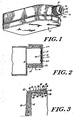
- FIG. 1 a tissue culture flask F is shown carrying a vent cap 10 on the neck N of the flask.
- the cap 10 embodies the present invention.
- Vent cap 10 includes a generally cylindrical side wall 12 internally threaded as suggested at 14 and an end or top wall 16 which essentially closes one end of the cylindrical wall 12.
- the outer surface 18 of the end wall is flat for purposes which are described below.
- the inner surface 20 of end wall 16 has an annular sealing seat 22 about its periphery defined at its inner edge by a rib 24 having an inclined outer surface 26 which is designed to seat against the inner edge 28 of the rim of the neck N of the flask to form a seal with it when the threaded cylindrical wall 12 is screwed tightly onto the neck.
- the configuration of the rib 26 enables the cap 10 to form a seal with the rim of the neck N of the flask without the use of a rubber gasket or other sealing material.
- the circular area 30 of the end wall 16 within the rib 24 has a shoulder 32 to which the periphery of the hydrophobic microporous membrane 34 is heat sealed.
- the membrane 34 typically may be made of an acrylic copolymer and have a pore size of 0.2 microns.
- An example of such a membrane is manufactured by Gelman Corporation under the trademark VERSOPORE.
- vent openings 36 which extend through the end wall 16 and which allow the inside of the flask to communicate with the atmosphere as limited by the hydrophobic membrane 34.
- a variety of different patterns may be established for the openings 36. Regardless of the pattern used, the individual openings should be relatively small and be separated by ribs which will support the portions of the membrane spanning the area 30 when pressure within the flask exceeds ambient pressure.
- the main body of the membrane 34 which spans the array of vent openings 36 defines a plenum chamber 38 under the inner surface 20 of the end wall 16, that permits the individual openings to communicate with substantially the full surface of the membrane. This is desirable because it permits full use of the membrane even when one or more of the openings 36 becomes clogged.
- a number of parallel ribs 40 extend perpendicular to the central rib 42 to describe 12 separate openings 36 in the end wall.
- the ribs 40 and 42 will support the membrane 34 when pressure in the flask exceeds ambient pressure.
- the use of a hydrophobic membrane 34 enables the inside of the flask to be maintained in a sterile condition and further retains water vapour in the flask while allowing the exchange of carbon dioxide and oxygen between the flask interior and the atmosphere.
- the hydrophobic microporous membrane also sterilizes any gas which is emitted from the flask.
- the pore size of the membrane is small enough to prevent the passage of bacteria or other contaminants while allowing the free gas exchange described.
- the membrane also prevents water from leaking from the flask, and the pores will not close down even if the membrane becomes wetted as the result of tilting or other action, which would interfere with the gas exchange.
- vent cap of this invention is its ability to contain the flask contents, that is, to isolate the inside of the flask F from the general environment. This is particularly important when dangerous research is being conducted.
- the vent cap will prohibit the escape of bacteria and other materials, and yet allows the gas exchange.
- the cap has particular application with tissue culture flasks used in carbon dioxide/air incubators.
- the cap permits a common atmosphere inside the flask and in the incubator. In the past, this has only been accomplished by opening the normally sealed caps slightly to allow the gas exchange to occur.
- incubators are of the convection type.
- the increased agitation of the incubator atmosphere increases the likelihood of contamination if the conventional method of "cracking" caps is used for venting purposes.
- the present invention prevents contamination as the hydrophobic membrane eliminates the need for "cracking" the cap.
- the cap of the present invention prevents pressure from building up in the flask when the gases are generated in it. For example, if the flask is used for growing tissue, flask pressure builds up as the tissue culture generates CO2 gas. The build up of pressure sometimes results in the breaking of the ultrasonic welds in the flasks causing leaking to occur.
- the vent cap of the present invention has other advantages. It should be appreciated that it provides a seal for the flask without the use of liners, gaskets, or other materials. Because the membrane is confined to the area of the cap which is not in contact with the flask neck, the membrane is not subject to rubbing against the bottle and therefore will not accidentally be torn by it or otherwise lose its integrity. Furthermore, the flat outer surface 18 of the cap permits the user to close off all or a portion of the vent openings 36 with a piece of tape on the surface. This is suggested in Figure 3 by the tape T.
Landscapes
- Health & Medical Sciences (AREA)
- Life Sciences & Earth Sciences (AREA)
- Engineering & Computer Science (AREA)
- Wood Science & Technology (AREA)
- Organic Chemistry (AREA)
- Bioinformatics & Cheminformatics (AREA)
- Chemical & Material Sciences (AREA)
- Zoology (AREA)
- Biomedical Technology (AREA)
- Sustainable Development (AREA)
- Microbiology (AREA)
- Biotechnology (AREA)
- Biochemistry (AREA)
- General Engineering & Computer Science (AREA)
- General Health & Medical Sciences (AREA)
- Genetics & Genomics (AREA)
- Clinical Laboratory Science (AREA)
- Molecular Biology (AREA)
- Mechanical Engineering (AREA)
- Apparatus Associated With Microorganisms And Enzymes (AREA)
- Closures For Containers (AREA)
Applications Claiming Priority (4)
| Application Number | Priority Date | Filing Date | Title |
|---|---|---|---|
| US17976488A | 1988-04-11 | 1988-04-11 | |
| US179764 | 1988-04-11 | ||
| US28784888A | 1988-12-21 | 1988-12-21 | |
| US287848 | 1988-12-21 |
Publications (2)
| Publication Number | Publication Date |
|---|---|
| EP0337677A2 true EP0337677A2 (fr) | 1989-10-18 |
| EP0337677A3 EP0337677A3 (fr) | 1990-04-04 |
Family
ID=26875652
Family Applications (1)
| Application Number | Title | Priority Date | Filing Date |
|---|---|---|---|
| EP89303463A Withdrawn EP0337677A3 (fr) | 1988-04-11 | 1989-04-07 | Bouchon de ventilation |
Country Status (2)
| Country | Link |
|---|---|
| EP (1) | EP0337677A3 (fr) |
| JP (1) | JPH02203779A (fr) |
Cited By (15)
| Publication number | Priority date | Publication date | Assignee | Title |
|---|---|---|---|---|
| US5173225A (en) * | 1990-05-07 | 1992-12-22 | Bowolfe, Inc. | Method for making ultra-thin dense skin membrane |
| DE4320091A1 (de) * | 1993-06-17 | 1994-12-22 | Robert Ian Harris | Verschlußkappe |
| US5398837A (en) * | 1993-02-15 | 1995-03-21 | Degrassi; Alberto | Cell culture flask and closure |
| GB2283224A (en) * | 1993-10-20 | 1995-05-03 | Huang Tsun Thin | A bicomponent tissue and seedling culture bottle |
| WO1997011155A1 (fr) * | 1995-09-22 | 1997-03-27 | Government Of The United States Of America, Represented By The Secretary Of The Department Of Health And Human Services | Recipient pour secher des echantillons biologiques, procede de fabrication et mode d'utilisation dudit recipient |
| US6095356A (en) * | 1999-03-10 | 2000-08-01 | Children's Medical Center Corp. | Vented flask cap for absorbing radioactive gases |
| US6312648B1 (en) | 1998-01-12 | 2001-11-06 | The United States Of America As Represented By The Department Of Health And Human Services | Applicator system |
| EP1514919A1 (fr) * | 2003-09-09 | 2005-03-16 | Becton, Dickinson and Company | Récipient pour la culture de tissus |
| US7678563B2 (en) * | 2003-04-04 | 2010-03-16 | Organ Recovery Systems, Inc. | Method and apparatus for controlling air pressure in an organ or tissue container |
| US20110143388A1 (en) * | 2006-08-10 | 2011-06-16 | Barnes Allen C | Method of providing portable biological testing capabilities |
| US8177082B2 (en) | 2008-04-18 | 2012-05-15 | Corning Incorporated | Flexible membrane valve for cell culture vessel |
| US8267272B2 (en) | 2008-07-03 | 2012-09-18 | Avery Dennison Corporation | Vented container and method of manufacturing |
| JP2015504672A (ja) * | 2012-01-17 | 2015-02-16 | ▲広▼州▲潔▼特生物▲過▼▲濾▼制品有限公司 | 使い捨て細胞培養フラスコ用通気キャップの組立機 |
| US20170362554A1 (en) * | 2005-07-26 | 2017-12-21 | Corning Incorporated | Multilayered cell culture apparatus |
| EP3227429A4 (fr) * | 2014-12-02 | 2018-07-25 | Histogenics Corporation | Récipient pour culture cellulaire et tissulaire |
Families Citing this family (5)
| Publication number | Priority date | Publication date | Assignee | Title |
|---|---|---|---|---|
| JPH02127199U (fr) * | 1989-03-28 | 1990-10-19 | ||
| JPH04330397A (ja) * | 1991-04-30 | 1992-11-18 | Fujitsu Ltd | ターボ分子ポンプ |
| JPH05187217A (ja) * | 1992-01-13 | 1993-07-27 | Suzuki Motor Corp | 排気マフラ |
| JPH0562456U (ja) * | 1992-02-04 | 1993-08-20 | 株式会社エム・ワイ・エンジニアリング | 食品保存容器 |
| KR20010099459A (ko) * | 2001-09-29 | 2001-11-09 | 한상관 | 술병용 마개와 마개 천공구 |
Family Cites Families (5)
| Publication number | Priority date | Publication date | Assignee | Title |
|---|---|---|---|---|
| FR1357064A (fr) * | 1963-02-20 | 1964-04-03 | Capsule de bouchage perméable aux gaz | |
| FR1487412A (fr) * | 1966-05-20 | 1967-07-07 | Bouchon à vis moulé en thermo-durcissable pour flacons souples | |
| FR1543633A (fr) * | 1966-11-01 | 1968-10-25 | Metal Box Co Ltd | Perfectionnements aux capuchons pour la fermeture de récipients |
| DE2403244C3 (de) * | 1974-01-24 | 1980-12-04 | Riedel-De Haen Ag, 3016 Seelze | Für Gase permeable, flüssigkeitsdichte Absperrvorrichtung |
| DE3628930A1 (de) * | 1986-08-26 | 1988-05-05 | Greiner & Soehne C A | Kontaminationssicherer verschluss, insbesondere schraubverschluss fuer zellkulturflaschen |
-
1989
- 1989-04-07 EP EP89303463A patent/EP0337677A3/fr not_active Withdrawn
- 1989-04-11 JP JP1091686A patent/JPH02203779A/ja active Pending
Cited By (24)
| Publication number | Priority date | Publication date | Assignee | Title |
|---|---|---|---|---|
| US5173225A (en) * | 1990-05-07 | 1992-12-22 | Bowolfe, Inc. | Method for making ultra-thin dense skin membrane |
| US5398837A (en) * | 1993-02-15 | 1995-03-21 | Degrassi; Alberto | Cell culture flask and closure |
| DE4320091A1 (de) * | 1993-06-17 | 1994-12-22 | Robert Ian Harris | Verschlußkappe |
| GB2283224A (en) * | 1993-10-20 | 1995-05-03 | Huang Tsun Thin | A bicomponent tissue and seedling culture bottle |
| US5958778A (en) * | 1995-09-22 | 1999-09-28 | The United States Of America As Represented By The Department Of Health And Human Services | Container for drying biological samples, method of making such container, and method of using same |
| AU705412B2 (en) * | 1995-09-22 | 1999-05-20 | Government Of The United States Of America, As Represented By The Secretary Of The Department Of Health And Human Services, The | Container for drying biological samples, method of making such container, and method of using same |
| US6503455B1 (en) | 1995-09-22 | 2003-01-07 | The United States Of America As Represented By The Department Of Health And Human Services | Container for dying biological samples, method of making such container, and method of using same |
| WO1997011155A1 (fr) * | 1995-09-22 | 1997-03-27 | Government Of The United States Of America, Represented By The Secretary Of The Department Of Health And Human Services | Recipient pour secher des echantillons biologiques, procede de fabrication et mode d'utilisation dudit recipient |
| US6312648B1 (en) | 1998-01-12 | 2001-11-06 | The United States Of America As Represented By The Department Of Health And Human Services | Applicator system |
| US6095356A (en) * | 1999-03-10 | 2000-08-01 | Children's Medical Center Corp. | Vented flask cap for absorbing radioactive gases |
| US8389271B2 (en) | 2003-04-04 | 2013-03-05 | Organ Recovery Systems, Inc. | Method and apparatus for controlling air pressure in an organ or tissue container |
| US7678563B2 (en) * | 2003-04-04 | 2010-03-16 | Organ Recovery Systems, Inc. | Method and apparatus for controlling air pressure in an organ or tissue container |
| EP1514919A1 (fr) * | 2003-09-09 | 2005-03-16 | Becton, Dickinson and Company | Récipient pour la culture de tissus |
| US20170362554A1 (en) * | 2005-07-26 | 2017-12-21 | Corning Incorporated | Multilayered cell culture apparatus |
| US11274273B2 (en) * | 2005-07-26 | 2022-03-15 | Corning Incorporated | Multilayered cell culture apparatus |
| US11905506B2 (en) | 2005-07-26 | 2024-02-20 | Corning Incorporated | Multilayered cell culture apparatus |
| US8518637B2 (en) * | 2006-08-10 | 2013-08-27 | Allen C. Barnes | Method of providing portable biological testing capabilities |
| US20110143388A1 (en) * | 2006-08-10 | 2011-06-16 | Barnes Allen C | Method of providing portable biological testing capabilities |
| US8177082B2 (en) | 2008-04-18 | 2012-05-15 | Corning Incorporated | Flexible membrane valve for cell culture vessel |
| US8267272B2 (en) | 2008-07-03 | 2012-09-18 | Avery Dennison Corporation | Vented container and method of manufacturing |
| JP2015504672A (ja) * | 2012-01-17 | 2015-02-16 | ▲広▼州▲潔▼特生物▲過▼▲濾▼制品有限公司 | 使い捨て細胞培養フラスコ用通気キャップの組立機 |
| EP3227429A4 (fr) * | 2014-12-02 | 2018-07-25 | Histogenics Corporation | Récipient pour culture cellulaire et tissulaire |
| US10077420B2 (en) | 2014-12-02 | 2018-09-18 | Histogenics Corporation | Cell and tissue culture container |
| US11555172B2 (en) | 2014-12-02 | 2023-01-17 | Ocugen, Inc. | Cell and tissue culture container |
Also Published As
| Publication number | Publication date |
|---|---|
| JPH02203779A (ja) | 1990-08-13 |
| EP0337677A3 (fr) | 1990-04-04 |
Similar Documents
| Publication | Publication Date | Title |
|---|---|---|
| EP0337677A2 (fr) | Bouchon de ventilation | |
| JP4126109B2 (ja) | 培養容器アセンブリ、これに用いる蓋およびこれを用いた細胞培養方法 | |
| JP4215855B2 (ja) | 培養容器アセンブリ、これに用いる蓋およびこれを用いた細胞培養方法 | |
| JP4108816B2 (ja) | 培養容器アセンブリ、これに用いる蓋およびこれを用いた細胞培養方法 | |
| JP2610396B2 (ja) | 容器と閉塞部材との組立体 | |
| US5863792A (en) | Culture vessel assembly | |
| JP4049838B2 (ja) | 培養容器アセンブリ | |
| US4665035A (en) | Fermentation apparatus and systems for the cultivation of microorganisms and other biological entities | |
| US5180073A (en) | Permeable cap for flask | |
| EP0606651B1 (fr) | Récipient de culture | |
| US4271973A (en) | Sterility testing vessel | |
| JPH01503595A (ja) | 汚染防止用閉鎖体,特に細胞培養瓶用ネジ式閉鎖体 | |
| CA1331502C (fr) | Systeme de ventilation sous pression pour coffret de lentilles corneennes | |
| EP1068902A2 (fr) | Bouchon de bouteille avec valve d'évent | |
| EP0761811B1 (fr) | Bouchon à évent réutilisable pour flacon | |
| JPH09103470A (ja) | 消毒装置 | |
| EP0791649B1 (fr) | Bouchon de bouteille avec valve d'évent | |
| AU701234B2 (en) | Reusable vented flask cap cover | |
| JP4049836B2 (ja) | 培養容器アセンブリ | |
| JPH01262789A (ja) | 培養装置 | |
| JP2586967Y2 (ja) | 培養容器のキャップ | |
| GB2043420A (en) | Containers for mushroom cultivation | |
| JPS6398380A (ja) | 組織培養方法及びこれに使用するキヤツプ |
Legal Events
| Date | Code | Title | Description |
|---|---|---|---|
| PUAI | Public reference made under article 153(3) epc to a published international application that has entered the european phase |
Free format text: ORIGINAL CODE: 0009012 |
|
| AK | Designated contracting states |
Kind code of ref document: A2 Designated state(s): DE FR GB IT |
|
| PUAL | Search report despatched |
Free format text: ORIGINAL CODE: 0009013 |
|
| AK | Designated contracting states |
Kind code of ref document: A3 Designated state(s): DE FR GB IT |
|
| STAA | Information on the status of an ep patent application or granted ep patent |
Free format text: STATUS: THE APPLICATION IS DEEMED TO BE WITHDRAWN |
|
| 18D | Application deemed to be withdrawn |
Effective date: 19901005 |