EP0343646B1 - Taskausführungssteuerverfahren für ein Multiprozessorsystem mit Post/Warte-Prozedur - Google Patents
Taskausführungssteuerverfahren für ein Multiprozessorsystem mit Post/Warte-Prozedur Download PDFInfo
- Publication number
- EP0343646B1 EP0343646B1 EP19890109410 EP89109410A EP0343646B1 EP 0343646 B1 EP0343646 B1 EP 0343646B1 EP 19890109410 EP19890109410 EP 19890109410 EP 89109410 A EP89109410 A EP 89109410A EP 0343646 B1 EP0343646 B1 EP 0343646B1
- Authority
- EP
- European Patent Office
- Prior art keywords
- task
- lock
- resource
- shared resource
- procedure
- Prior art date
- Legal status (The legal status is an assumption and is not a legal conclusion. Google has not performed a legal analysis and makes no representation as to the accuracy of the status listed.)
- Expired - Lifetime
Links
Images







Classifications
-
- G—PHYSICS
- G06—COMPUTING OR CALCULATING; COUNTING
- G06F—ELECTRIC DIGITAL DATA PROCESSING
- G06F9/00—Arrangements for program control, e.g. control units
- G06F9/06—Arrangements for program control, e.g. control units using stored programs, i.e. using an internal store of processing equipment to receive or retain programs
- G06F9/46—Multiprogramming arrangements
- G06F9/52—Program synchronisation; Mutual exclusion, e.g. by means of semaphores
Definitions
- This invention relates to a multiprocessor computer system, and particularly, to a lock management scheme for shared resources.
- a unit of processing (task) executed in a computer system uses various shared resources.
- a system such as a multiprocessor system, in which a plurality of tasks run concurrently, encounters contentions over the exclusive use of shared resources among the tasks, and therefore lock management is required. For example, when a plurality of tasks in an online system are running for the sales processing, these tasks make reference and revise the "current sales amount" in a common storage area individually. In this situation, when one task is making reference and revising the "current sales amount", other tasks must be inhibited from accessing to the data.
- lock management for the above-mentioned shared resources takes place as follows.
- the memory is provided, in addition to the areas for storing data of shared resources (numerous data A, B, C and so on of several K bytes each), a reference table, and one-word reference information (lock words) is stored in the table in correspondence to the shared data A, B, C and so on, so that the data are accessed for reference through the lock words.
- the lock management for the data of shared resources can be accomplished by setting the exclusive-use (lock) flag in the lock word using the CS instruction or the like.
- the flag of lock word is initialed (to 0 for example) so that it indicates that the shared resource is unlocked.
- a task which intends to lock the shared resource makes reference to the lock word using the CS instruction, and sets the flag to 1 if it is 0.
- the task resets the lock word to 0.
- the spin lock mechanism is to repeat retries in a loop until the task locks the resource. Namely, a task in need of a shared resource uses a processor exclusively and runs in a retry loop (spin loop) formed of a sequence of several instructions until it can lock the intended resource.
- spin loop retry loop
- the wait/post mechanism is also called the suspend/resume mechanism, block/activate mechanism, sleep/wakeup mechanism, etc., and it carries out the wait procedure to bring a lock-failing task into wait state and then invoke the post procedure to restore the task to ready state, thereby accomplishing the lock management.
- the system for the mutual exclusion control of shared resources comprises a wait procedure which, when a shared resource is locked by a task 1, brings a lock-failing task 2 into wait state, and a post procedure which frees the task 2 from wait state when the task 1 (or a task which has used the shared resource after the task 1) releases the resource.
- running state denotes that a task is in execution through the exclusive use of a processor
- ready state denotes that a task is waiting for an available processor, i.e., the task is ready to run as soon as any of processors in the system becomes available.
- Wait state denotes that a task cannot be executed on a processor until it becomes ready upon removal of the wait-causing event; for example, a task which has issued a wait macro because of failure in resource lock enters wait state until it is posted.
- Preempted state is a sort of ready state, and it denotes that the execution is suspended due to an interrupt procedure or the like.
- a task which has failed in resource lock transfers control to the wait procedure routine.
- the wait procedure routine places the lock-failing task in wait state and invokes the dispatcher.
- the dispatcher dispatches another task in ready state a processor which has been executing a task that has entered the wait state. In case more than one ready task exists, the dispatcher selects a ready task for the processor depending on the predetermined priority-based schedule or dispatch algorism.
- Each task checks the presence of tasks in wait state (waiting tasks) immediately before releasing (unlocking) the shared resource and, upon detecting a waiting task, transfers control to the post procedure routine.
- the post procedure routine restores the ready state of the waiting task.
- the restored task is thereafter dispatched a processor by the dispatcher, and it locks a shared resource and resumes the processing.
- post issue task a task which initiates the post procedure
- post receive task a task which is rid of the wait state
- the post issue task, post receive task and wait task are not particular tasks having these names. Instead, any task can become a post issue task or a post receive task in each occasion.
- the foregoing two lock management systems i.e, spin lock mechanism and wait/post mechanism
- spin lock mechanism and wait/post mechanism involve a problem in that the number of dynamic steps expended for the execution of a task increases by the occurrence of lock contentions among tasks.
- a multiprocessor system has an increased number of dynamic steps of execution per task as compared with task execution by a single processor.
- the reason for the increased number of dynamic steps resides in an increased overhead of spin procedure or wait/post procedure due to lock contentions and an increased overhead of dispatch procedure attributable to the increase in wait/post procedures.
- a first object of this invention as set forth in claim 1 is to overcome the foregoing prior art deficiencies and provide a lock management system which allows a third-party task to use a shared resource during a period after a post receive task has been granted a CPU by the dispatcher until it enters ready status, thereby reducing the lock fail rate.
- a second object of this invention is to provide a lock management system which prevents the sinking of locking tasks.
- a third object of this invention is to provide a lock management system which reduces the lock fail rate and reduces the overhead of dispatch procedure caused by the secondary lock contention on the task scheduling queue.
- a fourth object of this invention is to provide a lock management system which reduces the increase in spin procedures caused by an extended lock periods due to an interrupt.
- a shared resource which has been used by a post issue task, is released upon completion of the use, thereby allowing a third task in execution on other processor to lock the resource, and thereafter a post receive task is made ready by the post procedure, and thereafter a task which has failed to lock the resource is granted by the dispatch procedure to use the processor, and the post receive task is prompted to retry to lock the shared resource.
- the execution of a post issue task is suspended after a post receive task is rid of the wait state by the post procedure, and the processor on which the post issue task has been running is dispatched to the post receive task.
- the execution of a post issue task is suspended after a post receive task has been made ready by the post procedure, control information pertinent to the post issue task is registered, the processor which has been running the post issue task is dispatched to the post receive task, a third task which has failed in resource lock is made ready by the wait procedure following the registration, the registered control information pertinent to the post issue task is retrieved, and the processor which has been running the third task is dispatched to the post issue task.
- information indicative of the status of discontinuity is stored as information on the execution status of the locking task, allowing a lock-intending task to reference the information so that it tries a spin-based locking when the locking task is in execution, or tries a wait/post-based locking when the locking task is suspended.
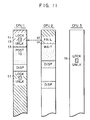
- the figure is a timing chart, with its time axis running downward, showing as an example the task operation at the occurrence of a lock contention, according to the conventional system.
- the figure shows the execution of tasks 1, 2, 3, 4, 5 and so on by three CPUs 1, 2 and 3.
- a hatched section directing from top right to bottom left is the task 1
- a hatched section directing from top left to bottom right is the task 2
- blank sections are third tasks (tasks 3 to 5)
- thin doted sections are parts of a supervisor which does not belong to any task (it performs linkage among the tasks)
- thick doted sections indicate that the shared resources are locked.
- Label LOCK indicates a lock procedure
- POST indicates a post procedure
- FAIL indicates a lock failure by a task
- DISP indicates a dispatch procedure for the task indicated by it.
- the task 1 locks a resource on CPU 1 (at time t1), and next the task 2 fails in lock (at t2) and enters wait state. Viewing the events, the task 1 terminates the lock upon ending the use of the shared resource and issues a post procedure to the task 2 (at t3). Now, the task 2 locks the shared resource, but it is not granted a CPU (right of using a CPU) at this time point and it does not enter the running state immediately (stays in ready state). Because of the priority ranks of ready tasks, the task dispatched when a CPU becomes available is not necessarily the task 2 which has just acquired the resource.
- the task 4 at a higher execution rank can be dispatched (at t5-t6) and executed (at t6-t7) earlier.
- the task 2 is dispatched and executed (at t7-t8-t9).
- a lock request issued by other task on other CPU, such as the task 3, (at t4) will fail even though the shared resource is not used by any task.
- the task 2 has a post reception at t3, if a higher-ranking task such as the task 4 is running, the task 2 is not granted to use the CPU until the execution of task 4 completes.
- the CPU 1 and CPU 2 carry out the dispatch procedures concurrently at time around t6.
- the CPU 2 and CPU 3 carry out the dispatch procedures concurrently at time around t3.
- the task scheduling queue which administrates control information of all tasks in the system must be locked until a task to be dispatched next is determined from among a plurality of ready tasks. If dispatchers operate concurrently on several processors as shown in Fig. 9 a lock contention will occur on the task scheduling queue. This secondary lock contention increases the number of steps needed for the dispatch procedure, and further increases the number of dynamic steps per task.
- a cause of aggravating the lock contention is the virtual increase in the lock period due to the suspension of a locking task caused by an external interrupt or the like.
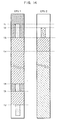
- Fig. 10 is another example of the task operation.
- a task 1 (hatched section) locks a resource at t1 and it keeps the resource until t5.
- the execution of the task 1 is suspended in its course at t3 by an interrupt procedure (thin dotted section) until t4.
- Another task 2 running on a CPU 2 shown on the right-hand side of the figure attempts to lock the resource at t2, but it fails as the resource is locked by the task 1 and it enters the spin loop.
- the task 2 continues spinning until t5 when the task 1 releases the resource, and the CPU 2 is kept occupied by the task 2 only for the spin procedure.
- the duration between t3 to t4 is incomparably longer (several times to several tens times) than the lock period of task 1: (t3-t1)+(t5-t4), leaving the CPU 2 to idle except for doing the spin procedure.
- Fig. 8 shows in block diagram the online data base system to which the present invention is applied.
- a first processor 952 and second processor 954 are linked through a shared memory 950.
- the two processors operate in parallel by executing programs in the shared memory 950 and using data in the memory 950.
- the shared memory 950 also stores a task scheduling queue, resource wait queue, processor wait queue, lock control queue, etc. used for the dispatch procedure and lock control procedure.
- Each procedure transacts data with terminal units 955 by way of a communication unit 953 and has access to a disk-based data base 956 by way of a disk control unit 954.
- An event of data reference and/or revision procedure in the online data base system is called "transaction".
- a series of processings for the withdrawal of deposit including the confirmation of the balance, subtraction of the withdrawed amount from the balance and revising the balance in the data base, is a transaction.
- a transaction is initiated by data transmission from a terminal unit.
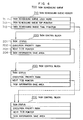
- the supervisor creates one or more tasks for the transaction. Specifically, the supervisor creates a task control block (TCB) 200 which contains task-specific control information, and administrates the TCB on the task scheduling queue until the end of the transaction.
- TBC task control block
- Each task registered on the task scheduling queue takes any of the wait state, ready state, preempted state and running state.
- a waiting task is waiting the allowance of using a shared resource, and in this status it is not granted a processor for execution. For example, a task which cannot have a resource and issues a wait macro stays in wait state until it is posted.
- a ready task is waiting the dispatch of any available processor in the system. Conventionally, a waiting task does not become ready unless it locks a resource, whereas it is not always true in the embodiment of this invention.
- Suspended state is a sort of ready state, in which the task execution is discontinued due to an interrupt procedure or the like.
- a running task is a task which is in execution by a processor dispatched to it.
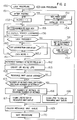
- Fig. 1A shows in brief the lock procedure 103 and unlock procedure 110 based on this embodiment.
- Fig. 1B shows in brief the wait procedure which is initiated by the lock procedure 103.
- Fig. 1C shows in brief the post procedure which is initiated by the unlock procedure 110 in Fig. 1A.
- Fig. 1D shows in brief the processing of the dispatcher 1000 which is initiated by the wait procedure of Fig. 1B or post procedure of Fig. 1C.
- Fig. 1E shows in brief the procedure which is carried out at the occurrence of an interrupt.
- a test step 151 determines whether or not the task status is after wait state based on the value of the post bit 502 in the ECB 501. If it is found posted, the old lock key, i.e., post code in ECB 501, is loaded into a register 1 (R1): (step 152). The post code contains identification information ID of the post issue task (TCB address of post issue task). Otherwise, 0 is loaded to the register 1: (step 153). Next, a new lock key, i.e., identification information ID of self task (TCB address of self task) is loaded into a register 2 (R2): (step 155). The decision procedure is carried out using the CS instruction as follows. CS R1, R2, LOCKWORD
- This instruction compares the value of lock word with the old lock key contained in the register 1, and if values are equal, the value of lock word is replaced with a new lock key contained in the register 2, i.e., lock success. If the above comparison does not match, the lock word replacement does not take place, i.e., lock failure.
- An important ability of the CS instruction is the inhibition of access to the lock word from other CPU over the period from reading of the lock word, comparison and to revision. On this account, an attempt of lock by a task results in failure except for the case where the resource is unlocked or the case where the value of the old lock key passed as a post code from the post issue task is equal to the current value (at execution of the CS instruction) of the lock word.
- step 158 resets the number of retry field to zero to complete the lock procedure.
- a retry is attempted immediately when the locking task status bit 303 is 0. Namely, with the bit 303 being 0, the procedure branches to step 161 and enters the spin loop 155-161.
- Step 161n tests the condition of the resource, and if it is found free, the procedure branches to the right for looping. If the resource is not yet released, the procedure branches to the left for looping.
- the spin loop of steps 155-161 when the resource becomes available, the procedure branches to step 158, resulting in a lock success.
- step 162 With the locking task status bit 303 being 1, the procedure branches to step 162 and commences the suspending procedure.
- the number of retry field is incremented by one: (step 162), and the resource wait queue is locked: (step 164). While other task is locking the resource wait queue, the procedure loops until the procedure of the other task completes. Following a successful lock of the resource wait queue, the number of retry field is compared with the maximum number of retries: (step 165).
- step 166 If number of retries is greater than or equal to the maximum number of retries, the maximum number of retries is updated: (step 166), and the LRB of the self task is chained to the top of the resource wait queue: (step 167).
- the LRB of the self task is chained to the end of the resource wait queue: (step 168).
- the queue becomes available and the wait macro is invoked: (step 170).
- the task which has issued the wait macro enters wait state and stays in this state until it is posted, at which time the task returns to the procedure and attempts a resource lock.
- the ECB is initialized (clear post bit) in step 154.
- steps 167 and 168 the resource wait queue top pointer and resource wait queue tail pointer are used, instead of searching the resource wait queue, for the sake of reducing the lock period of the resource wait queue. Interrupt is disabled while the resource wait queue is locked for avoiding the occurrence of deadlock with the interrupt task.
- the first thing to be done in the unlock procedure is to lock the resource wait queue: (step 181). If other task is locking the resource wait queue, the procedure waits in the loop until it becomes available. After the resource wait queue is locked successfully, the vacancy of the resource wait queue 800, i.e., whether there exists a task which is waiting the release of the shared resource, is check: (step 182). If no waiting task exists, the resource wait queue 800 and shared resource are released by resetting the lock word to 0: (steps 193, 194).
- the maximum number of retry field is compared with the retry upper limit: (step 183). If the maximum number of retries is smaller than the retry upper limit, i.e., if the number of lock failures is below the upper limit, the shared resource is released: (step 184), and the post code is set 0: (step 185). If the maximum number of retries is greater than or equal to the retry upper limit, i.e., if the number of lock failures reaches the upper limit, the current lock key, i.e., the identification information (TCB address) of the current locking task is set to the post code: (step 196).
- step 187 the LRB at the top of the resource wait queue is taken out: (step 187), the maximum number of retries is updated: (steps 189, 190), the resource wait queue is released: (step 191), a post macro is issued to the task corresponding to the LRB 500 taken out in step 187: (step 192), and the release of the shared resource is notified.
- step 185 or 186 the post code which has been set in step 185 or 186 is passed to the post receive task.
- the post code is received by the post receive task in step 153 (Fig. 2).
- the shared resource released by step 184 is offered among the post receive task and other tasks on a first-come-first-served basis.
- the shared resource is not released at the post issue task, but the post receive task is allowed directly to lock the resource.
- Fig. 10 is a timing chart showing the operation at the occurrence of an interrupt according to the conventional mechanism described previously.
- the CPU 2 continues to spin by occupying CPU 2.
- the interrupt trap sets the locking task status bit 303 in Figs. 5 to 1.
- the task 2 which has been spinning since t2 detects the transition of the locking task status bit to 1 and invokes the wait procedure to pass the CPU 2 to the task 3. Consequently, the CPU 2 can execute the task 3 after time point t x .
Landscapes
- Engineering & Computer Science (AREA)
- Software Systems (AREA)
- Theoretical Computer Science (AREA)
- Physics & Mathematics (AREA)
- General Engineering & Computer Science (AREA)
- General Physics & Mathematics (AREA)
- Multi Processors (AREA)
- Hardware Redundancy (AREA)
Claims (8)
- Aufgabenausführungssteuerverfahren für ein Multiprozessorsystem, mit den Schritten(a) des Versuchens, durch eine erste Aufgabe, die auf einem aus der Anzahl von Prozessoren (951, 952) läuft, eine Ressource (950), die von mehreren Aufgaben geteilt wird, für den exklusiven Gebrauch durch die erste Aufgabe zu sperren, wenn die Aufgabe den Gebrauch der Ressource erfordert;(b) des weiteren Ausführens der ersten Aufgabe, wenn die Aufgabe die Gemeinschaftsressource (950) erfolgreich gesperrt hat;(c) des Aussetzens der Ausführung der ersten Aufgabe und des Verbringens der ersten Aufgabe in einen Wartezustand für die Freigabe der Gemeinschaftsressource (950), wenn die Aufgabe die Gemeinschaftsressource nicht sperren konnte;(d) des Überführens, wenn die erste Aufgabe mit dem Gebrauch der Gemeinschaftsressource (950) zu Ende kommt, wenigstens einer zweiten Aufgabe, die sich im Wartezustand für die Freigabe der Gemeinschaftsressource befindet, in einen Zustand des Wartens auf die Verfügbarkeit eines Prozessors (951; 952); und(e) des Auswählens einer Aufgabe aus den zweiten Aufgaben und des Ausführens der ausgewählten Aufgabe auf einem aus der Anzahl von Prozessoren (951; 951), wenn die erste Aufgabe die Ausführung beendet hat oder ausgesetzt wird;
wobei das Verfahren gekennzeichnet ist durch die Schritte(f) des Freigebens der Gemeinschaftsressource (950), so daß eine laufende dritte Aufgabe die Gemeinschaftsressource sperren kann, wenn die erste Aufgabe den Gebrauch der Gemeinschaftsressource beendet und die zweite Aufgabe in den Zustand des Wartens auf die Verfügbarkeit eines Prozessors (951; 952) überführt wurde; und(g) des erneuten Versuchens, durch die zweite Aufgabe, des Sperrens der Gemeinschaftsressource (950), wenn die zweite Aufgabe auf einem aus der Anzahl von Prozessoren (951; 952) läuft. - Aufgabenausführungssteuerverfahren nach Anspruch 1, wobei der Schritt (f) des Freigebens der Gemeinschaftsressource des weiteren die Schritte des Feststellens, ob eine Liste der erneuten Versuche der zweiten Aufgabe eine bestimmte Bedingung erfüllt oder nicht; und, anstelle des Freigebens der Gemeinschaftsressource und des Überführens der zweiten Aufgabe in den Zustand des Wartens auf die Verfügbarkeit eines Prozessors, des Gesperrthaltens der Gemeinschaftsressource für die zweite Aufgabe anstelle des Freigebens der Gemeinschaftsressource umfaßt, wenn die Bedingung erfüllt ist.
- Aufgabenausführungssteuerverfahren nach Anspruch 2, wobei die Bedingung die ist, daß die Gesamtzahl der erfolglosen Sperrversuche einen bestimmten Wert übersteigt.
- Aufgabenausführungssteuerverfahren nach Anspruch 1, wobei das Verfahren des weiteren die Schritte
des Aussetzens der Ausführung einer laufenden ersten Aufgabe, wenn die erste Aufgabe mit dem Gebrauch der Gemeinschaftsressource zu Ende kommt und eine zweite Aufgabe, die sich im Wartezustand für die Freigabe der Gemeinschaftsressource befindet, in den Zustand des Wartens auf die Verfügbarkeit eines Prozessors gebracht wird; und
des Ausführens der zweiten Aufgabe mit Priorität auf einem der Prozessoren umfaßt, auf denen die erste Aufgabe gelaufen ist. - Aufgabenausführungssteuerverfahren nach Anspruch 1, wobei das Verfahren des weiteren die Schritte
des Änderns eines ursprünglichen Ausführungsprioritätsranges einer Aufgabe in einen höheren Rang, wenn die Aufgabe die Gemeinschaftsressource nicht sperren konnte, und danach des Überführens der Aufgabe in den Wartezustand für die Freigabe der Ressource;
des Auswählens einer auszuführenden Aufgabe aus den Aufgaben, die sich im Zustand der Wartens auf die Verfügbarkeit eines Prozessors befinden, entsprechend des Ausführungsprioritätsranges der Aufgaben; und
des Wiederherstellens des Ausführungsprioritätsranges der Aufgabe mit dem geänderten Ausführungsprioritätsrang in den ursprünglichen Rang umfaßt, wenn die Aufgabe nach dem Sperren der Gemeinschaftsressource zur Ausführung ausgewählt wird. - Aufgabenausführungssteuerverfahren nach Anspruch 1, wobei das Verfahren des weiteren die Schritte
des Änderns des Ausführungsprioritätsranges einer zweiten Aufgabe, die sich im Wartezustand für die Freigabe der Gemeinschaftsressource befindet, in einen höheren Rang, und danach des Überführens der zweiten Aufgabe in den Zustand des Wartens auf die Verfügbarkeit eines Prozessors, wenn die erste Aufgabe, die die Gemeinschaftsressource sperrt, mit dem Gebrauch der Gemeinschaftsressource zu Ende kommt;
des Auswählens einer auszuführenden Aufgabe aus den zweiten Aufgaben entsprechend des Ausführungsprioritätsranges der Aufgaben; und
des Wiederherstellens des Ausführungsprioritätsranges der zweiten Aufgabe mit dem geänderten Ausführungsprioritätsrang in den ursprünglichen Rang umfaßt, wenn die zweite Aufgabe nach dem Sperren der Gemeinschaftsressource zur Ausführung ausgewählt wird. - Aufgabenausführungssteuerverfahren nach Anspruch 4, mit dem Schritt des Ausführens der ersten Aufgabe mit Priorität auf einem der Prozessoren, wenn die Aufgabe, die auf diesem Prozessor läuft, beendet ist oder ausgesetzt wird.
- Aufgabenausführungssteuerverfahren nach Anspruch 1, mit den weiteren Schritten
des Speicherns von Informationen, die das Unterbrechen der Aufgabe anzeigen, die die Gemeinschaftsressource sperrt, wenn die Aufgabe durch einen Interrupt unterbrochen wird, der von einem Prozessor erzeugt wird, auf dem die Aufgabe gelaufen ist;
des Überprüfens, ob eine solche Information gespeichert ist oder nicht, wenn eine andere Aufgabe versucht, die Gemeinschaftsressource zu sperren; und
des erneuten Versuchens des Sperrens der Gemeinschaftsressource durch die andere Aufgabe, ohne daß in den Wartezustand für die Freigabe der Ressource übergegangen wird, wenn keine solche Information gespeichert ist und gleichzeitig die andere Aufgabe die Gemeinschaftsressource nicht sperren konnte.
Applications Claiming Priority (4)
| Application Number | Priority Date | Filing Date | Title |
|---|---|---|---|
| JP63127150A JP2804478B2 (ja) | 1988-05-26 | 1988-05-26 | タスク制御方式及びオンライン・トランザクション・システム |
| JP127150/88 | 1988-05-26 | ||
| JP32579688A JPH02171952A (ja) | 1988-12-26 | 1988-12-26 | マルチプロセッサにおけるディスパッチ方式 |
| JP325796/88 | 1988-12-26 |
Publications (3)
| Publication Number | Publication Date |
|---|---|
| EP0343646A2 EP0343646A2 (de) | 1989-11-29 |
| EP0343646A3 EP0343646A3 (de) | 1992-03-04 |
| EP0343646B1 true EP0343646B1 (de) | 1995-12-13 |
Family
ID=26463162
Family Applications (1)
| Application Number | Title | Priority Date | Filing Date |
|---|---|---|---|
| EP19890109410 Expired - Lifetime EP0343646B1 (de) | 1988-05-26 | 1989-05-24 | Taskausführungssteuerverfahren für ein Multiprozessorsystem mit Post/Warte-Prozedur |
Country Status (2)
| Country | Link |
|---|---|
| EP (1) | EP0343646B1 (de) |
| DE (1) | DE68925064T2 (de) |
Families Citing this family (11)
| Publication number | Priority date | Publication date | Assignee | Title |
|---|---|---|---|---|
| JP2665813B2 (ja) * | 1990-02-23 | 1997-10-22 | 三菱電機株式会社 | 記憶制御装置 |
| US5434970A (en) * | 1991-02-14 | 1995-07-18 | Cray Research, Inc. | System for distributed multiprocessor communication |
| EP1214652A2 (de) * | 1999-08-31 | 2002-06-19 | Times N Systems, Inc. | Effizientes warten auf ein ereignis |
| JP3878508B2 (ja) | 2001-11-08 | 2007-02-07 | 松下電器産業株式会社 | 回路群制御システム |
| US7457985B2 (en) | 2005-09-09 | 2008-11-25 | International Business Machines Corporation | Method to detect errors in computer systems by using state tracking |
| US7996585B2 (en) | 2005-09-09 | 2011-08-09 | International Business Machines Corporation | Method and system for state tracking and recovery in multiprocessing computing systems |
| US7502957B2 (en) | 2005-09-09 | 2009-03-10 | International Business Machines Corporation | Method and system to execute recovery in non-homogeneous multi processor environments |
| CN107967189A (zh) * | 2016-10-20 | 2018-04-27 | 南京途牛科技有限公司 | 异常任务重试方法及装置 |
| CN108121599A (zh) * | 2016-11-30 | 2018-06-05 | 杭州海康威视数字技术股份有限公司 | 一种资源管理方法、装置及系统 |
| CN112463397B (zh) * | 2020-12-10 | 2023-02-10 | 中国科学院深圳先进技术研究院 | lock-free的分布式死锁避免方法及装置、计算机设备及可读存储介质 |
| CN113641492B (zh) * | 2021-08-11 | 2025-01-07 | 北京京东乾石科技有限公司 | 用于执行任务的方法、装置、服务器和介质 |
-
1989
- 1989-05-24 EP EP19890109410 patent/EP0343646B1/de not_active Expired - Lifetime
- 1989-05-24 DE DE1989625064 patent/DE68925064T2/de not_active Expired - Fee Related
Also Published As
| Publication number | Publication date |
|---|---|
| EP0343646A3 (de) | 1992-03-04 |
| DE68925064D1 (de) | 1996-01-25 |
| EP0343646A2 (de) | 1989-11-29 |
| DE68925064T2 (de) | 1996-08-08 |
Similar Documents
| Publication | Publication Date | Title |
|---|---|---|
| US5274809A (en) | Task execution control method for a multiprocessor system with enhanced post/wait procedure | |
| US6981260B2 (en) | Apparatus for minimizing lock contention in a multiple processor system with multiple run queues when determining the threads priorities | |
| CA2292040C (en) | Interface system and method for asynchronously updating a shared resource | |
| US5469571A (en) | Operating system architecture using multiple priority light weight kernel task based interrupt handling | |
| US5442763A (en) | System and method for preventing deadlock in multiprocessor multiple resource instructions | |
| US5937187A (en) | Method and apparatus for execution and preemption control of computer process entities | |
| JP2514299B2 (ja) | プロセスレベルプログラミングのための割込み処理の直列化方法 | |
| EP0563624B1 (de) | Verfahren und Gerät zur Ausführung von konditionellen Operationen auf externe gemeinsam genutzte Daten | |
| US5450592A (en) | Shared resource control using a deferred operations list | |
| US5826081A (en) | Real time thread dispatcher for multiprocessor applications | |
| US5333319A (en) | Virtual storage data processor with enhanced dispatching priority allocation of CPU resources | |
| US5452452A (en) | System having integrated dispatcher for self scheduling processors to execute multiple types of processes | |
| US8990510B2 (en) | Read-copy update system and method | |
| EP0428006B1 (de) | Mehrstufiges Verriegelungssystem und -verfahren | |
| US6223204B1 (en) | User level adaptive thread blocking | |
| US8763012B2 (en) | Scalable, parallel processing of messages while enforcing custom sequencing criteria | |
| US6845504B2 (en) | Method and system for managing lock contention in a computer system | |
| KR101638136B1 (ko) | 멀티 스레드 구조에서 작업 분배 시 스레드 간 락 경쟁을 최소화하는 방법 및 이를 사용한 장치 | |
| EP0491367A2 (de) | Schlangenverwalterverfahren für ein elektronisches Mitteilungssystem | |
| US10331500B2 (en) | Managing fairness for lock and unlock operations using operation prioritization | |
| JPS60128537A (ja) | 多重プログラミング・システム | |
| EP0343646A2 (de) | Taskausführungssteuerverfahren für ein Multiprozessorsystem mit Post/Warte-Prozedur | |
| US20080244596A1 (en) | Computer program product and system for deferring the deletion of control blocks | |
| EP0243402B1 (de) | Spezialrechner für getrennte ausführung mancher betriebssystemfunktionen in einem grossen datenverarbeitungssystem | |
| Codd | Multiprogramming |
Legal Events
| Date | Code | Title | Description |
|---|---|---|---|
| PUAI | Public reference made under article 153(3) epc to a published international application that has entered the european phase |
Free format text: ORIGINAL CODE: 0009012 |
|
| AK | Designated contracting states |
Kind code of ref document: A2 Designated state(s): DE FR GB |
|
| 17P | Request for examination filed |
Effective date: 19901212 |
|
| RAP1 | Party data changed (applicant data changed or rights of an application transferred) |
Owner name: HITACHI MICROCOMPUTER SYSTEM LTD. Owner name: HITACHI, LTD. |
|
| PUAL | Search report despatched |
Free format text: ORIGINAL CODE: 0009013 |
|
| AK | Designated contracting states |
Kind code of ref document: A3 Designated state(s): DE FR GB |
|
| 17Q | First examination report despatched |
Effective date: 19940414 |
|
| GRAA | (expected) grant |
Free format text: ORIGINAL CODE: 0009210 |
|
| AK | Designated contracting states |
Kind code of ref document: B1 Designated state(s): DE FR GB |
|
| REF | Corresponds to: |
Ref document number: 68925064 Country of ref document: DE Date of ref document: 19960125 |
|
| ET | Fr: translation filed | ||
| PLBE | No opposition filed within time limit |
Free format text: ORIGINAL CODE: 0009261 |
|
| STAA | Information on the status of an ep patent application or granted ep patent |
Free format text: STATUS: NO OPPOSITION FILED WITHIN TIME LIMIT |
|
| 26N | No opposition filed | ||
| PGFP | Annual fee paid to national office [announced via postgrant information from national office to epo] |
Ref country code: FR Payment date: 20010316 Year of fee payment: 13 |
|
| PGFP | Annual fee paid to national office [announced via postgrant information from national office to epo] |
Ref country code: GB Payment date: 20010514 Year of fee payment: 13 |
|
| PGFP | Annual fee paid to national office [announced via postgrant information from national office to epo] |
Ref country code: DE Payment date: 20010723 Year of fee payment: 13 |
|
| REG | Reference to a national code |
Ref country code: GB Ref legal event code: IF02 |
|
| PG25 | Lapsed in a contracting state [announced via postgrant information from national office to epo] |
Ref country code: GB Free format text: LAPSE BECAUSE OF NON-PAYMENT OF DUE FEES Effective date: 20020524 |
|
| PG25 | Lapsed in a contracting state [announced via postgrant information from national office to epo] |
Ref country code: DE Free format text: LAPSE BECAUSE OF NON-PAYMENT OF DUE FEES Effective date: 20021203 |
|
| GBPC | Gb: european patent ceased through non-payment of renewal fee |
Effective date: 20020524 |
|
| PG25 | Lapsed in a contracting state [announced via postgrant information from national office to epo] |
Ref country code: FR Free format text: LAPSE BECAUSE OF NON-PAYMENT OF DUE FEES Effective date: 20030131 |
|
| REG | Reference to a national code |
Ref country code: FR Ref legal event code: ST |