EP0345370A1 - Utilisation de membranes transparentes d'hydrogel polymère pour couvrir les organes pendant les opérations chirurgicales - Google Patents
Utilisation de membranes transparentes d'hydrogel polymère pour couvrir les organes pendant les opérations chirurgicales Download PDFInfo
- Publication number
- EP0345370A1 EP0345370A1 EP88109146A EP88109146A EP0345370A1 EP 0345370 A1 EP0345370 A1 EP 0345370A1 EP 88109146 A EP88109146 A EP 88109146A EP 88109146 A EP88109146 A EP 88109146A EP 0345370 A1 EP0345370 A1 EP 0345370A1
- Authority
- EP
- European Patent Office
- Prior art keywords
- membrane
- hydrophilic polymer
- polymer hydrogel
- water
- hydrated
- Prior art date
- Legal status (The legal status is an assumption and is not a legal conclusion. Google has not performed a legal analysis and makes no representation as to the accuracy of the status listed.)
- Withdrawn
Links
- 239000012528 membrane Substances 0.000 title claims abstract description 69
- 239000000017 hydrogel Substances 0.000 title claims abstract description 25
- 238000001356 surgical procedure Methods 0.000 title claims abstract description 11
- 210000000056 organ Anatomy 0.000 title abstract description 26
- 229920000642 polymer Polymers 0.000 title abstract description 3
- XLYOFNOQVPJJNP-UHFFFAOYSA-N water Substances O XLYOFNOQVPJJNP-UHFFFAOYSA-N 0.000 claims abstract description 12
- 238000001035 drying Methods 0.000 claims abstract description 8
- 230000001580 bacterial effect Effects 0.000 claims abstract description 4
- 238000011109 contamination Methods 0.000 claims abstract description 4
- 229920001477 hydrophilic polymer Polymers 0.000 claims description 18
- 229920002635 polyurethane Polymers 0.000 claims description 11
- 239000004814 polyurethane Substances 0.000 claims description 11
- 229920002239 polyacrylonitrile Polymers 0.000 claims description 7
- 230000000694 effects Effects 0.000 claims description 2
- 239000000463 material Substances 0.000 claims 5
- 239000007864 aqueous solution Substances 0.000 claims 1
- 238000001514 detection method Methods 0.000 claims 1
- 239000008151 electrolyte solution Substances 0.000 claims 1
- 229920006395 saturated elastomer Polymers 0.000 claims 1
- 210000001519 tissue Anatomy 0.000 description 16
- 239000012530 fluid Substances 0.000 description 9
- 210000005013 brain tissue Anatomy 0.000 description 8
- FAPWRFPIFSIZLT-UHFFFAOYSA-M Sodium chloride Chemical compound [Na+].[Cl-] FAPWRFPIFSIZLT-UHFFFAOYSA-M 0.000 description 7
- 210000004556 brain Anatomy 0.000 description 5
- 239000011780 sodium chloride Substances 0.000 description 5
- 229910052751 metal Inorganic materials 0.000 description 4
- 239000002184 metal Substances 0.000 description 4
- 210000003625 skull Anatomy 0.000 description 4
- 239000000243 solution Substances 0.000 description 4
- 230000008961 swelling Effects 0.000 description 4
- 241000282472 Canis lupus familiaris Species 0.000 description 3
- 238000000034 method Methods 0.000 description 3
- 230000036961 partial effect Effects 0.000 description 3
- 229920003023 plastic Polymers 0.000 description 3
- 239000004033 plastic Substances 0.000 description 3
- 238000007428 craniotomy Methods 0.000 description 2
- 238000002474 experimental method Methods 0.000 description 2
- 230000009931 harmful effect Effects 0.000 description 2
- 238000011534 incubation Methods 0.000 description 2
- 210000000936 intestine Anatomy 0.000 description 2
- NLHHRLWOUZZQLW-UHFFFAOYSA-N Acrylonitrile Chemical compound C=CC#N NLHHRLWOUZZQLW-UHFFFAOYSA-N 0.000 description 1
- 241001269524 Dura Species 0.000 description 1
- JOYRKODLDBILNP-UHFFFAOYSA-N Ethyl urethane Chemical compound CCOC(N)=O JOYRKODLDBILNP-UHFFFAOYSA-N 0.000 description 1
- IAYPIBMASNFSPL-UHFFFAOYSA-N Ethylene oxide Chemical compound C1CO1 IAYPIBMASNFSPL-UHFFFAOYSA-N 0.000 description 1
- 206010061218 Inflammation Diseases 0.000 description 1
- 239000008156 Ringer's lactate solution Substances 0.000 description 1
- 208000002847 Surgical Wound Diseases 0.000 description 1
- 238000012084 abdominal surgery Methods 0.000 description 1
- 230000002411 adverse Effects 0.000 description 1
- 239000012736 aqueous medium Substances 0.000 description 1
- QVGXLLKOCUKJST-UHFFFAOYSA-N atomic oxygen Chemical compound [O] QVGXLLKOCUKJST-UHFFFAOYSA-N 0.000 description 1
- 230000000740 bleeding effect Effects 0.000 description 1
- 230000017531 blood circulation Effects 0.000 description 1
- 210000000988 bone and bone Anatomy 0.000 description 1
- 230000030833 cell death Effects 0.000 description 1
- 210000003169 central nervous system Anatomy 0.000 description 1
- 239000000356 contaminant Substances 0.000 description 1
- 238000007796 conventional method Methods 0.000 description 1
- 230000003247 decreasing effect Effects 0.000 description 1
- 230000001627 detrimental effect Effects 0.000 description 1
- 239000003792 electrolyte Substances 0.000 description 1
- 230000007613 environmental effect Effects 0.000 description 1
- 210000003238 esophagus Anatomy 0.000 description 1
- 238000001704 evaporation Methods 0.000 description 1
- 230000008020 evaporation Effects 0.000 description 1
- BCQZXOMGPXTTIC-UHFFFAOYSA-N halothane Chemical compound FC(F)(F)C(Cl)Br BCQZXOMGPXTTIC-UHFFFAOYSA-N 0.000 description 1
- 229960003132 halothane Drugs 0.000 description 1
- 230000036571 hydration Effects 0.000 description 1
- 238000006703 hydration reaction Methods 0.000 description 1
- 230000004054 inflammatory process Effects 0.000 description 1
- 208000014674 injury Diseases 0.000 description 1
- 238000007689 inspection Methods 0.000 description 1
- 230000000670 limiting effect Effects 0.000 description 1
- 239000000203 mixture Substances 0.000 description 1
- 231100000252 nontoxic Toxicity 0.000 description 1
- 230000003000 nontoxic effect Effects 0.000 description 1
- 229910052760 oxygen Inorganic materials 0.000 description 1
- 239000001301 oxygen Substances 0.000 description 1
- 210000000496 pancreas Anatomy 0.000 description 1
- 230000003950 pathogenic mechanism Effects 0.000 description 1
- 230000000704 physical effect Effects 0.000 description 1
- 230000002980 postoperative effect Effects 0.000 description 1
- 238000002360 preparation method Methods 0.000 description 1
- 230000002829 reductive effect Effects 0.000 description 1
- 210000000813 small intestine Anatomy 0.000 description 1
- 210000000278 spinal cord Anatomy 0.000 description 1
- 239000008174 sterile solution Substances 0.000 description 1
- 238000011477 surgical intervention Methods 0.000 description 1
- 230000008733 trauma Effects 0.000 description 1
- 230000035899 viability Effects 0.000 description 1
- 238000009736 wetting Methods 0.000 description 1
Images
Classifications
-
- A—HUMAN NECESSITIES
- A61—MEDICAL OR VETERINARY SCIENCE; HYGIENE
- A61L—METHODS OR APPARATUS FOR STERILISING MATERIALS OR OBJECTS IN GENERAL; DISINFECTION, STERILISATION OR DEODORISATION OF AIR; CHEMICAL ASPECTS OF BANDAGES, DRESSINGS, ABSORBENT PADS OR SURGICAL ARTICLES; MATERIALS FOR BANDAGES, DRESSINGS, ABSORBENT PADS OR SURGICAL ARTICLES
- A61L31/00—Materials for other surgical articles, e.g. stents, stent-grafts, shunts, surgical drapes, guide wires, materials for adhesion prevention, occluding devices, surgical gloves, tissue fixation devices
- A61L31/14—Materials characterised by their function or physical properties, e.g. injectable or lubricating compositions, shape-memory materials, surface modified materials
- A61L31/145—Hydrogels or hydrocolloids
-
- A—HUMAN NECESSITIES
- A61—MEDICAL OR VETERINARY SCIENCE; HYGIENE
- A61F—FILTERS IMPLANTABLE INTO BLOOD VESSELS; PROSTHESES; DEVICES PROVIDING PATENCY TO, OR PREVENTING COLLAPSING OF, TUBULAR STRUCTURES OF THE BODY, e.g. STENTS; ORTHOPAEDIC, NURSING OR CONTRACEPTIVE DEVICES; FOMENTATION; TREATMENT OR PROTECTION OF EYES OR EARS; BANDAGES, DRESSINGS OR ABSORBENT PADS; FIRST-AID KITS
- A61F13/00—Bandages or dressings; Absorbent pads
- A61F13/04—Plaster of Paris bandages; Other stiffening bandages
- A61F13/041—Accessories for stiffening bandages, e.g. cast liners, heel-pieces
-
- A—HUMAN NECESSITIES
- A61—MEDICAL OR VETERINARY SCIENCE; HYGIENE
- A61L—METHODS OR APPARATUS FOR STERILISING MATERIALS OR OBJECTS IN GENERAL; DISINFECTION, STERILISATION OR DEODORISATION OF AIR; CHEMICAL ASPECTS OF BANDAGES, DRESSINGS, ABSORBENT PADS OR SURGICAL ARTICLES; MATERIALS FOR BANDAGES, DRESSINGS, ABSORBENT PADS OR SURGICAL ARTICLES
- A61L31/00—Materials for other surgical articles, e.g. stents, stent-grafts, shunts, surgical drapes, guide wires, materials for adhesion prevention, occluding devices, surgical gloves, tissue fixation devices
- A61L31/04—Macromolecular materials
- A61L31/048—Macromolecular materials obtained by reactions only involving carbon-to-carbon unsaturated bonds
-
- A—HUMAN NECESSITIES
- A61—MEDICAL OR VETERINARY SCIENCE; HYGIENE
- A61L—METHODS OR APPARATUS FOR STERILISING MATERIALS OR OBJECTS IN GENERAL; DISINFECTION, STERILISATION OR DEODORISATION OF AIR; CHEMICAL ASPECTS OF BANDAGES, DRESSINGS, ABSORBENT PADS OR SURGICAL ARTICLES; MATERIALS FOR BANDAGES, DRESSINGS, ABSORBENT PADS OR SURGICAL ARTICLES
- A61L31/00—Materials for other surgical articles, e.g. stents, stent-grafts, shunts, surgical drapes, guide wires, materials for adhesion prevention, occluding devices, surgical gloves, tissue fixation devices
- A61L31/04—Macromolecular materials
- A61L31/06—Macromolecular materials obtained otherwise than by reactions only involving carbon-to-carbon unsaturated bonds
-
- A—HUMAN NECESSITIES
- A61—MEDICAL OR VETERINARY SCIENCE; HYGIENE
- A61B—DIAGNOSIS; SURGERY; IDENTIFICATION
- A61B90/00—Instruments, implements or accessories specially adapted for surgery or diagnosis and not covered by any of the groups A61B1/00 - A61B50/00, e.g. for luxation treatment or for protecting wound edges
- A61B90/39—Markers, e.g. radio-opaque or breast lesions markers
-
- A—HUMAN NECESSITIES
- A61—MEDICAL OR VETERINARY SCIENCE; HYGIENE
- A61F—FILTERS IMPLANTABLE INTO BLOOD VESSELS; PROSTHESES; DEVICES PROVIDING PATENCY TO, OR PREVENTING COLLAPSING OF, TUBULAR STRUCTURES OF THE BODY, e.g. STENTS; ORTHOPAEDIC, NURSING OR CONTRACEPTIVE DEVICES; FOMENTATION; TREATMENT OR PROTECTION OF EYES OR EARS; BANDAGES, DRESSINGS OR ABSORBENT PADS; FIRST-AID KITS
- A61F13/00—Bandages or dressings; Absorbent pads
- A61F2013/00089—Wound bandages
- A61F2013/00157—Wound bandages for burns or skin transplants
-
- A—HUMAN NECESSITIES
- A61—MEDICAL OR VETERINARY SCIENCE; HYGIENE
- A61F—FILTERS IMPLANTABLE INTO BLOOD VESSELS; PROSTHESES; DEVICES PROVIDING PATENCY TO, OR PREVENTING COLLAPSING OF, TUBULAR STRUCTURES OF THE BODY, e.g. STENTS; ORTHOPAEDIC, NURSING OR CONTRACEPTIVE DEVICES; FOMENTATION; TREATMENT OR PROTECTION OF EYES OR EARS; BANDAGES, DRESSINGS OR ABSORBENT PADS; FIRST-AID KITS
- A61F13/00—Bandages or dressings; Absorbent pads
- A61F2013/00089—Wound bandages
- A61F2013/00182—Wound bandages with transparent part
-
- A—HUMAN NECESSITIES
- A61—MEDICAL OR VETERINARY SCIENCE; HYGIENE
- A61F—FILTERS IMPLANTABLE INTO BLOOD VESSELS; PROSTHESES; DEVICES PROVIDING PATENCY TO, OR PREVENTING COLLAPSING OF, TUBULAR STRUCTURES OF THE BODY, e.g. STENTS; ORTHOPAEDIC, NURSING OR CONTRACEPTIVE DEVICES; FOMENTATION; TREATMENT OR PROTECTION OF EYES OR EARS; BANDAGES, DRESSINGS OR ABSORBENT PADS; FIRST-AID KITS
- A61F13/00—Bandages or dressings; Absorbent pads
- A61F2013/00089—Wound bandages
- A61F2013/00217—Wound bandages not adhering to the wound
-
- A—HUMAN NECESSITIES
- A61—MEDICAL OR VETERINARY SCIENCE; HYGIENE
- A61F—FILTERS IMPLANTABLE INTO BLOOD VESSELS; PROSTHESES; DEVICES PROVIDING PATENCY TO, OR PREVENTING COLLAPSING OF, TUBULAR STRUCTURES OF THE BODY, e.g. STENTS; ORTHOPAEDIC, NURSING OR CONTRACEPTIVE DEVICES; FOMENTATION; TREATMENT OR PROTECTION OF EYES OR EARS; BANDAGES, DRESSINGS OR ABSORBENT PADS; FIRST-AID KITS
- A61F13/00—Bandages or dressings; Absorbent pads
- A61F13/15—Absorbent pads, e.g. sanitary towels, swabs or tampons for external or internal application to the body; Supporting or fastening means therefor; Tampon applicators
- A61F2013/15008—Absorbent pads, e.g. sanitary towels, swabs or tampons for external or internal application to the body; Supporting or fastening means therefor; Tampon applicators characterized by the use
- A61F2013/15073—Absorbent pads, e.g. sanitary towels, swabs or tampons for external or internal application to the body; Supporting or fastening means therefor; Tampon applicators characterized by the use as drapes
Definitions
- a thin membrane made of a highly biocompatible hydrogel based on polyurethane, polyacrylonitrile, or any hydrophilic polymer needs to: (a) swell in an aqueous media to contain more than about 85 weight percent fluid; (b) have sufficient methanical strength; (c) be transparent when hydrated; and (d) be nontoxic. These functions will: (a) prevent drying of the exposed organ surface; (b) minimize the risk of bacterial contamination of the surgical wound; and (c) facilitate the operation because of its transparency. Due to its pliability and high fluid content, it will closely adhere to the organ surface.
- the composition of the membranes also allows for direct cutting through the membrane with a scalpel. If retraction of the operating field is required, the swollen membrane, with its unique viscoelastic properties, can be used as a cushion to reduce the pressure of the metal retractors on the compressed tissue.
- the original membrane exists as a dry, thin sheet, and can be sterilized by any conventional method, i.e., irradiation, ethylene oxide, or even by dry heat.
- the sterile, dry membrane is submerged in a sterile saline or Ringers solution, and within five to ten minutes swells to contain approximately 85% to 92% water.
- the membrane becomes transparent, flexible, pliable, and conforms to the uneven wet surface of any organ.
- the incision into the organ can be made through the membrane without any fluid leaking out of the membrane; still, the high fluid content prevents drying of the tissue.
- this type of hydrogel membrane can be used in any type of surgery that requires protection of organ cells. Abdominal surgery to isolate and/or to wall off the small intestine from the operative field is another very common example.
- the soft membrane placed over the surgical site also reduces the pressure exerted on the tissue by retractors or similar instruments.
- hydrogel tubing can be slipped over retractors, hemostats or any surgical tools to reduce the pressure of the metal on the tissue.
- hydrophilic polymers found suitable to form the above characterized thin membranes with high fluid content, yet mechanically strong enough to prevent rupture or breaking during handling, have been the subject of various U. S. Patents and, in principal, are made of urethane or acrylonitrile.
- Examples of these patents using hydrogel based on polyurethane are U. S. Patent No. 3,822,238 (issued July 2, 1974, Blair and Hudgin), U. S. Patent No. 3,975,350 (issued August 17, 1976, Hudgin and Blair), U. S. Patent No. 4,454,309 (issued June 12, 1984, Gould and Johnston).
- Examples of patents using polyacrylonitrile as hydrophilic polymer are U. S. Patent No. 4,420,589 (issued December 13, 1983, Stoy), U. S. Patent No. 4,369,294 (issued January 18, 1983, Stoy), or U. S. Patent No. 4,379,874 (issued April 12, 1983, Stoy).
- Another object of this invention is to characterize the optimal physical properties of hydrogel membranes that are used as a temporary organ cover during surgery.
- Another object of this invention is to demonstrate the method of detecting by X-ray the membrane left in the body.
- Another object of this invention is to show the hydrogel being used as a cover for surgical instruments.
- This sample illustrates the rate of fluid binding by a dry membrane made of a polyurethane hydrophilic polymer.
- a dry, heat sterilized membrane made of polyurethane D-11 polymer was immersed into 0.9 weight percent sodium chloride at a temperature of 20° C. At various time intervals the water content, size change and thickness change of the membrane was measured. The results, shown in Table 2 indicate that the final swelling, size and thickness is reached at 30 minutes of incubation in the solution. Thus, the surgeon needs to submerge the sterile membrane into any sterile solution of electrolytes at least 30 minutes before covering the surface of an exposed organ with the fully hydrated membrane. However, if the membrane is packaged in solution, it can be used immediately. Note that during swelling the area size increases four times, thus the length of the membrane more than doubles.
- This example demonstrates that the brain surface exposed after the craniotomy will remain wet during four hours exposure to air only when it is covered with a hydrogel membrane.
- Dogs were anesthetized with halothane passive inhalation and shaved on the dorsal aspect of the skull. After preparation of the surgical area, the skin incision and skull exposure with complete craniotomy were achieved by using a cranial reciprocating saw. Bleeding was controlled with bone wax. Dura matter was partially excised and retracted to expose approximately 30 sq cm of brain surface to the air. In some dogs the area was left intact and covered with a polyurethane hydrogel membrane. In other dogs the area was soaked in sterile saline for 30 minutes at room temperature. The membrane obtained was a dry, 0.45 mm thick layer, 7 cm x 7 cm in size, and packaged in two plastic bags.
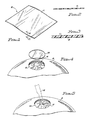
- Fig. 1 shows the hydrophilic polymer hydrogel membrane 10 which, when dry, would be approximately 7 cm x 7 cm to approximately 10 cm x 14 cm in size.
- the thickness (and area) substantially increase when water molecules 12 are absorbed by the membrane, as described above.
- Fig. 4 shows an opening 14 cut through the skull 13 of a subject, exposing brain tissue 15. In the drawing the opening is round.
- the hydrophilic polymer hydrogel membrane might be circular, rather than rectangular, as indicated by 11A.
- the circular membrane 11A is placed in contact with the brain tissue 15, preventing evaporation and maintaining the moistness of the brain tissue, and also protecting it from airborne and other contaminants.
- the hydrogel film 11A is transparent, so a surgical scalpel 16 can make a precise cut along dotted lines 17 into a portion of the brain tissue visualized by the surgeon through the membrane 11A.
Landscapes
- Health & Medical Sciences (AREA)
- Animal Behavior & Ethology (AREA)
- Veterinary Medicine (AREA)
- Heart & Thoracic Surgery (AREA)
- Public Health (AREA)
- Vascular Medicine (AREA)
- General Health & Medical Sciences (AREA)
- Life Sciences & Earth Sciences (AREA)
- Surgery (AREA)
- Epidemiology (AREA)
- Chemical & Material Sciences (AREA)
- Chemical Kinetics & Catalysis (AREA)
- Dispersion Chemistry (AREA)
- Engineering & Computer Science (AREA)
- Biomedical Technology (AREA)
- Materials For Medical Uses (AREA)
Priority Applications (2)
| Application Number | Priority Date | Filing Date | Title |
|---|---|---|---|
| US06/929,174 US4777943A (en) | 1984-11-10 | 1984-11-10 | Use of transparent membranes made of hydrogel polymers as a cover for various organs during surgery |
| EP88109146A EP0345370A1 (fr) | 1988-06-08 | 1988-06-08 | Utilisation de membranes transparentes d'hydrogel polymère pour couvrir les organes pendant les opérations chirurgicales |
Applications Claiming Priority (1)
| Application Number | Priority Date | Filing Date | Title |
|---|---|---|---|
| EP88109146A EP0345370A1 (fr) | 1988-06-08 | 1988-06-08 | Utilisation de membranes transparentes d'hydrogel polymère pour couvrir les organes pendant les opérations chirurgicales |
Publications (1)
| Publication Number | Publication Date |
|---|---|
| EP0345370A1 true EP0345370A1 (fr) | 1989-12-13 |
Family
ID=8199040
Family Applications (1)
| Application Number | Title | Priority Date | Filing Date |
|---|---|---|---|
| EP88109146A Withdrawn EP0345370A1 (fr) | 1984-11-10 | 1988-06-08 | Utilisation de membranes transparentes d'hydrogel polymère pour couvrir les organes pendant les opérations chirurgicales |
Country Status (1)
| Country | Link |
|---|---|
| EP (1) | EP0345370A1 (fr) |
Citations (6)
| Publication number | Priority date | Publication date | Assignee | Title |
|---|---|---|---|---|
| DE2028956A1 (de) * | 1969-06-13 | 1970-12-17 | Ceskoslovenska Akademie Ved, Prag | Verfahren zur Herstellung von Hydrogelen |
| FR2239256A1 (en) * | 1973-08-01 | 1975-02-28 | Kendall & Co | Cushion of pressings - impenetrable by X-rays during stomach operations |
| FR2441390A2 (fr) * | 1978-11-15 | 1980-06-13 | Max Planck Gesellschaft | Materiau pour pansement liquide transparent, son procede de preparation et ses applications |
| GB2086927A (en) * | 1980-11-12 | 1982-05-19 | Johnston Christian William | Hydrophilic polyurethane/diacrylate compositions |
| WO1986000912A1 (fr) * | 1984-07-23 | 1986-02-13 | Pharmacia Ab | Gel pour la prevention de l'adhesion entre des tissus de l'organisme et son procede de production |
| US4777943A (en) * | 1984-11-10 | 1988-10-18 | Malliner Laboratories Inc. | Use of transparent membranes made of hydrogel polymers as a cover for various organs during surgery |
-
1988
- 1988-06-08 EP EP88109146A patent/EP0345370A1/fr not_active Withdrawn
Patent Citations (6)
| Publication number | Priority date | Publication date | Assignee | Title |
|---|---|---|---|---|
| DE2028956A1 (de) * | 1969-06-13 | 1970-12-17 | Ceskoslovenska Akademie Ved, Prag | Verfahren zur Herstellung von Hydrogelen |
| FR2239256A1 (en) * | 1973-08-01 | 1975-02-28 | Kendall & Co | Cushion of pressings - impenetrable by X-rays during stomach operations |
| FR2441390A2 (fr) * | 1978-11-15 | 1980-06-13 | Max Planck Gesellschaft | Materiau pour pansement liquide transparent, son procede de preparation et ses applications |
| GB2086927A (en) * | 1980-11-12 | 1982-05-19 | Johnston Christian William | Hydrophilic polyurethane/diacrylate compositions |
| WO1986000912A1 (fr) * | 1984-07-23 | 1986-02-13 | Pharmacia Ab | Gel pour la prevention de l'adhesion entre des tissus de l'organisme et son procede de production |
| US4777943A (en) * | 1984-11-10 | 1988-10-18 | Malliner Laboratories Inc. | Use of transparent membranes made of hydrogel polymers as a cover for various organs during surgery |
Similar Documents
| Publication | Publication Date | Title |
|---|---|---|
| US4777943A (en) | Use of transparent membranes made of hydrogel polymers as a cover for various organs during surgery | |
| CA2109981C (fr) | Pansement de forme cylindrique pour blessures profondes | |
| CN101454030B (zh) | 用于脊柱外科手术中定向细胞向内生长和控制组织再生的方法 | |
| US4759354A (en) | Wound dressing | |
| EP1022031B1 (fr) | Membrane suturable pour la prévention d'adhérences | |
| JP2563110B2 (ja) | 癒着防止バリヤー布地 | |
| JP4843079B2 (ja) | 癒着防止用の断片化重合体ヒドロゲルおよびそれらの調製 | |
| US5478308A (en) | Wound packing and package therefor | |
| US4412617A (en) | Ligating clip package | |
| US4767619A (en) | Burn wound dressing material | |
| EP0734736A1 (fr) | Dispositif médical et son procédé de préparation | |
| US4659572A (en) | Burn wound dressing material | |
| CN1713854A (zh) | 抗微生物包装的医疗装置及其制备方法 | |
| JENKINS et al. | Gelatin sponge, a new hemostatic substance: studies on absorbability | |
| BROWN et al. | Polyvinyl and silicone compounds as subcutaneous prostheses: laboratory and clinical investigation | |
| US9289538B2 (en) | Method of forming and the resulting membrane composition for surgical site preservation | |
| WO1996040305A1 (fr) | Polytetrafluoroethylene transparent traite au moyen d'un fluide | |
| JPH0226552A (ja) | ハイドロゲルポリマーからなる外科手術時の種々の器官の透明膜の覆い | |
| KR20060011503A (ko) | 장기 유착 방지 수화겔 및 그의 제조 방법 | |
| CA1176932A (fr) | Pansement | |
| KR910005213B1 (ko) | 인공피부의 제조방법 | |
| JPH0560943B2 (fr) | ||
| WO2007088323A1 (fr) | Nécessaire chirurgical | |
| RO133136B1 (ro) | Procedeu de obţinere a unui sistem de eliberare a medicamentelor de tip plase textile colagenice | |
| HK1128638B (en) | Collagen for use in prevention of peridural fibrosis formation after spinal surgery |
Legal Events
| Date | Code | Title | Description |
|---|---|---|---|
| PUAI | Public reference made under article 153(3) epc to a published international application that has entered the european phase |
Free format text: ORIGINAL CODE: 0009012 |
|
| AK | Designated contracting states |
Kind code of ref document: A1 Designated state(s): DE FR GB |
|
| 17P | Request for examination filed |
Effective date: 19900605 |
|
| 17Q | First examination report despatched |
Effective date: 19920124 |
|
| STAA | Information on the status of an ep patent application or granted ep patent |
Free format text: STATUS: THE APPLICATION IS DEEMED TO BE WITHDRAWN |
|
| 18D | Application deemed to be withdrawn |
Effective date: 19921111 |