EP0346877A1 - Vecteurs de clonage de ADNc - Google Patents
Vecteurs de clonage de ADNc Download PDFInfo
- Publication number
- EP0346877A1 EP0346877A1 EP89110816A EP89110816A EP0346877A1 EP 0346877 A1 EP0346877 A1 EP 0346877A1 EP 89110816 A EP89110816 A EP 89110816A EP 89110816 A EP89110816 A EP 89110816A EP 0346877 A1 EP0346877 A1 EP 0346877A1
- Authority
- EP
- European Patent Office
- Prior art keywords
- cdna
- recombinant dna
- dna molecule
- dna
- oligo
- Prior art date
- Legal status (The legal status is an assumption and is not a legal conclusion. Google has not performed a legal analysis and makes no representation as to the accuracy of the status listed.)
- Ceased
Links
Images

Classifications
-
- C—CHEMISTRY; METALLURGY
- C12—BIOCHEMISTRY; BEER; SPIRITS; WINE; VINEGAR; MICROBIOLOGY; ENZYMOLOGY; MUTATION OR GENETIC ENGINEERING
- C12N—MICROORGANISMS OR ENZYMES; COMPOSITIONS THEREOF; PROPAGATING, PRESERVING, OR MAINTAINING MICROORGANISMS; MUTATION OR GENETIC ENGINEERING; CULTURE MEDIA
- C12N15/00—Mutation or genetic engineering; DNA or RNA concerning genetic engineering, vectors, e.g. plasmids, or their isolation, preparation or purification; Use of hosts therefor
- C12N15/09—Recombinant DNA-technology
- C12N15/63—Introduction of foreign genetic material using vectors; Vectors; Use of hosts therefor; Regulation of expression
- C12N15/64—General methods for preparing the vector, for introducing it into the cell or for selecting the vector-containing host
-
- C—CHEMISTRY; METALLURGY
- C12—BIOCHEMISTRY; BEER; SPIRITS; WINE; VINEGAR; MICROBIOLOGY; ENZYMOLOGY; MUTATION OR GENETIC ENGINEERING
- C12N—MICROORGANISMS OR ENZYMES; COMPOSITIONS THEREOF; PROPAGATING, PRESERVING, OR MAINTAINING MICROORGANISMS; MUTATION OR GENETIC ENGINEERING; CULTURE MEDIA
- C12N15/00—Mutation or genetic engineering; DNA or RNA concerning genetic engineering, vectors, e.g. plasmids, or their isolation, preparation or purification; Use of hosts therefor
- C12N15/09—Recombinant DNA-technology
- C12N15/10—Processes for the isolation, preparation or purification of DNA or RNA
- C12N15/1096—Processes for the isolation, preparation or purification of DNA or RNA cDNA Synthesis; Subtracted cDNA library construction, e.g. RT, RT-PCR
-
- C—CHEMISTRY; METALLURGY
- C12—BIOCHEMISTRY; BEER; SPIRITS; WINE; VINEGAR; MICROBIOLOGY; ENZYMOLOGY; MUTATION OR GENETIC ENGINEERING
- C12N—MICROORGANISMS OR ENZYMES; COMPOSITIONS THEREOF; PROPAGATING, PRESERVING, OR MAINTAINING MICROORGANISMS; MUTATION OR GENETIC ENGINEERING; CULTURE MEDIA
- C12N15/00—Mutation or genetic engineering; DNA or RNA concerning genetic engineering, vectors, e.g. plasmids, or their isolation, preparation or purification; Use of hosts therefor
- C12N15/09—Recombinant DNA-technology
- C12N15/63—Introduction of foreign genetic material using vectors; Vectors; Use of hosts therefor; Regulation of expression
- C12N15/70—Vectors or expression systems specially adapted for E. coli
Definitions
- the present invention is directed to recombinant DNA vector molecules and uses therefor. More particularly, the present invention relates to the construction of recombinant vectors useful in the high frequency cloning of cDNA. The present invention also relates to vectors capable of directing the synthesis of single stranded cDNA and thereby permitting enrichment of specific sequences by hybridization/selection.
- cDNA complementary DNA
- mRNA messenger RNA
- mRNA molecules are first annealed to vector DNA. Okayama and Berg I ( Mol. Cell. Biol. 2 : 161-170 , 1982 ), and incorporated herein by reference, have described such a strategy and cloning full length, or nearly full length, cDNA molecules in Escherichia coli .
- This cloning is predicated on linking an oligo (dT) primer to a linearized vector to generate a vector primer and the annealing poly (A)+ mRNA to the oligo (dT) primer.
- a cDNA strand is synthesized complementary to the annealed mRNA template and the strand terminated with an oligo (dC) linker.
- the resulting linear molecule is cleaved with the restriction endonuclease Hin d III to yield a molecule unable to circularize either by annealing or by ligation due to the presence of incompatible ends. Consequently, circularization is accomplished by the intermolecular ligation of a linker DNA segment comprising a Hin d III generated terminus and a oligo (dG) tailed terminus which allows the abridgement of the vector primer Hin d III terminus with the oligo (dC) terminated cDNA:mRNA. In this procedure, the RNA strand is replaced by DNA following treatment with RNase H, DNA polymerase and DNA ligase. Okayama and Berg II ( Mol. Cell. Biol .
- This vector system comprises pcDV1, a recombinant molecule containing a DNA sequence from pBR322 and two segments from Simian Virus 40 (SV40) including the poly A region.
- SV40 Simian Virus 40
- pcDV1 is restricted with the enzyme Kpn 1 and ligated to an oligo (dT) linker to generate the vector primer.
- mRNA is then annealed and the cDNA synthesized as described above.
- the oligo (dC) tailed linker segment required for re-circularization and which contains the SV40 origin of replication, is derived from plasmid pL1.
- the recombinant cDNA molecule is thus capable of replication in both E. coli and SV40-sensitive mammalian cells.
- the present invention describes recombinant DNA vector molecules which allow the efficient cloning of full length cDNA using a modification of the method of Okayama and Berg.
- the vectors described herein are also useful in the enrichment of specific sequences directly from cDNA libraries by hybridization/selection.
- the present invention is directed to recombinant DNA molecules capable of replication in prokaryotic hosts, and optionally eukaryotic hosts, useful in the high frequency cloning of double-stranded cDNA and in the generation of single stranded cDNA therefrom.
- one aspect of the present invention relates to recombinant DNA molecules comprising:
- the recombinant DNA molecules further comprise a eukaryotic origin of replication and a eukaryotic promoter.
- the intergenic region of bacteriophage F1 is used in said recombinant DNA molecules to generate single-stranded DNA molecules thereof and which are utilized in nucleic acid hybridization/selection.
- Annealing To hybridize nucleic acid molecules by pairing of A-T or G-C, e.g., an oligo (dG) tail annealing to an oligo (dC) tail.
- cDNA Complementary DNA. DNA which is complementary to a specific sequence of mRNA.
- Hybridization The formation of stable duplexes between complementary nucleotide sequences via base pairing (A-T, G-C). DNA-DNA, DNA-RNA or RNA-RNA hybrids can be formed.
- Inter-, Intra-molecular ligation Circularization of a linear DNA molecule by ligation of two ends is referred to as an intra -molecular ligation.
- Inter -molecular ligation refers to circularization by abridging the two ends with a second segment of DNA.
- mRNA Messenger RNA.
- Oligo (dC) Short length of deoxycytidine molecules which can be added to the 3′ end of DNA.
- Oligo (dG) Short length of deoxyguanosine molecules which can be added to the 3′ end of DNA.
- Oligo (dT) Short length of deoxythymidine molecules which can be added to the 3′ end of DNA.
- Poly (A)+ The tail of adenylic acid residues which is added to the 3′ end of many eukaryotic mRNA molecules following transcription.
- Vector, plasmid, recombinant DNA molecule DNA molecules in which non-contiguous sequences have been placed next to each other by in vitro manipulations. In general, the term applies to a DNA molecule, usually derived from a plasmid or bacteriophage, into which fragments of DNA may be inserted or cloned.
- a plasmid vector replicates autonomously in the cell.
- An expression vector is one in which fragments of DNA to be inserted are placed "downstream" of a promoter and, hence, their coding sequence is transcribed and translated.
- Library A collection of recombinant DNA molecules carrying DNA inserts from the genome of an organism. As used herein, the libraries comprise cDNA inserts.
- the present invention is directed to recombinant DNA molecules capable of replication in prokaryotic hosts, and optionally, in eukaryotic hosts, useful in the high frequency cloning of double-stranded cDNA and in the generation of single-stranded cDNA therefrom.
- the recombinant molecules contemplated herein comprise a prokaryotic selectable marker (e.g., resistance to an antibiotic) a prokaryotic origin of replication (e.g., ColE1 replication system of pBR322), the intergenic region of bacteriophage F1, and a unique restriction site (e.g., Bst XI) permitting an intramolecular ligation following the synthesis of at least one cDNA strand.
- a prokaryotic selectable marker e.g., resistance to an antibiotic
- a prokaryotic origin of replication e.g., ColE1 replication system of pBR322
- the intergenic region of bacteriophage F1 e.g.,
- recombinant molecules optionally comprise a eukaryotic origin of replication (e.g., from SV40) and eukaryotic regulatory signal sequences (e.g., poly A, splice and early promoter sequences).
- a recombinant molecules has the same meaning as a plasmid and a vector and is defined to include circular DNA molecules capable of autonomous replication relative to chromosomal DNA in prokaryotic hosts and optionally in eukaryotic hosts.
- a recombinant molecules considered herein can be varied with respect to origins of replication, selectable markers and unique restriction sites.
- selectable markers refer to the marker and to the nucleic acid encoding said marker.
- Selectable markers contemplated by the present invention include resistance to antibiotics such as ampicillin, tetracycline, chloramphenicol, kanamycin, neomycin, rifampicin, carbenicillin, streptomycin and the like. Said selectable markers also encompass resistance to phage infection, sensitivity to streptomycin and enzymes which effect colorometric changes.
- the subject invention is described using ampicillin as the selectable marker which, up to the present time, represents the best marker available. This is done with the understanding that all such selectable markers are encompassed by the present invention.
- Okayame and Berg, I and II, supra have described a strategy for cloning cDNAs in E. coli which yields full length, or nearly full length, cDNA.
- the high efficiency of incorporation of full length cDNA obtained using the Okayame and Berg protocol is a substantial advantage, this protocol has not been employed in many studies due to the relatively low efficiency with which transformants are obtained per ug of starting vector and polyadenylated RNA, relative to the use of bacteriophage vectors and the difficulties associated with screening bacterial colonies, relative to bacteriophage plaques, using hybridization probes.
- Two modifications in the original Okayama and Berg method are described herein which overcome these problems.
- the Okayama and Berg method has been modified where the important difference is that the original method requires an intermolecular ligation step to recircularize cDNA containing plasmids and prime second strand cDNA synthesis whereas the scheme described here takes advantage of a Bst XI site to create a 3′ oligo (dG) protruding end and thereby allowing the same steps to be accomplished via an intra-molecular ligation (See Fig. 1).
- the plasmids described herein are recoverable in the form of circular single stranded DNA due to the presence of the intergenic region of bacteriophage F1. Dotto, et al .
- the presence of the F1 phage intergenic region in the cDNA cloning vectors described herein allows the recovery of cDNA libraries constructed in these vectors in the form of circular single stranded DNA which are then enriched for specific sequences by hybridization/selection.
- the selected circular cDNA is then utilized to transform a suitable bacterial host, facilitating the isolation of specific cDNA.
- the modifications described herein maintain the advantage of the original Okayama and Berg procedure in cloning full length cDNA with high efficiency and facilitate use of the procedure for a number of applications.
- plasmid either pBR322-SV40 [0.11-0.86] or pcDV1
- oligo (dT) tailed.
- the oligo (dT) tail distal to the site at which the RNA will be hybridized is removed by restriction digestion with a second enzyme and the vector fragment is isolated.
- Polyadenylated RNA is then hybridized to the remaining oligo (dT) tail of the plasmid and copied using reverse transcriptase.
- oligo (dC) tail is then added to the 3′ end of the cDNA using terminal deoxynucleotidyl transferase and the plasmid is digested with the restriction endonuclease Hin d III.
- the resulting molecule can then be recircularized by ligation to a second DNA fragment, isolated from a second plasmid (either pBR32-SV40 [0.19-0.32] or PL1), which has been prepared such that it contains a Hin d III cohesive protruding end on one terminus of the molecule and an oligo (dG) tail on the other.
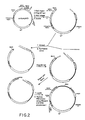
- a significant improvement over the Okayame and Berg method and described here (Fig. 2) is that, once the first strand of the cDNA is synthesized and oligo (dC) tailed, the oligo (dG) tail required for priming second strand cDNA synthesis and recircularization of the plasmid is provided by digestion of the plasmid with the restriction enzyme Bst XI.
- the recognition sequence for Bst XI is CCANNNNN′NTGG, wherein the plasmids pcDpolyB+, pcDpolyB-, BSB+, and BSB- (See Example 2) the sequence is CAAGGGGG′GTTG. Digestion of each of these plasmids with Bst XI then results in a (dG)4 3′ protruding end which can be utilized to recircularize the plasmid and to prime second strand cDNA synthesis when hybridized to the oligo (dC) tail present on the cDNA.
- the vectors of the subject invention are recirculated by an intramolecular ligation between the oligo (dC) tail of the cDNA and the oligo (dG)4 tail provided by Bst XI digestion.
- this difference enhances the efficiency with which circular plasmids competent for transformation are generated.
- the efficiency with which full length cDNA is incorporated into cDNA libraries using the original Okayama and Berg procedure has been studied for several sequences including alpha- and beta-globin and HPRT.
- the frequency of full-length cDNA clones, relative to the total number of clones containing a portion of these sequences, has been estimated to range between 5%, in the case of HPRT, to 10% in the case of the globins. Additionally, in the case of the globins the frequency with which cDNA containing the entire region are generated is at least 30-50%.
- the lengths of cDNA containing two specific sequences, HPRT and alpha- fetoprotein are estimated by digestion of library DNA with a restriction endonuclease, electrophoresis on an agarose gel and detection of either HPRT or alpha-fetoprotein sequences by hybridization to 32p labeled probes.
- the length of the HPRT message is 1.55 kbp including 3′ poly- adenylation.
- a cDNA containing full length HPRT coding sequence has been isolated using the Okayama and Berg technique and is 1.35 kbp long, in reasonable agreement with the length of the 1.55 kb polyadenylated mRNA. At least half of the cDNA homologous to the HPRT probe detected in library B constructed using the vector BSB+ are 1.35 kbp +/- approximately 50 bp and contain the full-length coding sequence of this message.
- the expected length of the alpha-fetoprotein message as determined in previous studies is 2.2 kbp and again, over half of the cDNA homologous to the alpha-fetoprotein probe, present in a second library which is constructed using the vector pcDpolyB-, is migrated at the position expected for full length cDNA. Accordingly, the Bst XI cloning procedure yields a high efficiency of incorporation of full length cDNA.
- the reaction is further complicated by the presence of the DNA fragment containing and Hin d III protruding end and an oligo dC tail which results from digestion of the oligo dC tailed cDNA-vector plasmid with Hin d III.
- a Bst XI site is incorporated into each of the cloning vectors described herein.
- the recognition sequence for Bst XI is CCANNNNN′NTGG, where the sequence utilized here is CCAGGGGG′GTGG. Digestion of this sequence with Bst XI created a 3′ (dG)4 protruding end which substitutes for the bridging fragment required in the Okayama and Berg protocol.
- This modification eliminates the need for an intermolecular ligation since recircularization of the plasmid can now be accomplished by an intramolecular ligation between the oligo (dC) tailed cDNA and the oligo (dG)4 tail created by Bst XI digestion.
- This modification results in a higher ligation efficiency and consequently more efficient incorporation of cDNA-plasmids into libraries.
- the number of independent transformants/ug of DNA obtained using the Bst XI method in accordance with the subject invention ranged from about 2.0 to about 8.1 X 10⁶ which the Okayama and Berg protocol yields between 0.5 and 2.0 X 10⁶ independent transformants/ug.
- the efficiency of transformation of supercoiled pBR322 DNA is approximately 8.0 X 10⁷/ug, thus as many as 1/10 of the cDNA plasmid molecules generated using the Bst XI protocol of the present invention are competent for transformation.
- the incorporation of a Bst XI site is, up to the present time, most useful in practicing the subject invention.
- the skilled artisan will recognize that many restriction sites may be alternatively incorporated provided that said sites are unique to the vector. All such sites are accordingly encompassed within the scope of the present invention.
- the scope of the present invention also encompasses recombinant DNA molecules having the identifying characteristics of BSB+, BSB-, pcDpolyB+ and pcDpolyB- and which individually further comprise a first cDNA strand, and optionally, a second cDNA strand.
- said recombinant DNA molecules contain SV40-derived DNA, said molecules are capable of expressing cDNA by vitrue of the early promoter contained therein.
- the present invention also relates to a process for enriching a cDNA library in a first recombinant DNA molecule for specific nucleic acid sequences comprising annealing single-stranded forms of cDNA containing said first recombinant DNA molecules to single-stranded forms of a second recombinant DNA molecule containing the nucleic acid sequence to be enriched with the proviso that the first and second recombinant DNA molecules have the intergenic region from bacteriophage F1 inserted in opposite orientations relative to each other.
- a cDNA library refers to cDNA ligated into the recombinant DNA molecules BSB+, BSB-, pcDpolyB+ or pcDpolyB-.
- the first and second recombinant DNA molecules are respectively selected from the group consisting of pcDpolyB- and BSB+, pcDpolyB+ and BSB-, BSB- and pcDpolyB+, BSB+ and pcDpolyB-. More particularly, specific cDNA sequences are isolated from libraries constructed in each of the vectors BSB+ or BSB- and pcDpolyB+ or pcDpolyB- by hybridization/selection.
- Another significant advantage of the present invention is the ability to select specific cDNA sequences from a cDNA library in the purification of cDNA which is specific to particular cell types or growth stages. It is known that by inverting the orientation of the insertions present in two different cDNA libraries constructed in phagemid vectors it is possible to obtain single stranded DNA in which the opposite strands of sequences common to the two libraries are synthesized and will hybridize while the same strand of the vector from each library is synthesized and consequently does not anneal.
- Two different cDNA libraries constructed in either the vectors pcDpolyB+ and BSB+ or pcDpolyB- and BSB- are utilized for subtraction of sequences common to the libraries by hybridization selection since the inserts in each of these vector pairs are oriented oppositely. If the single stranded DNA from one of the two libraries is bound to a sepharose matrix as demonstrated herein for specific probe sequences, then it is possible to physically isolate sublibraries of sequences which are highly enriched for cDNA sequences present in one of two libraries.
- cDNA libraries constructed in the expression vectors pcDpolyB+ or pcDpolyB- and which have been enriched for sequences present in a specific cell type greatly facilitate attempts to identify specific cDNA sequences on the basis of the function they express in mammalian cells.
- a previous attempt to identify a plasmid containing the HPRT sequence from a cDNA library constructed in the vector pcDV was not successful (Okayama and Berg, II, supra ).
- the HPRT sequence is present in the library used in that study at a frequency of approximately 2 X 10 ⁇ 5 and, when isolated by colony hybridization techniques and transfected into HPRT deficient cells as a purified plasmid, conferred resistance to HAT media.
- HPRT+ cells are obtained only if the HPRT containing cDNA is present at a frequency of greater than 1 X 10 ⁇ 3 to 1 X 10 ⁇ 4. To obtain this frequency, in the case of the HPRT gene, it is necessary to enrich for this sequence by a factor of approximately 100 over the concentration in the original cDNA library.
- a deposit of a biologically pure culture of the following strains was made with the American Type Culture Collection (ATCC), 12301 Parklawn Drive, Rockville, Maryland on June 9, 1988 and accession numbers indicated were accorded after successful viability testing and the requisite fees were paid. All restrictions on the availability of said cultures to the public have been irrevocably removed and said cultures will remain permanently available for a term of at least five years after the most recent request for the furnishing of a sample and in any case 30 years after the date of deposit. Should the culture become nonviable or be inadvertently destroyed, it will be replaced with a viable culture(s) of the same taxonomic description.
- F9 Both F9 (Bernstine, et al ., P.N.A.S. 70 : 3899-3902 , 1973) and P19S1801A1 (McBurney, et al ., Nature 299 : 65-167 , 1982 ) cells are cultured in DME supplemented with 10% (v/v) fetal calf serum.
- DME DME supplemented with 10% (v/v) fetal calf serum.
- To induce differentiation of F9 cells approximately 106 cells/ml are cultured in bacterial grade petri dishes in the presence of 10 ⁇ 7 M retinoic acid for 5 days (Hogan, et al. , Nature 291 : 235-237 , 1981 ).
- Aggregates are collected by centrifugation at 500 X g for 5 minutes and cells are lysed by addition of 100 volumes of a solution containing 4 M guanidine isothiocyanate, 5 mM Na- citrate (pH 7.0), 1 mM beta-mercaptoethanol and 0.5 (v/v) sarkosyl (GITC solution).
- Three different protocols are used to induce differentiation of O1A1 cells as described by McBurney, et al ., supra .
- a suspension of approximately 105 cells/ml is grown in bacterial grade petri dishes in the presence of either 10 ⁇ 7 M retinoic acid or 0.4% (w/v) DMSO for 3 days.
- Cells are then transferred to tissue culture dishes and cultured in the absence of inducer for various times.
- For induction of monolayers with retinoic acid cells are plated directly onto tissue culture dishes and cultured in the presence of inducer for 3 days followed by culture in the absence of inducer for various times.
- To harvest the induced cultures culture media is removed and 5 ml of GITC solution is added to each dish of cells.
- RNA is isolated from the homogenates by addition of 1.5 g CsCl/2.5 ml of homogenate and the homogenate is layered over a 1.5 ml cushion of 5.7 M CsCl, 10 mM Tris-HCl (pH 7.5), 1 mM EDTA and centrifuged for 24 hours, at 25,000 rpm in an SW rotor (Maniatis, et al ., supra ).
- RNA pellet is resuspended in 300 ul of 10 mM Tris-HCl (pH 7.5), 1 mM EDTA, 1% (w/v) SDS, and 1 mg/ml protease K, extracted once with phenol and once with 25:1 chloroform:isoamyl alcohol and precipitated by addition of Na-acetate (pH 5.5) to 0.3 M and 2 volumes of ethanol.
- RNA is resuspended in 100 ul of dH2O containing 1 mM dithiothreitol and 100 units of RNasin (Promega). Polyadenylated RNA is isolated using oligo dT cellulose paper (Amersham) as described by the manufacturer.
- Vector DNA are prepared for use by digesting 200 ug with 400 units of Kpn 1 (BRL or NEB) in 400 ul of digestion buffer for 3 hours. DNA is CHCl3-OH extracted, ethanol precipitated and resuspended in 200 ul of 10 mM TRis-HCl, 1 mM EDTA (TE). Approximately 50 ul of 5X terminal deoxynucleotidyl transferase (TdT) reaction buffer (100 mM potassium cacodylate, pH 7.2, 2 mM CoCl2 and 0.2 mM diothiothreitol), TTP to a final concentration of 240 mM and 100 units of TdT (BRL) are added and the reaction incubated at 37°C.
- TdT 5X terminal deoxynucleotidyl transferase
- the reaction is stopped by addition of 10 ul of 0.5 EDTA, extracted twice with CHCl3-OH and DNA precipitated by addition of Na-acetate to 0.3 M and 2 volumes of ethanol.
- the DNA is resuspended in 360 ul TE and either 40 ul of 10 X Xba 1 digestion buffer and 400 units of Xba 1 (BRL) in the case of pcDpolyB+ or B- (See Example 2) or 40 ul of 10 X Bam H1 digestion buffer and 400 units of Bam H1 (BRL) in the case of BSB+ or BSB- (See Example 2) are added, the reaction is incubated at 37°C.
- the vector fragment is isolated on DE Bl paper, recovered by elution with 1.0 M NaCl, 10 mM Tris-HCl (pH 7.5) and 1 mM EDTA and precipitated by addition of 2 volumes of ethanol. The pellet is resuspended in 300 ul TE and NaCl is added to a final concentration of 1 M. Oligo dT tailed vector DNA are then purified by binding and elution from an oligo (dA)-cellulose column as described by Okayama and Berg I, supra . The DNA eluted from the column is extracted 1 X with CHCl3-OH, ethanol precipitated and resuspended in 50 ul of TE.
- First strand cDNA synthesis was performed essentially as described by Okayama and Berg I, supra , except that the reaction also contained 40 units of RNasin and is performed in a final volume of 20 ul/ug of vector DNA at 42°C. for 60 minutes.
- the reaction is stopped by addition of 170 ul TE, 5 ul 0.5 M EDTA and 5 ul 10% (w/v) SDS.
- the solution is extracted once with phenol, once with CHCl3-OH and precipitated by addition of 200 ul NH4Ac and 800 ul of ethanol, incubation at room temperature for 60 minutes and centrifugation. The pellet is washed with 70% (v/v) ethanol, resuspended in 200 ul TE and reprecipitated as before.
- the pellet containing the vector-cDNA-RNA hybrid is resuspended in 75 ul of TE, 20 ul of 5 X TdT buffer, dCTP to a final concentration of 25 uM and 1.5 units of TdT are added and the reaction is incubated at 37°C. for 30 minutes resulting in the addition of approximately 5 to 10 dC residues per end.
- the reaction is stopped by addition of 5 ul of 0.5 M EDTA and 5 ul of 10% (w/v) SDS, extracted once with CHCl3 - OH and precipitated by addition of 110 ul NH4-acetate and 440 ul of ethanol.
- the pellet from the oligo dC tailing step is resuspended in 45 ul of TE, 5 ul of 10 X Bst XI digestion buffer, and 10 units of Bst XI (NEB) are added.
- the reaction is incubated at 55°C. for 60 minutes and stopped by extraction with phenol 1 X, CHCl3-OH 1 X and precipitation with 5 ul of Na-acetate and 120 ul of ethanol.
- the pellet from the Bst XI digestion step is resuspended in 900 ul of TE and 100 ul of 10 X ligation buffer (660 mM Tris-HCl pH 7.6, 66 mM, MgCl2, 100 mM DTT, 1 mM ATP) and 10 units of T4 DNA ligase (BRL) are added. The reaction is incubated overnight at 15°C., transferred to 4°C.
- 10 X ligation buffer 660 mM Tris-HCl pH 7.6, 66 mM, MgCl2, 100 mM DTT, 1 mM ATP
- Competent cells are prepared by pelleting a culture of MC 1061 cells grown in L-broth to an O.D. 650 nM of 0.6, resuspending the cells in 1/2 volume of 50 mM CaCl, repelleting, resuspension in 1/25 volume of 50 mM CaCl and incubating at 4°C. for between 2 and 5 hours. Cells prepared in this way routinely gave a transformation efficiency of approximately 8.0 X 10⁷ transformants/ug of pBR322 DNA. Transformation is performed at 4°C. for 30 minutes followed by 2 minutes at 45°C.
- GIBCO Brain Heart Infusion
- aliquots are taken for titering and plated on 1.5% (w/v) agar containing 100 ug/ml ampicillin. Ampicillin is also added to the 500 ml culture to a final concentration of 100 ug/ml.
- DMSO is added to 10 ml aliquots of the cDNA libraries to a final concentration of 7% (w/v), the aliquots frozen in liquid N2 and stored at -70°C.
- a 10 ml aliquot of the frozen library is thawed at 37°C., the cells pelleted by centrifugation at 4,000 X g for 5 minutes, resuspended in 5 ml of L-broth, inoculated to 500 ml of Brain Heart Infusion and plasmid preparations performed as described in Maniatis, et al ., supra .
- a cDNA library is summarized in Fig. 3, exemplified using pcDpolyB-.
- the vector DNA is first prepared by digestion with Kpn 1 and an oligo (dT) tail of approximately 60-80 nucleotides is added using terminal deoxynucleotidyl transferase.
- the unwanted oligo (dT) tail on one end of the vector is removed by digestion with Xba 1 and the tailed vector DNA is purified as described above.
- RNA Polyadenylated RNA is then hybridized to the remaining oligo (dT) tail and the first strand of the cDNA insert is synthesized using reverse transcriptase.
- the cDNA is then oligo (dC) tailed using terminal deoxynucleotidyl transferase.
- oligo (dG) tail complementary to the oligo (dC) tail present on the cDNA
- the vector-RNA-cDNA hybrid is digested with Bst XI.
- the oligo (dC) and oligo (dG) tails are then annealed and the recircularizated vector is ligated.
- the RNA strand is removed using RNase H and the plasmid is repaired with DNA polymerase 1.
- Escherichia coli 71-18 cells are made competent for transformation using the protocol described above for MC 1061 cells. Approximately 10 times the number of 71-18 transformants as are present in the original MC 1061 library are generated and 10 ml aliquots of the library are frozen as described above. To prepare single stranded copies of the cDNA present in the library, a 10 ml aliquot of 71-18 cells containing the library is inoculated into 500 ml of brain heart infusion containing 100 ug/ml ampicillin and the culture grown to an O.D. 650 nM of 0.3.
- the culture is then inoculated with a 5 ml of a saturated culture of bacteriophage VCS257-M13 (Vector Cloning System) in bacterial strain 71-18 and incubated at 37°C. for an additional 12 hours.
- Cells are removed by centrifuging the culture 2 X for 5 minutes each a 5000 X g.
- the supernatant is brought to a final concentration of 0.3 M NaCl and 3.0% (w/v) polyethylene glycol 8000, incubated at 4°C. for 4-8 hours and centrifuged for 10 minutes at 10,000 X g.
- the pellet is washed with 95% (v/v) ethanol, gently resuspended in 5 ml of TE, extracted once with phenol, once with CHCl3-OH, and the DNA precipitated by addition of Na-acetate to 0.3 M and 2 volumes of ethanol and stored in TE.
- Specific sequence are selected from total single stranded cDNA libraries by hybridization to matrix bound probe sequences.
- DNA is bound to a cyanogen bromide activated sepharose matrix by procedures described in Arndt-Jovin, et al ., Eur. J. Biochem . 54 : 411-418 , 1975 .
- DNA fragments resulting from restriction endonuclease digestion of CsCl purified plasmids are isolated sequentially from 2-1% (w/v) agarose gels by collection on DE 81 paper and elution in 1 M NaCl, 10 mM Tris-HCl (pH 7.5), 1 mM EDTA.
- the DNA pellet is washed twice with 70% (v/v) ethanol and resuspended in dH2O at a concentration of approximately 1 ug/ul.
- dH2O a concentration of approximately 1 ug/ul.
- Cyanogen bromide activated sepharose 4B (Pharmacia) is prepared for binding by washing with an approximately 100 X excess each of 1 mM HCl, dH2O, and 10 mM K-phosphate (pH 8).
- the DNA is heated in a boiling water bath for 10 minutes and chilled on ice immediately prior to addition to the matrix.
- the DNA-matrix mixture is incubated at room temperature for 2-18 hours and the matrix washed sequentially with excess dH2O, 0.1 mM Tris-HCl (pH 8.0) + 1.0 mM EDTA and incubated for 4 hours at room temperature. Following incubation the matrix is washed sequentially with 10 mM K-phosphate (pH 8.0), 1.0 M K-phosphate (pH 8.0), dH2O and 10 mM Tris-HCl (pH 7.5) + 1 mM EDTA.
- Use of 32p labeled DNA demonstrates that greater than 90% of the DNA is bound under these conditions.
- the DNA matrix (25-50 ul for specific probes and 200-500 ul for matrix bound cDNA library probes) is washed 4 times with a 20-50 fold excess of hybridization buffer (250 mM KCl, 10 mM Tris-HCl, pH 8.0, 1 mM EDTA).
- hybridization buffer 250 mM KCl, 10 mM Tris-HCl, pH 8.0, 1 mM EDTA.
- the matrix is transferred to a 15 ml disposable column and washed with 250-500 ml of 1 X hybridization buffer, at the hybridization temperature, followed by 250-500 m; of 1/2 X hybridization buffer at 22°C.
- the matrix is recovered and 100 ul of TE added.
- the matrix in TE is heated to 80°C. for 10 minutes and chilled on ice.
- Approximately 500 ul of competent MC 1061 cells are added and the transformation performed as described above, except that incubation at 37°C. in the absence of ampicillin is continued for 2.5 hours and the cells then pelleted and plated on agar containing 100 ug/ml ampicillin. Colonies are collected from the plates by addition of 8-10 ml of L-broth to create enriched sublibraries.
- Library 8 refers to a cDNA library constructed using the BSB+ vector.
- Library 9 refers to a library constructed using pcDpolyB-.
- Plasmid pcDpoly is constructed by a three-way ligation between the Kpn 1 to Hin d III fragment of pcDV11 (containing the SV40 polyadenylation site and pBR322 sequences; Okayama and Berg (II), supra ), the Hin d III to Pst 1 fragment of pL1 (containing the SV40 early promoter and splice sites; Okayama and Berg (II), supra ) and the Pst 1 to Kpn 1 polylinker fragment from the vector Bluescribe M13+ (Vector Cloning Systems).
- Plasmid pcDpoly is converted to pcDpoly B by use of a synthetic oligonucleotide with the sequence: 5′ CTAGAGCCACCCCCCTGGTGCA 3′ to insert a Bst XI site (i.e., 5′ CCAGGGGGGTGG 3′) between the Pst 1 and Xba 1 site of the polylinker region of pcDpoly by cleaving the plasmid with Pst 1 and Xba 1, ligating to the oligonucleotide and filling in the resulting gap with the large fragment of DNA polymerase I.
- a synthetic oligonucleotide with the sequence: 5′ CTAGAGCCACCCCCCTGGTGCA 3′ to insert a Bst XI site (i.e., 5′ CCAGGGGGGTGG 3′) between the Pst 1 and Xba 1 site of the polylinker region of pcDpoly by cleaving the
- Sequence analysis demonstrates that the Xba 1 site is lost at this step due to filling in and blunt end ligation between the 5′ protruding end created by Xba 1 digestion of the plasmid and hybridization of the oligonucleotide to the 3′ protruding end created by Pst 1 digestion. Since a unique restriction endonuclease site located between the Bsy X1 and Kpn 1 sites is required, an Xba 1 linker is inserted at the Sma 1 site located between the Bst XI and Kpn 1 sites. The resulting plasmid is called pcDpoly B and has the structure shown in Fig. 1.
- the final step in the construction of pcDpolyB+ and pcDpolyB- is the insertion of Nde 1 to Pvu II fragment from Bluescribe M13+ (containing the bacteriophage F1 intergenic region) between the Sal 1 and Cla 1 sites of pcDpoly B using Sal 1 and Cla 1 linkrs.
- These vectors are capable of expressing cDNA contained therein in eukaryotic cells due to the SV40 early promoter.
- Vectors BSB+ and BSB- are constructed from Bluescribe M13+ or Bluescribe M13- by insertion of the aforementioned synthetic oligonucleotide between Pst 1 and Xba 1 sites of the polylinker region as described for the construction of pcDpolyB+ and pcDpolyB-.
- Example 2 The vectors described in Example 2 are used to determine the efficiency of cDNA library construction using the methods of Example 1.
- libraries are constructed using the pcDpolyB- and BSB+ vectors and the efficiency with which independent transformants are obtained is determined.
- the number of independent transformants obtained per ug of starting vector DNA ranged from about 2.0 to about 8.1 X 10⁶ and averaged about 3.0 X 10⁶.
- DNA from library B is probed for the presence of cDNA containing sequences homologous to the hypoxanthine guanine phosphoribosyl transferase (HPRT) gene.
- DNA from this library is digested with Eco R1, electrophoresed on a 1% (w/v) agarose gel, transferred to nitrocellulose and probed with a 32P labeled 250 bp HPRT containing DNA fragment (produced by digestion of the plasmid pMEV with Hin d III and nick translation).
- HPRT hypoxanthine guanine phosphoribosyl transferase
- library 9 (constructed using pcDpolyB-) is screened for the presence of cDNA homologous to the message encoding alpha- fetoprotein .
- the alpha- fetaprotein message is approximately 2.2 kbp in length (Scott, et al ., Nature 310 : 562-567 , 1984 ) and the vector pcDpolyB- is 3.7 kbp in length, thus a plasmid containing the full length cDNA should be approximately 5.9 kbp.
- Library 9 DNA is digested with Sal 1 for which there is a single recognition sequence present in the vector and no recognition sequence in the cDNA, electrophoresed on a 1% w/v) agarose gel, transferred to nitrocellulose and probed for alpha-fetoprotein sequences using a 1.1 kbp probe (produced by Eco R1 digestion of the plasmid pAFP2E homologous to the 3′ end of the message.
- Fig. 3 panel B, lane 2 demonstrates that approximately 60% of the plasmids present in library 9 which contain sequences homologous to this probe are approximately 5.8 kbp in length and are near to full length copies of the alpha-fetoprotein message.
- a high proportion of near-full length HPRT containing cDNA 25-30%) have also been detected in library 9 (discussed below). ⁇
- libary 8 is transferred to E. coli strain 71-18 which exhibits the F phenotype.
- the library in strain 71-18 is grown to an O.D. 650 mM of 0.3 and superinfected with an approxi- mately 20:1 ratio of the bacteriophage VCSM13 (a derivative of F1, Vector Cloning Systems), the culture is incubated for an additional 8-12 hours and single stranded DNA was isolated, electrophoresed on a 1% (w/v) agarose gel and probed for HPRT sequences using the 250 bp Hin d III probe fragment from pMEV described above.
- lane 1 shows the single stranded DNA following staining with ethidium bromide and demonstrates that the cDNA containing plasmids are recovered in approximately a 1:1 ratio relative to the helper virus DNA (marked with an asterisk).
- Fig. 3, lane 2 shows the same DNA following transfer to a nitro-cellulose filter hybridization to the HPRT probe and autoradiography. A band migrating slightly larger than the bulk of the cDNA and BSB+ vectors is detected demonstrating the plasmids containing the HPRT sequence are present. Similar results have been obtained for both the HPRT and AFP cDNA present in Library 9.
- the 250 bp Hin d III fragment from the plasmid pMEV is used as a probe to attempt to recover HPRT containing cDNA from Library 9.
- the probe fragment is denatured and bound to a cyanogen bromide activated sepharose 4B matrix using approximately 10 ug of DNA/50 mg of matrix.
- the probe-matrix is then washed repeatedly as described in Example 1 and resuspended in hybridization buffer (250 mM Kcl, 10 mM TRis-HCl pH 7.5, 1 mM EDTA).
- Single stranded Library 9 DNA (50 ug) is then added in hybridization buffer to approximately 25 ul of the probe-matrix such that the final Library 9 DNA concentration is 1 mg/ml in a total volume of 50 ul.
- the reaction is overlayered with paraffin oil, heated to 80°C. for 5 minutes, and transferred to55°C. for 18 hours.
- the matrix is transferred to a 15 ml disposable column and washed with a total volume of 500 ml 1 X hybridization buffer at 55°C. followed by 250 ml 1/2 X hybridization buffer at room temperature.
- the matrix is recovered and resuspended in 100 ul of TE buffer, heated to 80°C. for 10 minutes, transferred to ice and used to transform competent MC 1061 cells.
- Transformants were grown in the absence of selection for 2.5 hours and plated to agar containing 100 ug/ml ampicillin. Approximately 5,000 clonies are obtained. To determine whether HPRT containing cDNA are present in the transformants, the transformants are pooled by addition of L-broth to the plates and the resulting bacterial suspension is cultured for approximately 12 hours at 37°C. A portion of each culture is then utilized to establish a frozen stock and the remainder used to prepare DNA using standard and known miniprep procedures.
- the isolated DNA is digested with the restriction enzyme Sal 1, which cleaves once in the vector but not in the HPRT sequence and the digested DNA electrophoresed on a 1% (w/v) agarose gel in parallel with 5 ug of the unfractioned SAl 1 digested Library 9 DNA.
- the results of this assay are shown in Fig. 5, where panel B, lane 1, shows the unselected library DNA and lane 2 shows the HPRT selected DNA after staining the ethidium bromide.
- the DNA is transferred to nitrocellulose and probed with the 250 bp pMEV probe fragment described above.
- a potential problem with the use of Bst XI to generate the oligo (dG) cohesive end is the possibility that this enzyme will recognize and cleave B t X1 sites present in the cDNA:RNA hybrids.
- a single stranded probe containing a Bst XI recognition site is made by 5′ 32P labeling the Hin d III site present in the polylinker region of the plasmid BSB+, digesting the plasmid with Pvu II and isolating the single stranded 172 bp DNA fragment from a strand separation gel.
- This probe is then hybridized to a transcript, from the same plasmid, generated using T7 RNA polymerase and the DNA:RNA hybrid digested with Bst XI. To insure that digestion of only the DNA:RNA hybrids, and not unhybridized single stranded probe is assayed, the hybrids are then digested with S1 nuclease. A protected fragment of 72 bp is expected to follow S1 nuclease digestion if Bst XI did not cleave the DNA:RNA hybrid. The results of this experiment are shown in Fig.
- lane 1 shows the 72 bp protected fragment resulting S1 nuclease digestion alone and lane 2 shows the protected fragment following digestion with Bst XI and S1 nuclease. Comparison of these bands demonstrates that little or no digestion of the RNA:DNA duplexes occurred.
- unlabeled BSB+ DNA is included in the same reactions and the extent of digestion of this template is assayed by electrophoresis on 1% (w/v) agarose gels and staining with ethidium bromide as shown in Fig. 6B.
Landscapes
- Genetics & Genomics (AREA)
- Health & Medical Sciences (AREA)
- Life Sciences & Earth Sciences (AREA)
- Engineering & Computer Science (AREA)
- Chemical & Material Sciences (AREA)
- Wood Science & Technology (AREA)
- Organic Chemistry (AREA)
- Biomedical Technology (AREA)
- Biotechnology (AREA)
- General Engineering & Computer Science (AREA)
- Zoology (AREA)
- Bioinformatics & Cheminformatics (AREA)
- Biophysics (AREA)
- Microbiology (AREA)
- Plant Pathology (AREA)
- Molecular Biology (AREA)
- Biochemistry (AREA)
- General Health & Medical Sciences (AREA)
- Physics & Mathematics (AREA)
- Cell Biology (AREA)
- Bioinformatics & Computational Biology (AREA)
- Crystallography & Structural Chemistry (AREA)
- Micro-Organisms Or Cultivation Processes Thereof (AREA)
- Measuring Or Testing Involving Enzymes Or Micro-Organisms (AREA)
Applications Claiming Priority (2)
| Application Number | Priority Date | Filing Date | Title |
|---|---|---|---|
| US20642688A | 1988-06-14 | 1988-06-14 | |
| US206426 | 1988-06-14 |
Publications (1)
| Publication Number | Publication Date |
|---|---|
| EP0346877A1 true EP0346877A1 (fr) | 1989-12-20 |
Family
ID=22766324
Family Applications (1)
| Application Number | Title | Priority Date | Filing Date |
|---|---|---|---|
| EP89110816A Ceased EP0346877A1 (fr) | 1988-06-14 | 1989-06-14 | Vecteurs de clonage de ADNc |
Country Status (4)
| Country | Link |
|---|---|
| EP (1) | EP0346877A1 (fr) |
| JP (1) | JPH02186991A (fr) |
| AU (1) | AU619303B2 (fr) |
| CA (1) | CA1335428C (fr) |
Cited By (2)
| Publication number | Priority date | Publication date | Assignee | Title |
|---|---|---|---|---|
| EP0535096A4 (en) * | 1990-06-18 | 1993-07-14 | Us Commerce | Eukaryotic expression vector system |
| US5962271A (en) * | 1996-01-03 | 1999-10-05 | Cloutech Laboratories, Inc. | Methods and compositions for generating full-length cDNA having arbitrary nucleotide sequence at the 3'-end |
Citations (3)
| Publication number | Priority date | Publication date | Assignee | Title |
|---|---|---|---|---|
| EP0092388A2 (fr) * | 1982-04-16 | 1983-10-26 | Eli Lilly And Company | Vecteurs de clonage |
| EP0153154A1 (fr) * | 1984-02-14 | 1985-08-28 | Lubrizol Genetics Inc. | Vecteur de transfert |
| EP0218468A2 (fr) * | 1985-10-01 | 1987-04-15 | Banyu Seiyaku Kabushiki Kaisha | Vecteur de clonage sûr et universel |
-
1989
- 1989-06-12 CA CA000602526A patent/CA1335428C/fr not_active Expired - Fee Related
- 1989-06-14 JP JP15353489A patent/JPH02186991A/ja active Pending
- 1989-06-14 EP EP89110816A patent/EP0346877A1/fr not_active Ceased
- 1989-06-14 AU AU36313/89A patent/AU619303B2/en not_active Ceased
Patent Citations (3)
| Publication number | Priority date | Publication date | Assignee | Title |
|---|---|---|---|---|
| EP0092388A2 (fr) * | 1982-04-16 | 1983-10-26 | Eli Lilly And Company | Vecteurs de clonage |
| EP0153154A1 (fr) * | 1984-02-14 | 1985-08-28 | Lubrizol Genetics Inc. | Vecteur de transfert |
| EP0218468A2 (fr) * | 1985-10-01 | 1987-04-15 | Banyu Seiyaku Kabushiki Kaisha | Vecteur de clonage sûr et universel |
Non-Patent Citations (3)
| Title |
|---|
| MOLECULAR AND CELLULAR BIOLOGY, vol. 3, no. 2, February 1983 (Washington DC) H.OKAYAMA et al. "A cDNA Cloning Vector That Permits Expression of cDNA Inserts in Mammalian Cells" pages 280-289 * |
| VIROLOGY, vol. 114, no. 2, October 30, 1981 (New York) G.P.DOTTO et al. "Functional Analysis of Bacteriophage f1 Intergenic Region" pages 463-473 * |
| VIROLOGY, vol. 139, no. 1, November 1984 (New York) J.C.CARRINGTON et al. "Complementary DNA Cloning and Analysis of Carnation M!ttle Virus RNA" pages 22-31 * |
Cited By (3)
| Publication number | Priority date | Publication date | Assignee | Title |
|---|---|---|---|---|
| EP0535096A4 (en) * | 1990-06-18 | 1993-07-14 | Us Commerce | Eukaryotic expression vector system |
| US5962271A (en) * | 1996-01-03 | 1999-10-05 | Cloutech Laboratories, Inc. | Methods and compositions for generating full-length cDNA having arbitrary nucleotide sequence at the 3'-end |
| US5962272A (en) * | 1996-01-03 | 1999-10-05 | Clontech Laboratories, Inc. | Methods and compositions for full-length cDNA Cloning using a template-switching oligonucleotide |
Also Published As
| Publication number | Publication date |
|---|---|
| AU3631389A (en) | 1990-02-01 |
| JPH02186991A (ja) | 1990-07-23 |
| AU619303B2 (en) | 1992-01-23 |
| CA1335428C (fr) | 1995-05-02 |
Similar Documents
| Publication | Publication Date | Title |
|---|---|---|
| Old et al. | Principles of gene manipulation: an introduction to genetic engineering | |
| US5629179A (en) | Method and kit for making CDNA library | |
| US5279952A (en) | PCR-based strategy of constructing chimeric DNA molecules | |
| EP0530112B1 (fr) | Méthode pour synthétiser des ADNs simple brin "stem-loop" | |
| US5075227A (en) | Directional cloning | |
| JPH07255491A (ja) | 効果的な方向性遺伝子クローニング系を用いるdna構築物 | |
| US5128256A (en) | DNA cloning vectors with in vivo excisable plasmids | |
| WO1992014819A1 (fr) | Vecteur de selection positive pour un systeme de clonage de p1 bacteriophage | |
| JP2002514434A (ja) | ヘテロ二本鎖突然変異ベクターの無細胞キメラ形成および真核生物における使用 | |
| NZ278490A (en) | Chimeric polynucleotide with both ribo- and deoxyribonucleotides in one strand and deoxyribonucleotides in a second strand | |
| JP2002511255A (ja) | ハイスループットdna配列決定用ベクター | |
| JPH05130871A (ja) | 大腸菌中でのサーマス・アクアチクス(Thermus aquaticus)DNAポリメラーゼの増加生産 | |
| US20250146005A1 (en) | Methods of making circular rna | |
| JP7305553B2 (ja) | Dnaアセンブリ | |
| WO2021238128A1 (fr) | Système et procédé d'édition de génome | |
| US5955363A (en) | Vector for in vitro mutagenesis and use thereof | |
| JP2009523428A (ja) | 直鎖状ベクター、宿主細胞およびクローニング法 | |
| Pruitt | Expression vectors permitting cDNA cloning and enrichment for specific sequences by hybridization/selection | |
| US5238834A (en) | CDNA cloning vectors | |
| EP0346877A1 (fr) | Vecteurs de clonage de ADNc | |
| US4985359A (en) | Vectors and methods for the construction of cDNA libraries | |
| Korneev et al. | cDNA libraries from a few neural cells | |
| EP0286200B1 (fr) | Vecteur de clonage d'ADN avec des plasmides excisables in vivo | |
| JP3743525B2 (ja) | 部位特異的変異導入方法 | |
| EP1156114A1 (fr) | Vecteurs pour procédé de séquençage moyennant des transposons |
Legal Events
| Date | Code | Title | Description |
|---|---|---|---|
| PUAI | Public reference made under article 153(3) epc to a published international application that has entered the european phase |
Free format text: ORIGINAL CODE: 0009012 |
|
| AK | Designated contracting states |
Kind code of ref document: A1 Designated state(s): AT BE CH DE ES FR GB GR IT LI LU NL SE |
|
| 17P | Request for examination filed |
Effective date: 19900502 |
|
| 17Q | First examination report despatched |
Effective date: 19930226 |
|
| STAA | Information on the status of an ep patent application or granted ep patent |
Free format text: STATUS: THE APPLICATION HAS BEEN REFUSED |
|
| 18R | Application refused |
Effective date: 19940908 |