EP0351058B1 - Dérivés de pyrimidopyrimidine - Google Patents
Dérivés de pyrimidopyrimidine Download PDFInfo
- Publication number
- EP0351058B1 EP0351058B1 EP89305910A EP89305910A EP0351058B1 EP 0351058 B1 EP0351058 B1 EP 0351058B1 EP 89305910 A EP89305910 A EP 89305910A EP 89305910 A EP89305910 A EP 89305910A EP 0351058 B1 EP0351058 B1 EP 0351058B1
- Authority
- EP
- European Patent Office
- Prior art keywords
- pyrimidine
- oxo
- dihydropyrimido
- propoxyphenyl
- formula
- Prior art date
- Legal status (The legal status is an assumption and is not a legal conclusion. Google has not performed a legal analysis and makes no representation as to the accuracy of the status listed.)
- Expired - Lifetime
Links
- 0 CC(C*)CCCC(CC*)(**)N Chemical compound CC(C*)CCCC(CC*)(**)N 0.000 description 5
Classifications
-
- C—CHEMISTRY; METALLURGY
- C07—ORGANIC CHEMISTRY
- C07D—HETEROCYCLIC COMPOUNDS
- C07D239/00—Heterocyclic compounds containing 1,3-diazine or hydrogenated 1,3-diazine rings
- C07D239/02—Heterocyclic compounds containing 1,3-diazine or hydrogenated 1,3-diazine rings not condensed with other rings
- C07D239/24—Heterocyclic compounds containing 1,3-diazine or hydrogenated 1,3-diazine rings not condensed with other rings having three or more double bonds between ring members or between ring members and non-ring members
- C07D239/28—Heterocyclic compounds containing 1,3-diazine or hydrogenated 1,3-diazine rings not condensed with other rings having three or more double bonds between ring members or between ring members and non-ring members with hetero atoms or with carbon atoms having three bonds to hetero atoms with at the most one bond to halogen, directly attached to ring carbon atoms
- C07D239/30—Halogen atoms or nitro radicals
-
- A—HUMAN NECESSITIES
- A61—MEDICAL OR VETERINARY SCIENCE; HYGIENE
- A61P—SPECIFIC THERAPEUTIC ACTIVITY OF CHEMICAL COMPOUNDS OR MEDICINAL PREPARATIONS
- A61P1/00—Drugs for disorders of the alimentary tract or the digestive system
-
- A—HUMAN NECESSITIES
- A61—MEDICAL OR VETERINARY SCIENCE; HYGIENE
- A61P—SPECIFIC THERAPEUTIC ACTIVITY OF CHEMICAL COMPOUNDS OR MEDICINAL PREPARATIONS
- A61P11/00—Drugs for disorders of the respiratory system
-
- A—HUMAN NECESSITIES
- A61—MEDICAL OR VETERINARY SCIENCE; HYGIENE
- A61P—SPECIFIC THERAPEUTIC ACTIVITY OF CHEMICAL COMPOUNDS OR MEDICINAL PREPARATIONS
- A61P27/00—Drugs for disorders of the senses
- A61P27/16—Otologicals
-
- A—HUMAN NECESSITIES
- A61—MEDICAL OR VETERINARY SCIENCE; HYGIENE
- A61P—SPECIFIC THERAPEUTIC ACTIVITY OF CHEMICAL COMPOUNDS OR MEDICINAL PREPARATIONS
- A61P37/00—Drugs for immunological or allergic disorders
- A61P37/08—Antiallergic agents
-
- A—HUMAN NECESSITIES
- A61—MEDICAL OR VETERINARY SCIENCE; HYGIENE
- A61P—SPECIFIC THERAPEUTIC ACTIVITY OF CHEMICAL COMPOUNDS OR MEDICINAL PREPARATIONS
- A61P43/00—Drugs for specific purposes, not provided for in groups A61P1/00-A61P41/00
-
- A—HUMAN NECESSITIES
- A61—MEDICAL OR VETERINARY SCIENCE; HYGIENE
- A61P—SPECIFIC THERAPEUTIC ACTIVITY OF CHEMICAL COMPOUNDS OR MEDICINAL PREPARATIONS
- A61P9/00—Drugs for disorders of the cardiovascular system
-
- A—HUMAN NECESSITIES
- A61—MEDICAL OR VETERINARY SCIENCE; HYGIENE
- A61P—SPECIFIC THERAPEUTIC ACTIVITY OF CHEMICAL COMPOUNDS OR MEDICINAL PREPARATIONS
- A61P9/00—Drugs for disorders of the cardiovascular system
- A61P9/08—Vasodilators for multiple indications
-
- A—HUMAN NECESSITIES
- A61—MEDICAL OR VETERINARY SCIENCE; HYGIENE
- A61P—SPECIFIC THERAPEUTIC ACTIVITY OF CHEMICAL COMPOUNDS OR MEDICINAL PREPARATIONS
- A61P9/00—Drugs for disorders of the cardiovascular system
- A61P9/12—Antihypertensives
-
- C—CHEMISTRY; METALLURGY
- C07—ORGANIC CHEMISTRY
- C07D—HETEROCYCLIC COMPOUNDS
- C07D239/00—Heterocyclic compounds containing 1,3-diazine or hydrogenated 1,3-diazine rings
- C07D239/02—Heterocyclic compounds containing 1,3-diazine or hydrogenated 1,3-diazine rings not condensed with other rings
- C07D239/24—Heterocyclic compounds containing 1,3-diazine or hydrogenated 1,3-diazine rings not condensed with other rings having three or more double bonds between ring members or between ring members and non-ring members
- C07D239/28—Heterocyclic compounds containing 1,3-diazine or hydrogenated 1,3-diazine rings not condensed with other rings having three or more double bonds between ring members or between ring members and non-ring members with hetero atoms or with carbon atoms having three bonds to hetero atoms with at the most one bond to halogen, directly attached to ring carbon atoms
- C07D239/32—One oxygen, sulfur or nitrogen atom
- C07D239/42—One nitrogen atom
-
- C—CHEMISTRY; METALLURGY
- C07—ORGANIC CHEMISTRY
- C07D—HETEROCYCLIC COMPOUNDS
- C07D487/00—Heterocyclic compounds containing nitrogen atoms as the only ring hetero atoms in the condensed system, not provided for by groups C07D451/00 - C07D477/00
- C07D487/02—Heterocyclic compounds containing nitrogen atoms as the only ring hetero atoms in the condensed system, not provided for by groups C07D451/00 - C07D477/00 in which the condensed system contains two hetero rings
- C07D487/04—Ortho-condensed systems
Definitions
- the present invention relates to pyrimidopyrimidine derivatives, processes for their preparation, intermediates in their preparation, their use as therapeutic agents and to pharmaceutical compositions containing them.
- the compounds of this invention are inhibitors of a calmodulin insensitive cyclic GMP phosphodiesterase and are of use in combatting such conditions where such inhibition is thought to be beneficial. They are bronchodilators and are therefore of use in combatting chronic reversible obstructive lung diseases such as asthma and bronchitis. Some of the compounds of the present invention have anti-allergic activity and are therefore useful in combatting allergic diseases such as allergic asthma, allergic rhinitis, urticaria and irritable bowel syndrome.
- the compounds of this invention are vasodilators and are therefore of value in combatting angina, hypertension and congestive heart failure.
- DE-A-1620561, DE-A-1795722 and GB-A-1543874 disclose pyrimidopyrimidine and quiuazoline derivatives.
- R1 is C2 ⁇ 5alkyl for example ethyl, n-propyl, isopropyl, butyl, isobutyl or pentyl.
- R1 is C3 ⁇ 5alkenyl for example propenyl, butenyl or pentenyl.
- R1 is cyclopropylmethyl.
- C1 ⁇ 6alkyl substituted by 1 to 6 fluoro groups examples include -CF3, -CH2CF3 or -CF2CHFCF3.
- R1 is n-propyl.
- R2 is C1 ⁇ 6alkylthio, C1 ⁇ 6alkylsulphonyl or C1 ⁇ 6alkoxy for example methylthio, ethylthio, methylsulphonyl, ethylsulphonyl, methoxy, ethoxy or propoxy.
- R2 is hydroxy, hydrogen or hydrazino.
- R2 is phenyl or C1 ⁇ 6alkyl for example methyl, ethyl or propyl.
- R2 is -NHCOR3 for example formamido or acetamido.
- R2 is -NR4R5 for example amino, methylamino, ethylamino, propylamino, dimethylamino, diethylamino, dipropylamino, cyclopropylamino, morpholino, 2,2,2-trifluoroethylamino, phenethylamino, 3-methylthiopropylamino, 3-methylsulphinylpropylamino, 3-methylsulphonylpropylamino, 2-hydroxyethylamino, 3-hydroxypropylamino, 2-hydroxypropylamino, 3-methoxypropylamino, N-ethyl-N-(2-hydroxyethyl)amino, 2-aminoethylamino, 2-dimethylaminoethylamino, ethoxycarbonylmethylamino, carboxymethylamino, 2-ethoxycarbonylethylamino or 2-carboxyethylamino.
- a group of sub-formula (a) thus forming a pyrimido[4,5-d]pyrimidine ring system.
- a group of sub-formula (b) thus forming a pyrimido[5,4-d]pyrimidine ring system.
- Particular compounds of this invention are : 7-methylthio-4-oxo-2-(2-propoxyphenyl)-3,4-dihydropyrimido[4,5-d]pyrimidine, 7-methylthio-2-(2-ethoxyphenyl)-4-oxo-3,4-dihydropyrimido[4,5-d]pyrimidine, 7-methylthio-2-(2-methoxyphenyl)-4-oxo-3,4-dihydropyrimido[4,5-d]pyrimidine, 7-methylthio-2-(2-isobutoxyphenyl)-4-oxo-3,4-dihydropyrimido[4,5-d]pyrimidine, 7-methylthio-2-(2-cyclopropylmethoxyphenyl)-4-oxo-3,4-dihydropyrimido[4,5-d]pyrimidine, 7-methylthio-2-(2-allyloxyphenyl)-4-oxo-3,4-dihydropyrimi
- This invention covers all tautomeric and optical isomeric forms of compounds of formula (1).
- R2 is -NR4R5 or hydrazino
- compounds of the formula (1) wherein R2 is -NR4R5 or hydrazino may form pharmaceutically acceptable salts with acids such as hydrochloric, hydrobromic, sulphuric and phosphoric acids.
- Compounds of the formula (1) may form pharmaceutically acceptable salts with metal ions, such as alkali metals for example sodium and potassium, or with an ammonium ion.
- metal ions such as alkali metals for example sodium and potassium, or with an ammonium ion.
- Compounds of formula (1) and their pharmaceutically acceptable salts may be administered in standard manner for the treatment of the indicated diseases, for example orally, parenterally, transdermally, rectally, via inhalation or via buccal administration.
- Compounds of formula (1) and their pharmaceutically acceptable salts which are active when given orally or via buccal administration can be formulated as liquids, syrups, tablets, capsules and lozenges.
- An oral liquid formulation will generally consist of a suspension or solution of the compound or salt in a liquid carrier for example, ethanol, glycerine or water with a flavouring or colouring agent.
- a liquid carrier for example, ethanol, glycerine or water with a flavouring or colouring agent.
- any pharmaceutical carrier routinely used for preparing solid formulations may be used. Examples of such carriers include starch, celluloses, lactose, sucrose and magnesium stearate.
- any routine encapsulation is suitable, for example using the aforementioned carriers in a hard gelatin capsule shell.
- composition is in the form of a soft gelatin shell capsule
- any pharmaceutical carrier routinely used for preparing dispersions or suspensions may be considered, for example aqueous gums, celluloses, silicates or oils and are incorporated in a soft gelatin capsule shell.
- Typical parenteral compositions consist of a solution or suspension of the compound or salt in a sterile aqueous or non-aqueous carrier optionally containing a parenterally acceptable oil, for example polyethylene glycol, polyvinylpyrrolidone, lecithin, arachis oil, or sesame oil.
- a parenterally acceptable oil for example polyethylene glycol, polyvinylpyrrolidone, lecithin, arachis oil, or sesame oil.
- a typical suppository formulation comprises a compound of formula (1) or a pharmaceutically acceptable salt thereof which is active when administered in this way, with a binding and/or lubricating agent, for example polymeric glycols, gelatins, cocoa-butter or other low melting vegetable waxes or fats.
- a binding and/or lubricating agent for example polymeric glycols, gelatins, cocoa-butter or other low melting vegetable waxes or fats.
- Typical transdermal formulations comprise a conventional aqueous or non-aqueous vehicle, for example a cream, ointment, lotion or paste or are in the form of a medicated plaster, patch or membrane.
- compositions for inhalation are in the form of a solution, suspension or emulsion that may be administered in the form of an aerosol using a conventional propellant such as dichlorodifluoromethane or trichlorofluoromethane, or are in the form of a powder for insufflation.
- a conventional propellant such as dichlorodifluoromethane or trichlorofluoromethane
- the composition is in unit dosage form, for example a tablet, capsule or metered aerosol dose, so that the patient may administer to himself a single dose.
- Each dosage unit for oral administration contains suitably from 0.001 mg/Kg to 30 mg/Kg, and preferably from 0.005 mg/Kg to 15 mg/Kg, and each dosage unit for parenteral administration contains suitably from 0.001 mg/Kg to 10 mg/Kg, of a compound of formula (1) or a pharmaceutically acceptable salt thereof calculated as the free base.
- the daily dosage regimen for oral administration is suitably about 0.001 mg/Kg to 120 mg/Kg, of a compound of formula (1) or a pharmaceutically acceptable salt thereof calculated as the free base.
- the daily dosage regimen for parenteral administration is suitably about 0.001 mg/Kg to 40 mg/Kg, for example about 0.005 mg/Kg to 10 mg/Kg, of a compound of the formula (1) or a pharmaceutically acceptable salt thereof calculated as the free base.
- the active ingredient may be administered as required for example from 1 to 8 times a day or by infusion.
- the compositions of the invention are bronchodilators and are useful in chronic reversible obstructive lung disease for example asthma and bronchitis.
- compositions of the present invention have anti-allergic activity and are useful in combatting allergic diseases such as allergic asthma, allergic rhinitis, urticaria and irritable bowel syndrome.
- the compositions of the present invention also have vasodilator activity and are of use in the treatment of angina, hypertension and congestive heart failure.
- Such conditions can be treated by administration orally, topically, rectally, parenterally or by inhalation.
- dosages are controlled by a valve, are administered as required and for an adult are conveniently in the range 0.1-5.0 mg of a compound of the formula (1) or a pharmaceutically acceptable salt thereof.
- the compounds of this invention may be co-administered with other pharmaceutically active compounds, for example in combination, concurrently or sequentially.
- the compounds of this invention and the other active compound or compounds are formulated in a pharmaceutical composition.
- examples of compounds which may be included in pharmaceutical compositions with the compounds of the formula (1) are bronchodilators such as sympathomimetic amines for example isoprenaline, isoetharine, sulbutamol, phenylephrine and ephedrine or xanthine derivatives for example theophylline and aminophylline, anti-allergic agents for example disodium cromoglycate, histamine H1-antagonists, vasodilators for example hydralazine, angiotensin converting enzyme inhibitors for example captopril, anti-anginal agents for example isosorbide nitrate, glyceryl trinitrate and pentaerythritol tetranitrate, anti-arrhythm
- the present invention provides a process for the preparation of compounds of the formula (1) or pharmaceutically acceptable salts thereof, which process comprises :
- the cyclisation of a compound of the formula (2) is performed in the presence of a base such as an alkali metal carbonate or triethylamine, in an aprotic solvent such as dimethylformamide, acetonitrile or N-methylpyrrolidone, at ambient or an elevated temperature, for example 50-170°C, conveniently at the reflux temperature of the reaction mixture.
- a base such as an alkali metal carbonate or triethylamine
- an aprotic solvent such as dimethylformamide, acetonitrile or N-methylpyrrolidone
- a compound of the formula (3) is cyclised by heating at an elevated temperature, for example 50-150°C, in the presence of an acid or a base in a suitable solvent such as aqueous C1 ⁇ 4alcohols, water, toluene, a halohydrocarbon or acetonitrile.
- a compound of the formula (3) is cyclised by heating in pyridine or aqueous base such as sodium hydroxide at the reflux temperature of the reaction mixture.
- R10 being a precursor to a group R2 is when R10 is a halo or C1 ⁇ 6alkylthio group.
- Such groups can be converted to a -NR4R5 group by reaction with an amine HNR4R5 in a suitable solvent such as a C1 ⁇ 4alkanol or pyridine at an elevated temperature, for example 50-120°C, conveniently in a pressure vessel.
- a compound of the formula (1) wherein R2 is C1 ⁇ 6alkylthio can suitably be converted to the corresponding compound wherein R2 is C1 ⁇ 6alkylsulphonyl by reaction with an oxidising agent, for example with at least two equivalents of a peroxy acid such as m-chloroperoxybenzoic acid.
- a compound of the formula (1) wherein R2 is C1 ⁇ 6alkylsulphonyl can suitably be converted to the corresponding compound wherein R2 is -NR4R5 by reaction with an amine HNR4R5 in a suitable solvent such as a halohydrocarbon or toluene at ambient or elevated temperature for example 40-100°C.
- a compound of the formula (1) wherein R2 is C1 ⁇ 6alkylsulphonyl can suitably be converted to the corresponding compound wherein R2 is C1 ⁇ 6alkoxy by reaction with a C1 ⁇ 6alkoxide, eg an alkali metal C1 ⁇ 6alkoxide such as sodium methoxide or ethoxide, in a C1 ⁇ 6alkanol at ambient or elevated temperature, for example 40-100°C.
- a C1 ⁇ 6alkoxide eg an alkali metal C1 ⁇ 6alkoxide such as sodium methoxide or ethoxide
- a compound of the formula (1) wherein R2 is C1 ⁇ 6alkylthio can suitably be converted to the corresponding compound wherein R2 is hydrazino by reaction with hydrazine.
- a compound of the formula (1) wherein R2 is hydrazino can be converted to the corresponding compound wherein R2 is hydrogen by treatment with silver oxide.
- a compound of the formula (1) wherein R2 is hydroxy can suitably be prepared by reacting a compound of the formula (1) wherein R2 is C1 ⁇ 6alkylthio with an alkali metal C1 ⁇ 6alkoxide such as sodium methoxide or ethoxide under aqueous work-up conditions.
- an alkali metal C1 ⁇ 6alkoxide such as sodium methoxide or ethoxide
- a compound of the formula (1) wherein R2 is C1 ⁇ 6alkoxy can be converted to the corresponding compound wherein R2 is hydroxy by hydrolysis, for example by treatment with hydrochloric acid.
- a compound of the formula (1) wherein R2 is amino can suitably be converted to the corresponding compound where R2 is -NHCOR3 by reaction with a formylating or C2 ⁇ 7alkanoylating agent.
- reagents include formic acid, C1 ⁇ 6alkyl formate, formamide, acetic anhydride, propionic anhydride or acetylchloride.
- a compound of the formula (1) wherein R4 or R5 is C1 ⁇ 6alkyl substituted by C1 ⁇ 6alkylthio can suitably be converted to the corresponding compound wherein R4 or R5 is C1 ⁇ 6alkyl substituted by C1 ⁇ 6alkylsulphinyl by reaction with one equivalent of an oxidising agent such as a peroxy acid, for example m-chloroperoxybenzoic acid.
- an oxidising agent such as a peroxy acid, for example m-chloroperoxybenzoic acid.
- the C1 ⁇ 6alkylsulphinyl compound can similarly be oxidised to a compound of the formula (1) wherein R4 or R5 is C1 ⁇ 6alkyl substituted by C1 ⁇ 6alkylsulphonyl.
- a compound of the formula (1) wherein R4 or R5 is C1 ⁇ 6alkyl substituted by -CO2R7 in which R7 is C1 ⁇ 6alkyl can suitably be hydrolysed by reaction with aqueous base, for example aqueous sodium hydroxide to form the corresponding compound wherein R7 is hydrogen.
- aqueous base for example aqueous sodium hydroxide
- the compounds of the formula (2) can be prepared by reaction of a compound of the formula (4) : wherein R1 is as hereinbefore defined, with a compound of the formula (5) : wherein L2 is a leaving group and L1, R10 and are as hereinbefore defined.
- L2 is C1 ⁇ 6alkoxy or halo for example methoxy, ethoxy, chloro or bromo.
- a solution of a compound of the formula (4) is initially formed by treatment of an acid addition salt of a compound of the formula (4) with a suitable base, for example triethylamine, a sodium alkoxide or sodium hydride, in an organic solvent such as a C1 ⁇ 4alkanol, acetonitrile or dimethylformamide and the solution is then treated with a compound of the formula (5) at a moderate temperature for example 0-60°C, conveniently ambient, to afford a compound of formula (2).
- a suitable base for example triethylamine, a sodium alkoxide or sodium hydride
- Suitable acid addition salts are those formed with inorganic acids such as hydrochloric or sulphuric acid or with strong organic acids such as methanesulphonic or p-toluenesulphonic acid.
- a compound of the formula (2) is isolated and is then cyclised as hereinbefore described.
- a compound of the formula (2) is not isolated but is cyclised in situ by stirring at ambient or an elevated temperature, for example 40-170°C.
- a compound of the formula (3) can be prepared by reaction of a compound of the formula (6) : wherein R1 is as hereinbefore defined and L3 is halo, with a compound of the formula (7) : wherein R10 and are as hereinbefore defined.
- L3 is chloro or bromo.
- a compound of the formula (6) is reacted with a compound of the formula (7) at ambient or elevated temperature e.g. 50-100°C in a suitable solvent such as toluene, acetonitrile or a halohydrocarbon e.g. chloroform or dichloromethane, optionally in the presence of a base such as pyridine or triethylamine, to form a compound of the formula (3) which may be cyclised in situ or may be isolated and thereafter cyclised as hereinbefore described.
- a suitable solvent such as toluene, acetonitrile or a halohydrocarbon e.g. chloroform or dichloromethane
- a base such as pyridine or triethylamine
- the compound of the formula (5) are known or can be prepared by methods known in the art.
- a compound of the formula (5) wherein is a group of sub-formula (a), L1 is halo, L2 is C1 ⁇ 6alkoxy and R10 is in the 2-position of the pyrimidine ring can be prepared by reaction of a compound of the formula (8) : wherein R10 is as hereinbefore defined, with a compound of the formula (9) : wherein R11, is C1 ⁇ 6alkyl and L2 is as hereinbefore defined, and thereafter by reaction with a halogenating agent.
- Suitable halogenating agents include thionyl chloride, phosphorous oxychloride or phosphorous tribromide.
- a compound of the formula (5) wherein is a group of sub-formula (a), L1 and L2 are chloro and R10 is 2-chloro can be prepared by reacting 2,4-dihydroxypyrimidine-5-carboxylic acid with phosphorous oxychloride.
- a compound of the formula (5) wherein is a group of sub-formula (a), L1 is chloro, L2 is ethoxy and R10 is 2-methylthio is commercially available (Aldrich Chemical Co Ltd).
- a compound of the formula (5) wherein is a group of sub-formula (b), L1 is bromo, L2 is chloro and R10 is in the 2-position of the pyrimidine ring can be prepared by reaction of a compound of the formula (8) as hereinbefore defined with mucobromic acid and thereafter by reaction with a chlorinating agent such as thionyl chloride.
- the compound of the formula (7) are known or can be prepared by methods known in the art.
- a compound of the formula (7) wherein is a group of sub-formula (a) and R10 is in the 2-position of the pyrimidine ring can be prepared by hydrolysing a compound of the formula (10) : wherein R10 is as hereinbefore defined.
- a compound of the formula (10) is hydrolysed by treatment with concentrated sulphuric acid or by treatment with hydrogen peroxide and potassium hydroxide.
- a compound of the formula (10) can be prepared by reacting a compound of the formula (8) as hereinbefore defined with a compound of the formula (11) : wherein L4 is a leaving group.
- L4 examples include C1 ⁇ 6alkoxy, C1 ⁇ 6alkylthio or halo such as chloro or bromo.
- L4 is C1 ⁇ 6alkoxy.
- a compound of the formula (7) wherein is a group of sub-formula (a) and R10 is hydrogen can be prepared by reacting a compound of the formula (8) wherein R10 is hydrogen with cyanoacetamide (Chem. Ber. 98 , 3883 (1965)).
- Pharmaceutically acceptable acid addition salts of the compounds of the formula (1) wherein R2 is -NR4R5 or hydrazino may be prepared from the corresponding base of the compounds of the formula (1) in conventional manner.
- the base may be reacted with an acid in a C1 ⁇ 4alkanol, or an ion-exchange resin may be used.
- the salts of the compounds of the formula (1) may be interconverted using ion-exchange resins.
- Non-pharmaceutically acceptable salts are therefore of use as they can be converted to pharmaceutically acceptable salts.
- Pharmaceutically acceptable base addition salts of the compounds of the formula (1) may be prepared by standard methods, for example by reacting a solution of the compound of the formula (1) with a solution of the base.
- the dose of compound required to reduce the U46619-induced bronchoconstriction by 50% is given as the BD50.
- the compounds of Examples 1, 7, 8, 12, 13, 14, 18, 20, 21, 22 and 24 had BD50 values in the range 0.48 - 3.85 ⁇ mol/kg. These results demonstrate in vivo antibronchoconstrictor activity.
- mice Male Wistar rats (300 g) were anaesthetised with a sodium 5-ethyl-5-(1-methylpropyl)-2-thiobarbiturate/sodium pentobarbitone mixture i.p. (62.5 and 22.5 mg/kg respectively). The trachea was cannulated and the rats breathed spontaneously air enriched with O2 (5 ml/min). Blood pressure was recorded from a carotid artery and a jugular vein was cannulated for the administration of compounds. The temperature of the animal was maintained at 37°C by the use of an electric blanket.
- the abdominal aorta was separated from the inferior vena cava, distal to the renal arteries and was cannulated centrally to supply the perfusion pump with blood and distally for the perfusion of the hind quarters at constant pressure.
- the perfusion circuit was primed with 5% bovine serum albumin dissolved in 0.9% sodium chloride solution, pH adjusted to 7.4. Initially the pump rate was set between 10 and 15 ml/min to match the hind quarter perfusion pressure to that of the systemic circulation. Once set, the pressure remained unaltered for the rest of the experiment. A change in the speed of the pump (equivalent to hindquarter blood flow) was used to assess the changes in hindquarter vascular resistance. All compounds were administered as a bolus i.v. The compound of Example 1 caused a 43.7% increase in hindquarter blood flow at a dose of 50 ⁇ mol/kg.
- the activity of the compounds of the present invention as inhibitors of a calmodulin insensitive cyclic GMP phosphodiesterase was measured using the procedure described in European Patent Application No. 293063.
- the compounds of Examples 1 to 29 and 31 to 38 had IC50 values (the concentration of inhibitor required for 50% inhibition of enzyme activity) in the range 0.2 to 27 ⁇ M.
- the compounds of the present invention have the advantage that they are selective in not inhibiting cyclic AMP phosphodiesterase (type III).
- compositions for oral administration are prepared by combining the following : % w/w 7-Cyclopropylamino-4-oxo-2-(2-propoxyphenyl)-3,4-dihydropyrimido[4,5-d]pyrimidine 0.5 3.0 7.14 2% w/w Soya lecithin in soya bean oil 90.45 88.2 84.41 Hydrogenated vegetable shortening and beeswax 9.05 8.8 8.45 The formulations are then filled into individual soft gelatin capsules.
- a pharmaceutical composition for parenteral administration is prepared by dissolving the title compound of Example 13 (0.02 g) in polyethylene glycol 300 (25 ml) with heating. This solution is then diluted with water for injections Ph. Eur. (to 100 ml). The solution is then sterilised by filtration through a 0.22 micron membrane filter and sealed in sterile containers.
Landscapes
- Organic Chemistry (AREA)
- Chemical & Material Sciences (AREA)
- Health & Medical Sciences (AREA)
- Medicinal Chemistry (AREA)
- General Chemical & Material Sciences (AREA)
- Veterinary Medicine (AREA)
- Chemical Kinetics & Catalysis (AREA)
- Life Sciences & Earth Sciences (AREA)
- Pharmacology & Pharmacy (AREA)
- Nuclear Medicine, Radiotherapy & Molecular Imaging (AREA)
- Engineering & Computer Science (AREA)
- Bioinformatics & Cheminformatics (AREA)
- Public Health (AREA)
- Animal Behavior & Ethology (AREA)
- General Health & Medical Sciences (AREA)
- Heart & Thoracic Surgery (AREA)
- Cardiology (AREA)
- Pulmonology (AREA)
- Immunology (AREA)
- Pharmaceuticals Containing Other Organic And Inorganic Compounds (AREA)
- Nitrogen Condensed Heterocyclic Rings (AREA)
- Plural Heterocyclic Compounds (AREA)
- Organic Low-Molecular-Weight Compounds And Preparation Thereof (AREA)
Claims (15)
- Composé de formule (1) :
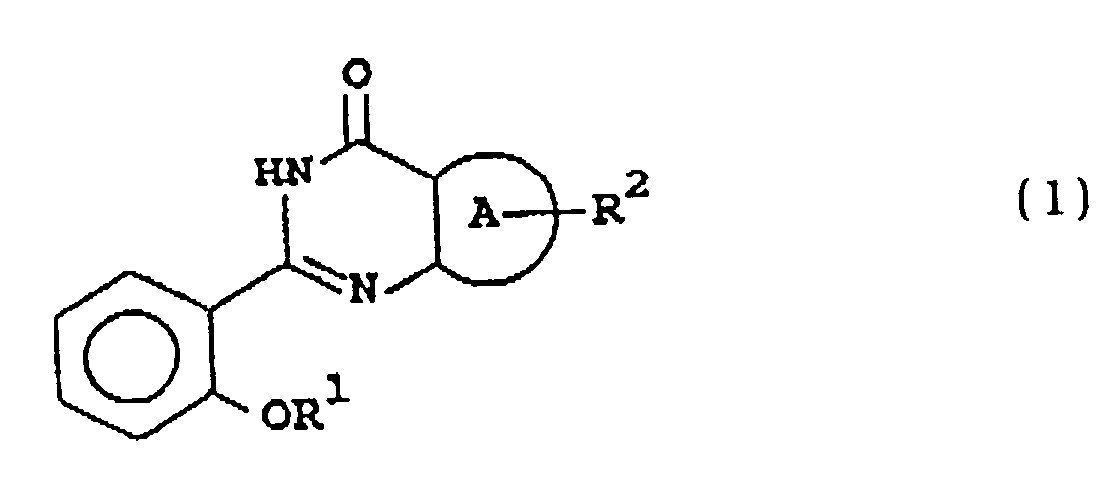 R¹ est un groupe alkyle en C₁₋₆, alcényle en C₂₋₆, cycloalkyl(en C₃₋₅)-alkyle en C₁₋₆ ou alkyle en C₁₋₆ substitué par 1 à 6 atomes de fluor;R² est un groupe alkylthio en C₁₋₆, alkylsulfonyle en C₁₋₆, alcoxy en C₁₋₆, hydroxy, un atome d'hydrogène, un groupe hydrazino, alkyle en C₁₋₆, phényle, -NHCOR³ dans lequel R³ est un atome d'hydrogène ou un groupe alkyle en C₁₋₆, ou - NR⁴R⁵, dans lequel R⁴ et R⁵ forment ensemble avec l'atome d'azote auquel ils sont fixés, un cycle pyrrolidino, pipéridino, hexahydroazépino, morpholino ou pipérazino ou bien R⁴ et R⁵ sont indépendamment un atome d'hydrogène un groupe cycloalkyle en C₃₋₅ ou alkyle en C₁₋₆ qui est éventuellement substitué par un groupe -CF₃, phényle, -S(O)n-alkyle en C₁₋₆ dans lequel n est 0, 1 ou 2, -OR⁶, -CO₂R⁷ ou -NR⁸R⁹ dans lesquels R₆ à R₉ sont indépendamment un atome d'hydrogène ou un groupe alkyle en C₁₋₆, à condition que l'atome de carbone adjacent à l'atome d'azote ne soit pas substitué par ces groupes -S(O)n-alkyle en C₁₋₆, -OR⁶ ou - NR⁸R⁹; et
est un cycle représenté par la sous-formule (a) ou (b) :
- Composé suivant la revendication 1, dans lequel R¹ est un groupe alkyle en C₂₋₅.
- Composé suivant la revendication 1, dans lequel R¹ est un groupe n-propyle.
- Composé suivant l'une quelconque des revendications 1 à 3, dans lequel R² est un groupe alkylthio en C₁₋₆, alkylsulfonyle en C₁₋₆ ou alcoxy en C₁₋₆.
- Composé suivant l'une quelconque des revendications 1 à 3, dans lequel R² est un atome d'hydrogène. un groupe hydroxy ou hydrazino.
- Composé suivant l'une quelconque des revendications 1 à 3, dans lequel R² est un groupe phényle ou alkyle en C₁₋₆.
- Composé suivant l'une quelconque des revendications 1 à 3, dans lequel R² est un groupe -NHCOR³ ou bien -NR⁴R⁵.
- Composé suivant l'une quelconque des revendications 1 à 7, dans lequel

- Composé suivant l'une quelconque des revendications 1 à 7, dans lequel

- Composé suivant la revendication 1, qui est :
la 7-méthylthio-4-oxo-2-(2-propoxyphényl)-3,4-dihydropyrimido[4,5-d]-pyrimidine;
la 7-méthylthio-4-oxo-2-(2-éthoxyphényl)-3,4-dihydropyrimido[4,5-d]-pyrimidine;
la 7-méthylthio-4-oxo-2-(2-méthoxyphényl)-3,4-dihydropyrimido[4,5-d]-pyrimidine;
la 7-méthylthio-4-oxo-2-(2-isobutoxyphényl)-3,4-dihydropyrimido [4,5-d]-pyrimidine;
la 7-méthylthio-4-oxo-2-(2-cyclopropylméthoxyphényl)-3,4-dihydropyrimido-[4,5-d]-pyrimidine;
la 7-méthylthio-4-oxo-2-(2-allyloxyphényl)-3,4-dihydropyrimido[4,5-d]-pyrimidine;
la 7-amino-4-oxo-2-(2-propoxyphényl)-3,4-dihydropyrimido-[4,5-d]-pyrimidine;
la 7-méthylamino-4-oxo-2-(2-propoxyphényl)-3,4-dihydropyrimido-[4,5-d]-pyrimidine;
la 7-diméthylamino-4-oxo-2-(2-propoxyphényl)-3,4-dihydropyrimido-[4,5-d]-pyrimidine;
la 7-hydrazino-4-oxo-2-(2-propoxyphényl)-3,4-dihydropyrimido[4,5-d]-pyrimidine;
la 4-oxo-2-(2-propoxyphényl)-3,4-dihydropyrimido-[4,5-d]-pyrimidine;
la 7-éthylamino-4-oxo-2-(2-propoxyphényl)-3,4-dihydropyrimido-[4,5-d]-pyrimidine;
la 7-(2-hydroxyéthylamino)-4-oxo-2-(2-propoxyphényl)-3,4-dihydropyrimido-[4,5-d]-pyrimidine;
la 7-éthyl-4-oxo-2-(2-propoxyphényl)-3,4-dihydropyrimido-[4,5-d]-pyrimidine;
la 7-méthylamino-4-oxo-2-(2-méthoxyphényl)-3,4-dihydropyrimido-[4,5-d]-pyrimidine;
la 7-phényl-4-oxo-2-(2-propoxyphényl)-3,4-dihydropyrimido-[4,5-d]-pyrimidine;
la 7-morpholino-4-oxo-2-(2-propoxyphényl)-3,4-dihydropyrimido-[4,5-d]-pyrimidine:
la 7-cyclopropylamino-4-oxo-2-(2-propoxyphényl)-3,4-dihydropyrimido-[4,5-d]-pyrimidine;
la 7-acétamido-4-oxo-2-(2-propoxyphényl)-3,4-dihydropyrimido-[4,5-d]-pyrimidine;
la 7-propylamino-4-oxo-2-(2-propoxyphényl)-3,4-dihydropyrimido-[4,5-d]-pyrimidine;
la 7-(3-hydroxypropylamino)-4-oxo-2-(2-propoxyphényl)-3,4-dihydropyrimido-[4,5-d]-pyrimidine;
la 7-(2-méthoxyéthylamino)-4-oxo-2-(2-propoxyphényl)-3,4-dihydropyrimido-[4,5-d]-pyrimidine;
la 7-(2-diméthylaminoéthylamino)-4-oxo-2-(2-propoxyphényl)-3,4-dihydropyrimido-[4,5-d]pyrimidine;
la 7-(2-hydroxypropylamino)-4-oxo-2-(2-propoxyphényl)-3,4-dihydropyrimido-[4,5-d]-pyrimidine;
la 7-(3-méthylthiopropylamino)-4-oxo-2-(2-propoxyphényl)3,4-dihydropyrimido-[4,5-d]-pyrimidine;
la 7-(2-aminoéthylamino)-4-oxo-2-(2-propoxyphényl)-3,4-dihydropyrimido-[4,5-d]-pyrimidine;
la 7-(3-méthylsulfinylpropylamino)-4-oxo-2-(2-propoxyphényl)-3,4-dihydropyrimido-[4,5-d]-pyrimidine;
la 7-(3-méthylsulfonylpropylamino)-4-oxo-2-(2-propoxyphényl)-3,4-dihydropyrimido-[4,5-d]-pyrimidine;
la 4,7-dioxo-2-(2-propoxyphényl)-3,4,7,8-tétrahydropyrimido-[4,5-d]-pyrimidine;
la 7-méthylsulfonyl-4-oxo-2-(2-propoxyphényl)-3,4-dihydropyrimido-[4,5-d]-pyrimidine;
la 7-diéthylamino-4-oxo-2-(2-propoxyphényl)-3,4-dihydropyrimido-[4,5-d]-pyrimidine;
la 7-(2-éthoxycarbonyléthylamino)-4-oxo-2-(2-propoxyphényl)-3,4-dihydropyrimido-[4,5-d]-pyrimidine;
la 7-(éthoxycarbonylméthylamino)-4-oxo-2-(2-propoxyphényl)-3,4-dihydropyrimido[4,5-d]-pyrimidine;
la 7-(2-carboxyéthylamino)-4-oxo-2-(2-propoxyphényl)-3,4-dihydropyrimido-[4,5-d]-pyrimidine;
la 7-(carboxyméthylamino)-4-oxo-2-(2-propoxyphényl)-3,4-dihydropyrimido-[4,5-d]-pyrimidine;
la 7-éthoxy-4-oxo-2-(2-propoxyphényl)-3,4-dihydropyrimido-[4,5-d]-pyrimidine;
la 7-méthoxy-4-oxo-2-(2-propoxyphényl)-3,4-dihydropyrimido-[4,5-d]-pyrimidine;
la 7-(2,2,2-trifluoroéthylamino)-4-oxo-2-(2-propoxyphényl)-3,4-dihydropyrimido-[4,5-d]-pyrimidine;
la 7-propoxy-4-oxo-2-(2-propoxyphényl)-3,4-dihydropyrimido-[4,5-d]-pyrimidine;
la 7-(N-éthyl-N-hydroxyéthylamino)-4-oxo-2-(2-propoxyphényl)-3,4-dihydropyrimido-[4,5-d]-pyrimidine:
la 7-dipropylamino-4-oxo-2-(2-propoxyphényl)-3,4-dihydropyrimido-[4,5-d]-pyrimidine;
la 7-(2-phénéthylamino)-4-oxo-2-(2-propoxyphényl)-3,4-dihydropyrimido-[4,5-d]-pyrimidine ou
la 4-oxo-2-(2-propoxyphényl)-3,4-dihydropyrimido-[5,4-d]-pyrimidine,
ou un sel de celles-ci acceptable du point de vue pharmaceutique. - Composé suivant l'une quelconque des revendications 1 à 10, utilisable comme médicament.
- Composition pharmaceutique, qui comprend un composé suivant l'une quelconque des revendications 1 à 10 et un support acceptable du point de vue pharmaceutique.
- Procédé pour préparer un composé de formule (1) ou un sel de celui-ci acceptable du point de vue pharmaceutique tel que défini dans la revendication 1, qui comprend :(a) la cyclisation d'un composé de formule (2) :

 (b) la cyclisation d'un composé de formule (3) :et ensuite, si cela est nécessaire :
 - la conversion d'un groupe R¹⁰ en un groupe R²;- la formation éventuelle d'un sel acceptable du point de vue pharmaceutique.
 - Composé de formule (2) telle que définie la revendication 13.
- Composé de formule (3) telle que définie la revendication 13.
Priority Applications (1)
| Application Number | Priority Date | Filing Date | Title |
|---|---|---|---|
| AT89305910T ATE90099T1 (de) | 1988-06-16 | 1989-06-12 | Pyrimidopyrimidinderivate. |
Applications Claiming Priority (2)
| Application Number | Priority Date | Filing Date | Title |
|---|---|---|---|
| GB8814352 | 1988-06-16 | ||
| GB888814352A GB8814352D0 (en) | 1988-06-16 | 1988-06-16 | Chemical compounds |
Publications (2)
| Publication Number | Publication Date |
|---|---|
| EP0351058A1 EP0351058A1 (fr) | 1990-01-17 |
| EP0351058B1 true EP0351058B1 (fr) | 1993-06-02 |
Family
ID=10638822
Family Applications (1)
| Application Number | Title | Priority Date | Filing Date |
|---|---|---|---|
| EP89305910A Expired - Lifetime EP0351058B1 (fr) | 1988-06-16 | 1989-06-12 | Dérivés de pyrimidopyrimidine |
Country Status (13)
| Country | Link |
|---|---|
| US (1) | US5162316A (fr) |
| EP (1) | EP0351058B1 (fr) |
| JP (1) | JP2744070B2 (fr) |
| AT (1) | ATE90099T1 (fr) |
| AU (1) | AU612853B2 (fr) |
| CA (1) | CA1339573C (fr) |
| DE (1) | DE68906834T2 (fr) |
| DK (1) | DK297189A (fr) |
| ES (1) | ES2055056T3 (fr) |
| GB (1) | GB8814352D0 (fr) |
| IE (1) | IE63700B1 (fr) |
| PT (1) | PT90890B (fr) |
| ZA (1) | ZA894564B (fr) |
Families Citing this family (54)
| Publication number | Priority date | Publication date | Assignee | Title |
|---|---|---|---|---|
| GB8928346D0 (en) * | 1989-12-15 | 1990-02-21 | Smith Kline French Lab | Chemical compounds |
| US5250534A (en) * | 1990-06-20 | 1993-10-05 | Pfizer Inc. | Pyrazolopyrimidinone antianginal agents |
| GB9114760D0 (en) * | 1991-07-09 | 1991-08-28 | Pfizer Ltd | Therapeutic agents |
| US5543147A (en) * | 1993-01-20 | 1996-08-06 | Nikolai B. Leonidov | Crystalline modification of 2,4-dioxo-6-methyl-1,2,3,4-tetrahydropyrimidine, a method for the preparation thereof and a medicinal preparation based on it |
| US5776962A (en) * | 1994-08-03 | 1998-07-07 | Cell Pathways, Inc. | Lactone compounds for treating patient with precancerous lesions |
| US5696159A (en) * | 1994-08-03 | 1997-12-09 | Cell Pathways, Inc. | Lactone compounds for treating patients with precancerous lesions |
| US6046216A (en) * | 1995-06-07 | 2000-04-04 | Cell Pathways, Inc. | Method of treating a patient having precancerous lesions with phenyl pyridinone derivatives |
| US6262059B1 (en) | 1995-06-07 | 2001-07-17 | Cell Pathways, Inc. | Method of treating a patient having precancerous lesions with quinazoline derivatives |
| US6046206A (en) * | 1995-06-07 | 2000-04-04 | Cell Pathways, Inc. | Method of treating a patient having a precancerous lesions with amide quinazoline derivatives |
| US5874440A (en) * | 1995-06-07 | 1999-02-23 | Cell Pathways, Inc. | Method of treating a patient having precancerous lesions with phenyl pyrimidinone derivatives |
| US6232312B1 (en) | 1995-06-07 | 2001-05-15 | Cell Pathways, Inc. | Method for treating patient having precancerous lesions with a combination of pyrimidopyrimidine derivatives and esters and amides of substituted indenyl acetic acides |
| US6200980B1 (en) | 1995-06-07 | 2001-03-13 | Cell Pathways, Inc. | Method of treating a patient having precancerous lesions with phenyl purinone derivatives |
| US6060477A (en) * | 1995-06-07 | 2000-05-09 | Cell Pathways, Inc. | Method of treating a patient having precancerous lesions with phenyl cycloamino pyrimidinone derivatives |
| US5858694A (en) * | 1997-05-30 | 1999-01-12 | Cell Pathways, Inc. | Method for identifying compounds for inhibition of cancerous lesions |
| CA2238283C (fr) | 1997-05-30 | 2002-08-20 | Cell Pathways, Inc. | Methode d'identification de composes visant a inhiber les lesions neoplasiques, compositions pharmaceutiques a prtir de ces composes et compositions pour traiter les lesions neoplasiques |
| TR200001338T2 (tr) | 1997-11-12 | 2000-08-21 | Bayer Aktiengesellschaft | 2-Fenil-ikameli imidazotriazinonlar |
| US5852035A (en) * | 1997-12-12 | 1998-12-22 | Cell Pathways, Inc. | Method for inhibiting neoplastic cells and related conditions by exposure to substituted N- arylmethyl and heterocyclmethyl-1H-pyrazolo (3,4-B) quinolin-4-amines |
| US6046199A (en) * | 1998-01-14 | 2000-04-04 | Cell Pathways, Inc. | Method of inhibiting neoplastic cells with tetracyclic pyrido[3,4-B]indole derivatives |
| US6410584B1 (en) | 1998-01-14 | 2002-06-25 | Cell Pathways, Inc. | Method for inhibiting neoplastic cells with indole derivatives |
| US5942520A (en) * | 1998-01-27 | 1999-08-24 | Cell Pathways, Inc. | Method for inhibiting neoplastic cells by exposure to substituted N-cycloalkylmethyl-1-H-pyrazolo (3,4-B) quinolone-4 amines |
| US5990117A (en) * | 1998-04-15 | 1999-11-23 | Cell Pathways, Inc. | Method for inhibiting neoplastic cells and related conditions by exposure to quinazoline derivatives |
| US6180629B1 (en) | 1998-08-14 | 2001-01-30 | Cell Pathways, Inc. | [4,5]-Fused-1,3-disubstituted-1,2-diazine-6-one derivatives with nitrogen containing substitutents in position one for the treatment of neoplasia |
| US6124303A (en) * | 1998-09-11 | 2000-09-26 | Cell Pathways, Inc. | Method for inhibiting neoplastic cells and related conditions by exposure to 9-substituted 2-(2-N-aloxyphenyl) purin-6-ones |
| US6268372B1 (en) | 1998-09-11 | 2001-07-31 | Cell Pathways, Inc. | Method for inhibiting neoplastic cells and related conditions by exposure to 2,9-disubstituted purin-6-ones |
| US6130053A (en) * | 1999-08-03 | 2000-10-10 | Cell Pathways, Inc. | Method for selecting compounds for inhibition of neoplastic lesions |
| US6200771B1 (en) | 1998-10-15 | 2001-03-13 | Cell Pathways, Inc. | Method of using a novel phosphodiesterase in pharmaceutical screeing to identify compounds for treatment of neoplasia |
| US6133271A (en) * | 1998-11-19 | 2000-10-17 | Cell Pathways, Inc. | Method for inhibiting neoplastic cells and related conditions by exposure thienopyrimidine derivatives |
| US6187779B1 (en) | 1998-11-20 | 2001-02-13 | Cell Pathways, Inc. | Method for inhibiting neoplastic cells and related conditions by exposure to 2,8-disubstituted quinazoline derivatives |
| US6369092B1 (en) | 1998-11-23 | 2002-04-09 | Cell Pathways, Inc. | Method for treating neoplasia by exposure to substituted benzimidazole derivatives |
| US6034099A (en) * | 1998-11-24 | 2000-03-07 | Cell Pathways, Inc. | Method for inhibiting neoplastic lesions by administering 4-(arylmethylene)- 2, 3- dihydro-pyrazol-3-ones |
| US6486155B1 (en) | 1998-11-24 | 2002-11-26 | Cell Pathways Inc | Method of inhibiting neoplastic cells with isoquinoline derivatives |
| US6077842A (en) * | 1998-11-24 | 2000-06-20 | Cell Pathways, Inc. | Method of inhibiting neoplastic cells with pyrazolopyridylpyridazinone derivatives |
| US6025394A (en) | 1999-01-29 | 2000-02-15 | Cell Pathways, Inc. | Method for treating patients with acne by administering substituted sulfonyl indenyl acetic acids, amides and alcohols |
| US6020379A (en) * | 1999-02-19 | 2000-02-01 | Cell Pathways, Inc. | Position 7 substituted indenyl-3-acetic acid derivatives and amides thereof for the treatment of neoplasia |
| PL357494A1 (en) | 1999-10-21 | 2004-07-26 | F.Hoffmann-La Roche Ag | Alkylamino substituted bicyclic nitrogen heterocycles as inhibitors of p38 protein kinase |
| KR100523120B1 (ko) | 1999-10-21 | 2005-10-20 | 에프. 호프만-라 로슈 아게 | P38 단백질 키나제 저해제로서 헤테로알킬아미노-치환된이환 질소 헤테로환 |
| US6555547B1 (en) | 2000-02-28 | 2003-04-29 | Cell Pathways, Inc. | Method for treating a patient with neoplasia by treatment with a vinca alkaloid derivative |
| US6569638B1 (en) | 2000-03-03 | 2003-05-27 | Cell Pathways, Inc | Method for screening compounds for the treatment of neoplasia |
| US6479493B1 (en) | 2001-08-23 | 2002-11-12 | Cell Pathways, Inc. | Methods for treatment of type I diabetes |
| EP1312363A1 (fr) * | 2001-09-28 | 2003-05-21 | Pfizer Products Inc. | Méthode de traitement et kit comprenant un secrétagogue d'hormone de croissance |
| US7342884B2 (en) * | 2002-03-13 | 2008-03-11 | Harmonic, Inc. | Method and apparatus for one directional communications in bidirectional communications channel |
| US6962940B2 (en) | 2002-03-20 | 2005-11-08 | Celgene Corporation | (+)-2-[1-(3-Ethoxy-4-methoxyphenyl)-2-methylsulfonylethyl]-4-acetylaminoisoindoline-1,3-dione: methods of using and compositions thereof |
| US7276529B2 (en) | 2002-03-20 | 2007-10-02 | Celgene Corporation | Methods of the treatment or prevention of exercise-induced asthma using (+)-2-[1-(3-ethoxy-4-methoxyphenyl)-2-methylsulfonylethyl]-4-acetylaminoisoindoline-1,3-dione |
| US7893101B2 (en) | 2002-03-20 | 2011-02-22 | Celgene Corporation | Solid forms comprising (+)-2-[1-(3-ethoxy-4-methoxyphenyl)-2-methylsulfonylethyl]-4-acetylaminoisoindoline-1,3-dione, compositions thereof, and uses thereof |
| US7208516B2 (en) | 2002-03-20 | 2007-04-24 | Celgene Corporation | Methods of the treatment of psoriatic arthritis using (+)-2-[1-(3-ethoxy-4-methoxyphenyl)-2-methylsulfonylethyl]-4-acetylaminoisoindoline-1,3-dione |
| DE10232113A1 (de) | 2002-07-16 | 2004-01-29 | Bayer Ag | Vardenafil Hydrochlorid Trihydrat enthaltende Arzneimittel |
| DE102004002557A1 (de) * | 2004-01-17 | 2005-08-04 | Boehringer Ingelheim Pharma Gmbh & Co. Kg | Verwendung von substituierten Pyrimido(5,4-d)pyrimidinen zur Behandlung von Atemwegserkrankungen |
| DE102005009240A1 (de) | 2005-03-01 | 2006-09-07 | Bayer Healthcare Ag | Arzneiformen mit verbesserten pharmakokinetischen Eigenschaften |
| GB0601951D0 (en) | 2006-01-31 | 2006-03-15 | Novartis Ag | Organic compounds |
| WO2010056710A1 (fr) * | 2008-11-11 | 2010-05-20 | Biovista, Inc. | Compositions et procédés pour traiter des maladies ophtalmiques |
| WO2011081915A2 (fr) * | 2009-12-15 | 2011-07-07 | Cebix Inc. | Procédés pour traiter un dysfonctionnement érectile chez des patients souffrant de diabète insulino-dépendant |
| JP6687550B2 (ja) | 2014-06-23 | 2020-04-22 | セルジーン コーポレイション | 肝疾患又は肝機能異常を治療するためのアプレミラスト |
| JP2025513455A (ja) | 2022-04-22 | 2025-04-24 | バーテックス ファーマシューティカルズ インコーポレイテッド | 疼痛の治療のためのヘテロアリール化合物 |
| WO2024057013A1 (fr) * | 2022-09-12 | 2024-03-21 | Exscientia Ai Limited | Modulateurs de nlrp3 |
Citations (1)
| Publication number | Priority date | Publication date | Assignee | Title |
|---|---|---|---|---|
| GB1543874A (en) * | 1977-04-19 | 1979-04-11 | Erba Carlo Spa | 2-disubstituted phenyl-3,4-dihydro-4-oxoquinazoline derivatives and process for their preparation |
Family Cites Families (12)
| Publication number | Priority date | Publication date | Assignee | Title |
|---|---|---|---|---|
| DE1168439B (de) * | 1959-06-25 | 1964-04-23 | Thomae Gmbh Dr K | Verfahren zur Herstellung von Estern von Hydroxyalkylamino-pyrimido [5, 4-d] pyrimidinen |
| US3138592A (en) * | 1962-10-22 | 1964-06-23 | American Home Prod | 2-aryl-4, 7-diamino-pteridine-6-carboxamides |
| DE1795722C3 (de) * | 1963-03-09 | 1981-10-29 | Dr. Karl Thomae Gmbh, 7950 Biberach | Verfahren zur Herstellung von basisch substituierten Pyrimido- eckige Klammer auf 5,4-d eckige Klammer zu -pyrimidinen |
| DE1620561A1 (de) * | 1966-08-19 | 1970-05-14 | Thomae Gmbh Dr K | Verfahren zur Herstellung von neuen 2-Phenylpyrimido[4,5-d]pyrimidinen |
| US3772292A (en) * | 1970-12-30 | 1973-11-13 | Eastman Kodak Co | N-hydroxymethyl compounds,compositions containing such compounds and cellulose-containing textile materials treated therewith |
| US3830812A (en) * | 1972-07-10 | 1974-08-20 | Fmc Corp | Herbicidal and growth-regulant compositions based on novel pyrimido(4,5-d)pyrimidinones |
| US4425346A (en) * | 1980-08-01 | 1984-01-10 | Smith And Nephew Associated Companies Limited | Pharmaceutical compositions |
| EP0175652A3 (fr) * | 1984-09-20 | 1988-07-20 | Ciba-Geigy Ag | 5-Acylaminopyrimidines |
| CA1303037C (fr) * | 1987-02-02 | 1992-06-09 | Smith Kline & French Laboratories Limited | Derives de purinone utilises comme bronchodilatateurs,vasodilatateurs et agents anti-allergiques |
| DE68908786T2 (de) * | 1988-06-16 | 1994-03-17 | Smith Kline French Lab | Condensierte Pyrimidinderivate, Verfahren und Zwischenprodukte zu ihrer Herstellung und diese enthaltende pharmazeutische Zubereitungen. |
| US5075310A (en) * | 1988-07-01 | 1991-12-24 | Smith Kline & French Laboratories, Ltd. | Pyrimidone derivatives as bronchodilators |
| US5034393A (en) * | 1989-07-27 | 1991-07-23 | Dowelanco | Fungicidal use of pyridopyrimidine, pteridine, pyrimidopyrimidine, pyrimidopyridazine, and pyrimido-1,2,4-triazine derivatives |
-
1988
- 1988-06-16 GB GB888814352A patent/GB8814352D0/en active Pending
-
1989
- 1989-06-12 CA CA000602442A patent/CA1339573C/fr not_active Expired - Fee Related
- 1989-06-12 EP EP89305910A patent/EP0351058B1/fr not_active Expired - Lifetime
- 1989-06-12 DE DE89305910T patent/DE68906834T2/de not_active Expired - Fee Related
- 1989-06-12 ES ES89305910T patent/ES2055056T3/es not_active Expired - Lifetime
- 1989-06-12 AT AT89305910T patent/ATE90099T1/de not_active IP Right Cessation
- 1989-06-14 AU AU36358/89A patent/AU612853B2/en not_active Ceased
- 1989-06-15 ZA ZA894564A patent/ZA894564B/xx unknown
- 1989-06-15 DK DK297189A patent/DK297189A/da not_active Application Discontinuation
- 1989-06-15 IE IE193789A patent/IE63700B1/en not_active IP Right Cessation
- 1989-06-16 PT PT90890A patent/PT90890B/pt not_active IP Right Cessation
- 1989-06-16 JP JP1155561A patent/JP2744070B2/ja not_active Expired - Lifetime
-
1991
- 1991-03-13 US US07/669,691 patent/US5162316A/en not_active Expired - Fee Related
Patent Citations (1)
| Publication number | Priority date | Publication date | Assignee | Title |
|---|---|---|---|---|
| GB1543874A (en) * | 1977-04-19 | 1979-04-11 | Erba Carlo Spa | 2-disubstituted phenyl-3,4-dihydro-4-oxoquinazoline derivatives and process for their preparation |
Also Published As
| Publication number | Publication date |
|---|---|
| PT90890A (pt) | 1989-12-29 |
| AU612853B2 (en) | 1991-07-18 |
| US5162316A (en) | 1992-11-10 |
| EP0351058A1 (fr) | 1990-01-17 |
| HK1005590A1 (en) | 1999-01-15 |
| DK297189A (da) | 1989-12-17 |
| AU3635889A (en) | 1990-01-04 |
| DE68906834T2 (de) | 1993-12-09 |
| DK297189D0 (da) | 1989-06-15 |
| ES2055056T3 (es) | 1994-08-16 |
| DE68906834D1 (en) | 1993-07-08 |
| ATE90099T1 (de) | 1993-06-15 |
| GB8814352D0 (en) | 1988-07-20 |
| JP2744070B2 (ja) | 1998-04-28 |
| PT90890B (pt) | 1994-11-30 |
| CA1339573C (fr) | 1997-12-09 |
| IE891937L (en) | 1989-12-16 |
| ZA894564B (en) | 1991-04-24 |
| JPH0240388A (ja) | 1990-02-09 |
| IE63700B1 (en) | 1995-05-31 |
Similar Documents
| Publication | Publication Date | Title |
|---|---|---|
| CA1339573C (fr) | Derives du pyrimido ¬4,5-d| pyrimidine utilises comme bronchodilateurs ators | |
| EP0347146B1 (fr) | Dérivés de pyrimidine condensés, procédé et intermédiaires pour leur préparation et compositions pharmaceutiques les contenant | |
| AU613503B2 (en) | 2-phenyl-purin-6-one derivatives for use as bronchodilators and vasodilators | |
| EP0371731B1 (fr) | Dérivés de quinazolinone | |
| EP0349239B1 (fr) | Dérivés condensés de la pyrimidine, procédé et intermédiaires pour leur préparation et compositions pharmaceutiques les contenant | |
| CA1303037C (fr) | Derives de purinone utilises comme bronchodilatateurs,vasodilatateurs et agents anti-allergiques | |
| US5254571A (en) | Chemical compounds | |
| US4722929A (en) | Novel 2-phenyl-imidazoles and pharmaceutical compositions containing same | |
| EP0395328A2 (fr) | Dérivés de phénylpyrimidone et leur utilisation en taut qu'agents thérapeutiques | |
| BG62933B1 (bg) | Нови химични съединения, притежаващи pde-iv(фосфодиестераза) инхибиторна активност | |
| KR19980702891A (ko) | 6-치환된 피라졸로[3,4-디]피리미딘-4-온 및 그의 조성물 및그의 사용 방법 | |
| EP0442204A2 (fr) | Dérivés de la pyrimidopyrimidine, procédé et intermédiaires pour leur préparation et compositions pharmaceutiques les contenant | |
| EP0347027B1 (fr) | Dérivés de phénylpyridine, procédés pour leur préparation et compositions pharmaceutiques les contenant | |
| EP0189103A2 (fr) | Pyrrolo-benzimidazoles, procédé pour leur préparation, médicaments les contenant et intermédiaires | |
| EP0400799B1 (fr) | Dérivés de la phénylpyrimidone | |
| US5290933A (en) | Phenylpyrimidone derivatives | |
| HK1005590B (en) | Pyrimidopyrimidine derivatives | |
| EP0234557B1 (fr) | 3-(1H-tétrazol-5-yl)thiéno[2,3-d]pyrimidin-4(3H)-ones | |
| JPS63196585A (ja) | プリノン誘導体 |
Legal Events
| Date | Code | Title | Description |
|---|---|---|---|
| PUAI | Public reference made under article 153(3) epc to a published international application that has entered the european phase |
Free format text: ORIGINAL CODE: 0009012 |
|
| 17P | Request for examination filed |
Effective date: 19890622 |
|
| AK | Designated contracting states |
Kind code of ref document: A1 Designated state(s): AT BE CH DE ES FR GB GR IT LI LU NL SE |
|
| 17Q | First examination report despatched |
Effective date: 19920325 |
|
| GRAA | (expected) grant |
Free format text: ORIGINAL CODE: 0009210 |
|
| AK | Designated contracting states |
Kind code of ref document: B1 Designated state(s): AT BE CH DE ES FR GB GR IT LI LU NL SE |
|
| REF | Corresponds to: |
Ref document number: 90099 Country of ref document: AT Date of ref document: 19930615 Kind code of ref document: T |
|
| ITF | It: translation for a ep patent filed | ||
| REF | Corresponds to: |
Ref document number: 68906834 Country of ref document: DE Date of ref document: 19930708 |
|
| ET | Fr: translation filed | ||
| REG | Reference to a national code |
Ref country code: GR Ref legal event code: FG4A Free format text: 3008492 |
|
| PLBE | No opposition filed within time limit |
Free format text: ORIGINAL CODE: 0009261 |
|
| STAA | Information on the status of an ep patent application or granted ep patent |
Free format text: STATUS: NO OPPOSITION FILED WITHIN TIME LIMIT |
|
| 26N | No opposition filed | ||
| EPTA | Lu: last paid annual fee | ||
| REG | Reference to a national code |
Ref country code: ES Ref legal event code: FG2A Ref document number: 2055056 Country of ref document: ES Kind code of ref document: T3 |
|
| EAL | Se: european patent in force in sweden |
Ref document number: 89305910.5 |
|
| PGFP | Annual fee paid to national office [announced via postgrant information from national office to epo] |
Ref country code: NL Payment date: 20010319 Year of fee payment: 13 |
|
| PGFP | Annual fee paid to national office [announced via postgrant information from national office to epo] |
Ref country code: LU Payment date: 20010327 Year of fee payment: 13 |
|
| PGFP | Annual fee paid to national office [announced via postgrant information from national office to epo] |
Ref country code: SE Payment date: 20010405 Year of fee payment: 13 |
|
| PGFP | Annual fee paid to national office [announced via postgrant information from national office to epo] |
Ref country code: GR Payment date: 20010420 Year of fee payment: 13 |
|
| PGFP | Annual fee paid to national office [announced via postgrant information from national office to epo] |
Ref country code: GB Payment date: 20010502 Year of fee payment: 13 |
|
| PGFP | Annual fee paid to national office [announced via postgrant information from national office to epo] |
Ref country code: AT Payment date: 20010503 Year of fee payment: 13 |
|
| PGFP | Annual fee paid to national office [announced via postgrant information from national office to epo] |
Ref country code: FR Payment date: 20010531 Year of fee payment: 13 |
|
| PGFP | Annual fee paid to national office [announced via postgrant information from national office to epo] |
Ref country code: ES Payment date: 20010614 Year of fee payment: 13 |
|
| PGFP | Annual fee paid to national office [announced via postgrant information from national office to epo] |
Ref country code: DE Payment date: 20010627 Year of fee payment: 13 Ref country code: CH Payment date: 20010627 Year of fee payment: 13 |
|
| PGFP | Annual fee paid to national office [announced via postgrant information from national office to epo] |
Ref country code: BE Payment date: 20010713 Year of fee payment: 13 |
|
| REG | Reference to a national code |
Ref country code: GB Ref legal event code: IF02 |
|
| PG25 | Lapsed in a contracting state [announced via postgrant information from national office to epo] |
Ref country code: LU Free format text: LAPSE BECAUSE OF NON-PAYMENT OF DUE FEES Effective date: 20020612 Ref country code: GB Free format text: LAPSE BECAUSE OF NON-PAYMENT OF DUE FEES Effective date: 20020612 Ref country code: AT Free format text: LAPSE BECAUSE OF NON-PAYMENT OF DUE FEES Effective date: 20020612 |
|
| PG25 | Lapsed in a contracting state [announced via postgrant information from national office to epo] |
Ref country code: SE Free format text: LAPSE BECAUSE OF NON-PAYMENT OF DUE FEES Effective date: 20020613 Ref country code: ES Free format text: LAPSE BECAUSE OF NON-PAYMENT OF DUE FEES Effective date: 20020613 |
|
| PG25 | Lapsed in a contracting state [announced via postgrant information from national office to epo] |
Ref country code: LI Free format text: LAPSE BECAUSE OF NON-PAYMENT OF DUE FEES Effective date: 20020630 Ref country code: CH Free format text: LAPSE BECAUSE OF NON-PAYMENT OF DUE FEES Effective date: 20020630 Ref country code: BE Free format text: LAPSE BECAUSE OF NON-PAYMENT OF DUE FEES Effective date: 20020630 |
|
| BERE | Be: lapsed |
Owner name: *SMITH KLINE & FRENCH LABORATORIES LTD Effective date: 20020630 |
|
| PG25 | Lapsed in a contracting state [announced via postgrant information from national office to epo] |
Ref country code: GR Free format text: LAPSE BECAUSE OF NON-PAYMENT OF DUE FEES Effective date: 20021231 |
|
| PG25 | Lapsed in a contracting state [announced via postgrant information from national office to epo] |
Ref country code: NL Free format text: LAPSE BECAUSE OF NON-PAYMENT OF DUE FEES Effective date: 20030101 Ref country code: DE Free format text: LAPSE BECAUSE OF NON-PAYMENT OF DUE FEES Effective date: 20030101 |
|
| GBPC | Gb: european patent ceased through non-payment of renewal fee |
Effective date: 20020612 |
|
| EUG | Se: european patent has lapsed | ||
| REG | Reference to a national code |
Ref country code: CH Ref legal event code: PL |
|
| PG25 | Lapsed in a contracting state [announced via postgrant information from national office to epo] |
Ref country code: FR Free format text: LAPSE BECAUSE OF NON-PAYMENT OF DUE FEES Effective date: 20030228 |
|
| NLV4 | Nl: lapsed or anulled due to non-payment of the annual fee |
Effective date: 20030101 |
|
| REG | Reference to a national code |
Ref country code: FR Ref legal event code: ST |
|
| REG | Reference to a national code |
Ref country code: ES Ref legal event code: FD2A Effective date: 20030711 |
|
| PG25 | Lapsed in a contracting state [announced via postgrant information from national office to epo] |
Ref country code: IT Free format text: LAPSE BECAUSE OF NON-PAYMENT OF DUE FEES;WARNING: LAPSES OF ITALIAN PATENTS WITH EFFECTIVE DATE BEFORE 2007 MAY HAVE OCCURRED AT ANY TIME BEFORE 2007. THE CORRECT EFFECTIVE DATE MAY BE DIFFERENT FROM THE ONE RECORDED. Effective date: 20050612 |