EP0351176A2 - Durch niedrige Schwere verbessertes Wachstum von Phthalocyaninpolymorphen - Google Patents
Durch niedrige Schwere verbessertes Wachstum von Phthalocyaninpolymorphen Download PDFInfo
- Publication number
- EP0351176A2 EP0351176A2 EP89307010A EP89307010A EP0351176A2 EP 0351176 A2 EP0351176 A2 EP 0351176A2 EP 89307010 A EP89307010 A EP 89307010A EP 89307010 A EP89307010 A EP 89307010A EP 0351176 A2 EP0351176 A2 EP 0351176A2
- Authority
- EP
- European Patent Office
- Prior art keywords
- cupc
- substrate
- chamber
- phthalocyanine
- layer
- Prior art date
- Legal status (The legal status is an assumption and is not a legal conclusion. Google has not performed a legal analysis and makes no representation as to the accuracy of the status listed.)
- Withdrawn
Links
- 230000005484 gravity Effects 0.000 title claims abstract description 59
- IEQIEDJGQAUEQZ-UHFFFAOYSA-N phthalocyanine Chemical compound N1C(N=C2C3=CC=CC=C3C(N=C3C4=CC=CC=C4C(=N4)N3)=N2)=C(C=CC=C2)C2=C1N=C1C2=CC=CC=C2C4=N1 IEQIEDJGQAUEQZ-UHFFFAOYSA-N 0.000 title claims abstract description 24
- 238000000034 method Methods 0.000 claims abstract description 65
- 230000008569 process Effects 0.000 claims abstract description 47
- 239000000758 substrate Substances 0.000 claims description 73
- 239000000463 material Substances 0.000 claims description 52
- 229910052751 metal Inorganic materials 0.000 claims description 27
- 239000002184 metal Substances 0.000 claims description 26
- 238000002441 X-ray diffraction Methods 0.000 claims description 22
- 238000010521 absorption reaction Methods 0.000 claims description 13
- 239000011368 organic material Substances 0.000 claims description 9
- 229910052802 copper Inorganic materials 0.000 claims description 7
- 238000010943 off-gassing Methods 0.000 claims description 7
- 230000003746 surface roughness Effects 0.000 claims description 7
- 150000002739 metals Chemical class 0.000 claims description 5
- 229910052759 nickel Inorganic materials 0.000 claims description 4
- 229910052697 platinum Inorganic materials 0.000 claims description 4
- 229910052782 aluminium Inorganic materials 0.000 claims description 3
- 125000003118 aryl group Chemical group 0.000 claims description 3
- -1 cycloaliphatic Chemical group 0.000 claims description 3
- 239000011147 inorganic material Substances 0.000 claims description 3
- 229910052742 iron Inorganic materials 0.000 claims description 3
- 238000012856 packing Methods 0.000 claims description 3
- 125000001931 aliphatic group Chemical group 0.000 claims description 2
- 229910052787 antimony Inorganic materials 0.000 claims description 2
- 239000000919 ceramic Substances 0.000 claims description 2
- 229910052804 chromium Inorganic materials 0.000 claims description 2
- 238000001816 cooling Methods 0.000 claims description 2
- 229910052732 germanium Inorganic materials 0.000 claims description 2
- 150000004820 halides Chemical class 0.000 claims description 2
- 229910052745 lead Inorganic materials 0.000 claims description 2
- 229910052748 manganese Inorganic materials 0.000 claims description 2
- 229910052758 niobium Inorganic materials 0.000 claims description 2
- 125000000449 nitro group Chemical group [O-][N+](*)=O 0.000 claims description 2
- 229910052763 palladium Inorganic materials 0.000 claims description 2
- 238000007789 sealing Methods 0.000 claims description 2
- 229910052718 tin Inorganic materials 0.000 claims description 2
- 229910052719 titanium Inorganic materials 0.000 claims description 2
- 229910052720 vanadium Inorganic materials 0.000 claims description 2
- 229910052725 zinc Inorganic materials 0.000 claims description 2
- 230000001747 exhibiting effect Effects 0.000 claims 1
- 125000001475 halogen functional group Chemical group 0.000 claims 1
- 239000007769 metal material Substances 0.000 claims 1
- 150000003346 selenoethers Chemical class 0.000 claims 1
- 125000001424 substituent group Chemical group 0.000 claims 1
- 150000003568 thioethers Chemical class 0.000 claims 1
- 239000010408 film Substances 0.000 description 84
- 239000010410 layer Substances 0.000 description 65
- XCJYREBRNVKWGJ-UHFFFAOYSA-N copper(II) phthalocyanine Chemical compound [Cu+2].C12=CC=CC=C2C(N=C2[N-]C(C3=CC=CC=C32)=N2)=NC1=NC([C]1C=CC=CC1=1)=NC=1N=C1[C]3C=CC=CC3=C2[N-]1 XCJYREBRNVKWGJ-UHFFFAOYSA-N 0.000 description 46
- 239000003708 ampul Substances 0.000 description 33
- 239000000523 sample Substances 0.000 description 30
- 239000007789 gas Substances 0.000 description 27
- 230000032258 transport Effects 0.000 description 22
- 238000001228 spectrum Methods 0.000 description 19
- 230000003287 optical effect Effects 0.000 description 18
- 239000010409 thin film Substances 0.000 description 16
- 238000012545 processing Methods 0.000 description 15
- 239000013078 crystal Substances 0.000 description 13
- 230000001133 acceleration Effects 0.000 description 12
- 230000000052 comparative effect Effects 0.000 description 12
- IJGRMHOSHXDMSA-UHFFFAOYSA-N Atomic nitrogen Chemical compound N#N IJGRMHOSHXDMSA-UHFFFAOYSA-N 0.000 description 10
- 239000000203 mixture Substances 0.000 description 10
- 239000000126 substance Substances 0.000 description 10
- 238000000576 coating method Methods 0.000 description 9
- 239000012071 phase Substances 0.000 description 9
- 239000013598 vector Substances 0.000 description 9
- 239000011248 coating agent Substances 0.000 description 8
- 239000010949 copper Substances 0.000 description 8
- 238000009792 diffusion process Methods 0.000 description 8
- 238000002474 experimental method Methods 0.000 description 8
- 101100398835 Caenorhabditis elegans leo-1 gene Proteins 0.000 description 7
- 239000000843 powder Substances 0.000 description 7
- 238000000859 sublimation Methods 0.000 description 7
- 230000008022 sublimation Effects 0.000 description 7
- 238000002061 vacuum sublimation Methods 0.000 description 7
- CURLTUGMZLYLDI-UHFFFAOYSA-N Carbon dioxide Chemical compound O=C=O CURLTUGMZLYLDI-UHFFFAOYSA-N 0.000 description 6
- 238000000572 ellipsometry Methods 0.000 description 6
- 238000005516 engineering process Methods 0.000 description 6
- 238000002329 infrared spectrum Methods 0.000 description 6
- 229910052757 nitrogen Inorganic materials 0.000 description 6
- 239000012159 carrier gas Substances 0.000 description 5
- 230000008859 change Effects 0.000 description 5
- 238000006243 chemical reaction Methods 0.000 description 5
- 230000010287 polarization Effects 0.000 description 5
- 230000035945 sensitivity Effects 0.000 description 5
- XKRFYHLGVUSROY-UHFFFAOYSA-N Argon Chemical compound [Ar] XKRFYHLGVUSROY-UHFFFAOYSA-N 0.000 description 4
- RYGMFSIKBFXOCR-UHFFFAOYSA-N Copper Chemical compound [Cu] RYGMFSIKBFXOCR-UHFFFAOYSA-N 0.000 description 4
- 238000000862 absorption spectrum Methods 0.000 description 4
- 238000005229 chemical vapour deposition Methods 0.000 description 4
- 150000001875 compounds Chemical class 0.000 description 4
- 238000000151 deposition Methods 0.000 description 4
- 230000008021 deposition Effects 0.000 description 4
- 230000000694 effects Effects 0.000 description 4
- 238000010438 heat treatment Methods 0.000 description 4
- 238000003384 imaging method Methods 0.000 description 4
- 229910044991 metal oxide Inorganic materials 0.000 description 4
- 150000004706 metal oxides Chemical class 0.000 description 4
- VNWKTOKETHGBQD-UHFFFAOYSA-N methane Chemical compound C VNWKTOKETHGBQD-UHFFFAOYSA-N 0.000 description 4
- PXHVJJICTQNCMI-UHFFFAOYSA-N nickel Substances [Ni] PXHVJJICTQNCMI-UHFFFAOYSA-N 0.000 description 4
- 229910052760 oxygen Inorganic materials 0.000 description 4
- 239000002245 particle Substances 0.000 description 4
- BASFCYQUMIYNBI-UHFFFAOYSA-N platinum Substances [Pt] BASFCYQUMIYNBI-UHFFFAOYSA-N 0.000 description 4
- 238000004627 transmission electron microscopy Methods 0.000 description 4
- UFHFLCQGNIYNRP-UHFFFAOYSA-N Hydrogen Chemical compound [H][H] UFHFLCQGNIYNRP-UHFFFAOYSA-N 0.000 description 3
- 238000004847 absorption spectroscopy Methods 0.000 description 3
- QVGXLLKOCUKJST-UHFFFAOYSA-N atomic oxygen Chemical compound [O] QVGXLLKOCUKJST-UHFFFAOYSA-N 0.000 description 3
- 229910002092 carbon dioxide Inorganic materials 0.000 description 3
- 239000001307 helium Substances 0.000 description 3
- 229910052734 helium Inorganic materials 0.000 description 3
- SWQJXJOGLNCZEY-UHFFFAOYSA-N helium atom Chemical compound [He] SWQJXJOGLNCZEY-UHFFFAOYSA-N 0.000 description 3
- 239000001257 hydrogen Substances 0.000 description 3
- 229910052739 hydrogen Inorganic materials 0.000 description 3
- 239000012535 impurity Substances 0.000 description 3
- 239000011261 inert gas Substances 0.000 description 3
- 238000003913 materials processing Methods 0.000 description 3
- 238000000386 microscopy Methods 0.000 description 3
- 150000002894 organic compounds Chemical class 0.000 description 3
- 239000012044 organic layer Substances 0.000 description 3
- 239000001301 oxygen Substances 0.000 description 3
- 239000000049 pigment Substances 0.000 description 3
- 238000004098 selected area electron diffraction Methods 0.000 description 3
- 230000003595 spectral effect Effects 0.000 description 3
- 239000010935 stainless steel Substances 0.000 description 3
- 229910001220 stainless steel Inorganic materials 0.000 description 3
- 238000011179 visual inspection Methods 0.000 description 3
- 229910052724 xenon Inorganic materials 0.000 description 3
- FHNFHKCVQCLJFQ-UHFFFAOYSA-N xenon atom Chemical compound [Xe] FHNFHKCVQCLJFQ-UHFFFAOYSA-N 0.000 description 3
- 239000004215 Carbon black (E152) Substances 0.000 description 2
- UGFAIRIUMAVXCW-UHFFFAOYSA-N Carbon monoxide Chemical compound [O+]#[C-] UGFAIRIUMAVXCW-UHFFFAOYSA-N 0.000 description 2
- 238000002083 X-ray spectrum Methods 0.000 description 2
- 229910052786 argon Inorganic materials 0.000 description 2
- 125000004429 atom Chemical group 0.000 description 2
- 230000008901 benefit Effects 0.000 description 2
- 239000001569 carbon dioxide Substances 0.000 description 2
- 229910002091 carbon monoxide Inorganic materials 0.000 description 2
- 238000004891 communication Methods 0.000 description 2
- 108700041286 delta Proteins 0.000 description 2
- 238000001514 detection method Methods 0.000 description 2
- 238000001341 grazing-angle X-ray diffraction Methods 0.000 description 2
- 125000005842 heteroatom Chemical group 0.000 description 2
- 229930195733 hydrocarbon Natural products 0.000 description 2
- 150000002430 hydrocarbons Chemical class 0.000 description 2
- 238000002129 infrared reflectance spectroscopy Methods 0.000 description 2
- 229910010272 inorganic material Inorganic materials 0.000 description 2
- 230000007246 mechanism Effects 0.000 description 2
- 229910000595 mu-metal Inorganic materials 0.000 description 2
- 238000002360 preparation method Methods 0.000 description 2
- 230000004044 response Effects 0.000 description 2
- 238000007619 statistical method Methods 0.000 description 2
- 238000003860 storage Methods 0.000 description 2
- 229910052717 sulfur Inorganic materials 0.000 description 2
- 238000012546 transfer Methods 0.000 description 2
- 230000007704 transition Effects 0.000 description 2
- 238000007740 vapor deposition Methods 0.000 description 2
- 239000012808 vapor phase Substances 0.000 description 2
- XLYOFNOQVPJJNP-UHFFFAOYSA-N water Substances O XLYOFNOQVPJJNP-UHFFFAOYSA-N 0.000 description 2
- 229910001868 water Inorganic materials 0.000 description 2
- RZVAJINKPMORJF-UHFFFAOYSA-N Acetaminophen Chemical compound CC(=O)NC1=CC=C(O)C=C1 RZVAJINKPMORJF-UHFFFAOYSA-N 0.000 description 1
- OKTJSMMVPCPJKN-UHFFFAOYSA-N Carbon Chemical compound [C] OKTJSMMVPCPJKN-UHFFFAOYSA-N 0.000 description 1
- 229910005866 GeSe Inorganic materials 0.000 description 1
- 238000004566 IR spectroscopy Methods 0.000 description 1
- 108010083687 Ion Pumps Proteins 0.000 description 1
- 238000007771 Langmuir-Blodgett coating Methods 0.000 description 1
- ZOKXTWBITQBERF-UHFFFAOYSA-N Molybdenum Chemical compound [Mo] ZOKXTWBITQBERF-UHFFFAOYSA-N 0.000 description 1
- BUGBHKTXTAQXES-UHFFFAOYSA-N Selenium Chemical compound [Se] BUGBHKTXTAQXES-UHFFFAOYSA-N 0.000 description 1
- NINIDFKCEFEMDL-UHFFFAOYSA-N Sulfur Chemical compound [S] NINIDFKCEFEMDL-UHFFFAOYSA-N 0.000 description 1
- 238000003917 TEM image Methods 0.000 description 1
- 238000000333 X-ray scattering Methods 0.000 description 1
- 238000002835 absorbance Methods 0.000 description 1
- 239000002253 acid Substances 0.000 description 1
- 230000002411 adverse Effects 0.000 description 1
- 150000007824 aliphatic compounds Chemical class 0.000 description 1
- 125000003342 alkenyl group Chemical group 0.000 description 1
- 125000003545 alkoxy group Chemical group 0.000 description 1
- 125000002877 alkyl aryl group Chemical group 0.000 description 1
- 125000000217 alkyl group Chemical group 0.000 description 1
- 125000004414 alkyl thio group Chemical group 0.000 description 1
- 229910045601 alloy Inorganic materials 0.000 description 1
- 239000000956 alloy Substances 0.000 description 1
- 230000004075 alteration Effects 0.000 description 1
- XAGFODPZIPBFFR-UHFFFAOYSA-N aluminium Chemical compound [Al] XAGFODPZIPBFFR-UHFFFAOYSA-N 0.000 description 1
- 238000013459 approach Methods 0.000 description 1
- 150000001491 aromatic compounds Chemical class 0.000 description 1
- 125000003710 aryl alkyl group Chemical group 0.000 description 1
- 125000005110 aryl thio group Chemical group 0.000 description 1
- 125000004104 aryloxy group Chemical group 0.000 description 1
- 230000005540 biological transmission Effects 0.000 description 1
- 230000015572 biosynthetic process Effects 0.000 description 1
- 238000009835 boiling Methods 0.000 description 1
- 238000005219 brazing Methods 0.000 description 1
- 238000005282 brightening Methods 0.000 description 1
- 239000002775 capsule Substances 0.000 description 1
- 125000004432 carbon atom Chemical group C* 0.000 description 1
- 125000002915 carbonyl group Chemical group [*:2]C([*:1])=O 0.000 description 1
- 238000012512 characterization method Methods 0.000 description 1
- 229910017052 cobalt Inorganic materials 0.000 description 1
- 239000010941 cobalt Substances 0.000 description 1
- GUTLYIVDDKVIGB-UHFFFAOYSA-N cobalt atom Chemical compound [Co] GUTLYIVDDKVIGB-UHFFFAOYSA-N 0.000 description 1
- 230000002301 combined effect Effects 0.000 description 1
- 239000002131 composite material Substances 0.000 description 1
- 239000013068 control sample Substances 0.000 description 1
- VVOLVFOSOPJKED-UHFFFAOYSA-N copper phthalocyanine Chemical compound [Cu].N=1C2=NC(C3=CC=CC=C33)=NC3=NC(C3=CC=CC=C33)=NC3=NC(C3=CC=CC=C33)=NC3=NC=1C1=CC=CC=C12 VVOLVFOSOPJKED-UHFFFAOYSA-N 0.000 description 1
- 238000005564 crystal structure determination Methods 0.000 description 1
- 239000002178 crystalline material Substances 0.000 description 1
- 230000003247 decreasing effect Effects 0.000 description 1
- 238000005137 deposition process Methods 0.000 description 1
- 238000003618 dip coating Methods 0.000 description 1
- YGANSGVIUGARFR-UHFFFAOYSA-N dipotassium dioxosilane oxo(oxoalumanyloxy)alumane oxygen(2-) Chemical compound [O--].[K+].[K+].O=[Si]=O.O=[Al]O[Al]=O YGANSGVIUGARFR-UHFFFAOYSA-N 0.000 description 1
- 238000009826 distribution Methods 0.000 description 1
- 238000007606 doctor blade method Methods 0.000 description 1
- 238000002003 electron diffraction Methods 0.000 description 1
- 238000002524 electron diffraction data Methods 0.000 description 1
- 238000000407 epitaxy Methods 0.000 description 1
- 239000012530 fluid Substances 0.000 description 1
- 230000006870 function Effects 0.000 description 1
- 239000011521 glass Substances 0.000 description 1
- 239000010439 graphite Substances 0.000 description 1
- 229910002804 graphite Inorganic materials 0.000 description 1
- 125000005843 halogen group Chemical group 0.000 description 1
- RBTKNAXYKSUFRK-UHFFFAOYSA-N heliogen blue Chemical compound [Cu].[N-]1C2=C(C=CC=C3)C3=C1N=C([N-]1)C3=CC=CC=C3C1=NC([N-]1)=C(C=CC=C3)C3=C1N=C([N-]1)C3=CC=CC=C3C1=N2 RBTKNAXYKSUFRK-UHFFFAOYSA-N 0.000 description 1
- 150000002391 heterocyclic compounds Chemical class 0.000 description 1
- 238000002173 high-resolution transmission electron microscopy Methods 0.000 description 1
- 238000004433 infrared transmission spectrum Methods 0.000 description 1
- 238000009413 insulation Methods 0.000 description 1
- 238000005305 interferometry Methods 0.000 description 1
- 230000031700 light absorption Effects 0.000 description 1
- 239000012528 membrane Substances 0.000 description 1
- 229910001092 metal group alloy Inorganic materials 0.000 description 1
- 238000007760 metering rod coating Methods 0.000 description 1
- 239000010445 mica Substances 0.000 description 1
- 229910052618 mica group Inorganic materials 0.000 description 1
- 238000001000 micrograph Methods 0.000 description 1
- 238000012986 modification Methods 0.000 description 1
- 230000004048 modification Effects 0.000 description 1
- 229910052750 molybdenum Inorganic materials 0.000 description 1
- 239000011733 molybdenum Substances 0.000 description 1
- 229910052627 muscovite Inorganic materials 0.000 description 1
- 229910052756 noble gas Inorganic materials 0.000 description 1
- 150000002835 noble gases Chemical class 0.000 description 1
- 229910000510 noble metal Inorganic materials 0.000 description 1
- 230000006911 nucleation Effects 0.000 description 1
- 238000010899 nucleation Methods 0.000 description 1
- 238000001579 optical reflectometry Methods 0.000 description 1
- 238000009304 pastoral farming Methods 0.000 description 1
- 229920000642 polymer Polymers 0.000 description 1
- 238000000634 powder X-ray diffraction Methods 0.000 description 1
- 230000009046 primary transport Effects 0.000 description 1
- 239000005297 pyrex Substances 0.000 description 1
- 230000005855 radiation Effects 0.000 description 1
- 229910052711 selenium Inorganic materials 0.000 description 1
- 239000011669 selenium Substances 0.000 description 1
- 239000004065 semiconductor Substances 0.000 description 1
- 239000002356 single layer Substances 0.000 description 1
- 238000000096 single-wavelength ellipsometry Methods 0.000 description 1
- 239000007787 solid Substances 0.000 description 1
- 238000012306 spectroscopic technique Methods 0.000 description 1
- 238000004544 sputter deposition Methods 0.000 description 1
- 239000011593 sulfur Substances 0.000 description 1
- 230000009897 systematic effect Effects 0.000 description 1
- 229910052715 tantalum Inorganic materials 0.000 description 1
- GUVRBAGPIYLISA-UHFFFAOYSA-N tantalum atom Chemical compound [Ta] GUVRBAGPIYLISA-UHFFFAOYSA-N 0.000 description 1
- 238000012876 topography Methods 0.000 description 1
- 229910052723 transition metal Inorganic materials 0.000 description 1
- 238000013519 translation Methods 0.000 description 1
- 238000003466 welding Methods 0.000 description 1
Images





Classifications
-
- C—CHEMISTRY; METALLURGY
- C09—DYES; PAINTS; POLISHES; NATURAL RESINS; ADHESIVES; COMPOSITIONS NOT OTHERWISE PROVIDED FOR; APPLICATIONS OF MATERIALS NOT OTHERWISE PROVIDED FOR
- C09B—ORGANIC DYES OR CLOSELY-RELATED COMPOUNDS FOR PRODUCING DYES, e.g. PIGMENTS; MORDANTS; LAKES
- C09B67/00—Influencing the physical, e.g. the dyeing or printing properties of dyestuffs without chemical reactions, e.g. by treating with solvents grinding or grinding assistants, coating of pigments or dyes; Process features in the making of dyestuff preparations; Dyestuff preparations of a special physical nature, e.g. tablets, films
- C09B67/0025—Crystal modifications; Special X-ray patterns
- C09B67/0026—Crystal modifications; Special X-ray patterns of phthalocyanine pigments
-
- C—CHEMISTRY; METALLURGY
- C30—CRYSTAL GROWTH
- C30B—SINGLE-CRYSTAL GROWTH; UNIDIRECTIONAL SOLIDIFICATION OF EUTECTIC MATERIAL OR UNIDIRECTIONAL DEMIXING OF EUTECTOID MATERIAL; REFINING BY ZONE-MELTING OF MATERIAL; PRODUCTION OF A HOMOGENEOUS POLYCRYSTALLINE MATERIAL WITH DEFINED STRUCTURE; SINGLE CRYSTALS OR HOMOGENEOUS POLYCRYSTALLINE MATERIAL WITH DEFINED STRUCTURE; AFTER-TREATMENT OF SINGLE CRYSTALS OR A HOMOGENEOUS POLYCRYSTALLINE MATERIAL WITH DEFINED STRUCTURE; APPARATUS THEREFOR
- C30B23/00—Single-crystal growth by condensing evaporated or sublimed materials
- C30B23/02—Epitaxial-layer growth
-
- C—CHEMISTRY; METALLURGY
- C30—CRYSTAL GROWTH
- C30B—SINGLE-CRYSTAL GROWTH; UNIDIRECTIONAL SOLIDIFICATION OF EUTECTIC MATERIAL OR UNIDIRECTIONAL DEMIXING OF EUTECTOID MATERIAL; REFINING BY ZONE-MELTING OF MATERIAL; PRODUCTION OF A HOMOGENEOUS POLYCRYSTALLINE MATERIAL WITH DEFINED STRUCTURE; SINGLE CRYSTALS OR HOMOGENEOUS POLYCRYSTALLINE MATERIAL WITH DEFINED STRUCTURE; AFTER-TREATMENT OF SINGLE CRYSTALS OR A HOMOGENEOUS POLYCRYSTALLINE MATERIAL WITH DEFINED STRUCTURE; APPARATUS THEREFOR
- C30B29/00—Single crystals or homogeneous polycrystalline material with defined structure characterised by the material or by their shape
- C30B29/54—Organic compounds
Definitions
- This invention relates to crystalline polymorphs of metal-free and metal-containing phthalocyanines. In another aspect, this invention relates to a process for providing the novel polymorphs using a low gravity environment. In a further aspect, this invention relates to layered structures comprising a film of the novel crystalline polymorphs of the invention.
- CuPc copper phthalocyanine
- the IR spectra are also shown to be sensitive to the alpha, beta, gamma, and R forms (see U.S. Patent No. 3,051,721) and directly used to define the five alpha, beta, gamma, delta-1, and epsilon types [see B. I. Knudsen, Acta Chem. Scand. 20 , 1344 (1966)].
- the gamma-form was later proposed by J. M. Assour, J. Phys. Chem. 69 (7), 2295 (1965) to simply be highly crystallized large particles of the alpha-CuPc, but Knudsen ( supra ) in turn provided evidence that the preparation described in U.S. Patent No. 2,770,629 would produce a distinct polymorph.
- x-CuPc The seventh form, x-CuPc, was described by J. Sharp and M. Abkowitz, J. Phys. Chem. 77 (4), 477 (1973) as the result of rapid sublimation of CuPc into a gaseous ambient at pressures of 1-30 Torr. Again the IR and X-ray spectra were used as evidence.
- Patent Kokai No. JP62-77455, April 9, 1987 discusses a vapor deposition method of forming metal-phthalocyanine films to enhance their near infrared absorption characteristics. Their method consists of carrying out conventional sublimation, but in an inert gas atmosphere. Their procedure leads to maximum spectral absorption in the range 774 to 798 nm for 11 metal-phthalocyanines. Details in the translation were lacking, but this appears to be their version of the open chamber flowing gas sublimation technology developed at Xerox Corp. to produce the x-polymorph pigment particles of phthalocyanines by subliming them in an inert gas pressure of 1-30 Torr.
- the last distinct polymorph of CuPc disclosed is the delta-2, an orthorhombic form, grown by vapor deposition onto single crystalline graphite and characterized by selected area electron diffraction (SAD) and transmission electron microscopy (TEM) [see H. Saijo et al., J. Crystal Growth 40 (1977) 118-124].
- the alpha-CuPc is also called the meta-stable form since it can be thermally converted to the beta-CuPc form [see M. Ashida et al., J. of Crystal Growth 8 (1971) 45-56, designated M. Ishida I].
- the meta-stable alpha-CuPc has not been obtainable in single crystals large enough to do a full crystal structure determination but it is generally assumed that most of the metal substituted phthalocyanines (Pc's) are isomorphic. This is expressly demonstrated from electron diffraction data for PtPc, CuPc, and ZnPc vacuum sublimation deposited as thin films onto mica [N. Uyeda, M. Ashida and E. Suito, J. of Appl. Physics 36 (4) 1453 (1965)]. It is also shown using high resolution transmission electron microscopy (TEM) techniques for the metastable forms of Pt, Cu, Co, Fe, Ni and H2Pc's, vacuum sublimation deposited onto muscovite [see M.
- TEM transmission electron microscopy
- alpha-PtPc form is stable and its X-ray determined crystal structure, monoclinic C2/C, is used as the model for alpha-CuPc [see C. J. Brown, J. Chem. Soc. (A), 1968, 2494].
- the metastable alpha-CuPc form is generally obtained and those instances when other metastable forms are obtained may simply reflect the influence of the substrate on the growth of a film when the lattice energy is comparable to the interface energy between the film and substrate molecules.
- the delta-2 CuPc reported by Saijo et al. (supra) is a manifestation of this.
- the most commonly obtained crystal form of a vacuum sublimation deposited film of CuPc is the metastable alpha-CuPc for which the crystal structure and lattice constants are as above (Ashida et al., II).
- the X-ray diffraction spectrum from a randomly oriented sample of crystallites forming a film, or a powder sample, would appear as in FIG. 1.
- the implied interplanar spacings and relative peak intensities are quite consistent among the various references which show such X-ray spectra of alpha-CuPc (see U.S. Patent Nos.
- the present invention provides a polymorph of a metal-free or a metal-containing phthalocyanine, designated M-phthalocyanine or M-metal phthalocyanine, respectively, having spectroscopic properties different from those of any of the known polymorphs of the metal-free and metal-containing phthalocyanines, said polymorph having been prepared in an environment of at most 0.1 G.
- phthalocyanine means metal-free and metal-containing phthalocyanines and substituted derivatives thereof.
- the present invention provides a layered structure comprising a substrate and coated on at least one surface thereof a layer comprising a polymorph of a phthalocyanine, designated M-phthalocyanine, said polymorph having spectroscopic properties different from those of any of the known polymorphs of the phthalocyanine, said polymorph having been prepared in an environment of at most 0.1 G.
- a process for preparing novel crystalline polymorphs of phthalocyanines comprising closed chamber physical vapor transport (PVT) in a low gravity environment.
- PVT physical vapor transport
- the low gravity environment i.e. 0.1 G or less
- a space shuttle orbiter has provided the means to carry out a low residual gravity materials process and obtain novel materials. Novel forms of materials have become available because of this unique combination of closed chamber physical vapor transport, and low residual gravitational acceleration, which eliminates buoyancy driven convection.
- solutal diffusion, thermal diffusion and bouyancy driven convection are the primary transport mechanisms of a sublimed source material to a substrate.
- a reduced gravity environment such as in low earth orbit (LEO) aboard a space shuttle orbiter, the buoyancy driven convection is minimized or eliminated totally.
- LEO low earth orbit
- Carrying out a PVT deposition process in the absence of a net gravitational acceleration eliminates convection which allows the diffusion mechanisms to dominate.
- the present invention discloses that such processing gives enhanced film qualities.
- Articles of this invention prepared in a low gravity environment, have layers that are smoother, contain at least 50 weight percent, preferably at least 90 weight percent of novel crystalline forms of phthalocyanine compounds, contain none or lesser amounts of other polymorphs of phthalocyanine compounds as in mixtures, exhibit increased homogeneity in optical properties, and are more highly uniaxially oriented (20 percent more on average) than the corresponding layers prepared under unit gravity conditions.
- earth gravity or “unit gravity” means the magnitude of the earth's gravitational acceleration vector as measured at sea level and has the value of approximately 9.8 m/sec2 and is represented by 1 G;
- low gravity or “low earth gravity” means the magnitude of the resultant acceleration experienced by an object in, for example, low earth orbit, and is at most 1 m/sec2 or 0.1 G, preferably in the range of 10 ⁇ 9 G to 0.1 G;
- low earth orbit (LEO) means the trajectory of an earth orbiting satellite more than 50 miles above the earth's surface; typically, orbits are in the range of 50 to 250 miles above the earth's surface;
- gravitational acceleration vector, G means the acceleration vector of a freely falling body falling directly down towards the center of the earth at the earth's surface;
- convection means the flow of a fluid due to density differences and/or external forces;
- epipitaxy means the ordered growth of an overcoated material on the surface of a coated substrate, such that the crystalline properties and orientation of the
- a coating is patterned and has gaps, the overcoating will cover at least a portion of at least one surface of a substrate;
- "uniaxial” layer means that the layer material properties are anisotropic with respect to one direction in the material, but isotropic within the plane perpendicular (orthogonal) to the uniaxial direction;
- "b-axis” means the crystallographic axis of the material crystal structure which is parallel to the stacking axis of the molecules, conventionally taken as the smallest of the a, b, c unit cell lattice vectors defining the crystalline lattice;
- "standing b-axis” means that the b-axis is inclined at an angle equal to or less than approximately 30° with respect to the perpendicular direction to the substrate plane;
- "parallel b-axis” means that the b-axis is parallel to the substrate plane;
- “source material” or “source molecules” means any organic compound that can be vapor deposited; preferred examples are metal-free
- the articles of this invention are useful in the technology areas where optical, electronic and chemical properties of organic thin layers are a consequence of the film surface smoothness, uniformity, intrinsic microstructure and the microstructure orientation relative to a substrate supporting the layer.
- These technologies include photoconductive imaging, photovoltaic and energy conversion and control devices, information storage media, chemical sensors and integrated optical processing systems for communications and detection.
- the process of this invention is useful in the broad technology areas which utilize any processes such as physical vapor transport, chemical vapor transport, chemical vapor deposition, or metal-organic chemical vapor deposition. These include both organic and inorganic thin film, crystal growth and semiconductor processing by vapor transport methods where convective disturbances can be disadvantageous.
- novel polymorphs of the invention are metal-free phthalocyanines and metal-containing phthalocyanines, designated M-phthalocyanines and M-metal phthalocyanines, having spectroscopic properties different from those of any of the known crystalline polymorphs of metal-free phthalocyanines and metal-containing phthalocyanines, the polymorphs having been prepared in an environment of at most 0.1 G.
- Respresentative examples of metal-containing phthalocyanines include those of transition and noble metals such as Cu, Pt, Pd, Fe, Nb, Zn, Sn, Ni, Mn, Co, Cr, Sb, Al, Pb, Ge, Ti, and V.
- the metal atom may complex with other elements such as halides, oxygen, sulfur, or selenium.
- the metal-containing and metal-free phthalocyanines include ring substituted phthalocyanines wherein the substituting group can be halo, nitro, or any aliphatic, cycloaliphatic, or aromatic group having up to 48 C atoms and up to 16 O, N, and S heteroatoms such as alkoxy, alkyl, alkaryl, aralkyl, alkylthio, aryl, arylthio, aryloxy, or alkenyl group, and the like.
- the preferred metal phthalocyanine is Cu phthalocyanine. All of these phthalocyanines crystallize into polymorphs having a "herringbone" packing pattern. Generally, the phthalocyanines sublime without decomposing and can therefore be processed by vapor transport methods. The sublimation temperatures and vapor pressures can vary depending upon the compound.
- the novel M-CuPc polymorph as a uniaxially oriented thin layer exhibits six distinct X-ray diffraction peaks corresponding to lattice spacings in the range of 0.32 to 0.38 nm +/- 0.001 nm (3.2 to 3.8 A +/- 0.01 A). This is in direct contrast to the known alpha-CuPc which exhibits only four diffraction peaks in this range, and beta-CuPc which exhibits three. None of the other known polymorphs of Cu phthalocyanine exhibit these same six peaks, in particular two peaks at 0.343 and 0.350 nm ⁇ 0.001 nm are unique to the M-CuPc.
- This novel polymorph exhibits in a thin film RAIR spectrum the distinguishing feature of a major infrared absorption peak at approximately 727 to 728 wave numbers (cm ⁇ 1) and the absence of a peak at 778 wave numbers. This is in direct contrast to alpha-CuPc which exhibits a main absorption peak at 720 to 722 wave numbers, and beta-CuPc which exhibits a main absorption peak at 730 wave numbers and a peak at 778 wave numbers.
- M-CuPc grown in a low gravity environment exhibits a higher uniaxial ordering than other polymorphs as indicated by RAIR spectra relative band intensities. All wave numbers are accurate to ⁇ 1 cm ⁇ 1.
- the novel M-CuPc exhibits additional unique properties as a consequence of the absence of convection in low gravity environment, such as 1) smooth surface topography, 2) at least 90 weight percent pure polymorphic content, 3) higher uniaxially ordering (crystallites are more uniformly aligned along the standing b-axis), and 4) enhanced absorption of light radiation at 800 nm compared to the alpha- and beta-polymorphs.
- the M-CuPc exhibits 5) more homogeneous optical properties (e.g. greater optical perfection to the naked eye).
- the enhanced qualities of the low earth orbit grown CuPc thin films can be ascribed to the absence of a resultant gravitational acceleration vector and the accompanying reduced convection.
- the process of the present invention provides novel organic films and utilizes closed chamber physical vapor transport (PVT) in a low gravity environment.
- PVT physical vapor transport
- the process is applicable to any organic source material which is capable of being vapor deposited.
- PVT is a gaseous thermal process used to grow crystalline forms of materials which cannot readily be produced from solution or melt phases. In the past, it has been used predominantly for inorganic materials. PVT is similar to chemical vapor transport deposition in that the material of interest is delivered to the growth interface from a gaseous ambient (also called a buffer or carrier gas) by a combination of diffusion and convection. However, in PVT the sublimed material does not chemically interact with the carrier gases. PVT may be either open chamber or closed chamber. In closed chamber PVT the reaction ampoule within which the process occurs is sealed so that none of the buffer gases or sublimate vapor is lost or renewed during the process. The PVT described in this invention is a closed process.
- the process of the present invention comprises the steps of:
- Useful means for the invention process include:
- the source material for example, can be contained within a capsule, in a vessel, coated on a support, or physically restrained in a suitable manner within the ampoule.
- the substrate temperature during the deposition of the seed layer may be any value necessary to obtain the desired seed layer orientation.
- Preferred substrate temperatures lie in the range of -50°C to 250°C for vacuum sublimation deposited films, this being in the range of 0.31 to 0.35 times the boiling point temperature in degrees Kelvin for many organic materials.
- Substrates that are useful in the practice of this invention can be selected from those materials which will maintain their integrity at the temperatures and vacuums imposed upon them during coating and overcoating operations.
- the substrate can be flexible or rigid, planar or non-planar, convex, concave, aspheric, or combinations thereof. Materials such as metals and alloys, ceramics (e.g., glass, metal oxides), or their combinations can be used as substrates. Organic materials including polymers able to withstand coating and overcoating vacuums and temperatures can also be used.
- metals useful as substrates for this invention include aluminum, cobalt, copper, molybdenum, nickel, platinum, tantalum; other examples include metal alloys, and metal oxides.
- the varying nature of metals or metal oxides can bring about no observable differences in the final composite, i.e., both the pure metals and metal oxide serve as inert substrates.
- Metal substrates can be exposed to the atmosphere before coating operations without adverse affects.
- the substrate can have any suitable thickness and the thickness of any substrate can vary over its length and width.
- the optional first layer can be deposited by means known in the art, such as any non vacuum vapor transport process, any vacuum process such as sublimation or vapor transport or sputter deposition, or absorption from solution such as dip coating, Langmuir-Blodgett coating, Meyer bar coating, doctor blade coating, etc. to provide a first layer on a substrate in a continuous or discontinuous coating.
- This first layer can be any organic or inorganic material which can be used to epitaxially influence the nucleation and growth of the PVT deposited second layer (i.e. the first layer can be a "seed" layer), or it can act as a functional component in the resulting article, or it can isolate or bind the second PVT deposited layer to the substrate.
- the thickness of the first layer can vary from a fraction of a monolayer to 1 micrometer or more.
- the substrate in regard to the optional first coated layer on the substrate, can also be varied between that of a bare, freshly sputter deposited copper surface and that of a substrate bearing a coating of a highly uniaxially oriented, 1150 A thick seed layer of metal free phthalocyanine, H2Pc.
- the induced epitaxial growth of a PVT-deposited CuPc layer onto the H2Pc seed layer is an element of the invention described in U.S.S.N. 07/219,004.
- the low gravity deposited layer which according to the method of the present invention can be provided by any organic compound (herein sometimes referred to as "source” material), can be coated as a layer on the substrate or, optionally, on a previously coated substrate, in a low gravity environment.
- the source material is sufficiently pure so that outgassing is minimal in relation to the buffer gas pressure.
- the source material layer can be coated by any vapor transport process known such as physical vapor transport, chemical vapor transport, chemical vapor deposition, or metal-organic chemical vapor deposition.
- the preferred process is a physical vapor transport process, more preferably it is a closed chamber PVT process.
- PVT is similar to chemical vapor transport deposition in that the material of interest is delivered to the growth interface from a gaseous ambient (also called a buffer or carrier gas) by a combination of diffusion and convection. However, in PVT the sublimed material does not chemically interact with the carrier gases.
- PVT may be either open chamber or closed chamber. In closed chamber PVT the reaction ampoule within which the process occurs is sealed so that none of the buffer gases or sublimate vapor is lost or renewed during the process.
- the PVT described in this invention is a closed process.
- cell operating parameters which can affect the PVT thin layer growth process. These include: a) the composition and pressure of the buffer gas contained within the ampoule, b) the pressure and composition of any residual gases contained within a provided outer stainless steel cell, but exterior to the ampoule, c) the purity of the source material, d) the maximum temperature of the substrate during processing, e) the state of the substrate surface, i.e., whether the substrate is coated with a seed film or not, f) the duration of the heating cycle and the temperature at the hotter end, g) the ampoule wall temperature profile near the substrate determined by elements within the heater assembly, and h) the resultant value of gravitational acceleration or the orientation of the chamber during processing in unit gravity.
- the PVT can be carried out in in an ampoule of any desired shape, preferably having an aspect ratio in the range of 1 to 50.
- the preferred ampoule for the present invention process is a cylindrical pyrex ampoule, about 2.0 cm in diameter and 10 cm long.
- the ampoule contains the organic source material in one end (the hot end), an inert buffer at a pressure of several Torr, and a flat substrate in its other end.
- the substrate has a diameter of 1.4 cm, lies concentrically within the ampoule with its plane perpendicular to the ampoule axis, facing the source end.
- the ampoule is concentric within a cylindrical, wire wound resistance heater such that the temperature varies along the ampoule axis from about 400°C at the hot end, to a temperature of about 70°C at the substrate.
- This strong thermal gradient is the driving force for the transport of sublimed material from the source end of the ampoule to the substrate where the sublimed material forms a thin layer.
- the heater assembly is in turn contained concentrically within a stainless steel cell, about 7.6 cm (3 inches) in diameter and 22.9 cm (9 inches) long, which provides "vacuum" insulation to the heater and ampoule.
- the buffer gas can be any gas nonreactive with the source compound, the substrate, the optionally first coated layer, and the ampoule interior contents.
- Preferred buffer gases are inert gases such as the noble gases, nitrogen, fluorocarbons, and combinations thereof. Other common gases such as CO, CO2, H2, and higher molecular weight gaseous compounds, if unreactive with the source material, can be used.
- the lower limit of the buffer gas pressures can be usefully determined by the condition that the mean free path be significantly smaller (by at least a factor of 10) than the diameter of the ampoule.
- the upper limit of the buffer gas pressure is that beyond which adequate sublimation of the source material is prevented.
- Preferred pressures in the ampoule are in the range of 0.001 Torr to 1000 Torr or more. It is also envisioned within the scope of the invention to eliminate the buffer gas in cases where the vapor pressure of the source material is sufficiently high.
- composition and pressure of the buffer gases were measured and found to be acceptably uniform among the experimental samples.
- the nitrogen equivalent total ampoule pressures after processing were found to be 6 ⁇ 2 Torr in all the ampoules considered.
- the ampoule gas compositions were found to be similar within the flight and ground ampoules (comparative), consisting of primarily hydrogen and carbon dioxide at levels of about 2 Torr, nitrogen, carbon monoxide and either helium or xenon at about the 0.5 - 1 Torr level, and trace amounts of methane, oxygen, water and argon.
- Temperatures in the hot end of the ampoule in the PVT process of the present invention can be any temperature which 1) gives an adequate vapor pressure, and 2) does not cause the organic material (source material) to unduly decompose or react with the buffer gas. Preferred temperatures at the hot end are in the range of 50°C to 600°C.
- the cooler end of the ampoule containing the substrate may be any temperature which is less than the temperature of the hot end, preferably less than 99 percent, but more than 25 percent, of the hot end expressed in degrees Kelvin.
- the thickness of the second deposited layer can vary depending upon the buffer gas pressure, the vapor pressure of the source material, the hot end temperature, the substrate temperature, the duration of the process, and the orientation of the ampoule with respect to the earth's gravitational vector.
- Preferred thicknesses of the second deposited PVT layer are in the range of 0.3 nm to 1 micrometer.
- the process may proceed for a period of minutes to many hours, preferably in the range of 1 to 12 hours.
- the low gravity environment for the PVT process of the invention is provided by carrying out the process in an earth orbiting satellite such as a space shuttle orbiter or a space station or laboratory or a non human-tended, free orbiting platform.
- the time to achieve the low gravity environment is the time required for the satellite to reach a stable earth orbit (50 miles to 25,000 miles from earth).
- the process of the present invention can be used with source materials which can be solids at room temperature and pressure and include aromatic compounds, aliphatic compounds, heterocyclic compounds, wherein the heteroatoms can be any nonmetallic atoms, metal complexes of organic compounds, or any organic materials which are sublimable under the conditions of the process.
- This invention provides novel polymorphs and layered structures comprising these polymorphs finding utility in technology areas where the optical, electronic, and chemical properties of organic thin layers are a consequence of their intrinsic microstructure and their orientation relative to a substrate supporting the layer.
- These include technologies such as photoconductive imaging, photovoltaic and energy conversion and control devices, information storage media, chemical sensors and integrated optical processing systems for communications and detection.
- composition and pressure of the buffer gases were measured and found to be acceptably uniform among the experimental samples.
- the nitrogen equivalent total ampoule pressures after processing were found to be 6 ⁇ 2 Torr in all the ampoules considered.
- the ampoule gas compositions were found to be similar within the flight and ground control ampoules, consisting of primarily hydrogen and carbon dioxide at levels of about 2 Torr, nitrogen, carbon monoxide and either helium or xenon at about the 0.5-1 Torr level, and trace amounts of methane, oxygen, water and argon.
- the substrates used they also varied between that of a bare, freshly sputter deposited copper surface and that of a highly uniaxially oriented, 1150 A thick seed film of metal free phthalocyanine, H2Pc.
- the latter seed film was vapor deposited onto freshly sputter deposited copper with the substrate held at 5°C ⁇ 5°C sufficient to give alpha H2Pc in the standing b-axis orientation, as described in M. K. Debe, J. Appl. Phys. 55(9) , 3354 (1984) and Erratum J. Appl. Phys. 62(4), 1546 (1987).
- substrate temperatures they have been experimentally found to vary with the cell orientation in unit G processing and the ampoule and cell gas pressures and compositions, a direct consequence of convection enhanced heat transfer. Depending on the values of these parameters, the various ground control experiments had maximum substrate temperatures varying from 53°C to 93°C. Both low gravity grown organic layers experienced maximum substrate temperatures of 68°C, intermediate to this range.
- the characterizational techniques used to analyze the CuPc films and which provide the basis for this invention are all appropriate to thin films overlaying a reflective metal substrate. These techniques and a brief description are:
- This technique uses infrared absorption spectroscopy, but was applied to the layers at a near grazing angle of incidence. The result was enhanced sensitivity and a polarization sensitivity to the mean orientation of the molecules in the layer relative to the substrate. Information was contained in the relative intensities of the IR absorption bands having different symmetries which can be used to obtain a numerical estimate of the degree of uniaxial ordering in the layers. The average spectral absorption of all the bands was used to estimate the average layer thicknesses. The precise peak positions of certain absorption bands were sensitive to the type of crystalline polymorphs present, and hence was used to corroborate the X-ray diffraction conclusions.
- This technique gives a direct three dimensional computer graphics generated image of the CuPc film surface morphology.
- the spatial resolution parallel to the layer plane was close to 1 micrometer.
- the resolution in the direction perpendicular to the film was close to 10 Angstroms. It was possible to directly assess the surface smoothness within a 196 x 125 square micrometer area of the PVT deposited films by visual inspection of the plotted micrographs and a statistical analysis of the plotted surface contours.
- Ellipsometry is an optical technique for characterizing surfaces and thin layers in terms of two parameters, delta ( ⁇ ) and psi ( ⁇ ).
- An elementary description of ellipsometry is that it measures the relative change in polarization state of light that is reflected from a surface. This is equivalent to measuring the relative amplitude and relative phase changes of the p and s- polarization components of the light.
- the ellipsometric parameter ⁇ is a measure of the amplitude change while ⁇ is a measure of the change in phase of the p and s- polarization components.
- the ellipsometric parameters DEL ( ⁇ ) and PSI ( ⁇ ) were obtained and hence an "ellipsometric profile" across the sample layer diameter was obtained.
- the DEL and PSI parameters were sensitive to the layer thicknesses and the refractive indices of the H2Pc seed layer and CuPc PVT layers comprising the sample. Direct interpretation is not a simple process, but requires complex modelling of the optical response. However, since DEL is a direct measure of the relative phase change that occurs upon reflection by the s- and p-polarized light components, and PSI a direct measure of the relative amplitude change that occurs upon reflection, the variation of these measured quantities with position directly reflects the degree of homogeneity in the deposited "optical thickness" of the CuPc layers.
- This probe uses standard uv-visible absorption spectroscopy from 200 to 850 nm applied in a reflection mode at an incidence angle of about 68 degrees. Corroborating evidence of a different polymorph was obtained. The known polymorphic forms of CuPc are discussed above.
- the low angle X-ray diffraction results were compared from the LEO grown films and the comparative unit gravity grown or GB (ground based) grown films. All the films were grown by closed chamber PVT using the apparatus described in U.S. Patent No. 4,620,963. The chamber was enclosed within a sealable stainless steel cell, which was evacuated or partially filled with a gas. Two basic types of GB samples were compared, viz. those obtained with the cell continuously evacuated during heating and those obtained with the cell backfilled with hydrogen to about the same level as occurred by out-gassing within the space flight cells. These latter ground experiments (comparative) most closely duplicated the flight experiment conditions except for the value of the resultant gravitational acceleration.
- GB samples were obtained in each case with the "hot-end up” and “hot-end down” orientations and with or without a H2Pc seed film. Also, both LEO and GB samples were obtained with the buffer gas containing intentionally added helium or xenon. The variation of these parameters accounted for the two types of LEO samples and eight types of GB samples which were compared. It was seen that despite the variation of these parameters, the GB samples were very similar and the LEO samples were very similar, but the GB and LEO samples were distinct from one another.
- the LEO samples are hereafter referred to as LEO 1 and 2 and the GB samples as GB 1 through 8.
- FIG. 1 shows the X-ray diffraction scan from a bulk sample of powdered alpha-CuPc.
- the diffraction peaks identify interplanar spacings of the polymorphic crystal structure, viz. 1 (13.0A), 2 (12.1A), 3 (8.85A), 4 (5.70A), 5 (5.49A), 6 (3.72A), 7 (3.57A), 8 (3.35A), 9 (3.24A).
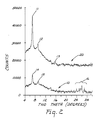
- FIG. 2 shows the X ray diffraction scans 10, 20 from two of these comparative experiments, GB 1 and 2, respectively, in which the orientation of the chamber was varied between "hot-end up” (GB 1) and “down” (GB 2), and the substrate contained an H2Pc seed film.
- Two other comparative samples, GB 3 and GB 4 were similar but had bare substrates. For the samples containing the seed film, any contribution from the latter has been subtracted from the diffraction curve to show only the diffraction from the CuPc overlayer.
- the peaks can be identified with the lattice planes as follows: Peaks 11 and 14 (001) planes of beta CuPc, 12 and 15 (i.e., 20-1) planes of beta CuPc, 13 (300) planes of beta CuPc, 16 the new M-CuPc polymorph.
- the crystalline components of the PVT grown films is clearly beta-CuPc which is highly oriented such that the b-axis of the crystal lattice is parallel to the film plane.
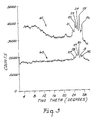
- FIG. 3 shows the X-ray diffraction scans 60,40 from the LEO samples of CuPc. These curves are distinctly different from those of FIG. 2. In contrast, now no significant peak intensities corresponding to lattice spacings greater than about 4.2 Angstroms are apparent (i.e., two theta values less than about 21°). Hence, whatever the crystalline polymorph type, the unit cell b-axis is not parallel to the film plane as in the unit gravity films, but "standing" effectively perpendicular to the film plane.
- FIG. 1 showed that alpha-CuPc has only four peaks in this range. Comparing FIG. 3 with FIG. 1, it appears possible to correlate the four peaks in the LEO curves at 3.22, 3.34, 3.57 and 3.71 Angstroms with the conventional alpha-CuPc. However, the two peaks at 3.50 or 3.49 and 3.43 Angstroms appear to be unassignable to the conventional alpha-CuPc since they have not been previously reported in the prior art to our knowledge.
- the diffraction is from a new crystalline polymorph (call it M-CuPc), e.g., a metastable form distinct from either the conventional alpha, gamma, or beta forms discussed in the prior art as deriving from vacuum sublimation deposition.
- M-CuPc new crystalline polymorph
- the new peaks at 3.50 and 3.43 Angstroms are due to alpha- or beta-CuPc crystallites but ones uniquely and highly oriented such that just certain specialized lattice planes are exactly oriented parallel to the film plane.
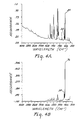
- FIG. 4A shows a bulk transmission infrared spectrum from alpha-CuPc powder
- 4B the RAIR spectrum from the LEO PVT grown sample #1.
- the bulk alpha-CuPc powder was obtained from vacuum vapor deposited CuPc.
- the thin film RAIR spectrum is from the top PVT deposited layer only, the metal free Pc underlayer's spectrum having been subtracted.
- the two important considerations of the spectra in FIGS. 4A and 4B are the relative intensities of the various peaks of different vibrational mode symmetry and the peak frequency positions.
- the powder spectrum's peak intensities represent a random mixture of CuPc molecules and thus show the peak intensities without any orientation bias.
- All the PVT unit gravity grown control films of this example show a similar preferential orientation, but generally to a lesser degree.
- This degree of ordering can be estimated from the relative peak intensities of the two main band symmetry types using methods described by Debe, supra .
- the result is an order parameter, f, having values between 0 and 1.
- a value of exactly 1 means 100% of the molecules are commonly oriented with their planes inclined at a preselected angle theta associated with the orientation of the b-axis and the polymorph type.
- a value of 0 means that the molecules are randomly oriented.
- This value of theta is close to the angle that would apply to alpha-CuPc in the standing b-axis configuration, viz. 26.5 degrees.
- the choice of this angle is somewhat arbitrary but there is a maximum value allowed by the constraint that f cannot be greater than 1.
- theta 25 degrees is the maximum value allowed by the large relative peak intensity assymmetry displayed by the RAIR spectra from LEO sample #1 in FIG. 4A. This also is an indication then that the majority of the molecules in the LEO sample #1 are in a polymorph other than the conventional alpha-CuPc or beta-CuPc.
- Table I also compares the relative amounts of PVT deposited CuPc in the GB and LEO samples, as obtained from the average band spectral absorbances, by the method discussed also in Debe, supra .
- the LEO and unit gravity grown films are seen to have average thicknesses which agree to within a factor of 1 to 2 depending on whether the GB cells were backfilled or evacuated (GB 5-7). When evacuated, the ampoule walls near the substrate are cooler and less material is deposited on the substrate.
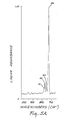
- FIGS. 5A and 5B compare a sensitive region of the RAIR spectra from LEO 2 and GB 5 CuPc film samples as an example.
- the sensitivity of the out-of-plane vibrational modes to the type of crystalline polymorph is well documented in the literature.
- the large band in the 720-730 cm ⁇ 1 range from phthalocyanines can be used to differentiate between alpha and beta forms. In CuPc this band occurs at 722 cm ⁇ 1 for alpha but 730 cm ⁇ 1 for beta-CuPc.
- beta CuPc is uniquely associated with a peak at 778 cm ⁇ 1.
- the peaks 45, 46, 47, 48 and 49 respectively are observed at 778, 769, 754, 730 and 722 cm ⁇ 1.
- the GB 5 sample is thus clearly seen to contain both conventional alpha and beta-CuPc material and graphically displays this band position sensitivity to polymorph type.
- All the other unit gravity control GB films show this main peak at 720-723 cm ⁇ 1 except GB 1 for which it occurs at 724-725 cm ⁇ 1. Furthermore, all the GB samples show either a distinct peak at 778 cm ⁇ 1 or, in the cases of GB 1 and 7, a definite hard shoulder. This is consistent with the X-ray diffraction results which show distinct beta-CuPc crystalline material in the unit gravity films of adequate domain size to give diffraction. That the main peak is consistently closer to the position for conventional alpha-CuPc than for beta-CuPc implies that the unit gravity grown films consist primarily of alpha-CuPc, but not in large enough crystalline domains to give significant X-ray diffraction intensity.
- both the LEO 1 and 2 spectra show, as FIG. 5A indicates, the main peak 44 at 727-728 cm ⁇ 1. This is 5-6 cm ⁇ 1 above that of alpha-CuPc, yet 2-3 cm ⁇ 1 below that of beta-CuPc. Also, the LEO spectra show only a soft shoulder 41 at 778 cm ⁇ 1 like the bulk alpha-CuPc does, i.e., no additional intensity due to beta-CuPc is indicated. In FIG. 5A, peaks 42 and 43 occur at 770 and 753 cm ⁇ 1.
- the RAIR spectra fully support the X-ray diffraction data that the LEO PVT grown films consist of a new polymorph of CuPc which has characteristics between that of the conventional alpha and beta-CuPc. The fact that this new polymorph gives strong, sharp X-ray diffraction peaks implies that the LEO films have larger crystalline domains of this new polymorph than the unit gravity films do of alpha-CuPc.
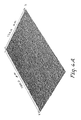
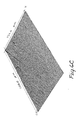
- FIGS. 6A, 6B and 6C show respectively the direct phase contrast interferometric (DPC) graphics images of samples GB 1, LEO 1 and 2.
- Samples GB 2-4 produced images virtually identical to FIG. 6A. These four GB samples were produced under conditions most closely approximating those of the LEO samples except for the absence of convection in the latter samples. From FIGS. 6A-6C and a statistical analysis of the surface profile lines forming the image it can be concluded that:
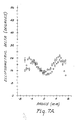
- FIGS. 7A to 7D show plots of the ellipsometric DEL and PSI parameters as functions of position along the diameters of the sample films, from one edge of the sample to the opposite edge.
- the sample center is at 0.0.
- the circles and squares represent stepping the position of the laser beam along perpendicular diameters.
- Each data point represents the average of four or six values obtained by repetitively translating back and forth along the same diameter.
- the root-mean-square (rms) deviation from the average is then used to plot error bars when they exceed the physical size of the symbol used in the plot.
- the presence and size of the error bars give an indication of film roughness or inhomogeneity on the scale equal or less than the laser beam diameter since small errors in returning repeatedly to the same spot on the sample result in deviations in the ellipsometric parameters if the film is not uniform over the range of the beam position errors.
- the larger scale variations of ellipsometric parameters with radial position on the sample directly indicate the "optical thickness" of the deposited film.
- the parameters do not directly indicate true thickness because the complex optical refractive index is intrinsically involved in the films optical response as well.
- the way in which the DEL and PSI parameters vary with position on the substrate indicates how the combined effects of physical thickness and optical constants are varying with position. E.g., if there is much scatter in the DEL and PSI data points or error bars then the conclusion is that the film uniformity or homogeneity is poor.
- FIGS. 7A and 7B show the DEL and PSI plots for a tyical to better than average GB sample. There is clearly significant scattering between the curves of square and circle symbols in all the GB plots. There are also sizeable error bars on some of the curves. Most important, there is no clear trend or shape of the curves which is common to all the GB samples. In contrast, FIGS. 7C and 7D show the corresponding plots from LEO 1 sample. Here the square and circle plotted curves overlap extremely well, with no error bars larger than the symbol sizes. A very distinct radially symmetric paraboloid or inverted paraboloid type shape is common to both LEO samples. This shape is believed to represent the velocity flow profile of the transported material from the hotter end to the cooler end of the ampoule under the conditions of convectionless thermal and solutal diffusion.
- the spatially resolved ellipsometric data show that minimization of convection by processing in a low gravity environment has qualitatively a) enhanced the film smoothness in the submillimeter size range, b) enhanced the homogeneity of the radial distribution of the deposited film material on the substrate, and c) improved the radial symmetry of the film optical properties.
- Visible absorption spectra from several of the double layered LEO and GB film samples also provided supporting evidence of the existence of a new polymorph.
- Reflectance absorption spectra covering the wavelength range of 200 to 850 nm were obtained near an incidence angle of 68 degrees.
- the LEO 1 sample was unique in showing a weak peak absorption at 800 nm, while the GB samples' absorption spectra decreased monotonically above about 730 nm.
- Such shifting of the absorption towards the near IR is typical of different crystalline polymorphic behavior in phthalocyanine materials.
- Horn et al., Proc XIIth FATIPEC Congress (1974) Verlag Chemie, Weinheim, 1974, pp. 181-189 discuss this for CuPc.
Landscapes
- Chemical & Material Sciences (AREA)
- Organic Chemistry (AREA)
- Engineering & Computer Science (AREA)
- Crystallography & Structural Chemistry (AREA)
- Materials Engineering (AREA)
- Metallurgy (AREA)
- Chemical Kinetics & Catalysis (AREA)
- Nitrogen Condensed Heterocyclic Rings (AREA)
- Physical Vapour Deposition (AREA)
- Crystals, And After-Treatments Of Crystals (AREA)
Applications Claiming Priority (2)
| Application Number | Priority Date | Filing Date | Title |
|---|---|---|---|
| US21881788A | 1988-07-13 | 1988-07-13 | |
| US218817 | 1998-12-22 |
Publications (2)
| Publication Number | Publication Date |
|---|---|
| EP0351176A2 true EP0351176A2 (de) | 1990-01-17 |
| EP0351176A3 EP0351176A3 (de) | 1992-04-29 |
Family
ID=22816632
Family Applications (1)
| Application Number | Title | Priority Date | Filing Date |
|---|---|---|---|
| EP19890307010 Withdrawn EP0351176A3 (de) | 1988-07-13 | 1989-07-11 | Durch niedrige Schwere verbessertes Wachstum von Phthalocyaninpolymorphen |
Country Status (2)
| Country | Link |
|---|---|
| EP (1) | EP0351176A3 (de) |
| JP (1) | JPH02117926A (de) |
Cited By (2)
| Publication number | Priority date | Publication date | Assignee | Title |
|---|---|---|---|---|
| EP1349177A3 (de) * | 2002-03-26 | 2003-11-26 | Agfa-Gevaert | Schichtanordnung mit bindemittelfreier Farbschicht |
| US6977385B2 (en) | 2002-03-26 | 2005-12-20 | Agfa-Gevaert | Storage phosphor screen having binderless colored layers |
Families Citing this family (1)
| Publication number | Priority date | Publication date | Assignee | Title |
|---|---|---|---|---|
| JP2666536B2 (ja) * | 1990-08-09 | 1997-10-22 | 日本電気株式会社 | 有機薄膜とその形成方法 |
-
1989
- 1989-07-11 EP EP19890307010 patent/EP0351176A3/de not_active Withdrawn
- 1989-07-12 JP JP1180155A patent/JPH02117926A/ja active Pending
Non-Patent Citations (1)
| Title |
|---|
| THIN SOLID FILMS. vol. 151, no. 1, 20 July 1987, LAUSANNE CH pages 109 - 110; M. KOMIYAMA ET AL: 'PREPARATION OF HIGHLY ORDERED ULTRA THIN FILMS OF COPPER(11) PHTHALOCYANINE ON AMORPHOUS SUBSTRATES BY MOLECULAR BEAM DEPOSITION' * |
Cited By (2)
| Publication number | Priority date | Publication date | Assignee | Title |
|---|---|---|---|---|
| EP1349177A3 (de) * | 2002-03-26 | 2003-11-26 | Agfa-Gevaert | Schichtanordnung mit bindemittelfreier Farbschicht |
| US6977385B2 (en) | 2002-03-26 | 2005-12-20 | Agfa-Gevaert | Storage phosphor screen having binderless colored layers |
Also Published As
| Publication number | Publication date |
|---|---|
| EP0351176A3 (de) | 1992-04-29 |
| JPH02117926A (ja) | 1990-05-02 |
Similar Documents
| Publication | Publication Date | Title |
|---|---|---|
| Debe et al. | Effect of gravity on copper phthalocyanine thin films II: Spectroscopic evidence for a new oriented thin film polymorph of copper phthalocyanine grown in a microgravity enviroment | |
| US5176786A (en) | Organic thin film controlled molecular epitaxy | |
| US4940854A (en) | Organic thin film controlled molecular epitaxy | |
| Kamiya et al. | Reflectance-difference spectroscopy of (001) GaAs surfaces in ultrahigh vacuum | |
| Sutarto et al. | Epitaxial and layer-by-layer growth of EuO thin films on yttria-stabilized cubic zirconia (001) using MBE distillation | |
| Kohl et al. | Oriented nucleation and growth of diamond films on β‐SiC and Si | |
| Debe et al. | Organic-thin-film-induced molecular epitaxy from the vapor phase | |
| Zogg et al. | Molecular beam epitaxial growth of high structural perfection CdTe on Si using a (Ca, Ba) F2 buffer layer | |
| Aspnes | Observation and analysis of epitaxial growth with reflectance-difference spectroscopy | |
| US5139592A (en) | Low gravity enhanced growth of phthalocyanine polymorphs and films | |
| Maracas et al. | In situ spectroscopic ellipsometry in molecular beam epitaxy | |
| Feng et al. | A photoluminescence comparison of CdTe thin films grown by molecular‐beam epitaxy, metalorganic chemical vapor deposition, and sputtering in ultrahigh vacuum | |
| EP0351176A2 (de) | Durch niedrige Schwere verbessertes Wachstum von Phthalocyaninpolymorphen | |
| Debe et al. | Effect of gravity on copper phthalocyanine thin films I: enhanced smoothness and local homogeneity of copper phthalocyanine thin films grown in a microgravity environment | |
| Fujimoto et al. | Microstructure and x-ray study of preferentially oriented SnO2 thin film prepared by pyrohydrolytic decomposition | |
| Sokolov et al. | S m 2+ Photoluminescence and X-Ray Scattering Studies of A-and B-Type Epitaxial C a F 2 Layers on Si (111) | |
| Koppensteiner et al. | Molecular beam epitaxy of PbTe/EuTe superlattices and their structural investigation by x‐ray diffraction using reciprocal space mapping | |
| Hottier et al. | Analysis of silicon crystal growth using low pressure chemical vapour deposition | |
| Seki et al. | Ultra thin films of anthracene on fused quartz and sapphire | |
| Katon et al. | Infrared spectroscopy at subambient temperatures | |
| Chaverri et al. | Grain size and electrical resistivity measurements on aluminum polycrystalline thin films | |
| Kondo et al. | Amorphous to Crystalline Transformationof Cold Condensed TlBr Films | |
| Chioncel et al. | Cobalt thin films deposited by photoassisted MOCVD exhibiting inverted magnetic hysteresis | |
| Richter et al. | Surface extended x‐ray adsorption fine structure studies of the Si (001) 2× 1–Sb interface | |
| Uwai et al. | Arsenic coverages and surface structures of As-stabilized GaAs (001) surfaces during metalorganic chemical vapor deposition observed by reflectance difference |
Legal Events
| Date | Code | Title | Description |
|---|---|---|---|
| PUAI | Public reference made under article 153(3) epc to a published international application that has entered the european phase |
Free format text: ORIGINAL CODE: 0009012 |
|
| AK | Designated contracting states |
Kind code of ref document: A2 Designated state(s): DE GB NL |
|
| 17P | Request for examination filed |
Effective date: 19910102 |
|
| PUAL | Search report despatched |
Free format text: ORIGINAL CODE: 0009013 |
|
| AK | Designated contracting states |
Kind code of ref document: A3 Designated state(s): DE GB NL |
|
| 17Q | First examination report despatched |
Effective date: 19920902 |
|
| STAA | Information on the status of an ep patent application or granted ep patent |
Free format text: STATUS: THE APPLICATION IS DEEMED TO BE WITHDRAWN |
|
| 18D | Application deemed to be withdrawn |
Effective date: 19931201 |