EP0352128A2 - Elektro-Schweissmuffe mit Anzeigemitteln des Schweissergebnisses - Google Patents
Elektro-Schweissmuffe mit Anzeigemitteln des Schweissergebnisses Download PDFInfo
- Publication number
- EP0352128A2 EP0352128A2 EP89307432A EP89307432A EP0352128A2 EP 0352128 A2 EP0352128 A2 EP 0352128A2 EP 89307432 A EP89307432 A EP 89307432A EP 89307432 A EP89307432 A EP 89307432A EP 0352128 A2 EP0352128 A2 EP 0352128A2
- Authority
- EP
- European Patent Office
- Prior art keywords
- joint
- electrofusion
- heating wire
- lid
- electrical
- Prior art date
- Legal status (The legal status is an assumption and is not a legal conclusion. Google has not performed a legal analysis and makes no representation as to the accuracy of the status listed.)
- Granted
Links
Images


Classifications
-
- B—PERFORMING OPERATIONS; TRANSPORTING
- B29—WORKING OF PLASTICS; WORKING OF SUBSTANCES IN A PLASTIC STATE IN GENERAL
- B29C—SHAPING OR JOINING OF PLASTICS; SHAPING OF MATERIAL IN A PLASTIC STATE, NOT OTHERWISE PROVIDED FOR; AFTER-TREATMENT OF THE SHAPED PRODUCTS, e.g. REPAIRING
- B29C65/00—Joining or sealing of preformed parts, e.g. welding of plastics materials; Apparatus therefor
- B29C65/02—Joining or sealing of preformed parts, e.g. welding of plastics materials; Apparatus therefor by heating, with or without pressure
- B29C65/34—Joining or sealing of preformed parts, e.g. welding of plastics materials; Apparatus therefor by heating, with or without pressure using heated elements which remain in the joint, e.g. "verlorenes Schweisselement"
- B29C65/3404—Joining or sealing of preformed parts, e.g. welding of plastics materials; Apparatus therefor by heating, with or without pressure using heated elements which remain in the joint, e.g. "verlorenes Schweisselement" characterised by the type of heated elements which remain in the joint
- B29C65/342—Joining or sealing of preformed parts, e.g. welding of plastics materials; Apparatus therefor by heating, with or without pressure using heated elements which remain in the joint, e.g. "verlorenes Schweisselement" characterised by the type of heated elements which remain in the joint comprising at least a single wire, e.g. in the form of a winding
-
- B—PERFORMING OPERATIONS; TRANSPORTING
- B29—WORKING OF PLASTICS; WORKING OF SUBSTANCES IN A PLASTIC STATE IN GENERAL
- B29C—SHAPING OR JOINING OF PLASTICS; SHAPING OF MATERIAL IN A PLASTIC STATE, NOT OTHERWISE PROVIDED FOR; AFTER-TREATMENT OF THE SHAPED PRODUCTS, e.g. REPAIRING
- B29C65/00—Joining or sealing of preformed parts, e.g. welding of plastics materials; Apparatus therefor
- B29C65/02—Joining or sealing of preformed parts, e.g. welding of plastics materials; Apparatus therefor by heating, with or without pressure
- B29C65/34—Joining or sealing of preformed parts, e.g. welding of plastics materials; Apparatus therefor by heating, with or without pressure using heated elements which remain in the joint, e.g. "verlorenes Schweisselement"
- B29C65/3468—Joining or sealing of preformed parts, e.g. welding of plastics materials; Apparatus therefor by heating, with or without pressure using heated elements which remain in the joint, e.g. "verlorenes Schweisselement" characterised by the means for supplying heat to said heated elements which remain in the join, e.g. special electrical connectors of windings
-
- B—PERFORMING OPERATIONS; TRANSPORTING
- B29—WORKING OF PLASTICS; WORKING OF SUBSTANCES IN A PLASTIC STATE IN GENERAL
- B29C—SHAPING OR JOINING OF PLASTICS; SHAPING OF MATERIAL IN A PLASTIC STATE, NOT OTHERWISE PROVIDED FOR; AFTER-TREATMENT OF THE SHAPED PRODUCTS, e.g. REPAIRING
- B29C65/00—Joining or sealing of preformed parts, e.g. welding of plastics materials; Apparatus therefor
- B29C65/02—Joining or sealing of preformed parts, e.g. welding of plastics materials; Apparatus therefor by heating, with or without pressure
- B29C65/34—Joining or sealing of preformed parts, e.g. welding of plastics materials; Apparatus therefor by heating, with or without pressure using heated elements which remain in the joint, e.g. "verlorenes Schweisselement"
- B29C65/3472—Joining or sealing of preformed parts, e.g. welding of plastics materials; Apparatus therefor by heating, with or without pressure using heated elements which remain in the joint, e.g. "verlorenes Schweisselement" characterised by the composition of the heated elements which remain in the joint
- B29C65/3476—Joining or sealing of preformed parts, e.g. welding of plastics materials; Apparatus therefor by heating, with or without pressure using heated elements which remain in the joint, e.g. "verlorenes Schweisselement" characterised by the composition of the heated elements which remain in the joint being metallic
-
- B—PERFORMING OPERATIONS; TRANSPORTING
- B29—WORKING OF PLASTICS; WORKING OF SUBSTANCES IN A PLASTIC STATE IN GENERAL
- B29C—SHAPING OR JOINING OF PLASTICS; SHAPING OF MATERIAL IN A PLASTIC STATE, NOT OTHERWISE PROVIDED FOR; AFTER-TREATMENT OF THE SHAPED PRODUCTS, e.g. REPAIRING
- B29C66/00—General aspects of processes or apparatus for joining preformed parts
- B29C66/01—General aspects dealing with the joint area or with the area to be joined
- B29C66/05—Particular design of joint configurations
- B29C66/10—Particular design of joint configurations particular design of the joint cross-sections
- B29C66/11—Joint cross-sections comprising a single joint-segment, i.e. one of the parts to be joined comprising a single joint-segment in the joint cross-section
- B29C66/112—Single lapped joints
- B29C66/1122—Single lap to lap joints, i.e. overlap joints
-
- B—PERFORMING OPERATIONS; TRANSPORTING
- B29—WORKING OF PLASTICS; WORKING OF SUBSTANCES IN A PLASTIC STATE IN GENERAL
- B29C—SHAPING OR JOINING OF PLASTICS; SHAPING OF MATERIAL IN A PLASTIC STATE, NOT OTHERWISE PROVIDED FOR; AFTER-TREATMENT OF THE SHAPED PRODUCTS, e.g. REPAIRING
- B29C66/00—General aspects of processes or apparatus for joining preformed parts
- B29C66/01—General aspects dealing with the joint area or with the area to be joined
- B29C66/05—Particular design of joint configurations
- B29C66/10—Particular design of joint configurations particular design of the joint cross-sections
- B29C66/11—Joint cross-sections comprising a single joint-segment, i.e. one of the parts to be joined comprising a single joint-segment in the joint cross-section
- B29C66/114—Single butt joints
- B29C66/1142—Single butt to butt joints
-
- B—PERFORMING OPERATIONS; TRANSPORTING
- B29—WORKING OF PLASTICS; WORKING OF SUBSTANCES IN A PLASTIC STATE IN GENERAL
- B29C—SHAPING OR JOINING OF PLASTICS; SHAPING OF MATERIAL IN A PLASTIC STATE, NOT OTHERWISE PROVIDED FOR; AFTER-TREATMENT OF THE SHAPED PRODUCTS, e.g. REPAIRING
- B29C66/00—General aspects of processes or apparatus for joining preformed parts
- B29C66/50—General aspects of joining tubular articles; General aspects of joining long products, i.e. bars or profiled elements; General aspects of joining single elements to tubular articles, hollow articles or bars; General aspects of joining several hollow-preforms to form hollow or tubular articles
- B29C66/51—Joining tubular articles, profiled elements or bars; Joining single elements to tubular articles, hollow articles or bars; Joining several hollow-preforms to form hollow or tubular articles
- B29C66/52—Joining tubular articles, bars or profiled elements
- B29C66/522—Joining tubular articles
- B29C66/5221—Joining tubular articles for forming coaxial connections, i.e. the tubular articles to be joined forming a zero angle relative to each other
-
- B—PERFORMING OPERATIONS; TRANSPORTING
- B29—WORKING OF PLASTICS; WORKING OF SUBSTANCES IN A PLASTIC STATE IN GENERAL
- B29C—SHAPING OR JOINING OF PLASTICS; SHAPING OF MATERIAL IN A PLASTIC STATE, NOT OTHERWISE PROVIDED FOR; AFTER-TREATMENT OF THE SHAPED PRODUCTS, e.g. REPAIRING
- B29C66/00—General aspects of processes or apparatus for joining preformed parts
- B29C66/50—General aspects of joining tubular articles; General aspects of joining long products, i.e. bars or profiled elements; General aspects of joining single elements to tubular articles, hollow articles or bars; General aspects of joining several hollow-preforms to form hollow or tubular articles
- B29C66/51—Joining tubular articles, profiled elements or bars; Joining single elements to tubular articles, hollow articles or bars; Joining several hollow-preforms to form hollow or tubular articles
- B29C66/52—Joining tubular articles, bars or profiled elements
- B29C66/522—Joining tubular articles
- B29C66/5229—Joining tubular articles involving the use of a socket
-
- B—PERFORMING OPERATIONS; TRANSPORTING
- B29—WORKING OF PLASTICS; WORKING OF SUBSTANCES IN A PLASTIC STATE IN GENERAL
- B29C—SHAPING OR JOINING OF PLASTICS; SHAPING OF MATERIAL IN A PLASTIC STATE, NOT OTHERWISE PROVIDED FOR; AFTER-TREATMENT OF THE SHAPED PRODUCTS, e.g. REPAIRING
- B29C66/00—General aspects of processes or apparatus for joining preformed parts
- B29C66/90—Measuring or controlling the joining process
- B29C66/92—Measuring or controlling the joining process by measuring or controlling the pressure, the force, the mechanical power or the displacement of the joining tools
- B29C66/924—Measuring or controlling the joining process by measuring or controlling the pressure, the force, the mechanical power or the displacement of the joining tools by controlling or regulating the pressure, the force, the mechanical power or the displacement of the joining tools
- B29C66/9261—Measuring or controlling the joining process by measuring or controlling the pressure, the force, the mechanical power or the displacement of the joining tools by controlling or regulating the pressure, the force, the mechanical power or the displacement of the joining tools by controlling or regulating the displacement of the joining tools
- B29C66/92651—Measuring or controlling the joining process by measuring or controlling the pressure, the force, the mechanical power or the displacement of the joining tools by controlling or regulating the pressure, the force, the mechanical power or the displacement of the joining tools by controlling or regulating the displacement of the joining tools by using stops
-
- B—PERFORMING OPERATIONS; TRANSPORTING
- B29—WORKING OF PLASTICS; WORKING OF SUBSTANCES IN A PLASTIC STATE IN GENERAL
- B29C—SHAPING OR JOINING OF PLASTICS; SHAPING OF MATERIAL IN A PLASTIC STATE, NOT OTHERWISE PROVIDED FOR; AFTER-TREATMENT OF THE SHAPED PRODUCTS, e.g. REPAIRING
- B29C66/00—General aspects of processes or apparatus for joining preformed parts
- B29C66/90—Measuring or controlling the joining process
- B29C66/97—Checking completion of joining or correct joining by using indications on at least one of the joined parts
- B29C66/972—Checking completion of joining or correct joining by using indications on at least one of the joined parts by extrusion of molten material
-
- B—PERFORMING OPERATIONS; TRANSPORTING
- B29—WORKING OF PLASTICS; WORKING OF SUBSTANCES IN A PLASTIC STATE IN GENERAL
- B29C—SHAPING OR JOINING OF PLASTICS; SHAPING OF MATERIAL IN A PLASTIC STATE, NOT OTHERWISE PROVIDED FOR; AFTER-TREATMENT OF THE SHAPED PRODUCTS, e.g. REPAIRING
- B29C66/00—General aspects of processes or apparatus for joining preformed parts
- B29C66/90—Measuring or controlling the joining process
- B29C66/97—Checking completion of joining or correct joining by using indications on at least one of the joined parts
- B29C66/976—Checking completion of joining or correct joining by using indications on at least one of the joined parts by the use of an indicator pin, e.g. being integral with one of the parts to be joined
-
- F—MECHANICAL ENGINEERING; LIGHTING; HEATING; WEAPONS; BLASTING
- F16—ENGINEERING ELEMENTS AND UNITS; GENERAL MEASURES FOR PRODUCING AND MAINTAINING EFFECTIVE FUNCTIONING OF MACHINES OR INSTALLATIONS; THERMAL INSULATION IN GENERAL
- F16L—PIPES; JOINTS OR FITTINGS FOR PIPES; SUPPORTS FOR PIPES, CABLES OR PROTECTIVE TUBING; MEANS FOR THERMAL INSULATION IN GENERAL
- F16L47/00—Connecting arrangements or other fittings specially adapted to be made of plastics or to be used with pipes made of plastics
- F16L47/02—Welded joints; Adhesive joints
- F16L47/03—Welded joints with an electrical resistance incorporated in the joint
-
- G—PHYSICS
- G05—CONTROLLING; REGULATING
- G05D—SYSTEMS FOR CONTROLLING OR REGULATING NON-ELECTRIC VARIABLES
- G05D23/00—Control of temperature
- G05D23/19—Control of temperature characterised by the use of electric means
- G05D23/275—Control of temperature characterised by the use of electric means with sensing element expanding, contracting, or fusing in response to changes of temperature
- G05D23/27535—Details of the sensing element
-
- B—PERFORMING OPERATIONS; TRANSPORTING
- B29—WORKING OF PLASTICS; WORKING OF SUBSTANCES IN A PLASTIC STATE IN GENERAL
- B29C—SHAPING OR JOINING OF PLASTICS; SHAPING OF MATERIAL IN A PLASTIC STATE, NOT OTHERWISE PROVIDED FOR; AFTER-TREATMENT OF THE SHAPED PRODUCTS, e.g. REPAIRING
- B29C66/00—General aspects of processes or apparatus for joining preformed parts
- B29C66/90—Measuring or controlling the joining process
- B29C66/91—Measuring or controlling the joining process by measuring or controlling the temperature, the heat or the thermal flux
- B29C66/914—Measuring or controlling the joining process by measuring or controlling the temperature, the heat or the thermal flux by controlling or regulating the temperature, the heat or the thermal flux
- B29C66/9141—Measuring or controlling the joining process by measuring or controlling the temperature, the heat or the thermal flux by controlling or regulating the temperature, the heat or the thermal flux by controlling or regulating the temperature
- B29C66/91411—Measuring or controlling the joining process by measuring or controlling the temperature, the heat or the thermal flux by controlling or regulating the temperature, the heat or the thermal flux by controlling or regulating the temperature of the parts to be joined, e.g. the joining process taking the temperature of the parts to be joined into account
-
- B—PERFORMING OPERATIONS; TRANSPORTING
- B29—WORKING OF PLASTICS; WORKING OF SUBSTANCES IN A PLASTIC STATE IN GENERAL
- B29C—SHAPING OR JOINING OF PLASTICS; SHAPING OF MATERIAL IN A PLASTIC STATE, NOT OTHERWISE PROVIDED FOR; AFTER-TREATMENT OF THE SHAPED PRODUCTS, e.g. REPAIRING
- B29C66/00—General aspects of processes or apparatus for joining preformed parts
- B29C66/90—Measuring or controlling the joining process
- B29C66/91—Measuring or controlling the joining process by measuring or controlling the temperature, the heat or the thermal flux
- B29C66/914—Measuring or controlling the joining process by measuring or controlling the temperature, the heat or the thermal flux by controlling or regulating the temperature, the heat or the thermal flux
- B29C66/9161—Measuring or controlling the joining process by measuring or controlling the temperature, the heat or the thermal flux by controlling or regulating the temperature, the heat or the thermal flux by controlling or regulating the heat or the thermal flux, i.e. the heat flux
- B29C66/91651—Measuring or controlling the joining process by measuring or controlling the temperature, the heat or the thermal flux by controlling or regulating the temperature, the heat or the thermal flux by controlling or regulating the heat or the thermal flux, i.e. the heat flux by controlling or regulating the heat generated by Joule heating or induction heating
-
- B—PERFORMING OPERATIONS; TRANSPORTING
- B29—WORKING OF PLASTICS; WORKING OF SUBSTANCES IN A PLASTIC STATE IN GENERAL
- B29C—SHAPING OR JOINING OF PLASTICS; SHAPING OF MATERIAL IN A PLASTIC STATE, NOT OTHERWISE PROVIDED FOR; AFTER-TREATMENT OF THE SHAPED PRODUCTS, e.g. REPAIRING
- B29C66/00—General aspects of processes or apparatus for joining preformed parts
- B29C66/90—Measuring or controlling the joining process
- B29C66/91—Measuring or controlling the joining process by measuring or controlling the temperature, the heat or the thermal flux
- B29C66/914—Measuring or controlling the joining process by measuring or controlling the temperature, the heat or the thermal flux by controlling or regulating the temperature, the heat or the thermal flux
- B29C66/9161—Measuring or controlling the joining process by measuring or controlling the temperature, the heat or the thermal flux by controlling or regulating the temperature, the heat or the thermal flux by controlling or regulating the heat or the thermal flux, i.e. the heat flux
- B29C66/91651—Measuring or controlling the joining process by measuring or controlling the temperature, the heat or the thermal flux by controlling or regulating the temperature, the heat or the thermal flux by controlling or regulating the heat or the thermal flux, i.e. the heat flux by controlling or regulating the heat generated by Joule heating or induction heating
- B29C66/91655—Measuring or controlling the joining process by measuring or controlling the temperature, the heat or the thermal flux by controlling or regulating the temperature, the heat or the thermal flux by controlling or regulating the heat or the thermal flux, i.e. the heat flux by controlling or regulating the heat generated by Joule heating or induction heating by controlling or regulating the current intensity
-
- B—PERFORMING OPERATIONS; TRANSPORTING
- B29—WORKING OF PLASTICS; WORKING OF SUBSTANCES IN A PLASTIC STATE IN GENERAL
- B29C—SHAPING OR JOINING OF PLASTICS; SHAPING OF MATERIAL IN A PLASTIC STATE, NOT OTHERWISE PROVIDED FOR; AFTER-TREATMENT OF THE SHAPED PRODUCTS, e.g. REPAIRING
- B29C66/00—General aspects of processes or apparatus for joining preformed parts
- B29C66/90—Measuring or controlling the joining process
- B29C66/91—Measuring or controlling the joining process by measuring or controlling the temperature, the heat or the thermal flux
- B29C66/919—Measuring or controlling the joining process by measuring or controlling the temperature, the heat or the thermal flux characterised by specific temperature, heat or thermal flux values or ranges
-
- B—PERFORMING OPERATIONS; TRANSPORTING
- B29—WORKING OF PLASTICS; WORKING OF SUBSTANCES IN A PLASTIC STATE IN GENERAL
- B29C—SHAPING OR JOINING OF PLASTICS; SHAPING OF MATERIAL IN A PLASTIC STATE, NOT OTHERWISE PROVIDED FOR; AFTER-TREATMENT OF THE SHAPED PRODUCTS, e.g. REPAIRING
- B29C66/00—General aspects of processes or apparatus for joining preformed parts
- B29C66/90—Measuring or controlling the joining process
- B29C66/92—Measuring or controlling the joining process by measuring or controlling the pressure, the force, the mechanical power or the displacement of the joining tools
- B29C66/929—Measuring or controlling the joining process by measuring or controlling the pressure, the force, the mechanical power or the displacement of the joining tools characterized by specific pressure, force, mechanical power or displacement values or ranges
-
- B—PERFORMING OPERATIONS; TRANSPORTING
- B29—WORKING OF PLASTICS; WORKING OF SUBSTANCES IN A PLASTIC STATE IN GENERAL
- B29C—SHAPING OR JOINING OF PLASTICS; SHAPING OF MATERIAL IN A PLASTIC STATE, NOT OTHERWISE PROVIDED FOR; AFTER-TREATMENT OF THE SHAPED PRODUCTS, e.g. REPAIRING
- B29C66/00—General aspects of processes or apparatus for joining preformed parts
- B29C66/90—Measuring or controlling the joining process
- B29C66/94—Measuring or controlling the joining process by measuring or controlling the time
Definitions
- the present invention relates to a method of fusing an electrofusion joint having an electric resistance heating wire embedded therein, a method of confirming the state of fusion and an electrofusion joint suitable for use in such methods.
- Electrofusion joints have been developed recently and are finding increasing use in various fields such as join ing of plastic pipes in water works, sewage pipes and gas pipes in various forms such as saddle joints, elbow joints, T joints and cap joints.
- an electrofusion joint is a molded article with an electrical resistance heating wire embedded therein. Fusion of this type of joint to a pipe is performed by applying an electrical current at a constant voltage for a predetermined time while fitting the joint on a pipe end or pressing it against the pipe end so as to cause the interface to melt thereby fusing the interface. In some cases, however, electrofusion is performed for an indefinite period, for example the current may be terminated upon detection of melting.
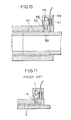
- the melting of the interface is detected by providing a detection hole b extending to the region near the electrical resistance heating wire a as shown in Fig. 11 and detecting the pressure of molten resin flowing into the hole by means of a pressure switch.
- bonding by fusion can simply be accomplished by fitting or pressing a joint to a pipe and then supplying an electrical current to the joint.
- electrofusion method of the type described enables the fusion bonding to be completed easily and in a short period of time as compared with the conventional method which requires the joint to be fitted or pressed to the pipe after thermally fusing the abutting surfaces of these joint and pipe.
- this type of method enables fusion bonding of comparatively high reliability.
- a detection hole 60 leading to a region in the vicinity of the electrical resistance heating wire is provided as shown in Fig. 4 and the state of fusion can be detected by observing the state of expansion of the molten resin through the hole 60.
- a hole is formed in the joint so as to reach a region in the vicinity of the electrical resistance heating wire and a radially movable indicator is received in the hole so that the completion of fusion is confirmed by recognizing a radial movement of the indicator caused by spreading of the molten resin.
- a temperature indicator tape capable of changing its color according to the temperature is adhered to the surface of the pipe joint so that the completion of fusion is detected through observation of the color of the temperature indicator tape.
- the method which relies upon a radially movable indicator also is disadvantageous in that the indicator tends to move by vibration or force of gravity applied to the joint with the result indication indicative of completion of fusion bonding is made even when the bonding actually has not been done.
- the method which makes use of a temperature indication tape does not cause any adverse effect on the fusion performance because it does not require spreading or flowing of the molten resin out of the joint. With this method, however, it is difficult to exactly predict the molten resin temperature which are important factor of the fusion from the exterior of the joint. Thus, the method relying upon the temperature indicator tape tends to suffer a large error. In general, where the ambient air temperature is around 20°C, the temperature of the joint surface does not rise beyond 60°C when the inner surface of the joint has been molten. To enable the fused state to be detected correctly, therefore, the tape has to be selected such that its color is changed at, for example, 50°C. Such a tape will easily change its color when irradiated directly with sunlight in summer. Thus, the method which makes use of the temperature indicator tape is also unsatisfactory from a practical point of view.
- an electrofusion method in which an electrofusion joint having an electrical heating wire embedded in the inner peripheral region thereof is fitted on or laterally pressed against an end of a resin pipe and electrical currentis supplied to the electrical resistance heating wire so as to melt and fuse the electrofusion joint, the method comprising: preparing the joint such that an annular groove is formed in the outer peripheral surface of the joint to reach a region near the electrical resistance heating wire, the annular groove defining a pin- or bar-like core which serves as a pressure-transmitting member; installing a pressure switch such that any rise in the pressure due to fusion of the joint is detected by the pressure switch through the core; and terminating the supply of the electrical current to the electrical resistance heating wire in response to detection of the pressure by the pressure switch through the core.
- a method of confirming the state of fusion of an electrofusion joint having an electrical heating wire embedded in the inner peripheral region thereof, the electrofusion joint being fitted to an end of a plastic pipe and the electrical resistance heating wire being supplied with electrical current so that the interface between the joint and the pipe is fused to bond the joint and the pipe comprising: preparing the joint such that a detection hole is formed in the outer peripheral surface of the joint to reach a region near the electrical resistance heating wire; covering the detection hole with a lid of heat-resistant material during execution of the electrofusion process; inspecting, through the lid, the state of flowing of molten resin into the detection hole during execution of the electrofusion process; and visually checking whether the fusion has been done successfully, by removing the lid after solidification of the resin.
- an electrofusion joint having an electrical heating wire embedded in the inner peripheral region thereof, the electrofusion joint being adapted to be fitted to an end of a plastic pipe and the electrical resistance heating wire being adapted to be supplied with electrical current so that the interface between the joint and the pipe is fused to bond the joint and the pipe, the electrofusion joint comprising: a detection hole formed in the outer peripheral surface of the joint to reach a region near the electrical resistance heating wire; a heat resistant lid embedded in or fixed to the joint so as to at least partially close the detection hole.
- an electrofusion joint having an electrical heating wire embedded in the inner peripheral region thereof, the electrofusion joint being adapted to be fitted to an end of a plastic pipe and the electrical resistance heating wire being adapted to be supplied with electrical current so that the interface between the joint and the pipe is fused to bond the joint and the pipe, the electrofusion joint comprising: an annular groove formed in the outer peripheral surface of the joint to reach a region near the electrical resistance heating wire; so as to define a pin- or bar-like core; and a stopper member provided above the core and capable of limiting the lift of the core.
- the electrofusion joint which has an electrical heating wire embedded therein is fitted or laterally pressed to a plastic pipe and then electrical current is supplied to the electrical resistance heating wire thereby to fuse the joint, wherein the joint is provided with an annular groove which reaches to a region near the electrical resistance heating wire and a pin- or bar-like core member is provided at the center of the groove so that the pressure of the molten resin is detected by a pressure switch through the core, and the supply of the electrical current is terminated when a predetermined pressure of the molten resin is detected by the pressure switch.
- the invention also provides a method of confirming the state of fusion of an electrofusion joint having an electrical resistance heating wire embedded therein, the fusion being conducted by fitting or laterally pressing the joint to a pipe and then supplying electrical current to the electrical resistance heating wire, wherein a detection hole reaching a region near the electrical wire is formed in the joint, the hole being normally covered with a heat-resistant lid so that the molten resin flowing into the hole is sensed through the heat-resistant lid or, alternatively, the lid is removed after the solidification of the resin to enable visual check of the state of fusion.
- the joint is provided with an annular groove reaching a region near the electrical resistance heating wire and a pin- or bar-like core is provided in the center of the groove and a stopping member is provided for limiting the amount of projection of the core which is lifted up by the pressure of molten resin during the fusion. Whether the fusion has been safely accomplished is detected by detecting projection of the core through checking the state of the stopping member, a visual check from a lateral direction, or by inspection after removal of the stopping member.
- the lid or the stopping member In the confirming method which relies upon the observation of the state of the resin flowing into the detection hole or projection of the core through visual check through the lid or the stopping member, the lid or the stopping member maybe embedded in or fixed to the joint or, alternately, the lid or the stopping member may be detachably secured to the joint.
- the lid or the stopping member is preferably made of a transparent or translucent material. Alternately, a small inspection hole is formed in the lid or the stopping member.
- the transparent or translucent lid or stopping member is typically made of a glass.
- the lid or the stopping member may be made of other suitable light-transmitting material which is has a high heat-resistance to withstand the temperature of molten resin (120-130°C) and which can bear the pressure of the molten resin which is generally 0 to 5 kgf/cm2.
- the arrangement also may be such that a gap for enabling inspection is formed between the inner surface of the hole and the lid.
- the stopping member need not always be designed such as to surround the entire circumference of the detection hole but may be designed such that it is opened at a portion or the whole of the circumference. In such a case, the small inspection hole or the gap serves also as a vent hole.
- lid or stopping member may be formed as a single piece of member or may be formed integrally with a connector which is detachably inserted into a socket in the electrofusion joint so as to be detached together with the connector.
- the electrofusion joint includes such a connector.
- a small hole or a small groove provided with an air vent is formed in a portion of the detachable lid corresponding to the detection hole inside the lid, such that the molten resin is allowed to flow into the small hole or the small groove through the detection hole.
- the small groove is an annular groove so that it may be communicated with the detection hole regardless of the rotational position of the lid.
- the lid may be made of a metallic plate made of a sheet of a metal having a high heat conductivity and high heat-radiation effect, e.g., aluminum, iron or copper,so that the molten resin flowing out of the joint is immediately cooled and solidified on the joint surface.
- a metal sheet may be provided with a small hole for inspection or, alternatively, an inspection gap may be formed between the lid and the wall of the detection hole. It is also possible to adopt a grid-like lid.
- the electrofusion joint of the type described above electrical current is supplied to the electrical resistance heating wire so that heat is generated to elevate the temperature of the resin near the electrical resistance heating wire to melt the same.
- the molten resin around the electrical resistance heating wire is thermally expanded to generate an internal pressure.
- the pressure rise of the molten resin is detected by the pressure switch through the core without requiring the molten resin to flow and spread.
- the pressure switch delivers a signal for terminating the supply of the electrical current to the electrical resistance heating wire.
- the resin providing the bottom of the detection hole is molten so that the molten resin flows into the detection hole by the above-mentioned internal pressure.
- the detection hole is hermetically closed by the lid, the flow of the molten resin into the detection hole is continued until a balance or an equilibrium state is attached between the above-mentioned internal pressure of the molten resin and the pressure in the detection hole.
- the air vent small hole of a gap is provided, the molten resin completely fills the detection hole, but it does not flow out of the joint because the lid closes the detection hole.
- the molten resin which has come into the detection hole is visually confirmed through the transparent or translucent lid or through the small inspection hole or the gap between the lid and the wall of the detection hole.
- the lid o the pressing member is removed after the solidification of the resin so as to enable confirmation of the state of bonding by fusion.
- This confirmation can be done more easily and more quickly when the case where a small inspection hoe or a small groove is provided in the lid because, in such a case, a small projection or ridge corresponding to the small inspection hole or the small groove is formed on the resin after the removal of the lid so as to provide means indicative of the completion of the fusion.
- the leading end of the molten resin filling the detection hole contacts with the lid so as to be cooled and solidified thus stopping further spreading of the molten resin into the hole.
- the completion of fusion bonding is conducted by visually checking the molten resin through the small inspection hole formed in the lid or through the gap between the lid and the wall of the hole.
- Each attached Figure shows an electrofusion joint of the present invention intended for use as a pipe joint for connecting plastic tubes.
- the electro-fusion joint generally denoted by 12, has an electrical resistance heating wire 11 embedded in the region adjacent to the inner peripheral surface thereof.
- Detection holes 14 are formed so as to extend radially inwardly to a region near the electrical resistance heating wire 11 at portions near sockets 13 which are provided on the left and right ends of the joint 12 as viewed in the figure.
- the arrangement is such that, when the electrofusion joint is heated and molten, the portion of the resin material of the joint flows into these detection holes.
- Each hole is closed by a pyrex glass sheet 15 embedded in the resin of the joint 12, as shown in Fig. 1.
- the glass sheet 15 is provided with vent holes 16 as shown in Fig. 2 so as to allow the molten resin to flow into the detection hole 14 without encountering substantial resistance.
- electrical connectors (not shown) are inserted into the sockets 13 so as to supply the electrical heating wire with an electrical current.
- the molten resin flows into the detection hole 14 so as to be visually recognized through the glass sheet 15, thus enabling the confirmation of completion of the fusion bonding.
- Fig. 3 shows another embodiment in which the pyrex glass sheet of the embodiment shown in Fig. 1 is substituted by an aluminum plate 21 having a small inspection hole. Confirmation of state of fusion bonding is conducted by visually checking the state of the molten resin flowing into the detection hole 14 through the small inspection hole 22.
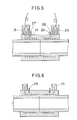
- Fig. 5 shows another embodiment in which a lid 26 is formed integrally with each connector 25 such that the detection hole 14 is covered by the associated lid 26 when the connector 25 integral with this lid 26 is inserted into the corresponding socket 13.
- the lid 26 is provided with a small hole or a small groove 27 at a portion thereof corresponding to the detection hole 14.
- a numeral 28 designates an air vent hole.
- each connector 25 is inserted into the socket 13 while being rotationally located such that the lid 26 integral therewith covers the detection hole 14. Subsequent supply of the electrical power to the electrical heating wire causes the resin material of the joint to be molten and the molten resin flows into each detection hole 14. The connector 25 is withdrawn after solidification of the resin. In consequence, a projection 29 is left on the surface of the joint so as to indicate that the fusion bonding has been safely completed.
- Fig. 7 shows a modification of the embodiment of Fig. 5.
- a flange-like lid 31 is formed on the lower end of the connector 25 integrally therewith.
- a small annular groove 32 is formed in the bottom surface of the lid 31.
- Fig. 9 shows a different embodiment in which an annular groove 41 is formed in the outer surface of the joint 43.
- a pin-shaped core 42 is formed in the center of the annular groove 41.
- a stopping member 46 is formed on a connector 45 which is to be inserted into a socket 44 such that the stopping member 46 covers the detection hole when the connector 45 is inserted into the socket 44.
- Fig. 10 shows a different embodiment in which a pressure-transmitting bar-like core 53 is formed by an annular groove 52 formed in the vicinity of the socket 51.
- a connector 54 is provided with a pressure switch 55 having a piston 56 which is capable of engaging with the core 53 when the connector 54 is inserted into the socket 51.
- the resin of the portion of the joint around the electrical resistance heating wire 57 is molten so as to expand thereby raising the internal resin pressure.
- the raised internal resin pressure causes the core 53 to be displaced so that the pressure detection switch 55 is detected with the result that a switch (not shown) in a power supply circuit is opened thereby ceasing the electrical power supply.
- the fusion of the joint is detected by a pressure switch through a pressure-transmitting core which is defined by an annular groove formed to reach a region near the electrical resistance heating wire, and the supply of the electrical power is terminated when the pressure of the molten resin at the fusion region is detected by the pressure switch through the pressure-transmitting core.
- the molten resin is prevented from flowing outside the joint through the detection hole because the detection hole is covered by a lid.
- the degradation in the fusion performance which may otherwise be caused by a too large quantity of molten resin flowing into the detection hole is avoided.
- whether the fusion has been accomplished safely can be easily detected by a visual check through the lid or after removal of the lid.
- the embodiment in which the lid is integrated with a connector for electrical power supply is advantageous in that the closing and opening of the detection hole can be done automatically in accordance with the mounting and demounting of the connector.
- the lid When the lid is provided with a small hole or a small groove corresponding to the detection hole. a protrusion is formed on the surface of the joint so as to enable an easy visual check.
- the socket can be inserted in a random orientation so that the work for connecting pipes through the joint is facilitated advantageously.
- Provision of a small air vent hole or air vent gap ensures that the molten resin fills the detection hole and the small vent hole or small groove without substantial resistance.
- the embodiment which employs a pin-like core formed by an annular groove formed in the joint so as to reach a region near the electrical resistance heating wire and a stopping member provided above the core so as to limit the amount of projection of the core. Namely, since the amount of projection of the core is limited by the stopper member, the quantity of the molten resin flowing into the bore also is limited so as to eliminate any unfavorable effect on the fusion performance attributable to flowing of an excessively large quantity of molten resin. In addition, whether the fusion bonding has been sucessfully accomplished can be detected by a visual check of the state of the core from a lateral side of the joint or after removal of the stopper member.
- the stopper member may be fixed to the joint or may be provided integrally with a connector for the electrical power supply so that the pressing member can be set or demounted from the core in accordance with the insertion and withdrawal of the connector into and out of the socket.
Landscapes
- Engineering & Computer Science (AREA)
- Mechanical Engineering (AREA)
- General Engineering & Computer Science (AREA)
- Physics & Mathematics (AREA)
- General Physics & Mathematics (AREA)
- Automation & Control Theory (AREA)
- Lining Or Joining Of Plastics Or The Like (AREA)
- Branch Pipes, Bends, And The Like (AREA)
- Vessels, Lead-In Wires, Accessory Apparatuses For Cathode-Ray Tubes (AREA)
- Processing Of Terminals (AREA)
Applications Claiming Priority (2)
| Application Number | Priority Date | Filing Date | Title |
|---|---|---|---|
| JP9708488 | 1988-07-21 | ||
| JP97084/88U | 1988-07-21 |
Publications (3)
| Publication Number | Publication Date |
|---|---|
| EP0352128A2 true EP0352128A2 (de) | 1990-01-24 |
| EP0352128A3 EP0352128A3 (de) | 1991-06-12 |
| EP0352128B1 EP0352128B1 (de) | 1994-11-30 |
Family
ID=14182775
Family Applications (1)
| Application Number | Title | Priority Date | Filing Date |
|---|---|---|---|
| EP19890307432 Expired - Lifetime EP0352128B1 (de) | 1988-07-21 | 1989-07-21 | Elektro-Schweissmuffe mit Anzeigemitteln des Schweissergebnisses |
Country Status (5)
| Country | Link |
|---|---|
| US (1) | US5116082A (de) |
| EP (1) | EP0352128B1 (de) |
| AT (1) | ATE114546T1 (de) |
| CA (1) | CA1321626C (de) |
| DE (1) | DE68919567T2 (de) |
Cited By (3)
| Publication number | Priority date | Publication date | Assignee | Title |
|---|---|---|---|---|
| EP0698474A1 (de) * | 1994-06-13 | 1996-02-28 | Georg Fischer Rohrleitungssysteme AG | Formteil aus einem thermoplastischen Kunststoff |
| GB2500285A (en) * | 2012-03-12 | 2013-09-18 | Pioneer Lining Technology Ltd | Improved electrofusion fittings and methods |
| US20210402710A1 (en) * | 2020-06-25 | 2021-12-30 | Georg Fischer Omicron S.r.l. | Device for welding electrofusion fittings with extension cable |
Families Citing this family (17)
| Publication number | Priority date | Publication date | Assignee | Title |
|---|---|---|---|---|
| US5566988A (en) * | 1993-04-30 | 1996-10-22 | The Gates Rubber Company | Heat shrinkable hose clamp with indicator |
| US5433484A (en) * | 1993-11-15 | 1995-07-18 | Enfield Industrial Corporation | Double containment pipe and fitting joint |
| US5531483A (en) * | 1993-12-06 | 1996-07-02 | The Gates Rubber Company | Heat shrinkable hose clamp with heating indicator |
| CH687161A5 (de) * | 1994-01-10 | 1996-09-30 | Fischer Georg Rohrleitung | Elektrisch schweissbares Formteil aus Kunststoff. |
| GB2297137B (en) * | 1995-01-18 | 1999-02-03 | Uponor Ltd | Plastics pipe |
| US6953917B2 (en) | 2000-04-10 | 2005-10-11 | Chenault David O | System and method for ensuring the qualification of a workman to perform a task having established required standards |
| US6883835B2 (en) | 2001-03-05 | 2005-04-26 | Basic Resources, Inc. | Polyfusion pipe repair system and method |
| US6870143B2 (en) * | 2002-04-18 | 2005-03-22 | Basic Resources, Inc. | System and method for encapsulating a pipe |
| US6858822B1 (en) | 2002-08-02 | 2005-02-22 | Dave Emerson | Surface analysis preceding electrofusion of thermoplastics |
| AR071492A1 (es) | 2009-04-22 | 2010-06-23 | Rukavina Mikusic Juan | Metodo para el revestimiento termico de alto espesor de juntas por medio de electrofusion en ductos utilizados en conduccion de fluidos construidos con tubos de acero revestidos externamente con poliolefinas |
| ES2788085T3 (es) | 2009-10-06 | 2020-10-20 | Prinsco Inc | Junta termofusible y método de fabricación |
| CA2829002C (en) | 2013-09-27 | 2020-06-09 | Omachron Intellectual Property Inc. | Pipe cutting tool and methods for use |
| CA2828855C (en) | 2013-09-27 | 2020-06-09 | Omachron Intellectual Property Inc. | Method and apparatus for connecting pipes |
| CA2829041C (en) | 2013-09-27 | 2020-06-09 | Omachron Intellectual Property Inc. | Pipe sealing tool and methods for use |
| CA2829075C (en) | 2013-09-27 | 2020-09-01 | G.B.D. Corp. | Pipe joining material for connecting pipes |
| ES2581377B1 (es) * | 2016-05-13 | 2017-05-30 | Abn Pipe Systems, S.L.U. | Dispositivo de conexión para elementos de tubería |
| CN109140103A (zh) * | 2018-09-05 | 2019-01-04 | 浙江伟星新型建材股份有限公司 | 一种熔断式电熔管件 |
Family Cites Families (16)
| Publication number | Priority date | Publication date | Assignee | Title |
|---|---|---|---|---|
| NL175458C (nl) * | 1973-03-14 | 1984-11-01 | Sturm Werner | Werkwijze voor het vervaardigen van een lasmof voor thermoplastische buizen. |
| CH606895A5 (de) * | 1975-12-18 | 1978-11-15 | Geberit Ag | |
| DE2710998C2 (de) * | 1976-03-22 | 1984-08-02 | Sturm, Werner, 4614 Hägendorf | Muffe aus thermoplastischem Kunststoff mit einem elektrischen Widerstandsheizdraht |
| CH622870A5 (de) * | 1977-06-03 | 1981-04-30 | Werner Sturm | |
| CH632078A5 (en) * | 1978-09-12 | 1982-09-15 | Von Roll Ag | Collar for connecting line elements |
| US4313053A (en) * | 1980-01-02 | 1982-01-26 | Von Roll A.G. | Welding sleeve of thermoplastic material |
| CH648393A5 (de) * | 1980-08-29 | 1985-03-15 | Werner Sturm | Elektro-schweissmuffe aus einem thermoplast zum verbinden von leitungselementen aus thermoplast. |
| DE3268829D1 (en) * | 1981-09-30 | 1986-03-13 | Fusion Plastics Ltd | Electro-fusion fitting |
| FR2555936B1 (fr) * | 1983-12-19 | 1986-11-21 | Toutelectric | Procede pour le controle du temps de soudage |
| AU581014B2 (en) * | 1984-08-28 | 1989-02-09 | Von Roll Ag | Weldable connecting member for connecting or joining thermoplastic pipe elements |
| NL8403462A (nl) * | 1984-11-13 | 1986-06-02 | Arie De Jong | Werkwijze voor het vervaardigen van een verbindingsvormstuk, in het bijzonder aanboorzadel en een volgens de werkwijze vervaardigd verbindingsvormstuk. |
| CH664530A5 (en) * | 1984-12-18 | 1988-03-15 | Streng Plastic Ag | Welding sleeve for thermoplastic tubes - with embedded heating element and indicator tab in annular groove |
| GB2177558A (en) * | 1985-06-18 | 1987-01-21 | Markon Engineering Company Lim | Fusion welding of plastics pipes |
| GB8526235D0 (en) * | 1985-10-24 | 1985-11-27 | Glynwed Tubes & Fittings | Electrofusion coupler |
| CH672014A5 (de) * | 1986-08-29 | 1989-10-13 | Fischer Ag Georg | |
| US4852914A (en) * | 1987-06-19 | 1989-08-01 | Milfuse Systems, Inc. | Plastic pipeline having rapidly fusible joints and method of making same |
-
1989
- 1989-07-18 CA CA 605928 patent/CA1321626C/en not_active Expired - Fee Related
- 1989-07-21 EP EP19890307432 patent/EP0352128B1/de not_active Expired - Lifetime
- 1989-07-21 DE DE68919567T patent/DE68919567T2/de not_active Expired - Fee Related
- 1989-07-21 US US07/383,015 patent/US5116082A/en not_active Expired - Fee Related
- 1989-07-21 AT AT89307432T patent/ATE114546T1/de not_active IP Right Cessation
Cited By (7)
| Publication number | Priority date | Publication date | Assignee | Title |
|---|---|---|---|---|
| EP0698474A1 (de) * | 1994-06-13 | 1996-02-28 | Georg Fischer Rohrleitungssysteme AG | Formteil aus einem thermoplastischen Kunststoff |
| GB2500285A (en) * | 2012-03-12 | 2013-09-18 | Pioneer Lining Technology Ltd | Improved electrofusion fittings and methods |
| GB2500285B (en) * | 2012-03-12 | 2014-05-21 | Pioneer Lining Technology Ltd | improved electrofusion fittings and methods |
| US20210402710A1 (en) * | 2020-06-25 | 2021-12-30 | Georg Fischer Omicron S.r.l. | Device for welding electrofusion fittings with extension cable |
| US20240308146A1 (en) * | 2020-06-25 | 2024-09-19 | Georg Fischer Omicron S.r.l. | Device for welding electrofusion fittings with extension cable |
| US12311611B2 (en) * | 2020-06-25 | 2025-05-27 | Georg Fischer Omicron S.r.l. | Device for welding electrofusion fittings with extension cable |
| US12325194B2 (en) * | 2020-06-25 | 2025-06-10 | Georg Fischer Omicron S.r.l. | Device for welding electrofusion fittings with extension cable |
Also Published As
| Publication number | Publication date |
|---|---|
| DE68919567T2 (de) | 1995-04-13 |
| EP0352128B1 (de) | 1994-11-30 |
| EP0352128A3 (de) | 1991-06-12 |
| ATE114546T1 (de) | 1994-12-15 |
| CA1321626C (en) | 1993-08-24 |
| US5116082A (en) | 1992-05-26 |
| DE68919567D1 (de) | 1995-01-12 |
Similar Documents
| Publication | Publication Date | Title |
|---|---|---|
| US5116082A (en) | Electrofusion of electrofusion joint, method of confirming state of fusion and fusion joint suitable for use in the methods | |
| US8284011B2 (en) | Cap for a temperature-dependent switch | |
| JPS60198224A (ja) | 電気溶接されるユニオン継手の溶接時間制御方法及び装置 | |
| JPH03178426A (ja) | エレクトロフュージョン継手の融着並びにその確認方法及びそのための継手 | |
| KR0150425B1 (ko) | 파이프 연결 피이스 용접시 열가소성 재질의 물리상태변화 감지장치 | |
| US5150923A (en) | Plastic pipe joint assembly for joining sections of plastic pipe | |
| JP2933202B2 (ja) | 熱可塑性材料の成形部品 | |
| JPH01178437A (ja) | 電気融着式プラスチック管の接続方法 | |
| US11987010B2 (en) | Method for producing a welded connection, and welding device | |
| JP4000540B2 (ja) | 電気融着継手 | |
| JP2962999B2 (ja) | 電気融着継手の通電制御方法 | |
| JPH05104636A (ja) | 電気融着継手の融着制御装置 | |
| KR970001020B1 (ko) | 융착감지부를 가지는 전자융착식 피팅 | |
| JPH07117189B2 (ja) | プラスチック製管継手 | |
| JPH02240497A (ja) | 電気融着式管継手の通電時間制御方法 | |
| JPH0852804A (ja) | 電気融着式管継手の通電制御方法 | |
| JP3748303B2 (ja) | 電気融着継手 | |
| JPH04203585A (ja) | 電気融着継手 | |
| JPH10185066A (ja) | 電気融着継手および融着確認方法 | |
| JPH07164532A (ja) | 電気溶融着装置 | |
| JP4333689B2 (ja) | 電気融着継手用通電制御装置 | |
| JPH0631811A (ja) | 電気融着装置の制御方法 | |
| JP2819010B2 (ja) | 電気溶融着装置 | |
| JP3780855B2 (ja) | 電気融着継手の通電用中間接続端子、及び電気融着継手のターミナル電極と電熱線加熱用電源部からの電源コードの端子との接続方法 | |
| JP2002257285A (ja) | 電気融着継手 |
Legal Events
| Date | Code | Title | Description |
|---|---|---|---|
| PUAI | Public reference made under article 153(3) epc to a published international application that has entered the european phase |
Free format text: ORIGINAL CODE: 0009012 |
|
| AK | Designated contracting states |
Kind code of ref document: A2 Designated state(s): AT BE CH DE ES FR GB GR IT LI LU NL SE |
|
| PUAL | Search report despatched |
Free format text: ORIGINAL CODE: 0009013 |
|
| AK | Designated contracting states |
Kind code of ref document: A3 Designated state(s): AT BE CH DE ES FR GB GR IT LI LU NL SE |
|
| 17P | Request for examination filed |
Effective date: 19911125 |
|
| 17Q | First examination report despatched |
Effective date: 19930402 |
|
| GRAA | (expected) grant |
Free format text: ORIGINAL CODE: 0009210 |
|
| AK | Designated contracting states |
Kind code of ref document: B1 Designated state(s): AT BE CH DE ES FR GB GR IT LI LU NL SE |
|
| PG25 | Lapsed in a contracting state [announced via postgrant information from national office to epo] |
Ref country code: GR Free format text: LAPSE BECAUSE OF FAILURE TO SUBMIT A TRANSLATION OF THE DESCRIPTION OR TO PAY THE FEE WITHIN THE PRESCRIBED TIME-LIMIT Effective date: 19941130 Ref country code: ES Free format text: THE PATENT HAS BEEN ANNULLED BY A DECISION OF A NATIONAL AUTHORITY Effective date: 19941130 Ref country code: BE Effective date: 19941130 Ref country code: AT Effective date: 19941130 |
|
| REF | Corresponds to: |
Ref document number: 114546 Country of ref document: AT Date of ref document: 19941215 Kind code of ref document: T |
|
| ITF | It: translation for a ep patent filed | ||
| ET | Fr: translation filed | ||
| REF | Corresponds to: |
Ref document number: 68919567 Country of ref document: DE Date of ref document: 19950112 |
|
| PG25 | Lapsed in a contracting state [announced via postgrant information from national office to epo] |
Ref country code: SE Effective date: 19950228 |
|
| PG25 | Lapsed in a contracting state [announced via postgrant information from national office to epo] |
Ref country code: LU Free format text: LAPSE BECAUSE OF NON-PAYMENT OF DUE FEES Effective date: 19950731 |
|
| PLBE | No opposition filed within time limit |
Free format text: ORIGINAL CODE: 0009261 |
|
| STAA | Information on the status of an ep patent application or granted ep patent |
Free format text: STATUS: NO OPPOSITION FILED WITHIN TIME LIMIT |
|
| 26N | No opposition filed | ||
| REG | Reference to a national code |
Ref country code: CH Ref legal event code: PFA Free format text: MITSUI PETROCHEMICAL INDUSTRIES, LTD TRANSFER- MITSUI CHEMICALS, INC. |
|
| REG | Reference to a national code |
Ref country code: FR Ref legal event code: CD |
|
| NLT1 | Nl: modifications of names registered in virtue of documents presented to the patent office pursuant to art. 16 a, paragraph 1 |
Owner name: MITSUI CHEMICALS, INC. |
|
| REG | Reference to a national code |
Ref country code: GB Ref legal event code: IF02 |
|
| PGFP | Annual fee paid to national office [announced via postgrant information from national office to epo] |
Ref country code: FR Payment date: 20020709 Year of fee payment: 14 |
|
| PGFP | Annual fee paid to national office [announced via postgrant information from national office to epo] |
Ref country code: GB Payment date: 20020717 Year of fee payment: 14 |
|
| PGFP | Annual fee paid to national office [announced via postgrant information from national office to epo] |
Ref country code: DE Payment date: 20020724 Year of fee payment: 14 |
|
| PGFP | Annual fee paid to national office [announced via postgrant information from national office to epo] |
Ref country code: NL Payment date: 20020730 Year of fee payment: 14 |
|
| PGFP | Annual fee paid to national office [announced via postgrant information from national office to epo] |
Ref country code: CH Payment date: 20020802 Year of fee payment: 14 |
|
| PG25 | Lapsed in a contracting state [announced via postgrant information from national office to epo] |
Ref country code: GB Free format text: LAPSE BECAUSE OF NON-PAYMENT OF DUE FEES Effective date: 20030721 |
|
| PG25 | Lapsed in a contracting state [announced via postgrant information from national office to epo] |
Ref country code: LI Free format text: LAPSE BECAUSE OF NON-PAYMENT OF DUE FEES Effective date: 20030731 Ref country code: CH Free format text: LAPSE BECAUSE OF NON-PAYMENT OF DUE FEES Effective date: 20030731 |
|
| PG25 | Lapsed in a contracting state [announced via postgrant information from national office to epo] |
Ref country code: NL Free format text: LAPSE BECAUSE OF NON-PAYMENT OF DUE FEES Effective date: 20040201 |
|
| PG25 | Lapsed in a contracting state [announced via postgrant information from national office to epo] |
Ref country code: DE Free format text: LAPSE BECAUSE OF NON-PAYMENT OF DUE FEES Effective date: 20040203 |
|
| GBPC | Gb: european patent ceased through non-payment of renewal fee |
Effective date: 20030721 |
|
| REG | Reference to a national code |
Ref country code: CH Ref legal event code: PL |
|
| PG25 | Lapsed in a contracting state [announced via postgrant information from national office to epo] |
Ref country code: FR Free format text: LAPSE BECAUSE OF NON-PAYMENT OF DUE FEES Effective date: 20040331 |
|
| NLV4 | Nl: lapsed or anulled due to non-payment of the annual fee |
Effective date: 20040201 |
|
| REG | Reference to a national code |
Ref country code: FR Ref legal event code: ST |
|
| PG25 | Lapsed in a contracting state [announced via postgrant information from national office to epo] |
Ref country code: IT Free format text: LAPSE BECAUSE OF NON-PAYMENT OF DUE FEES Effective date: 20050721 |